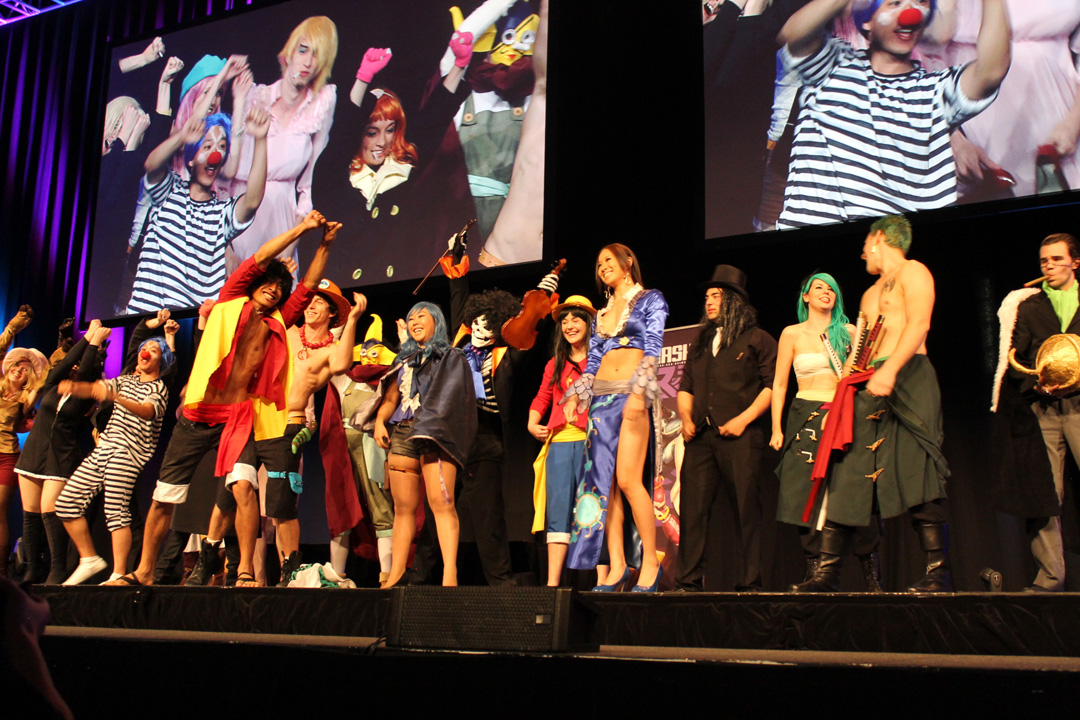
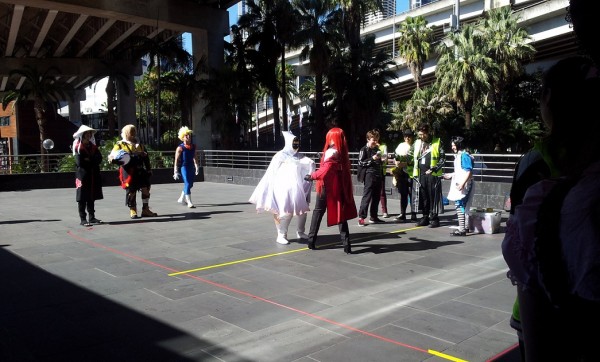
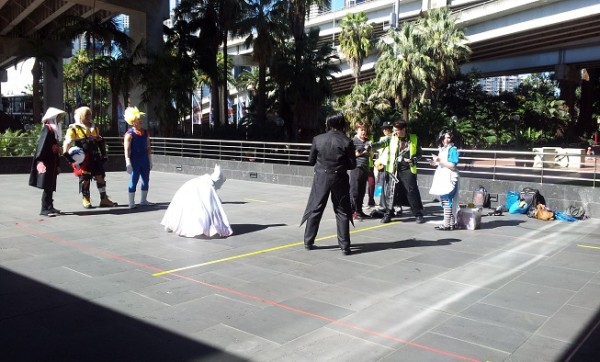
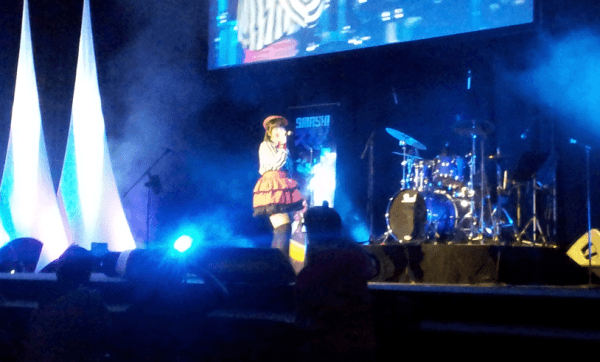
With SMASH! 2013 coming to a close it was time for one last performance. Only this time, it wasn’t guests or panelists taking to the stage, it was the cosplayers. The fans who go the extra mile and create costumes that make you wonder how they did it. For the Madman Cosplay Competition, costumed attendees gathered from across the convention hall in order to win the grand prize: a return flight to Tokyo!
The stage was set, the music playing. Showtime!
The competition was extremely varied. From warriors to schoolgirls, angels to Italian plumbers. There was even an appearance by Finnpool, the unholy fusion of, you guessed it, Finn and Deadpool. Strange. At one point the stage was packed with a swarm of One Piece cosplayers, Monkey D. Luffy, Zoro, Crocodile…Monkey D. Luffy again. Even Buggy made an appearance. Whilst some cosplayers simply showed off their costumes, others prepared skits to go along with their assumed identities. These included a Love Live dance performance and and a very…suggestive musical performance by Naruto and Sasuke.
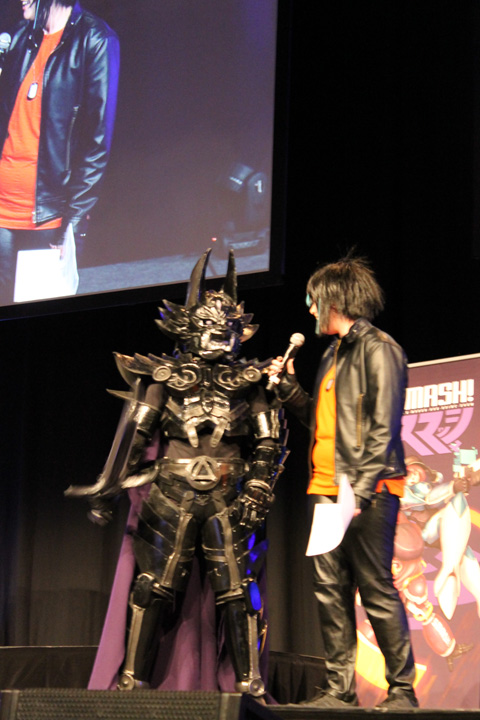
SMASH! guest Haruko Momoi joined the panel of judges, ready to choose the winner from the numerous entrants. After deliberating for some time, a winner was revealed. Sporting a very detailed suit of armour and now one return flight ticket heavier, I present the mysterious winner:
I don’t think that’ll get through customs
Congratulations to all those who entered and showed off their cosplay costumes, an awesome effort by all. See for below.
Ittle Dew Developer: Ludosity Publisher:Ludosity Platforms: PC (Reviewed), Mac, Linux Release Date:23rd July, 2013 Price: $13.99 – Available Here
Overview
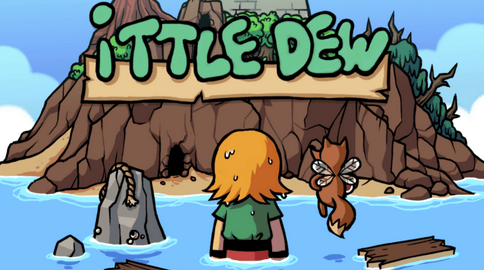
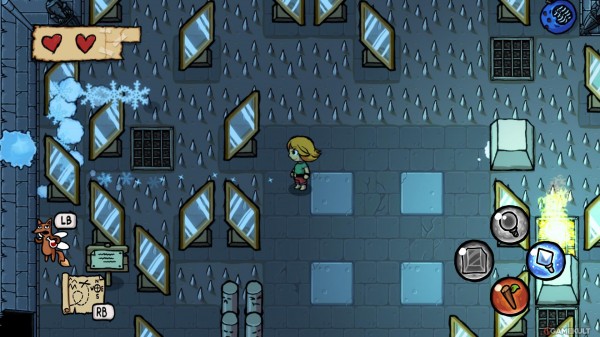
Ludosity have created an indie-adventure-puzzler game, Ittle Dew, with the likes of a Zelda and Pokémon-themed island and alluring fantastical atmosphere. Ittle Dew is the protagonist with a careless and humorous attitude, partnered up with his own foxy sidekick, Tippsie. When the duo become stranded on an unknown island, they must conquer every puzzle for a chance at survival. However, it’s important to distinguish whether the game build’s new ground for players to remember or has become another unchanged carbon-copy?
Story
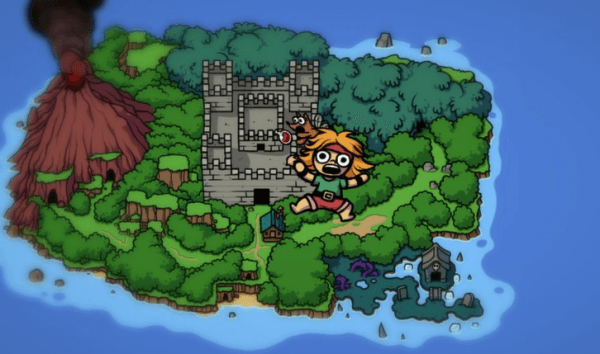
Peacefully drifting on a raft to crash landing on a seemingly remote island, Ittle Dew and Tippsie begin their adventure through the dark caves, fiery mountains and open forests, towards the huge castle. During their travels, they discover a wide range of strange creatures- who are neither friendly nor normal. In order to get through the island alive, Ittle Dew and Tippsie are on a mission to collect a rare artifact within the castle, in return for a hand-made raft from the craftsman, Itan. The vague storyline lacks creativity, with no real back-story or reasoning for these events. However, the main focus of the game is on the player’s progression, which is outlined through their movement in the sketched maps of each level. From this point of view, players can monitor completed rooms, reach treasure locations and take the most logical path to the next floor area. As can be expected, players will find that there is no simple path or easy-access professional shortcuts to completing the game; without dedication, cleverness, relentless practice and the right ‘magical’ equipment.
Gameplay
If you are looking for a mind-blowing challenge, with quick-thinking and tactical strategising, than this is the ideal game for you. Ittle Dew throws players into an endless spiral of puzzles, with a wide range of rooms leading to more than one door and several different outcomes. With the smart-aleck advice from Tippsie’s notes (don’t let the name confuse you) and frequent signage within each new area, Ittle Dew is given hints to solve particular riddles. The reason for this extra help, is because there is no other options in modes of difficulty; all players must face the same degree of complexity in problem solving. I think this was quite cunning, in terms of creating a relatable gaming experience for players.
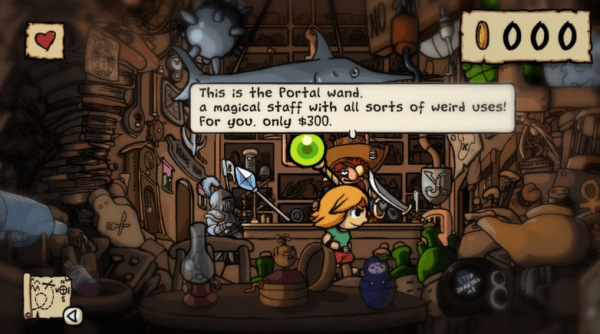
To consecutively progress within the game, players are encouraged to find hidden treasure chests inside and outside the castle, to collect gold coins and spend their money at Itan’s shop for elemental and magical weapons; a fire sword, magic crystal and portal wand. These specific items are essential in completing certain puzzles, and destroying enemies and bosses. However, players don’t instantly receive their purchased handy-craft from Itan’s shop, until they complete the first level of another puzzle. Additionally, there are other collectibles in hidden tombs throughout the game, including health upgrades in the form of paper scraps and unique trading cards of creatures.
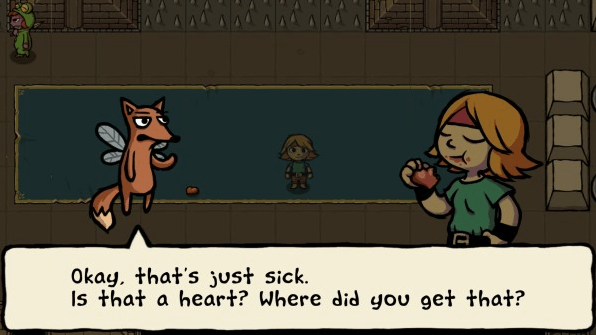
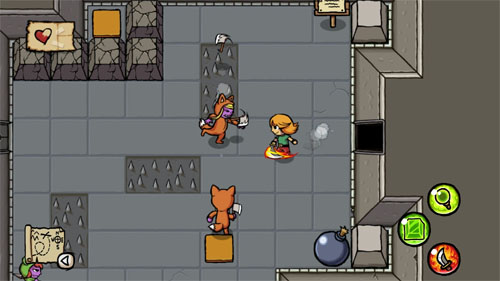
The mysterious and enthralling environments provide the perfect location for exploration and assuming the role of a lovable character, Ittle Dew. The young boy’s innocent appearance contrasts with his obscene and malevolent behaviour; eating enemy’s hearts for health gain and utilising his powerful weapons to destroy enemies. I particularly took pleasure in obliterating costumed-monsters (especially axe-swindling chameleons) via teleporting them with my portal wand to spiky surfaces.
Ittle Dew delivers a mouthful of humour, reminiscent of child-like behaviour (such as the five-second rule) which improves the level of engagement and enjoyable nature of gameplay. Players receive hilarious awards, including a Masterfully Executed Failure (teleport a flying axe so that it hits you anyway) and Stratospheric Picnic (Launch a Pancake enemy into the air). The game compliments itself by identifying with the Legend of Zelda, with a bizarre vibe of parody. Ludosity did not create a carbon-copy of pre-made games, but rather excelled in the combination of genres, that give the player a spark of reminiscence from the time of Pokémon and, of course, Zelda.
Visuals & Audio
The amazingly hand-drawn, HD wobble and animation graphics are not only visually stunning, but create a sense of vibrancy and vivid alertness. Accordingly, Ittle Dew’s soundtrack brings to life the adventure, with an electronic, virtual orchestra of xylophones, piano, and jovial drumbeats. The audio is distinctive and adds to the game’s atmosphere, especially during combat and warping back and forth between the castle floors.
Overall
Ittle Dew is a wonderful (and addictive) game, that would suit all players who love adventures, puzzles and strategy. Although the story narrative is limited in depth, the complexity is seen through the consistency in challenging levels of the game; mentally testing the player’s perseverance and patience. The indie title, Ittle Dew, is definitely a stand-out game, that adds an extra level of enjoyment through humour, witty dialogue and an overall interesting adventure.
Capsule Computers review guidelines can be foundhere.
This year at the SMASH! Sydney Manga and Anime Show held in Sydney, there was an entertaining event for cosplayers called the Cosplay Battle Royale. This particular event was held outside of the event-hall on the patio and saw costumed combatants duke-it-out in a sort of turn-based pokemon-esque battle.
This might sound a bit strange, but you had an arena drawn on the ground and on each side of the battlefield was one cosplayer. The cosplayers took turns enacting moves announced by SMASH! personnel in a knockout style tournament. It was a bit confusing to watch, but it would have been a lot of fun to participate in.
Hopefully this event evolves into something grander in coming years. It’d be great to see this kind of event up on the Main Stage at the show.
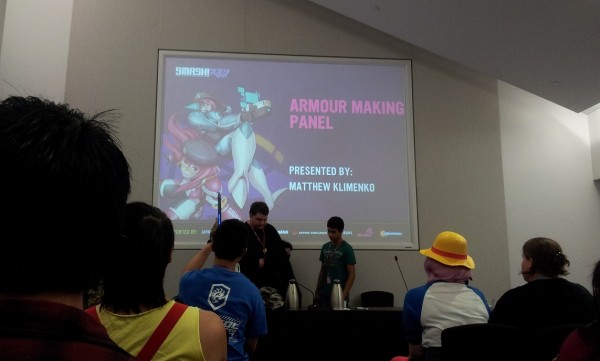
At the SMASH! Sydney Manga and Anime Show this year there was a panel on armour making held upstairs in the Siren Visual panel room. The panel was presented by a Matthew Klimenko, who is an expert in the armour making process.
The panel was a discussion on the armour making process and also included a live demonstration of a cold casting session. Cold Casting is the process of making plastic feel and look like metal. There was a discussion on plastic over fibreglass which ended with fibreglasses being not durable as much as plastics can be. Therefore it better to use plastics.
The discussion of adding nickel to plastic was pretty interesting. But I was immediately lost once the mathematics got introduced. However, Matthew made a point to say that his ratio was something that you can vary from.
Interestingly, plastics natural colour is of a yellow variety. The hardening agent used in the demonstration was of a clear colour and the metal compound was a brown colour. It was also stated to never mix all of the ingredients together, only do two parts first. There was also a point made about not stopping the stirring process as it would stop the molecules and they would sink down into the batch. Which would make it spread oddly and ruin the process.
Someone during the panel brought up the issue of using latex over silicon to use as a mold. Matt responded with something along the lines of: if you’re using Latex over silicon you will need a releasing agent of some kind. Avoid using Wax molds. The construct will heat as it is being made, and so using wax will cause the mold to melt and disfigure.
Below are a couple of resources that Matt advised checking out for various products to assist in the process.
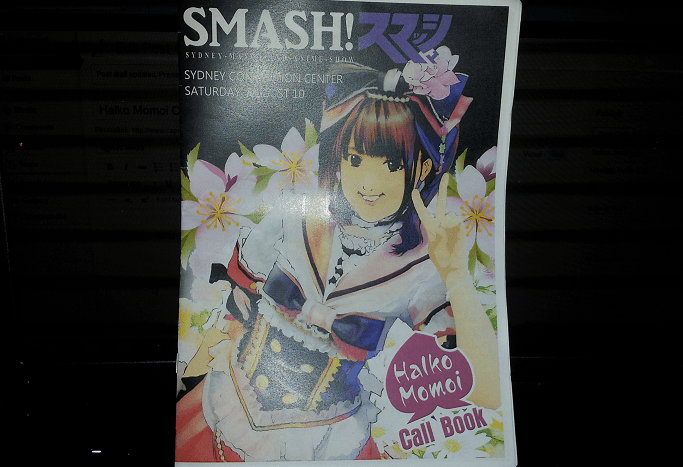
At the SMASH!Sydney Manga and Anime Show this year, fans were treated to an excellent performance by the talented Haruko Momoi pop singer from Japan. What was interesting about this particular performance was that fans were given some great concert programmes before the start of the concert.
Over the course of the concert Haruko Momoi performed some great songs, including Wonder Momo-i, Ai no medicine, Romantic Summer and more. Her concert was great to watch and had fans getting up and dancing along. The tunes were really memorable and catchy, which is also great. One song that was clearly memorable was God Knows, as seen in The Melancholy of Haruhi Suzumiya. This was a personal favourite.
There were many songs played from various series that the singer had performed in, and while I could recognise the tunes, I couldn’t tell you where I recognised them from. If anyone could let us know in the comments, that would be great!
Fans were not left disappointed, except for having to see the concert end. It was a great time for all, I would like to see her perform again.
You can also check out the performance highlights from the show below.
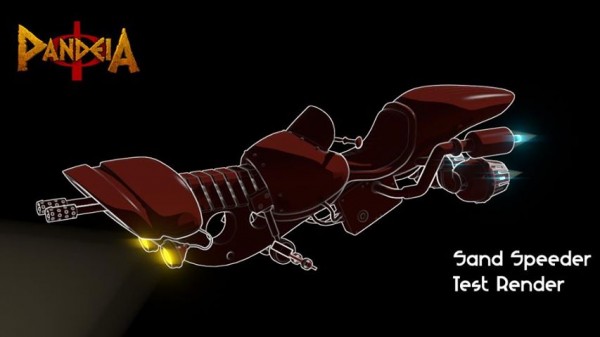
Paul Caggegi was the special guest and host of this particular panel. Paul has been a freelance motion graphics designer for over a decade. He has also worked as a media demonstrator, video editor, and in-house designer for a number of boutique studios. He begun his own podcast, The Process Diary, in 2007, where he interviews local filmmakers, artists and writers about their work and process. In 2010, he released the first issue of his sci-fi action/adventure web comic Pandeia, four issues of which are currently available in print, as eBooks or through Comixology.
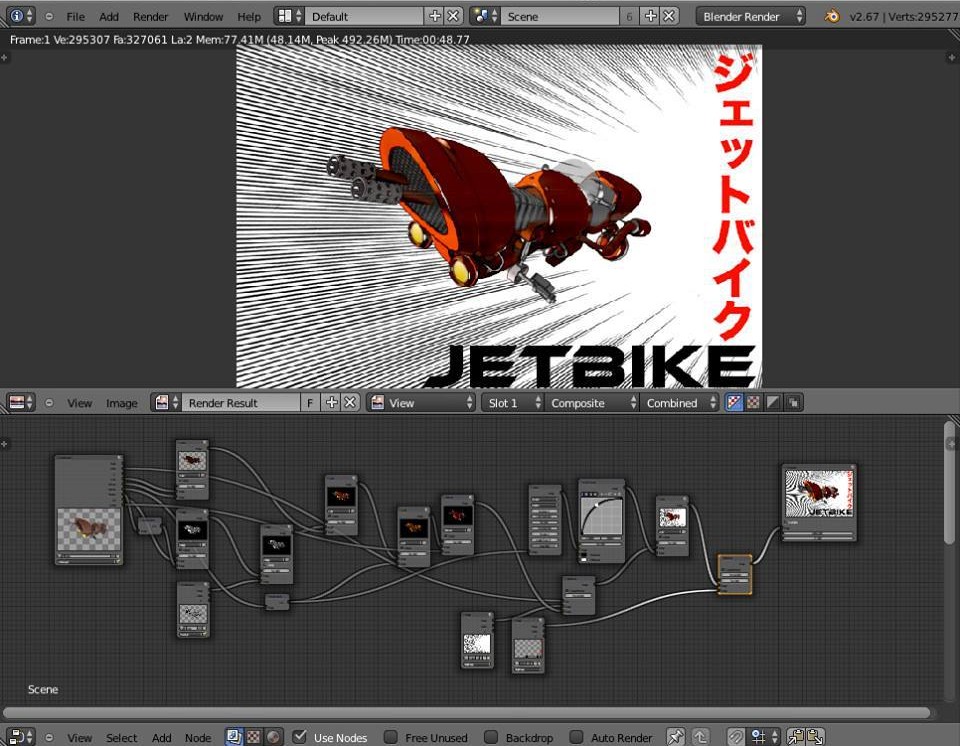
Paul’s workspace in Blender
Paul takes advantage of the free software Blender for its rendering capabilities in order transform 3D objects into 2D-looking illustrations. Modelling, UV Mapping, Texturing, Rigging and more can be done using this piece of software, as an alternative to Maya, which is a paid software. It is fully featured and easy to get into, especially if you follow Paul’s advice and take a look at the resource site Blender Cookie. He stated that he prefers creating an object in 3D as opposed to drawing it, because he can reuse that asset for different shots instead of having to redraw it for every new scene. The same can be said for camera angles, as another camera can simply be dropped into your scene.
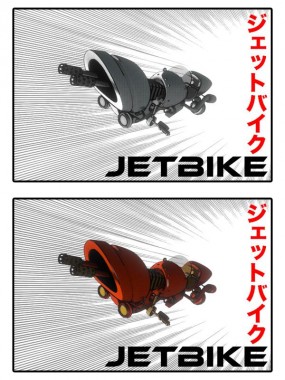
The finished page, in black & white and then final render
Paul went on to compare the layers of Photoshop to the nodes of Blender, stating the major con of the former being that everything underneath the top layer is affected by it, while in a nodal system, it’s much easier to bring every element in as a separate effect and choose how to apply them for the final render without hassle. And in terms of lighting, Paul finds it simpler too; necessary in most cases to only have one spotlight alongside your fill light, which can of course be rearranged on the fly.
Moving on to the rendering, Paul explained how he gets his 3D work to adopt a Manga/Comic book visual by having diffuse and specular values set to Toon, which is a high-contrast shader that takes your light information and efficiently splits it to acquire the desired effect. Stuff that can be difficult to draw by hand, such as glass, can be “cheated”, as Paul put it, by messing with the material’s properties and transparency settings. Another pro is that highlights and shadows can be easily adjusted to your liking with the click of a button.
Paul gave us a great look at his process in the panel. It’s unfortunate, being more of a visual demonstration, that we can’t do justice to it by trying to describe it all as the above is just a basic look at what’s possible with Blender. But, for more of Paul’s work and our SMASH! 2013 coverage, click through the links at the top of this article (contact him with any queries, we’re sure he’d be happy to answer them). If you’d like to try out the software for yourself, please visit the official Blender website.
The SMASH! Sydney Manga and Anime Show is not all about, well, just that…anime and manga. It’s also about celebrating some of Japan’s most beloved gaming franchises, with Pokemon, Super Smash Bros. and Street Fighterall having a presence at the convention this year, and all of which were played in tournaments on the day.
The Street Fighter IV competition was played over the course of two hours and featured many expert players. The rules were simple: single elimination with a ‘best out of three’ format in place, except for the semi-finals and finals, which would become ‘best out of 5’ match-ups. Characters could be changed between rounds with no real restrictions to speak of. Being one of the most successful and popular fighting franchises of all time, there were dozens of players arriving to sign-up and enter the tournament. Many even brought their own fighting sticks. There were many blow-outs and fewer technical battles, truth be told, but a couple players stood out amongst the pack.
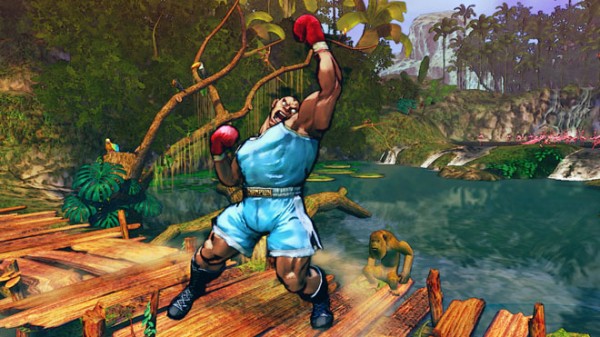
…before Balrog made the sub for Seth and got the “Victory!”
The champion of the day, Tony, had been consistently demolishing his opponents with boss character Seth. But once he got to the finals, it was neck and neck against Vega, whose acrobatic cross-screen combos were stifling his adversaries and doing major damage. It was 2-2, and Tony decided to make a risky move and exit to the character select screen to swap to Balrog – an understatement to say that he is not the most utilised character amongst the large roster. But, the Mike Tyson-inspired boxer took it out and Tony walked away with a prize pack, courtesy of Mindscape, which included – as the pièce de résistance – a PS3 copy of Atelier Ayesha: The Alchemist of Dusk.
Vega, Sammy and Ryu seemed like favourite choices amongst the entrants, but in that barn-burner of a final, an unlikely challenger ended up winning the crown. On a side note…man, Seth’s combos do low damage!! What a pathetic final boss! Anyway, you can also check out our coverage of the Pokemon Black & White tournament!
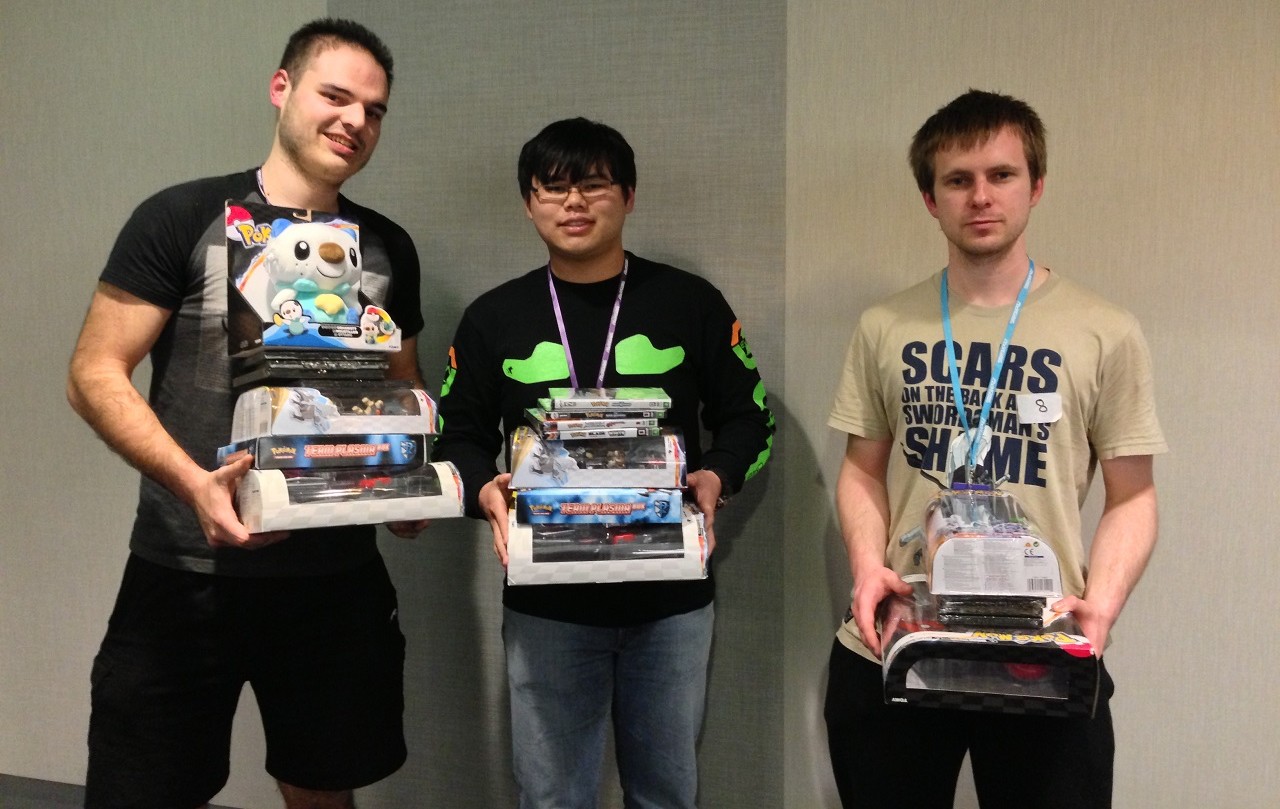
From Left to Right: Roland (1st), Darren (2nd) & Luke (3rd)
The SMASH! Sydney Manga and Anime Show is not all about, well, just that…anime and manga. It’s also about celebrating some of Japan’s most beloved gaming franchises, with Pokemon, Super Smash Bros. and Street Fighterall having a presence at the convention this year, and all of which were played in tournaments on the day.
The Pokemon DS tournament lasted for nearly two hours, featuring 16 game competitors vying for a prize pack generously sponsored by Beyond Entertainment. Players could use their copies of either Pokemon Black & White or Pokemon Black & White 2, but there were a fair amount of regulations in place. Infrared Double Battle was the match format, with a maximum of only four Pokemon per team. There were no time limits, and all Pokemon were either auto-levelled up or down to Lvl. 50.
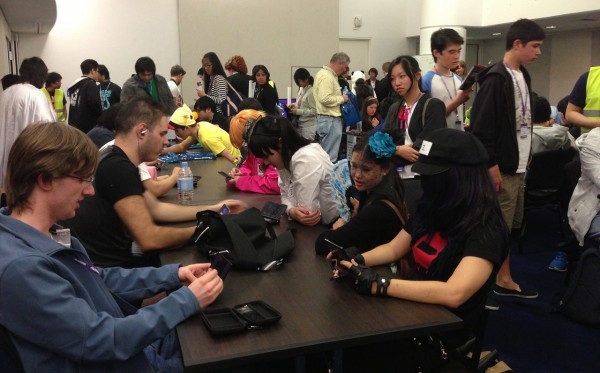
The Bushiroad TCG Room was packed withVanguard and Pokemon competitors
Players were allowed to use Pokémon from the National Pokédex – No. 001–649 – that were caught in the game, transferred from a previous Pokémon title, or received at an official event or distribution. However, the following list of Pokemon were not eligible to be on any team: Mewtwo, Mew, Lugia, Ho-Oh, Celebi, Kyogre, Groudon, Rayquaza, Jirachi, Deoxys, Chatot, Dialga, Palkia, Giratina, Phione, Manaphy, Darkrai, Shaymin, Arceus, Victini, Reshiram, Zekrom, Kyurem, Keldeo, Meloetta and Genesect. The complete list of rules can be read here.
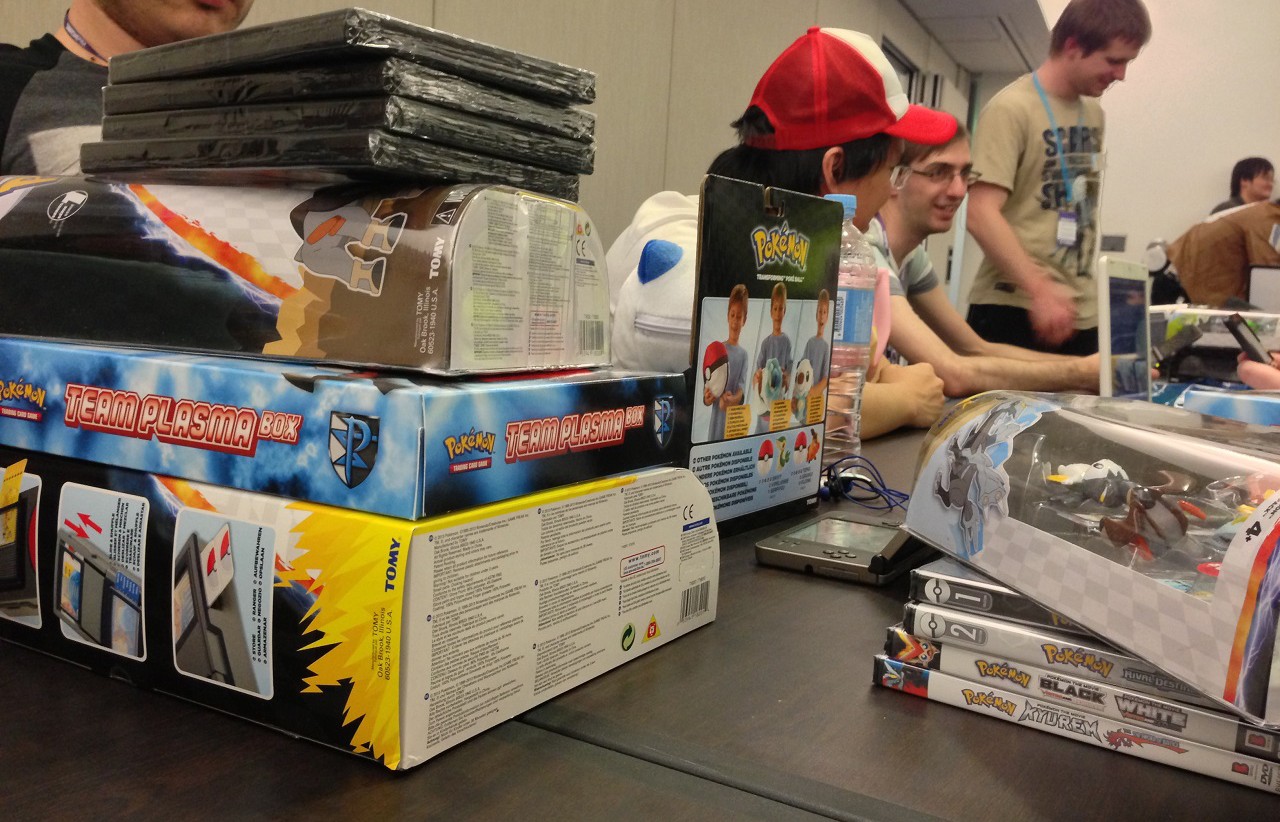
The Grand Prize: 4 DVDs, a Black & White Card Game Team Plasma Box, a TOMY Basic Figure 4-Pack, Black & White Pokedex Training Kit and a Transforming Oshawatt/Pokeball Plush.
Being a double elimination bracket, the winner of the ‘winning’ bracket – in this case, Roland – and the winner of the ‘losing’ bracket – Darren – would face off in the finals. If the winner of the ‘losing’ bracket were to win, then an immediate rematch would take place, giving them the handicap of having to win twice…and this is almost what happened. Darren took out the first round in a tight match, leading to the second round per the stipulations. However, Roland worked hard to ensure a repeat result was not in his future and closed out the tournament for the win!
You can see a photo of the winners at the very top of this article, and also remember to check out our coverage of the Street Fighter IV competition!
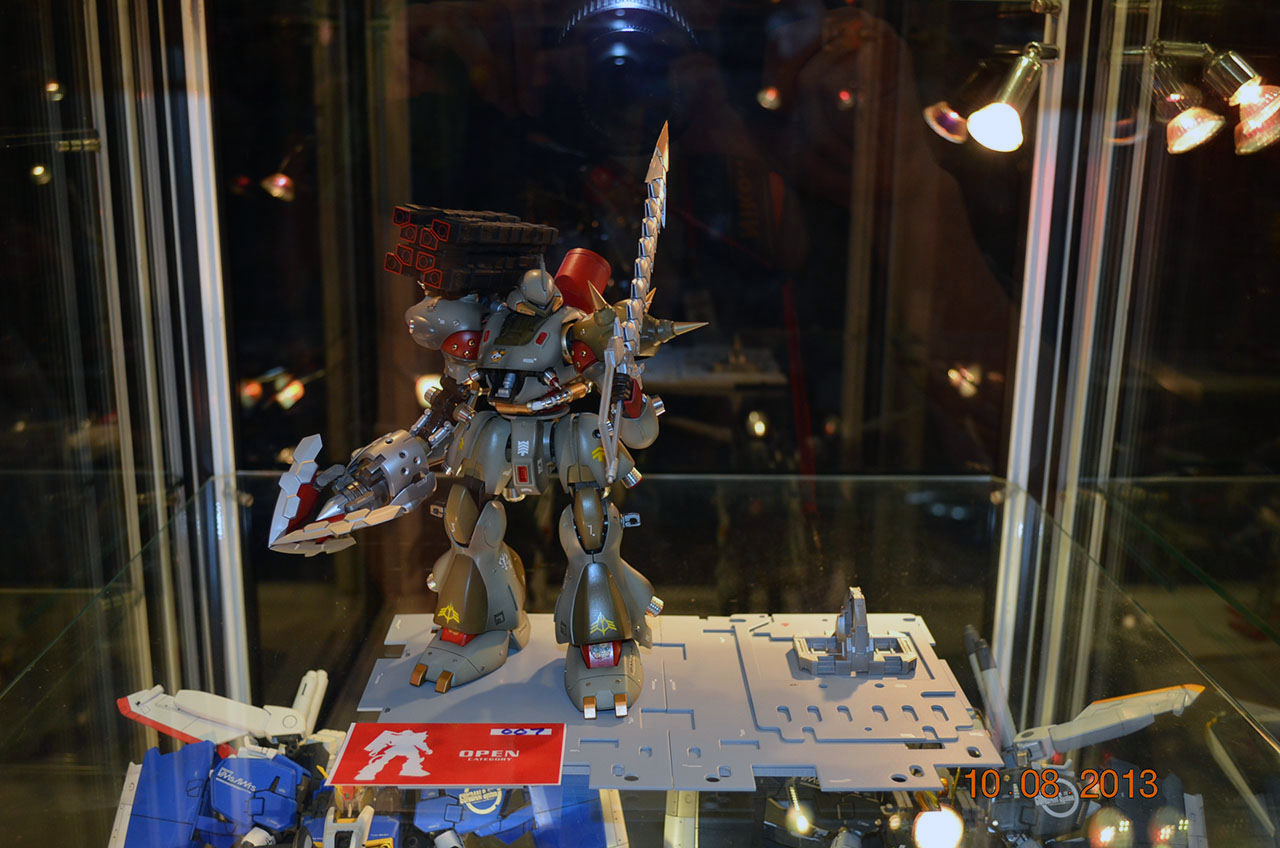
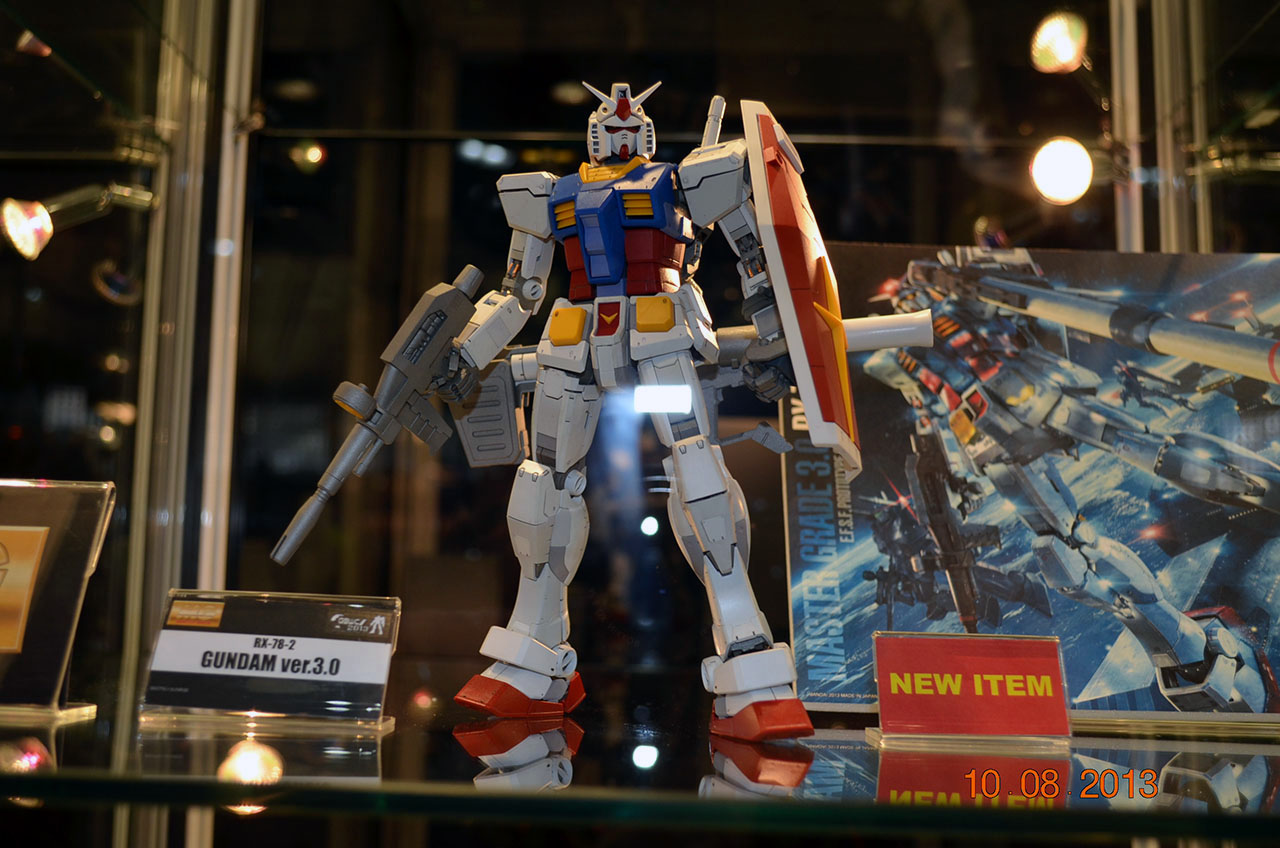
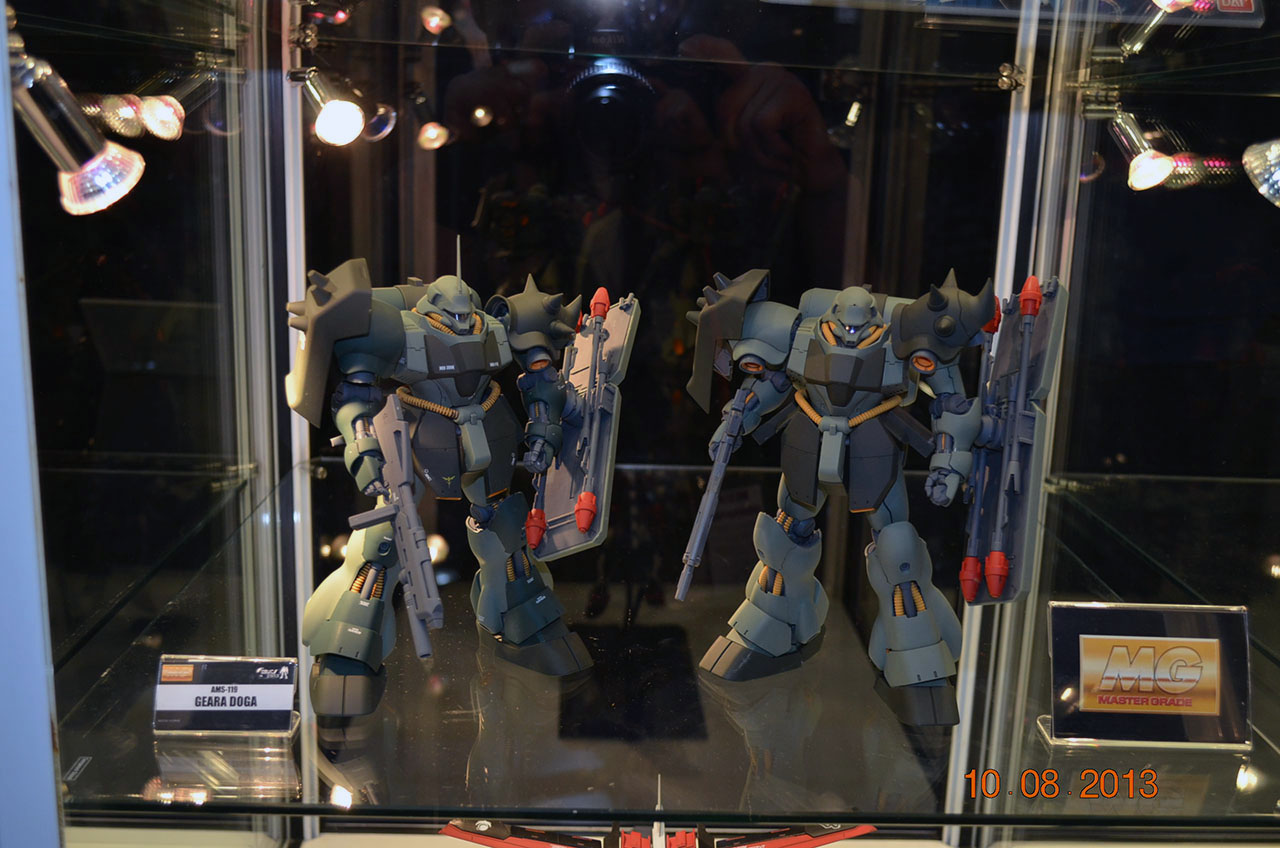
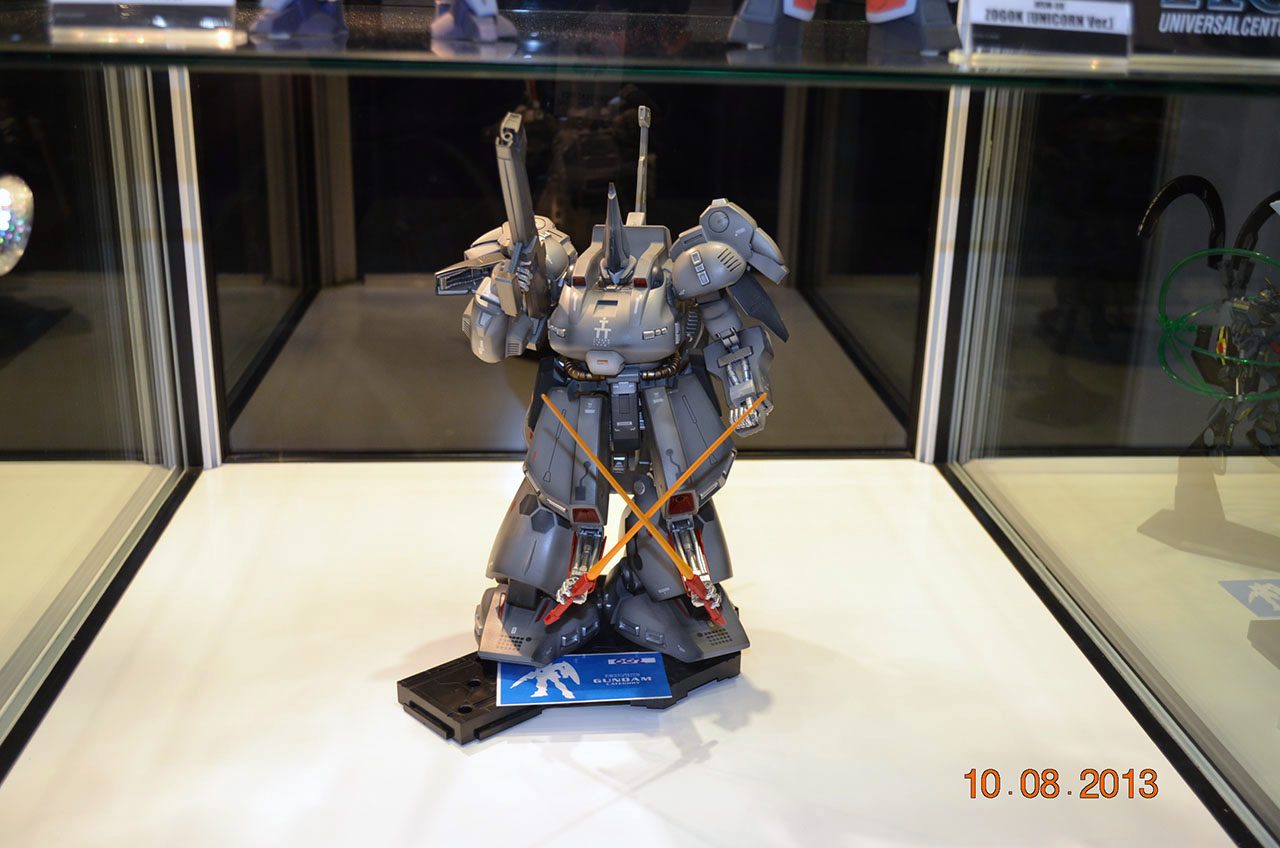
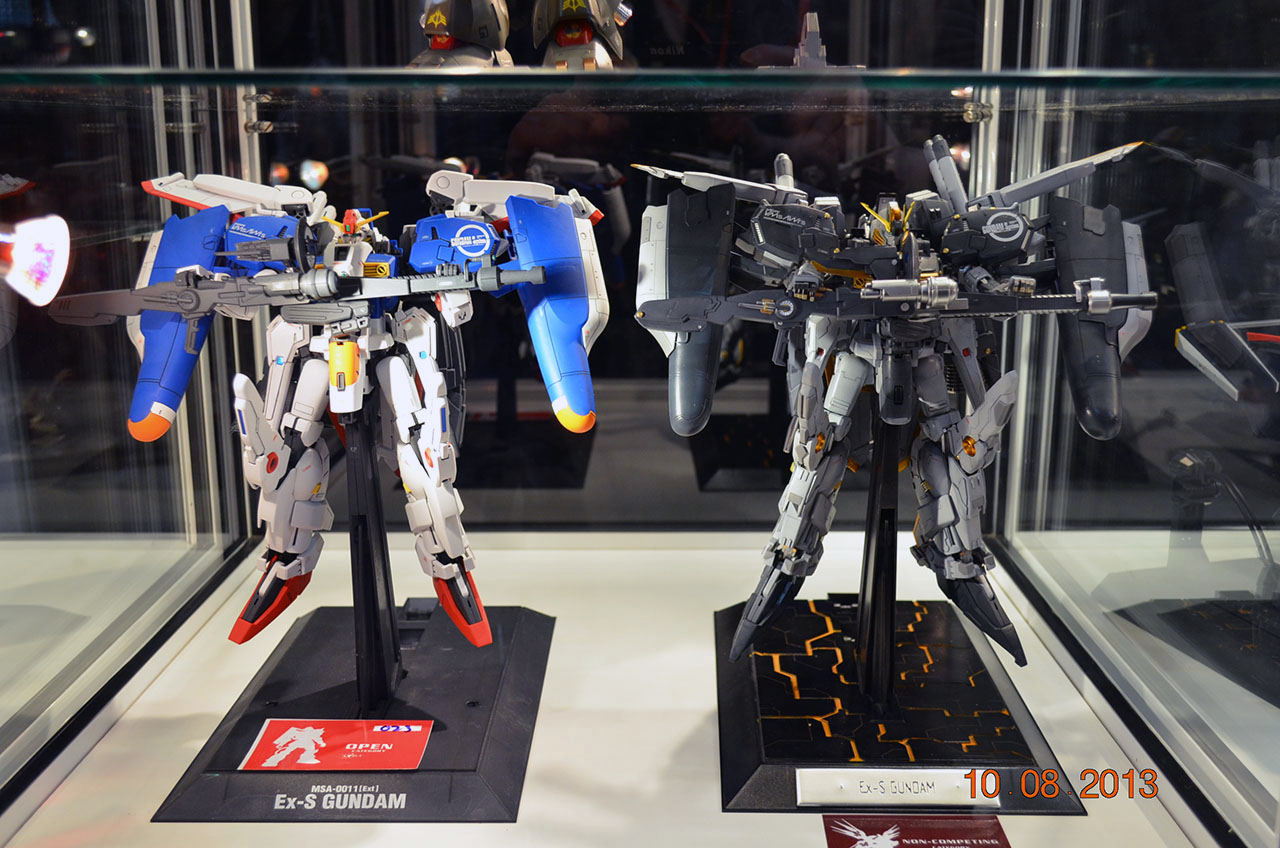
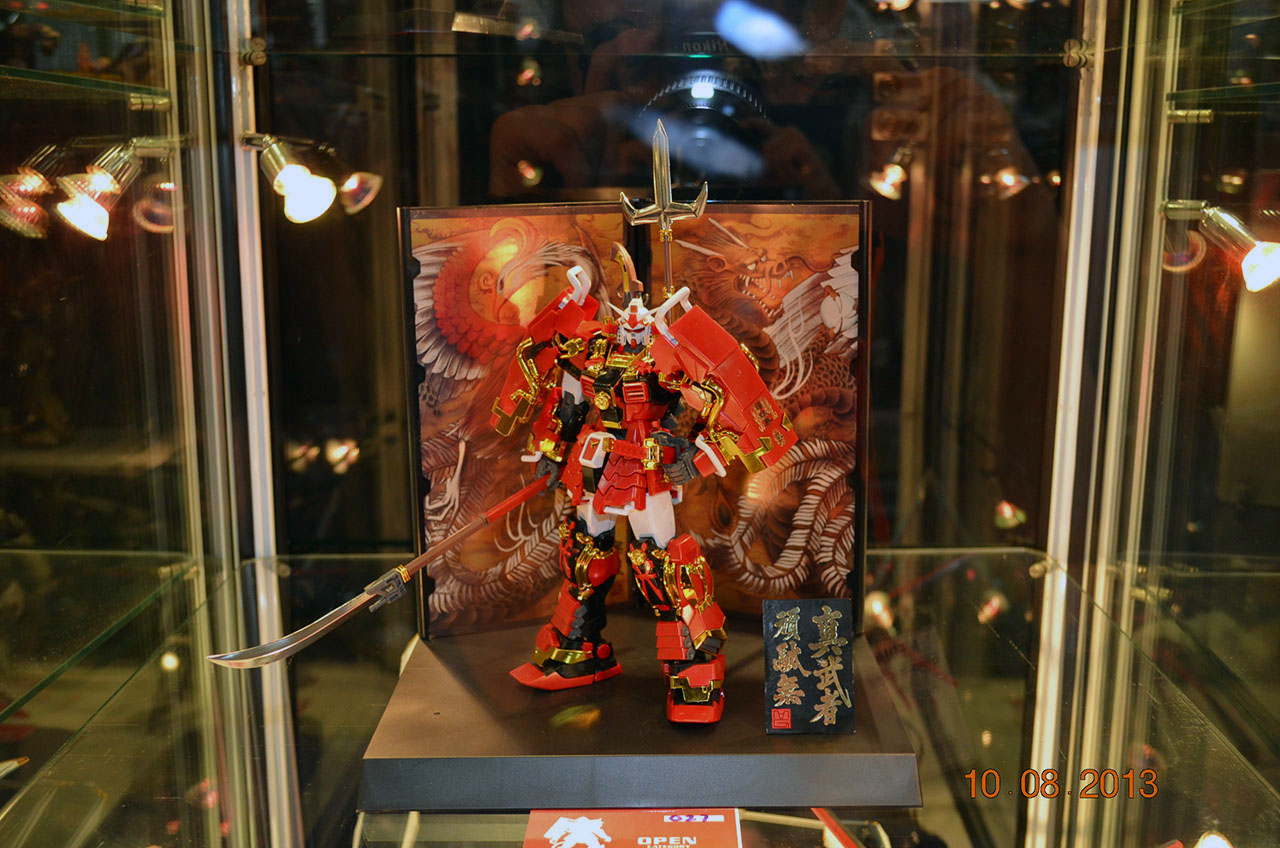
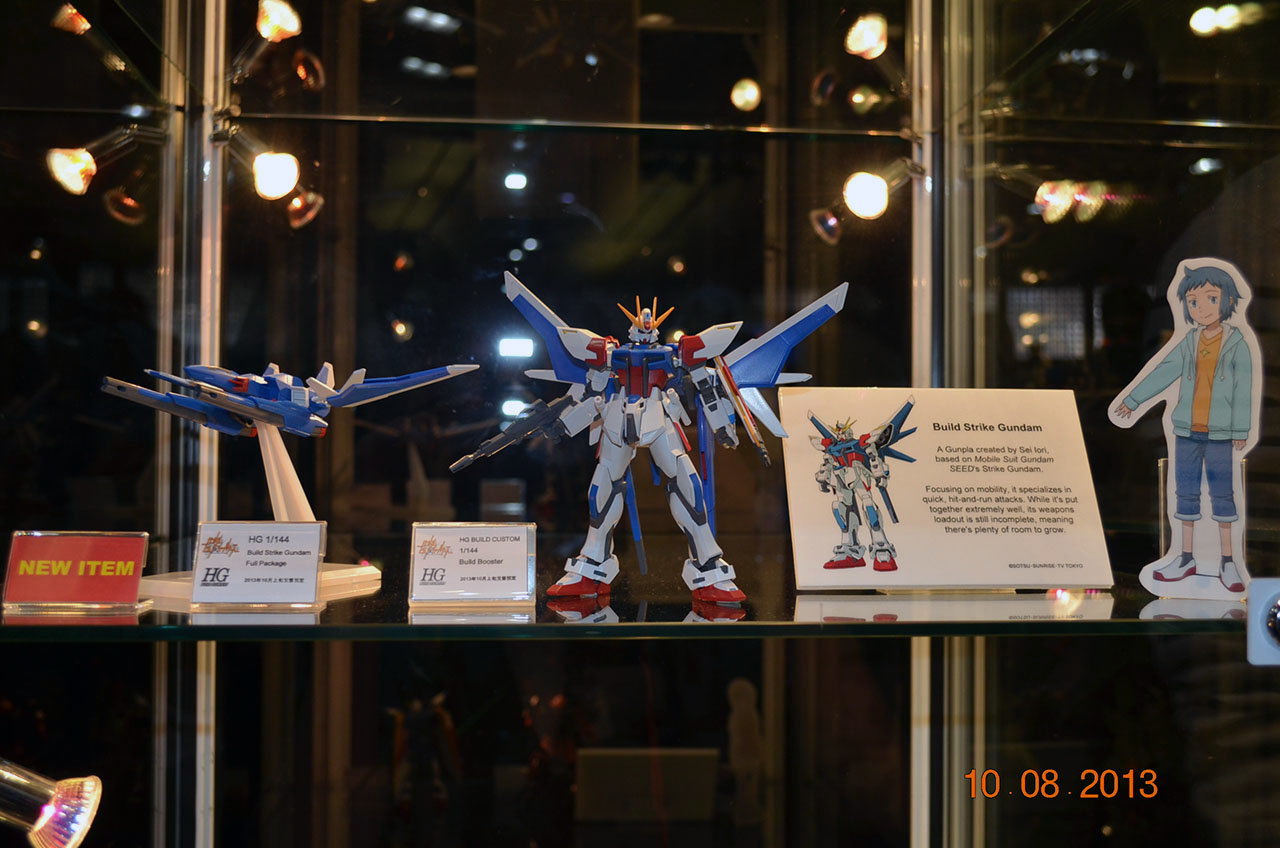
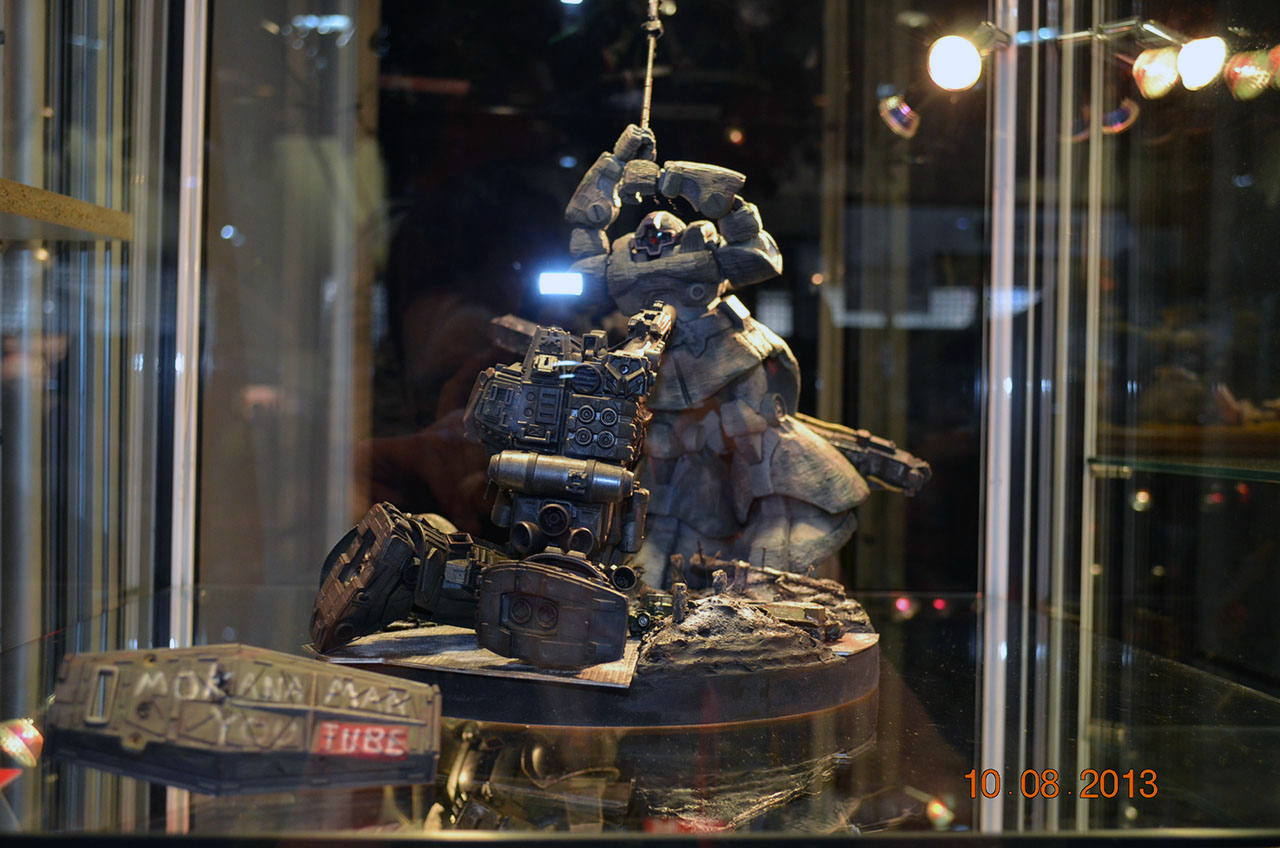
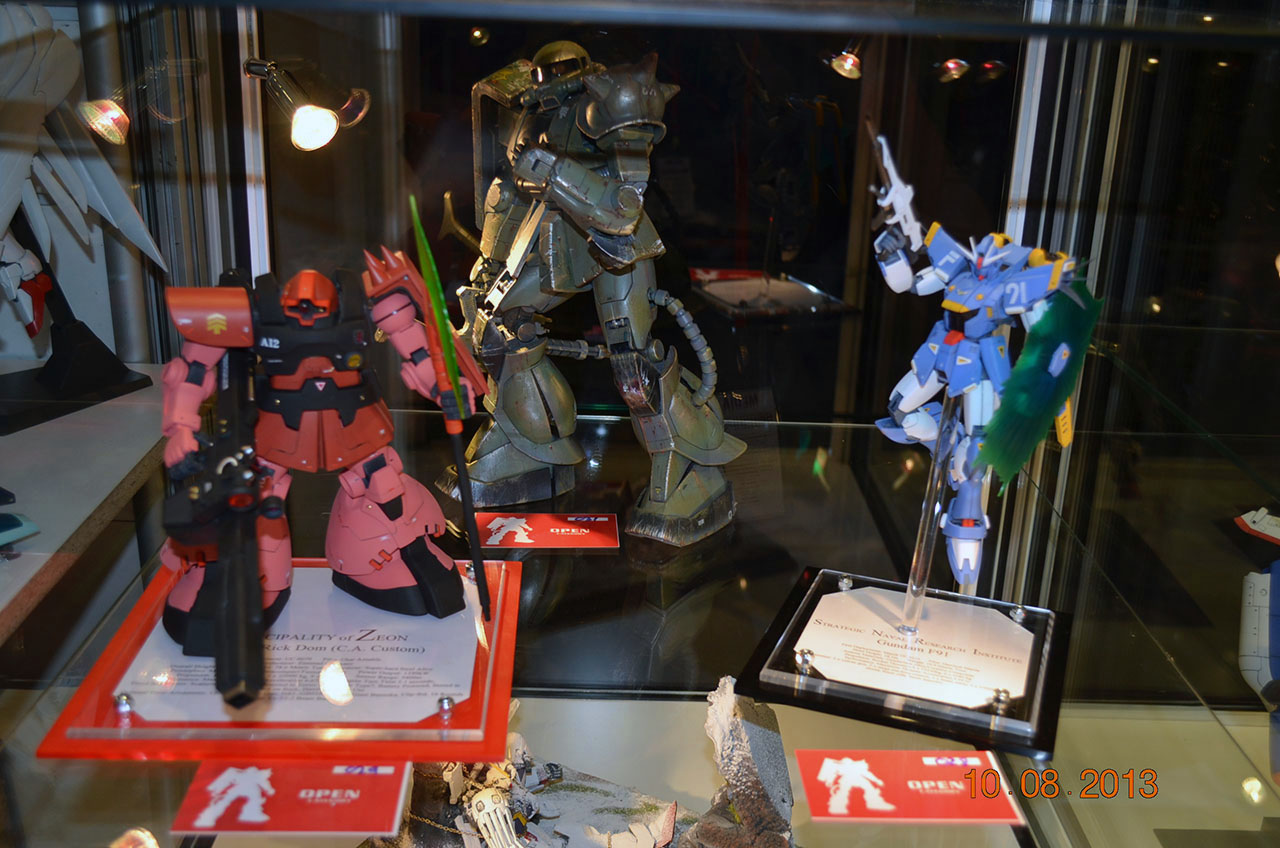
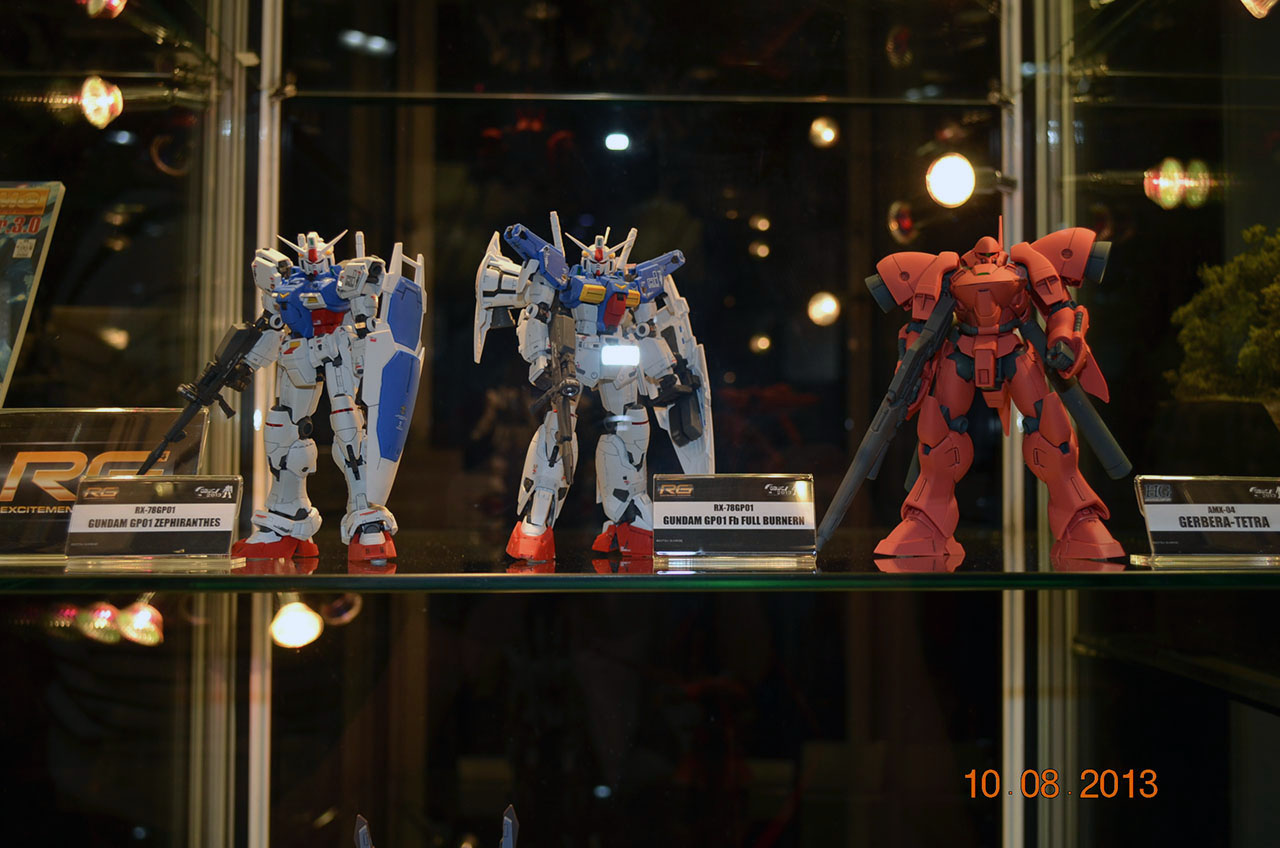
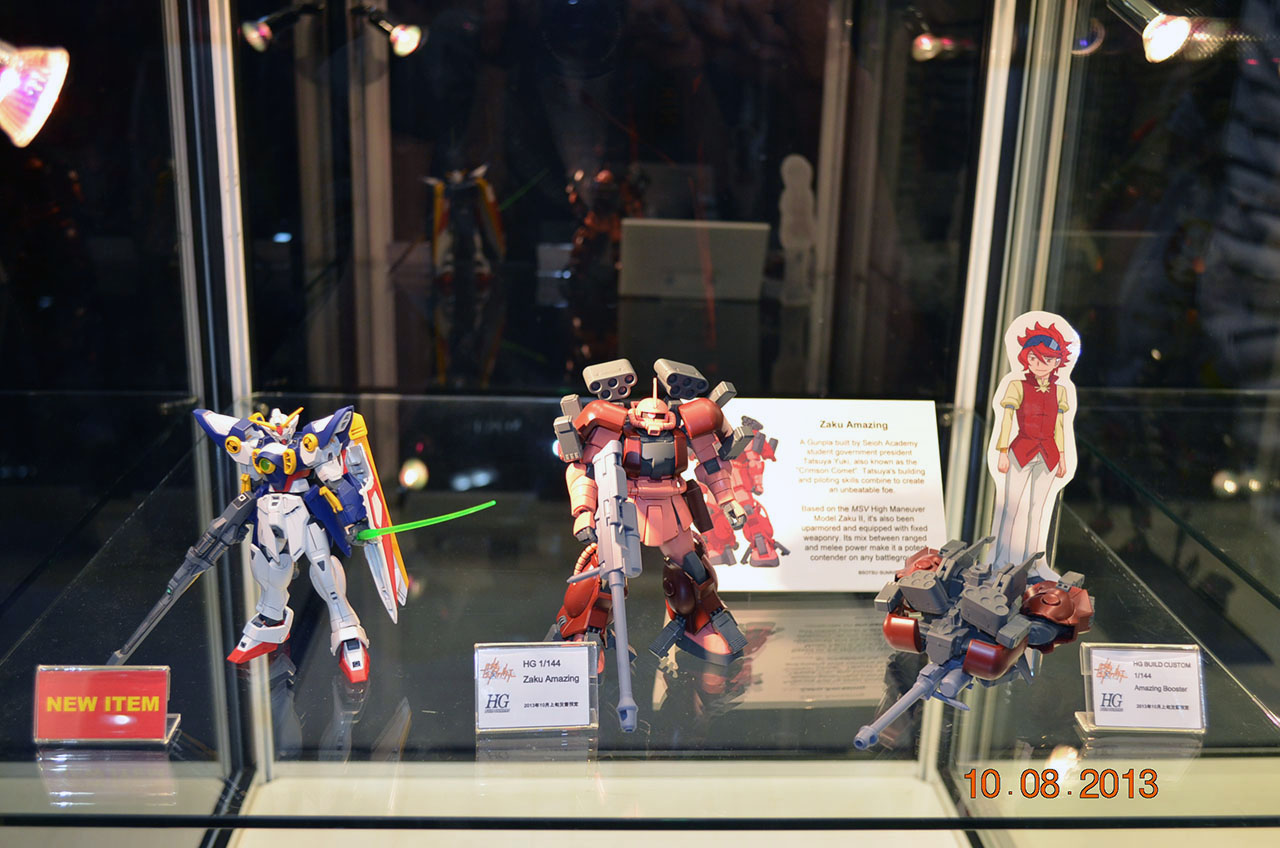
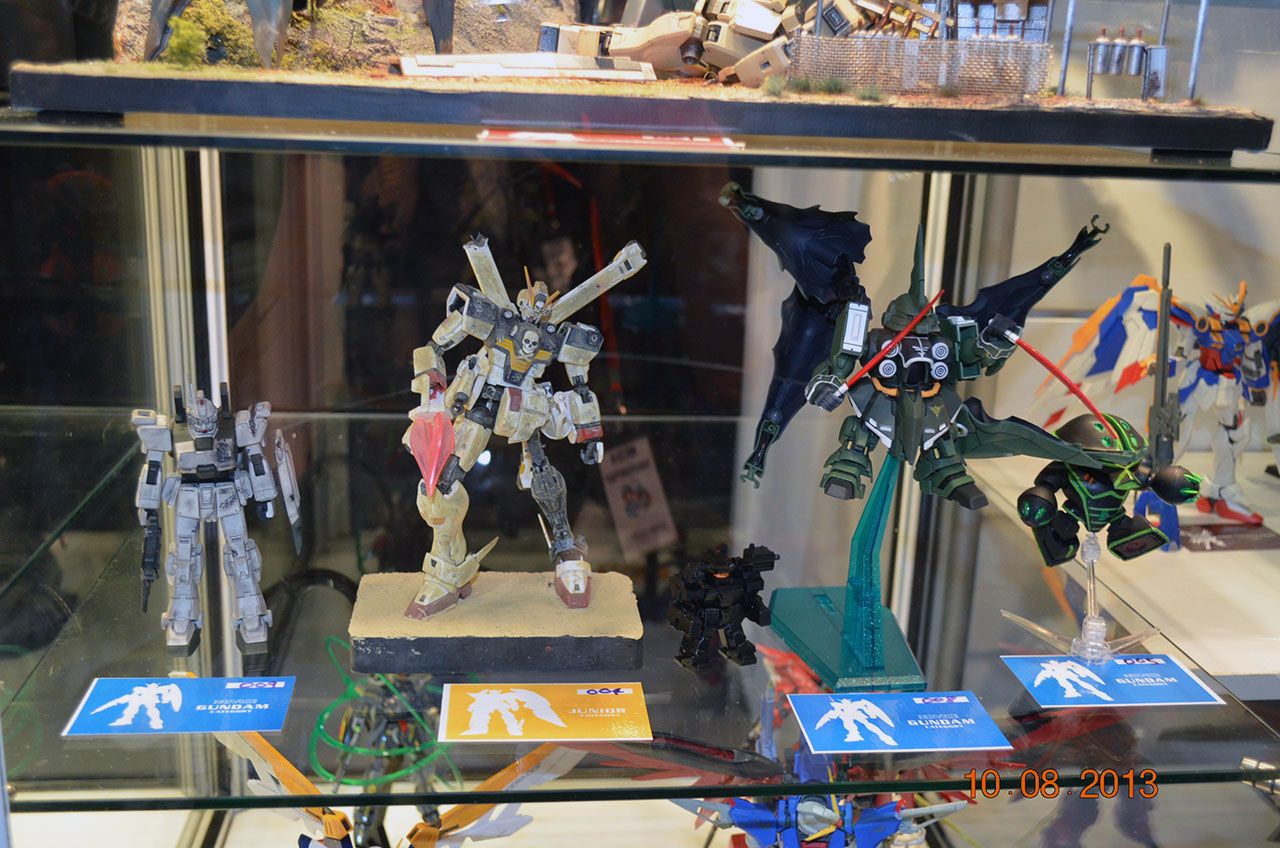
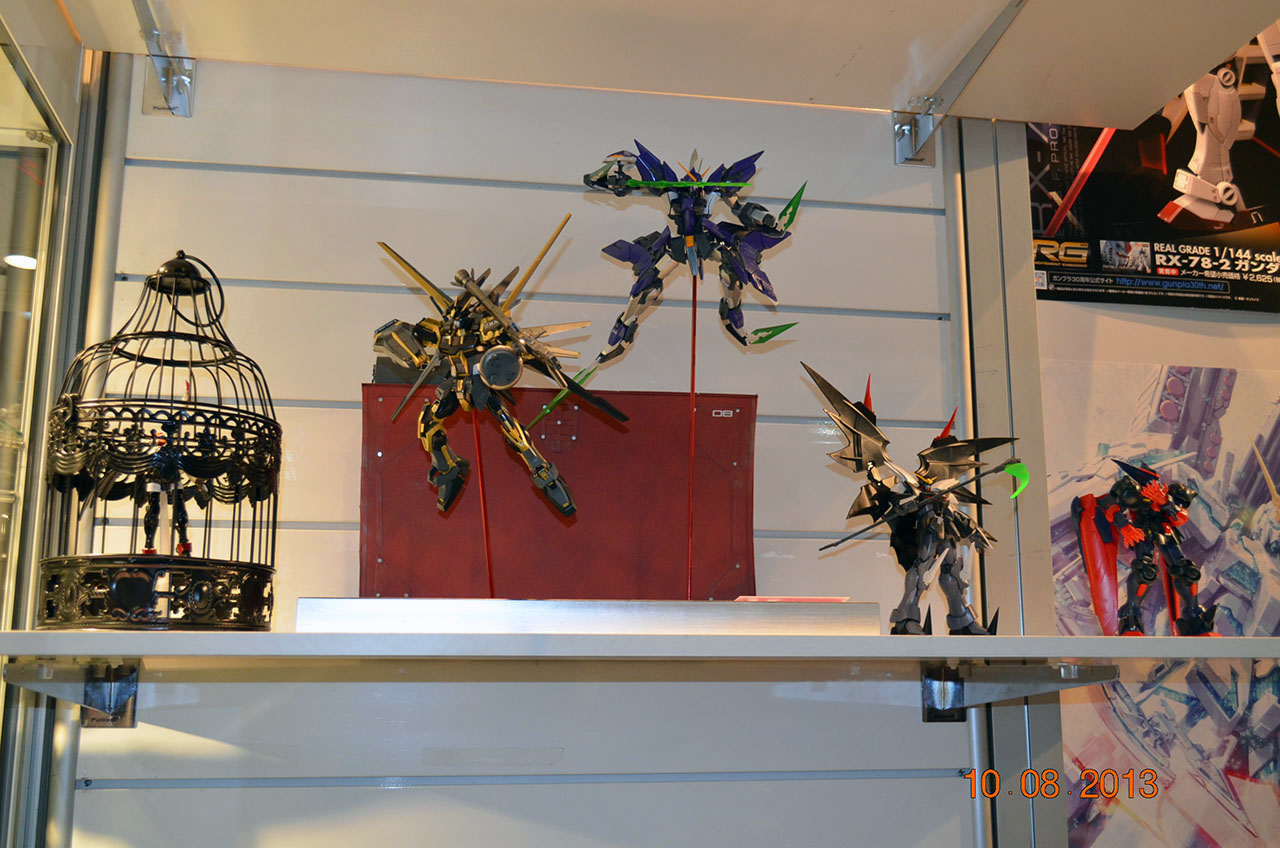
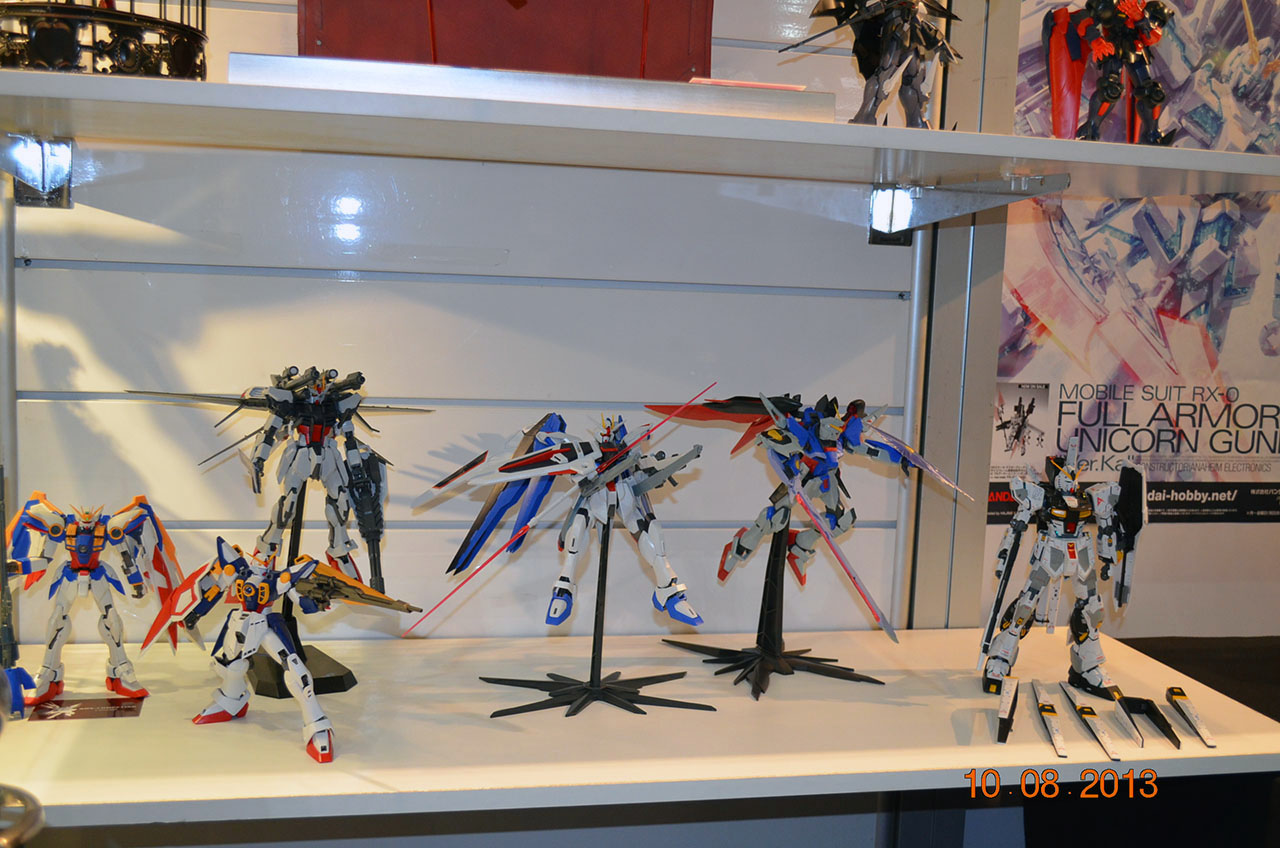
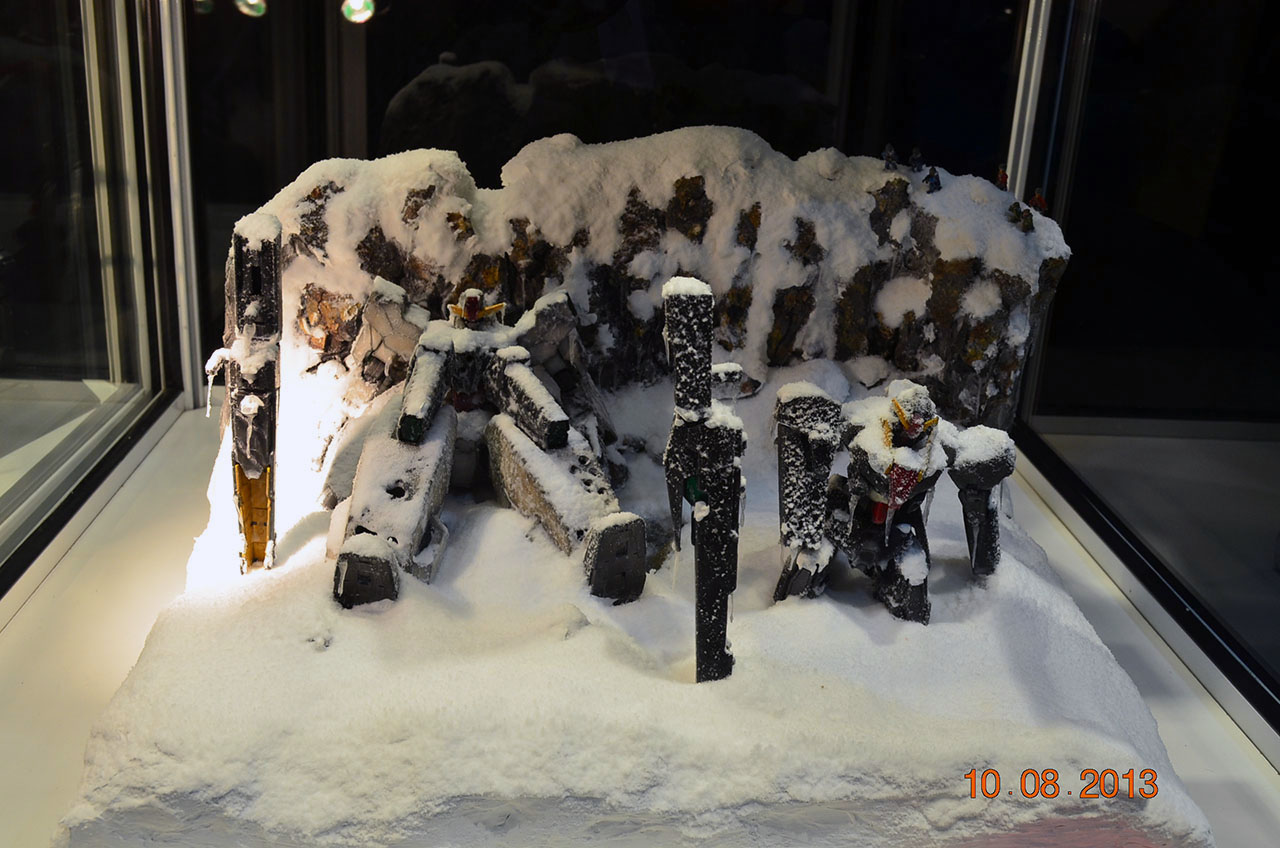
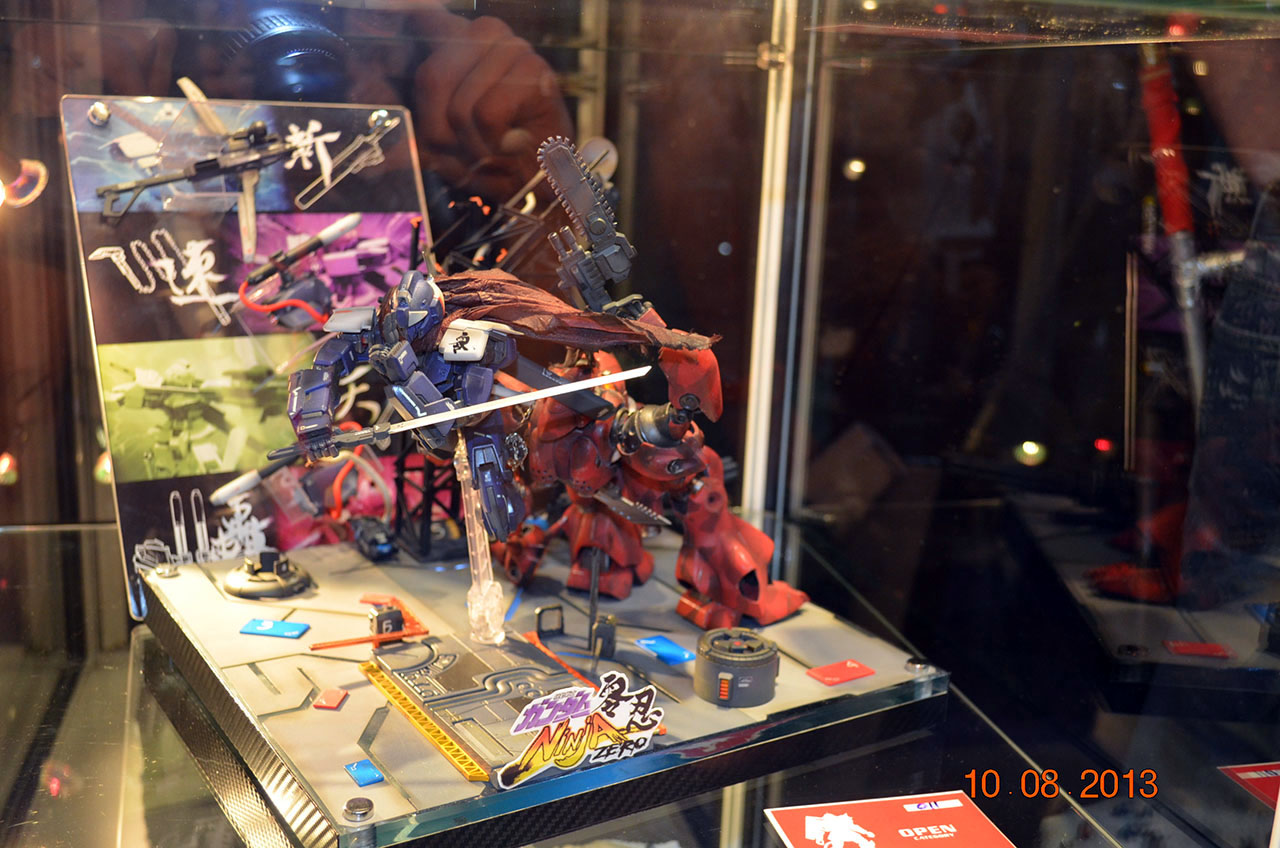
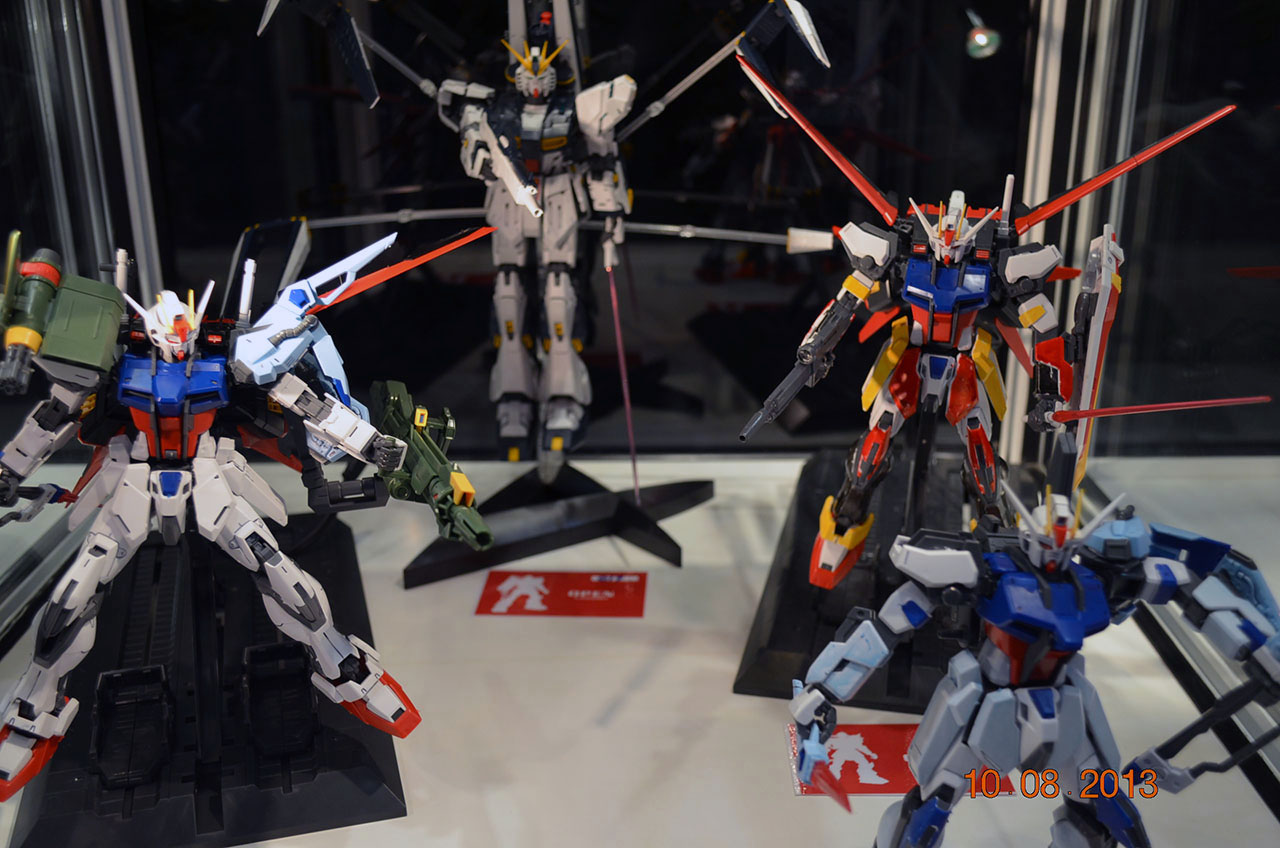
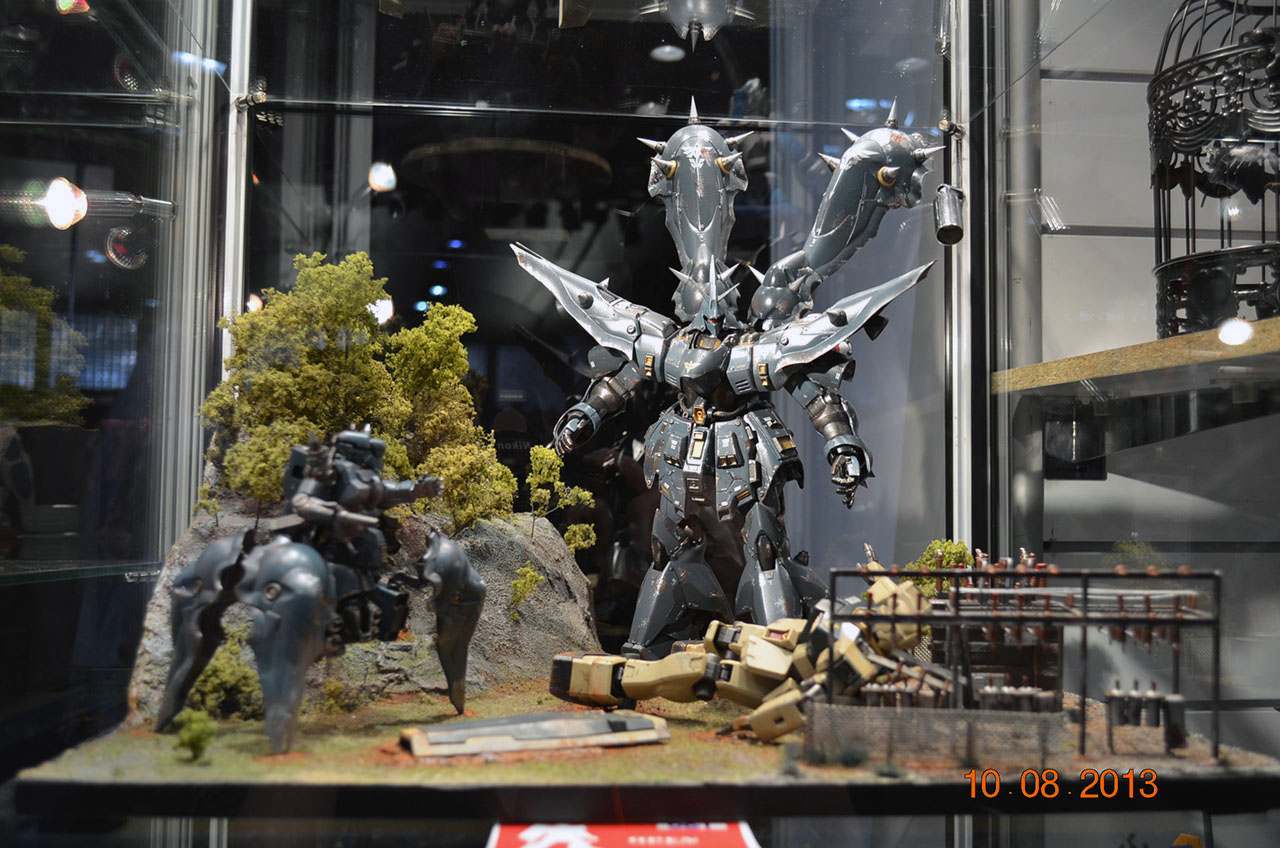
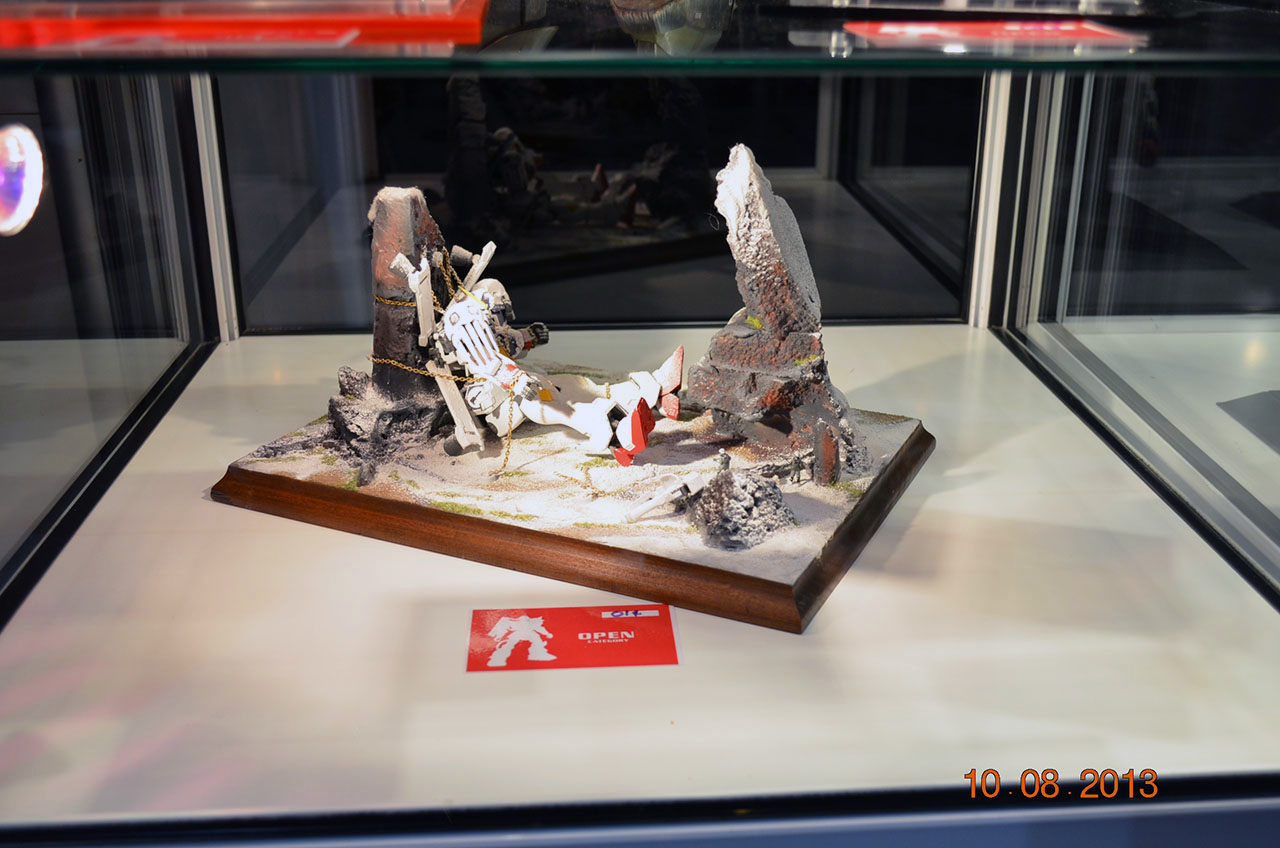
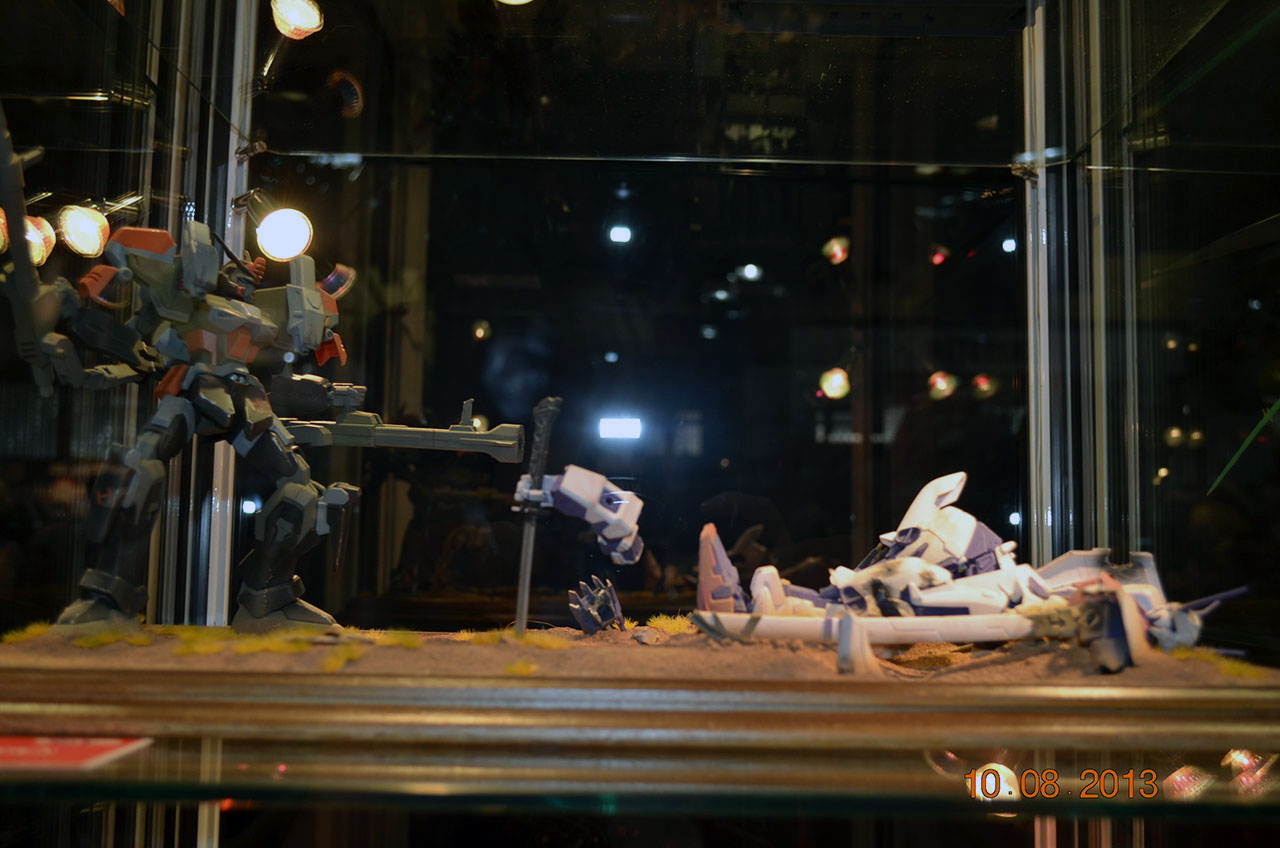
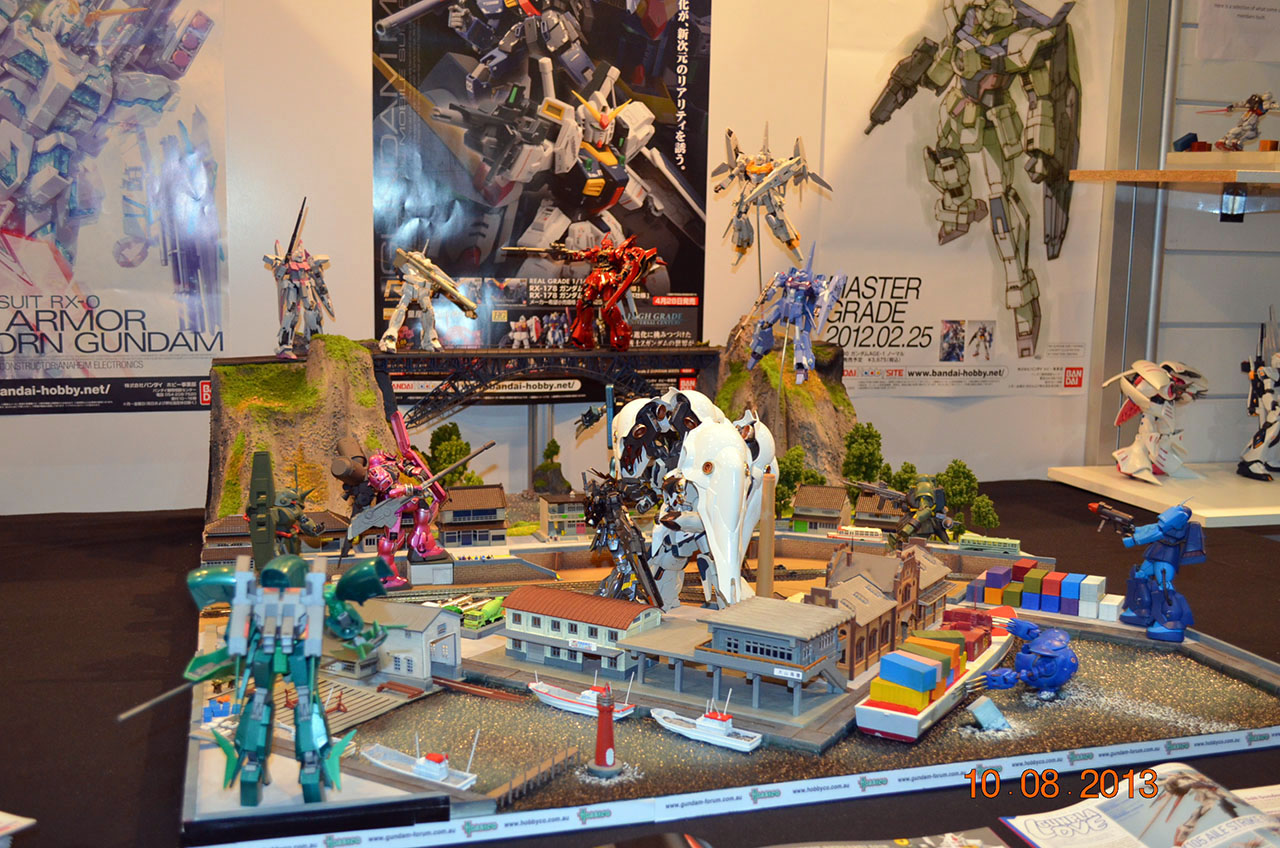
Gunpla, a word combining the phrase “Gundam plastic model”, is recognised not only in Japan but overseas as well. Gunpla Builders World Cup events are held all throughout the world. Just like last year, SMASH! once again played host to the talented Gundam model builders of Australia, giving the rest of us some awesome works of art and dioramas to enjoy.
Right across from the Gundam HobbyCo Workshops stood a spectacular array of display cases and set pieces for the models that made it to the World Cup. Everything from the classic RX-78 to the Musha Gundam, and even some original creations, all were set up and looking fantastic. My favourite would have to be that Dom crushing his downed enemy!
First prize winners won return trips to the 2013 Gunpla World Cup Finals representing Australia along with trophies and product hampers from Bandai. Other winners received trophies and hampers as well.
The amount of work that goes into these things is hard to comprehend, so check them out for yourself below! Be sure to check out the official SMASH! site and the rest of our coverage of this year’s event.
Hidenori Matsubara was one of the few headline guests at SMASH! 2013 and I was lucky enough to nab a seat and to be there for the entirety of his Q and A Panel as well as his Live Drawing in the Art Room yesterday at the convention. It was quite a small affair, it was held on the main stage of the Art Room, but that’s not to say that the place didn’t fill to the brim with eager Matsubara fans. The place was packed and, once again, the doors of the Art Room were closed and the lucky few got a chance to stay. There was no wasted time at this panel, almost as soon as Mr. Matsubara sat down the questions began rolling in and while there weren’t many questions asked Mr. Matsubara sure did answer them in detail.
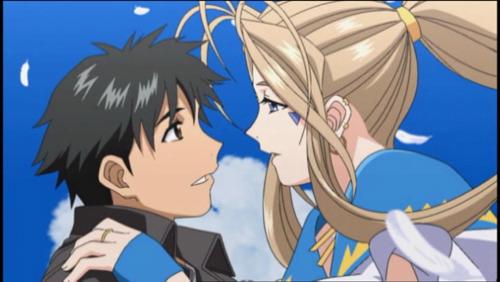
He worked on Ah! My Goddess.
He started off speaking about his past and where it all began for him, he took the audience through his work at Gainax when he first started out and how it was quite tough in that day and age to be an animator working on such an extensive series like Neon Genesis Evangelion. Despite his large resume a great deal of the questions revolved around his work on both the Neon Genesis Evangelion series and the new Rebuild of Evangelion Movies. We all got a little insight into the world of an animator and how excruciating the work hours are and how much effort these people put into their work.
Q: How have your daily habits changed since you’ve become a top-level animator?
Matsubara: Back when I was younger it was much harder to leave work and return home. I really only went home once or twice a week. I used to sleep under my work desk…at least I don’t have to do that now, although my days and nights have switched but I love what I do so it is not that big of a burden on me.
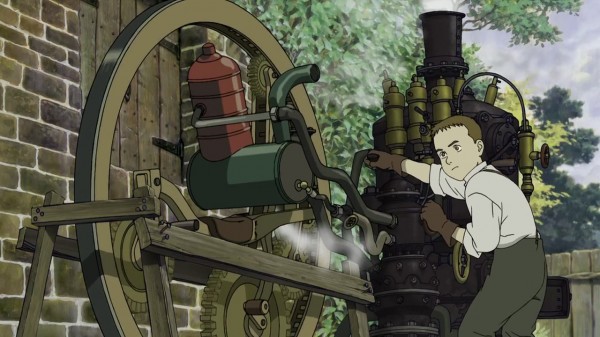
Mr. Matsubara also worked on Steamboy.
He spoke more about his childhood and what really drove him to become an animator and a character designer, people where somewhat shocked when he mentioned that his life’s work all came from the simple fact that when he was a child he liked Manga, it was that simple. It showed that the biggest of achievements can come from the smallest of dreams. He kept it fairly light-hearted the whole way through even though he did get into a bit of the tougher moments of his life and his career, he always brought it back with a nice ending to every question in the true Matsubara fashion.
Q. What was the biggest challenge you have ever faced in your career?
Matsubara: Possibly the lack of time and the lack of staff during Evangelion…I used to think that it would be better if everyone worked as fluidly as I did. A long time ago it used to take me many months to make an episode of Anime, now it takes me weeks at a time.
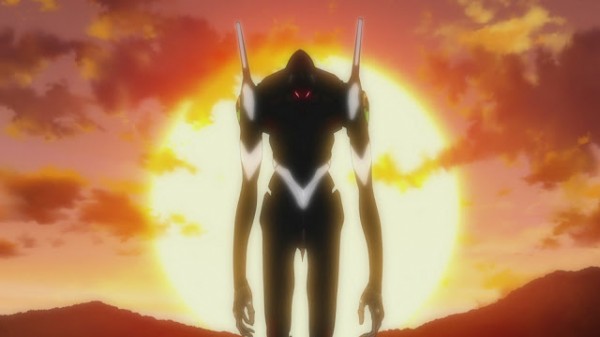
And of course, Rebuild of Evangelion.
He compared working on the the Evangelion series to the movies mentioning that it is hard to find your feet when working on a brand new series or movie because there is a great deal of stress that comes with making it good enough for people to like, if people don’t like the series then you’ve wasted a great deal of time and put yourself through quite a lot of work and hardships. He explains more in his answers to these questions:
Q. How different is it working on the Rebuild of Evangelion movies after working on the original series for so long?
Matsubara: I was never the top animator for the Evangelion series, there was a lot of work to do and nobody was sure how the series would go, it’s different now though because, in the Rebuild movies, I AM the top animator. While my responsibilities have grown I’m finding it more enjoyable because I know how popular the movies are already and it seems to lessen the pressure while making it more fun to work on.
Q. The odd imagery at the end of the Evangelion series: Was that the directors choice or a budget problem?
Matsubara: A bit of both actually. There was an extreme lack of time by the end of the series, we were only given a week or so to finish it off…I think the ending is fairly odd too, like a lot of you, but I also think it ended the series in a good way, it forces people to think and to make their own decisions on what exactly happened. If we had the time we would’ve had it be a lot closer to what you see in the movies.
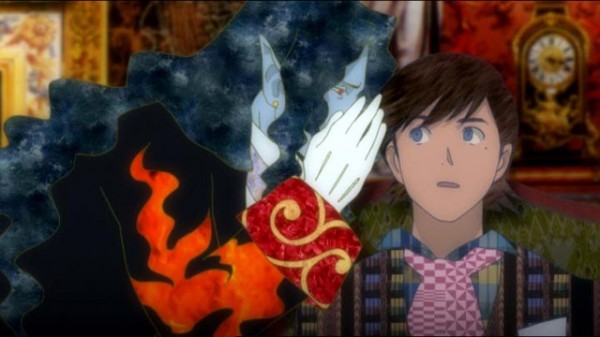
Don’t forget Gankutsuou!
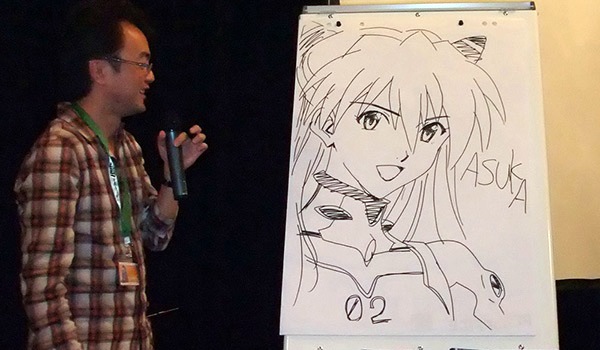
Just before Hidenori Matsubara finished up his panel for the day he spoke a little bit about writing and drawing Manga. He said that to him Manga is a hobby and he likes it that way, he mentioned that he feels like a lot of the people out there who want to become a Manga artists should think of it the way he does; as a hobby. “Do what you enjoy and do what makes you happy!” is the way in which he answer his final question. After the Q and A panel he sat down once again to do a live drawing for the audience, the drawing would then go on to be put up at the Charity Auction as one of the items that could be won. Unfortunately we were not allowed to take any pictures of the work but I can tell you what it was and for all you Evangelion fans out there; it’s a good one! Mr. Matsubara took the next hour or so to illustrate a couple of drawings depicting Asuka (Evangelion) punching the main chracter, Shinji (Evangelion), right in the face with the last panel having Asuke saying angrily; “The End”. A funny way do end a fantastic panel, once again, in true Hidenori Matsubara style!