Since Disney Infinity’s Toy Box Submission Contest was a resounding success, the folks over at Disney have decided to do it again. This time, players are tasked with designing the best (and most extreme) sporting arena in the Disney Infinity Extreme Sports Challenge. So get your creative caps on players, and start designing the most radical (do people still say radical?) sporting arena you possibly can!
To help get the creative juices flowing, Disney have also released another five free Toy Boxes for players to download and try out. This time the Toy Boxes are;
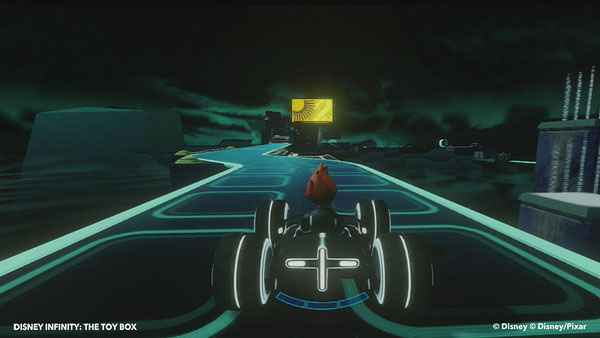
Tron Highway – Race a Light Runner, battle enemies, navigate mazes and find hidden paths to get to the end of the broken highway.
Sugar Mania– Take King Candy’s Royal Racer for a sweet spin on a Sugar Rush-inspired racetrack.
Monster Rally – Pull off a series of tricks in a side-scrolling stunt show spectacular.
Cosmic Platformer – Compete with friends on an obstacle course that’s out of this world.
It’s a Trap!– Pay close attention to get through these puzzling rooms. Beware of traps and double jumping!
As of now, this brings the total number of DLC maps up to 25! What a huge number, and there are many more to come down the line. You can check out the other four previously released map packs here; Map Pack 1, Map Pack 2, Map Pack 3, Map Pack 4.
So will you be entering the Toy Box Challenge this time round? Let us know in the comments below, and if you haven’t done so already, check out our review of Disney infinityhere. As always, remember to stay tuned to Capsule Computers for all the Disney Infinity news as it becomes available.
A scant 60 days since Ubisoft’s Spartacus Legends has launched on consoles, and since then has become the quickest growing free to play game on consoles. However, the developers are not done, as Tournaments have now been announced as an imminent add-on for the game.
When they launch by the end of Spring, the Tournament Series will pit gladiators against one another to determine the 1 true Champion of Capua. Players who participate in the tournament will be given special in game rewards such as; gold, limited edition equipment and exclusive gladiator titles, including “Champion of Capua.
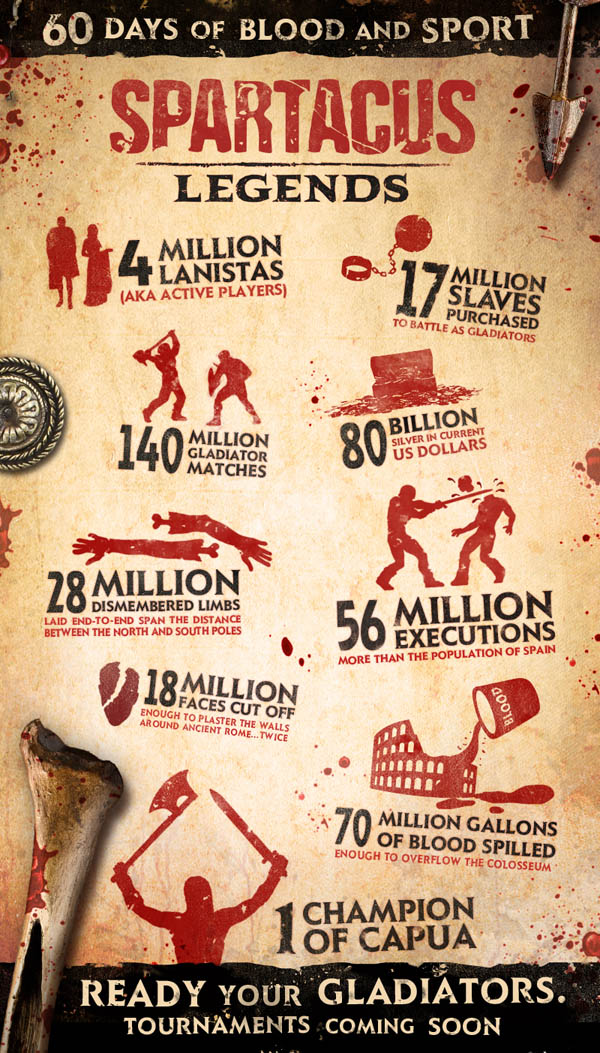
Spartacus Legends has become the fastest growing free to play game in console history, and to showcase just how impressive that is, the guys over at Ubisoft have put together a little infographic to show you the levels of violence that a game can achieve in just two short months. Check out the infographic below and remember that for all the Spartacus Legends news as it becomes available, be sure to stay tuned to Capsule Computers.
Here we are again for another round of CC Comic Zone, the place where we come to talk about all things Comic, Manga, Graphic Novel and anything within Illustrated Media. In this CC Comic Zone I want to talk about the Evil Counterparts of our favourite heroes and main characters. I’ll explain why I like the idea of Evil Counterparts within story-lines and why I feel like they should be in every, if not most, Comics, Mangas and Graphic Novels. Now without further delay, let us begin!
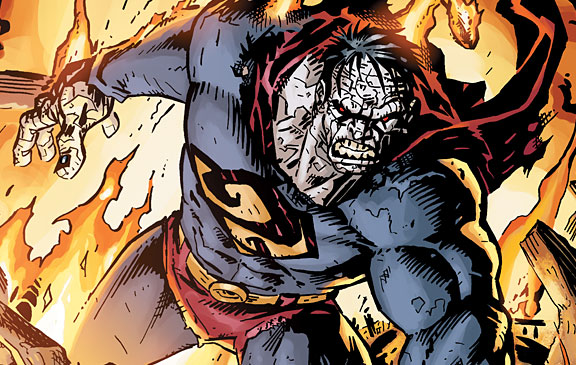
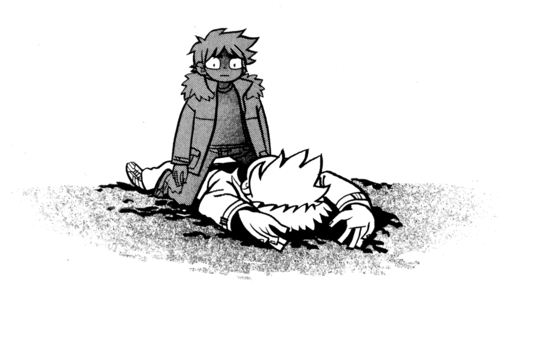
Every good protagonist has a fairly similar antagonist to “almost” best them in every way, I say “almost” because it’s not often that we’ll see these types of characters win against the heroes. This is an extremely old trope that you’ll notice within a great deal of western comics as a separate character that the protagonist will have to fight against, for example; Superman and Bizarro. That is the most purest form of this trope in my opinion. We see it so much yet I don’t believe audiences have gotten sick of it because writers seem to find different ways of having them in their stories without it getting to cliché or just down right annoying. I, for one, happen to like the idea of an Evil Counterpart, they’re always a lot cooler than any protagonist because essentially they’re the same but with more freedom because they’re evil, it also makes for some really cinematic fight scenes which is always a plus!
– Nega-Scott is defeated by Scott. or is he? –
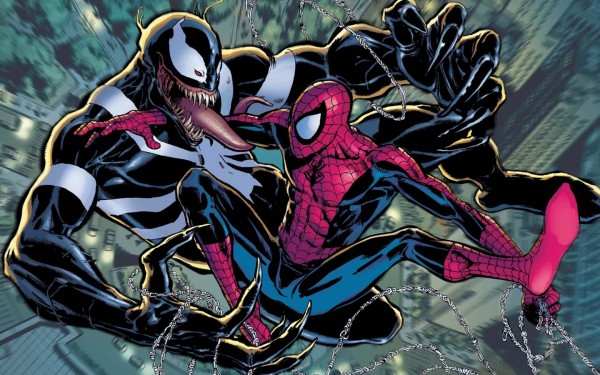
Spiderman has Venom who is basically a bigger, better, more savage version of Spiderman. Now Venom never really “gets” Spidey but he does come close a great deal of the time and that’s because they’re so similar and it stands out more in this example than a lot of others. Because the symbiote we know as Venom was originally attached to Peter Parker, his Spider Senses don’t see Venom as a threat, Venom is just seen as another part of Spiderman so it makes it so much easier for the big guy to sneak up and “attempt” to take the web-slinger down. That’s a very physical example of an evil counterpart. Graphic Novels like Sharknife also use this kind of thing. Sharknife’s, basically, one and only big enemy is OrcaSword. One is red, one is black. One uses a knife, one uses a sword. It’s really fun to see because they’re equally matched which eliminates the whole “protagonist always wins” factor.
– Spiderman VS Venom –
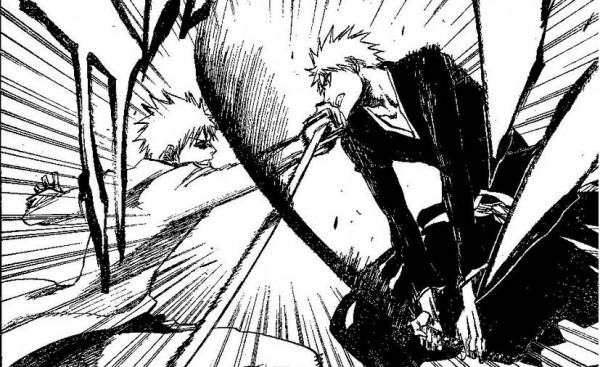
Yes, Western comic writers do use this a lot but that’s not to say that our friends in the East don’t do the same! A lot of Manga have these characters, so many that I probably couldn’t even recall them now, I probably don’t even know half of them. The difference, I’ve noticed, is that Manga stories seem to have Evil Counterparts that are not actually seperate characters from that of the protagonist, instead they’re like “shadow beings” or “dark versions” of the characters we love. Ichigo from Bleach is a huge example of this with his Hollow form both being part of him and part of his sword. Naruto has one too when he’s learning to use his Tailed-Beast powers correctly. These types of characters only pop up now and again and they’re used as more of a “learning” process for particular characters. It’s like the physical representation of “overcoming your demons”.
– Ichigo goes up against himself, Hollow Ichigo –
Sometimes it’s switched around, for example; jackie Estacado (from The Darkness) is the user of The Darkness which, for all intents and purposes, is an evil power, well his enemies are the Angelus. The name makes them sound real nice and peaceful and fighters for justice and all that is good but, in The Darkness, they’re the evil ones and our protagonist is Jackie who uses The Darkness. It’s a nice little “switcheroo” and it takes audiences by, not so much surprise, but interest. There are different types of Evil Counterparts though, there’s the physical opposites, the inner evil versions of a character, there are characters who are similar enough to be considered counterparts there are so many I could talk about. Hit up our comments section below this article and let me know about your favourite characters and their Evil Counterparts. I could really go on for days and days but I wont, instead I’m going to list a few of my favourite protagonists and their Evil Counterparts:
– Wolverine and Sabretooth (Marvel)
– The Hulk has The Red Hulk (Marvel)
– Scott Pilgrim has Nega-Scott as well as Gideon Graves (Scott Pilgrim)
– Goku has Vegeta and, in The Tree of Might, Turles (DBZ)
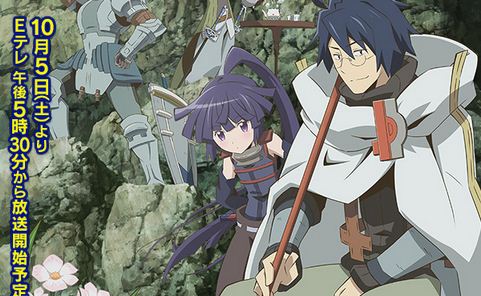
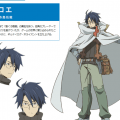
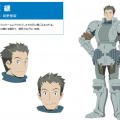
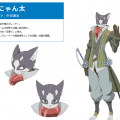
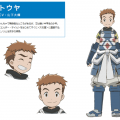
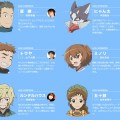
Log Horizon is a new Anime series which will be starting it’s run during the next Anime Season which will be starting in October. A video was just released which shows us a 2-minute preview of the story, characters and world that Log Horizon is based in. We’re shows the main character Shiroe and his two companions, one which is his old friend Naotsugu and the other is a lady assassin named Akatsuki. The story revolves around a computer game where 30,000 Japanese gamers have been trapped and must survive in this fantasy, MMORPG world. Shiroe and his friends are now a part of this world and, like all the other players, they must survive until they can find a way out of it. Not only has there been a video release but there has also been some awesome looking character design images released which you can see below in the gallery. To see the video itself just head down to our Featured Video section and it’ll be there waiting.
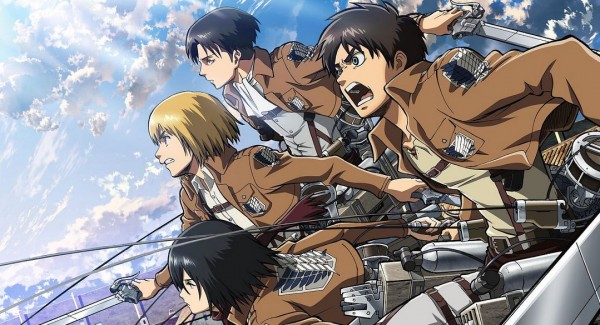
A new Promotional Video was just released for the upcoming Attack On Titan3DS Game, Last Wings Of Humanity. The video shows the more action-packed game sequences as well as some actual gameplay footage and it seems to be slowly looking better and better with ever piece of information and footage that gets released. The gameplay will revolve strongly around the use of the 3D Manuever Gear, much like in the Anime series and the Manga series. It has already been confirmed that Eren, Armin and Mikasa will all be playable characters but it has also been teased that Levi and other characters MAY be available for you to play as. It is yet to be confirmed though. The game is set for release on the 5th of December and you can see the Promo Video from the game just below:
Another small video promo/teaser that has begun streaming is one for the Attack On Titan OVA that is set for release on the 9th of December. The OVA’s story follows a soldier named Ilse. If the OVA is anything like the Manga side story it is based off of, it should follow the a Scouting Legion expedition wherein which every single member of the team was killed except for Ilse herself who comes into contact with another Titan, the thing about this contact is that she has no horse and no working 3D Manuever Gear. This story is surely going to be a heart-wrenching one. You can see THAT Video Promo in our Featured Video Section Just below.
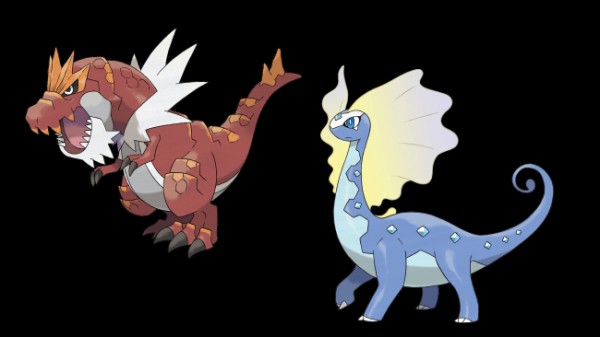
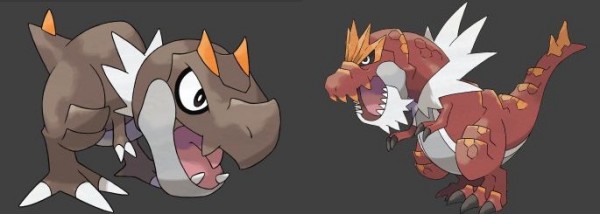
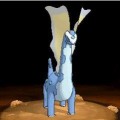
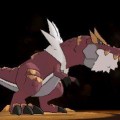
Over the weekend there was the leak of two new Pokemon for the upcoming Pokemon X and Y games. The leaks were of the evolutions of the two fossils that feature in this next generation. Now we here at Capsule Computers wanted to make sure that these leaks were 100% legit before reporting on them because often enough leaked images or information aren’t that reliable, well it just so happens that these leaks were confirmed to be entirely true by Game Freak and, as you can see above, we’ve even been given some fantastic-looking Official Images of the evolutions. Now without further delay I’m going to introduce you to the newest members of the Pokemon X and Y roster.
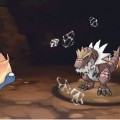
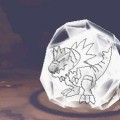
First up is Aurorus the Tundra Pokemon and the evolution of Amaura. This Rock/Ice type Pokemon has the Ability Refrigerate (the same as it’s pre-evolution) and it’s confirmed moves are Aurora Beam and Freeze Dry which is said to be super effective against water-type Pokemon. “Aurorus can blast freezing cold air to damage enemies“. Next is the Pokemon Tyrantrum the Despot Pokemon and the evolution of Tyrunt. This Rock/Dragon Pokemon has the Ability Strong Jaw (the same as it’s pre-evolution) and it’s confirmed moves are Crunch, Dragon Tail and Head Smash. “Tyrantrum’s greatest weapon is its gargantuan jaws, which can shred thick metal plates as if they were paper“.
Both these Pokemon would make great additions to any team. Below are a few in-game screenshots of the two in action, they look fantastic and I can’t wait to see them first-hand once the game is released. Remember the game is set for release on the 12th of October, for the 3DS, which is only a few weeks away so if you havn’t pre-ordered your copy I suggest you head to your local game store now!
Joust Legend Developer: Rebellion Games Publisher: Rebellion Games Platforms:iPhone (Reviewed), iPad, iPod Touch Release Date: 13 September 2013 Price: $1.99 – Available Here
Overview
There are so many iOS games out there and most of them really just don’t do it for me, they don’t force me to strive to complete the game nor do they keep me around long enough to truly appreciate it but every once in a while a game comes along that blows the others out of the water and truly impresses me. Straight out of the gates I have to say that Joust Legend is one of those “primo” titles. You’re a low-level knight that is knowledgeable in the art of jousting and the whole aim of the game is to build up your character and win the King’s Tourney. It’s so simple of a premise yet it hasn’t been done before, at least not to this calibre. I don’t want to give too much away in the first paragraph of this review so read on to see what exactly I liked about this game.
Gameplay
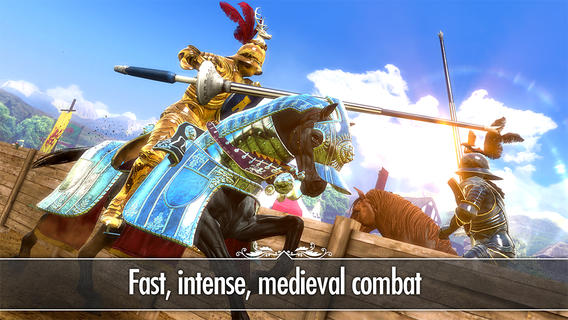
Joust Legend has a bit of a difficult style of gameplay that has you struggle against both your horse and the strength of your knights arm. Let me take you through a typical joust: You start of on your horse is it, kind of, “idols” at the beginning of the straight, it jerks back and forth and a bar appears below it which continues to fluctuate, your job is to press down on the screen and struggle with the horse until the bar hits a green glow which signifies a perfect launch. The amazing thing about this is that, even though there is no rumble feature, it feels like you really are struggling with a horse. Next up is the run and contact: A bar will appear to the right of your character who is now in motion, there’s an indicator on the top of the bar that shows how far away you are to the enemy, you swipe down and your knight will lower his lance, the aim here is to keep your finger on the screen and try to sync up to either the “Body Contact” are of the bar or the “Head Contact” area of the bar, obviously the head being the harder to hit. You get special bonuses for doing special things like making contact with the crest or the head and you get an even bigger bones when you break your lance. The gameplay is fantastic and it actually feels very rewarding.
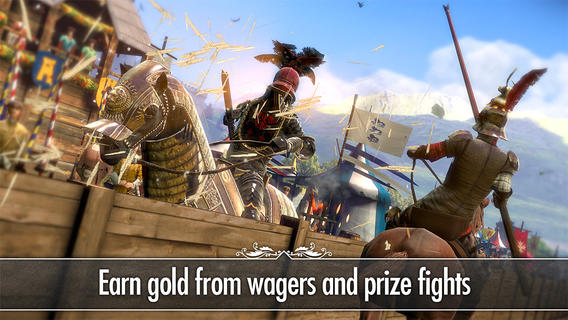
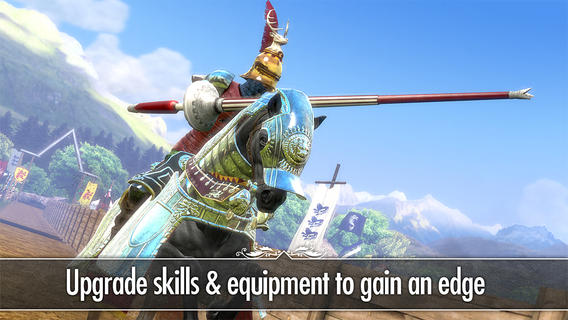
There are four different game types to choose from so you never really run out of things to do and if one gets boring or too hard you can just swap out for the time being and try another style of game. Practice, Prize Fight, Wager and King’s Tourney are the four types you can choose from and they’re all pretty self explanatory. Prize Fight is where you earn power-ups to use in any of the game types and Wager is where you go to, primarily, earn the big bucks to you can customise your knight and horse. Practice is practice and the King’s Tourney is the main part of the game where you go up against other high-level knights. There’s so much to do and earn and also so much to unlock. The thing I like most about this game is that you have to learn to get good at it, it doesn’t just put it on a silver platter for you and you’re expected to just win, it forces you to learn and concentrate and I find that really awesome. The control scheme is so tight and it is so well-rounded of a game, especially for a mobile title. It’s fantastic and there really is nothing the development team could have done better and that’s the honest truth.
Audio And Visuals
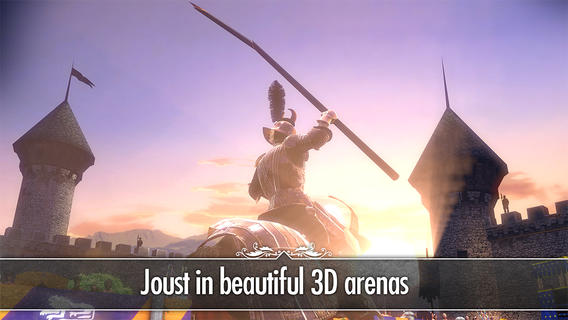
Perfect to say the least. The game sounds fantastic, there’s no big music tracks in this game and it actually fits so well, instead you hear the sounds of the horses, the birds, the crowds and, most importantly, the joust itself. The audio and visuals work together well in the actual joust because it, kind of, gives you an indication of how well you did, for example; if you hear a booming “crack” sound and also see small splinters flying past your character you know that you’ve broken your lance and you’re about to get yourself some big points. I actually hated playing this with the sound off, which I did do a couple of times so not to annoy others, it just doesn’t have the same feel. Immersion is a big part of this game, the audio and visuals really draw you in. The graphics are absolutely fantastic in Joust Legend, down right incredible. Everything is so smooth, the environments look great and it’s actually quite cinematic to be honest, there’s motion blur and mud that gets kicked up. There was no detail left out.
Overall
This game is so damn well-rounded! Honestly! I haven’t played a better iOS game than this for a very long time. I’m actually quite addicted and I have no obligation to continue playing this game but, my God, I can’t seem to put it down! I’m not a big fan of iOS games and I’m not a big fan of Medieval-style games but Joust Legend has really gotten me “hook, line and sinker”. I don’t even know what else to say to be honest, it’s fantastic and it’s only $1.99 so even if you don’t like it, which I highly doubt, it’s not that big of a loss. This game truly deserves a perfect score and that’s exactly what I’m going to give it. Well done, Joust Legend, well done indeed.
Capsule Computers review guidelines can be found here.
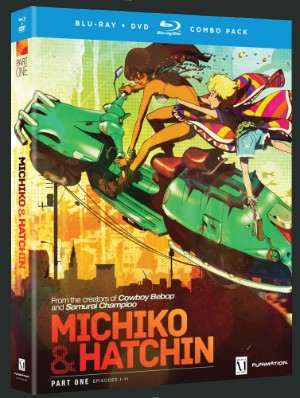
Michiko & Hatchin Part 1 Studios:Manglobe Publisher:FUNimation Format: DVD / Blu-Ray Combo Release Date: September 17th, 2013 Price: $64.98 – Available Here
Overview
Series director Sayo Yamamoto has worked on some great series’ in the past like Samurai Champloo and High School of the Dead for both storyboard and episode directing, eventually becoming the first female director of a Lupin the Third series. But, before she got the job directing the fantastic The Woman Called Fujiko Mine, she directed this series, Michiko & Hatchin. Her first chance at full creative control, is Michiko & Hatchin a great series in it’s own rights or a stepping stone? Let’s look at what Part 1 has to offer.
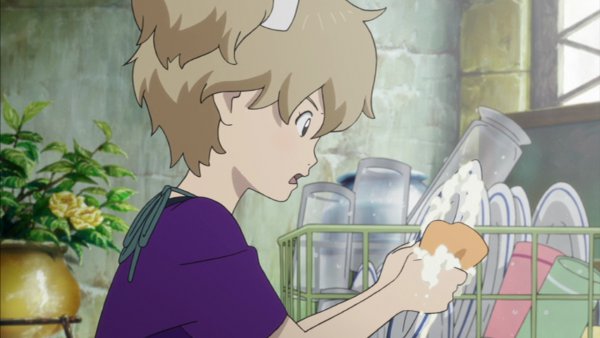
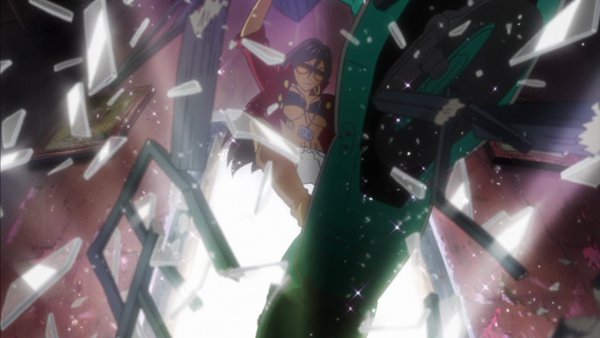
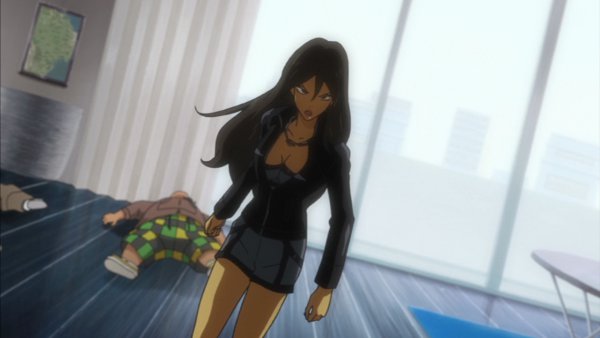
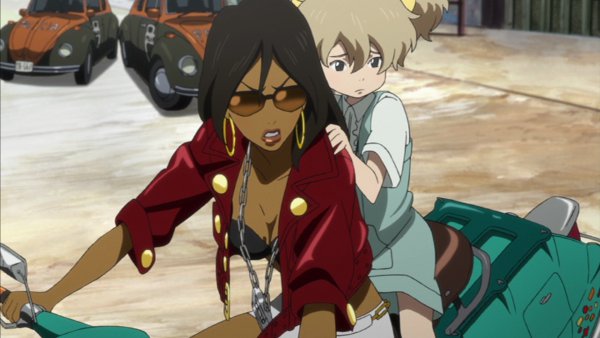
Story Michiko & Hatchin opens up on a prison break, as Michiko Malandro frees herself and shows no remorse for the hails of bullets she throws round on her way out. An exciting opening to the show and great introduction to such a free spirited character, the tone quickly changes with the introduction of the other main character, Hana “Hatchin” Morenos. A classic Cinderella story, Hatchin is a child in foster care with two foster siblings that hold no love for her and two foster parents that only treat her well as the minimal child support she brings them. A life no one would want to trade her for, but which no escape could ever arrive. But fortunately for Hatchin, Michiko has escaped prison specifically for her and after smashing up a few places the two take off together in search of Hatchin’s father, Hiroshi.
The first half of this series encompasses 11 episodes, broken up into 2 or 3 episode arcs as the two characters travel from town to town trying to find what they can about Hiroshi. The first two episodes serve as a great introduction of the two main characters, as well as their main antagonist, the police inspector Atsuko Jackson. From there the arcs explore the complicated relationship that forms between the two heroines, as they continually argue, split up, and reconcile. Seeing the arcs split up across the different cities they visit paints both a broad picture of the fictional South American country they live in, while supplanting new and interesting characters at each stop.
While only covering the first half of the entire journey, the 11 episodes in this collection actually do a good job of providing a suitable arc. Beginning with the first meeting between the two and ending up with both having a solid understanding of each other, Michiko & Hatchin Part 1 provides a lot of fleshing out and exploration of not only the characters, but the country in which they live. Though outside of the two coming to terms, there is a considerable lack of resolution left for Part 2.
Visuals
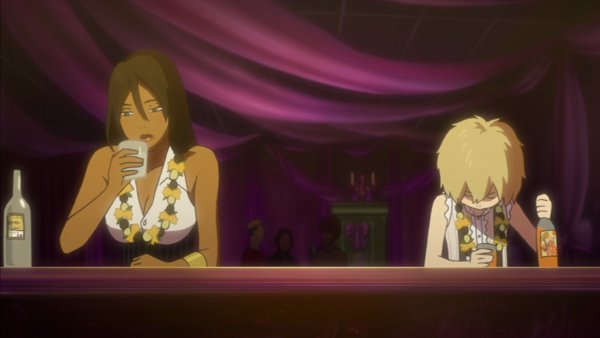
While certainly colorful, the world that Michiko & Hatchin takes place in could certainly be described as a technicolor ghetto, with poverty and street thugs present in every city they stop in. From full fledged gangs gunning for each other, to adolescent boys playing out the actions of the older, but all the while maintaining a feeling of bright and alive in the shops, hotels, and clubs. Where so many anime are set in Japanese, European, Futuristic, or Medieval settings, here there is something truly different with the styles of South America coming alive. This goes even deeper with all of the dates and locations being given in Portuguese, rather than Japanese or English, to add extra depth.
The character designs are also very vibrant to match the setting and never become stale. The characters actually change their clothes and styles as they travel from place to place, and as an even bigger commitment to realism utilize fashion from Colcci, especially for Michiko. It is great to see more effort being put into what characters wear, even more so as they go from place to place and their situation changes. It is a detail that can easily be left unexplored, but when it is can add much much more to the characters they are creating.
Audio
The voice acting in Michiko & Hatchin is quite well done for both the original Japanese and the English Dub. Both language tracks feature great female actors not only for Michiko, but Hatchin and Atsuko as well all working well together to make both options almost equal in quality. Though the English in this case may actually be preferred as Michiko sounds not only suitably tough, but suitably accented.
The music of the series also does a great job with fitting the location, with the music all sounding South American and being recorded by the Brazilian artist Kassin, as well as being produced by the always outstanding Shinichirō Watanabe. With all of these things together, the series features great music throughout and feeling right at home. The opening theme “Paraíso (Paradise)” by Soil & “Pimp” Sessions is interestingly mainly instrumental, but feelings very akin to the Cowboy Beebop opening. The ending theme “Best Friend” by Karutetto is much more traditional in the style of anime, though still fitting the setting and matching the themes of looking for someone. The music is all around brilliant, not only feeling unique for an anime series, but never feeling out of place.
Extras
While just the first half of the series, the Part 1 set includes a decent number of special features. While there is the standard FUNimation commentaries, these are limited to the first disc and only for episodes 1 & 2, and disc two contains additional offers besides the standard clean opening and ending animations, trailers, and promo videos.. These additions include an interview with the English voice actress for Michiko and footage from the Japanese unveiling press conference, both of which give some nice insight into the process of the show from both sides.
Overall Michiko & Hatchin is a very unique series, featuring a very under explored section of the world, at least in terms of anime. While this set may only be the first half of the series, it is certainly off to a great start providing plenty of interesting main and side characters. This is a series with strong females characters that almost anyone can enjoy that exist within a vibrant and gritty world. While only a Part 1, it leaves very high hopes for Part 2.
Capsule Computers review guidelines can be found here.
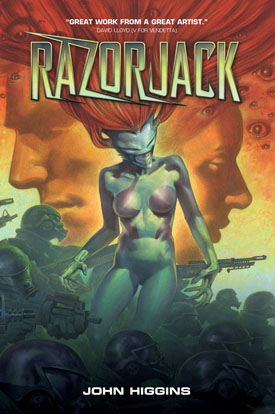
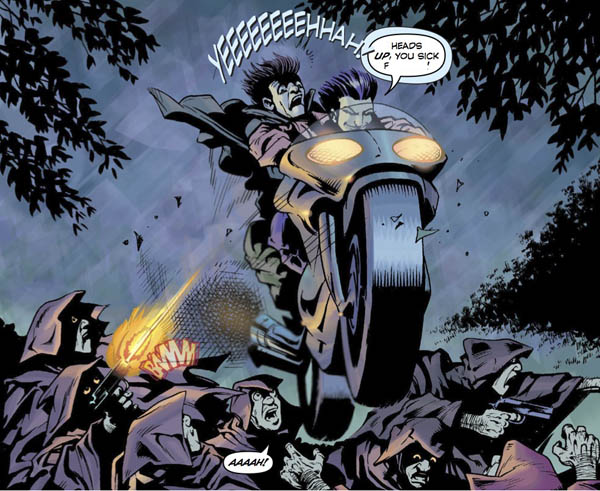
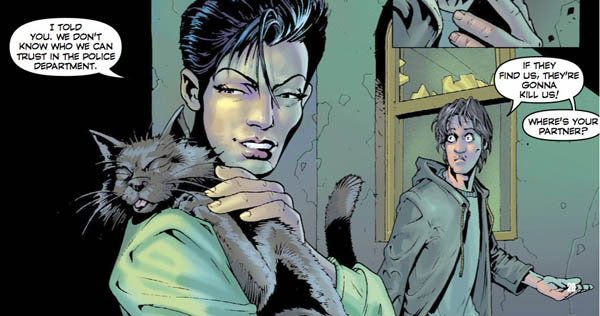
Razorjack is the brainchild of John Higgins, the man who coloured such comic book heavyweights as Batman: The Killing Joke and Watchmen. With an impressive resume behind him you would be expecting great things from Razorjack, and you wont be disappointed. Although the book suffers from some pacing issues and plot confusion, the characters and narrative are gripping, and definitely live up to the legacy that Higgins has built for himself.
Story
Razorjack is a cop story first and foremost. It is about two rogue cops who are caught smack bang in the middle of an invasion plot from a violent, evil demon queen called Razorjack. The two cops; Ross and Frame are sent to track down a series of killers, which turns out to be part of a much larger, supernatural case. Razorjack wants entry to our world so that she can corrupt and rule. The book basically works as two stories intertwined; we get to see the events from the point of view of Ross and Frame, as well as a few other characters, while every so often we are also witness to Razorjack and her machinations.
It is the fact that the story is intertwined that is perhaps its Achilles’s Heel. The book feels haphazardous and suffers from inconsistent pace and timing. Shifting from Ross to Frame or to Razorjack (or even some of the other characters) can sometimes be jarring, and often happens right in the middle of a climactic scene. It is also difficult to tell how much time is elapsing between pages, which can cause some confusion to the reader.
At the completion of the story, which sets itself up perfectly for future installments, I was left wanting more. Not more narrative per say, but I felt like the book needed more exposition and explanation. We are introduced to the concept of Razorjack and her Bitches so suddenly, that aside from a few sentences (at most) of dialogue, we don’t really know anything about them. There is a lot of lore and back-story alluded to in the pages of Razorjack, and I just wish some of it was explored a little more.
The book also contains two supplemental stories, one set at the conclusion of the book and one set many many years in the past. I can’t speak in too much detail about either one without seriously spoiling the book, but I will say that they do start to provide a little more context to the story. However, and this is especially true with the story set in the past, the way that they connect to the present narrative just raises more questions than they answer. The story set in the past actually feels like it should have been a supplemental addition to a second or third volume.
Apart from its problems, Razorjack is a really good read, able to capture the reader’s imagination, as well as make you care about these characters, whom at first glance appear to be very one dimensional (this is later proven to not be the case). At one point, I sincerely thought that the book was going to go all ‘Game of Thrones’ and kill off the main characters. The story and characters alone are enough to keep you more than interested, even if you are confused about how the plot is unfolding, and the very real potential for protagonists to bite the big one adds a whole layer of suspense.
Artwork
I feel like if i ever had any criticism’s about Higgin’s art style, I would be committing comic book blasphemy and be forever banned from nerddom. Higgins is a legend of the industry, having worked on Watchmen and Batman: The Killing Joke, and Razorjack is him at his finest. While the story has a few hiccups, his artwork here is absolutely phenomenal and absolutely knocks it out of the park.All of the drawings in Razjorjack are expertly done, and they radiate with Higgin’s signature style. The colours are all really rich and the linework is fantastic. However, what is the most impressive is the use of shadow.
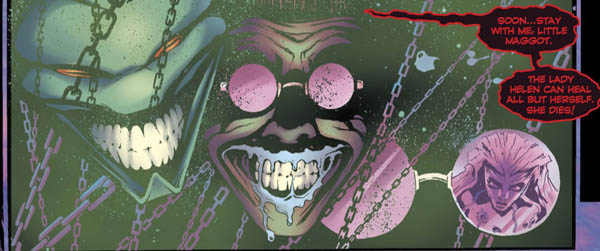
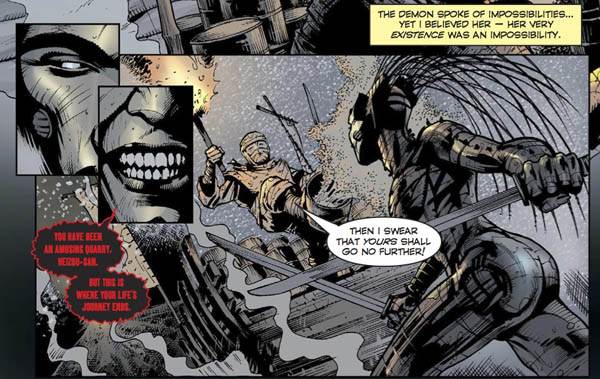
Even when he coloured The Killing Joke, Higgins used a lot of shadow in his work, and Razorjack is an example of an artist having further refined his craft. A lot of detail that other artists would normally draw into their work is obscured by shadow, which allows the player to build up the full picture in their mind. The shadowing is also used to great effect to define some features that would otherwise have gone unnoticed, such as the ruffles in a pant leg, or the muscle definition under a monster’s arm.
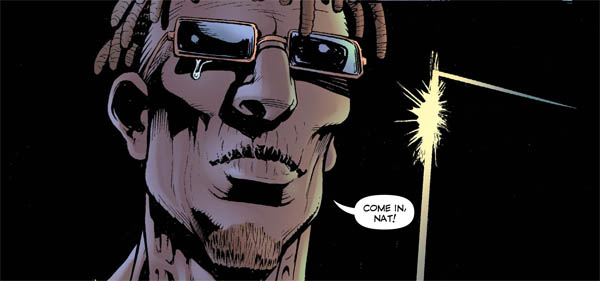
If there is one complaint about the artwork, it is that some of the characters don’t look like they belong together. In a few frames, characters looked like they were from different worlds, plucked and put together on the same page. These characters that don’t always fit in tend to have more detail on their faces etc, while the rest are quite plain.
Overall
Razorjack is the brainchild of one of the most well known people in the comic book industry, and his prestige shines through in spades through this book. Although it suffers from some pacing issues, and a lot of plot holes and inconsistencies, the story is well thought out, and has an incredibly rich back story as well as likeable characters. There is a lot of lore behind the scenes of Razorjack that sadly the reader doesn’t get to see, but hopefully this will be rectified in future volumes. Razorjack is a definite page-turner, and one that no comic fan, or fan of inter-dimensional monsters should miss.
Capsule Computers review guidelines can be found here.
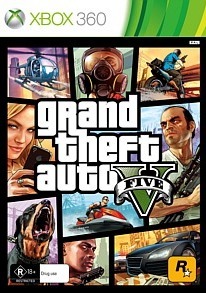
It has been 5 years since Rockstar Games’ last foray into the landmark series (on console) with Grand Theft Auto IV, as they’ve kept busy producing hit titles such as Red Dead Redemption (Rockstar San Diego) and Max Payne 3 (Rockstar Vancouver). Now, after more than 4 full years of development by Rockstar North, Grand Theft Auto V – the most expensive video game of all time, with an astounding combined production and marketing cost of $265 million – is finally here. The hype has been unreal and the pre-order numbers record-breaking… I think this is a foregone conclusion. Let’s not beat around the bush; if you haven’t bought the game yet, here’s why you should…
Story
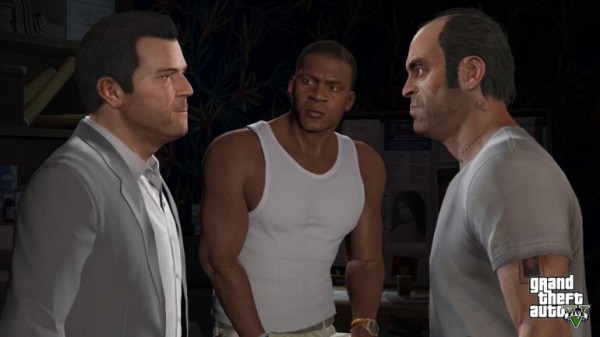
The game starts off with a flashback to a bank heist gone wrong in Ludendorff, North Yankton. Michael, Trevor, and two accomplices meet heavy resistance during their escape, which results in the deaths of their partners. Michael is wounded and screams at Trevor to run while he can. We then see a funeral held for Michael Townley, with the “dead man” himself watching from a distance. 9 years have passed since that point, and Michael has taken a new surname – De Santa – under witness protection, now living in a palatial home in the rich suburb of Los Santos. He lounges around, retired and secure, ignoring his bratty teenage children and suspecting his wife of cheating on him with the tennis instructor.
Franklin Clinton works for a car dealership as a glorified repo man along with his friend Lamar. His boss requests he repossess a vehicle from a customer – Jimmy De Santa – who is overdue on their loan payment, so Franklin breaks into their home to acquire the car. As he is driving back to the dealership, Michael slowly sits up from the backseat pointing a gun at Franklin’s head and ordering him to crash into the it, before he personally attacks the owner. Quite an inauspicious start to what becomes a teacher-protege relationship if you ask me. Through a series of events in his personal life, Michael loses control and finds himself in debt to a Mexican druglord named Martin Madrazo. This forces him to return to a life of robbery, inviting Franklin to join him on scores as the getaway guy. Being from the projects, Franklin isn’t about to refuse a potential 6-figure payday.
Unfortunately, during the getaway of the heist, Michael recites a movie phrase to a bystander (being a big film buff, he just can’t help it), who then relays that quote on the news. Why is this unfortunate? Because one Trevor Philips sees this and connects the dots… Michael Townley is alive! So… why, again, is this unfortunate? Because Trevor is bat-shit crazy and believes Michael purposely led him on so that he could live in peace with all the riches of their fateful score and never have to see him again. They were best friends, and Michael abandoned him – a man who, despite obviously being heavily deranged, was called Uncle by Townley’s kids.
And so the roller-coaster ride truly begins. When these two finally meet, the atmosphere of the game completely shifts. Like gasoline to a fire, Trevor is a reckless, dangerous presence, and he wants back in the game. The ensuing dynamic between these criminals, Franklin included, is relatable to a clash of cultures. They are foils for each other, acting to highlight the individuality of each man. The main plot sees the integration and coming together of the trio’s personal dealings, involved in a three-way conflict amid the FIB, IAA and Merryweather Security. The storyline is signature Grand Theft Auto, filled with hilarious moments, revenge and betrayal, with multiple endings to boot.
Gameplay
And now, for the most daunting section of the review. I will not bother listing or detailing every single thing that you can do in this giant game… part of the fun is discovering that all for yourself (although I will mention some key features). Instead, let’s focus on the refinements to gameplay mechanics. Anyone who has played a Grand Theft Auto game knows what to expect to a large extent – the pillars of gameplay, so to speak. Both driving and shooting have received quite substantial overhauls. One of the bigger criticisms of Grand Theft Auto IV was the generally clunky car handling. Well here, every vehicle truly has its own singular set of physics, and the handling is appropriately tuned for each, and they can be modified for further tuning at your local Los Santos Customs.
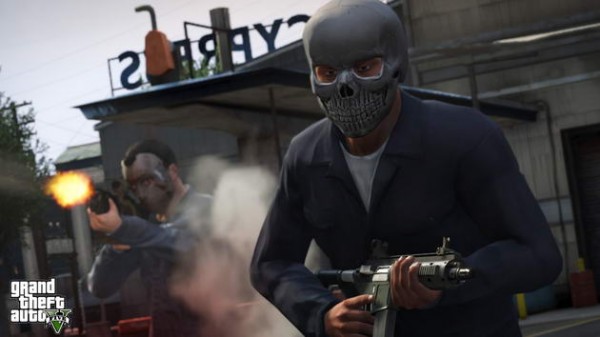
Impressions based on first footage of gunplay had many of us assuming an adoption of the shooting mechanics of Max Payne 3, but that didn’t end up being the case. Nevertheless, there are some notable alterations and additions to the systems. Firstly, evasive tactics have been considered as a combat roll can now be executed while aiming. You can also round corners of cover and sprint out of cover in a forward motion. And, with a flick of the right thumbstick, you can flow between nearby targets instantly (this assist can be turned off). Finally, your arsenal is now accessed by pressing and holding ‘LB’, which will bring up a radial weapon wheel. The slots are broken up by type, with multiple weapons of a type able to be carried – pressing left or right will toggle between them.
Switching amongst Franklin, Trevor and Michael is quick enough, with the game taking just a few seconds to jump out, automatically locate the desired character, and jump into their perspective. Each have specific skill levels that can be bettered by engaging in certain activities. Running, cycling and swimming, for instance, will increase your stamina. They also hold special abilities that can be initiated by pressing both the thumbsticks in at the same time. Just like armor and health, these abilities are governed by a meter. Franklin’s is essentially bullet-time in vehicles, which also gives him a slight speed boost. Michael’s is the classic bullet time effect, and Trevor’s heightens both his damage output and damage tolerance for a limited time.
Switching adds texture to every situation, but also serves a very practical use when considering the three’s separate specialties. You can even run into each other outside of missions and hang out! The characters continue living their lives when you’re not controlling them… did you leave Trevor flying away in a helicopter as you stayed on the ground? Swap over to the “speedster” (you’ll understand after you play) and you’ll find yourself strapped into that helicopter seat, making verbal notes about the events that just occurred. In heists, there is a combination of scripted switches and suggested switches, although for the latter, it’s totally up to you who you choose to play. Don’t want to be the driver? Play as Michael and shoot out the window. Missions can be replayed if you’d like to play it a different way too, so experiment and have fun.
Speaking of, the spotlighted heist missions are reached only after doing some set-up, which will involve some acquisition and planning on a corkboard. When in the latter stage, you have the opportunity to select and delegate outside accomplices to the jobs of gunner, wheelman, etc., and these contacts can come from people you meet during your travels. They all have unique skill levels and demands for their cut of the take, so choosing poorly can result in a more expensive and/or difficult time in successfully completing a robbery. Oh, and on a side note, be sure to scour every inch of this mammoth land that is San Andreas… there are more than 100 collectibles that lead to solving a couple mysteries of the state. When it comes to GTA Online, we cannot review this mode yet as it will only become available after October 1st. But, once we hit that date, we will definitely post up some impressions.
Visuals
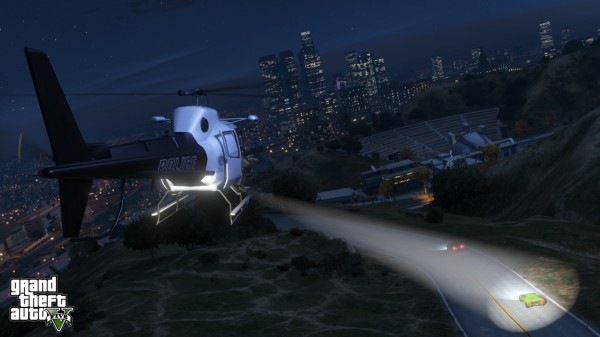
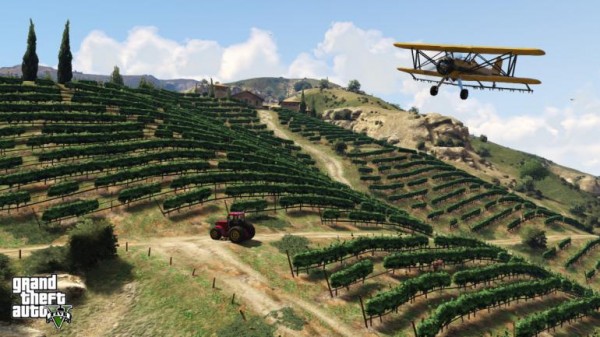
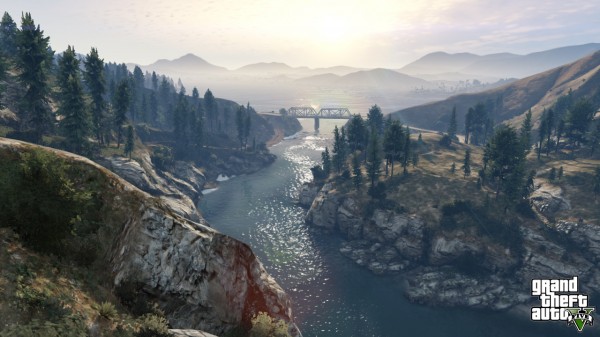
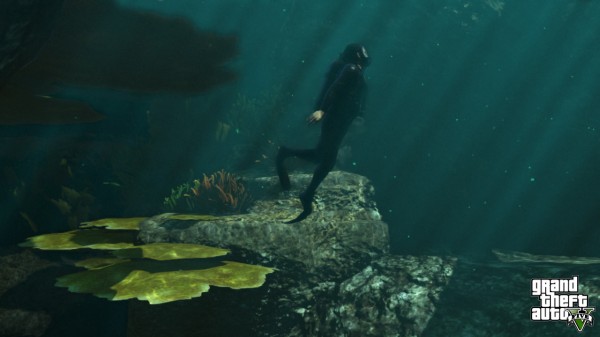
From the seabed to the tip of Mount Chiliad in the mountainous regions of Blaine County; from the city of Los Santos to the dry desert of the Alamo Sea, Rockstar North have crafted a visually diverse, yet connected representation of a fictional California that looks stunning, and packs more detail than any other open-world title before it. Everything looks crisper and cleaner than in Grand Theft Auto IV. By comparison, character models are more expressive, draw distance is vastly increased, and shadows – thankfully – no longer distract with stuttering issues and jaggy edges. On the Xbox 360 version, anti-aliasing may be lacking, but it is barely required in the first place.
What personally impresses most on the visual front are the presentational elements; specifically the use of certain camera techniques and transitions. At face value, this may not sound like such an important facet, but it adds a sense of polish and value to the proceedings. In cut-scenes, the action is framed exceptionally, with zooms used to reflect the shifting moods and back-and-forths of an argument, for example. The camera organically follows the protagonist when transitioning from a cut-scene, back into gameplay, and the player also has more choice when it comes to camera perspectives, with three-to-four different states available on foot and in-activity, plus the dynamic action camera that can be initiated whilst in-vehicle.
Audio
Radio stations have always been a big part of the Grand Theft Auto experience. It’s inevitable with each entry that you will be spending hours upon hours in a variety of vehicles, from motorbikes, to muscle cars, luxury cruisers and airplanes, and Rockstar always manage to select an amazing array of music that expertly fits the tone of the game and world. In Grand Theft Auto V, there are a total of 17 radio stations. The popular West Coast Talk Radio (WCTR) station is back, as are mainstay personalities: that slimeball Lazlow and once-sleazy love expert Fernando. The stand-out, however, has to be comedian JB Smoove in the role of new character Dr. Ray D’Angelo Harris, who hosts Chakra Attack. He rambles on and on, exploring such random tangents… it is as if he was given free reign to improvise for 15 minutes straight, and it’s brilliant.
The radio offers tracks from a mix of contemporary artists such as A$AP Rocky, Kendrick Lamar, Rihanna and old-school legends Queen, Rick James (naturally) and even Eddie Murphy – who just wants to ‘Party All the Time’. Grand Theft Auto V is also the first in the series to feature a composed score, which was written and performed by Tangerine Dream, rappers Alchemist and Oh No, alongside composer Woody Jackson. The influence and ambient synth-heavy style of Tangerine Dream in particular can be heard throughout. Voice acting is top-notch across the board, with the stereotypes of an aspirational, street-smart Franklin, the psychotic, unpredictable meth-head Trevor and the rich, conflicted retiree Michael portrayed in a mostly exaggerated manner to great comic effect.
Overall
Rockstar had stated before Grand Theft Auto V‘s release that the title “feels next-gen to us”. While I can’t wholeheartedly echo that sentiment, technically, Grand Theft Auto V is mightily impressive. The physical scope and scale of the game map itself is mind-boggling, if not purely for the fact that it streams seamlessly without intrusive loading screens. The ability to switch among three distinct and unique main protagonists enriches the experience, presenting varying perspectives that ensure one can never become bored… if Michael is too vanilla for you, the insanity of Trevor or the plight of Franklin will keep you entertained and interested.
Of course, as with every Grand Theft Auto title, there are minor bugs, but they’ve almost become an expected, humorous part of the series – take away the autosave system and quick save ability and maybe it would not be as humorous then. Otherwise, every design aspect has seen improvements since Grand Theft Auto IV; the graphics, the voice acting, the music, the camera work, the gunplay, the interface… all have been refined and fine-tuned for the perfect Grand Theft Auto experience to date. Rockstar didn’t need to pull off an elaborate heist to score the $1 billion in sales so far; they earned it with a truly masterful video game. Continue wreaking havoc on Los Santos!
Capsule Computers review guidelines can be found here.