
Home Blog Page 6252

The Plasma VS LCD Dilemma

Anyone who has ever bought a flat screen TV will know exactly where I’m coming from. Even the most technologically savvy can be overwhelmed when walking into their local JB HiFi to be confronted by the Great Wall of flat screen TVs. From 26” to 60” screens, contrast ratios of 1000000:1 and HD ready vs Full HD, one would be forgiven if parts of their brain leaked out there ears to make way for the cavalcade of information. Given that most salespeople in major retailers (where the screens are inevitably cheaper then boutique stores) are often misinformed and try to push models that unbeknownst to the consumer will get them the most commission the decision can be even harder. I worked in retail specifically amongst LCD and Plasma screens for years and I can’t tell the number of times I saw staff sell what they knew to be an inferior product simply to get the $50 bonus. Anyway hopefully this guide should shed a bit of light on the currently available screens and the different technology they use within them helping you to choose a screen that is most suited to your needs.

Current Choices

When it comes down to it, despite all the specifications and fancy terms you will be drawn towards the screen that you think has the best looking picture. Newer technology is not necessarily better so try not to be sucked in by something simply because it uses technology that previously wasn’t used. Note that I am referring to technology here, not newer generations or model of the same product as companies are always updating their products for the better. There are currently really only 2 different styles of  flat screen monitors (including LCD and LED LCD together) commercially available to choose from, as well as 3D monitors which can either be plasma or LCD based.

Technology

Plasma Screens:

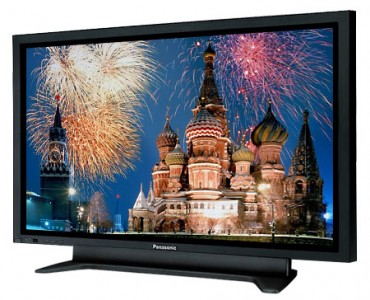
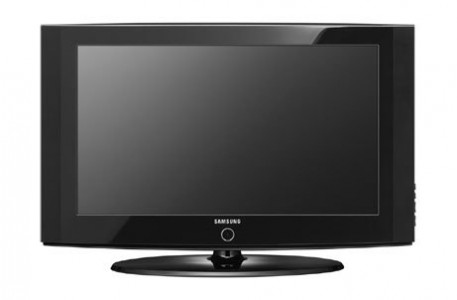
This technology is relatively new (in terms of its general uses outside of screens) and was really originally designed so that sports lovers could enjoy their favourite events on a scale larger than the old tube TVs could handle. Plasma screens are comprised of countless minuscule gas plasma cells which when charged with a precise electrical current produce the picture. Each pixel contains all the necessary parts for it to produce colour independent of the others. In Layman’s terms the biggest advantage of this is the ability to produce a very realistic and bold black by simply stopping all charges to the pixel leaving it inactive as well as a much wider and more natural range of colours. This is highly beneficial for avid movie watchers as well as for gamers especially when playing many of those low lit games that always have you adjusting the light bar before you begin playing. Plasma screens do have the problem of screen burn when an image is left on the screen for too long but current generations are able to deal with the issue with no effect.
LCD Screens:

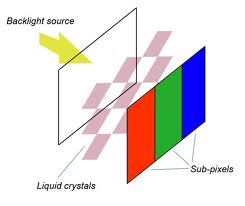
LCD technology is very old dating back to the early 1900’s. If you remember playing those old Nintendo game and watches or even owned a digital watch you have seen LCD technology. So while LCD screens came after Plasma the idea is much older. LCD stands for Liquid Crystal Display and is based on light provided from an external source (either a Cold Cathode Fluorescent Lamp (CCFL) in older screens, or Light Emitting Diodes (LED) in newer screens). The best way to describe how LCD technology works is to imagine it in layers.

Layer 1:  A backlight that is permanently on, either CCFL or LED (edge or direct).

Layer 2: Diffuser so the light isn’t concentrated on one spot creating a heat spot.

Layer 3: Colour filters of red blue and green

Layer 4: Liquid Crystal that can be solidified and twisted to create darkness and lightness

Layer 5: Polariser
What To Look For

Colour

Due to the nature of the 2 technologies, the consensus amongst the industry is that Plasma screens can deliver a wider range of colours, more naturally and at a more intense and uniform level. This is due to the fact that the pixels act independently of each other and have their own method of self- producing every colour, whilst LCD screens are reliant on the backlight and colour filters which can result in a less consistent use of colour.


Contrast

Again due simply to the fact that individual pixels can be essentially “turned off” on a plasma monitor, it makes sense that they will be darker than a screen that has a backlight that is permanently turned on. While LCD screens, especially newer generations have very little light leakage there is still a tendency for blacks and darker colours to be less vibrant and bold. Companies will always give the contrast ration spec on their screens with native contrast being 40000:1. What this means to you and me is that the brightest whites are 40000 times brighter than the darkest blacks. Contrast ratios are highly speculative and many companies have been accused of misrepresenting their products. Contrast ratios of over 20000 are said to be indiscernible to the human eye. Another factor to consider is that there are 2 different types of contrast ratio measured by the manufacturers. The first is referred to as static and is a truer but rarely quoted figure that represents the screens ability to handle the two extremes of light and dark simultaneously. The other is dynamic contrast and refers to the screens maximum ratio between dark and light but acting independently of each other. These are the figures that are most often quoted in retail stores and are highly engrossed and often misrepresent the products features.

Refresh rate

This refers to the speed in which the screen can react to changes in the picture. Plasma screens were designed to accommodate rapid moving objects on screen specifically sport while LCD technology has primarily been involved with static or very slow changing pictures and images. Plasma pixels can react much faster than their LCD counterparts resulting in a smoother picture especially noticeable when watching fast moving action or games. LCD pixels have to go from an active state to inactive and back to active again to refresh the picture they are displaying.

Viewing Conditions

Plasma screens having the own light source give almost perfect viewing from all angles. They also perform much better in dark environments as the pixels create their own light.  LCD screens in comparison can lose brightness and contrast when viewed from acute making them hard to watch. This is because LCD pixels are merely a layer which the light passes through. LCD screens perform better in brighter rooms and well lit areas.

Purpose

From reading all of the above it may seem like an easy decision and that I am biased towards Plasma technology and screens. This isn’t true; it is simply that Plasma technology so far has come out on top in most attributes that are important when deciding on a flat screen monitor. Also for my purposes there is a clear cut advantage to a Plasma monitor. Companies like Samsung and  Panasonic have advised that LCD screens are the best option up to a 42” screen and Plasma is the way to go for screens 42” and larger. Plasma screens are also renowned for performing better with fast moving picture such as sport or action moves and games but this could also be a bit biased as most people who buy them for these purposes choose large screen models which are more suited for Plasma. I can’t stress how important it is to go and watch the screens in a retail shop for a while. Stand at different distances from them. A useful trick I was taught was to stand right on top of the screen and look down at the picture from above. What you are looking for is how much movement there is in the picture. Some screens are shaking all over the place from this angle and some are very still. The still screens will in the majority of cases have a much better and more stable overall picture.

Power and Heat Emissions

Probably of much lower importance to most people than performance and price, it is worth noting that Plasma and LCD vary greatly in their power consumption and the heat they put out. Plasma screens use much more power and run a lot hotter than LCD monitors and it has only been recently with the release of the newer more environmentally friendly Plasma models (such as Panasonics NeoPlasma range),  that the gap has somewhat been closed. If this is a major issue for you i would recommend a high end LCD screen if you are willing to spend the money on it or one of the aforementioned new Plasma models.

Confusing issues

Contrast ratio:

Don’t be conned by 500000+ ratios, actually have a look at the screen and concentrate on the dark and light colours such as white clouds or even black borders in movies. Play with the brightness levels and see how it affects the picture. Most retailers have the same picture playing on all screens for comparative reasons but have played with the settings of each screen.

Full HD Vs HD or HD ready:

Full HD screens have a pixel ratio of 1920 x 1080 whereas HD or HD ready screens are typically 1366 x 768. They will still pick up and transmit a 1080p signal but not in its native resolution. It will be scaled down to the screen capabilities. Think about how much you want to spend and what you will be watching on it. Many PS3 games are 1080p as well as most blu-ray discs. In Australia there is very little if anything that is broadcast in 1080p HD on free to air or pay TV services like Foxtel without paying for it. Watch all of the screens without even looking at there resolutions and don’t choose something that you don’t think looks as good despite its higher ratios.

LED or LCD:

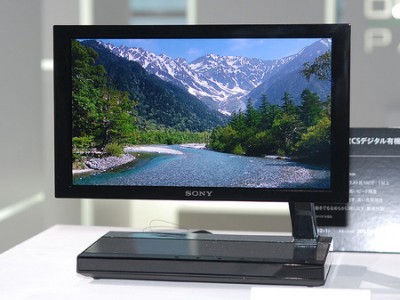
LED screens as seen in most major retailers are simply LCD screens that are backlit with LED lights either along the edges of the screen or across it as opposed to using older CCFL tubes. They are better quality, have less light seeping through and are more economical. LED screens are also much thinner  than CCFL based screens can be switched on and off at a higher rate offering higher light intensity. The heat dissipation levels are more efficent making for a more uniform picture. There were also a range of screens called OLED mostly manufactured by Sony, and despite having exceptional picture quality were highly overpriced and from last look has been discontinued from sale.
Cords and connections:

The only way to get the most out of a FullHD screen is to have it connected with cables that can handle that output. HDMI is the standard cable used to connect most screens to various peripherals but there are a few others that can be used should you not have one. Old AV cables and RGB can be used but don’t have a picture quality even close to HDMI cables. HDMI cables can range in price from $20 through to over $200. Having used both I cannot say I can see any difference between the 2 with reliability being the only factor.

Hz-What does this mean? :

Supposedly the HZ advertised on a flat screen monitor represents the number of times the picture is refreshed per second. I say supposedly as like contrast ratio this figure can be somewhat misrepresented by many manufacturers. You can read every review and all you will deduce is that it is purely a subjective and confusing issue. For example, Panasonic offer a 600HZ subfield Plasma screen. This means that each pixel within the screen pulses 10 times for each frame. As the refresh or frame rate is 60 Hz this equates to 600 Hz in total. It is far less of an issue than it was with the old CRT TVs which were based on interlaced technology. Modern day flat screen monitors are all progressive scan where the Hz have far less of an impact on picture quality. Still many say that the higher the Hz the better the picture as it reduces blur from fast moving picture by refreshing the screen at a higher rate. The other thing to note is that each company uses a “secret” algorithm to perform all of this interpolation therefore it is hard to compare results derived from different formulas.

3D- Is it any good

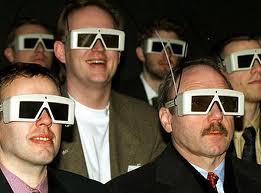
Very subjective, you either like it or you don’t. I prefer watching most forms of media in 2D, I find 3D images and movement to be dissociative from reality and it has been known to cause disorientation in some people. I’m sure most 3D TVs come with warnings and information saying as much. They are quite a bit more expensive than a 2D screen but do offer an exceptionally immersive experience especially when gaming. Both Plasma and LCD manufacturers offer 3D models and I would advise watching them for long periods of time before considering buying it. Oh and yeah you have to wear those cool glasses.
Conclusion

In my opinion the scales top slightly towards Plasma screens. The majority of people are opting for screens that are 42” and larger and as the prices continue to fall this trend should move into even larger screens. At this size Plasma screens have proven to offer a clearer and smoother picture. On top of all that, they are reknowned for having faster refresh rates and much better contrast ratios producing truer blacks rather than dark shades of grey. Saying that, if i was buying a screen for a bedroom or an area that had a lot of natural or artificial lighting that was also going to be used for gaming and i wanted something around 32″ or 40″ then LCD would be the way to go. I’m not going to blab on about each particular model, as if you are not willing to go into various retailers and watch multiple screens this guide probably won’t be of much use to you. Remember you are going to watch it for the next 10 or so years so it pays to do a bit of hands on research into it. In terms of brands to look out for the Samsung and Panasonic ranges seem to have the best customer reviews with LG performing very well, providing similar screens often at much lower price tags. Sony have always had there fanboys and the TV market is no different. Many swear by Sonys bright, slightly exaggerated colours, and to be honest their screens are of exceptional quality but are often those few hundred dollars more. Companies like Fujitsu and Pioneer who were responsible for some of the first commercially available Plasma screens still produce products equal to any other but are usually aimed at the higher end of the market, offering premium services such a standard  5 year warranties and in house services to name a few. So i hope this has helped you and look forward to more reviews on other products.


Father Of Pokemon: Alive And Well!

Satoshi Tajiri, CEO of Game Freak and the creator of the popular Pokemon franchise, put to rest rumours of his apparent death in the Japanese earthquakes this week via his Facebook account. The rumour of his passing away had become a trending topic for a while on Twitter, and then saw it spread to other social networking sites such as Facebook and Tumblr. Satoshi Tajiri confirmed the rumour to be false and that he is alive and well in a Facebook status update stating:

“Dear Hummingbirds, what’s this nonsense about me being dead? Also, I don’t work at Nintendo Japan, I’m the CEO of Game Freak (everybody is fine). More importantly, if you can, help Japan.”Satoshi Tajiri

He then followed his status update with this link for Give To Asia, who is accepting online donations to help Japan. This isn’t the first time a rumour has spread of a public figure passing away, in fact Twitter is well known for doing so in recent years; Charlie Sheen, Jim Carrey, Kanye West and Justin Bieber have been among those who have been subjects of a death hoax on Twitter.

So if you’ve followed the rumour, stop being this:


And start being this:

The latest titles from the Pokemon series Pokemon Black and White came out a two weeks ago and sold over a million copies in a single day.You can read our review of Pokemon Black here and Pokemon White here.


Monday Night Combat Free to Play on Steam this weekend…

If you haven’t had a chance to download Monday Night Combat yet, this is your chance to get to tackle the full experience. This weekend Uber Entertainment are going to have their hit title free to play all weekend via Steam, lasting all the way up until Sunday at 1pm Pacific. This third person shooter with a tower defense twist originally seen life on the Xbox Live Arcade last summer and just recently had a full PC version release back in January.

There really isn’t too much to say now other than all of you should get to downloading as fast as your PC speeds will let you and enjoy a free weekend of destroying Moneyballs and trumping foes all thanks to the awesome folks over at Uber Entertainment. Click HERE to be taken straight to the download page and while your at it, be sure to follow Uber Entertainment to be informed of future events and news on twitter @UberEnt.

PopCap to host Sale for Earthquake Relief…

If you have been wanting to get some fantastic iPhone, iPod touch and iPad adaptations of everything PopCap, you are in luck as the developer is gearing up to have a huge sale, discounting all of their most popular mobile titles. The best part of this sale is that PopCap will donate all proceeds to the Red Cross to assist in the massive earthquake relief effort. This event is looking to include every title from the developer, including some of the more popular franchises such as Peggle, Plants vs Zombies, Bejeweled, Chuzzle, and Bookworm. The price of each iPhone and iPod touch title is reduced to 99 cents during that time (US), while the iPad adaptations are reduced to $1.99 (US).

“We recently opened an office in Tokyo, and while our Japan-based employees are safe and uninjured, we understand countless others in Japan need food, shelter, and medical attention,” said Ellen Marett, Senior Director of Workforce Culture at PopCap. “Given that Plants vs. Zombies reached #1 on the iPhone and iPad sales charts in Japan, it seemed like the most appropriate game to feature in this fundraising campaign.”

This sale will last for 48 hours and starts March 19th at 12am, so if you have been holding out on grabbing some awesome games for your iPhone, iTouch or iPad, there is no better time to grab these titles and get the rewarding feeling of knowing that every cent you splurge on will go to helping Japan in this time of need.

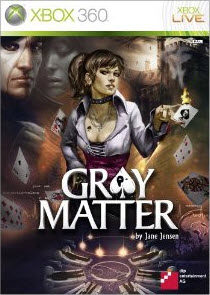
Gray Matter Review


Gray Matter
Publisher: Lace Mamba Global/dtp entertainment AG
Developer: WizarBox
Platform: Xbox 360 (PC)
Genre: Point ‘n’ Click/Puzzle/Adventure
Released: 25th February

As a genre, point ‘n’ click adventure is one that has yet to make its presence felt on the Xbox 360, with only a small number of Xbox Live Arcade games springing to mind which meet the criteria. While all of them seem to generate their own following, none seem to be able to breach into the mainstream audience, leading one to question whether there’s a market for them on the console. Good point ‘n’ click adventures have always ranked highly among PC gamers due to how well a computer mouse works at ‘pointing’ and ‘clicking’. As this genre of games goes, this is another good one for PC, but, like many others before it, fails to smoothly implement the control scheme on a pad.

The story is written by Jane Jensen, who was author of the Gabriel Knight series among others, and sets similar high standards where narrative is concerned. It’s a stunning story which comes together through a number of different elements uniting to form one of the best pieces of storytelling that I’ve seen in a game for quite a while. The game starts with a cutscene which sees one of the two playable characters, Samantha Everett, riding through heavy rain on her motorbike towards Oxford, but after her bike brakes down, she’s caught out in the rain in the middle of nowhere. With no other option, she decides to take refuge for the night in an old building by posing as the ‘new assistant’ they have been looking for. This initial cutscene immediately piques your interest, having you asking yourself a series of questions. When she wakes up in the morning, Sam decides she has to get away before they find out she is an impostor, but when she discovers that the place she is staying, Dread Hill House, is a Centre for Cognitive Research, and learns of the mysterious Dr Styles, she is eager to find out more and chooses to stay.

As aforesaid, Samantha isn’t the only playable character – you also get to play as Dr Styles himself as you progress through the story in some chapters. This all links in with the story very well, and each characters’ backgrounds are slowly revealed through both monologue when interacting with items and through the some of the dialogue when speaking with other characters. Each chapter is broken down into a series of tasks you need to complete, but as you go about trying to find out something, these soon branch out as you find out more and discover something else you need to chase up to continue with your main aims.

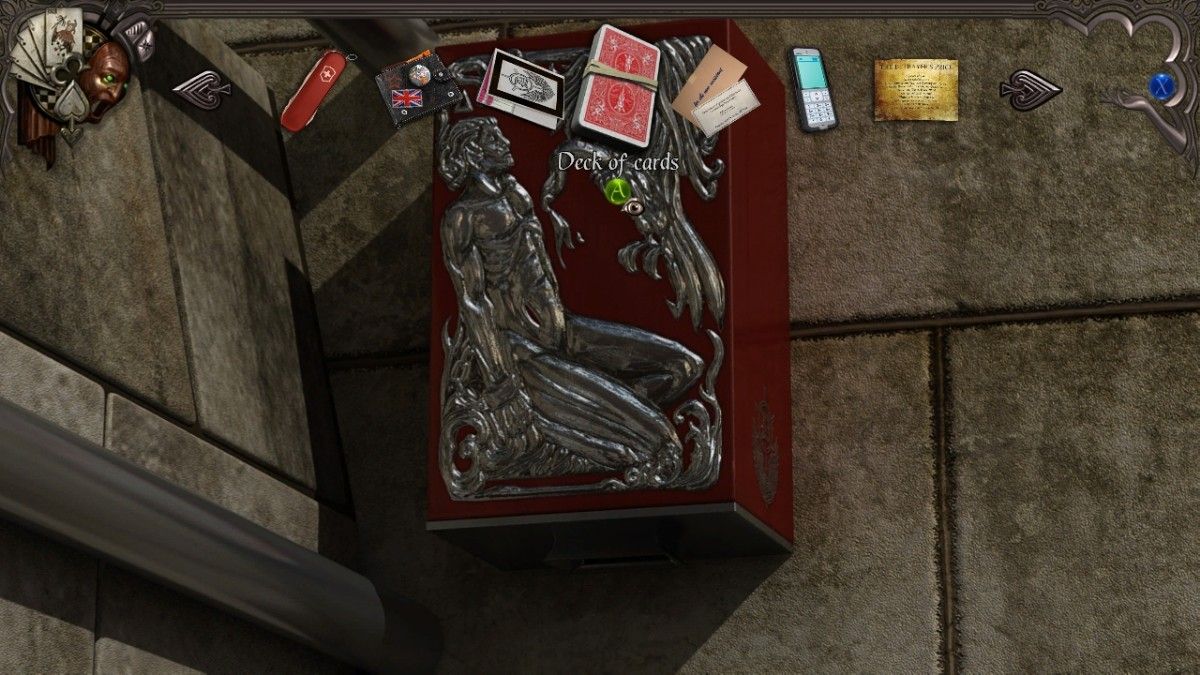
Gameplay in Gray Matter plays out as expected from a point ‘n’ click adventure, with you selecting items from your surrounding environment to investigate or use. This is where the Xbox 360 version is weaker than its PC counterpart, as the awkward controls are a far cry from the simple PC alternative. You can walk around with your character using the left thumbstick to get closer to the parts of the environment you want to interact with, but once there, you then press L to bring up an awkward drop down wheel. This presents your options at different points around the wheel for you to then select with the control stick.

Unfortunately, the positions of the options change as you move around the room, to make something which could have been just about adequate, unnecessarily fiddly. The icons will also be different depending on the piece of scenery you are hovering over, corresponding to the action that will be done on the area. It can range from an eye for looking, a mouth indicating you of a conversation, or magnifying glass showing that it’s something that can be examined closer. Movement around the map is also handled by clicking on areas with a doorway icon, with the addition of an overall map allowing for travel between different zones of the city. There’s also an inventory of all the items you acquire as you go along, some of which can be equipped and put to use when performing actions on your surroundings.

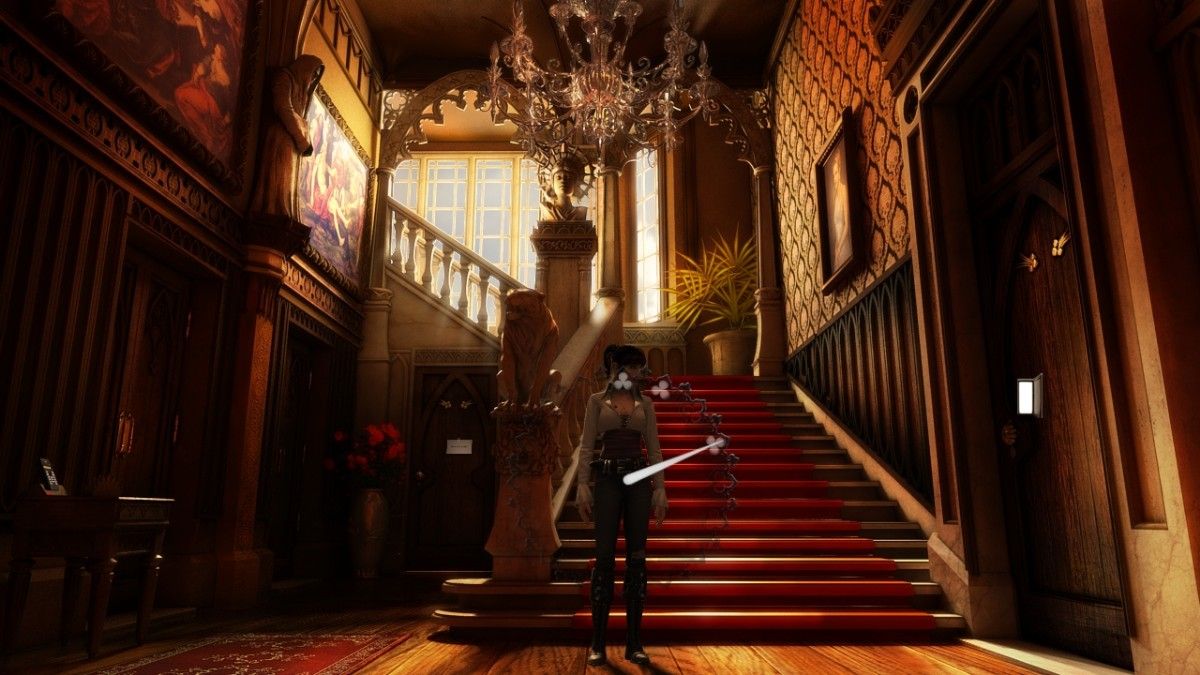
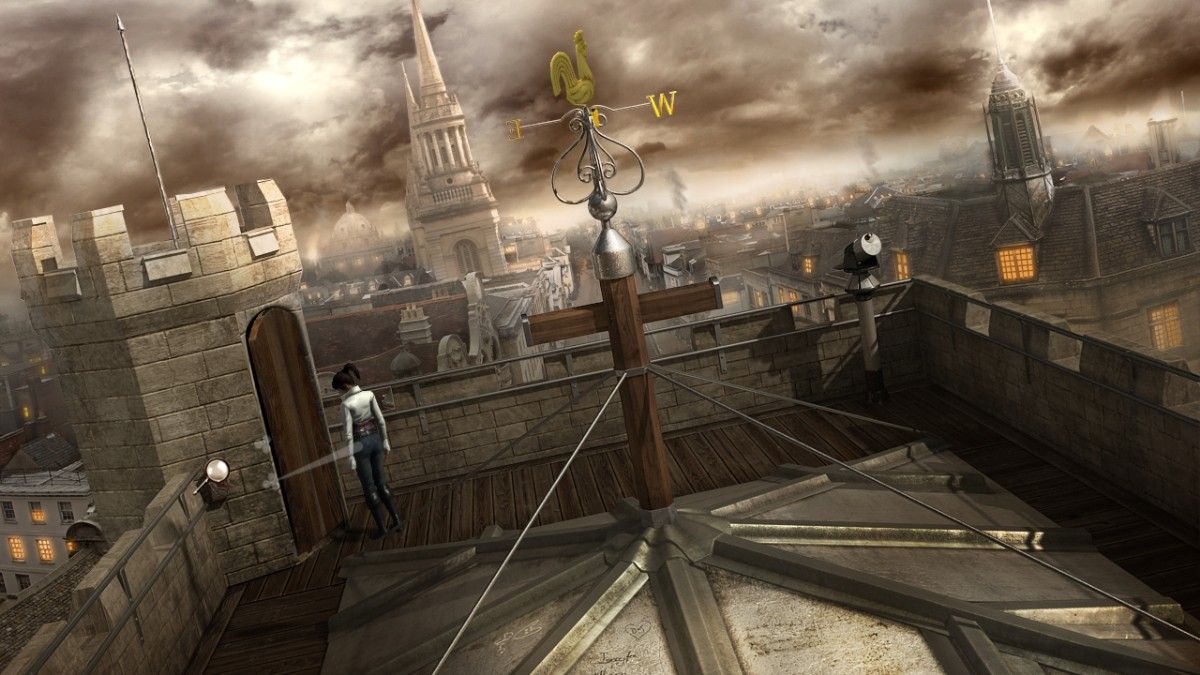
To give credit where credit is due, Jane Jensen has done a great job on the story – the plot is genuinely interesting and gripping enough for you to persist with the slow-paced gameplay just to find out what happens. This is done through the gradual dispersal of information, well-timed revelations which maintain the constant sense of mystery. Gray Matter knows that the greatest fear is the fear of not knowing, which is why everything is always kept shrouded in mystery. The eerie atmosphere is further contributed to by subtle music playing quietly in the background and some picturesque but slightly sinister settings. One of the reasons why some of the scenes are so picturesque, however, is because they are totally static, although this won’t come as a shock to anyone who has played a point ‘n’ click adventure before as it is fairly normal in this genre. As a result of this, though, in-game animations are rather uninspiring, with interactions with objects looking fairly wooden, automated and they aren’t even always lined up. Other than that, the presentation is sound; the environments are well-designed, giving a hand-drawn visual style. Cutscenes are equally stylish, probably more so, with a similar but exaggerated take on the hand-drawn looks.

What really ties the game together and makes it a great story is the convincing voice work. The characterisation is excellent, with the script imitating real-life speech patterns and colloquial dialects to produce a stream of believable characters throughout the game. There’s even some colourful language on occasion to inject humour or strong emotion depending on the delivery which is almost always spot on – the voice actors deliver a good performance.

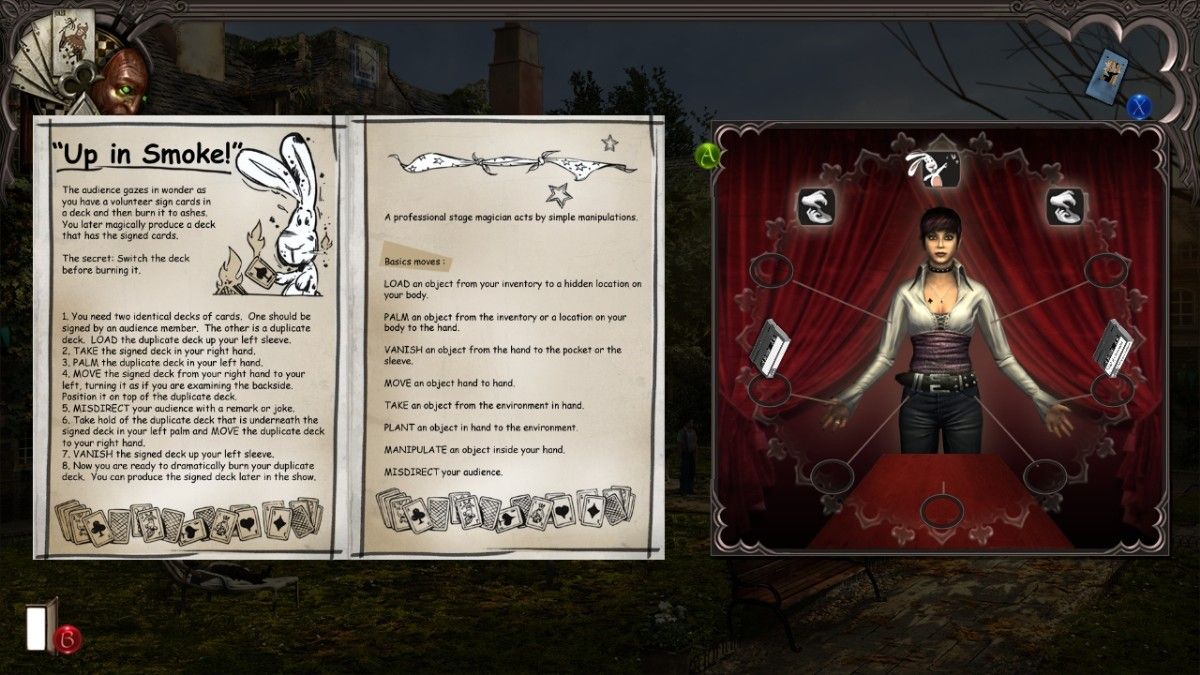
Overall, the slow-pace of Gray Matter will be a real shock to the system for those reared on games which deliver explosions and dramatic set-pieces at every instant, but the pacing of it all is the key to why the story is such a success. The gradual dispersal of new revelations and plot twists means the plot is continually thought-provoking, with the slow piecing together of the main characters’ back stories allowing you to fully understand the characters. The quirky art-style evident in the settings and cut scenes, a solid script well-enacted by the cast, and a subtle but effective musical score all come together to make an immersive final product. The gameplay is slow-paced as is typical for a point ‘n’ click game and could take some getting used to for those inexperienced with the genre, although most will persist – if only for the enjoyable plot. Some minor glitches remain in terms of movement around the map, and annoyingly, the in-game step-by-step magic tricks used on occasion to progress with the story can’t be performed with the use of your hands reversed, but these are small things that shouldn’t really be dwelled on. The control scheme on the Xbox 360 is a little awkward so I would recommend that if you have the choice, go with the PC version, although either of them are definitely worth a look thanks to a well-executed storyline.

Pros

  • Gripping plot
  • Great script well-enacted by decent voice actors
  • Stylish graphics cut-scenes
  • Intelligent puzzles

Cons

  • Slightly dodgy Xbox 360 control scheme
  • Too slow-paced for some

7-5-capsules-out-of-10

MotorStorm Apocalypse delayed in U.S. indefinitely as well

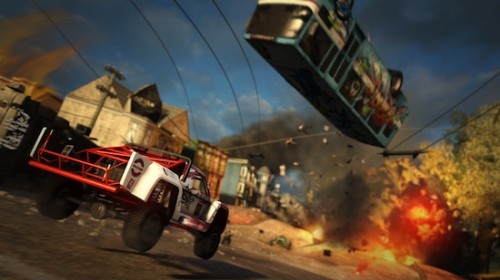
It appears that the delay for MotorStorm Apocalypse is universal. After the announcement of the indefinite delay to the racer in Japan, the launch of the game in the UK was also postponed indefinitely. There was some thought that the game would not be touched in the U.S. due to the fact that the release date itself was three weeks later than other territories but it seems that is no longer the case.

After the devastating natural disasters in Japan, Sony has indefinitely postponed the release of Motorstorm Apocalypse in the U.S. with no actual release in sight. Considering the fact that the game itself takes place in an earthquake ravaged city with devastation everywhere it is perhaps for the best that a game was not released at this time that featured so heavily on the same disaster that occurred in Japan.

Digital Dungeon Siege III comic to be published by Dark Horse

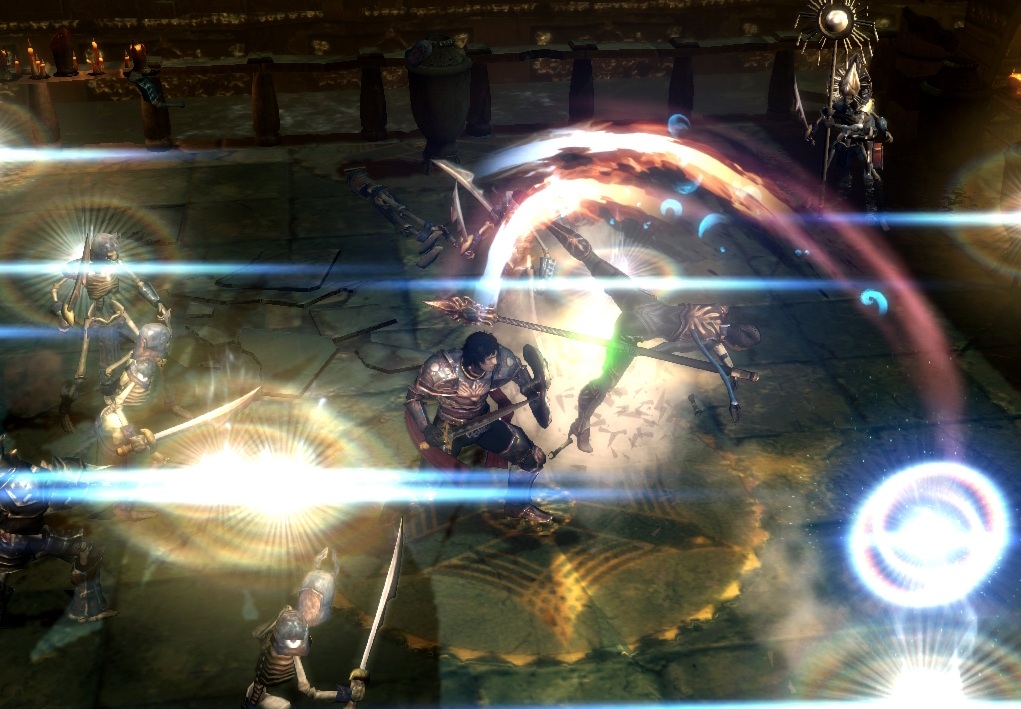
If you can’t get enough of Dungeon Siege III or just are a fan of the series in general then you will find this news very welcoming because Square Enix announced that they will be partnering up with Dark Horse Comics to publish a digital comic book for free on the game’s official website and on the Dark Horse Digital Store itself.

These comics will consist of three issues and will be written by Jeremy Barlow and drawn by Iban Coello and Sergio Abad. If you don’t like to read your comics digitally then you are also in luck because anyone who happens to pick up Dungeon Siege III at Walmart on May 31st when it comes out will find themselves with a full color comic book bundled with the game for free.

Dragon Age 2 gets patched up on PC

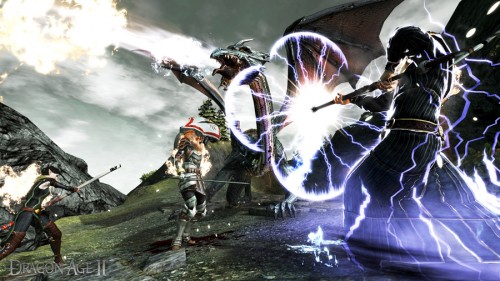
In an effort to relieve players from a very buggy and glitch ridden Dragon Age II Bioware and EA have released a patch for the PC version of the game to fix some of the many problems that have been brought to their attention. The patch notes can be seen below which show a very small list of what was fixed up in patch 1.01.

  • Fixed save game issues on single core machines
  • Fixed game asking for non-existent drives
  • Fixed release control issues where some players were unable to unlock correctly
  • Fixed a Steam-specific issue related to VO not playing after switching languages

Unfortunately Bioware has yet to give a release window of any other patches that should be forthcoming for the various iterations of the game that have been plagued with bugs and graphical errors, such as the Xbox 360 version involving being stuck in level geometry, crucial enemies spawning out of bounds, complete graphical failure and freezing to name a few. The patch itself can be obtained here.


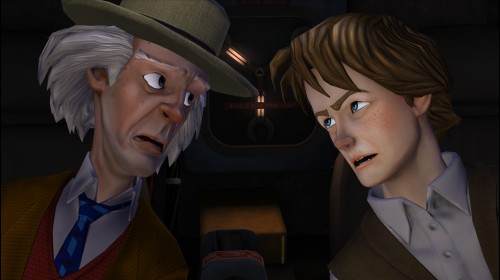
Back to the Future Episode 2 arrives on PSN March 29th

1

The Back to the Future series may be well under way on the PC and Mac but it has taken a little bit to catch up on the PlayStation Network. The first episode of the series took eight weeks to make it to the PSN after being released and now the second episode will be set for release six weeks after the PC/Mac release. Arriving on March 29th the second episode called “Get Tannen!” will be available for download.

With this being the second episode of the five episode series we aren’t even half of the way through Marty and Doc’s time traveling adventure which takes place after the events of the third and final movie of the Back to the Future series. You can check out Jed’s review for the first episode here.

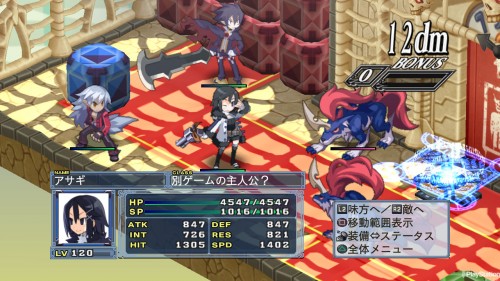
Asagi set to join Disgaea 4 as DLC in charity effort

With the current disaster in Japan everyone has banded together in an effort to raise money to try and help out the nation in their time of need and in game developers from the country are helping out as much as they can. Nippon Ichi Software has developed a new way to raise funds for charity while also keeping a long running joke alive.

NIS has long since had a certain character, Asagi, as a character spread out across a number of their games. The poor girl just wants to be the protagonist of her very own game, and although she came close with Asagi Wars she never has made it to being in the spotlight. Well take your bow now Asagi because, as found by Siliconera, the character will be released as paid DLC for Disgaea 4 for 100 yen ($1.25 US).

100% of every sale from Asagi’s character will be donated to help restore areas affected in Japan until June 30th. Currently Asagi is not available on the Japanese PlayStation Store, but a screenshot was revealed on Dengeki that shows her class as being a “protagonist of another game.”