This is it, the reason that we have been delayed in our somewhat congruent podcast. The Absolute Reason. THIS IS OUR 50TH ANNIVERSARY PODCAST! In this podcast we celebrate our 50th podcast release and it took a fair bit of planning to get it there. So come and join us as we take a retrospective look at our time on the website, sharing memories and having an awesome time. This is also probably our funniest episode.
Cast: Dustin Spencer, Philip Federico, Luke Halliday, Benjamin Webb and guest starring Dylan Radcliffe
Music for this podcast is from The Legend Of Zelda, The Legend of Zelda 25th Anniversary.
Thanks for listening and let us know what you think!
We have gained a product sponsor for future podcasts (that’s each podcast after this one). Razer will now be doing giveaways on our podcast, so be sure to tune in next week for more info.
SPOILERS BEYOND THIS POINT DO NOT LOOK UNTIL YOU GET TO THE GAMESHOW!!!
Thanks for listening. Copyright Capsule Computers Pty Ltd – All Rights Reserved.
All Other Samples Are Copyright And Property Of Their Official Copyright Holders.
In a recent press release given to the nice chaps over at PSO-World, a release date was given out for the North American and European versions of the Phantasy Star Online 2 MMORPG. The game is set to be released in early 2013, which could mean anywhere up to as late as March.
What I am really liking about this release is the following line that implies a dynamic experience for players –
“Phantasy Star Online was a revolutionary game when it was released, and we want to make sure that its successor in the series is every bit as ambitious,” said Chris Olson, Vice President of Digital Business at SEGA of America. “We look forward to introducing Phantasy Star Online 2’s unique, easy-to-access multiplayer action to the rest of the world next year!”
“The number one thing we want to provide players in Phantasy Star Online 2 is an adventure that changes every time they log in. Just as great table-top RPG experiences revolve around imaginative and unexpected encounters, we want players to consistently be surprised as they explore dungeons and undertake quests,” added Satoshi Sakai, Phantasy Star Online 2 Producer at SEGA of Japan.
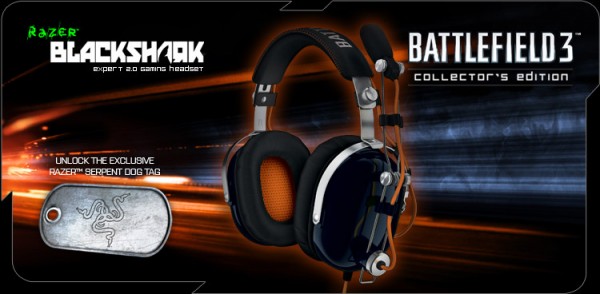
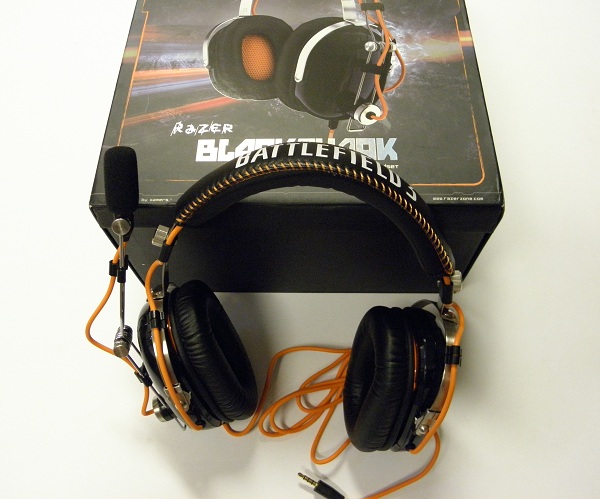
Battlefield 3 – Razer BlackShark Developer: Razer Designed for : PC Price: $129.99 USD Get it Here
The days of cheap 20 dollar headsets are long dead. Good riddance. Today, headphone makers are realizing that gamers actually appreciate a good set of cans with a solid microphone attached to it. Razer brings out their latest offering to the gaming headset market with the Battlefield 3 – Razer BlackShark. Priced at the popular $129.99 USD price point, Razer has some big competition in the gaming headset field, including their own previous offerings. Can the Razer BlackShark take a bite out of the competition?
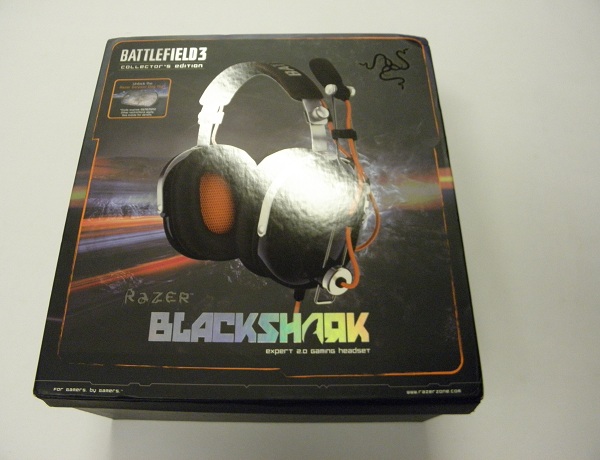
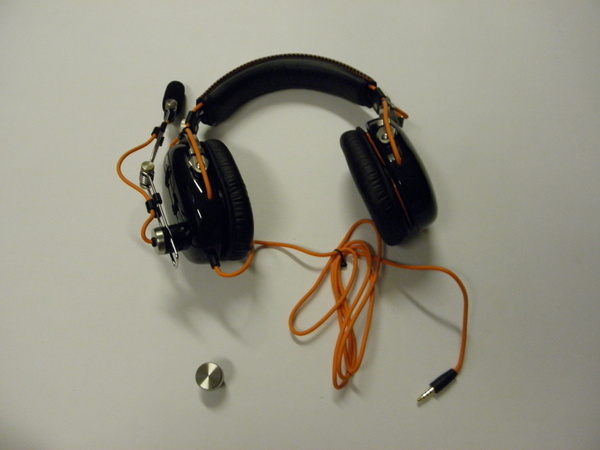
The Razer BlackShark comes in a large hefty box with the Battlefield 3 motif in full swing. Inside are the traditional Razer information package, the Razer BlackShark headset, and two extra accessories for the headset. The headset itself it designed after the headsets worn by military attack helicopter pilots. The BlackShark is an incredibly cool looking headset. The headphone cups are an extremely dark navy blue that looks almost black in lower light conditions. This is accented by orange cabling, metal construction, and black leatherette ear pads with an orange inner material.
The first thing that surprised me was that the headsets were actually smaller than I expected them to be. They are extremely light weight and fit around my ears perfectly. Being Asian, I have pretty small ears and I found the fit to be just perfect. Those with larger ears may find themselves trying to cram their ear lobes into the cups comfortably. Initially, I found the artificial leather used in the ear padding to be a little sweaty after five or ten minutes of wearing them, but surprisingly the problem did not worsen over time like I expected. I found myself able to wear the headphones comfortably for three to four hours at a time without any problems.
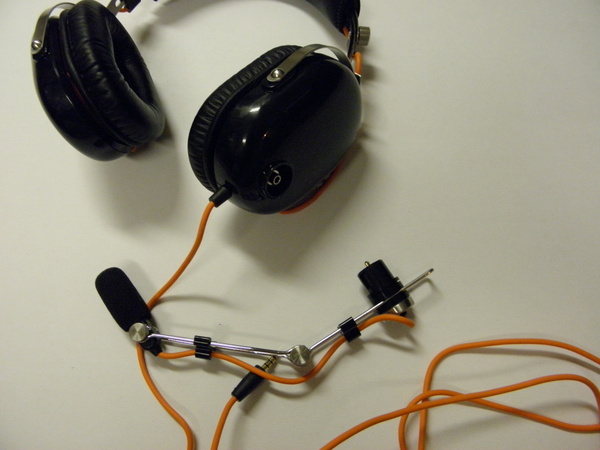
The side adjustment for the headphones is a little fiddly. The headphones extend up and down and a thumbscrew is tightened to secure the headphones at the desired length. One side of the headphones could be screwed down tight, but I found the arm still slipped up and down. I found that once the headset was on my head, there was no slippage. However, the inability to screw one side down annoyed me slightly. I found the aviator style microphone boom to be one of the best microphone setups I have ever encountered. Instead of using the bendable wire or a piece of plastic with a small length of bendable area for adjustment, the boom is constructed from metal rods with two joints. Once I found a position I was happy with, the microphone did not move at all.
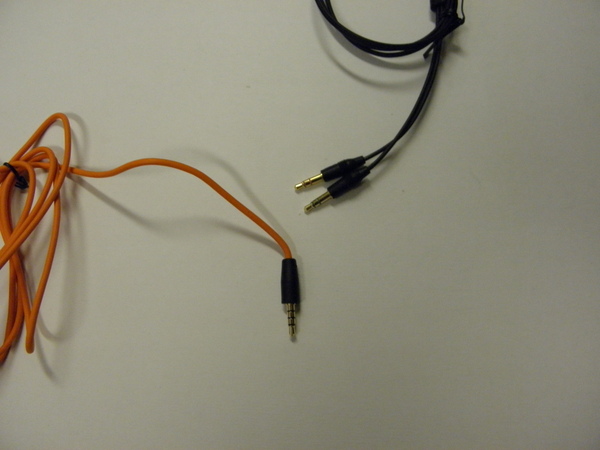
The Razer BlackShark headset is a stereo headset driven by two 40mm drivers. The cable ends with a single 3.5mm TRRS plug that is compatible with mobile phones, portable game devices, and some laptops. For those who use soundcards that have a separate audio and microphone plugs, a conversion cable is included with the BlackSharks. The microphone is removable and the final accessory with the BlackShark is a hefty metal plug that will cover the exposed microphone jack at the side of the headset, allowing the BlackSharks to double as a stylish set of cans for on the go listening.
One thing I found extremely confusing was the lack of an inline mute or volume switch. Almost every headset I have owned from 20 dollar LAN party beaters to expensive $250 gaming headsets have all had some way to control the volume without going into the computers setting. I suspect that this was omitted In favour of a straight cable due to fact the designers were hoping that the BlackSharks would also be used for mobile devices. Although some people will not be bothered by this, I found this to be irritating to no end. A physical mute switch is one of those necessities for players who use voice activated comms or VoIP programs like Skype as their main form of communication while gaming. Although a volume dial is handy, I rank its importance slightly lower than the mute switch. I did manage to blow my ears out with the BlackSharks when switching from my Astro Mixamp to my computer’s sound card. In light of this painful event, I am happy to report the BlackSharks are capable of reproducing music at extremely high volumes with no distortions. When dealing with the Blacksharks, I strongly recommend checking your computers volume to ensure the settings were not reset before putting on the BlackSharks!
I can best describe the Razer BlackSharks as an incredibly fun headset to listen to. They are not the most accurate headphones; these are definitely not a set you will want to bring to tournaments and expect to have every possible upper hand possible. The highs are rather weak and muddy; the mids fare only slightly better. Everything seems to be drowned out by the strong bass. Crazy bass heads will enjoy the BlackSharks, but when gaming competitively, I prefer something more balanced. Being closed headphones, the BlackSharks did a fantastic job of isolating me from the noise from outside. However, by design, closed headphones tend to suffer from a very small soundstage and the BlackSharks are not immune. The BlackSharks work very well with Dolby Headphones. Although Dolby Headphones does not increase the soundstage by much, I could listen and track footsteps around me much better than without. I found this was best done when things were rather quiet. Once the gun fire drew closer, it became extremely difficult to pick up on smaller audio cues with the bass drowning everything out.
The microphone performed admirably on the BlackSharks. The microphone is extremely clear and has a decent volume without being too loud. I really appreciated the big chunky pop filter that comes on the microphone. Coming from a podcasting background, popping sounds on microphone feeds is one of my biggest pet peeves. Having the extra ugly puff on the top of microphones is something I am more than willing to deal with that having voice chat pop on every p sound.
I was particularly impressed when playing Battlefield 3 with the BlackSharks. It feels like the designers of the headset were keeping in mind the game that would share the spotlight beside Razer on the packaging and tuned the BlackSharks accordingly. Out of all the games I played, the BlackSharks probably performed the best on Battlefield 3. BlackSharks were enjoyable to listen to when watching movies. Obviously action movies were favoured due to the powerful bass, but the BlackSharks were respectable enough in more low key movies too. The BlackShark’s biggest weakness is music. The headphones did well playing bass heavy genres like dance music and hip hop. Although the highs and mids were overpowered by the bass, these genres are bass focused and work well with the BlackSharks. However, once the music changed to genres like classic, jazz, and some classic rock, the weak highs and mids became obvious.
Overall, the Razer BlackSharks are a good headset. There are some serious design flaws, namely the lack of an inline microphone of volume switch, yet some good designs that more headphones should adopt, such as the aviator style microphone boom and the single 3.5mm TRRS plug that is compatible with mobile phones and portable gaming devices. However, I feel torn by the sound quality. The BlackShark is an incredibly fun headset to listen to. They are not particularly accurate or balanced. These are by no means a tournament grade headphones, but for the average gamer or bass head, the BlackSharks are a solid choice. At $129.99, there are worse headsets you could buy, but there are better ones too. If you are a Battlefield 3 player who games in a noisy environment or are a casual to average gamer looking for a fun sounding set of cans that look really cool, give the BlackSharks a serious consideration. However, anyone expecting a tournament grade or extremely well rounded headset should look elsewhere.
You can also check out our video review for the Razer Blackshark Headset below:
Have you heard the legend of Slender Man? I hadn’t until yesterday. My girlfriend told me how she’d had trouble sleeping the night before because Slender Man was creepin’ at her window. I had no idea what she meant until she explained: apparently he’s a tall, long-limbed humanoid creature, wearing a suit and tie (for some reason), who snatches children and… I don’t know, kills people, I guess. Oh, and he has no face.
Suddenly the tree outside the window looked a little too… slender.
The origin story of this disturbing creature is less than mysterious: he’s an Internet meme, born in a forum dedicated to inventing urban legends to see if they can catch on in “serious” paranormal forums.
That makes Slender Man an interesting specimen, then: he’s not really a mythical creature, he’s a mythical mythical creature. One who’s myth we’ve seen evolve before our eyes and gain momentum through forum-troll satire and naïve, troll-bait readers.
Regardless of his fictional status, he’s a genuinely creepy figure, as evidenced by my girlfriend’s insistence that he was at her window. It comes from the same childhood fear of movie monsters: we know they aren’t real, but when it gets dark, we feel like they could be.
Slender Man has been the subject of some (rather lame) YouTube videos, but Parsec Productions’ simple horror game, Slender, presents him in a much more terrifying way.
Let me take the opportunity here for you to download the game and try it for yourself, before I potentially spoil it for you. I don’t think I will, but you might prefer to go in not knowing what to expect.
Still with me? Good. Now, whether it’s just a rough shareware game, or the beta version of a bigger project, Slender is undeniably scary. Players wander through the forest after dark, collecting pages of information on the mysterious Slender Man, who is never far away, always watching.
Armed only with a torch and the limited ability to sprint, you have to keep moving, lest he catch up to you.
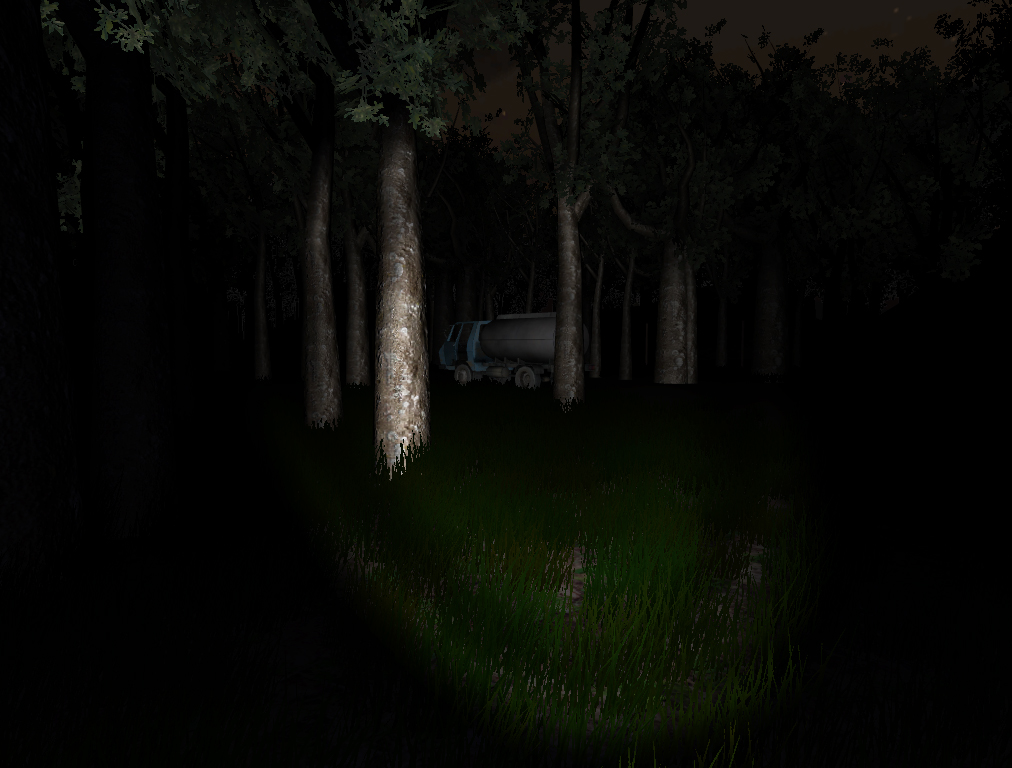
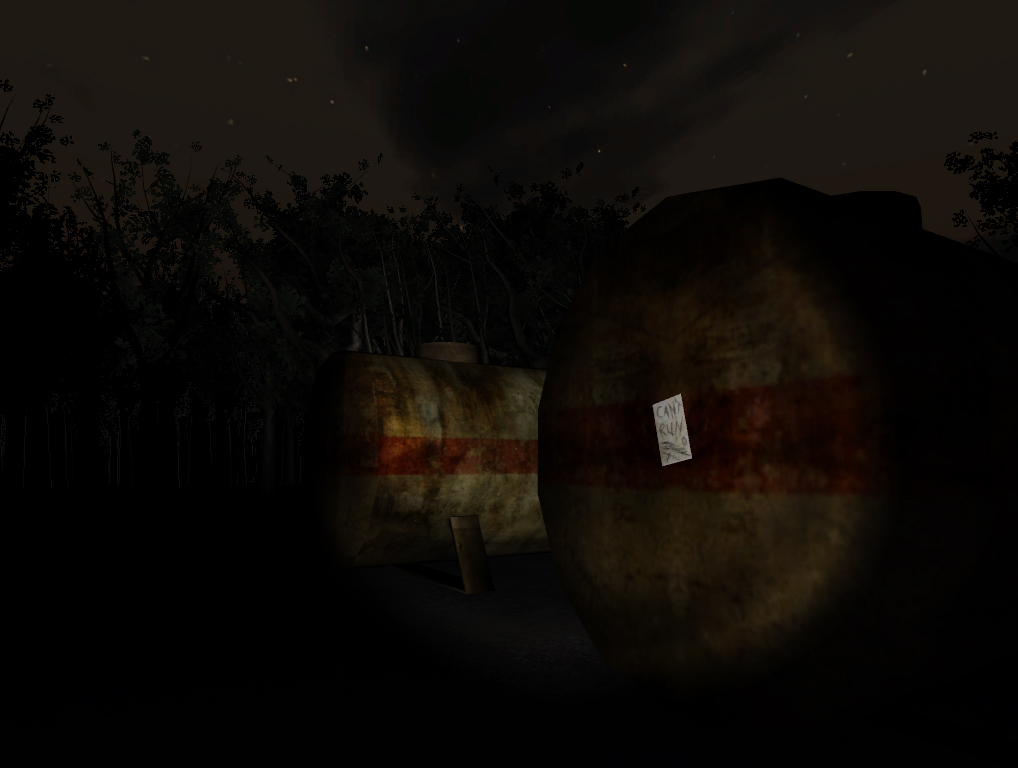
At first, you won’t see anything but trees in your short beam of light, but soon the occasional landmark will appear. An abandoned truck. Rows of rusted boilers. A gnarled old tree. By the time you find your first page, your confidence begins to return. Maybe there’s nothing out here.
But pick that paper up, and tension quickly settles in. Ominous music will swell, and glancing behind you, you might start to see a tall, slender figure lurking motionless among the trees.
You’ll soon figure out that while you’re looking at him, he won’t move. But turn your back, and he’ll advance, slowly. Maybe not fast enough to actually reach you, but enough to invoke panic. Just… don’t stand still.
The more pages you find, the closer he’ll seem. After a while, it’s best not to look back. Knowing that he can’t move when you’re staring at him, it might seem like a good way to slow his approach. But actually laying eyes on your pursuer can have detrimental effects on your mental state – a gameplay equivalent of the creature’s supposed technique of inspiring fear and panic in order to ensnare its prey.
So you don’t look back. But if the forest sounds begin to give way to a low static buzz, Slender Man is near. If your screen begins to flicker, it might be a good time to pocket the torch and run. Because if the static gets too loud, you might find you no longer have control of your body, and you are spun around unwillingly to face your shadow.
Right, no sleep for me tonight.
All told, Slender is quite a disturbing experience, in the same vein as Amnesia (albeit far less polished). At a time when classic survival-horror franchises are moving away from their terrifying roots and towards more actiony shooter games – I’m looking at you, Resident Evil 6 and Dead Space 3 – indie projects like Slender are a breath of fresh air. I dare you to play it in the dark, alone, with headphones.
If you like your scares psychological and atmospheric, you’d do well to download Slender, available for free here.
Despite financial woes earlier in the year, GAME seems to have recovered enough to become the retail sponsor of 2012’s Eurogamer Expo, the UK’s biggest gaming festival.
The Eurogamer Expo will be returning to London’s Earls Court from 27th-30th September 2012 and is expected to welcome over 50,000 gamers. It promises more playable games than ever (including a large number of UK first-plays), a high-profile developer session schedule, as well as a number of satellite events including the Games Industry Fair.
GAME will sell games at the show and offer special deals organised with leading publishers who are exhibiting during the Expo.
In a report written by market research firm Niko Partners, the Chinese gaming market may be geared towards the mobile space rather than the PC space. The report suggests that the number of mobile players will soon exceed the number of PC players. The number of players on mobiles, according to the China’s Mobile Games Market 2012 report, will reach an estimated 192 million this year. The number of PC players will be around an estimated 180 million this year.
In terms of revenue, Niko Partners believes that the revenue stream for mobile gaming will increase six-fold from 2011. In 2011, revenue reached $600 million. In five years time, Niko Partners predict that mobile revenue will reach $3.6 billion. Niko Partners managing partner Lisa Cosmas Hanson explains the explosive mobile market in China:
“Mobile games and web-browser games are the two buzzword segments in China’s games market this year, and Chinese game companies are racing to deliver their games on multiple platforms to satisfy gamer demand in every way possible.”
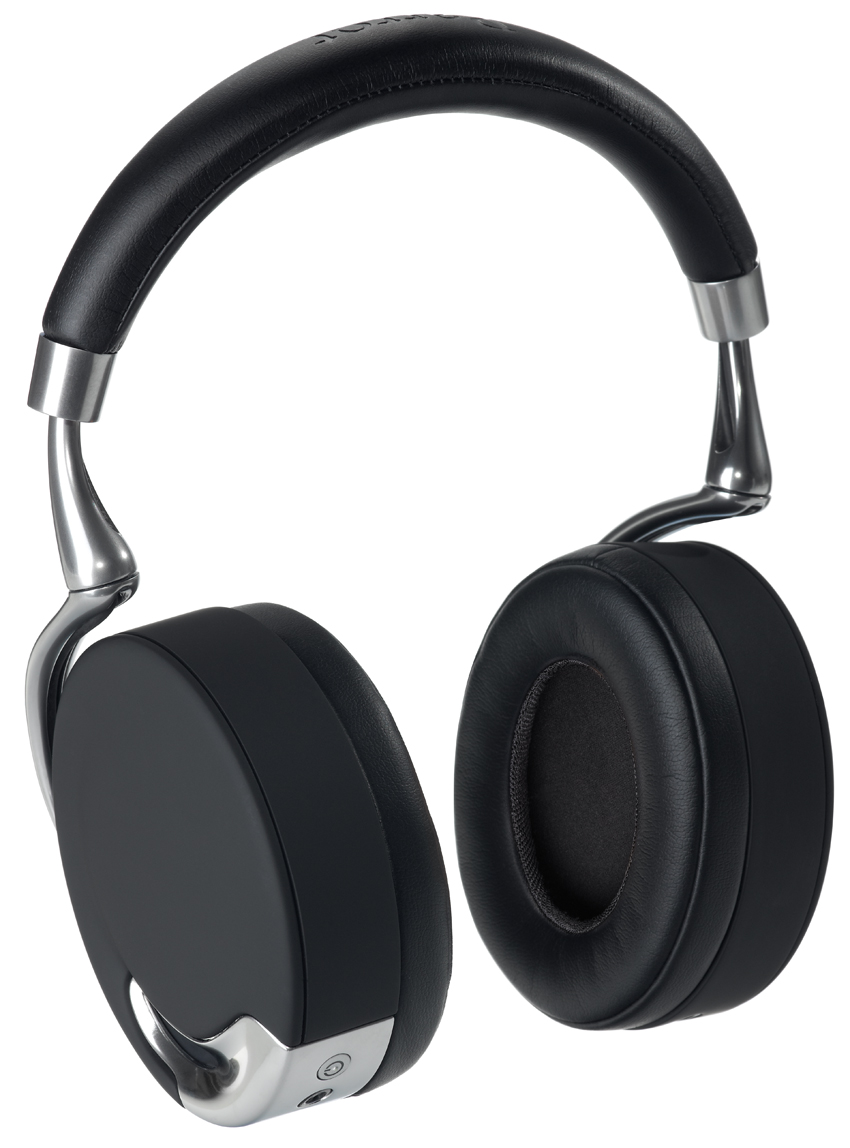
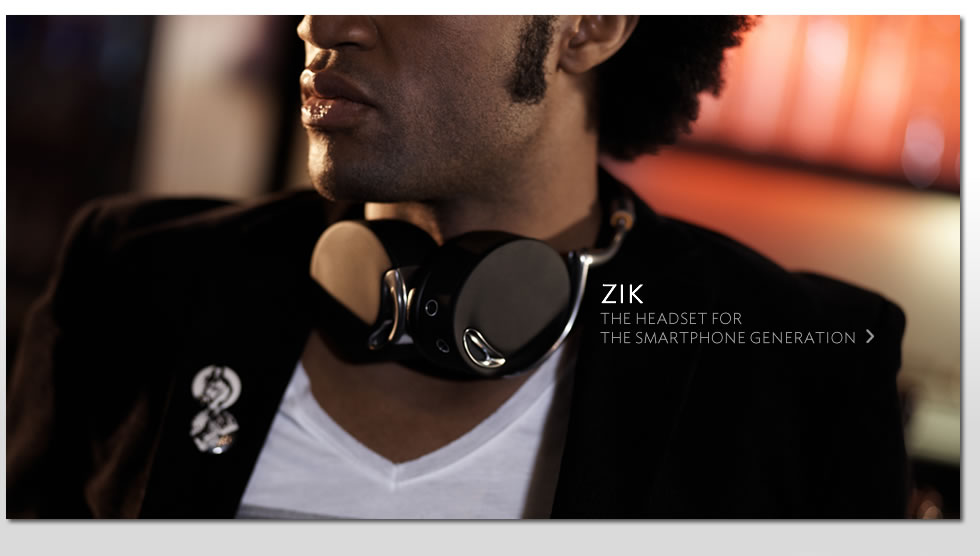
The Parrot Zik Headphones are a pair of headphones from the company Parrot, which is based in France. The headphones themselves are a pair of noise-cancelling, wireless headphones that have some interesting gestures that give access to various functions on the device. They also offer smart-phone linking functionality to adjust the headphones settings, which is done wirelessly through bluetooth protocols. I will go into these functions and more in detail further below.
The first thing I want to talk about with the headphones is the wireless integration with smartphones. People may notice this as a feature that is similar to the one found in the Parrot A.R Drone device in that you can download an App for your iOS or Android devices to add additional functionality to the headphones. The headphones themselves are nearly fully customisable, audibly, by using the App to alter various functions of the headphones. For example, you can modify the audio’s position with the concert hall feature. Basically what this does is it allows you to change the angle that the music is coming from in a virtual space. This creates a much more natural sound, like you’re listening to a live concert or something. There are also a slough of other features on the app, but most of it is standard fair, like equaliser settings and the like.
I have to admit that going into the concert hall feature, I was a little skeptical about it. I mean, the ability to position virtual speakers sounds a little weird. Heck, it sounded awkward even when the ability was explained to us by Parrot. However, once you actually used the function, it definitely increased the experience by a fair amount. However, if you do not pair your phone with your headphones via bluetooth, you will not be able to access this feature or many others available in the app.
The second feature I want to talk about is the devices noise-cancellation technology. Now I’m sure a lot of us here have experience with these kinds of devices and know that they don’t generally work as well as they could, so as you can tell I was very wary of this noise cancellation and especially the way that it was being explained to us. Basically what the devices does is it uses microphones to detect external audio and then compare it to what you’re meant to be hearing and then it does voodoo magic and the noise cancelling works. Now, I’m not one for voodoo, so I had to try this out for myself. And try it out I did.
The noise cancellation, I found, worked incredibly well. Whilst I was listening to music I had one of the ladies from Parrot try to ask me something and I could not hear a word she was saying. What is this sorcery? I’m not an audio engineer so I have no idea on how it works technically, or how the device is able to hear sounds before my own ear does and then replace it with silence. This is probably my most favourite part of the headphone.
The third and most important aspect of these headphones, I believe, is the user interface on the headphones themselves. Basically, what a user must do to access various functions on the headphones is to use certain swipe gestures on the earpiece. For instance, running your finger downwards on the headphones will turn the volume up and conversely, running your finger up the side of the headphone will turn the volume up. When your headphones are paired with your smart phone, you also gain access to other functions, such as skipping to the next song by flicking your finger forward on the earphone. I quite liked this gesture based system, but I am a little wary of how it would utilised in a tight space, like on a train where it is packed to the brim with people and even moving your arm is a hassle.
Overall I quite liked the Parrot Zik headphones and am quite interested in seeing how the shape up in the market. The headphones will be retailing at around $499.99 and will be coming to Australian stores in August. Be sure to keep an eye out for these unique headphones.
There was a Fate/Zero convention in China this past week. For some strange reason, MasterAbbott ended up there. It was an awkward few hours for all involved. Also there was some huge news on the anime front this week with anime adaptations of JoJo’s Bizarre Adventure and Sailor Moon announced. Oh and we did a whole bunch of reviews that you should read. So what are you waiting for? HOHOHO!
Overview:
Even though there is a brand new handheld gaming device circulating the market now from Sony, that new device is almost devoid of a certain genre of game. This missing genre is beloved by a large group of gamers but thankfully the PSP is still receiving plenty of love from developers and publishers behind this genre.
The RPG genre is one that has seen much success on portable handhelds and XSEED Games isn’t about to let the PSP go without at least one more RPG to round out the platform’s library. Now that they have released Unchained Blades onto the PlayStation Network, is it worth your time?
Story:
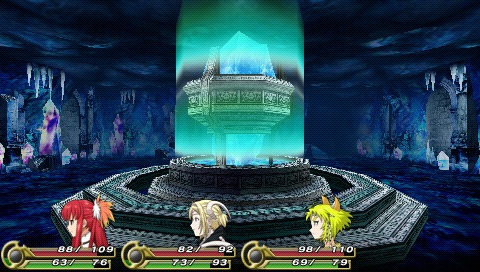
The world of Unchained Blades is populated by mythical beings and creatures of fantasy and all of these creatures are ruled by a Goddess. However there is a special journey that these creatures can take to meet with the Goddess and be granted any wish they want. Players will take the roll of the most powerful dragon in the land, Fang (all character names can be changed by the player however.)
With his massive strength he was able to fly right to the Goddess and rather than have her grant a wish, he simply demanded that she tell him where the strongest enemy in the world is. As one may expect, this greatly displeases the Goddess, who then curses him by removing all of his dragon powers and sending him crashing to Earth. Here Fang learns about the proper way to reach the Goddess and sets out on a Journey to regain his abilities and obtain his revenge.
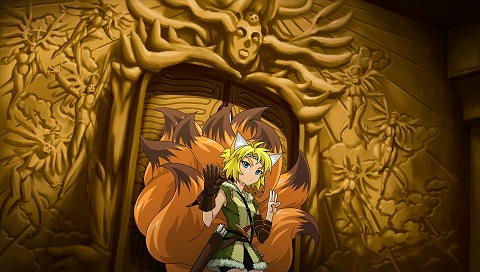
Along the way players will come across a number of other allies who all have their own wish to make and join up with Fang in his journey. While the storyline itself is far from original, the characters themselves help make up for the mundane plot. One of the things that makes these characters special is the fact that they two are monsters, such as a golem prince, phoenix girl or medusa.
These characters’ interactions with one another are quite amusing and will help keep the story enjoyable, especially when certain characters start to show interest in one another or reveal some hidden sides to their personalities.
Visuals:
Now one thing that makes Unchained Blades unique is the fact that all of the main characters were actually drawn by different artists. This means that you will see a lot of variety with the character’s basic designs, though they all follow an anime-styled fantasy theme. These individual artists have done a great job with the main characters as they are one of the treats of playing Unchained Blades. In fact, nearly all of the characters you come across, both enemy and NPC are beautifully designed.
Unfortunately the same can not be said about the actual dungeons you explore. Considering players will be spending a large amount of their time traversing the halls of these dungeons, it would have been better if they were at least a little bit more diverse. Now while each dungeon does follow a certain theme, nearly every single hallway inside the dungeon will look the same as the last, meaning players will often spend hours walking through a repetitive environment with only a few changes here and there.
Audio:
The title features some nice background music that helps accentuate the mood of battle or exploring various dungeons. As for the game’s sound effects, they are serviceable at best. Thankfully Unchained Blades does feature voice work for the main cast, though it is worth noting that not every piece of dialogue between the characters is voiced. When the characters do speak with one another their voice actors perform an adequate enough job portraying each characters’ emotions and personalities.
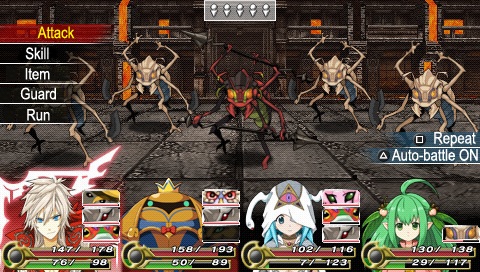
Gameplay: While Unchained Blades may be classified as an RPG, it is a bit of an unconventional title to say the least. The reason for this being the fact that players will actually be dungeon-crawling through a first person view similar to what was experienced in the classic title Wizardry. This means that as players are advancing through the dungeon they will not see their characters moving, but will instead be walking through an area as if they themselves were there.
Interestingly enough, combat is also fought in this same first person style. Players will experience random encounters while walking through a dungeon and face off against a number of opponents which can range from only one monster, to fifteen at a time. These large scale battles can sometimes mean up to three screens full of enemies to defeat, making this turn based battle system a fight for your party’s life.
Now at any given time, players can have a party of up to four main characters which are called “Masters” in the game. These masters possess a special ability which helps spice up the combat and also references the titles name, the Unchain ability. When you are battling against enemies, there is a chance that they will become influenced by one of the masters’ charisma or sufficiently wounded enough the player can unchain them through a simple mini-game, allowing the creature to join the party as a follower. It is a bit disconcerting however that there are many occasions an unchain circle will appear in the middle of your party’s attack turn, meaning some enemies which can be swayed to your side are often killed before you get a chance to unchain them.
Each master can have up to four followers added to each master, meaning that players can actually enter combat with up to twenty members at a time, though followers usually only serve as a method of blocking attacks at random, tacking damage at random or doing extra damage for linked skills. These followers also will have certain “anima” (elements) which can be applied to the Master, allowing them to perform special skills, meaning players will have to micromanage which followers are best for each character given the situation they are facing.
As players battle, their masters will level up as in any standard RPG, and players will also be given a few skill points which can then be applied to a branching upgrade tree which can boost various statistics as well as unlock new attack, upgrade and passive skills. As mentioned before, players will also have to worry about their charisma statistic as well, which levels up separately from their base character level. Performing well in a battle, such as finishing fast, using special attacks or taking little damage will result in boosted charisma while things such as running away, using healing items and other things will drop your charisma level.
Your charisma level affects how many followers you can have, the happiness of said followers as well as improve your chances of instantly allowing unchaining of enemies. This statistic is also affected by answering questions asked by your followers, though a large number of these questions have strange reactions which don’t make sense more often than not.
Managing the mood of your followers as well as switching them out for leveling purposes is almost essential for progressing through the game however, as there are a few moments players may be barred from advancing without competing in something called “Judgment Battles.” These battles are, to put it bluntly, very annoying and can also be a reason for heavy player grinding as they are fought by your actual followers instead of your main characters. In these battles players will simply press various quick time buttons as they scroll past while their followers mash up against the enemy’s followers in comically bad fashion.
These battles tend to be optional, though when necessary they are a drain on players’ time inside the game, as they will need to try to unchain powerful followers which is always an iffy gamble or try to level up weaker followers in their party by grinding further. This is a bit of a hassle already, as often players will encounter difficulty spikes in the levels of enemies they are fighting, requiring the player to return to a previous area and grind for experience points and money to survive the next floor.
It is worth noting that, despite these difficulty spikes, players will usually be able to venture forth without much concern for their well-being thanks to Unchained Blades’ save system. Rather than forcing players to only save in town or at certain points in the dungeon, players can instead save anywhere in a dungeon they please, making risky ventures lose their edge.
Overall: Unchained Blades takes a bit of a risk being released on the PlayStation Portable a bit late in its life and unfortunately the title does suffer from a few issues such as repetitive dungeons, excessive grinding and slightly questionable follower system. However despite these issues, those eager to pick up a long, engrossing RPG that holds true to a number of old-school mechanics while throwing in new ones to keep things interesting need look no further as Unchained Blades provides a slightly unconventional storyline alongside enjoyable gameplay.
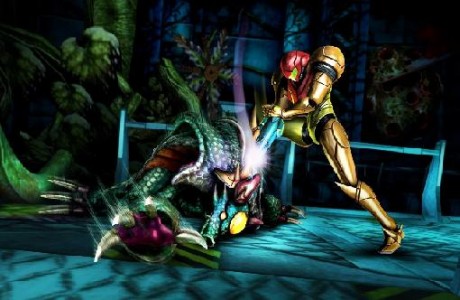
During E3, a lot of fans went in thinking we would see a new Metroid game revealed for the Wii U. Yes, Other M wasn’t a huge success, but people still love Samus and it’s easy to see that the franchise would be perfect for Nintendo’s upcoming platform.
It seems that fans are not the only ones with Samus on the brain though, as Miyamoto recently made a statement to IGN on how Metroid would be perfect for the Wii U.
“With Metroid it’s very easy to imagine some interesting implementation for Wii U,” Miyamoto mentioned. “I think that having another screen with the gyro built in really gives you a lot of interesting opportunities for development, and we can bring a lot of our games to life in a completely unique way with that.”
Another name mentioned during the interview was Star Fox for the Wii U, but no further details were given. I personally would love to see Metroid on the Wii U and there isn’t much of a doubt that if done right, it would be a huge seller for Nintendo. Of course, these are just name drops as of now, meaning if a Metroid game were to come, it would be at least a couple years away (unless Ninty already has it in the oven).


 Click here for full size image.