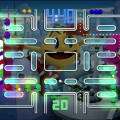
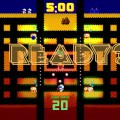
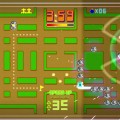
Namco Bandai Games America Inc. has announced the digital release of Pac-Man Championship Edition DX+ in North and South America. Continuing a legacy of classic arcade action, DX+comes as an upgrade to the 2010 game Pac-Man Championship Edition DX. The game will feature improved leaderboard functionality, in-game achievements and medals, as well as additional DLC packs including mazes, music and graphics such as classic Dig-Dug and Rally-X sprites.
The high intensity race to gobble up every pac dot in sight features an added element of danger as multitudes of easily angered sleeping ghosts lie scattered around the bright neon mazes. As Pac-Man runs past these ghosts, they will awake from their slumber and make chase, creating a long chain of angry ghosts trailing behind Pac-Man as he darts around in a chaotic search for a Power Pellet. Exciting modes such as Score Attack, collecting as many points as possible, and Time Trials, clearing out a set number of laps around each maze as fast as possible, will be sure to keep both old and new Pac-Man fans coming back for more.
Pac-Man Championship Edition DX+will be available as a free title update for players with Pac-Man Championship Edition DXwhile other players will be able to download the game as is for the PlayStation 3, Xbox 360 and Steam. Check out the screenshots below and get ready for some classic arcade action. Waka waka waka.
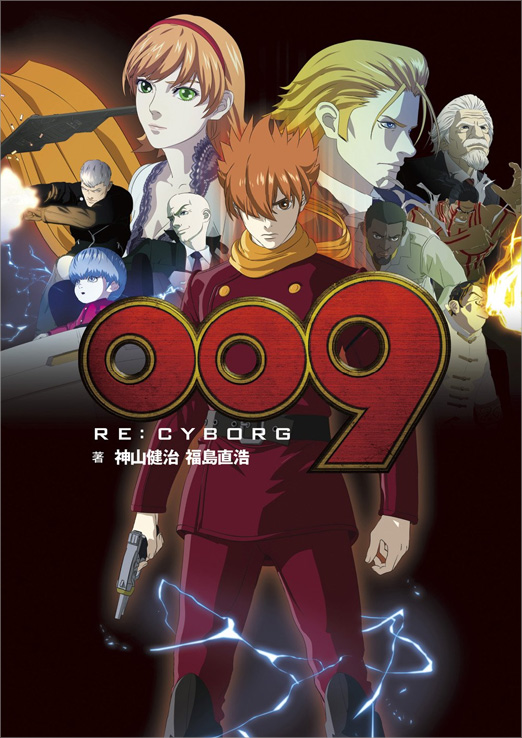
Overview It’s been 49 years since 009 Cyborg was first released. Wow. With a manga, a game, two anime films and two anime series already to its name, comes one more film. Redesigned and brought into a new age, 009 Re: Cyborg continues the story of the 00s and the world they fought to protect.
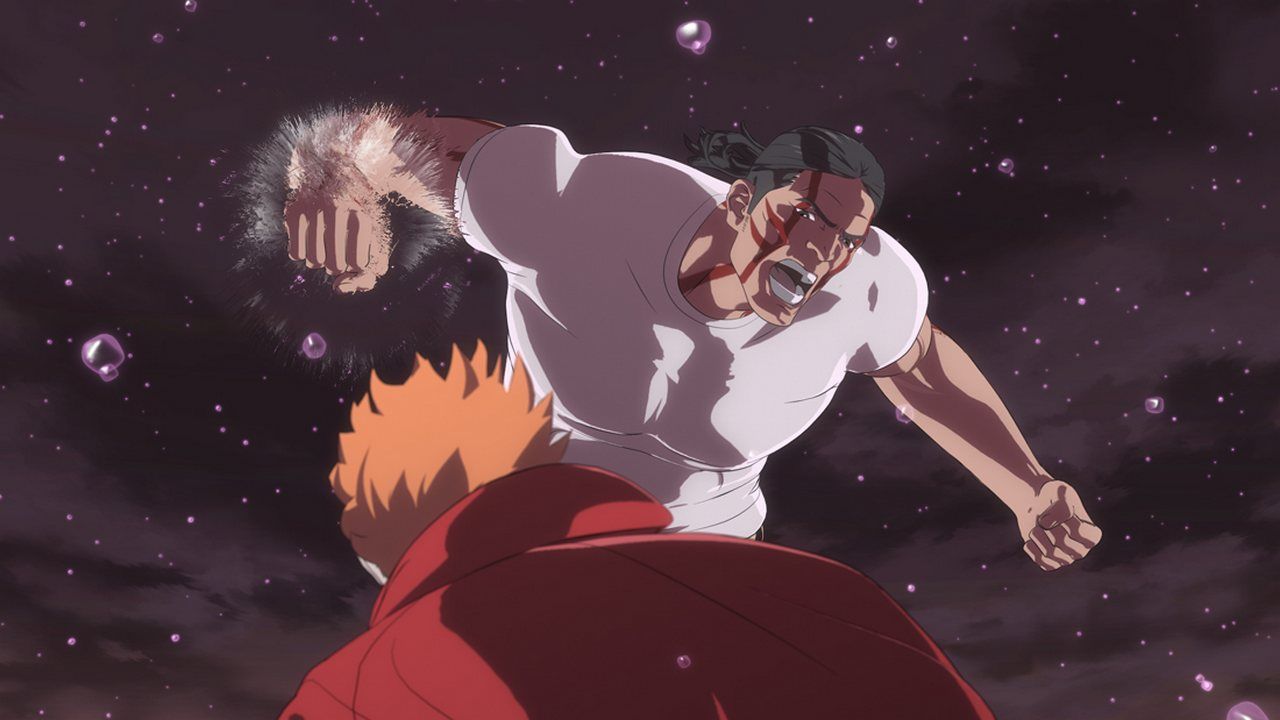
Violence, in all its slow motion glory
Story “In the beginning was the Voice, and the word was Him; and all obeyed His word in great awe. But those who dwelt upon the land, through vanity, cunning and greed, attempted to build a multitude of towers whose tops reached unto heaven, and accumulated great wealth on earth. Scattering across the land and laying it to waste, man turned a deaf ear to His Voice. So He gave unto man an opportunity to atone for his misdeeds; and flame and smoke and the roar of a lion descended upon earth; and shattered the many towers to dust….”
Decades after the rebellion of the Cyborgs and their battles for justice and world peace, the 00s have retreated to more regular lifestyles. Unable to age, they do their best to fit in to the society they saved so many times before. Joe Shimamura, formerly known as 009, lives the life of a normal highschooler. Life is fairly simple. Unfortunately for the Cyborgs, and the rest of the world, justice and evil are ever changing and ever present.
In a show of force in their own ideal of justice, people across the globe are systematically bombing skyscrapers. Claiming to be led by “His Voice”, people suddenly decide to initiate these attacks, regardless of previous affiliations or beliefs. With no sign of slowing down, the world needed new defenders. The world needed the Cyborgs back.
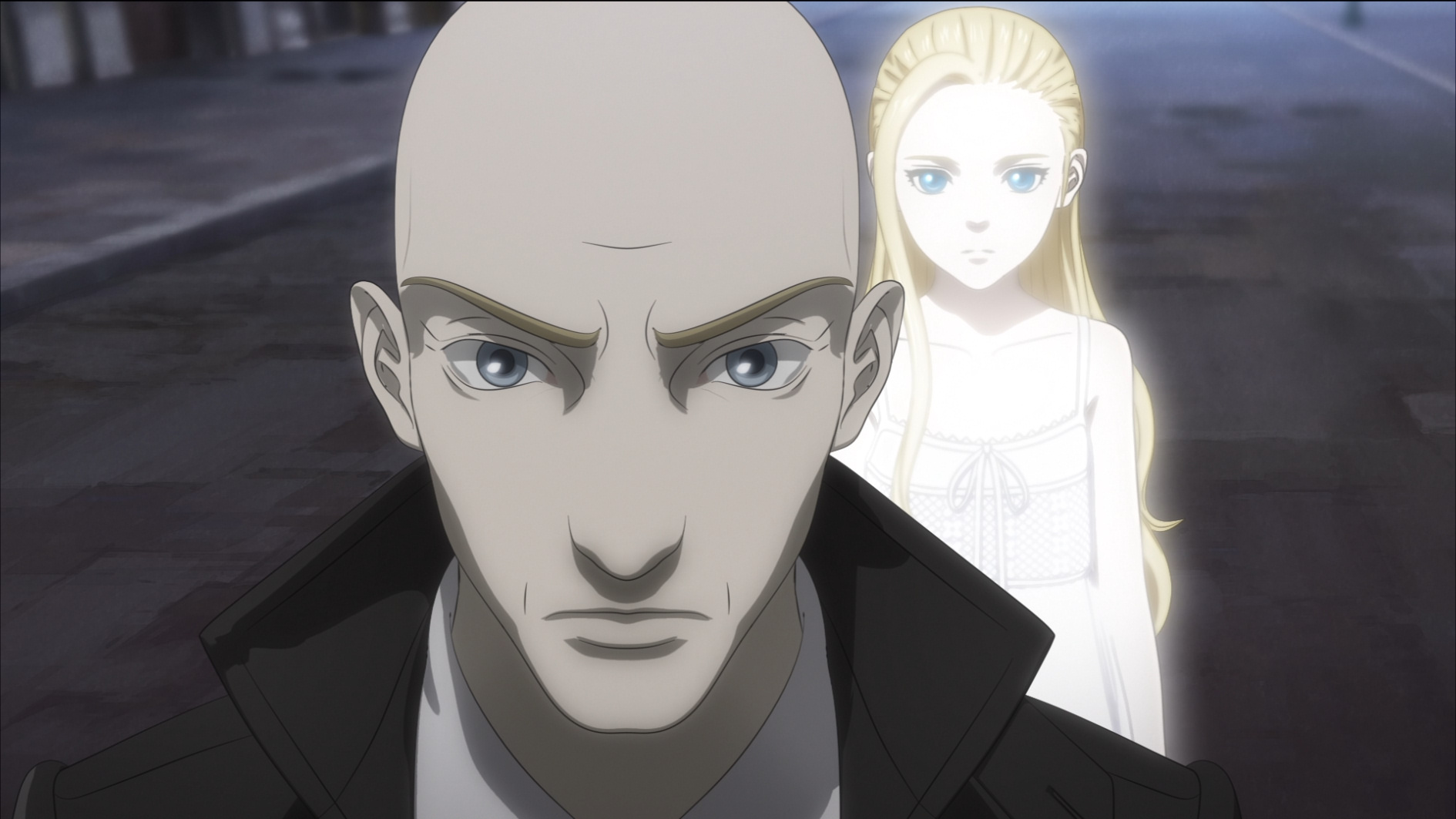
“She’s right behind me isn’t she?”
Living his normal life, with no memory of his past, Joe is forced back into his previous life by his once comrades in arms. Brought together once more, the film deals with the characters own development since their separation, along with how their personalities mesh after reuniting. Over the course of the film, the 00 Cyborgs investigate the source of the attacks and the reasoning behind them.
Once the film delves into the concept of “His Voice”, it takes a sharp, theological turn. In one particular scene of dialogue, characters explain a variety of concepts far beyond fighting bad guys. One notion is that the Voice that people hear is that of God himself, willing them to enforce a twisted form of justice onto the world. Another is that the sheer concept of God itself is nothing more than humanity’s invention, being the only species capable of higher thinking, and possessing elements which are useless on the evolutionary scale, such as imagination. In their own desperate struggle to comprehend the unfathomable majesty of existence, humanity invented God within the brain, the source of all thought. Seriously heavy stuff.
However, with all that being said, the film does base itself on the fact that the audience has seen prior iterations of 009 Cyborg. The film plays out very much as an addition to the original, rather than a stand alone piece. Characters are not explained in any sort of intricate detail, simply appearing and slotting into the plot. The story itself isn’t bad, it just doesn’t feel complete in itself.
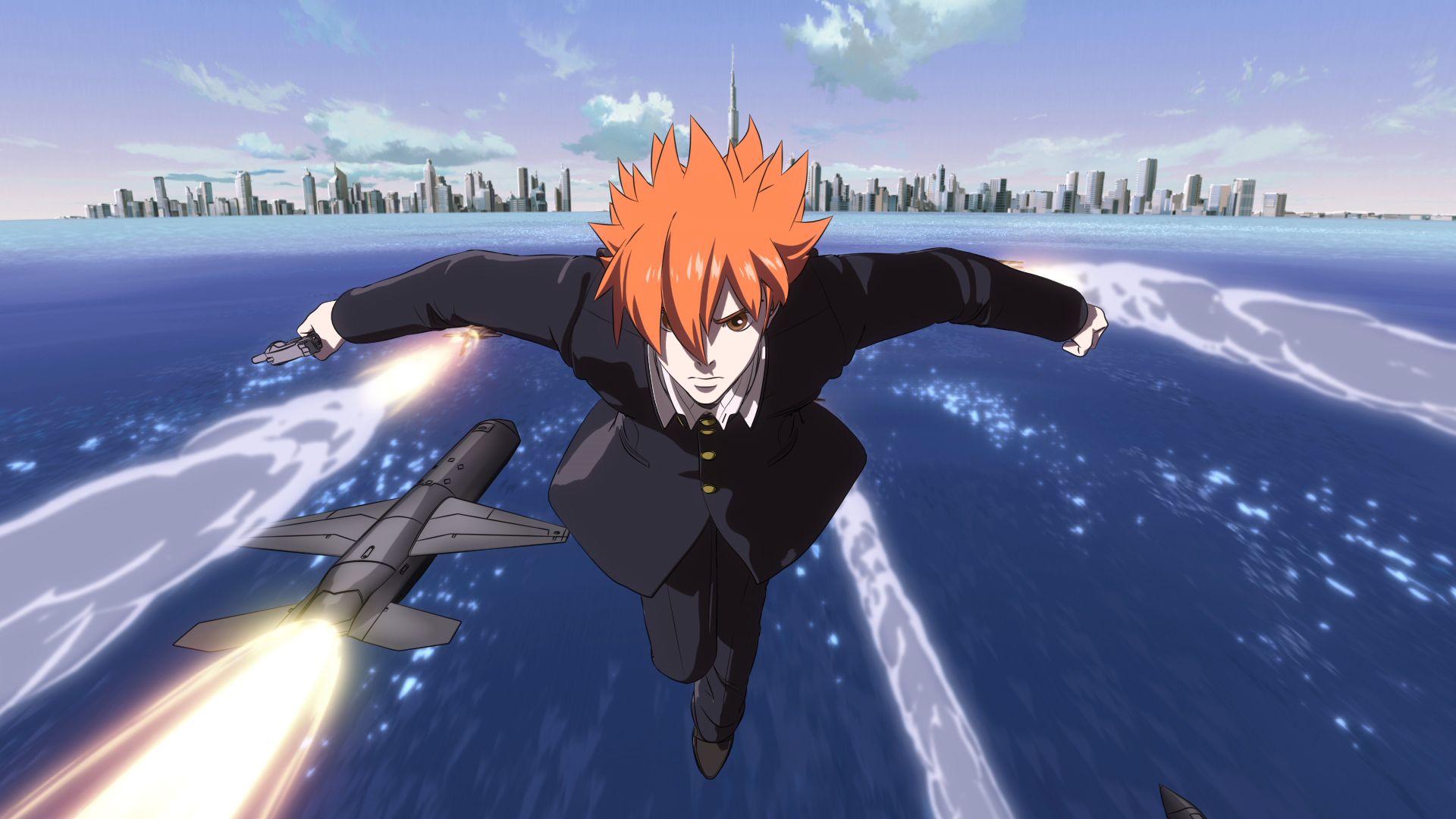
Able to leap speeding missiles in a single bound
Visuals The visuals are without a doubt the strongest element of 009 Re: Cyborg. Fully rendered in 3DCG, the film presents a beautiful representation of the 009 Cyborg world. The landscapes themselves are large and picturesque. From sprawling cities, with unfortunately numerous skyscrapers, to locations such as Venice, the world looks amazing.
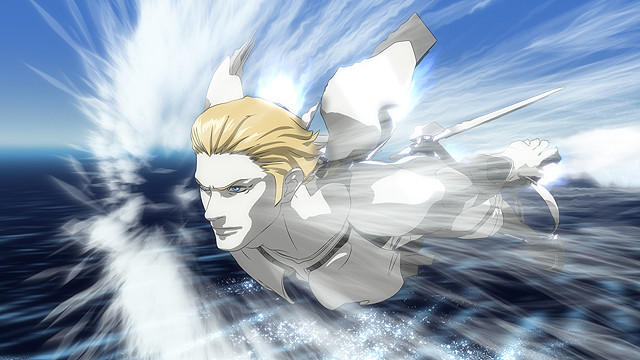
One of the most notable elements of the film is the appearance of the cyborgs themselves. Deviating from the original designs, Re: Cyborg presents a much more realistic interpretation of each character. This immediately presents the film as a new take on the series, fitting of the passing of time. One of the most notable redesigns is Cyborg 002: Jet Link. Originally possessing a beak-like nose and long spiked back orange hair, his redesign features a face of regular proportions and simple slicked back blonde hair. This, combined with the CG styling, allows characters to be taken much more seriously.
Luckily his name was already Jet
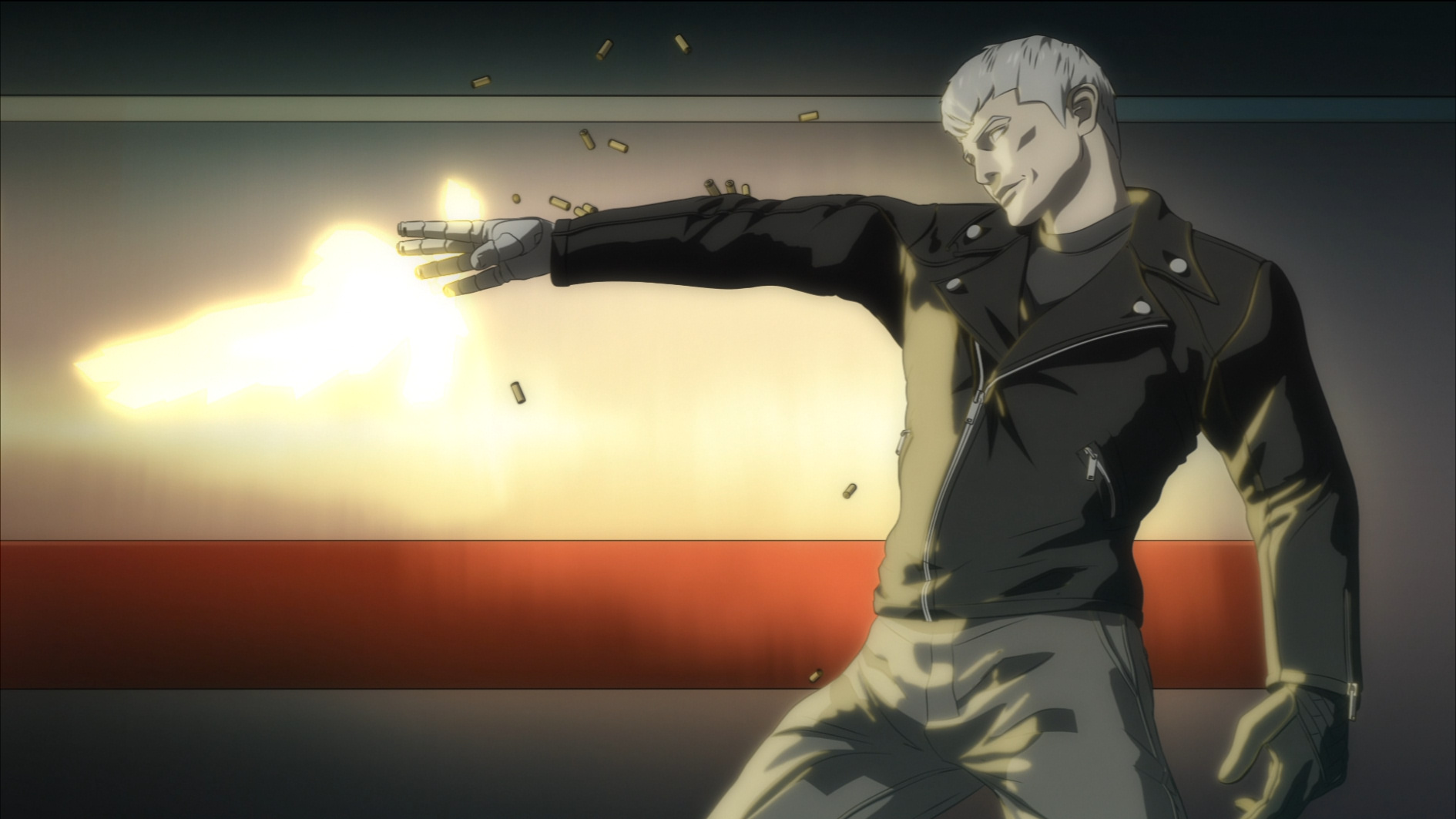
Another noticeable upgrade is given to the Cyborg’s abilities, with each receiving far more visual detail than previously possible. This leads to some cool combat sequences, showcasing the variety of the Cyborgs powers and how they use them to fight, whether it be fire breath or a knee mounted cannon. In the case of Joe’s Accelerator, the film makes use of slow motion. While this clearly expresses the unsurpassed speed allowed by the enhancement, it also amplifies the visual environment. Raindrops are seen almost hovering in place, explosions are shown slowly engulfing those unfortunate enough to be in the area, already stunning scenes made even more awesome.
One of the most visually nostalgic moments of the film lies towards the end, where the 00 Cyborgs don their uniforms once more and fight together for the sake of the world. It clearly expresses the evolution of the visual style and how times have changed…and it’s awesome.
And it shall be known as “The Handgun”
Audio The soundtrack of 009 Re: Cyborg is very well suited to the visuals. During the more action packed scenes, guitar can be heard along with a combination of trumpets and vocalisation. This gives of a very dramatic feel whilst still keeping a situation tense. Other action scenes take the opposite approach and lacks a backing track entirely, making use of only muffled sound effects. This is generally employed when 009 is using the Accelerator. This, combined with the visuals, clearly depicts the speed at which he is moving, far beyond the rest of the world.
The film also employs numerous sound effects to complete the world. Being Cyborgs, the 00s produce a number of minute, mechanical sound effects when utilising their abilities. Though it may not sound like a major component, the small sounds, like the lens of their eyes adjusting or the pulse of 009’s Accelerator, really add to the film. The voice acting in the film was also done very well. As it stands, the film only has the original Japanese audio. The characters are emotive and
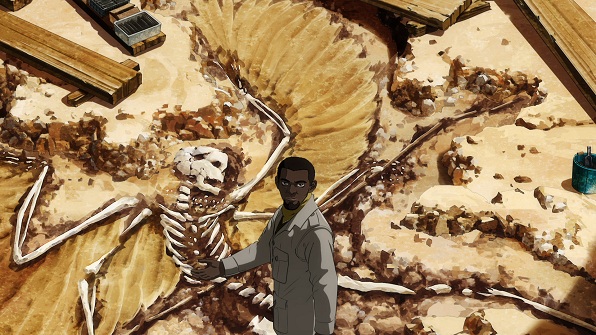
Score one for the arachaeologists
Overall 009 Re: Cyborg presents an interesting story. Take an already serious threat, like attacks on cities, then throw in theological concepts and cyborgs. You’ll end up with chaos. The plot itself is interesting, though it is somewhat confusing as a stand alone title. Certain important aspects of the story were left underexplained and rather vague, leaving what seems to be an intricate plot somewhat confusing. It also bases itself off the premise that the audience has seen 009 Cyborg media before and knows the characters. Once again, while not terrible, it mitigates the enjoyment of newcomers. Not that there’s anything wrong with appealing to stalwart fans, it just feels as if the film is incomplete to a degree. That being said, 009 Re: Cyborg is a beautiful film that discusses some complex issues and will give you something to think about. Also it has Cyborgs with powers. Awesome.
Capsule Computers review guidelines can be found here.
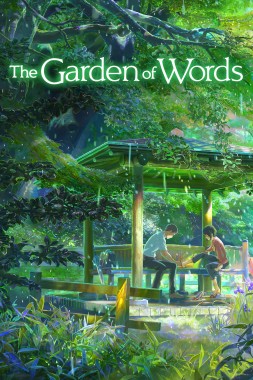
Garden of Words Studio: Comix Wave Publisher: Madman Format: Cinema Release Date: 26th September 2013
Overview The name ‘Makoto Shinkai‘ has become so thoroughly ingrained in the anime culture lexicon that it is almost impossible to separate the name from the work. The Garden of Words is a film that rather than being uplifted by the name of Shinkai is burdened with the expectations the name brings.
The Garden of Words is an interesting film for a number of reasons but the most intriguing thing of all is just how unlike Shinkai this film feels. This is a very different beast, one that is majestic, moving and thoughtful but all the while it is missing the magic Shinkai feeling that ties all of it together. Regardless of that it is still a great film albeit one that doesn’t exactly live up to its pedigree.
Story Unlike his previous feature film Children Who Chase Lost Voices, The Garden of Words is a smaller story in every sense. The film runs at a mere 46 minutes in length (it is being billed as a double feature with Ghost in the Shell: ARISE at the REEL Anime Festival) and isn’t as ambitious a tale as previous Shinkai works. It is a relatively simple tale free of much incident. This sets it apart from the rest of Shinkai’s impressive resume of work, with the exception of his classic short film Voices of a Distant Star. Both this film and Distant Star draw a somewhat thin plot and attempt to explore the issues and feelings that spring from it.
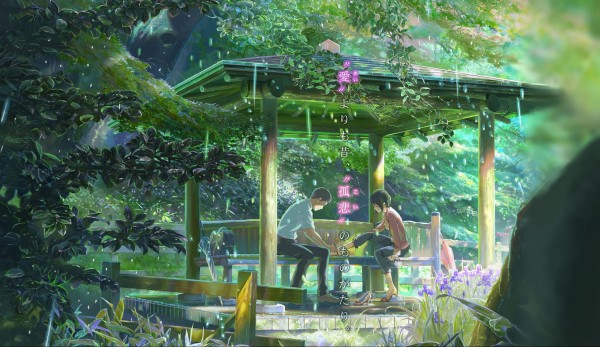
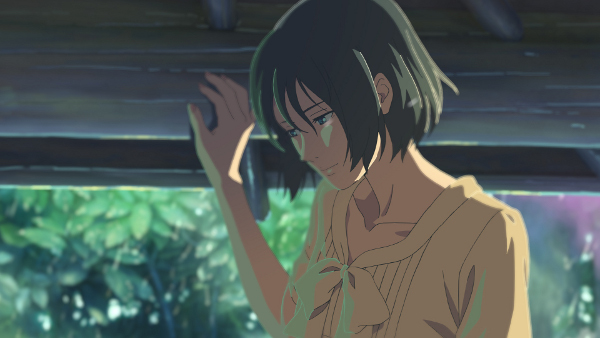
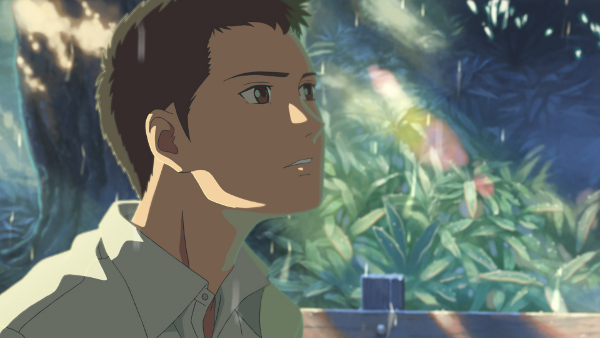
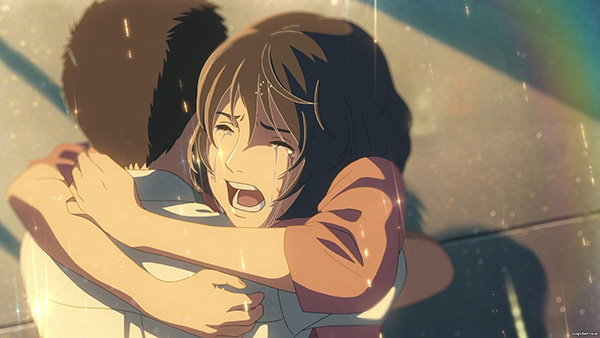
While Voices of a Distant Star was admittedly a far better effort at this type of story-telling, The Garden of Words hits the nail on the head with its featured relationship. In focus is a relationship between an older woman and a teenage boy. The teen named Takao happens to meet her on a rainy day in his favourite park. She bids him farewell with a mysterious poem, the words of which leave him utterly enchanted. Slowly but surely they return to that spot each and every rainy day and form a bond, all the while never truly discovering all that much about each other, not even a name. Eventually the rain clears up and the distance between them grows, without the rain they cannot find each other again.
It is a lovely story and Shinkai tells its with delicate care, but it is in its second half that it begins to lose focus. It ventures a little too much into the melodramatic side of the spectrum, but Shinkai knows better than to linger too long and brings things through to the sunnier side of the garden ending on a hopeful note.
Over the course of the 46 minute length of the film we come to understand the relationship between these two strangers. The connection between the characters feels very genuine and develops naturally. The setting is unique and the titular ‘garden’ is a well realised locale that takes on a life of its own by film’s end. The film hits all the right notes emotionally, but still struggles to bring it all together thematically. In the past Shinkai has used a through line for his story-telling, an over-arching theme that comes full circle, no such through line was evident in The Garden of Words.
This is far from Shinkai’s best story-telling effort but it is a solid film all around that amounts to yet another feather in his cap that is already covered in them.
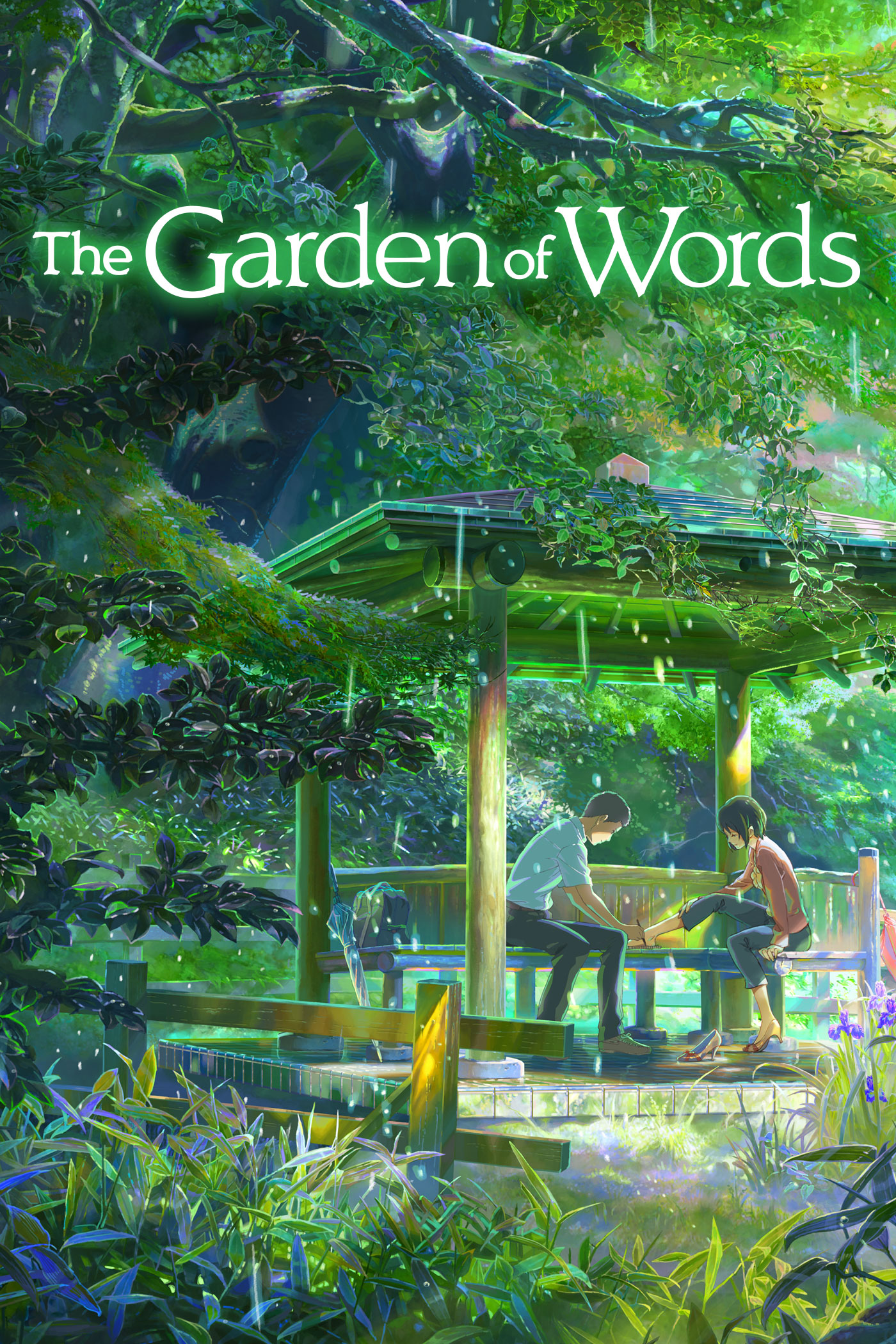
Visuals and Audio The most Shinkai-esque part of The Garden of Words is its unmistakable aesthetics. It is a visual feast for the eyes and one of Shinkai’s best work in terms of animation. The attention to detail is absolutely remarkable, with hundreds of leaves moving in unison each one highly detailed, the reflection off the puddles pooling up with rain beating down upon gravel. Shinkai captures the world in beautiful vibrant colour bursting with life. While it may not be as big and sprawling as his other artistic attempts, it is a lovely effort in aesthetics.
Much like its visuals, The Garden of Words features a stirring soundtrack that is every bit as beautiful as it is awe-inspiring. With sweeping tracks giving the sense of soaring through the rain and the quiet emotional instrumentals that hit right to the heart, this is an incredible composition from Daisuke Kashiwa. Also featured is the theme song of the film, ‘Rain’ by Motohiro Hata, a majestic ballad that captures the spirit of the film superbly. It caps off the film in stunning fashion, serving as the closing track as we see our two lead characters moving forward through life through the rain and all.
The film stars some pretty big names in the anime world. Miyu Irino voicing Takao and Kana Hanazawa voicing Yukari was a real masterstroke. Both had electric chemistry and bounced incredibly well off of each other. It was a showcase of voice acting talent at its best.
Overall Sometimes a name can be a curse. The Garden of Words had the burden of baring the Shinkai name. It was far from his most ambitious film and it may come as a disappointment to those that watch Makoto Shinkai films with a certain expectation. This isn’t a bad film in any regard, but we have seen that Shinkai and Comix Wave Studios are capable of excellence and The Garden of Words is a film that is great but falls short of Shinkai’s usual standard.
The Garden of Words is a lovely enough film if you can disconnect it from the Shinkai name. This is no Children Who Chase Lost Voices or 5 Centimetres Per Second, but it is The Garden of Words and it is special in its very own way. It may not be the best film in Comix Wave’s history but it is a remarkable film that is well worth watching, even if only on a rainy day.
Capsule Computers review guidelines can be found here.
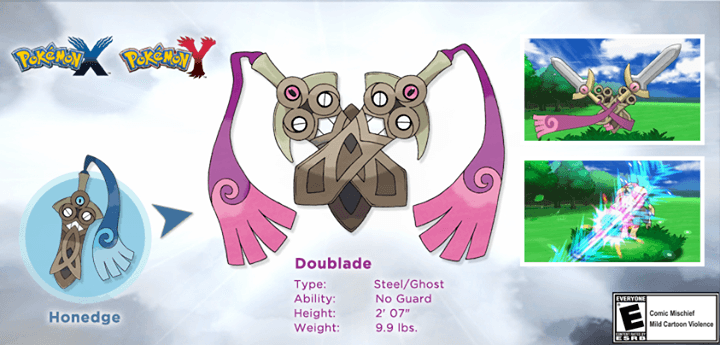
The Official Pokemon Site, as well as through their Facebook page, has released the latest addition to the Pokemon X and Y family, it’s an evolution of the sword-looking Pokemon Honedge. This death machine is called “Doublade” and, let’s be honest, the only thing that is better than one sword is two swords working in tandem. It will stay as a Ghost and Steel type combination, like it’s pre-evolution. It will also retain it’s ability “No Guard”. It’s confirmed techniques so far are: Sword Dance, Shadow Sneak and Aerial Ace. “It is capable of carrying out intricate attacks by telepathically coordinating its two blades to deliver twice the slice in battle”.
The Official “Doublade” Image Release
Now some people have already started to get upset over this Pokemon and it’s design and I just want to remind people of a Generation 1 Pokemon called Magneton, it too was multiple Pokemon stuck together and it was still considered an awesome evolution. If you don’t like Doublade now, just give it a couple days and you’ll grow to like it. Remember Pokemon X and Y is set for release on the 12th of October, on the 3DS, which isn’t too far away so if you havn’t pre-ordered your copy now I suggest you get onto that right away.
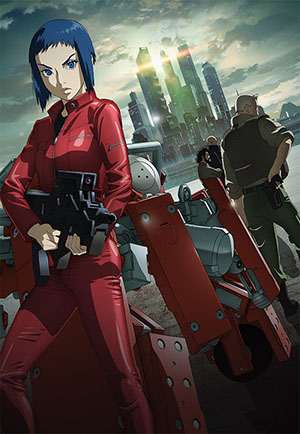
Ghost in the Shell: Arise – Border:1 Studio:Production I.G. Publisher: Madman Format: Cinema Release Date: September 26, 2013
Overview Ghost in the Shell is recognised as one of anime’s greatest science fiction hits, born from the gritty era of the mid 90s. Practically fundamental on the list of many veteran anime fans, it’s understandable that when Production I.G. announced a brand-new prequel series people were skeptical. Surely GitS was done and dusted, that such a gem could hardly be replicated in today’s world. “Oh it can,” said Production I.G., “you’re getting a prequel and you’re going to like it.” It certainly didn’t help that once we saw the new animation and character design, fans began to worry and almost rightly so. The new designs are a huge departure from the original look and feel of Ghost in the Shell. But are they any more than aesthetic changes?
For the uninitiated, here’s the rundown. Bear with me. First published as a manga in 1989, it received a film by Production I.G. in 1995 (later remastered as 2.0) followed by an alternate TV series known as Ghost in the Shell: Stand Alone Complex and its second season, 2nd Gig. Both seasons received feature-length OVAs before Solid State Society, a TV-film sequel to Stand Alone Complex, was released. Confused? Good, because this is yet another entry to the franchise. So how does the first of the new four-part OVA series fare? Find out below.
Story
Although Ghost in the Shell: Arise is set two years before the original film, it should be considered more of a reboot. Now this is perfectly fine as GitS has been rebooted before and was hardly cause for complaints. Arise aims to tell Major Mokoto Kusanagi’s back story of how she joined Public Security Section 9 and met her future colleagues. While it is the “beginning” of sorts, it still manages to throw the viewer right in the middle of an event we have little clue about. Kusanagi’s senior officer and mentor has been murdered, and the full-body cyborg must go on a trail of clues to find out exactly who did it.
Long-time fans will be glad to know there is nothing to fear in the narrative of Arise. This is pure Ghost in the Shell material complete with a twisting storyline, confused cyborgs and intense action scenes that will make you all fuzzy again. By chance, the Major bumps into familiar faces all trailing the same murder case as she agrees to cooperate with Section 9. Not everyone will be satisfied with the changes in Arise. Those that loved the surreal direction and decrepit atmosphere of the original will have to get used to the more orthodox and sterile nature of Arise. The deep, philosophical themes have been toned down in favour of a more practical approach that suits the modern pace of anime these days. The moral questions surrounding cyborg brains and prosthetic bodies are raised in the process of things happening, rather than drawn out introspection that would be awkwardly out of place here.
The first episode of this OVA series introduces the intrigue of the political and military sphere Ghost of the Shell, along with the corruption and dirty arms deals that naturally go with these elements. I probably say this often with gritty action anime like Ghost in the Shell, but it’s always refreshing when we get a show that takes itself and the world it depicts seriously.
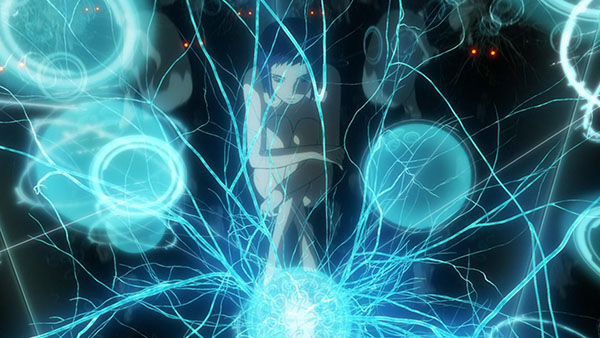
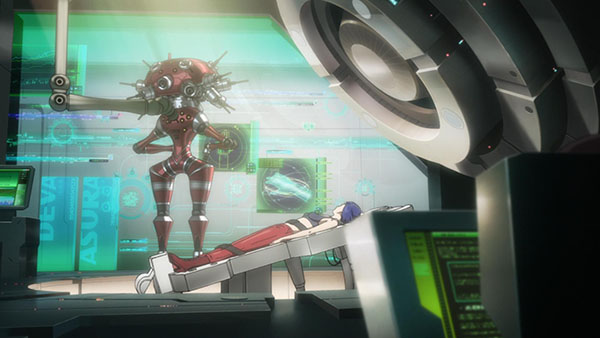
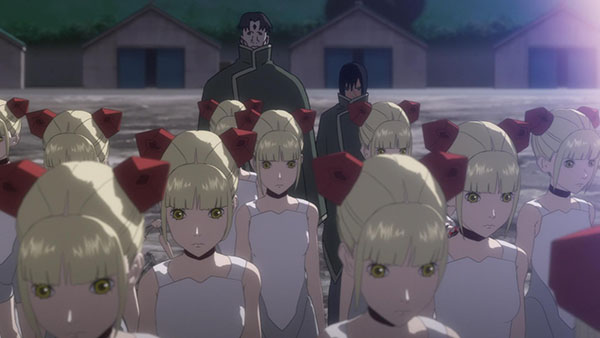
Visuals Ok, so while most of us expected a solid, fleshed out story (we dared Production I.G. to do otherwise), the biggest concern was the animation. It’s certainly different. Compare the screen shots here with our review of the original Ghost in the Shell 2.0 movie. This is pretty much a reboot in all sense of the word, scrapping Mokoto’s original looks in favour of a smaller, more lithe character. She’s still the iron-tough tomboy that we’ve grown to love, though. Aside from the modern designs that lack the shading of classic handrawn anime, Arise is still incredibly detailed. As it should be, being an hour-long episode with a high budget. CGI looks great and is used cleverly, a far cry from its awkward implementation in previous entries of GitS.
It’s not just the character design that has been overhauled. The iconic Newport City is drastically different. No longer the dreary, cyber punk dystopia marred by pollution and an orange tint. Newport is now a fairly clean, typical near-future city with blue skies. This new art direction is not just a sign of the times as it’s clear that the atmosphere has taken a backseat to everything else. Which isn’t a problem for most viewers including myself, because Arise needs an intriguing, purposeful plot and succinct but powerful action scenes for it to succeed in its OVA form without the depressingly arty exposition which was a lauded hallmark of the original film.
Audio
Being a feature length OVA episode, you can expect almost-theatrical production standards in its sound design. That’s almost the case here with a subtle sound track that knows when to stay out of the way and when to jump into a fight scene and pick up the pace. Plenty of attention has been given to sound effects, with guns, kicks and little nuances all helping lift Arise above a standard, episodic series. Stellar Japanese voice-acting rounds the package off and we can only hope an English dubbed version is released in the future with a great cast.
Overall Ghost in the Shell: Arise – Ghost Pain has the unfortunate role of being episode one, mainly tasked with setting up the story for the imminent follow up episodes which will hopefully raise the bar further. It manages this with ease by including a complete story, the murder case, from start to finish while developing Mokoto as a young, still mentally inexperienced Major. It’s hard to find real criticism of Arise. The first episode is exactly as it should be. It isn’t the death of GitS as some detractors proclaimed, quite the contrary, but on its own it isn’t a remarkably stellar sci-fi hit either. Not yet, anyway. It’s true potential could possibly lie in the coming episodes.
Capsule Computers review guidelines can be found here.
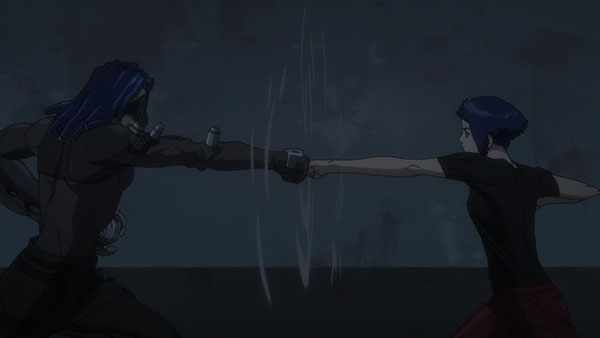
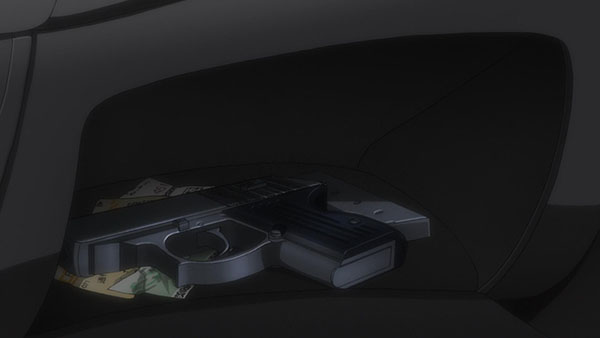
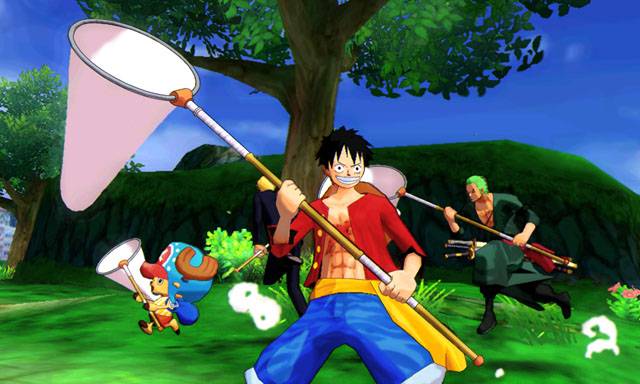
Namco Bandai has begun streaming yet another trailer for the upcoming game One Piece Unlimited World Red. This trailer is the longest by far and, basically, shows extended footage of the stuff we have already seen from past videos. That doesn’t mean it isn’t good though! It shows all the characters in action, the incredible graphics and some fantastic-looking gameplay as well as a bunch of the characters you can use and/or fight within the game’s storyline. It also shows a bit more of the original characters that have been created specifically for this game, mostly Red and Pat are shown. Like the trailer that came before this one, it ends by showing us Red who is about to eat a Devil Fruit but cutting the footage off with a “To be Continued Stamp”. Head down below to check out the new video for One Piece Unlimited World Red and let us know what you think about it in our comments section just below that!
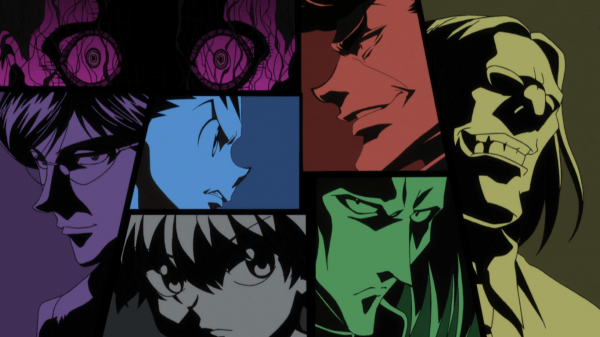
In a move that has long been speculated by fans of the series, it has been confirmed in the latest Weekly Shonen Jump magazine that the Hunter x Hunteranime will be moving to late-nights starting with episode 99 of the series.
Starting on the 8th of October, 2013, Hunter x Hunter will begin airing at 1:29 AM Tuesday nights. The series has run in the Sunday morning time-slot of 10.55 AM for roughly 98 weeks now. While no official reason for the change has been given, many speculate that it has to do with the increased level of violence in the Chimera Ants story arc.
This change to late-night also paints a pretty clear picture of when the anime series may come to an end. Judging by the amount of manga material currently available to adapt and the ending of chapter 339, it seems that there is a greater chance that the anime will end with chapter 339 at some-point in mid-2014. Stay tuned as further updates on this developing story come to light.
Evangelion: 3.0 You Can (Not) Redo Studio:Studio Khara Publisher: Madman Format :Cinema Release Date: 26th September 2013
Overview
Neon Genesis Evangelion would have to be, by far, the most widespread and influential Anime seriesand franchise to have ever been created. It has spanned over 18 incredible years and, although it showed signs of slowing down during the 90s, it has been a fan favourite for most of those years. Every Anime fan knows Neon Genesis Evangelion and – between the original series, the End of Evangelion movies, the Rebuild of Evangelion tetralogy and it’s countless marketing adventures – if you didn’t know about it “back in the day” I’ll guarantee you know about it now.
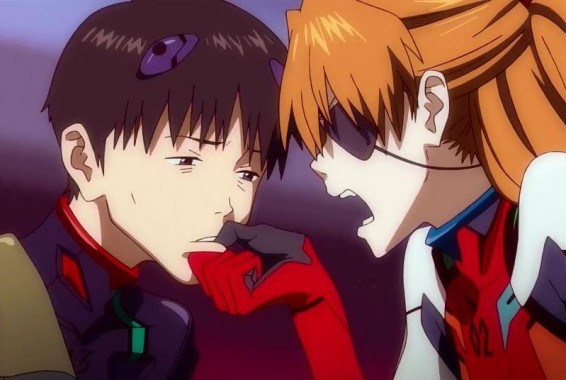
“Say something, stupid Shinji!”
Story
Unlike the movie that came before this, 3.0 doesn’t directly start from where 2.22 ends, but that doesn’t mean you should go into this one blind, you HAVE to have seen the other two movies to understand this one and even people like me that has seen those movies multiple times didn’t entirely get it. If you’re interested, head over to these pages here (Evangelion 1.11) and here (Evangelion 2.22) to read my review of the first two movies. These movies are proving to be extremely hard for me to review because the spoiler level here is incredible, I may have to ruin a few things so bare with me as I try my best to ruin nothing. The movie takes place a fair bit after the second movie, the gap is bigger than you would expect and the thing I loved about this film is the fact that they don’t entirely tell you what went on in that time gap, yes they explain bits and pieces as to what caused what and who did what to who but it’s almost Tarantino-like the way that the story is told.
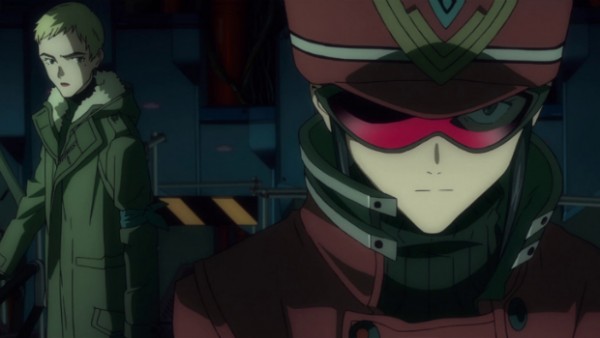
Captain Misato after many years of hardship.
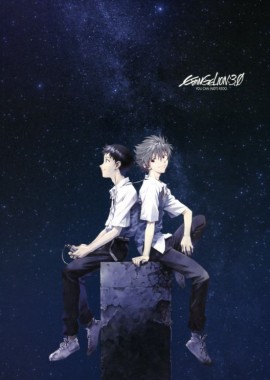
Once again the movie begins epically and ends in a way that, well, you couldn’t even imagine. I though the second movie was hard to beat when it came to shocking reveals and awesome scenes but 3.0 definitely takes the cake. You’re introduced to a character in 3.0 called Kaworu who plays a big role yet was swiftly introduced and then swiftly taken away, or so it seems. I don’t know how Anno does it but in any other situation I would count this as a negative and while people will consider me biased, just hear me out: He was introduced almost secretly, he didn’t have too many lines, he didn’t outwardly project much at all, he almost seemed insignificant yet he was the one who, in a way, destroyed Shinji mentally. Kaworu was the final step backwards, disregarding the events at the beginning of the movie. Once again we saw Shinji slip back into madness, I love the flow of Shinji’s mental state throughout these movies and when it comes to “snapping” and making “bad decisions” this movie really did it right.
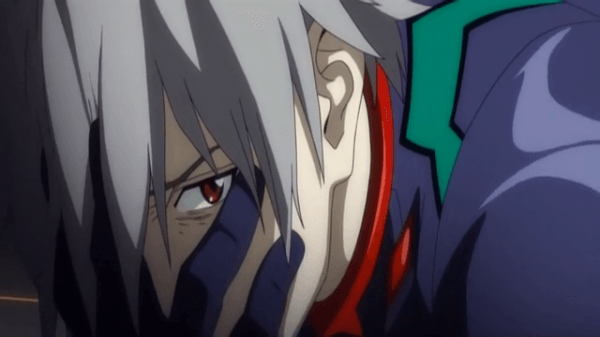
Introducing Kaworu.
If there’s one thing I have to say about the story in Evangelion 3.0, it is that the story is a little hard to follow the whole way through, now I watched it with another writer for the site, we both sat quietly in awe for the movie and by the end of it we both had a great deal of questions that the other simply couldn’t answer, my thoughts are that the final movie will answer so many questions that were asked during the 3rd movie, which is fine but when it’s on the format of film and you’re waiting almost a year for the next iteration it somewhat looses its traction, it doesn’t make it a bad movie story-wise, not at all, if anything it has made me want to watch it more than I had already planned, and that was a lot. The ups and downs are very fitting and they handled a “time-skip” storyline better than any other Anime or Anime movie I’ve ever seen, it was something special to see how the characters have all changed and hardened, grudges are still intact and the world is still a terrible place. Despite it’s slight flaws in pacing, the story was incredible.
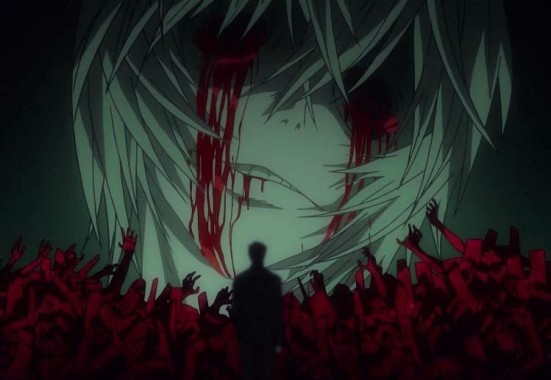
Gendo and, what I’m calling, “The Head”.
Visuals
The Rebuild of Evangelion movies are no short of perfection when it comes to visuals. Something I picked up on more during 3.0 was mouth movements and facial expressions, they matched perfectly to the voice artists’ speech and, to me, that’s downright unbelievable, it was almost like watching something that was done with motion-capture at some points. Having a destroyed city as part of the story really allowed the visuals some “crazy time” as I’m now calling it, everything was so distorted, everything looked like it could bleed despite it being concrete or wood, the ground was raised, the buildings were torn down, you actually felt fear through visuals. Because of the time-skip story element a lot of characters have changed, some drastically, others got facial hair, either way it seems like the visual team got it spot on! Having a character come on screen and the viewer thinking; “Wait, who’s tha-oh wow…no? Wow!”, to make a natural reaction to something that has been illustrated and animated, to react like it was seeing an old friend after years of not, simply awesome.
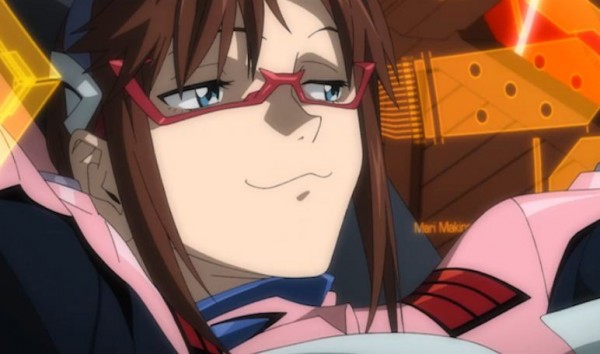
Nya, Mari? Nya?
Audio
The musical score in this was simple incredible. It was mostly orchestral, there was a great deal of violin involved in a lot of the score but the placement of some old-school sounding electric guitar didn’t go to waste. The orchestral music is so fitting when it comes to a movie like 3.0 and, in fact, all of Evangelion because the entire plot is about dealing with something of a higher power, something almost holy yet infinitely evil so you can see why the violin and the harp would play a big part. There was a scene where Shinji and Kaworu played the piano and it was very beautifully composed and actually played a fairly big part story-wise. The Japanese voice artists did an awesome job, I’ve seen the other two movies in English so I had the grounds to compare and while I still prefer the English audio tracks, the original Japanese voice actors and actresses did an incredible job on the whole thing, emotion was conveyed really well which is a big “tick” in the positive box.
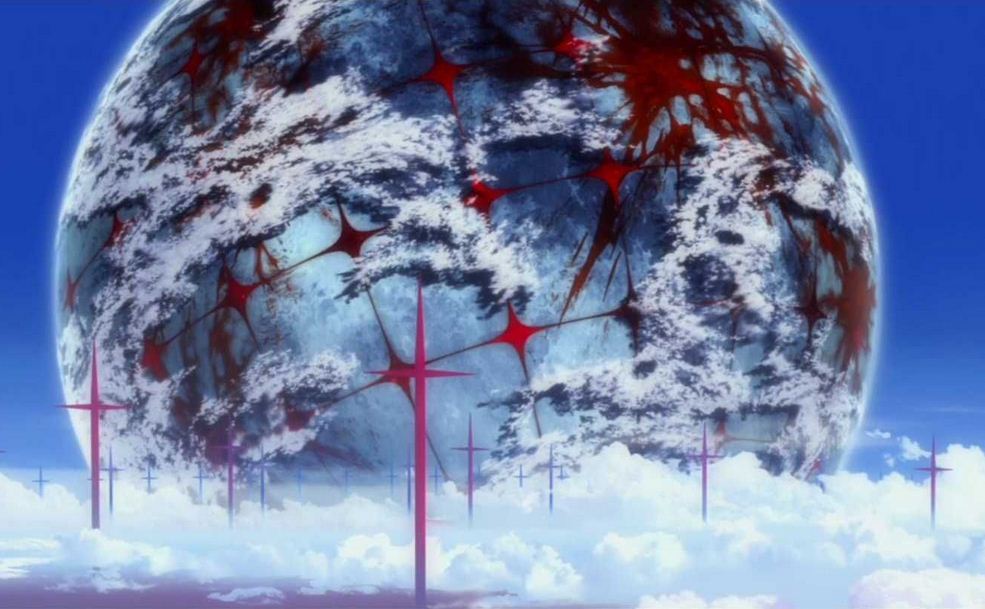
What’s left of Nerv HQ.
Overall
The movies don’t stop getting better and while Evangelion 3.0 was a bit confusing because of pacing and what not it still holds up as a fantastic movie and honestly takes nothing away from the other two. It keeps the Rebuild of Evangelion integrity and continuously adds to it. It has now become a whole different thing to the series and I find that fantastic because it still feels like Evangelion it still acts like Evangelion and this movie has proven to me that a film can be full of intensity from the start all the way to the end without loosing anything in between, or at least, nothing too crucial. It’s a fantastic movie, it makes you question a bit too much but it is still fantastic and it gets even better once you’ve finished watching it, it makes you want to research more on it and get to know it more. It plays hard to get but it’s just a fantastic movie.
Capsule Computers review guidelines can be found here.
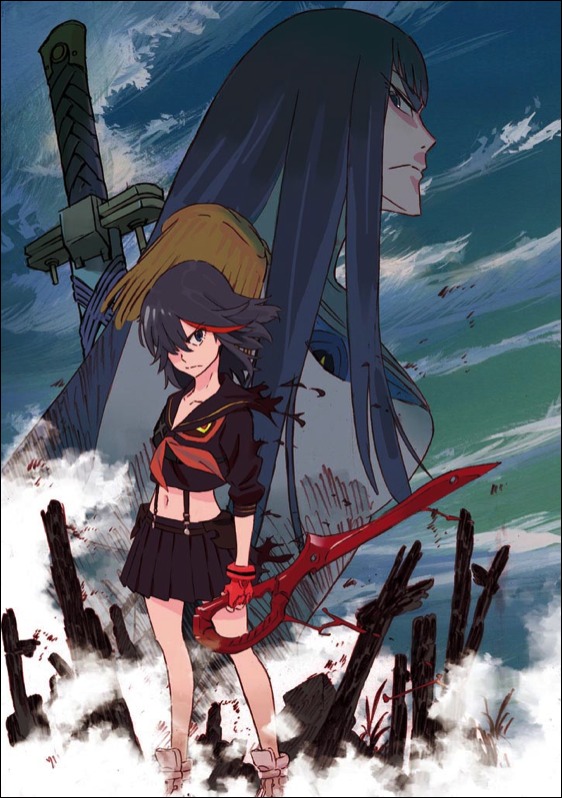
On a quest to unravel the secrets surrounding the death of her father and to locate the, “woman with the scissor-blade”, Ryuko Matoi found herself at a school called Honnouji Academy. There the school is under the command of an elite group of students granted superpowers by their “goku uniforms”. At the top of the chain of command is the school council president, Satuki Kiryuin, who it emerges knows the secret behind the scissor-blade. Ryuko must become more powerful in order to take down her seemingly unstoppable for and learn the mystery behind her father’s demise.
The series will begin streaming on October 3rd and will be available just an hour after the Japanese release in selected countries. Subs will be available in English, Italian, Spanish, Portugese, and German. Visit Daisuki’s official website for more information on their autumn streaming line-up. To find out more about other exciting, new autumn anime check out our anime picks over in our Anime News section.
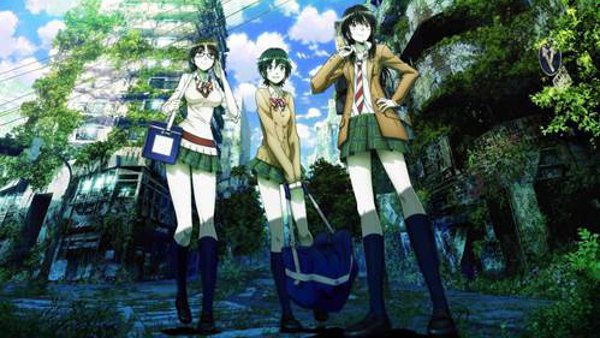
If you are a fan of post-nuclear anime, then you may want to check out the new Action/Drama series that Madman has acquired. Coppelion is the story of three normal-looking high school girls that arrive at the irradiated remains of the old capital. But, these girls are more than they seem, as they are in fact genetically altered to be able to survive in the radioactive conditions.
Coming from studio GoHands, the same studio that produced the Mardock Scramble films and the K series, anime fans will be able to watch as these three girls, members of Ground Self-Defence Force Dispatch 3 Special Force, will do their best to carry out their mission of rescuing those survivors left in the area.
Just what do these radioactive ruins hold for the girls as they carry out their mission? Be sure to check it out for yourself when Coppelion starts its simulcast on October 3rd, 2013 at the Madman Screening Room alongside its release in Japan. Be sure to voice your thoughts on this series in the comments below.