This week’s Weekly Shonen Jump has announced that Konami will be releasing a video game adaptation of Nura: Rise of the Yokai Clan for the Xbox 360 and Playstation 3 consoles later this year.
Nura: Rise of the Yokai Clan is a popular manga series currently serialised in Weekly Shonen Jump in Japan and localised by Viz Media. The series follows Rikuo Nura who is part human and a quarter yokai (demon) as he tries to escape his fate as a yokai.
The manga has already been adapted into animation, with it’s first season airing last year. A second season of the anime is due to begin on July 3rd with the title Nura: The Millenium Demon Capital (Nurarihyon no Mago: Sennen Makyo).
More details on the Nura game is the be revealed in the upcoming weeks in Weekly Shonen Jump.
Publisher: Rockstar Games Developer: Team Bondi Release Date: June 21st, 2011 Price: 320 Microsoft Points on Xbox Live/$6.90AUD on PSN ($7.95NZD or $3.99USD)/Free with Rockstar Pass
L.A. Noire has seen its fair share of great cases throughout the game. From the simple, yet interesting crimes of the patrol and traffic desks to the nightmarishly perplexing cases of homicide and arson, Rockstar has ensured its players that there is plenty of content to get through again, and again, and again. However, if you’re getting sick of the same old cases then the new Nicholson Electroplating DLC is a new arson case released by Rockstar to try and re-fuel the fire for L.A. Noire players.
The case begins when an explosion rocks downtown Los Angeles. Phelps and Biggs rush immediately to the scene and find out that there has been an accident at the Nicholson Electroplating plant. However, when clues begin to reveal themselves and the mysterious chief chemist and his assistant disappear, it’s very evident that there is more than meets the eye with this case.
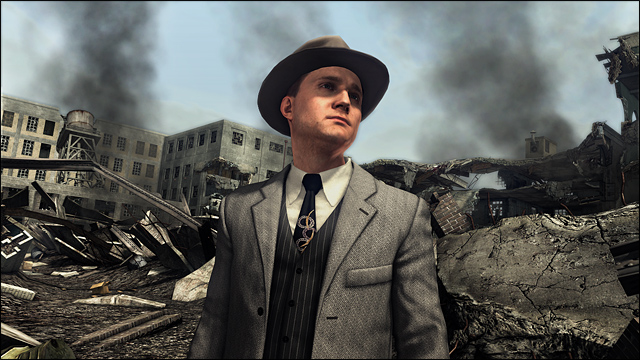
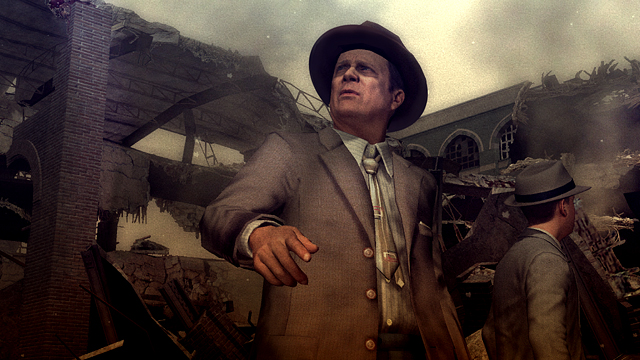
Phelps looking forlorn amongst some rubble.
As many cases in L.A. Noire are, the Nicholson Electroplating arson case is inspired by the real life explosion of the O’Connor electroplating plant. From the get-go (if you know the story behind the O’Connor electroplating plant) the case is very clearly influenced by the real story. The mystery of the case is an intriguing one and is quite gripping from start to finish, but in the frame of the overarching narrative it really does leave something to be desired.
In the game, the Nicholson Electroplating case is meant to present itself smack-bang in the middle of the other arson cases. In the opening, Phelps and Biggs quickly make a nod to the storyline by dropping in a few lines about the doctor and Jack, but because the case is also designed to be stand-alone it really seems like more of an interjection in the main narrative: a distraction rather than a cog in the L.A. Noire machine.
However, if you play it without the narrative the case really doesn’t seem grand. Instead, as a single case the Nicholson Electroplating disaster is interesting at best, but really doesn’t have the magic of the L.A. Noire story as a support system – and what really made L.A. Noire absolutely wonderful was the story. Actually, this case is most like one of those meals you wouldn’t order at the restaurant, but if you had it put in front of you, you would eat it and be content.
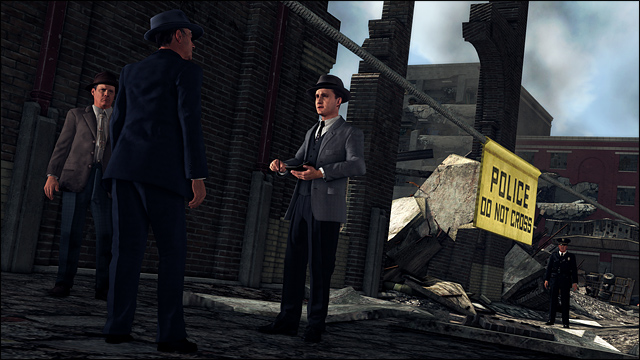
Biggs and Phelps’ hat in the background. The situation is indeed quite perplexing, Biggs.
Normally though, if the narrative isn’t that good some of the characters can redeem it. In this case, it’s the chief chemist, Harold McLellan, and his assistant, Tomoko Okamoto, who sold the entire crime to me and intrigued me from the moment I heard about the story. Although the case took a different route than the original 1947 crime and McLellan and Okamoto’s involvement was not nearly to the same degree (this is all I can say without spoiling the case), they were what pulled me in to the narrative in the first place. In fact, if Rockstar and Team Bondi had stuck to the original story of the O’Connor Electroplating Plant, I think the case would have been far more compelling; instead, the attempt to mould the case in with the overarching story caused the case to be far less exciting than I would have liked.
What was really a letdown, though, was that even my favourite aspect of the game seemed a little watered down: questioning and interrogation has long been the part about L.A. Noire that challenged me the most, but in the Nicholson Electroplating case I really felt like I had a walkthrough straight on the screen. Straight off the bat, questioning Fred Nicholson was a job of pressing buttons rather than about reading his facial expressions or accurately deciphering the situation at hand. It was more of a case of “I know to doubt you because the other two options are too ludicrous” and, while it improved as the case progressed, I found harder witnesses and suspects to grill in traffic than I did in the Nicholson Electroplating Disaster.
It’s not all disappointing though: finding clues and evidence was by far the best part. From thoroughly inspecting the explosion crater to finding microfilms, all of the clues contributed to a wonderful unfolding of the story – it’s a bonus that you get achievements for finding them all too. There’s even a cipher that you have to decode in order to progress, which should appeal to all those puzzle-solving fans out there.
What clues lie behind the police line? And why does Fred Nicholson’s behind look fat in that?
The Nicholson Electroplating arson case is a solid case to play and will provide you with another hour or two of investigation, interrogation, and accusation. However, Rockstar really fell short here – not because the case is bad, but because the rest of the game is too good. By trying to insert a piece of DLC into the game instead of marketing it as stand-alone content, the Nicholson Electroplating case had to live up to the expectations of the rest of the game, and it really missed the mark. Rockstar should have created the Nicholson Electroplating case as one that can only be played on its own: that way, instead of playing it in-game and wondering why it stuck out like a sore thumb, players can just finish the entire series and go back to the DLC to return to the elements we loved most about L.A. Noire.
At best, this piece of DLC is perplexing and fun; at worst, it’s a story that doesn’t quite fit. Given all the trials and tribulations that we have been through with Cole Phelps and Herschel Biggs, it feels almost like injustice has been done to the story with this additional piece of content. If you are planning to play this piece of DLC, play it on its own and disregard the attempt to fit it in with the story – you’ll get much more out of it that way. Alternatively, save your Microsoft Points or credit cards for something else, and cross your fingers that Cole Phelps will be appearing in some more mind-blowing cases soon.
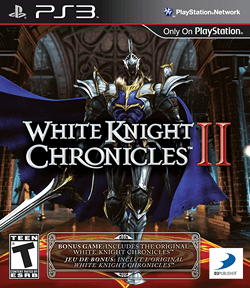
White Knight Chronicles II Developer: Level-5 Publisher:D3 Genre: JRPG Platform: PlayStation 3 (reviewed) Released:9th June 2011
Overview
Level-5 is a developer that should be commended. They’ve been behind some great games and franchises, and practically everything they get behind always sees favourable reviews from a variety of critics. With titles like Professor Layton and RPG’s like Rouge Galaxy, Dragon Quest VII and Inazuma Eleven in their portfolio, its safe to say these guys are good at making RPGs. This is why it may of shocked some with the release of White Knight Chronicles in 2008, with mixed reviews from critics, (we thought it was alright, check out our review here) although the game still managed to gather quite a fan base. These fans stuck by the title though and now they will be rewarded for their loyalty with a prequle in 2009, and now White Knight Chronicles II, which is Level-5’s attempt to set out to create a sequel that address the issues of the first game, mainly the combat system in order to do the game justice, that even includes a couple of features the publisher claims were suggested by fans. The game also comes with the original game on the same disc with the feature to port your characters over from one game to another to continue onwards, which is awesome for anyone who either wants to play them both back to back, or if your like me who never got the chance to play the first one! Chronicles of Narnia, Chronicles of Riddick, Good Charlotte’s Chronicles of Life and Death, I wasn’t too keen on any of those Chronicles, lets see if Level-5 and their magic and summon some good fortune for White Knight Chronicles II…
Story & Characters
White Knight Chronicles II takes place a year after the original, where the original team meet Lady Miu, daughter of Archduke Dalamand, and her knight named Scardigne who are both fleeing for their lives. These characters place a vital role in the story as thet play a part in the civil unrest in the Archduchy of Faria, with revolution about to arise. However what strings the story together is that they discover the Magi is out looking for the fifth knight, and Leonard’s goal is to find it before they do. The game eventually will conclude the tales of the conflict between Yshrenia and the other powers, ending the series’ on going story. Its not all that crazy unique, but it is slightly more engaging than the original plot. White Knight Chronicles II also includes more cutscenes than the first which is nice, but in both games cut scenes are accompanied by mediocre voice acting and terrible dialogue and presentation making the story far less interesting than it could be. Perhaps if presented and told a little better, the story wouldn’t seem so average.
This leads into one of the biggest flaws of the game, which is a shame as its not only a huge flaw, but it kind of sets the tone for this review to seem a lot more negative than it’s intended to. See White Knight Chronicles II picks up right where the first left off without properly introducing anything and throws you smack in the middle of everything. Gameplay begins with characters already levelled up with a variety of items in your inventory, and it overwhelms the player. It feels like you picked it up second-hand and someone’s played a good few hours already and your starting halfway through the game. The story does the same thing, throwing in characters and situations without explaining them at all, assuming the player knows everything already. This creates an awkward learning curve for both the plot and the gameplay, as the story throws players straight into combat without a tutorial. All this makes the audience really apathetic towards the heroes they control, as you don’t get a chance to fall in love with them and see their rise to power, infact, your fighting giant monsters with ease that look like bosses almost straight away, every few minuets.
What goes hand in hand with this issue is the characters. With a bad introduction to them and not such appealing voice acting, its hard enough to love these characters, but even worse for the exception of Scardigne, all the characters you control are designed to look pretty plain and average, so is even harder to like them. You also get a really, really deep character customisation option for an avatar. Let me repeat, REALLY deep! Im saying like, choose the hight of the eyebrows, depth of the chin and size of the feet deep. But after you spend so long creating this person, it become a speechless sidekick. Sure you can play as him/her, but its not the star, so all that effort feels kind of confusing, pointless, and a little disappointing. However, this avatar is the main character in the online mode, but we’ll get into that later. Oh yeah, and it now included fan-requested feature of designing your own custom Incorruptus, which are those hella bad ass robot knights we were talking about before. Boo-yah!
Gameplay
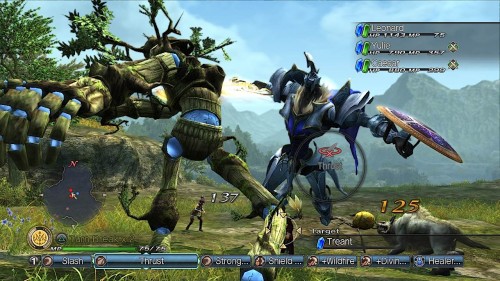
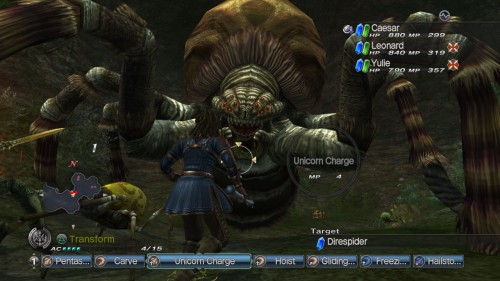
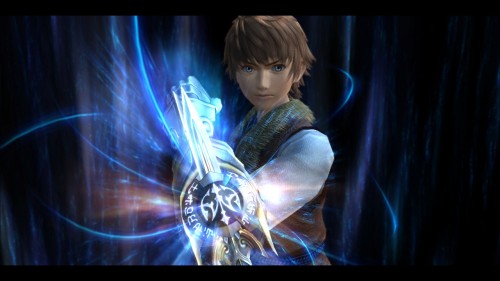
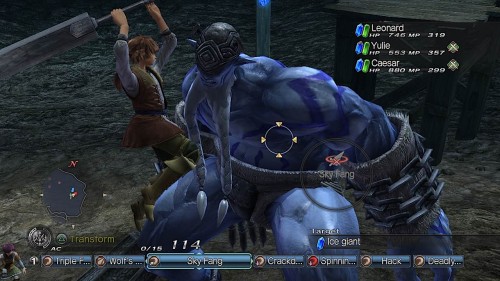
White Knight Chronicles II plays similar to Final Fantasy XII, as combat while turn-based, takes place in real time. The entire game feels like an MMORPG like World of Warcraft, and it kind of is thanks to its online mode but we’ll get into that a bit later! White Knight Chronicles II is successful in capturing that epic feeling of exploration and adventure, with enemies being visible from the distance, players can decide if they’d like to engage combat or simply try and walk by potential threats. Players can switch between party members at anytime, and program individual behaviours for each member on how to react to enemies in combat, and with multiple allies and enemies on the screen at once it can be really satisfying taking down large creatures through the use of teamwork with NPCs. It would’ve been nicer to see some more options for programming these behaviours, but whats there does work well. While combat can sometimes feel like your just pressing ‘X’ over and over until your enemy dies, the ability to move around the field, preform combos, use items, magic and change attacks and characters while waiting for your attack meter to replenish often saves it from feeling like a boring button-masher, although this isn’t always the case. Leonard can also power up by turning into the White Knight at almost any time. The knight looks great and is really fun to play as, but you can only control him for short periods of time which is a bit of a let down. However these moments are truly good ones and can really turn the tables in battle. Deciding where to stand while attacking now plays an important part, as you now have to be close to an enemy to land a hit, and where you stand will effect how much damage the enemy takes and how accurate you’ll be. Attacking from behind is more powerful, so there is a some extra strategy involved. A break system is also introduced, which adds to a new level of strategy. Break attacks let you target specific body part of an opponent to stun them, which helps speed up your kills.
The better you get at combat, the more enjoyment you’ll have, but I fear many players won’t give WKC2 a chance to reach that point. White Knight Chronicles II’s biggest flaw by far is that it is quite a complex game to play with all these various systems for combat but none of them are explained. There is no tutorial at all, and players are expected to pretty much figure it out for themselves. Sure there is a help menu, but they don’t even tell you there is one, but rather let you find out by yourself. So first impressions are quite bad as your expected to play without being taught how, and your thrown into a quest straight away with an massive learning curve. Another thing that seems to hold WKC2 from all it could be is that many objectives aren’t always so clear, and sometimes your left wondering around not sure what to do. It’s also only about 30 hours, but so is the original title, so together its about 60 hours gameplay, which Im sure some fans may be disappointed in. Top it off your doing a lot of collecting and fetching and it can feel a bit like a chore in some small instances. However, If RPG fans stick through this and a couple other flaws they will see that this game does have a lot of charm and can be quite fun to play once you give it a chance and get used to it.
Online Gameplay
As previously mentioned, the single player feels much like an MMORPG, minus the whole multiplayer thing. So it’s not surprising that the online multiplayer for White Knight Chronicles II has a major focus for the title. While the story itself may only last 30 hours, the online section will last for much longer as long as you enjoyed the single player. In fact, that’s the whole main basis for WKCII, that links into the single player as well. Levelling up your characters online will also level them up offline which is awesome, and if you were a fan of the original title and still have your data, you can transfer it to WCKII and play online which is just awesome fans service. In the online section you actually play as the custom avatar you previously created in the single player campaign not the star of the show, Leonard, and you can also use your customised Incorruptus as well. You can play with up to six players online (in WKCI you could only play with four) where you can do various side quests and missions together. It also includes the return of the Georama system where players can create their own custom hometown that can be uploaded to Sony’s servers and then visited by other players.
It’s got more of everything than the first title, yet the way the two modes are links hasn’t exactly been perfected. For example the whole online communication system where you can type to each other and such is also included in the single player. Who are we gonna talk to? No one, cause your playing by yourself. Also the fact you spend such a long time creating a custom character for the single player mode which is practically ignored in the storyline, only to be the main focus in the online portion of the game seems a little odd, but with these aside, its still a nice element of the game, and the fact that levelling up online levels up offline too is a nice feature as well.
Graphics & Audio
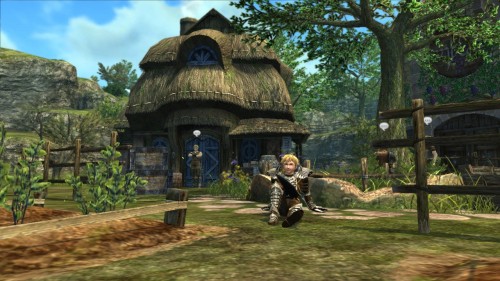
The graphical presentation is good for the most part, making a nice improvement from the previous game in the series. It has a few moments where you will notice a few pretty looking things, but don’t expect to be amazed. It’s the settings where the graphics truly shine with vibrant and luscious textures that make your surrounding look nice, so while some things may look a little rougher than they should, the textures seem to make up for it. However, there is a slight inconsistency as some places do look better than others, and often things look better from far away than up close. Oddly enough, character models are another story as many designs seem uninspired and can be quite plain, especially with faces. On the other hand though, both the presentation and design of enemies looks superb and is truly a highlight of the game. They look great both up close and from far, and are filled with a beautiful level of detail and their models look smooth. If the rest of the game was consistently kept at the same standard the game would look much prettier, but what they do have gets the job done. Magical effects also look quite flashy and do add to the whole fantasy element and make things interesting as well.
The audio on the other hand is a massive disappointment. The voice acting for the most part is average at best, with some voices seeming a bit out of place, like they don’t fit into the world of White Knight Chronicles. Other voices sound a little cheesy and the often terrible dialogue doesn’t help the voice actors either. Admittedly there are some decent voices in there, but they are overshadowed by a few not so good ones that are hard to ignore. What does suck though is the terrible attempts at lip syncing. It doesn’t even look like they tried on the most part, and while it can easily be ignored, it is an annoying flaw that really takes away from the cut scenes. The soundtrack is generally good, although a little cliché for the genre. It doesn’t take any risks, but rather gives you what you’d normally expect. Most tracks are forgettable and you probably won’t be humming along, but they do set the tone for the game well and the soundtrack is successful in engaging the player, and hey that’s good enough for me.
Summary
It seems a lot of effort went into making White Knight Chronicles II, and I hope the fans appreciate it. However, a few things hold it back greatly from being an amazing RPG. The story isn’t all that engaging and the characters just aren’t properly introduced to allow us to connect with them, and the voice acting and basic character design of the main party for the most part makes it harder to love this cast unless you already have with the previous title. While this basically destroys the single-player mode, everything else seems pretty good. White Knight Chronicles II has a lot of heart behind it, and if you give it a chance you’ll see its charm. However it feels more like an expansion pack rather than a sequel on the most part. It has a nice depth to it, but it’ll probably only appeal to hardcore RPG fans rather than casual gamers, as it isn’t exactly pick-up-and-play, and the lack of a proper tutorial is just unsatisfying feeling at first. It’s no Final Fantasy, but if your into RPG games, specifically ones with real-time battles, White Knight Chronicles II is definitely worth checking out. And if that’s not enough to convince you, at least it comes with it’s predecessor on the disc. Two for the price of one! You got to admit, that’s pretty cool.
PROS
Entertaining and deep combat system
Includes White Knight Chronicles I on the same disc
Great character design for enemies
Deep customisation for online avatar and Incorruptus
Online mode can level up for offline play and can be done with six players.
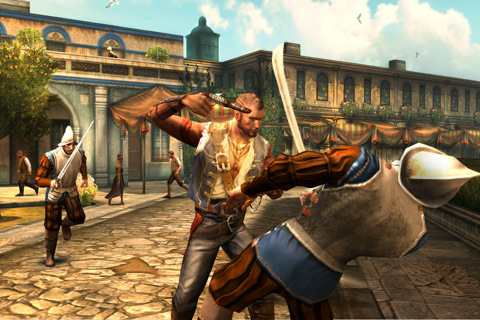
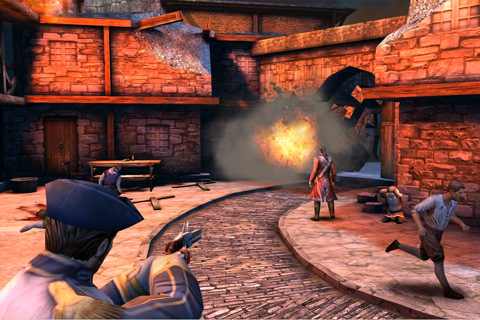
The long wait is finally over for iOS device owning Gameloft fans. Previously released exclusively for Android, Backstab is now available for both iPhone and iPad from the iTunes App Store. In BackStab you take control of betrayed former English naval officer Henry Blake, as he climbs, jumps, sneaks and fights his along the path to revenge. The game includes an immersive 18th century Caribbean island that you can freely explore featuring responsive environments. Make your way through varied environments such as the jungle, beach, mountain peaks, tribal villages and even a volcano, not to mention four major cities. Players can follow paths set out by quests or roam freely and explore the detailed world Gameloft has created. Backstab is available for $6.99US or $8.99AU. Make sure you watch the trailer below featuring some impressive cinematic moments from the game as well as a glimpse at the incredible gameplay BackStab has to offer.
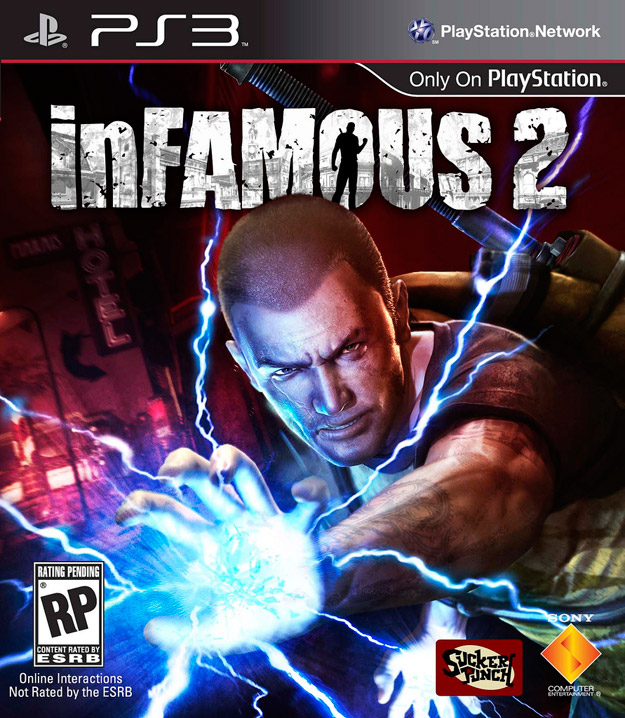
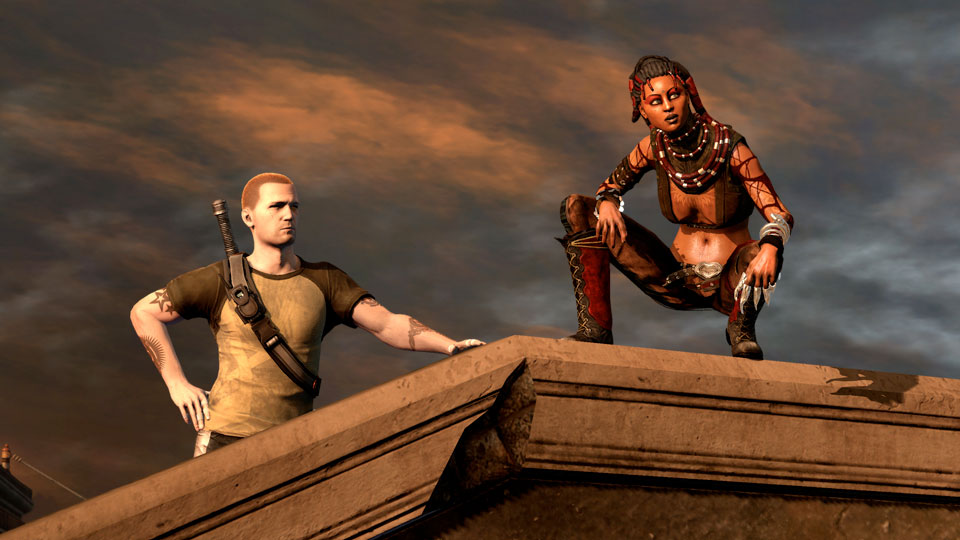
Cole McGrath would have to go down as being one of the toughest men on the planet. Aside from Kratos who is brutal incarnate this guy can take so much punishment for good or evil it’s disturbing. Infamous 2 returns Cole to the realm of the Beast and briefly back to Empire City where Cole, drained of his powers, makes a run for it with his crew to New Marais to replan and replenish. Sucker Punch have gone all out to create massive immersive environments, that encourage players to free roam and complete the wide array of side missions and karma boosters on offer.
Storyline
Without going on and on and boring you with intricate details I shall provide a quick rundown on the various characters and basic plot so anyone who hasn’t played the first game can easily relate. After escaping from the Beast but unable to stop its sheer power and size, Cole and his crew of Lucy Kuo and Zeke make a dash to New Marais city to plan their next move. NSA agent Kuo fits into the picture through her relation with the infamous Dr Wolfe who worked on the development of the Ray Sphere responsible for Coles electrifying powers.
New Marais unfortunately has problems of its own. Under the dictatorship of Bertrand, the city is under lock down as his army of human purists hunt down and kill the remaining conduits. Reconnecting with Dr Wolfe, Col learns of the Blast Cores scattered around the city that if absorbed into his body would enable him to power the RFI and potentially cripple and destroy the beast. Unfortunately for Col, Wolfe is soon captured and things go from bad to worse when Kuo is also taken prisoner while attempting to rescue him.
Where theres enemies theirs also friends, and Col and Zeke quickly become acquainted with Rouche, a resistance leader, focused on eliminating Bertrand from the city, and Nix, a fellow conduit who escaped a Ray Sphere attack on her city but has been infused with conduit abilities. Both agree to aid Col rescue Kuo who has been tortured and infused with conduit powers of her own. From this point Cols conscience and morals come into play as he finds himself in a constant battle between following Kuo, or falling for the sexy allure of Nix and really letting loose the demon inside him. I don’t want to give too much more of the story away but it twists and turns, culminating in a very unexpected finale that will really test what is left of Cols (or the players) human soul.
Gameplay
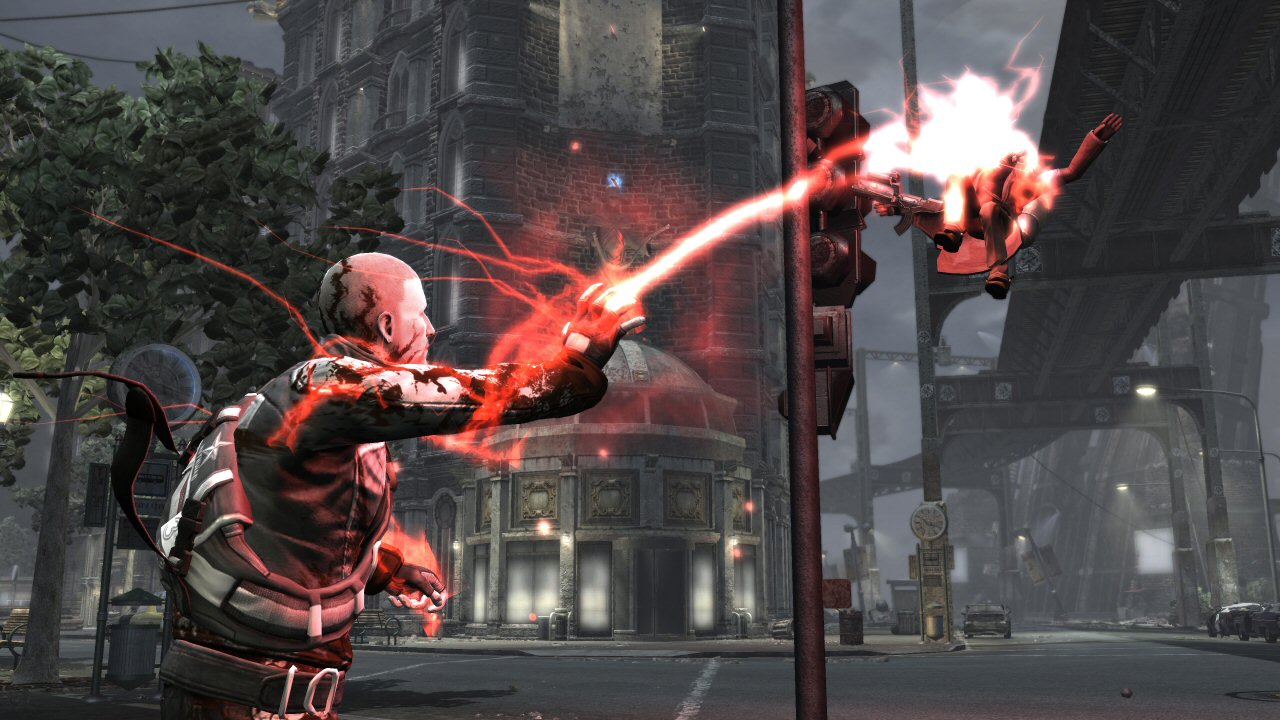
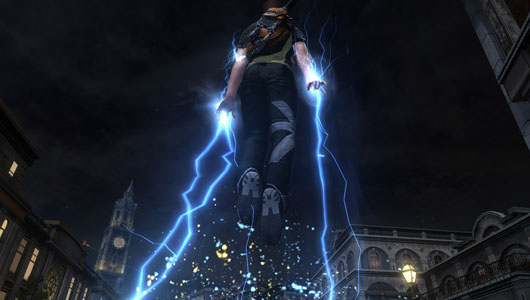
This game reminds me of Spiderman but on steroids. There is no building or bridge too high for Col, and his amazing array of electric and ice/fire abilities allow him to travel within the city with ease. Environments are huge, which is necessary considering the sheer number of campaign and side missions made available in single player mode. Gameplay primarily takes place on 2 different sides of New Marais, one being a more traditional city landscape and the other looking more like a war zone almost completely covered with varying depths of Cols mortal enemy; water. Both are highly interactive and almost every object can be used to Cols advantage.
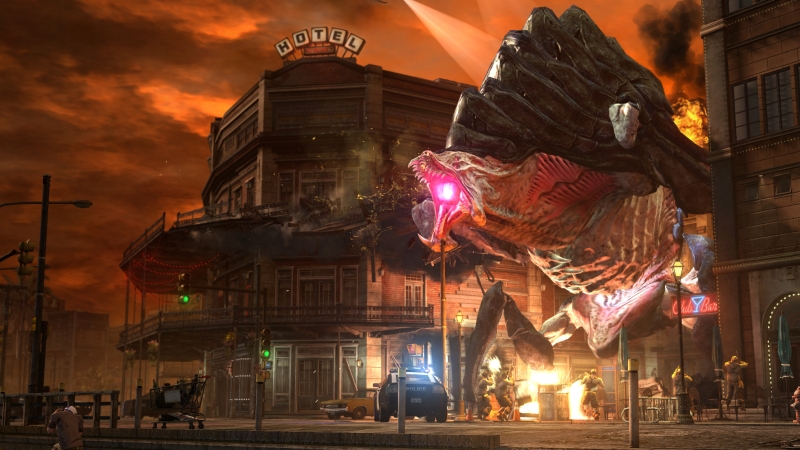
Everything about this sequel feels more powerful and destructive. From lifting cars with ease using kinetic powers to the sheer epic size of his enemies the whole game screams intensity. One of my favourite parts (despite taking numerous attempts), was running down the street fighting a massive ugly beast, looking around for vacant cars and rubbish bins to hurl at it, as it plundered along without a care in the world for squashed civilians, destroyed houses and buckled sidewalks. Every Boss required a different strategy, including traditional weak points through to aerial attacks and out and out destructive force. Cols standard weapons more often than not have little to no effect on the larger bosses who all require much more firepower to destroy.
Controls are very easy to master and soon even players unfamiliar with the franchise will be skating over power lines while shooting bolts of lightning at will. There were a few instances where Col went a bit haywire usually when performing more intricate controls which was frustrating but were few and far between and didn’t have too much of an effect on the experience. For example, flying around from building to building was easy but simply climbing a ladder required the utmost effort. Also melee combat although very pleasing was very limited in control with Col taking many air swings. When it came down to it in the big battles the controls were fluid and didn’t disappoint.
As well as the basic storyline there are a multitude of side missions to complete throughout Cols adventures. These range from collecting medical supplies and stopping enemy convoys through to saving civilians and helping out the local resistance groups. Some of the side missions pop up more than once and are more like mini games very well intertwined into the campaign mode. Players will either have to control Col as he takes the form of a tesla missile and literally fly from one power station to the next in order to power it up. The other mission involves overcharging Col and then transporting him to a power station only using the power lines to skate on or fly across. Both are very challenging and progress in difficulty as the game goes on. The side missions are an essential part of building up enough AMPs to purchase different weapons and abilities. As well as the standard side missions, players can embark upon specific good or evil missions which heavily influence your karma meter.
Players who choose to side with Kuo and take her advice in hairy situations will gain ice abilities and those who fall prey to the seductress Nix will have fire at their fingertips. Each route will take players down very different roads inclusive of side missions and how the public react to you.
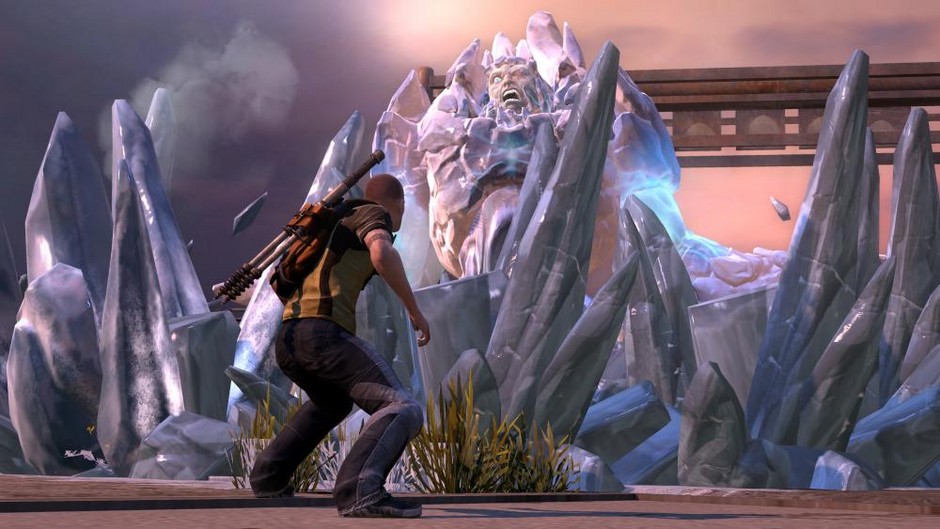
More varied styles of play such as hanging from rooftops and shooting enemies or using the environment such as water to electrocute the enemy all aid to unlock more abilities. Players chosen karma will also ascertain the various abilities available to purchase. Other abilities in Cols arsenal include his vortex (ice/fire) wind that knocks enemies off their feet, kinetic powers allowing him to hurl heavy destructive objects as well as grenades and flying upgrades. For cose combat Col now carries a charged rod capable of dishing out massive amounts of violence. As upgrades are bought Col will learn new attacks and more explosive finishing moves.
Where this game really comes into its own are in the immense long range battles. It’s not uncommon for Col to find himself surrounded by enemies on all rooftops, having to hide behind various objects while keeping an eye on available recharge points. AI are smart and have incredibly good aim so it’s essential Col can take a beating and most enemies weapons don’t pack too much of a punch. Gliding from rooftop to rooftop, taking out enemies and choosing a good vantage point is pure joy due to ease of the control system. Allowing him to blast his way out are the wide and varied bolts at his disposal ranging from long range streaks to concentrated balls.
Scattered throughout the city, and constantly popping up on the map are various tasks that Col can optionally perform to increase his Karma and earn more AMP’s. Unfortunately there are only 4 different variations and over the course of the game become a little repetitive and tedious. Still I would recommend doing as many as you can to earn those precious AMP’s and unlock abilities. I chose the good path to redemption and had to stop muggings, defuse bombs, revive civilians or shoot message carrying birds.
The fact that players have to choose between good and evil paths even within the campaign missions gives Infamous 2 huge replay value and players a totally different experience. Having players choose different outcomes allows them to interact and enjoy the game on a different level unlocking new abilities and following different characters paths.
Oh and don’t forget to collect the blast shards which are scattered throughout every environment in the game. Don’t hesitate to collect them whenever you see on even mid mission, they are invaluable in increasing the amount of electrical charge or essentially ammunition Col can carry. Your electrical meter is drained accordingly to your mode of attack with standard bolts having little impact and grenades and bombs heavily sapping your energy.
Online mode has seen the introduction of User Generated Content. Players can create their own missions and upload them for the rest of the community to use. These missions will appear on your screen like others and are rated after completion to find the top creations.
Graphics and Sound
Aesthetically speaking, Infamous 2 is very pleasing even though many will argue it lacks some of the finer detail found in modern day war based shooters. Don’t get me wrong, the enemies are well constructed and look amazing, and the skin and contrast rendering on Col, Zeke and Co. are exceptional. The cities are vibrant and explosions and visual damage to the city gives a real sense of the intensity and extent of the damage inflicted. Integrated into the story are the cut scenes which are appropriately rendered in a graphic novel style. They really give the game that dark feel similar to Sin City or the like. Cols voice is gritty, reminding us of a man who has been through hell and back to get to where he is. Sound effects are bold and give the sense of real chaos in a crumbling out of control city.
Overall
Sucker Punch have really come to the table with Infamous 2, creating a gaming experience rich in storyline and a refreshing change from the traditional Uzi or shotgun wielding hero. Everything in New Marais city is interactive and players are never left with the feeling they should be able to achieve more. Enemies are over the top and of epic proportion; the kind of beasts that really could level a city, and while Col’s size pales in comparison his abilities more than make up for it. Infamous 2 has elements that require finesse and the controls are responsive and easy to use despite the odd hiccup in Cols directional sense. Everything within the game fits well, from the side missions essential to gain enough AMP’s to gain the abilities needed to defeat the various anatomically incorrect beasts, to the karma system and associated storylines. This is a very welcome addition to the franchise at to a gaming market currently flooded with FPS and real life war interpretations.
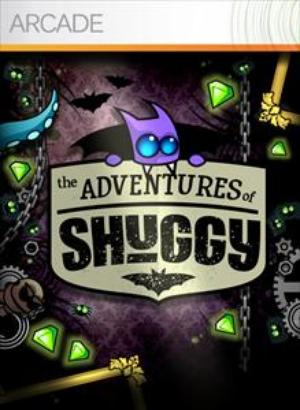
Download services like Xbox Live Arcade and the Apple App Store are great places to find some fantastic independent games, and it’s games like The Adventures of Shuggy that make you glad the smaller developers can get their products out amongst the big guys. It’s no secret that the most interesting ideas come out of indie devs, but strangely, all the clever ideas in Shuggy (and there are a lot of them) have been done somewhere else before. This sounds like a criticism, but honestly, the game should be praised for the way it combines so many fun ideas, uses them expertly and injects them with a unique personality.
Story
Shuggy is the kind of game that’s stronger without a story, providing just enough to contextualise the location and characters. Basically, Shuggy, a vampire bat thing, inherits an old castle and discovers on arrival that it’s haunted. He (or you, as the player) must move around the castle and clear out the nasties. The small story segments – pretty much just segues from one part of the castle to another – are presented as animated comic strips, which are fairly cool. Other than these small moments, the story is pretty irrelevant, but in this kind of game, that’s fine.
Gameplay
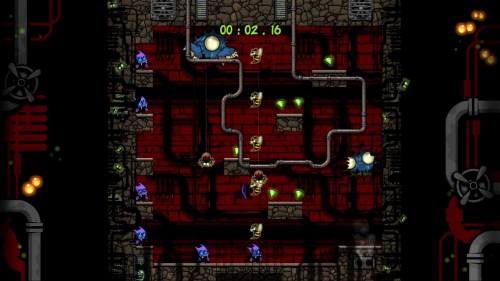
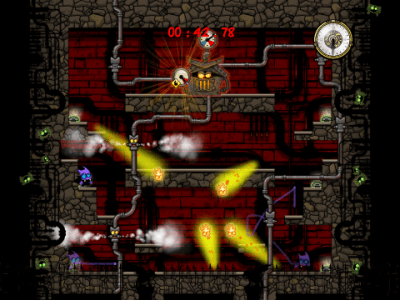
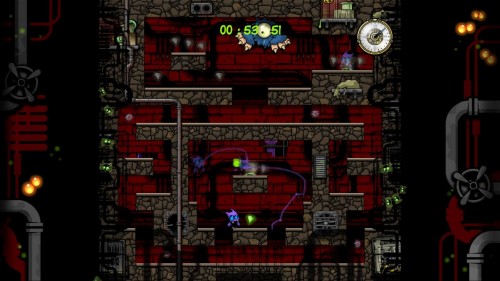
In each part of the castle – Dungeon, Boiler Room, Gallery, Graveyard and Clock Tower – players are given access to dozens of rooms, each one varying in difficulty and gameplay style: some involve old-school platforming, some are puzzles, some a combination. In each, players must gather the gems scattered around, but doing so involves a different core mechanic each time. In some, Shuggy can rotate the level around to access different areas. In others, there are multiple Shuggys, and the player must switch between them. Some require you to use a rope to swing to places you can’t reach. Some play with time or gravity. Some let Shuggy grow or shrink. In some, players must herd little creatures into cages to unlock gems. And some combine two or three of these mechanics in one level.
Not only that, but they begin experimenting within each of these gameplay types. In the rotating levels, for example, sometimes the gems fall downwards, meaning the player must rotate the level to have the gems fall through a maze and eventually within reach. In others, the gems stick to surfaces, and rotating the level allows new paths for the player to collect them. Sometimes the entire level rotates, others it rotates small squares of it. The player may be able to rotate on command, or may have to hit a switch to do it.
Then combine any of these with any of the other mechanics above, and their variations that I won’t go into, and you’ll have an idea of the scope of Shuggy’s creativity.
The point is, Shuggy has a ridiculous amount of different gameplay styles, which is both a blessing and a curse. The blessing, obviously, is that there is a lot to do, and most of it is great fun. There are over 100 levels, but considering how many mechanics they have to play with, it doesn’t feel like enough. There are so many ideas at play here that many seem under-explored. I guess that’s a positive reaction – too much material, yet I want more.
There are certain levels of Shuggy that can be likened to plenty of other games; the platforming is reminiscent of early Mario games (right down to the jump sound effect, which sounds exactly the same as Mario’s), swapping between multiple Shuggys to solve puzzles feels like the Super Nintendo classic The Lost Vikings, the time mechanics have been explored in a similar fashion in Braid and The Misadventures of P.B. Winterbottom. But Shuggy handles them differently, combines them in interesting ways, does things with the mechanics that the other games didn’t, and maintains its unique personality throughout.
If they hadn’t handled it so well, you might think they have attempted too much for one game. At times, it can get confusing, as you try to remember what you can actually do in a particular level. But the simplified control scheme helps a lot: the left stick controls movement (obviously), A is Jump and the right trigger activates whatever ability Shuggy has in that level. That’s it. There’s a lot of depth in gameplay, yet the control’s simplicity smooths the transition between each level.
A potential problem could be in the developers’ future releases: Smudged Cat might have used up all their good ideas in one title, when they could have spaced them out across multiple games. Each of these mechanics could almost sustain an entire game themselves – at least a small downloadable title. We’ll have to see their next release to judge that, but with Shuggy, they’ve set the bar high for themselves.
Unfortunately, I didn’t get a chance to try the multiplayer modes (I only have one Xbox controller), but my understanding is that the mechanics are explored even further there. I will definitely play those modes later though.
Graphics & Audio
Visually, Shuggy is a treat. The character himself is, dare I say, cute, but with a touch of creepiness. The design of the enemies are probably the weakest part of the whole package, with the standard spiders, wasps, zombies, robots, spikey ball things, mines, nothing particularly unique. Shuggy himself, and the other vampire characters, would be recognizable outside the context of the game, but the enemies don’t stand out at all.
Thankfully the boss characters have had more thought put into the visual design. They all fit the overall aesthetic and suit their function, and are a pleasure to battle, with inventive use of prior mechanics required to beat them.
The environmental design is also very well presented. Each section of the castle is distinct, introducing a new aesthetic, new enemies, obstacles, and gameplay elements. The only issue I had was in later levels, where elements of the environment would reach into the foreground, resulting in a few blind spots. I’m not sure if this was a deliberate attempt to make these levels harder, but if so, it’s a cheap method, and unnecessary, as the game’s difficulty increases at a nice pace without the interference from the background.
The music is fitting, with a somewhat jazzy soundtrack, although more variation would be appreciated. Each area has its own music, but with 20 or so levels each playing the same loop, it can become fairly annoying.
Final Comments
There are plenty of minor problems with The Adventures of Shuggy, but they are more than outweighed by the things it does right. It perfectly captures the old-school platforming feel, and balanced with inventive puzzles, it challenges in both respects in equal measure. Throw in a nice visual aesthetic, a hell of a lot of content, and the very generous $10 price point and there’s really no reason not to get it.
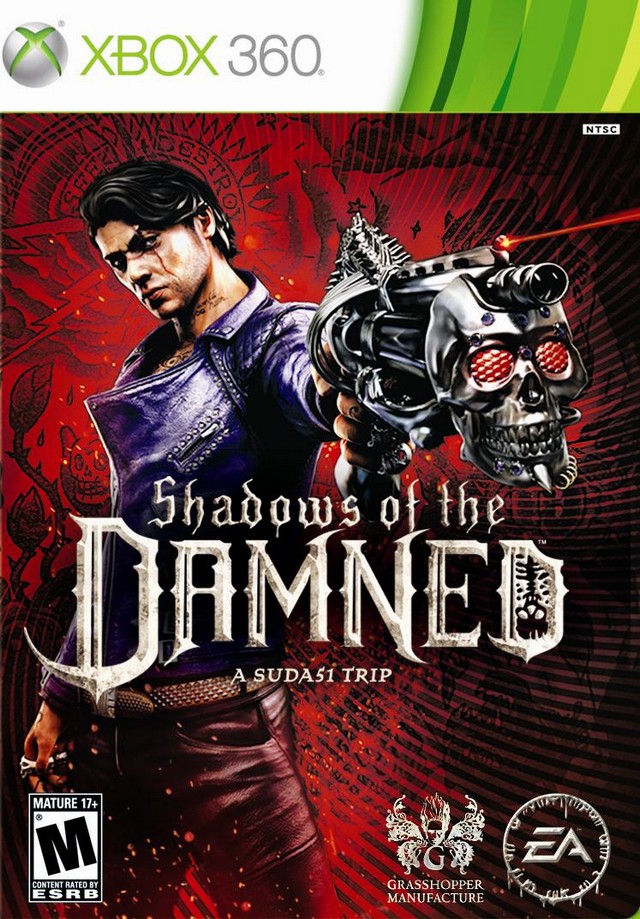
Platform: Xbox 360 (reviewed)/Playstation 3 Publisher:Electronic Arts Developer: Spicy Horse Genre: Action Adventure Release Date: June 16, 2011 Price:$99 AUD
Overview
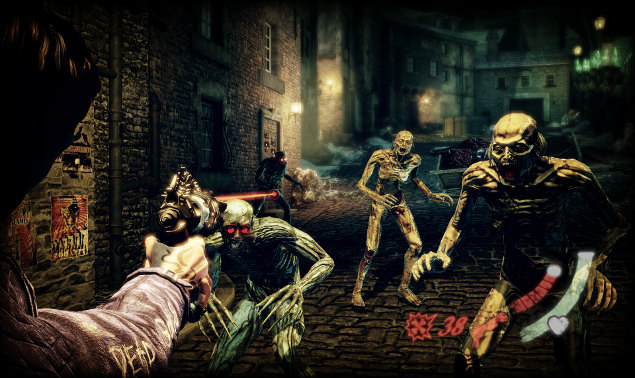
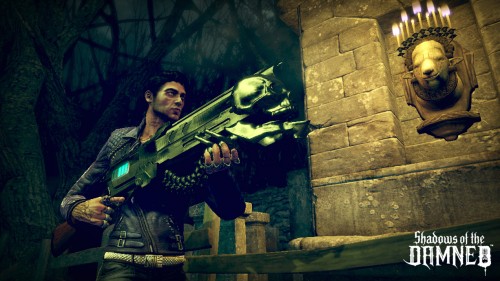
Suda51, Shinji Mikami and Akira Yamaoka – Three of the most influential video game developers of this current generation (whom works’ include Killer7, Resident Evil and Silent Hill respectively) have collaborated together to create one hell of an insane game “Shadows of the Damned”. With these three big names in the video game industry attached to this game, players can definitely expect the unexpected with plenty of gory violence, action and of cause to top it all off, an abundance of jokes about certain ‘phallic’ parts of the human anatomy.
Story
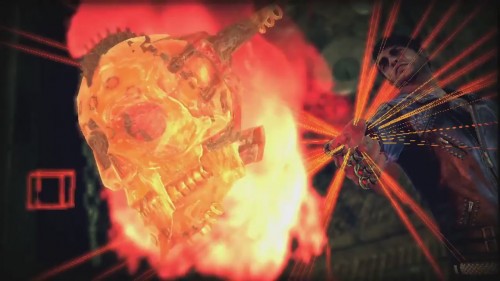
Shadows of the Damned certainly doesn’t beat around the bush (in one of the best gaming intros I’ve seen in a long time) in less than five minutes to the game, players are literally jumping straight into hell. And who might you be playing as, you ask…? Professional demon hunter, the one and only Garcia Hotspur! And holy shit what a badass he is. His journey through hell begins with the death of his lover Paula, by the ruler of Hell itself Demon Lord Flemming. But you’re not going at it alone you will be accompanied by your trusty companion Johnson a flaming ex-demon skull.
He also funnily enough, turns into your arsenal of weapons which includes The Boner, Teether and Monocussioner. Sort of a pistol, machine gun and shotgun respectively, I say sort of because throughout the game these weapons are upgraded to become so much more. Right from the get go the story kicks off with a bang and before you know it you’re standing in front of the gates of Hell. Now the story may sound familiar, a hero on a quest to save the one he loves and true overall the story doesn’t really get much more than this.
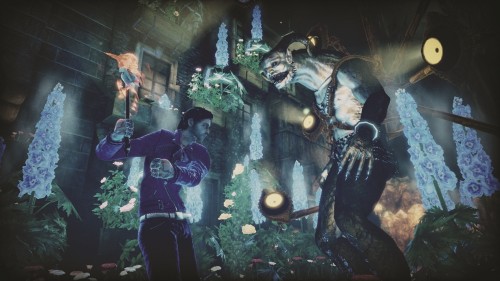
But where the game lacks in main plot, it makes up in the absolutely over-the-top scenarios, environments and bizarre-quirky side stories that players will run into that makes this interpretation of Hell so damn interesting. A nice inclusion into the game is these hilarious storybooks which tell the tales of how each ‘V.I.P Demon’ ended up in Hell (and by the way V.I.P stands for Very Important Pendejo…which I don’t think I can repeat in English). Personally I didn’t mind the simple story because it’s how the game has presented it which has made this game standout so much.
Gameplay
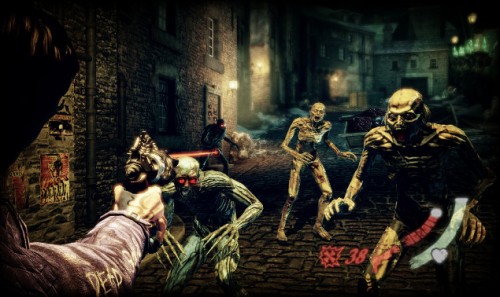
There are some solid game mechanics behind this game which is at its core, fundamentally a third person shooter. In this field the game plays fairly alright, aiming controls, moving and the camera may take some time getting use to as they do feel quite stiff from the start. Players of cause can tweak these controls in the settings menu. The game paces itself very well throwing in a range of new weapons, different enemy types and the occasional side-scrolling section to keep the game running and feeling fresh even towards the final chapters of the game.
As a Suda51 game you can expect plenty of insane boss battles, which Shadows of the Damned gladly delivers on. Boss battles in this game are very trial and error. The standard “aim for the weak spot” is easier said than done in this game, considering that sometimes there not as blatantly obvious as you would like them to be. But eventually studying a boss’ attack pattern will eventually give it away, given a few ‘restart from checkpoint’.
Along with the standard convections of a third person shooter, Shadows of the Damned also introduces a light and dark system which is integrated well with the various combat and puzzle sequences. When Garcia is trapped in darkness, enemies become invulnerable and he will slowly lose health leaving players with a short time frame to solve puzzles or complete the objective at hand. Even in the light, Darkness provides a protective coat for enemies which players have to remove first before they are able to kill them, which is a simple affair with a quick melee attack or light shot.
Gameplay overall doesn’t particularly change that much at the later stages of the game once you have full decked out your arsenal, and it would of been nice to see something that tied all Garcia skills together that’s not just the final boss. But with this said, what the game does presents is absolutely satisfying and fun to play through.
Graphics & Audio
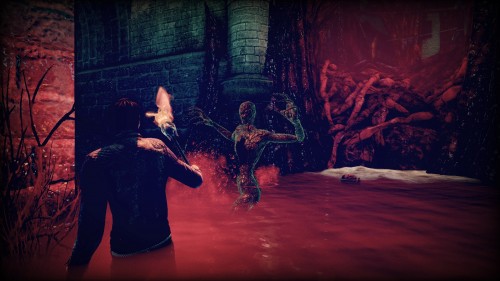
‘Shadows of the Damned’ sports a strong art style which is backed up with solid graphics. It works wells in creating the dark, twisted and for the most part macabre world that you find yourself travelling through. It might be an artistic decision but there seems to be a fuzzy/blurry glaze over the each of the cutscenes, which I found to be quite distracting. But asides from this the game’s strong art style and art direct continue to through the weird and bizarre at you.
Audio in this game is superb, voice work by the lead characters Garcia and Johnson is as witty and filthy as it is downright hilarious. Throughout the game, there are so many great one-liners and memorable dialogue which adds to the overall look and feel of the game – very very crass humour indeed. And not only this, overall the soundtrack is fantastic in providing an overall atmospheric feeling. From the quirky music of moving ‘sushi lamp’ to each epic boss battles, every moment audio is layered together very nicely.
Final Comments
Suda51 has once again thrown the unexpected at us once again. Shadows of the Damned is truly a very unique experience with an unbelievable interpretation of Hell. The game provides strong gameplay with the odd twist to each boss battle and it’s filled with a lot of content that’s not afraid to eat your face off or fill it with undeniable laughter. It’s a damn shame then, that once the end credits roll you’re just left wanting more and more.
I give Shadows of the Damned for Xbox 360 and Playstation 3:
The 3DS e-Shop launched just a couple of weeks ago along with the 3DS Virtual Console and all the classic DSiWare favorites, but due to how disorganized the menus are at the moment it is rather difficult to find a specific title you want. When I received my first DSi at launch a couple of years ago, there was very little choice as it took Nintendo a good year to truly build up a decent selection. However, there are now nearly 400 titles to choose from covering nearly every genre. It seems that many 3DS owners have not had a chance to see some of the gems are on the download service, which is the purpose of this article you are about to read. Want to find that perfect title to spend those points on? I present to you some of the DSiWare’s finest titles (Please note that prices my differ per region and are marked in U.S. currency).
Dark Void Zero (CAPCOM) – $4.99
One thing that I have always been a fan of is sheer amount of remakes that have been released on Nintendo’s portable consoles, where ports were put out that captured the magic of the 8 to 16 bit eras while delivering a blast of nostalgia for on-the-go gaming experiences.
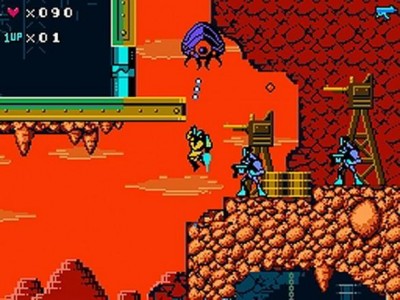
Dark Void Zero is a more original take of recapturing those golden moments of the past. I know the name “Dark Void” may at first remind some as the somewhat mediocre title that Capcom brought to the Xbox 360 & PS3, but Dark Void Zero is truly the definitive game to bare that name. Starting up Dark Void Zero, the player is treated to booting up the game by literally blowing in their NES Dark Void cartridge (via the mic on the DS/3DS) and then sucked into an full 8-bit world to take the role as the main protagonist, Rusty.
Everything about Dark Void Zero would literally make you feel it was ported straight out of the 80’s, as the controls, sprites, and even the story make you feel as if you are powering up an NES one more time, which is literally the charm of the whole experience. While nostalgia is nice, Capcom did not stop there and brought about a “Metroidvania” style of gameplay to the game where you can literally roam around via Rusty’s jetpack and view the retro-love that was tacked into every pixel of Dark Void Zero. Tons of power-ups, weapons, collectibles, and even a cameo by Jimmy Fallon can be found in this gem that should be placed in any 3DS owner’s digital collection.
Shantae: Risky’s Revenge(WAYFORWARD) – $11.99
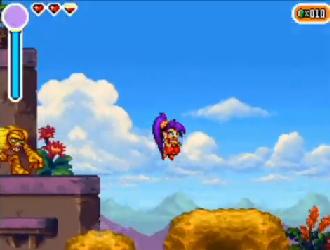
If Mario is the Mascot of Nintendo, Shantae in my mind is the true representative for the DSiWare. Shantae: Risky’s Revenge released last year as a follow-up to the barely known Shantae, a title that seen a very limited run but gained an instant cult following due to the quality in level design, gameplay, and visuals that ended the Game Boy Color’s lifespan with an explosion. Being a true sequel, Shantae: Risky’s Revenge delivers the same mechanics that made the bubbly little character a star, but with even more of Wayforward’s charming settings and characters thrown in.
Much like Dark Void Zero, Shantae is a “Metroidvania” game, where the player controls Shantae in a free-roam 2D enviroment as she tries to put a stop to the mischievous Risky Boots. Not only does Risky’s Revenge look incredible on any DS/3DS system, you can truly feel the passion that went into this sequel from Wayforward, a trait that is rare to see in the age of rush-jobs and cash-ins.
Mighty Milky Way(WAYFORWARD) – $7.99
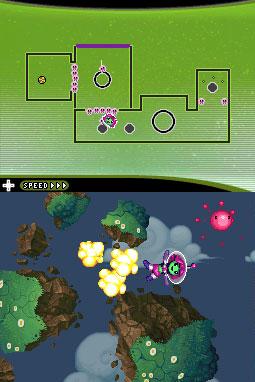
Part platformer, part puzzler, and with another lovable mascot, Mighty Milky Way was quietly released for the DSiWare earlier this year and made quite an impression due to it’s unique gameplay style and full utilization of the touch screen controls. Playing as Luna, it is the player’s job to bounce across the universe and create their own path of planets along the way by collecting pieces of candy.
Luna is a French martian, and is at her most talkative during moments of pure doom. Most protagonists just kill over when hitting an enemy or a damaging obstacle, Luna stops and spurts out a line of French dialogue before accepting her fate. That is the pure charm of Mighty Milky Way though, as the game tries to get you to care about Luna’s success during this spacey tale. A very dapper T-Rex also makes appearances during boss battles that change up the gameplay and make this title end on a highly rewarding note.
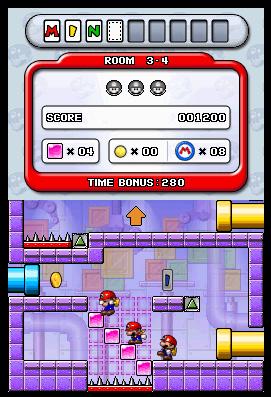
Mario vs. Donkey Kong: Minis March Again!(NINTENDO) – $7.99
The Mario vs Donkey Kong series has been one of those small Nintendo franchises that has slowly grew into a staple for the Nintendo DS. While I do feel the most recent Mini-Land Mayhem is the best title in the series to date, Mario vs. Donkey Kong: Minis March Again! is still a very worthy title of mention as it feels like it should be on a cartridge.
The best part of this title however is the level editor known as the Construction Zone in which players can create up to 140 stages with all the power-ups and enemies they can fit into one map. Afterwards, the game allows you to connect with friends via the DSi’s wireless function and share maps, adding an infinite amount of replay value to an already fantastic game.
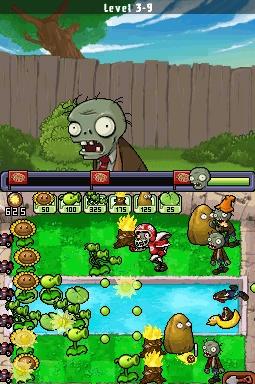
Plants vs Zombies(POPCAP) – $7.99
I don’t think I can do a recommendations article without mentioning Plants vs Zombies. I would guess most of you who are reading this have tried this game in one form or another, as it is on just about every device with a power button, but the DS version in my opinion is the strongest offering due to the touch screen. Never has it been easier to quickly sort out an army of plants onto your lawn than in this portable version as the stylus controls make everything a quick, drag-and-drop job.
I will say if you own the DS cartridge of Plants vs Zombies, there really isn’t a need for this digital version as it plays exactly the same (sans a few of the extra modes) but at a nice low price of just 800 points, making it worth a download for anyone who just want the core experience.
200 Point Quickies (1.99 eShop)
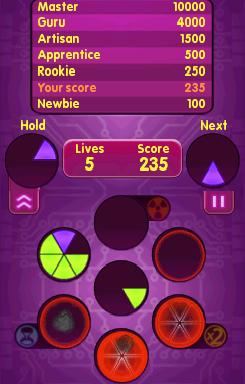
Frenzic
Frenzic is just how the name sounds, a hectic puzzler where the player must quickly fit pieces into circles (that sort of resemble a pie) while trying to strategically gain bonuses for color combos. Its a rather simple game, but one of the most addictive puzzlers on the service that can keep you infatuated for hours at a time.
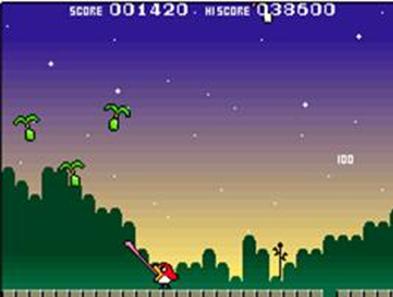
Birds & Beans
Another small yet addictive game on the DSiWare comes in the form of Birds & Beans. Originally released with WarioWare for the Game Boy Advance, this game has players take control of a very hungry bird by the name of Pyoro. As beans rain from the heavens, it is this your job to use Pyoro’s long tongue to eat as many as possible while trying to obtain a high score. If a bean hits the ground, it breaks the platform and shrinks the very ground you walk on, giving this small contender a bit of challenge for veteran players. “Pyoro 2” can also be unlocked later on, which doubles this package and makes it one of the best values on the eShop to date.
Absolute Chess
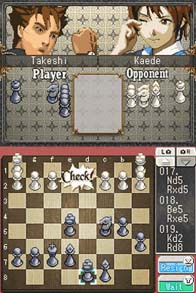
There are quite a few chess titles on the DSiWare, but personally I enjoyed Absolute Chess over the handful of others I have downloaded thus far. It simply is a game of chess, but with 8 different characters that the player can use to represent themselves while they play. If you have a friend with any form of DS, a Download Play option turns this title into a fine multi-player experience at a low budget price.
Of course these are just a few of the offerings 3DS owners can find on the service, but hopefully with the new additions of 3D Nintendo Classics and the Virtual Console, we will be in for even more fantastic releases in the coming years as honestly, things just seem to be heating up on the Nintendo download circuit. Stay tuned as we still have plenty more downloadable greatness to cover in Part 2 of the Best of the eShop.
Now it’s your turn. Leave a comment below if you have a favorite DSiWare title worthy of mention to anyone with access to the service below. If you have played any of the games above, let us know what you thought during your experience with them.
Game Name:Valet Parking 1989 Platform(s): Nintendi DSiWare, Nintendo 3DS eShop Publisher(s):Zordix Developer(s):Zordix Genre(s): Strategy; Time-Management Release Date: May 30, 2011 (US) Price: 500 Nintendo Points ($5.00 U.S.)
Games of time management have been around for quite a while, with Diner Dash arguably unleashing the once niche genre into the mainstream. Valet Parking 1989 sets out to take on the genre by having the player park cars quickly and keep clients pleased in a late 1980’s setting. Oddly enough, this quirky downloadble title does it’s job rather well, but with a few dings and scratches to be found along the way. So how is the finished product? Here is my review for Valet Parking 1989 for the Nintendo DSiWare.
Story
I remember when I first heard of Valet Parking 1989, I was instantly intrigued as the whole concept of parking cars in the 80’s seemed to be an interesting concept that we just don’t see too often (or ever from my knowledge). If there is one thing that this title does well, it is way it captures it’s 1980’s setting to a near perfect degree. Now I was 2 years old in 1989, so my memory of the decade comes with VH1 specials and John Hughes movie marathons, but I still feel that anyone wanting a throwback to the neon lit generation might want to at least give this title a look based on the humorous writing and visuals alone.
Valet Parking 1989 starts you out as a young man with a dream of earning enough money to get a car and then going to the beach. Luckily enough, a valet service based in Hollywood offers up a job that the main character instantly accepts. To earn money, our young valet must park cars for some of the biggest names in Hollywood and keep their vast array of vehicles in one piece to earn a hefty bonus from each client. I won’t spoil how this ends up, but this quirky tale feels like it ripped right out of a teen flick from the time period as the characters, clothes, and even mullets (Yes, you have a mullet, too) are very prominent within the game.
I think the star quality of this valet parking experience is the “celebrity clients” that can be found within. No names are officially dropped, but we do see clients who eerily resemble a red-jacketed Eddie Murphy, Debbie Gibson, and even the Hoff himself. Even the dialogue that these celebs use represent the characters correctly as over-the-top stereotypes run a muck throughout the game. It is easy to see that Zordix certainly put a lot of thought into capturing the crazy year of 1989, and while the charm loses it’s luster after a while due to repetition, Valet Parking 1989 would be a hollow experience without all of the fine-tuned detail presented.
Gameplay
Once you start your job as a valet you instantly are thrown into the story mode, where you simply park cars in a timely fashion for your clients. Interestingly enough, there is a nice layer of strategy within the game that ups the challenge as you progress. At the start of a level, you are given an option by your boss to get a good look at the parking lot before getting started. This is a feature I overlooked at first, but over time it becomes crucial to scope out the map if you want to be successful due to the difference of lots and quantity of customers within each level. Standard vehicles can be parked in a standard parking space, while limos and monster trucks (yes, there are monster trucks) each have their own special spaces.
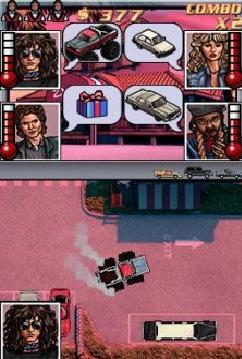
Valet Parking 1989 is completely controlled by the touch screen. Once you click “OK” to get the game started, guests will start lining up in their cars, where you must drag the car with the stylus to fit it into a specific spot. Once the client is done with their visit, their image will be displayed at the top screen where you then must back the car out and direct it to the exit. To create a challenge, each guest has a meter attached that resembles a thermometer. This meter measures mood, and when you take too long to park or deliver a car, the guest will get angry and leave. The player also must be extremely delicate with these fancy rides, as if you crash or damage a car, it can lead to losing the client completely or take a bit of cash out of your ending salary.
The drag and pull controls work well enough, but they are also responsible for the some of the frustration found in the game. The first few levels literally fly by within minutes as parking is a fairly simple task if you take your time, but as the game progresses, obstacles such as incoming traffic and distant parking spaces appear to up the difficulty. The number of clients also jumps up greatly later on, leading to an absolutely chaotic environment where cars are constantly coming in and in need of going out. The main problem I had with this is that it was really hard to actually park a car under such a strain and still keep guests happy. Yes, that is the point of the game, but the controls can make even the smallest cars control like large buses and turning a car is a lot more difficult than it should be, which is more noticeable as the game gets more hectic. Thankfully, Zordix did ease this strain with the nice addition of gifts.
At times, guests will be so pleased with your performance that they will give out gifts such as chocolate, food items, and even handcuffs. The purpose of these gifts is to pass them on to clients to cool down their mood, buying a small bit of precious time in order to better get organized. This doesn’t completely make up for the control mechanics, but it does add a refreshing element into the gameplay that is very useful during the more intense moments.
The story mode can be beaten within an hour, but those who want to give their brain a break will have to turn to keeping the DS idle as no saving points can be found within the game. This means that if you lose far along in the game, you must completely restart everything and go at it again. In this day and age where Nintendo are adding save points to Game Boy titles on the Virtual Console, Valet Parking 1989’s biggest flaw comes as simply not incorporating any form of checkpoints. It’s a small gripe, but I feel handheld titles should almost require a save point or even a password system due to the platform being portable. While the game is fun, this little flaw alone killed a lot of my desire to replay after finally completing the main story mode. For those who do stick it out, levels for an endless mode can be unlocked. Endless Mode is simply a quest for a high score, with the player going to their favorite level and parking cars until it is game over. I played quite a bit of this to master my parking skills, but there really isn’t any incentive to play this mode or even the story mode again for that matter as nothing changes or is offered make the game truly addictive.
Graphics/Audio
The presentation found in Valet Parking 1989 is in my opinion absolutely phenomenal considering the platform. From the well detailed characters to to the neon-lit structures, you can easily see the time that went into making this production. The top-down camera view is very reminiscent of the early GTA titles, but with a lot more color and atmosphere mixed in, delivering a very memorable result. Cutscenes were given a frame-by-frame animation treatment, which helps make the game feel like it came straight out of the time period as well.
Music is another trait that this game does wonderfully. Synthesized remixes of popular tracks from the late 80’s kick in at various times and add a load of personality to each character found within the game. Even though the midi format is used, every beat feels completely appropriate and becomes an earworm you will have to fight for hours after putting the game down later on.
Overall
Valet Parking 1989 brings about a perfect recipe for success. The gameplay is fun for the most part, the settings are well produced and memorable, and the quirky humor works wonders to better the overall experience. It should be a perfect game, as I feel it was close to truly delivering in every way, but sadly, some choices made in production just hold the game back a bit too much. The lack of a checkpoint/save system makes the whole game feel like a commitment, an issue that a casual title should not present. Another huge blow to the game is the lack of content that harms the replay value greatly. Even with these glaring flaws, at the 500 point price, I still feel like I can recommend this title on presentation value alone as this odd take on the genre is one I will remember due to it’s well crafted burst of 80’s greatness that is a fun ride before coming to a rather abrupt finish.
Have you logged into Rift over the last few days? You may have noticed the new medium sized patches that you had to download. Those patches were in-fact the 1.3 update, which has been live for a little while now.
Upon logging in after those incredibly patches, you will find that you version number has increased to 1.3 and with that patch comes a whole plethora of features. Those features are discussed below.
Hammerknell Opening Event – Limited time rewards, new mounts, and more plunder from the deeps
The Ancient Fortress of Hammerknell – 20 man raid, 10 bosses, opens at the climax of the World Event
Free In-Game Character & Guild Transfers – Click for the initial destination shards and find your perfect home in the Shard Travel Hub
Guild Banks!
Bind on Account Wardrobe/Vanity Items: Enjoy the event, and reap the rewards for your other characters.
New costume pieces, including Hammerknell themed items
Use Quantum Sight (Defiant) and Omen Sight (Guardian) Ascended Powers to find all new artifacts
PvP World Quests: Daily, level 50 quests that grant favour – battle on!