Welcome to another episode of CC: Anime, Capsule Computers Anime Podcast! In our sixteenth episode, the CC: Anime crew discuss the latest anime and manga news, the Aku no Hana controversy, answer your questions and announce the winner of our Tiger and Bunny competition.
Cast: Luke Halliday, Travis Bruno, Jahanzeb Khan, Frank Inglese and Kane Bugeja
We hope you enjoy CC: Anime Episode 16, be sure to let us know what you think.
Kanokon Omnibus 1-2 Author: Katsumi Nishino Illustrator: Rin Yamaki Publisher: Seven Seas Entertainment Release Date: April 16, 2013 Price: $18.99 – Available Here
Overview: Those familiar with the Kanokon franchise may have heard of the series thanks to the anime series which was brought to North America courtesy of the now diminished anime publisher Media Blasters. However before that, Kanokon was a series of light novels published in Japan by Katsumi Nishino. Now these light novels were originally meant to be released in North America by Seven Seas Entertainment but after those plans fell through, the company has instead decided to bring the manga series over. Now with the first omnibus containing the first two volumes of the Kanokon manga hitting store shelves, is it worth your time?
Story: The story of Kanokon follows a boy named Oyamada Kouta who has just transferred into a new school. While this is a common occurrence, Kouta has lived his entire life in the countryside where practically no one attended school. Because of this, he is initially awestruck by the amount of people that are at his new high school. Before he even has a chance to settle in, he is approached by a beautiful girl named Chizuru Minamoto who asks him to meet her in the music room after school.
Despite being warned of Chizuru’s nature by his fellow classmate, Kouta meets with Chizuru at the music room where she suddenly confesses her love for him. While this would be surprising for any teenager, Kouta is even more surprised when Chizuru’s hair color changes and she sprouts fox ears and a tail. When Chizuru reveals the truth behind the school and herself, Kouta chooses to accept her for who she is, but by doing so he has found himself in a new world full of dangers, including other students at the school, people from Chizuru’s past and of course, Chizuru herself.
Kanokon Omnibus 1-2 contains the first two main story arcs of the series; the first mini-arc involves Kouta learning about Chizuru and becoming accepted by her “brother” and the second much larger arc dealing with an unruly group of yokai who also attend the school. A large number of characters are introduced and given a bit of development in these two arcs and it is clear that most if not all of them will be playing some role in later releases.
At first readers will likely be caught off guard by the fact that Chizuru falls head-over-heels in love with Kouta so quickly. However as the story progresses various elements of their relationship are explored slightly such as how innocent Kouta’s heart can be, though it does feel as if their sudden relationship is rushed for the sake of quickly progressing the story.
Ultimately these two volumes manage to find a decent balance between plot development, action, and “lovey-dovey” romance. Not only does Kouta expand a bit as a character but the yokai world is explained a bit in these initial chapters. With the amount of characters introduced in these two volumes and obviously plenty more to work with, readers will likely be intrigued enough to see where this human and yokai pairing will go from here.
Artwork: The artwork provided by Rin Yamaki for the characters in Kanokon ranges in quality and there are a few times throughout this release that the facial structures of the characters shift, but overall their designs remain relatively consistent. As for the characters themselves, Kouta is represented as smaller than average first-year highschooler and his reactions to the surprising events that occur around him are portrayed well on his face. Chizuru, being the main source of fan-service in the release and the main girl, is well-portrayed and designed well with clear-cut differences between her human and fox forms. As for the rest of the characters, they each have their own unique looks though it is worth noting that a few are a bit generic looking.
Outside of the characters themselves, most of the panels in the Kanokon manga are unfortunately quite empty. Even when some background art is added into a panel, it is usually very plain outside of one specific chapter in this release. This is unfortunate, though it does highlight that the characters should be the main focus of the readers’ attention. As far as fan-service goes, there are a number of “panty shots” here and there but no actual nudity in the release and there is a nice balance between storytelling and fan-service.
As far as the translation of the manga and its effect on the artwork, thankfully it seems that nothing has been lost in translation. Wherever possible it seems that the Japanese sound-effect symbols were removed entirely and replaced with English sound-effects though certain ones were left in thanks to the amount of re-drawing that would be necessary if they were removed. It is also worth noting that outside of a small white border around some of the text directly overlaying a few panels of artwork, none of the manga’s images have been obscured by black text bubbles or lost due to improper editing.
Extra Content: When readers open the book up they are first presented with a color page of Chizuru wearing a yukata in her fox form followed by a two page color spread of Chizuru and Kouta that includes some of the side characters. Also included is another two page color spread of Chizuru in her fox form but in a much more provocative pose than before since she is barely clothed in this spread. Closing out the color intro pages is a simple color page of Chizuru in human form wearing a flight attendants outfit. These color pages are a nice inclusion and obviously are meant to please those who are fans of Chizuru and serve as a good introduction to the fan-service in the book itself.
Outside of the color pages there are messages from the illustrator Rin Yamaki describing the characters as well as messages of thanks for picking up the volumes in this omnibus. Closing this release out is an extra chapter involving Chizuru and a yet un-introduced character discussing her love for Kouta and a “World of Kanokon” section that explains a few of the terms used in these two manga volumes.
Overall: Kanokon’s first omnibus release helps introduce the reader to the main cast and the world of the series well enough by balancing plot progression and character interactions nicely, even if the main couple feels a rushed together. With plenty of humor and a good deal of fan-service, Kanokon introduces itself as a fun series that also has a fair share of supernatural action. While the artwork is a bit basic at times, the editing process has managed to keep all of it intact and it is nice to see a number of bonus color pages included in the release. With Seven Seas planning on releasing the Kanokon series in omnibus format such as this, readers will find themselves not only a deal, but plenty to enjoy within the pages of Kanokon Omnibus 1-2.
Capsule Computers review guidelines can be found here.
Kung Fu Rabbit Developer: Neko Entertainment Publisher: BulkyPix Platform: Wii U (Reviewed), iPhone, Android Release Date: April 18, 2013 Price: $4.99
Overview
The Wii U is far along in it’s lifespan now that we are beginning to see smaller digital releases for the eShop on the platform. Much like the Wii, these have been a bit hit or miss, but after seeing the likes of Trine 2 and The Cave make the transition smoothly, there is more potential here for developers to truly shine. As many of you know, Kung Fu Rabbit was released a good while ago on the iOS and was rather successful despite it’s “freemium” styled set-up. Neko Entertainment have now provided us with a port on the Wii U, with no unnecessary spending or touch gimmickry attached. Does this title from a much different market stand a chance on the console, or is this one rabbit with a distorted vision? Let’s find out.
Gameplay
I won’t be speaking about the story much with Kung Fu Rabbit, as while present, it is minimal at best and the only thing you need to worry about is making it to the next stage. Just like it’s iOS kin, this title places the player in the role of a little bunny with some serious fighting skills who is going after alien scum. Levels are made to be small, with only a section to be played at a time before moving on to the next. You know those type of games that break down what could be one giant world into forty short stages? Well, this game is like that, but without the moments of interruption inbetween. At it’s core, Kung Fu Rabbit plays as a quick, side-scrolling platformer. Our furry friend must jump his way to the end point of each level while avoiding obstacles in order to progress onward, and starting off – the game gives off the illusion that things are simple.
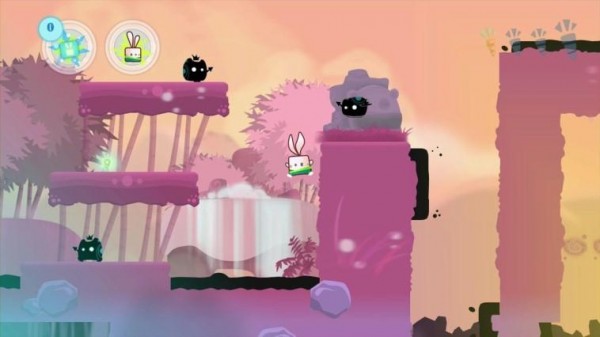
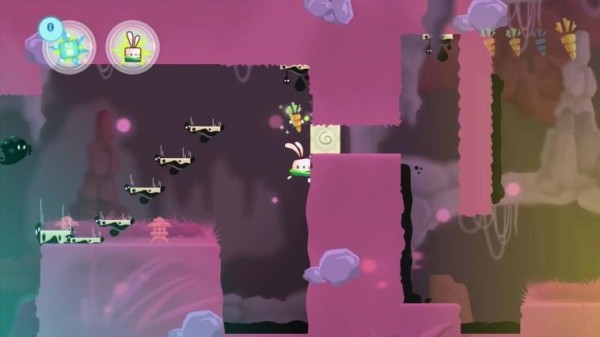
That alone is a lie, and this rabbit will break you if you don’t have reflexes of steel. You see, Kung Fu Rabbit plays a lot like Super Meat Boy. Each level is set up with a good number of hazards littered everywhere, with enemies also pacing back and forth waiting to stop you from moving on. The hazards themselves appear as tar that kills our rabbit at the touch, clinging to the edges of walls and platforms so that players will have to use precise platforming in order to stay safe. Carrots act as a reward for each stage, and truly finishing each stage means that you collected all four during the run. Sounds simple enough, right? Wrong. These carrots are put right above a pit death, at the feet of an enemy, or at the edge of a cliff, so it’s actually more of a test of skill for those that want to collect everything in each level.
With this precise platforming and tricky enemies to defeat, most will be happy to know that the button-control layout comes off as smooth and fluid, where every death is essentially your own fault if it does happen. After defeat, the player must start the stage all over again, but that in itself isn’t much of a problem as the stages are rather short to begin with. Personally, I am not a fan of “trial and error” styled challenges. That was the main problem I had when it came to enjoying myself with this game, and my own personal preferences made the later levels quite grueling and tedious. Before I hear “then why did you review it!” due to that statement, hear me out.
I love platformers of all styles, but when you replace a true challenge with a test of memory or attempt to punish the player for their own curiosity, your game loses the spirit of its genre. This is not just Kung Fu Rabbit I am speaking about either. In my opinion, platformers are meant to be an odyssey into the unknown. Remember when we found secrets in Donkey Kong Country due to a bit of experimentation or discovered a legendary flute in Super Mario Bros. 3? Those titles, along with many others gave us the freedom to enjoy the world we were placed in. Kung Fu Rabbit features a lovable little mascot and a beautiful world, but limits the experience with artificial challenges made up of trial and error. There is a big market for this style of gameplay, but I would be lying to you, as the reader if I said I enjoyed it. Having an enemy kill you because its hit box is one pixel wide is frustrating, and utilizing wall slides and quick jumps excessively begins to feel repetitive and grinding as the challenge grows.
Now, there are options to assist with this difficulty. In the original game, players could use their in-game currency – or carrots, to purchase items that have the ability to create a checkpoint, wipe out all moving antagonists on a stage, or provide a special power, but these only come when you have enough saved up and even then do little to curve the difficulty of the main game. Don’t get me wrong, with controls as tight as these and a well thought out level design, nothing is impossible and beating a tough stage is rewarding, but in a title designed to punish the player, seeing ten even more grinding stages ahead is enough to sit that Gamepad down and take a break. As I said, I understand many out there love these types of challenges in platformers and respect that. Kung Fu Rabbit however is less of a platformer and more of a test in patience and proper reflexes. Sort of like a complex puzzle game, if you will.
Visuals and Audio
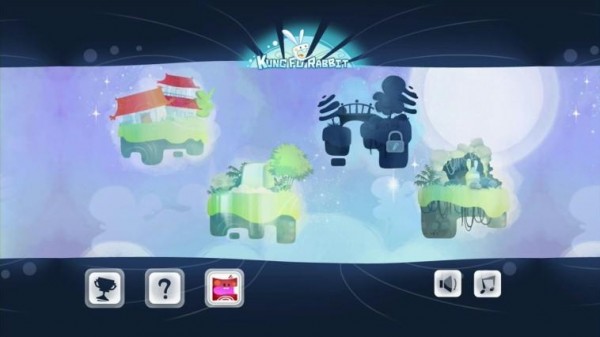
The world of Kung Fu Rabbit is one filled with color and pure happiness. Maybe that is why I was eager to explore and enjoy myself – only to find disappointment as the fun was put on hold in order to perform timed jumps over and over. Our rabbit himself is also utterly charming with is squared body and large mouth, making it easy for players young and old to get behind. It’s almost like your watching a cartoon set in a Chinese painting, and for those that do enjoy the challenges that approach, you are sure to take in the rich atmosphere attached.
The soundtrack however leaves less to be desired. Sure, the oriental themed tunes do well to capture the environment and go along with the theme of the game, but they are looped – which means you will be hearing the same tunes restart as you make your way through the levels. Maybe this was done so players would try to aim for a better time, but with such a beautiful art style, it’s a shame we don’t get more in the music department. Now the sound effects, well – they almost redeem the entire experience for its melodic shortcomings. Sure, the little jumps and attacks sound good, but it’s the “pitter patter” of our protagonists footsteps that add in a ton of charm, making this hero extremely lovable.
Overall
I review a lot of titles here at Capsule Computers, but it has been a long time since I have been so torn on with my final thoughts for a game. On one hand, Kung Fu Rabbit is built with a tight, easy-to-learn control scheme and a genuinely interesting setting. On the other, you have a game that makes you feel as if puppet strings were attached at the start of the experience, with every movement made coming off as predetermined and the high challenge only presenting itself due to one straying away from the developer’s forced intentions. Kung Fu Rabbit is not a bad game at all. Some in fact may praise the precise platforming involved as at it’s core, you have a game that resembles Super Meat Boy and I Wanna Be the Guy. Fun in a video game is very subjective however, and those who are looking for an afternoon of exploration and wonder rather than a test of skill and memory are better off giving this little port a pass.
Capsule Computers review guidelines can be found here.
Dark Quest HD Developer: Brain Seals Limited Publisher: Brain Seals Limited Platform: iPad Release Date: April 24th, 2013 Price: $2.99 – Available Here Overview
Dark Quest HD is an unofficial clone of the 1989 board game HeroQuest. The game has been streamlined for the modern audience.
Story
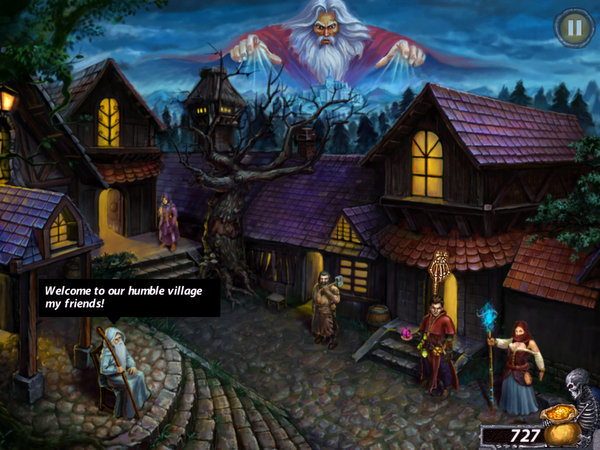
Dark Quest HD does not seem to have much of a plot. Zantor the Barbarian, Thorin on the Dwarf, and Zerin the Wizard has banded together to explore dungeons and protect the village of Faldir from an evil sorcerer. The story does not get much deeper than that. The writing is poor. There are basic grammar errors that could have been caught if the game’s script was put through Microsoft Word. The dialogue is rather wooden and forgettable. The game’s story seems to be an afterthought.
Gameplay
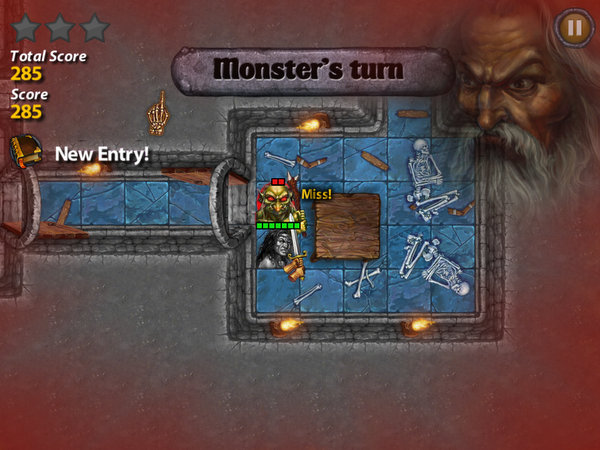
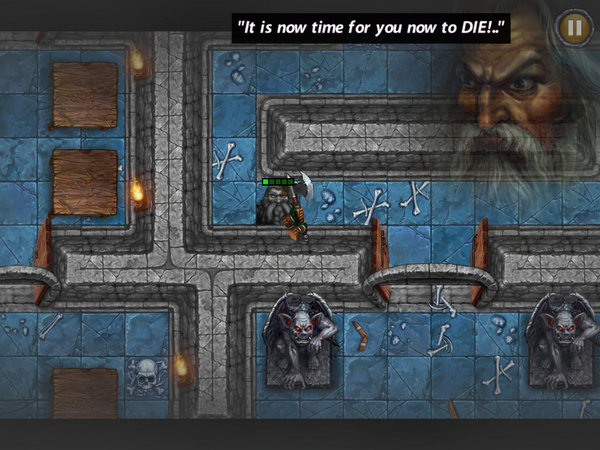
Dark Quest HD is a turn based RPG that keeps true to its board game roots. The player is provided with a limited amount of turns to complete the level. There are three stars to collect in each level for bonus points. The dungeons themselves are littered with monsters, traps, and loot to collect. Once the level is complete, players return to the town above to stock up on potions, learn new abilities, and rest in the tavern.
The basic premise of the game is fun. There is good bit of strategy involved and the game serves as an excellent gateway drug to turn based strategy RPGs. The combat is streamlined, the rolls calculated silently in the background. I would have loved to see the results of these rolls displayed in the corner to better link it to its board game roots.
The game needs a better tutorial in the beginning. The extent of the tutorial is a skeletal hand that points where the player should tap for the first few moves. After that, a few hints of varying helpfulness appear in the game’s encyclopedia. The rest must be discovered through trial and error.
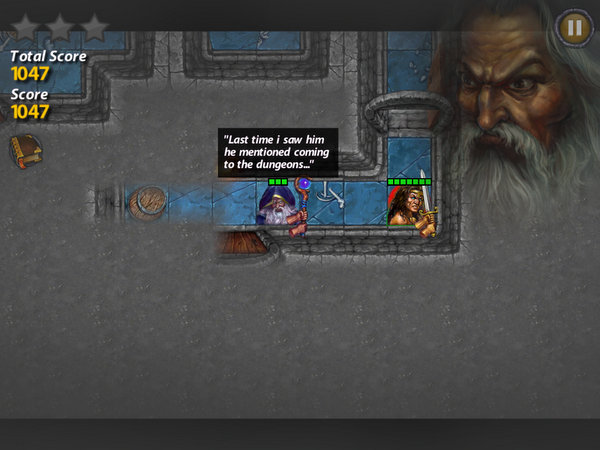
If the player moves the party leader, in most cases Zantor the Barbarian, then the other two characters will follow accordingly. The AI tends to be pretty stupid. They follow the party leader blindly, stepping onto traps and not bothering to attack enemies in their turn half the time. Often times I found myself controlling the other party members first then moving the party leader last to use my turns more efficiently. I would have preferred an option in the game to force each character to move separately. Fixes for the AI’s pathing is one of Brain Seal’s announced changes for the upcoming patch.
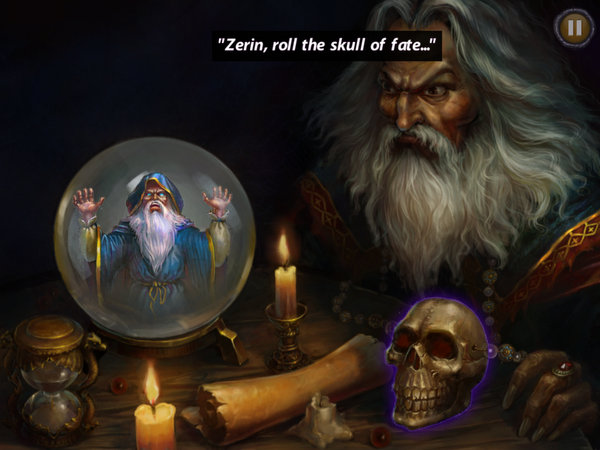
I found the evil sorcerer’s rolls of fate to be intrusive. They seem to come at completely random times and feel more like an annoying distraction than anything else. If the game could better incorporate the rolls of fate within the overhead map instead of changing screens completely and requiring the player to tap the skull. The crystal ball loot is seems more pointless, completely distracting the player from the game for a Magic 8-ball style fortune telling session. According to an editor who is experienced with the HeroQuest board game, these fortune telling sessions is supposed to grant an attack buff to the player. Unfortunately, the game leaves unexperienced players in the dark about what these crystal ball rolls are actually for.
Visuals
The visuals in Dark Quest are pay homage to fantasy board games of the early 1990’s. The art reminds me of old Dungeons and Dragons player manuals from that era. Icons have been inspired by modern fantasy games like Warcraft and Diablo. The UI is very simple and unobtrusive. I do wish the encyclopedia/hint system were better organized. The game simply stacks them in chronological order in a list that pops up from the side of the screen. I would have preferred to see a separate screen for this information.
Audio
Dark Quest HD completes the nostalgia with its audio. The music and sound effects are reminiscent of older PC games from the early to mid 1990’s. The music help builds the creepy dungeon feel without being annoying or distracting from the game. The sound effects are simple and used sparingly, which is effective at keeping the nostalgic feel of the game.
Overall
For fans of the HeroQuest games, Dark Quest HD is a no brainer. The game keeps a nostalgic feel with some solid turn based strategy RPG gameplay. Those who have not played the board game will be find themselves a little lost. For those willing to make the effort to figure out the game, they will find a diamond in the rough.
Capsule Computers review guidelines can be found here.
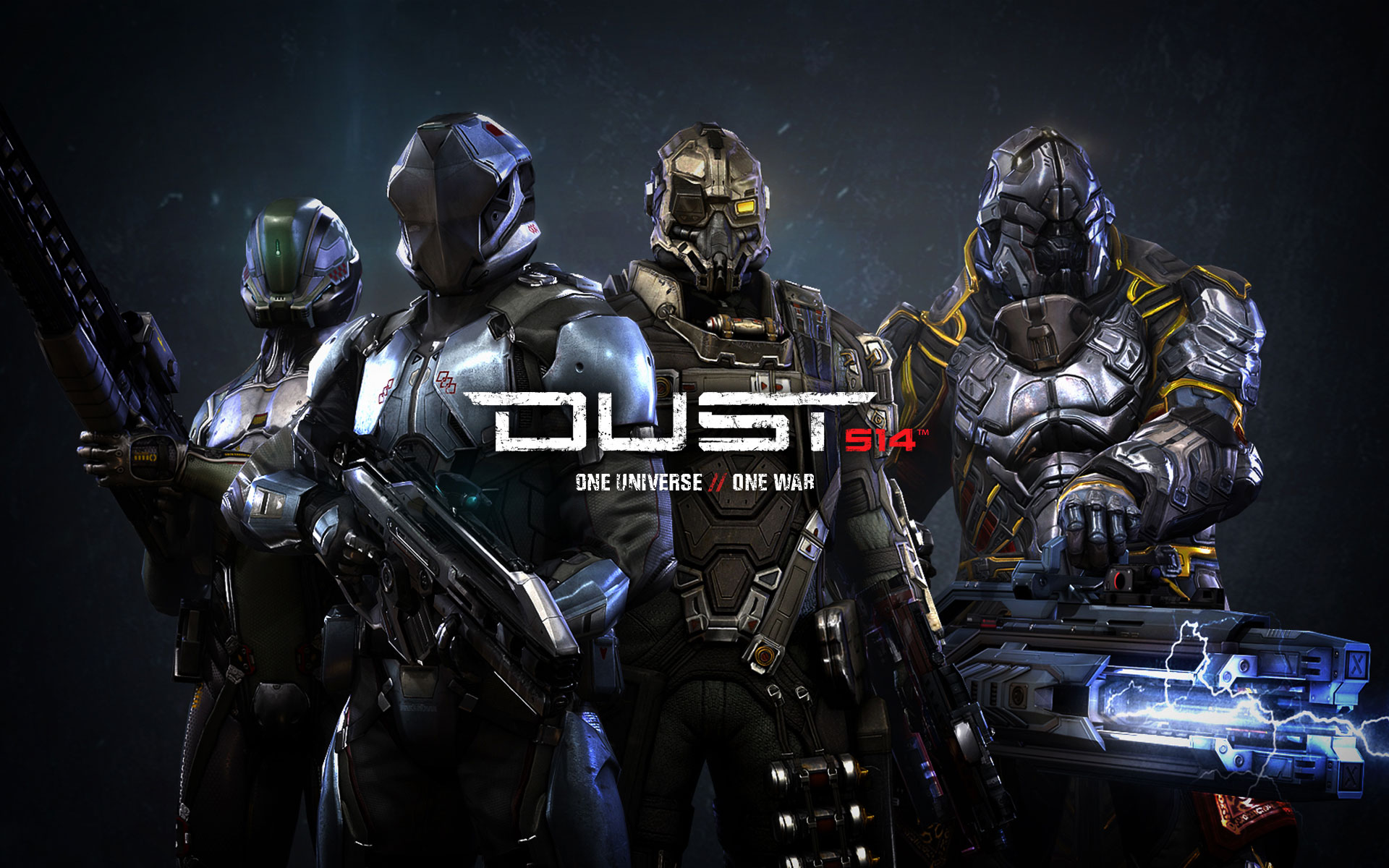
CCP Games, the world’s leading independent massively multiplayer game developers, have revealed that they will finally be officially launching DUST 514 on May 14th or 5/14 for those who enjoy the way the release date matches the name of the game.
The incredible and ground-breaking first-person shooter will launch exclusively for the PlayStation 3 console, completely free-to-play! The game’s launch will be only the beginning of what is said to be a ‘long voyage’ with players being able to look forward to an ever progressing game, which is built on over a decade of experience that CCP Games have gained through their game EVE Online.
Hilmar Veigar Pétursson, CEO of CCP Games commented on the game’s launch,“Reaching this point has required many years, hundreds of CCP employees, and the engagement of millions of players who contributed fantastic feedback during the beta process. Now we start the real journey, which, decades from now, we will look back on with astonishment at all we accomplished. The EVE Universe will outlive us all.”
Be sure to check out DUST 514 on the PlayStation 3 when it launched on May 14th, 2013. It looks to be an incredible game and a must-play experience.
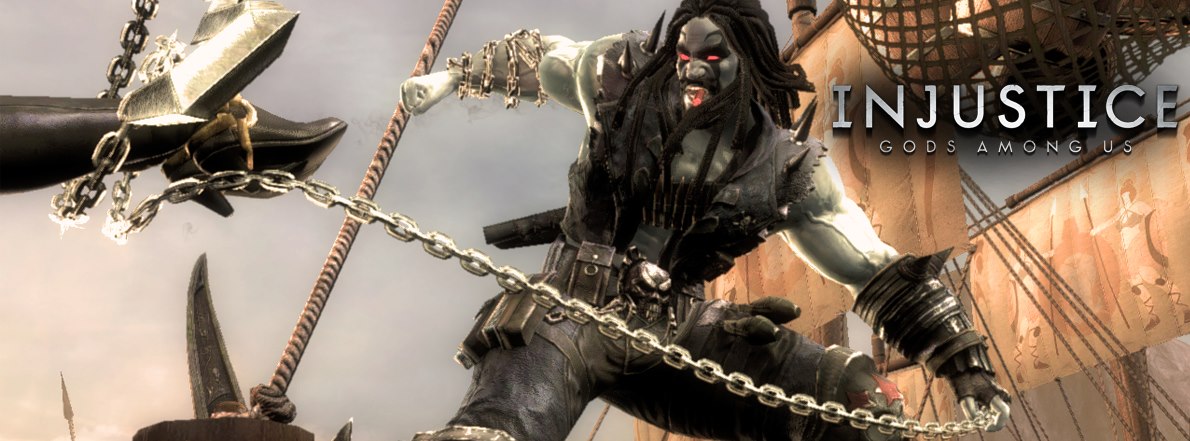
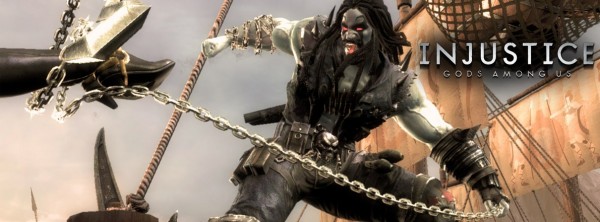
“They don’t call me the main man for nothin’!”...Batmanlearned this the hard way in the gameplay reveal video for Lobo– the first DLC character inInjustice: Gods Among Us. The video can be found at the bottom of this article.
Riding in on his “Space Hog” (a motorcycle, not an actual hog…although that would be hilarious!), Lobo aims to “liven up the joint”. His signature hook chain and sawed-off shotgun feature heavily in his fighting arsenal. The tobacco-smoking, intergalactic bounty hunter from Czarnia also has a mean Super Move that burns… Also of note in the clip is the fact that Batman has a new Flashpoint skin! We could not find any information on when/how this skin will become available, but you can download Lobo come May 7th.
Lobo is a part of the Injustice Season Pass, which nets you all 4 planned DLC characters for the price of 3 at 1200 MS Points, so although not confirmed, we can assume that individual pricing will stand at 400 MS points (maths genius over here!). Again, check out the kick-ass battle between ‘The Dark Knight’ and the ‘Main Man’ below!
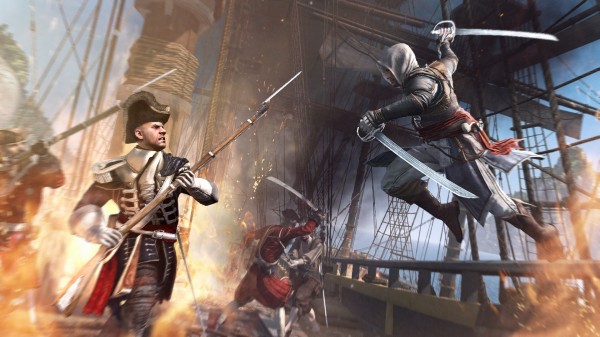
Ubisoft has announced that anyone who pre-orders Assassin’s Creed IV: Black Flag in Europe or other PAL regions will gain access to something they are calling “The Watch.” No it isn’t a real watch or anything all that neat to be quite honest, instead it is an app that can be accessed on a desktop PC, tablet or smartphone that allows players to learn more information about the game and various other things related to ACIV.
Detailed in the trailer below is also news that players will be able to complete “quests” that can unlock various bonuses though what these bonuses actually will be have not been revealed as of yet.
BEYOND: Two Souls‘ presentation as an Official Selection at the Tribeca Film Festival is over. But, if you didn’t catch the live stream, it’s okay because Sony has uploaded the brand-new trailer debuted there, online. You can view it at the bottom of this article.
Along with the debut of the aforementioned trailer, the 2-hour screening featured a 35 minute scene from the game and an in-depth live panel Q&A with game writer/director David Cage, star Ellen Page and supporting cast members Kadeem Hardison and Eric Winter – moderated by video game journalist Harold Goldberg. One of the founding fathers of film festivals like Sundance and Tribeca,
Geoff Gilmore, described the event as “a watershed moment in storytelling and media” with the general statement being made that;
Presenting BEYOND: Two Souls at Tribeca Film Festival is a ground-breaking example of the potential in the marriage of gaming and cinema.
We’d love to see the whole proceedings on YouTube one day soon, not only for the 35 minute scene (which we’ll otherwise have to wait for the game’s release on October 8th to experience like normal, patient people), but the Q&A as well. For now, the trailer below will have to tide us over.
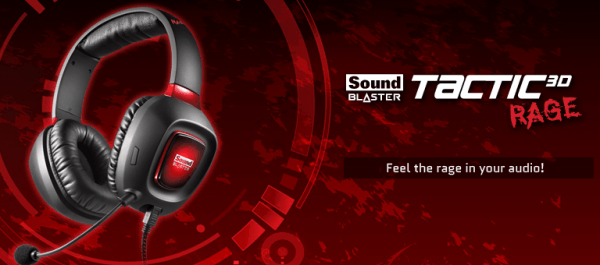
Sound Blaster Tactic Rage 3D Manufacturer: Creative/Sound Blaster Platform: PC Price: $99.95 AUD Available Here
The Sound Blaster Tactic Rage 3D headphones from Creative are the Low-Mid tier headphones in their latest range. The Soundblaster Tactic Rage 3D headphones are a pair of fully surround sound headphones that connect to your PC through the use of USB or an optional 3.5mm connection.
Once the Sound Blaster Tactic Rage 3D were first plugged in, Windows installed the default drivers for them without a problem. However, not included with those drivers was the driver suite software, which allows you to reconfigure the headphones to your liking. The default configuration for the Soundblaster Tactic Rage 3D headphones are amazingly useable and even if you never reconfigure them, you’d still have a pretty nifty pair of headphones. However, it is heavily recommend downloading the driver suite to unlock the full capabilities of the device.
This was the first point of disappointment with these headphones. The user has to actually download the driver suite. None were included on a disc with the product. However, most people have the internet these days so this was a near non-issue.
Riding off the back of the first disappointment is the first thing that was really enjoyable about these headphones. Or rather, the driver-suite software anyway. The installer for the suite software immediately detected the computers regional settings and adapted itself to those settings. While leaving your computers regional settings in Japanese can create a minor inconvenience by the program not having any of the language variables written in those languages native styles, a quick Google of the spelling can be helpful.
Once the Sound Blaster Tactic Rage 3D driver suite software installed, called Sound Blaster Recon (3D), the user is able to configure the settings of the headphones. There are a lot of variables that can be modified with this software.
The Sound Blaster Recon (3D) software allows you to change the functionality of the headphones in some interesting ways. One of these is the ability to edit whether or not the headphones will output audio in different ways. The user is able to choose between a variety of options for their audio output, ranging from 7.1ch right down to stereo sound.
There are also more usual feature like a graphic equaliser, an audio crystallization feature and bass controls. These features of the Sound Blaster Recon (3D) software allow the user to alter the sounds coming out of the headphones. All of these features do as they appear to do, for instance the crystallization makes the audio sound more clear, while the bass controls modify the amount of oomph the bass has.
The Sound Blaster Tactic Rage 3D comes with a detachable microphone mounting. This allows users to decide whether or not they want to have a microphone attached or not. The microphone itself feels as though it isn’t as sensitive as it should be, requiring it to be placed very close to the mouth for the user to be the most audible.
Interestingly, the Sound Blaster tactic Rage (3D) software allows you to modify how you sound to others whilst you are talking through the microphone. Settings like pitch, frequency and a few others can be modified to the users preference, or to the preference of the audience.
One thing that is pleasant about newer headphones is that they come with diodes within the earpieces to make them light up. In the driver suite, you are able to modify many of the parameters regarding the function of these LED’s. These are your standard things like colours, pulsation values and an interesting option that is rarely seen, the ability to pulsate along with the tune.
The topmost part of the headphone arc may prove to be an issue for some users. The leather-esque bit just under the arc is comfortable most of the time that it is resting on your head. However, after a while it kind of irritates the top of the head with an uncomfortable sensation. If it could be likened to anything, it’d be most like a light itch. However, just rearranging the positioning of the headphones alleviates the discomfort.
Included with the package is both a 3.5mm cable that is male on both ends, so as to fit in female slots on both the headphones and another device, as well as a MiniUSB to USB cable. It should be noted that to modify the functionality of the headphones, you must have them connected to a computer using the MiniUSB-to-USB cable.
I have to admit that as these are mid-low range headphones, I was not expecting them to sound as good as they do. Considering these headphones are primarily designed for gaming, I had to test these under gaming conditions. However, I also tested under a few different audio modes in Blu-Ray movies as well.
One of the games that the Sound Blaster Tactic Rage 3D headphones were first tested on was QuakeLive. The sounds weren’t as grungy and everything sounded a lot cleaner. The positional audio works incredibly well with these headphones
The headphones were tested in a range of other video games, some of which were MMORPGs. They performed pretty well and writing about each of these games would just be echoing the previous section on QuakeLive.
Modern movies tend to come with either a 7.1ch or a 5.1ch audio track. So to test this, we tested the surround sound capabilities of the headphones with a couple of Blu-Ray films. We found that it’s best if you have the headphones settings set in the driver suite software matching the movies output (which only takes a few seconds to do). However, it isn’t too much of an issue if you leave it set to 7.1ch if you’re watching a 5.1ch film.
Watching the films was rather impressive in regards to the audio. It really feels like the movie is taking place around the viewer, which is important when you’re wearing a pair of surround sound headphones. They really need to simulate a physical setup, which they do.
While the Soundblaster Tactic Rage 3D have a couple of issues, the positives far outweigh the negatives for this particular pair of headphones. If you’re in the market for a new pair of gaming headphones and don’t have a massive budget, these perform wonderfully. These are a great bang-for-buck pair of headphones.
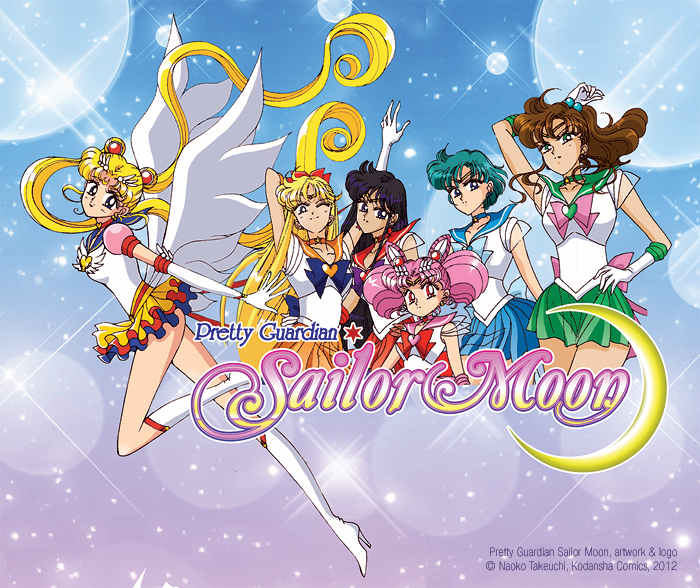
Fighting evil by moonlight, winning love by daylight, never running from a real fight, she is the delayed Sailor Moon.
That is right Sailor Moon fans, the upcoming reboot of the Sailor Moon anime series has been confirmed as being delayed for the foreseeable future. Fumio Osano the editor of the Sailor Moon manga at Kodansha took to twitter to confirm the anime series had been delayed.
When asked when we will see the anime series go to air, Osano made the vague statement of “Not 2014. Perhaps.” Which could lead one to the assumption that the series will air in Fall 2013, unless it doesn’t and it airs in 2014.
This is of course disappointing news for fans of the classic series. The reboot anime series was originally set to be part of the celebrations of Sailor Moon’s 20th Anniversary. We will be sure to keep you up to date on all developments on this story.