
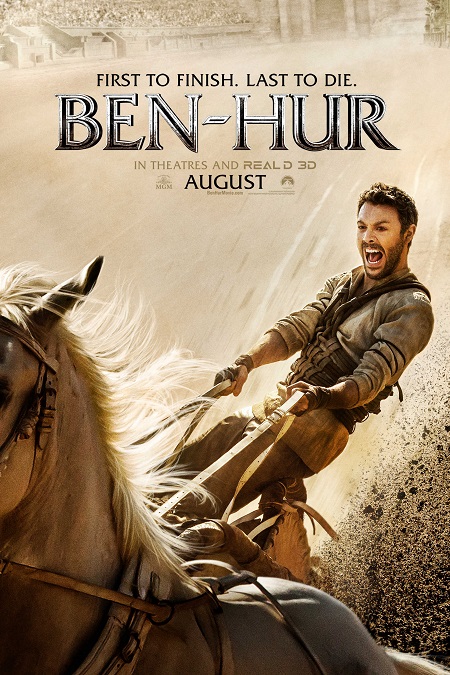
Ben-Hur
Studios: Bazelevs Productions, Lightworkers Media, Sean Daniel Productions
Publisher: Paramount Pictures
Platforms: Cinema
Release Date: 25 August, 2016 – Tickets available here
Overview
The 1959 film adaption of Ben-Hur by William Wyler is considered a classic of cinematic spectacle and the power of the Hollywood studio system. Everything about this production was epic in scale with thousands of extras being used and one of cinema’s longest scores. The sheer size of this production gave rise to the saying “Bigger than Ben-Hur” when attempting to describe scenes of film spectacle. Fast forward to 2016 and we ask ourselves, is this new adaption by Timur Bekmambetov a reimagining of the old cinematic epic or does it fall short?
Story
The story largely holds true to the narrative arc of its cinematic predecessor and follows along with the trials and travails of the eponymous Jewish noble, Judah Ben-Hur (Jack Huston), and his adopted Roman brother, Messala (Toby Kebbell). Due to his Roman heritage, Messala feels alienated from the Jewish family he’s adopted into and decides to seek his fortune by enlisting into the Roman army. The story jumps ahead three years with the populace of Jerusalem firmly under the Roman yoke of occupation and Messala returning home to see his adopted family. After Judah shelters an injured Jewish insurgent against the Romans, who thanks him for his hospitality by implicating him in a plot to kill the Roman prefect, Messala is forced to destroy the place he once called home and punish those he once called family. Judah is sentenced to life as galley slave and the two brothers blame the other for their perceived betrayals. The stage becomes set for a clash between these characters as the brothers’ fight takes shape as the struggle between the Roman occupiers and the occupied.
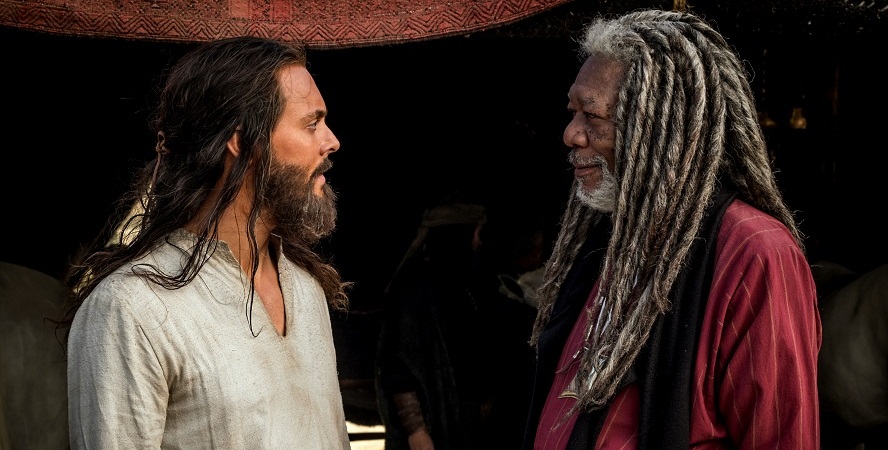
While watching this film, I was constantly attempting to figure out whether or not the script was terrible. Pretty much nothing in this film had any emotional impact whatsoever and not even the gratuitous cameos of a Christian messiah appeared to hold any weight onscreen. There are certainly some lacklustre narrative moments, especially concerning the film’s denouement (which was far too saccharine for my tastes), but in my analysis I went further and have come to a conclusion… the script is not terrible. Despite some questionable narrative turns, which I freely acknowledge; the dialogue itself reads with impact that is simply not conveyed in the film. An example of this can be found in the final scene between Sheik Ilderim (Morgan Freeman) and Pontius Pilate (Pilou Asbæk) where they exchange philosophical barbs about the conclusion of the film’s climactic chariot race and the effect it will have on Jerusalem as well as the entirety of the Roman Empire. The words had gravitas and meaning behind them which the actors simply did not convey in their performances whatsoever which completely disarms the script of any edge. I have no idea what affect the director and actors were going for, but their approaches consistently fall flat throughout this film.
The performances from the actors within this film can be universally described as terrible. To describe the acting as ‘wooden’ would be an understatement as I feel that the film would have largely remained unchanged had the actors been swapped out with wooden boards that had the script stapled to them. I don’t know how this happened to such a severe degree as even the acting heavy weights like Freeman and James Cosmo pretty much phoned in their performances throughout. I get the feeling that, in all probability, whoever was in charge of wrangling the actors had very little success in motivating them and that Bekmambetov didn’t appear to be quite interested in working with the actors to get any emotional impact behind their performances. This is a glaring flaw in this film as not only do the performances fall short, but so does the visual spectacle…
Visuals
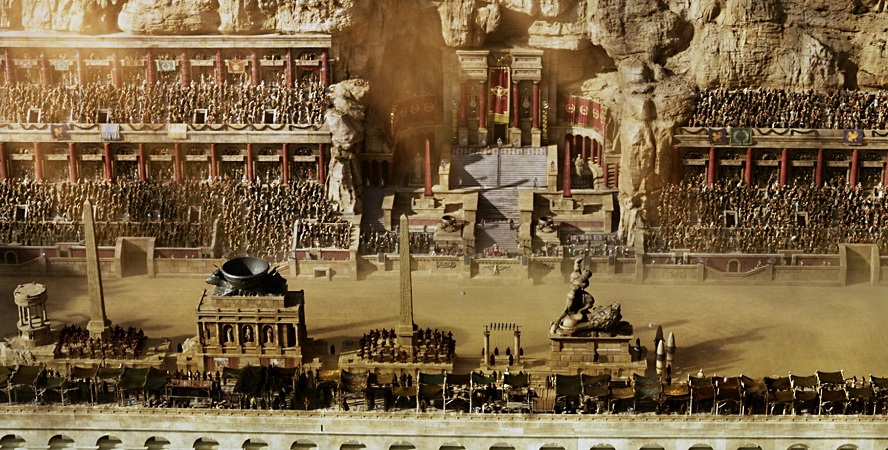
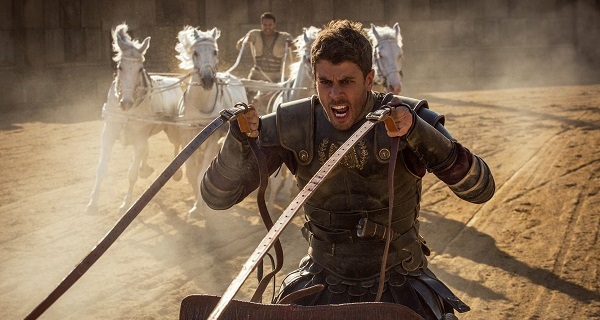
For a film which notionally follows along in the footsteps of one of the greatest examples of cinematic spectacle for its time, Ben Hurr does very little to awe its audience visually. The use of CGI throughout is consistently terrible and often times distracting which means big set pieces moments like the chariot race are undermined by their own special effects. Furthermore, the visual direction throughout is almost entirely too restrained during any of the action to really give a sense of scale for an audience to be wowed by it. A prime example of this is the overuse of close-up shots during action sequences. This severely limits the scope of the audience’s view of the action during said sequences and forces us to focus on the lacklustre performances of the actors. I cannot tell you enough just how much it annoyed me to have to watch snippets of a chariot race and ancient naval battle in-between close-ups of Freeman’s and Huston’s unenthusiastic faces. Pretty much every visual decision made in this film just felt wrong and I have no idea what to think of the direction of Bemambetov in this work other than question whether or not he is, in fact, blind.
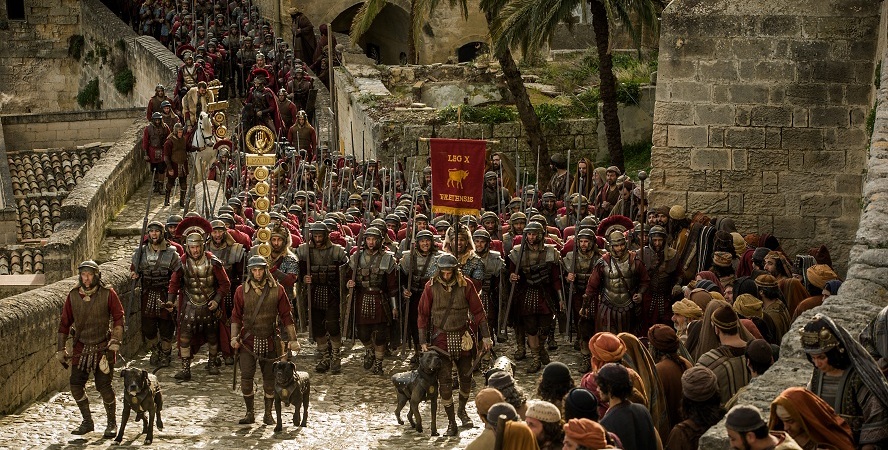
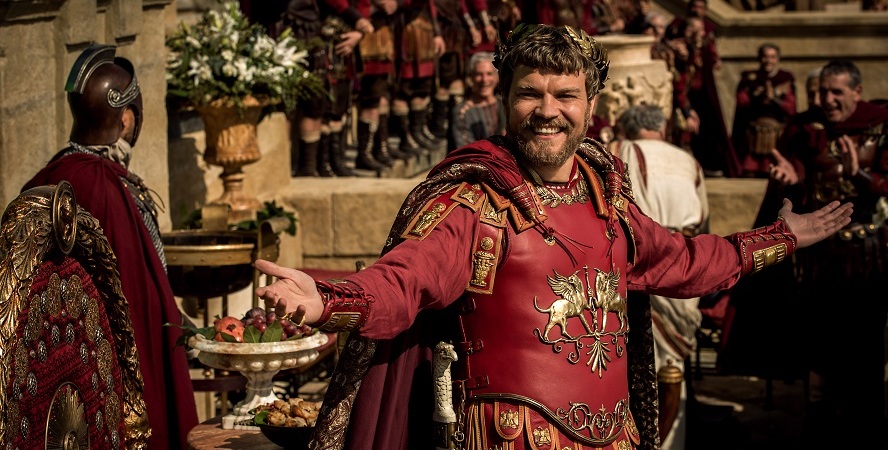
One exception in the first act of the film revolves around the sequences depicting Messala’s service in the Roman army. We see Messala and his cohort fight a number of battles and although we never see more than a couple of seconds of each of these encounters, they left more of an impression on me than anything else in the film. Pretty much everything about these scenes gets the look and feel of the Roman army just right (at least in the popular sense) with beautiful costumes and pretty good camera work. My companion for the screening was particularly enamoured by the shots of legionnaires in their red cloaks fighting in snowy mountains areas. For me, the stand out moment was watching a Roman legion march through the city of Jerusalem as the wide, sweeping shots really reinforced the size of just one of these legions. If Bekmambetov’s has any merit, it’s when he draws the camera back and shows us the action in macro, not micro, perspective.
Audio
The film’s soundtrack is largely routine orchestral fair. There is little which stands out or makes an impact throughout the film. That being said, the film did create a nice soundscape for the scene where the Roman legion marches into Jerusalem as the audio background comes alive with Roman marching songs. My companion for the evening, who is an academic on ancient history, did point out that some of the pronunciation of the Latin in this singing sequence was off but I liked the effect regardless of its historical authenticity.
Overall
Overall, this film was severely underwhelming on almost every measure I could apply. The story was almost completely devoid of dramatic impact due to the lacklustre performances given by the actors. The visuals were nowhere near where they needed to be in order to call this film a cinematic spectacle. The film’s soundtrack wasn’t anything special and is one that I doubt will leave an impression on its audience. Pretty much the only parts I liked revolved around seeing the Roman legions fighting onscreen with little or no personal drama other than the life or death struggle of combat. To that end, I’ll recommend that Bekmambetov be allowed to make a swords and sandals epic focusing on the exploits of the Roman legions… but I cannot recommend that you go to see this film.
For another film which does spectacle alot better, feel free to check out my review of Star Trek Beyond.
Capsule Computers review guidelines can be found here.
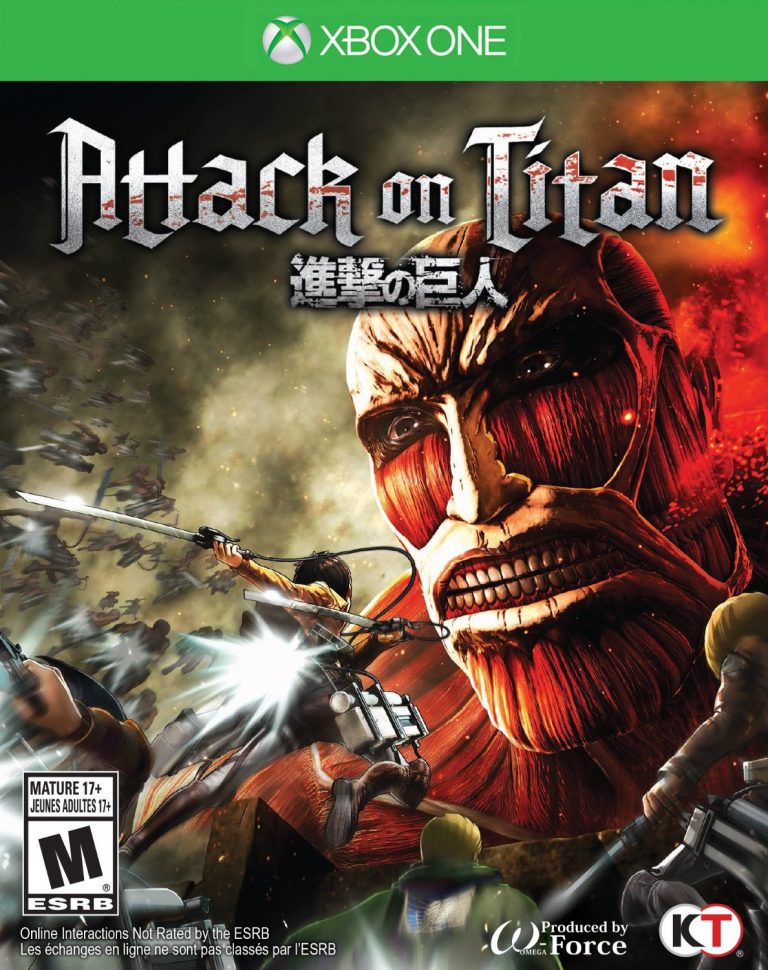
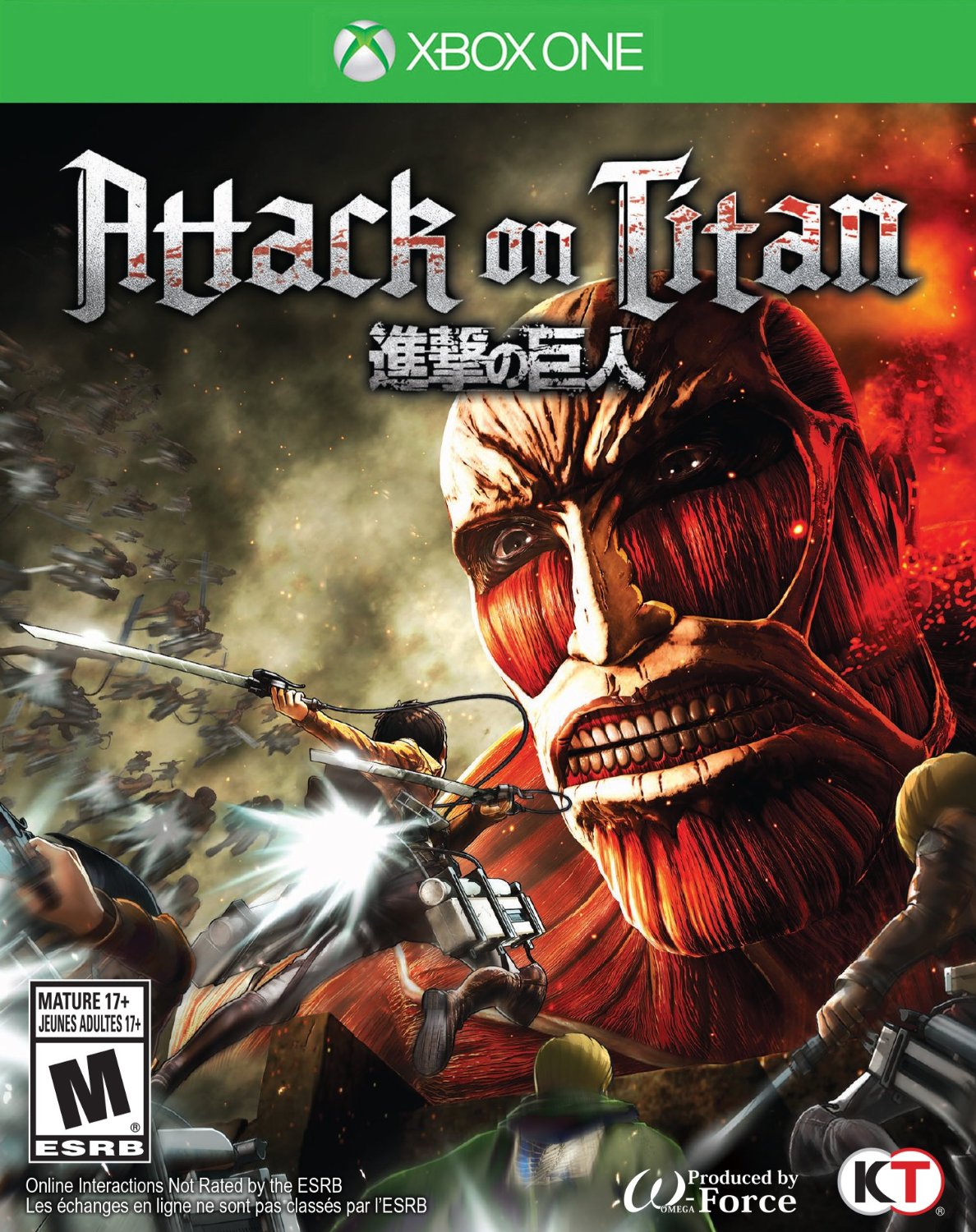
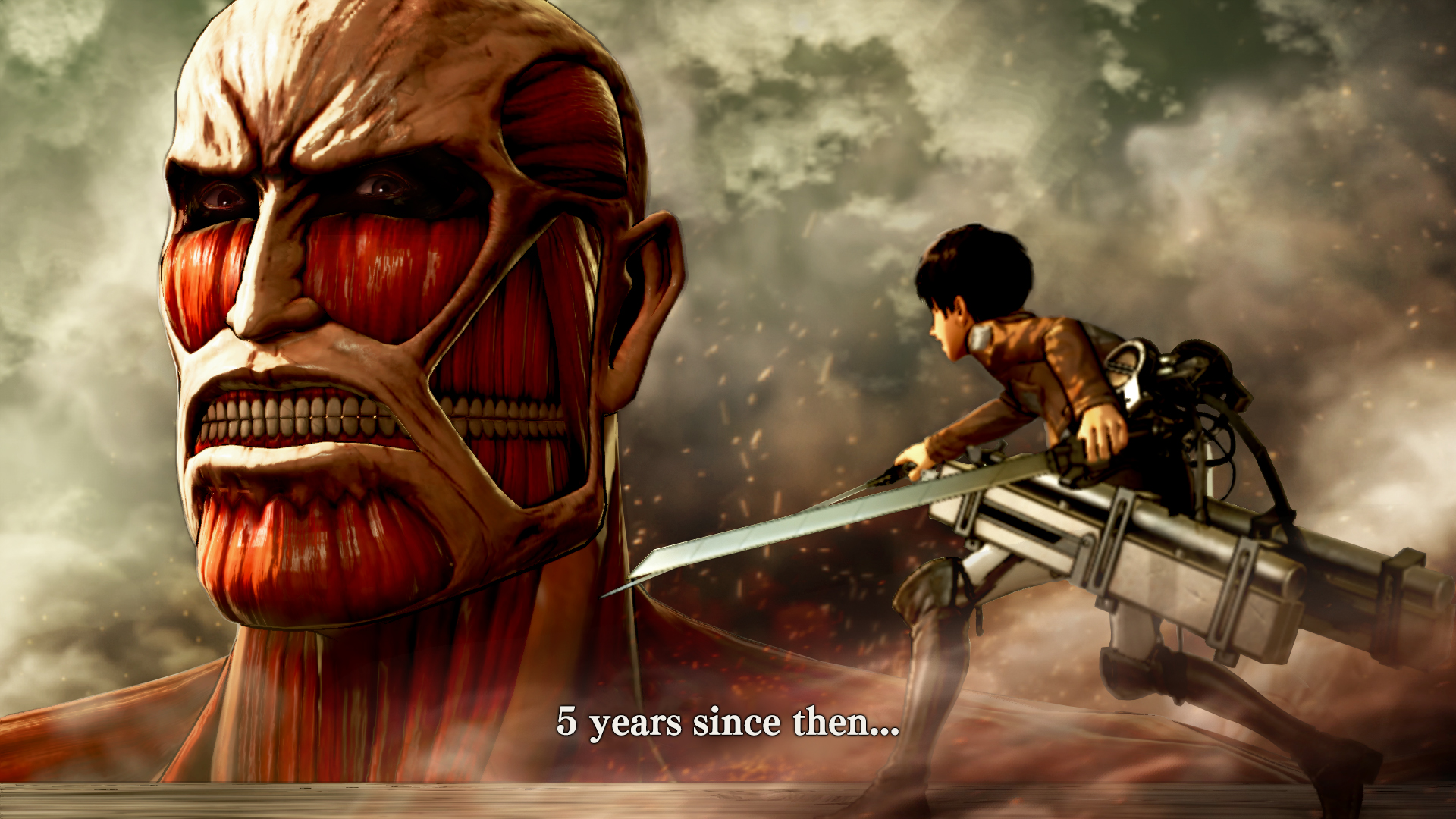 Humanity has lived behind three immense walls that were constructed long before anyone can remember in an effort to keep highly dangerous manlike beings known as Titans from invading the last bastions of humanity. For well over a hundred years very few cared about what happened outside the walls until one day humanity was given a terrible reminder of the dangers existing in their world. With the appearance of a colossal Titan that could see over the walls, the outermost wall was destroyed with one kick and the rest of the Titans, ranging from 2M tall to over 15M began pouring through and eating anyone in sight.
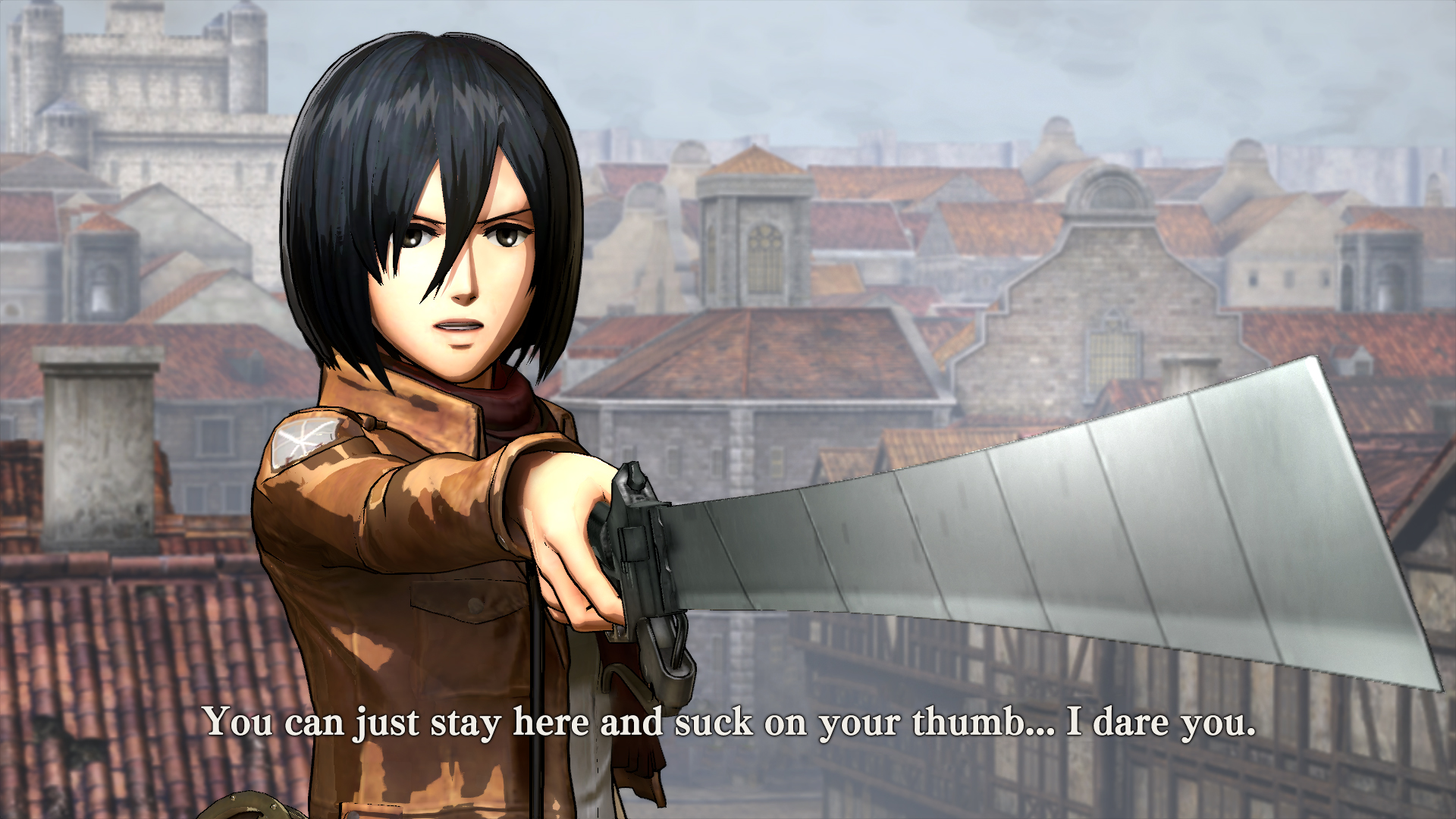 For the most part Attack on Titan does a decent job highlighting some of the most important scenes of the game so fans will definitely appreciate these scenes being recreated but it is also worth noting that for newcomers this is a poor way to experience the story. I say this because while the “Attack Mode” that serves as the story does cover the basics and some of the OVAs that follow Levi’s group, it also glosses over many important events and story details that take place between the larger confrontations. Along those same lines the story mode comes to an abrupt end so those looking for something a bit more substantial to chew on will be out of luck outside of some extra unlockable missions compared to the source material.
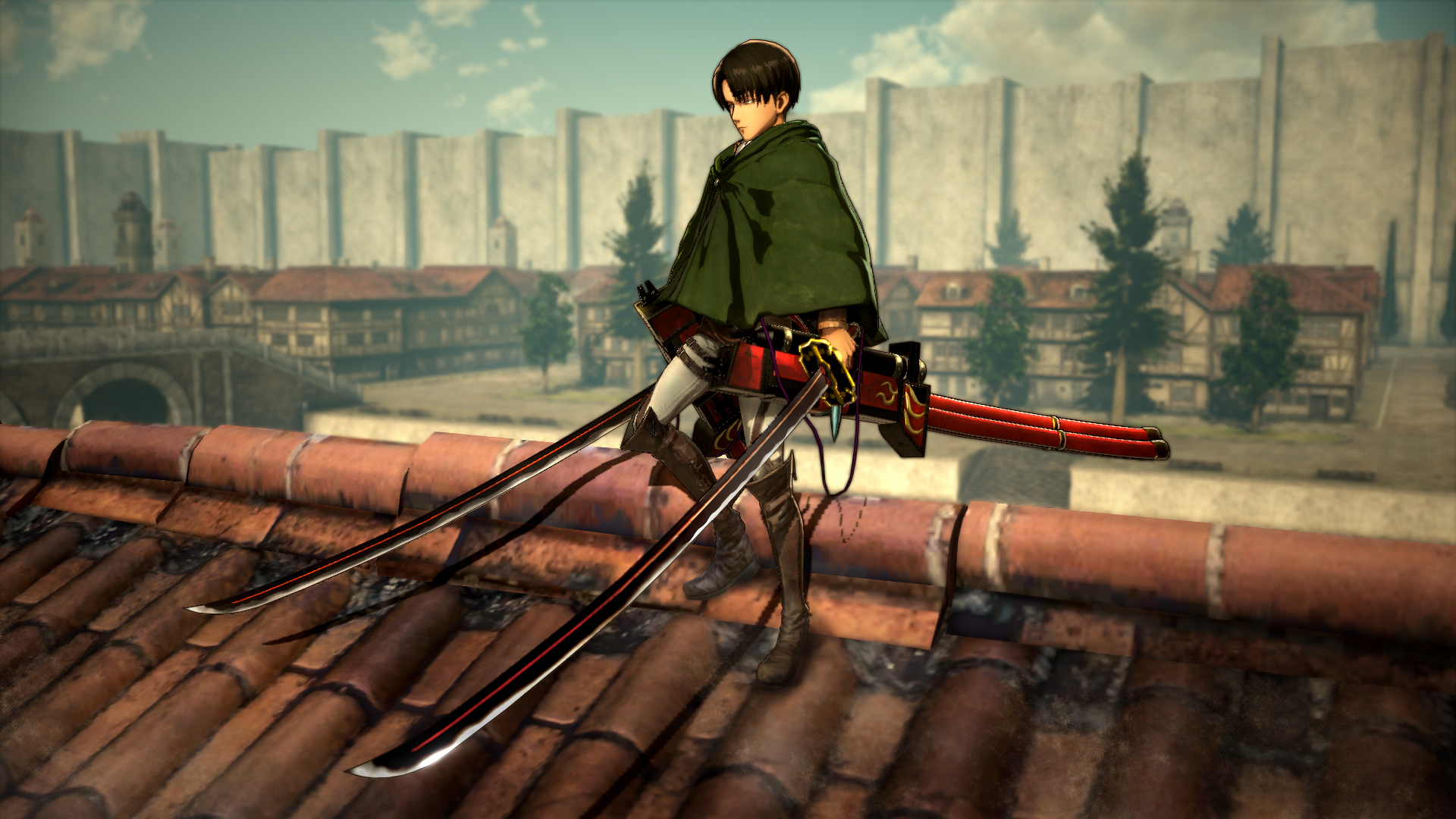 The main tools players will have to worry about keeping upgraded come in the form of their blades, scabbards, and ODM, all of which come in different types that can be unlocked and further improved to increase various stats such as damage dealt, durability, amount of gas and acceleration rate, anchor strength and more. It is also worth noting that some stages place the character on the back of a horse so various horses can also be equipped with higher speed and stamina ratings. It is worth noting that since all equipment is carried over between Attack and Expedition modes and between characters that keeping yourself upgraded is essential.
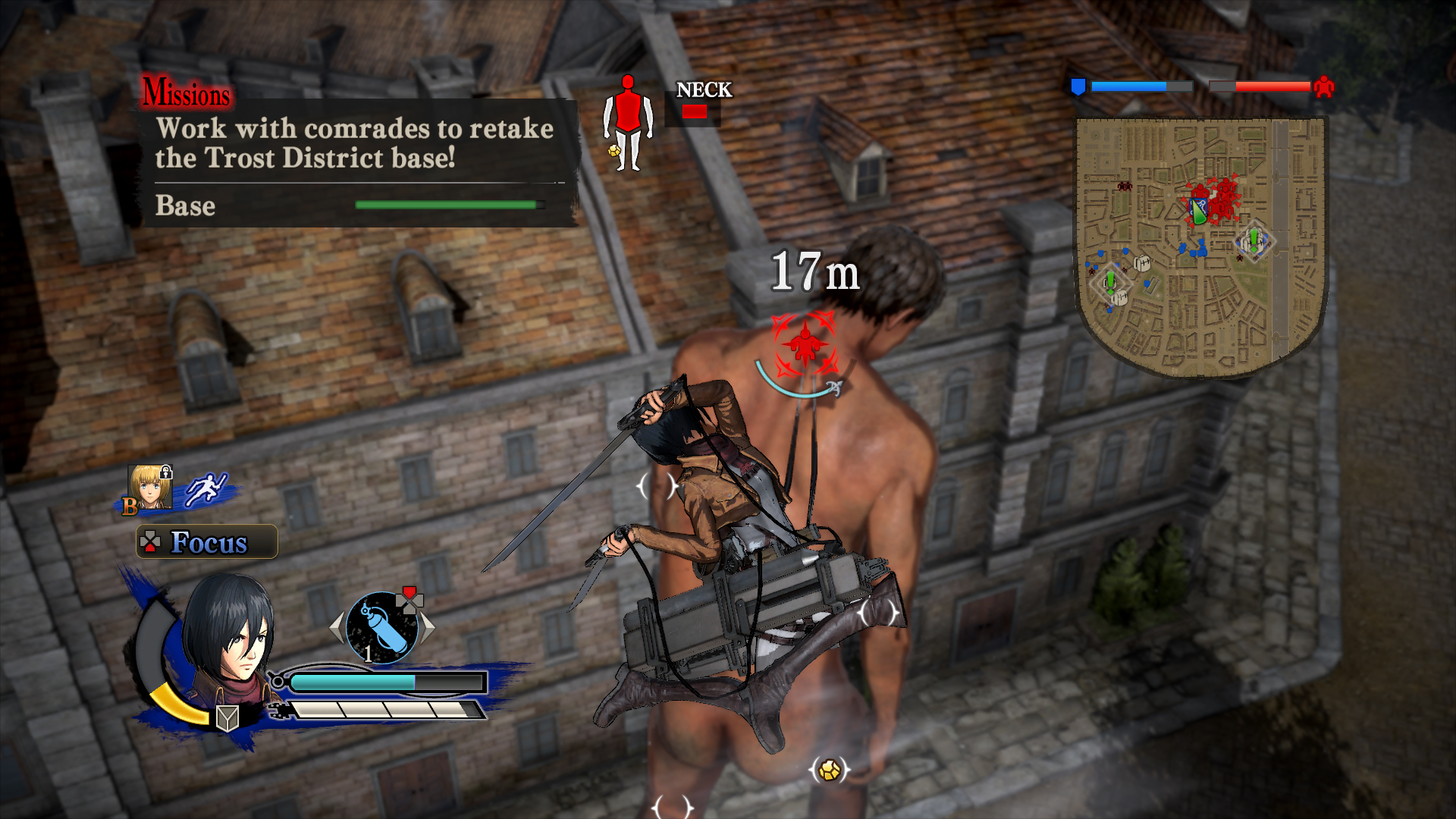 Fast paced movement and strikes are essential to win against more difficult Titans as they can and will regenerate their limbs and even slowly recover health of moderately damaged areas. Although it can be rather difficult to get a grasp of the controls to begin with as the way the ODM controls is a bit unusual to start with, players are worked through the process of learning how to target specific body parts, swap anchors between points, boosting, and more in an effort to teach them the strengths and limitations of their equipment, such as how they cannot be used in areas where there is nothing to grapple to and how the amount of damage dealt to a Titan when attacking is based on speed and targeting.
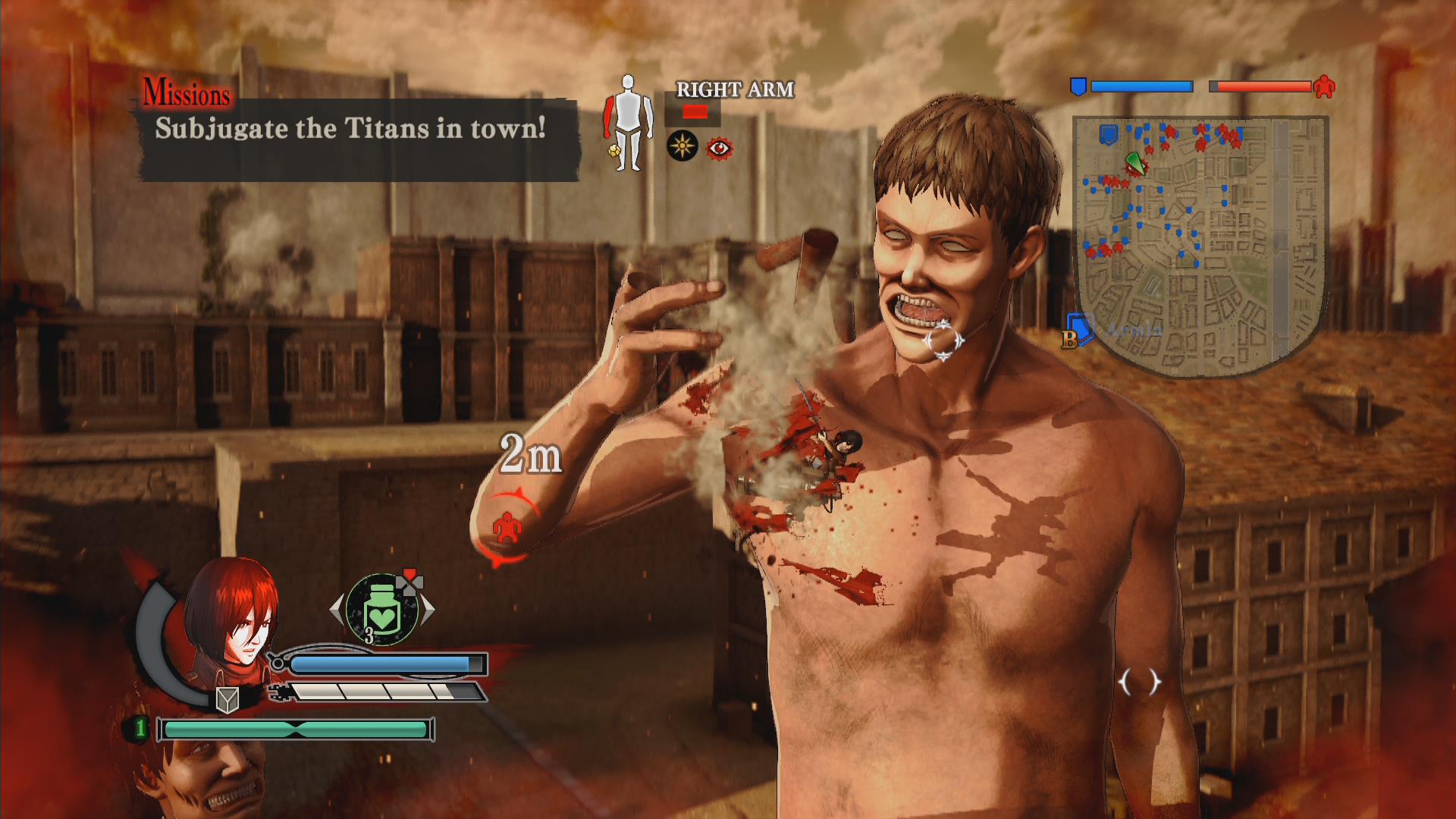 Allied characters in the game also regularly are killed and eaten by Titans though named characters are only displayed as defeated and will leave the field of battle for story sake. This means if the player is running low on blade or fuel refills and a character that otherwise might be able to resupply them is killed, they will be forced to either head elsewhere on the map or hope to loot something useful from a fallen comrade that occasionally appears from a Titan’s vanishing corpse. Speaking of allies, players can recruit common soldiers to join them or complete various side-missions that appear as green smoke signals to recruit named characters to their party that can then be given various orders to Focus, Guard, and Fan Out.
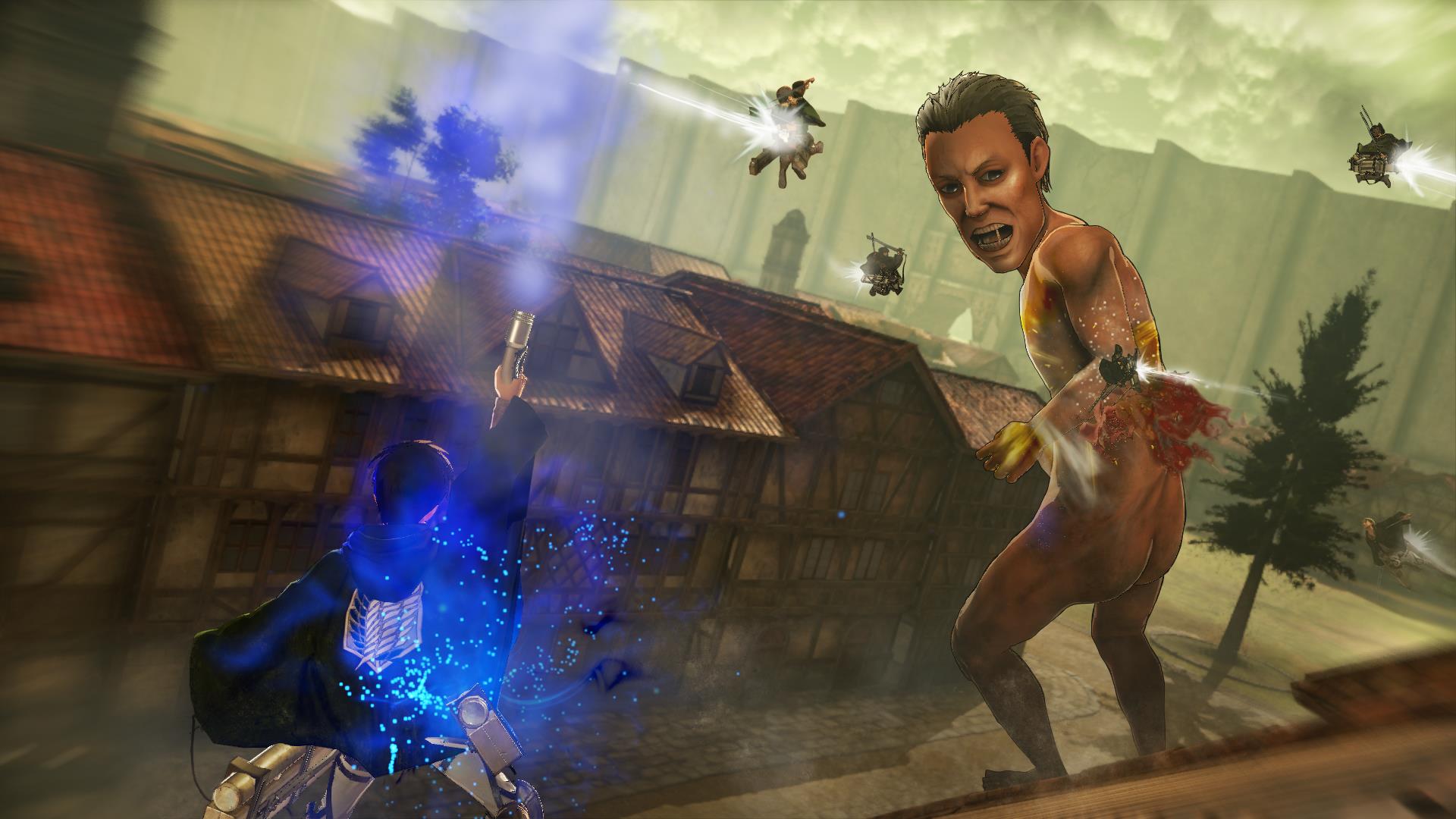 It is worth noting that Koei Tecmo did not opt to provide an English voice track for the release of Attack on Titan but thankfully the Japanese voice actors have all reprised their roles from the anime series which is a great touch for fans. The soundtrack on the other hand does unfortunately miss out on some of the signature tracks contained in the series but does its best to mimic them and often helps deliver a solid fast paced tune to kill Titans to.