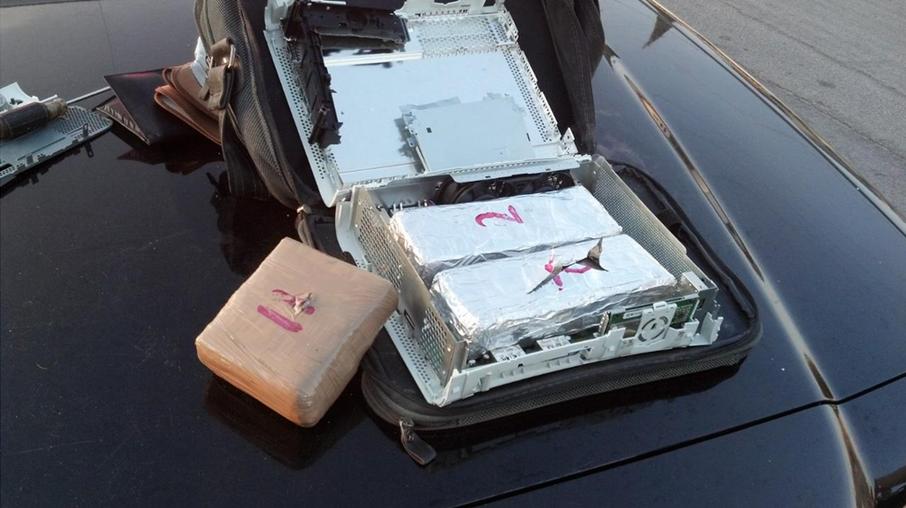
Well here’s a news story you may have missed during the week. Carlos Valenzuela, 42, was arrested in El Paso, Texas in America after he was found with three bundles of cocaine – with two of three bundles concealed inside an Xbox 360.
Police pulled over Valenzuela at a routine traffic stop, after he failed to signal a turn. According to police, Valenzuela appeared nervous and kept looking at a bag on the passenger’s seat. Police found the first brick of cocaine inside the bag along with an Xbox 360.
Police then found the two additional bricks with help from the K-9 unit, concealed inside the Xbox 360. All in all, the total weight of the cocaine was 1.8 kilograms and Valenzuela has placed on a $25,000 bond and has been charged with manufacture or delivery of a controlled substance.
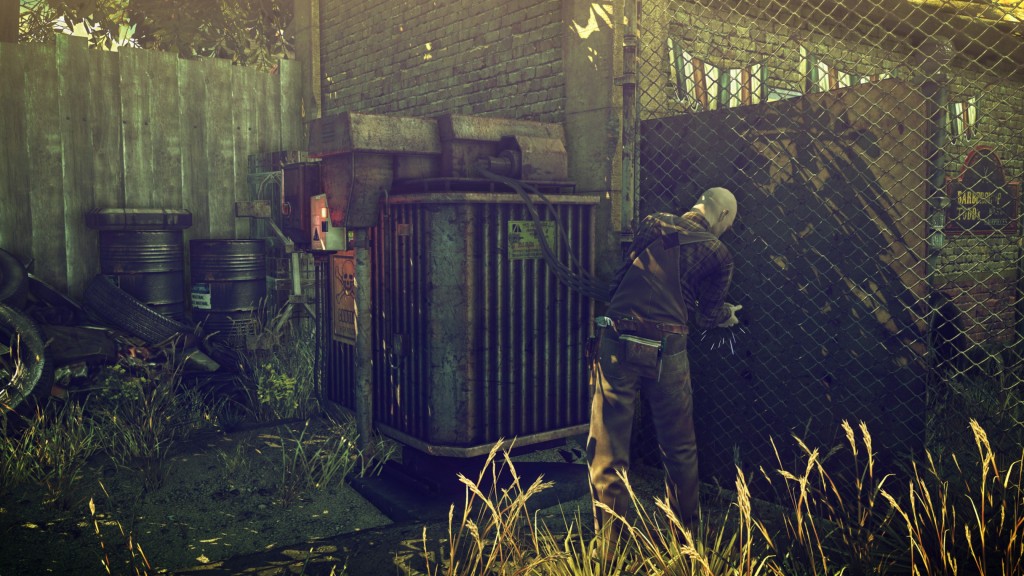
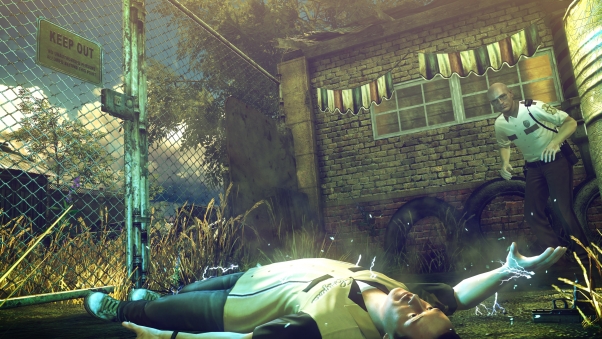
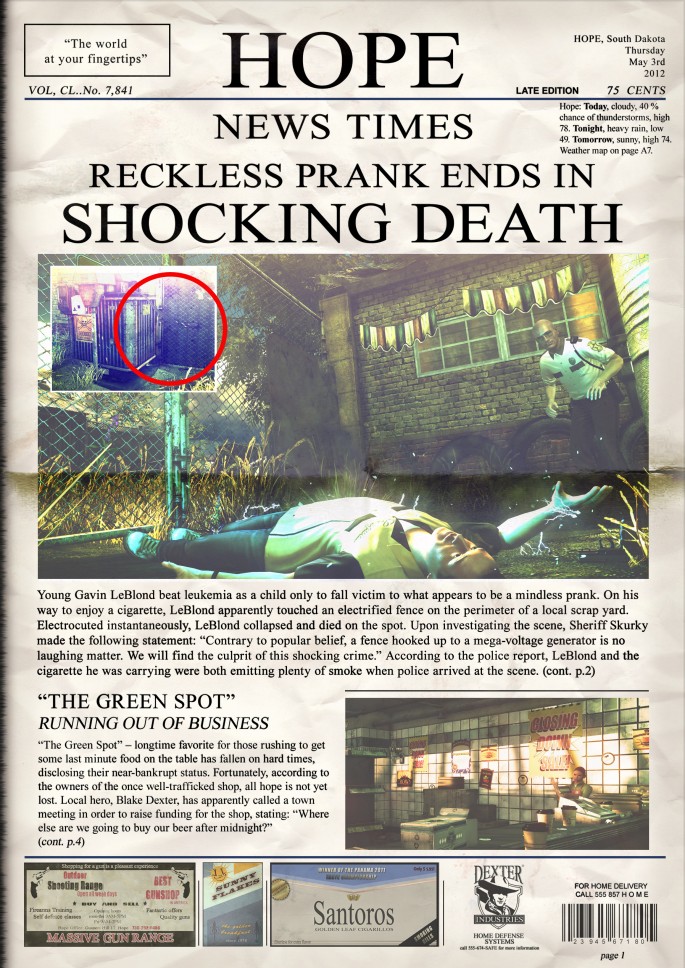
If you’ve been keeping up with the Hope News Times – an in-game newspaper for Hope, South Dakota for IO Interactive and Square Enix studio upcoming Hitman: Absolution. Then you’ll know that reports have come in about a ‘shock’ death of one of its citizens.
The victim may or may not of been killed a suspiciously dressed bold man by the name of Agent 47 *Wink Wink*. But nonetheless, two new screenshots for the latest rendition of the hit stealth action game have today been released along with Hope News Times #3.
Hitman: Absolution is set to be released on Xbox 360, Playstation 3 and PC, and official release date is yet to be announced.
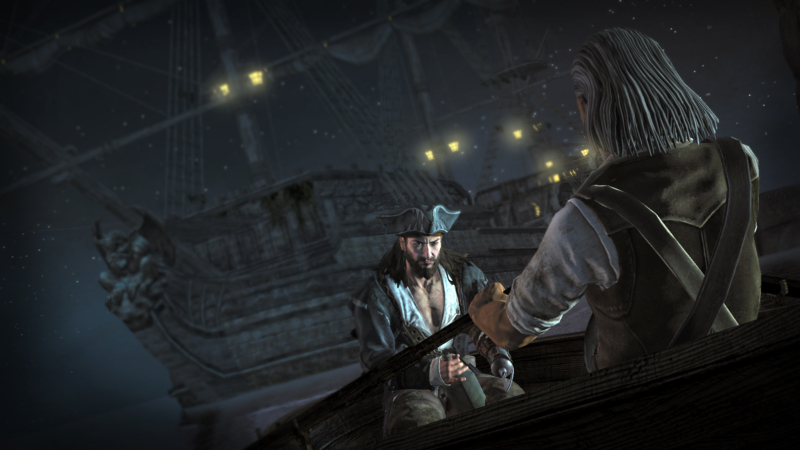
All Interactive Entertainment have recently announced that they are the company in-charge of the distribution of the upcoming game from Topware Interactive: Ravens Cry. The game is a pirates story in the action-adventure genre that promises an amazing narrative.
Raven’s Cry thoroughly immerses players in a lavishly detailed world rich with treachery and adventure. The sinister beauty of the 17th Century Caribbean is revealed in the rolling emerald waves and their secrets, kept far beneath; in the dark alleys and curved, cobbled roads, all teeming with murderous miscreants and loudly drunken braves, the prophets of the bottle, the blade, and the flintlock gun. The historically accurate architecture and in-game events will flavor the three major cities found in Raven’s Cry with the atmosphere players crave, as they traverse from the unsavory pirate holdfast of Port Royal to the elegant avenues of luscious Havana, to a lost Aztec City deep in the jungles of the Spanish Main.
The game is set to be released in Australia and New Zealand in Quarter Four of this year (2012) for the PC, X360 and Playstation 3. It will also feature many things, such as a memorable cast, special abilities, player choice, alternative endings, authentic combat and an action adventure set in the Caribbean.
Be sure to check out the trailer, embedded below for more info.
Awesomenauts Publisher: dtp entertainment AG, Microsoft Developer: Ronimo Games Platforms:Xbox 360 (Reviewed), PlayStation 3 Release Date: 02/05/2012 Price:800 Microsoft Points
Overview:
As online gaming becomes more efficient and user friendly on video game consoles and handhelds, more developers are now jumping in to create compelling and addictive online multiplayer gaming experiences. It’s reached a point where single player content often takes a backseat to a well-designed multiplayer mode in order to ensure that gamers hold on to the game for a very long time.
Independent developers have also jumped in on this opportunity by offering online intensive gaming experiences for a modest sum. The recent digital FPS download title Nexius is a good example. More recently however, an interesting new title by the name of Awesomenauts has appeared on the Xbox Live Marketplace and the PlayStation Network. Awesomenauts is an unique little action game that solely focuses on multiplayer.
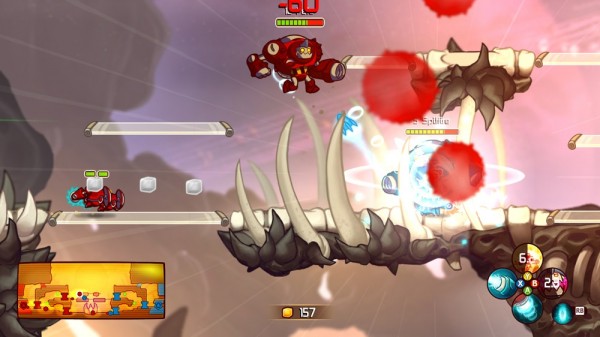
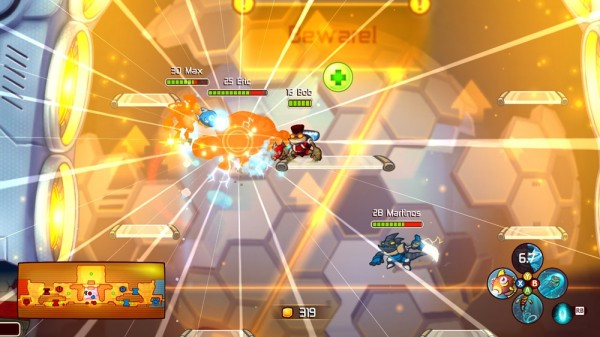
Awesomenauts is a 2D action title that’s classified as a Multiplayer Online Battle Arena (MOBA) and the game takes place in the year is 3578, focusing around a battle between a group of hired mercenaries amidst an intergalactic war.
Visuals and Audio:
Awesomenauts is a pure 2D sprite-based video game with some 3D effects thrown in. Almost everything is sprite-based, and it looks very nice since it’s all pretty much high resolution 2D with some fluid and consistent cartoon-like animation. The particle effects look nice too and mix well with the 2D look. The art style is pretty cool too, and although the character designs are nothing unique or special, they still have comic book style and personality to them. The backgrounds however, are a bit simplistic in nature and don’t have much artistic flair to them. There is nothing to write home about in terms of the game’s audio. It’s pretty much serviceable as the explosive sound effects and tunes compliment the crazy action-packed sci-fi nature of the game.
Gameplay:
When you first start playing Awesomenauts, the game opens up with what seems like a story-based mission. It has an intro where this space cowboy is sent by his alien employer to destroy an enemy base. You quickly realise that the mission is nothing but a tutorial to simply run you through the basics and get you prepared to what the game is solely about…the multiplayer.
It’s a bit of a shame that the game lacks a compelling single player quest, because as you’ll see in the rest of the review, the game has all the right elements and components for a very enjoyable single player quest. A proper story mode would have been great, as the gameplay mechanics really could have allowed for a compelling experience.
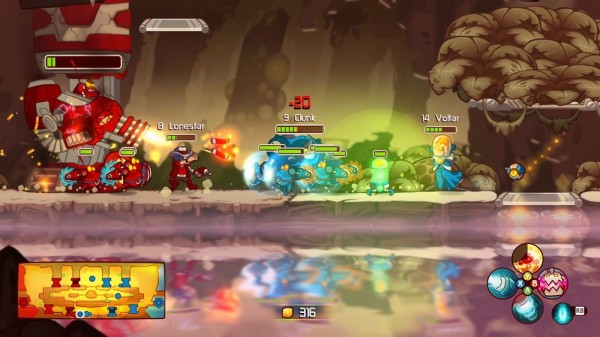
Awesomenauts is a Multiplayer Online Battle Arena game where two teams of mercenaries battle it out, and to win a team must destroy the opposing team’s ‘drillcore’. So in a way, it’s like a tower defense game with heavy emphasis on 2D action.
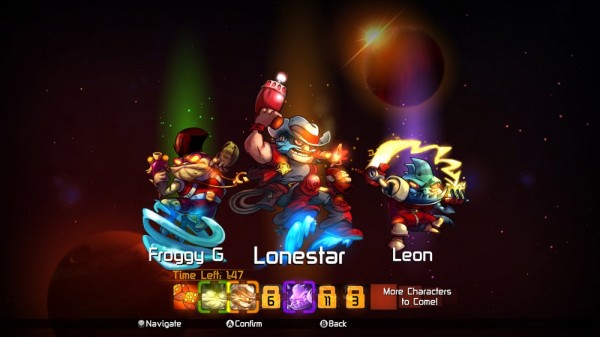
Players can chose between one of six mercenaries, and work with other human players as a team against others. Each mercenary offers a unique 2D action experience, with their own set of abilities and vast number of upgrades. There are more characters to be added to the game in the future but for now the selection is good enough. The characters range from a space cowboy who handles a lot like Megaman, and this lizard like alien who uses close range combat techniques.
You work with other human players and at times A.I bots in frantic battles that also include weapons like battle droids and turrets. You also collect coins with which you can purchase numerous new upgrades and weapons for your character from the store during battle. The game can get very strategic, as it requires careful use of each character’s play style and working well with your team members to take down the opposing team’s base. As well as careful utitlisation of the droids and turrets, and even use the layout of the map to your advantage.
The mechanics actually work really well, and it essentially feels like a 2D action platformer in a somewhat similar vein to the Megaman games, but of course the focus is one team based combat instead of actual action platforming, although the general feel of that genre is present.
The online functionality works really well, allowing up to six players to play against each other in teams of three. At this stage it’s very easy to find the right number of human players for an online session, and it allows players to basically drop in and out of a battle at any time. The game also supports local multiplayer.
While the multiplayer mode is a lot of fun, it’s still a case of where it’s forcing players to just play online and nothing else. It makes the game feel rather limited and some more content would have helped in familiarising players with the wealth of weapons and upgrades that this game has on offer, before forcing them to jump straight to online multiplayer.
Overall:
Awesomenauts is really good at what it does, and offers a surprisingly deep and strategic team -based gameplay that makes interesting use of traditional 2D action platformer mechanics and conventions. The variety in characters and their play style, as well as the wealth of un-lockable skills and upgrades for each, makes it a very enjoyable experience. That being said, it would have been great if more single player content was added to benefit from these mechanics and features. As is the case with most multiplayer-only titles, Awesomenauts survival is contingent upon a consistently active community, and one can hope that this unique multiplayer title can reel players in with enough content and community support to keep them hooked.
It’s no secret I’ve been addicted to The Binding of Isaac. It started during Steam’s huge Christmas sale, when I picked up the game for $1.50 – and then spent 75+ hours on it over the following months. At 2 cents per hour of entertainment I’ve gotten out of it, you simply won’t find a better deal than that.
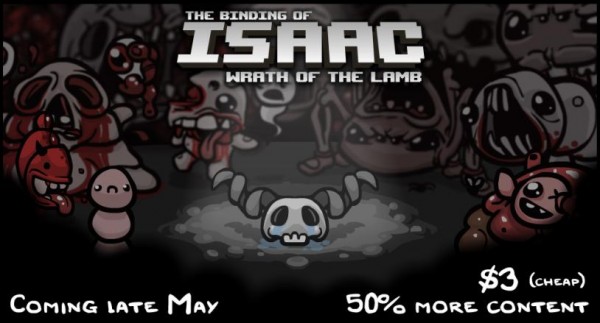
Except, you will. Come May 28, a measly three dollars will expand the game’s already-abundant content by an extra 50%.
Co-creator Edmund McMillen detailed the upcoming expansion, Wrath of the Lamb, via Twitter, before his Twitter account mysteriously shut down. The details are still doing the rounds though, having been saved and spread by fans, so hopefully the info is still reliable.
Apparently, McMillen stated that the expansion will add more than 100 new items, an extra 10 bosses, 20 enemies, 4 chapters, 1 character, 6 rooms, 40 “unlocks”, 4 music tracks, 5 cards, 4 pills, 5 ultra-rare pickups, 7 unspecified “random happenings”, 10 challenges, a metric “buttload” of new achievements, and a new, supposedly final ending.
Seriously, I’m not going to have any time for any other games after this. If you haven’t played the game at all yet, give it a go. It’s a fantastically addictive, randomly-generated RPG with a dark, humourous style to it. Check out the expansion’s announcement trailer below, for an idea of what to expect.
There are some that say that video games need to tone it down a bit. And there are some who respond by shouting obscenities, chainsawing the naysayers in half and speeding off on a jetpack drill.
Sega and Arkedo Studio’s upcoming title, Hell Yeah! Wrath of the Dead Rabbit, looks set to feature all that. And blood. Lots of blood.
Little was known about the game besides its obsession with excessive violence, but a new gameplay trailer has revealed a bit more about how it will play.
This is one we can’t help but keep an eye on – the game simply won’t let us ignore it.
Not everyone wants their beautiful iPhone encased in a thick bulky battery case or maybe you tote around an iPhone and an iPad but don’t want to use two separate external battery cases for both device. LUXA2 has solved your problem with their new P1 external battery. The P1 sports a 7000 mAh battery with two USB ports meaning you can charge two separate devices at the same time. Compare that to the 1500 to 1700 mAh most external battery cases sport these days! 7000 mAh is enough to fully recharge the iPhone battery three and a half times. The P1 is just a little bigger than an iPhone 4/4s and extremely light weight. It takes eight hours to fully charge the battery and has four LED lights so you always know how much juice is left. The battery pack also comes with an Apple authorized 30 pin dock connector so you can leave one cable at home attached to your computer and still have one to travel with. No word on pricing, but the P1 will soon be available at a store near you.
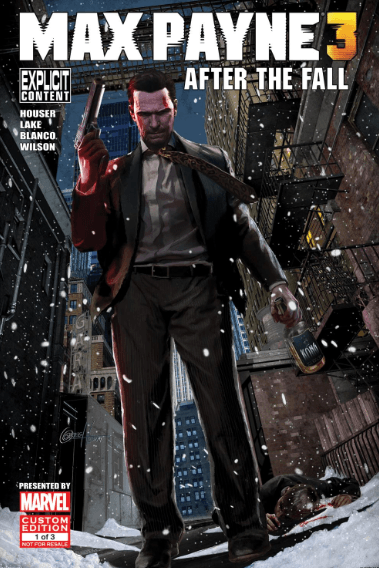
Max Payne 3 Issue #1: “After the Fall” is out now for your reading/viewing pleasure. The comic book is written by Dan Houser and Remedy’s Sam Lake, and features cover art from Greg Horn and pencils and inks by Fernando Blanco. The three part series will delve deep into Max’s dark personal history, and “After The Fall” features characters from all three Max Payne games as the series weaves together events from various points in Max’s life.
Max Payne 3: “After the Fall” is a free download via the Rockstar Newswire, the Max Payne 3 Official Site and additional digital comic channels: Check out the link here to read it online at Marvel.com.
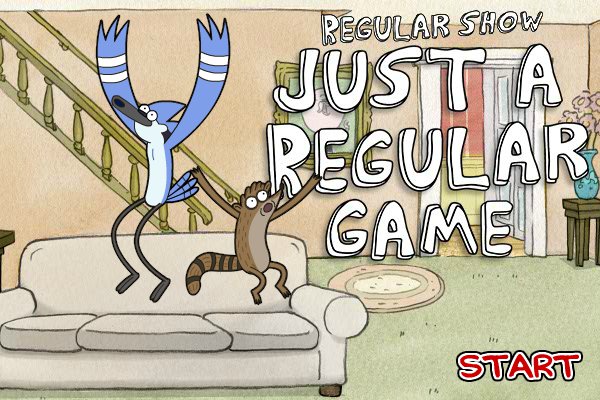
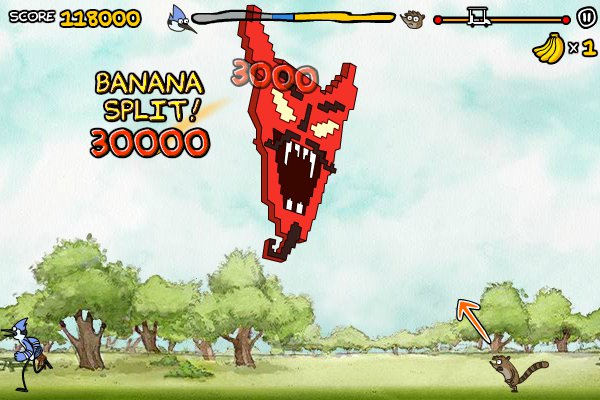
Regular Show: Just a Regular Game Developer: Cartoon Network Publisher: Cartoon Network Price: FREE – Play Game Online Here
Overview:
Regular Show is one of those absurdist humor shows that has been popular in recent years. A rag tag cast of characters that can have any type of adventure, that despite its name might indicate, is anything but regular. So, what exactly can be made out of a show like this? Pretty much anything, actually. The question really comes down to if the game is worth spending the time, as that is about the only thing it will cost.
Story: Regular Show: Just a Regular Game is actually based in part off of parts of two different episodes of the show. But, that really only provides the idea for what to do in the game as the story is completely straight forward and presented to the player in the instructions/introduction of each section of the game.
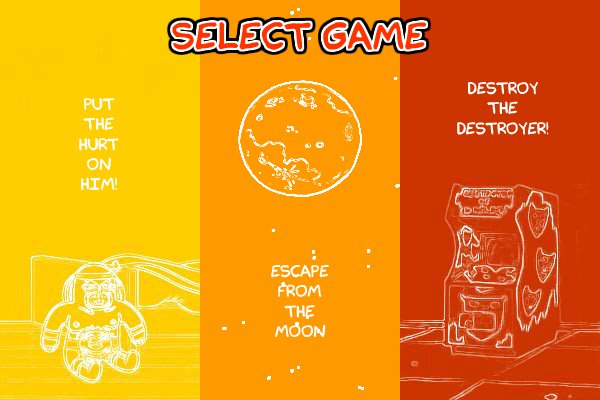
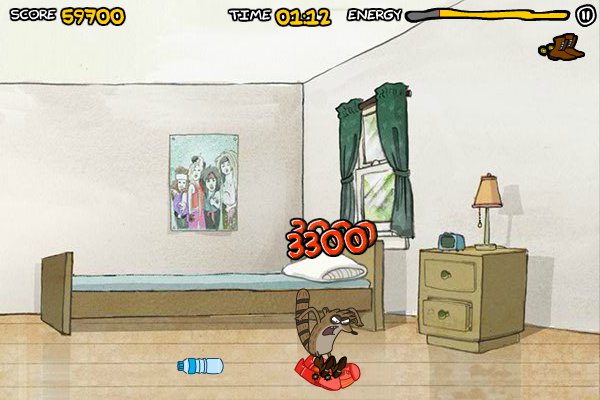
The first part of the game, “Put the Hurt on Him!”, is based off the idea of bouncing Rigby off a trampoline as seen in “The Power”. Of all the parts this is the smallest of all the stories in the entire game, as the goal is to attack Beef Burrito to get revenge for saying bad things about Rigby’s mom and simply ends when the timer expires.
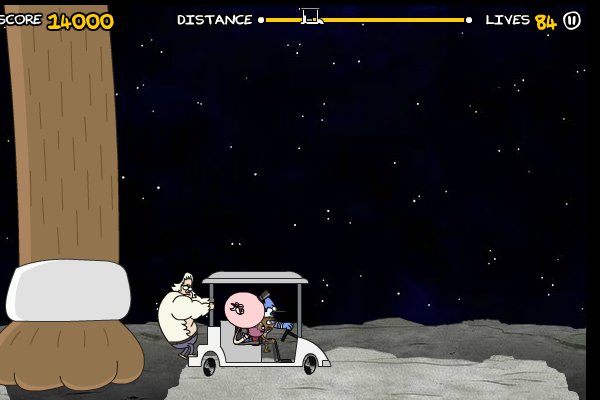
The second part, “Escape From the Moon”, is also based off of “The Power” and features multiple characters all riding in a golf cart to escape the Moon Monster. This part actually has a resolution if players can make it past all eight stages, which can be a little confusing if players haven’t seen the episode to know that a keyboard was the MacGuffin, but given the nature of the show isn’t really anything a fan might not accept.
The final part, “Destroy the Destroyer!”, comes from the episode “Just Set Up the Chairs” and features Rigby and Mordecai fighting the aforementioned Destroyer, until help can arrive. Of all the plots this one is probably the best as it has the most satisfying conclusion of them all, but that isn’t really saying much.
Gameplay:
Each part of the game features a very different style of gameplay, of which the only connecting attribute is being completely controlled via the mouse. “Put the Hurt on Him!”, has the mouse dragging the trampoline into the right position to hit Beef Burrito, clicking on Mordecai to throw Rigby, and seeing if Rigby does impact. There is a time limit to keep the game from going too long, as well as an energy bar, but that takes almost to long to run out against the clock. Getting combos allows Rigby to pick up extra items to attack with and get more points, but missing will forfeit these items. This takes a little bit getting used to establish the best placement throughout the room, but the game is a bit forgiving, so generally isn’t overly difficult.
“Escape From the Moon” features the mouse controlling the golf cart’s position on the screen and clicking to jump over obstacles. With eight stages it is the lengthiest of all the parts of the game, and even includes a suitable difficulty curve as the part progresses. The golf cart must jump over holes, crashed ships, and boulders, but jump into items and UFOs to crash them for points, while also avoiding the slamming fist of the Moon Monster. The game is forgiving enough at least to provide 99 lives to aid in making it all the way through stage eight though , so players it’s more of a matter of time getting a good run through each stage though could understandably be too tough for some.
“Destroy the Destroyer!” has the player using the mouse to aim at where to throw objects at the Destroyer and clicking to actually throw them. It also has a second stage once help has arrived for Mordecai and Rigby, where players control a giant conglomeration of arcade video games by using the mouse to aim auto-fired attacks at the Destroyer. The first stage has two special attacks that randomly drop, bananas and grenades, where bananas are thrown in bunches of three that split and can even hit more than one spot at a time and grenades are simply more powerful. After getting distances and timing down this isn’t too hard and for the most part is only really time consuming.
Audio & Visuals:
The music and visuals fit the show about as perfectly as a flash game can. Each part of the game does feature its own music and fits within the tone of the part itself, from the frantic escaping of the moon to the epic fighting of the Destroyer. Voice acting is pretty minimal, only really being clips from the show itself and nothing for anything other than quick bursts that players would simply be expecting sounds for. The visuals of the game follow the art style of the show completely, which isn’t hard as cartoons are fairly easy to convert into flash. The only real downside to the visuals is that there does seem to be a lock of assets, but there are enough to be satisfying, just more might have been able to be done.
Overall: Regular Show: Just a Regular Game is interesting and certainly has a good chance of having something players might be interested in. It goes more of a shotgun route to game content by providing several different experiences, though none are necessarily overly fun however. It’s a solid time waster, all the different parts at least give the impression of accomplishing something, though it doesn’t really offer anything lasting. Fans of the show would probably get the most out of it as a way of reliving those small aspects of the two episodes or a means to spend more time around the shows characters.
As my Steam stats will confirm, indie games are filling a larger role than ever in the current industry. I clocked in a measly 3 hours in the AAA zombiefest Dead Island, while Edmund McMillen’s The Binding of Isaac has claimed more than 50 hours of my time. Despite being generally smaller titles, they usually seem to hold my attention for much longer.
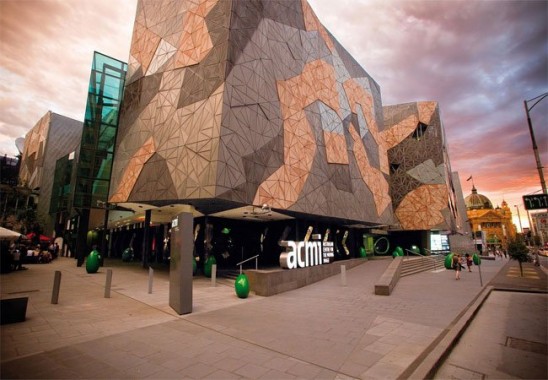
If you’re the same way, or are simply interested in seeing what this whole indie game fuss is all about, there’s a fantastic selection available to try out for free right now at ACMI in Melbourne.
The Best of the Independent Games Festival (IGF) is a small exhibition running until July 8, which showcases some of the winners and notable games to come out of the IGF this year. Some of them have become commercial success stories, some are hidden gems, but all are unique interpretations of traditional formulas.
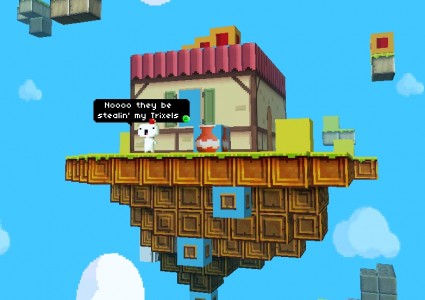
Perhaps the centrepiece of the exhibition is Phil Fish’s Fez (say that ten times), which has been in development for five years, and winning awards for almost as long – including the 2012 IGF Grand Prize. The central mechanic of Fez is to swap your perspective between 2D and 3D: a level can be rotated 90 degrees left or right, which brings elements together in different ways and may open or close paths to the player. It’s like playing a game wrapped around a Rubik’s Cube.
Fez was released on XBLA a few weeks ago to unanimously positive reviews – unsurprising for a game whose impact has been felt long before it hit the digital shelves. It already has a series of accolades under its belt, and the story of its production featured in the documentary, “Indie Game: The Movie”.
Another entry has reignited the whole “What the hell IS a game, anyway?” discussion: the quietly moving, minimalist Dear Esther.
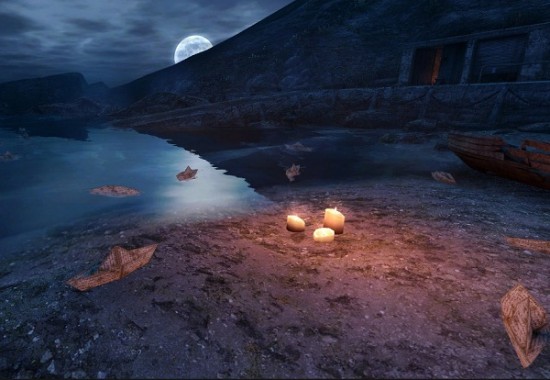
Players (for lack of a better word) simply wander a mysterious island, listening to narrated diary entries addressed to the titular Esther, and taking in the beauty the environment has to offer (which won the team the award for Excellence in Visual Art). There’s no jump button, nothing to pick up and use, no combat. Your only interaction with the game is to move, to see, and to piece together the story from letter fragments.
It’s been described as the video game equivalent of a poem: it only takes an hour or so to finish, but repeated play-throughs yield different results. There are different diary entries the second time around, and you may spot other things that reveal more, but never fully solve, the mysteries of the island. Keep an eye out for shadowy figures as well: people have reported ghost sightings at various points, but they aren’t your typical horror game jump scares – they’re subtle enough that many players miss them entirely.
It’s a fascinating exploration of the medium’s narrative and emotional potential. The fact that it has sparked debate over whether it’s actually a game or not, based off a set of criteria of “gameyness”, shows how limited our definition of “video games” is. Rather than throwing in scores, combat, and whatever else is “required” to make it a “game”, Dear Esther is what it is, and that’s how it should be. The definition should be altered to fit the product ascribed to it, not the other way around. Video games will never evolve if we force them to stick to tried and tired old conventions.
Whether or not you call it a “game”, Dear Esther is an important experiment, and one you’d do well to check out.
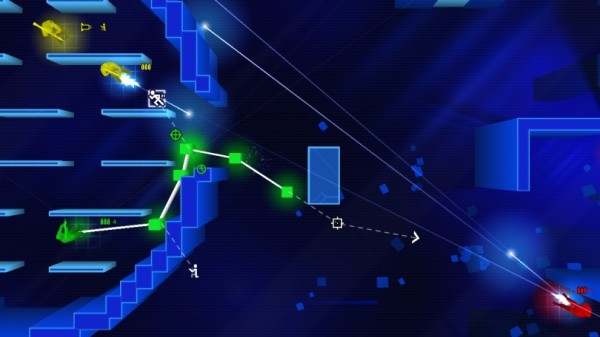
That’s not to say that developers won’t find fascinating things to do within the comfortable confines of video game conventions. Frozen Synapse borrows elements from a few classics, combining the familiar in an unfamiliar way.
It’s a twist on the old turn-based strategy game: instead of players alternating turns, all players simultaneously plot their next turn, submit them, and then watch how their actions intertwine.
The game has a dynamic somewhat like chess, forcing you to consider the potential moves your opponents might make, and use that to decide where to position your own pawns.
For example, you might assume an enemy unit will move down, so you pre-emptively send someone to cut him off. You have the unit crouch behind cover, and assume that when the opponent comes past, you’ll be able to take him out. But when the turn plays out, as you get into position, he goes around a corner, and comes at you from angle you hadn’t expected. Suddenly the cover you took is useless, leaving you vulnerable from behind.
There’s a plethora of options for movement and combat, and using them all effectively creates a level of strategy deeper than most. Without the immediacy of real-time strategy, players must plan their actions several turns in advance. Watching your well-laid plan unravel in a single turn, and being somewhat helpless to stop it, is more exciting than having the ability to call it off mid-execution.
Frozen Synapse has been out for a while now, so if you missed it, it’s worth looking into for strategy fans. It’s on Steam for the very reasonable price of $25 – which includes an extra copy for a friend, so you’ll have someone to play it with.
These are just three of the games on display at the Best of the Independent Games Festival exhibition. Head along to ACMI to check out the others, including the beautifully detailed point-and-click adventure Botanicula; the “ninjanitor” action of Australian-made parkour platformer, Dustforce; the touching, story-driven RPG, To The Moon; and the rhythm-based stealth of Beat Sneak Bandit.