
Home Blog Page 4708

Interview with Mamoru Hosoda

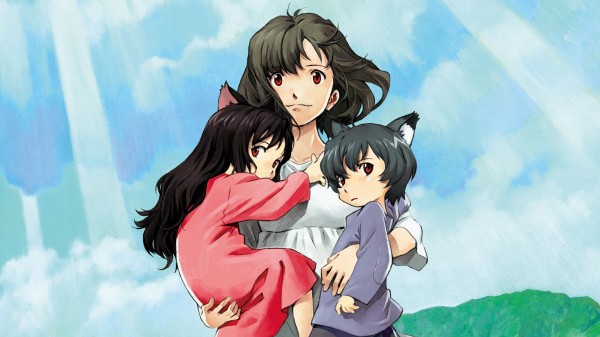
wolf-children-02
Studio Chizu’s award winning animated film Wolf Children is screening throughout Australia this month. Thanks to Madman Entertainment and the Japan Foundation I was able to sit down with the director of Wolf Children himself Mamoru Hosoda to discuss the film itself, his thoughts on film-making, Studio Chizu, what he would like to adapt into a film and much more. Read on for our interview with this remarkable film-maker.
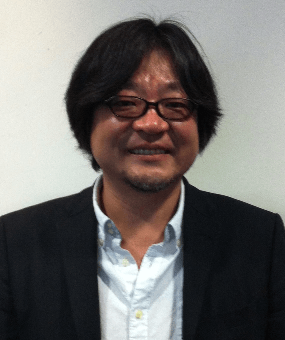

Mamoru Hosoda
Mamoru Hosoda

CC: First of all I just want to say, Wolf Children is an incredible film. I found it to be very thought-provoking. I’m wondering what is your philosophy on film-making and what do you set out to achieve when making a film?

Hosoda: If you look at the films I have made, The Girl Who Leapt Through Time involves time-travel, Summer Wars involves a kind of cyber-punk mind-set and with Wolf Children it involves a wolf man. So there is something to do with sci-fi or horror in all the films I have done so far, but I’m actually not really looking specifically to that.

It is more to do with everyday life slipping into a different feel or a different understanding. I think that’s what I’m really interested in.

CC: I’ve also got to congratulate you on the success of Wolf Children. It has won the Japan Academy Prize for Animation and it has also reached a global audience including right here in Australia. How do you feel about such recognition for your film?

H: The film is set in rural Japan but in many many ways I feel this film has a very ubiquitous quality that lends itself to the world. Everyone has a mother – the film is about child-rearing – a mother looking after her children. Everyone can remember their own childhood, so with that I feel there is something about this film that actually translates to the world very easily and readily.

CC: So would you consider this a family film?

H: I guess a lot of fathers and sons, mothers and daughters and of course children, went to see this film – as well as boyfriends and girlfriends who could possibly imagine what it would be like to get married, settle down and have kids. In some ways it is a family film but I think it actually has something a bit broader than that going for it.
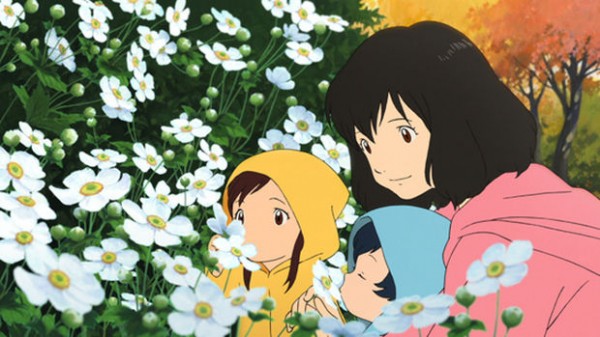
Wolf-Children-4

CC: I actually watched this film with my own family. I found it interesting that we each related to different characters. Was it your intention to make this film relatable on multiple different levels?

H: It is good that everyone relates to different characters. The main character is obviously Hana the mother, so that is one way of looking at it. But for younger audiences I’d like them to see it as Ame and Yuki growing up and the choices that they make, whether they return to nature, embrace civilization or what kind of compromise they come to with these sorts of things.

It is very good that the film can invite people to have different investments with the characters. So which character did you relate to?

CC: I actually related most to Ame.

H: I can understand that. Here we are talking about a movie, you must have run off like Ame! [Laughs]

CC: I must say, this feels like a very personal film. Could you please tell us what inspired this particular story?

H: What I wanted to do was make a film about child-rearing. If you look at the history of film, there actually aren’t many films to do with child-rearing. Partly because there isn’t anything inherently cinematic about that I guess. So I waited for something that I could hang child-rearing on.

I happened to meet a young mother who likened her children to having monsters and wild animals in the house. I thought that it was actually very good and wondered what if it wasn’t just a metaphor, what if the character actually was raising wild animals in the house, that might be fun. So that’s how it came to be the way it is.

CC: So this is where the idea of the wolves came from?

H: Yes it is. Do you have this metaphor in Australia that young children are like monsters?

CC: Yes we do. I think everywhere has it – the whole world. [Laughs]

H: [Laughs] I see!
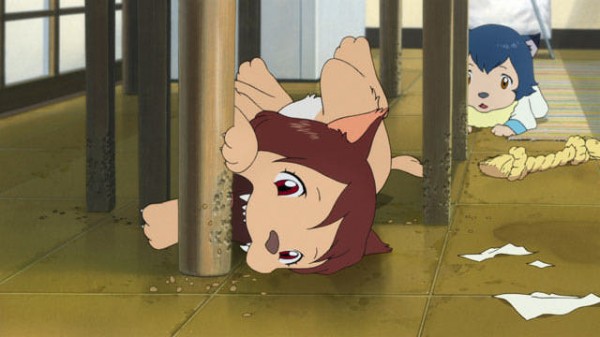
wolf-children-01

CC: Like many of your films, Wolf Children has a female protagonist. What is it about female protagonists that interests you so much?

H: I think it is because the life of women offers up many life choices that can become subjects for films. You look at the life of a man, most of the time it is about winning and losing. You win this, you lose that, but you come back and win. But a woman actually has very concrete choices to make, like who will they marry, will they have children, do they stay in the workplace. The life choices that come up actually offer themselves up as very interesting for film.

CC: This is a very beautiful film. It has a very distinct art style, much like that seen in your other films. How important do you feel the art style is to an anime film or anime series?

H: That is animation by its very nature, everyone draws and paints what they think is beautiful. It’s there inevitably, nothing ends up there by accident. What ends up there is what everyone thinks is beautiful. We spend a lot of time drawing these things, so the reason the beautiful things come to the forefront is because we are all so invested in the process. I have to tell you, we draw a lot of drawings. I don’t think we could do it if we were aiming at ugliness. We sit around a desk for 3 years just drawing away. [Laughs]

CC: So was this film mostly hand-drawn, was there CG or photography used?

H: We value the lines and the sense of analog drawing very highly, so that was the first thing we had to get under control. If you look at the CG we did for this film, it is actually using a fair amount of computing power to generate a hand-drawn feel in sequences that involve trees swaying in the wind or grass moving in the breeze. These kind of things we actually applied a lot of computer graphics to make it look like hand-drawn images.
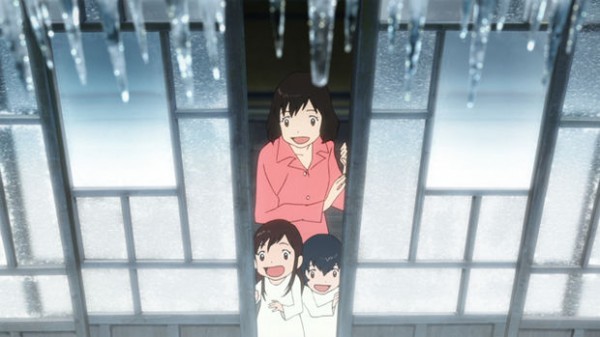
Wolf-Children-6

CC: In 2011 you left Madhouse to form Studio Chizu. Has forming your own studio always been a goal of yours? What led to this decision?

H: The reason I set up Studio Chizu is because I came to a realization that if you actually want to make feature-length theatrical animations you have to have a dedicated outfit to do that and that alone. The business of doing television series and commercials with some feature films in a our spare time just wasn’t going to work for me. So I created Studio Chizu specifically to do theatrical animation films. But it is easier said than done obviously, because if your film doesn’t return the investment we really can’t continue. If any moment a film fails, our company is doomed. But until I do I intend to keep continuing this way.

CC: What do you feel sets Studio Chizu apart from other anime studios?

H: I think what sets it apart is that it is the worlds smallest animation studio with only 5 people working there right now! [Laughs] Of course during projects we grow to 300 but after that we shrink back down to 5 people. Our office is actually smaller than this room we are in now, it might even be a third of the size! This is what sets us apart. [Laughs]

CC: That would certainly make you different. Wolf Children has been compared to the works of Studio Ghibli. How do you feel about such a comparison?

H: I get this a lot. I have to say, we are not rivals at all. We actually get along very well with their office. Our producer Saito-san goes across and gets advice all the time – I don’t. [Laughs] But yes we get along very well, there is a lot of interaction between our staff and their staff.
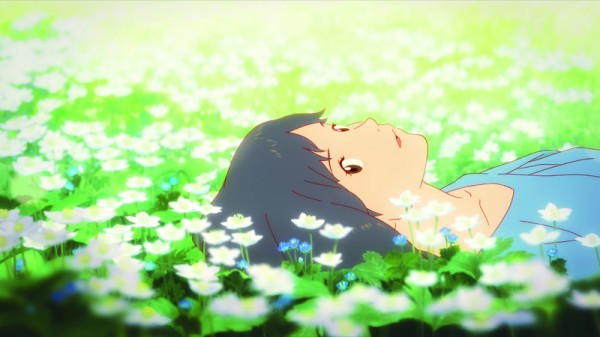
wolf-children-03

CC: In the past you have directed films based upon popular franchises like Digimon and One Piece. Do you eve consider doing another film based on a franchise like this?

H: When I made those franchise pictures I learnt a lot about film-making. I would consider doing one of those again if they presented themselves to me as an opportunity to make a good film or if I would have an opportunity to learn even more things doing those particular kinds of projects.

CC: Is there any franchise out there you’d love to make a film of?

H: It is hard to think of, can you think of anything? [Laughs]

CC: Do you know the series Hunter x Hunter?

H: Yes, Hunter x Hunter!

CC: I’d love to see a Mamoru Hosoda Hunter x Hunter film.

H: The tough thing about franchise pictures is that often someone has already beaten you to the punch. Unfortunately they have already made a Hunter x Hunter film. But then again, Japan television has money invested in that one, I wouldn’t mind if they invested in us as well! [Laughs]

CC: If you could adapt anything into a film, whether it is a manga, anime series or a novel, what would it be?

H: The Girl Who Leapt Through Time is based on a novel by Yasutaka Tsutsui one of the most important writers of Japan. He wrote that novel probably around 40 years ago and I remember the intellectual excitement I had from reading that book and I of course turned it into that film. So I imagine if I were to choose it would have to be something I read when I was young.

I believe the things that leave an impression on you the most are those you experience or read when you are young. The process of digging those old things up and reinventing them for a modern audience is actually not a futile task, it is actually a fruitful project. So I can see myself going down that way.

The way I feel about it is that if there is someone right now as a kid who really loves Hunter x Hunter, it is up to them to grow up into an adult and turn that into a great film. That is where the greatest possibilities are.

CC: One last question, what is next for Mamoru Hosoda and Studio Chizu?

H: I think that I would like to make something fun and enjoy it with everyone.

CC: Thank you for your time.

H: Thank you!


The full uncut audio of the interview can be heard below:

We previously reviewed Wolf Children as part of the REEL Anime Festival 2012, you can view our review here. Special thanks to Madman Entertainment and Japan Foundation for organizing this interview. Be sure to let us know what you think in the comments section below.

Ashes Cricket 2013 – Teaser Trailer Released

Ashes-Cricket-2013-screen-1

505 Games has recently announced that on the 21st of June this year Ashes Cricket 2013 will be released on the Xbox 360, PS3, Wii U and PC.

The game boasts new and dynamic gameplay that will encourage players to take everything into account and learn as well as play much like real cricket; Altering pitches, changing weather and a new line and length bowling system are just a few of the new features that will test the skill of players everywhere.

General manager of 505 Games UK Ralph Pitt-Stanley stated;

“This game has been created with real cricket fans and players in mind. The new engine allows players to mimic a cricketer’s most important attribute–technique.”

The trailer for the new game was only just released and you can see it in our featured video section below.
Shootmania Storm Review

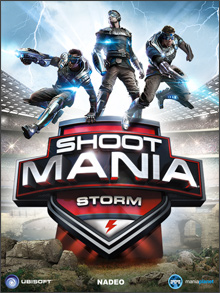
shootmania-storm-box-art
ShootMania Storm

Developers:Nadeo
Publisher: Ubisoft
Platform: PC
Release Date: Out Now
Price: $19.99 (Buy Here)

Overview

Shootmania Storm is the latest game in the Arena Shooter sub-genre of FPS games. It is from the studio Nadeo and takes the concepts from their previous effort, Trackmania, and applies it to the first person genre. Also, make sure to check out our recording of our livestream from earlier.

Is this the title that will revive a now dead genre? Or will it be another corpse to add to the pile of a once loved era in gaming? Read on and take away from this review what you will.

Story

Unlike most games, Shootmania Storm does not have a story from what I can tell. I have looked through all of the game menus, as well as looking online and looking for some kind of manual (which I can not locate at all in the digital release) so as to be able to be able to find some semblance of a story for this game. Sadly I came back empty handed, but this isn’t really the kind of game that needs a story.

ShootMania-Storm-Screenshots-01

But even so, even other games in the arena shooter genre have had passable storylines in them. Look at Quake 3, that had a storyline involving kidnapped combatants that are forever brought back to life by demons to fight in tournaments. Unreal Tournament had a similar story, but where players were volounteers (or prisoners) fighting in a tournament but were seemingly revived by Respawners upon their deaths.

For Shootmania Storm, I imagine the storyline to be something like this: “In the far future, one portion of humanity lives on some planet with a wicked king for a ruler. He forces his knights to battle in insane tournaments for his own amusement, not even allowing them rest upon their own deaths. They fight to the death, only to return from it to die again.” If anyone knows if there is an actual storyline for this game, where to find it, and if my version was anything close, please let us know in the comments below.

Gameplay

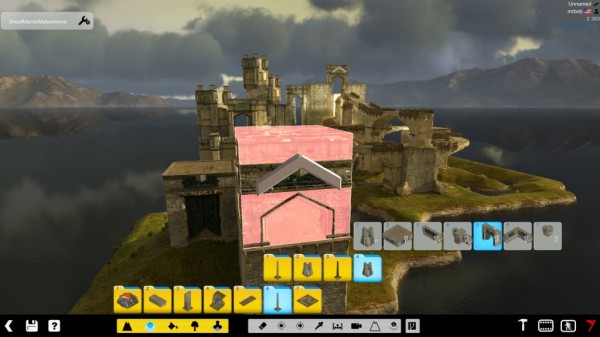
The Shootmania Storm video game is much like the other -Mania games in the -Mania series by Nadeo, in that not only do you get to play the game. But you also get to create portions of the game for other players to enjoy. For instance, in Trackmania, players were able to build tracks for other players to enjoy. In Shootmania, players are able to build maps for different gametypes, which adds a wide amount of variety to the game. Depending on the server, players may never see the same map twice.

ShootMania-Storm-Screenshots-02

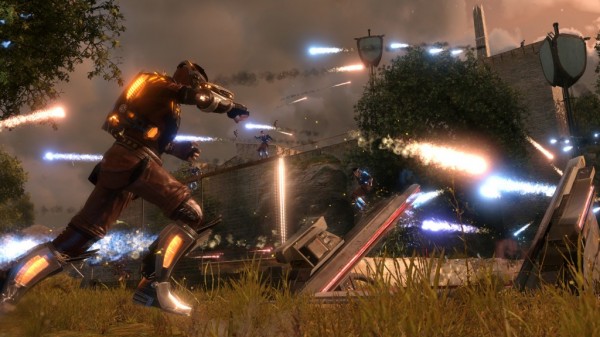
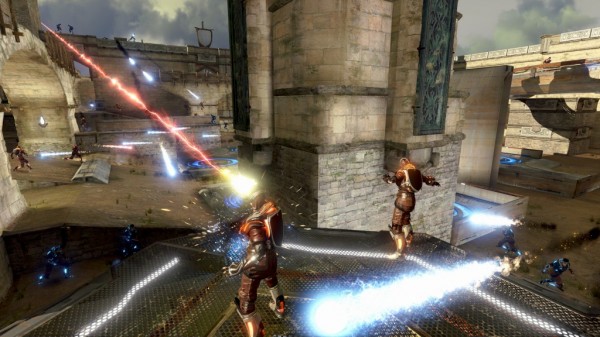
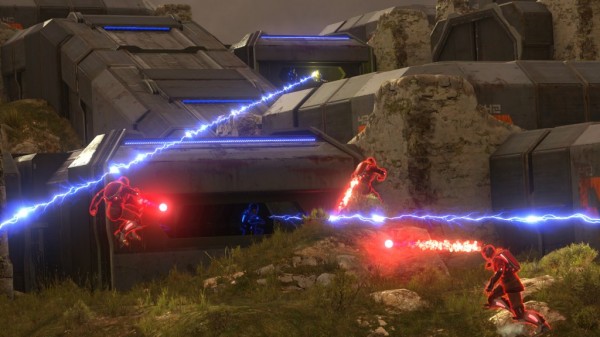
What’s cool about Shootmania Storm is that it takes the already fun Arena Shooter formula and it does something interesting to it. What it does is it changes the ways that the genre is played outside of its core gameplay component (running and gunning). It does this by having players not collect weapons as they go, but rather have their abilities altered by different types of ground panels. For example, say I was running around inside of a bunker. This would alter my player characters weaponry in some way, whereas if I was running around outside and on a footpath, then my secondary ability would be altered into a sprinting ability, rather than a jumping one.

While these kinds of variations might seem weird or pointless at first, while you’re out on the field, it makes a world of difference on your effectiveness. Paying attention to where you’re standing and where you’re heading is important in Shootmania. What makes this even better is that with all the map variations, you have to learn the map on the fly. Being a slow learner may be a fatal risk to your score.

Interestingly, Shootmania Storm has multiple gametypes, but each of them come as additional modules, called stations, to the Shootmania browser. By accessing a different module, you are essentially playing a different version of the core Shootmania experience. For example, Shootmania Joust is a completely different gametype in comparison Shootmania Storm.

ShootMania-Storm-Screenshots-03

While each gametype has different objectives in each, the core principles of the game remain. In each gametype there is usually some kind of objective that the players must work to achieve, usually done by capturing some kind of flagpole. In Storm, for example, players must battle to a centralised pole where a player can capture it to stop players from respawning and activate an Offzone that shrinks. Anyone caught in the (Tornado) Offzone is eliminated and must wait for the next round to begin.

Out of all of the gametypes, my favourite is a variation on the standard Domination model. This gametype is called Battle and is found in the Shootmania Storm station. What players must do in Battle is capture the opposing teams flags whilst defending their own. What’s interesting about this is that the teams take turns in doing this, even though they’re on the field at the same time. So players have to beat the enemy back for long enough to start capturing and vice-versa.

I could sit here all day and talk about all of the different game modes present in Shootmania Storm, but that would take quite a while. However, it does seem like the community has already begun to favour the Deathmatch gametype over all others as the more team-based and objective based gametypes are all showing up as either empty servers or foreign ones. This one of the things I dislike about the arena shooter community (it’s always been like this). I’d still say grab the game, because it’s actually quite fun and gametypes come up and come down depending on interest, so these more interesting gametypes will see an increase later on down the line like they always do.

ShootMania-Storm-Screenshots-04

Visuals

Visually speaking, Shootmania Storm doesn’t try to do anything impressive. It doesn’t try to push your overpowered quad-SLi graphics card configuration to it’s limits, it doesn’t try to fry your CPU and it doesn’t try to do anything too pushy with your PC. Instead, it realises that it is a game and not some kind of life-simulator and it sticks to looking like one.

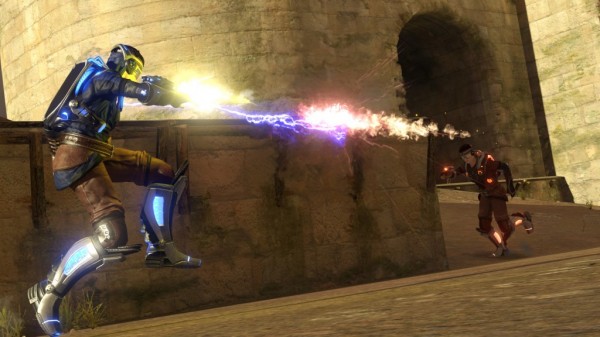
What I mean by this is that Shootmania Storm, while still looking impressive, keeps a more gamey aesthetic to it. When you’re playing Shootmania Storm, you’re not reminded of the horrors of war at every turn. You’re not mowing down waves of photorealistic terrorists or anything like that. You’re just running around in some busted castle ruins in a stylised and futuristic medieval swordsman attire with an arm cannon and a helmet.

The game does not look dated, but it does not absolutely blow the mind. The player is able to just jump right in and accept the games reality, which is something that a game should be doing visually.

Audio

What’s interesting about Shootmania Storm is that it doesn’t have an adrenaline pumping soundtrack that you would normally associate with the Arena Shooter genre. I have to admit that when I was participating in this title, it was a little strange to have a background score that was more reminiscent of a chess match than being in an arena and being tasked with murdering a bunch of players over and over again.

ShootMania-Storm-Screenshots-05

This is not a fault with the game though, as I know a lot of gamers that like to play without music at all because it interferes with their concentration. So instead, why not have an audio track that at least tries to be subtle and something that you can think along with. It’s a strange concept for the genre, but it’s one that works with Shootmania Storm.

Actually, subtlety seems to be a thing with this game in the audio department. Nothing in this game really has any kind oomph to it, rather everything sounds like it came out of a video game studio, rather than out of a microphone attached to the barrel of a tank.

The audio in Shootmania Storm just fits the game so well and while I traditionally prefer my games to be of hardcore variety when it comes to audio, Shootmania Storms just works all over. It’s quite strange when a simplistic arrangement works much more well in comparion to an over the top one.

Overall

Shootmania Storm is an incredibly fun game that does almost everything right. Where the issues are in the game are not directly related to the core gameplay experience (not covered, but the UI is pretty bad and sometimes disconnects itself from the master server without telling you) which is where you will be spending the majority of your time. Anyone interested in shooters or having a quick fun game to play with others should definitely be picking up Shootmania Storm.

9-0-capsules-out-of-10

Company of Heroes 2 Closed Beta Enters Phase Two

Company-of-Heroes-2-Screenshot-01

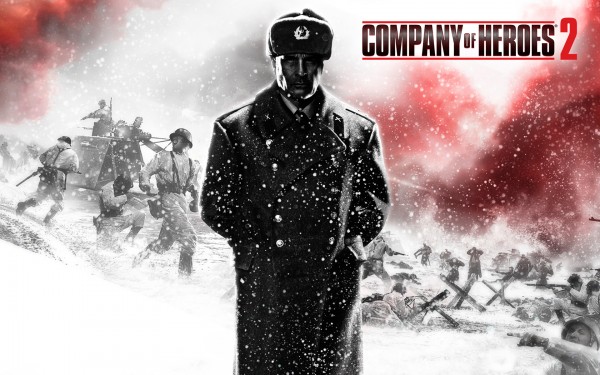
SEGA of America and SEGA Europe announced that the second phase of the Company of Heroes 2 closed beta will be available to those who “like” the game on its offcial Facebook page. This will open a key generation tool that will grant players access to the beta. Players will also require the free Steam client to play, as the beta is hosted on Steam.

“After a successful first phase, we are delighted to be able to open the Closed Beta up to all of our Facebook fans and invite them to help us test and improve the game.”

The closed beta contains Company of Heroes critically acclaimed competitive multiplayer and skirmish gameplay modes. Players are given access to six maps and the ability to play alone or with team mates against the AI in throughout competitive style gameplay. The first 40 levels of progression are also available, as is the ability to customise loadouts using the Army Customiser feature.

Company of Heroes 2 will be available for PC in June 2013. For more information check www.companyofheroes.com. In the meantime like and play the closed beta.

Ninja Gaiden 3 : Razor’s Edge now available for the 360/PS3 in Australia

NG3-RE-Review- (2)

Gamers in Australia and New Zealand have had to wait a bit longer than the rest of the world, but they can now finally access Ninja Gaiden 3: Razor’s Edge on the Xbox 360 and PlayStation 3, though it is worth noting that the title has been available on the Wii U for a few months already. For those who don’t know, NG3: RE is an enhanced version of the original Ninja Gaiden 3 which not only has revamped the game’s battle system and storyline, but has also added a number of weapons and ninpo attacks players can unlock.

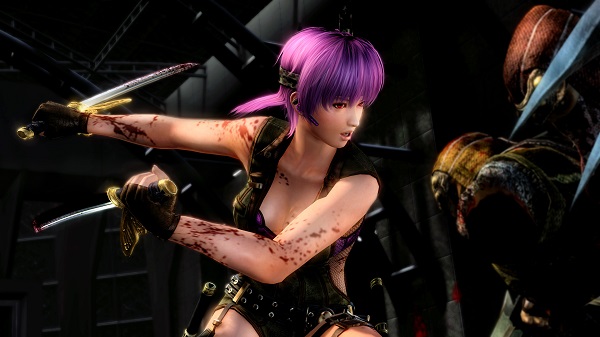
I found Ninja Gaiden 3: Razor’s Edge a suitable, albeit one still flawed, upgrade from the original game that not only added the challenge back into the game but offered a slew of new options for fans of the series, including new gameplay modes and three new playable female characters in the form of Ayane, Momiji and for the first time ever Kasumi. You can check out my full review of the game here.

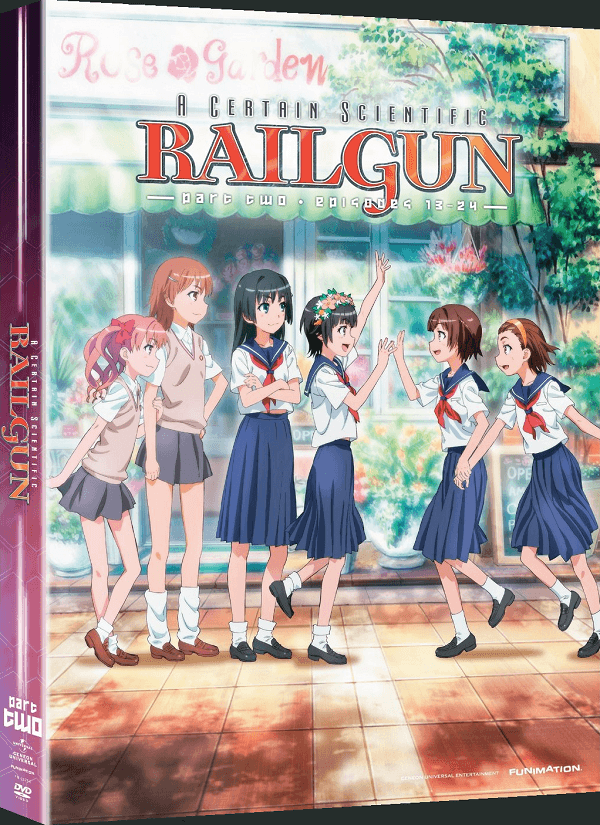
A Certain Scientific Railgun: Season 1 Part 2 Review

railgun-season-1-part-2-box-art
A Certain Scientific Railgun: Season 1 Part 2
Studio: J.C. Staff
Publisher: FUNimation
Format: DVD
Release Date: April 16, 2013
Price: $59.98 – Available Here

Overview:
So far A Certain Scientific Railgun has proven to be a rather enjoyable spin-off to A Certain Magical Index that manages to keep the focus solely on the science side of things. While thin on plot throughout Part 1, the charming cast of characters made up for the less than focused storyline. However coming off the events of the Level Upper incident, does A Certain Scientific Railgun: Season 1 Part 2 manage to continue the series well enough?

Story:
For those who may have, for some reason or another, avoided Part 1 of the Railgun release, it is highly recommended that you do so simply for continuity sake and because the events that occur during the only major story arc in Part 1 do continue on into Part 2, although it does take quite some time for those events to gain traction.

railgun-season-1-part-2-review- (1)

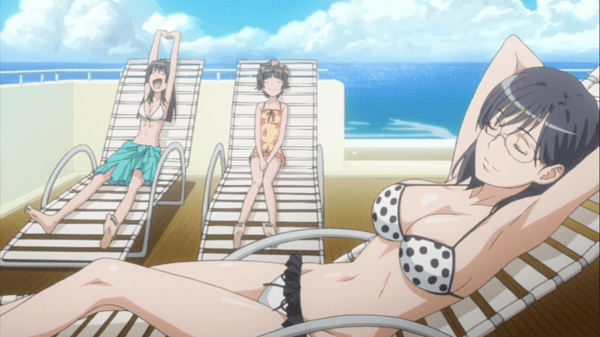
Anyways, A Certain Scientic Railgun’s second half decides that the best way to make up for the bit of dark drama that occurred during the Level Upper arc at the end of Part 1 is by immediately throwing a signature swimsuit episode at viewers. This sets the tone for almost everything that is Part 2 of the series, plot-light filler episodes and fluff that mostly focuses on developing side-characters in the story.

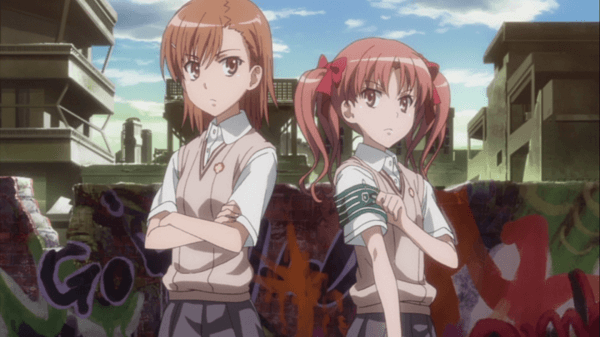
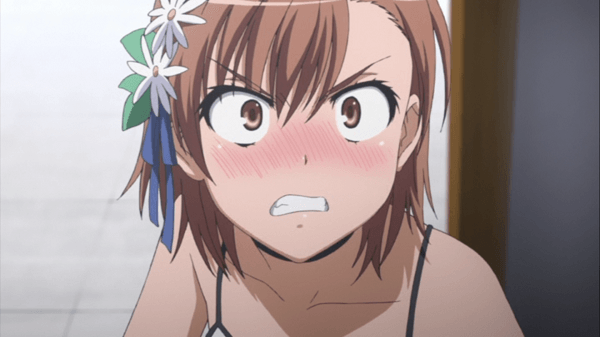
Indeed Railgun continues to follow the lives of Mikoto Misaka, the third strongest Level 5 Esper in Academy City, her friend/roommate Kuroko, a teleporter who works for Judgement, an organization that tries to keep the peace in Academy City by doing everything from cleaning up trash, maintaining order and capturing criminals, Kuroko’s co-worker and friend Uiharu and her friend Saten a Level 0 Esper.

railgun-season-1-part-2-review- (6)

Railgun Part 2 follows a very similar pattern to the first half of the series, however rather than focusing solely on the four main cast members, other female members of the cast are given some minor story arcs. The problem with this is that this creates a slew of half-developed characters that simply seem to be part of the background and were used to take up time.

While this is nice change of pace at first, these side-stories begin to drag and eventually become rather boring now that the focus has been taken off of the main girls. Thankfully there is still some minor character developments in the main cast though most of the developments are focused on Saten and a previous antagonist is given a chance to redeem herself.

railgun-season-1-part-2-review- (3)

Ultimately Season 1 Part 2 drags it’s feet through the twelve episodes on this release by providing minor developments to side-characters that play almost no role in anime’s storyline. In fact, while the whole cute girls doing cute things is still prevalent in this half of the series, the amount has diminished greatly outside of the fan-service packed first episode of the release and a few smatterings here and there which is a shame considering it was another major plus for the series. This means that when the final story arc in Railgun Season 1 finally does begin, the amount of technical exposition is quite heavy and may be difficult to follow due to it’s rushed nature.

This arc does pay off on earlier developments in Part 1 of the series and wraps up with some rather amazing action sequences and although a bit cliché, viewers will likely be pleased with the way that the series’ ending is handled. It is also worth noting that, while the ending does leave things open for a sequel, viewers of Railgun can easily transfer into the Index series or keep an eye out for the Railgun S anime which serves as a sequel to this release.

Visuals:
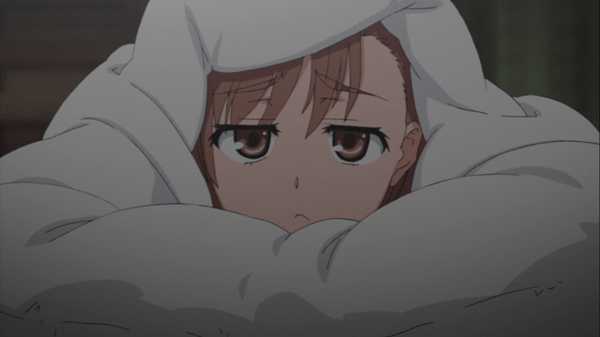
One thing that A Certain Scientific Railgun excels at is facial expressions. Without a doubt the faces of the girls and the expression that they make are one of the biggest highlights of the series and that is by no means an over-exaggeration. While mid-distance shots do see diminished animation quality in character appearances, Railgun features a number of close-ups with overly cute facial expressions which are impossible not to enjoy.

railgun-season-1-part-2-review- (5)

That being said, Part 2 of Railgun is more impressive than it’s earlier counterpart as far as animation quality is concerned. Perhaps it is due to the way that the second half of the first season is paced, but the animation remains rather consistent and is incredibly impressive during the anime’s action sequences, especially during Misaka’s fights during the final episodes of the release.

Audio:
FUNimation’s English dub of the series continues to impress throughout Part 2 of the release and it is interesting to note that the focus on more side-characters in this half of the story does help freshen things up a bit. However the main cast continues to steal the spotlight with their great voice work. While I was hesitant to accept Brina Palencia’s voice work as Saten in Part 1, she really does a great job with the character in this second half and along those same lines Alison Viktorin’s work with the overly perverted nature of Kuroko also comes into its own in this half of the season. Of course, for those who prefer the original Japanese voice track, it is still included in this release.

railgun-season-1-part-2-review- (7)

The background music throughout Part 2 remains largely the same as the first half of the season and works well when played during action sequences. The stellar opening theme “Only My Railgun” by fripSide returns for a few episodes on this release while “Dear My Friend” by Elisa also remains the closing theme for part of this release. They are then replaced by “Level 5” which is also by fripSide as the opener and “Real Force” also by Elisa as the closer, both of these tracks are nicely handled, although “Level 5” isn’t as great as the first opening theme it is still an excellent fit.

Extras:
As far as bonus features go, A Certain Scientific Railgun Season 1 Part 2 comes with a few more bonuses than Part 1 but they still are nothing truly special. There are clean versions of both opening songs in the series as well as clean versions of both ending songs which is great for fans of the series’ themes. Joining these we have trailers for other FUNimation releases, the US trailer for the release as well as two episode commentaries.

railgun-season-1-part-2-review- (2)

The first episode commentary is for Episode 17 and features Jad Saxton who voices Komoe, Martha Harms who handles the voice of Yomikawa and Kara Edwards who voices Tessou. These three spend most of the commentary discussing the episode itself and how they voiced the various scenes that take place, though they do go off on a few interesting tangents here and there.

The second commentary track is for the final episode on this release, episode 24. It features Zach Bolton who was the Dub Director for the series, Colleen Clinkenbeard who handles the voice of Therestina and Anastasia Munoz who voices Kiyama. Similar previous commentaries we follow the cast as they discuss the episode in a mildly entertaining manner.

Overall:
A Certain Scientific Railgun’s biggest strength is the adorable main cast of characters that were developed so well throughout Part 1 of the series. However throughout Part 2 the plot slows to a crawl and viewers are left with a number of half-developed side-characters that finally culminates to a rushed major story arc. While Part 2 sports an equally impressive English dub and better animation than the first half of the series, the series’ lack of focus is very apparent.

This is very disappointing because there is a lot of unexplored potential here with Misaka and the girls as well as the series’ focus on the scientific side of the Index franchise but thanks to the lack of focus, little of it is explored despite the length of the season. Despite my complaints however, I still found Railgun an enjoyable and charming series that, despite struggling with pacing, managed to offer an enjoyable spin-off to the Index franchise that focuses on one of the most memorable characters in the series.

7-5-capsules-out-of-10

Capsule Computers review guidelines can be found here.

Black Knight Sword is Half off this Week on the XBLA

black-knight-sword-screenshot-02

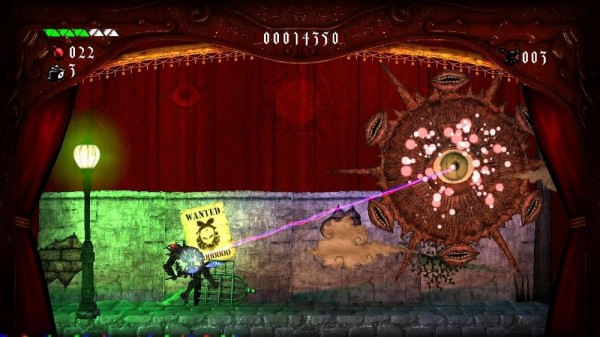
Suda51’s odd yet quirky title Black Knight Sword was certainly an interesting experience, and for a fully detailed analysis, you can check out the review here. Those who have been on the fence when it comes to the grand puppet theater styled action game might want to reconsider their stance, as the game is only 400 Microsoft points this week as part of the “Deal of the Week” from Microsoft.

Black Knight Sword certainly packs a challenge, but there is really nothing else like it on the platform, much like every other Suda51 title out there. So go, download on the cheap, and enjoy one of last year’s forgotten gems.

Level-5’s eShop Releases on Sale for a Limited Time

crimson-shroud-released

If you have yet to pick up Crimson Shroud, Liberation Maiden, or Aero Porter, there is no better time than now as Level-5 have slashed the prices temporarilly on these three titles that made up the GUILD01 collection in Japan. As many of you know, these three titles were produced by big names, with Yoot Saito being behind Aero Porter, SUDA51 continuing his over-the-top legacy with Liberation Maiden, and the famed Yasumi Matsuno creating the table-top themed RPG known as Crimson Shroud.

From April 18 through May 30, Liberation Maiden will be marked down from $7.99 to $4.99 USD; Aero Porter will move from $4.99 to $2.99 USD; and CRIMSON SHROUD will be on sale for $4.99 from the original $7.99 USD. Nice prices on some of the eShop’s finest, but remember not to wait, as these three only will be on sale for a short time.

Suisei no Gargantia – A Cosmic Triumph Brought Down to Earth

suisei-no-gargantia-thoughts-01
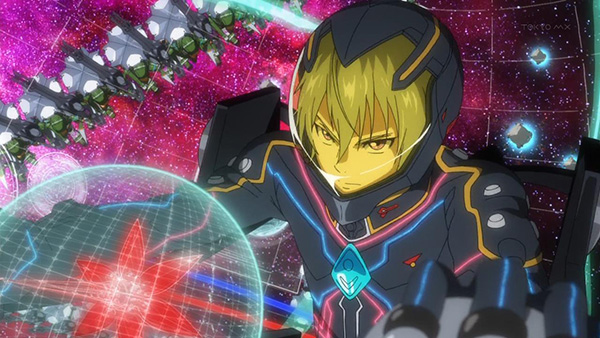
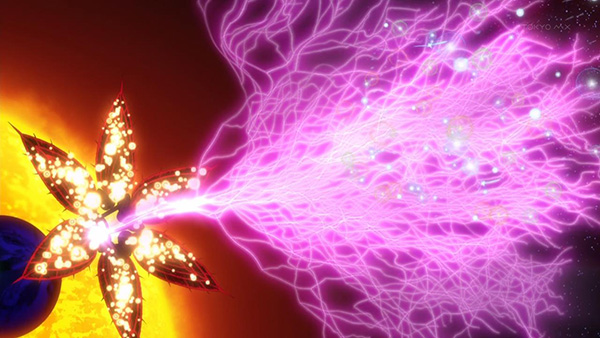
The spectacle of the first two episodes of Gen Urobuchi’s take on the sci-fi mecha genre stayed with me for days. The opening half of the first episode throws the viewer right in the middle of a Gunbuster-esque space opera. Bio-organisms surviving the vacuum of space and infesting a hive, a “hot Jupiter” planet against the backdrop of an angry sun. A galactic society with established citizenship protocols. AI interfaces that aid pilots in every possible way. Wormholes. Singularity cannons. Quantum reaction warheads. Gargantia bombards you with its surprisingly detailed and, as far-fetched as it is, believable premise.

I say believable because whether it’s due to the author being a grounded realist or not, the show does try to stay within known limits. It recognises the nearby star’s deadly radiation, affecting humanity’s tactics on the battlefield. Well known facts like radiation in space are rarely touched upon in anime, with the force of gravity only recognised in other shows.

suisei-no-gargantia-thoughts-02

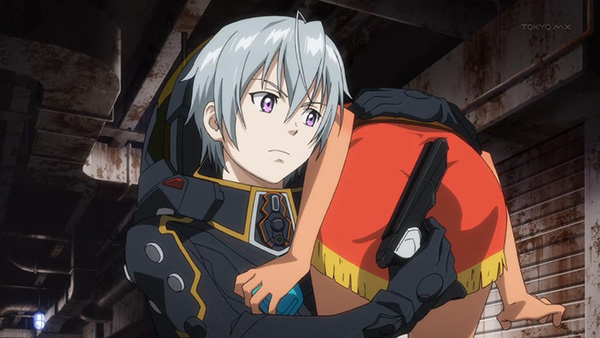
The human race is now advanced beyond measure, having left the Earth an untold number of years ago due to a catastrophic ice age brought about by abnormal solar activity. Spreading far across deep space humanity’s home is now Avalon, a network of bio-domes and space colonies where it seems citizenship for countless soldiers is a privilege not often granted. From the two episodes aired we see very little of our now-unrecognisable civilisation, but we have an idea thanks to the main character Ledo and his talking AI mech, Chamber.

The anime has a twist from the get-go, as Ledo is literally lost in space following a bungled wormhole approach. Another example of the realism is Chamber’s pilot safety system, putting Ledo in forced hibernation for months and maintaining his vital functions. He ends up at the bottom of the ocean after crash landing on a planet, and awakes to find primitive humans trying to force his robot open. Nothing they do can put a dint in its armour though, let alone open it. The difference in their technology is that huge.

suisei-no-gargantia-thoughts-03

The planet turns out to be Earth devoid of any landmasses and covered in water, much to Ledo’s shock. Avalon has long ago lost all records and navigation to Earth, thinking it was uninhabitable. They were wrong, as remnants of humanity remain on floating barges. These cities on water follow ocean currents inhabited by light bugs where in large numbers they generate electricity. It’s an ingenious way of explaining how a society can utilise energy on a water world.

suisei-no-gargantia-thoughts-05

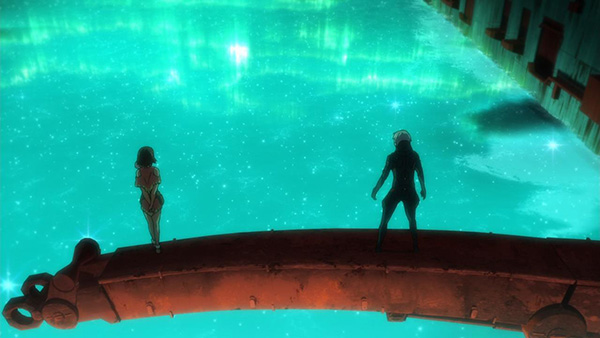
The greatest intrigue for me is the interaction between Ledo and the local human, Amy. From each character’s perspective they can’t understand each other and hearing Hisako Kanemoto speak gibberish was cute enough to put me in cardiac arrest. But it gave me chills when Ledo was asked where he came from, to which all he did was point up at the sky. Or the sheer joy when Amy is shown that the robot indeed talks by itself as an AI, reacting in the same way any of us would if an alien was kind enough to show us how his anti-gravity UFO works. Ledo’s UFO, however, happens to pack lasers as he obliterates a raider fleet in seconds and vaporises the pirates to dust.

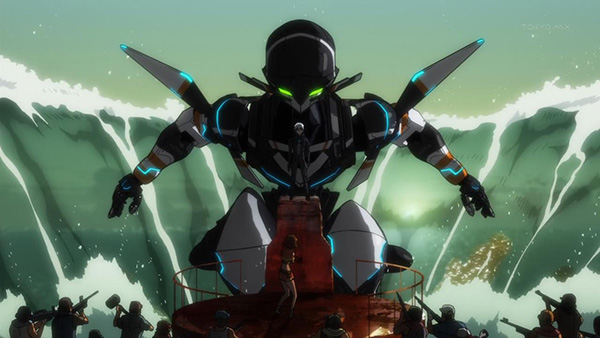
A big complaint I’ve seen was the mechs don’t look cool enough. I think the objective here was to make them unique from the Gundam look-alike’s we’re used to. The ridiculous propulsion sphere that appears over its head just highlights how alien the damn thing is. The “star person” doesn’t mean harm to the humans on Earth, but I wouldn’t be surprised if they come to think of him as omnipotent, even god-like. One minor complaint is that I hope the series doesn’t focus all its attention on Earth. The premise of the Galactic Alliance of Humankind fighting against the Hideauze was established really well, but then it took a backseat.

suisei-no-gargantia-thoughts-04

Looking ahead, I’m thrilled to see what Gargantia has in store for us. Production standards are through the roof, with ace animation quality and a soundtrack that could prove a winner. While other shows like Valvrave seem great, they don’t have an identity in my opinion. Gargantia however seems like it wants to carve out its ideas as its own. I don’t actually think of this as a Gen Urobuchi show, partly because I think he wants to move away from the “grimdark” writing everyone either admires him for or rolls their eyes at. This is a show about excitingly big ideas, ideas that Gen probably had boiling away in his mind for a long time.

CC Impact! Presents ShootMania: Storm

CC-Impact-Logo

ShootMania: Storm is the latest game from ManiaPlanet, the people behind TrackMania. The Mania games have always had a slant on the creative aspect behind the games, and ShootMania is no different. In our latest episode of

Join CapsuleComputers editor Joe Morgan as he shows off the new twitch-based first person shooter ShootMania: Storm! Get a taste of Free-For-All, Team games, and a little time goofing around in ShootMania’s robust map editor. Be sure to check out our review of the game here.

ShootMania-Storm-Screenshots-01

As we initially record our gameplay videos, we will be livestreaming the footage to our Twitch page. We’ll be sure to upload it to our YouTube page later for those that missed the livestream as well. Also be sure to follow us on Twitter, and Facebook since we’ll let everyone know when a livestream begins that way. Be sure to leave a comment here or head on over to our YouTube page and leave a comment so we know what you think of our newest feature.

And without further ado, Shootmania: Storm!