Olympus Games is turning to Kickstarter to get funding for their Gmodproject that seeks to simplify the installation of mods. Gmod accepts dragged and dropped mod files from any source, automatically determines the best load order for mods, and installs them accordingly. Gmod has protections in place to ensure that games can be easily reverted after a bad mod is installed. Olympus Games hopes to turn Gmod into a modding community that helps provide monetary support for modders while helping gamers find the most popular mods for their games.
Gmod needs $75,000 dollars to complete Minecraft support, expand the library of supported games, and add new features. Their Kickstarter project has 17 days left before it closes.
PAX Ausis running an Indie Showcase this year to highlight some of the best games from indie developers located in Australia and New Zealand. This year’s six winners span a variety of genres including puzzle, action, and strategy games. Over sixty submissions were made to this year’s Indie Showcase.
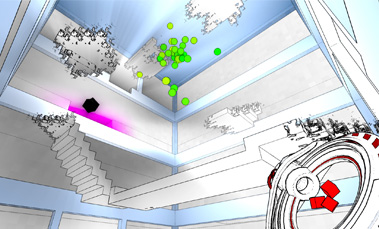
Antichamberis a puzzle game inspired by artist MC Escher’s mind bending worlds.
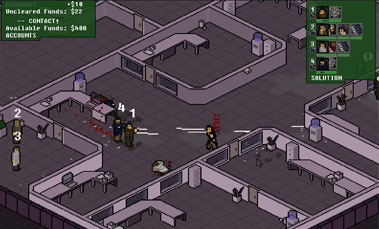
Black Annex is a action strategy game where players run a shady corporation embroiled in corporate espionage and other less than moral activities. Players will need to run both the business side of the corporation and the ruthless criminal actions of their agents.
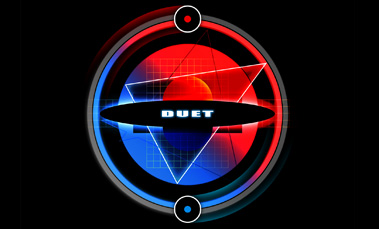
Duetis a twist on classic arcade flying games. Players will need to manage two synchronized ships in a symbiotic relationship.
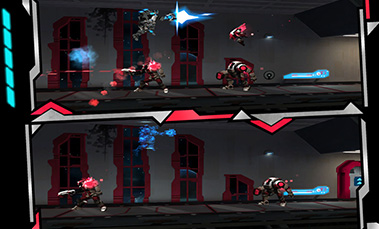
Fractured Soul is a 3DS retro platformer where players will need to manage the action across both screens. The only way to survive is to move the character between the two screens.
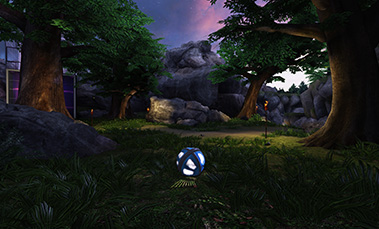
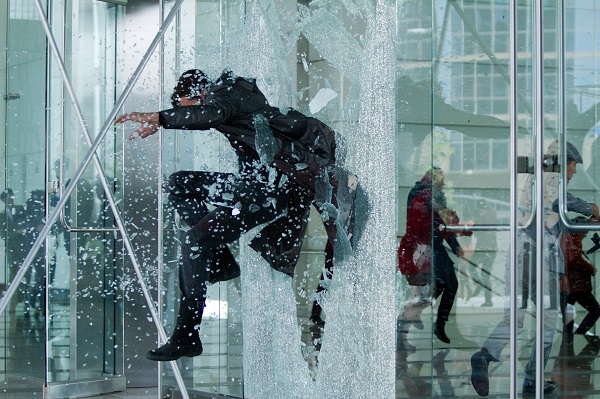
InFlux is an exploration puzzler set in an island full of puzzles in the form of glass and steel houses.
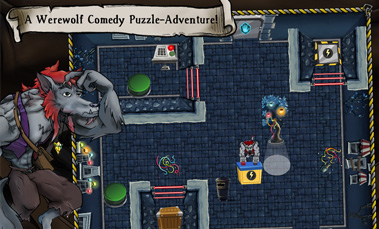
MacGuffin’s Curse is a comedic puzzle adventure game starring the werewolf Lucas MacGuffin as he seeks to lift the curse that haunts him.
PAX Aus will be held in Melbourne from July 19th to 21st.
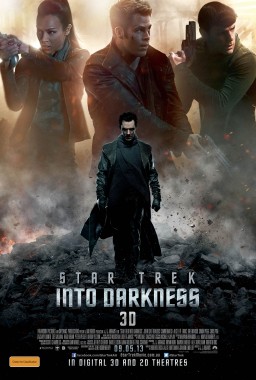
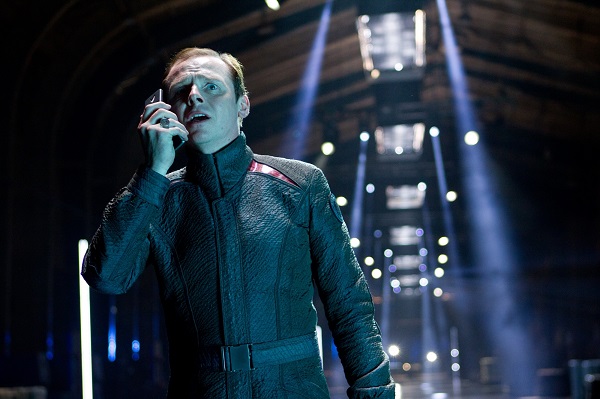
Star Trek Into Darkness Studio:Bad Robot& K/O Paper Products Publisher:Paramount Pictures/Skydance Format: Cinema 3D (Reviewed), 2D Release Date:May 9th, 2013
Overview
J.J. Abrams revitalised the Star Trek film franchise with his 2009 entry, and now its sequel Star Trek Into Darknessis upon us. In promotional materials leading up to release, the destruction of our world has been promised by a man named John Harrison (Benedict Cumberbatch) – a menacing man of unknown origin/motivations. And while Star Trek Into Darkness deals with securing and protecting humanity’s safety in the galaxy, it also explores personal stories along the way. But does Star Trek Into Darkness“boldly go where no man has gone before”? Read on to find out.
Story
Class M Planet – Nibiru. The USS Enterprise is hiding below the ocean’s surface as what should be a routine exploration mission turns into a time sensitive quest to prevent an active volcano from erupting and wiping out all inhabitants on the planet. The primitive natives chase Kirk (Chris Pine) and McCoy (Karl Urban) as Spock (Zachary Quinto) attempts to detonate a cold fusion device in the belly of the volcano, rendering it inert. Plans go awry and Kirk makes the decision to break prime directive and reveal the USS Enterprise in order to reach and save Spock in time, who has resigned to his apparently forthcoming demise with grace.
Back at Starfleet HQ in San Francisco, Kirk is reprimanded by Admiral Pike (Bruce Greenwood) after Spock filed a report on the incident, which understandably aggravates Kirk. After all, you save a man and you expect him to owe you, not throw you under the bus…but those Vulcans cannot lie, and their logical thought overrides emotion as we well know. This is a recurrent theme throughout the film between the two, that also later involves Spock’s girlfriend, Lt. Uhura (Zoe Saldana) as she grows contempt for his earlier, apparently selfish decision to accept death and care not what that would have done to her. But before they can work out their issues, Kirk is demoted, the Enterprise is returned to Pike and Spock is reassigned to the USS Bradbury.
Tensions are already high after the mysterious John Harrison convinces a Starfleet member to commit a suicide bombing at the Archives building in London, in exchange for him curing the man’s ill daughter – who has no chance of improving her state of health – with his blood. The Federation holds a meeting with all high-ranking officers convening, which includes Kirk after Pike influences Admiral Marcus (Peter Weller…ROBOCOP!) to allow the former Captain to become his second-in-command. While looking at the footage of the bombing and noticing Harrison picking up and taking a marked bag from the crime scene, Kirk questions why someone would steal public records…
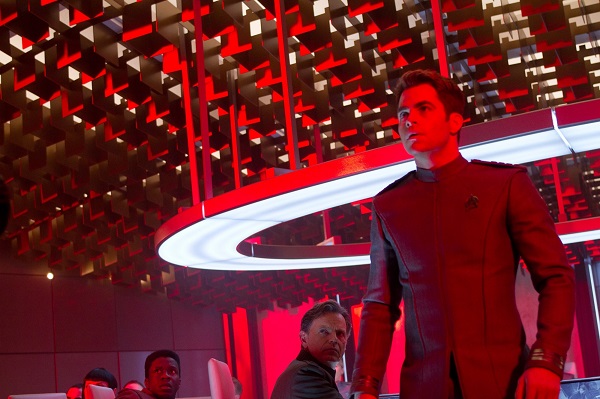
This is the point where everything goes to hell! Kirk was fractionally late in figuring out Harrison’s plan: to force a gathering of Starfleet’s best and brightest and obliterate them in one fell swoop. The lights of an ambushing aircraft suddenly bathe the conference room in red hues as it opens fire. I think this is a good point to cease spoilers at; you can imagine, however, that it’s highly improbable that everyone survives the wrathful attack. I can also confirm that the crew, once again under James T. Kirk (take that for what you will) does make a visit to Kronos – the Klingon home world – later in the film, in search of Harrison whom they located, hiding out in what they believed to be an abandoned sector.
Much has been speculated about the “true” identity of John Harrison. I won’t comment on the rumours as the reveal is a large reason for why I can’t say any more than I already have. Post-revelation, lines are blurred and allegiances become shaky. The pace of the film is great, with consistent situational threats popping up for the USS Enterprise. The dialogue can be a tad corny at times in that archetypical action-blockbuster kind of way, but it’s nowhere near as bad as an Arnie flick for instance. There are multiple, plot-moving twists that keep you on the edge of your seat, although they all occur in a confined space with the film not reaching too far in terms of scale, and preferring to focus more on the human element rather than stuffing in as many varied locales and spectacular action set-pieces as possible, for the sake of it (although your action-cravings will definitely be satisfied).
Visuals
Star Trek Into Darkness looks stunning. From the beautiful introductory scene on Nibiru to the gritty, rocky ruins of Kronos. Something to note on the vivid opener; the fact that the inhabitants wore white paint (more likely some sort of ash) and yellow garb amongst the very alien red forest is a visual throwback to the tales of the beginnings of Aboriginal creative expression whereby they discovered the first “sacred ochre pigments” of red and yellow along with white and black, which is why early cave paintings, markings, and even the Aboriginal flag use those colours and those colours only. The early civilisation on Nibiru seemed to be patterned on this history.
Much like in the first film, Into Darkness portrays a futuristic, yet familiar Earth. What I found interesting in particular is a shot of the Royal Children’s Hospital in London, which is practically untouched amongst the highly advanced hovering cars and floating gurneys used within. This anachronistic touch (within the Star Trek universe’s context) aids in keeping the world relatable and recognisable to the viewer, therefore creating an emotional connection to it. I also loved the establishing shots of the different planets/locations the crew would visit, the handling of which reminded me of – brace for backlash – Star Wars. Yeah I said it! But I guess it’s a good thing seeing as J.J. Abrams is directing the new Star Wars trilogy; he’s nailed that visual.
The 3D conversion was executed very well; I’m finding that most post-production conversions now highlight the subtleties of any given scene, such as the floating ambers of a fire and the light tail left after warp-speed travel in this case, which is the right way to use it. The directing overall is very good, however I do feel that the close-up zoom technique is used way too often. It seemed like every time someone had something important to say, or heard something surprising/shocking, the camera did the obligatory zoom-in on their facial expression. Thankfully it ceased after the 1st act however.
Audio
Star Trek Into Darkness receives a suitably wondrous, dramatic score from Bad Robot’s stalwart composer Michael Giacchino. As mentioned in a prior press release, the track co-written and performed by the duo of Australian songwriter/producer Robert Conley and vocalist Penelope Austin – “The Dark Collide” – featured as the background music during a bar scene where Scotty is drinking away his frustrations whilst talking his Roylan friend Keenser’s ear off (this song is only included in the Australian release). In the grand scheme of things, it was nice to hear, but it isn’t a pivotal/affecting inclusion.
Aurally, nothing truly stood out for me, but the score and sound effects did what they are meant to do in enhancing the visuals. The only thing audio-wise that perturbed me ever so slightly is Chekov’s (Anton Yelchin) Russian accent. It’s strange because Yelchin’s parents are Russian, which doesn’t necessarily mean he could inherently pull it off, but I’d still expect it to be of some help. Yet, it just didn’t sound natural to me…or maybe the stereotypical Russian accents we hear in media that are so far off reality have been ingrained in our minds, so much so that when someone actually does it justice, we doubt its accuracy; I’m not totally sure…
Overall
Star Trek Into Darkness is an entertaining roller-coaster ride, albeit one with a somewhat limited scope. The action and performances across the board are impressive, with Benedict Cumberbatch showing why many believe him to be one of the best actors of this generation (particularly in one emotional monologue). The script is a little cliché at times, but the dynamics and meaning in the relationships between the crew of the USS Enterprise are still explored in a powerful way. Every character gets a spotlight moment, which I thought was expertly worked in, and there are numerous callbacks to classic Star Trek moments/lines. Trekkie or not though, you’ll want to beam into your local cinema to plunge Into Darkness.
Capsule Computers review guidelines can be found here.
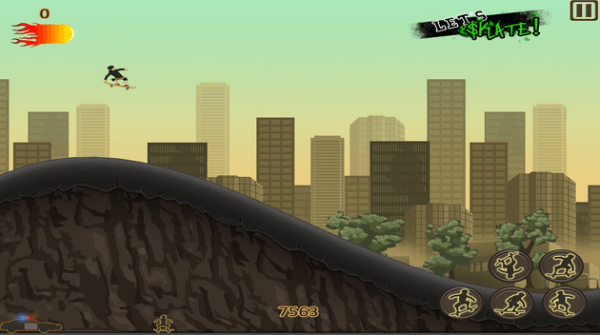
The thrilling ride consists of 40 challenging skateboard levels, where the player must speed on their board as fast as they can against time and the police to reach the next skate shop and successfully move on to the next stage.
Of course, the fun in all skating games depends on the ability to do awesome tricks and spectacular jumps with your skateboard during the wild chase from the police. ‘Let’s Skate’ rewards players with the highest and fastest scores within each level completed.
Following a symphonic soundtrack, ‘Let’s Skate’ includes 5 standard and 5 premium skaters to choose from, bonus points in the form of magnificent skateboard jumps, coins collected in each level and in-app purchases to power-up through levels.
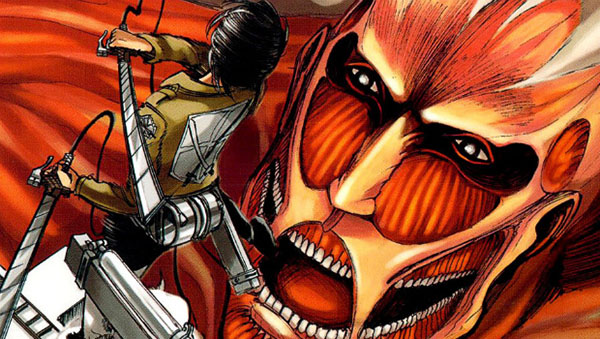
Japan’s first Blu-ray/DVD volume of hit manga-turned-anime Attack on Titan will contain the progenitor of the series, a prototype manga created by Hajime Isayama when he was just 19 years old.
Announced in the June issue of Bessatsu Shounen Magazine, the one-shot manga will be 65-pages long and hasn’t been revealed by the author before. The bonus manga was listed on the show’s website before as “unpublished manga Volume 0”. The first volume of the anime is set to release on July 17 this year for 6000 yen (BD, US$60) and 5000 yen (DVD, US$50) respectively.
The Attack on Titan manga began in Bessatsu Shounen Magazine in 2009, with Kodansha USA publishing it in North America. The currently-airing anime is being streamed by Funimation and Crunchyroll, and a live-action film has recently been confirmed.
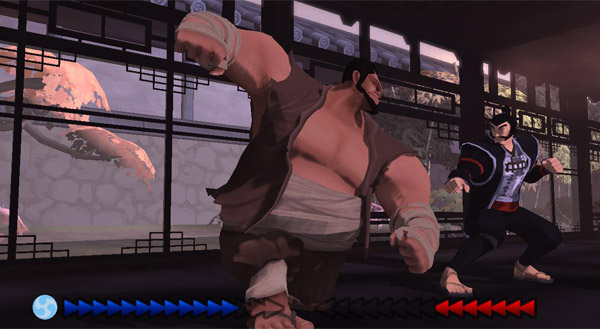
Karate rhythm-based story fighter Karateka by Jordan Mechner, creator of Prince of Perisa, is getting a bundle on the PlayStation Network with its pleasant soundtrack included.
Developed by Liquid Entertainment, Karateka is set in feudal Japan where the player must fight to save the girl Mariko from the warlord Akuma. The game’s music was composed by the Grammy-winning Christopher Tin (Civilization IV). The new bundle will be available here from May 7 with a price tag of $7.99.
Karateka was originally released in 1982 on the Apple II, which utilised rotoscoped animation and cinematic cutscenes. It paved the way for Mechner’s next title, the classic Prince of Persia. Karateka was remade and released digitally, and is available on the PSN for PS3 ($9.99), XBLA (800 MS points), Steam ($9.99) and iOS ($2.99).
Check out our review of the game on the iOS platform here.
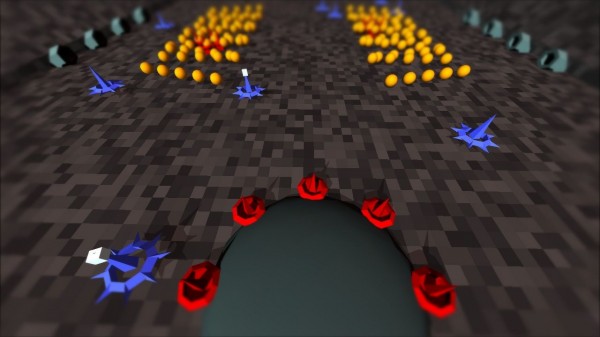
Cello fortress is an odd and unique game. It essentially is a mix between a live cello concert and a video game. Four players from an audience grab a controller each, sit in front of the stage and play a twin-stick-shooter. The players a little tanks that attack a variety of different cannons which are controlled by the cellist on stage. The canons appear and shoot depending on how he decides to play the cello. Very, very interesting.
The creator and cellist for Cello Fortress is a man by the name of Joost van Dongen. Joost is a Dutch, indie game creator who is actually making Cello Fortress in his spare time. Before this he made the game Proun which is an abstract racing game with a minimalistic art style. It was well received by all different levels of society be it gamers, reviewers or even artists. Joost has been playing cello for at least 20 years and plays in an orchestra called Kunstrorkest. He is also the lead programmer and co-founder of Ronimo Games, the studio behind the game Awesomenauts and the award winning, side-scrolling, strategy game Swords & Soldiers.
Joost Live And In Action
Cello Fortress is his solo project. Joost explained:
“The challenge is to not only control the game in the right way, but also play good music while doing so. Just quickly skipping between the various attacks would result in horrible music, so I really need to think ahead a bit and make the music flow fluently from attack to attack. Add to this that it is all improvised, which means that I need to come up with the melodies while playing, and it becomes clear what a challenge this game is for the cellist. The result works brilliantly: playing, hearing and seeing Cello Fortress in action is quite a show!“
Joost and Cello Fortress are currently touring while the game is still under development and is currently improving so keep your eyes out for this one!
Check out the Trailer in the Featured Video section below and don’t forget to drop us a line in our comments section just under that.
Three former NIS America employees have created their own publishing company. Jack Niida (former producer), Hiroko Kanazashi (former Vice President of Production) and Nao Miyazawa (former Vice President of Marketing) issued a press release today for their newly formed company acttil, and plan on bringing independent games as well as other digital content including E-books from all around the world.
“We are optimistic with the current digital content environment. It is quite promising for independent developers and we would love to work closely with them and help achieve their goals.” Jack said in within the press release.
The name acttil is an acronym of the companies most important values; acceptance, creativity, teamwork, trust, innovation and love.
The Los Angeles based company aims on producing online content for a wide range of platforms including home consoles, PCs, and mobile devices. As well as publishing, acctil also proved services including PR & marketing, analytics and translations and packaging designs for localizations. Click here to check out the website.
This is certainly a unique route for these three ex-NISA employees to take and we wish them the best of luck with this new company.
This one is likely to be a little bit confusing so stick with me on this one. Today XSEED Games’ parent company Marvelous AQL purchased Atlus Online from Index Digital Media, the parent company of Atlus. By doing this they have created Marvelous USA in North America, but don’t worry, XSEED Games remains itself and their plans for publishing titles remains unchanged.
For example, any games published on PCs, consoles or handheld gaming systems will still be labeled as XSEED Games while Marvelous USA will instead be the brand for mobile games and online social games. This means that the company as a whole is expanding, but XSEED will remain unchanged and in fact may even benefit from this acquisition in the long run and who knows, maybe we’ll see more Marvelous AQL titles in the West sometime down the line.
To be a bit more specific, the announcement contained the following statement from XSEED Games’ president and CEO Shinichi Suzuki, who is now actually the President of Marvelous USA:
“Marvelous USA unifies our US operations under the global Marvelous brand while giving our customers topnotch products and support for both traditional and online social and mobile games. Our Xseed Games console and PC brand will continue to offer the quality games and service for which it is known, and Marvelous Online gives us expanded reach into mobile and online social gaming markets.”
HarmoKnight Developer: Game Freak Publisher:Nintendo Platform: Nintendo 3DS Release Date: March 28, 2013 Price: $14.99
Overview
The 3DS eShop has brought us some little gems in an overlooked space during the past two years, with smaller developers such as Renegade Kid making a name for themselves with titles full of heart. The almighty Pokemon developer Game Freak have now dropped HarmoKnight on the service, which is a rhythm-based platformer. Sure, the genre is a bit odd coming from the source, but if you have played Drill Dozer, you should know that Game Freak know how to create something other than Pokemon in their spare time. Does HarmoKnight hit the right tunes, or does this little adventure prove to be off key? Let’s find out.
Story
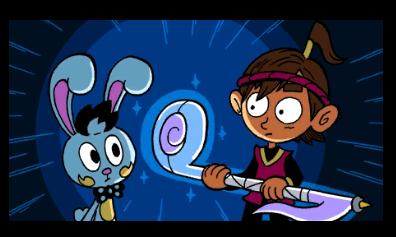
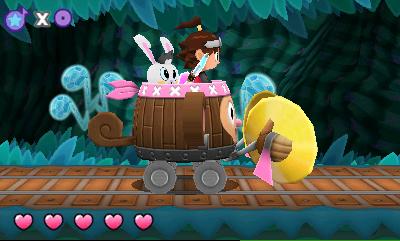
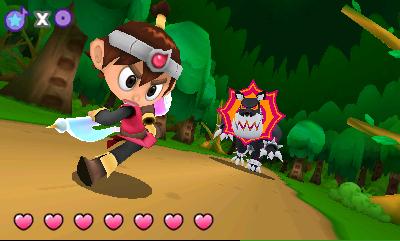
Much like a good portion of 2D platformers on the market, HarmoKnight features a lovable little hero by the name of Tempo, who has been tasked in saving the land of Melodia and the Princess from an evil band of foes with his rabbit sidekick known as Tappy. This world is bright and full of color, and the charm is turned up so high that some may cringe at all of the cute. Now, that might normally detour a good number of older players, but HarmoKnight manages to strike a balance with its lovable cast of characters and general offbeat, quirky design. Is it for everyone? Not really. Those who enjoy their Pokemon and want a title that is light on narrative but full of heart however will probably find what they are looking for here.
Gameplay
If you see some screenshots and go into HarmoKnight thinking this is your run-of-the-mill platformer, you will be in for a rude awakening. Each stage is laid out like a platformer, but Tempo is constantly moving on the side-scrolling plain, so the player does little to control his general movements. Instead, it’s your actions that matter, as before platforming even comes into the equation, HarmoKnight is all about the rhythm-action aspect.
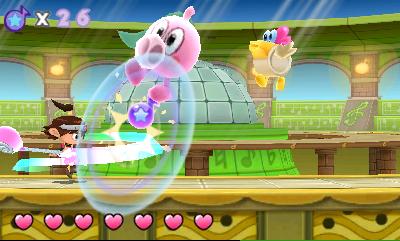
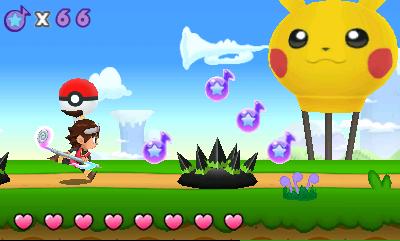
The controls are rather simple in HarmoKnight. For the most part, players will be utilzing the A and B buttons to tap to the beat, which in turn allows our hero to jump over obstacles and smack enemies with his trusty staff. As the game progresses, other playable allies join up with Tempo, giving the game a nice change of pace from the norm with these new protagonists that shoot arrows and have their animal sidekicks do the dirty work. If I could best describe the mechanics within HarmoKnight, I would have to compare them to Space Channel 5. As the track plays and the levels scroll onward, enemies start to appear. Once an enemy is near, you must either smack it or jump over it, which rewards the player with a note. Fail to hit the foe on time and Tempo loses a heart. Luckily, these tunes are all made to get inside your brain, so knowing when to hit the next enemy could be done blindfolded with the right amount of practice.
As far as an objective goes, there really isn’t one aside from collecting as many notes as possible through the means of standard pick-ups and defeating enemies. As each stage is beaten, players are rewarded a rating with their performance – with “Good” or better awarding you with a coveted “Royal Note”. These notes can be considered keys of sorts, as they open up the world to new levels. It’s rather easy to get the hang of the game pretty quick and there are tutorials, but those who cannot pass a stage with enough notes in tow must keep attempting in order to progress onward. At the end of each world, a boss awaits that delivers a more streamlined challenge. Sure, its all about moving to the beat, but Tempo must deliver blows in succession and keep all of his health in one semi-lengthy battle in order to move on. The gameplay doesn’t necessarily change for these portions, but out of all the levels in the game, these battles will keep you on your toes until that last hit is applied.
It all sounds lovely, and trust me – HarmoKnight is a fun game, but there is one flaw that holds this musical adventure back from reaching its full potential. No matter what stage you are on, the gameplay never really changes. Sure, the controls are solid and the music intertwines perfectly with the experience, but the gameplay itself never evolves enough to give the player a true feeling of progression. Enemies change from time to time – as does the setting, but with only a sparse amount of power-ups and new mechanics added, each level feels much like the one before it due to the lack of features added in. Now, this isn’t a deal breaker in the slightest, but it’s a shame to see the 3DS’ loaded repertoire wasn’t utilized more to make this already great romp even more magical.
Visuals and Audio
Earlier, I mentioned about how bright and colorful HarmoKnight is for a reason. Every level appears as digital eye candy, with chipper animations, charming models, and cutscenes that attempt to use the 3D for some eye-popping moments of excitement. It’s almost as if you are playing a Kirby title in many ways, as the world is just as welcoming, and the little mascot Tempo is just thrilled for you to come along with him on his little quest. Animations are a large part of what makes up the gameplay within HarmoKnight as well, as one missed jump can meet the end of our hero in a heartbeat. Thankfully, if you die, it is indeed at your own fault – as I experienced no dips in framerate or chugging throughout the entire game.
Yeah, the visuals are a big deal, but the music and lively soundtrack is where the core of HarmoKnight’s charms can be found. Each and every stage is pumped full of a unique, poppy tune that will carry you to the finish and perfectly in sync with the actions your character performs. As a bonus, and this is a big one here – Game Freak have also included a decent number of bonus stages that feature some of the most loved tunes from the Pokemon universe. Sure, the sweet and melodic tracks do fine on their own, but I felt like the addition of the familiar songs gave myself an even greater appreciation for the main adventure’s mechanics as a whole.
Overall
If HarmoKnight would have been a fully priced retail value, I can easily say that it might have not lived up to it’s price-tag as there isn’t a lot of growth throughout the game. As you know however, this title is made for the eShop and is only priced at fifteen bucks, making it a snazzy addition to the growing library and proving that the service isn’t just for smaller names to produce on. Games like HarmoKnight are what the eShop is all about – quick and light bursts of fun, and on that note, anyone wanting to add a true delight to their digital collection should grab the latest from Game Freak, as this musical romp is sure to impress anyone who are looking for some guaranteed quality with a good beat.
Capsule Computers review guidelines can be found here.