As people look away from Marvel and DC Entertainment to provide them with their comic book fix, indie developers are starting to grow in popularity. Smaller developers like those featured on ABC’s Comic Book Heroes (check our review here), and Titan Comics are starting to take the world by storm.
Titan Comics’ A1 Anthology series has been widely well-recieved and pretty popular among comic book readers around the world. This week, the fourth installment will be available for purchase. A1 Anthology #4 will include three different stories, all penned by Dave Elliot and W.H. Rauf. The latest installments of the following books will be featured;
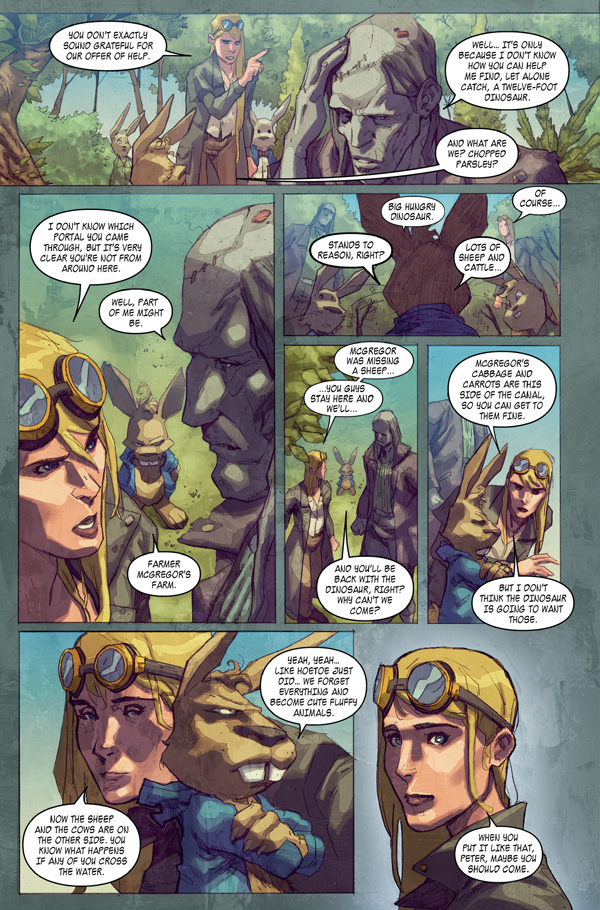
WEIRDING WILLOWS There’s a dinosaur from Hollow Earth loose in the Weir and she’s eating Farmer McGregor’s sheep! Can Alice and Frankenstein’s Monster stop her – before McGregor puts down this purple T-rex for good?!
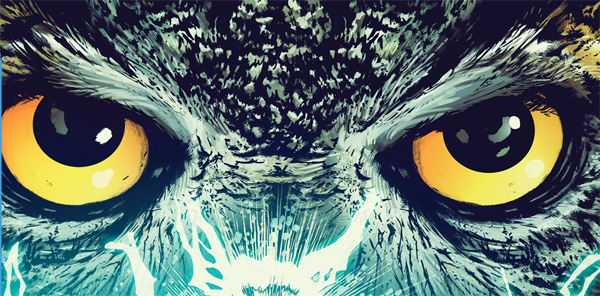
ODYSSEY What do you get when you cross soldiers, superheroes, supervillains with a truckload of guns, in a children’s hospital in Iraq?! This month’s ODYSSEY, that’s what!
CARPEDIEM: NINE IRON
Grab your woods and irons, and join the CarpeDIEm agents as they battle a haunted putt-putt golf arena – where deadly surprises wait in every hole!
You can pick up A1 Anthology #4, next Wednesday, Sep 11th for a moderate $3.99. If this is the first you are hearing of the A1 Anthology, then check out the gallery below that features some of the covers and pages from the book. If you are planning on grabbing the book, or have ready any of the previous installments, then let us know what you think in the comments below and be sure to stay tuned to Capsule Computers for all the Titan Comics news as it becomes available.
Kingston are one of the world leaders when it comes to data storage and one of their newest devices, the Kingston MobileLite Wireless, seeks to bring further strength to that reputation. With the space available on mobile devices still rather limited and in some cases being unexpandable such as with the iPad, this device could be the solution to your storage problems.
The MobileLite Wireless is a fairly unique and innovative device. It is essentially a wireless portable hard drive that uses a Wi-Fi connection to stream data to up to three Android and Apple devices simultaneously. While the device doesn’t contain any storage within itself, the owner uses their own USB flash sticks, SD cards or hard drives (my 1TB Seagate portable hard drive worked just fine) to provide the storage and content, meaning the MobileLite Wireless serves as a link between your files and your portable devices.
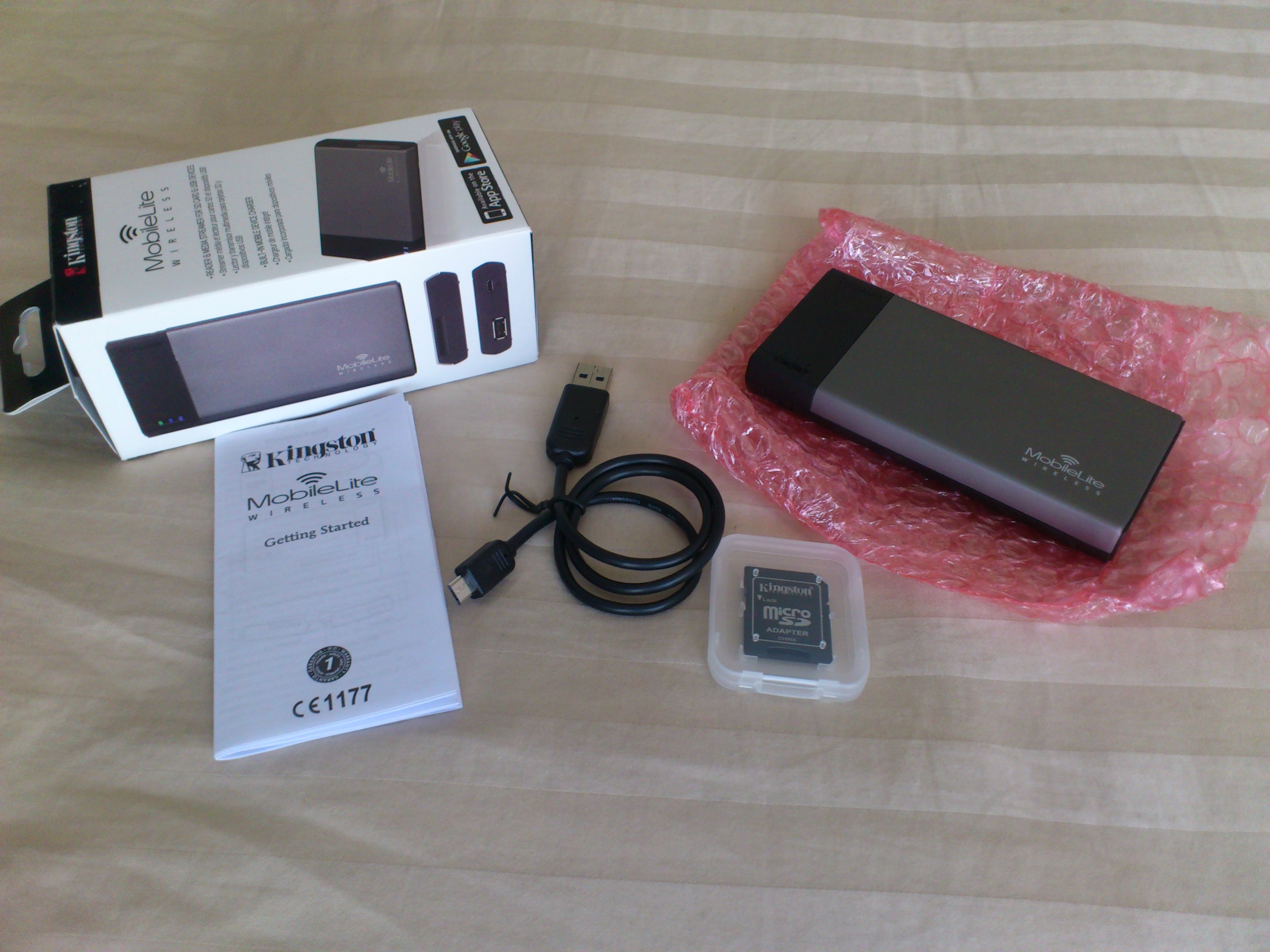
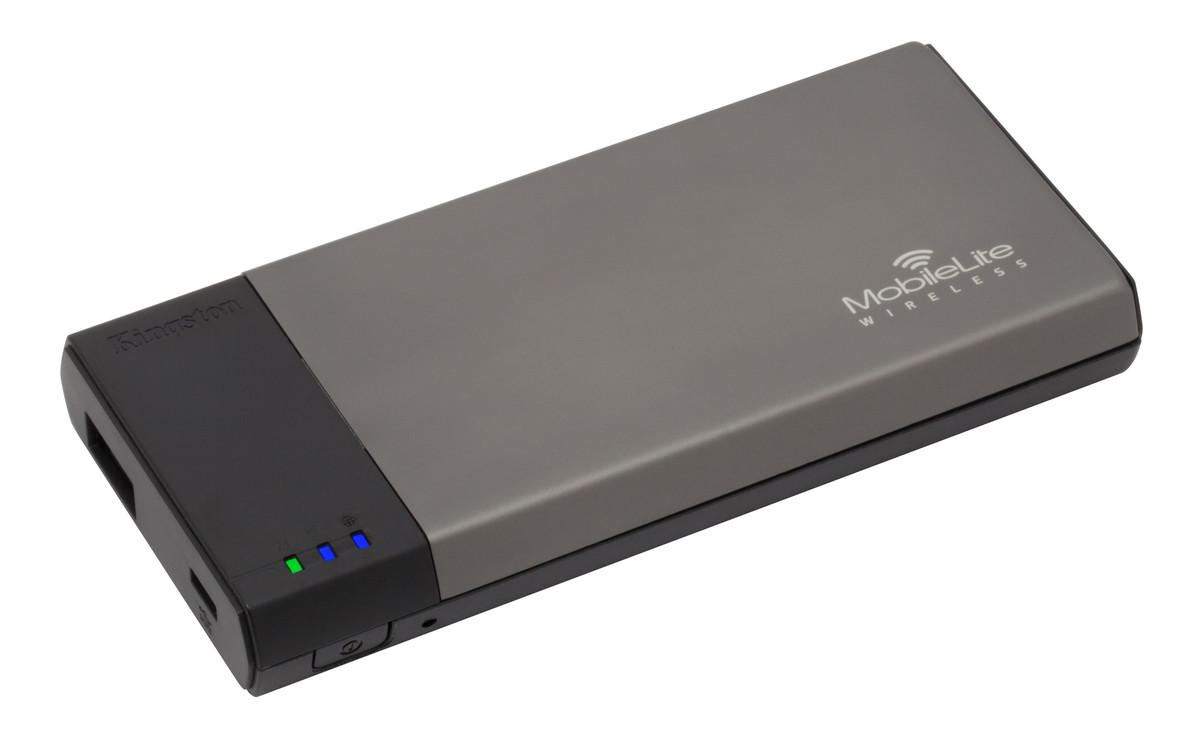
In the box you will receive a slim micro USB cable for charging the device, a micro SD card adapter and a handy starters guide as well as the device itself. The MobileLite Wireless is sleek, portable and functional, all three very important factors for a device of this nature. Weighing in at under 100 grams and being only slightly larger and more dense than an average phone, carrying the device around with you won’t prove to be an annoying task. The dark grey and black colour scheme also looks great and means the MobileLite Wireless won’t stick out awkwardly amongst your other devices. The fact that it doesn’t need any wires to connect to your mobile devices is also a huge plus, as you don’t have to worry about having the correct cables or even having them at all. The ports on the side are placed well and the three led indicators provide a simple way to let the user know the status of the device. The left most light indicates battery level by flashing in different colours depending on it’s amount of charge, the blue central light indicates the wireless capabilities are on and the final blue light indicates you have a bridged connection to the Internet. Battery life comes in at just under 5 hours of continuous use but all functionality will still work when charging.
In terms of the MobileLite Wireless’ most core functionality, streaming content to an Android or Apple device works very well. It handles streaming data to up to three different devices at the same time, it’s fast and it feels just like those files are on your device. The MobileLite Wireless uses a Wi-Fi connection to connect, which means most devices will be capable of connecting without problem. You won’t have any problems with range either as you can get around 50 feet away from the device without any connection problems and you don’t have to lose your device’s Internet capabilities when you are connected to the MobileLite Wireless’ own network as the device can connect to a Wi-Fi network itself and serve as a bridge. Those who are security concious will be pleased to know you can place a password on the local network to stop just anyone from accessing their content.
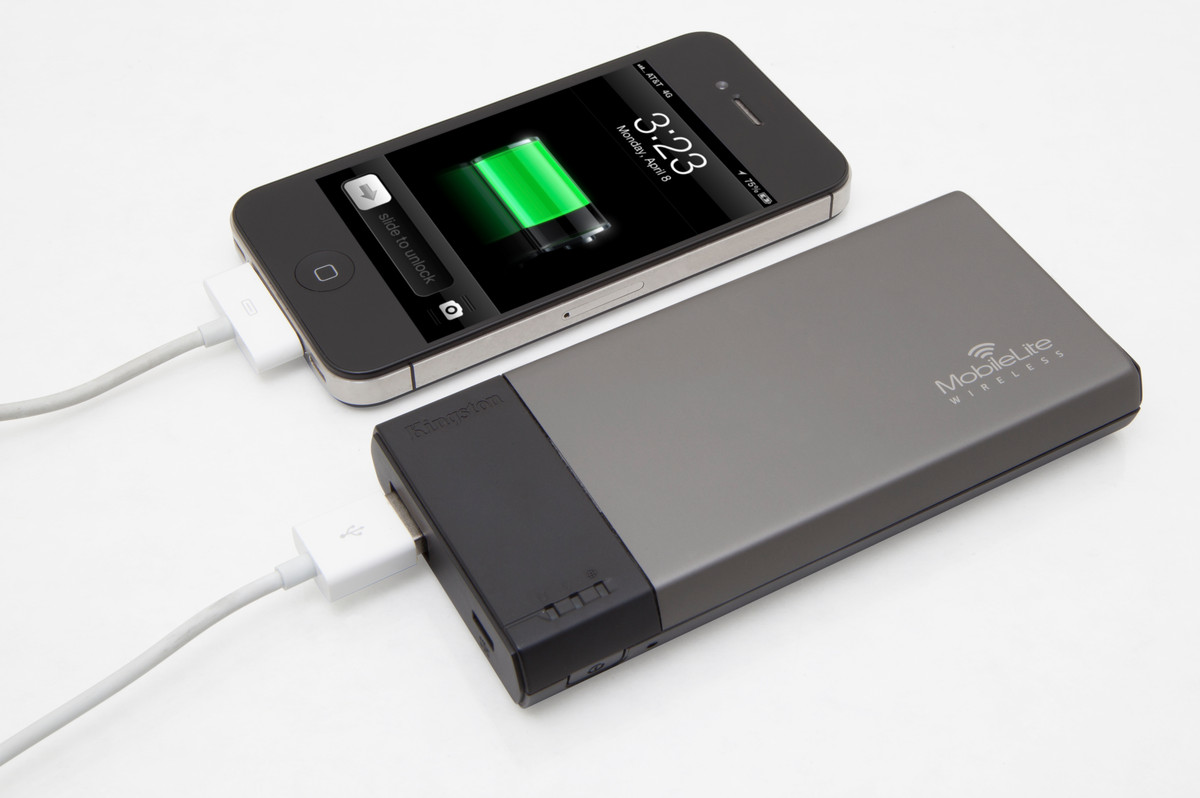
The MobileLite Wireless also has some nice additional features that deserve a mention. By pressing the power button quickly as opposed to holding it down for three seconds to turn on the wireless capabilities, the Mobilite Wireless can serve as a charger for your phone or other devices capable of being charged with a USB connection. Charging drains the life of the MobileLite Wireless pretty fast and it isn’t the most efficient charger but it can save you in a jam if your phone is about to die. I got about a 40% charge to my phone on a fully charged MobileLite Wireless. It also serves as a standard card reader which will no doubt be handy for some users.
In terms of functionality with your content, one cool feature is the ability to copy your photos straight to the storage inserted into the MobileLite Wireless, which means you can instantly share that content with up to two other people and you now have a backup of those photos while clearing space on your device, all without the need of a computer. For those users of social media, you can also post photos to Twitter or Facebook directly from the device as well as e-mail them as long as you have the MobileLite Wireless connected to a network. The fact that you can stream content to three users at once with everyone having their own access to the content is perfect if for example, someone wants to watch a movie while another user listens to some music. As touched upon before about the photo sharing, you can also share other files from your mobile device simply by placing it onto the MobileLite Wireless storage.
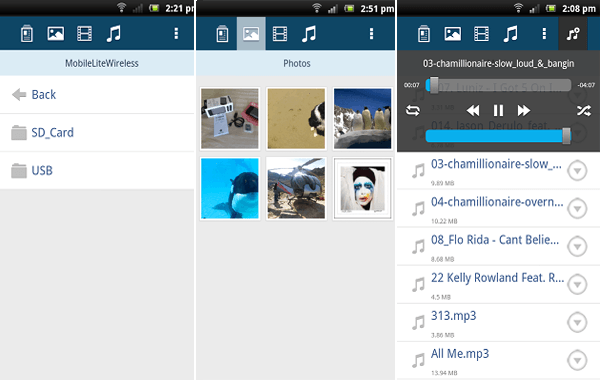
To access the content on your SD card or USB storage device you must first download the free MobileLite Wireless application which is available from the App Store and Google Play. The app itself is simple and well designed. It features a small tutorial at the start and accessing your files is as simple as folder navigation with a drop down list. Photos can be viewed as thumbnails or a file list, tapping on music begins playing it and it all works as one would expect. Both the picture viewer and music player provide all the basic neccessities, but don’t expect anything extra like photo filters or music equalisers. The music player does however features repeat and shuffle functionality. Videos also work fine but will need an external app such as VLC player to play larger files due to the limitations of Androids default video player. This dependency on the app for accessing your content may be a problem for those who prefer to use thier main media player but will suit the majority just fine. I did have one small glitch where I couldn’t see all my photos in portrait mode but could just fine when I flipped the phone into landscape, but this was a rare occurence.
You can also copy files between your mobile device and the SD card, however this is a fairly slow and clumsy experience when it comes to anything but small, single files. Transfer speeds are rather slow. I tried copying a 4GB file over and came back some time later to find it was only a quarter of the way complete. Functionality for copying multiple files outside of folders doesn’t appear to be present and copying photos has its own problem as you can only transfer photos from the file list view, which means you only have access to the file name and not a thumbnail. You will have to click the file name and load up the photo first to see what it is you want to transfer over and then return to the list and select to transfer it from there. This missing functionality seems like an oversight as a quick tap of the screen or settings button while viewing the photo from the photo grid could have easily brought up the option. While this isn’t much of an issue as the device’s nature is obviously more inclined to streaming as opposed to file copying, it is an available option that doesn’t work well.
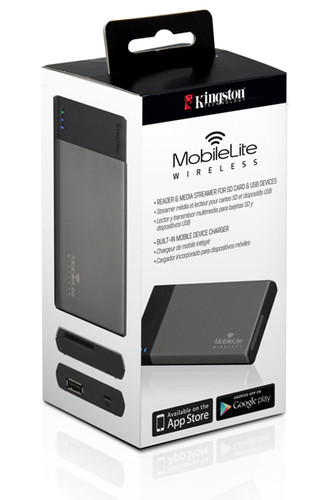
Overall, Kingston’s MobileLite Wireless is a fairly unique device and performs all the tasks it claims on the box to a high standard of functionality and simplicity. It may serve a rather niche market with its feature set, but at an attractive price point and the bonus of doubling as a portable USB charger and card reader, it serves that market well. The required app works well and is easy to use but has some room for improvement in terms of functionality for transferring files from your devices back to the MobileLite Wireless. If you are aware of its capabilities beforehand, you will not be dissapointed by this nifty device.
Capsule Computers review guidelines can be found here.
Over the weekend at Dragon*Con FUNimation chose to announce who will be voicing who when they release Jormungand later this year. The full cast list, as well as those working as members of the crew can be found below:
Main Characters:
Jonah – Micah Solusod
Koko – Anastasia Muñoz
Supporting Cast:
Alan – Tyson Rinehart
Amalia – Lydia Mackay
Black – Mark Stoddard
Chen – Jerry Russell
Chequita – Clarine Harp
Curry – Kent Williams
Edgar – Andrew T. Chandler
Karen – Shelley Calene-Black
Kasper – Eric Vale
Lehm – Christopher Smith
Lutz – Greg Ayres
Mao – Patrick Seitz
Miami – Gwendolyn Lau
Mildo – Caitlin Glass
Poe – Sean O’Connor
R – Ian Sinclair
Scarecrow – Robert McCollum
Schokolade – Brittney Karbowski
Tojo – Christopher Bevins
Ugo – Cris George
Valmet – Carli Mosier
Wilee – Akron Watson
Crew:
ADR Director – Christopher Bevins
ADR Engineer – Cris George/ Kenneth Thompson
Line Producer – Christopher Bevins
To go along with this announcement the company also released the below preview trailer focusing on the main characters escaping from an pursuer in an explosive car chase.
Over the weekend FUNimation has announced what characters will be voiced by what voice actors when they release their English dub of Maken-Ki! in North America. The list of voice actors can be found below:
Takeru – Ian Sinclair
Haruko – Monica Rial
Himegami – Chloe Ragnbone
Inaho – Tia Ballard
Furan – Brittney Karbowski
Kengo – Scott Freeman
Yuka – Jamie Marchi
Azuki – Morgan Garrett
Uruchi – Cherami Leigh
Chacha – Anita Neukar
Kimi – Alexis Tipton
Minori – Caitlin Glass
Aki – Heather Walker
Gen – Robert McCollum
Tomika – Eileen Dover
Akaya – Eric Vale
The company has also released a bit of a preview of the dub in a minute long trailer for the series which can be seen below. Currently Maken-Ki! is set to be released on November 12th in a Blu-ray and DVD combo pack, leaving C3 the only Funico stream left without a release date.
After doing an arguably poor job announcing Atelier Totori Plus’ release in the West, considering the game was only announced for release after it had already been available for purchase for two days, Tecmo Koei has been doing a bit of a better job with their next enhanced version of an Atelier game, Atelier Meruru Plus.
After announcing that the game would be released sometime in September back at E3, today it has been announced that Atelier Meruru Plus: The Apprentice of Arland will be released as a digital download on the European PSN this Wednesday. Whether this means Atelier Meruru Plus will also be released in North America this week is currently unknown, but we have reached out to Tecmo Koei America for comment.
KickBeat Developer:Zen Studios Publisher: Zen Studios Platforms: PS3 (Reviewed), PS Vita Release Date: US: September 3rd/Europe: September 11th Price: $9.99 (20% discount first week special for PS Plus Subscribers, PS3/PS Vita CrossBuy Entitled) – Download on PSN
Overview
KickBeat is a rhythm game inspired by the likes of Guitar Hero and Dance Dance Revolution where you press buttons to the beat to improve your score and multiplier. While in that regards the games are very similar, KickBeat mixes it up by applying a kung fu theme to the action. This isn’t just something that is applied to the background like a music video though, as the martial arts has woven it’s way into many aspects of the game. You won’t just be pressing buttons in correspondance to arrows passing a checkpoint on the screen, rather the buttons you need to press correspond to the position and type of your enemies which move and attack to the beat.
Story
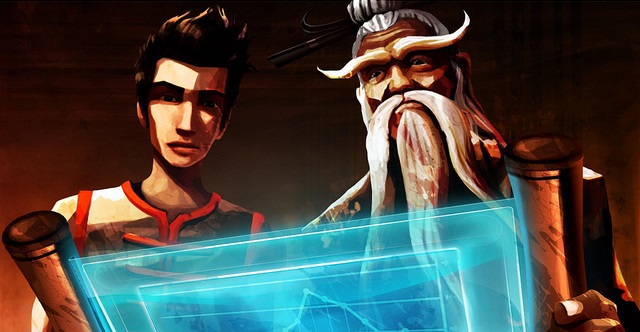
The story centers around the musical Kung Fu Masters Lee and Mei as they track down the evil Mr. Halisi who has stolen the mystical Sphere of Music, an orb that contains every song ever created. You manage to save 18 songs (which cleverly matches up to the amount of songs in the game) and now have to track down the music thief to save the world’s music. The story is light hearted and full of classic Kung Fu movie tropes as well as a few jokes here and there (such as Master Fu using his cell phone instead of the Ethereal Channel to call Lee because his phone had signal). The story won’t win any awards but it serves as a nice explanation as to why you travel to different locations across the world as well as providing some nice backstory on the likable characters. Once you complete the game as Lee you can then complete the game as Mei. The songs and order you play them in remain the same, but Mei’s story continues where Lee’s left off and focuses more on her backstory and relationship with her grandfather Master Fu.
The story is told through cutscenes that feature still water colour paintings that are hand animated. Alot of love and attention has been applied to these scenes and it shines through. However sometimes it seems that one too many frames were created and with the crossfades that are used to transition between each picture sometimes it doesn’t look quite right. For example in one scene Lee is sweeping outside the temple. What could of been done with two frames with Lee sweeping left and then right is instead done with three and the crossfades make it blurry and hard to appreciate the scenes. This doesn’t happen too often but is noticable when it does. The scenes are all fully voiced and the voices all fit the characters perfectly. The acting is up to standard for the most part but does feature a few moments where the delivery feels a bit off.
Gameplay
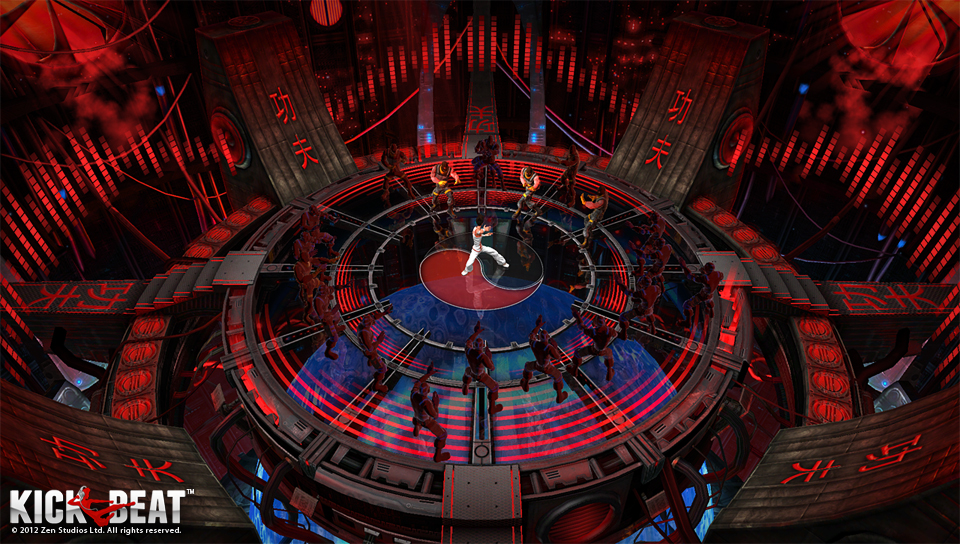
KickBeat doesn’t redefine the rhythm genre in terms of its core gameplay. You press the correct buttons to match the visual cues to the beat to score points. Miss your cue too many times and you will lose health and eventually fail the song. Keep hitting the beat consistently and your score and multiplier will increase. Where KickBeat differs is the way it presents the musical cues and other information to the player. The character your playing as stands in the middle of the stage surrounded by enemies who represent which face button to press (you can also use the D-pad). They will circle around you until they reach their position and when they attack, that is your cue to counter by pressing the correct button at the correct time. With each button press you will be given a ranking such as perfect or great which lets you know how good your timing was. If you miss all together you will get hit and lose health which will lead to you failing the song and having to restart if your health drops to zero. Successful hits also build up your chi, which is used just like star power in Guitar Hero to double your multiplier. Using Chi at the correct times is the key to getting a huge score.
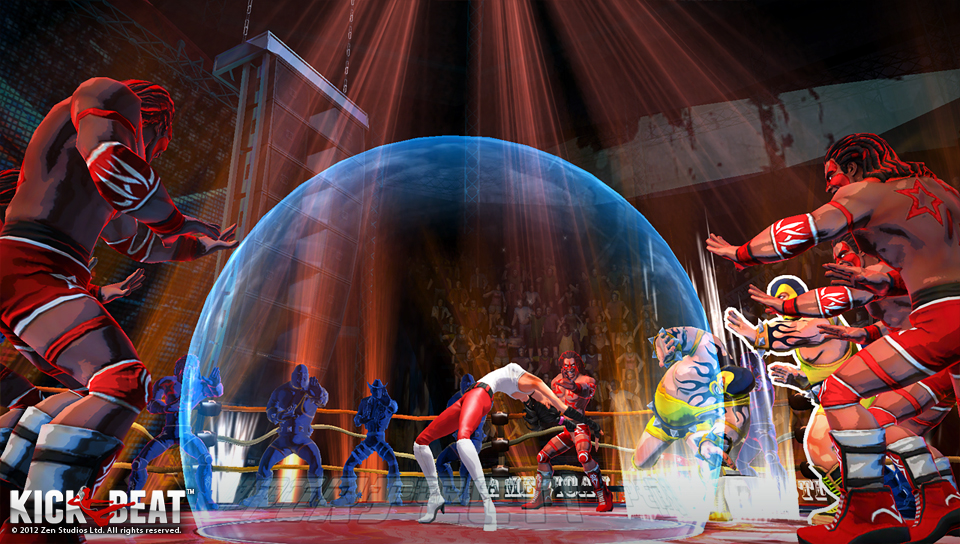
Enemies come in three flavours. Yellow ones require a single button press to the beat, blue enemies attack on half beats and normally come in a pair or successive groups, and red enemies attack together on the same beat requiring you to press two face buttons at once (three on expert difficulty). Some enemies are also chained together by energy and require a hold and release mechanic to be used against them. Enemies can also feature powerups, which are obtained by tapping the face button again after defeating the enemy. Powerups range from things that help you in game like a shockwave that kills surrounding enemies and gives you some breathing room, to multiplier and score bonuses. These differing elements bring variety to the gameplay and ensure the game does not become monotonous.
All this sounds fairly simple and standard on paper but in execution the innovative interface in combination with the backgrounds and lighting effects sometimes makes it very difficult to see what the next visual is. I don’t mind being punished in a music game for being off beat and mis-timing a button click, however it is very frustrating to lose your multiplier and take a hit because you didn’t see an enemy or were unsure which enemy was going to attack first. It’s easy to see why games like Dance Dance Revolution and Guitar Hero have stuck to that simple interface of notes flowing down the screen to a persistent checkpoint as they offer the player enough time to see what’s coming next and the consistent position means you always know where to look for your next note. On the normal difficulty, the game does offer more standard visual cues in the form of glowing markers that match the face buttons, however the assistance of those markers are removed in harder difficulties and can’t be turned on via an in game option.
It’s very frustrating because when you do build up a combo and really start to feel the beat the game is alot of fun and you can get really into it. Smashing enemies to the high energy tracks in the game is really satisfying and pumps you up, but that feeling is too often interrupted by my character taking a hit due to the poor visibility of a visual cue.
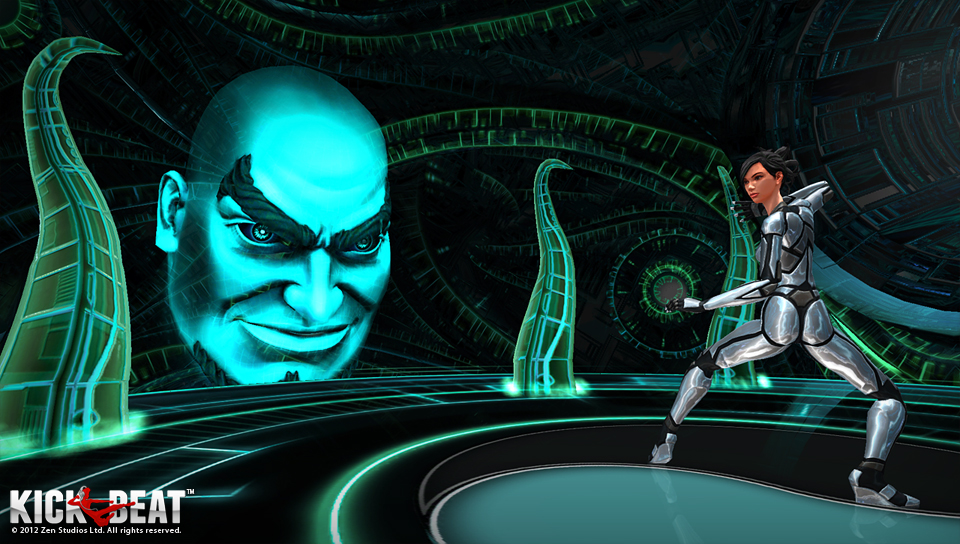
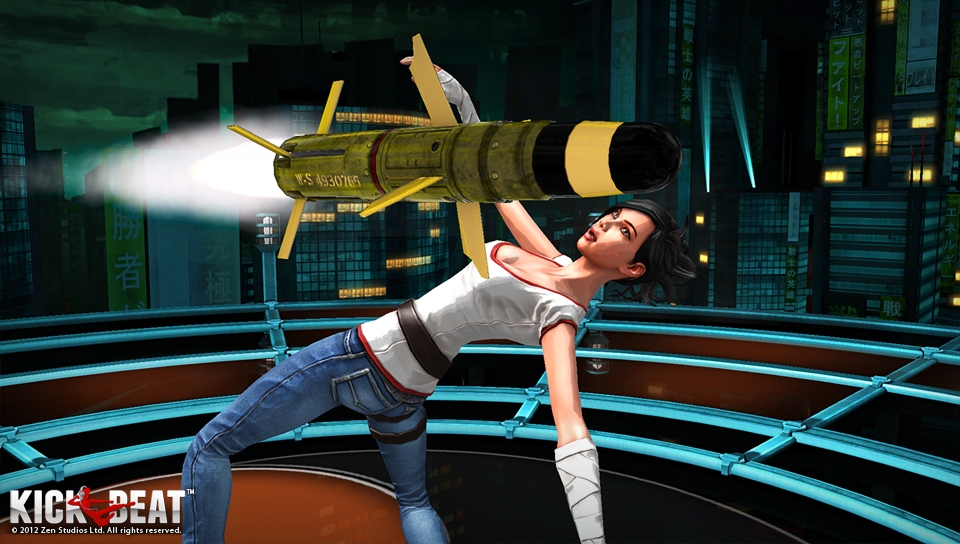
KickBeat features a few boss fights throughout the story but outside of a few unique animations and visual cues (such as missiles instead of enemies) the aim of the game is exactly the same. The last boss fight is annoying at first as the enemy has these purple spikes on top of its virtual tentacles that you have to double tap like powerups to destroy or they will hurt you. The spikes look nothing like the power orbs you are used to and the game doesn’t explain to you at all how to kill the spikes (which it could have done easily in the loading screen message), so I died a few times wondering what was going on. The boss fights are fun in their own right but seem like a missed opportunity to break up the gameplay from the standard affair.
Outside of story mode you will find a variety of other options meant to enhance the replay value. KickBeat does lack online multiplayer (although several leaderboards are kept) but does feature split screen so you can verse someone locally in any of the story mode songs or your own. There is the standard freeplay option as well as a survival mode to unlock for those that complete the story on master difficulty. The game rewards your performance by awarding stars that are used to unlock new characters and outfits. The game isn’t lenient with it’s 5 star ratings so getting all the stars you need to unlock everything will take some time and practice.
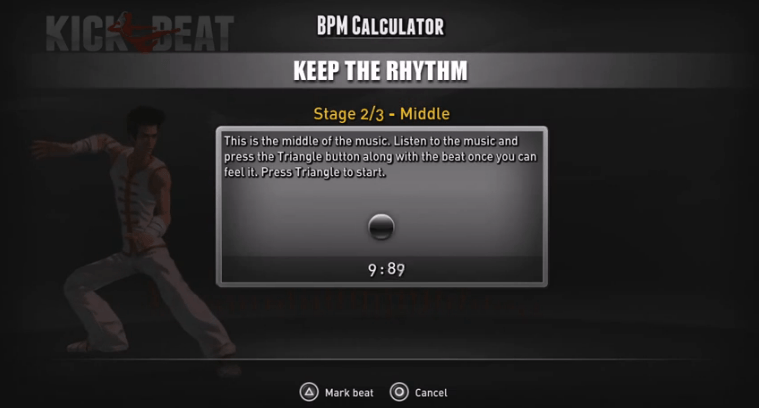
The other main mode allows you to import your own songs to fight to which is a really nice feature and ensures the game isn’t limited to it’s own soundtrack. To create a song you simply have to tap the triangle button to the beat to help the game establish the Beats Per Minute and offset. You can also enter the values in yourself if you know them. I did have a few random glitches in this mode. One song I tried to use seemed to work fine when creating it, but upon playing the song in game the music never played. Another time I was marking the beat of a song and the end section was of a completely different song. One should also note that while any song can be imported that is longer than 1 minute and shorter than 6, not all music works well with the games generator. Songs with a consistent BPM work best while you will probably have some enemies performing wierdly timed attacks on tracks that change tempo alot such as Skrillex’s Scary Monsters and Nice Sprites. The game does it’s best to get the beat correct and generally does a good job. Unfortunately any accomplishments you make with your own songs won’t allow you to earn stars or even contribute to your total leaderboard score but it’s still a fun mode to try out.
A final note on the gameplay is that the speed of the enemies never really gets faster. I was expecting with an increase in difficulty level I would also see a greater onslaught of enemies and while it felt like enemies were slightly more frequent on harder difficulties, the yellow enemies are generally just replaced by more red and blue enemies. It’s dissapointing because it would of been really awesome to nail a fast sequence of 10 enemies to the beats of the bass drum at the end of a song, but enemies normally only attack on the beat rather than to the individual parts of a song that stand out.
Visuals
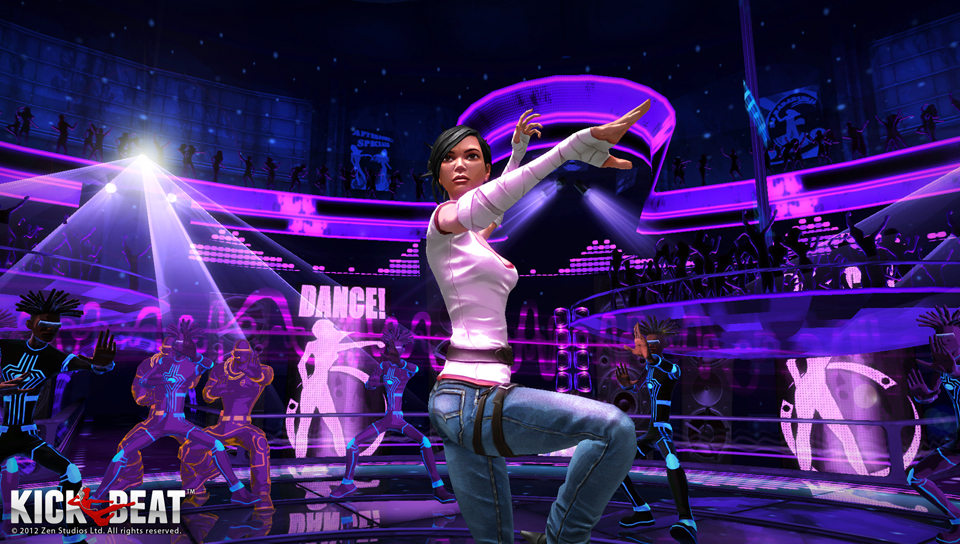
Quite simply the graphics look great. Characters have a nice detailed cel shaded look to them as do enemies and both the main characters and enemies have a number of different outfits they wear to mix things up. The animations the characters perform are also well designed. Watching your main character zip around performing handstand kicks, backflips and double bent over punches is awesome and the slow motion parts that end each section of the song are impressive. It’s pretty cool watching your main character dodge a punch and then retaliate with a kick to the face or jump in the air and kick two enemies at once in midair with a split kick. The six different arenas you fight in are full of life with great lighting effects and background elements such as crowds or pumping speakers. The way the arenas pulse to the beat not only looks cool but helps the player establish the sense of rhythm. The dynamic camera brings a higher sense of impact to the kung fu action and can immerse you even further in the action, but can be turned off in the options menu if you feel it is messing up your combos as sometimes the zooms and camera shakes can be distracting.
While the graphics themselves are great, they do negatively impact on the already troubled visual cues at times. Some of the lighting effects and dark tones of the backgrounds can unfortunately hinder your ability to distinguish between the types of enemies. The enemies wear colour coded clothing but it isn’t overly obvious and is sometimes hard to see against the backdrop of the statge. In the Monastery stage for example, the boss fight features red lighting and a different camera angle than what you are used to, making it hard to see red enemies in particular which means you may mistake them for a yellow enemy, especially if you can only spot one of the red attackers and don’t notice the pair. The club stage can also be rather dark at times, with no light or purple pulsing lights making the blue enemies hard to see. The enemy that is attacking next will have a white glow around them, but this glow can get lost in the background and finding it can be difficult especially when the enemy attack will be coming up in less than half a second. This is the most noticable with the blue enemies as they attack in groups of two or three and once the first one attacks you then have to quickly search for the white glow to make sure you know which of the other two blue enemies in that group will attack you next. The way they move around the circle doesn’t give much further indication as both seem like they are in a plausible position to attack.
The visual cues also have trouble coming across clearly in terms of their composition, more so when alot of enemies are on screen. The bottom right corner where you press the square button felt most problematic, with some enemies that were getting ready to come into their attack position blocking the view of enemies that attacks were coming up sooner which is because of the way they circle around the center of the stage. The placement of the multiplier could also have been better. Because you have to focus on the enemies at hand you don’t really get time to look at the multiplier which is placed in the top right hand corner of the screen away from your score. While this doesn’t seem like such a big deal, you need to know your current mulitplier to inform your deicison of when to use your chi so you don’t waste it. You won’t have a similar problem identifying your health, chi and remarks on your attack timing as they are placed nicely in the center of the screen and are easy to read.
Audio
A music game can only be as good as its songs and KickBeat doesn’t dissapoint in that department considering it’s status as a cheap downloadable title. The 18 licensed tracks included in the game are all really high energy and fit the game perfectly. I would of liked to see more variety though as nearly the entirely tracklist is made of songs consisting of a heavy rock influence with a few rap songs. Dubstep and techno music seem like an awesome fit for this game, but The Construct by The Voicians is the closest you get to those genres and was my favourite song in the game which left me craving similar sounds other than rock. Tracks are constructed well with the beats and enemy attack patterns matching perfectly most of the time but there a rare couple of instances where hitting the enemies on their attacks felt a bit off, I noticed this particularly in the first half of Papa Roach’s Last Resort.
Standard kung fu impact sounds are heard while fighting your enemies and it’s satisfying to land your blows in tune with the music. I mentioned the unique animations that occur in the visuals part of this review and these look very satisfying, but they strangely lack any sound which largely takes away from the impact. Would of been great to hear some bones cracking or the enemy groaning or even your character making some sort of yell. Voice acting also seems to be missing from any in game cutscenes which seems wierd especially when the rest of the story has voice overs.
Overall
With its low price and high replay value, Kickbeat definitely gives the player alot of value for money. When you’re hitting all the right notes like a kung fu master and taking out enemies to the beat of the well picked high energy soundtrack or song from your own personal collection, then it’s one of those top gaming experiences where you just feel immersed in the game and are having an excellent time. Unfortunately, the difficulty in achieving that sensation due to the sometimes hard to read visual cues weighs down the experience and is hard to excuse in a genre where knowing what notes you have to hit and when is so integral. Some technical problems and a couple of offbeat sections also stop you from achieving what can be a great experience. KickBeat has definite room for improvement in a number of areas, but is a decent effort by Zen Studios, especially when considering the innovation they are introducing to the rhythm game genre.
Now this makes me particularly happy. When Dead Rising 3 was first revealed, I seemed to be the only one reassuring everybody else around me that Capcom would not be abandoning the insanity of the prior titles, just because it has a darker visage…
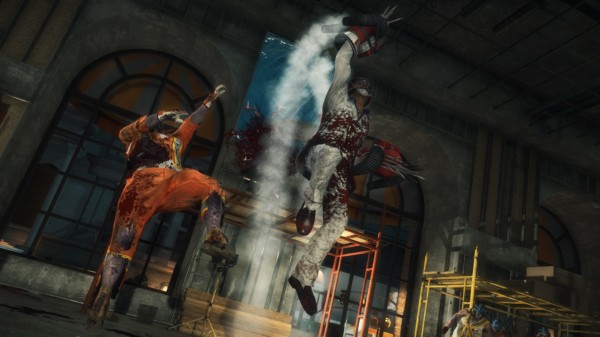
Well, if the “Rollerhawg” wasn’t proof enough that Dead Rising 3 is as wacky as ever, check out the new trailer embedded at the bottom of this article. The almost 2-minute gameplay video features footage taken from demos at Gamescom 2013 last month and has just found its way online. It shows the player character, mechanic Nick Ramos, cooking the undead by breathing fire out of a bull mascot head, slicing them up with lightsabers and even throwing out a Street Fighter homage with Ryu’s classic Shoryuken! Watch it now!
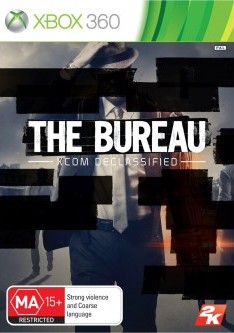
The Bureau: XCOM Declassified Developer:2K Marin Publisher:2K Games Platforms: Playstation 3, Xbox 360, PC – Reviewed on Xbox 360 Release Date: 23rd August 2013 Price: $39.99 – Available Here
Overview Welcome to the United States circa 1962. Life is good, apart from the constant fear of the Soviets. Also the invading alien threat, approaching from beyond the stars in order to attack, enslave and destroy humanity. There is no warning, they come in waves. They have no mercy. They have no fear. They will not stop. and everyone is happy.
Nothing to see here folks
Story The year is 1962. It’s the height of the Cold War between the United States and Soviet Russia. Tensions are high to say the least. Fear of a Soviet attack led to President Kennedy creating the Bureau of Operations and Command, also known as XCOM. With a top secret underground bunker to house it, a selct list of personnel was to report in the event of a Soviet invasion. However the Bureau’s director, Myron Faulke, envisioned XCOM as Earth’s defence against a much different force: aliens. With the recent discovery of an extra-terrestrial element on Earth, dubbed “Elerium”, Faulke is determined to convince other government officials that “Outsiders” truly exist. He tasks CIA Special Agent William Carter to deliver a case containing an undisclosed alien relic to him…That’s when things go wrong. Having been shot by an Infiltrator trying to steal the case, Carter awakens to find the spy dead, his wounds healed and the case empty…also the world is under attack by an army of alien invaders. Not a good day.
Carter immediately joins the fight, combating little grey men in order to rescue whoever he can. After a number of battles Carter, and five other survivors, are evacuated to the one safe place in, quite possibly, the world: XCOM. With every specialist, soldier, scientist and engineer they coud save, the Bureau begins to gather information, preparing to defend the planet. Faulke reveals that the Outsider have jammed communications worldwide, leaving every city and town isolated. Military bases are being destroyed and entire taken over. With no means of contacting the White House, Faulke assumes control of the country’s remaining military forces and formally activates the Bureau. Operatives across the country conceal the alien threat as a Soviet attack, imploring civilians to retreat to bunkers and safe houses. The communications blackout prevents word from spreading cross-country, keeping a majority of the populace in the dark.
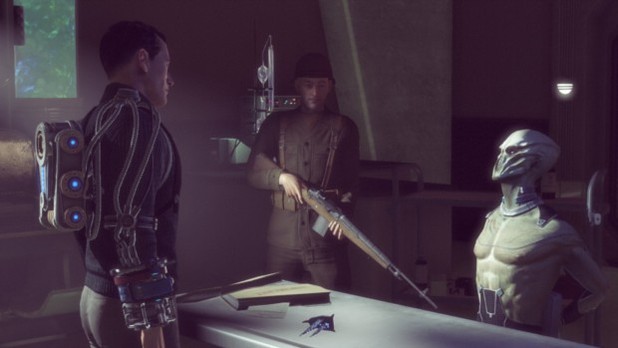
Just a regular interrogation
Despite his attitude and previous record, Carter is still called in by Faulke to lead missions in the field. With his team at his back, Carter undertakes the more dangerous and crucial objectives of the human defence. As the game progresses, these missions result in the rescue of important NPCs, the development of new weapons and the destruction of several Outsider installations, all of which draw the attention of the alien general. The combat escalates as XCOM strikes higher and higher up the invader’s ranks, all whilst planning humanity’s counter attack.
The Bureau: XCOM Declassified at it’s core has a simple story: Defend Earth. Though not necessarily a bad thing, there’s just something missing. Something that brings everything together and creates a truly unique story. Certain plot threads are left fairly underdeveloped, simply presented once and then never mentioned again. This lack of description took away from the impact of some revelations, making them seem spontaneous and straight from left field. One critical event was relegated to an optional side mission, completely missable and far less dramatic than it should’ve been. The elements of a great story were there, it just lacked the details needed to bring it together.
This won’t end well…
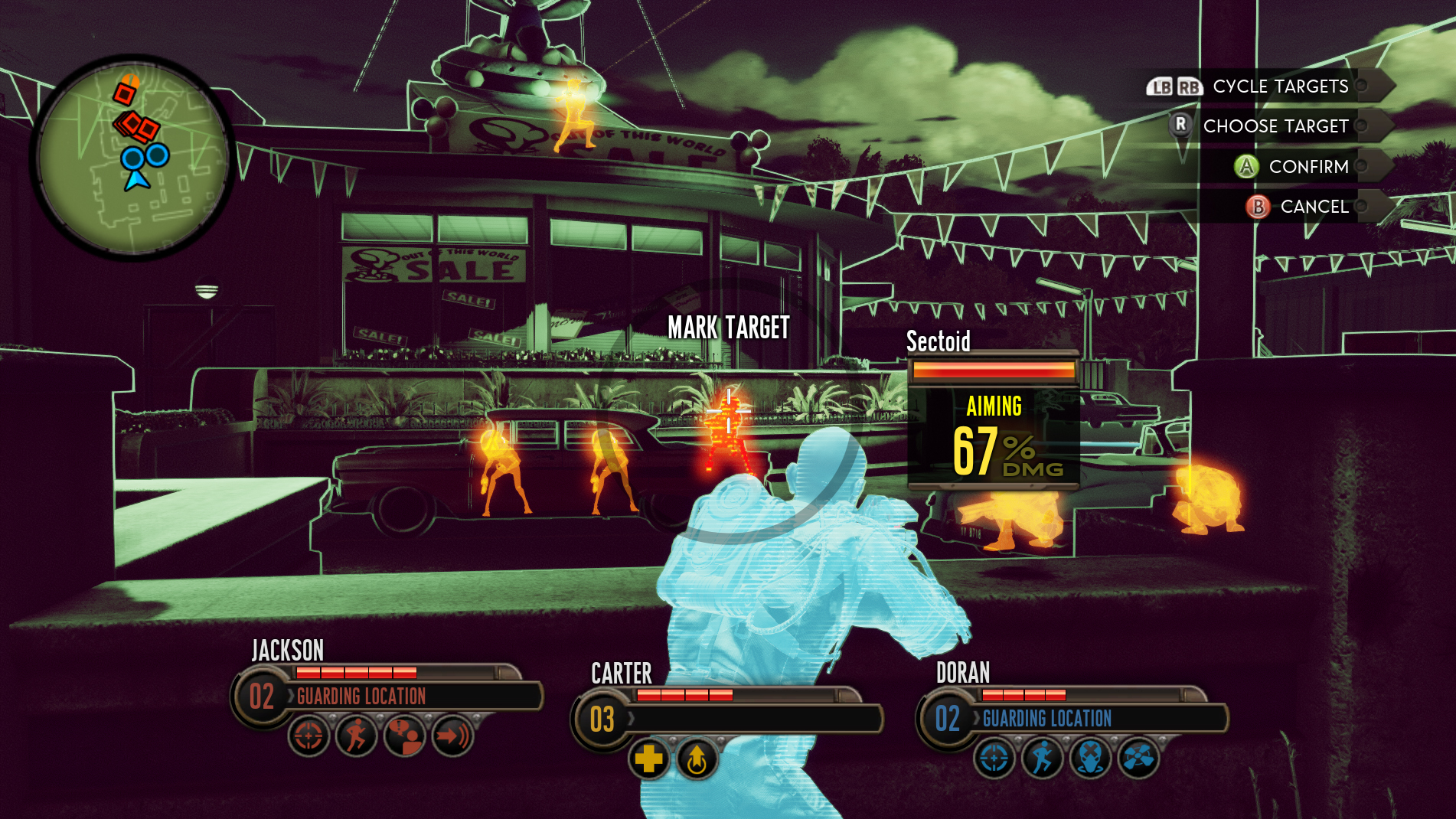
Gameplay The Bureau, much to the…discussion of the fanbase, does not play like a traditional XCOM game. Diverging from the RPG strategy, the Bureau ventures into the realm of tactical 3rd person shooter. Overall, the game plays a lot like Mass Effect, though with a larger focus on assuming direct control of your squad.
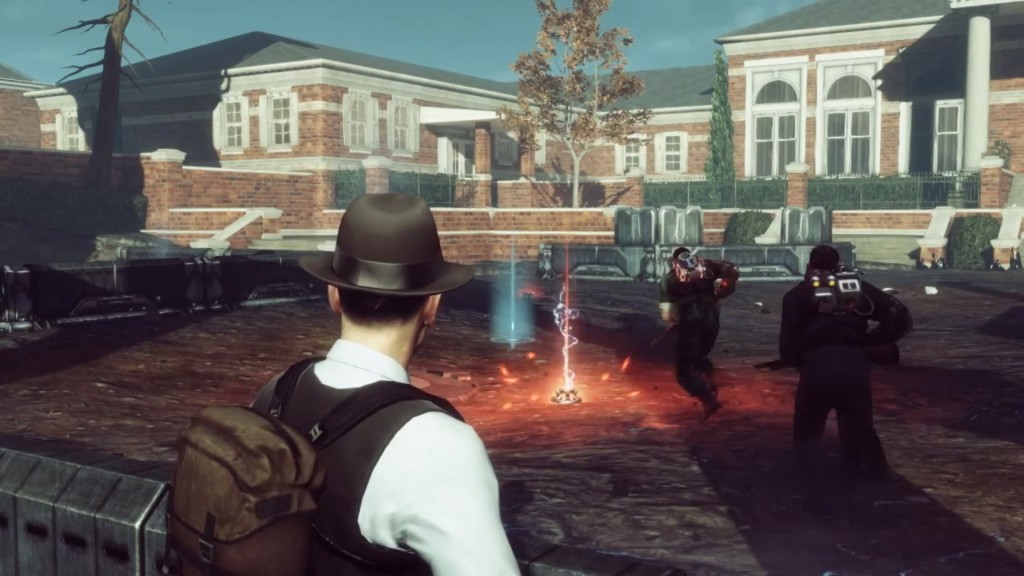
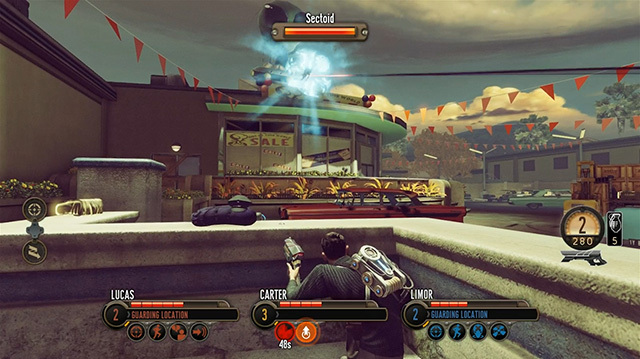
You control Agent William Carter as they would in a 3rd person shooter. Move, take cover, aim, shoot, kill. Standard fare. However, you also have the benefit of two squadmates to aid them in battle. You are able to bring up an in battle radial menu, know as Battle Focus, which allows you to order your companions around. They can be ordered to move, aim at a specific target or access one of the major elements of battle: Abilities. Each character in the game possesses a number of tactical abilities, designated to them by one of the four available classes: Recon, Engineer, Commando and Support. Each of these agent types specialises on a different type of combat. Recons are a sniper class designed for long range and flanking, Engineers deploy devices such as turrets for backup, Commandos are sturdy and offensively oriented and Supports provide buffs and defence to the squad. Carter himself possesses the unique Squad Leader class, granting access to special abilities such as lifting enemies and healing the squad. Though your team will move around under their own initiative this isn’t generally the best course of action because, well, they’re kind of dumb. When not given direct orders, your battle hardened AI companions are clumsy, lost and often bleeding out on the ground.
Tactics in action
As you level up, you will gain access to new abilities. At certain levels, you can choose one of two options to upgrade an ability, shifting it to better suit your playstyle. Each ability is helpful in its own way and it is up to you to employ effective tactics on the field. Certain combinations, such as Lift and Critical Strike, can deal massive damage to a single enemy, whilst others, like Pulse Wave and Mine, can hurt multiple targets. Good times. You will also have to adjust your tactics, as not all abilities work on every enemy. Some larger enemies for example, can not be lifted by Carter. Whilst some may slow down or freeze in place, others are completely immune. This causes you to make quick decisions and rethink your tactics. Survive. Adapt. Win.
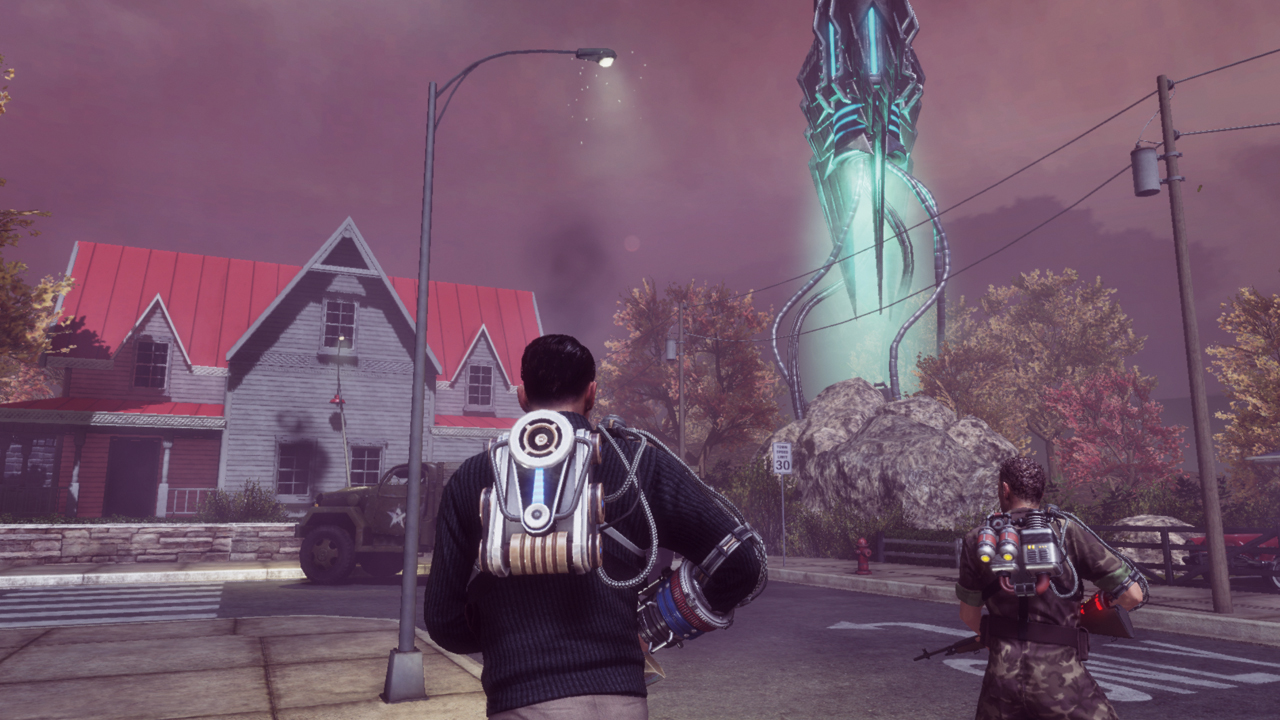
Visuals Think Mad Men…with aliens. True to the period of inspiration, The Bureau gives possesses the definitive visual style of the 1960s. Pastel blue convertibles, family owned convenience stores, quaint suburban streets…all destroyed by alien invaders, but still. The characters also fit into the world and give of a 60s vibe. There are vests a plenty as the men remain dapper, even in these trying alien times, whilst the women wear modest dresses. As was the style at the time.
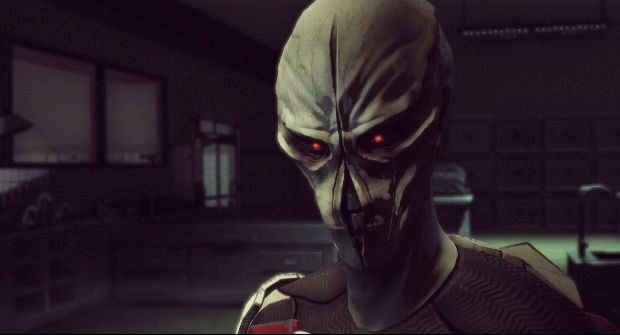
Diverging from this time period is the Outsiders. Whilst the lower ranking aliens appear as the “little grey men” that were a common notion at the time, the other classes take on a more varied appearance. From hulking monstrosities to quadrupedal robots, the game definitely runs the gamut of alien designs. Outsider technology also adopts the traditional sci-fi themes of shifting metal plates and glowing lines of energy. The enemy weaponry also follows this same design path, complete with lasers. Which are awesome.
The general theme of The Bureau’s visuals is juxtaposition. Along with the vibrant, friendly visual of the 1960s is the dreary,cold appearance of the Outsiders. This immediately depicts how these two societies clash and the sheer variation in technology and ideals.
Lift and separate heads from bodies
Audio The 1960s was a time of great music. However, the 1960s never had to deal with an alien invasion…as far as we know. Though it take place during this era, The Bureau really doesn’t employ any music from the time, apart from one mission where a radio is found still playing. Instead the game goes with the traditional backing track to an alien invasion: an orchestra. Trumpets, violins, piano. All dramatic, a majority of the time. Though a traditional choice, the soundtrack definitely amplifies the nature of the game, giving it a feeling of grand scale. That being said, the game seems to store all of its 60s inspired tunes for the credits. Though this does sound cool, it doesn’t really mesh with the feeling given off by the later parts of the game.
In order to further the alien feel of…the aliens, they occasionally speak a different language. Which is alien. Though sometimes translated into English for the cutscenes and more important moments of the game, during battle the Outsiders speak in their own tongue. This gives off the feeling that they, much like Carter, are devising tactics, leading you to wonder what is coming next. Though it’s probably not good news.
He’s beautiful on the inside…I think
Overall The Bureau: XCOM Declassified is a good game. Though it isn’t nearly as in depth as of other XCOM titles, it doesn’t have to be. That’s the point. Don’t go into it expecting Enemy Unknown, you’ll be disappointed. However, if you expect a tactical third person shooter, you’ll be pretty darn happy. The gameplay is fun and strategic, though the AI, on both sides, will sometimes cause annoyance. The overall story is good, though it lacks certain elements that would make it great. All in all, The Bureau is an interesting game. An alien invasion in the 1960s? That’s crazy…Right?
Capsule Computers review guidelines can be found here.
Gather some friends and enjoy one the most fun party games of all time with some Mario Party, which was originally revealed during a Nintendo Direct last April. There are seven boards and new reality-flavored mini-games; or if you’re less of a social person you can scoop up A Link Between Worlds, which is set after the events of A Link to the Past. Nintendo has given Link the ability of becoming two-dimensional at times he may need to. I don’t know about you, but I’m getting both.
For more information on this announcement you can visit Nintendo’s official site.
Walt Disney ABC Studios has detailed its Australian home video DVD/BD releases for the rest of 2013, with a few offerings that fans of trending TV shows might want to pick up. From Grey’s Anatomy to Criminal Minds, check out the full list below to see if anything catches your eye!
Grey’s Anatomy (Season 9)
Release Date: 2 October 2013
SKUS & RRP: DVD $69.95
Classification: MA
Running Time: Approx. 1,032 minutes, 24 Episodes
Cast: Patrick Dempsey, Ellen Pompeo, Sandra Oh, Eric Dane, Sara Ramirez
Creator: Shonda Rhimes
It’s a year of bold new beginnings as your favourite doctors return to Seattle Grace for the biggest challenge of their lives. Experience every breathtaking moment with all 24 episodes of ABC’s Grey’s Anatomy: The Complete Ninth Season. Check out our Season 9 wrap-up.
Revenge (Season 2)
Release Date: 2 October 2013
SKUS & RRP: DVD $69.95
Classification: M
Running Time: Approx. 946 Minutes, 22 Episodes
Cast: Emily Van Camp, Madeline Stowe, Joshua Bowman, Nick Wechsler
Creator: Mike Kelley
Emily Thorne returns to the Hamptons with a vengeance. Her enemies may be the same, but her mission now takes on a new, suspenseful twist. Feel the power of television’s most seductive series, as the action and the passion hit new heights in all 22 episodes of Revenge: The Complete Second Season on DVD. Check out our Season 1 review.
Once Upon A Time (Season 2)
Release Date: 16 October 2013
SKUS & RRP: DVD $69.95 & BD $84.95
Classification: PG
Running Time: Approx. 946 Minutes, 22 Episodes
Cast: Robert Carlyle, Josh Dallas, Emile De Ravin, Jared Gilmore, Ginnifer Goodwin
Creator: Edward Kitsis, Adam Horowitz
Relive every thrilling moment of the fairy tale-inspired series when “Once Upon a Time: The Complete Second Season” casts its tantalizing spell onto Blu-ray/DVD. The curse is broken, magic has arrived, and there’s no telling what – or who – will be unleashed! Now the exiled fairy tale characters must grapple with a flood of awakened memories as they come to grips with their new “reality.” Old loyalties will be tested, new heroes will emerge, and vengeful villains will wreak havoc.
Scandal (Season 1)
Release Date: 16 October 2013
SKUS & RRP: DVD $39.95
Classification: M
Running Time: Approx. 301 Minutes, 7 Episodes
Cast: Kerry Washington, Henry Ian Cusick, Guillermo Diaz, Tony Goldwyn
Creator: Shonda Rhimes
From the creator and executive producers of Grey’s Anatomy and Private Practice comes a drama revolving around the life and work of a professional crisis manager and her dysfunctional staff. A former media relations consultant to the President, Olivia Pope (Kerry Washington) dedicates her life to protecting and defending the public images of our nation’s elite. After leaving the White House, the power consultant opened her own firm, hoping to start a new chapter – both professionally and personally – but she can’t seem to completely cut ties with her past.
Castle (Season 5)
Release Date: 6 November 2013
SKUS & RRP: DVD $69.95
Classification: TBC
Running Time: Approx. 989 Minutes, 23 Episodes
Cast: Nathan Fillion, Stana Katic, Seamus Dever, Jon Huertas, Tamala Jones
Creator: Andrew W Marlowe
Together at last! After four seasons of sparring and heated banter, TV’s dynamic crime-solving team finds romance in ABC’s Castle: The Complete Fifth Season. Relive all 23 unforgettable episodes, complete with never-before-seen bonus features only available on DVD, in this spectacular six-disc set.
Prepare yourself for the stunning “no holds barred” final season of television’s most seductive medical drama from Shonda Rhimes, the creator of Grey’s Anatomy. Feel the passion and relive the heartbreaking moments from every episode of ABC’s Private Practice: The Complete Sixth Season.
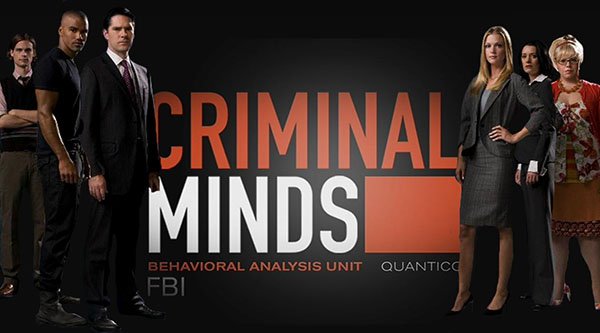
Criminal Minds (Season 8)
Release Date: 4 December 2013
SKUS & RRP: DVD $69.95
Classification: TBC
Running Time: Approx. 1,032 Minutes, 24 Episodes
Cast: Joe Mantegna, Shermar Moore, Matthew Gray Gubler, A.J. Cook, Kirsten Vangsness
Creator: Jeff Davis
Synopsis Forthcoming
There’s something mysteriously enticing about a “forthcoming synopsis”, isn’t there? Let us know if any of you TV-aficionados are grabbing any of these this year.