Bioshock Infinite fanatics have reason to be excited with the announcement from 2K Games and Irrational Games that the third lot of downloadable content for Bioshock Infinite which is titled Burial at Sea Episode Two will be available on March 25th, 2014.
This new episode of Burial at Sea concludes the story of Bioshock Infinite and in particular the Burial at Sea story. It is said to give gamers a new perspective on the vast Bioshock universe. The gameplay in episode two focuses primarily on stealth, which of course will prove to be fresh for Bioshock fans.
If you purchased the season pass for Bioshock Infinite you will receive the Burial at Sea episode two as part of that download. Be sure to pick it up on March 25th, 2014 for the ultimate burial at sea experience.
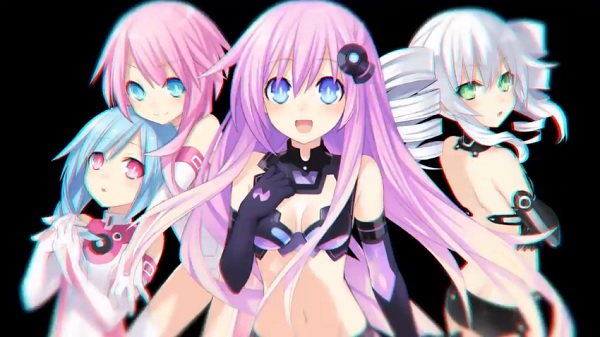
Today Compile Heart has released the opening video for Hyperdimension Neptunia Re; Birth 2: Sisters Generation, which has been re-worked for this PS Vita re-release. The video, which can be seen below features the song “Kirihirake! Roleplay Star Girl” by Nao and the game itself is set to be released in Japan on March 20th.
As far as a Western release goes, NIS America has previously licensed every Hyperdimension Neptunia title, including the idol game PP, for release in North America but at the time of this writing they have yet to announce the localization of either Vita remake of the Neptunia franchise.
Overview
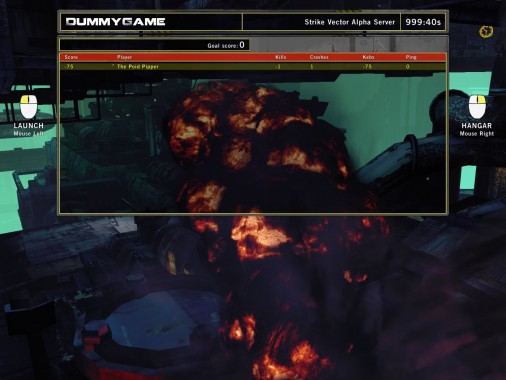
Strike Vector is not your typical shooter by any means. The band of misfits known as the Ragequit Corporation fused together a game that offers transformation, flying, and death in a singular package. However, does Strike Vector please the public with immediate, ruthless death? Let’s take a look…
Story
Strike Vector offers no story for the on-boarding player. While the player controls a futuristic ship known as the Vector and can fly in different modes with it, the title only offers multiplayer and a single player “free roam” environment. The developers can probably attest that the reason a story was not included is because Strike Vector is pure multiplayer.
I do feel there is a grand story left untold and that could have been accomplished through a single player campaign narrative. I am very intrigued to why a need for these Vectors were put in place and what evil is contributing to these “space dogfights”.
Gameplay
Strike Vector provides a strong foundation of game mechanics which allows the multiplayer to be successful. Some of the many attributes that feed into the successes and failures are: vehicle customization, multiple modes of play, special equipment, variety of weapons, weapon modifiers, palatable score system, and individual progression. First and foremost, the tutorial is presented as a 9-page slide that reveals necessary information for the beginning player. Unlike other human beings, I learn by doing rather than reading slides. An interactive tutorial on a “free roam” environment would be more helpful.
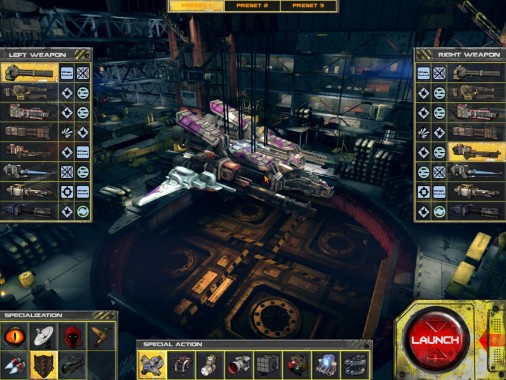
At the home screen you may enter your “Garage” and edit your Vector’s appearance. As you progress with achievements and earn levels, new parts/decals will become available for you. Also listed under the “Garage” is the “Armory”. Once in the “Armory” you are able to select weapons, weapon modifiers, and special equipment to prepare for battle. Three presets are loaded into the “Armory”, so you may differentiate skills in the three sets to plan a strategy. Like most other FPS titles, you are able to access this armory after you die in combat.
There are 8 different types of weapons that can be utilized for each side of the ship: gatling gun, plasma gun, shotgun, homing missile, rocket launcher, swarm missile, smg, and carabine. You can mix match between items to garner the ultimate killing Vector. Further customization is involved as players can then add perks to their weapons. For example, I can increase the damage dealt by homing missiles and increase their effective lock range.
Still in the “Armory”, players can select a specialization and a special action. A specialization can be considered extra armor or to remain hidden on the radar until a Vector appears in the immediate vicinity. A special action provides the player with an extra goody such as an instant shield to block attacks for a short duration or a rocket booster to jet out of harm’s way. Both of these can also be altered after dying on the battlefield.
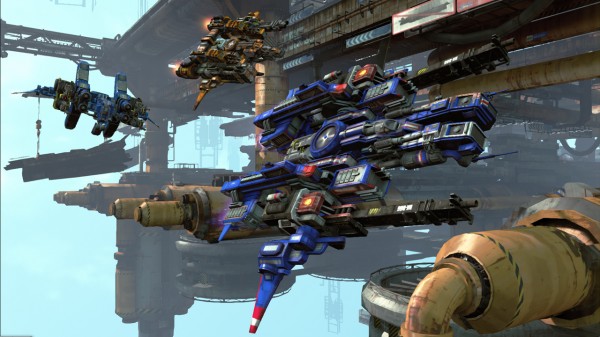
Once you have entered a battlefield, you have two available modes to alternate from: Harrier Mode & Vector Mode. Harrier Mode allows you to fly around environments as a jet operating at high speeds (more potential to run into things and die). Your mouse becomes the main vessel of movement as you are directing the spacecraft to move where you are pointing. Meanwhile, you may press the default spacebar button to switch to Vector Mode which halts the vehicle completely. Vector Mode provides limited mobility left to right as well as up and down but in different ways. The mouse is now used to rotate 360 degrees about your position. A, D, and your mouse’s scroll wheel cover the strafing left/right and propelling up/down. By mastering both modes of transportation, you will surely become a force to be reckoned with in the skies.
Both commendable and frustrating the in-game scoring system can easily favor the more skilled player. In deathmatch scenarios it is the team or person with the most points/kills that wins the round. However, the problem that fresh players will encounter is that for every time they crash their Vector – not killed – their kill total reduces by 1. Therefore, if said newbie killed 0 people and crashed 5 times, his/her score would be -5. I suppose that is fair enough, but I warn you it will happen a lot.
After the completion of a match, your profile will receive awards/accolades for performing well or not-so-well in the game. These points consecutively add up to help you gain new levels which then provide in-game art, Vector decals, and Vector parts.
Audio/Visual
Nothing really stood out for me as amazing in regards to the audio files. Music plays as expected throughout the background of menus and alternates tracks when going to your garage and credit screens. However, I will mention that a lot of thought process must have been placed in applying sound effects. With multiplayer as the title’s focus, importance of timing and variety of effects is crucial to meet player expectations. And I believe they met that standard in delivering consistent as well as varied sound effects.
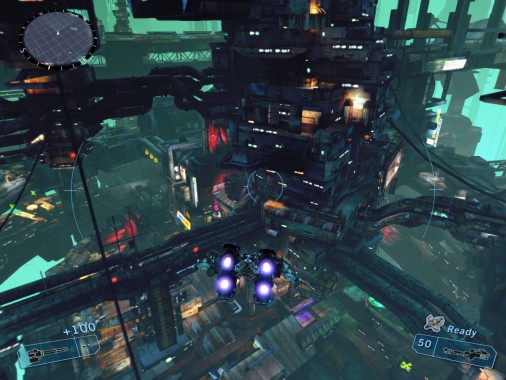
Where other parts of the game struggled to shine, environments truly stood out as engineered masterpieces. Whether you are traversing through a torn-up city or mangled space platforms, you will experience intrinsic design that can alter your flight path instantly. Your job to navigate and attack enemies becomes a harder but that also means you may place more longevity to your own life by taking unsuspecting twists and turns through map obstacles.
Overall
As a pure multiplayer title, Strike Vector performs as it is suppose to. It delivers high velocity battles across several maps and game types. Yet with all other contributing factors towards gameplay, a single player campaign would have lessened the learning curve and enhanced the overall experience of this particular FPS. Additionally, I personally would have a hard time coughing up $24.99 for a pure multiplayer title.
There is no ‘ease into’ button for Strike Vector. You simply are thrown in to wait – not long – and die several times before figuring the game out. I will end on this final note though: Death may be imminent, but the subtle chance for a kill urges players on to play just ‘one more game’.
Capsule Computers review guidelines can be found here
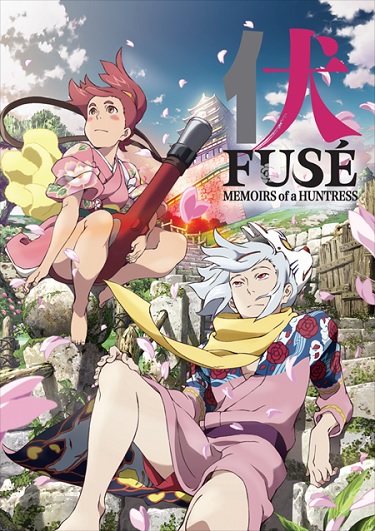
Today NIS America announced a rather interesting acquisition today as the company looks to expand its anime film library. They have announced the license acquisition of Fusé: Memoirs of a Huntress, and are planning on releasing the movie on May 6th.
The $49.99 release will be given the Premium Edition treatment that comes with a collectible slipcase, a Blu-ray disc containing the movie, a 32 page hardcover art book, and some on-disc extras in the way of Japanese commercials.
As for the story of Fusé: Memoirs of a Huntress, the movie follows Hamaji, a young huntress raised in the mountains as she stumbles into the middle of a vendetta between the shogun and a group of human and dog hybrids named the Fusé. You see, there are rumors spreading that the Fusé have been murdering people in Edo and they now have a bounty on their heads. As such, Hamaji and her brother join the hunt for the Fusé but end up befriending one of them.
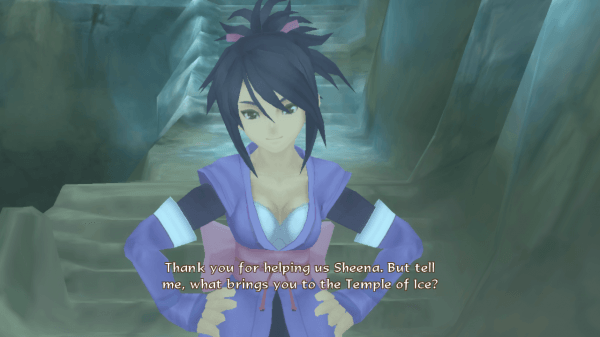
Fans of the Tales games that don’t want game cases cluttering up their house will be happy to learn that the digital version of Tales of Symphonia Chronicles can now be pre-ordered through the PlayStation Network for a price of $39.99. Anyone who pre-orders the digital version for the game will be given a special PlayStation 3 system theme, that is also included with the purchase of the Collector’s Edition of the game.
Currently, Namco Bandai‘s Tales of Symphonia Chronicles is set to be released on February 25th. As for those looking for a physical copy of the game, the normal version is still available for pre-order alongside the collector’s edition containing the following items:
Limited edition packaging with exclusive artwork from Japanese animation studio, ufotable
Tales of Symphonia Chronicles software
SteelBook case
Set of five Chibi Kyun Chara figures
4-disc CD soundtrack
Tales of Symphonia: Successors of Hope hardcover novel
Call of Duty®: Ghosts Onslaught DLC Pack Available for PlayStation and Windows PC Players Thursday, February 27, 2014.
Fans Can Purchase the Onslaught DLC Pack Individually, or as Part of the Call of Duty: Ghosts DLC Season Pass Discounted* Bundle
Sydney, Australia – February 6, 2014 – Call of Duty: Ghosts players on PlayStation 4, PlayStation 3 and Windows PC will have access to the first DLC Pack – Onslaught – on February 27, 2014. Onslaught delivers four unique and classically designed Call of Duty multiplayer maps, the all-new “Maverick” dual-purpose Assault Rifle/Sniper Rifle, and the first instalment in Extinction’s four-part episodic narrative, “Episode 1: Nightfall.”
New multiplayer maps in Onslaught include:
– Fog: A chilling homage to classic horror films, set alongside the banks of a murky lake, players skilled enough to pick up the map’s unique Field Order can become the embodiment of evil and don the mask of Michael Myers, one of cinema’s most iconic horror characters, as the entire soundscape changes to the eerily familiar Halloween Theme music.
– BayView: A coastal Californian boardwalk that offers players fast-paced run-and-gun gameplay amid a seaside town. Clever players will be able to climb onto the map’s moving trolley to engage enemies, as well as call in devastating artillery strikes from the Naval Destroyer anchored offshore.
– Containment: This map drops players into a raging battle amidst a war-torn Mexican village, where the action centres on the crippled remains of a small bridge holding a hi-jacked truck leaking radioactive material.
– Ignition: Onslaught‘s fourth map is a completely reimagined version of “Scrapyard” – the fan-favourite multiplayer map from Call of Duty®: Modern Warfare® 2, placing players into a deserted space launch facility with frenetic action amongst abandoned warehouses, flame trenches, a massive transport crawler, and dynamic map elements that can take players out if they’re not paying close attention.
Onslaught arms players with the Maverick, a deadly new, dual-purpose addition to their multiplayer arsenal. Outfitted with a lightweight wood stock and a digital screen display, players can choose to use the Maverick as either an Assault Rifle or Sniper Rifle, depending on their tactical needs.
Anchoring Onslaught is “Episode 1: Nightfall,” the first instalment in Extinction’s new, four-part episodic narrative. As the initial foray into this single, connected story that will be told across each DLC Pack launch throughout the year, “Episode 1: Nightfall” takes fans to a remote research facility hidden deep within the Alaskan wilderness, where a small recon team must infiltrate the facility to find out what happened to the mysterious Nightfall Program. This expanded Extinction storyline introduces new characters, plus two all-new alien species, and debuts an exclusive Venom-X weapon that pulverizes the Cryptids, as players delve deeper into the story of what happened following mankind’s first contact with the Cryptids in Colorado.
Fans can purchase Onslaught as either a standalone DLC Pack for a suggested retail price of $19.95, or purchase the Call of Duty: Ghosts DLC Season Pass. Season Pass holders not only get all four epic DLC Packs** for the discounted suggested retail price of $64.95*, but they also get instant access to the downloadable multiplayer map, “Free Fall,” as well as the Team Leader Digital Pack, which comes with a unique multiplayer character head, weapon camo, reticle, player patch, player card and player background.
Call of Duty: Ghosts game sold separately and is required to play this Map Pack.
From Activision Publishing, Inc., a wholly owned subsidiary of Activision Blizzard, Inc. (Nasdaq: ATVI), Call of Duty: Ghosts is rated “MA15+” (Strong Violence and Coarse Language) by the Australian Classification Board. Call of Duty: Ghosts Onslaught is available today for both Xbox One, the all-in-one games and entertainment system from Microsoft, and the Xbox 360 games and entertainment system from Microsoft. The DLC pack is created by Infinity Ward, with additional development by Neversoft. For more information, please visit www.callofduty.com/ghosts, www.facebook.com/CallofDuty, or follow on Twitter @InfinityWard and @CallofDutyANZ.
About Activision Publishing, Inc.
Headquartered in Santa Monica, California, Activision Publishing, Inc. is a leading worldwide developer, publisher and distributor of interactive entertainment and leisure products.
Activision maintains operations in the U.S., Canada, Brazil, Mexico, the United Kingdom, France, Germany, Ireland, Italy, Sweden, Spain, Norway, Denmark, the Netherlands, Australia, South Korea, Mainland China and the region of Taiwan. More information about Activision and its products can be found on the company’s website, www.activision.com.
Cautionary Note Regarding Forward-looking Statements: Information in this press release that involves Activision Publishing’s expectations, plans, intentions or strategies regarding the future, including statements about the expected release date of the Downloadable Content (DLC) Pack offerings for Call of Duty: Ghosts, are forward-looking statements that are not facts and involve a number of risks and uncertainties. Factors that could cause Activision Publishing’s actual future results to differ materially from those expressed in the forward-looking statements set forth in this release include unanticipated product delays and other factors identified in the risk factors sections of Activision Blizzard’s most recent annual report on Form 10-K and any subsequent quarterly reports on Form 10-Q. The forward-looking statements in this release are based upon information available to Activision Publishing and Activision Blizzard as of the date of this release, and neither Activision Publishing nor Activision Blizzard assumes any obligation to update any such forward-looking statements. Forward-looking statements believed to be true when made may ultimately prove to be incorrect. These statements are not guarantees of the future performance of Activision Publishing or Activision Blizzard and are subject to risks, uncertainties and other factors, some of which are beyond its control and may cause actual results to differ materially from current expectations.
# # #
ACTIVISION, CALL OF DUTY, MODERN WARFARE and CALL OF DUTY GHOSTS are trademarks of Activision Publishing, Inc. All other trademarks and trade names are the properties of their respective owners.
*Based on DLC Season Pass suggested retail price of $64.95, and four DLC Packs at a suggested retail price of $19.95 each.
**Downloadable content in the Season Pass may be sold separately. If you purchase the DLC Season Pass, do not also purchase these standalone DLC Packs, as you will be charged for them. DLC Season Pass and DLC Packs may not be available on all platforms or in all territories. Pricing and release dates may vary by platform. Call of Duty: Ghosts game required; sold separately.
Sid Meier’s Civilization® V: The Complete Edition Available This Week
Award-winning strategy game, two expansion packs, new scenario and all previously released content now offered together for one great price
Join the conversation on Twitter using the hashtag #Civ
Sydney, Australia – February 6, 2014 – 2K and Firaxis Games today announced that Sid Meier’s Civilization® V: The Complete Edition will be available internationally for digital download and at retail locations for Windows-based PC on February 7, 2014. Developed by Firaxis Games, The Complete Edition provides strategy fans with the entire Civilization V experience in one ultimate package, for the first time.
Civilization V: The Complete Edition enables players to compete as 43 unique historical leaders, wage war, conduct diplomacy and espionage, establish religions and discover new technologies to build the most powerful empires the world has ever known. Civilization V: The Complete Edition offers nearly limitless possibilities to conquer the world, including the original award-winning strategy game, Sid Meier’sCivilization V, the critically acclaimed expansion packs, Gods & Kings and Brave New World, the new Conquest of the New World Deluxe Scenario andall pre-released add-on content:
Civilization Pack: Babylon (Nebuchadnezzar II);
Cradle of Civilization – Americas Map;
Cradle of Civilization – Asia Map;
Cradle of Civilization – Mediterranean Map;
Cradle of Civilization – Mesopotamia Map;
Double Civilization and Scenario Pack: Spain and Inca;
Explorer’s Map Pack;
Civilization and Scenario Pack: Polynesia;
Civilization and Scenario Pack: Denmark – The Vikings;
Civilization and Scenario Pack: Korea;
Wonders of the Ancient World Scenario Pack;
Scrambled Continents Map Pack;
Scrambled Nations Map Pack.
Based in the year 1492, the new Conquest of the New World Deluxe Scenario invites players to embark on a journey across the Atlantic, on behalf of European courts, in search of a western route to China and the Indies. Previously released as part of the Double Civilization and Scenario Pack: Spain and Inca, the new Deluxe Scenario will see players enjoy an increased number of civilizations, an expanded Policy and Tech Tree, a new Victory Point system and an assortment of new buildings, wonders, resources and more.
Sid Meier’sCivilization V: The Complete Edition is rated PG in Australia and New Zealand and is available from February 7th on PC for AU$79.95.The Conquest of the New World Deluxe Scenario, which requires Brave New World to play, will be offered for free via Steam for everyone who has previously purchased the second expansion pack. Alternatively, for those that have not yet purchased Brave New World, the Conquest of the New World Deluxe Scenariowill be included as a free bonus with the expansion moving forward.
BioShock® Infinite: Burial at Sea – Episode Two Available for Download Starting March 25
Featuring stealth-oriented gameplay and a new player character: Elizabeth
Sydney, Australia – February 5, 2014 – 2K and Irrational Games announced today that BioShock® Infinite: Burial at Sea – Episode Two*, the third add-on content pack for the award-winning BioShock Infinite, will be available for download worldwide on the PlayStation®3 computer entertainment system, Xbox 360 games and entertainment system from Microsoft, and Windows PC starting March 25.
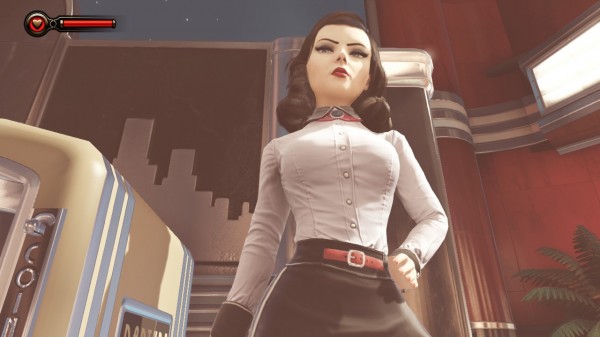
BioShock Infinite: Burial at Sea – Episode Two is built almost entirely from scratch by Irrational Games, the studio behind the original BioShock and BioShock Infinite. The narrative of this add-on content pack concludes the storyline of BioShock Infinite and Burial at Sea, as seen through the eyes of a new player character, Elizabeth, and features all-new stealth-oriented gameplay, as well as new weapons and modes.
“In Burial at Sea – Episode Two, we are delivering a story that involves nearly every major character from the original BioShock and BioShock Infinite,” said Ken Levine, creative director of Irrational Games. “It is a story that will give gamers a new perspective on the BioShock universe and conclude the story of BioShock Infinite and Burial at Sea.”
*BioShock Infinite is not included in this add-on content, but is required to play all of the included content.
About BioShock Infinite
From the creators of the highest-rated first-person shooter of all time**, BioShock, BioShock Infinite puts players in the shoes of U.S. Cavalry veteran turned hired gun, Booker DeWitt. Indebted to the wrong people and with his life on the line, DeWitt has only one opportunity to wipe his slate clean. He must rescue Elizabeth, a mysterious girl imprisoned since childhood and locked up in the flying city of Columbia. Forced to trust one another, Booker and Elizabeth form a powerful bond during their daring escape. Together, they learn to harness an expanding arsenal of weapons and abilities, as they fight on zeppelins in the clouds, along high-speed Sky-Lines, and down in the streets of Columbia, all while surviving the threats of the air-city and uncovering its dark secret.
**Based on Metacritic average ranking across available platforms.
About BioShock Infinite: Burial at Sea – Episode Two
BioShock Infinite: Burial at Sea – Episode Twocan be purchased as part of the BioShock InfiniteSeason Pass. The Season Pass, which is available for purchase via online marketplaces on all available platforms, contains over $45 of playable content in three add-on packs for AU$29.99 including both Burial at Sea episodes, the previously released Clash in the Clouds add-on pack, as well as the Early Bird Special Pack that has powerful weapon upgrades, exclusive gold weapon skins and infusion bottles to upgrade player abilities. BioShock Infinite: Burial at Sea – Episode 2 can also be purchased separately for MSRP$20.95.
BioShock Infiniteis rated MA15+ in Australia and R16 in New Zealand and is available now for the Xbox 360, PS3™, Mac®, and Windows PC. For the latest news and information on BioShock Infinite, become a fan on Facebook and follow Irrational Games on Twitter.
About Take-Two Interactive Software
Headquartered in New York City, Take-Two Interactive Software, Inc. is a leading developer, marketer and publisher of interactive entertainment for consumers around the globe. The Company develops and publishes products through its two wholly-owned labels Rockstar Games and 2K. Our products are designed for console systems, handheld gaming systems and personal computers, including smartphones and tablets, and are delivered through physical retail, digital download, online platforms and cloud streaming services. The Company’s common stock is publicly traded on NASDAQ under the symbol TTWO. For more corporate and product information please visit our website at http://www.take2games.com.
About 2K
Founded in 2005, 2K develops and publishes interactive entertainment globally for console systems, handheld gaming systems and personal computers, including smartphones and tablets, which are delivered through physical retail, digital download, online platforms and cloud streaming services. 2K publishes titles in today’s most popular gaming genres, including shooters, action, role-playing, strategy, sports, casual, and family entertainment. The 2K label has some of the most talented development studios in the world today, including Firaxis Games, Visual Concepts, Irrational Games, 2K Marin, 2K Australia, 2K Czech, Cat Daddy Games and 2K China. 2K’s stable of high quality titles includes the critically acclaimed BioShock®, Borderlands™ and XCOM® franchises, the beloved Sid Meier’sCivilization series, the popular WWE 2K franchise and NBA 2K, the #1 rated and #1 selling basketball franchise***. 2K is headquartered in Novato, California and is a wholly owned label of Take-Two Interactive Software, Inc. (NASDAQ: TTWO). For more information, please visit www.2K.com.
***According to 2008 – 2013 Metacritic.com and The NPD Group estimates of U.S. retail video game sales through September 2013.
About Irrational Games
Located near Boston, Massachusetts, Irrational Games is widely recognized as one of the industry’s leading game developers. Irrational has earned a reputation for creating story-driven, genre-defining games with award-winning hits like System Shock 2, Freedom Force, the original BioShock, and BioShock Infinite. For more information, visit http://www.irrationalgames.com.
Irrational Games is a 2K Games studio. 2K Games is a division of 2K, a publishing label of Take-Two Interactive Software, Inc. (NASDAQ: TTWO).
“PlayStation” is a registered trademark of Sony Computer Entertainment Inc.
All trademarks and copyrights contained herein are the property of their respective holders.
The statements contained herein which are not historical facts are considered forward-looking statements under federal securities laws and may be identified by words such as “anticipates,” “believes,” “estimates,” “expects,” “intends,” “plans,” “potential,” “predicts,” “projects,” “seeks,” “will,” or words of similar meaning and include, but are not limited to, statements regarding the outlook for the Company’s future business and financial performance. Such forward-looking statements are based on the current beliefs of our management as well as assumptions made by and information currently available to them, which are subject to inherent uncertainties, risks and changes in circumstances that are difficult to predict. Actual outcomes and results may vary materially from these forward-looking statements based on a variety of risks and uncertainties including: our dependence on key management and product development personnel, our dependence on our Grand Theft Auto products and our ability to develop other hit titles for current and next-generation platforms, the timely release and significant market acceptance of our games, the ability to maintain acceptable pricing levels on our games, our ability to raise capital if needed and risks associated with international operations. Other important factors and information are contained in the Company’s Annual Report on Form 10-K for the fiscal year ended March 31, 2013, in the section entitled “Risk Factors,” the Company’s Quarterly Report on Form 10-Q for the fiscal quarter ended December 31, 2013, and the Company’s other periodic filings with the SEC, which can be accessed at www.take2games.com. All forward-looking statements are qualified by these cautionary statements and apply only as of the date they are made. The Company undertakes no obligation to update any forward-looking statement, whether as a result of new information, future events or otherwise.
Words that are very, very familiar to anyone who has ever picked up a controller and stepped into the worlds of Boletaria or Lordran. The Souls franchise, starting with the PS3-exclusive Demon’s Souls, and then the 2011 smash-hit Dark Souls have managed to capture the heart, soul and emotions of gamers everywhere. Being able to crush their self esteem back to nothing with its grueling difficulty, only to reward with a rush of euphoria that few other games can match once you overcome the odds. Now, Dark Souls II looks to expand that even further.
Dark Souls II is still a little over a month away (literally), but recently I was able to sit down with the guys at Bandai Namco, grab a controller and get stuck into the complete build of the game. I left a changed man. I had seen some things, and I now know that I am ready to go beyond death.
Loading up the game takes you straight into the opening cinematic. The intro drags for a little bit but basically gives you a run down of the world and how it became so corrupted. In typical Souls fashion, we are only given brief snippets of the truth, and the rest will be for us to discover in our own time as we play through the hefty campaign. I wont spoil anything, but by the time the cinematic has ended, you will be as eager as ever to get into the action.
From the cinematic, the game dumps you straight into an old abandoned forest, completely unarmed so that you can get used to the way the game operates. Your character will be donned in a hooded robe so that we cannot see who he or she is, as that part comes later.
Anyone who has played a Souls game before will feel right at home with the controls, which by and large haven’t changed much since Demon’s Souls hit the PS3 over 4 years ago. You equip weapons to either your right or left hand, and you swing them using the shoulder buttons – L1/R1 for a light attack (or to block with a shield), or L2/R2 for a stronger, but slower heavy attack. You still switch between weapons and items using the D-Pad, and all in all the whole control scheme remains by and large unchanged. The old adage of “if it isn’t broke, don’t fix it” is very applicable here, as the way the game has played has remained the same through all three games.
So after running around this little area and making sure you are acquainted with the game’s controls, you head up to a small decrepit shack, inside of which you will find a bunch of witches draped in red robes. Another cut-scene plays here, which is already a bit of a deviation from the past installments, which were very light on the cinematics. We get a bit more back story of the world, and the curse that afflicts you, before jumping into the character creator.
The character creator has all the bells and whistles you would expect from a modern RPG Character creator. The previous two games in the series have stumbled a bit with this aspect, and you might have had a character who looked perfect in the creator, but turned out having bright red skin (trust me, it can happen). While the Dark Souls II creator is by no means perfect, it is still leaps and bounds ahead of its predecessors.
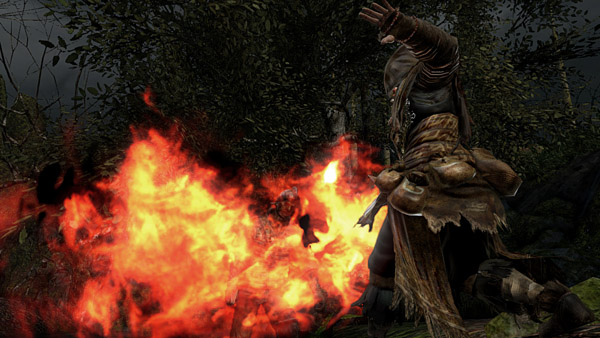
Then the game begins. You are introduced to the little tutorial area. Much like the Undead Asylum from Dark Souls, this new area features a series of relatively easy challenges that allow players to get accustomed to the game’s mechanics. One thing that did jump out at being different was the fact that you could collect a torch, which could then be lit and aside from providing light in darkened caverns, was also used to light sconces along the path. During the little tutorial area, I noticed a bunch of seemingly innocuous looking sconces, and decided to try my best to light them all within the torch’s 5-minute limit. I came close, but didn’t quite make it. Are there secrets and rewards given for lighting them all? I don’t know, but it is that kind of mystery and intrigue that Souls players demand from their games. Another key difference, and one that definitely impacts on the difficulty of the game is that Estus Flasks (the game’s renewable health items) Are much fewer. Once you have access to the Estus, you are initially only given a single flask, and are tasked with finding shards to unlock more.
The tutorial felt relatively easy in comparison to Demons’ and Dark Souls. Until something caught my eye. Over a ridge, I could see a giant troll, just idly standing there. I knew what had to be done next. Gamers everywhere know that feeling and that anticipation of a tough challenge ahead, it is like it is a sixth sense, and Dark Souls II had mine tingling. As I made my way over the ridge, I noticed that the draw distance for the map was incredible. I was a fair ways away from that troll, and yet I could see it clear as day. As I neared the troll’s hunting ground, and I edged ever closer to him, someone behind me spoke; “You know how there are some areas of Dark Souls that you just shouldn’t go to too early?”
CRUNCH!
Another troll had charged at me from no where and crushed my fragile body under his giant foot. “This is one of those areas.” I should have turned tail and ran away. I wasn’t strong enough to face these brutes, but if Dark Souls, and subsequently Dark Souls II thrives on overcoming the odds. I battled back and forth with the trolls for over 20 minutes, dying repeatedly as I learned their attack patterns and how far out they would chase me. Eventually I was able to lead them to the entrance of a cavern where I could slowly pick away at them. If there is one thing to say, it is that Dark Souls II still carries that lofty feeling of excitement, euphoria and bliss when you overcome one of its many obstacles. Felling the two beasts gave such a rush that I needed more.
I headed back through the tutorial area, and made my way to the next location. Finally after some off-the-beaten tracks exploring, I had reached the small hub part of the world. This desolate village had a few sparse NPCs, and was definitely my way point in the world of Drangleic.
Here is where some of the more nuanced and intricate gameplay mechanics were made apparent. Firstly, the leveling up system has changed from how it was in Dark Souls, and now more closely resembles the original method used in Demon’s. While you still collect souls from fallen enemies, and use them as your experience points, you are limited to WHERE you can level up. In Dark Souls, you could rest at any bonfire and level up accordingly – not so anymore. Much like Demon’s Souls, you are forced to talk to a specific NPC to level up. This adds a bit of strategy to the events, as the NPC isn’t at every bonfire.
I also discovered that the Bonfires in Dark Souls II are all linked to each other, and allow for fast travel between them. This is a slight let down, as fast travel was earned in Dark Souls, and it was still only usable in certain locations. Now you can travel across the map to any bonfire that you have discovered and lit. This takes some of the stress of “will I make it” out of the game, as you can just travel to the most ideal location and head off from there.
Covenants also make a comeback in Dark Souls II, and you have access to a handful of them a lot earlier in the game. Not only that, but the NPCs who welcome you into the covenants give you a bit of a rundown on the perks of joining them. This is made a lot more clear than it was in the original Dark Souls, which had you filling in the blanks a lot of the time. One covenant really jumped out at me here – The Covenant of Champions. Interacting with a large engraved obelisk near the top of the town gave you the option to join, and also a warning that if you elected to do so, the game’s difficulty would spike up dramatically.
Now, anybody who was a part of the Network Beta Test in November will know that the difficulty spike really does change things. It shifts the game basically into NG+ territory. It is a great option to have if you are a series veteran who is looking to challenge themselves from the get-go. If you are new to the franchise, or it has been a while since you played, then I would strongly advice not going down this route to begin with, as the game itself is still really difficult.
The difficulty was a big concern for players ever since the game was announced. And I can tell it with an audible sigh of relief that there is nothing to worry about. The difficult has remained in tact, and you will still be dying over and over again until you are red in the face.
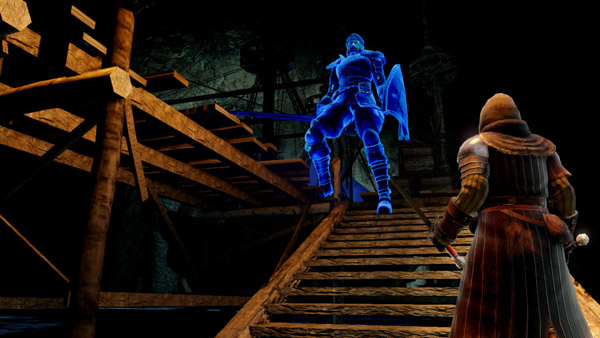
The most intriguing part of the little town however, was a large pit near the center. I’m talking like 300 style. As I peered over the edge, I noticed that in criss-cross pattern descending down the pit were a series of planks. “I wonder if I aim my fall properly, will I be able to descend make my way down this pit?” No. No I was not. Although I aimed my jump perfectly, and landed on the topmost plank, it was still enough of a fall to immediately kill my character. Speaking to a nearby merchant NPC, I saw he had a ring that reduced fall damage, albeit for an obscene price (13500 Souls). I figured I would come back later, and set off on the way to my next challenge.
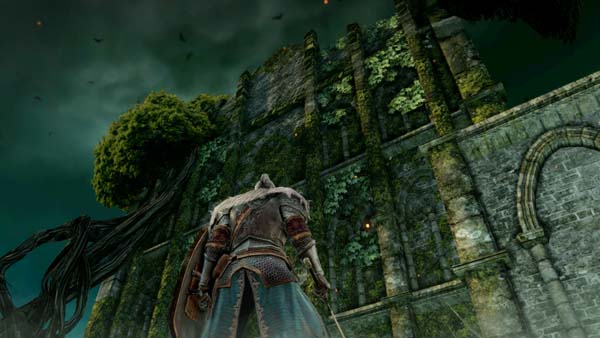
I headed through some sewer-like ruins, and ended up in a castle that was ruined beyond compare. Although it was filled with rubble and broken stone, I was in awe at how great it looked. The guys at FROMSOFTWARE have really come leaps and bounds with the visuals – especially considering the first one only released in 2009. There was incredible amounts of detail on the cobblestone buildings, and even the enemies were all elegantly detailed. It isn’t a next-gen title for sure, but it really does look great.
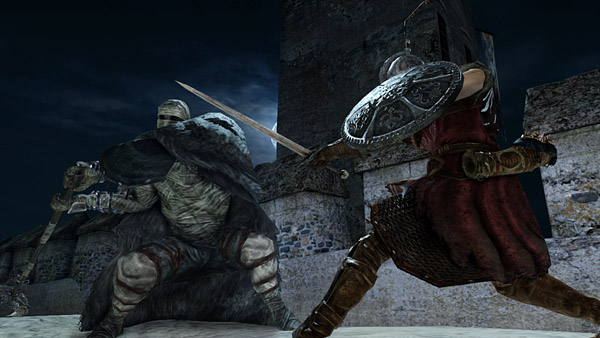
It didn’t take me long to figure out that I had headed the wrong way and ended up in another area that I wasn’t supposed to be. Not only that, but I was still equipped with the base level gear. If you want a real challenge, then only level up a few times and forget to buy better gear. I was facing down knights that were literally twice my size, and who’s weapons could kill me in roughly two swings. Regardless, Dark Souls II is a game about pushing forward, so I did that. I learned how to dodge all but one of the enemies, and plotted my path around them to the boss encounter at the end. Here is where things got interesting.
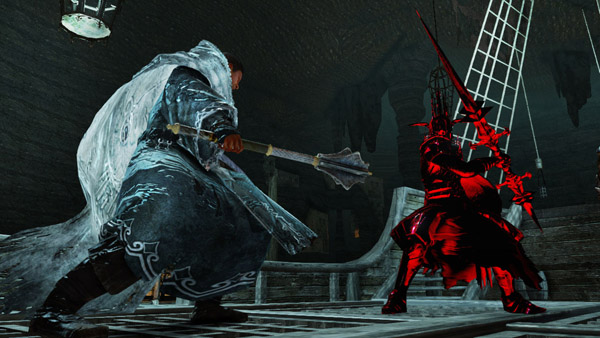
The boss battles in Souls games can be a bit of a mixed bag, but usually if you can find the weakness you will be set. Dark Souls II carries that torch proudly, by making bosses an exercise in problem solving just as much as they are combat. Sure there are different ways to go about it, and you will find the one that works best for you, but when facing down a 12 foot, red armored knight called Dragonrider, who’s halberd can send you flying off of his tower in one hit, you need to think somewhat strategically.
I am proud to say that after a long, long time battling Dragonrider, I eventually figured out his weakness… but that wasn’t enough. I was still too poorly equipped for the battle, and was barely doing any damage. So I decided to head down another path, and see if I could get something better. That is what has always been a favourite thing about the Souls games for me – the fact that there is no set in stone pathway that you should follow. Branching roots, secret passages and surprises galore. Even better is the fact that there is nothing and nobody even suggesting where you should go. You figure it out for yourself, usually through trial and error. There is no hand-holding in Dark Souls II, and that is amazing.
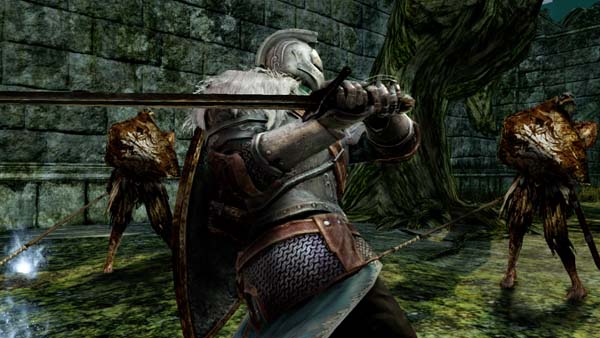
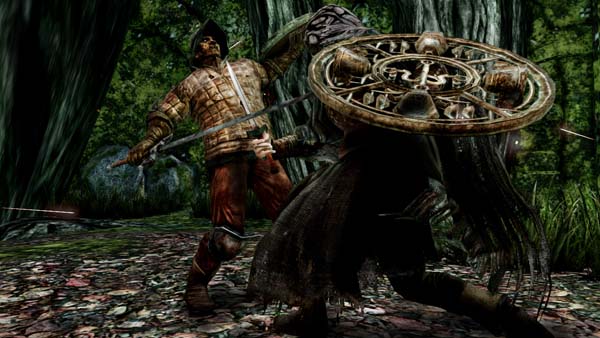
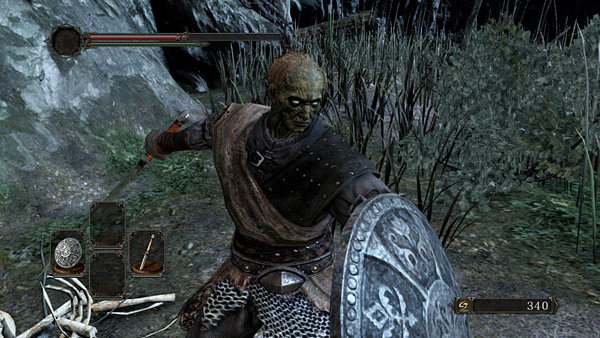
So after failing to overcome Dragonrider, I headed the other way into a small forest. The enemies here felt much easier to kill than the giant knights I was dealing with before, and it made me realise that this is the way I should have been going. Human-sized enemies that I can block and kill without having to worry about one hit KO’s are definitely the way to go. As I made my way through the forest, and into another set of ruins – I fought undead soldiers who were trying to hinder my path, and encountered a ominous looking knight who didn’t attack, but also didn’t respond to my prompts. Even more suspicious was the fact that he could be targeted like any other enemy. Another mystery to be unraveled by playing through the game.
When I had enough souls, I decided to gear myself up a little better – I purchased a better headdress and a new weapon in the form of the battleaxe. I had planned on heading back into the forest, but the challenge of the Dragonrider was impossible to ignore – so back there I headed. It was a long battle, that really tests players on how to properly use their stamina (including when to hold your shield or not). Eventually however, the Dragonrider was toppled, and I reigned victorious. One thought entered my mind; “Now I can buy that ring.” As I entered the hub again, I purchased the ring, but before I could jump down the pit, I something back towards the forest caught my eye and off I was again.
At the end of the forest was the official first boss encounter of the game – The Last Giant. Old, withered, and decomposing but still a formidable enemy. The Last Giant used his hands and legs as weapons as he stomped around the battle area. Staying out of his reach, and running in for a few quick slices was easy enough… until he ripped off his own arm. Now his reach was doubled, and I was severely freaked out. Evolving boss battles is something that have been a part of video games for an eon, but they are still awesome to see. Having to change your strategy and your style midway through an encounter really tests the player without being unfair.
Having two bosses under my belt, I had one last job at hand – to finally explore the pit. I warped to the Hub, and headed towards the giant, ominous hole in the ground. I equipped the ring that lessened fall damage, angled my jump just right, leaped off the edge … and… fell to my death.
So that rounded up my five or so hours with Dark Souls II. I managed to defeat two trolls by exploiting their AI (in typical Souls fashion), vanquish two different bosses and fall to my death over and over again. Five hours and I have barely scratched the surface. There are still secrets to unravel, souls to collect the entire world of Drangleic to explore, and I absolutely cannot wait to do so. Seriously it is time to get aboard the hype train, because it looks like Dark Souls II will be everything we all dream it should be, and more.
You can pick up your copy of Dark Souls II and go beyond death this March on Xbox 360, PS3 and PC, so as always make sure you stay tuned to Capsule Computers for all the Dark Souls news as it becomes available.
Since the early days of the PS1, racing fans everywhere have had one franchise to turn to when it came to the most realistic racing experience possible – Gran Turismo. Now with the release of Gran Turismo on the PS3, fans can see how far the series has come. In a market that has more than a fair share of racing games, GT6 makes its mark on the genre by keeping its driving mechanics as authentic as possible to the real world, but its biggest selling point quickly becomes its biggest deterrent as it takes away a lot of the escapism that racing games offer. Not only that, but the game itself has its fair share of problems that overall combine with its lack of spark and life, result in a game that just isn’t very exciting for those outside of its niche demographic.
Gameplay
At its core, Gran Turismo 6 is a pure racing simulator. You pick a car and get to racing. Like the other GT games, Gran Turismo 6 features a buynch of tracks to speed along, each filled with their own unique history and appeal. Racing fans will get a kick out of speeding down their favourite racetracks in their own personal $100,00 racing machines.
It has become an industry standard for racing games to map the acceleration and break to the trigger buttons. This is because the triggers on the PS3 and Xbox 360 controller are analogue and let you manually control your speed. GT6 instead goes the other way and by default has the acceleration mapped to the X button. This really limits the amount of control you have over your vehicle, and also feels unintuitive and uncomfortable compared to other games in the genre.
Gran Turismo 6 offers two different single-player experiences; Campaign and Arcade Mode. Campaign Mode has you just starting out as a driver, and slowly climbing up the ranks to make a name for yourself (which has become such a tired racing game cliché that it is almost painful to go through). Here you will earn points to unlock more cars as you ascend in the racing world.
If there is something that Gran Turismo 6 has; it is a lot of cars. With over 1200 available for you to drive, you are almost guaranteed to find your dream car sitting there, begging you to take her for a spin. Here is the catch though; you have to buy almost every car, nothing is given away and it can take a considerable amount of time before you have accrued enough points to buy the car of your dreams.
The fact that it can take so much grinding to unlock a car makes the game feel a lot like a feemium mobile title. The shop layout is very reminiscent of those free to play mobile games, and honestly cheapens the whole experience. Worse than that is the fact that microtransactions very much part of the game. Don’t want to earn your car, just buy it! Microtransactions are frustrating enough in free to play games, but after dropping full retail on a console title, they are downright insulting.
I can’t harp too much on the microtransactions however, as they are pretty tactfully hidden from the casual player. Unless you actively go looking for them, you likely wont see them anywhere in the game. There is no prompt or pop-up reminding you that they are there, and they are more of an option than a necessity. The microtransactions only really affect the campaign mode, as arcade is a different beast all together.
Arcade mode makes you feel like you are sitting back in your local Arcade, putting a few coins into the machine to race against your friends. You get to select the track you want to race on, the car to drive and even things like the weather conditions and the amount of laps to race (up to 99). It is definitely more fun than the campaign mode, but suffers from its own problems. The biggest problem is that you only have around 20 cars to choose from, so all those cars you have unlocked in the campaign are unusable here. 20 is a fair number of cars, but considering the roster of 1200, it feels bare bones.
The other big problem is that you are always put in last place and have to make your way through the pack. This is pretty standard fare for racing titles, but where it falters is in the fact that the cars you are racing against are a random assortment of the 20 that are available. This means that by the time you cruise past the slower cars, the higher-end machines have already sped so far ahead that catching them is almost impossible.
While some aspects of the gameplay do suffer a bit, the physics is one area of the gameplay that really does excel. More specifically, the way that weight is distributed on your car as your drive. Each car handles differently, and the way that weight shifts along the car as you turn really adds to this. While the physics engine is great for steering, it does nothing for the way that the game handles crashes. It happens far too frequently that you will crash into a wall at top speed, only to bounce off and go among your merry way, with no change in gameplay or control.
The GT series has never been want for eccentricities, but GT6 takes it to the next level… Literally. Now, you are able to jump into a (wait for it) Lunar Rover and race to your heart’s content on the surface of the moon. That’s right, you can speed down the Sea of Tranquility and drift among the craters and chasms that make up our orbiting satellite.
Visuals & Audio
The way a game looks and sounds plays a big part into how much you can suspend your disbelief and get sucked into the experience. This is especially true of racing games, where cars should all look and sound a particular way as they go round a bend or as they shift into gear. Sadly, this is an area where GT6 really does fall flat.
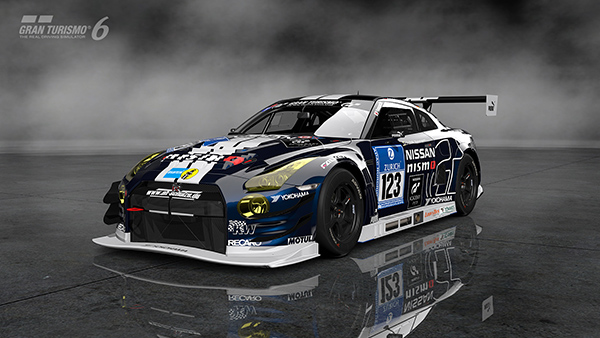
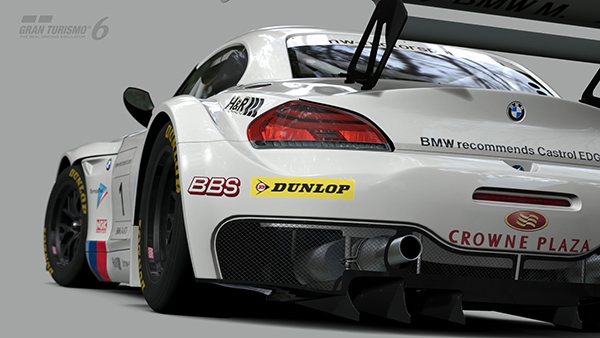
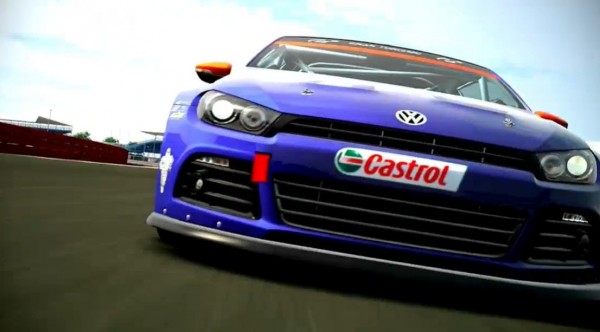
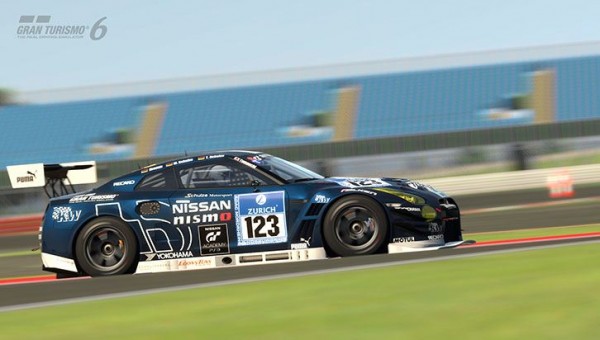
GT6 for the most part isn’t a “bad” looking game, but it isn’t a great one either. It sits safely in the middle of the scale. Vehicle models for the most part are well drawn and highly detailed, but they are often lost amongst the muddle of bland racetracks. The way that cars crash also leaves a lot to be desired. In much the same way that they don’t do much to the way you drive, your car wont find any visual differences in your car, even after a head-on collision.
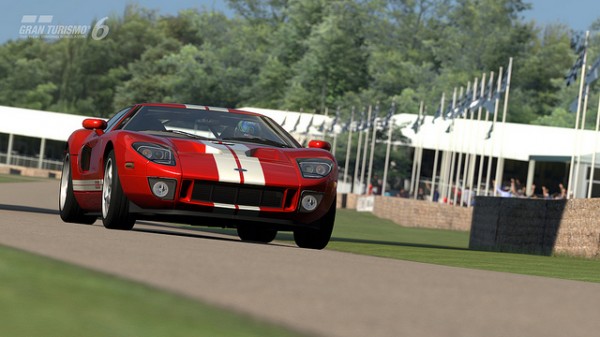
It isn’t all bad, as at just he right angle the light can shine through a tree, or come over the horizon and makes the game look absolutely amazing. Detail really pops and the cars speeding around you all look like they have come out of a factory lot. The sad part is that these sections of brilliance are the needles in the haystack. Most of the time the game looks average at best, with some sections even looking decidedly last-gen.
While the visuals can have their moments of beauty, the audio is a little worse for wear. Any car enthusiast will tell you that the way an engine roars as you shift gear is as iconic as the look of the car itself. That is why it is such a shame that the cars sound like rusty blenders when driving.
Overall
Gran Turismo 6 feels like an extension of Gran Turismo 5. The game hasn’t come very far since the last instalment and it really shows. Launching as a PS3-exclusive game at the same time that the Xbox One and PS4 launched already put it at a disadvantage, and the fact that it doesn’t bring too much more to the table than its predecessor puts it even further behind in the pack. All-in-all, Gran Turismo 6 is a racing game for racing enthusiasts and doesn’t offer much else for the casual racing fan… Unless you want to drive on the moon.
Capsule Computers review guidelines can be found here.



 Today
Today