Gamers will probably know Rooster Teeth best as the creators of the machinima series Red vs Blue or for their Achievement Hunter series, but Rooster Teeth also has tons of other content available at their website. Along with Red vs Blue and Achievement Hunter they have live action RT Shorts poking fun at their antics around the office, the mythbusters-esque immersion series which tries to bring video game mechanics into the real world, and their series of Rooster Teeth web comics.
For fans who have ever wondered what it’s like to work at the Rooster Teeth studios, the guys have put up a new video showing off their sweet accomodations. The tour is given by Burnie Burns, head honcho of Rooster Teeth, and is in the style of the not-at-all-dated business training videos you might have seen in the 1980s. I feel I should mention this even though it should be quite obvious, but this is not a serious video. As per usual with these guys, expect a good dose of comedy and silliness as Burns and the other employees abuse each other and stumble through the filming process.
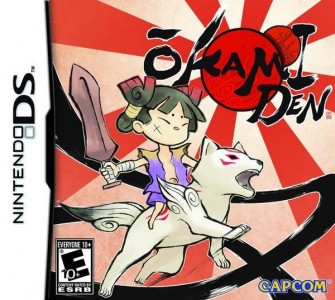
Game Name:Okamiden Platform(s): Nintendo DS Publisher(s):Capcom Developer(s):Capcom Genre(s): Action/Adventure Release Date: March 15, 2011 (US) March 17, 2011 (AU) March 18, 2011 (EU) Price: $29.99 BUY NOW!
Nearly five years after releasing Okami for the Playstation 2, Capcom have now delivered a follow-up exclusively for the Nintendo DS. Okami certainly made a name for itself with it’s beautiful art-style as well as sharp gameplay and an engrossing story. All that being said, Okamiden certainly has a lot to live up to and the young pup Chibiterasu along with a full cast of larger than life personalities are ready to do just that in this brand new DS follow-up. Just how far does this adventure go to stand on it’s own? Here is my review for Okamiden.
Story
Okamiden takes place nine months after Amaterasu & the drunken warrior Susano had battle with the Dark Lord Yami, freeing the world from the curses and demons that inhabited the land. In just a short time, the demons have mysteriously started to reappear and a the land of Nippon is in need of a hero once again. Instead of Amaterasu, a much younger pup by the name of Chibiterasu is summoned to save the world, only this hero does not boast the same strengths and powers of the Sun God, yet still has the power to use the Celestial Brush. Chibi is a bit naive and young, but that is exactly what separates Okamiden from it’s predecessor as with this being a smaller adventure, this adorable pup quickly makes a name for himself with his childish and light-hearted antics. While partnering up with a few allies along the way, it is now up to Chibi to restore the cursed land of Nippon back to it’s original beauty and defeat all the evils along the way.
Okamiden’s plot is told through various cutscenes with the villagers that take up residence in the land, and while it is a slightly smaller tale, the narrative certainly does a great job of conveying the same depth that the original tale brought with the charming dialogue sequences that take place in the game. After a long start, the game eventually takes off in a big way and through proper pacing, this journey starts to branch out as Chibiterasu encounters different allies to assist him. There are quite a few different allies in the game, but in my opinion none come more vividly portrayed than Kuni, the young ambitious warrior who is the son of Susano and determined to be a hero.
The whole main plot does make it easy to want to progress, but with a strong emphasis on smaller plotlines, the main story quickly gets put on back-burner as you perform smaller tasks throughout a good portion of the game. Some of these are rather quirky, and some are made to tug at your emotions, but either way within just a few hours, it becomes quickly obvious that developers wanted to lengthen the game with these smaller side quests. Thankfully all of these moments do a great job of tying into the main quest at hand and by the end everything feels like one giant, completed puzzle with a spectacular finish.
Gameplay
For those who never played the original title before, Okamiden has many different aspects of gameplay. For the most part, Okamiden is a bit of a platformer when it comes to traveling the land as running and jumping both perform smoothly and without problem whatsoever. Battles though bring a whole new element into the picture and control a bit like a hack and slash, very similar to the Legend of Zelda titles we have seen in the past. When you encounter a demon, you are thrown into a room with a set number of enemies and you must mash one button, hacking and slashing them into a puff of dust. It is a rather simple formula, but it works well for the most part and new techniques and weapons obtained later add a bit more depth to the system.
One of the great things about Okamiden is how it borrows fully from it’s predecessor and perfects the main brush techniques with the Nintendo DS’ touchscreen. The celestial brush plays a huge role in the gameplay as it is used for just about every element within the game. Starting out, the brush is a bit limited with your main powers being just a slash as well as the power to create a sun at anytime, but soon many upgrades become unlocked and add new strokes that add new strategies into the gameplay. By quickly hitting a shoulder button on the DS, the world freezes and is placed on the bottom screen in which you can draw whatever you may need to complete a task. The touchscreen is very responsive although at times tracing an object must be executed a few times before the game actually recognizes it was done correctly. It can be annoying to have a proper stroke rejected, but due to the quick and easy to use interface, moments such as these will be quickly forgotten.
Another high point of the game is the many dungeons to explore as they usually full of well crafted puzzles that add a bit of challenge to the game and better utilize the powers of the celestial brush. Whenever you have an ally on your back, you can quickly dismount them and work together with guidance from the brush to trigger switches or take advantage of each ally’s special techniques to open up a new area or find an item. Each dungeon may feel the same, but due to the variety given of these puzzles, no player should feel any sort of repetitiveness as each experience feels fresh and new everytime.
The celestial brush also plays a role in many quests within the game. For instance, if a farmer needs a plant to grow, draw a sun. Some tasks require a bit more effort than that to complete though with a need to do some backtracking to fetch a particular item but thankfully warp points are eventually introduced to make this a much quicker experience. With all the strokes you can learn in the game, I was a bit taken back of not getting to fully utilize certain techniques as a good portion of tasks just require a sun or something similarly simple. I did however feel that the game makes up for this though as many techniques can be used in clever boss battles down the road.
This whole journey in Okamiden is a rather large one and I clocked in with a little over 20 hours during my first playthrough. I do feel that with the heavy amount of side-quests and item collection, many will be able to get even more time out of the game and this is certainly a title to experience more than once with plenty of vibrant personalities and scenery to encounter as well as some crafty puzzles and challenging yet fun bosses to take down.
Graphics/Audio
Much like Okami, Okamiden shares a very unique and stunning visual style that makes every animation flow like a work of art. Though the visuals are slightly toned down this time around, this title still shines through as one of the best looking DS titles to come out so far and truly pushes the device to the limits in terms of presentation. When you throw in the classic Japanese setting, cherry blossom trees that bloom instantly, and the colorful characters within the game, it becomes hard to even put down the game as the world is a blast to explore.
The music in Okamiden also fits the Japanese theme as well and adds quite a bit of overall atmosphere to the experience, especially during the emotional scenes. Things like having small chimes start to ring or the loud pop of fireworks also add to the reward of performing correct strokes as well as giving off a well deserved feeling of accomplishment. My favorite part of the sound though was the voice acting. There isn’t any true spoken dialogue really, but there is a lot of scrambled jibberish when a character that is speaking that gives each character a personality all to their own, and everytime Chibi lets out a squeaky bark, an angel gets their wings.
Overall
Okamiden does a great job of utilizing the Nintendo DS’ features to bring forth a full and memorable experience. Seeing how late it is in the system’s lifespan, some might not really bother with this title due to the newer and shinier 3DS, but I truly hope that won’t be the case as this follow-up provides the same in depth experience as it’s predecessor and even sharpens gameplay with the new well crafted control scheme. Other than all of that, the story is simply one not to miss as it keeps delivering up until one big payoff at the end. While it isn’t perfect, this little adventure has a big heart and is yet another sign that the Nintendo DS isn’t dead quite yet.
Samurai Warriors Chronicles Developer: Omega Force Publisher: Koei Platform: Nintendo 3DS (Reviewed) Release Date: March 27, 2011 Price:$39.99 US, £39.99 UK, $69.99 AUS
Overview:
Samurai Warriors as a series may not be as widely known as its counterpart Dynasty Warriors but it still draws upon much of what fans of the various Warriors series love. The Samurai Warriors series has seen a handful of titles released everywhere from the PlayStation 2, the Wii and the Xbox 360. But with the release of a new handheld comes the chance for Samurai Warriors to take a step in untested waters. With the new 3DS’ 3D capabilities Samurai Warriors Chronicles can bring itself into an entirely new dimension unseen in past Warrior titles, literally. Now the move to a hand held system can be a difficult thing to do, but does Samurai Warriors Chronicles suffer by being developed on the 3DS?
Story:
It is a period of much turmoil in 16th Century Japan. During the Sengoku Period, better known as the Warring States Period, there was almost constant warfare happening between rival lords and armies which lead to some of the most famous names in history being made and remembered today.
Players do not take the role of one of these heroes but instead are allowed to create either a male or female warrior who holds allegiance to no one but themselves. As a whole this means that your character will often be doing battle with one army and making friends with officers and in the next be doing battle against these same officers and actually helping out their former enemies. Battles themselves offer little actual storytelling considering the objectives usually only revolve around defeating this enemy or defending this ally from enemies.
When you aren’t out on the battlefield you will have the chance to interact with officers who you fought with. Conversations based on the story only will often contain life lessons and examples of what each famous officer thinks a noble warrior is and you can choose from two different statements that can affect your friendship level with these officers.
This is also true with allies that you bring to battle outside of the story related ones. By fighting alongside and talking with allied officers you can gain their trust and friendship and even unlock character specific events which are a nice feature that will have the player choosing among their favorite warriors to befriend and even become one of the most liked warriors in history by befriending everyone.
Of course the actual story structure is told through lengthy narrations providing background information as to why you are about to enter your next battle and who you will be fighting with and why. The only problem is that the massive amount of knowledge that is talked about in these narrations is almost mind boggling. To truly understand the events that are happening, other than this army is fighting this army, you will require relatively in-depth knowledge of Japan’s history, including historical places, battles, fighters’ relationships with one another and more.
Sure in the end if this is something that you find truly interesting then this is right up your alley. On the other hand, players are unable to skip these narrations the first time they watch them which means there will often be times you will be eager to fight but still have to sit and listen to something akin to a history lesson.
Graphics & 3D Effects:
Samurai Warriors Chronicles places players in large open battlefields that are relatively well detailed though start to feel rather similar to one another due to only a few actual variations in level design. While character’s themselves and officers are often well designed and moderately detailed, enemy forces appear nearly identical to one another with the only variation being what soldier type they are. This means that you will spend most of your time hacking down countless enemies who appear exactly the same as the last batch and rather noticeably render into view as you grow close to them.
The 3D effects for Samurai Warriors Chronicles are truly impressive to say the least. The fully animated cut scenes with 3D turned on are truly a sight to behold. The opening cut scene is a stellar example of this with plenty of, albeit generic, 3D objects popping out of the screen in 3D. Something I found truly spectacular are the cherry blossom petals that often float through cut scenes as these appear to float just out of the screen.
The menus and all the text is obviously implemented with 3D but the battles themselves see a bit of depth added to them. This only helps to further the ability of the game to make players feel they are truly on a large battlefield. Another highlight of the 3D is when a character performs a successful Musou attack that looks spectacular with the 3D slider all the way up.
Audio:
Nearly the entire game is voiced by different voice actors from Japan, with the only exception being the player character. What this means however is that the entire game is in Japanese and will require players to read lots of subtitles to understand the storyline or specific commands on the battle field. This also may lead players to feel even more disillusioned about the story due to constant reading and listening to the Japanese voice track.
Gameplay:
Players are thrown into the battlefield with a few skills at their disposal. They are able to chain together normal quick attacks alongside powerful, albeit slower attacks to provide devastating combos. Unfortunately the combat devolves into nothing more than pressing Y as much as you can to defeat the enemies in front of you. The amount of enemies also suffers due to the 3DS’ limitations which means there will be few times you feel like you are truly surrounded as enemy numbers often feel less than they should be for the large scale battles.
Despite the fights devolving into pressing one button to kill everything players are also able to build up their Musou meter and when it is full they are able to unleash a powerful fighting-style specific attack that is not only visually impressive but devastates all enemies in the area. These Musou attacks provide a great addition to the rather standard button mashing experience and lets players dispatch enemy officers with some flair. Still in the end, fighting often devolves into rather repetitive button mashing experiences which can quickly turn the player off of long gaming experiences.
Being placed on the 3DS provides some unique game changes to the standard formula of the Samurai Warriors franchise. The touch screen is used to switch between the other allied officers whom are fighting alongside the player characters. Also shown on the bottom screen is the map which displays exactly where each officer is located and where enemy officers will be. This creates a very simple to use and quick to learn system that lets players create strategies by placing their officers in certain places of the map to switch to on the fly when they need to.
This is especially true when it comes to the fact that players are given various side missions during the battles. These missions vary between defeating a certain enemy officer with a specific ally officer, stop an enemy from escaping, or even capturing enemy bases within a certain time limit. These missions aren’t necessary but do provide bonuses such as equipable items, weapons and money and are often spaced far enough apart on the map that will require the player to quickly switch between their officers and finish the closest objective to that officer before switching yet again.
This feature makes it so that players truly feel like they are in the middle of a large battlefield where even the smallest victory can make a difference. Players will notice as they either succeed or fail bonus missions that the morale of ally and enemy forces fluctuates accordingly which also generates various boosts or debuffs to the forces on the field. The only problem with the fact you will fight alongside other warriors you must switch between is that you have more than your standard fighter to worry about. There are many times that players may have to end up returning to previous fought battles and grind out fights simply to level up other warriors so that they will not become a liability which may heighten the repetitious feel of the title depending on your feeling of grinding and leveling up fighters.
There is unfortunately no multiplayer option to play online with a friend or even locally so there is a bit of a letdown to fans of the series who were hoping to play with others. Instead the game supports the StreetPass feature which lets players select four different officers and put them together in a team that will do “battle” with other peoples’ teams with the winner gaining increased friendship with their team and weapons while the loser only sees a small gain to friendship and one weapon that the winner pre-set to give out to anyone they StreetPass.
Overall:
Despite the fact that the storyline sounds like a history lesson being taught and combat feels repetitive as ever, Samurai Warriors Chronicles comes out with a few additions that help it struggle up from being a bland experience. Being able to shift between various officers on the battlefield provides a unique experience as well as being able to manage friendship levels with these officers which may make the repetetiveness of some battles tolerable.
Not to mention that the 3D is quite impressive in a title that has open field battles such as this one and is a great way to showcase what the 3DS’ 3D is capable of. Still, in the end, fans of the series will be relatively pleased with the shrunken down version of Samurai Warriors but will still feel that not a whole lot has changed in the experience and still be as repetitive as they remember.
In a daring attempt at fooling their audiences, developer ArenaNet and publisher NCSoft have released information on their latest profession for their upcoming game: Guild Wars 2.
This profession is the Commando and is based around modern day tactics in a fantastical world. It should be noted however that this joke is not just on their website. Players in the original game ‘Guild Wars’ and it’s optional expansions have noticed various pieces of architecture and some more modern forms of vehicles floating around in the game in various areas of Tyria. This is a substantial effort on the part of any developer and ArenaNet should be applauded for their delivery and commitment to the joke.
Should the Commando turn out not to be a joke, here is a sample of their skills:
Commandos have several different special skill types:
Grenades—Sometimes you need to kill a whole lot of tangos—fast. Grenades enable the commando to perform area-of-effect attacks with a variety of devastating results. From flashbangs that blind enemies to shrapnel bombs that apply bleeding, the commando has a grenade for every occasion.
Vehicles—Vehicle skills act as the commando’s utility skills. A commando can opt for an armored personnel carrier (APC) or a tank for land travel, a helicopter for air travel, or a submarine for undersea travel. Each vehicle gives the commando three utility skills, ranging from depth charges on the submarine to flamethrowers on the APC.
The APC, tank, and helicopter can also carry allied passengers to maximize your firepower. Passengers acquire new skills based on their profession and their position in the vehicle. For example, an elementalist manning the tank’s main gun can fire flaming shells, while a necromancer riding shotgun in an APC can use the Corrupted Headlights ability to poison and blind foes caught in the beams.
Force Multipliers—Commandos are one-man armies, but they don’t have to fight alone. Force multiplier skills let the commando call in helicopter gunships to take out a boss, rain death from above with Predator air strikes, or even request a danger close offshore naval bombardment.
GAMEVIL have confirmed they will commit current top-selling titles to the Sony Ericsson Xperia PLAY, as well as future titles.
The top-selling titles which will be made available for the Xperia PLAY include Zenonia, Zenonia 2, Baseball Superstars 2011, and Soccer Superstars. Their latest role playing games, Illusia and Zenonia 3, will also be available. GAMEVIL’s titles are already widely popular in the Apple App Store and Android Store, but this support will see these games being brought to life on a new platform.
Sony Ericsson’s new device, the Xperia PLAY, is the world’s first Playstation certified smartphone and runs on Android Gingerbread. It has already been released in European countries like the UK and Germany, and the US and Australia will see the smartphone gaming machine released some time this month.
Publisher: LucasArts Developer: Traveller’s Tales Games Consoles: Xbox 360 (reviewed), PS3, PSP, Nintendo Wii, Nintendo DS, Nintendo 3DS, PC Release: 30th March 2011 Price: Fishpond Australia ($69.95), Amazon US ($49.99), Amazon UK (£31.69)
Overview
When LEGO Star Wars: The Video Game was first released back in 2005, it was obvious that Traveller’s Tales and LucasArts had come up with something special. Half a decade and a multitude of franchises later, the LEGO series of video games still remains one of the most popular on any console. With the stories of the Star Wars films told from start to finish in the game LEGO Star Wars: The Complete Saga, there seemed to be nothing left for the series…but when there’s a will, there’s a way, and – as all game companies do – LucasArts and TT Games have found that way.
LEGO Star Wars III: The Clone Wars declares that players will “build, battle and laugh your way through the Star Wars universe like never before.” The truth is, you’ll build, battle, and laugh…but I’m pretty sure we’ve done it all before.
Storyline
It’s hard to talk about the storyline for this game because it’s not, essentially, innate to this game. The storyline takes from the Star Wars: The Clone Wars era, and with that comes definite bonuses and a few problems too.
The storyline is standard: the Republic and the Trade Federations are unhappy with the growing amount of power each was wielding in the galaxy. Nute Gunray of the Trade Federation ordered a blockade of Naboo to gain political leverage, but his move backfired and Senator Palpotine of the Republic Federation uses this to rise to the position of supreme chancellor of the Galactic Republic. However, Senator Palpotine is actually also Darth Sidious, a Sith Lord who has an evil plan for the galaxy. He plays the Jedi Council and the Separatist Army against each other in a bid to carry out his plans. As with the series, the game has a series of multiple plot lines where different characters will be in different places doing different things at the same time.
The game begins with a fork in the space road, so to speak. On one side, you’re hunting down General Grievous who leads the armies of Separatists, and on the other side it’s a search for Asajj Ventress, a Dark Jedi. Players can even enter Story Swap mode, swapping between different character storylines in the same mission to complete individual tasks before uniting at the end for a battle or resolution. This fork in the storyline is an interesting one, and really does let the gamers play out this title with a similar feeling to watching The Clone Wars.
That does become a problem though: a lot of the time, it does feel like you’re watching the story rather than playing the game. While the Free Play option allows players to freely roam around a level after you’ve completed it, in the beginning of story levels (and throughout) there is a decent wait before you actually get to play. LucasArts do get trapped in their own idea in that regard: retelling the Clone Wars series isn’t just taking a film and turning it into a game. Instead, they have to pack parts from two seasons and a film into a game that is playable but true to the storyline itself.
It can also be terribly difficult to understand what’s going on in the game without prior knowledge of The Clone Wars. While players can read the prologue for each mission, it really doesn’t help when the LEGO characters speak about as much English as in The Sims. For any Star Wars novice, getting a grasp on the storyline should be a mini-game in itself because the LEGO figures aren’t introduced at all. LucasArts assumes a prior knowledge of the characters, but when Obi-Wan and Anakin have the same coloured hair it can get a little bit confusing unless you’re paying attention.
Graphics
Fans of the LEGO Star Wars franchise will go into this game and be quite thrilled with the graphics. While it’s not the Heavy Rain of the LEGO series, the characters look polished and sleek – it almost seems like you’re watching real life LEGO figurines on the screen at times. The world of LEGO Star Wars III: The Clone Wars is also expansive, with a multitude of different environments to explore and characters to unlock.
The basic principle for graphics in this game is simple, yet complex. The LEGO designs are in no way meant to have the detailed expressions of a person, but they are clear enough and cute enough that nobody really cares (why would LEGO want them to look like real people anyway?). However, the complexity and extensiveness of the graphics shine when you stop your gameplay and take a minute to admire the environment around your character. Every corner of this world is built brick by brick – quite literally – and it’s an impressive feat when you take notice of the details behind each LEGO brick or the rendering behind a setting. One of the early missions, Duel of the Droids, features a setting in mid-air, and the detail placed into the view and the contrast is just fantastic.
The colours do appear richer and brighter than previous games in the series – which it should do, actually, because the last LEGO Star Wars title was released in 2008. The cut-scenes are well-rendered, with several close-ups that show the true sleekness behind these LEGO creations. The animations of the characters inject them with a certain comical life, and it’s only through the cutscenes that players will really get to witness this. Of course, these scenes aren’t short of action either; there’s plenty of flying, fighting, and light sabers.
Audio: SFX and Soundtrack
LEGO Star Wars has always been known for its great sound effects for light sabers, explosions, and in the general way of characters’ expressions. This game is no different; the sounds are synchronized wonderfully to bring the LEGO Star Wars III: The Clone Wars world to life. Of course, the degree of ability involved for voice acting is fairly minimal, which cuts out one of the key issues many games have with bad voice-acting.
Like the visuals, the sound effects seem simple until you take a minute to stop and realise how much work has gone into syncing up the sounds with particular movements. While I was running around (as annoying as this was) I realised the little things were what brought this game more to life. When your light saber touches the wall, the sound effect is immediately triggered. When you shoot lasers using different buttons, different sounds are used. It’s the small details which really bring the sounds to life in this game.
The soundtrack in this game is pretty standard for any of the Star Wars franchise. I’m not too certain if it’s the same music from the film and series or not, but it sure does sound the same. It is absolutely epic, as usual…and nothing else that needs to be said but that.
Gameplay
Gameplay is where this game both wins and loses. On the one hand, it utilises great features to create some awesome new experiences, and on the other hand it’s still the same old, same old. Of course, the motto is “if it isn’t broken, don’t fix it”, but I’m beginning to think LucasArts and TT Games should employ a new strategy: “if it’s already spawned three games which have been criticised for having gameplay that’s too similar, don’t make another one does the exact same thing…players can get bored, you know.”
Of course, LEGO Star Wars allows players to make use of different skills in each mission. As usual, Jedis will use the Force while clones will shoot the crap out of things and droids infiltrate computer systems. Each of these characters also has special abilities which help them progress through levels; sometimes a clone may need to grapple, or the Force may be needed to reassemble some parts so you can progress to the next level. This game uses a combination of puzzle-solving, hacking and slashing at things, and battlegrounds which employ strategy tactics. There are also a ton of unlockable characters to find which can be used in gameplay like Boba Fett, Han Solo and Princess Leia.
This game is definitely a lot more enjoyable in multiplayer mode, which is fair because it is catered for the family. Multiplayer mode sees players controlling their own individual characters in the mission, and working together to solve the puzzles and beat the bosses. It’s far simpler too because you don’t have to constantly switch between characters to see which abilities need to be used to progress.
One thing I did have a concern with in the game is that sometimes it’s not clear what you’re required to do to move on in the mission. Some pieces which need to be reassembled using the Force, but unless you’re controlling the Jedi, you won’t see the faint glow around the items hinting at what to do. However, for the most part the commands for the games also come up very clearly on the screen in massive text, which means it’s fairly simple to follow (bearing in mind this game is designed for children to be able to play).
There are also small issues which popped up for me: you can’t really change the view, so half the time I’d be running into a little nook and just mashing X until I hit what I was looking for. Also, at times if you are hitting panels to make more studs pop out, you have to aim fairly well to hit the right spot. They’re little things which don’t affect the overall game, but it really can be frustrating at times.
Final Comment
This was a great way to revive the LEGO Star Wars franchise, but I do hope this is going to be the last one for them. I personally think LucasArts and TT Gameshave pushed LEGO Star Wars as far as it can go without doing a complete overhaul of the game. Overall, the game is fun and will provide many hours of enjoyable gameplay, but in the greater scheme of things though, I don’t think it’s one I will remember for the rest of my life.
It is a bit ironic that the week when our review for the first season of WAGNARIA!! (WORKING!!) goes live, the studio that animated the anime originally in Japan has just announced that they would be creating a second season of the anime. The website with the announcement can be found here, where you will be able to watch a video featuring Yamada, Poplar and Sota announcing the new season.
All of the characters will be returning with their original voice actors, but structurally the show will feature many different changes. Atsushi Ootsuki will be the director this time around while Takao Yoshioko will be in charge of the script. Though since it is still based off the original four comic styled manga still in print in Japan there will be plenty of content to draw from.
Despite it being April 1st here in the United States, it is technically April 2nd in Japan and even the characters themselves mention the fact that this isn’t an April Fool’s joke but an official announcement. No announcement has been made yet regarding when the anime will air in Japan, nor obviously if NIS America will look to localize this second season of WAGNARIA!!.
Again this isn’t an April Fool’s joke it is actually something that is implemented into the game of Duke Nukem Forever. There have been hints about the fact that the player can throw feces around in the game but nobody had actually seen it happen. That is until the latest couple of trailers were released and one of them features Duke throwing poop around everywhere. At walls, in the shower, at signs, drinking fountains….
In another less hilarious but still really interesting trailer we see Duke falling out of a plane of some sort with an enemy in his hands. But rather than simply steal the jetpack he opts to punch the monster’s head off and pilot the decapitated torso into a building. Sounds like just the over the top action we expect from Duke when it comes out on June 14th after a bit of a delay.
It may be April Fool’s Day but don’t be fooled if you think that you have seen some of these screenshots before. Then again it is also a bit of a hunt to find out which screenshots are new and which ones are a bit old. But we can never get enough of Skyrim around here and with the latest batch of screenshots revealed from Bethesda we see a handful of new areas and of course some great looking first person shots.
In a few pictures we see the evidence of the two handed fighting style that is being implemented for The Elder Scrolls V: Skyrim. Meaning that you can hold a weapon in one hand while using magic in the other, or two weapons or even two shields if you feel like being a wall for some reason or another. Regardless of what you want to do however you’ll have to wait until November 11th 2011 to get your hands on this title.
Mass Effect 2: Arrival DLC
Developer: BioWare
Publisher: EA
Genre: Roleplaying/Third-person Shooter
Price: 560 MS points / $6.99 or £5.49
Platform: Xbox 360, PS3, PC
Release Date: Available Now!
Arrival is the latest and final DLC pack for Mass Effect 2, which has already had a deluge of add-on content since its release in 2010. This finale for Mass Effect 2 is intended to set things up for the third and final part of the trilogy, which is currently slated for a holiday 2011 release. Let’s see how this final episode holds up.
Story:
Fans of the Mass Effect series have been hearing about the looming Reaper invasion since the first game, and it is clear that this threat will provide the main antagonists for the third and final chapter. In Arrival, it is revealed to Shepard that new evidence has come to light showing that the Reapers are coming sooner than was ever previously imagined.
Commander Shepard is contacted by Admiral Hackett about a mission of the utmost secrecy; a mission so covet that Shepard won’t even be able to bring the crew of the Normandy along for backup. The nature of this operation revolves around an undercover agent that has been imprisoned deep in Batarian space and requires liberation. The importance of this rescue mission is two-fold, as not only is this agent a close personal friend of the Admiral’s, but she also has evidence of the Reaper invasion that will force the Council to take action.
As the plot unfolds, the agent, Dr. Amanda Kenson, reveals the details to Shepard regarding said evidence and convinces Shepard that drastic measures must be taken. These “drastic measures” provide a huge ethical and moral dilemma for Shepard in which the lives of the few will need to be measured against the lives of the many. This all creates an excellent source of suspense and urgency since the decision must be made quickly if the “Arrival” of the Reapers is to be prevented.
Unfortunately while there is an enormous choice to be made, Shepard decides to make this choice without player input. This was quite shocking coming from a studio and a game that is so focused on player choices and roleplaying. While I understand that sometimes developers need to lead a story in a certain direction, it was very unsatisfying to have the decision completely out of the players’ hands. There were certainly ways for the story to be written that would have allowed for player choice to be included, even if the events to follow were inevitable. There is a smaller choice to be made after-the-fact, but this amounts to little more than “should I be a dick or a good person?” and did little to make up for the earlier snub.
Gameplay:
While the combat of Mass Effect 2 improved immensely over the action of the first installment, Arrival seems to sacrifice the things that make Mass Effect truly great in favor of more action. While it is always fun to blast waves of Batarian guards and to incinerate pyros only to watch them explode among their comrades, that’s not really what Mass Effect is about. There are certainly better games when it comes to third-person shooting, but the reason Mass Effect 2 stands above many others is because it has something deeper.
Mass Effect 2 is great due to a whole mess of factors. These factors include the combination of the ability to tell a great story, the ample opportunity for interactions between Shepard and the crew, the ethical choices which can sometimes be truly profound (although not always), and the chance to meet all different kinds of alien lifeforms before blowing their brains out of their skulls. In Arrival, there is a pretty interesting story that does pave the way for the next part in the trilogy, and there is definitely plenty of alien slaughter, but with the removal of the squad members and the moral choices it comes off as far more generic than any previous Mass Effect offering. For players that are familiar with Doom and the many corridor shooters that followed, you know pretty much what to expect: walk down a series of halls annihilating the enemies that pour into each room. That’s about it.
The other huge issue that I had with Arrival was its incredibly short length. While I didn’t expect a 30 hour epic on the scale of the full game, I expect more than I got. From the time I started up my save file with the new DLC installed until the time I got the achievement telling me I was finished, only one hour had passed. Now when I say one hour I don’t mean an hour and a half, and I don’t mean an hour and fifteen minutes. I started playing Arrival at 10:05pm Eastern Standard Time and that achievement dinged at precisely 11:05pm EST. While there is the chance for some replayability to unlock the other 2 achievements, one hour to complete the entire story of Arrival is just abysmally short.
Final Thoughts:
I’ll be very clear about my feelings on Mass Effect 2: Arrival. It is not bad. It’s fun. There are some interesting segments; one part in particular where Shepard directly controls a security mech. However, these are things that anyone downloading a Mass Effect episode would instantly expect. The things that are lacking, on the other hand: the player input on the direction of the story, the interaction with Shepard’s companions, and a length of gameplay worth more than a pittance, are what Mass Effect players (or at least this player) really want. Because of that, I find it hard to recommend Arrival to even the hardcore Mass Effect fans. I would suggest waiting until Mass Effect 3, when the Reaper menace will finally be dealt with once and for all.
For offering us Batarians to kill and not much else, Arrival gets: