


Home Blog Page 4677

EB Expo 13’s First Wave of Content Announced, Tickets on Sale April 23rd

EBEXPO13-Logo-01

After covering last year’s event, we are glad to help share out the announcement of the first content wave and ticket sale date for EB Expo 2013.

The gaming extravaganza will be returning to the Sydney Showgrounds from October 4th through to the 7th. Although general admission pricing will remain at $39.95, organisers are introducing a new 4-person Multiplayer Pass for both the Friday and Saturday “twilight” sessions for $129. Tickets will go on sale 10am on April 23rd. You will be able to purchase them in-store or online at the EB Games and Ticketek websites.

EB Games National Brand, Events and Engagement Manager Debra McGrath says;

“We could not have been happier with the success of the EB Expo in 2012, and initially looked to simply improve upon last year’s efforts based on our customer feedback, rather than make the event any bigger. However, due to the support of the Australian gaming industry, we believe we have been able to achieve both a bigger AND better event. We guarantee the EB Expo 2013 will once again take gaming to a new level and is a must for gamers of all ages”

EBEXPO13-1stVendors-02
DICE and EA’s stunning shooter Battlefield 4 will be playable!

Here are the trademarks of the event and what you can expect:

  • Premiere Gaming Exhibition: the size of two football fields, the main feature of the EB Expo, is the Exhibition floor. The only place in Australia you can get hands on and experience all the hottest upcoming and new release games showcased in specular custom built displays.
  • New and improved EB Arena: purpose built to blow your mind and senses, the EB Arena has been fitted with a brand new 5 storey high super screen, sound system and stage. The EB Arena will house a string of international developer guests as well as local stars presenting the best upcoming products.
  • Supersized EB Community Hub: connect with other gamers and chill in an area now three times the size of 2012. Featuring a free to play retro & modern arcade, a 500 seat Community Theatre with cosplay competitions for all ages, industry panels, live developer Q &As, plus celebrity signings. Attendees can also get up close and personal with the stars of Good Game as they host a live Q & A and signing.
  • World’s biggest EB Games Store: buy the latest release video games, take home some memorabilia, grab a bargain or a unique collectible in a massive store that has to be seen to be believed.
  • Home Grown Gaming on the Show floor: After the success of last year’s Home Grown gaming pavilion, all things Home Grown will be moved into the main exhibition space, with a huge dedicated area showcasing the best local content.
  • Value packed Family Day: Following last year’s sell out, Family Day Sunday is back. Families can grab a discount family ticket and come along for a day of great family fun included a dedicated Buck and Friends stage show for the kids and loads of free activities and giveaways.

EBEXPO13-1stVendors-01
All the confirmed vendors at this early stage. Many more to come.

Debra McGrath also made this announcement;

“EB Games is excited to announce that Australia’s #1 video game TV show, Good Game will be bringing their hilarious live quiz show Good Game Liveto the Expo. We will also be holding Australia’s (and possibly the World’s) first Video Game Hero Parade; a video game themed fireworks and pyrotechnics show housed in the all new EB Action Arena; as well as a host of other shows and events.”

Here is a list of all new features for this year’s incarnation of the show:

  • Good Game Live: Join Good Game hosts Bajo and Hex as they take to the EB Arena stage for a live quiz show for gamers by gamers; a multiplayer showdown of gaming goodness and trivia with some very special guests! Catch Good Game Live Friday and Saturday night at 9pm, with a family friendly show on Sunday at 1pm. Early bird tickets are just $10 each (normal price is $20) and can be purchased with your EB EXPO entry ticket.
  • Australia’s first video game parade: on the Sunday, all of your favourite video game heroes larger than life in a record setting parade!
  • New ticketing types: grab your gaming mates or your family and purchase your all-new MULTIPLAYER pass on Friday or Saturday for four people at a discounted price of $129. That’s only $32.25 per person.
  • Australia’s only interactive video game comedy show: Comedic genius John Robertson is back as Expo host again, and this time he is bringing his hilarious sensation The Dark Room. Sit back and take front seat in his hilarious video game comedy show where the audience chooses their own adventure – and fate!
  • EB Action Stadium: sit back and watch the spectacular fireworks show both Friday and Saturday night at 7pm. Sit back, have an ice cream and take in a showcase of Expo highlights in a choreographed pyrotechnical display, exclusive to the EB Expo!
  • All new family friendly content: Following last year’s sell out, the EB Family Day is back with even more fun to be had! With a Sunday Family discounted ticket offer of only $119, you can bring along the whole clan to experience a full day of family friendly entertainment.

Also launching alongside the sales window opening will be a mobile app for all attendees to keep track of the festivities and their lead-up. For further information on this MA 15+ rated event, like a detailed pricing chart and early schedule, please visit the official EB Expo website.
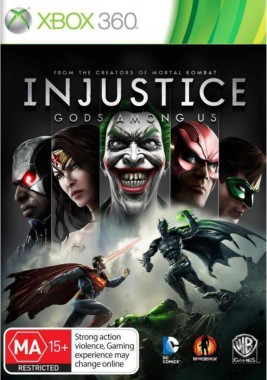
Injustice: Gods Among Us Review

Injustice-AU-Packshot-01

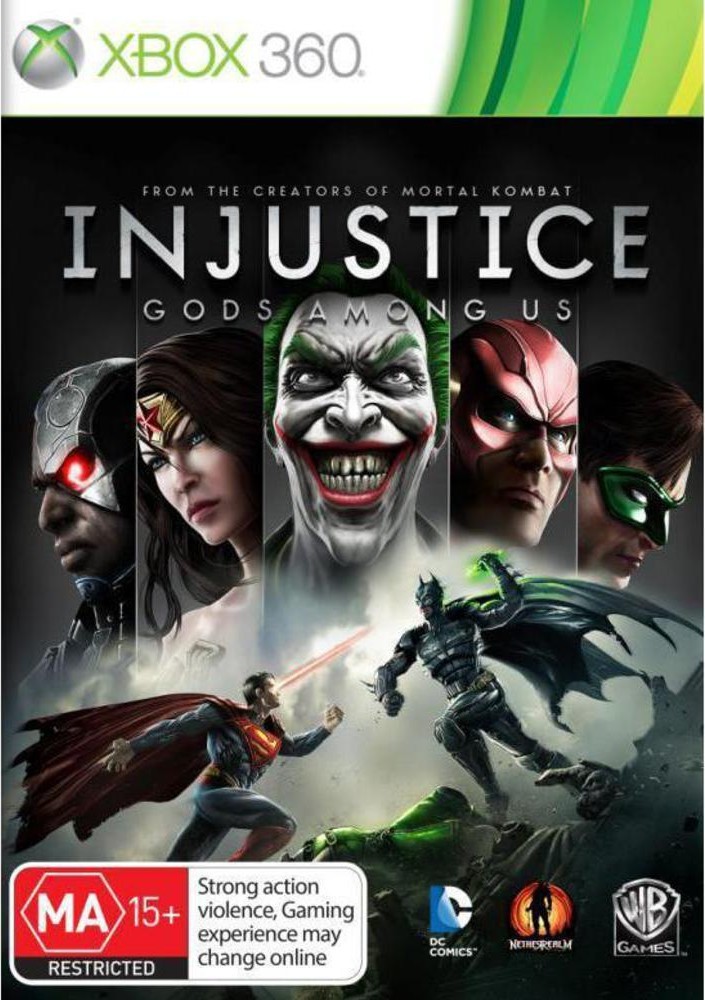
Injustice: Gods Among Us
Developer: NetherRealm Studios
Publisher: Warner Bros. Games
Format: Xbox 360 (Reviewed), PlayStation 3, Wii U
Release Date: April 17th, 2013
Price: $59.99 (Available Here)

Overview

When Warner Bros. bought the Mortal Kombat licence and team along with many other assets from the dissolving Midway Games back in 2009, it was only a matter of time before the newly renamed NetherRealm Studios would delve back into the DC Universe, this time solely under the Warner Bros. Games banner. But Injustice: Gods Among Us is no MK vs DC Universe, make no mistake about that. Have Boon and co. done justice to your favourite superheroes? Read on and find out.

Story

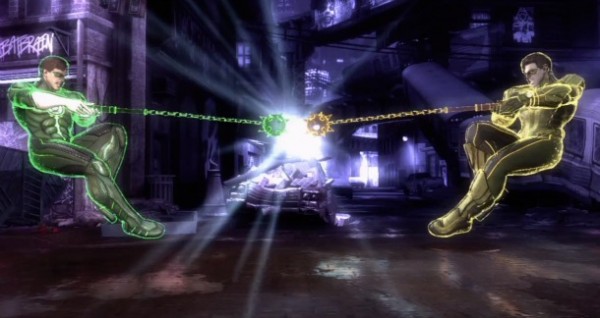
It’s very hard to talk about the Story Mode of Injustice: Gods Among Us without assuming a level of knowledge from the reader, because the set-up was explored in the accompanying comic series and has been touched upon in trailers, but there’s also one bit of information that is delivered shortly after starting the mode that directly addresses the fan rumours on the nature of the storyline and how, for instance, it’s possible that Hal Jordan comes face to face with a Yellow Corp version of himself. And as promised by the developers, how these heroes are able to avoid being outmatched is also explained…but I won’t go into those details.

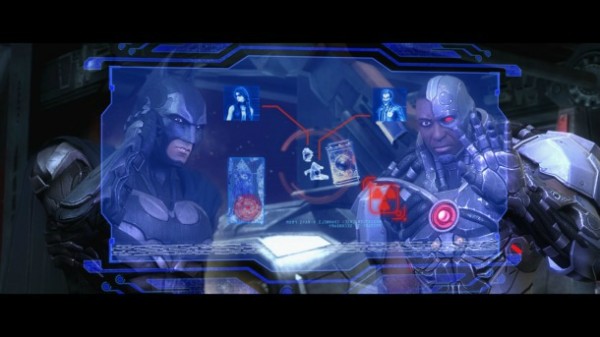
All I can write about is the opening and the conflict between the Regime and the Insurgency, but there’s more to this than meets the eye (no, it’s not a Transformers crossover, although that would be intriguing). Metropolis is destroyed…millions dead. Batman has The Joker in custody, in the middle of an interrogation. The Joker had orchestrated a trap where Superman would fall subject to a toxic gas that caused him to hallucinate and envision Lois Lane as Doomsday. The Joker had attached a heart monitor to Lois Lane, so when she dies, a nuke would detonate in the heart of Metropolis. After all of this goes down, Superman wastes little time in busting through the wall to take matters into his own hands, interrupting the interrogation, snapping, and killing The Joker…

Injustice-Story-01

Then, we transition “Elsewhere”…I wish I could tell you what is going on “elsewhere”, but I don’t want to ruin even an early spoiler as the mode is only 4-5 hours long (finished it in just over 4 hours on normal difficulty). That was my only true disappointment by the way, but only because the Mortal Kombat story mode was significantly meatier. Then again, it was tight and effective and said what it wanted to. But, back on point… that single event molded the reality where Superman names himself High Councillor and begins the Regime, effectively turning into a ruthless dictator. This doesn’t happen overnight, as we skip forward 5 years in time. Wonder Woman, as seen, is his right-hand…woman.

Naturally, Batman is the purveyor of justice and sees the flaws in Superman’s new, controlling nature. And so a classic showdown between the Bat and Kal-El becomes inevitable with the Dark Knight’s troop of resistant heroes deemed “the Insurgency”. There are 12 character-focused chapters in Story Mode. Upon reflection, I understand the decision to only explore the good guys’ perspective first-hand; you choose sides in conflict, and embodying the bad guys could potentially breed sympathy for the dark side, who, morally, we shouldn’t be sided with. But there is a large grey area in regards to the alliances and alignments of those under the Regime, so I feel that could’ve been better exploited to some degree. Nonetheless, I really enjoyed this well-written story; definitely worthy of standing beside its comic inspirations.

Gameplay

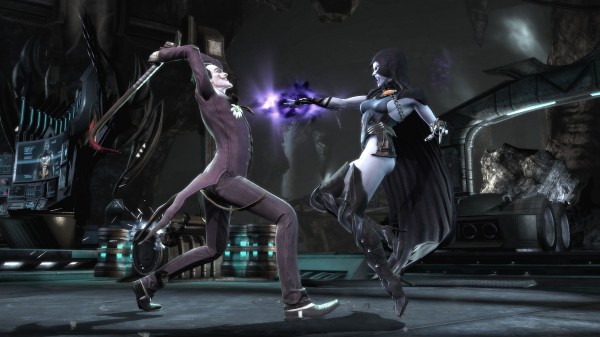
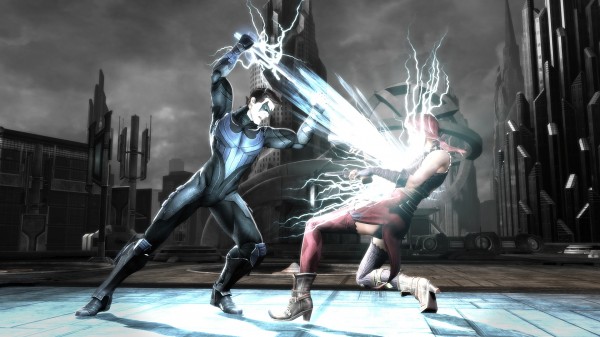
Those who expect Injustice: Gods Among Us to play exactly like Mortal Kombat are sorely mistaken. There are three attack buttons: ‘X’ is light, ‘Y’ is medium and ‘A’ is heavy. Each character also has a dedicated character power, all of which have cool-downs and can be activated by pressing ‘B’. These can range from temporary buffs, special powers (Flash’s slow-mo effect) to a change of fight styles (Nightwing, Wonder Woman) or an ability that can be worked into combos (Batman’s mechanical bats). Blocking is now achieved by pressing away on the D-Pad or left thumbstick – which is probably the most significant change for MK fans in particular – and grapples are initiated with ‘LB’.

injustice-raven- (1)

The health bar is now broken into two-tiers; once one has been depleted, the winner of that “round” does not get their health replenished like in other fighting games. So they may act as round counters for the most part, but not in that one aspect. Pulling off a “super” when your opponent has a minor amount of health left in the first tier is a waste as the move will cut off after the first blow and full damage will not be done, although you will still lose your super meter. Speaking of which, there are four bars to your super meter. This is where elements of Mortal Kombat carry through as you can “meter burn” one bar in order to enhance a special move or “block escape” (combo-breaker equivalent). Executing a block escape off a ground or wall bounce attack burns two bars instead.

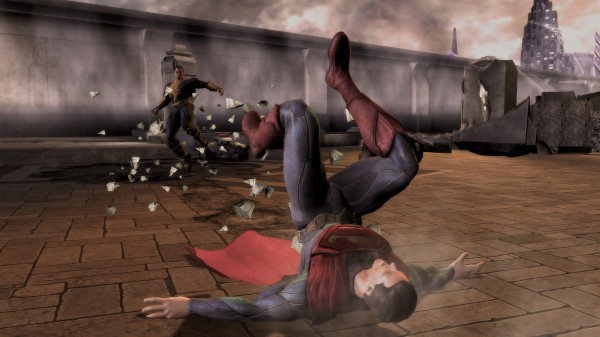
Landing a wall bounce attack (away +’A’) at the borders of a level will initiate a level transition, which really increase the number of varied backgrounds in the game, each with their own interactables which can be utilised by pressing ‘RB’ once in their radius of use (‘RB’ will flash besides your health bar). The aforementioned super moves use up your entire super meter and rely on differing conditions to follow through. Lex’s, for instance, requires you to land the final hit in a string of four, even if the previous 3 are blocked. These do big damage and are entertaining to watch; they don’t pull you away from the action and rhythm of the match for too long, although fighting purists might argue that point.

hawkgirl-vs-flash-injustice

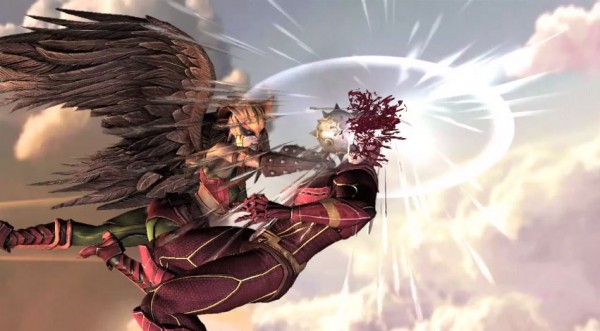
The final core gameplay mechanic is the “clash”. The clash is executed by pressing forward + ‘RT’ when getting hit and is a one-use per match feature only available to you on your second health bar (represented by a gold mini-meter underneath your health). There is a ton of strategy in the timing of its use, as the defender has the potential to gain health from a successful clash, while the attacker has the potential to do extra damage. Once initiated, a timer will begin as the two characters share a line of dialogue (covered in the audio section below). Your super meter features prominently as each bar filled is mapped to a face button. You must wager a piece, or all, of your meter by pressing the corresponding button and the difference between the values wagered determines the percentage of health returned/damage done respectively.

One thing worth noting about Story Mode is the occasional pre-fight mini-game that allows you the chance to enter the fight with your enemy at a disadvantage if successful – e.g. pressing the correct buttons to throw a series of batarangs at an advancing Lex Luthor. Outside of Story Mode, there is the Battle Mode (variations on the classic arcade ladder bookended by a motion-comic ending for the chosen fighter, which look phenomenal), S.T.A.R. Labs (reminiscent of Mortal Kombat’s challenge tower), Single Fight, Versus, Online and Practice modes. Implemented throughout is a simple XP system, whereby you unlock backgrounds, portraits and icons to customise your virtual ID – the Hero Card – and earn Access Cards and Armor Keys used to unlock a number of alternate costumes, concept art and more in the Archives, all by levelling up. More unlockables can be attained through completion of missions in the S.T.A.R. Labs. Difficulty levels range from “very easy” to “very hard”.

Green-Lantern-Injustice-01

Battle Mode houses the “Classic” ladder, along with a multitude of others that give conditions for success to the player – e.g. in the Poisoned ladder, your health is being drained and so you must work to finish your opponents quickly and efficiently. These can be bought from the Archives using the aforementioned Access Cards. S.T.A.R. Labs involves completing 10 challenges per character for a total of 240, each with extra conditions as part of a 3 star scoring system ala Angry Birds; a special bonus is given for acquiring all 720 stars. I haven’t done so yet, but from what I’ve read, the prize is akin to the Mortal Kombat one…which is disappointing to say the least. These are pretty much self-contained mini-games, full of Easter-egg level inclusions.

Single Fight is self-explanatory. As is Versus; you can, however, vote on which arena to start in with a coin-flip mechanic in place for when both parties disagree, which is a neat and fair feature. Online features the usual Ranked, Player and Private match-matching capabilities as well as the ability to create and join rooms. Very few people were online when I attempted to play online, but I did manage to get in some matches…and get slaughtered in the process. There was no noticeable lag whatsoever though. There are three types of fights to engage in here: 1v1, Koth (King of the Hill, where up to 8 people observe a match, waiting their turn) and Survivor. Practice Mode is extremely deep in relation to the settings available, and allows two human players to enter.

harley-quinn-injustice

NetherRealm worked extremely hard to cater to all kinds of players as, leading on from the practice mode’s depth, you can see the frame data for each move and even tag anything from your move’s list to appear on the top-left of your screen during a fight (except in Story Mode). There’s also a quick-reference for the majority of your special moves on the main pause menu screen. All in all, they packed a tonne of features in and as well adopted as Mortal Kombat was in fighting circuits like EVO, Injustice: Gods Among Us will blow it away. And the fact that every character literally plays differently – speed and style-wise – there is so much potential for character specialisation and everyone to find their niche. And do me a favour: pick Solomon Grundy and see how weighty he is – the effect of scale in a fighting game has finally been perfected with Injustice: Gods Among Us.

Visual

Tackling the task of re-imagining such well-established characters from an institution such as DC Comics is a mammoth one. Surely, there are some who are not particularly fans of the character designs found in Injustice: Gods Among Us, with the term “too busy” being thrown around by those detractors. I happen to like theses more aggressive, battle-hardened, war-ready costumes. I think they fit the tone and atmosphere of the game and its story perfectly. It’s enlightening to actually look through the concept art for each character (which is locked initially) and see the design process – as well as some of the cutting room floor designs.

The graphical quality is great throughout, although the character models and environments in Story Mode came off as somehow less detailed. I believe it to be caused by inconsistency with the lighting engine, as even though the transition between cut-scene and gameplay is smooth, actual fights are lit much better…and it only makes sense as that is the base of the game and each scene would have to be individually lit. Story Mode is an added bonus that most other fighters plainly don’t even attempt either. Regardless, the game never looks bad; just better “in-action”. Although the choreography and blocking of the cut-scenes are well-crafted and planned out also.

cyborg-nightwing-injustice- (1)

Aside from being able to view each skin and character model in the Extras sub-menu, where you can zoom-in and rotate around them in order to catch every little detail in their armour, you can also similarly view every arena in-game. Already unlocked from the start, you can go into the Extras sub-menu and observe each arena with linear camera control and the ability to systematically damage the surroundings with the press of a button. It’s very cool to incrementally destroy these beautiful made levels and notice all the details in the environmental damage and how that changes the aesthetic of the level. They can also be reset. The stages are almost treated like characters themselves in this game!

Audio

The main theme of Injustice: Gods Among Us is stuck in my head, on a loop, and will possibly stay so for the next few weeks. I did let the credits roll in-game (during which “Angel” by Depeche Mode plays), but somehow missed the sound department, did a search to see exactly who the composers were on the game. Being an MK fan, I assumed Dan Forden would be working on it, but I was surprised to find Cris Velasco & Sascha Dikiciyan (Mass Effect 2 DLC & 3) had also contributed. And that catchy main theme? Composed by Christopher Drake – who also scored the 2012 animated films Justice League: Doom and Batman: The Dark Knight Returns.

injustice-black-adam- (3)

I immediately recognised the darker, signature Mortal Kombat sound in Forden’s tracks, although that’s not to say they don’t fit – quite the contrary. I loved the music all around. The sound effects are equally effective. Many may have noticed in promotional videos the unique lines of dialogue heard at the outset of a Clash, such as Superman saying to Aquaman: “You lose Arthur”. These are downright awesome. Playing a mirror match of ‘Wonder Women’ results in one saying “You can’t win, my sister” (relevant to the story in many ways).

There are also unique (scripted) lines spoken in story mode, before and after fights. One hilarious line had the smart-alleck Green Arrow making fun of Solomon Grundy’s speech after he states “Puny arrows no hurt Grundy!” with “Puny arrows yes hurt Grundy!” in a mocking tone. The script on a whole in Story Mode is full of geeky call-backs, as you get to see these mega-fights between these Gods among men with the dynamic of their relationship from the history of the comics being referenced. Voice acting overall was great, especially as numerous talents reprised their respective roles from other mediums, i.e. Phil Lamarr as Aquaman (Young Justice). And Richard Epcar is amazing as The Joker…I think Mark Hamill has his successor!

Overall

This is why I love NetherRealm Studios: content and commitment to fan feedback. As a primarily single-player, racing games and fighting games tend to lose my interest quicker than other titles. There are a few distinct factors as to why; lack of story and lack of diverse content. Ed Boon and his team make sure that this is never an issue. With its classic (albeit relatively short) comic book Story Mode, plethora of varied Battle Mode fight ladders, the fun and entertaining S.T.A.R. labs challenges and host of unlockables, it’ll be extremely hard for anyone not to appreciate Injustice: Gods Among Us. It has a low floor and high ceiling and is therefore accessible for noobs and pros alike. Fight/Mortal Kombat/DC Comics fans must buy Injustice: Gods Among Us.

9-5-capsules-out-of-10

Capsule Computers review guidelines can be found here.

Where Angels Cry Review

Where-Angels-Cry-Review-0

Where Angels Cry
Developer: Cateia Games
Publisher: G5 Entertainment AB
Platforms: iPhone(Reviewed), iPod Touch, iPad
Release Date: Out Now
Price: Free (With In-Game Purchases) – Available Here

Overview:

Monks, Murder and Mystery! If you just got a little bit excited then please read on because Where Angels Cry, a new iOS game sporting a classic feel like a lot of point and click adventures, has all that and a whole lot more.

Where-Angels-Cry-Review-1

Story:

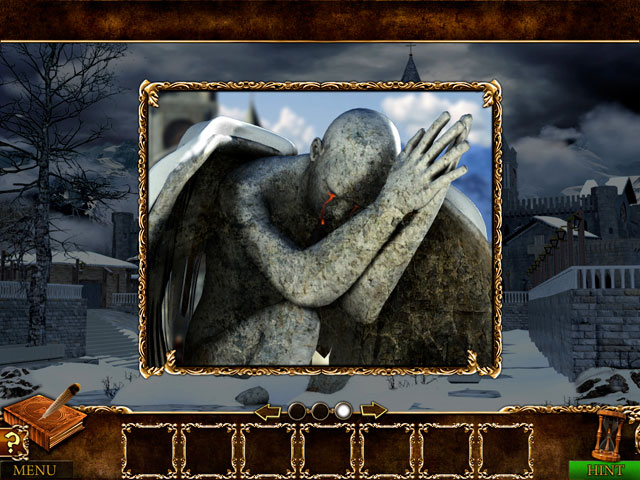
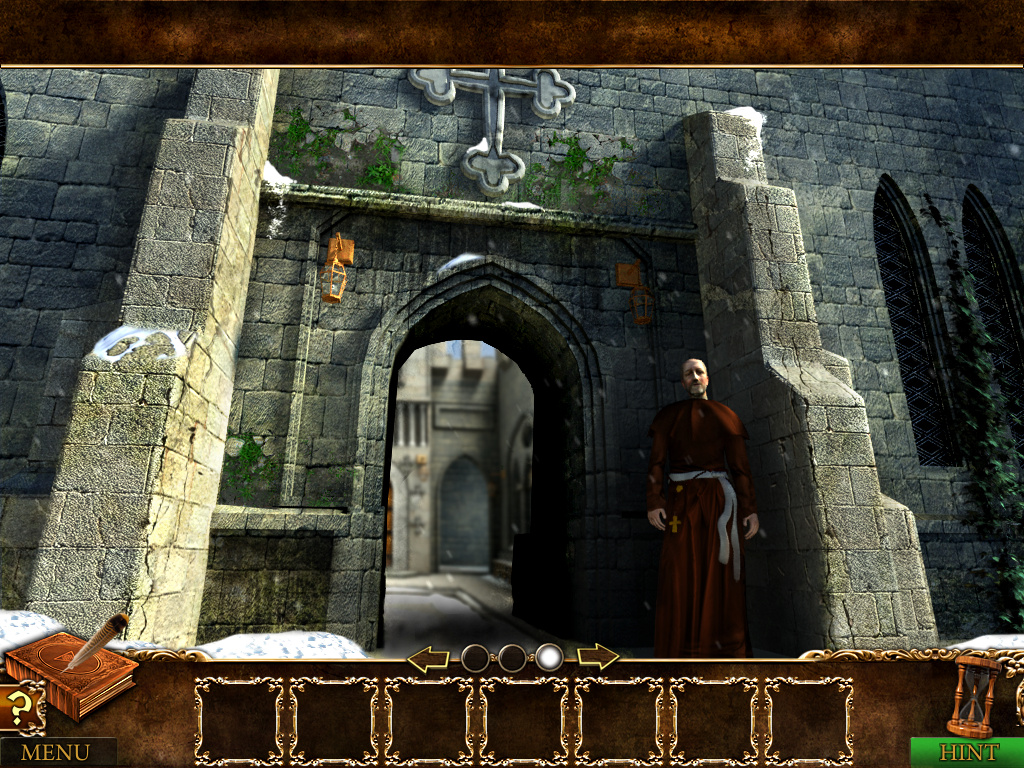
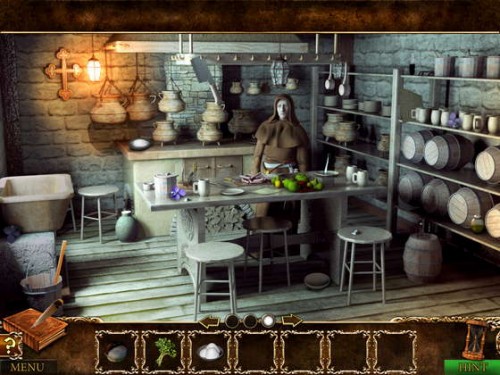
You are a monk on a mission to discover the secrets that surround a mysterious monastery somewhere deep in the Alps, you are sent to investigate the murder of a fellow brother, Brother John, and the mystery behind the statue in the courtyard that seems to weep blood. I have to say this game felt somewhat story driven, you meet few characters who give you little bits of information that, at first don’t entirely tell you a lot but seem to come together into something bigger much later. I do have to say the story started off a bit slow and was actually fairly boring but I can understand why; you start off (in character) having to fit in as the new guy in town/monastery and must to get everyone to trust you which leads to you doing mundane things like taking care of a horse or making soup, kind of really, really boring. I found myself uninterested in what comes about throughout the game, it just seemed underwhelming and a tad generic; monastery with plenty of secrets, hidden doors, suspicious figures and a butt-load of satanic symbols just seems so” Tom Hanks in The DaVinci Code” and I really wasn’t into it, that’s why I said “somewhat story driven”because it boasts a deep story and It would have been enjoyable had that “deep story” not been done a thousand times.

Where-Angels-Cry-Review-2

Visuals:

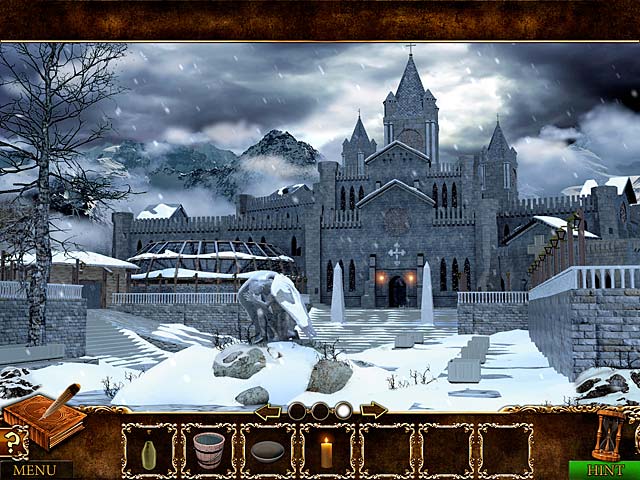
Pretty much the best thing about this game is the visuals. Each area that you go through is possibly more beautiful than the last. You see a lot of the same area twice or three times but at different times and during varied weather and it really doesn’t get boring or overdone, it makes you feel like you’ve been at this place for a very, very long time. Like you’re trapped. The backdrops are extremely detailed and look almost real, the digital paintings that were used are truly incredible and you can see the effort the developers have put into this aspect of the game. The characters also look quite good yet not as good as the rest of the visuals. There are few scenes in between chapters where the characters or character is animated using a CGI style which I think was a nice addition but mostly unneeded within a game like this.

Where-Angels-Cry-Review-3

Audio:

The music in this game suited the setting, it truly did, though it seemed forgettable – possibly because of how normal is was for what it was – I expected the music to be something like what it was; whimsical, dark, creeping and it was exactly that, maybe that’s why it was forgettable because it was too easily anticipated for that game though considering I have not one suggestion as to what they could’ve done to make the music better I’m going to chalk it up as it being a pro instead of a con. I think that’s fair. Now onto the voice acting, it was severely hit and miss. Every second character had an overacted, somewhat-Italian accent that just annoyed me, I found myself turning the sound off when having to talk to people just so I could strictly read the dialogue instead of hearing it, but on the other hand some character were voice-acted well, well enough to not annoy the hell out of me which is a great big plus!

Where-Angels-Cry-Review-4

Gameplay:

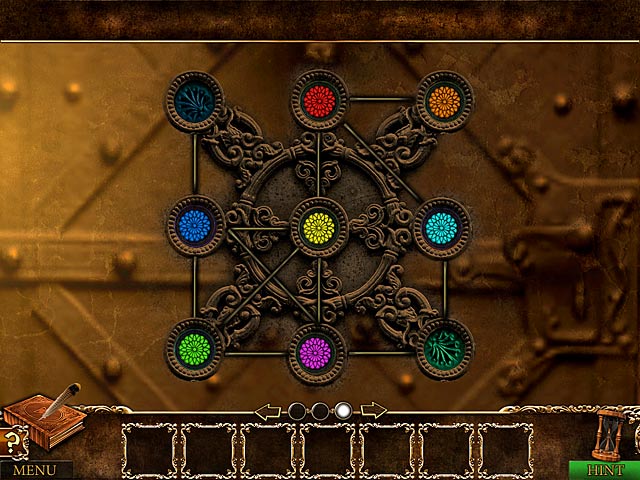
The gameplay is simple, really simple; you’re put in a room with certain things to look for that will help you reach other rooms so you can look for things that will help you get to other rooms and so on and so forth all the while picking up little things here and there that will help you kind of figure out what’s going on. It’s a simple point and click, puzzle, adventure that you really can’t fault if you’re a fan of that kind of thing. It allows for different levels of gamers to pick up and play; you have casual, hard and extreme, I played on casual and throughout casual the game will give you a bunch of hints like flashing lights and notifications as well as a help button that has unlimited uses although you have to let it recharge with time afterwards, you can even skip through mini games and really you can easily glide through this entire game with hints and skips along the way if you’re not a big puzzle buff. On the other side of the coin you can play extreme mode where, basically, you’re all on your own, buddy, so if you’re stuck; deal with it! The puzzles aren’t really anything to be afraid of or intimidated by, they’re all kind of self-explanatory and fairly easy with a little bit of thinking.

Where-Angels-Cry-Review-5

Overall:

Like a lot of these types of games; if you’re a fan of the genre and game type you will love it, if you like to play new games with unique stories and hooks; this game isn’t for you. I try to review everything from different points of views and I’ve done this the same way. Get this game if you’re a big lover of situational puzzlers and a problem solver because you’ll love it though avoid it if this isn’t for you because it can get frustrating and you tend to hate it more than you really should. Definitely DON’T get this for story, just trust me on that.

6--capsules-out-of-10

Capsule Computers review guidelines can be found here.

Shin Megami Tensei: Devil Summoner – Soul Hackers Review

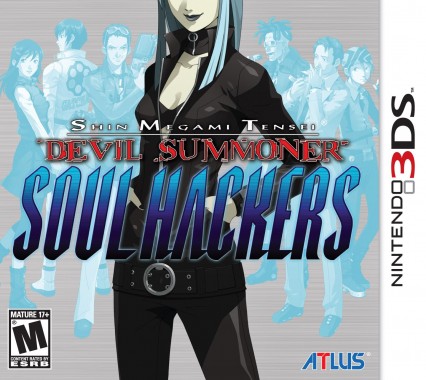
Soulmockup6A1

Shin Megami Tensei: Devil Summoner – Soul Hackers
Developer: Atlus
Publisher: Atlus
Platform: Nintendo 3DS
Release Date: April 16, 2013
Price: $39.99 – BUY NOW

Overview
The Shin Megami Tensei franchise has been around for years, but took a while to catch on with a western audience. In 1997, Shin Megami Tensei: Devil Summoner – Soul Hackers was released for the Sega Saturn, but sadly never left Japan due to the then limited appeal in the west. Atlus have now decided to take this one out of the vault and onto the 3DS, with voice acting, improved visuals, and a bevy of new features. I personally never played too many SMT titles myself, as the mechanics of the “Megaten” series came off as a bit intimidating, but the demon collecting and narrative drew me in to giving this one a try. Does Soul Hackers prove to be a worthy remake for the 3DS, or does it’s age leave it years behind the more modern RPGs on the platform? Let’s find out.

Story
Soul Hackers puts the player in the shoes of…yourself starting out. This doesn’t mean that you are a shallow character or just an avatar, as the player never really sees who they are due to the first person perspective. In a title all about exploration and complexity, you are see the world as the hero and this title does a good job of detailing a story around your character, with decisions you make effecting battles and the narrative itself. Now, this doesn’t mean that your decisions have too much weight as this game came before a lot of those modern ideas, but those who are looking for an RPG that gives you an up-close and personal perspective of events without much of a backstory attached are sure to find this gimmickry refreshing due to all of the dreary protagonists we have seen over the past few years for the genre.

smt-devil-summoner-sh-screenshot-02

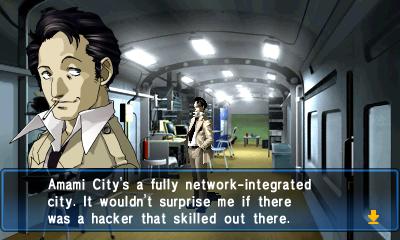
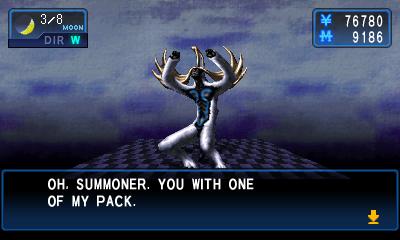
Set in the futuristic and tech-driven Amami City, players have to use their hacking skills to take out a new threat that looks to wipe out humanity known as the Phantom Society. After your best friend Hitomi is possessed by a demon while visiting the still fresh virtual world of Paradigm X, things start to go haywire for the completely connected locale, and you and your offbeat group of hacker friends known as the “Spookies” must come together and bring peace to both locations before it is too late. It sounds a bit typical in a way, but this is one plot that knows no boundaries when it comes to twists and turns, providing a ton of incentive to stay glued to the screen as new objectives are assigned.
smt-devil-summoner-sh-screenshot-01

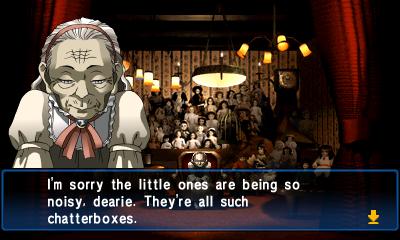
It’s not just the plot that really sold me on Soul Hackers, honestly. Every character in the Spookies come with their own motives, backstory, and a sense of depth – allowing you to get to know this little team you are working with as you progress forward. For instance, Hitomi is a bit of an innocent, yet grounded girl who has been thrown off balance by the demon Nemissa. Nemissa is a polar oppisite of Hitomi, so as these two battle over one body, there is a lot of entertaining dialogue sequences that unfold. Nearly every other non-playable character you come in contact with also feature a good bit of dialogue, painting a vivid picture of Amami City and the mysterious yet wondrous world of Paradigm X. Yeah, this title did come out over fifteen years ago, but the story feels relevant and genuinely interesting until the grand climax.

Gameplay
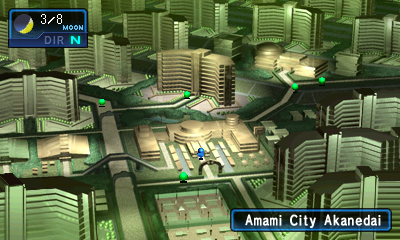
It’s really hard to peg one lone genre for Soul Hackers. The player’s main objective is to explore locations within Amami City via and overhead map, eventually leading to a first person dungeon crawler experience as the Spookies attempt to achieve their current goal. In many ways, this lively city features a lot of the modernized mechanics that have been brought aboard. Many districts open up as you progress, allowing the player to stock up on armor, weaponry, and healing items, while still visiting with the many residents that fill the streets. Sure, it’s mainly a visual vacation outside of the complex dungeons that await, but the map is definitely unique and gives Soul Hackers its own personal feel apart from the many other SMT series such as Etrian Odyssey.

smt-devil-summoner-sh-screenshot-06

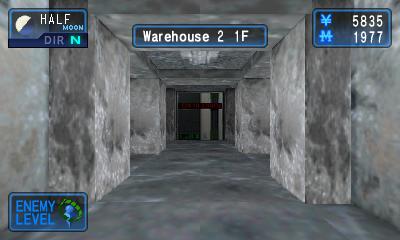
When in the first person view while in dungeons, random encounters run rampant and demons come ready to battle at a moment’s notice. These areas, while heavy in gameplay – are the places you will see the most age from this port. I could best compare the exploration aspect of dungeons to that of Strange Journey, as the similarities are there. Each stage features numerous hallways and doors, with the map on the bottom screen slowly revealing the overall environment. Items, story points, and NPCs wait around every corner, making exploration feel unpredictable even though most dungeons are pretty straight-forward. Whether it be to find a boss, find a character, or just progress onward, there isn’t a lot of room to gripe about the archaic design from the Saturn version – as it still performs well and comes at a perfect pace with the plot.
smt-devil-summoner-sh-screenshot-04

Everything about this Devil Summoner is laced with a serious tone broken up by bits of comedy from time to time (you know, the basic JRPG from the past decade), and pure charm is injected through the negotiation phase of battles. During almost every encounter with these menacing and sometimes quirky demons, the player has an option to recruit them to their team by talking to them. I say option, but this little feature is more about coarsening foes into joining you. Usually, a demon will not be interested from the get-go, and will ask you a oddball question with multiple choice answers. Depending on the species, your selection of following dialogue will either insult or impress the enemy. If impressed – keep talking as eventually you might just score a new recruit. If insulted, most of these demons will go on the attack, and become too insulted to recruit during the battle. The conversations one will have with their opponents are humorous and sometimes thought provoking, although some encounters become a bit repetitive later on. To help eliviate this, many demons will not fight you if your party has one of the same species or if they have nothing to say about your pick of words, which cuts a lot of the fat from random encounters while making the entry points for new demons feel more meaningful.

smt-devil-summoner-sh-screenshot-03

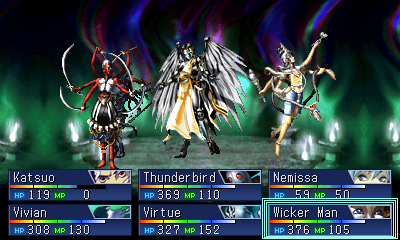
Battles themselves in my opinion are reminiscent to those found within Dragon Quest Monsters, but have a strong layer of depth coated over them, staying true to the sometimes intimidating – yet rewarding SMT franchise. Rounds are turn-based, and the player must choose to fight with their sword, gun, or magic if applicable. Remember those demons we just spoke of? Demons can be summoned to fight alongside you for a good time – where the player selects attacks from their creature’s movepool, or allows them make their own choices with the “GO!” option. To make matters interesting, every demon you recruit come with their own loyalty level. To improve this, you will need to feed demons and partake in other activities to increase a bond, as if your demon is unhappy, you then risk the chance of your newly recruited party member leaving or flat out disobeying during battle. Every one of the over 300 species have their own little personality, so upkeep and paying attention to moods is just as important as remembering to heal and save outside of dungeons.

smt-devil-summoner-sh-screenshot-07

It sounds a bit complicated (and believe me, with the latter options to fuse demons, summon under certain requirements such as lunar cycles, and so on, the learning curve is indeed high), but there isn’t one mechanic that isn’t slowly introduced, allowing the player to get the gist of what they need to do to evolve their strategies. Soul Hackers is a well paced game and due to that slow and steady learning curve, even those new to Shin Megami Tensei will be able to wrap their head around it all in a short time.

smt-devil-summoner-sh-screenshot-05

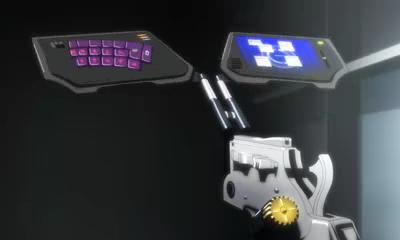
The main HUB of Soul Hackers comes in a handy computer – attached to your gun titled the GUMP. This device can be upgraded at terminals to show enemy locations with a sonar, detail maps ahead of exploration, and fuse demons in a portable format. For those new to the more intricate design of Soul Hackers, think of it in the same manner as your Pokegear from Pokemon Heart Gold/Soul Silver. A Street Pass option has also been included for this version, adding Nemechi to your party. This demon comes off pretty average at first, but can be leveled up and improved upon as the player passes other players or spends their play coins. It isn’t the most deep aspect of the game, but for a Street Pass Feature, something most RPGs barely utilize on the platform, Soul Hackers definitely brings something unique with it.

Visuals
When it comes to visuals, there is a lot to speak of as Soul Hackers has both modern and dated graphics depending on what area/situation you may be in. Coming off as new, polished, and vibrant are the character models used for the dialogue sequences, featuring portraits that have an anime-like quality to capture emotion and personality from every character involved. The city itself is also a sight to see, as buildings are well defined and detailed. I will admit, seeing little pins represent a person in this locale took a bit to get used to a first as it seemed to be a design workaround, but due to the limitations of the original product and how much content is involved, that is rather forgivable. The dungeons themselves as I mentioned come with a good deal of age, but that is to be expected. Soul Hackers does not need to be redone entirely to capture an audience in the west, as until now – we had yet to see it. If those of you out there remember the Saturn and the forced video clips that occur just to show a bit more polish as you progress onward, then you will know what expect with this title as it’s really no different. There is a great deal of character in the classics and while I imagine some may be turned off by the rough around the edges design of the dungeons, I personally found the experience to be refreshing and nostalgic of the great crawlers of the past.

smt-devil-summoner-sh-screenshot-08

Audio
As you can tell, Soul Hackers is all about personality. The soundtrack thankfully has a lot of it to offer, featuring remixed J-rock tunes that capture the atmosphere of this futuristic city. There is also a bit of jazzy beats and techno mixed in as well, with earworm inserting melodies that will accompany you on this brand new journey. New to Soul Hackers comes one feature many fear. Most translations that come with a vocal dub are…well, bad. You know, full of broken English or talent that seems to hate their jobs. That isn’t a problem for Soul Hackers. Each voice actor brings a lot to the table with these performances, and with almost every piece of dialogue fully voiced, this extra brings Amami City full circle and makes it feel alive. Sure, we have seen voice acting on portables – including the 3DS in the past, but to see a Saturn port get such a rejuvenation, well…that just makes this game even more special.

Overall
To be honest, there was so much that could have went wrong with Shin Megami Tensei: Devil Summoner – Soul Hackers. Atlus were ambitious in adding in new voicework and new features to modernize the game, but that could have came at a high price of ruining the original experience. Thankfully, Soul Hackers’ remake finds itself at a nice balance of old and new, with an elaborate battle system that has been made more accessible and a story that features some unforgettable moments. The Nintendo 3DS, just like the DS before it is finally starting to pick up some quality RPGs, and none show that more than this fully featured port. While it does show it’s age and the mechanics are a little dated by today’s standards, Shin Megami Tensei: Devil Summoner – Soul Hackers stands as a testament of a development team finding a middle ground for appeal, recapturing a gem from generations past to share with a brand new audience. In better words – a port done right.

8-5-capsules-out-of-10

Capsule Computers review guidelines can be found here.

Darkstalkers Resurrection Update Trailer

Darkstalkers-Resurrection-Screenshot-1.0

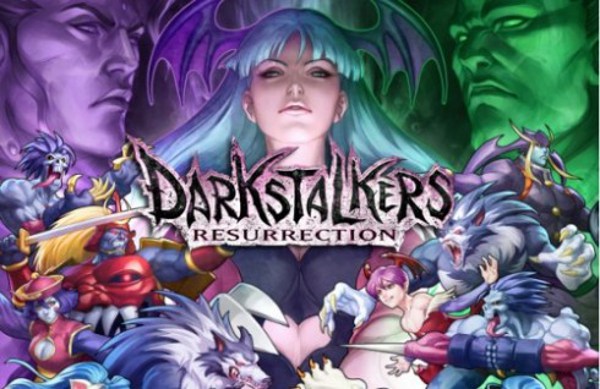
Capcom have released an updated trailer today for Darkstalkers Resurrection to add the new Arcade Fight Request feature, allowing gamers to challenge new opponents and queue up online matches whilst playing in arcade or training mode. Darkstalkers Resurrection gives rise to the old-school fighting games, bringing back to life Night Warriors: Darkstalkers Revenge and Darkstalkers 3.

For a more in-depth insight of the game experience read the Darkstalkers Resurrection review here.

If you haven’t already, check out the official updated trailer below for more information.

Interview with Mamoru Hosoda

wolf-children-02
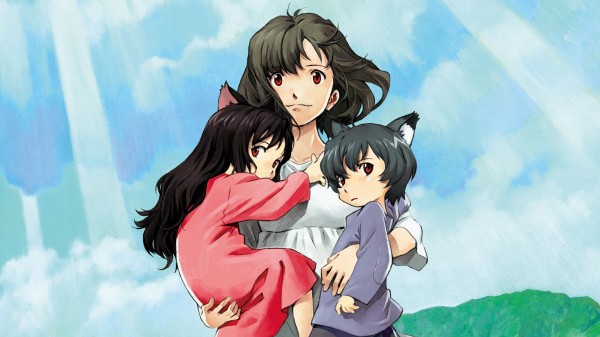
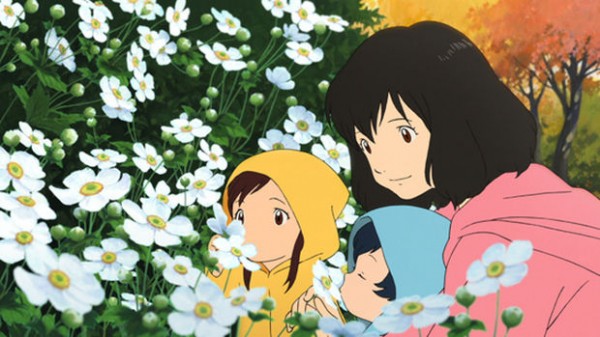
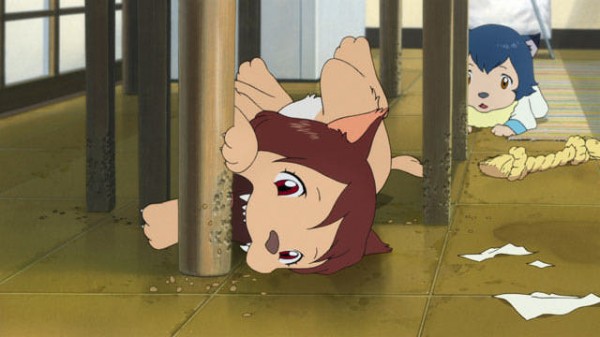
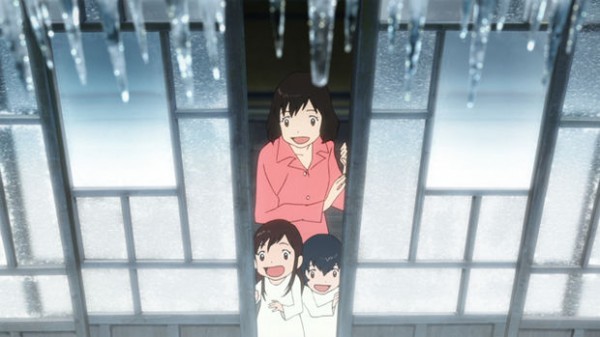
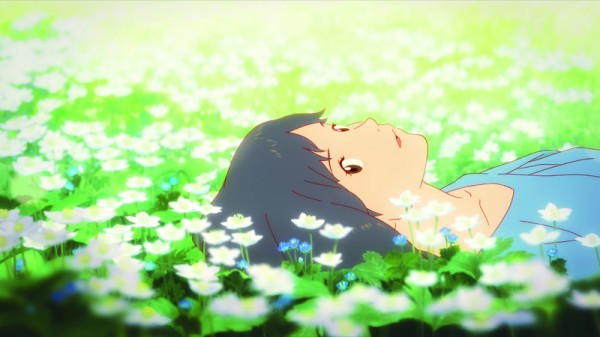
Studio Chizu’s award winning animated film Wolf Children is screening throughout Australia this month. Thanks to Madman Entertainment and the Japan Foundation I was able to sit down with the director of Wolf Children himself Mamoru Hosoda to discuss the film itself, his thoughts on film-making, Studio Chizu, what he would like to adapt into a film and much more. Read on for our interview with this remarkable film-maker.


Mamoru Hosoda
Mamoru Hosoda

CC: First of all I just want to say, Wolf Children is an incredible film. I found it to be very thought-provoking. I’m wondering what is your philosophy on film-making and what do you set out to achieve when making a film?

Hosoda: If you look at the films I have made, The Girl Who Leapt Through Time involves time-travel, Summer Wars involves a kind of cyber-punk mind-set and with Wolf Children it involves a wolf man. So there is something to do with sci-fi or horror in all the films I have done so far, but I’m actually not really looking specifically to that.

It is more to do with everyday life slipping into a different feel or a different understanding. I think that’s what I’m really interested in.

CC: I’ve also got to congratulate you on the success of Wolf Children. It has won the Japan Academy Prize for Animation and it has also reached a global audience including right here in Australia. How do you feel about such recognition for your film?

H: The film is set in rural Japan but in many many ways I feel this film has a very ubiquitous quality that lends itself to the world. Everyone has a mother – the film is about child-rearing – a mother looking after her children. Everyone can remember their own childhood, so with that I feel there is something about this film that actually translates to the world very easily and readily.

CC: So would you consider this a family film?

H: I guess a lot of fathers and sons, mothers and daughters and of course children, went to see this film – as well as boyfriends and girlfriends who could possibly imagine what it would be like to get married, settle down and have kids. In some ways it is a family film but I think it actually has something a bit broader than that going for it.

Wolf-Children-4

CC: I actually watched this film with my own family. I found it interesting that we each related to different characters. Was it your intention to make this film relatable on multiple different levels?

H: It is good that everyone relates to different characters. The main character is obviously Hana the mother, so that is one way of looking at it. But for younger audiences I’d like them to see it as Ame and Yuki growing up and the choices that they make, whether they return to nature, embrace civilization or what kind of compromise they come to with these sorts of things.

It is very good that the film can invite people to have different investments with the characters. So which character did you relate to?

CC: I actually related most to Ame.

H: I can understand that. Here we are talking about a movie, you must have run off like Ame! [Laughs]

CC: I must say, this feels like a very personal film. Could you please tell us what inspired this particular story?

H: What I wanted to do was make a film about child-rearing. If you look at the history of film, there actually aren’t many films to do with child-rearing. Partly because there isn’t anything inherently cinematic about that I guess. So I waited for something that I could hang child-rearing on.

I happened to meet a young mother who likened her children to having monsters and wild animals in the house. I thought that it was actually very good and wondered what if it wasn’t just a metaphor, what if the character actually was raising wild animals in the house, that might be fun. So that’s how it came to be the way it is.

CC: So this is where the idea of the wolves came from?

H: Yes it is. Do you have this metaphor in Australia that young children are like monsters?

CC: Yes we do. I think everywhere has it – the whole world. [Laughs]

H: [Laughs] I see!

wolf-children-01

CC: Like many of your films, Wolf Children has a female protagonist. What is it about female protagonists that interests you so much?

H: I think it is because the life of women offers up many life choices that can become subjects for films. You look at the life of a man, most of the time it is about winning and losing. You win this, you lose that, but you come back and win. But a woman actually has very concrete choices to make, like who will they marry, will they have children, do they stay in the workplace. The life choices that come up actually offer themselves up as very interesting for film.

CC: This is a very beautiful film. It has a very distinct art style, much like that seen in your other films. How important do you feel the art style is to an anime film or anime series?

H: That is animation by its very nature, everyone draws and paints what they think is beautiful. It’s there inevitably, nothing ends up there by accident. What ends up there is what everyone thinks is beautiful. We spend a lot of time drawing these things, so the reason the beautiful things come to the forefront is because we are all so invested in the process. I have to tell you, we draw a lot of drawings. I don’t think we could do it if we were aiming at ugliness. We sit around a desk for 3 years just drawing away. [Laughs]

CC: So was this film mostly hand-drawn, was there CG or photography used?

H: We value the lines and the sense of analog drawing very highly, so that was the first thing we had to get under control. If you look at the CG we did for this film, it is actually using a fair amount of computing power to generate a hand-drawn feel in sequences that involve trees swaying in the wind or grass moving in the breeze. These kind of things we actually applied a lot of computer graphics to make it look like hand-drawn images.

Wolf-Children-6

CC: In 2011 you left Madhouse to form Studio Chizu. Has forming your own studio always been a goal of yours? What led to this decision?

H: The reason I set up Studio Chizu is because I came to a realization that if you actually want to make feature-length theatrical animations you have to have a dedicated outfit to do that and that alone. The business of doing television series and commercials with some feature films in a our spare time just wasn’t going to work for me. So I created Studio Chizu specifically to do theatrical animation films. But it is easier said than done obviously, because if your film doesn’t return the investment we really can’t continue. If any moment a film fails, our company is doomed. But until I do I intend to keep continuing this way.

CC: What do you feel sets Studio Chizu apart from other anime studios?

H: I think what sets it apart is that it is the worlds smallest animation studio with only 5 people working there right now! [Laughs] Of course during projects we grow to 300 but after that we shrink back down to 5 people. Our office is actually smaller than this room we are in now, it might even be a third of the size! This is what sets us apart. [Laughs]

CC: That would certainly make you different. Wolf Children has been compared to the works of Studio Ghibli. How do you feel about such a comparison?

H: I get this a lot. I have to say, we are not rivals at all. We actually get along very well with their office. Our producer Saito-san goes across and gets advice all the time – I don’t. [Laughs] But yes we get along very well, there is a lot of interaction between our staff and their staff.

wolf-children-03

CC: In the past you have directed films based upon popular franchises like Digimon and One Piece. Do you eve consider doing another film based on a franchise like this?

H: When I made those franchise pictures I learnt a lot about film-making. I would consider doing one of those again if they presented themselves to me as an opportunity to make a good film or if I would have an opportunity to learn even more things doing those particular kinds of projects.

CC: Is there any franchise out there you’d love to make a film of?

H: It is hard to think of, can you think of anything? [Laughs]

CC: Do you know the series Hunter x Hunter?

H: Yes, Hunter x Hunter!

CC: I’d love to see a Mamoru Hosoda Hunter x Hunter film.

H: The tough thing about franchise pictures is that often someone has already beaten you to the punch. Unfortunately they have already made a Hunter x Hunter film. But then again, Japan television has money invested in that one, I wouldn’t mind if they invested in us as well! [Laughs]

CC: If you could adapt anything into a film, whether it is a manga, anime series or a novel, what would it be?

H: The Girl Who Leapt Through Time is based on a novel by Yasutaka Tsutsui one of the most important writers of Japan. He wrote that novel probably around 40 years ago and I remember the intellectual excitement I had from reading that book and I of course turned it into that film. So I imagine if I were to choose it would have to be something I read when I was young.

I believe the things that leave an impression on you the most are those you experience or read when you are young. The process of digging those old things up and reinventing them for a modern audience is actually not a futile task, it is actually a fruitful project. So I can see myself going down that way.

The way I feel about it is that if there is someone right now as a kid who really loves Hunter x Hunter, it is up to them to grow up into an adult and turn that into a great film. That is where the greatest possibilities are.

CC: One last question, what is next for Mamoru Hosoda and Studio Chizu?

H: I think that I would like to make something fun and enjoy it with everyone.

CC: Thank you for your time.

H: Thank you!


The full uncut audio of the interview can be heard below:

We previously reviewed Wolf Children as part of the REEL Anime Festival 2012, you can view our review here. Special thanks to Madman Entertainment and Japan Foundation for organizing this interview. Be sure to let us know what you think in the comments section below.

Ashes Cricket 2013 – Teaser Trailer Released

Ashes-Cricket-2013-screen-1

505 Games has recently announced that on the 21st of June this year Ashes Cricket 2013 will be released on the Xbox 360, PS3, Wii U and PC.

The game boasts new and dynamic gameplay that will encourage players to take everything into account and learn as well as play much like real cricket; Altering pitches, changing weather and a new line and length bowling system are just a few of the new features that will test the skill of players everywhere.

General manager of 505 Games UK Ralph Pitt-Stanley stated;

“This game has been created with real cricket fans and players in mind. The new engine allows players to mimic a cricketer’s most important attribute–technique.”

The trailer for the new game was only just released and you can see it in our featured video section below.

Shootmania Storm Review

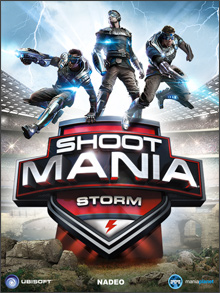
shootmania-storm-box-art
ShootMania Storm

Developers:Nadeo
Publisher: Ubisoft
Platform: PC
Release Date: Out Now
Price: $19.99 (Buy Here)

Overview

Shootmania Storm is the latest game in the Arena Shooter sub-genre of FPS games. It is from the studio Nadeo and takes the concepts from their previous effort, Trackmania, and applies it to the first person genre. Also, make sure to check out our recording of our livestream from earlier.

Is this the title that will revive a now dead genre? Or will it be another corpse to add to the pile of a once loved era in gaming? Read on and take away from this review what you will.

Story

Unlike most games, Shootmania Storm does not have a story from what I can tell. I have looked through all of the game menus, as well as looking online and looking for some kind of manual (which I can not locate at all in the digital release) so as to be able to be able to find some semblance of a story for this game. Sadly I came back empty handed, but this isn’t really the kind of game that needs a story.

ShootMania-Storm-Screenshots-01

But even so, even other games in the arena shooter genre have had passable storylines in them. Look at Quake 3, that had a storyline involving kidnapped combatants that are forever brought back to life by demons to fight in tournaments. Unreal Tournament had a similar story, but where players were volounteers (or prisoners) fighting in a tournament but were seemingly revived by Respawners upon their deaths.

For Shootmania Storm, I imagine the storyline to be something like this: “In the far future, one portion of humanity lives on some planet with a wicked king for a ruler. He forces his knights to battle in insane tournaments for his own amusement, not even allowing them rest upon their own deaths. They fight to the death, only to return from it to die again.” If anyone knows if there is an actual storyline for this game, where to find it, and if my version was anything close, please let us know in the comments below.

Gameplay

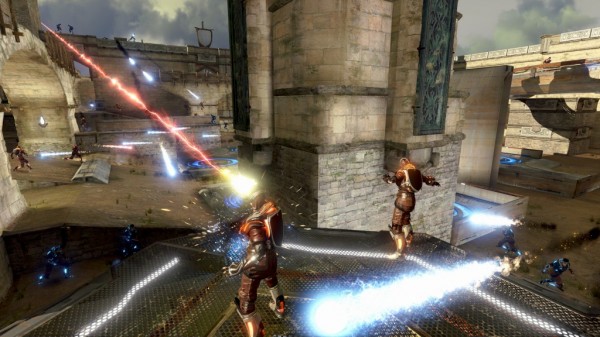
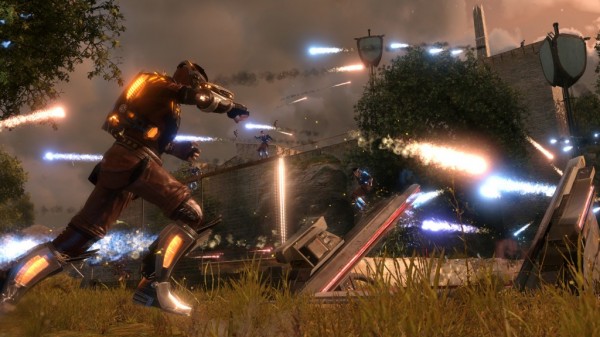
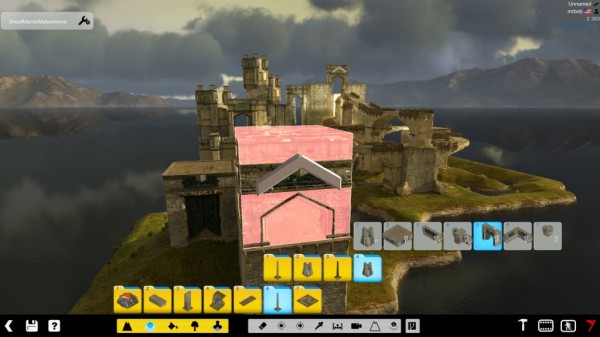
The Shootmania Storm video game is much like the other -Mania games in the -Mania series by Nadeo, in that not only do you get to play the game. But you also get to create portions of the game for other players to enjoy. For instance, in Trackmania, players were able to build tracks for other players to enjoy. In Shootmania, players are able to build maps for different gametypes, which adds a wide amount of variety to the game. Depending on the server, players may never see the same map twice.

ShootMania-Storm-Screenshots-02

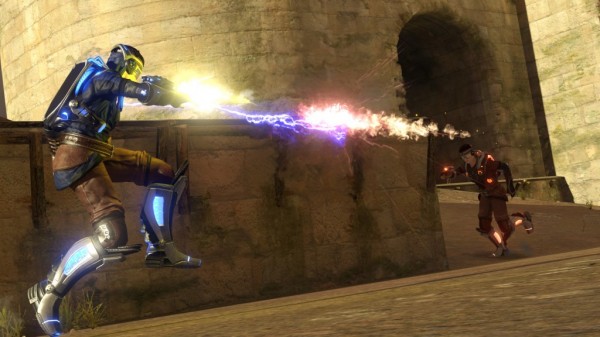
What’s cool about Shootmania Storm is that it takes the already fun Arena Shooter formula and it does something interesting to it. What it does is it changes the ways that the genre is played outside of its core gameplay component (running and gunning). It does this by having players not collect weapons as they go, but rather have their abilities altered by different types of ground panels. For example, say I was running around inside of a bunker. This would alter my player characters weaponry in some way, whereas if I was running around outside and on a footpath, then my secondary ability would be altered into a sprinting ability, rather than a jumping one.

While these kinds of variations might seem weird or pointless at first, while you’re out on the field, it makes a world of difference on your effectiveness. Paying attention to where you’re standing and where you’re heading is important in Shootmania. What makes this even better is that with all the map variations, you have to learn the map on the fly. Being a slow learner may be a fatal risk to your score.

Interestingly, Shootmania Storm has multiple gametypes, but each of them come as additional modules, called stations, to the Shootmania browser. By accessing a different module, you are essentially playing a different version of the core Shootmania experience. For example, Shootmania Joust is a completely different gametype in comparison Shootmania Storm.

ShootMania-Storm-Screenshots-03

While each gametype has different objectives in each, the core principles of the game remain. In each gametype there is usually some kind of objective that the players must work to achieve, usually done by capturing some kind of flagpole. In Storm, for example, players must battle to a centralised pole where a player can capture it to stop players from respawning and activate an Offzone that shrinks. Anyone caught in the (Tornado) Offzone is eliminated and must wait for the next round to begin.

Out of all of the gametypes, my favourite is a variation on the standard Domination model. This gametype is called Battle and is found in the Shootmania Storm station. What players must do in Battle is capture the opposing teams flags whilst defending their own. What’s interesting about this is that the teams take turns in doing this, even though they’re on the field at the same time. So players have to beat the enemy back for long enough to start capturing and vice-versa.

I could sit here all day and talk about all of the different game modes present in Shootmania Storm, but that would take quite a while. However, it does seem like the community has already begun to favour the Deathmatch gametype over all others as the more team-based and objective based gametypes are all showing up as either empty servers or foreign ones. This one of the things I dislike about the arena shooter community (it’s always been like this). I’d still say grab the game, because it’s actually quite fun and gametypes come up and come down depending on interest, so these more interesting gametypes will see an increase later on down the line like they always do.

ShootMania-Storm-Screenshots-04

Visuals

Visually speaking, Shootmania Storm doesn’t try to do anything impressive. It doesn’t try to push your overpowered quad-SLi graphics card configuration to it’s limits, it doesn’t try to fry your CPU and it doesn’t try to do anything too pushy with your PC. Instead, it realises that it is a game and not some kind of life-simulator and it sticks to looking like one.

What I mean by this is that Shootmania Storm, while still looking impressive, keeps a more gamey aesthetic to it. When you’re playing Shootmania Storm, you’re not reminded of the horrors of war at every turn. You’re not mowing down waves of photorealistic terrorists or anything like that. You’re just running around in some busted castle ruins in a stylised and futuristic medieval swordsman attire with an arm cannon and a helmet.

The game does not look dated, but it does not absolutely blow the mind. The player is able to just jump right in and accept the games reality, which is something that a game should be doing visually.

Audio

What’s interesting about Shootmania Storm is that it doesn’t have an adrenaline pumping soundtrack that you would normally associate with the Arena Shooter genre. I have to admit that when I was participating in this title, it was a little strange to have a background score that was more reminiscent of a chess match than being in an arena and being tasked with murdering a bunch of players over and over again.

ShootMania-Storm-Screenshots-05

This is not a fault with the game though, as I know a lot of gamers that like to play without music at all because it interferes with their concentration. So instead, why not have an audio track that at least tries to be subtle and something that you can think along with. It’s a strange concept for the genre, but it’s one that works with Shootmania Storm.

Actually, subtlety seems to be a thing with this game in the audio department. Nothing in this game really has any kind oomph to it, rather everything sounds like it came out of a video game studio, rather than out of a microphone attached to the barrel of a tank.

The audio in Shootmania Storm just fits the game so well and while I traditionally prefer my games to be of hardcore variety when it comes to audio, Shootmania Storms just works all over. It’s quite strange when a simplistic arrangement works much more well in comparion to an over the top one.

Overall

Shootmania Storm is an incredibly fun game that does almost everything right. Where the issues are in the game are not directly related to the core gameplay experience (not covered, but the UI is pretty bad and sometimes disconnects itself from the master server without telling you) which is where you will be spending the majority of your time. Anyone interested in shooters or having a quick fun game to play with others should definitely be picking up Shootmania Storm.

9-0-capsules-out-of-10

Company of Heroes 2 Closed Beta Enters Phase Two

Company-of-Heroes-2-Screenshot-01

SEGA of America and SEGA Europe announced that the second phase of the Company of Heroes 2 closed beta will be available to those who “like” the game on its offcial Facebook page. This will open a key generation tool that will grant players access to the beta. Players will also require the free Steam client to play, as the beta is hosted on Steam.

“After a successful first phase, we are delighted to be able to open the Closed Beta up to all of our Facebook fans and invite them to help us test and improve the game.”

The closed beta contains Company of Heroes critically acclaimed competitive multiplayer and skirmish gameplay modes. Players are given access to six maps and the ability to play alone or with team mates against the AI in throughout competitive style gameplay. The first 40 levels of progression are also available, as is the ability to customise loadouts using the Army Customiser feature.

Company of Heroes 2 will be available for PC in June 2013. For more information check www.companyofheroes.com. In the meantime like and play the closed beta.

Ninja Gaiden 3 : Razor’s Edge now available for the 360/PS3 in Australia

NG3-RE-Review- (2)

Gamers in Australia and New Zealand have had to wait a bit longer than the rest of the world, but they can now finally access Ninja Gaiden 3: Razor’s Edge on the Xbox 360 and PlayStation 3, though it is worth noting that the title has been available on the Wii U for a few months already. For those who don’t know, NG3: RE is an enhanced version of the original Ninja Gaiden 3 which not only has revamped the game’s battle system and storyline, but has also added a number of weapons and ninpo attacks players can unlock.

I found Ninja Gaiden 3: Razor’s Edge a suitable, albeit one still flawed, upgrade from the original game that not only added the challenge back into the game but offered a slew of new options for fans of the series, including new gameplay modes and three new playable female characters in the form of Ayane, Momiji and for the first time ever Kasumi. You can check out my full review of the game here.