At this year’s NYCC, Warner Bros. announced that they will be debuting a new Batman: Arkham Origins game for iOS and Android devices. The free-to-play game is being developed by Netherrealm Studios and will be a brawler much like previous DC Entertainment super hero games on mobile devices; Injustice: Gods Among Us and Batman: Arkham City Lockdown. It will retain the same visual fidelity and similar control scheme to previous games, and as such will be a game that fans of any age and skill level can pick up and play.
Batman: Arkham Origins will be launching on mobile devices soon after the launch of the console version, later this month. Check out the gameplay trailer for the mobile version below and let us know what you think in the comments. As always, for all the Batman news as it becomes available, stay tuned to Capsule Computers… Same Bat-Time, Same Bat-Channel.
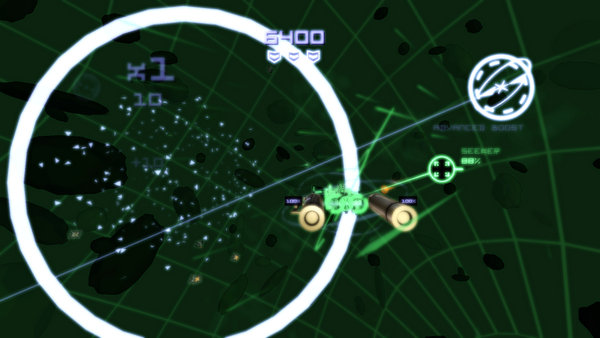
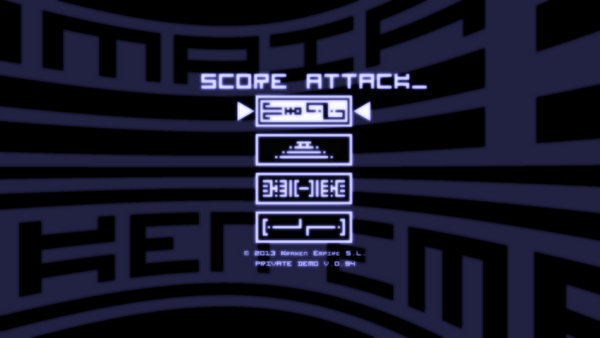
Kromaia is Kraken Empire’s upcoming arcade shooter. The game is a throwback to the old style arcade shooters with scores of enemies being hurled at the player and unlimited ammunition. The game has won awards at Freeplay 2011 and HóPLAY 2010. Kraken Empire is seeking funding to complete the single player campaign through IndieGoGo. Currently, the Score Attack mini-game is available to play for those donating $10 USD or more to the campaign.
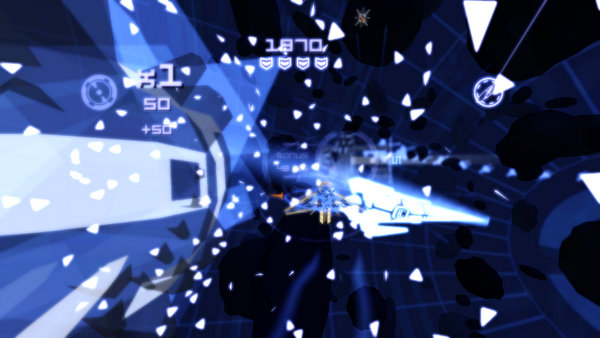
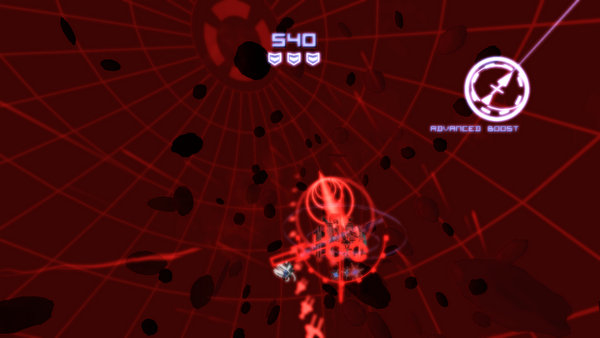
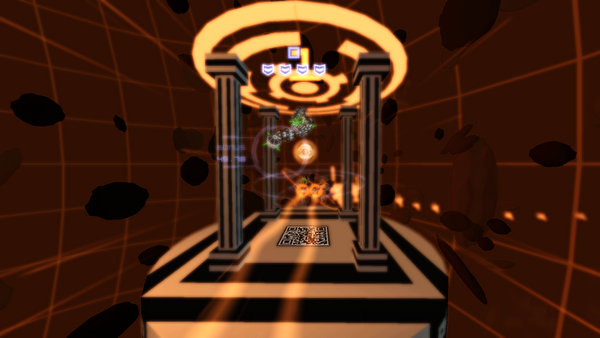
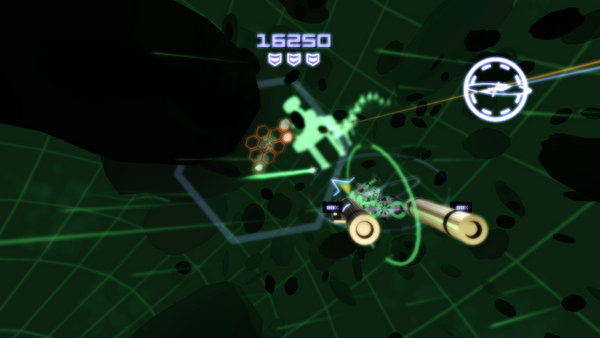
The Score Attack demo features four armours, each with a unique style of attack. The amber Alpha armour provides a straight firing bullet backed up with a shotgun like secondary attack. The red Mu armour fires a laser in two different modes. The primary fires a single short laser pulse while the primary attack fires a steady beam for a several seconds. The green Tau armour fires short range missiles that locks onto nearby targets, while the secondary attack will lock onto several nearby enemies and unleash a deadly salvo of missiles. Finally, the blue Psi armour poses one of the greatest player challenges. Its primary attack is a close ranged slash that obliterates almost everything close enough with one swipe. The secondary attack will throw a giant shuriken that will stun and disorient enemies for a short time, which allows players to safely close the gap between them and the enemy. Secondary attacks have a short recharge time depending on the armour which encourage liberal use of the special abilities.
The demo is meant to showcase the technology behind Kromaia. The AI is designed to adapt to the player’s style to provide a unique challenge. The effect is most apparently when using the Psi armour. Normally, my play style consists of strafing the enemy to dodge incoming danger while keeping them at range. Since Psi’s abilities are focused on close combat, I cannot rely on my usual tactics. I noticed the game immediately compensated by throwing close ranged suicide bombers far earlier in the game.
The physics engine is a big part of Kromaia. The game moves the armour based on its thrusters. Players are able to move in all directions with ease. The controls are best used with the mouse and keyboard, though the Xbox 360 controller is an option. The armours are able to move like a helicopter, but with simpler set of controls. But even with the simplified controls, a skilled player can start dodging and weaving through the plentiful asteroids.
Kraken Empire is providing a very easy way to hop into modifying the game. Kromaia allows full access to XML files that provide modifiers for practically everything in the game. The team says gamers should be able to make small changes like tweaking the player’s speed and large changes like creating new types of enemies with the XML files. At this point, there is little documentation on the XML files, so it will be a matter of trial and error. However, I see this providing some extra longevity to the game as players create new scenarios with the tools.
Personally, the lack of crosshairs was a bit of a challenge for me. When flying forwards, the weapons will usually fire straight ahead, so lining up enemies is not difficult. But once the armour begins strafing, aiming tends to require the player to “walk” the projectiles onto target. Of course this affects the Alpha and Mu armours the most, but I would have also appreciated to see a crosshair for Psi’s secondary ability.
Kromaia’s visuals looks like an interpretation of the internet from the 1980s. The environment reminds me of the Tron franchise. The enemies on the other hand feel more Japanese in nature with their sterile white bodies and clean lines. The game does a great job portraying fast movements in an a vast area. The long trails of colour that follow in the wake of the armours provide an impressive visual display.
Surprisingly, Kromaia’s visuals really shine when the game is played on a 3d monitor. Although 3d displays is not officially supported, the game was a jaw dropping experience when played on a Nvidia 3D Vision monitor. Kromaia is a perfect game to demonstrate the joys of 3d gaming.
My only gripe with Kromaia’s visuals is the menu system. All the major menu entries are supposed to be pictograms of some sort. However, the images used for each menu option has no discernable meaning to them. The only way to figure out what they do is to highlight them with the cursor, to reveal the English description. Although I suspect this decision was made for immersion purposes, it gets in the way of navigating menus quickly.
The audio is a little bare at this point. There are sound effects and music, but there is little variety at this point. However, what is there compliments the game well.
Kraken Empire is seeking funding to finish Kromaiai’s single player campaign mode. They currently have the framework for an excellent retro styled shooter reinterpreted for a modern generation of gamers. It is already a fantastic title to demonstrate 3d gaming. Retro shooter fans and 3d gaming nuts take notice, Kromaia is ready to knock your socks off.
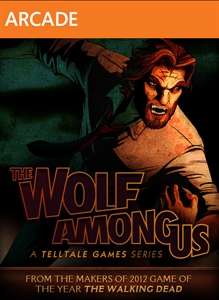
The Wolf Among Us – Episode 1: Faith Developers:Telltale Games Publisher:Telltale Games, Warner Bros. Platform:XBLA (Reviewed), PS3, PC, Mac Release Date: October 11nd, 2013 Price: $4.99 – Available Here
Overview
When Telltale Games was able to achieve multiple game of the year awards last year with The Walking Dead, they were finally able to cement the fact that not only could adventure games still work in the current game market, but be done extremely well. Taking an already hot property and crafting a quality game that is able to resonate characters and player actions proved to be a more than winning formula, but a highly praised one.
Now Telltale Games has started releasing a new episodic game series before The Walking Dead Season 2, which is based on another well liked, though not as well known property, Fables. The Fables comic series depicts a world where the Fable creatures have left their fairy tale world in favor of New York City, many of them relying on glamours to maintain a human appearance, and the series has been one of the longest running series for Vertigo comics, part of DC. Th The Wolf Among Us game series acts as a prequel, showing off what happened immediately prior to the start of the comics. Does this new series stack up against the accolades bestowed upon The Walking Dead or are players better off waiting until Walking starts back up.
Story The Wolf Among Us kicks off with Bigby Wolf, the fabled Big Bad Wolf already on a case and arriving at the scene. Acting as sheriff for the Fable folk living in New York City, the game does a good job to quickly establish just how the situation is supposed to work. Through only a few lines of dialogue, players that aren’t familiar with the Fables comics are able to get up to speed on a few of the laws that they have to live by and leaves how Bigby works as the sheriff up to the player. Trying to turn over a new leaf from his Big Bad Wolf days? Still his bad self, but with power in his hands? Or indifferent to it all, just trying to do his job? These choices make one of the best aspects of the first Episode, letting players decide Bigby’s internal motivations for themselves.
The main focus of the game is the investigation, starting off with Chapter 1 and carrying through to the end, the investigation takes may twists and turns depending on the choices Bigby makes throughout. Who he suspects and the order in which places are investigated have big impacts in how the case progresses, all of which shows just how good Telltale is at making these kinds of of games and ensuring that players see how their choices impact everyone and everything around.
Gameplay
While very similar to the gameplay style of The Walking Dead, there are some changes that do change up the play style and speed up gameplay just a bit. The ability to walk just a bit faster speeds things up enough to feel worthwhile, whether used simply to explore the areas Bigby is investigating or when replaying entire chapters to see what difference choices can make. The biggest difference between the two though is that Bibgy does have a job to do, unlike Lee simply trying to survive and making decisions about who will and who wont make it through with him, Bigby is much more active looking for answers, questioning people, and getting into scraps.
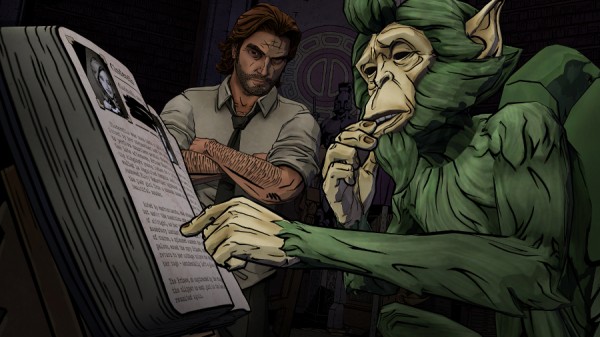
Even though this is simply the first episode, the choices that must be made have drastic changes as to the direction the investigation looks to be going. Being able to see how other players choose at the end of the episode also makes a big impact as to how to feel about the choices that they made and seeing how everyone else has chosen so far. There is plenty more to explore in the game outside the main investigation and the inclusion of the “Book of Fables” gives additional depth. Meeting characters, searching certain objects, and making certain decisions can unlock short bios on characters, places, and Bigby’s backstory. These are not only great for Fables fans looking for even more on the universe, but those that have only played the game wanting to find out more about this deep world and making a great reward for those who try to find everything.
Visuals and Audio
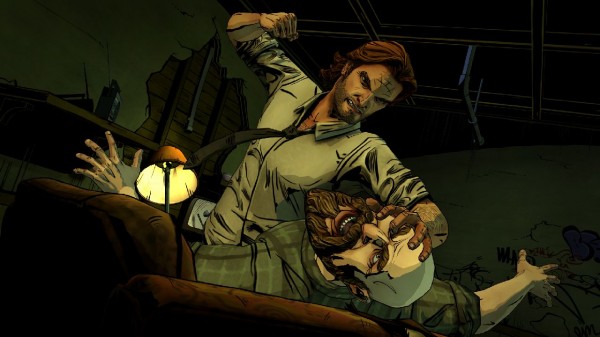
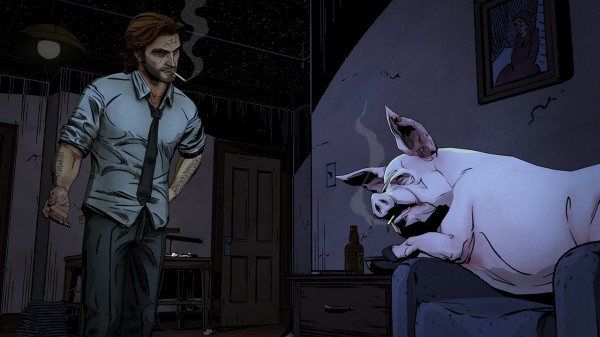
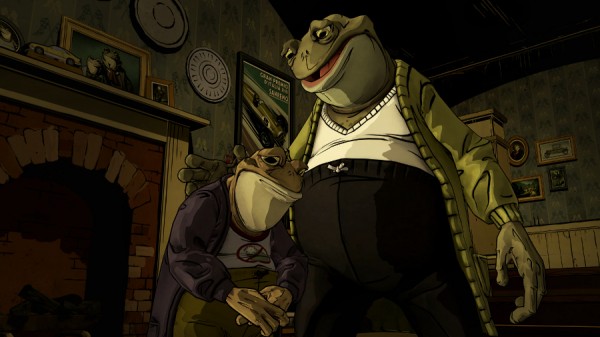
While using the same cell-shaded style as their other games, The Wolf Among Us feels like a great fit for the style as many of the characters are not entirely human, as well as to match the comic book feel. Even more so in that some of the characters switch between their Fable form and human form. Besides the art style, the game is also very dark to fit the noir feeling of the investigation that Bigby has to undertake, even the parts of the game that appear to occur during the day maintain the gloomy atmosphere.
The voice acting is well done in matching the different characters, though slight pauses that occur from having to quickly decide responses and as the game must switch between the dialogue for specific choices that have been made. There is also a lot of swearing, throughout the entire game, which matches the investigation side and the M rating, though may surprise those that aren’t used to how the characters work in Fables and come incorrectly expecting something more kid friendly. The art isn’t the only aspect that matches the dark and noir feeling, as the music throughout the episode also captures the same spirit. Always managing to catch the feeling of a hard investigation, even if the sheriff is the Big Bad Wolf.
Overall
Those that pass up The Wolf Among Us because they aren’t as familiar with Fables, or haven’t seen it saturating the market as much as The Walking Dead will definitely miss out. A different beast of a game that focuses on trying to solve a difficult case, instead of pure survival. It is thanks to these differences that The Wolf Among Us is able to hold its own. This isn’t just rehashing old ideas with a new property, this is really something new and different, but just as good because it is from a team that knows how to make a good game and story.
Capsule Computers review guidelines can be found here.
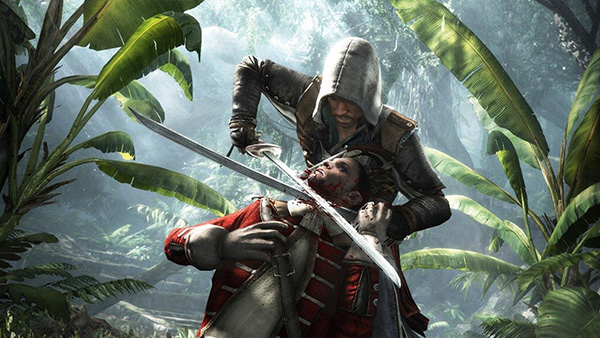
The DLC features Captain Morgan’s favourite ship which sank off the coast of the island full of high-grade sailing equipment. Players can explore the Black Island and recover these items that are being searched for by pirates.
The Black Island Pack includes:
The dark and dangerous treasure-hunting mission on the Black Island
The deadly Black Ship
Legendary silver flintlock pistols used by Captain Morgan
And Valuable multiplayer items!
Assassin’s Creed IV Black Flag’s release dates seems to be fairly scattered. The game is out on October 29 in North America and October 31 in Europe for the PlayStation 3, Wii U and Xbox 360. PlayStation 4 users get the game on November 15 in North America and November 22 in Europe.
Xbox One will see the game on November 22 worldwide while PC gamers will be able to play it in North America on November 19 and Europe on November 22.
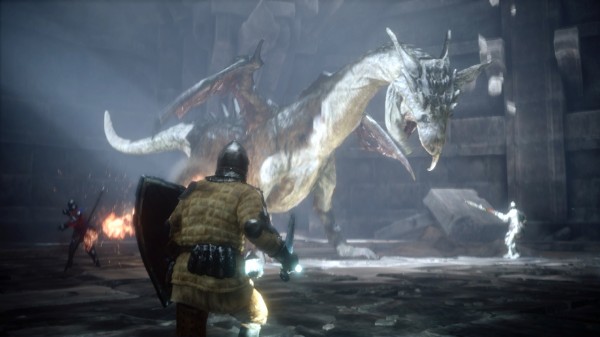
While we saw a little bit of Capcom‘s Deep Down shown off at Tokyo Game Show last month the entire video wasn’t released online until today. The ten minute video which shows off the entirety of their presentation, which clocks in at a little over ten minutes long, can be found below.
Also found below is a glimpse at Deep Down‘s multiplayer mode which considering the game is a free-to-play online RPG for the PlayStation 4, this is probably something one should check out if they are looking into picking up the console when it is released mid-November.
You may remember and if you are a gamer like myself, you probably took advantage of the deal that Nintendo held earlier this year where if gamers purchased and registered Shin Megami Tensei IV and Fire Emblem Awakening they were able to get $30 in Nintendo eShop credit.
Well Atlus sure hasn’t forgotten about it because they have just dropped a game on the eShop which provides a perfect opportunity for fans of the Shin Megami Tensei series. Today Shin Megami Tensei: Devil Survivor Overclocked, the enhanced 3DS version of Devil Survivor originally released on the DS, was released on the Nintendo eShop for $29.99.
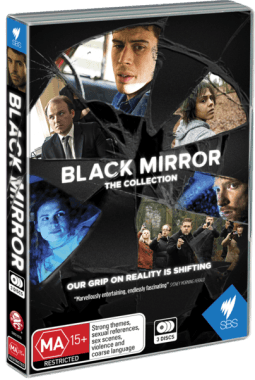
Black Mirror: The Collection Studio:Zeppotron Publisher: Madman Format :DVD Release Date: October 2, 2013 Price:$34.95 – Available Here
Overview
Black Mirror is a British television series that casts an eye over the influence of technology in our lives. It is an SBS Home Release that brings together two episodes from Season 1 (the third is missing due to music clearance issues) and the entirety of Season 2. Creator Charlie Brooker (Dead Set) has said that if technology is a drug, then Black Mirror is a look at its side effects.
The Black Mirror of the title is every screen that has come to dominate our lives in the digital age – that of smartphone, television, and computer. Every facet of our digital existence comes up for examination over the course of five episodes. Each is set in a slightly different version of the present or the near future and features a stand alone story and characters. The show has seen two critically acclaimed seasons, winning an International Emmy and having one of it’s episodes – The Entire History of You – optioned by Robert Downey Jr’s production company for a full movie treatment.
Story
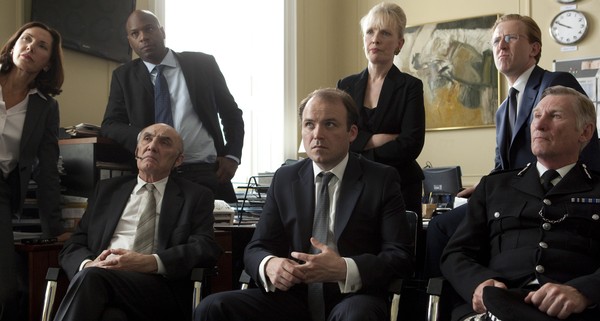
The first episode of Black Mirror comes out of nowhere and grabs you by the throat. The National Anthem opens with a phone call that wakes the Prime Minister of the UK in the middle of the night. The young, popular Princess Susannah has been kidnapped, and to secure her release the ransom demands that the Prime Minister has sex with a pig on live national television.
From there things snowball, dragging the viewer on a journey that is brilliantly paced; horrific, funny, sickening, and engrossing. The Black Mirror theme is prominent – the video ransom note is uploaded to YouTube and goes viral before it can be suppressed, the public responds on Twitter, and everyone has a device in their hand at all times. It’s edge of your seat stuff until the very end, and is so effective because it is horrifyingly plausible. The viewer is forced to examine the ugly face of a world who’s moral boundaries and norms have been obliterated by the internet.
The Entire History of You takes a step into a near future where everyone is implanted with a memory recording, playback, and editing device called a Grain. The story has a more intimate scale, focusing on a young married couple and the emotional fallout of an awkward dinner party. The episode explores the consequences a device such as a Grain would have on many aspects of life – employment, relationships, identity theft, sex, and it’s all very cleverly done.
It isn’t as electric as The National Anthem, relying on a relationship dynamic instead of a rapidly developing plot. Whilst the characters are believable and well acted they aren’t entirely sympathetic. Fortunately the concept of the Grain is strong enough to carry the episode and make it another solid piece of social commentary. It is all too easy to see people’s real life addiction to Facebook morph into something like this with Google Glass just around the corner.
Season 2 has a more emotional opening act, Be Right Back. Young couple Martha and Ash move to a new home in the country. Martha is then left devastated when Ash dies in an accident. At his wake Martha is told about a new service that might help her grieve, and is reluctantly signed up to an online tool that gathers all the information a person has ever posted online and collates into a functioning personality. Martha is repelled by the virtual Ash at first, but after making a life changing discovery she is compelled to engage with him.
Whilst the idea of digital resurrection is provocative it is Martha’s emotional journey that is the focus of the episode, much to its strength. Anyone who has ever lost a loved one will be familiar with the beats of the grieving process that Martha goes through, and whilst it doesn’t sustain that hook through to the end it is still a thought provoking episode.
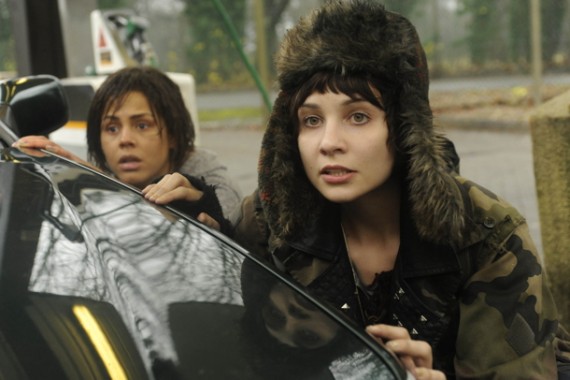
White Bear is an entirely different journey. A woman wakes up surrounded by pills and bandages on her wrists, with no memory of who she is. The TV next to her shows nothing but a strange symbol. Outside the house the few people she can find refuse to communicate with her, instead filming everything she does on their phones. After fleeing a man who tries to kill her, she runs into another woman – the only person she has met so far who seems normal. She explains that 90% of the population have been brainwashed by the signal on the television, and do nothing but film what they see on their phones. Others who have been unaffected have taken advantage of the newly lawless society and roam the streets hunting people for the entertainment of the watchers.
Initially White Bear is a little hard to take seriously, but evolves beyond the skepticism to deliver one of Black Mirror’s best episodes.
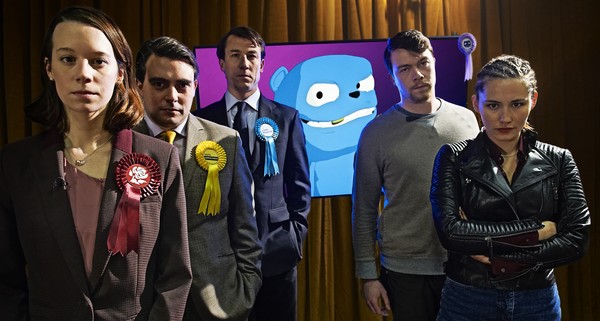
Politics gets a turn in the final episode of Season 2 – The Waldo Moment. Jamie is a comedian who voices cartoon bear Waldo on a crass comedy talk show. After doggedly pursuing and mocking a candidate in the local by-election, Waldo himself is put up for election by producers keen to exploit the character. Jamie, always reluctant about his work as a trash talking bear, is forced to play along in a political campaign that continues to gather momentum as people flock to Waldo’s anti-establishment attitude.
The episode plays into well established opinion about politicians and the games that they play, giving it a fresh spin for the age of social media. Jamie’s ups and downs as he tries to come to terms with his new role are not as dramatic as some of the character arcs of previous episodes, but Waldo is more comedic an episode than some of its pitch black brethren.
Visuals & Audio
Every episode of Black Mirror is constructed around a convincing world. No matter what vision of the future it visits there are always plenty of details – both big and small – that ensure complete immersion. Things are kept simple with little in the way of flashy techniques, allowing lighting to set the tone and making sparse use of music. That simplicity extends to the design of some of the future tech that appears in the episodes, which nudge viewers into a future that seems entirely possible – laptops with gesture control, subtly futuristic mobile phones and the way people’s eyes change when they use their Grain implant. Nothing ever seems stupid or outrageous, instead coming off as genuine possibilities if we were to pursue our current technology to the extreme.
Overall
Black Mirror : The Collection is an excellent series. It is thought provoking without being glum or sanctimonious, and never pushes a particular agenda on its audience. Every episode has something interesting to say or something shocking to reveal, and given the wide breadth of topics it covers there is going to be something here for anyone who has embraced the digital age. The National Anthem and White Bear are particular stand outs, but every episode will make you think, make you talk, make you share. It is a show that holds up a mirror to society and dares to show an ugly reflection. Watch it.
Capsule Computers review guidelines can be found here.
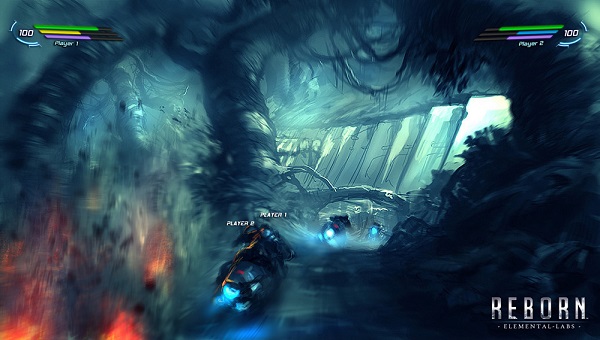
Some of you may have read about a new Kickstarter that was set to be launched back at the end of September for a game called REBORN that would be released on the PS3 and PS4. Well the Kickstarter was delayed a bit as the company received a lot of feedback about the title and after evaluating some of their details, they have chosen to now launch the Kickstarter and have also increased the amount they are asking for.
The Kickstarter originally was going to ask for $150,000 but now the goal is currently set at $200,000. For more details about what the game has to offer the Kickstarter page can be found here while more assets and details for the title can be found here.
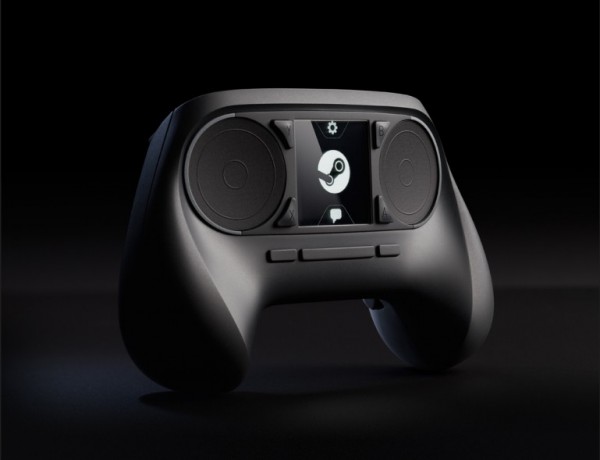
One of the engineers at Valve sat down in front of the camera to show off the Steam Controllerprototype. The demo unit is missing the touchscreen in the middle of the controller. Four physical buttons are in its place. This is the exact same version that 300 lucky testers will receive when Valve begins beta testing.
The video shows off Portal 2, Civilization V, Counter Strike: Global Offensive, and Papers, Please gameplay using the controller in legacy mode. The most impressive portion of the demo is without a doubt Papers, Please as it is a mouse intensive game that requires an incredible amount of speed and accuracy.
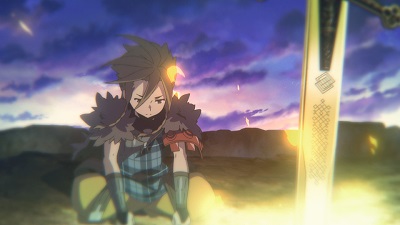
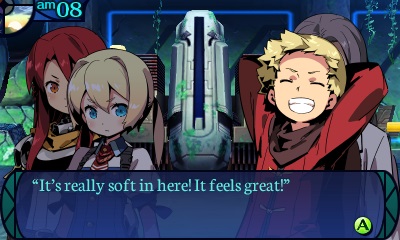
Overview With Etrian Odyssey IV already gracing Western shelves earlier this year it was rather surprising to hear that not only was Atlus working on bringing yet another Etrian Odyssey game to North America, but it would also be the first game in the franchise’s history to actually feature a legitimate storyline. Not only that but it also is a remake of the original title that started everything back in 2007. Despite this, don’t let the word remake think that Etrian Odyssey Untold: The Millennium Girl is in any way a basic rehashing. Does this make the game worth picking up though?
Story Interestingly enough, one of the newest aspects in Etrian Odyssey Untold: The Millennium Girl is the fact that the game’s story mode has an actual plot. While past Etrian Odyssey titles have featured a story, it almost always was vague and was included mostly to provide framework for players to launch their own adventure as they navigated the various dungeons and faced down numerous foes with a custom built party with the story only rarely playing a major role.
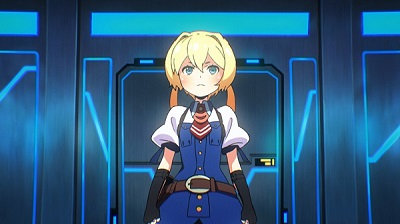
With The Millennium Girl however players are immediately thrown into a story where the lead character is a highlander that is set to venture out on his first real assignment. On this mission the highlander runs into a girl that has no memory of her past and seems to be from a different time. This girl is named Frederica and players must fight alongside her to not only recover the girl’s memories but also put a stop to a danger that is threatening the world.
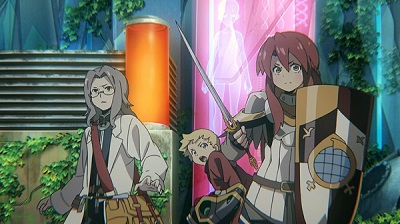
The nameable highlander and Frederica aren’t the only characters in the story mode however; there is also an alchemist, a protector, and a medic to help you along the way. Each of these characters has a unique personality and will interact with each other throughout the story. The combinations of these personalities make for some rather interesting conversations and help give the story a bit of feeling this time around as these characters actually play a role in the adventure rather than simply be created fighters of the player’s choosing.
That being said, both the characters and the story are rife with stereotypical characteristics and events which will make gamers feel like they have played a similar story before. While enjoyable and full of both drama and lighthearted interaction, the story still feels rather simplistic for an RPG that is as lengthy as The Millennium Girl. Of course despite its simplicity, it does feel well-paced and considering how long the game can be, the inclusion of cutscenes, a real cast of characters, and meaningful dialogue does a great job providing an interesting and entertaining story to go along with all of the dungeon crawling players will be doing.
Gameplay Now one of the first things that players will notice when jumping into The Millennium Girl, if they choose the Story option of course, is that players will have a pre-set party waiting for them when the game unfolds. This means that unlike past games you are not able to create a party of your own though the party given to you has a very nice balance to it as players are given two new classes, a Highlander and Gunner, to fight alongside a Medic, Protector and Alchemist.
Another major difference for those who’ve only touched upon Etrian Odyssey IV is the fact that there is no overworld for players to explore and find various duneons. Instead players are taken straight to any dungeon that they have been able to get to so far and there they will take on the various missions that they have been assigned. While the lack of a worldmap is disappointing, it does keep the game a bit more focused as there is only the town of Etria and the dungeons to worry about.
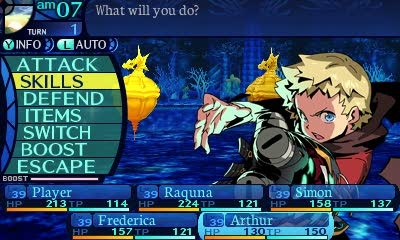
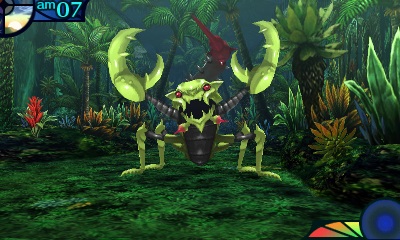
The Millennium Girl’s battle system remains very much the same as what was offered in Etrian Odyssey IV though a few of the more in-depth details have been removed. As such the game’s combat system is very similar and that is actually a good thing because IV’s combat was polished to such a high extent that seeing it in The Millennium Girl is a gift. For those who don’t know, players will still encounter enemies while they are navigating through dungeons and be taken into a first person battle screen where they will take on enemies in turn based combat.
Both the player’s party and enemies can fight in two rows and as each party member levels up they are capable of learning various skills in a customizable skill tree that lets players choose to level their party members to fit their playstyle. There are also items called “Grimoire Stones” which can be obtained from a fight that, when equipped, can provide that character a new ability that can be used in battle or even a new weapon to equip. These stones can only be changed around in town so it is diverse but limiting in that factor.
Earlier you may have seen how I mentioned that there the starting party is nicely balanced and because of this the various fights players will encounter are a bit fairer this time around as players won’t be venturing into dungeons with a party of ill-prepared classes only to be smashed into oblivion. However even with that balancing The Millennium Girl is still not a cakewalk by any means as the game’s combat still requires players to be well versed with the game’s systems and think about what they are doing or else they will only be meeting their end.
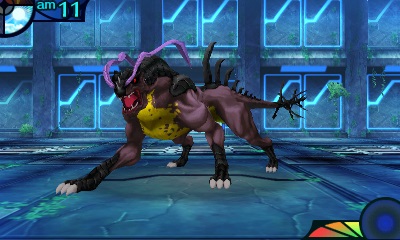
While there are difficulty options that can make the game somewhat easy to make it through, it is entirely possible to be eliminated by even the weakest looking enemies if the player doesn’t take them seriously enough. Fights are plentiful and the powerful FOEs still exist in the game meaning that there are plenty of times that the player may need to run with their tail between their legs or suffer a severe beating.
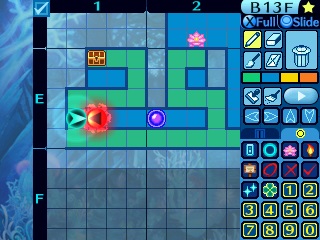
Those unfamiliar with Etrian Odyssey may not have learned about this feature, but anyone who has played one of these games before knows of the game’s mapping system. The bottom screen of the 3DS is used to create a map of the dungeon and players have the ability to create their very own map and chart out every bit of the dungeon if they please. This system is great for the hardcore and always proves useful thanks to the fact that there is a fair it of backtracking and revisiting of dungeons so having a planned route is always a key to success, but it always seemed like a difficult challenge for newcomers to overcome.
Thankfully there is something new in The Millennium Girl that will make things a bit easier as the game now has the option to auto-map a dungeon. With this option turned on the player will no longer need to draw the basic parts of the map as the paths and walls will automatically be filled in. Players still need to add their own personal touches however as notable locations, such as shortcuts, healing locations or other unique areas are not automatically filled out. This still makes the game a lot easier for those who are looking for a jumping point to the series.
Of course for the hardcore among us there is also an option to completely forgo the story mode and many of the new additions in “Classic Mode.” In this mode players are given the authentic Etrian Odyssey experience where they will be able to create a party of their own without the worries of a story to bog them down. However Atlus has made a very odd choice in creating only one save file for The Millennium Girl. This means that if the player chooses to switch from Classic to Story or vice versa, they will lose all of their progress if they choose to save. Considering there are two modes of play here this is a very poor design choice which may catch players unaware and losing a lot of progress.
Visuals One thing that helps tie everything together in The Millennium Girl is how great the game looks. Everything from the character portraits and enemies you fight against is gorgeous looking. The characters are nicely designed and detailed and they look absolutely stunning when presented in the animated cutscenes that populate The Millennium Girl’s story mode.
As for the enemy designs they are varied well enough and everything has a very crisp look to it. That being said, there is some issues with the dungeons becoming fairly repetitive looking after a while and a number of assets have been re-used from IV.
Audio It is interesting to note that, since this is the first game to have legitimate characters in the Etrian Odyssey series and there are animated cutscenes, there is some English voice work for the game, though it is only partially dubbed as most dialogue is still presented as text only. This is still a nice touch as it adds a little more flavor to the cast.
Outside of the voice work The Millennium Girl’s soundtrack is wondrous. The game’s soundtrack is a real delight thanks to the work done by composer Yuzo Koshiro who has redone a number of old pieces of music for this game. It is interesting to note if you want to listen to the classic music, there is an option to switch between the old songs used in the original version of the game.
Overall Etrian Odyssey is a franchise with a significant level of difficulty to jump into but Atlus has managed to lower that bar by making the game more accessible without sacrificing the crippling difficulty for those who are looking for it. With a story that, while far from original, helps direct the flow of the game, various options for assistance in the game and a number of other tweaks and modes for players who want to punish themselves, The Millennium Girl’s refined combat and great look make for an excellent RPG that nearly everyone can enjoy. Capsule Computers review guidelines can be found here.



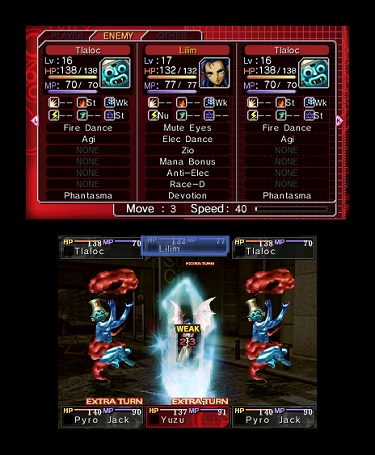 You may remember and if you are a gamer like myself, you probably took advantage of