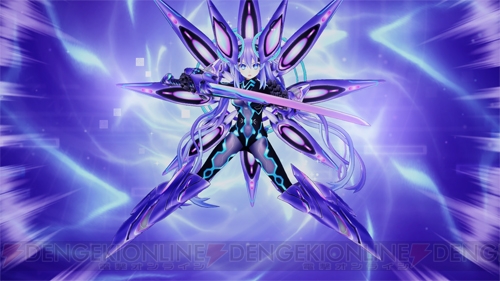
This week’s issue of Dengeki PlayStation is giving us our first look at the “Next Forms” that the goddesses will be able to take in Hyperdimension Neptunia Victory II. As we’ve previously heard, the Next Form is an additional transformation that goes past the original CPU form and with these changes come new combat abilities as well as a change in personality from how they usually act in their CPU forms which is already different from their standard personalities.
The scans for each goddess can be found below, first with Next Purple (Purple Heart / Neptune), Next Black (Black Heart / Noire), Next Green (Green Heart / Vert), and finally Next White (White Heart / Blanc).
Today Team Ninja and Koei Tecmo announced when and where fans of Dead or Alive 5: Last Round can expect the Battle Royale 2015 tournaments to take place. Partnering with Big E Gaming and Final Round LLC there will be twelve tournaments in total with eleven qualifier events held at major locations throughout North America as well as six sponsorships to the grand finals at NEC XVI in December.
The full tournament schedule can be found in the image below (click for high-res) and as for the game itself, Dead or Alive 5: Last Round is set to be released on the PlayStation 3, Xbox 360, PlayStation 4 and Xbox One on February 17th in North America and on Steam on March 30th.
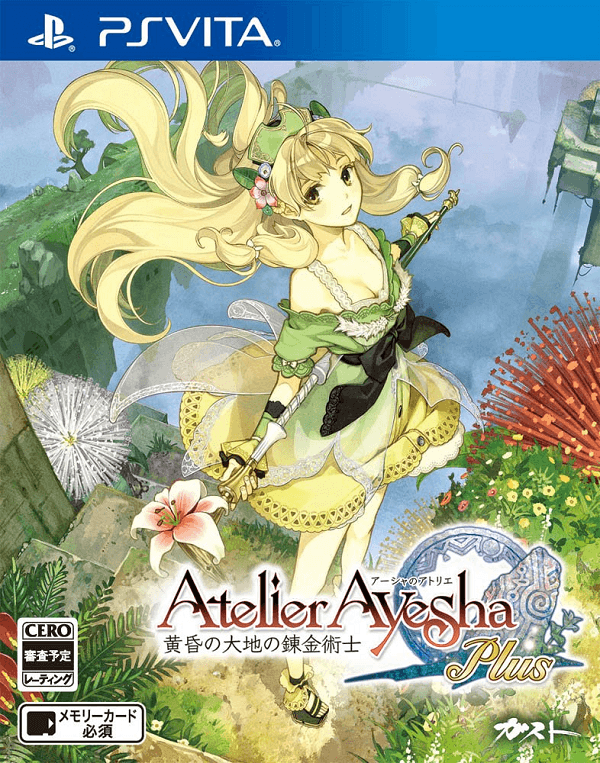
Overview After exploring the lands of Arland for three titles, Koei Tecmo introduced fans of the series to a new land, new set of characters, and a change-up to many mechanics when they transitioned into the Dusk series with Atelier Ayesha: The Alchemist of Dusk. While this change may have been interesting in a few ways, each step forward was met with a step back that led to Ayesha being one of the weakest recent titles in the series. Now that Atelier Ayesha Plus: The Alchemist of Dusk has been released; is the title better than the original?
Story With Atelier Ayesha Plus the story moves away from the somewhat familiar lands of Arland into a new area where knowledge of true alchemy is all but forgotten and the people live in a land littered with the ruins of a once advanced civilization that fell long ago. Ayesha Altugle, a young girl working as an apothecary, lives near one of these ruins and lives alone after her sister, Nio, vanished years three prior and her grandfather’s death.
She manages to make a living out of harvesting medicinal herbs and creating medicine with her limited knowledge. That is until one day when going out to visit her sister’s grave, she witnesses evidence that her deceased sister might still be alive somewhere and after being informed by a strange man that the secret to Nio’s location depends on finding the meaning of the flowers around the grave and the only way to do that is to learn real Alchemy. With hope that her sister is alive, Ayesha begins her journey to save Nio.
As with past games, Atelier Ayesha Plus features a time limit of three years before the story ends and in this time players must try and balance how much time they spend exploring, synthesizing items, fighting enemies, completing quests, and actually progressing with the storyline since there are numerous endings that can be obtained in Atelier Ayesha Plus. Many of these endings require specific events to be completed or even saving Nio before the time limit runs out, meaning that there is plenty of replay value to be had thanks to the way that the time system keeps a limit on what players can do.
That being said, the time limit remains fairly lenient this time around as, unlike past games that required specific goals to be met at certain times or fail, in Atelier Ayesha Plus there is no imposed limitation which does lower the amount of urgency the player has in actually completing the main quest.
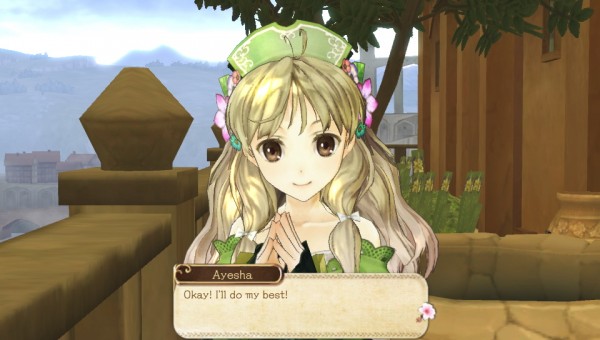
Thankfully, the base storyline of Atelier Ayesha Plus is rather enjoyable thanks to an enjoyable cast of characters, a couple of which appear in the rest of the Dusk trilogy. Unfortunately few of the characters that do end up as part of the story this time around are rather bland which is disappointing considering Gust’s track record. That being said, while the whole cast isn’t quite as strong as past games, Ayesha makes for a delightful lead. Ayesha’s journey is an emotional one and watching her interact and make friends with those she meets along the way makes for an enjoyable experience that players won’t mind visiting again.
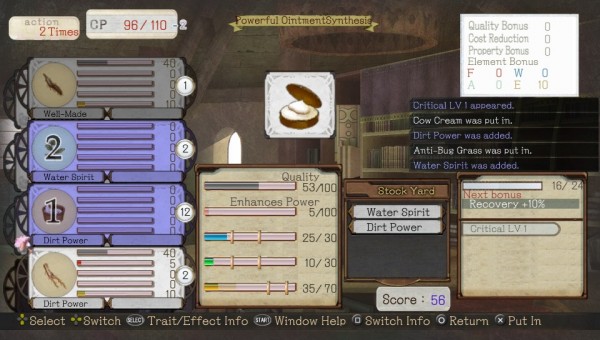
Gameplay Now as I mentioned earlier, a lot of changes were made to various mechanics in Atelier Ayesha. Though the key aspects of fighting, exploring, and alchemy remained the same, almost every part of these aspects have been changed and they remain that way in Atelier Ayesha Plus. This will be a disappointment to some as Atelier Ayesha saw the introduction of a streamlined form of alchemy that removed a number of the more complex elements from the system.
In previous games, traits for created items were taken from the ingredients used to create them meaning that rare items could potentially give the player a unique skill but now all traits are applied automatically depending on the quality of the items used. While this is a good way to make alchemy easier for players to understand and lowers the difficulty of creating specific items, it does feel like the streamlining has lost something in the process.
Exploration and gathering materials remains pretty much the same as fans of the series will remember as they travel to various places and find harvest points. Though considering everything takes time, players will need to be careful about exploring too far or spending too long gathering items at one spot as days can tick past extremely fast if you don’t keep a close eye on how you manage your time. Thankfully Ayesha Plus does offer the choice of swapping party members at almost any time which does lower the time it used to take to swap members.
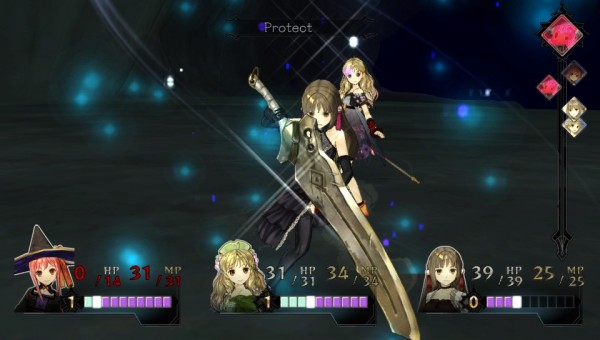
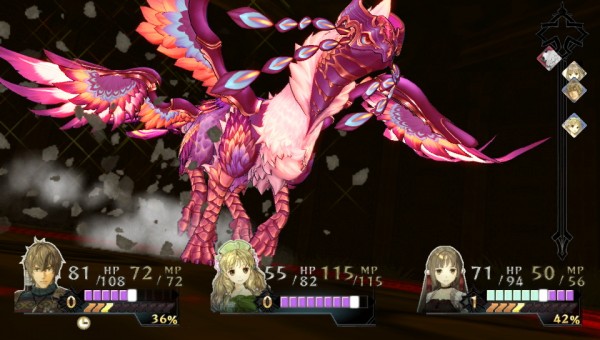
Combat is another aspect that has been modified with Atelier Ayesha as players will now be able to move around the field a bit and this remains true in Atelier Ayesha Plus. Once battle begins players will be able to move and attack from various angles which adds an extra layer of strategy to how these battles unfold as attacking from the back or targeting an enemy’s weak point will deal extra damage. It is worth noting that support attacks can only be performed by characters close to one another and considering how far players will sometimes venture out, it is important to make sure your positioning is for the best as even simple encounters can turn into dangerous battles.
Being an enhanced release, Atelier Ayesha Plus features a number of new additions as well as all of the DLC from the original release. One thing that is noticeable is that ingredients seem to be more plentiful in this release and that there are tons of new missions, bosses, and dungeons to explore later in the game. This adds something extra for returning players and nice challenges to tackle if you happen to have spare time on your hands thanks to proper time management.
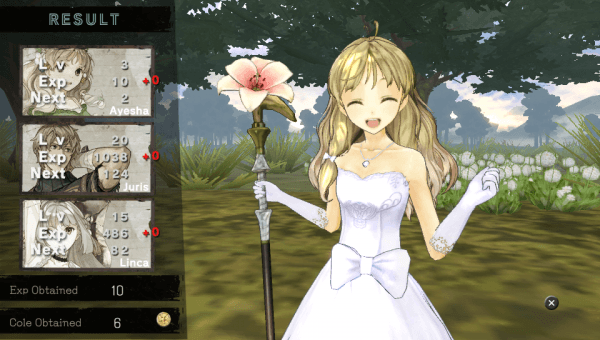
Visuals Atelier Ayesha Plus has managed to make the transition to the PlayStation Vita relatively unscarred. The character models are still presented in beautiful detail and the designs of the environments remain impressive. This is good as the game has unfortunately opted to switch from the standard character portraits found in past Atelier titles to using only the 3D character models which, while nicely detailed, are nothing compared to how the gorgeous the character portraits used to be.
One thing that is noticeable however is that, while combat and the various special effects from attacks are still presented nicely, is the amount of slowdown that this Vita release has. Atelier Ayesha Plus often finds itself slowing down whenever anything too complicated happens in battle or even while exploring a field. While this was an issue in the original release, the frame rate issues seem to have grown in Atelier Ayesha Plus.
Audio Now back when Atelier Ayesha was originally released on the PlayStation 3, Koei Tecmo made the odd decision to not include the original Japanese voice track in the game. Thankfully in Atelier Ayesha Plus, that voice track is included and while many gamers may prefer the English dub, it does give returning fans a little something extra to look forward to. Especially since, comparing the two versions, a large number of scenes now contain Japanese voice work where the English counterpart had none, meaning that while both versions are serviceable, those who want a title with more voiced dialogue will opt for the Japanese track.
As far as the background music is concerned, that is where the Atelier series has always shined and it continues to do so in Atelier Ayesha Plus. Gust has provided an amazing soundtrack for Ayesha Plus, making it one of the best in the entire series as there are fitting tracks for nearly every situation, whether it is simple calm exploration or intense battles.
Overall
Atelier Ayesha Plus: The Alchemist of Dusk is an improvement over the original title released back in 2013 but only slightly. While the new additions to the game are a nice way to add some spice to the release and the addition of the previously missing Japanese voice track is a good touch, most of Atelier Ayesha Plus’ changes are simple at best compared to the original. Thanks to the way that the streamlined mechanics work, newcomers will find that Atelier Ayesha Plus will be the easiest and best way to jump into the game even if it remains one of the weaker recent titles in the series.
Capsule Computers review guidelines can be found here.
Brace yourselves true believers. Marvel have done the impossible and finally reached an accord with Sony Pictures to allow Spider-Man to swing his way into the Marvel Cinematic Universe.
As a quick history lesson, Marvel licensed out the use of its characters way back before Marvel Studios became a thing, and sadly it meant that there were certain franchises that were untouchable when they finally decided to make their own movies (X-Men, Fantastic 4 and Spider-Man are the prime examples of characters that Marvel couldn’t use in their films).
Now, after discussions with Sony Pictures (whom Spidery was licensed to), Marvel have announced that they will be folding Spider-Man into the Marvel Cinematic Universe, allowing him to stand shoulder to shoulder with Iron Man, Captain America and the rest of the Avengers.
Marvel also announced that Spidey would appear in an uncoming Marvel film, but did not announce which one (although you comic book fans out there can guess which one it will be). Following his appearance in the MCU, Sony and Marvel will be co-producing a Spider-Man film that will be released July 28, 2017. The two are also discussing having certain Marvel characters cross over into the Sony-released Spidey films.
With a new creative direction for the wall-crawler, expect there to be recasting of all of our favourite characters. Who do you want to see play Spider-Man? How about Mary Jane or Gwen Stacy? Let us know your thoughts in the comments below and remember to stay tuned to Capsule Computers for all the Spider-Man news as it becomes available.
Overview
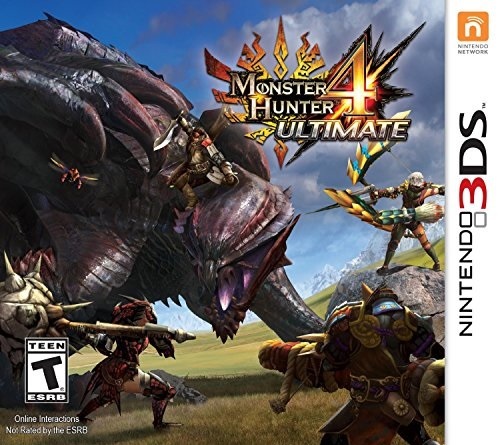
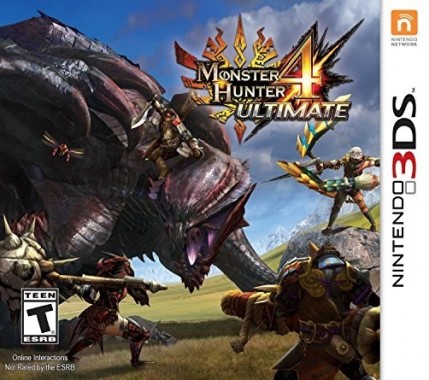
While Capcom may have lost a bit of value in terms of franchises during the past few years, Monster Hunter continues to thrive well in Japan, and is finally becoming a mainstay overseas to boot. With the transition from Sony portables to Nintendo, we have already experienced a total of three solid recreations of the third entry, but now its time for this namesake to truly prove itself with the latest beast offered in the form of Monster Hunter 4 Ultimate. Utilizing all of the features for the handheld, this title looks to feed fans more of what they love with some new features, monsters and more. Does it live up to expectations, or are the hunters now as weak as the prey? Let’s find out.
Story
I know, if you follow the Monster Hunter franchise whatsoever, you’re probably wondering what kind of story a game could possibly provide that never really tried to put forth a strong narrative to start with. Players start out as a newly recruited hunter who has joined up with a caravanning group. As you travel, the story starts to go from your standard Monster Hunter fare to dealing with a mysterious virus, which is infected several species and turning them not only mad, but highly powerful. There are a decent number of cutscenes, and each keep paced very well to intertwine with the main plotline.
Its actually very entertaining to see the world of Monster Hunter expanded on in this new way. Sure, having a rich story doesn’t change the game, but it does enhance a product that would have still been satisfying without it. Monster Hunter 3, at least for myself – had a very steep climb before everything clicked. If anything, the tale within Monster Hunter 4 Ultimate acts as a few steps to capture the player’s attention from the start, pulling them into a world that is full of exploration and charm, and that is before you even take a full stop into that heavily addicting gameplay. Think of it as a rich and rewarding tutorial.
Gameplay
If you came straight out of Monster Hunter 3 and hopped right into 4 Ultimate, you will definitely see the large amount of attention Capcom have put in to the next installment here. The player starts out with a decent amount of customization options for their hero, where they can change their facial features, hair, color of skin – and so on. Directly after, you are then able to customize your Palico sidekick. Yes, we now are able to have an assistant of sorts for our journey, and that is in the form of a newly branded Felyne comrade who sticks by your side for all of your quests. Palicos are able to be fully customized as well, where the player can gain armor and level up their cats through successful quest runs. When I first started playing and got used to my Palico, I’ll be the first to admit it felt like an odd gimmick. After downing a few missions, I was rather glad to have Krumm by my side, as Palicos come with decent AI and are quick to join in the battle and even pick up items in hidden areas while you explore each region.
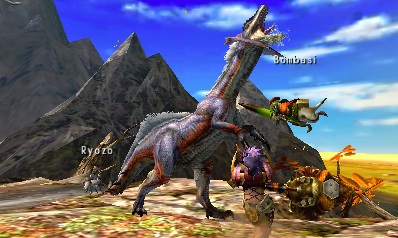
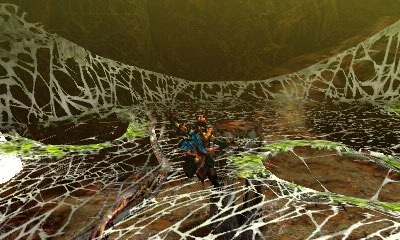
The gameplay also makes a big jump by making a big jump. Players now can leap off cliffs and high points, landing safely down below as they either avoid or try to find a monster they may be making chase with. You can also hoist yourself on the back of a monster and get an upper advantage, where you then have to put your weapon to work while trying to hold on for dear life. Keep in mind that only large monsters are able to be rode in this fashion, but the addition of this feature makes these already big battles into something on a more epic scale. Another new addition comes in the form of how you explore. Players can now jump up walls and move in multiple directions, where they’re able to attack or shuffle a platform quickly, alleviating a lot of the slow treks of the past. Gone are the underwater battles from past titles, but in my opinion – its a fair trade as while those spots definitely brought something different, Monster Hunter 4 Ultimate brings more than enough to the table in terms of accessibility and depth to compensate.
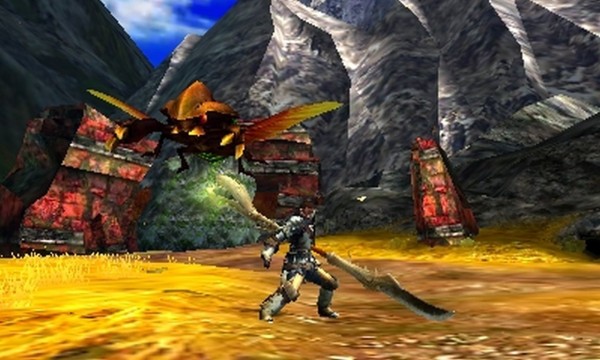
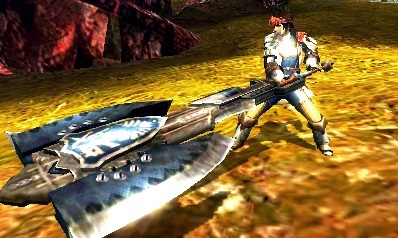
Without a doubt, equipment and upgrades are the heart and soul of what sets Monster Hunter apart from every other action-RPG on the market. Monster Hunter 4 may be more accessible, but it does not slack in its deliverance as players are still able to obtain armor and weaponry by combining, crafting, and questing. There are two new stand-out weapons within the game, with the first being the odd – yet fitting Insect Glaive. This staff allows players to vault into the air at a moment’s notice, and controls a bit like the long sword. It can also can summon a Kinsect, a bug that latches on to various parts of the monster and returns to the hunter with a gift of boosted stats and power. The Charge Blade is a new weapon as well, and should be thought of as the hallmark blade for a hunter to obtain. After the player deals so much damage, this axe/longsword combo will begin to glow, where the player can unleash a devastating attack. Both of these new weapons feature their own combos to bring a new energy to the hunt, and if players still would like to stick with the standard sets of dual blades, bows, and so on – they’re completely free to do so as nearly all of the past arsenal has been retained for this new installment.
As the player progresses through the game, a good amount of locations – or base camps become unlocked, allowing you to see new NPCs and face new challenges in an abundance of quests. These quests range from hunts where you must take out a specific number of monsters within a set time limit, gathering quests, and facing the one big enemy that every locale inhabits. You can’t level up, but you can continue to run through quests to get more materials that can be crafted into better weaponry. Its a smart system that runs fluidly, and has not lost any of its polish or luster with 4 despite the large amount of new mechanics. Those who do not like grinding will quickly learn that this is still a game where you must improve to move on, which means taking on quests and repeats in order to gain more materials. Again, if you have played Monster Hunter before, you will come into the game ready for the grind and the grind is indeed a great and addictive experience once you get past a bit of a learning curve.
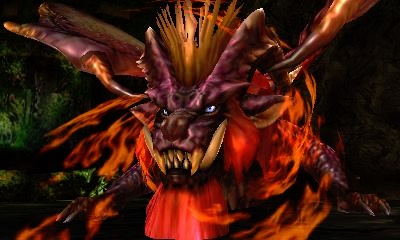
I haven’t touched on controls much in this review as there really isn’t a lot of difference between this title and Monster Hunter 3 Ultimate. Players can customize their bottom screen so they can adjust their camera in that format, or simply use the D-Pad for what is in my opinion a much quicker fix. The “New” Nintendo 3DS adds a much more comfortable stick for that option alone (this game was reviewed on a normal 3DS XL), which frees up space for better utilization of the touchscreen itself. Back to the field itself, there are a hefty amount of new monsters this time with more variation, letting players get more from beasts of old and new. I know, this should be expected, but there was a great deal of repetition in just about every other older entry in the franchise, so seeing more of a mix was definitely pleasant.
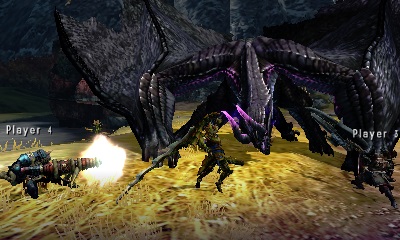
For the first time ever, players can now hunt online via the Nintendo Network, joining a party with up to three others in a massive number of quests. The guild and village quests can last you hundreds of hours as it is, but with a few friends, you can hop on these servers that are rather sturdy at the moment and scout some dubious foes. Since each single player map features randomly-generated worlds of sorts for the solo experience, players can also swap missions to get new armor and quests with Guild Cards, and do the same with the Streetpass function. There is a lot to the online experience with this title and as of writing this, it looks to only expand with plans for a great deal of DLC and future downloads in general as online has never been more prominent in any other Monster Hunter title.
Visuals
One of the finest features of Monster Hunter 4 Ultimate comes in the form of Capcom’s ability to put so much scope onto any location just through camera angles and a beautifully painted world. Backgrounds are simply stunning and feature a ton of detail, and the nearby terrain and fauna pops, whether you are utilizing the 3D or not. The character models look sharp as well, with simple armor or even color changes doing a lot to change one’s perspective of their own hunter. The monsters are what matter however, and with smooth animation through and through, the only thing one can do is focus on the personalities that have been animated into every single model on the field. Its easy to tell a gentle giant from a vicious beast, and the movements and general AI provide a lot of spunk to tie into an absolutely incredible atmosphere, where every hunt is a brand new adventure.
Audio
The soundtrack for 4 Ultimate is fantastic and definitely works well to bring the visuals full circle. The worlds are big, the monsters can be epic in size, but the sound effects and melodies create a greater illusion, allowing what could be just a standard encounter to be something truly special. This is definitely a game I would love to have a physcial CD for in terms of musical value alone, but one little feature actually does more harm than good. I love the idea of having a Felyne follow me about, and Palicos are a great idea, but nothing sucks the energy out of a room faster than hearing a constant “meow!”. I get it and it works from time to time, but the Palicos grate just a bit too much, and made me search for a way to turn off their constant whining. That said, I wouldn’t have minded their chipper cheers if the music wasn’t so important for tension of the battles, but alas, players might want to learn how to drown out their cat pals after a few hours of hearing the same little screech.
Overall
Monster Hunter 4 Ultimate is a leap forward for the franchise, in more ways than one. With incredibly deep gameplay, fantastic new features, and mechanics that make the game more accessible than ever before – this may be Capcom’s greatest portable release this generation. There are a couple of minor hiccups from time to time, but those are very easy to forgive in a game that never stops rewarding the player for their patience with massive payoffs. You don’t need to fix what isn’t broken, and Monster Hunter 4 Ultimate is the same wild ride with the windows rolled all the way down, allowing an audience to enjoy new sights and experiences in an unforgettable adventure.
Capsule Computers review guidelines can be found here.
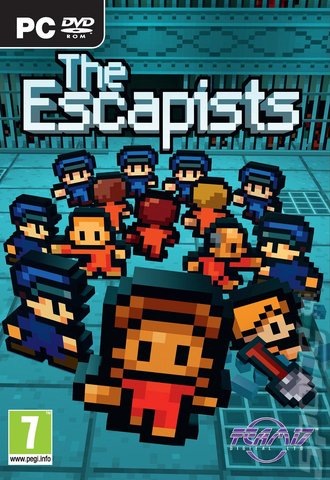
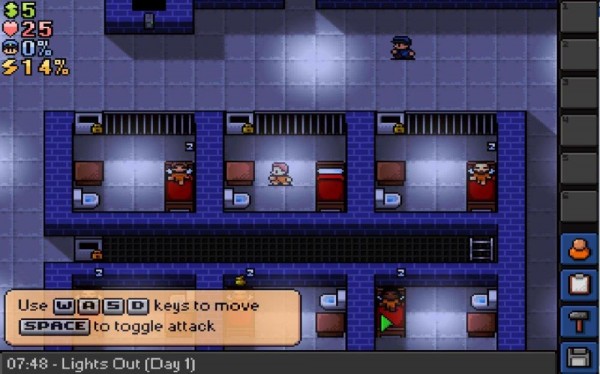
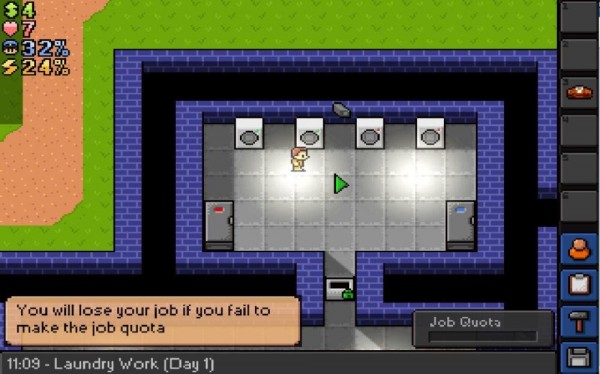
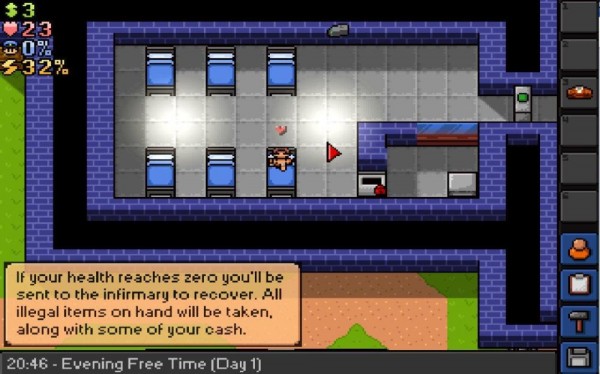
The Escapists is a prison simulator. You play a prisoner in what starts as a low security prison. However, it’s more than just a prison simulator. While I could have just sat and continued to serve my time, continuing through the dredge and daily monotony, this does not complete the game. The goal of each level is to escape the prison, and there is a wide multitude of ways to do so.
Gameplay
The Escapists is an interesting mix of genres and types of games. When you first load up the game you can browse through (but not access) a number of different prisons with different security levels. To beat a prison is a fairly simple concept: break out and get free. There isn’t really a narrative thread to the game nor is there a story mode. For me, I picture that you get placed in the more secure facilities when you’re caught after breaking out, but The Escapists really requires the player to imagine their own scenarios. There isn’t even a randomized reason for why you were put in prison or a way to select a reason. Personally I think it would have been cool to be able to select different crimes to give you different starting abilities.
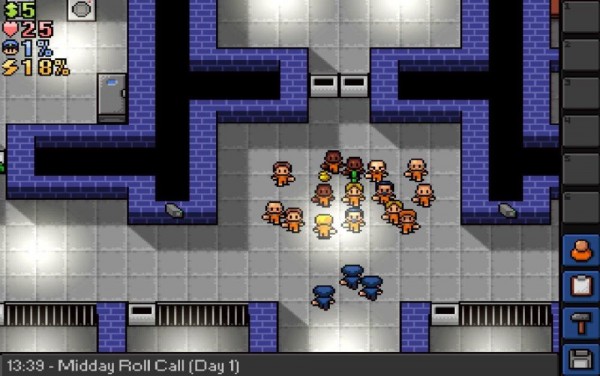
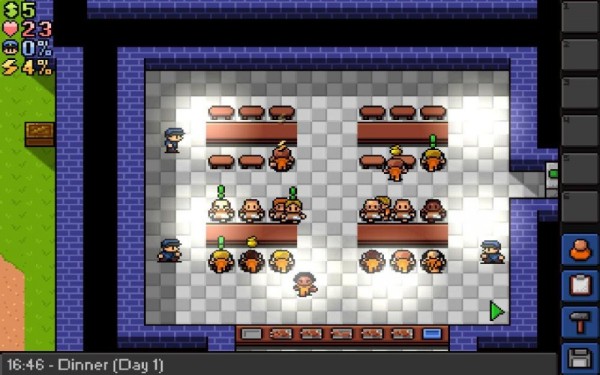
Once you’ve selected a prison your sentence beings. The prison day goes through a fairly boring routine; roll call, breakfast, job time, work time, lunch, free time, etc, much like a real prison does. I spent most of my time in The Escapists trying to really figure out all the various thing you can do as a player. I found that being able to do favors from the other prisoners is the most interesting part. These mini-missions are randomized with randomized payouts. By doing these favors you can build up your Opinion (and money) with different characters and eventually recruit them to be part of your gang. This is crucial for some escape methods, but the quests can get a little repetitive.
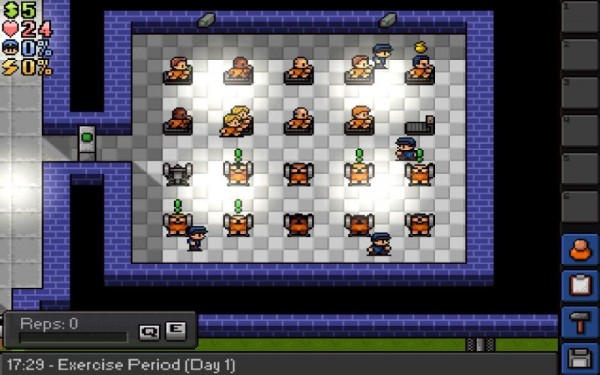
Players also start with a job, and can change jobs after filling certain requirements. Usually this involves making the current jobholder lose their job somehow. It’s a major way to make money in order to buy items from different characters. Additionally there are different ways to build up your stats during free time, such as the gym and the library. You do have to make sure to go to meals as well, and do any required tasks in order to avoid building up suspicion with the guards. Much of what the player will do in their daily routine are these things, working on favors (quests), eating meals, and doing their jobs, until they have the methods and materials to break out of the prison.
There’s a crafting system in the game as well, and you use this to build various tools and implements in helping you escape. You can also build different weapons to improve your combat ability as well to aid in smuggling items. Combat in The Escapists is pretty simply, switch to combat mode, target the enemy, and move close enough to attack. The difficulty comes from having the right strength and weapons, avoiding guards, and having your allies come help you. I did find some of the in-game comments and discussions by characters amusing, as well as some of the items you can make in the game. The crafting system is actually pretty impressive for a game like this, with over 100 items that the player can make.
I found the game to be highly repetitive though the different methods of breaking out of the different prisons is interesting. However, the monotony from following the same daily routine failed to really engage me. The different prisons require different ways to break out, but to get to that point you need to do the same core tasks over and over again. Mashing buttons to work out in a gym or doing the different jobs constantly isn’t something that I found to be engaging, even when trying to brainstorm a way to breakout. That isn’t to say the gameplay is bad, but I prefer to have a bit more variety when playing. It’s a well made title, but the overall number of things to do is a bit lacking. I guess the leaderboards and goal of breaking out with higher points in less time is attractive to some, but I don’t think I’ll be returning to these prisons anytime soon.
Visuals/Audio
As far as the visuals go for The Escapists, the title is done as a stylized 8-bit design. This seems to be a popular trend in the indie gaming community. It allows clear and distinct graphics, without requiring the heavy manpower to create complex 3D models. For The Escapists it does use color and design well to create it’s world. That being said, I didn’t find anything particularly distinctive about the stylization. There are nicely done lighting effects, and attention to detail is paid towards animating all of the in game items. I’m fond of how they handle word bubbles and stat changes (be they health, strength, intelligence, etc), but again, there’s nothing that seems to strike me as special from the artwork of this title. It works well enough and has been cleanly done. I think it does undermine the tone of the game slightly, although I don’t find The Escapists incredibly serious to begin with, being a prison escape simulator.
The audio is an interesting mixture. All of the sound effects are done in the typical 8-bit synthesizer style. There isn’t anything to write home about here, the sound effects are just simple noises that indicate to you a thing has happened. What’s interesting is that Mouldy Toof didn’t go for that with their music. The soundtrack is very nicely done, and I enjoyed the ambient background music. It does clash a bit with the 8-bit sound effects, but I found that it worked fairly well while playing.
Overall
While I wasn’t particularly grabbed by The Escapists, it is a well-made title. There is a lot of polish to the final version of the title. The core principal of the game is finding your own ways to escape, and that can be fun for some if you can get past the repetitive gameplay. If you enjoy titles where you make up your own story as you try to accomplish self-discovered goals this is a good title for you. It is also a great title if you enjoy set-self challenges and discovering different paths in a game. The Escapists reminds me a bit of the Hitman series in that way. You are given everything you need in each level, and it’s up to the player to figure out how to do it best. Personally I prefer my games to have a stronger narrative and different settings than this. On the whole if you like adventure games and enjoy finding creative methods to beat levels, you should give The Escapists a try.
Capsule Computers review guidelines can be found here.
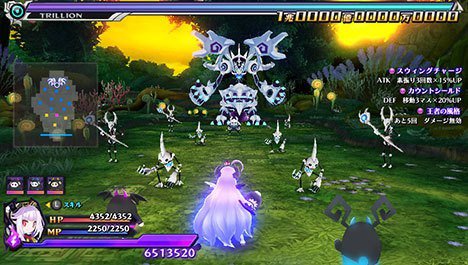
Compile Heart has finally announced an official release date for their upcoming adventure-RPG Makai Shin Trillion, translated as Destroyer Trillion. The title is described as an adventure where the primary enemy and boss has 1,000,000,000,000 HP.
While this seems like a gimmick, the game plays out atypically to most RPG’s. Combat is a simultaneous turn system where both player characters and the enemies will take action at the same time. Players will control a young protagonist named Zeablos who is allied with six girls called the Demon Lords. These Demon Lords will need to be trained up in order to fight Trillion, and he will be fought numerous times throughout the game.
The goal is to weaken and damage Trillion in these battles as much as you can. It’s a different concept from most, and while an American port has not been announced yet it’s hard to believe that this title won’t receive one. The development team behind Destroyer Trillion includes the director of Disgaea 4, the composer from Disgaea 4, and the artist from Mugen Souls.
Destroyer Trillion will release in Japan for the Playstation Vita in May 2015. You can see the teaser trailer for the title below.
Patrick Buckland has announced that in conjunction with John Ardussi of Game Mechanics, his 1980’s action-arcade title Crystal Quest will be coming to new platforms. Buckland is better known for his violent racing game, Carmageddon. Game Mechanics will be developing and publishing the title, with Buckland’s approval, pending the completion of their Kickstarter.
From the 2006 Remake
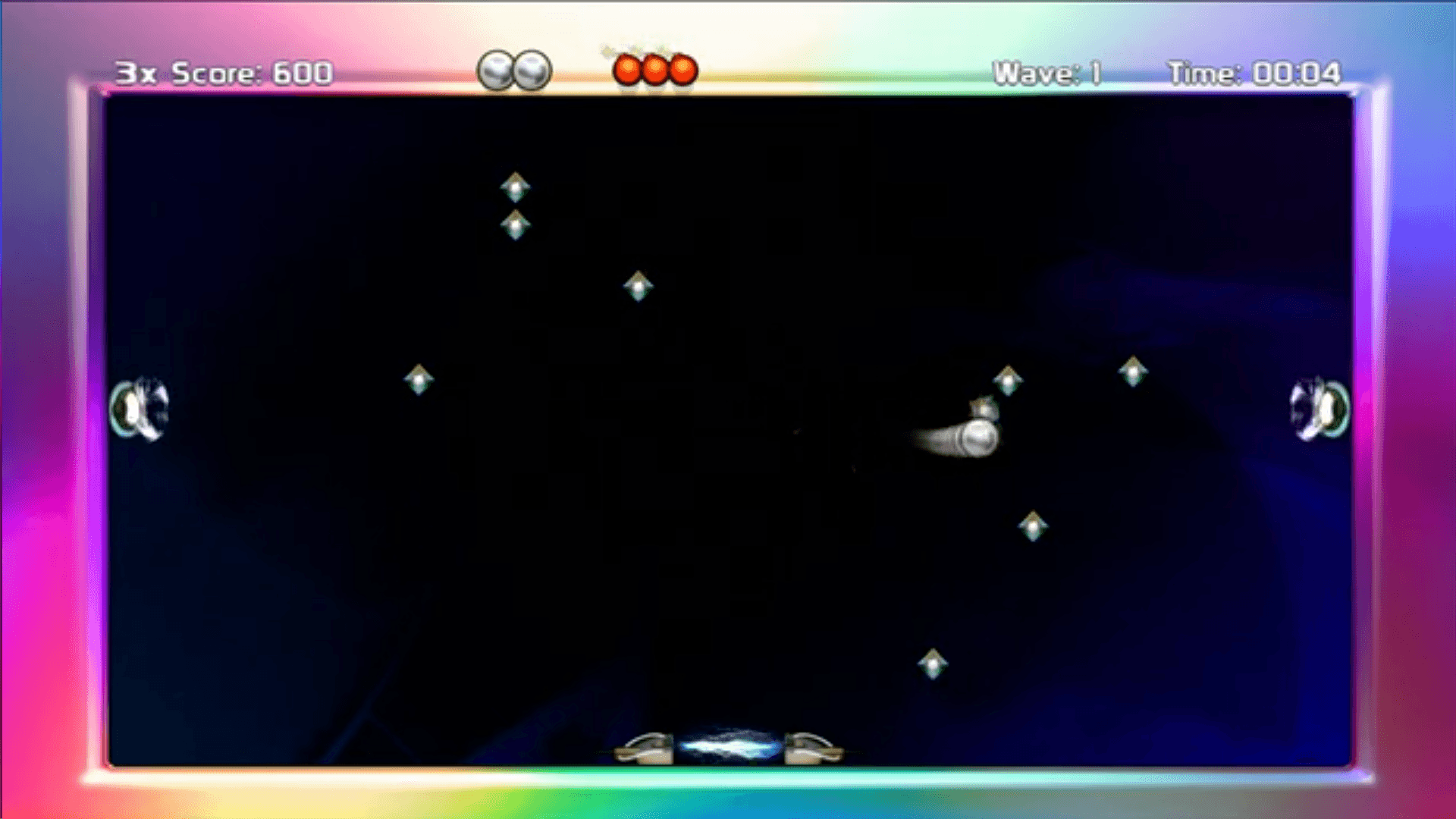
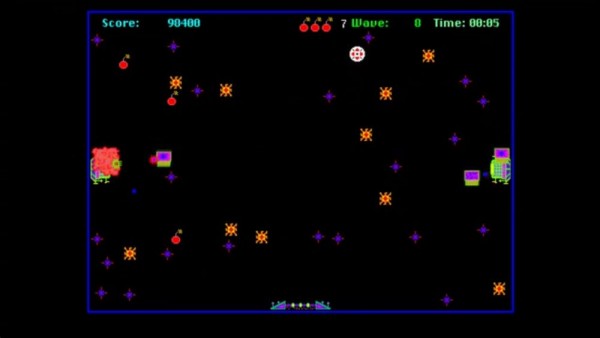
Crystal Quest was a quick-paced action game which was released to large accolade in the 1980’s. The title is considered to be a longtime classic arcade game. While Crystal Quest was released for the Xbox 360 back in 2006, Game Mechanics seeks to bring the title to all modern consoles using the Unity engine. The goal of the title is to simply collect crystals and avoid enemies and mines in order to open a door in the level to escape.
From the Original Crystal Quest
The title will be brought to all modern systems that Game Dynamics can port it to. The initial release will be for Mac, PC, and Linux. The Kickstarter can be found here.
The Indie GalaEvery Monday Bundle #46 is now available. This week brings together five indie games for one low price. Two titles include Steam Trading Cards.
Moto Racer Collection – Experience the thrill of motor cross racing with four Moto Racer titles.
Rooks Keep – An arena based melee game featuring a deep skill based combat system.
Starion Tactics – A turn based strategy game that focuses on over-arching strategy versus mundane resource gathering.
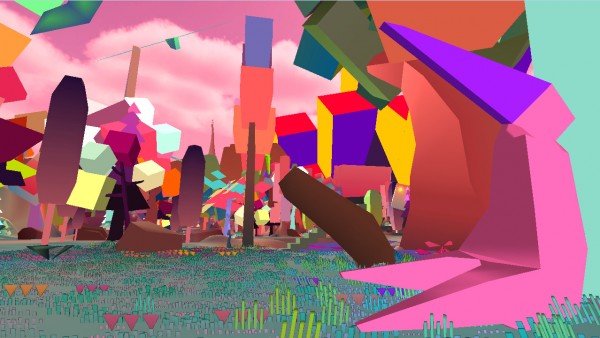
Trip – Described as an “avant-garde cubist dream,” Trip lives up to its name. Players can explore an open world that looks like an hallucinogenic trip through the mind.
For the first 24 hours of the sale, all five games can be snagged for only $1.99, so grab your copy at Indie Gala.
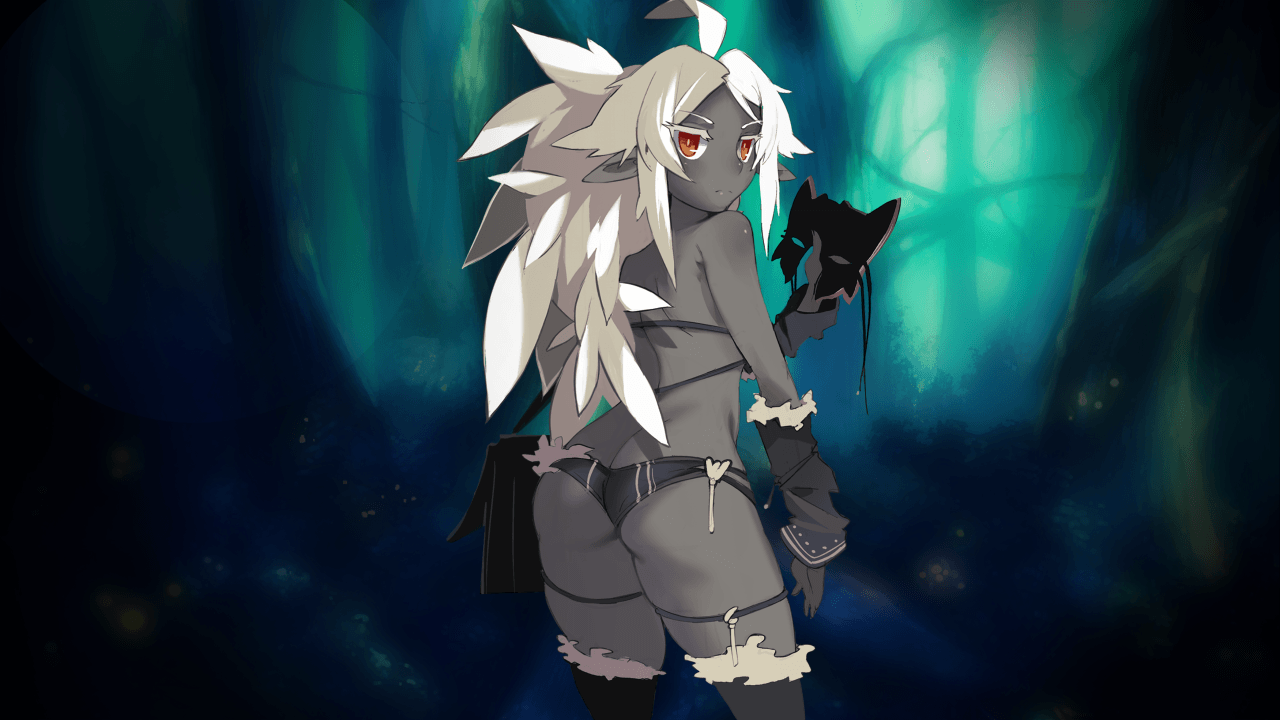
Today the demo for the 18+ eroge The Menagerie was released on MangaGamer by developer Lupiesoft. The demo can be found here (18+ Only) though it is worth noting that there are a number of sexual scenes included in the demo, all of which involving futa/yuri action in some form as well as S&M.
Currently The Menagerie is set to be released sometime in spring and when it is released, it will cost $15.95 and be available for the PC, Mac, and Linux. For those who haven’t been following the game, The Menagerie is an OELVN that will feature five key characters alongside the main character Rao-Jii, a Drachene, as she lives in the Menagerie a place of luxry where the richest and highest members of society come to indulge in their lewd obsessions.