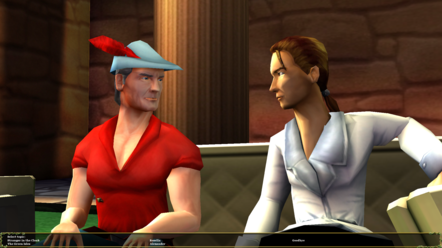
Mortal Kombat has got fans yet again even more excited, with the in depth, behind the scenes introduction of a the newly introduced mode ‘Challenge Tower’ which has amazed all. While basically it is just event matches and training modes, the creativity behind it all is truly impressive and deep for fighting game, expanding on the engine and looking very fresh!
Various modes to train you include having body parts severed so you must fight without them, shooting projectiles into moving buckets to practise aim, taking on up to six zombies at a time, and having your feet stuck to the floor, among others. Within the various 300 missions, one particular challenge which looks interesting is called ‘Orange you glad I came?’ where the player is a team combination of Scorpion and Sub Zero. Shao Khan is also constantly changing colours, between orange and blue. When Khan is Blue, only Sub Zero can harm him, and when Khan is orange, only Scorpion can cause him damage, making the player have to think on his/her feet and constantly swap between the two fighters to defeat him, keeping players on their toes and thinking on the spot. A huge fuss has been made of the final challenge, ‘End Game’, which has been really hyped up that only a hardcore Mortal Kombat player can possibly beat. Get ready folks, its gonna be a tough one!
Making an epic return is mini games, and even more crazier than ever! The legendary ‘Test Your Might’ makes a triumphant return, as well as the nail-bitting ‘Test Your Sight’ from more recent games. A welcome new addition that looks a lot of fun is ‘Test Your Luck’. The player is shown slot reels that would pick random modifiers that will effect your gameplay. These can range from who you will fight, who you will fight as, fighting upside down, double damage and many more. Apprently the idea was so popular over there in Netherrealm Studios that they decided to create an entire mode for the ‘Test Your Luck’ mini game. Be excited brawlers!
Do note however, in Australia this game is still banned due to its violent content by The Australian Classification Review Board, although Warner Brothers is currently seeking an appeal. You can SIGN THE PETITION HERE to help rid of the ban, and help us influence video gaming history! For more information on the petition, go here, or to learn more about the ban, check this out. The more awareness we can raise, the better fighting chance future mature games have down under.
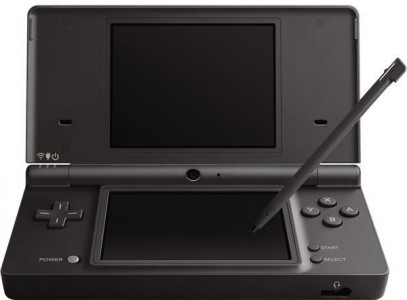
With all of the news with the 3DS, even more so today with all of the recent reveals from GDC, I know many gamers out there are ready to move on to the next generation of Nintendo’s handheld. I am ready for the jump myself, and even though Nintendo have told us that the 3DS would not end production for standard DS titles, many are starting to see that light at the end of that tunnel. Honestly, the Nintendo DS may see titles up until 2013 or so for all we know, but there are still plenty of reasons to look forward to what the handheld has up it’s sleeve as far as 2011 goes. This is just a list of five, with most releasing over the next month. In my opinion though, these are the titles to keep an eye on this year as each are sure to pack a hefty punch on the handheld this year and keep it alive through the busy launch of the 3DS.
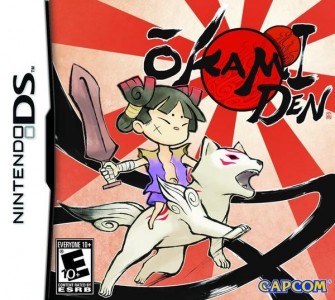
5. Okamiden Release Date: March 15, 2011 (US) March 15, 2011 (EU) March 15, 2011 (AU)
Being a direct Sequel to the PS2’s cult classic title, Okami, Okamiden is set to bring the rich art style and gameplay of the original title to the handheld, but with a much smaller protagonist. Using the famed “celestial brush” from the first title, newcomer Chibiterasu and four different younger allies must fight off evil that was thought to have been destroyed by Amaterasu. Okamiden also will fully utilize the DS’ touch screen for your brush powers, and looks to boast the same visuals and unique cast of characters that made the first title such a stand-out on consoles years ago.
Why it should sell well:
After having Amaterasu featured in Marvel vs Capcom 3 as well as becoming quite the household name in video games in general, I think that the mixture of the curiosity of newcomers and older fans of Okami will be just enough to make this title fall into the same “gem” status as it’s predecessor.
4. Monster Tale Release Date: March 22, 2011
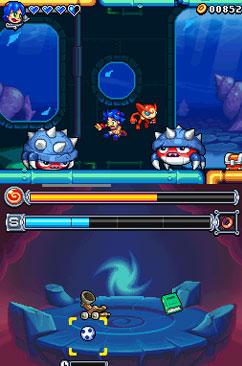
Monster Tale may sound like an odd choice, but if you have been paying attention, this new platformer has been generating quite a bit of buzz for the Nintendo DS since first surfacing last year. You see, Monster Tale isn’t just a platformer. On the top screen, the player must control Ellie, the young protagonist of the title. The bottom screen though is used to raise and train Chomp, Ellie’s new found monster and reliable ally. Chomp can be summoned in at any time through the bottom screen to assist Ellie, and you can also raise chomp by giving him food, toys, and equipment so he grows and evolves into 30 different forms. The whole concept seems to be fresh and original, and the mix of genres are looking to work well with the features of the system.
Why it should sell well:
It has been a while since we seen an original IP such as Monster Tale on the Nintendo DS, and it’s bright and colorful outward appearance as well as fresh take on platforming are a welcome addition to the library of games in my opinion. Being that this title was created by the same people who brought us “Henry Hatsworth and the Puzzling Adventure” adds a bit of solid backing behind it as well.
3. Kirby DS (Working Title) Release Date: TBA
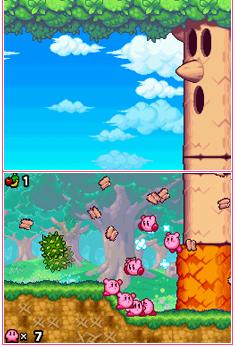
Ah yes, my good friend Kirby. It shouldn’t be to surprising to see “Kirby DS” as it is being called now on this list. Kirby’s Epic Yarn was quite a hit last year, but this tile looks to return players back to dreamland in a more standard platform experience. It also seems that not just one, but multiple Kirbys will be on this adventure with both screens being used for the overall game. Nothing else is really known about the plot, but if past titles in the series are any indication, it should be filled of the gameplay that the little pink fluff is known for.
Why it should sell well:
I expect this title to see a release this fall to be honest, and if it does release in that timeframe, the discounted price of DS titles compared to their 3DS brethren along with the familiar face of Kirby should make this title an easy decision for any Nintendo fan in general.
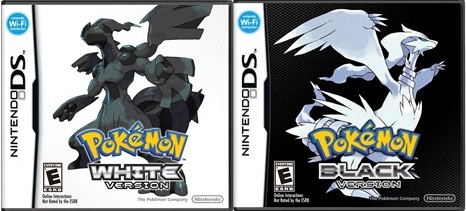
1 & 2. Pokémon Black & White Release Date: March 4, 2011 (EU) March 6, 2011 (US)March 10, 2011 (US)
I counted these two as two titles as technically, they are. Yes, Black & White does come out just in a few days, but think about it for a second if you are a fan of the series. Pokémon titles in general seem to last longer than others because by the time you “catch em’ all” and do all the smaller post-game related stuff (which can take months), Nintendo usually introduce something that keeps the life of each generation going such as a new 3D battling game for their main home console with full interactivity and host events for legendary species of monsters. I put in well over 100 hours in both Diamond and Heart Gold myself, and I expect the same for Black & White as it truly isn’t too hard to do with this franchise. There are also random wi-fi battles in this title as well as the soon to be added “Dream World”, which should add in even more time for players to have their face buried in their DS all over again.
Why it should sell well:
It’s Pokémon
Just because many developers have plans for the 3DS does not mean we will see publishers like Aksys, Atlus, Sega, Majesco, Capcom, and even Nintendo pull away from the handheld. There are still plenty of sure to be fan favorite games announced this year as 2011 is still very young. With the 3DS being backwards compatible, developers are still sure to produce many new titles to the system for at least another year.
The Nintendo DS has evolved from being a gimmick to the rebirth of Nintendo’s handheld market as a whole. If what we have seen on the DS and even the GBA are any indication of what we could see over the next 6 years for the 3DS, then I would say it might be time to just take a dive in the hype and enjoy it, as that is what being a gamer is truly about. For now though, we still have the DS and it still has solid titles to look out for. So now you can tell us, what was your favorites on the DS and what are you excited about?
Developer: Phoenix Online Studios Released: 17/March, 2011 Platform: PC Genre: Adventure Purchased from: Official site (free).
Overview:
The Silver Lining is a Point-and-Click adventure game from Phoenix Online, originally intended as a fan-sequel to Kings Quest, it was allowed to be sold as a stand-alone episodic title by the license holder; Activision and continues the story of King Graham who must collect specific items in order to awaken his daughter and son from a deadly curse which has left them in an endless slumber.
Story:
The story follows the King/Lord dude, Graham, who must find a cure for the terrible curse which has been bestowed upon his children by a maleficent evil. His quest leads him to a druid who provides him with a list of ingredients that he must obtain in order to create an anti-curse or something to re-awaken them. I don’t know, I never played the original – but one of our other editors did and here’s the review – The Review for Episode 1.
In episodes one and two, Graham begins his quest to complete the requirements of the scroll / continues the quest of the scroll in order to reawaken his children. Along the way he encounters many interesting characters, puzzles, traps and dangers that impede / help him along in his quest.
The Second episode picks up just after he meets the druid dude and gets the scroll of awesome from him that enables him to magically see whatever it is that he needs to find or talk to over the journey. Using the scroll, he heads out and goes to a bunch of fantastical places that may or may not involve all kinds of weirdness, like objects being alive, or dog-headed guards. His boat takes him across the sea, to search far and wide for these magical ingredients he so sorely needs.
In Episode 3 Graham continues his quest to find the magical stuff to produce the anti-curse to reawaken his kids. This time however, his wife person is also in a coma, dreaming about her past experiences in this tower thing that she was captured and put in while she was young or something. It wasn’t too clear about what was happening. In this episode, he also quests around the world doing much of the same thing he did in episode 2 visiting more fantastical things like he did in episode 2.
Gameplay:
The gameplay behind The Silver Lining episodes 2 and 3 is your standard point and click fare. See somewhere you want to go, click there and Graham will move in to that spot. What I loved about the movement in episode 2 and 3 is that if the distance was great or you double click, Graham will run, making distance shorter and thereby superior to some adventure games.
Considering it’s a point-and-click adventure, many of the puzzles are also of the type that require you to use a specific item on a specific character or location. Though, sometimes, these puzzles are absolutely rediculously hard to figure out. Like, for what reason would you have to use a faux-hand on a spider for? Why do I need to choose the money in my inventory and then click on this NPC who just told me that he would sell me something? Why not give me an option to do this in the chat options?
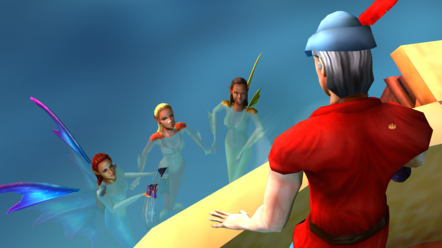
The game is also one of those games that require you to collect every item you go past, just in-case you need it for later. Like for instance there is this kid with a fishing rod early on in Episode 2 and he requires you to give him a specific item to get the rod from him, why not just use your status as the KING to get the fishing rod? It boggles the mind. An extension on this is a puzzle that requires you to use the fishing rod and another item that you could have easily have missed and use it on these seer mermaid lady things. Whats strange though is that if you go through the entire sequence, logically, you should not have required this other item anyway. I mean, why go through all the trouble to get back the original item you gave them when the item you give them the second time is one you start off with and have a near endless supply of? Also, these same mermaids know everything apparently, why couldn’t they tell you where to go instead of following breadcrumbs the entire game (metaphorical breadcrumbs)? One other thing with the puzzles, some of them kill you the first time that you do something wrong to them. I hope you like dying, because I don’t. Why couldn’t they have Graham flinch the first time then kill him the second? Like these vine things with a key behind them, I see what to do, but and item that I could *logically* use would either fail, or not be compatible. Ugh.
They know *everything*; just not when you need them to.
Anyway, these puzzles are are more fun then I make them sound and the dialogue in these sequences can be sometimes funny, though I’m not too sure if they were meant to be. Though, if you look at the world, like an Island of In-animate objects which are fully animate, a castle full of guards with the faces of dogs; you can probably say that they were intended to be. Oh yeah and that spider that I mentioned up there, she has a very sexy voice. Maybe a little *too* sexy.
This game does have some faults though, namely in the camera. Some areas have multiple sections to them which require you to walk to the edge of the screen by clicking. This will prompt the games camera to turn to show the next part of the area and this can sometimes cause Graham to walk back and forth between areas making it rather difficult to advance. I found that stopping usually helps with this, as does random luck. The game also stops you from going where it doesn’t want you to by blocking that section off, like that fallen tree in Episode 2 and the various castle rooms in both episodes.
The inventory system can be accessed by moving your mouse to the top of the screen, which also allows you to select additional actions. Your standard actions are selectable through the right click button, which at a click cycles through actions until you find the one you want. It’s an intuitive system, if you select an item it will become the default action of the mouse, but it can feel logically useless at time, like at the reason I gave above.
The Silver Lining has many bugs in it, both as characters and as gameplay glitches. When I first booted up episode 2 and went to start the game; I watched the somewhat interesting cutscene about druids and curses and stuff and was greeted to a tutorial on the magical list that Graham is given by the Druid. This tutorial occurs out at sea and as I found, can play up. I used the observe function of the mouse on the scroll to learn about it and then clicked off somewhere. Instead of the ‘Exit’ cursor showing up around the sides of the map like it was supposed to it had the walking symbol and wouldn’t let me click off. After spending 30mins trying everything I could think of, I saved and reloaded. Big Mistake. I found my boat sitting under the water with no scroll or no ability to do anything. I had to restart. Unfortunately, I was too exasperated to think to take a screenshot and any attempts to replicate it have failed. One time thing maybe?
Another bug that I found was that if you play on fullscreen and alt+tab while looking at the scroll then clicking back into the game would cause it to become distorted and unreadable. Even exiting the scroll and re-entering it does nothing to fix the problem. I have no idea what causes it to do this, but I don’t think it is expected behaviour. I’d recommend playing this game in Windowed mode if you’re busy and have to keep switching your focus.
Sound:
The sound is this game is pretty good, though it can become slightly repetitive. Like for instance, you’re likely to spend a fair bit of time in each area and hearing each theme on a constant loop can be quite annoying. Especially if you’re like most gamers and are pumped up on caffeine. Luckily, if you do find it annoying, you can turn it off by turning the music volume down to 0 in the options menu.
Each area has its own theme, some of which are quite enjoyable, while others are repetitive and long. An example of this would be the Shopping district thing just outside of the castle in both episodes. You do spend a fair bit of time in this area and after the 3rd or fourth time the piece has played through, you’ve either become accustomed to it, or you’ve become so enraged that you alt+tab out and switch Windows Media Player on, wrecking the readability of your scroll.
Even though the music can be repetitive, some areas actually don’t have it all and feature some pretty ambiance, which is great. The ambiance usually fits quite well, and can be quite relaxing, giving your mind room to be free to think of any solutions to weird or impossible puzzles that may arise.
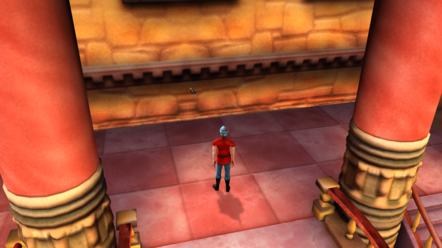
The castle, source of many camera problems, one of the more decent musical areas of the game.
Not only is there music and ambiance, but also voice acting. In this game the voice acting ranges from excellent to horrible. I know that reading online about this game will yield a mixed reaction on the narrator character, namely a mixed reaction on how horrible she is, but I actually find her quite likeable and she actually has a very nice voice. I know that one of her lines is ‘If it makes you feel any better, I’d have tried that, too.’ While it’s comforting the first few times, it does become an annoyance after the 50th failed attempt on something. Though, it’s not her only failure line, its the one that makes me feel the least bitter about being unable to work out the puzzle.
The quality of voice-acting does vary between characters, with some characters being better acted than others. This sadly brings the game down a notch due to the inconsistency in acting. I feel as though the game would have benefited from either a re-recording for some lines, or a switch to text-based banter for some of the lesser characters. Except for the black-widow from Episode 2, can we keep her?
Graphics:
Graphically The Silver Lining is inferior to most games that have been released this era. It more closely resembles a Playstation 2 game than it does a modern PC game, but that isn’t to the games detriment. By having a less detailed look; the designers were able to craft a more creative and fantastical world and be able to convey it more accurately.
Each character seems to be given the same level of detail, with the exception Grahams daughter’s boyfriend/partner. I swear there is something wrong with that guys neck, its like no chest – just neck. Graham who is sporting a similar unbuttoned shirt look has no problems with all neckedness, so I don’t know why this guy should have it. Though he is explained to be half-fairy or full-fairy or something, so maybe that’s got something to do with it?
The Neck! Look at it!
The environments are cartoony and some regions look like they belong in ‘Alice in Wonderland’, though as a whole, they’re mostly large empty spaces with not much filling them. Some parts are just a field, a thing you interact with then a walkway to another section. But also, the castle looks like a castle on the interior, so that’s a plus.
Given the basic graphics of the game, you’d expect items to have a more basic appearance. Not so, everything looks as though you’d expect it to… with the exception of some items which have fantastical elements. So they kind of don’t look like anything based in reality, so they look as they do.
Conclusion:
The Sliver Lining episodes 2 and 3 are fun point-and-click adventures that everyone should at the least give a go. The puzzles can range from easy to use everything on this one thing and hope it works. The music is good the first few times you hear it but can quickly become repetitive and boring, while the voice work ranges from weak to really awesome. Can I get an Audiograph from the lady who does the narrators voice?
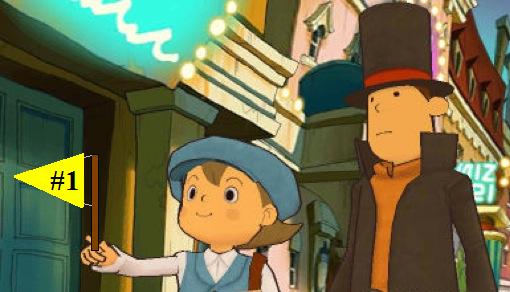
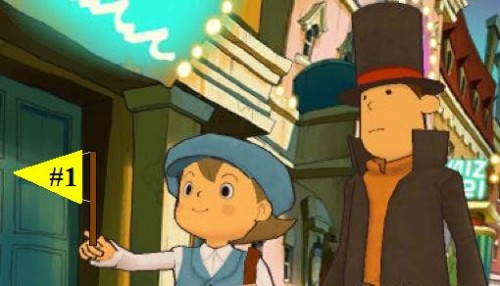
This bit of news caught me a bit off guard, but it is still rather interesting. Of course by now you all know that the 3DS went on sale barely under a week ago in Japan, having sold nearly 400,000 units. Professor Layton & The Mask of Miracle was however the top seller between the actual launch software in Japan for the unit selling 119,591 copies altogether. To put this in perspective of how huge this really is, Nintendogs + Cats did in fact come in second for the handheld, but with sales just barely over half that. Even just at 60,000 copies, that is still very respectable for first weeks sales, so it seems the dogs still have it on their front as well.
Considering that the Layton series claimed the top spot out of all the Japanese launch titles says how popular the titles in general have became since debuting only four years ago. I for one love the Layton titles, but unfortunately Mask of Miracle still hasn’t received an official release date for overseas.
It just goes to show you how quickly the whole market can change in a generation and how ten years ago, the Layton series would not have even been possible without the technology that is the DS. Hats off to you Professor.
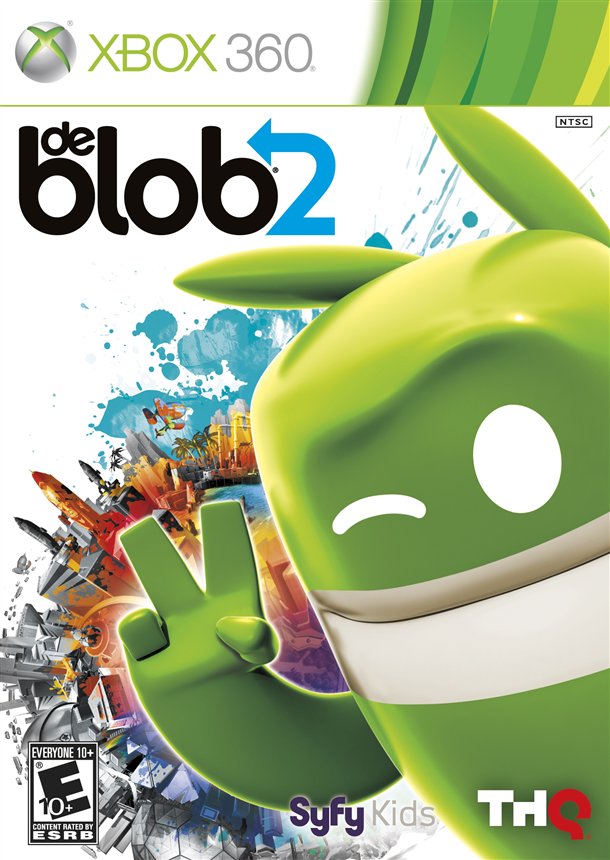
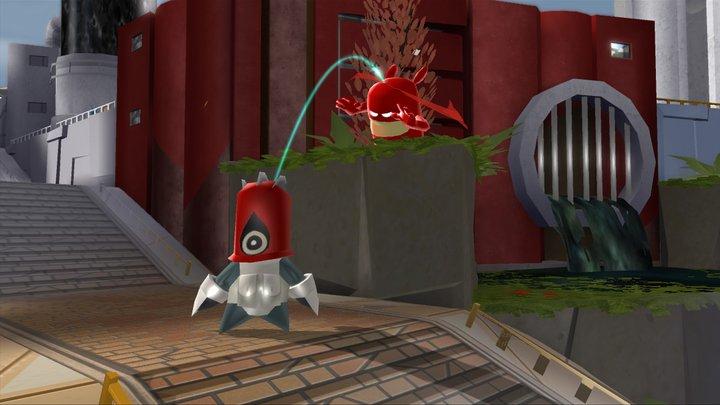
Game Name:de Blob 2 Platform(s): Xbox 360 (reviewed), Playstation 3, Nintendo Wii, Nintendo DS Publisher(s): THQ Developer(s):Blue Tongue Entertainment Genre(s): Platformer Release Date: February 22, 2011 (US), February 24, 2011 (AU), February 25, 2011 (EU) Price: $49.99 (Xbox 360 & PS3), $39.99 (Wii), $29.99 (DS) BUY NOW!
Two years after we seen de Blob’s impressive release on the Nintendo Wii, de Blob 2 has been released across all home consoles and the Nintendo DS. With a brand new story and a shiny new coat of paint, this title really does offer quite a lot for the franchise to move forward with, even if the steps forward come with a couple of moments of minor frustration. I will get to all that in a moment, but now it’s time to get this review underway, so without further ado, her is my review for the Xbox 360 version of de Blob 2.
Story
If players who got a chance to experience the first de Blob title, Comrade Black lead his INKT Corporation to take over Chroma City and deplete all color and happiness from the land, only to have de Blob become a new hero for the Raydians, restoring color as he put a stop to Black’s evil schemes. In de Blob 2, the plot is a close to the first, but now Comrade Black has disguised as Papa Blanc and has started reeking havoc in a new location, Plasma City, brainwashing most of the citizens and taking the cheer and color out of the land. Now it is up to de Blob and a few allies to start a revolution and bring Plasma City back to life with the color and life it once had.
The story may sound a bit simple, but the part of de Blob 2’s charm is the way the story is told. de Blob 2’s plot boils down to the classic tale of liberation and starting up an uprising to take back the Raydians to their previous way of life. It is full of political context, even with a “news ticker” on the bottom of the screen with humorous messages of angst against the uprising de Blob is creating while you bring the world back with color, but nothing ever feels that serious as all the characters are filled with such a goofy charm that everything feels light-hearted and fun. Cutscenes are like watching a movie and tell this tale with style while showing up quite frequently between each area. Most platformers do not go into detail as much as de Blob 2 with a plot, but that is what made this title special to me. It makes you feel like you actually have a purpose to make it from point A to point B and I actually wanted to get further just to see what was next for our very colorful protagonist in the game.
Gameplay
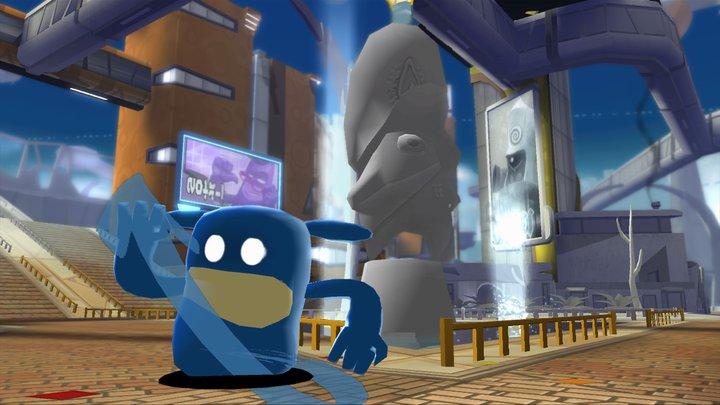
The same concept of coloring the world from the first title is back this time around, but now in beautiful HD. de Blob’s main objective is to restore the world with color, and he does so as he works like a living paint bucket, absorbing color from paint pools, enemies, and several other methods to roll into a platform, filling each piece with vivid color upon contact. Certain platforms require certain colors though, and to achieve this, de Blob must carefully roll into each area as well as mixing colors on his own body to properly change each platform. A lot of the gameplay is made up out of missions that you must perform for the inhabitants of Plasma City where you must perform tasks such as liberating Raydians or taking on a tough foe to break an area free from it’s colorless form.
Of course performing like a true sequel should, de Blob 2 is filled with new gameplay mechanics which breathe a fresh new feel to the otherwise simple core gameplay such as new dash attack, which is used to smash through obstacles or enemies. As you progress, many new abilities are introduced which can be purchased with “inspiration points”, the game’s currency system that can be found all over the various locations. Though these are mainly used for making your Blob stronger, they are actually a necessity and serve a purpose as the game’s challenge rises. Each location also features many power-ups which serve more of an environmental purpose to fit the challenges of a stage, such as turning de Blob into a magnetic wrecking ball, adding the ability to roll on magnetic walls or a hazmat suit which sheilds de Blob from spikes and flames. I really liked how the game is well paced on delivering these power-ups, as each are given out at just the right time so you are never left with the wrong ability at the wrong time, and as I would soon discover, perfect timing is a crucial element of the game as a whole.
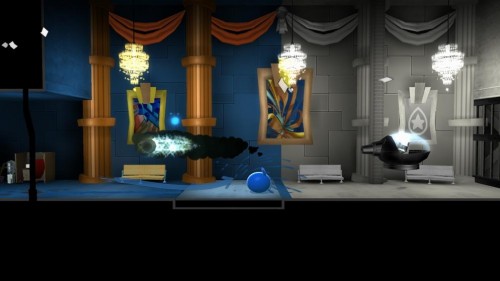
At de Blobs colorful heart, under all the abilities and fine-tuned gimmickry, is a pure platform title. Everything, whether it be to smash enemies or cleverly turn a platform from a stale gray to full on color requires Blob’s targeting system and easy to use jump. By holding down a trigger, the player can map out a destination with the analog for precise movement. This performs well and usually gets the job done, but I had a few moments where the camera pulled away causing me to miss and have to try again. Many times, a group of enemies can be bashed one after another, leading to a chain. This is not only rewarding to receive with the feeling of accomplishment, but usually with a reward such as a time bonus. Platforming also performs differently when you traverse into a building, as the game then puts on a 2D side-scrolling face, with missions usually consisting of liberating a certain landmark or simply obtaining a certain item or shade of paint. A good portion of the game takes place outside where the player has a third person perspective, so this switch-up can lead to a whole different feel which is executed nicely.
As I mentioned, time is a very important thing to keep an eye on within the game, which can be good or bad, really. While the timer does add to a challenge, I felt it actually took away from exploration. You see, when you start changing each world from it’s stale black and white area into these bright, colorful, full of life environments, you don’t get to fully explore your new creation. Instead, you are quickly moved to the next area. If that wasn’t enough, poorly placed checkpoints can result in a timer draining down and a lot of time feels wasted as you have to complete all of the missions which followed that checkpoint all over again. After completing a level, there is no timer and you can go back and collect things you may have missed, but it is hard not to want to explore the first time through. de Blob 2 is by no means a repetitive title gameplay wise, but having to completely redo such a large portion of a stage feels like you are being punished for enjoying the delightful atmosphere.
The game is a completionist’s dream though and patient gamers will be rewarded heavily with the many collectibles scattered throughout levels in which most of the achievements rely on to unlock. A two-player mode is included, which uses the second player (playing as Pinky) as more of an assistant to the main character’s role, helping stun enemies and gather collectibles in sight. There is also a split-screen co-op mode which adds a bit more replay to the overall.
Graphics/Audio
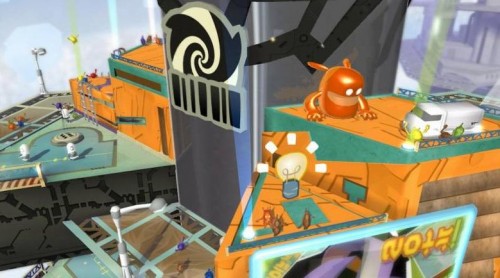
In my opinion, this may be one of the best examples of eye candy to hit a console. Each model for characters, colorful or not, is beaming with an easy to read personality and charm and all come across as very smooth and polished. The locations may be the best part of the graphics though, as actually completing the game is like unwrapping a big gift on each level. As you roll through, trees pop up, vehicles come to life upon touch, and the world as a whole quickly beams to life. This is what made this title so rewarding for myself, and I can imagine any gamer would enjoy watching such a intensely vivid atmosphere come to life as well.
The music in de Blob 2 is very varied, but it all fits with the unique style of the game. Music changes based on whichever color you happen to acquire, ranging from a funky jazz groove to a more poppy tune and many other melodies throughout. de Blob doesn’t have a lot to say, but with the minor add-ins of laughter and grunts, his character is filled with even more personality and becomes easy to like right off the bat. The Raydians also have their own language that makes many specific inhabitants of Plasma City memorable and flow perfectly with the bright and colorful atmosphere.
Overall
It is obvious to tell that the developers put a lot of time and thought to level design within de Blob 2, and it shows with how well each stage is built to best fit whatever power-up or situation you may be in. Platforming is easy to perform and a blast with the ever-changing environments as well. Unfortunately though, players who want to get a fuller experience out of this world will have to do so in a second run due to the overly fast pacing in the game. There still is a wonderfully executed concept and a story that will keep you laughing the whole way through though, so this game succeeds just the way the title before it did, by bringing a fun, easy to play, and (even more so) visually pleasing title to consoles. de Blob 2 is one of those titles that is just a refreshing break away from the much more serious titles we see in the market today and does a lot right to be a top contender for a much needed mascot of this generation for the lacking genre of platforming as a whole.
Today saw the launch of the newest MMORPG from developer Trion Worlds and Publisher QVSoftware, RIFT.
RIFT is about a world full of Ascended who must close down extraplanar RIFTs which threaten the world of Telara, while also going to war with each other in an epic battle to prove which is the most supreme and to gain absolute control over the 8 elements.
The game features PvP battlegrounds, a public quest system which see’s players joining together to close down Rifts or defeat certain enemies, dungeons, a large world to explore, a level cap of 50 and a set of fully fledged endgame content. The game also boasts over 1million accounts since before launch.
WMD is the mission that has garnered much praise from the fans of the game. You can fly a Soviet airspace in the SR-71, and find a hidden base deep in the snowy mountains.
Isn’t it interesting how long this demo took to come out? I guess sales of the game have slowed down a little.
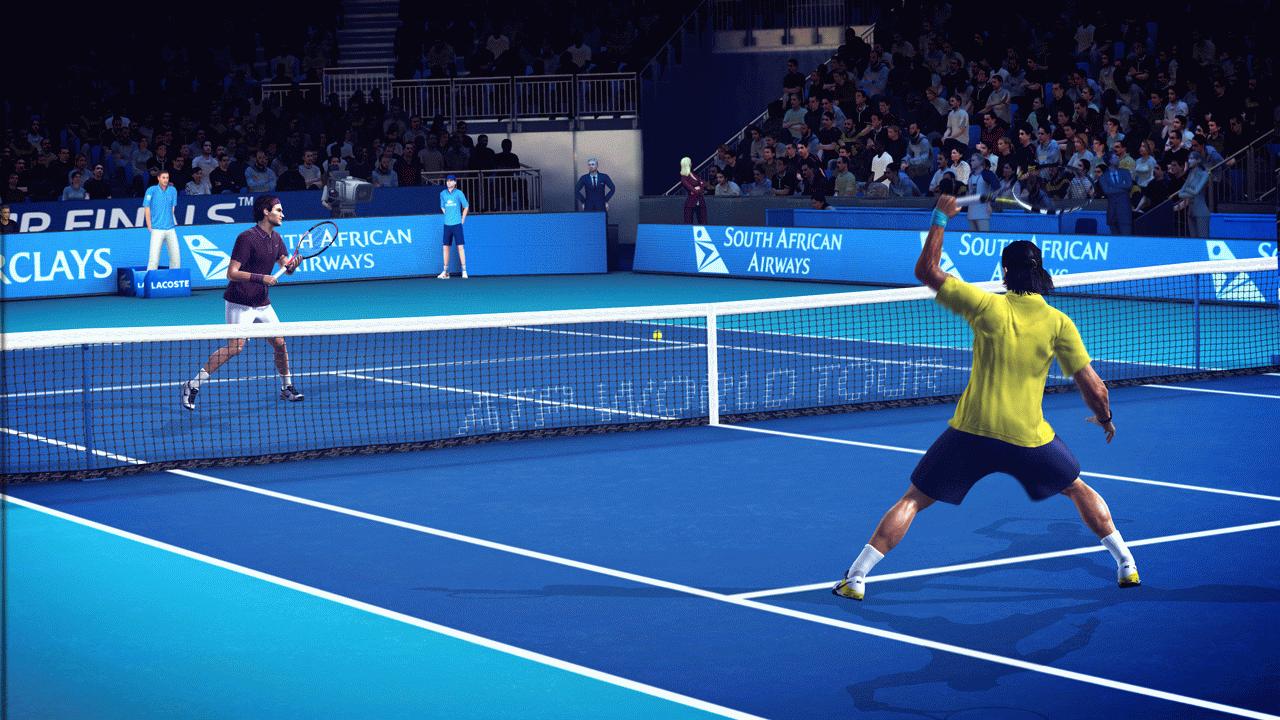
Get ready to learn all about Top Spin 4 in the newest trailers from 2K Sports. After your done with those, check out the new screenshots from the game. If you like tennis and video games, then be prepared to have your mind blown! Learn all about character creation and the legends of the sport.
Top Spin 4 will be coming out on the Xbox 360, Nintendo Wii and PS3 on March 18, 2011. Published by 2K Sports, this iteration of the series will hopefully add some awesome new features.
What do you think? Are you into playing virtual tennis?!
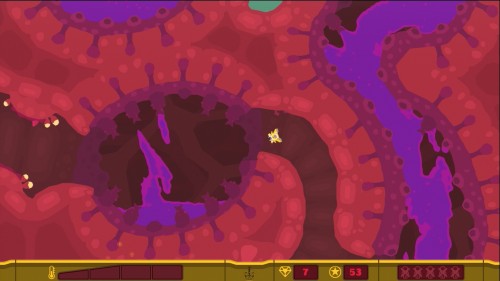
PixelJunk Shooter 2 is a direct sequel to PixelJunk Shooter, one of the latest series of games from the PixelJunk universe. For those who aren’t aware of what the game is, at its core it is a 2D shooter that tasks you with navigating dangerous environments while rescuing survivors. Needless to say, if you are a PS3 owner and enjoyed the first game you will most assuredly enjoy this one.
Story
Most downloadable titles aren’t really story intensive (mainly because they are so short) and this one really isn’t either but there is some small story there for those who care. A group of people have lost contact on this planet and it’s your task to rescue them. That’s your “reason” for doing what you do. The rest of the story comes from the level design and set pieces. The first game ended with you rescuing a worker from a construction robot gone haywire. As you hovered above the defeated machine a massive creature (giant worm) erupted from the ground and ate you, leaving the ominous “to be continued…” message on the screen shortly after.
What was thought to initially be DLC as a follow-up to that event, Q-Games decided to just go for broke and instead of adding only one more level, create an entire sequel. You start out literally right where the first game left off, being eaten by the worm. You eventually work your way out somehow and move on through the next two areas, discovering what is causing all of these creatures to become hostile and leave their homes.
The majority of the story comes from special, unique survivors that are found in each level. Usually tucked away in a secret area and requiring some clever thinking to access, these survivors (also known as scientists) give you little snippets of information once you rescue them.
Gameplay
Chances are you’ve played a game like PixelJunk Shooter before. You move with left stick (regardless of where your ship is facing), aim with right stick and fire with R1 or R2. In the first game, holding the fire button would fire off a continuous salvo of homing missiles (as long as your ship didn’t overheat from repeated fire) that was arguably worse than simply mashing the fire button to unleash a barrage of bullets. In the second game, however, holding the fire button now releases significantly more rockets at much greater speed with seemingly improved tracking. However, this means that unless you have a shield equipped (which means you will no longer overheat) you will almost instantly overheat upon firing this.
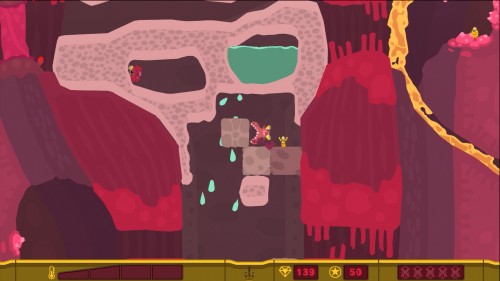
A big gameplay mechanic of the first game was the fluids and the various suits you would use to overcome and master these fluids like lava, water, ice, ferrofluid (magnetic, black liquid) and flammable gas. Throughout the levels you would find suits to outfit your ship in, allowing you to pass freely through lava, shoot magma, shoot water or repel ferrofluid. These were arguably the selling point of the game, having a game where the various elements that make up the game world are interactive and integral to your progression. The second game capitalizes on this feature and adds in even more elements and suits while making slight tweaks to the existing ones.
The first world, the giant worm that ate you, is home to possibly the most diverse assortment of these changes and additions. In this world you are introduced to purple acid which will eat away at your ship until you die unless you find some water to wash it off with. This acid can turn into bubbles if agitated, which will cause your ship to spin and twirl in whatever direction you were going in. To counter this you most use your grapple to either latch onto certain areas that will spin you around until you let go, providing some temporary control or simply use the grapple to destroy the bubbles and eventually clear a path. As if this duality were not enough, acid bubbles will multiply greatly if they come into contact with lava, converting lava into bubbles (not sure how that works). The great thing is this is only one new fluid/dynamic.
Also within the worm is one of the new suits, the hungry suit. The hungry suit slaps on a giant mouth to the front of your ship, making for a pretty comical sight. Traditionally you can fly in whatever direction you want, no restrictions, but when you have the hungry suit on the game turns into a digdug-like game. The hungry suit allows you to eat through a sand-like substance which is otherwise immune to your weapons. You can only move up, down, left or right and will endlessly move in one direction unless you direct yourself to run into a wall (the only means of stopping with this suit). The challenge in these areas is figuring out how to get out without dying as you are no longer able to shoot. The fire button will make your ship bite and the only thing it can eat is the sand. In order to defeat any enemies you might come across, you must strategically eat the sand out from under a rock that might happen to be above them and allow the rock to crush them (a la digdug). This makes for a pretty unique experience within the game and is a welcome addition.
There are other suits and fluids such as eggs which endlessly multiply (and kill you if you get trapped) which can be destroyed by water though doing so will release bees which will mess up your ship control, darkness (not a fluid but whatever) which will prevent you from using a grapple to pick up survivors and will eventually destroy if you if stay in the dark for too long. To counter this you either find the light suit, which provides a beam of light from the front of your ship and protects you from the dark or create/move some ice around which acts like a small light OR find some lava which is its own light or have it light up some special plants OR flip a switch that turns on some mechanical lights. Basically, there is a plethora of ways to counteract the dark, but that doesn’t mean it’s easy. The dark levels are the hardest in the game, so be weary.
Aside from ALL of this, however, PixelJunk Shooter 2 sports a fully fledged online multiplayer experience. Seemingly coming from nowhere, this multiplayer mode is somewhat like capture the flag. Two players are thrown into a small arena-like level. One side is holds your base and the other holds your opponents. One player is on “offense” while the other is on “defense”. The offensive player is tasked with traversing the level without being killed by the defensive player while finding small capsules that hold survivors to bring back to your base. It makes for a fun and frenetic experience, if not somewhat frustrating at times. Part of the catch is that when you on defense the other player is invisible. The only way to see them is if they come within your field of view which is a conical radius about 4-5 ship lengths in front of you. If you manage to spot them with this, they will get frozen for about half a second, allowing you to get some free hits.
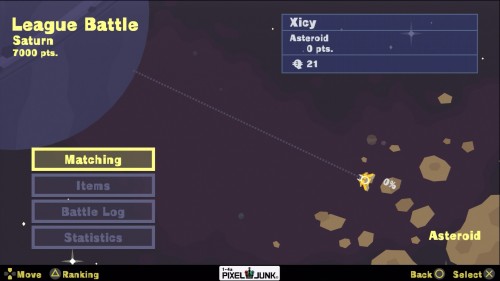
The big draw with this is that it isn’t some tacked on mode, it can serve as a complete alternative to the campaign mode. This online battle mode is set up a bit like a linear board game. You start out on an asteroid and after 7 wins you progress to Saturn and so on with other planets. Each planet is more or less a representation of your “rank”. Winning matches also nets you some money, which you spend to buy weapons for your ship to help you in battle (these weapons are only present in the multiplayer).
While this all sounds great, do know that there is a small amount of lag present which can put a damper on things and you cannot progress through the online mode with friends. There is a mode where you can you play against your friends, but you will not receive any points or money in this, this is only for fun. In order to progress you MUST fight against random players which is a real letdown. This was done to prevent boosting (players just allowing each other to win/lose so they can rank up) but the fact that it’s only 1 on 1 really makes this more of a hindrance more than protection. It’s just not as fun playing against random players and, in a way, being punished for playing with friends as you won’t gain anything from it.
Presentation
PixelJunk Shooter 2 is par for the course when it comes to displaying PixelJunk’s iconic art style. While the game isn’t necessarily pushing the PS3 to its absolute limits, the game looks great. It’s a fun and quirky art style that is sure to leave its mark on your memory. Just like in the first game, there are gems and secret areas hidden throughout the levels which will provide some extra challenge at getting 100% and provide some replayability. Gems and secret areas are also harder to sniff out than in the first game, though they won’t require a genius to find. Just know that they are better hidden and should provide you with a greater sense of satisfaction at discovering them. The way the fluids interact with the gameworld absolutely make this game. You can have just as much fun simply experimenting with how they interact with each other as you would playing through the levels.
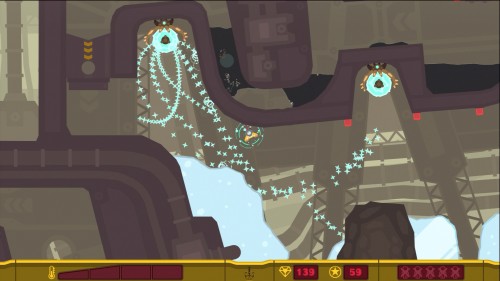
Seemingly coming out of left field, this game actually pays homage to some classic games/genres. I’ve already mentioned digdug, but there are also enemies which produce a bullet hell-like gameplay experience. They are basically a giant orb that spits out small stars in bullet hell patterns. For those who don’t know, bullet hell games task the player with navigating a ship through a seemingly impassible stream of bullets/shots coming at you. It’s also a relief to see that each of these enemies has its own pattern of shooting, ensuring that you won’t “learn” how to dodge these enemies as easily as one might anticipate. So there’s digdug, bullet hells and finally galaga. Galaga is a game where you control a small ship at the bottom of the screen and enemy spacecrafts will fly into view above you and fly in pre-determined patterns. The second boss in PixelJunk Shooter 2 replicates this almost exactly. The game controls and mechanics instantly switch to Galaga’s controls and you need to destroy the bosses minions in the same way you would in Galaga before you have a chance at hitting the boss. These small nods to classic games is a nice touch and will certainly evoke a sense of nostalgia for those old enough to have played the games that inspired these.
Final thoughts
PixelJunk Shooter 2 is a great game, short and simple. It has local co-op (no online, sorry folks), a fully realized online battle mode and a campaign that not only delivers on providing a satisfying follow-up to the first game but adds so much more to the overall experience. If you have a PS3 then there isn’t much reason not to pick this up. It does have its flaws, the online mode, while great, can lag and is a bit restrictive, some of the puzzles feel as if you are being hand-held through with only one method of solving them and there isn’t as much explorable space this time around, levels are almost linear with how you need to complete them at times. Aside from those though, which are only minor annoyances, the game is nothing short of a great experience. I completely recommend picking this up.
At the Game Developers Conference Twisted Pixel is showing off gameplay from two of its big XBLA releases, with brand new gameplay footage. First up, is Ms. ‘Splosion Man, essentially the “Ms. Pac-man” of the ‘Splosion Man world. The Gunstringer, which is about an undead cowboy puppet that you control using Kinect, has also received gameplay footage located within the massive 15 minute video below that shows off what seems to be the first 15 minutes of the game. You can get a good taste of how to play the game and what to expect from the the video.