Steam users will be prompted with an update today which will update their Steam client with the latest addition to the widely used service. This update will contain the Steam Guard system which will not only protect your Steam account from hackers but also notify you if anyone has even tried to get into your account. Gabe Newell himself gave his password and username out at GDC in an effort to prove how resilient Steam Guard is.
As long as users have a verified email account attached to the account they will be able to restart Steam and it will be locked down on that computer. Any time someone tries to log in on a separate computer an e-mail will be sent to that verified account to notify you and also provide a code in case it was you yourself trying to access your account on a separate computer. Meaning that if your old computer breaks down and you get a new one, your Steam account is completely recoverable.
I will gladly admit that rhythm games are one of my favorite genres of games. PaRappa the Rapper, Elite Beat Agents, and Taiko Drum Master are permanent parts of my collection, and I just played through the entirety of Gitaroo Man last night. The only way rhythm games can be made even better in my book is by combining them with another genre to create a hybrid of epic proportions like the Bit.Trip series on WiiWare.
That is precisely what Tzai Entertainment has done with their new game SHMUSICUP (Shoot Music Up) by combining rhythm games with bullet hell shmups. SHMUSICUP allows you to play an intense shoot ’em up along with your favorite songs straight from your hard drive, and creates a unique bullet pattern based on the tune. This essentially means that SHMUSICUP, much like Audiosurf before it (a pseudo-racing game with a similar concept), is given unlimited replayability. Just by loading up a new song, a level can be made entirely different.
While I can talk about the game all day, it’s probably best if you experience it for yourself. There is a trailer below for you to behold, but I would recommend heading over to Tzai’s website to play the game for yourself. They currently have a beta version available which you can try out, and if you like it they are offering a limited time price of $9.99 for those who pre-order now. While the techno-inspired tunes they offer for you to use all sound excellent, I found I had the most fun when playing along to “Donuts, Go Nuts” from the Splosion Man soundtrack. How can you not enjoy that ukulele?
Liqua Pop Platform(s): iPhone(reviewed)/iPod Touch Publisher(s):Electronic Arts Developer(s):iChromo Genre(s): Puzzle Release Date: 10/03/2011 Price: $2.49 AU $1.99US (Buy Now)
Overview
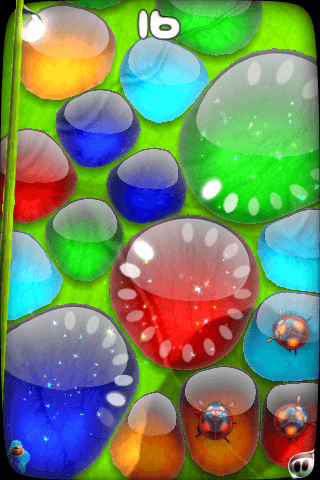
Hop on board the latest match-3 puzzle game from EA and help Toadie the frog reach the very top of the stem. The only way he can reach the top though, is if the player helps by popping as many bubbles as possible. The game operates the same as many other “match up colours” puzzle games work, much the same as Bejewled or Tetris (without the cult followings of course). However, unlike the former mentioned games, Liqua Pop gives the player a little background story to help in persuading the player to keep playing. In my opinion the game would work just the same without the existence of Toadie – who I often forget is even crawling his way up the side. Nonetheless he is a nice little touch.
Gameplay
The goal of this game is to drag matching coloured bubbles towards each other, forming a bigger bubble. When four of the same colours are joined a timer begins and the bubble is set to burst. Each burst brings Toadie the frog closer to his goal – all coveted shiny bubble at the top of the stem! By dragging more than four matching colours together, it’s possible to gain more points. The player also has the ability to join multiple groups of colours to get a multiplied score if they are all popped at once (done by shaking the iOS device). But if they’re not quick enough, the screen will flash red, which causes a game over very quickly.
While this game doesn’t have highly complex gameplay, EA and iChromo have mixed the mundane match-em-up puzzler formula up by introducing some variables in the form of bugs. Bugs are released when the bubbles they are contained in are popped, with different bubbles causing different effects. The bug’s abilities range from obstacles like removing bubbles colours, creating black bubbles that can’t be joined, or spinning all the bubbles around in a chaotic tornado. While it can be pretty frustrating dealing with these obstacles (personally I really enjoyed freeing the tornado bug!), Liqua Pop also offers bonus bugs, who either give the player more points, send out a wave of spikes to pop surrounding bubbles, or convert all the surrounding bubbles colours to whatever colour contained the bug.
While the game has different levels, they don’t vary all that much, apart from a slightly different background or the appearance of more bugs. While this does make playing the game slightly more difficult as you progress, it doesn’t really provide much in terms of variety in gameplay. But then again, this is generally the same for most casual puzzle games.
Graphics and Audio
The high point of this game really is the graphics. By utilising a liquid simulation feature, the game really captures the movement and look of water droplets. This is most notable when dragging bubbles around and they way either bounce off each other or morph together. With the rules of the game particularly easy to grasp, not a particularly strong background story, and the means of play being incredibly easy, the graphics seem to be the real driving force behind the game. In terms of audio, the game doesn’t have much to offer. Liqua Pop boasts an ambient marsh-themed audio track, with appropriate popping sound effects and a little victory chime when the level is complete. While these all suit the game well, the audio doesn’t stand out as a notable feature of the game.
Conclusion
If you’re a fan of games like Bewjewled, and looking for a little time killer, then “hop” on you’re iPhone or iPod Touch and have a play of Liqua Pop. However, for those of you who are looking for a little more story, and a little more interactivity and complexity, this game is probably not be up your alley. While the game might be fun when playing, but doesn’t really have that hook that’ll get you wanting to come back and play more for extended periods of time.
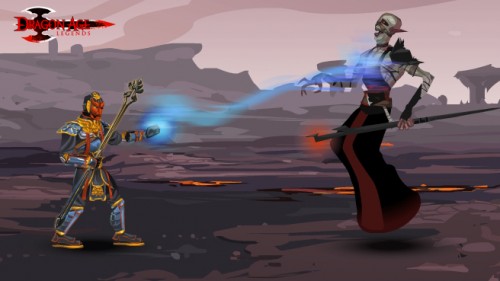
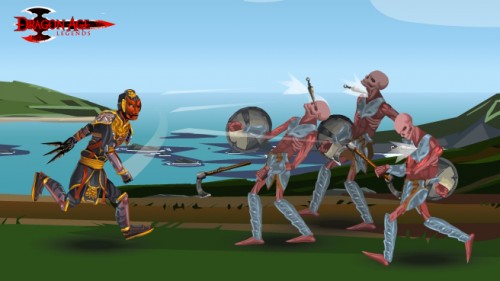
Eletronics Arts and Bioware have massively extended the Dragon Age series by releasing the highly popular RPG to over 500000 Facebook users. This will introduce a whole new audience to the franchise, boosting the awareness of the console versions. A collaboration between Bioware and EA’s Play4free studio named EA2D, Dragon Age Legends brings a more interactive and visually pleasing experience to those who enjoy gaming on social media sites. Being specifically designed for social media platforms DA Legends should set a standard for social media games to come, immersing players in rich scenery and traditional RPG combat.
Players logged into the game can invite friends to help them battle through the various levels in a turned-based combat style which are set in the Free Marches, the primary setting of the newly released Dragon Age 2. Earn experience points along the way, which can be shared amongst friends to upgrade your characters and kingdoms abilities in the quest to become a legendary warrior. The game also offers special quests, where players can earn 5 bonus items for use in Dragon Age 2 available on PS3, XBox360, and PC.
EA2D is a segment of EA that focuses specifically on online social media gaming. Well known titles from the same studio including fancypantadventures, mirrors edge 2d, with plans to bring many more popular titles to this form of gaming.
Images of the chaos caused by the Earthquake/Tsunami in Japan were truly heart-wrenching for us all to watch, and it will be quite a while before all the people of Japan can rebuild their lives. The gaming industry is doing its part to chip in to help the relief effort over there, with Capsule Computers just setting up a donate page HERE for you to help if you can.
The latest game development team to do their part is Undercoders, who have announced that from now through March 31st, 100% of the proceeds from their game i·Spot Japan will be donated to the Japanese Red Cross Society to support disaster relief efforts to help those affected by the earthquake and tsunami in Japan. In addition, the price of the upgrade pack has been reduced to the half as an incentive.
You can help support this cause by buying the game from iTunes – Download i·Spot Japan
The Oddboxx, Oddworld Inhabitants’ digital collection of the four classic Oddworld games has just been released across all major digital distribution platforms. The list of download services includes Amazon, Direct2Drive, GOG, GamersGate, and Stardock, along with Steam for which it was originally released. In order to celebrate the arrival of the Oddboxx to the rest of the digital realm, Oddworld Inhabitants is also selling it for half price for the next seven days! That means you can grab Abe’s Oddysee, Abe’s Exoddus, Munch’s Oddysee, and Stranger’s Wrath all for only $12.49!
There are a ton of updates made to the games, including fixes to all of the major bugs that were affecting the Steam version on release and the inclusion of widescreen support. Digital copies of Stranger’s Wrath will also be upgraded again later this year to coincide with the HD rerelease for the PSN.
At the time of this writing it appears that Amazon, Stardock, and GOG have yet to add the Oddboxx to their digital catalogs, so users of these services should check back later in the day.
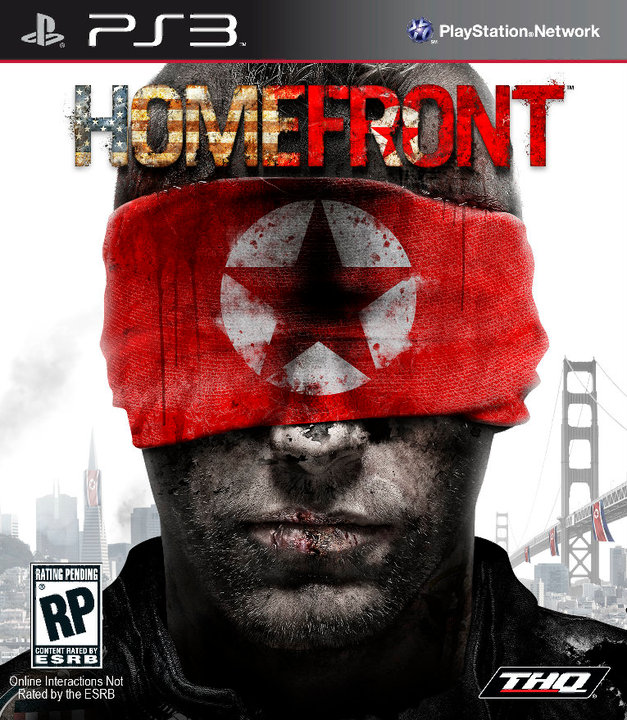
Game: Homefront
Publisher/Developer: THQ/ KAOS Studios
Consoles: PC, PS3, Xbox 360 (Reviewed)
Genre: FPS
Release: 15th March US, 18th March EU, 16th March AU
Price: $59.99 US, Buy it here – $99.99 AU, Buy it here
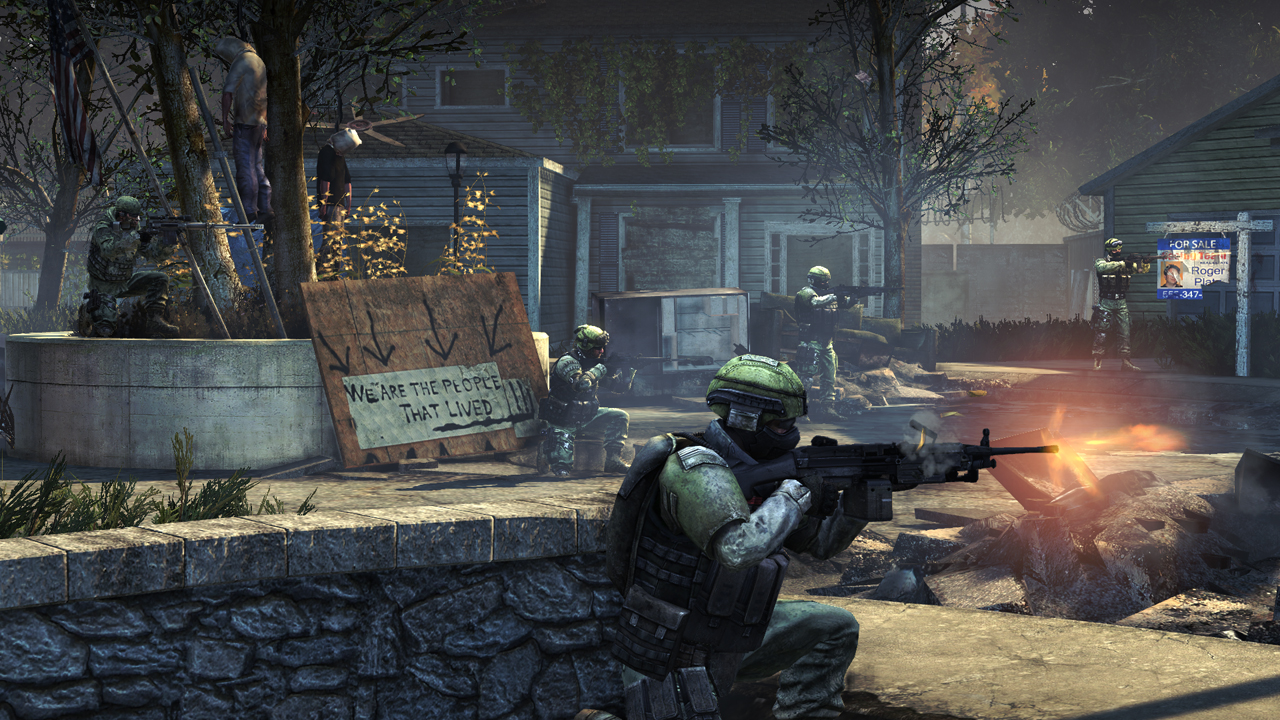
THQ drove our hopes up sky high for their newest game, an FPS that was meant to redefine the boundaries of emotional story lines, online multi-player and gripping gameplay moments. With a breaking heart, I am sad to write that Homefront does not accomplish these lofty goals. It does provide some slight relief from the other shooters on the market today, but overall, these slight moments of inspiration are overshadowed by the larger clouds of rushed development.
In a possible future where gas rises to $20.00 a gallon and North Korea reunites with South Korea, the story of Homefront begins. The year is 2027, and virtually the entire world has been overcome by the Greater Korean Republic. The United States of America has suffered horrific setbacks, one after the other, and therefore have been brought to their knees. Only a few shreds of military are left to defend against this new enemy. With the goal of taking back what was once their own, a resistance movement has also formed.
That may seem like quite an interesting world to explore. However, it suffers due to presentation, bland characters and unoriginal moments.
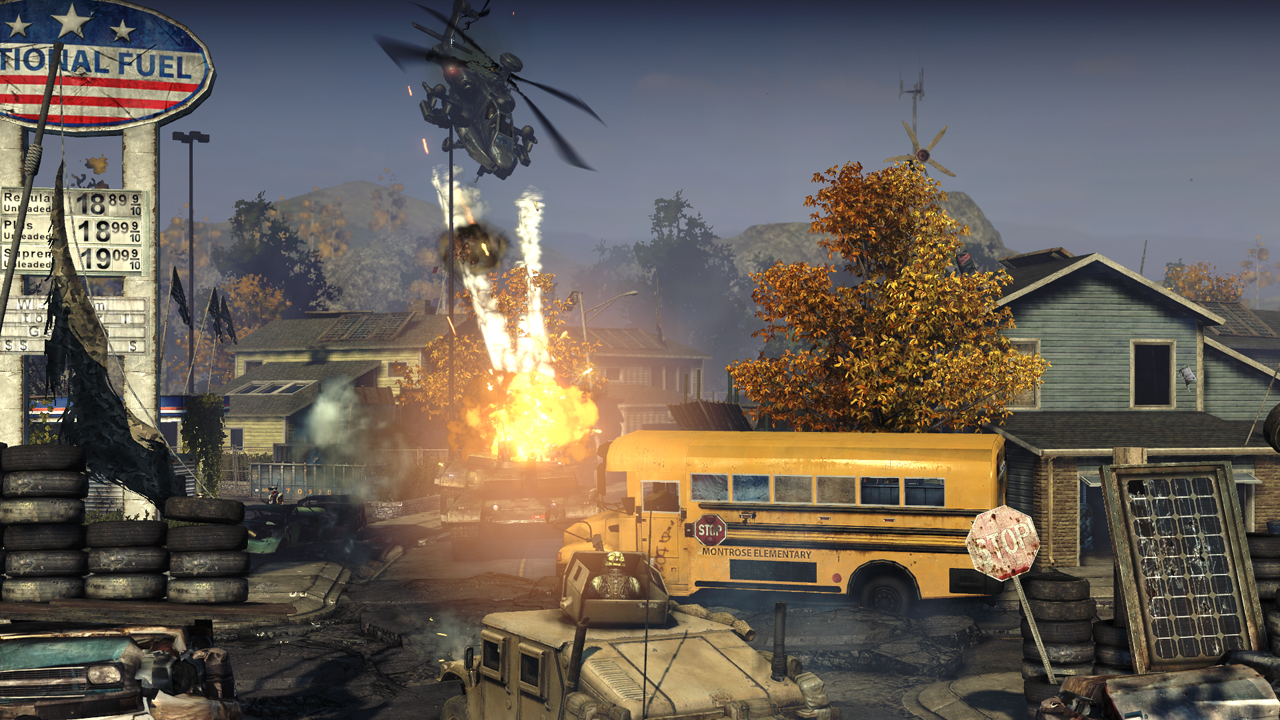
The game starts out in Colorado. I was able to identify with most of the places mentioned during dialogue. Tinges of fear even rippled through me as they discussed the towns destroyed and the people missing. Soon enough though, I was running around in “Colorado.” Strangely enough, I did not recognize much. In fact, I only saw one mountain range that looked familiar. All the neighborhoods looked like junkyards with some remnants of houses left in. Admittedly, these towns have been destroyed, but there is no excuse for making EVERY environment have bland piles of wood and a stainless steel fridge laying around. Also, nearly every yard had a fence that had conveniently been destroyed in such a way so as to provide a nice ramp to cross over. I guess bombing raids do strange things to fences.
One other awful presentation issue cropped up during cut scenes. After about 45 seconds, a line of text that said “Press A to skip” popped up with no way to get it to go away. Although not very large, this was highly noticeable. It probably does not seem like a big deal, but it was distracting. Plus, there is just absolutely no reason why this issue was not resolved during development. I’m all for skippable cut scenes, but this implementation of the feature is not the right way to do it.
Even though the plot line may seem like a stretch, it still could be an interesting story if I could have identified with the characters & had an emotional investment tied to them. Unfortunately, whereas the story is over the top, the characters are at the opposite end of the spectrum. Every single person I met in the game was so similar to one another that I thought maybe they were clones. I don’t even remember any of their names. It is shame that none of the protagonists were fleshed out; virtually no background stories or unique identifying features were implemented to make me feel tied to a particular person. Other than a gut wrenching moment involving a mass grave, I never felt involved in the experience. Therefore, when terrifically bad events in the game happened, like the death of person, I found it difficult to feel anything except annoyance. Annoyance that I did not know anything about this man/woman’s life and that I was being cheated out of this information. Most other huge “Hollywood moments” that happened in the game were just derivatives of things we have already seen before in other franchises (blowing up a gas station, anyone?)
Between tepid personnel and boring environments, it was tough to slog through the campaign. This game had potential, but it was quickly decimated when the game failed to deliver a believable story that could be related to. The story mode can deliver a small amount of entertainment, but only after other options are exhausted.
Making matters worse is that the gameplay is even worse than the story. Missions revolve around you following a person. And then following some more, while also getting to take out some Korean baddies. Rarely do the objectives change. Occasionally, you can control a Humvee with a positronic brain. That is pretty fun, but after a few times, it does get old. Other than killing humans, there are also robotic arms that have machine guns on them. They look like a crane, and they have enemy sensing cameras on them. Killing one the first time was pretty fun. But by the 5th time, I was sick of sneaking up behind them and chucking grenades. Really, there is hardly any variety throughout the entire game.
But, if you do forget your objectives, your AI companions –who also have terrible aim– will remind you every 5 seconds. Seriously. Their whiny voices came through my headphones saying the same thing over and over again. But these AI are nothing compared to the enemy AI. The enemy AI would often run straight up to me, thus enabling me to use my ever so sharp knife. The even more idiotic enemies would sometimes just stand behind cover looking forlorn as a bullet pierced their skull. If you happened to catch a group of enemies taking a tea and crumpet break behind some crates, a nice grenade would send them flying, arms flailing and vocal chords screaming. So, it was entertaining, I guess, in an odd way though that didn’t fit the style of the game.
Possibly the one redeeming part about Homefront is its multi-player. Indeed, KAOS seems to have spent much of their time on this portion of the game, and it is no wonder, considering that the competition has enjoyed such great success in this space.
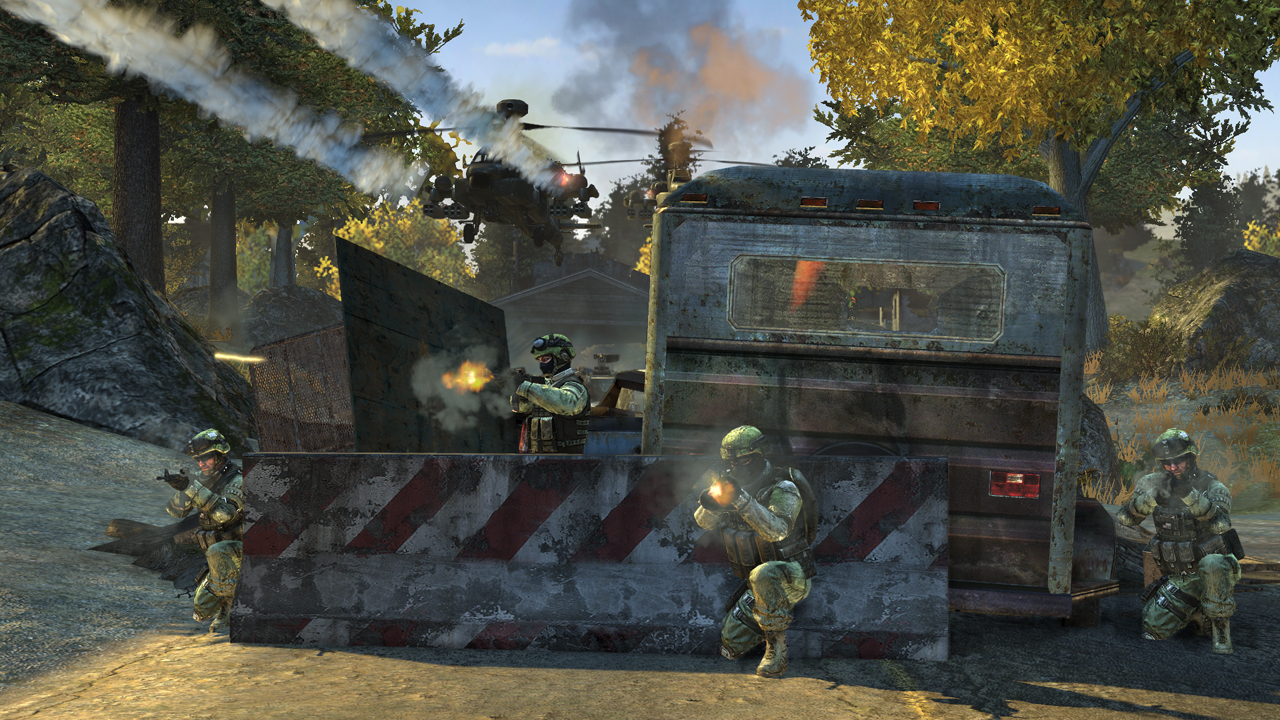
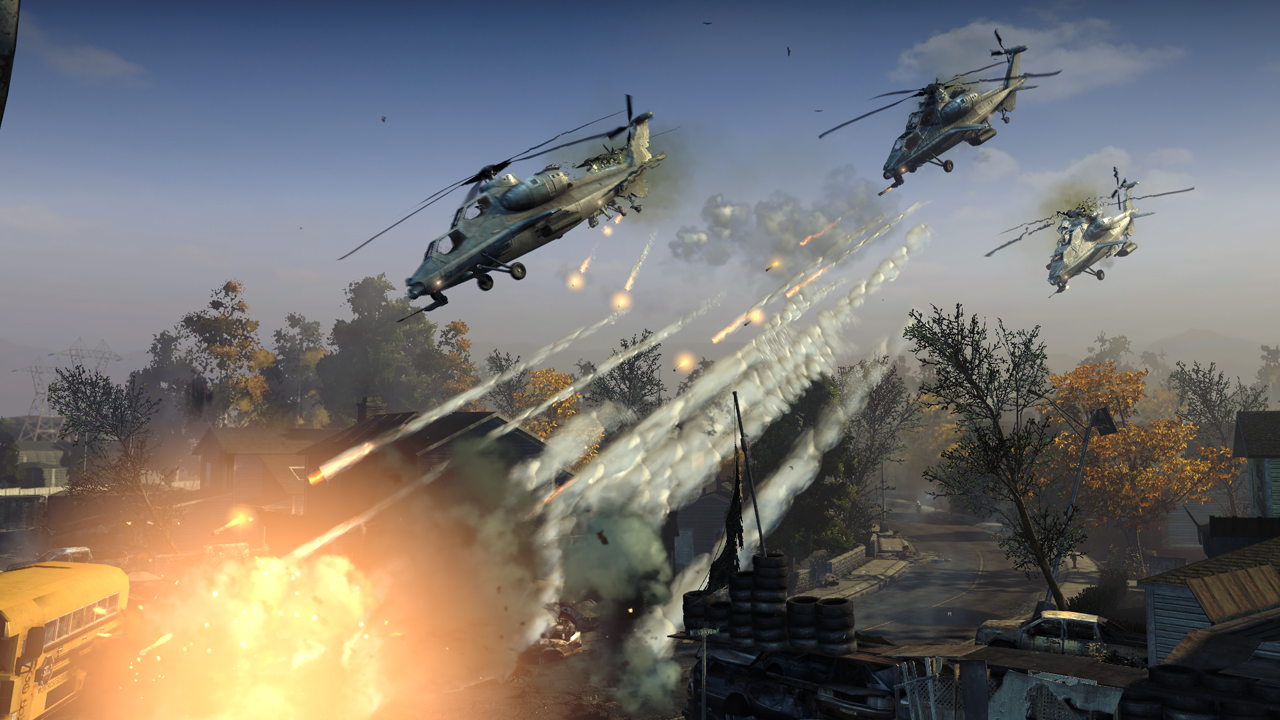
Multiplayer has points for kills and the like. But, you can spend these points in real time on flak jackets or drones. The more points you have, the more people are likely to gun for you as well, and this adds an interesting layer of strategy to the gameplay. Another area of the multiplayer that I enjoyed was the ability fly around in a remote controlled heli-drone and mark targets for my team mates. A neat remote controlled tank is available for you to use and/or upgrade.
There are only a few different online modes, but they are all really fun. It is not cool that they didn’t introduce any new game modes, but they rely on standbys like deathmatch and capture points. The online portion of the game seemed solidly balanced, although I am concerned that there are not enough unlockables for hardcore online players. A one time redemption code for online play is also required; that is a real bummer and there is really no reason to put this in the game, used game sales be damned. If you do buy the game used, you must pay $10 to play online past Rank 5.
Overall, if your looking for a slightly different multi-player game, then you should probably check this game out. It is just enough slightly different and fresh that it may be worth your while.
In conclusion, KAOS Studios clearly had to put this game on the market well before it was ready. The entire story basically revolves around getting to some fuel trucks. Oh, and there are some deaths and atrocities that happen along the way. No respect is shown to what could be some great ideas. For example, it is obvious that at some point, you are meant to talk to some people in the world and find out their story. An achievement is even based around this very idea. However, when you talk to these people, they have one thing to say, and it is is usually not very informative. If this had been expanded upon, I think it would have a very interesting addition in the game and would’ve helped me identify with the Resistance. But, like everything else in the game, it was half baked. If KAOS can put some better backstory into their characters and improve the level design, as well fixing some other issues like tasteless backgrounds, this franchise could have a great sequel. As it stands though, this game currently brings very little to the table in the way of new content, and for that there is no reason to consider it as a standout in the video game market. It is an average game with a few good qualities that need to expounded on. However, if the story can be slightly fun if you cast aside any concerns about depth of character. Likewise, the multi-player can be enjoyable for extended periods of time. Blowing up fools with drones never gets old.
Ben Webb on the PC version of Homefront:
-PC looks better
-Mouse feels more responsive than controller, though this is likely because I’m more tuned to a mouse
-Load times were about the same, though mine was on steam so it was running off my HDD. I’m not sure if running off a disc will add time. Also, the version I was playing on was probably installed on the Xbox HDD as well.
-Both have VOIP chat in multiplayer.
-There aren’t really a lot of differences; it more or less comes down to personal preference. Though, on the PC the game did look a bit dated, it felt like it was a DX9 game.
-The controls are fully remappable on the PC. I didn’t check if they were on console though. But the default scheme feels pretty natural on both PC and Xbox.
-Game is infested with snipers on both versions. Developers, PLEASE REMOVE THEM! Fun should always come before realism. Always.
-Most maps are pretty balanced.
-The swooping before spawn is horrible on both versions.
According to an article published today by The Age, an R18+ rating for video games may come to Australia in the foreseeable future. Much to the dismay of Australian gamers, the country has been lacking an adult rating for video games. Unlike the United States’ ESRB and Europe’s PEGI, Australia’s Classification Board is controlled by the federal government, rather than being an independently regulated organization.
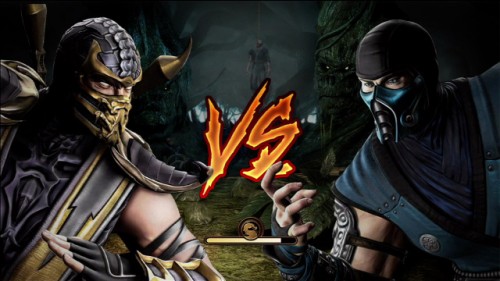
Because of this, games that exceed the limits of the MA-15 rating (currently Australia’s highest) are refused classification, and essentially banned for sale in the country. This meant that importing was the only option left for many gamers who wanted to play more adult-centered games. That changed recently with the decision by the Classification Board to refuse classification to the new Mortal Kombat, followed by the announcement that anyone caught importing the game would be fined and have the game confiscated.
While the majority of Australian citizens are in favor of an 18+ rating for video games, the government has yet to pass legislation allow it, with one of the most vocal opponents being former Attorney General Michael Atkinson (Atkinson is retired as of 2010). Now it seems as though the federal government is fed up of being “the laughing stock of the developed world” as they are the only developed country without an adult-only rating.
Home Affairs Minister Brendan O’Connor has now stated that the states and territories will need to come to a decision by July 2011 on the issue. If the states cannot reach a decision, the issue will be taken up by the federal government.
While this certainly isn’t a definite end to the mature games drought affecting Australian gamers, it is at least a glimmer of hope. With the majority of the public in favor of an 18+ rating and the federal government pushing for new legislation, it looks like this may be what Aussie gamers have been waiting for.
Capsule Computers is also running a petition to get the Australian government to update its classification system, and anyone who agrees that adults should be free to enjoy uncensored games is encouraged to sign it.
In the recent Cybernics international forum 2011, a new kind of man-machine apparatus was unveiled. This apparatus is labeled HAL.
Created by the Cyberdyne group, it is designed to assist human movement as a kind of power-suit. It works by reading the feint electrical systems employed by the nervous system and moves in accordance to the users movements. The applications of this device are numerous and include things like: lifting, leg-based movements, GAMING INPUT and other awesome abilities. Developed in Japan with lead researcher Professor Sankai at the helm, the device was primarily created with medical research in mind but the applications that this device offers us is enormous.
“To make this system really useful in society, rather than being just a research device, we’ve teamed up with professionals, including physicians and physiotherapists. In this way, we’ve started to tackle areas that were previously considered difficult. Next, we intend to utilize the special technologies created in these areas to develop sensors for health management. We’d also like to utilize technologies for observing human movement and behavior to monitor people’s safety in the home. So at this stage, we’re creating technologies that encompass everything from neurology to the human body and living spaces.”
Count Razer in as the latest company to lend a hand to Japan. Today Razer announced in an official statement that they would be donating all proceeds from sales of the Razer Orochi to the Japanese Red Cross Society. This is a very classy action from the peripheral developer and each one of you can take part as well.
Below is the full statement released from Razer:
We here at Razer express our heartfelt sympathy to all the people in Japan affected by the disaster. It looks like a rough time on the ground so we want to do what we can to help. So from now till the 31st March, any Razer Orochi bought from http://au.razerzone.com/razer-orochi will have all sales proceeds donated to our chosen charity – the Japanese Red Cross Society. It’s like giving to a good cause and getting a little something extra in return, along with the good karma you’ll instantly gain. Next time you’re gaming to win and aiming for the top of a leaderboard, something good’s coming your way.
So that’s where all you Razer fans come in. We know our community is a fun loving, smack-talking, gaming-centriccrowd but this is a chance for us to show support for all the survivors fighting the good fight over there. Let’s help them pwn this disaster.
And why the Razer Orochi? Because it draws inspiration from a legendary Japanese dragon.
If you want to purchase the Orochi, it is available at Razer’s official website and linked in the message above, so not only will you be getting a fantastic gaming mouse, you will also be helping Japan out at a time when they need it the most.
As many of you should be aware of by now as well, we have set up our own donation page which will let you directly donate to one of four of our chosen charities and get rewarded with some extra Capsule Points in the process.