This “premium pass” trend is continuing to grow on consoles, and EA have now launched their very own pass as of today which will let players enjoy several activities while paying a 2000 Microsoft Points ($25) annual fee in the process. I know most of you are giving a collective sigh at the moment, but I can admit a couple features listed are quite intriguing.
Starting with this month’s release of Madden 12, those who purchase the “Season Pass” will be able to download the full retail versions of upcoming EA Sports titles three days before the launch date. After the three days passes, the game will then be deleted, but achievements will still be carried over when the user purchases the full retail version. Franchises that will implement this system include Madden NFL Football, NHL hockey, EA Sports Fifa and Tiger Woods PGA Tour.
An early download isn’t all that users of the Season Ticket program will receive, as other goodies such as discounted DLC and “premium web content”. Check out the full list of features below:
Early Full-Game Digital Access: Three days before a game’s scheduled release, fans will be able to download and play the full version of all four participating titles on Xbox 360. After three days, the digitally downloaded game will time out and consumers have the option to purchase the same full game on disc at retail. EA SPORTS Season Ticket subscribers can transfer all achievements earned during the three-day download period to the purchased disc, resulting in an early edge over the competition.
Discounted Downloadable Content: Subscribers will get a 20-percent discount on all available downloadable content for participating EA SPORTS titles. Downloadable content, which enhances and refreshes the core game experience, includes such items as Ultimate Team packs, accelerator packs and gear upgrades.
Free Premium Web Content: Premium web content extends the game experience beyond the console to a web browser. All participating titles will feature premium web content that will be free to EA SPORTS Season Ticket members beginning with the premium Creation Centre packs for FIFA 12. These packs provide a deeper set of customization tools and abilities within Creation Centre to build your own teams and tournaments, and will be available to the consumer until the membership to the program has expired.
Membership Recognition: Subscribers are easily identifiable with an exclusive membership recognition badge displayed both in-game and on their EASPORTS.com profile.
While I must say the thought of having a retail game a few days early is certainly an innovative incentive, I still think the $25 price point is a bit steep considering that only 5-6 EA Sports titles are released each year and 20% off DLC isn’t too much of a deal as most sports title’s extra content come low priced as it is.
However, I am sure there will be some hardcore Fifa/Madden fans that will love this bundled package, and if you are one of those, I say go for it. I am now going to hope that something like this is incorporated for EA’s other titles such as Mass Effect 3, which I would saw off my arm to play early.
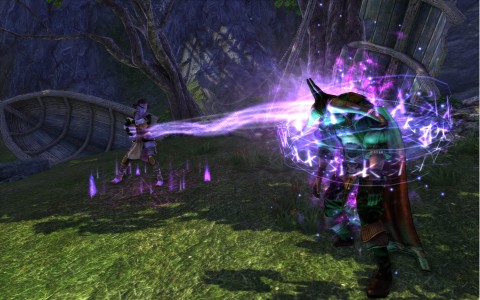
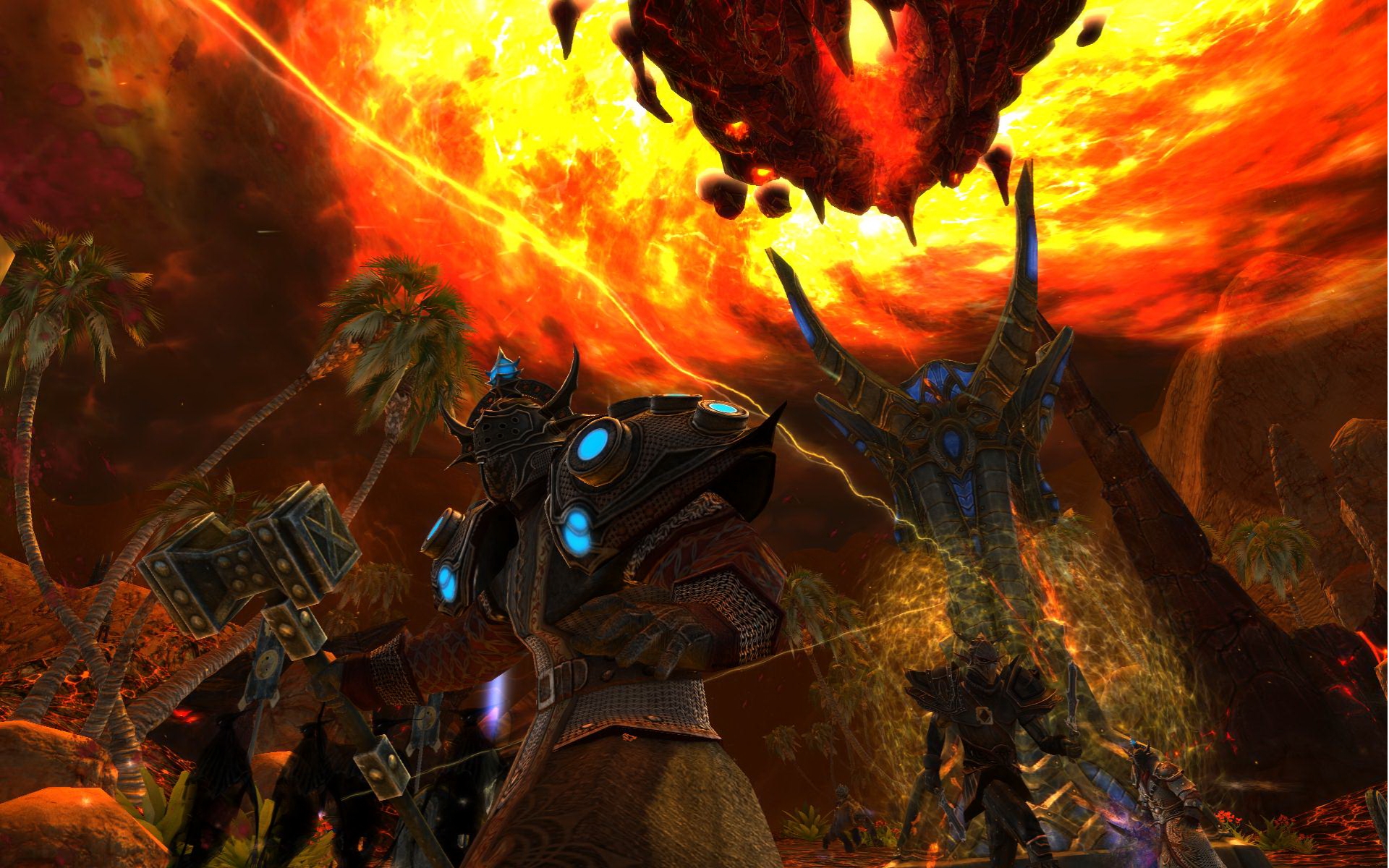
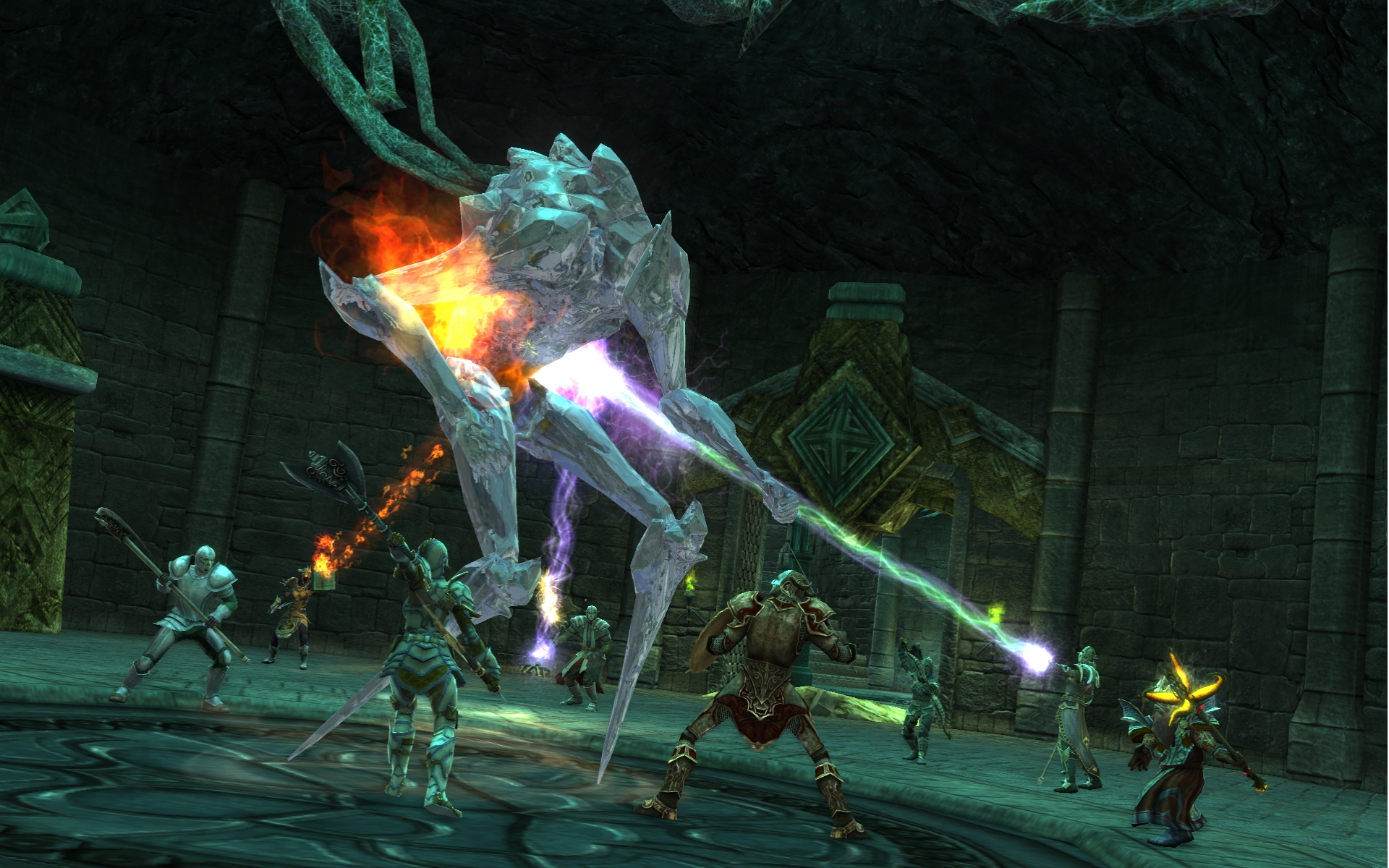
Warner Bros. Interactive Entertainment and Snowblind Studios have announced today that The Lord of the Rings: War in the North will launch in November this year for PlayStation 3, Xbox 360 and Games for Windows PC. This comes as a relief as nothing had been heard regarding its release date, despite it being scheduled loosely for 2011. The game’s Collector’s Edition will also launch in November and features behind-the-scenes looks at the game development, a specially crafted art book, digital download content and more.
The Lord of the Rings: War in the North, rating pending as BBFC 18, transports players to unknown lands, unexplored by the films, as they journey to the Northern lands of Middle-earth. Intertwining the characters and storyline of the novel and films, the game takes place in parallel with the well-known Ring Bearer’s quest, but in the equally harsh and contested lands to the North, as the battle for Middle-earth’s survival rages.
Fantastic News Everyone, The BBC of UK have created a Doctor Who Application that allows you to watch select episodes of the series. However, there is a catch. The catch is that each episode will cost you Facebook credits and that you will only have access to the episode for 48 hours after purchasing, after which, you will have to purchase the episode again if you choose to watch it again.
Presently, the stories are 15 facebook credits each, which equates to about $1.50 US. You can buy Facebook credits through Paypal or Credit Cards.
Be sure to check out the Facebook Page to view these classics of the series.
Coming live to RIFT is 1.4, Legacy of the Fallen. This update brings a tide of Abyssal and the fury of the Aelfwar as their cults cower in fear over the loss of their dragon gods, Akylios and Greenscale.
The event coming with the update brings many new content additions, such as a world spanning quest, a new 10-man raid, and a riftchase that pits players against rifts of both life and water. The looking for group system also becomes enhances as it allows players to search for groups across shards. The game is also gaining the addition of PvP rifts and an alternate warfront mission.
Legacy of the Fallen Summary
– PvP Rifts: More open-world PvP goodness!
– Cross-Shard LFG
– Water Saga: Quest line that lets you earn epic loot and a vicious crocodile mount
– Planar Menace: Stop House Aelfwar and the Abyssal from claiming the Dragon Motes
– Drowned Halls: A new 10-player raid sliver
– Quest Item Keyring: Save space in your inventory with an extra bag to hold your quest items
– New Rare Materials
–New tier of epic materials for each harvesting profession
– New Crafted Item Sets
– Eight new crafted item sets for dungeon and raid players
– Player Crafted Augments
– Apothecaries can salvage planar essences to craft powerful item augments!
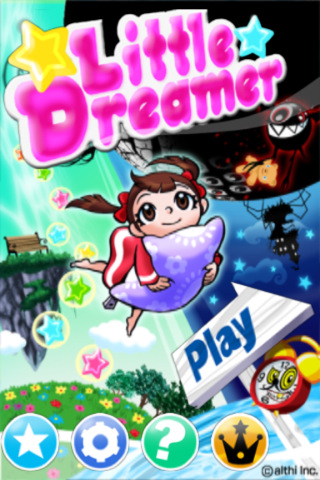
Little Dreamer Developer: Althi Inc. Publisher: Althi Inc. Platform: iPhone (Reviewed), iPad Release: July 28th, 2011 Price: $1.99 (Buy Here)
Overview:
Often a game comes along, full of so much vibrance and life, that one can only wonder; is this from Japan? A large majority of the time, the answer is yes. Little Dreamer is one of these games. It is a vibrant lively game and it is from Japan. But is it only for the Japanese? Does it hold up for Western players?
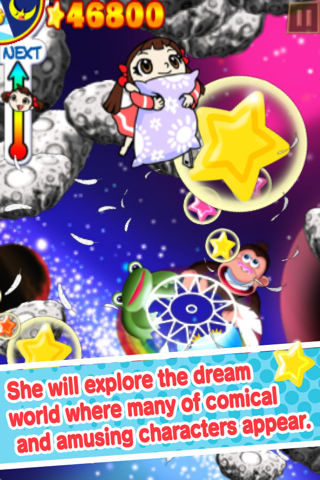
Gameplay: Little Dreamer is a simple game underneath all of the shiny colours and cutesy characters on screen. It is a platforming game in the vein of Doodle Jump or Icy Tower. You have to climb or bounce your way through the world to reach a goal. This is a game type that works perfectly on iOS.
The controls are easy to grasp, taking little time to become second nature. They are perfectly responsive and incredibly simple. You control the entire game with the simple slide of a finger. These are the type of games that should be on the iOS, simple pick up and play games, that don’t require mastering a complex control system that tries to do too much with the touch technology.
This game is simply a master class in what iOS gameplay should be – simple and fun. This is where Little Dreamer ultimately succeeds. It can be played by anyone and anywhere at anytime. That is the essence of iOS gaming.
Storywise, Little Gamer has a story you’d come to expect from the crazy folk in Japan. It tells the tale of a little girl named Amy, whose Teddy Bear is bearnapped by a Demonic Cyclops Bat from the Nightmare Realm. Amy decides to reclaim her Teddy Bear by flying into the world of dreams with her magical pillow. It is a story that doesn’t really matter to the game, but it’s a story full of quirky charm.
Charm is something that this game embodies. It is perhaps the most charming game on the iOS platform and for that alone is worth a look at. The gameplay is also charming in it’s own right and overall is just a game that is fun no matter how many times you pick it up.
Visuals: The graphics are well designed and very cute (or as the japanese say ‘kawaii’). You can tell a great deal of love and care was put into the games design and although it at times can be a little cluttered on screen, it never becomes a problem. Instead it becomes part of the games limitless charm.
In general Althi Inc. have done a great job with the visuals of this game, creating a memorable heroine and appearance of the game overall. For this memorable and visually pleasing imagery, Althi Inc. should be applauded. Not since Angry Birds and Tiny Wings has such a memorable character and world design hit the iOS. It’s simply a huge achievement.
Audio:
The music and sound effects of Little Dreamer are of incredibly high quality for an iOS game. They are well produced and set a perfect mood for the game. Whether it is a peaceful bounce through the dream world or a terrifying dash out of the nightmare world, there is a track waiting to encapsulate the right atmosphere and feel for what it is occuring on screen.
The sound effects are equally as good, with Amy’s gleeful squeals as she soars through the air being easily memorable alongside the Demonic Cyclops Bats dark cackle at Amy’s attempts to reclaim her precious Teddy. It is all so well done, like the visuals. Althi Inc. has invested a great deal of effort into this game and it really shines through brightly through-out the game.
Conclusion:
In closing, Little Dreamer is one of the best games available on the iOS with little to fault it upon. Althi Inc. have done an amazing job here, bringing a very Japanese styled game to Western audiences. I can safely say that Little Dreamer is worth every cent and is indeed a must have for the iOS.
Last week, Nintendo announced half their supreme line-up that will be rewarded to “Nintendo Ambassadors” that purchased the 3DS before the incoming price drop. While no new NES titles have been listed, Nintendo World Report recently got the scoop on two more Game Boy Advance titles that will be made exclusively available as part of the ambassador program.
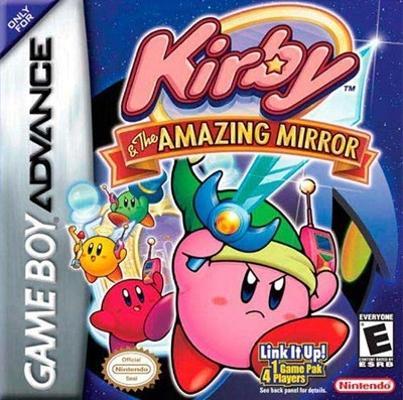
Joining the likes of Mario Kart: Super Circuit, Yoshi’s Island, Metroid Fusion, WarioWare, Inc.: Mega Microgame$, and Mario vs Donkey Kong will be Super Mario Advance 4: Super Mario Bros. 3 and Kirby & the Amazing Mirror. While the date for the GBA portion of the ambassador gifts is still set at an unknown date in 2011, I can easily say that this list is getting sweeter and sweeter. Stay tuned, as once more titles begin to leak out for you 3DS owners, we will be sure to keep you updated.
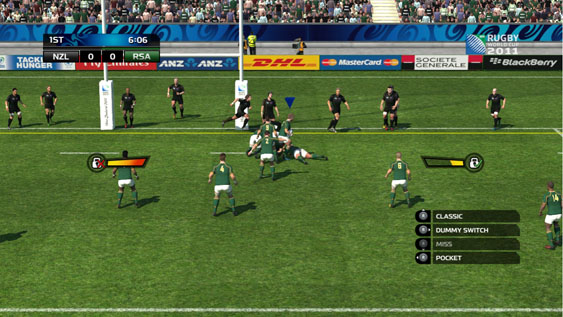
505 Games, curators of the upcoming official tie-in game for this year’s Rugby World Cup, Rugby World Cup 2011, have revealed that the game with feature three separate teams of commentators, accounting for different regions. They have said that the Sky Sports commentators Miles Harrison and Stuart Barnes are joining Philippe Sella and Eric Bayle, and Greg Clark and Sean Fitzpatrick in the pundit line-up who will be doing voice work for the game.
Naturally, Stuart Barnes and Miles Harrison head up the UK team given their familarity with the British. Then, as well as the French partnership of Philippe Sella and Eric Bayle, those in the Southern hemisphere with get a taste of wisdom courtesy of Greg Clark and Sean Fitzpatrick, a respected sports-journalist and ex-All Black respectively.
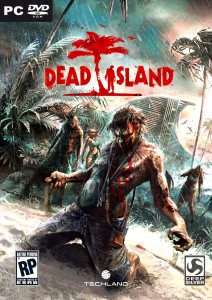
Deep Silver’s upcoming zombie RPG Dead Island has been gathering quite a lot of attention for a brand new IP, largely due to the fantastic backwards teaser trailer released in February. Naturally, I was intrigued as to how the game would play, and if it would feature as strong a focus on the characters and drama as the trailer implies.
Zombie games have been done to (un)death, and individually, most of the features of Dead Island have been done somewhere else before. Being a first-person perspective, it controls like Left 4 Dead. With a focus on melee combat, it plays like Dead Rising. And with open world exploration and character interaction, it even feels a little like Fallout 3.
But combining all these elements together into an RPG is what gives it its own personality.
The most obvious deviance from the zombie genre is the location. A bright, warm, sunny, tropical paradise may seem an odd choice for a survival horror game, but it works really well, both mechanically and narratively. As one of the characters aptly puts it, it’s a fairly heavenly place for hell to break loose.
The fictional island of Banoi is naturally isolated, meaning players probably won’t be dealing with the standard military quarantine storyline. The infection has spread throughout the island, but can’t really go anywhere now. This is all speculation, but it seems like the military has no real reason to go and save people: the island effectively quarantines the infected by itself. So with presumably no rescue coming, and being separated from safety by much more than the usual military-imposed quarantine zone, survival seems hopeless.
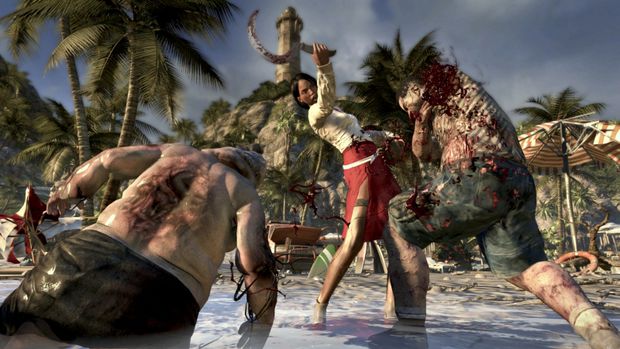
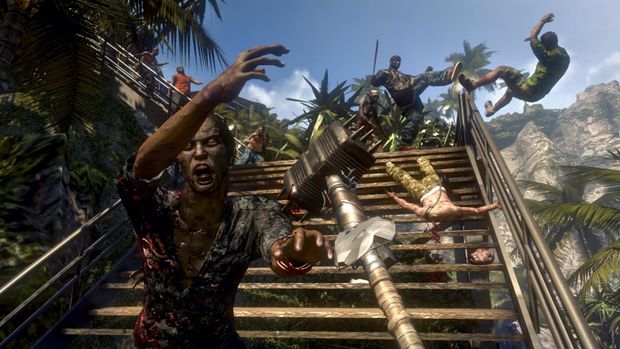
That isolation also serves the gameplay mechanics well. Guns are few in number and ammunition, so the player must rely on whatever will pass as melee weapons. After all, why would a tropical resort, with no prior history of visitor zombification, need firearms?
This melee focus brings combat in nice and close, maintaining a constant tension and urgency – especially when a horde is closing in. Survival feels like a real challenge, which is often lost in games that allow you to stand back and mow through thousands with a machine gun.
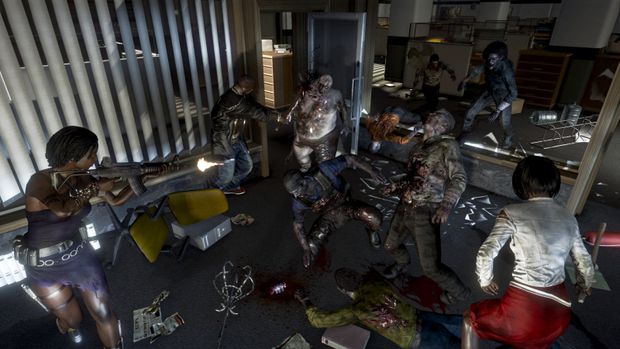
Co-op play has also been announced, and judging from our single player session, my assumption is it will play like a less structured, open world Left 4 Dead. A promising prospect.
In the hour-long preview session we got to play, the game was mostly linear, but this apparently only applies to the first few missions. In that time, the central mechanics and characters are introduced, so tight reigns are held on the player. The freedom to explore the open world begins once the player reaches a Hub location.
Regardless of which character is selected, at the beginning players find themselves waking up in a hotel room with a sense that something is terribly wrong. Stepping out into the abandoned corridor, fears are confirmed as you make your way outside, past bodies and blood, guided by a voice on the radio. After being attacked by a group of people the voice describes as “infected”, you wake up in a lifeguard shack with other survivors, and are soon tasked with finding more permanent shelter.
The developers are highlighting the importance of character development and narrative, but from my limited time with the title, I’m unsure of the extent of this. As far as I could tell, it amounts mostly to some fairly archetypal player characters, who “develop” during the game in terms of their abilities. This is fine for an RPG, but in a narrative sense, the characters don’t seem to matter.
Also unclear is how big an impact the player will have on the narrative. RPGs generally provide alternate methods of completing quests, or give the player key choices that affect how the story pans out. Nothing has been said about this, which leads me to think each quest will be based on a simple success/failure dichotomy.
It’s too early to tell how it will work, but there is definitely room for some interesting narrative devices, if they choose that direction.
Perhaps the worst thing about the characters is the appalling Australian accents. Badly impersonated Australian characters are the bane of every true blue Aussie’s existence, and Dead Island, being set somewhere near Papa New Guinea, has them in spades. Seriously, just hire Australian actors.
The code we tried wasn’t the final version, so a few bugs still presented themselves. Some zombies would slide around on their bellies, or “teleport” slightly, and the lip-syncing during dialogue was way off. Thankfully it’s nothing that couldn’t be fixed before the release date, and nothing game-breaking if it got through anyway. Although the guy playing next to me swears he was on the island from Lost: after walking down a little jetty, he turned around to find that the island had completely vanished behind him.
I’m still not completely sold on the hype surrounding the game, but it definitely looks like an interesting take on the tired zombie genre. The melee focus and unique setting will help it define itself as something different. It may not be as groundbreaking as they want you to think, but it still looks to be very enjoyable nonetheless. Check it out when it lands in September.
Over the years, Chillingo have been the top dog of the mobile market, publishing some of the most successful games on the platform. Chillingo are now headed to the hive with Pollen Count, a game where the player must control bees and safely lead them to their destination while collecting pollen from flowers. We have seen similar titles released in the past with this formula, but Pollen Count offers a bit more chaos to add in an extra challenge for the player. How does this bee directing game live up to Chillingo’s heavy hitters of the past? Here is my review for Pollen Count for the iPhone.
Gameplay
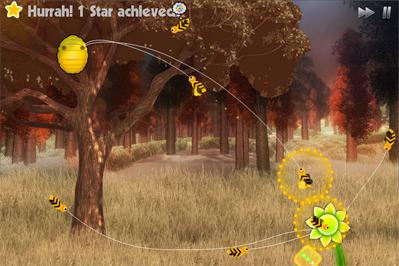
Picture yourself in a scenic field, with the grass blowing back and forth. A small bee who lacks map skills then flies into the picture, on a mission to gather pollen for his hive. That is the main concept of Pollen Count, as you now must trace this bee a path to travel which will take him to a flower. After he has filled his load, you then must trace a line to direct him to a hive at the top of the screen. Sound overly simple? That is where you would be wrong as there is a ton of strategy involved that can lead to both glee and sheer frustration.
As you progress in a level, more bees enter the picture, where you then must direct them to different flowers by tracing each an individual path. If two bees happen to collide on their journey, the game quickly ends and the player must restart the game. Due to the scarce amount of flowers, the player must constantly make sure each bee is quickly escorted to the nearest hive or bee house to keep up with the pace of the randoms that fly in. The more bees that are safely escorted, the more stars that are awarded at the end of each level.
This formula is used throughout the game, but new gameplay techniques are added throughout to mix it up a bit. Some bees will only land on certain flowers, which means the player must keep that in mind while directing traffic. Other bees are much faster and require quick action to get them to their appropriate destination. I found things in a short time to get quite chaotic, but if the traffic control of our insect friends isn’t enough for you, obstacles soon enter the picture to up the challenge even more.
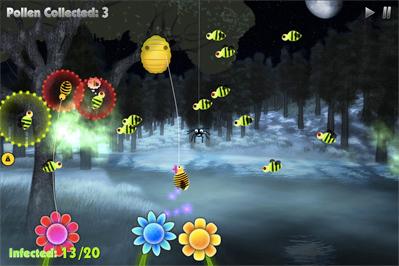
Spiders that rob your swarm of pollen, zombees that infect bees at a touch, and even hungry birds start to come into the picture just a few levels in, which is where the difficulty curve takes a turn into the tedious. I admit that Pollen Count has some addictive and rather simple gameplay for the most part, but having around 15-20 bees on the screen that can all kill eachother at a touch mixed with these extra dangers can lead to the whole game feeling cluttered and frustrating. It’s not like these tasks are impossible, but I just found all of these events happening at once to be a bit too much for the iPhone’s smaller screen.
Those who are competitive are in luck however, as an online leaderboard has been added in so players can try to aim to tackle a high score. Other modes can also be unlocked which involve a 3D racing experience of sorts and a survival mode that boasts a ton of “zombees” that are out to infect. While both modes are rather small, each offer a nice incentive to progress throughout the 22 levels within the main game.
Graphics/Audio
The finest feature of Pollen Count are the beautiful and realistic backdrops that can be seen within each level. As all of the action is happening with your cartoon bees in the foreground, this peaceful and fully animated atmosphere remains a visual delight with several different locations displayed throughout the game. I also must say I didn’t notice any slowdown or framerate problems whatsoever, and with all the chaos that can ensue at once, it was a pleasant surprise to see Pollen Count never miss a beat with it’s animation-heavy gameplay style.
The music is also a top notch production within this game as well, as each melody perfectly blends with the backdrop to give off a relaxing feel, which makes this casual title stand miles above many of it’s contenders in the market on presentation value alone. There is a lot of buzzing in the game which can be nerve-wrecking during hectic situations, but considering this title revolves around bees, most shouldn’t mind this given the concept of the game.
Overall
Pollen Count has an addictive traffic-directing formula with a solid gameplay engine in tow that can lead to hours of fun. While I enjoyed the overall experience, I can say that it felt that Pollen Count’s casual appearance is just that of looks alone and the sudden difficulty curve after just a handful of levels is sure to scare off those who are looking for a more pick-up-and-play title. Either way, with a unique layer of strategy buried within and a stunning presentation, Pollen Count is sure to serve anyone well who are looking for a unique and chaotic challenge where the rewards are as sweet as honey.
Genre: Period Drama Director: Kenji Mizoguchi Featuring: Chojuro Kawarasaki, Yoshizaburo Arashi, Utaemon Ichikawa Running Time: 241 minutes Available for purchase at:Madman Online Store ($34.95)
Overview
Truth be told, I’m not a major fan of period dramas, or what the Japanese call jidaigeki. Most have clichéd storylines, overused cinematography, and barely any historical validity to justify their place in a “period” of any sort.
Kenji Mizoguchi’s The Loyal 47 Ronin (otherwise known as The 47 Ronin) is, at heart, a period drama; however, there are several aspects of it that shine out as something more. It’s impossible to pin down exactly what about this film captures the heart – perhaps it’s the silent film era-esque movements, the powerful yet minimalist soundtrack, or the beautiful acting – but in this 1941-2 jidaigeki, there is something far deeper than just a period drama.
Plot
The narrative begins in the Shogun’s court, where Lord Asano attempts to murder Lord Kira. His attempt fails, however, and Lord Kira is ordered to commit harakiri (also known as seppuku, where the samurai commits suicide by slicing their stomach). As a result, his team of samurai are rendered masterless and become ronin. One of the samurai, Kuranosake Oishi, cannot let the death of his master rest in peace; together, he and a group of ronin plot to avenge Lord Kira’s death and kill Asano.
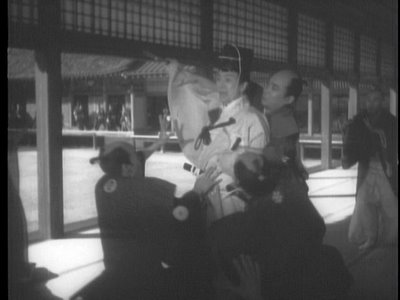
The murder attempt that started it all.
The film is divided into two parts, with the first originally released in 1941 and the second in 1942. Based on a true story – you can actually visit the graves of the 47 ronin in Japan –, The Loyal 47 Ronin tells a tale of honor and sacrifice that is poignant on more than one level. While the story may not be the most unique, the way Mizoguchi executed it ensures it is told in the most powerful manner it can be. The film does move quite slowly – think of it as a very old Harry Potter and the Deathly Hallows Part 1 & 2 where the first part is more of a background/build-up and the second part houses the majority of the narrative movement in the film. However, the slow movement allows us as viewers to gaze at the beauty of the movements and of the scenery within the film. It may not be everyone’s cup of tea but the plot is executed in a manner that best suits the rest of the film’s stylistic elements, and I believe Mizoguchi pulled it off splendidly.
Characters
If it has one, the film’s main character would have to be Kuranosake Oishi, the leader of the ronin. Kuranosake reflects a certain love and loyalty towards his late master that most would envy, but also has a part of him that is so innately human – unlike so many other fictional characters. Kuranosake is perhaps one of the most well-rounded characters I have ever come across in a film, and one of the most touching to watch. Chojuro Kawarasaki delivers a striking performance and captures the character so well it is almost as though he is the ronin, which is a difficult feat considering the history he has to live up to.
What a majority of the film looks like: groups of men running around.
However, aside from Kuranosake, The Loyal 47 Ronin makes its protagonist a collective, which can be found in the group of ronin. The two masters, Lord Kira and Lord Asano, are merely catalysts for the tale and feature very little in the film (but by very little, I do mean at least ten minutes each). The group of ronin do share traits that make them worthy of being in the film though; largely they reflect the tales of persistence, loyalty, love and honor that are communicated through Kuranosake and the narrative. Each of the actors does a great job at conveying their love for their master and their desire for revenge, and although they can be a tad overdramatic at times, the ronin made a very solid performance as a team. With that being said, the overdramatic movements and reactions of the ronin do genuinely contribute to the silent film-esque aspect of the film, with its exaggerated gestures and largely visual tale.
Audio/Visual
And speaking of visuals, what a film this is for black and white cinematography. In the old days before talkies came along, filmmakers had to rely on large movements and expressive facials and body language. Even though The Loyal 47 Ronin is a talkie, it takes elements from the silent era to make the most of the image on the screen. The characters move with a definitive fluidity to them, and navigate around the sets as though they actually inhabit those spaces in real life; in saying that, Mizoguchi commands all the characters to have a strong presence on camera through their exaggerated collapsing, or exaggerated emotional trauma.
Mizoguchi also found a wonderful backdrop to accompany the great character movements, and the film is layered with great contrast as well as stunning props. It’s true that in The Loyal 47 Ronin, each shot tells a story – combine the indoor-outdoor balance of the samurai’s living quarters with the picturesque trees around the location, and the story is indeed a pretty one.
Beautiful visual backdrops are littered throughout the film.
The audio, on the other hand, is worlds away from the overdramatic movements and high contrast of the visual aspects. Mizoguchi made the right decision in not overwhelming the audience, and The Loyal 47 Ronin features a soundtrack that leans towards the more minimalist in films. The soundtrack is subtle (with plenty of string instruments) and only comes in when absolutely necessary, which ensures viewers spend more time looking than they do looking and listening.
Of course, since the film was made back in the 1940s, audio quality is not of the highest standard; however, I watched the entire film with subtitles anyway (as a large majority of viewers will). Often, the speech sounds like a bit of mumbling rather than coherent sentences, but the audio is unfixable and we have to make do with what we’ve got.
DVD Extras
The DVD contains an audio commentary by Dr Adrian Martin, the Senior Research Fellow in Film and Television Studies at Monash University. While audio commentary is great, three hours is too much to sit through again – even if the film is visually and narratively wonderful. Additionally, I was very disappointed this film didn’t include a booklet with some historical background on the real forty-seven ronin tale in Japan. All in all, the special features are nothing to get excited about, but it’s nice to have if you feel compelled to watch the film again with an Australian voiceover.
Final Comments
The Loyal 47 Ronin is a beautiful piece of Japanese black and white cinema that really doesn’t get the attention it deserves. With a great set of characters, wonderful cinematography, and a narrative that is touching (although slightly clichéd), Kenji Mizoguchi really couldn’t go wrong with this one. Even if you don’t really like period dramas, it’s most definitely worth giving this jidaigeki a go.