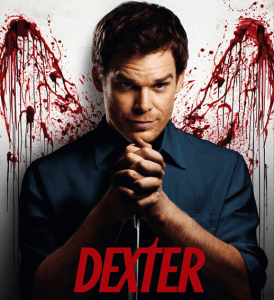
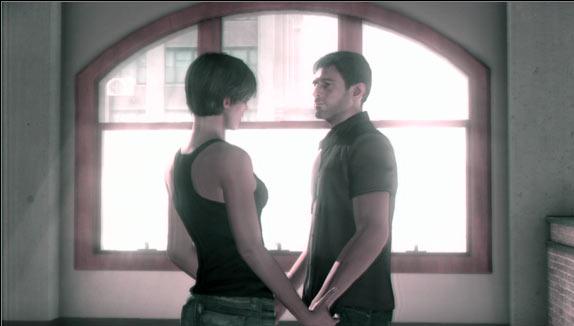
Showtime has released a trailer via their Youtube Chanel, revealing a variety of new friends and foes that our favorite vigilante serial killer will encounter in Dexter season 6. The video includes various scenes from upcoming episodes as well as revealing some vital plot points for the first time. Among these include footage of hip-hop MC turned actor Mos Def as Brother Sam, Colin Hanks and Edward James as Travis Marshall and Professor Gellar who are this seasons’ main antagonists, Aimee Garcia as Angel’s little sister Jamie Batista, and Billy Brown as a new addition to the Miami Homicide Department, Mike Anderson who’s personality appears to be quite a lot like James Doakes from the first two seasons.
Amongst all the vital information revealed, two really important things are told: fruit roll-ups make Harrison fart, and I could be mistaken but I believe one scene depicts Aimee saying she had entered the room with the intention of giving Debra a ‘goodnight kiss’? Fingers crossed on that one! Season six is set to premiere on Sundays starting October 2 at 9PM eastern standard time on Showtime.
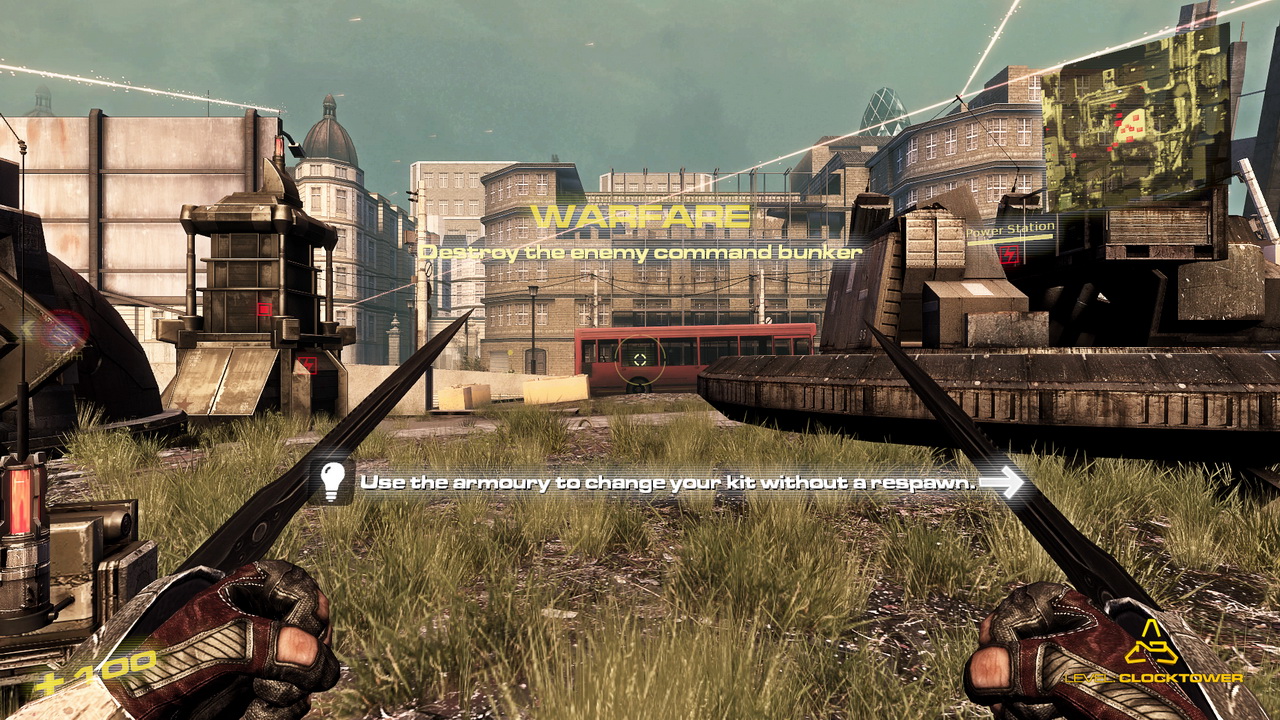
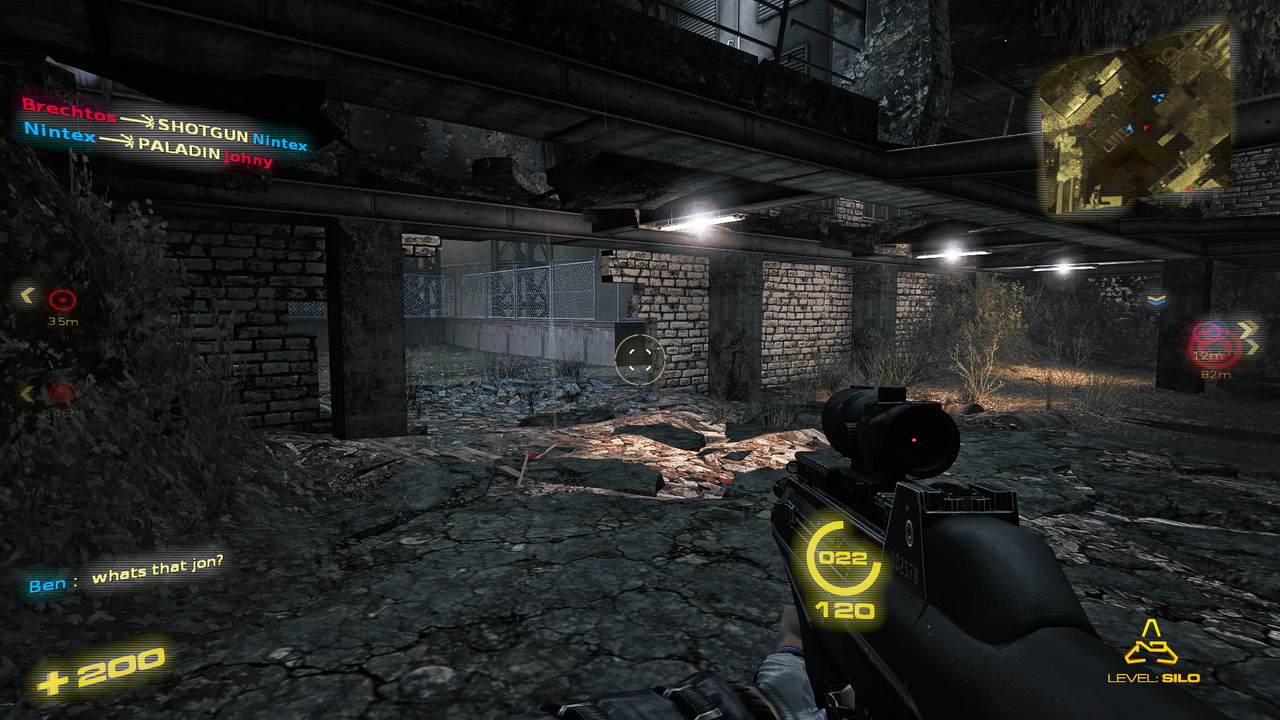
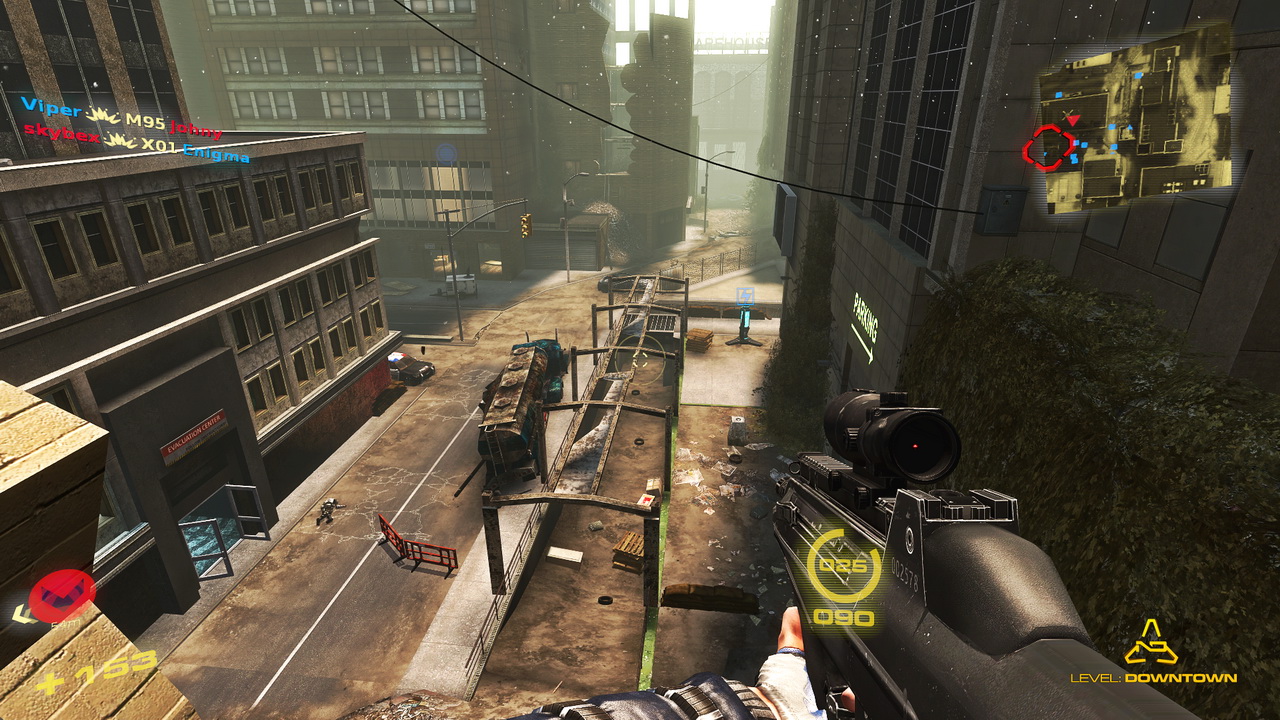
Nuclear Dawn rapidly approaches it’s long awaited release, and the Beta (my impressions of which are covered here) is looking and playing more and more like the kind of startlingly original game fans envisioned at the projects birth. With this in mind, I thought that it was perfect time to ask the lovely developers at InterWave Studios some questions, while they still have some free time, and before they’re too rich and famous to be bothered with small-time journalists like myself. Here’s what they had to say;
Capsule: Nuclear Dawn is the first commercial game from your studio, before which you created two of my favourite Source mods; “Insurgency” and “Stargate: The Last Stand”, at which point you weren’t actually a studio, so much as a talented bunch of guys from the Half Life 2 community. When did game development really transform from a hobby into a living for you guys?
InterWave: Right after Stargate: The Last Stand, we started working on a bigger, more involved project, which at the time we were calling Distant Hope. Soon after that, we had the chance to take over the Nuclear Dawn project, which was even more ambitious and involved. At that point, we had no choice: the only way to do such a project justice, to any kind of decent production standards, was to go commercial, and get to work on it full time, full steam, no reservations.
Capsule: One of the most important things for any group of people developing a Source mod is to maintain a steady dialogue with the community, and you seem to have preserved that sacred channel well during your transition to commercial studio. Specifically with Nuclear Dawn, how did this dialogue affect decisions in the game’s development?
InterWave: Coming from the community, we had a fair idea of what was expected of a Source commercial title, and we made sure we structured the game around those expectations from the very start: we have real servers, with an actual server browser, we cooperated with major admin scripting packages to provide support from the very first day of the beta, and we are going to deliver a full SDK for people to develop their very own variations of maps and gameplay.
As for the actual game experience, we have been in a constant feedback loop with select community members since the very first days of Beta, and we are going to make sure that the game keeps evolving, hoping to match the flexibility and success of games like TF2, which remained great because they kept providing fresh gameplay and content, and still do to this very day.
Capsule: Nuclear Dawn’s familiarity is a big part of the game’s charm. Everyone on PC is familiar with Class-Based First Person Shooters, Real-Time-Strategy games, and the post-nuclear war setting, and Nuclear Dawn manages to combine them in ways that are refreshingly original and extremely elegant, but yet nobody else has done it before. What inspired you to take the risk and create something so totally outside-of-the-box?
InterWave: The genesis of Nuclear Dawn could never have happened in a boardroom. It started as a discussion between friends who wanted to do something different, something good. It continued as a project that we all had too much passion to abandon, even when very, very authoritative sources suggested that we remove the whole RTS part because the shooter was ‘already fun enough’. Instead we went back, delayed release, and kept working on it.
Had we sat down with investors and experts before starting on ND, every single voice would have tried to dissuade us, and they would have all been sweet voices of reason. We did not do a risk assessment of a feasibility study – we just set off to make the game that we all felt we wanted to play, with all those cool things we were missing from our favourite titles, and to be honest, we would not have it any other way.
Capsule: Nuclear Dawn started (as you yourselves described it) as an “all-but-deceased concept”, which was then resurrected and grown into something truly great. How much fundamentally has Nuclear Dawn changed from that original concept?
InterWave: The core idea of a game where FPS players would interact with an RTS commander has remained. Some of the weapons we kept, as a homage and for nostalgia, such as that amazing MP-500 with a circular magazine, and the Hydra grenade launcher. Some of the original class type descriptions remain.
Just about everything else is Interwave: most of the back story was slimmed and rewritten to be more easily absorbed by casual players, the entire tech base for the two factions, the player concepts, every in-game asset (other than the aforementioned weapons, which were remastered to bring them up to par with the rest of the in-game weapons), and the whole gameplay paradigm.
We kept the name and the spirit of the game, and we respect and admire the original mod developers for the inspiration they provided us with, but Nuclear Dawn the game is very much our love child, from start to end.
Capsule: The Source engine is rather notorious for the hassle and shortcomings associated with developing on it, particularly from an art and mapping perspective. To quote the developer of Dear Esther, another amazing looking Source-based title; “Making environments like this in Source is like trying to paint with a chainsaw”. Did this create any particular challenges during the games development?
InterWave: You would be surprised just how much fun a chainsaw can be, once you get used to it.
There is no point pretending that the Source engine can compete with the new kids on the block when it comes to things like real time lighting and DX11 shaders, so we are not going to try.
However, Source is a stable and mature platform that delivers the tools to realize just about any game to a medium-sized team. It may lack some of the shinier texture rendering features of other engines, but that was a challenge for our artists to consider a new direction to take, and work with diffuse mapping in ways that would have made them previously cringe, for results which are, to our eyes at least, more than up to par with market expectations.
Some of the more torturous limitations that the engine imposes have made us grow tremendously as a team, and at the end of the day, we feel that ND is only the better for it. For an engine produced by a game company that does not make licensing game engines its core business, Source is accessible, and open to feedback and feature requests, which is more than can be said for other competing products that are developed by monolithic, faceless corporations.
Capsule: What’s your favourite class in the game? 😉
InterWave: Don’t start. We all have our favourites, and that made all classes more interesting, as each of us fought for more features and powers in our darlings. Can you even believe we have people who actually CHOOSE to play Medic? It’s a crazy world, I know.
Capsule: What advice would you offer to people who want to create games on the Source engine, or indeed any engine for that matter?
InterWave: Stop thinking you’re using the Source engine. That has nothing to do with your game. Choose your engine based on which piece of software will make your game easier, because your game is all that matters. If you have the drive to succeed, you’ll realize that a good game does not really need a special, specific or high tech engine.
I have seen mind-blowing games developed in Flash, and endless piles of drivel made with the Unreal Engine. Your game is what matters, make it with whatever works best for you. For us, with our community history and ties with Valve, that was Source.
Capsule: Where do you guys plan to go next, after Nuclear Dawn is finished and out the door?
Interwave: Well, there’s more Nuclear Dawn to come, as we patch up the release version with the two major updates we announced. Those are going to bring the game up to the level of what we originally wanted to develop, but could not because of time limitations.
After those two updates are complete, we’ll continue supporting ND, while we focus on our next project, which will be something smaller, more accessible, with a less insane production schedule.
We here at Capsule Computers would like to thank Interwave for thier time and insightful answers, and wish them the best of luck with Nuclear Dawn!
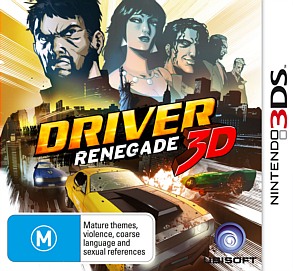
Driver Renegade 3D Developer: Ubisoft Publisher: Ubisoft Platform: Nintendo 3DS (reviewed) Release Date: August 30, 2011 Price: $39.99 (Available HERE)
PREMISE
When taking a close look a crime-styled sandbox games, every title that ISN’T Grand Theft Auto has one heck of a reputation and standard to live up to. The surge in popularity of Sandbox games stands as a testament to both their design and appeal. However, the Driver game series has also devoted itself to the crime-style sandbox genre almost as long as mainstream GTA titles. As the name implies, the series has long been known for focusing on the vehicle and driving aspects of city-sandbox gameplay.
Driver Renegade 3D is the latest addition to the series, at least in terms of the handheld market. The game was released on the 3DS in conjunction with the releases of Driver: San Francisco on the Xbox 360, Playstation 3 and Wii, so that the love may be spread around for the handheld market just as much as it was on the console systems. It should be noted that, although both titles feature the same lead character and a few similar gameplay elements, the two are completely different games. And typically, whenever a multi-platform release is concerned, most gamers tend to think that the Nintendo based, or handheld releases don’t live up to the standard of their ‘hardcore’ console counterparts. So does Driver Renegade 3D stack up against the rest?
STORY / CAMPAIGN
Driver Renegade takes place contextually as a prequel to many of the other driver games. The story takes place in New York in the time frame between the events of Driver 1 and 2. Following the events of the first Driver game, the protagonist of the story: John Tanner, has quit his former gig as an NYPD officer due to his resentment of formal procedure and seeing justice rarely done in a New York city where criminals rule the streets. During a job interview for a private security firm, Tanner witnesses a small group of criminals beat a nearby group of people senseless and kidnap an apparent VIP. For whatever the reason, Tanner quickly gives chase in his car. After catching up with the kidnapper and forcing him out of his car, Tanner makes a quick rescue of the VIP, who reveals himself to be a government senator who shares a very similar view of the justice system. After seeing Tanner in action, the Senator offers Tanner a job to take down the city’s crime lords with unlimited authority and no restrictions, such as those of the NYPD. In other words the senator makes him a Renegade protected by the law. The storyline of the game involves 20 driving missions where the players unravel the web of corruption that has been spun over the city by investigating and subsequently eliminating the major sources of crime in the city.
As far as the story element of the game is concerned, it barely holds itself together in terms of player appeal. It’s a story that has been told a thousand times before. Just from playing through the first 5 missions, everything feels unoriginal and the cinematics are where everything advances, rather than in the game itself. Ultimately, it’s simply a story about a protagonist with a deep seeded loathing of authority, but through his own mistaken actions he learns that his form of justice is wrong, that he must learn patience, endure life’s hardships, and bring balance to the Force blah blah blah. We’ve heard it a million times before. The characters are largely forgettable and uninspiring, and the ending plot twist, (which seems to be a mandatory feature of sandbox games these days), was extremely weak. Not weak in that it shocks the audience, but because ANYONE could see it coming. The major villains of the game is made all too obvious, simply by way of visual design and voice. When it comes down to a true measure of quality, player’s want to feel like they’re part of the story. And this game really did not deliver on that.
It felt like the whole time the story was being just lectured to us through cinematics, and that gameplay only existed solely for the purpose of breaking it up. It was also horrendously short. I know many games have a problem with limited longevity and play time, but this game is easily completable within the first 2 hours of play. Additionally, the story of the game did not endear Tanner to me as an important or relatable character by virtue of his constant “I want to rebel against everything” attitude. This did not work in the game’s favour, because Tanner acts as the players window into the universe. If the protagonist is poorly developed, then chances are players will see the rest of the game through such a filter.
GAMEPLAY
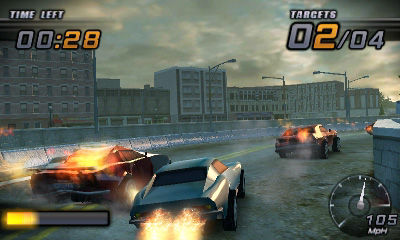
The primary gameplay elements of Driver Renegade are broken up into a series of missions that each involve the same gameplay controls, but feature differing objectives for completion. Many of the missions will typically involve some form of carrying out wanton destruction either on the environment, or on enemy vehicles. Some of the game modes include Rampage, where the player must defeat a prerequisite number of enemy vehicles, Chase, where the player must tail a target vehicle to a specific location while trying to stay alive, and Escape, which is essentially a reverse of the Chase type mission, where the player must avoid enemy vehicles and make it to an escape point.
It must be said immediately, that regardless of which mission type you’re playing, the whole experience feels very much the same. Regardless of your mission type, players will find themselves making the same actions over and over again. Smash things to gain RAGE energy, use RAGE to smash enemy cars. Enemy cars respawn. Smash more stuff, etc. The whole thing feels highly repetitive, and severely lacks variety when it comes to what you will see happening in actually gameplay. In fact, I can only think of 1 mission where Tanner has to avoid the police WITHOUT destroying them, where the mission felt honestly different, and it was the only one where I felt the game was truly trying to mix things up. But no, immediately after, it returns to the repetitive pattern.
In actually playing the game, the controls are thankfully quite simple. Anyone who has played a racing or vehicle based game before in the past will find the controls familiar territory. The directional pad or stick is used to steer, and different buttons are assigned to the accelerate, brake, handbrake and nitro (rage) functions. Players are able to build up rage by causing acts of destruction on enemy vehicles, or on the environment itself. After the player has either smashed up enough cars, or run over enough fences and streetlights, the player can enact the Rage boost, which acts a nitro function, providing a more rapid rate of acceleration, fast top speed, and most importantly, greater damage potential. To this day, I still find other cars in vehicle based games make excellent substitutes for brakes when in high speed pursuits.
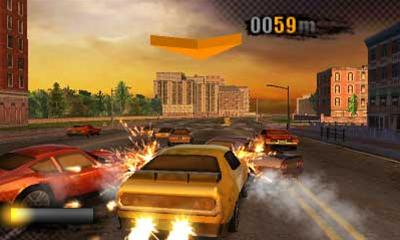
Damaging other cars is a relatively simple affair, achieved in one of 2 ways: firstly, using nitrous (rage) to ram enemies head on, or by using the L and R buttons to jolt left and right, thus bumping enemy vehicles into obstacles, each other, or even oncoming traffic. In theory, this is actually a solid premise for vehicle based combat, especially in a game that has totally omitted guns from the formula. However, the physics and damage taking aspects of the game are strangely unbalanced. A player could ram an enemy vehicle head on, but it will fail to take damage unless the player had the rage bar activated. Or a player could ram a car into a building that would undoubtedly destroy it, only to see it bump off with a minimal scratch. Attacking enemy cars is still fun, but it really felt like it was always coming down to a matter of luck when it came to destroying them. Additionally, after destroying an enemy, most will quickly respawn right behind you, adding a sense of futility to the combat.
Besides story mode, the game also features a Career mode gametype, which essentially provides the player with more of the same types of missions they would have experienced in the Story mode. With one exception. ACTUAL RACING. That’s right, the vehicle based game finally pulled out some racing. Was the Career mode any better? No. In fact, as repetitive and homogenous as the gameplay featured in story mode was, the career mode found a way to make it seem even monotonous by providing 12 almost identical missions of each mission type. Each time, the only thing that changes is the course of area in which the mission takes place. The race missions are far too easy, regardless of whether or not you’re playing on “easy” or “hard” mode. It honestly felt lacking in challenge, and additionally, in potential rewards.
The rewards system of the game is also slightly flawed. While it is cool to be able to unlock a large variety of vehicles for use in career mode (especially the military vehicles), the game’s lack of multiplayer functions limit the appeal of being able to unlock additional, better or upgraded vehicles. The lack of a competitive feature beyond leaderboards severely limits the longevity appeal of the game, racing and general vehicle use is a type of game that tends to appeal towards multiplayer markets. The insertion of such a mode would have provided greater intrinsic value for the players to show off their car collection and provide an incentive to finish the entire career mode.
VISUAL / AUDIO
The visual aspect of the game did clearly make an attempt to integrate the 3D element of the consoles 3D capabilities. However, the graphical quality is very poor. The modelling of the environments and the vehicles themselves are highly simplistic, and hold a standard of graphics that look to have arrived 5 years too late. The game is clearly attempting to appeal to the wrong aspect of the 3DS’s powerful graphics capabilities. Rather than utilising the graphics focus on the 3D, it should have been better focused on the base visual design. It feels like the whole gameplay visual style was done as a rush job. Additionally, during gameplay, for a game that claims to encompass New York city, one of the biggest, most lively cities in the world, there is a severe lack of people. The whole in-game experience feels empty. The entire city feels like a ghost town with only a small handful of NPC vehicles driving slowly and existing only as a physical impediment to the player.
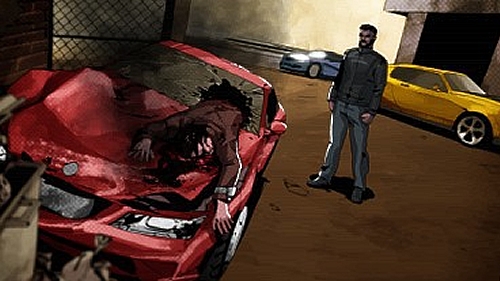
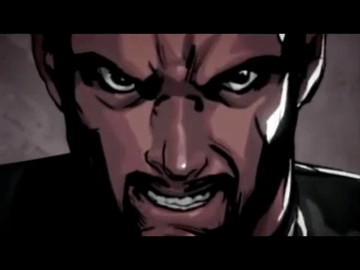
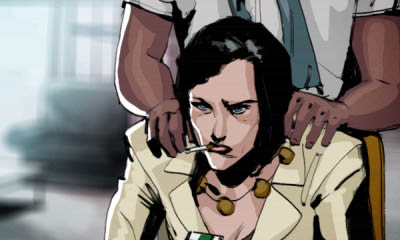
To the game’s credit, I actually did enjoy the comic book style of graphics that the cinematics of the story took, but there’s no doubt that many of the visuals shown were extensively reused. The profile shot of Tanner himself is re-used numerous times, either the whole face or just his eyes. Get used to seeing it, because you’ll have to see it ALOT throughout the campaign.
The voice acting of the game is laughable and forgetful. Not only that, it’s also annoying. All of the recurring characters’ voices are scripted to sound as clichéd as possible. I don’t know whether or not that was intentional, but the constant repetition of a certain snake-like voice might as well scream “BY THE WAY, I AM THE VILLIAN.” But Tanner is the worst offender by far. Every snarky line he has in both the cinematics and the gameplay make him sound like an egotistical wannabe badass. Get used to hearing things like “NOW YOU MADE ME MAD!”, “Aw, I was just starting to have fun”, and “The more the merrier!”. Over and over again. At least 3 times a mission. Each. While this is the fault of the scripting and not the voice actor himself, Tanner’s one-liners only succeeded in making him all the more unrelatable, thereby closing the player’s window to the world further. Toning down the cockiness and instilling a sense of limitation to a man feeling limited in the world may have better supplemented his character, and thus, the eyes in which the players see the world through.
The one area I felt the game did do well in terms of audio was music selection. The combination of Rock and Funk genres to the game helped instil a subconscious sense of speed and danger. Regardless of the visual, if the soundtrack is appropriate, the audience will respond in an appropriate fashion. As a result, many players will feel that many missions will build in intensity as the soundtracks progress and build up to a suspenseful riff. The music selection also fits very well with the genre, especially in relation to the vehicle centralised focus of the game.
CONCLUSIONS
In my opinion, the game really does not live up to the expectations that one would expect from a sandbox genre game. It features no free-roaming segments, the story unoriginal and the gameplay repetitive. The game clearly had quite a bit of potential to really appeal in the handheld market, but like so many other titles have done in the past, I feel that this game has been dragged down by the weight of its console counterparts. Unfortunately, as a multiplatform release, it falls directly into that hole in which the handheld version feels inferior in quality. It feels like the whole experience was made as a rush job to supplement the release of Driver San Francisco. With a little more time given to especially gameplay, this could have been a much stronger contender. For fans of the Driver series, it is at least worth a look to get the untold story of Tanner prior to the events of Driver 2, but to most, this game really will not hold a great deal of appeal.
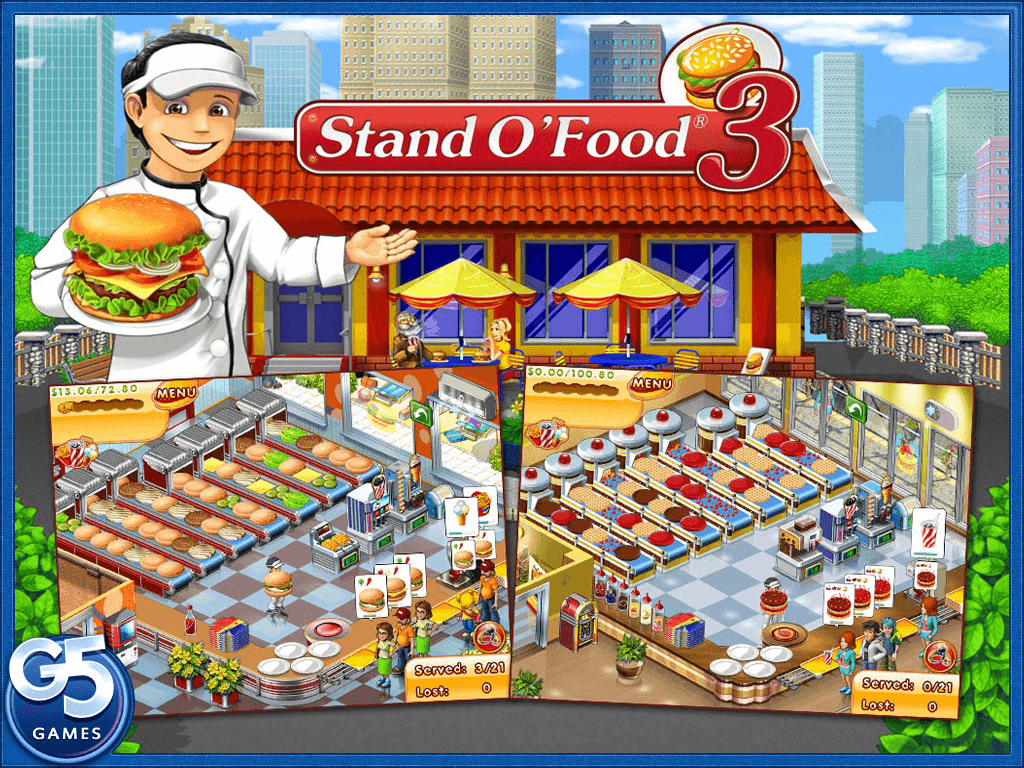
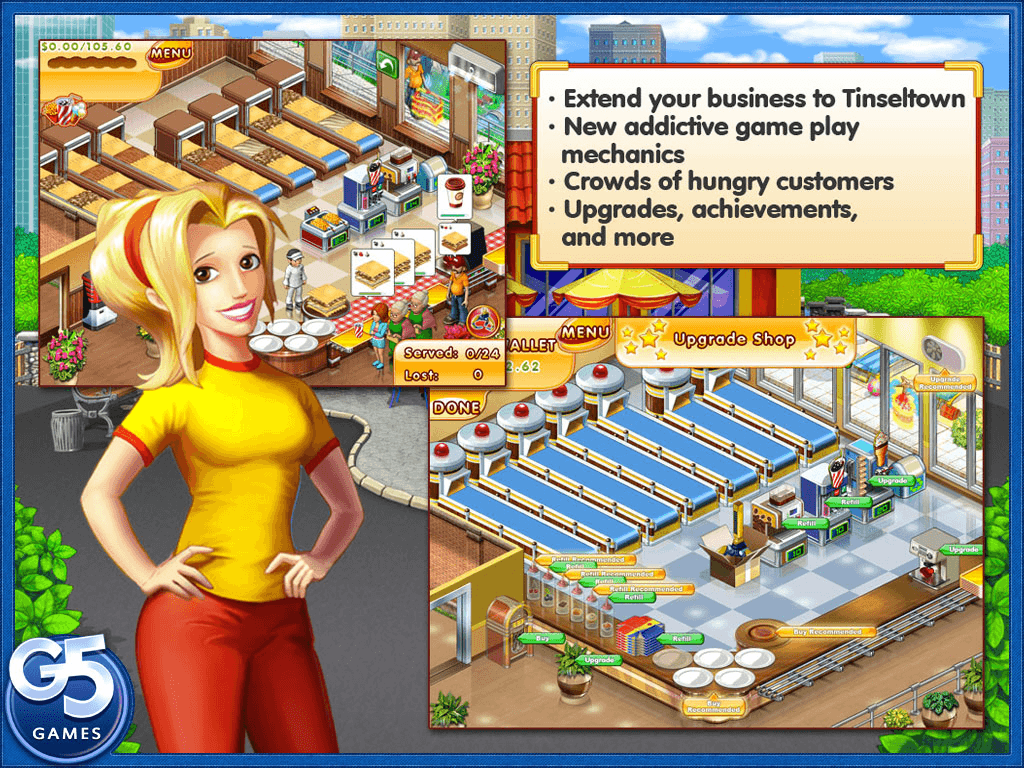
G5 Entertainment are bringing another casual game to the iPhone and Android markets, with Stand O’ Food 3, based on their PC and Mac version. It continues the storyline of Ronnie, fast food genius, as he extends his empire to Tinseltown.
The game has you running round to multiple conveyor belts, piling on ingredients in the correct order to make the perfect burgers, and now, lasagnas, cakes, and more. Upgrade your shop to cater for the demand, with better equipment, jukeboxes, and of course, extra plates! Spread your chain across the city, and let out the fast-food mogul inside!
Coming to iPhone, iPod Touch and iPad and Android September 15, 2011.
Hey there folks! So August has finished up, and we’re now into September! And seeing as how Father’s Day has pretty much rolled around for everyone (at some point or another), but recently for Australia, I thought it would be a good opportunity to base my monthly top 10 list on gaming’s top 10 dads! And so here you have it:
THE TOP 10 GAMING FATHERS!
10: King Krichevskoy from Disgaea
The father of the Protagonist of the first Disgaea, King Krichevskoy reigned for a very long time as a well loved and well respected Overlord of the Netherworld. Until his untimely demise at the hands of a steamed dumpling. According to his son Laharl however, the late king was a fool of a man, although he does appreciate the lessons that he taught him as the Prince who would one day have to rise up in his stead. However, the King’s ultimate fate falls increasingly into question, especially when Vyers (from my top 10 mini-bosses list) is involved. Now, regardless of Laharl’s own biases against him, King Krichevskoy was pictured as a good father, having to raise his son on his own after the death of his human wife, Laharl’s mother. A single parent running an empire? Probably not the easiest of gigs. That said, his “death” may have provided a much needed reprieve in which Laharl could later ascend to claim the Overlord’s title.
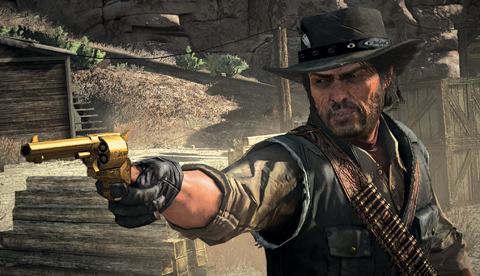
9: John Marston from Red Dead Redemption
OK, so maybe he isn’t exactly the image of what you would call a role model. Or even that great of a human being for that matter. But despite many days of fighting in shoot-outs, tying ladies to railroad tracks, lassoing hapless bandits and even fighting off a horde of unread, John Marston clearly places himself as a family man who will do anything for his wife and child. And that means ANYTHING. I think most gamers would give him a ‘A’ for effort and intention, but a definite E in moral execution of said effort. So it should average out to a C. So yeah, not bad.
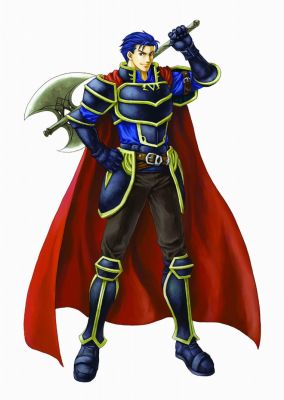
8: Hector from Fire Emblem: Blazing Sword and Sword of Seals
Fire Emblem is a series in which we often see successive games use the same characters, or children of characters from previous instalments. And sure one might argue that Eliwood and Roy are a more iconic father-son team, or even Garcia and Ross from Sacred Stones, but Hector truly stands out among the crowd as a personality and father figure. He is also the most kick-ass Lord class character ever. Eliwood and Lyn could not hold a candle to him. During the events of Fire Emblem 6: Sword of Seals, the players have the unfortunate displeasure of seeing Hector almost executed at the hands of an enemy general only to die by Roy’s side moments later. He laid down his life as the most powerful person in the nation of Lycia to protect not only his country, but also his daughter. It is interesting to see his transition as a father figure, because in the prequel Fire Emblem 7: Blazing Sword, Hector was portrayed as a young, immature and irresponsible rogue warrior. Seeing him grow into the competent leader of Lycia following his brother’s death, as well as a father, Hector changes make him all the more worthy of being on this list, because he represents to us the changes that people go through as they age.
7: Ethan Mars from Heavy Rain
So, you find out your kid is missing and possibly the target of a notorious serial killer. Of course you would go after him. Who wouldn’t? Determined to save his only remaining son from a grim fate, Ethan Mars stands out at number 7 on this list. He is a man who has truly lost everything, save for the love of his child. To lose that would push anyone to the edges of mental stability. The look on his face when he realises that his son is missing projects so many emotions to us. Fear, shock, anger, helplessness, depression. All of these which we know as the negative facets of being in family life. Despite the overwhelming nature of a possibly deadly situation, Ethan endures simply to have his son returned to a normal life safe and sound. Without spoiling too much of the plot of Heavy Rain, Ethan’s situation is made all the more painful for him, given the circumstances of his other son’s death.
6: Carth Onasi from Knights of the Old Republic
A man that points out to many of us the harshness of having to balance family life and military life. Carth Onasi is regarded as one of the greatest heroes of the Republic army in the KOTOR timeline. However, as a family man, his responsibilities had to come second in a time of war. Through his travels with Revan (the player character) he slowly begins to open up about his history. He tells tales of his military life and how he was betrayed by trusted comrades. For a time, Carth was happily married, and his wife and son lived a relatively sheltered life on the Republic Planet Telos. This was all ended the day one of Carth’s superiors defected to the Sith, and launched an all out attack on the undefended Telos. Carth and the Republic arrived too late. The planet had been decimated. His wife died in his arms and his son had disappeared, unbeknownst to him, into the conscripted ranks of the Sith. Years later, in his travels with Revan, he again runs into his son Dustin training on the Sith Planet of Korriban. Despite his inability to save his family the first time, Carth successfully manages to convince Dustin to turn his back on the Sith, and thus the pair are reunited. A sad story, but with a genuinely happy ending.
5: Bowser from Mario Brothers series
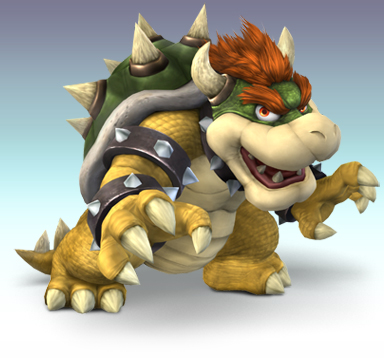
An interesting case of parenting to say the least. Bowser is the perhaps not so proud father of 8 different little terrors of the Mushroom Kingdom. The number has recently been revised due from 7 to 8 due to the introduction of Bowser Junior to the official canon of the series. (And yet somehow Baby Bowser doesn’t count…) Now, despite the fact that Bowser is the primary villain of the Mario series, he has to be doing something right as a parent seeing as how he has raised all 8 of his children to idolise him and he’s a single father. Debates have raged on in regards to the identity of the mother of his children, but that often leads to rather creepy fanfics and disturbing images. As a father figure, he is not what one would call ideal, seeing as how he sends his kids out to get their butts kicked by Mario and Luigi every other week, but still, the love is there right? I mean, he gave them all a piece of prime castle real estate. And that just can’t be scoffed at.
4: Norman from Pokémon 3rd Gen
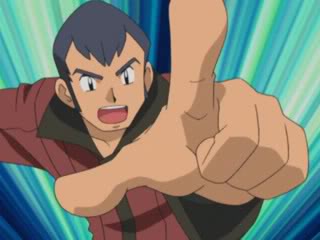
As I stated back in my mother’s day top 10 list, during the Pokémon series, players were used to being introduced to the mother character in their own hometown, but the identity of a father character has rarely been explored. The only exception ever made has been in the 3rd generation games (i.e. Ruby/Emerald/Sapphire) where the player characters are told that their father is the leader of the Pokémon Gym two towns away. Norman is an expert user of Normal type Pokémon. Unlike the other fathers of the main Pokémon trainers from the other games, Norman at least has an excuse for not being around in the home environment. He also refuses to accept the challenge of his child to a gym battle until they have obtain at least 4 other badges from around the Hoenn region, so that you might meet him on equal terms. My memory of the battle is vague, but his Slaking was a tough nut to crack, so, fair’s fair for not choosing to DEMOLISH his own kid when they first started out their Pokémon journey.
3: Chuck Greene from Dead Rising 2
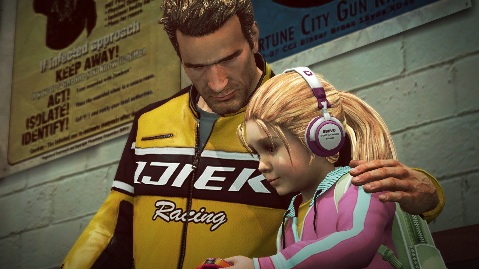
It’s pretty clear to anyone that’s played Dead Rising 2 that Chuck’s daughter means the absolute world to him. In every cinematic his concern has always been first and foremost for his daughter. Heck, the entire reason why he came to fortune city to compete in the zombie killing game show ‘Terror is Reality’ was to earn enough money to pay for her medicine. Additionally, if at any point Katie does turn into a Zombie, Chuck’s slump into a suicidal depression speaks volumes about how he would no longer have a reason to live if he didn’t have her. His story is all the more tragic for it, given that the zombie form of his wife is what gave her the infection to begin with. Tasked with the constant need to find her the anti-zombie medicine Zombrex, players must always bear in mind that they need to find some of that medicine above all else, even if that means sacrificing Chuck’s chances at freedom after being framed for the outbreak. And for all of those who say that Chuck is a negligent father who wears dresses, and rides tricycles, let’s not forget that’s what PLAYERS have been doing to him. Yeah, we’re a horrible bunch, aren’t we?
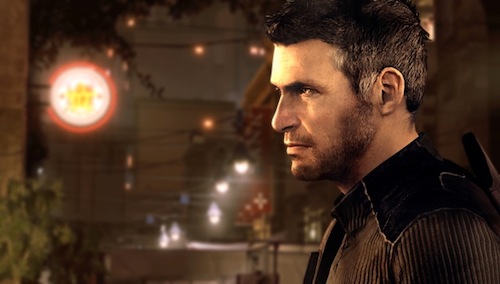
2: Sam Fisher from Splinter Cell
Like Chuck, Sam Fisher belongs on this high spot on the list because of his devotion to his child. Heck the entire plot of his latest game revolved around it. Now, unlike Chuck, who slips into thoughts of suicide after losing his child, Fisher continues with his life, albeit in an exceedingly painful way. His choice to endure the harshness of life as a wanted man who’s lost everything shows players that he is clearly undergoing a stronger level of internal torment than Greene. It is also reflected in his evolution as a character from a smart mouthed, highly professional agent into an angry and downright BRUTAL force hell-bent on raining painful vengeance down on those responsible. The discovery made at the mid-point of Convictions also has a dramatic impact on his story and character (which won’t be mentioned due to spoilers), but his nature again becomes all the more violent when players realise that a man with something to fight for can be even more deadly than a man with nothing. Fisher’s characterisation due to his attachment to his daughter really speaks to players, as I’m sure many of us would undertake interogations just as violently as his if we were to be placed in the same shoes. But if Fisher’s performance as a father brings up the number 2 spot, then who could be number 1? Well, it is none other than…
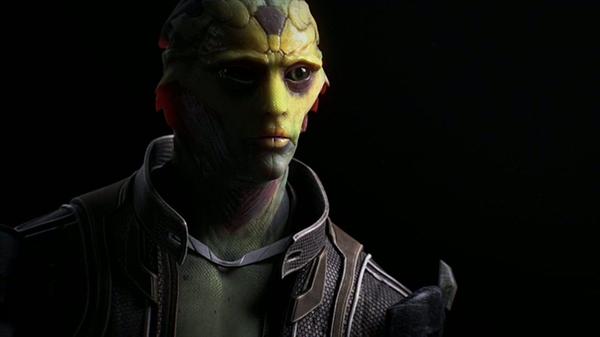
1: Thane Krios from Mass Effect 2
Like Carth Onasi in many ways, Thane is a character who is torn between his responsibilities to his job and the responsibilities to his family. Again, like Carth, his family life began with a loving wife and a child. And just as similarly, the father and son are estranged and meet up during the course of the game, in which they are provided with the chance to work out their differences. I think I’m beginning to detect a pattern here in Bioware RPG’s… In any case, the difference between the two is that Carth is a soldier. A military man whose job is to protect and serve. Thane’s background is much less glamorous. As a professional Assassin, his nature and appearance is colder and yet he seems eerily calm and polite for a man who makes a life by ending others. As a result, his profession is viewed as more detestable, even though he is, by every right, a good man with a strict moral compass. As a result, the rift between the father and son is much larger. So much so that Thane is forced to ask Sheppard for help in reuniting with his estranged son and preventing him from making the same mistakes he made in his life. Ultimately, the situations resolution depends on the player’s choices, but truth be told, the progression of Thane’s side-mission was most certainly amongst the most memorable in Mass Effect 2. Especially if… CREATIVE methods are used in dealing with a hostage situation. Thane’s story is the epitome of what we like to see in strong video game stories. Choice, conscience, reunions and repentance. These are all reasons I feel Thane deserves the top spot.
It’s safe to say that since the release of the TV series, a Game of Thrones and the rest of the ‘A Song of Ice and Fire’ books have become a bit of a phenomenon. The incredibly detailed fantasy setting, packed full of warring houses and their bannermen, is perfect material for a strategy game, and developers Cyanide Studio have taken on the task of bringing the world to life for fans already spoiled by the fantastic TV adaptation.
For those not already taken in by either book or show, a Game of Thrones is the first novel of ‘A Song of Ice and Fire’, a series of fantasy novels by American writer George R R Martin. They chronicle the constant battle for the rule of the kingdom of Westeros, where the king sits on an Iron Throne made from the swords of his vanquished enemies. There are darker forces at work whilst the families war over the crown, and in the words of house Stark – ‘winter is coming’ and winter, in Westeros, is deadly. It’s not all swords and sorcery though – Martin’s characters are as deft at manipulation and as masterful of politics as they are at raising armies.
So the developers have a big challenge here, and a lot of fans to impress. On to the game…
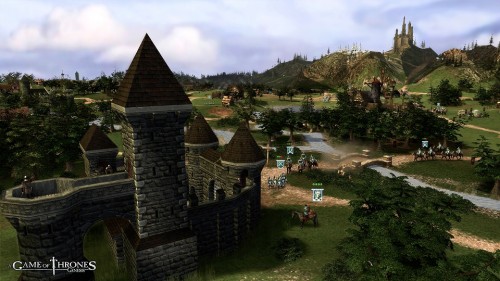
Players will be able to take on the quest for the Iron Throne in a campaign beginning 1000 years before the events of the books, going from the founding of Westeros to the capture of the nation by Aegon the Conqueror and right on through to the War of the Usurper. There are armies to be raised and castles and villages to besiege and destroy in the battle for the Iron Throne, with both a single player campaign and 8 man multiplayer.
What’s great to see is that the political intrigue and manipulations of the books will not be overshadowed by combat. The game is full of opportunities for Lannister* style foul play, with opponents vulnerable to both economic and military war. The Iron Throne is, according to the developers, winnable without raising a single army.
It all speaks of a great respect for the source material, and it’s no surprise that George R R Martin has played a part in Genesis’ development- the single player campaign was written under his supervision. The screenshots too, show off a world that looks faithful to the books.
The game will be released in both digital and retail format on September 29, so if you’re a fan of the series or are just after a fresh strategy game, take a look at the new screenshots below and watch out for a review from Capsule Computers!
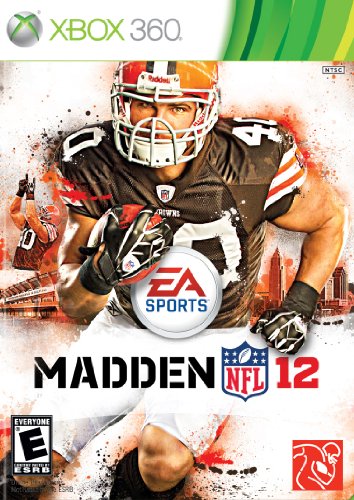
Developer: EA Tiburon
Publisher: EA Sports
Platform: Xbox 360 (reviewed), PS3, PS2, PSP, iOS, Nintendo 3DS, Wii,
Release Date: Out Now!
Apologies for the delay in review but here it is! I gotta be honest, I’m not the most avid NFL fan but this game has really impressed me. Sure it’s nothing groundbreaking in the context of the Madden series but it is still an improved and welcome addition. Sports games are often criticised for re-releasing the same game with a new “hat” on so to speak, and to an extent this is probably true. But given a game like Madden, there really isn’t that much room for improvement so it’s understandable that it appears similar to the previous editions. That being said, there are still quite a lot of tweaks throughout the game, yet also a few areas which seem to still be needing a little bit extra.
Gameplay:
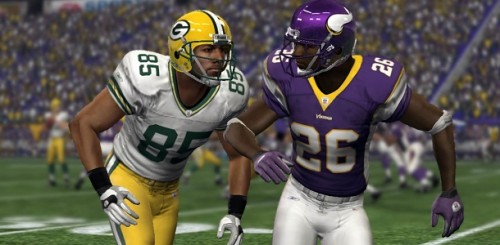
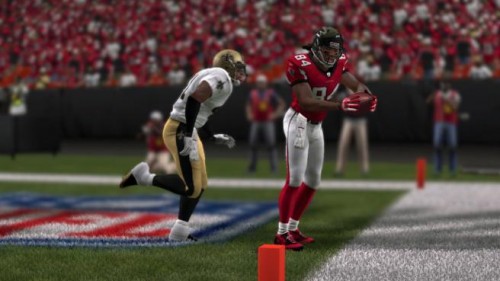
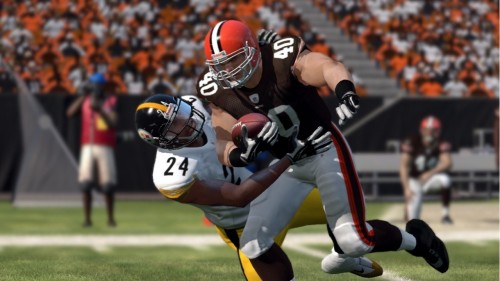
Match physics and the player engine is awesome. I’m still not tired of the Matrix-esque frame freezes when you get a pick/interception, not to mention the precision of catching the ball right on the tip of the line for a touchdown. I’m yet to notice any considerable problems with collisions and responsiveness is as good as ever.
One key aspect of the game which Tiburon openly focused on was the AI. Like most good sport games, the Rookie (or easiest difficulty) enables to you essentially dominate your opponent whereas the All-Pro setting is ruthless and should be approached with caution. The computer controlled players are smarter than ever, not to mention players more unique and dynamic. EA has boasted much about the personality aspects of each player, and after a few matches you really do start to see it coming through. Player hot streaks and consistency ratings make it incredibly satisfying when your star is unstoppable and awfully frustrating when he’s just not bringing his A-game. One thing I have to admit annoys me is the delays between plays. Whilst I realise it can be tactical to run down the clock at certain points of the match, I find the computer takes too long between each play. Obviously EA are going for realism but to me it just slows down the game too much and gets a bit frustrating at times.
Be a Superstar mode appears to have had decent improvements however still has a fair way to go if it wants more lasting appeal. I still am quite hesitant when it comes to this game mode, maybe it’s just personal preference but in a tactic-heavy sport like NFL, controlling just one player is not as fun as it feels in a game like NBA 2k11, and there still isn’t enough clarity on what your player needs to be achieving in order to fully develop into a star. With no new game mode additions, this mode really needed to be a bit more fresh and deep. Don’t get me wrong, it’s still quite a lot of fun, but I’d like to see it get a bit more attention next time around.
The online modes have been bolstered quite nicely, with no real flaws surfacing yet. Online Franchise and “communities” are well done, with online Franchise making improvements to the nitty gritty area of contract negotiations and the draft.
Sound:
The soundtrack features many popular artists like the Foo Fighters, Tinie Tempah, and Lil Wayne, as well as some lesser known artists but still, if not even more, enjoyable. Overall it meshes well with the game and is always a useful plus for a game.
The commentary is quite good, with some nice player specific facts and descriptions. To be honest it is not much of an improvement over the last few years and gets a bit tiresome after a few matches. I’m getting technical here but some of the intonations are a bit off and make the commentary sound choppy at times. For the most part however it’s still good enough and nothing to get too tied up on. The same can be said about crowd and match noises, which although don’t seem to have had many overly noticeable enhancements, are still quite adequate.
Visuals:
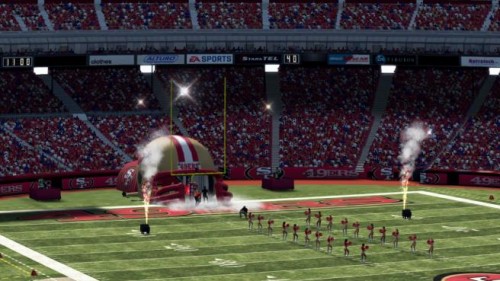
In regards to match presentation, Tiburion have done a really amazing job. The team entrances, cut scenes, and player and stadium graphics are all near-perfect. The graphics have always been pretty tight in the Madden series but this edition has added that little bit extra bit of attention to detail, which although may seem petty, really helps add to the overall match experiences.
The interface and menu systems of the game are quite easy to use, although I still haven’t perfected the navigation in Franchise mode. Sure there are a lot of different choices in the menu to account for but I feel it is a bit convoluted for the more casual NFL fans.
Conclusion:
Perhaps not groundbreaking, but undeniably solid with only a few disappointments lying in the Be a Superstar mode and some finicky issues within the matches. I think there are enough improvements throughout the game for Madden 11 owners to still purchase it, and for those who don’t have last year’s version then there is even more reason. As a standalone game, it’s really impressive. Great gameplay, amazing graphics, and solid lasting appeal, all make this a better Madden game than before.
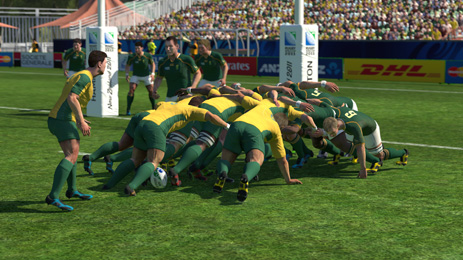
With only two days left until the real Rugby World Cup gets underway, 505 Games have released RWC 2011 onto North American shelves today. The official world cup game includes licensed teams with licensed players for many of these teams including South Africa, England, and France.
The game includes a World Cup mode in addition to online play and is a great way to recreate your favourite moments or play out possible outcomes for this year’s world cup matches before they happen.
“This is a great opportunity for 505 Games in North America and brings rugby videogames to the widest possible audience,” said Ian Howe, US President of 505 Games.
“We truly feel that the game captures the spirit and emotion of Rugby World Cup, as well as delivering fast, fluid and authentic gameplay that will keep players hooked.”
The guys over at Ubisoft have announced some new content for Driver: San Francisco. The content will be extra tracks for multiplayer and will be free. They have also introduced Driver Club, a Games-to-Web application that brings the Driver community together.
Multiplayer Content:
On September 15th, 12 new routes for all online modes will be made available for free. Then, 1 new route will be made available every week for the next 10 weeks, for a total of 22, increasing the overall number of tracks by 30% in 2 months.
Driver Club:
Starting now, Driver San Francisco proposes an exclusive Games-to-Web / Community service called Driver Club that allows players to:
– Unlock exclusive achievements
– Find your stats and check the leaderboards
– Showcase your film director clips
– See and rate your friends’ clips
– Review the Community facts
– Follow your friends’ activities using the Driver Social feed
Driver: San Francisco is now available for the Playstation 3, Xbox 360 and Wii. We recommend that you purchase this game, as our review suggests.
September 13 – September 19
L.A. Noire Rockstar Pass 640 (33% off)
Games On Demand – new releases
September 6
Way of Samurai 3
Sherlock Holmes
September 13
Homefront™
Bulletstorm
Games on Demand – price reductions
September 6
Shaun White Skateboarding
Sonic & SEGA All Star Racing
Aliens vs. Predator
Virtua Tennis 2009
Vanquish
R.U.S.E™
Fable III [Mexico only]
Avatar Marketplace
September 7
Crimson Alliance
September 8
Adidas Originals 2
September 14
The Gunstringer
September 15
Fast Five
Spotlight
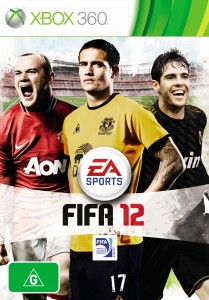
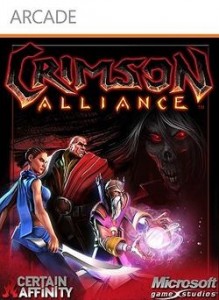
Up for your special attention this week are Crimson Alliance and Fifa 12.
Fifa 12 needs no introduction, but Gold members can look forward to the demo, which will be available for download on September 13. It will be showcasing the new Player Impact Engine for the first time, and will also introduce EA Sports Football Club, a live online service to connect players to real world Fifa action.
It has also been announced that the full game will for the first time at launch feature the FIFA Ultimate Team feature. Players will be able to earn, buy sell and trade some of the greatest players in the world to build their ultimate dream team.
Crimson Alliance (not to be confused with iPad exclusive Crimson Steam Pirates) throws players into the World of Crimson, taking on one of three characters to battle against the Cult of the Soul Siren. The Assassin can bend time, the Wizard is master of the elements, and the Mercenary can sweep foes from their feet with whirlwind strikes.
Crimson Alliance will be available on a free trial basis from September 7, and players can purchase either one or three characters for 800 and 1200 Microsoft Points respectively.