Following the announcement and screenshots, we now have a full gameplay trailer for the the upcoming HD port of Guilty Gear XX Accent Core Plus. The HD port carries a slightly different name now, as it is now called Guilty Gear XX Accent Core Plus R (Phew!).
The gameplay trailer shown here basically demonstrates almost all the playable characters. The music playing in the background is a classic Guilty Gear track called ‘Still in the Dark’. The game still very much looks like the original, obviously optimised for modern resolutions.
The game is set for a location test in Japanese arcades sometime in June 2012, there is still no word on the release date for the digital download version that is set to hit the Xbox Live Arcade and PlayStation Network sometime in 2012. In the meantime, you can enjoy the trailer below.
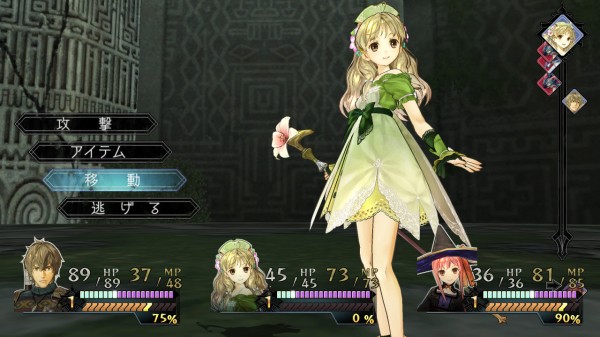
With Atelier Meruru bringing a close to the Arland series, Gust has been hard at work making sure that their next Atelier series is better than ever. As such they have revamped the battle system for Atelier Ayesha by factoring in distance, traveling around the battle field and area of effect for explosions and alchemy.
Today Gust released the below trailer which contains footage of two separate battles which demonstrate attacks from behind, which will likely cause more damage, as well as the classic feature of allowing allies to either assist with combo attacks or defend from enemy attacks. Atelier Ayesha currently hasn’t been announced for a North America release, though perhaps with E3 next week way may hear something from NIS America…
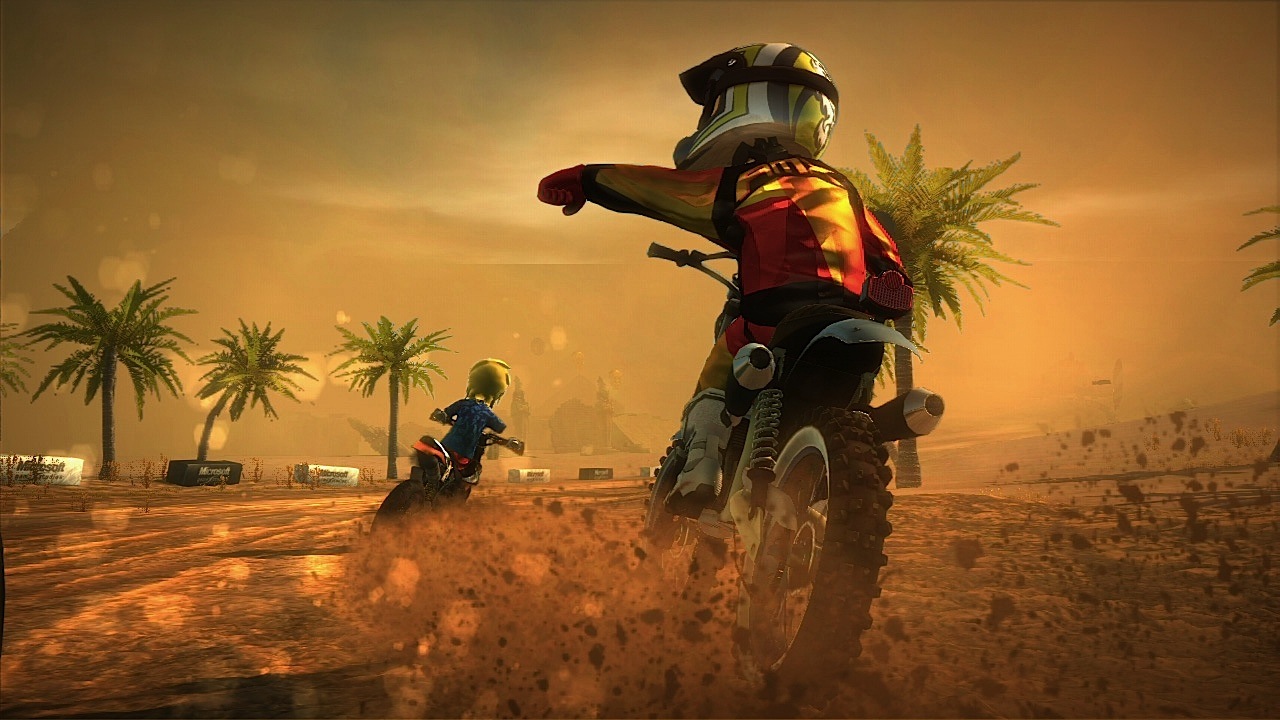
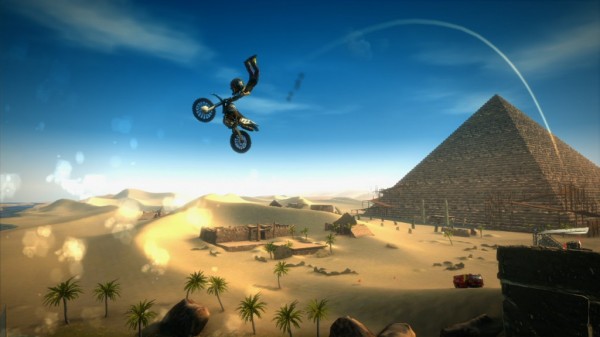
With E3 only a week away, it makes sense that a few things may sneak out of various studios. As such it may come as no surprise that Microsoft’s very own PlayXBLA has placed two “Secret Squirrel screenshots” on their website. It seems that this squirrel just loves those E3 secrets and had to bring these two motorbike racing screenshots to the public.
Currently no name was released for the title though it seems that we will find out a lot more about the game next week when Microsoft hold’s their pre-E3 conference. Until then, enjoy these two little images of Avatar looking figures racing on dirt bikes.
Those who don’t have a chance to go to their local video game retailer, or simply don’t want to stand in the corner of a store playing a demo version of the Vita will soon be able to play the Gravity Rush demo for the first time on their own PlayStation Vita.
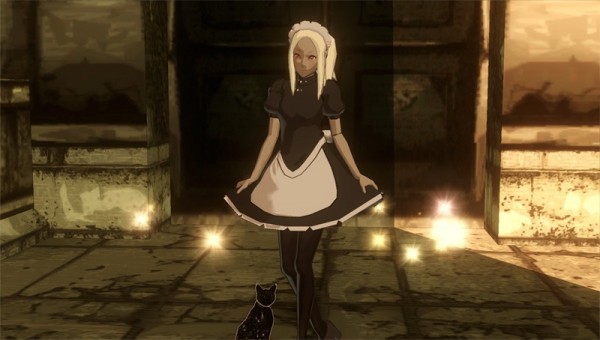
The demo is set to be released tomorrow on the PlayStation Network while European gamers will need to wait until the 30th to download the game. Those who pre-order the game before its release on June 12th from GameStop or Amazon will receive the military outfit for Kat. Too bad it wasn’t the maid outfit seen above huh?
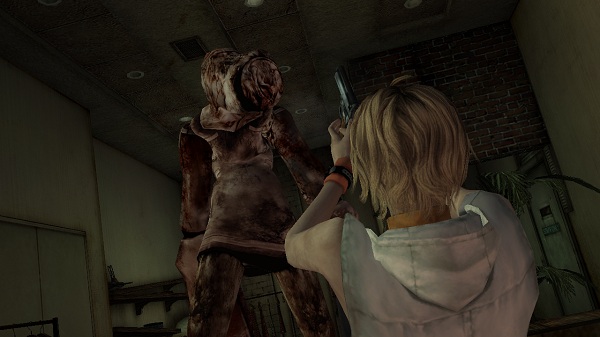
Over the past few years HD Collections of classic franchises have become quite common. Just a few months ago Konami released their own HD Collection featuring two games from the beloved Silent Hill franchise. However upon review, many people, including myself, found that the HD upgrade actually made the game worse in a number of areas.
The reason for this was never made quite clear, however it seems that Silent Hill: HD Collection was actually created with incomplete source code. During a large feature piece about HD re-makes, 1UP spoke with Tomm Hulett, head man behind the Silent Hill: HD Collection creation and in this piece he stated the following:
“We got all the source code that Konami had on file — which it turns out wasn’t the final release version of the games! D’oh! So during debug we didn’t just have to deal with the expected ‘porting’ bugs, but also had to squash some bugs that the original team obviously removed prior to release, but we’d never seen before. A lot of assets such as textures and sound had to be taken out of the compiled game, and that brings with it a host of unique issues, especially taken on top of the tricky coding workarounds at play in the original games. We certainly had our hands full. I think at one point Silent Hill 3 protagonist Heather was blue.”
This issue may explain a number of problems that gamers had with the title, such as buggy gameplay, audio problems and sub-par texture and graphic enhancements. However all is not lost as Tomm also said that after the company released their initial patch he “played through Silent Hill HD Collection armed with righteous indignation and Internet complaint threads. I made a list of every issue I could find. Hijinx is hard at work addressing as many of those issues as is feasible given our resources.” So perhaps there will be some new patches in the future that will iron out fan complaints.
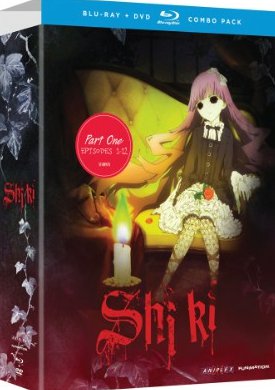
Shiki Part 1 Studio: Daume Publisher: FUNimation Format: Blu-Ray/DVD Combo Pack Release Date: May 29th, 2012 Price: $69.98 – Available Here
Overview:
In Pop Culture, there are two current major trends in terms of monsters, zombies and vampires. Where zombies are more over done but are generally better respected, while vampires are fewer in terms of products but some of those few have made them lose the street credibility. Shiki is an anime that focuses on the later; however, it takes the vampire lore back to before it was the butt of numerous jokes.
Is that enough though to warrant a viewing? Not really, just because its vampires don’t sparkle doesn’t mean that it makes a worthwhile watch. So, that brings it down to the almighty story and characters. How are those? Well, keep reading to find out.
Story: Shiki begins by establishing the key set piece, the “decent”-sized small town of Sotoba. Sotoba is a very isolated town, described by one of the characters as being surrounded by death, in reference to the momi fir tree forest that surrounds it whose wood is used to make coffins and grave markers. The town has a sizable population and the unique thing about the show is that, it makes a point to try and show a pretty good number of these residents. Now, that can become pretty confusing, so it’s a good thing that regularly characters will be accompanied by their name and relationship to others. This is a pretty awesome concept and really establishes the small-town vibe of the show and makes the story more personal.
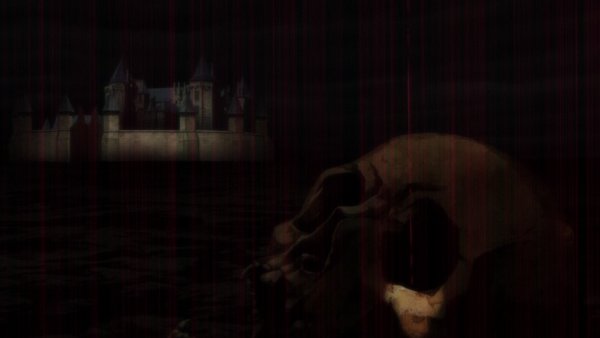
But, with any small town the series of events is ultimately kicked off by a new family moving into the town. This time the family is actually moving into a big house on the hill, which they had especially built for them, so obviously the best choice is a European Style half-manor/half-castle overlooking a rural Japanese community. After they move in though, people start dying in ways the local doctor can’t fully understand, so that he begins to worry it may be an epidemic. While this may seem a little cliche, what’s great what direction the show takes once a solid number of residents have turned.
The direction? The show becomes less about the humans simply trying to survive and more about both sides dealing with each other. As such, there is several different storylines working at once, so the date is often being shown at the top, so that viewers can keep track of when everything is actually happening. Both sides have those that simply care about the survival of their own, and both have those that question having to kill the other. This is a complex look at the morality of different people and a good look into what people are willing to do to survive. Leading up to the end of Part 1, where the main character is struggling with allowing his best friend to drain him or to stopping his fallen best friend once and for all.
Visuals:
The art work is the show is incredibly top notch. The backgrounds of the series all feature amazing detail to the point where the characters on top of in these places don’t really seem to match, much like the overarching theme in the show of characters not fitting into the small-town setting. The characters themselves are also very well designed, even having some pretty unique looking hair amongst the cast, from Kaori’s star-tipped pigtails to Papa Kirishiki’s mustache like hair. Almost every character has hair unique enough to tell them apart from that alone.
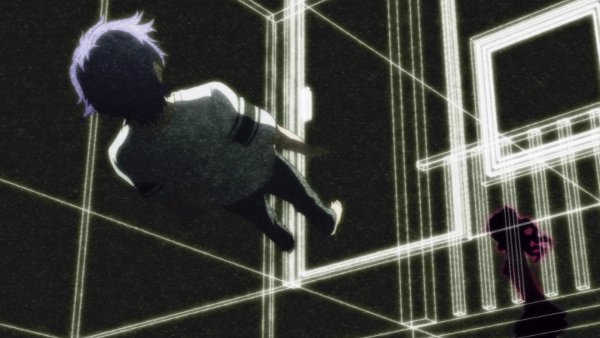
One awesome feature of the visuals is when characters are listening or imagining to what is going on on the other side of a wall or door. Instead of simply cutting to show what the character thinks is there or what is actually there, the show has great x-ray style effects that add to the suspense of seeing exactly what the character is picturing.
Audio:
The music for Shiki is an interesting range that fits the suspense of every situation. Early on there is a scene where the main character Natsuno is feeling watched, which is accompanied by a unique vocal chorus, which is almost entirely grunts that make the scene even more unsettling. The opening theme, “Kuchizuke” by Buck-Tick, starts out as appropriate to the subject matter of vampires and pulling their victims to be with them to steal their life away, but as the show changes direction it also works as the new turned vampires wanting to reconnect with their family by changing them too. The ending theme, “Walk no Yakusoku” by Nangi, is more of a reflection of how paths can lead away from loved ones on the road of life, which also echoes the vampires that try to change their families too.
The voice acting on both tracks actually works very well, the English voice acting on Natsuno seemed sketchy at first because it was a little dry, but as the show goes on becomes apparent that’s just his character and he gets better throughout. So, viewers can really watch either one without worry, making it a good title to share with friends who abhor having to read a show. Besides the initial Natsuno voice-acting, the only thing viewers might have a problem with is the super whiny Masao, but at least it is refreshing that the whiniest character in the show is a guy that’s predisposed to thinking people don’t like him.
Extras:
The extras on this set are somewhat limited, but that is somewhat expected with Part 2 releasing at the same time. There are only 2 commentaries, for the first and last episodes of the set, but they are the standard actors talking about the different aspects of the show. Also included, are the 4 Preview Featurettes that preceded the actual release, as well as trailers for other of FUNimation’s recent releases. Lastly, there are the credit-free openings and closings, so that viewers can see detail put into the art of them.
Overall:
This is a fantastic start to a series that some might discount for being about vampires or horror in general, but they would be drastically mistaken as the series has some pretty thought provoking depth. The character designs are some of the most unique I’ve seen in a while and the voice work does a great job with matching quality. This is a series that I can’t wait to see the rest of because I give it
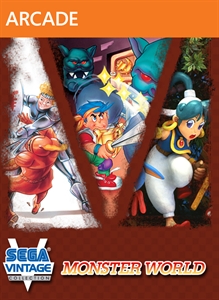
Sega Vintage Collection: Monster World Publisher: Sega Developer: M2 Platforms:Xbox 360 (Reviewed), PlayStation 3 Release Date: 23/05/2012 Price:800 Microsoft Points
Overview:
Monster World, Wonder Boy, Wonder Kid…Adventure Island? This is a franchise with a very confusing history as it never really could settle on a concrete name, the series also jumped between numerous genres, starting out as a pure platformer, then turning into this 2D Zelda-style adventure, a Metroid style adventure, and even a scrolling 2D shooter (STG) at one point! This franchise has quite the interesting history to say the least.
The series has developed quite the cult following over the years, and many consider it to be overlooked when compared to other franchises from the same era. On that note, these games have not seen too many ports or re-releases over the years, but this year is different.
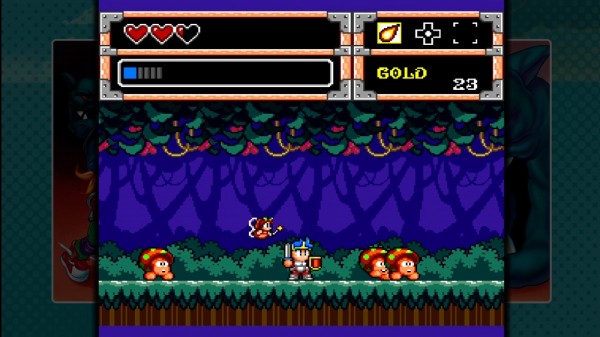
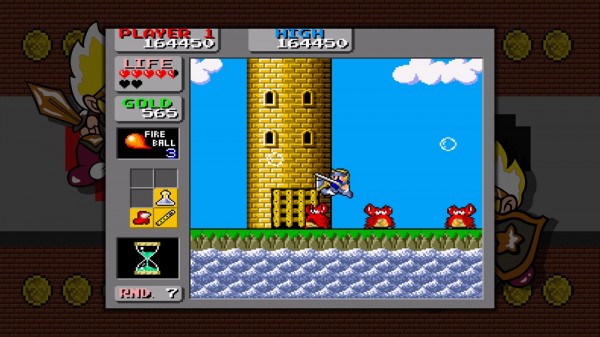
Monster World IV received its very first English localisation earlier this year on the Wii’s Virtual Console, and now that title, along with two others, have been packed together as a collection, available for purchase on Xbox Live Arcade and PlayStation Network as a digital download, titled Sega Vintage Collection: Monster World. This collection features Wonder Boy in Monster Land, Wonder Boy in Monster World, and Monster World IV.
Story:
The games featured in this collection are meant to be adventure titles in much similar vein to Zelda, but they are actually pretty light on the storytelling, with the exception of Monster World IV. Wonder Boy in Monster Land is essentially a very fast paced adventure paltformer, and while it has towns and shops, the actual premise is a very basic ‘hero takes on evil monsters’, which is fair considering that it was a coin-up arcade title. Wonder Boy in Monster World is actually fairly similar to Wonder Boy in Monster Land, as a young hero named Shion suddenly decides to leave home and battle the monsters invading the land, meeting new characters along the way. Monster World IV still has the ‘hero saves the world from evil’ premise like the other games in the collection, but it certainly does a better job in telling a better story with a rich inspiring world, likeable characters, cut-scenes, and a main character who actually has a proper background.
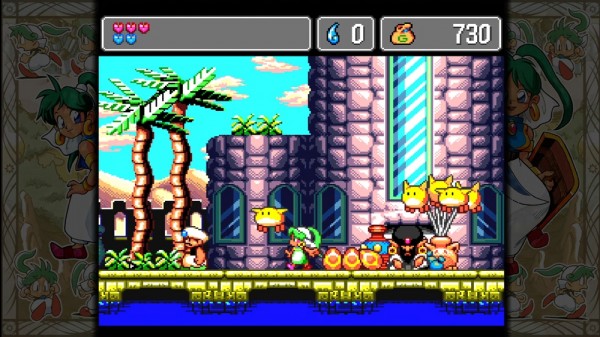
The world portrayed in each of these games is quite vibrant and colourful, Wonder Boy in Monster Land and Wonder Boy in Monster World have very similar looking in-game worlds, based on medieval Europe fantasy with dragons, knights, and the like. Monster World IV on the other hand is quite the departure, featuring a Middle Eastern inspired setting with temples, deserts, Arabian characters, and also draws upon Arabian fantasy themes. It’s pretty fun setting that offers a nice change from what the series is normally known for, and it also does a much better job at presenting the world and its characters. Not to mention Monster World IV features the series’ only female protagonist, Asha.
Overall, these games have a very basic story-line . The games are heavily gameplay driven, but the plot-elements still help add some substance to the adventure design of these titles, in a very simplistic yet effective manner.
Visuals and Audio:
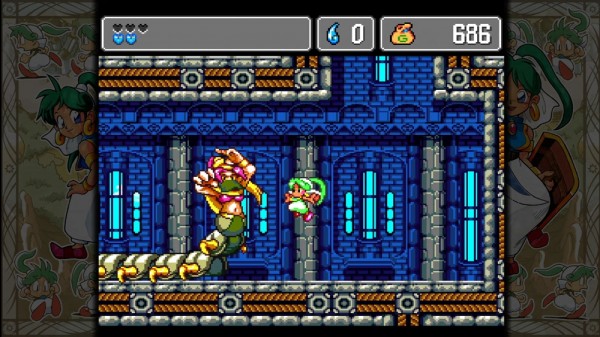
The games in this package have aged reasonably well, considering the eras that they belong to. Wonder Boy in Monster World is obviously the most retro looking game in the collection, but it’s still a vibrant looking game with really good use of colours, the game here is actually the superior arcade original instead of the famous Sega Master System port. Wonder Boy in Monster World is a vast improvement, as being a Mega Drive title it has some appealing 16-bit graphics. It’s a really vibrant game with some nice use of colours and has some solid character sprites, but the animations are quite simple and the graphical details are a bit bland. Monster World IV is obviously the best looking of the lot, a game that was released towards the end of the Mega Drive’s life, this game has aged well visually as it features some really fluid animation, highly detailed 16-bit graphics, great use of colours, and some cool character sprites and effects. Monster World IV is easily among the best looking Mega Drive video games ever made, and still looks quite appealing.
Musically these games are quite brilliant, featuring very upbeat and uplifting tunes with a very strong RPG vibe to the overall musical style. All the games have a memorable soundtrack, each offering something a little different. Monster World IV offers a much different style of music compared to the other games in the collection.
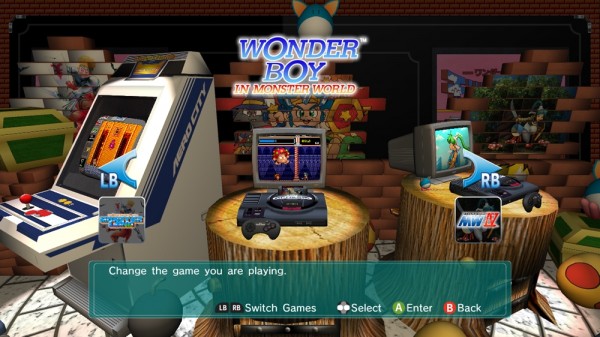
What’s great about this collection is the way it’s presented, offering a virtual arcade and Sega Mega Drive (Genesis) set ups for each of the games. The games have been ported really well and you can play around with a variety of graphical filters and resolutions, all producing some nice results. There is also a musical jukebox for each game that lets you enjoy each game’s OST.
Gameplay:
The games featured in this collection are all adventure platformers and are actually pretty similar in style. These are pretty action heavy games, where you battle a lot of monsters, engage in some classic and challenging platforming sections, solve puzzles, and face some mean bosses. At the same time you also get to explore towns and even interact with NPCs.
Wonder Boy in Monster Land is a challenging arcade title but at the same time quite addictive. You can learn spells and acquire new equipment and items from shops, however you’re meant to be constantly on the move as there’s a constant time limit. This is one fast paced adventure platformer that gets difficult right from the get go. You need to power through each of the areas as quickly as possible and fight each area’s boss. These bosses put up a pretty tough fight and can wipe you out in seconds. The core gameplay mechanics might feel a little stiff and archaic compared to modern 2D platformers, but it’s still a playbale and enjoyable title that will make you come back for more. It’s a rewarding experience as you find yourself improving with each play-through. Thankfully this port allows you to play around with the number of lives and continues that you can use.
Wonder Boy in Monster World is actually pretty similar to Monster Land, but is much slower paced with greater focus on the adventure aspect. There are towns with NPCs, and you can even save your game at the inn. It’s a lot more puzzle driven, and the game design may be a bit confusing for modern gamers as its one of those cases where you need to talk to NPCs multiple times at different instances in order to trigger events. It’s fun for what it is, but the gameplay does not feel as relevant or accessible today, not to mention the mechanics feel rather stiff and sluggish.
Monster World IV is the real cream of the crop, and the main reason why you want to get this collection. The gameplay is just amazing, and is easily the best playing game in this collection. The controls are tight and responsive, and the general feel of the game is smooth and fluid. Asha has a wide range of attacks and is a lot of fun to control as she moves really fast and is a pretty agile overall. Along the way she meets an interesting creature that serves as her companion, helping her out during the course of actual gameplay with its abilities, and this allows for some pretty intuitive platforming and puzzle solving moments. It’s a pretty challenging game with some cool levels, fun boss battles, and just really entertaining action and platforming.
The games featured here are really fun to play, and while Monster World IV is easily the crown jewel of the collection, it’s still worth having a go at the other games. Also worth mentioning is that the collection features all localisations/versions of each of the titles, for example, you can play the Japanese, European, and North American version of Wonder Boy in Monster World.
Overall:
Sega Vintage Collection: Monster World offers a rare opportunity to experience one of the most overlooked and obscure retro franchises on high definition consoles. These are really well produced ports with enough new graphical knobs and filters to make them look pristine on modern resolutions. If anything, this collection is definitely worth getting just for the fully translated Monster World IV, which was a Japanese exclusive for well over a decade. The collection is far from being a novelty experience that you will get bored of in 10 minutes, as these are serious adventure games that will provide you with plenty of action packed platforming thrills. While Wonder Boy in Monster Land and Wonder Boy in Monster World may not have aged too well in terms of game design and mechanics, Monster World IV however is still an enjoyable and refreshing 2D adventure game that feels relevant while still offering some old school challenge.
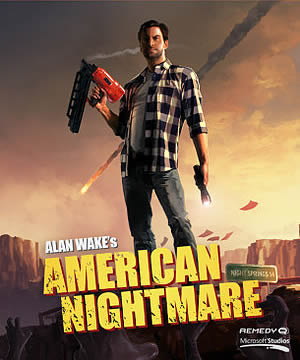
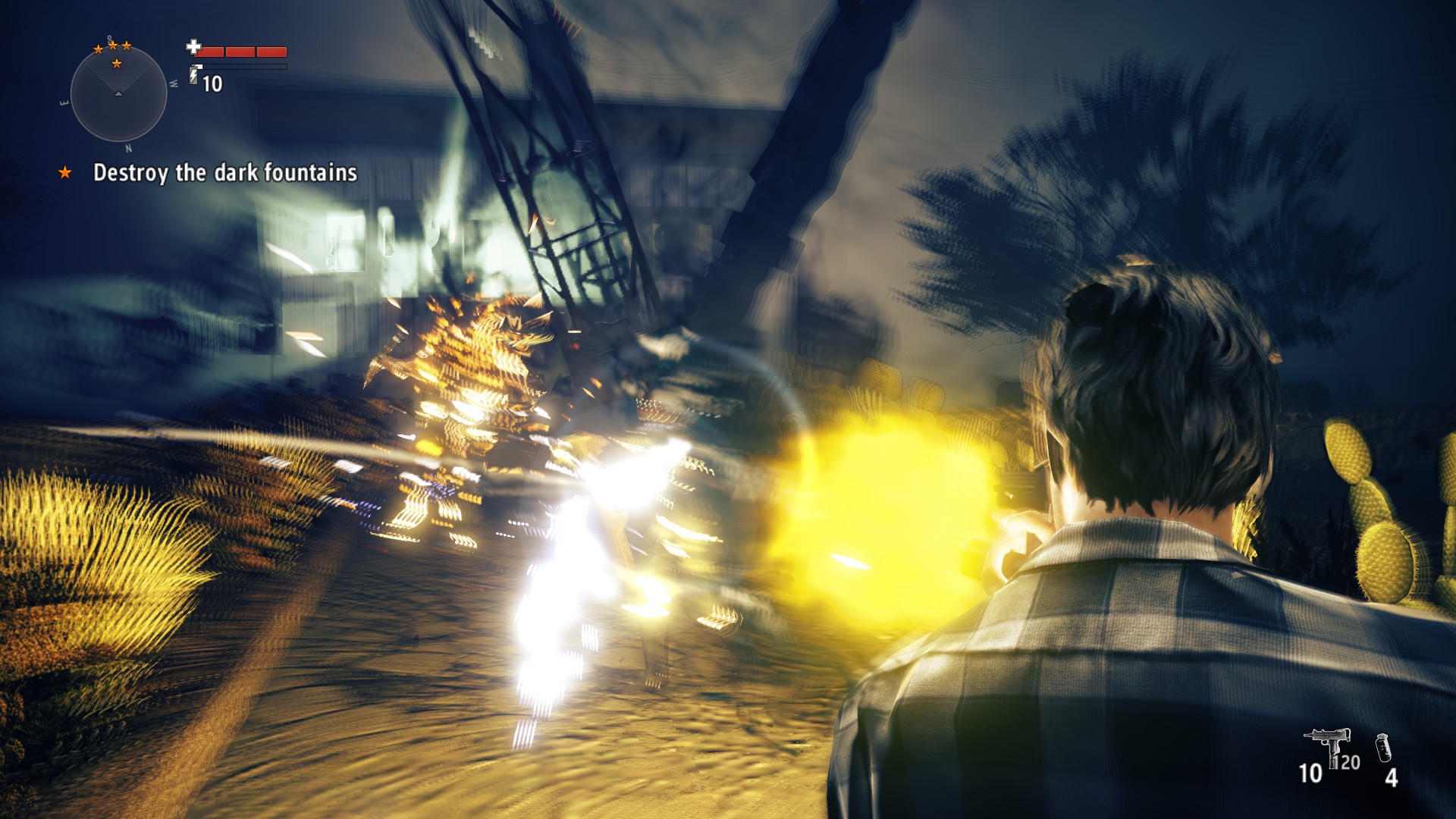
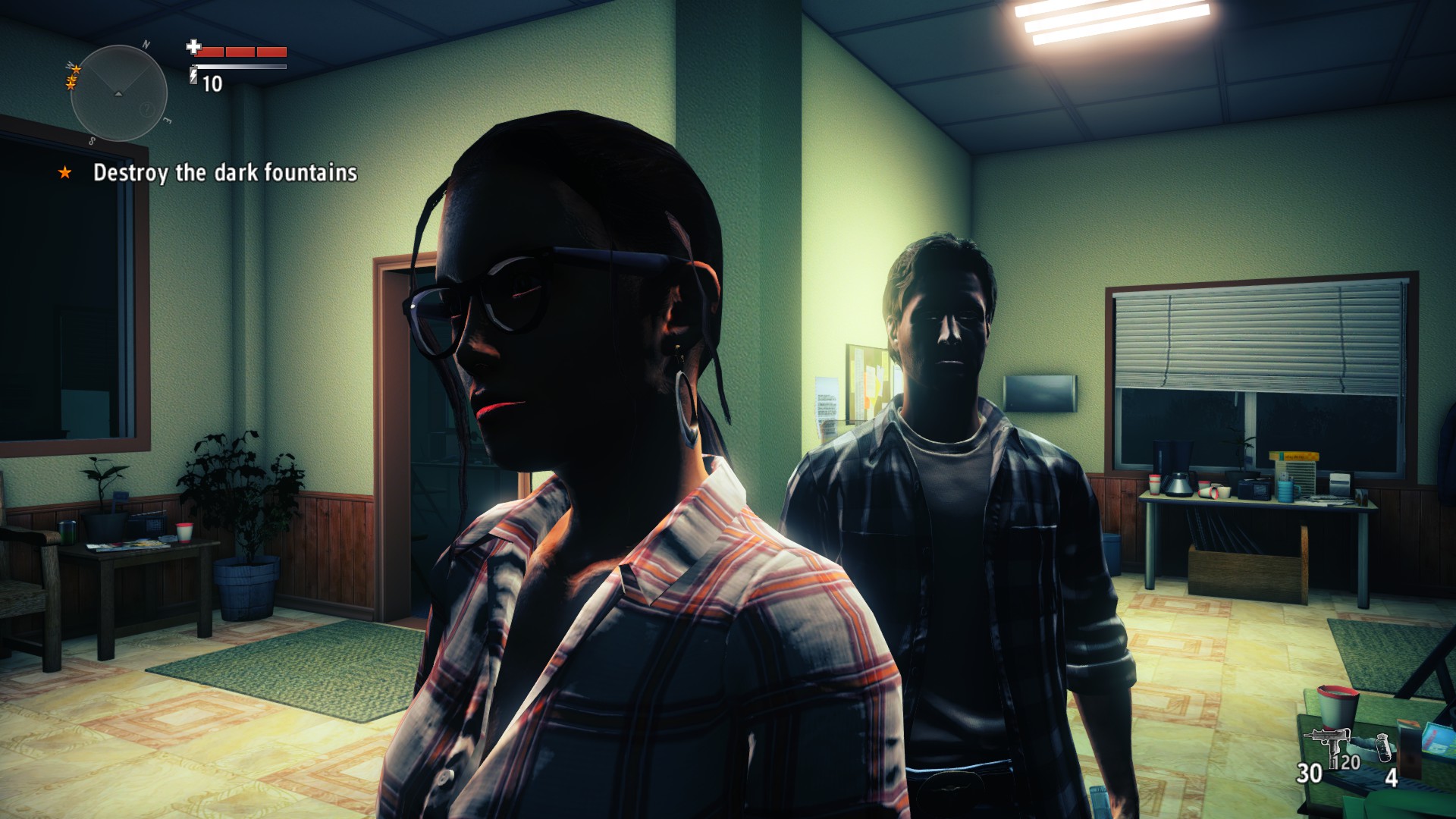
Alan Wake’s Merican Nightmare Publisher: Microsoft Studios Developer: Remedy Platforms: PC (Reviewed), Xbox 360 Release Date: May 23rd, 2012 Price: $14.99 (Steam)
Overview
Alan Wake’s American Nightmare is a side-story to the main Alan Wake game which was released on the Xbox 360 and later, PC. The Alan Wake games fall under the survival horror and mystery categories, which make them quite an interesting series. They also sport amazing stories and feature some unique enemies.
Story
Alan Wake’s American Nightmare follows the adventures of the protagonist, Alan Wake, a writer who writes for (and is also a character in) a television program called ‘Night Springs’. Night Springs seems like it is a parody or tribute to the Twilight Zone television series covering strange and unusual events. The main storyline plays out much like a television program with recurring characters, a story short enough to be resolved in a single episode and a problem that isn’t too large or epic to be covered in over one episode.
What I particularly liked about the story was the way that it was set up. It is a traditional three-part arc with a beginning chapter that sets up the story and the events and what not, a middle arc that really gets the ball rolling and a lot of bad stuff happens and then a resolution where everything is all better and the good guys win and stuff. What’s even better is the way the story writers turned this concept on its head. For instance, when you reach the end of the third arc for the first time, you’re convinced that you’ve done it and you’ve won, but then the game throws your for a loop and you’re forced to do the game again from the start. You can also look at this in the same way, but with all three times you get looped. The first time you do the three chapters is like the first arc where everything is being set up and you think it’s resolved, but then there’s more. The second time is like ‘man this sucks, I have to it all over again’ and it feels like there is no end to all this nonsense. And then the third time rolls around and you’re all ” ‘Eff yeah, lets do this! We’re taking this home and there’s nothing you can do about it”.
I also really loved the characters in this game. Alan Wake is just your everyday guy who gets stuck in this completely weird time-loop and has to find a way out of it. I found this to be quite enjoyable because there are too many stories out there where some highly heroic looking dude is being set up to be the hero and then the hero heroes and does hero heroics with heroness. Alan Wake is just a writer who happens to be the hero of this story. The other characters are also really fleshed out and I really enjoyed the way they played out the villain in this game.
Normally in games, you’d have this villain that every just says is really menacing and a big douche-bag, but you never really see it. It’s like you’re fighting the guy everyone else wants you to fight. But in Alan Wake, you actually see this guy doing so very bad things and you see him enjoying doing it. He is the embodiment of bad, and sexy, but mostly just bad. The way that they’ve set up the villains story is through the way some characters talk about him, but mainly through pre-recorded television programmes that are actually very gripping for their short play time. After finding all of these recorded messages in the game, you really get a great sense of the kind of person the villain is and this gives you more aspiration to want to bring him down.
Another enjoyable aspect to do with the characters is that they all have a lot to say in regards to idle banter. You can skip all of this idle chit-chat if you like and just go on with the game, but I found it to be very enjoyable and it enriched my experience with the game. What I really liked about this aspect is on the third level of the game, there is this one girl who is taken over by the darkness stuff that affects people that you can pretty much skip completely in the second and third time loops, but if you don’t there is even more dialogue to cover with her. I quite liked that the developers took the time to really flesh out the characters in this manner.
Gameplay
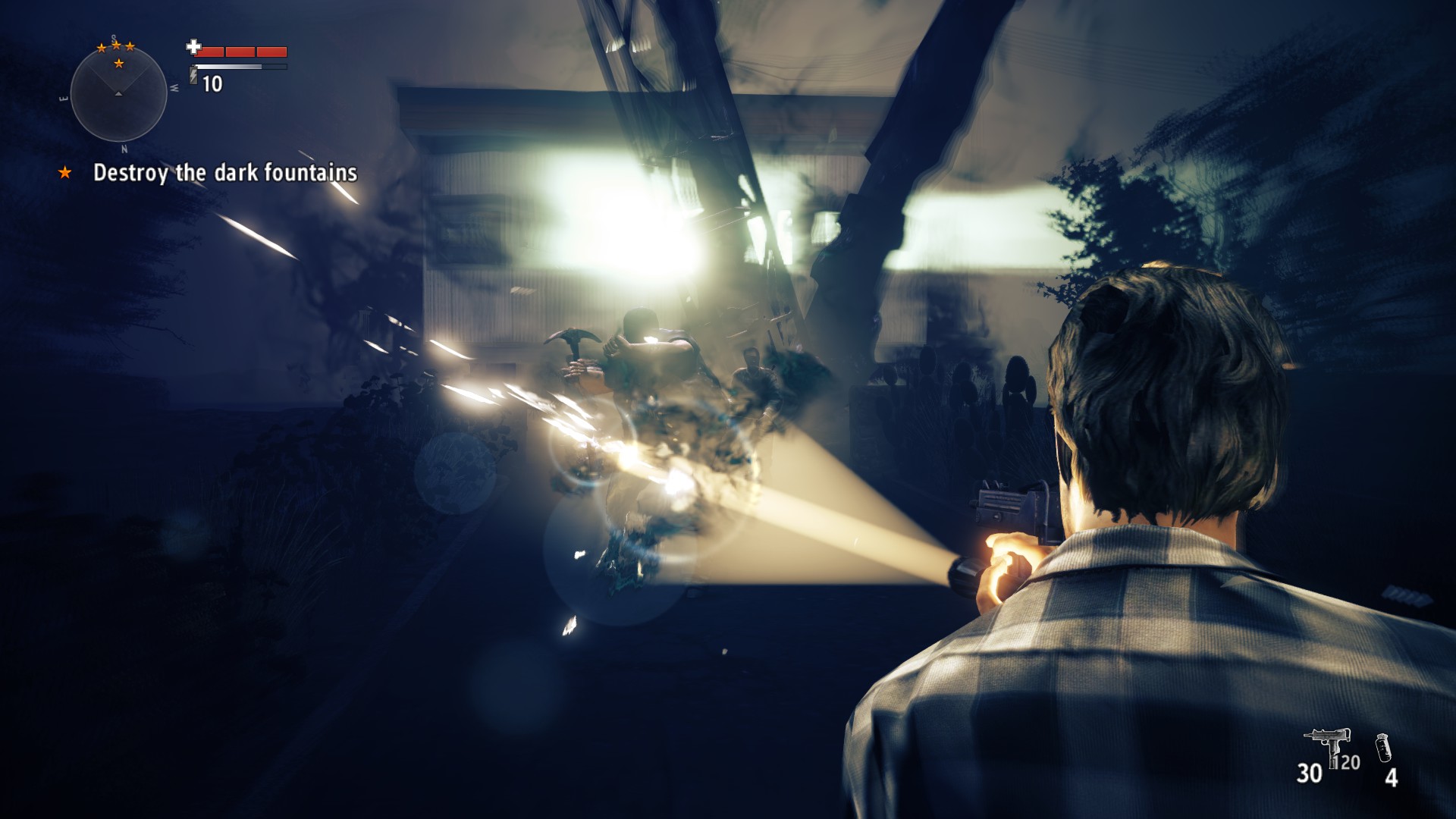
Alan Wake’s American Nightmare plays, I imagine, very similarly to the original Alan Wake game appearing on the Xbox 360 and later, PC. From my experience though, I’d say that Alan Wake’s American Nightmare plays very similar to survival horror games that play like Resident Evil 4. You’ve got the behind view perspective, you’ve got the aiming and shooting mode and you’ve got the zombies and things you need to kill. The main difference between Alan Wake and Resident Evil 4 would be that you need to hover a flashlight over enemies to make them vulnerable to being shot.
In Alan Wake’s American Nightmare, ammunition is plentiful and you never really find yourself running out of ammo during the shorter battles with The Taken, but you will really be aching for bullets in the much larger battles. Fortunately the game frequently throws ammunition at you and it is never a scarce commodity, which gives the game a much more action filled experience, even if it retains the survival horror intensity that makes the game an Alan Wake title.
What I really, really liked about the gameplay is the amount of detail that went into the game. I know I spoke about the characters in the Story section of the review, but there is much more than that. There are things litttered throughout the game for you to find, like hidden manuscript pages that really get you to really look around in each level. Some of these can be hard to find, but are quite often littered around the areas that you travel through on your way between points. I think when I finished the game, I ended with 48 out of 50-something manuscript pages, so I still missed some during my run. Manuscript pages aren’t useless, each page you can read through in the menu and can also be used to unlock bigger and stronger weapons by opening lockboxes throughout the game. However, you can finish the game with the pistol and other guns that you just pickup through the game.
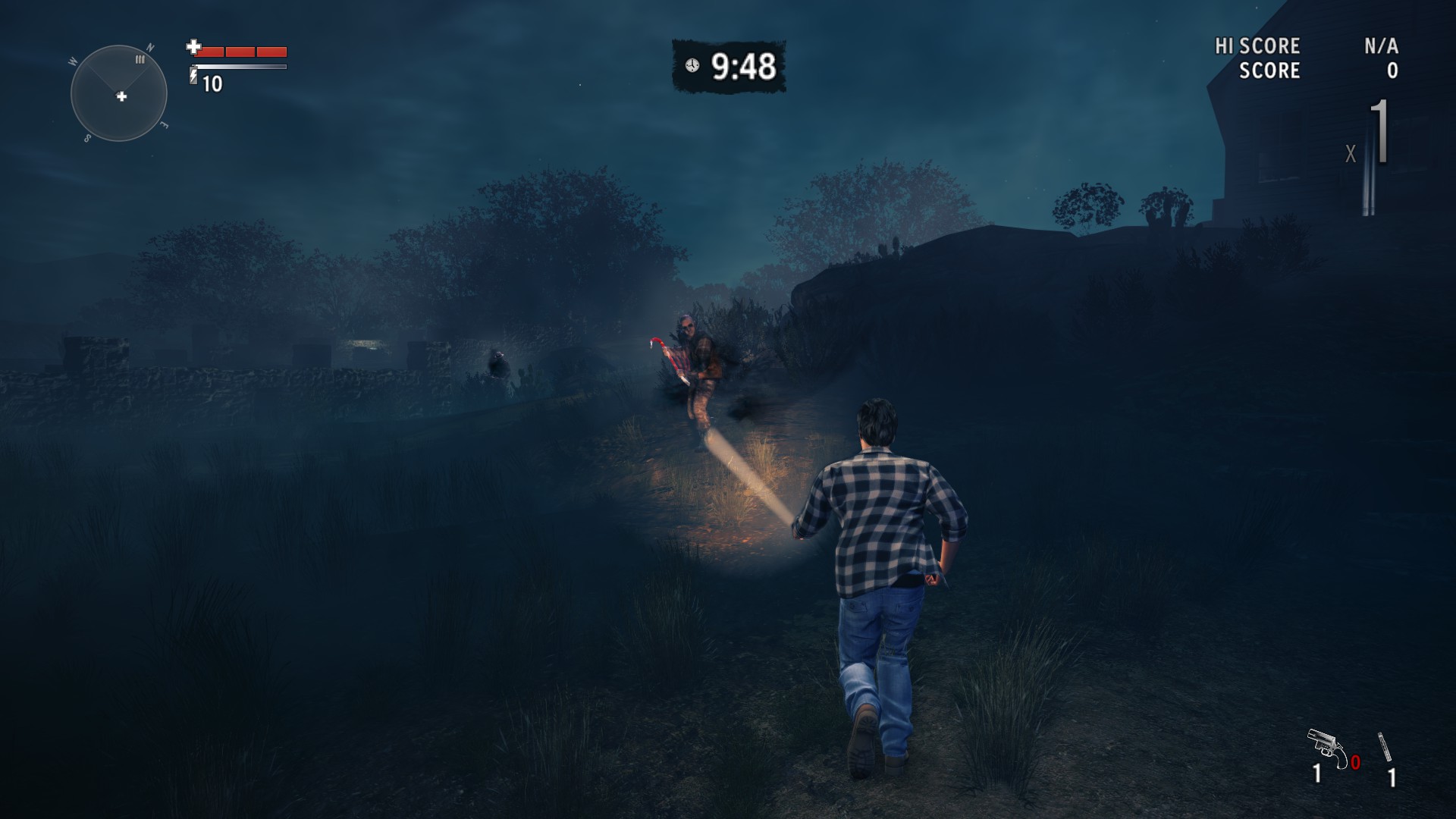
Also there is an arcade styled mode where you are pitted against waves of The Taken and you must do battle with them. Doing well unlocks you more levels and gives you highscores. There are also a few achievements for you to earn in this mode.
Visuals
Unfortunately for Alan Wake’s American Nightmare, it has shoddy graphics even on the highest of settings. I believe that this is because it was built for Xbox 360 and then ported to the PC much later. Having a lesser graphics quality than the PC can theoretically produce at maximum really hurts the tension and horror of the game. But fortunately the game makes up for this with its writing, atmosphere and having a menacing villain.
What I really liked about the games graphics was it’s use of live action cinematography. These live-action cutscenes were amazing and really added to the overall feel of the game. However my one gripe with this is that the guy they had playing Alan Wake did not look too much like the in-game model. The model looked a lot like Edward Norton, but the actor did not. But still, if I was directing a movie and I needed someone to play Alan Wake, the actor they used would definitely be my choice. Here’s to hoping for an Alan Wake movie directed by the developers.
The last thing that I want to talk about int eh visuals are the characters themselves. I quite liked how each of the characters looked unique, even if one is an evil clone of the protagonist. The red-head scientist chick is amazingly attractive, as are the rest of the women in the story.
Audio
The audio in Alan Wake is amazing. I quite liked its classic rock soundtrack that was used in a few instances during the game and the games score also fit amazingly well. These two things combined not only increased the atmosphere of the game but also gave it a rather unique feel. And this is something that I thoroughly enjoyed.
The games weaponry sound quite weapon like and as a result, you get a pretty decent feel for when it is that you are shooting at an enemy. Having that high-impact noise really helps to reinforce the situation that you are presented with.
I also really liked the voice acting in the game as it was incredibly well done. My favourite would have to be the voice for the main villain as he portrays the kind of menace and evil that fully embodies the character. I will probably forever associate evil and menace with that particular character thanks to this game.
Overall
Alan Wake’s American Nightmare is an amazing package for everyone that picks it up. As a side-story it doesn’t really impact the story of the original game at all, but by playing it you really get a stronger sense of the Alan Wake saga. Aside from the sub-par graphics on the PC, the game is a brilliant play and something that I would recommend to everyone. Be sure to pick it up from the Steam store as soon as you can.
JAM Live Music Arcade Developer: Zivix Platform: Xbox Live Arcade Release Date: May 16, 2012 Price: 800 MS Points
Overview
Remember how excited you were when you got your first plastic guitar controller? It doesn’t seem like too long ago when the music genre was at it’s peak, with Rock Band and Guitar Hero dominating sales across the board. Over the last two years, that market has dwindled, and a lot of those once loved peripherals sit collecting dust, aching to be played with once again. JAM Live Music Arcade isn’t exactly a savior by any means for the rhythm guitar genre, as the heart and soul of the game actually steers into the direction of creation, but it’s certainly one under the radar release that must be tried by anyone itching to give those colored buttons one more for the road. Why, you ask? Here is my review for JAM Live Music Arcade.
Gameplay
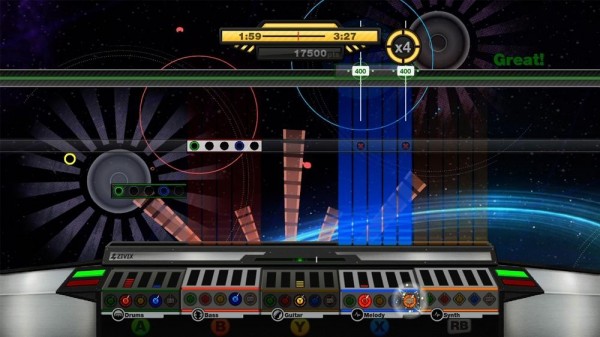
The first and main mode with JAM Live Music Arcade is of course the appropriately titled Jam mode. In this area, players get to construct their own versions of popular songs, bit by bit. Vocals, guitars, synthesizers, bass, and several other sounds are waiting to be remixed, and instead of getting to play these beats right off, you get to take the role of a producer and toy with each tune before eventually recording a mix made of all of the elements that are at your fingertips. We have seen several music generator programs released on consoles before, but Jam feels much more accessible due to the handy tutorials within (known as challenges), which provide a ton of insight on how the game actually works while allowing the player to feel productive through a standard progression format.
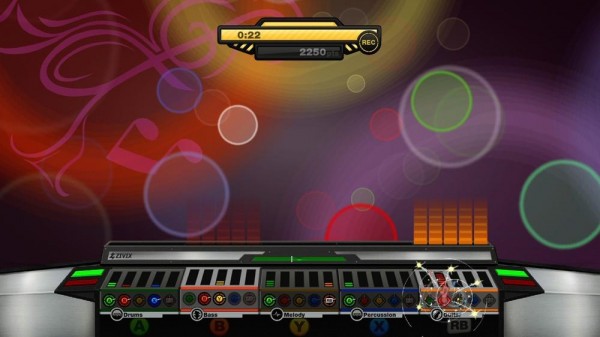
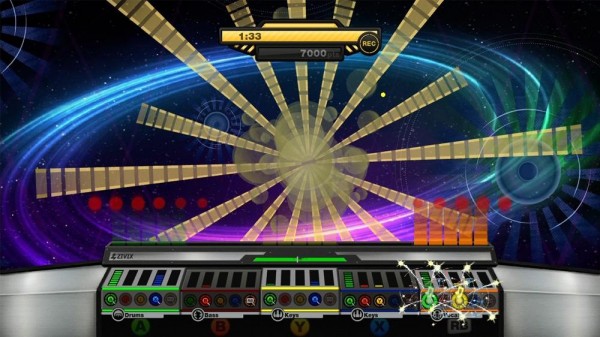
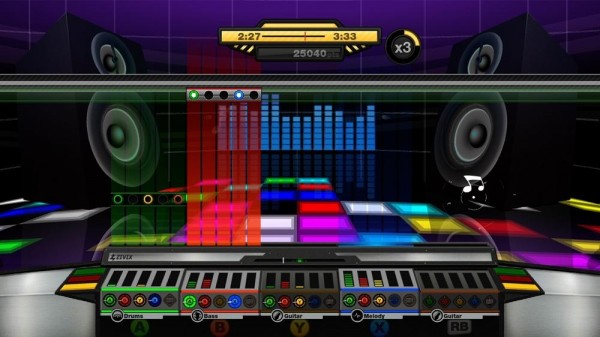
Down at the bottom of the screen, there are five different instruments with five tracks each. The player can turn on whatever instrument they choose by holding down the strum bar and pushing the correct color on the guitar, and then select the appropriate melody to play with that particular tune by simply repeating the same process. This lets the player change between beats on the fly, adding in vocals or drums at a moments notice – with even a handy timing meter that assures that this altering will be done to the beat and tempo of the current song. Timing is also important when selecting a track as well, as the player must keep a watchful eye on the tune’s loop in order to add the correct portion to their mix. As you progress as a master music maker, you will also see Jam start to open up more, too. You see, nearly everything is locked from the start, and the further you go within the main creation mode, the more options for customization you have at your disposal. Luckily, these additions are introduced at the perfect pace, meaning you should never feel too overwhelmed by all of the new goodies showing up on the soundboard.
As I mentioned, Jam Live was built with the guitar controller in mind from top to bottom. Those who lack the tool to play the game shouldn’t feel upset though, as a standard controller works just as well for the the most part and in my opinion, the customization portions actually feel more natural with a controller in hand due to how well this scheme was implemented. This layout simply has the face buttons (A,B,X,Y) act as the four main guitar frets while the right bumper acts as the fifth, with the strum bar being handled by up and down inputs on the D-Pad. Yeah, it may sound a bit confusing at first, but once you are bundling together a song, everything clicks rather quickly and this alternate method becomes second nature.
Jam mode really is a musical playground that should keep players busy for hours on end, but for those who lack the patience or that simply want to interact with their own creations, an Arcade mode has been added in to fill that void. This plays out a lot like your traditional Guitar Hero/Rock Band experience, where you can play a custom or default track by hitting the correct notes as they come across a bar at the top. It sounds like something that should be easy to execute, but the same method of control for Jam mode is also provided for Arcade, making things a bit overly complicated. As a beat rises to the top, the player must quickly switch to the correct instrument and then press the correct colored input to get a successful match. Doesn’t sound too bad, right? Well, when you have a song that includes a good number of switches in instruments, it feels almost impossible to keep up with the chaos going on in rapid succession. To be fair, this does get easier (and I use that term lightly) with practice, but I had many occasions where I would get so overwhelmed that I would exit and go back into Jam mode to get my musical fix, as Arcade is far less “arcadey” than it should be.
Visuals and Audio
As far as graphics go, don’t expect too much glitz and glare to come out of Jam Live. There are however some nice background effects that match the music that is playing, which are just eye-pleasing enough to hold your attention to the screen. Commands are mainly held in small boxes for Arcade mode, and they do their job well enough to pop up when needed so that the correct input can be made. Other than that though, not a lot was really done to make the presentation pop, but that’s not the point of the game and one small flaw that can be easily overlooked due to how involved the player will be with all of the main gameplay options on display.
When it comes to the soundtrack, there is a ton of variety offered up that is sure to please just about everyone that span nearly every genre. From the poppy-rock beats of Fall Out Boy, the calming melodies of Owl City, there are plenty of songs that work beautifully with the customization aspects of the game, and of course are just as fun to play in Arcade. With that said, only 32 tracks can be unlocked throughout the game, but later DLC has been promised that will add more to the equation and when you consider the unlimited amount of mixes you can make, there is plenty of high quality tunes to keep you busy for a good chunk of time.
Overall
Jam Live Music Arcade is a musical romp that may go overlooked due to the dying genre it will surely be grouped in. Placing this title in that category should be considered a crime though, as there are a ton of well executed ideas at work here that allow almost anyone to not only remix songs with an in-depth editor, but to get a new appreciation for the art as a whole. Yes, the Arcade mode could use a bit more streamlining and holding a guitar isn’t the most ideal way to edit your masterpiece, but the experience as a whole is quite fulfilling from a creation standpoint and Zivix are definitely one small studio that know what they’re doing when it comes to crafting a musical playground. Add in the relatively low price-tag and infinite replay value, and you have one of the best reasons in years to get in tune with the genre all over again.
Have you heard? An old adventure game developer is using Kickstarter to fund a brand new point-and-click adventure game!
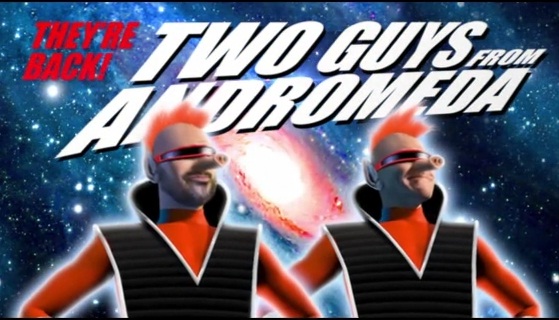
Tim who? Double what? No, I’m talking about the Two Guys From Andromeda, creators of the classic Space Quest series of the eighties and nineties.
In case you haven’t donated to enough Kickstarter projects lately, Scott Murphy and Mark Crowe, the aforementioned Two Guys, have reunited and are asking for $500,000 before Tuesday June 12 to develop a new Space Quest game.
The guys are clearly passionate about the opportunity, and they already have a stellar cast of video game voice actors ready to participate: there’s Gary Owens, narrator from some previous SQ games; Robert Clotworthy (Jim Raynor from StarCraft 1 & 2); Ellen McLaine (GlaDOS and the turrets from Portal 1 & 2, The Administrator from Team Fortress 2); John Patrick Lowrie (Sniper from TF2, Sword Control from Halo: Reach); and Rob Paulsen (Pinky & The Brain, Animaniacs, Teenage Mutant Ninja Turtles, Monkey Island).
At the time of writing, the project has already raised almost half of that amount, and with two more weeks to go, it’s likely the target will be reached. So go help them out on Kickstarter, where there’s a crazy amount of information on the project, as well as some rather generous pledge rewards.