Star Wars Battlefront was one of those series that was destined for greatness but who’s life was unfortunately cut short for some reason.
As much as we would of like to of seen Star Wars: Battlefront 3, let’s face it the time has been well overdue, the last news we heard on it dates back to 2008! But if everything had gone to plan, it may not have been the only Battlefront game to of been released.
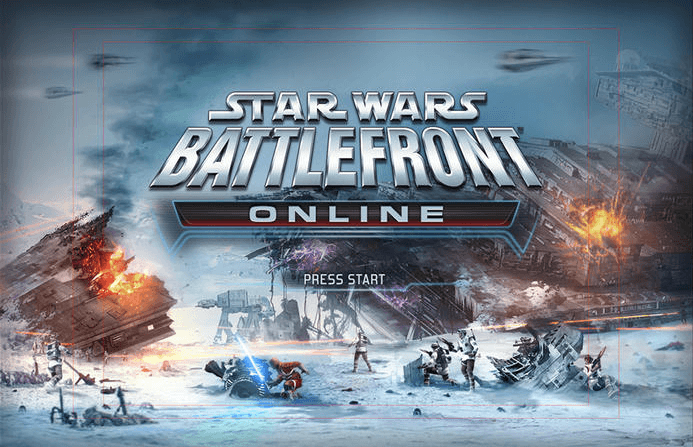
Star Wars: Battlefront Online was to be the next instalment in the series, however it was cancelled before it was even announced. Resident Evil: Operation Raccoon City developers Slant Six was said to be working on the game since 2010 for PlayStation 3 and Xbox 360.
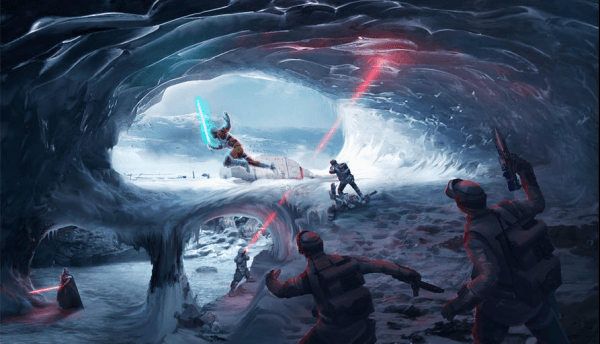
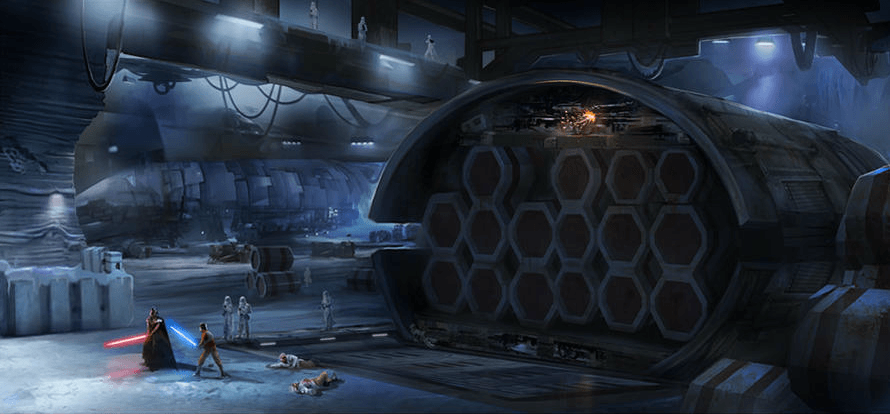
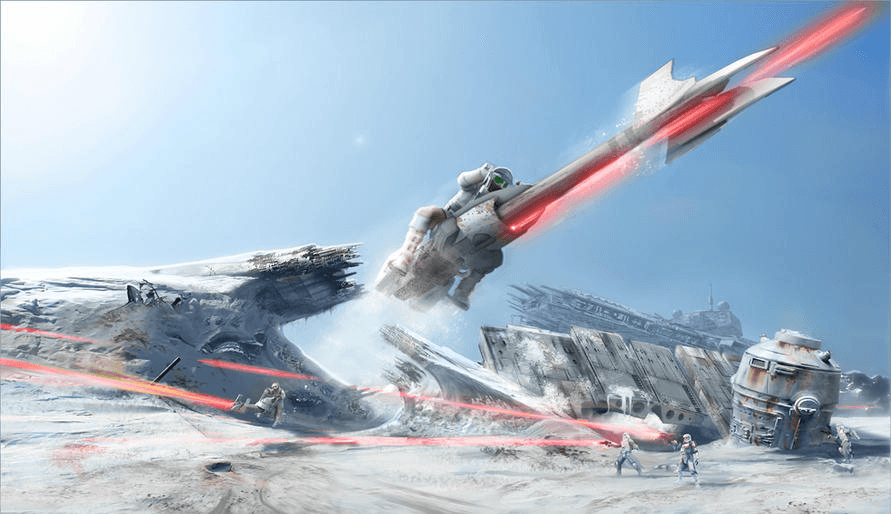
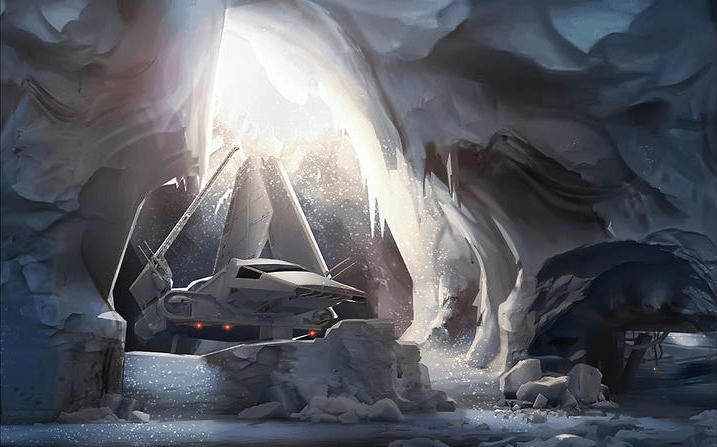
Concept art from game has since been leaked, showing off familiar locations, weaponry and vehicles.
Christmas break is near, and to celebrate these most festive of times, Disney is releasing updates for 3 of their biggest mobile titles.
Where’s My Perry? Dr. Doofenshmirtz is now recruiting players for his own evil agency across 40 all-new evil agent levels. This enables players the chance to try their hand at mischief and wield the mad scientist’s new minion-inator; transforming everyday, household objects into even more evil agents. The update has already been applied, so download Where’s My Perry? now for only AUD$0.99/NZD$1.29 from the Google Play and iTunes App stores.
Temple Run: Brave In the newest update to the animated film Brave-themed Temple Run edition, a brand new character, King Fergus, is joining the run. Not only that, but you are now able to run further and earn new achievements. This update can be purchased, in-game, for the price of 500,000 coins. Download Temple Run: Brave from the Google Play and iTunes Appstores now!
Wreck-it Ralph
Wreck-it Ralph players are receiving their fourth mini-game in an entirely free update. Turbo Time, based on the arcade game within the film, is a 16-bit arcade racer and is unlocked right now with the newest update. Wreck-it Ralph, the game, is available for only AUD$0.99/NZD$1.29 from the iTunes App store. And remember, the film will finally get it’s release in Australia this Boxing Day!
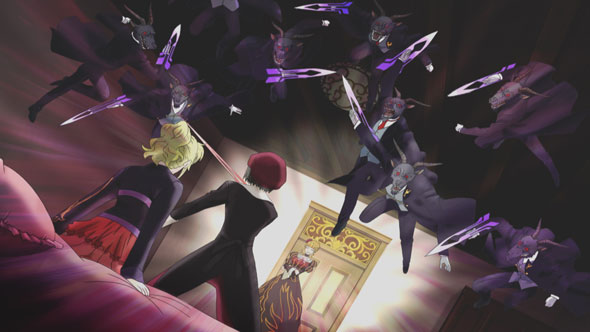
Umineko: When They Cry Volumes 1 & 2 Studio: Studio Deen Publisher: NIS America Format: Blu-ray Release Date: December 4, 2012 Price: $103.98 (Complete Set) – Available Here
Overview: Visual novels are games that many people may not even be aware of, mostly thanks to the fact that they are rarely released in the West by official means. However some of these visual novels contain compelling storylines full of interesting characters which many fans may never see. Thankfully, over the years, many visual novels have been adapted into anime and occasionally these anime manage to make their way overseas.
Such is the case with Umineko: When They Cry. Originally broken up into a series of visual novels, the anime was originally released back in 2009. Now, NIS America has brought the series over to North America in two volumes. Has this unique set of visual novels translated into an anime worth your money?
Story: Umineko: When They Cry takes place on an isolated island named Rokkenjima which happens to be the home to an extremely wealthy family called the Ushiromiya family. The family patriarch, Kinzo, has suddenly been informed that he only has three months to live. Upon hearing this news the man cries “Beatrice!” into the night. The rest of the Ushiromiya family is assembled in a yearly gathering to go over their various business deals and family matters and also to find out who will inherit the vast fortune of the family once Kinzo passes.
With enough money circulating amongst the family to feed a small country for years, tensions are high between family members, many of which perfectly fit the “too rich to care” character archetype (such as dismissing servants as furniture and married-into-the-family members useless.) However when the youngest family member begins to speak of a witch named Beatrice and a promise to said witch involving the family’s fortune, things begin to go south very fast.
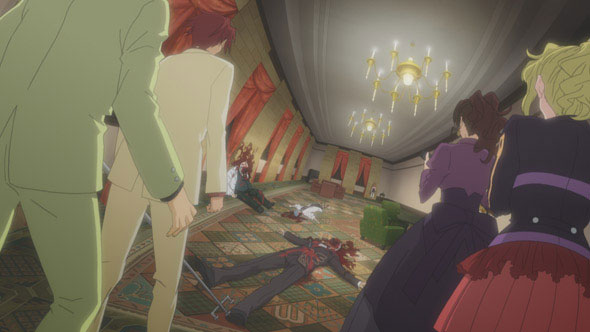
As members of the family are found murdered in horrifying fashion and the body count rises, the mystery of who or what could be killing the family members on the island begins to mount. As Battler, the main focus of the story, tries to desperately find ways to explain the murders and discover the true culprit, the increasingly impossible murders, the cryptic messages left behind by the killer and the haunting words of the little girl begin to convince everyone that Beatrice, the witch, is behind everything.
When only a few members of the family are left standing, Battler continues to doubt the fact that something as unscientific and impossible as magic could be causing these deaths. His steadfast denial holds true even as the last of the survivors are apparently killed at the hands of glowing butterflies. However when Beatrice reveals herself to be real, she finds Battler’s close-mindedness amusing and challenges him to either prove that a human could have committed said murders, or admit that magic exists and that she is a witch, dooming the family’s lives to be sacrificed for Beatrice’s full resurrection.
In what becomes a battle of wits and magic versus rationality, the members of the Ushiromiya family become trapped in an endless game of death where each member of the family is killed off in a number of gruesome ways in different orders in different scenarios, most of which involve a “closed door” puzzle similar to what one would find in a video game (i.e. Zero Escape series). This central plot point works well for the series initially, but slowly devolves into a complex and, regrettably under-explained anime series.
Perhaps it is due to the limitations of an anime series compared to the original visual novel format, but while the magical reasoning of Beatrice’s murders needs no explanation, the scientific reasoning of Battler actually has to be set within reason. However while the series loves to throw out references to many philosophical questions it also offers zero explanation for why said questions are even relevant to the current situation. Plus, many of his answers to the murders are practically laughable and taken at face value which will leave many with an unsatisfied feeling to the puzzles Battler tries to solve.
As for the series itself, every time the whole family is slaughtered, the “game” essentially restarts with every family member returning to life. As such the show is broken into five to six episode segments where Battler and the various family members must try to survive increasingly strange methods of murder. However as the show progresses, the anime slowly devolves from a story focused around mysterious murders, into one that seems to enjoy torturing the characters in the series. This grows even more bizarre as even more magical elements come into play a few game’s into the anime.
It is also worth noting that while there are eighteen family members to grow accustomed to and twenty six episodes to work with; many of the characters in Umineko’s personalities or desires are watered down, sometimes to the point that they are practically cannon-fodder for the show to kill off at any given moment. It is worth noting that there is a good reason for the way NIS America broke up the two separate volumes of Umineko: When They Cry, with eighteen episodes in Volume 1 and eight in Volume 2, but saying what that is would spoil some interesting developments.
Ultimately, Umineko: When They Cry is a complex series in more ways than one. While the anime’s storyline may be interesting and the way that it is handled is unique, it is bogged down by poor explanation and detail, inane logic, a watered down cast of characters, many of whom’s only purpose is to die gruesomely and increasingly bizarre elements which seem to go against the show itself at times. Put all that together with an ending that will leave viewers with a larger question mark over their head’s than they ever had during the series itself, and we have an anime with so much squandered potential it is a shame.
Visuals: Simply put, Umineko: When They Cry is a gorgeous show on Blu-ray and there are a number of reasons for this. Namely, the series, despite being a few years old now, is wonderfully animated with a wide-ranging color palette which is used effectively to emphasize dramatic or horrifying moments that take place in the series. With the crisp Blu-ray visuals, the presentation of the show overall is a treat for the eyes.
While crisp visuals and a properly used palette can make any anime look great, it takes exceptional character design and facial expressions to really sell the experience and thankfully, Umineko is no slouch in these areas. Each character within the series has a unique and memorable enough design which is essential given the number of characters Umineko has and their faces are animated in such a way that a wide-range of emotions can be displayed easily and with great effect on the viewer. It is also worth noting that this release is uncensored, which means that even some of the most gruesome death scenes are not blurred out.
Audio: It is worth noting that NIS America’s release of Umineko: When They Cry does not have an English dub and only features English subtitles alongside the original Japanese voice track. This is standard with any NIS America anime release however and thankfully the Japanese voice actors have managed to perform the voices of most of the cast exceptionally well.
Each voice actor/actress has a number of emotional scenes, often involving either borderline insanity, crushing despair or panicked desperation and the cast manages to really drive home these emotionally charged lines. As far as background music goes, Umineko contains a fitting set of background songs that fit the current mood displayed on screen, with a number of exceptionally well placed songs used throughout the series. As far as the opening and ending goes, there is only one opening and ending theme used throughout all twenty-six episodes of the series, with “One-Winged Bird” by Akiko Shikata used as a fitting opening while “The Divine Tragedy: Magic Melody” by Jimang offers an excellent closing theme to this twisted series.
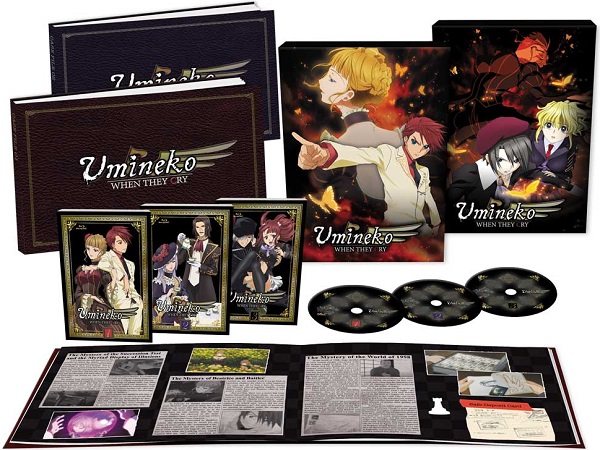
Extras: As per standard with an NIS America “Premium Edition” release, both Volumes 1 and 2 of Umineko: When They Cry come in gorgeous oversized chip-board slipcases which feature a glossy image of Battler and Beatrice on Volume 1 and Jessica, Kanon and Beatrice on Volume 2. Inside of these slipcases there is a special hardcover art book packed full of detail that is borderline essential. More on that in a moment. As far as on-disc extras go, there is only a clean version of the opening and ending theme and trailers for other NIS America products.
Now about those hardcover art books, or “Case File”s as they are called. Both Volume 1 & Volume 2’s art books contain character sketches as well as extra information for each character presented within the series and most importantly, extra explanation for some of the events within each episode of the show. The details found in the art books never step into spoiler territory, but instead offer explore the events in a different way, making them something that some intuitive viewers may read through as an episode’s events unfold. It is also worth noting that Volume 2’s art book contains a breakdown of the character’s connections to one another and also ten pages of fully-colored art work (two of which are re-used from the slip-case with more detail).
Overall: Umineko: When They Cry combines complex situations and physiological puzzles with suspenseful horror in what could have been an outstanding anime. What with its excellent production values and impressive voice work, the series has a lot going for it. Unfortunately that potential is squandered thanks to horrible execution and plot development. While NIS America’s impressive bonuses for the set do create a great collector’s item, the amount of plot holes, poor explanations and unsatisfying ending will leave many viewers disappointed as they think of what could have been.
Modern Combat 4 Developer:Gameloft Publisher:Gameloft Platforms: iPhone (Reviewed), iPad, iPod Touch, Windows Phone, Android Release Date: December 6th, 2012 Price: $7.49 – Available Here (1.9 gig download)
Overview
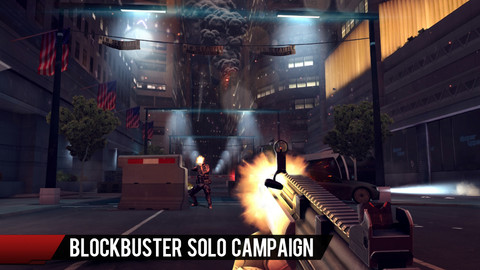
Modern Combat 4 is Gameloft’s latest attempt at bringing a solid FPS to touch screen gaming, which sounds like a pretty ambitious feat when you read that, and it is when you consider the limited screen real estate they’re working with. Luckily, the customization options, such as making any button on the screen movable and scalable, make the initial shock abit more comforting. Although the game doesn’t actually let you know you can customize the controls straight away, once you figure it out, the controls can become bearable after about 15-20mins. That’s my only problem with the basic premise of an FPS on a phone, whose going to make that effort if it’s not easy to pick up? Simply moving your character around is the hardest part you’ll adjust to, and sliding fingers over which way you walk limits the screen real estate even further. It’s a clunky experience, but it’s not one without merit.
Visuals and Audio
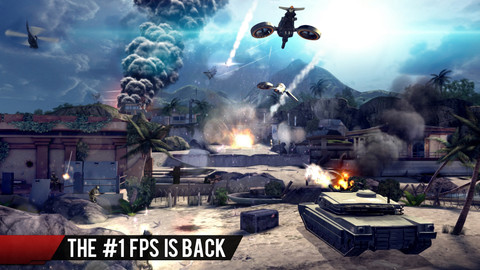
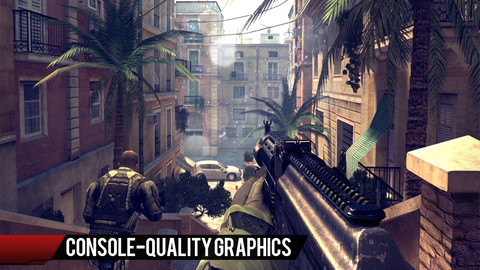
Firstly the visuals, whilst not artistically special, are some of the best I’ve seen on a portable device. The textures, the special effects and some of the animation really make you feel like you’re on a battlefield, right in your hand. The style however is pretty much limited to a Call of Duty rip off, which is not really a bad thing when you consider any other FPS on the platform. I certainly can’t think of any that come to mind, other than something like Epoch. Some of the animation isn’t up to scratch, and when you look at the rest of the game, it can stand out. Death-animations, which have improved from previous entries, are still clunky and unnatural. But once again, being spoiled by console quality animation can make you forget about your little mobile brother, which is slowly improving.
The dialogue isn’t something to write home about, it will annoy you with things thrown around about killing americans and generic observations on conspiracy theories, nationalistic vigor, and, of course, terrorism. The highlight would have to be the soundtrack, the combat dialogue and menu screen music, they feel genuinely suitable to the games style.
Gameplay
Controls are a big deal in First-person-shooters, I mean you really appreciate it if you get total accuracy. This isn’t always going to be the case with MC4, but going into it you’re pretty aware of that. You’re better off playing this on an iPad is all I can say, where your fingers are less likely to get in the way. Once you’ve built momentum with your phone though, MC4 can be an enjoyable experience. The story leaves a little bit to be desired, especially the dialogue. The basic premise is terrorists, nuclear threat and rescuing world leaders. Sometimes you play the good guy, sometimes you play the bad guy. The bad guy is probably the highlight, especially with hilariously cheesy dialogue. To be honest though, I wasn’t invested in any of the characters, hardly remember their names and wasn’t volunteering to review this game because of the story. This brings me to level designs, which include all the standard set-pieces from modern shooting games, except on your mobile. Unmanned drones, snipers, being separated from your squad and being vastly outnumbered are all here.
If you have the time, online multiplayer is once again the star of the show, 12-player deathmatch battles and team objective-based modes are remarkably good, when you consider the entry point for the price. However the in-game purchases to unlock weapons is a bit of step in the wrong direction, which may turn you off the whole thing. But if you’re up for a decent FPS experience in your hand, taking cover, knifing people, finishing some decent set pieces and fun multi-player, MC4 gets it right most of the time.
Overall
Modern Combat 4: Zero Hour isn’t going to win any real awards, but it’s a step in the right direction for mobile FPS, you can’t deny it once you play the game. Perhaps one day people will be sitting around arguing joysticks vs fingertips vs mouse/keyboard, that’ll be the day. Until then, we have the teething pains that is MC4 and it still manages to be enjoyable.
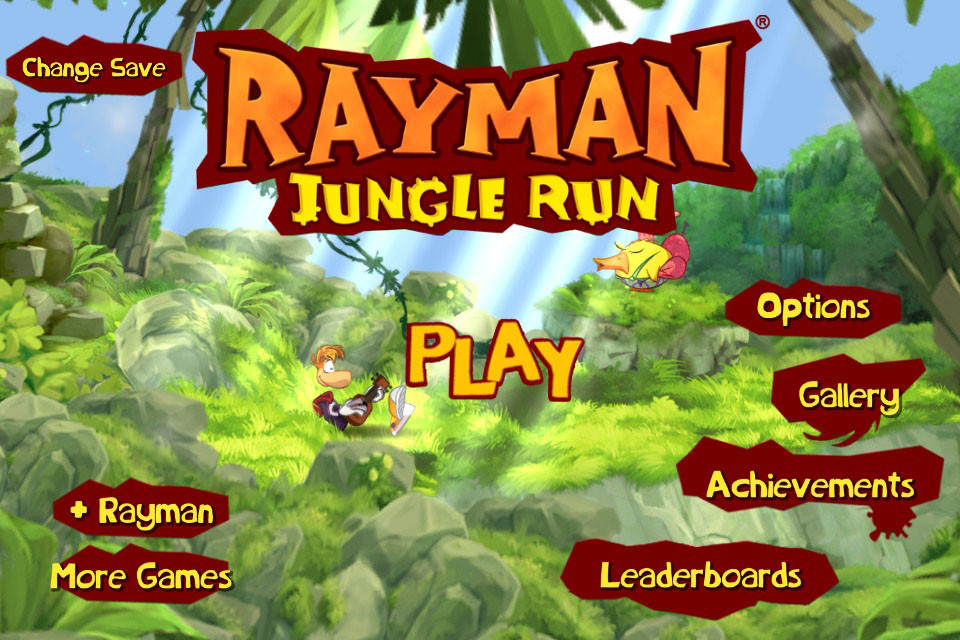
Its that time of year again and Ubisoft have announced that Rayman, with only his 2 hands, feet and a heartbeat has taken the crown of Game of the Year for Rayman Jungle Run selected by Apple across the United States, UK, Japan, Chinese and Australian markets to name just a few. Jungle Run is developed by Ubisoft Monpellier and Pasta Games and is powered by the same UbiArt framework engine as the award winning Rayman Origins. Featuring high end graphics specially optimised for mobile devices as well as smooth touch based controls Rayman Jungle Run is equally challenging for those new to the game as well as those seeking a definitive challenge.
The Game recently received an update implementing a huge array of new features including 10 new levels as well as expanded gameplay with new interactvive elements. Rayman Jungle Run is available for iPad, iPhone and iPod touch as well as all Android devices for $2.99, Click here to download your copy today.
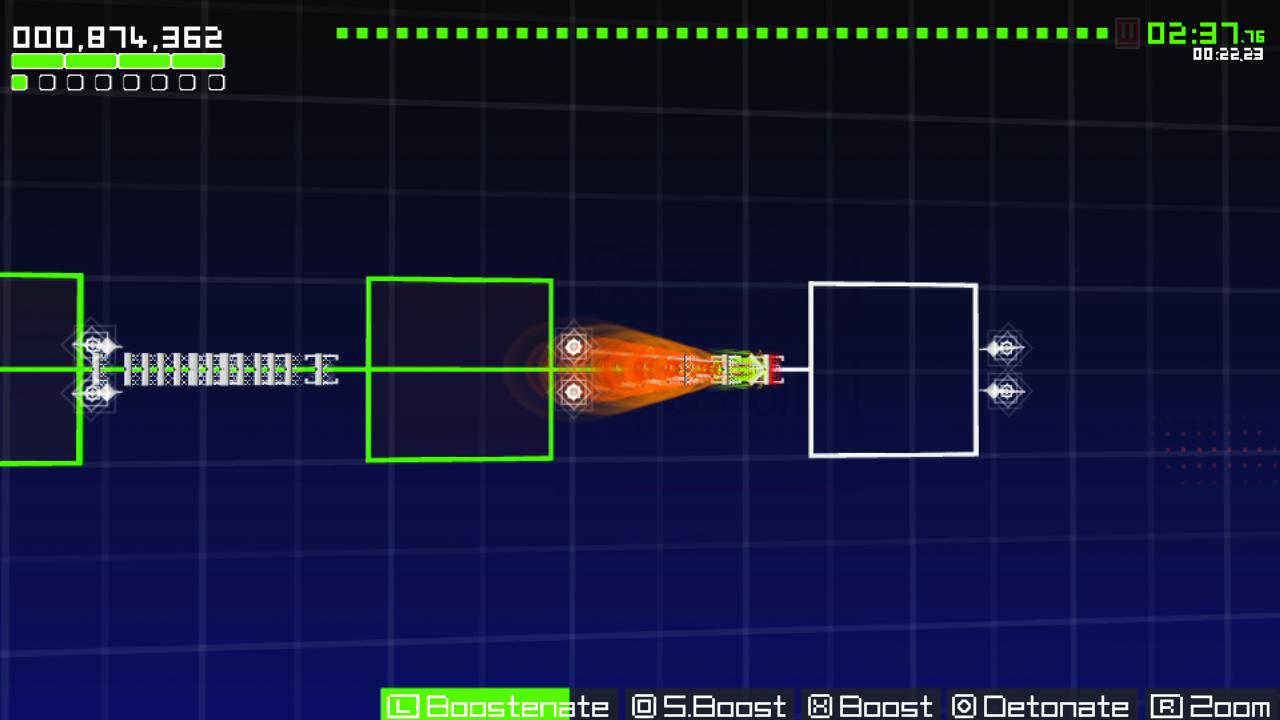
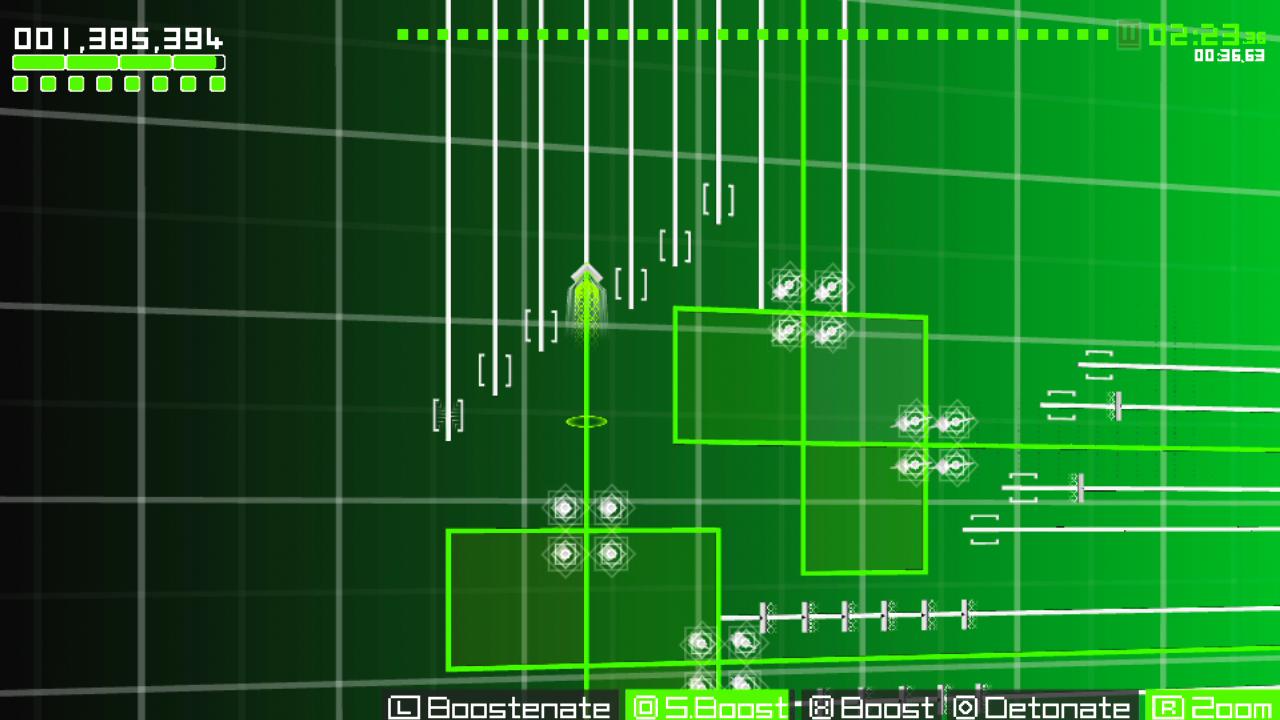
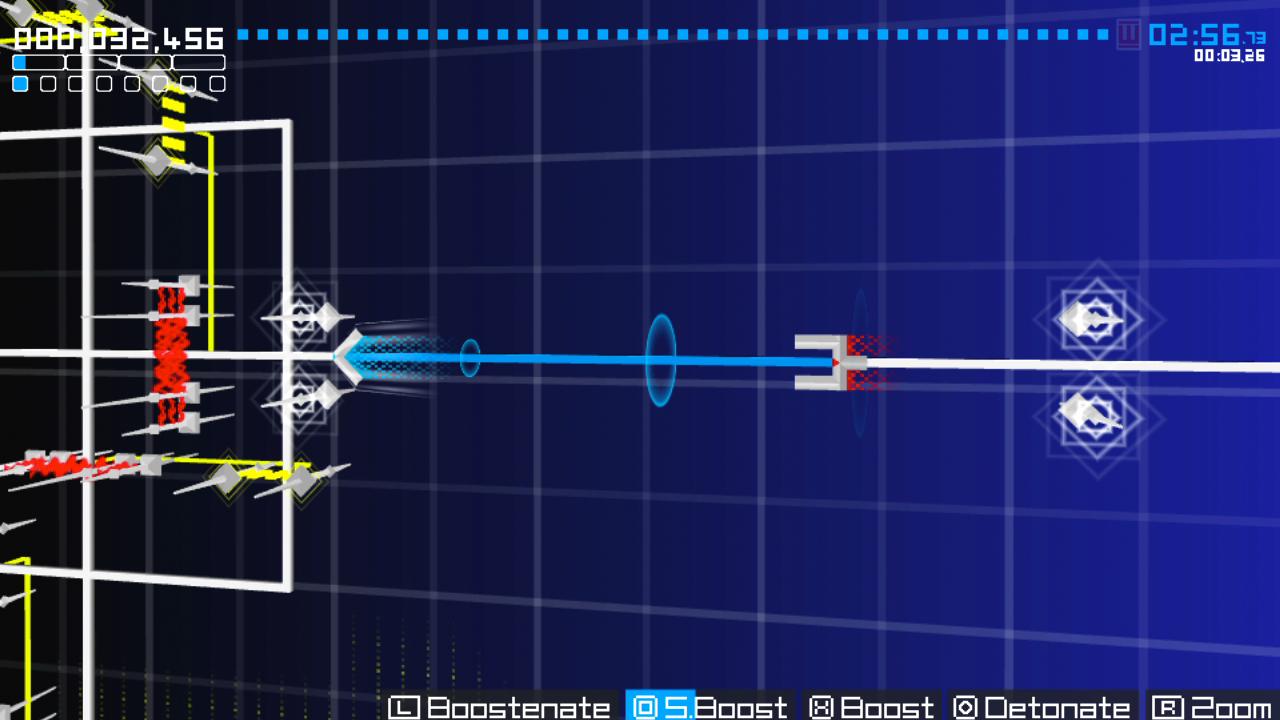
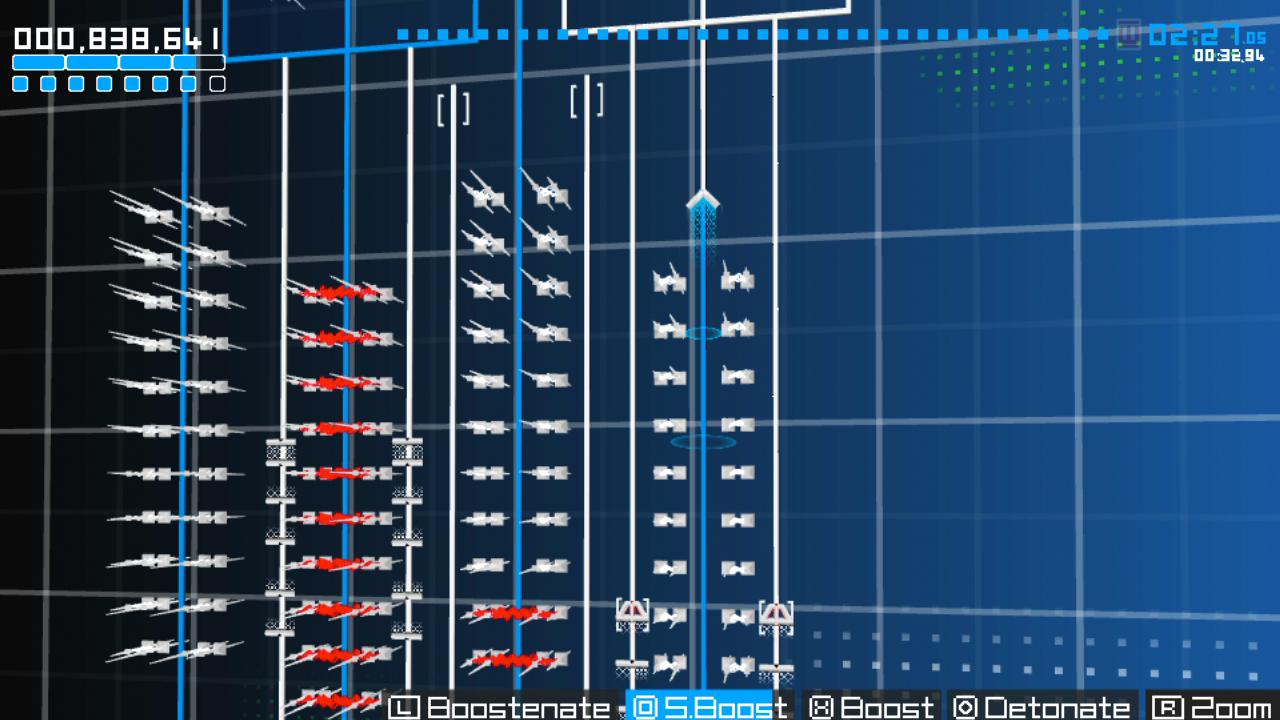
The Australian contribution to the Playstation Vita game library continues this week as independent game studio Nnooo will be releasing escapVektor. escapeVektor will be released on the European, Australian and New Zealand Playstation Stores on December 19, which is this Wednesday, at the prices of €9.99/AUD$15.95/NZD$18.90. The series was initially a four chapter series before Nnooo decided to develop the game as one entity.
Here is a small description provided by Nnooo on the game:
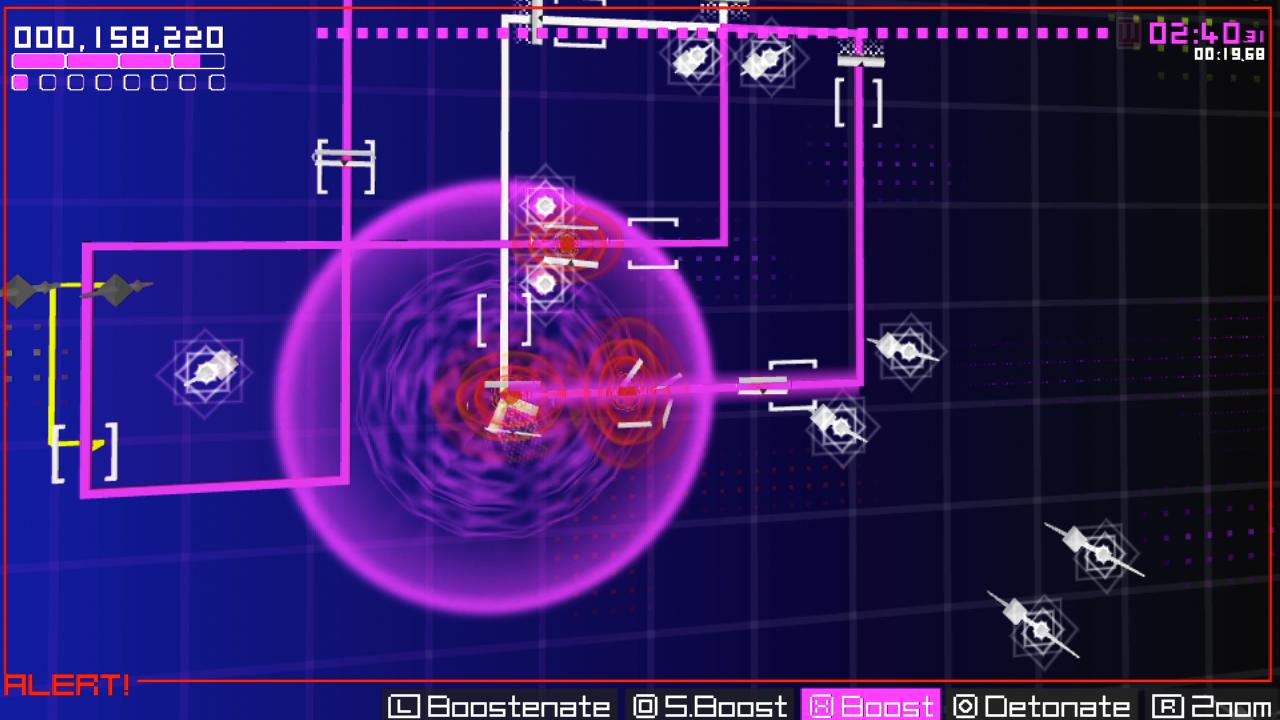
escapeVektor is a retro styled arcade game in which the player controls Vektor, an entity trapped inside the player’s CPU. The player has to help Vektor escape the CPU which has been holding him captive. In making his escape, Vektor must get through obstacles and avoid enemies, each with different hunting patterns and intelligence. As the player completes the various levels in the game, escape becomes more difficult. New abilities unlock to help the player outwit and destroy the CPU’s army. As the player continues through the game, old code and memories are unlocked which reveal more about Vektor’s past.
Nic Watt, Creative Director at Nnooo, talks about the features of the game:
“There are 150 levels in escapeVektor, spread across 27 different worlds. We’ve also included additional enemies and obstacles, 3 types of online leaderboard and a new Wildcard system. We’re really happy with how this “complete edition” version of the game has turned out.
“The game uses the unique features of each handheld device. On the PS Vita we use the gyroscope and the touchscreen to adjust the camera angle and move Vektor around in the overworld maps, and we’re also making use of Near functionality to drop additional Wildcards that players can pick up and use.”
Check out some screenshots of the game as well as the trailer below.
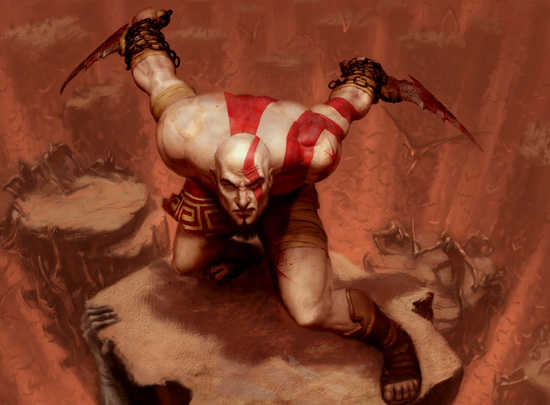
We’ve all known Kratos for years now as God of War‘s ashen-skinned, chain-blade wielding man of vengeance with iconic red war paint. As it turns out, though, Kratos didn’t always have red war paint.
According to a blog post by David Jaffe, the Crimson Killer did not have his iconic color until just days before the game was first announced. Instead of red, Kratos was adorned with royal blue until a member of the God of War team brought up Diablo 2‘s Barbarian character. Having played the first Diablo title but not its sequel, Jaffe was unaware of the similarities.
After being made aware of the obvious color match, the color was quickly changed and the rest is, as you they say, slaughtered mythology.
Tomorrow Corporation, creators of World of Goo and Henry Hatsworth, have released the soundtrack of their newest title, Little Inferno, as a free download. The John Williams-inspired soundtrack is available in both MP3 and FLAC formats, or for streaming from SoundCloud. The soundtrack’s page also includes an individual breakdown of each track for some behind-the-scenes info from the composer.
According to Kyle Gabler, the composer for Little Inferno’s soundtrack:
I’m a big fan of movie music from the 80′s and 90′s – like John Williams (1993 was his most amazing year), Danny Elfman’s 90′s heyday, Vangelis in the early 80′s – all with strong melodic themes and instantly identifiable orchestration. It was my goal with this soundtrack to write music that sounded like it could have been written in that time of VHS tapes and Stan Winston special effects, with clear, hummable melodies for each character and theme.
Hit the link here to check out the free soundtrack.
Introduction
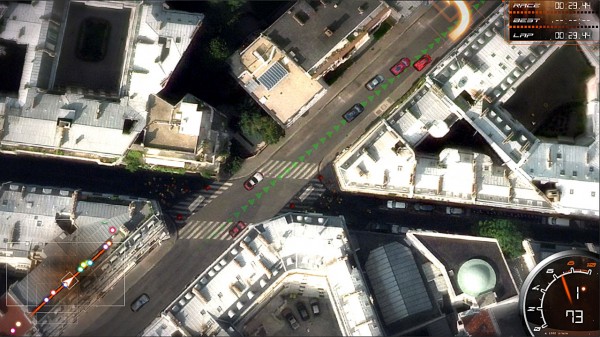
Unlike other top down racing titles, Real World Racing is to emulate real life aspects instead of fantasy themes. Playstos, the game’s developer, intends the title to capture different city environments to allow players an escape to another place in the real world.
Visuals/Audio
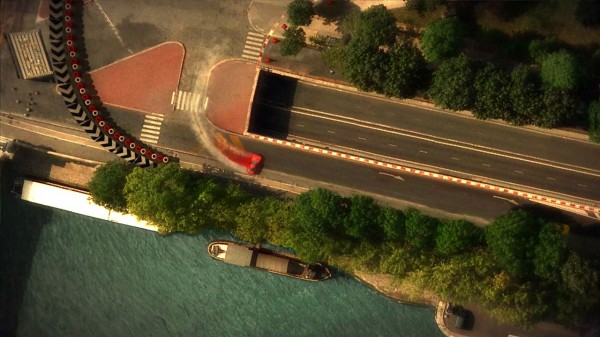
The concept of a top down racing simulation might be a bit stretching, but the idea of using satellite maps to incorporate raceways is one way to promote realism. And beyond that imitation of the environments, the developers are enhancing the existing landscapes with 3D effects. With this being said, level design and environmental development seem to be the strongest aspects of the title.
However, the struggle that can be noticed is the environment versus car realism. From the top down view, cars appear to look very similar with few differences aside from color and length. Although possibly hard to implement from a top down standpoint, the cosmetics should be altered to make vehicle models differ from one another more-so than by color definition. In correlation with the environment, the vehicles lack realistic texture.
At this point in development, races can become glitchy at moments. Playstos openly admits that they are actively working on improving performance issues with game rendering. While some frame-rate stuttering is noticeable during the preview, I can expect these bugs to be fixed in its beta stage.
One aspect that Playstos can take to heart is their ability to design a sleek interface. The UI design for the garage opens a visual apparition of each car the player owns as well as individual statistics. Even beyond statistics, players can interchange and visualize different color appearances for each car type. I like where the user interface is at the moment, but I would like see some more advancements with vehicle part customizations along with a separate options menu.
Musical interlude for main menu and garage/stage select screens is provided as a crescendo tempo that can be noticeably recognized as a simulation geared theme. Beginning very light the background music becomes louder and tiers into multiple sequences similar to the intensity of the racing environment. However, only a single track is noticeable at the alpha stage whereas multiple tracks could enhance the player’s “between stages” gameplay.
Gameplay
During the preview, the cities of Rome and London opened their streets to this maniac. I felt that the vehicles should be decently destructive once acquiring 200 mph. Yet ramming into side buffers yields no damage to the vehicle and depending on the collision glance off the blow. Rounding corners and slamming into the side rails may reduce speed by 30 mph leaving the car untouched. Unless your vehicle has horrible handling, there should be no need to even touch the break key.
What did I like about the current state of the gameplay? Car statistics actually come into play. Players will have to choose a car that has amicable characteristics to fit their needs. An example of this would be to wisely choose a vehicle that has high handling and acceleration in a city with many corners. Instead of relying on having the top speed, vehicles that have high acceleration and handling will be better to ride the corners and maintain decent speed at the same time. On the other hand, races that have long stretches of straight roads will demand a top speed vehicle.
I noticed that Playstos did not implement all of the games features as of yet which dumbs down some of the gameplay. An example of this is the exclusion of drifting races which is in the developmental process. Drifting could be one of the major selling points of the title – more so than racing online! However, it is hard to tell only in the alpha stage. Right now the simplicity of normal races offers little compared to zanier titles with cars that have attached rocket launchers. Another instance that I am on the fence about is the levels of difficulty. It seems that no matter what difficulty you are in once you wreck it is hard to emerge from the bottom ranks unless you are in a 10 round race.
Conclusion
A top down racing simulation might be a hard genre to sell due to more realistic and visually appealing racing games already on the market. However, I can see a few aspects that will work in its favor. Real World Racing is providing real world environments for players to race on then enhancing them with 3D effects. Another promoting factor will be the cost effectiveness of this title. Playstos has already mentioned to the public that Real World Racing will be very affordable to the public and hopefully even more-so if “greenlighted” through Steam. Lastly, the game is only in its alpha stage. Real World Racing is still in its premature stages and has a lot more features to be added before release.
I would like to wish Playstos the best of luck in making this title become a success. I have seen glimpses of such success with the crisp implementation of the user interface, and I would like to see more of that potential spread throughout the rest of the game. To identify yourself with the game better, head over to the Real World Racing website (here).
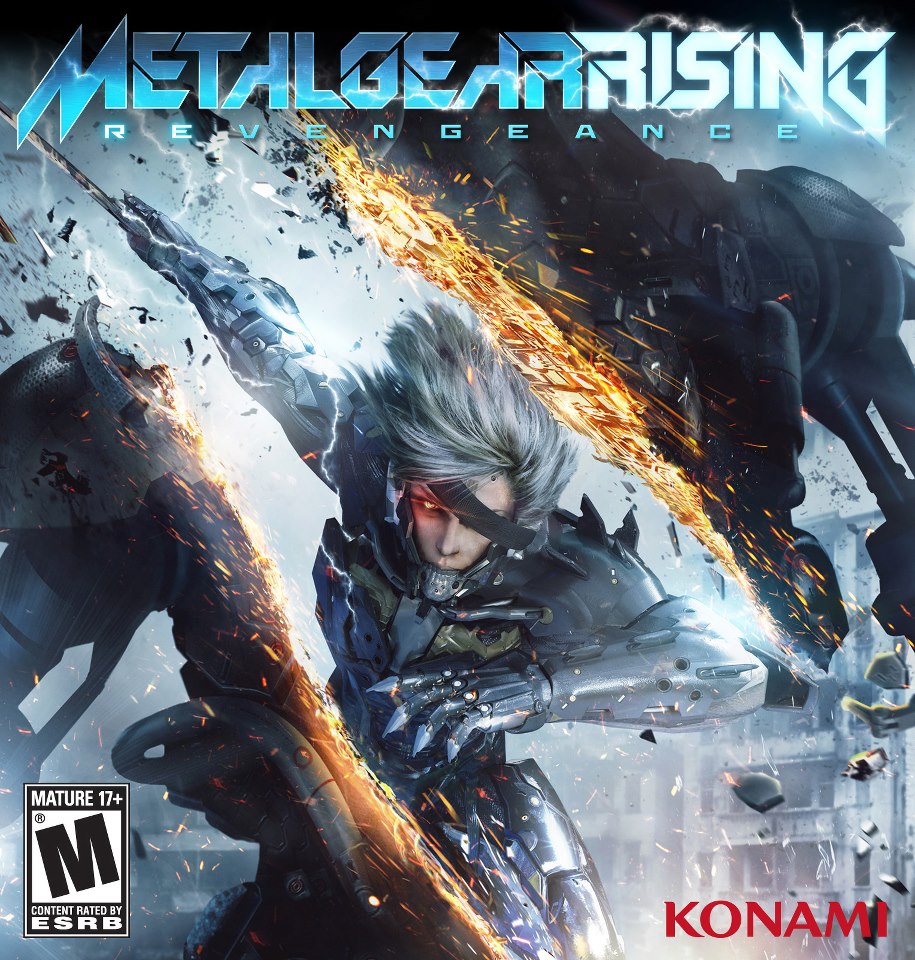
Today Konami has chosen to reveal what the box art for Metal Gear Rising: Revengeance will look like on store shelves once it hits stores on February 19th in North America and February 22nd in PAL regions next year. The box art can be seen to the right and anyone who wishes to see a larger version of the image can simply click the picture.
As you can see, this box art features a nice action shot of Raiden slicing through an unknown enemy, which fits nicely considering in the game itself, players will be able to slice and dice their enemies into a hundred different pieces if they so feel like.