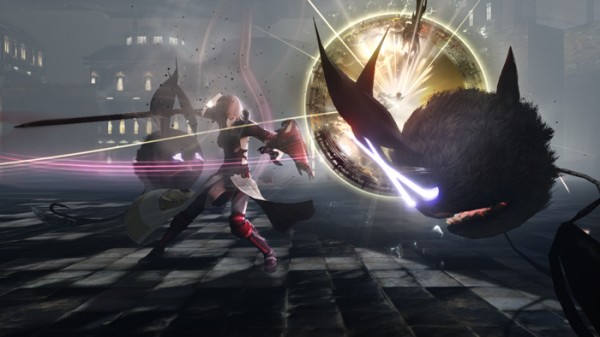
While all we officially know in the West for Lightning Returns: Final Fantasy XIII is from a trailer, the latest issue of Japanese magazine Famitsu contains quite a few details that were left out of that minimalistic trailer. As such, we’ve gathered together all of the information contained in the leak as provided by Game Nyarth.
First and most importantly, the new battle system is currently being called “Amazing ATB” though Square Enix has currently not settled on an official name for the system. In battle players will be able to perform various attacks which are mapped to the face buttons on the controller. As you defeat enemies in combat you will earn points to increase her available time as well as items that improve her equipment.
It also has been confirmed that Lightning will be the only playable character though according to the magazine, the new system makes this solo combat fast-paced and exciting. Enemies will appear in towns and about half of the game’s enemies will be brand new.
Players will be able to move between continents on foot or by monorail in a new system called “open world” and apparently the world will be rather large. The magazine also lists that test players were able to clear the game in two to four days worth of game time and while it is possible to increase your time limit past the 13 day deadline, the method for doing so is still secret.
It is also worth noting that the ending will not change much depending on how long it takes you to finish the game, but certain events appear to be time-specific meaning it is possible to miss a number of side-events that can then be experienced in subsequent playthroughs.
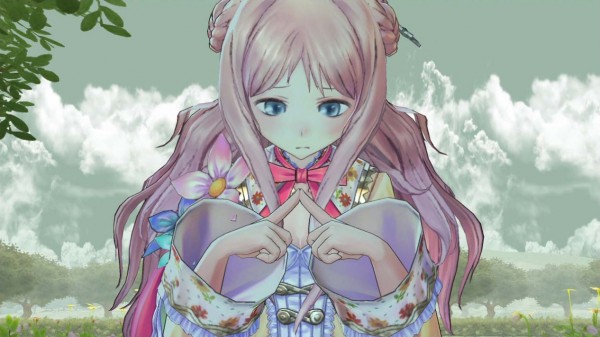
Remember that announcement that Compile Heart as going to make today? Well it was a brief trailer teasing a game that would be revealed on Thursday, but don’t worry, Dengeki PlayStation details have already been leaked. As such it has been revealed that they are making a sequel for the Mugen Souls title under a new name called Mugen Souls Z.
Apparently players play as a new character called Shirma that uses a coffin for a weapon, is voiced by Sachika Misawa, the voice of Kuroyukihime in Accel World, and she has two followers named Ace and Nao, who are voiced by Yuki Matsuoka and the popular Rie Kugimiya respectively.
The details list that there will be twelve worlds to conquer as Shirma and the combat system has been revised slightly to add in more co-op attacks as well as something called “Chou-Chou Energy.” Currently Mugen Souls Z is set for a PlayStation 3 release in Spring 2013 in Japan and anyone who reserves the game from a Japanese retailer would receive a Nepgear Veil avatar as a pre-order bonus.
It appears that all of the threat letters and event cancellations surrounding Kuroko’s Basketball (also known as Kuroko no Basuke) aren’t doing anything to limit the manga’s popularity because today it was revealed by Manga News Japon’s Twitterthat the next issue of Shonen Jump Next contains a reveal stating that the manga will be getting a second anime season.
Currently it is unknown when the anime will air nor have any actual details about the production studio have been revealed but it is worth noting that the first anime season aired earlier this year and the episodes were streamed on Crunchyroll, and are still available for viewing, but were not licensed by anyone in the West.
It is worth noting that Gust, the developer of the Atelier titles, has not officially confirmed this rumor and as such it should be taken as such. However yesterday it was discovered by Game Jouhou that a listing for Atelier Meruru Plus appeared on the 7Net online store in Japan.
This listing revealed that the game will apparently be released on March 20th in Japan in two different versions, a standard and special edition. It will feature not only new bosses like Atelier Totori Plus but also a slew of new costumes as well.
This leak isn’t too much of a surprise, considering the fact that Atelier Totori Plus was recently released in Japan and must have done well enough to warrant continued support for Plus versions of the series on the Vita.
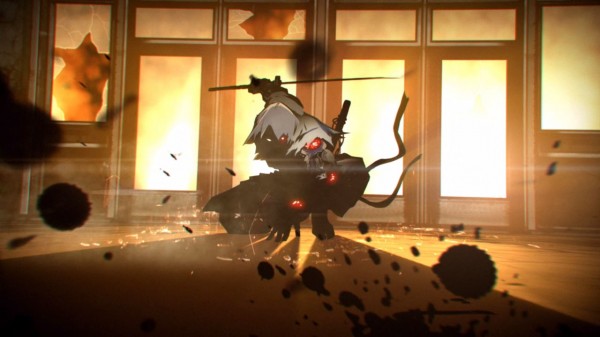
Little is truly known about Yaiba: Ninja Gaiden Z, outside of the fact that it will be a Ninja Gaiden spin-off featuring zombies and robots and even stranger elements. However it appears that thankfully, the game will not be exclusive to any specific console.
The latest batch of job listings that have been posted by the developer for the game, Spark Unlimited, reveal that the game will be “a bold new take on 3rd Person slasher with Horror elements for the PS3 and Xbox 360.” Obviously this is decent news for fans who may have been worried that the title would only be available for the PlayStation 3, though any new Wii U owners may be disappointed.
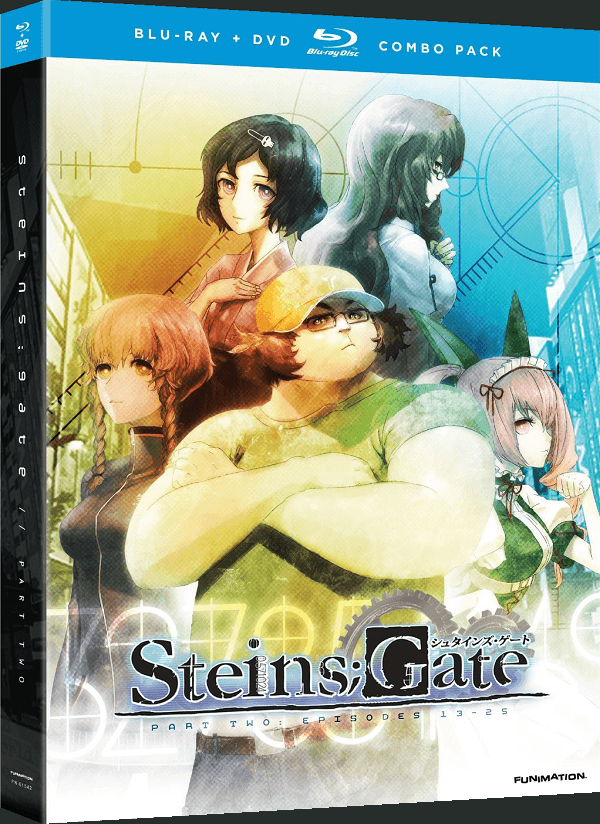
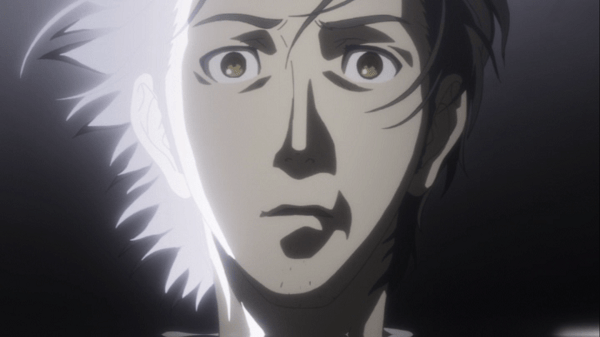
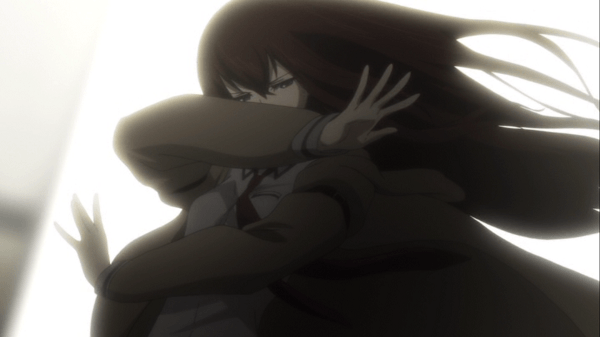
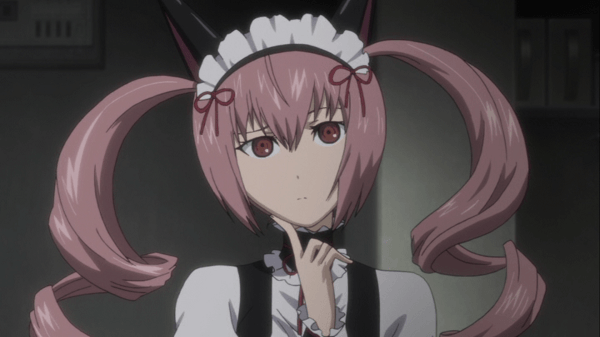
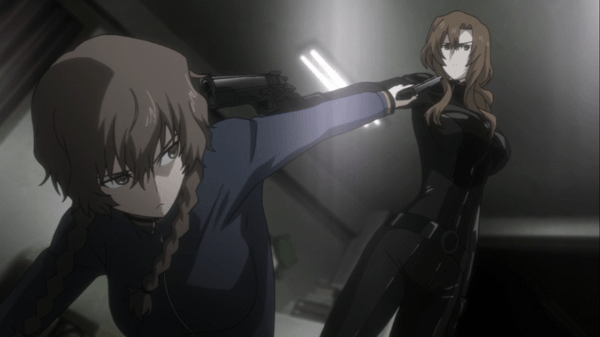
Steins;Gate: Complete Series Part Two Studio:White Fox Publisher: FUNimation Format: Blu-ray/DVD Combo Pack Release Date:December 18, 2012 Price: $64.98 – Available Here
Overview: The second half of a series can do many things. It can either continue the normal aspects of the first half of the show or drastically change the tone of a series by introducing new and intriguing elements that will not only keep fans of the show watching, but ensnare new viewers with the series’ new direction. Such is the case with Steins;Gate.
Whereas Steins;Gate Part 1 (the review of which can be found here) had its share of drama and mystery, many of those aspects were overshadowed by some more comedic and slice-of-life happenings. However when Steins;Gate Part 1 ended, viewers were left with an extremely shocking cliffhanger. Does Steins;Gate Part 2 provide a similarly spectacular experience as the first half?
Story: Now it should really go without saying that anyone who jumps into the second half of the series at this point will have no idea what is going on, nor should any reader expect this review of Part 2 to not spoil some events of the first half of the series. That being said, here’s a quick summary of the first half of the series.
The story follows a man named Rintarō Okabe who is a self-proclaimed mad scientist studying the idea of time travel. Now when Okabe manages to discover an actual way to send things through time, he realizes that his actions can drastically change the world around him as the timeline shifts according to his actions. The first half of the series serves itself well as a set-up to the events of the second half by making viewers grow attached to members of the cast and also introduce a number of time-travel aspects and theories that are not only well explained, but can be ran with in the second half of the series.
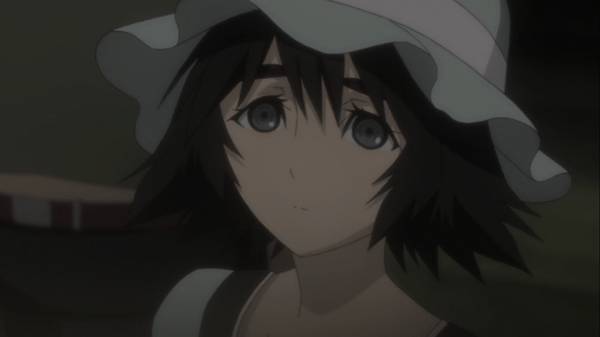
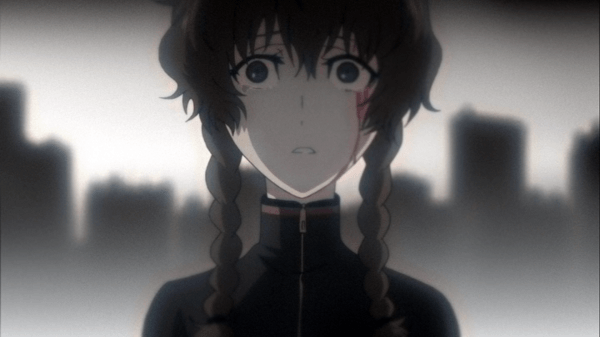
Ironically, the best reference to the second half of Steins;Gate for Western audiences is a movie nearly twenty years old. However this movie, called Groundhog Day, is the best example of the situation Okabe finds himself in. At the end of the first half we find that Okabe and his friends’ activities have been tracked by an inside source and when the phantom organization does appear to put a stop to their time-travel plans, the young girl in Okabe’s care, Mayuri is shot and killed. However with his new ability to send his conscience back in time to an earlier version of himself, Okabe throws caution to the wind to try and save Mayuri’s life.
Thus, Okabe finds himself trapped in a loop of repeating events as he constantly tries to save Mayuri from dying but failing at every turn. Watching a character which earlier in the series spent most of his time having fake conversations about an “organization” or joking around about being a mad scientist slowly devolve into a defeated man who has seen his friend die countless times in horrifying ways makes for powerful drama and every failed attempt will feel like a body blow to the viewer.
Things can slow down a little bit thanks to the fact that, true to his time jumping ways, Okabe and viewers must relive certain sections of the anime multiple times but it is intriguing to see how Okabe must make specific decisions each time with his knowledge of past outcomes to make another attempt at saving Mayuri’s life. Thanks to this, there often seems to be an almost peaceful tone over the show despite the drama behind the scenes.
In fact, the second half of the series sees Steins;Gate become a potent drama thanks to many of the choices Okabe must make in his venture to shift the timeline enough to save Mayuri’s life. While the series can be a bit difficult to follow over time, often thanks to the fact that at times the viewer has no idea how many times Okabe has re-lived a certain scenario only to fail, the terrible decisions that Okabe must make and force on his friends can be quite tragic as their new happy lives must be sacrificed for their friend make for an emotional but ultimately satisfying series.
Visuals: Steins;Gate continues to impress visually throughout the second half of the series though it is worth noting that the overall brightness of the already subdued color palette and the show overall has dropped as the show focuses heavily on the drama. That being said, there are a lot of special effects added into the show that provide some great visual flair, especially in regards to Okabe’s time jumping or failures with Mayuri.
Throughout the second half the character designs remain rather consistent and the environments are just as well detailed. It is also worth noting that the amount of text messages that have been subtitled has dropped significantly in the second half of the series, meaning viewers will not have to worry about speed-reading them during their brief time on screen that often.
Audio: Thanks to the emotional drain on Okabe and the amount of drama that takes place during the second half of Steins;Gate, the English voice actors shine better than they did in the first half of the series. While, as one would expect, Steins;Gate Part 2 does offer both the Japanese and the English voice tracks, the English track’s voice work packs a heavier emotional punch due to the quality of the dub.
As far as background music goes, there are a number of impressively used sound effects and dramatic tracks that do wonders when paired up with the events occurring on screen. The rest of the background music is forgetful outside of these well-used tracks however. It is also worth noting that the opening theme remains the same “Hacking the Gate” by Kanako Itō while there is only one main ending song in the second half, which is the already familiar “Toki Tsukasadoru Jūni no Meiyaki” by Yui Sakakibara and a special ending used once called “Sky Clad Observer” by Kanako Itō.
Extras: As far as bonus features go, Steins;Gate Part 2 contain a rather basic offering such as trailers for other FUNimation anime, the English trailer for the ending and opening songs. It is worth noting that there are two versions of “Hacking the Gate” which feature different visuals so keep an eye out for the differences between the two and fans of the briefly heard “Sky Clad Observer” ending can listen to it again here.
Also included are commentary tracks for episode 19 and episode 24. Episode 19 features Patrick Seitz who is the Script Adaptor for the series and also voice of John Titor as well as Jessica Cavanagh who voices Moeka. The two mention how much they love the series as well as other aspects of the show, though it isn’t quite as enjoyable as other FUNimation commentaries.
As for episode 24, we have Colleen Clinkenbeard the director for the series, Nathanael Harrison, the senior mixer engineer and Stephen Hoff, the ADR engineer. This is a very technical commentary track which is actually rather interesting thanks to the fact that the three discuss many of the different aspects that go into creating a new English dub for a show such as Steins;Gate.
Overall: With all of the set-up over the first half of the series, Steins;Gate Part 2 sees Okabe drop his preconceptions of the world and of time travel as he repeatedly breaks his own rules to try and do anything to save someone close to him. While some aspects of the show can be complicated and difficult to understand, this goes to show how well-woven together the plot is that even if someone doesn’t manage to understand everything, they will find Steins;Gate’s second half incredibly emotional and intriguing thanks to Okabe and the group’s emotional journey to save a friend’s life and set the world right again.
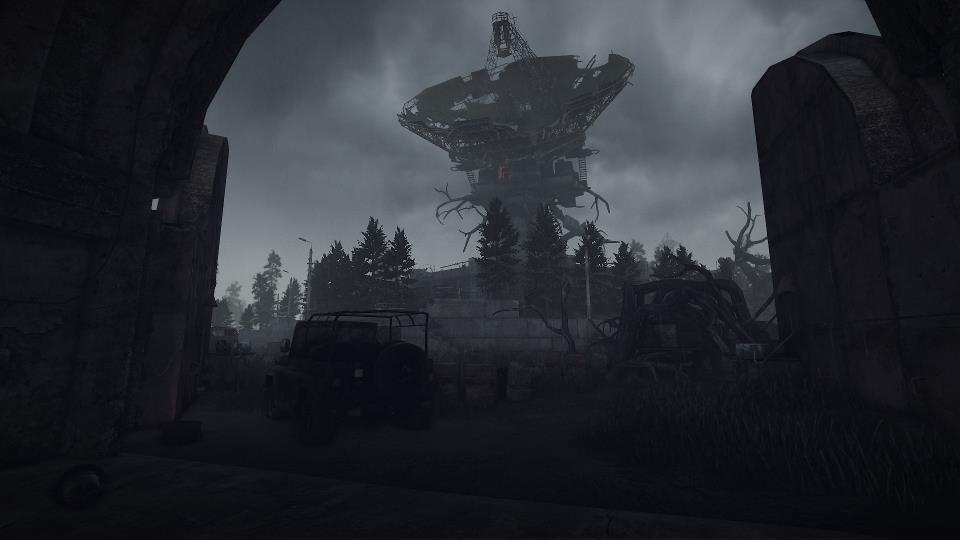
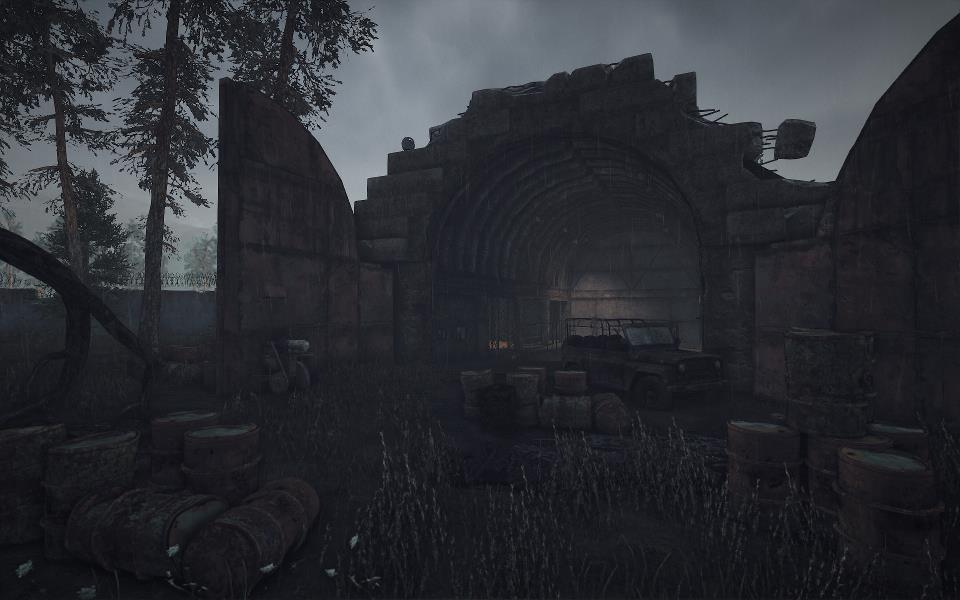
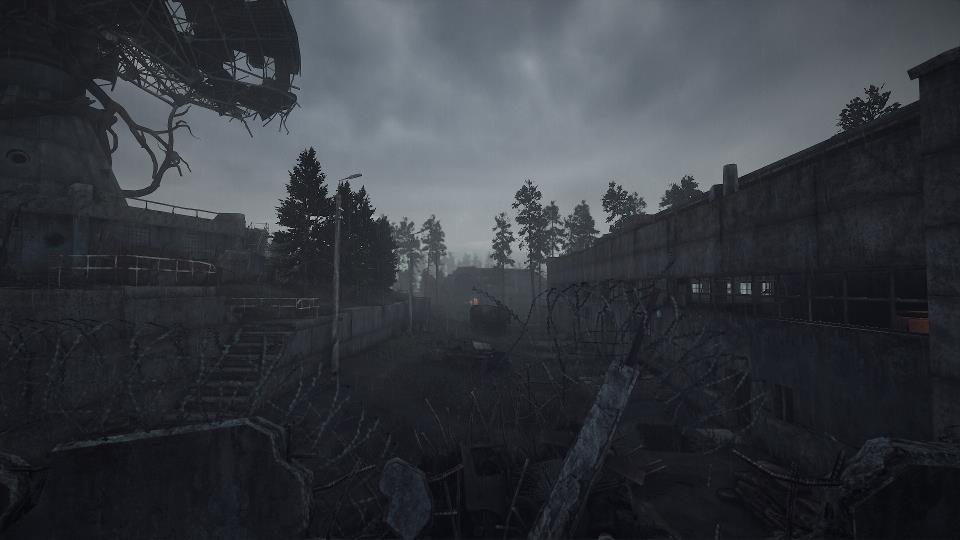
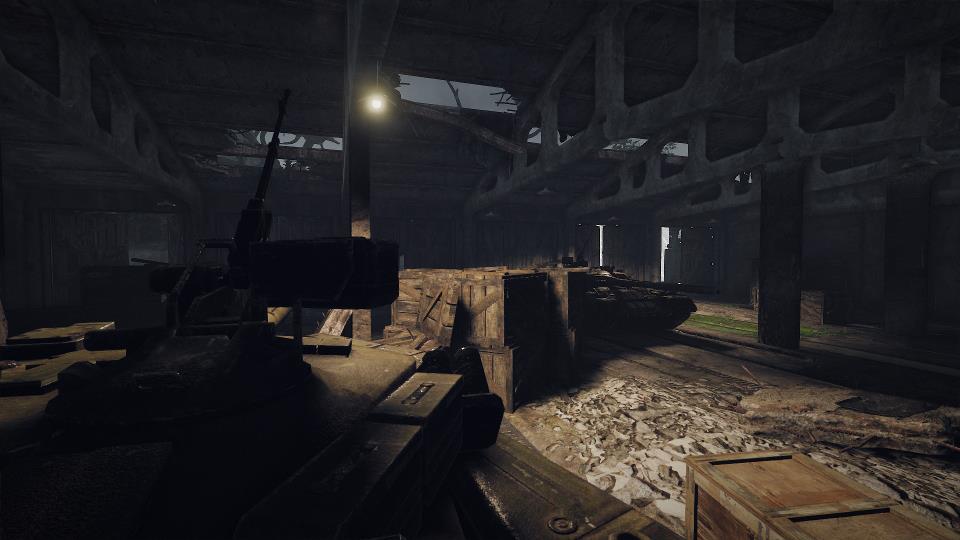
Survarium’s Facebook page released some new screen shots today in addition to announcing the launch of the game’s official website. The website features a few fun things, like a new wallpaper for Survarium in several resolutions here. For those unaware, Survarium is the spiritual successor to the STALKER series in the form of a F2P MMOFPS planned to release for the PC in late 2013.
The screen shots give the ambiance of a creepy, dark world that also manages to look full of things to explore. All this is a great setting for an MMO that will rely heavily on in game survival skills and awareness. The game will also feature a collective story that is affected by the actions of the player base, and some parts are not even hinted at by in game NPCs or quests and must be uncovered by the user exploring the world on their own.
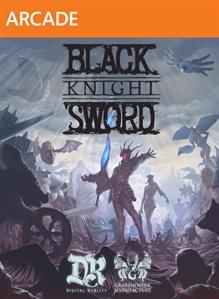
Black Knight Sword Developer: Grasshopper Manufacture, Digital Reality Publisher: D3Publisher Platform: Xbox Live Arcade (Reviewed), Playstation Network Release Date: December 12, 2012 Price: 800 Microsoft Points ($9.99) – BUY NOW
Overview
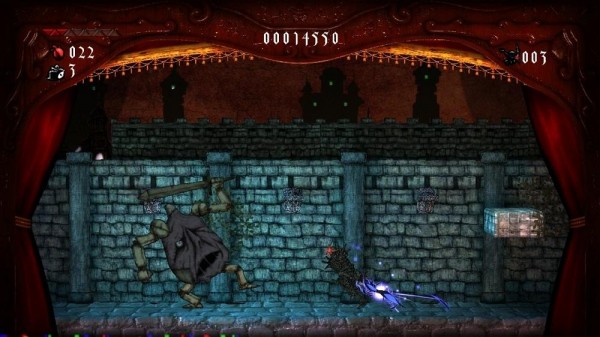
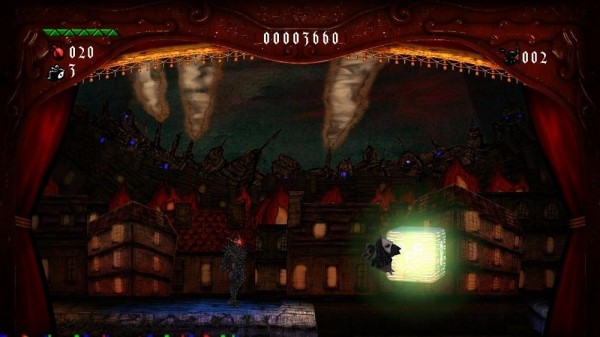
When a new Suda 51 title hits the market, a trip to the bizarre is a guarantee. Black Knight Sword is the result of a collaborative effort from the famed developers behind the likes Sine Mora and Lollipop Chainsaw, and proves to be one of the oddest creations we have seen in some time. For those unfamiliar, this game tells it’s twisted plot through a Kamishibai (Japanese Paper Theater), with a brave knight taking on an evil queen with a bit of that classic 16-bit feel attached. Does this off the wall, retro flavored romp prove to be worth the tickets, or do this knight’s strings need to be cut? Let’s find out.
Story
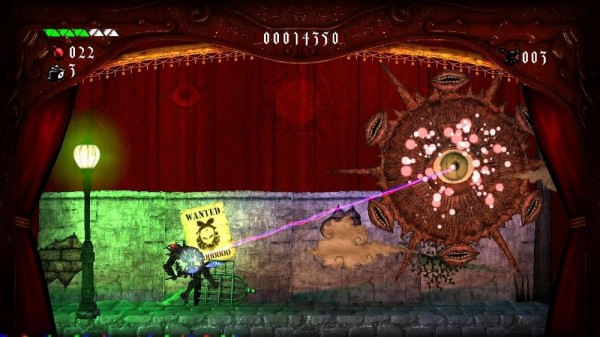
As mentioned, the narrative in Black Knight Sword takes place with a Knight being summoned to stop the chaos of the White Princess. Of course slaying the Princess is a bit away from the norm for the side scrolling genre, but in this world – just about everything works to the mayhem’s advantage. Every encounter you make, whether it be from a walking head to a giant eyeball that eats hearts is unique, providing a ton of incentive to trek on through the bizarre world ahead.
At times, this gimmickry can be a bit much – even for those who go out of their way for the over the top stylings. It’s not that it doesn’t all fit as this bizarre world is quite enchanting as it stands. The problem is that Black Knight Sword can get so wrapped up in weirding out the player that it seems to lose complete focus on the narrative and atmosphere it’s trying to set. That’s really just a minor takeaway though, as Suda 51 fans will still find their fix as they work their way throughout the game’s five main stages.
Gameplay
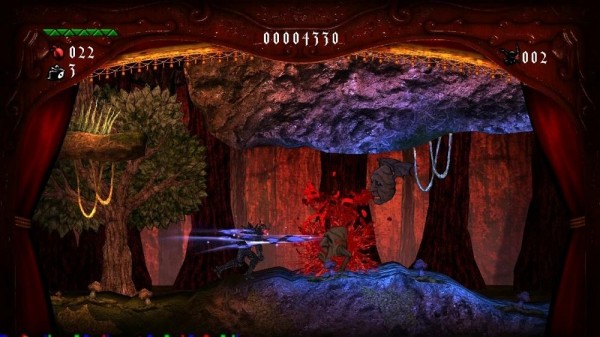
Fans of the classic side scrollers of the past will feel right at home here, as Black Knight Sword feels as if it was ripped off the Super Nintendo – at least gameplay wise, due to the simplicity of the controls. Players can use their melee (sword attack) at any given time, fire a projectile with the shoulder button, or perform a quick dodge and double jump to spring away from an enemy or over a pit. Yeah, it’s a simple scheme, but the game is anything but. This is a title that on normal mode can present a decent challenge to any veteran gamer, as every move you make needs to be taken with great caution due to the low amount of lives and punishment for death that is presented.
Starting out, the player will have three lives. Once those are lost, it’s Game Over and the current level will need to be restarted. Checkpoints might have come in handy, but a lot of this title’s charm comes from it’s archaic methods for difficulty, so staying alive so you don’t have to suffer the inconvenience of doing it all over again is really the main concept for the entire experience. Hearts can be collected from enemies, and then used as a currency to purchase upgrades and items to make your knight stronger. Remember that eyeball I spoke of? Well, he (or she..maybe it?) is your shop keep, who will trade those tasty delicacies for stronger armor, extra lives, and more health.
It’s a well oiled system in place that works well and is sure to teach the player as they play how to survive if they happen to fail a stage. Can’t beat a boss? Collect more hearts and get a stronger blade, upgrade that health bar, or snag an extra life. Much like Dark Souls, Black Knight Sword will make sure you learn from your mistakes, greatly enhancing the rewards of finishing a tough stage. If I had to complain about any part of the actual gameplay itself, it would be the dodging mechanic. It’s a no-brainer to roll out of the way when a strong attack is being used against our hero, but rolling can get a bit finicky from time to time and cause deaths if executed even a tiny bit incorrectly. Again, this can be fixed with a bit of practice and patience, but the flaws with dodging do stick out due to how polished every other action is.
After completing the campaign, Cat Head Grass mode is your more timid reward. Specific treasures can be collected as you partake in the campaign, which turn into…well, Cat Heads in flower pots that enjoy making melodies. It’s an odd gift for finding everything, but does it’s job well of inspiring multiple playthroughs. For those wanting more substance, a challenge and arcade mode can also be played to squeeze out more hours of the actual gameplay, giving further incentive to take this brave quest several times over.
Visuals and Audio
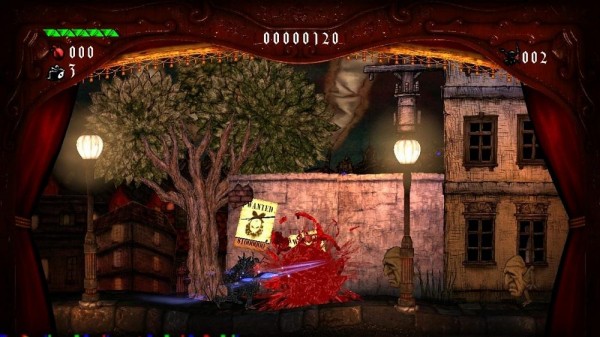
As you can tell, the main gameplay portions are pretty standard fare. The visuals while you are battling your way through Black Knight Sword however are the reason for attending this twisted production. Black Knight Sword presents itself as a marionette play of sorts (Kamishibai, as mentioned earlier), and is really all over the place. Environments are full of dark color and rigid, raw textures that will be soaked with the blood of your foes. Your knight will change himself as he grows in strength from the upgrades that are equipped as well, urging the player to keep gathering hearts and transform into a true warrior. This world’s tone is dark, but there is a bizarre sense of innocence that wraps itself inside the experience, creating a truly unique blend of unease and wonder.
I could praise the music that paints the portrait for Black Knight Sword, but I feel like the audio is all outshined by the crazed narrator, who provides unsettling commentary for the story at hand. As you progress, this voice will act as all of the characters in the game, making it feel as if you are being read a bedtime story by a insane warlock – and his job at performing these twisted dialogue sequences is nothing short of phenomenal as he alone will ensure you feel like you are in this kingdom of the crazy, like it or not. Yes, the sound effects and music set the atmosphere fine, but that unnamed narrator takes it one step further and gives this title’s gimmick a rich coat of frosting.
Overall
I’ve played a lot of Suda 51 games in the past, but Black Knight Sword may be the most bizarre and unorthodox creation we have seen come out of Grasshopper to date. That might not be for the game’s benefit at all times, but this is definitely one digital release that fans of the famed company should at least check out. Underneath it all, there is a challenging yet solid platformer that indulges in the madness, offering rewards to those who survive the evil princess’ treachery. No, it isn’t a blockbuster and doesn’t do anything revolutionary, but Black Knight Sword is still easily worth it’s meager price-tag and promises a truly unforgettable ride for those willing to make the plunge into darkness.
Are your siblings still sleeping and you want to open presents? Or maybe your family is wasting time sustaining their bodies with petty nutrients before the fun stuff. Or you are like me and are stuck on the lame side of the world where we are perpetually stuck in the past. Either way, presents are waiting to be opened and you don’t know how to deal with it. Worry not, you can spend some quality time revisiting the past on your browser by playing some classing Apple 2 games.
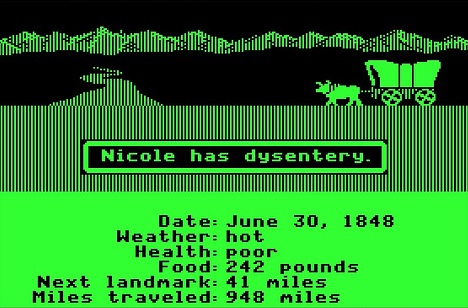
Oregon Trail has brought many memories of trying to cross rivers and failing, followed by Dysentery. Play as a family man moving across the old wild west of the United States.
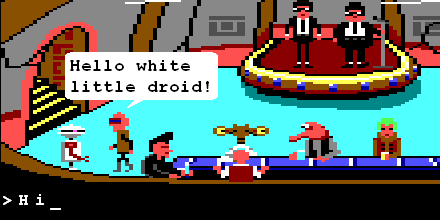
Space Quest A funny Sci-Fi game with influences from Star Trek and Star Wars. You plays as a janitor saving the galaxy but mostly through dumb luck.
Ultima IV: Quest of the Avatar will certainly eat up some time, and you may even come back to it later. With a sprawling world of blocky 2D graphics, your imagination is actually more free to roam in this adventure game.
So before you open your new presents with their spiffy graphics and sleek design, revisit the past so the future can look even more pristine. Happy Holidays, everyone.
Slender: The Arrival is the sequel to the popular survival horror game, Slender: The 8 Pages. Both games are based off The Slender Man mythos and are made by Mark Hadley with Blue Isle Studios. The original was already nerve racking and scary, but with better graphics and more levels this sequel could be even more horrifying (Note: Author of this article has been confirmed to be a “complete baby” by multiple sources).
The game is planned to launch in early 2013 to the PC and Mac. You can visit the official website here. Check out the trailer below, and let us know what you think of it in the comments section.