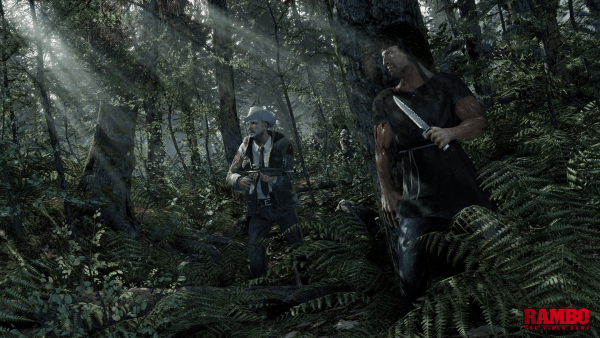
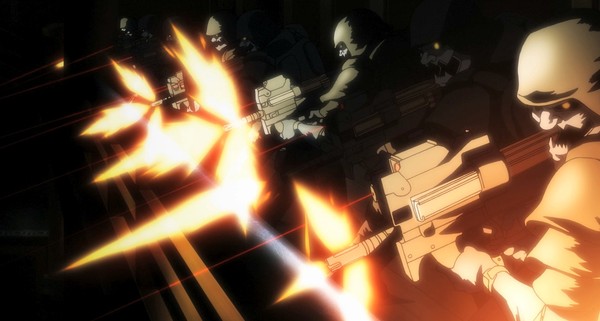
Yes, we’ve seen a few clean snippets of gameplay from Rambo The Video Game in a previous trailer, but a new compilation of raw clips has found its way online showcasing the HUD, interface elements and more of this on-rails shooter… and it’s not pretty folks.
Maybe the next film will center around the mercenary hunting down whoever released this gameplay video, because it will do nothing but hurt potential sales and lessen Sly’s royalties. If you’re a Rambo fan, maybe this will be too much for your heart to bear. Check it out below, but don’t say we didn’t warn you… it’s practically old school, arcade Time Crisis with a Rambo façade (no, that’s actually not a good thing).
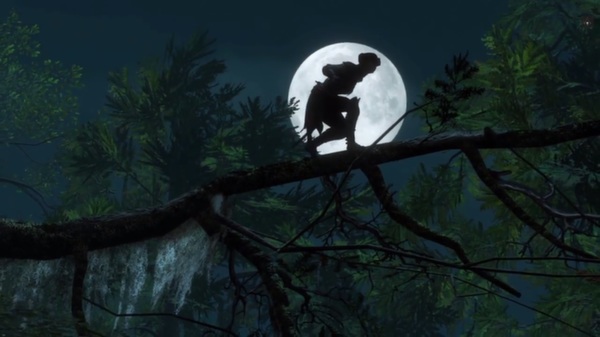
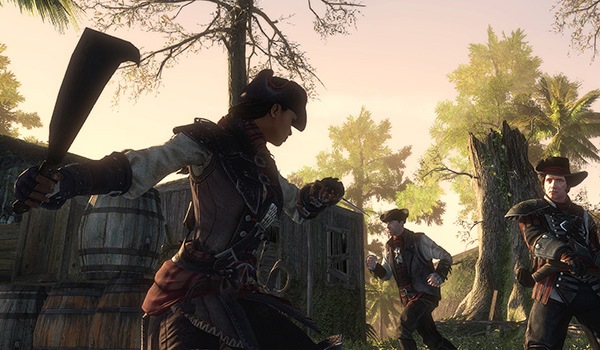
Almost two years after it launched as the must-have game for the PS Vita, Assassin’s Creed: Liberation has finally (to the delight of many) made its way to home consoles. This isn’t a straight port, and has brought with it a slew of updates. Everything from visually, to audio and even gameplay are far superior to the original version. However, the story of the Louisiana-born assassin Avaline de Grampre is not without its faults. No matter how many tweaks and upgrades the game has received, it was still originally made to be played on the go – and that really holds it back from reaching the same level as the rest of the series. In contrast to many other main series Assassin’s titles; Liberationis mostly small, overly easy missions and is outlined by graphical and gameplay bugs, as well as far too frequent, yet overly thin story sections.
Story
Set in Louisinanna after the French and Indian War, Assassin’s Creed: Liberation puts you in the role of Aveline; an assassin caught between three different worlds. One day after her mother vanishes, she is adopted and raised by a wealthy businessman and his wife – all while secretly training to become an Assassin. Avaline is determined to find her mother, put a stop to slavery in the region and make sure those responsible for both never have the chance to do so again.
Unlike past games, Aveline is not related to the regular series protagonist -Desmond Miles. Instead you are playing a game designed by Abstergo that puts you in the role of an Assassin purely for fun. This leads itself to an incredibly meta design choice by the developers. At the beginning of the game, you are informed that it was created by Ubisoft in conjunction with Abstergo. This is a clever nod to the series, as well as an attempt to
Liberation’s story is held back by its game-design. This is a title that was originally designed to be played on the go and in short bursts, which means that many of the story sections are quite thin compared to the rest of the series. Not only is there not as in-depth a story to go on but it also means that with the exception of Aveline, character development takes a bit of a hit. The story sections are also fairly frequent, breaking up the gameplay more often than I would like in an Assassin’s Creed game – every few minutes another short cinematic plays, which can really pull you out of the experience.
While the story does suffer in some parts, it does provide a few notable new additions to the Assassin’s Creed formula. Firstly and more importantly – Aveline is the series’ first female protagonist. After playing as Altair, Ezio, Haytham, Connor and Edward she is a nice change of pace. It is also fun to see her interact with people through her various guises and personae; the game really plays on the whole “stuck between three worlds” concept, which helps develop Aveline as a character – something that Altair Connor never really got through their campaigns, and that took Ezio three games to achieve.
Gameplay
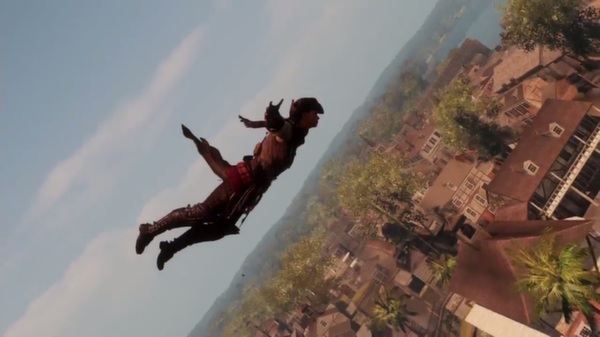
Anyone who has played an Assassin’s Creed game before will immediately be familiar with Liberation. The controls are all the same as the previous console installments, allowing you to jump straight into the action. The same stealth-based and free-running gameplay is here, and the choice of New Orleans for a locale means we get to see and scale some environments that are new to the franchise. Easily the most notable is the bayou – the overgrown Louisianian swamplands. You will need to use all of your free-running and climbing skills, as well as a series of small canoes to navigate your way through the murky waters.
Aside from the location, everything here is pretty similar to how you remember it from previous games. You will need to use a variety of tools and weapons to make your way through the environment in order to best assassinate your target and unravel the Templar mystery. Since this was originally a spin-off title to Assassin’s Creed III, it is easy to draw comparisons between the two. Thankfully Liberation doesn’t suffer from ACIII’s biggest downside – its tutorial. Connor’s tutorial (which lasted almost 1/4 of the ACIII campaign) was a thing of torture that detracted many people away from the game. Thankfully Aveline is a little quicker on the uptake and if anything her tutorial is too short. New players to the franchise aren’t given much time to accustom themselves to the controls of the game before it begins.
One of the most notable differences in gameplay that Liberation has from the other games in the franchise is the unique “persona” options. Aveline is a woman trapped between worlds – she is a black woman during the time of slavery, an assassin, and a member of a well-off family. While stuck between these three competing worlds, Aveline makes the most of them – by utilising three different personae in order to gather intel or complete her missions. Each of these personas has their own infamy level that can be changed in various ways, and swapping between two to complete a sequence is not unheard of.
The “Lady” Persona is unable to hold any weapons outside of her wrist blades and a few other small unlockable items as the game progresses (like a blowgun parasol). Likewise she cannot run or climb and must rely on her beauty and grace to charm the town guards into letting her get to places. Her standing as the daughter of a wealthy businessman allows her to access areas that she would otherwise be unable to, in order to gather information.
On the other end of the spectrum is her “Slave” Persona. The slave can run and fight, but is also able to blend easier with the crowd; especially if she is carrying a box or crate. Lastly she can be
herself” in her Assassin guise – with her own set of unique robes (that come included with a sweet as tri-corn hat). In this form, Aveline is more likely to be spotted by guards, but can freely move, run and assassinate with ease. The persona system is a new and frankly pretty cool addition to the series. The problem is that it doesn’t feel all that fleshed out, and maybe if the game was a little longer or with a little more content, there would be more use to it. Regardless I am hopeful that it will make a return in a future AC installment.
Liberation was originally intended to be played on the go, and this is very noticeable even now. Missions are relatively short, with the whole game only lasting about 10 hours. While this is by no means a short time, the Assassin’s Creed games have notably long campaigns. It isn’t unthinkable to smash through the entire game and collect all of the game’s hidden objectives in under 15 hours total, which doesn’t leave much of a chance for replayability. The missions themselves are all pretty easy compared to its brethren.
Mostly you will find yourself running from point a to point b, killing a few guys then running to point c. Not only are the missions themselves easy, but they will frequently have nonsensical or just inane 100% sync goals. The best example of this is when you are given a side-goal of “not swimming” in a mission that hardly even takes you NEAR the water. These kinds of goals are the majority, with another large amount being dedicated to time-based objectives. The small-burst style of gameplay works well for hand-held consoles, but just doesn’t make the transition to at-home playing.
Visuals & Audio
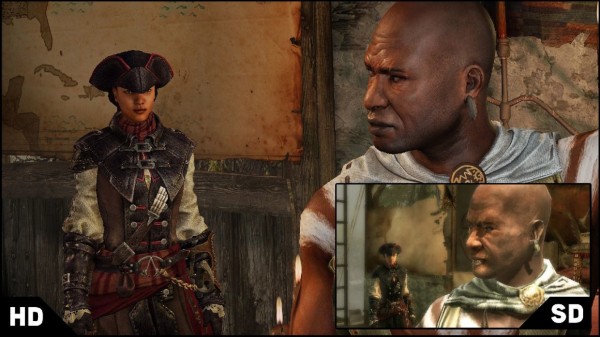
It is undeniable that Assassin’s Creed Liberation looks better now than it ever has – but it isn’t without its faults. The character models have been almost completely redone from the original Vita version and now look on par to many of the previous games in the series. While it looks great, it still doesn’t hold a candle to what we saw in Black Flag. Environments have all been given a face-lift too, and the Bayou especially is one of the most unique and interesting locations in the AC universe.
The game’s bugs sadly don’t just extend to the gameplay, but also affect the world itself. Frequently while playing I found sections of the world would take a considerable amount of time to “pop-in,” while other times I would be able to see the entire game’s map-grid. Even cut-scenes suffered from visual glitches, and more than once I had characters facing different directions to one another and talking into a brick wall. At first I thought this was assassin’s trying to be sneaky and look like they weren’t talking to one another – until they starting doing gestures to the other person while not actually looking at them.
The Assassin’s Creed games can be (somewhat) violent – but that is the nature of a game where you kill someone. However Liberation offers a slight alternative – you can turn off the blood. For many of us, this would detract from the game but none the less it is a nice feature to have, especially for parents with younger children. It may seem silly, but turning off the blood really does help you feel like it is not as violent (if you don’t believe me, compare the original to the uncensored version of The Wolverine).
The audio here has gotten a massive boost too. Everything sounds so much more clean, crisp and natural. Character voices are spot on and feel authentic to the time and place. In the original version, sometimes the heavy Louisiana or Spanish accents made it difficult to properly hear all of the dialogue, but that is another problem that has since been done away with. While the accents are still quite thick, they are much clearer and easier to hear – resulting in a game that is notably more fun to listen to.
Overall
This is the best looking, sounding and playing version of Aveline’s story and if you are a fan of the series who hasn’t been able to play this one yet then there is more of that sweet run, climb and stab gameplay for you to enjoy. Sadly though, Aveline’s story just isn’t all that compelling; and its biggest flaw is that it was designed as a portable experience. As an on-the-go Assassin’s Creed game, Liberation worked. Now however, many of the gameplay mechanics that were introduced to facilitate the shorter play-times just make the game and its world feel all that much smaller. The same can be said for the missions themselves as they lack any real depth, difficulty or length. Many of the sequences take about the same amount of time as a long mission in any of the other games and all contribute to Liberation HD being the weakest installment in the franchise.
Capsule Computers review guidelines can be found here.
With the Western release of Toukiden: The Age of Demons growing ever closer, Tecmo Koei has released the introduction video for the title which just so happens to be a four and a half minute long anime intro to the game which will feature players fighting in groups as they take on Oni (demons) of various shapes and sizes before they destroy humanity.
The video has been given English subtitles and you can check it out below. As for Toukiden: The Age of Demons, it is currently slated to be released on February 11th in North America and February 14th in Europe.
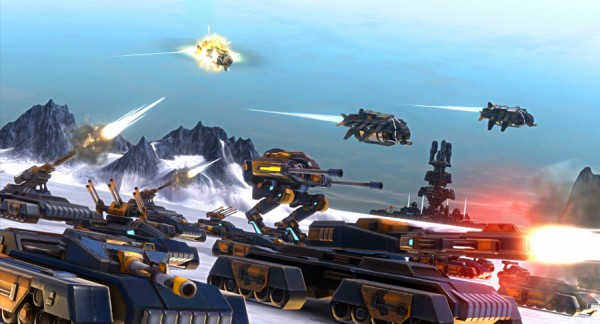
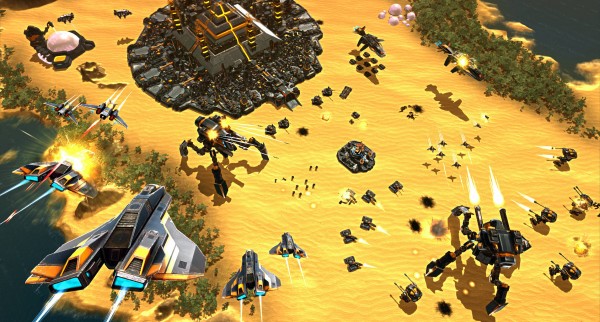
Focus Home Interactive and Tindalos Interactive (Stellar Impact) released their first video for their upcoming RTS called Etherium this week. The video, entitled “First Troop Deployment,” teases the many units available, from the small infantry to the giant collosi of war that will do battle on the player’s behalf.
Etheriumwill feature a non-linear campaign and multiplayer support for up to four players. Players will pledge allegiance to one of three factions fighting for the valuable etherium resources on the planet Serenade and her six sister planets. To complicate matters further, the unpredictable weather can turn the tide of the battle. An ice storm can freeze a river providing a golden flanking opportunity or a sandstorm can hide an incoming army until it is too late. The game will be released in Q2 of 2014 for Windows.
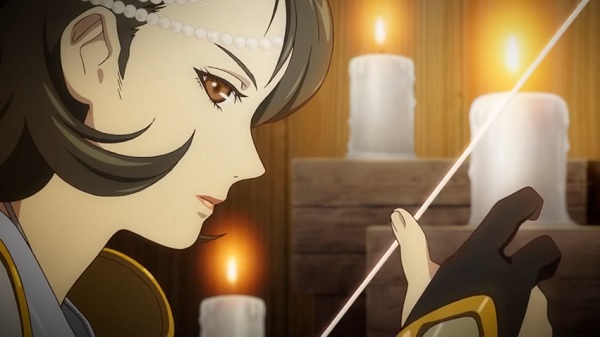
While Atelier Escha & Logy: Alchemists of the Dusk Sky is just starting to make its way West in March, the game has been out in Japan for quite some time. So long in fact that the game is actually being given an anime adaptation, making it the first ever for Gust and Tecmo Koei‘s Atelier series.
This week, thanks to the latest issue of Dengeki, we have learned that the anime for Atelier Escha & Logy: Alchemists of the Dusk Sky will be debuting in April of this year. The anime is being handled by Studio Gokumi. It will be interesting to see which North American anime company will aim for the rights to the anime, if any.
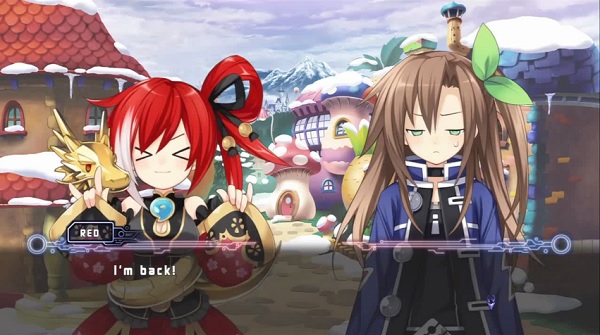
More details were revealed for Hyperdimension Neptunia Re;Birth 2: Sister’s Generation this week and it will please quite a few fans of the series. Since the first game was released in the West by NIS America, a guest character named Red has long been a fan favorite but she has not appeared in any subsequent games and not even in the remake of the first title.
However it has been revealed that not only will Red be included in this game, but so will 5pb, Falcom, and Cave. To top that off, the company characters from Hyperdimension Neptunia V, CyberConnect2, Marvelous AQL, Broccoli, and Tekken, will also be appearing in the title. With all of these characters to work with, there have been a few tweaks to the battle system where partnering characters together can trigger assist finishers.
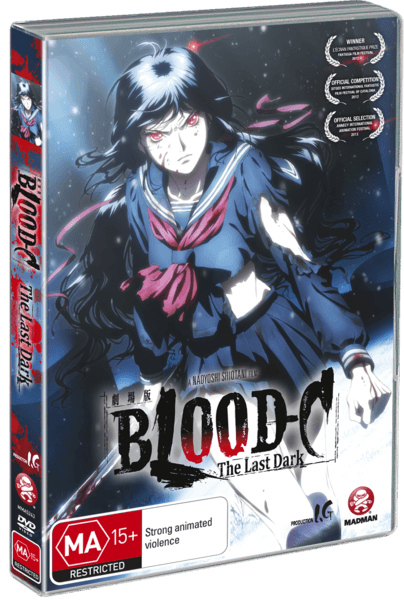
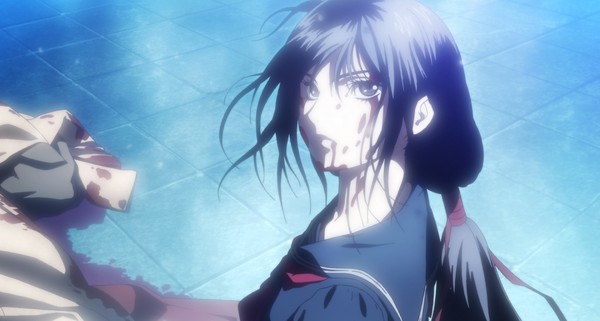
Overview They say that revenge is a dish best served cold. They also say that hell hath no fury like a woman scorned. Saya Kisuragi proves the latter. Six months after the revelation that shattered her life, she has had sufficient time to question her existence and stew in her fury. Ready for vengeance regardless of the cost, armies, monsters and conspiracies will all fall before her blade in an explosion of violence and blood. With nothing but rage to keep her going, has Saya succumbed to her bestial qualities? Or is their still a spark of humanity buried in the chaos of her mind?
What seems to be the problem officer?
Story Its been six month since the events of Blood-C transpired. The experiment. The massacre. Six months since Saya swore revenge on the man who played with her life: Fumito Nanahara. A man who can make a mean cup of coffee and also force you into a false reality designed to test you and keep you in check…not a nice man.
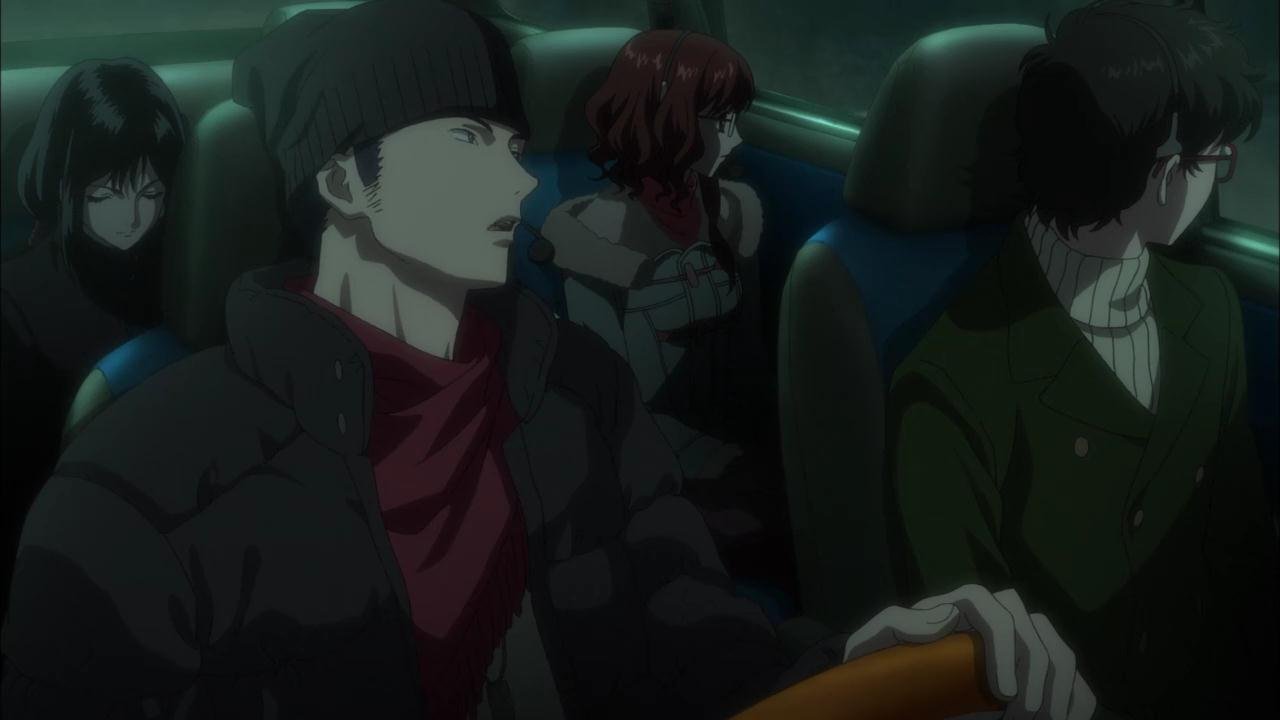
Her search for vengeance leads her to cross paths with a secret organisation known as SIRRUT. A small band of freedom and truth seekers, the group wishes to bring down the corporation Seventh Heaven, a cover identity for The Tower, which just so happens to be run by Fumito Nanahara. Having saved one of their members from an attacking Elder Bairn, Saya is accepted by the organisation, a choice which aids both. Saya uses this team up in order to get closer to her goal of revenge, ignoring SIRRUT’s other goals, such as lifting the curfews and guidelines enforced on younger citizens. As the story progresses, both sides’ actions become bolder. SIRRUT’s attempts to hack into Tower systems increase in frequency and success, as they break into more and more secure sources. The Tower also escalates its search for Saya, controlled from the background by Fumito. This naturally leads to a system of escalating combat situations, culminating at the end of the film.
And on the left you’ll notice monsters and violence
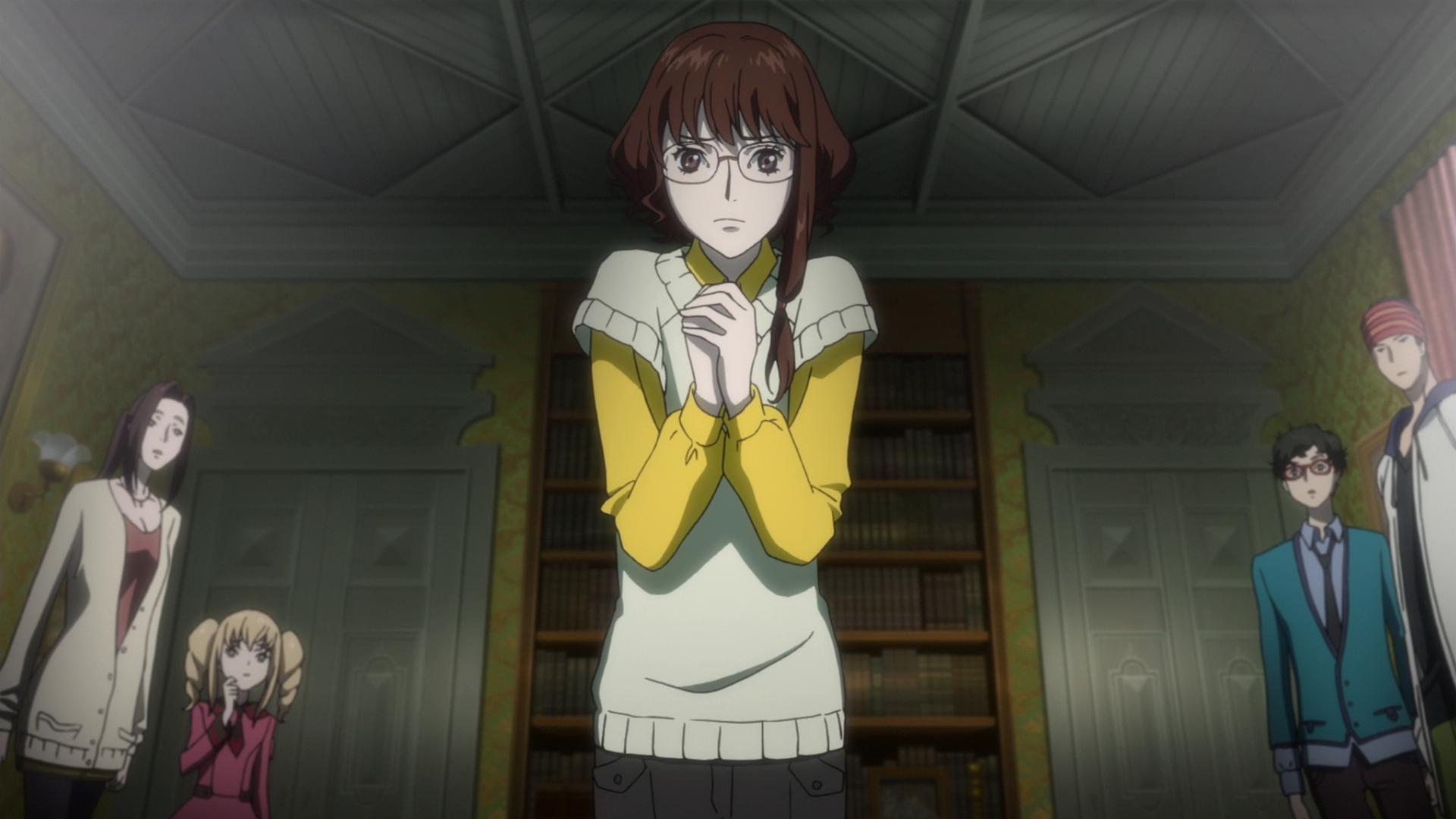
The film also spends a great deal of time focusing on Saya as a person, as opposed to just an awesome Elder Bairn killing machine. Her relationship with Mana serves to slowly humanise her throughout the story. Coming into the story with the attitude she bore at the end of the series, Saya is still consumed by her desire for revenge and isn’t the friendliest person to be around. With the memories of her sweeter personality still in her mind, she still possesses the ability for compassion, though it’s buried deep. Ultimately, Mana serves as the foil to Saya’s gloomy personality, a role previously filled by Saya herself. Having lost her schoolgirl visage, Mana was needed to balance Saya and keep her tethered to the humans she somewhat relates to.
Though just as cryptic and unique as ever, towards the end of the film Fumito details the reasons he had for playing with Saya’s life. Even if they only really make sense to him, considering the scale of his plan, it’s interesting to see a character other than an Elder Bairn abomination causing chaos. Definitely a twisted relationship. Regardless, it’s nice to see that after all of the bloodshed and carnage, Saya receives some form of closure on one of the greatest tragedies of her life.
The new resident sweetheart
Visuals The Last Dark utilises an interesting blend of visual elements throughout the film. The very first visuals shown in the film are in fact CGI, with the more traditional animation coming in soon after. CGI continues to play a rather large role throughout the entirety of the film. Background characters are always presented in such a fashion, whilst those central to the story or moment retain typical animation styles. Whilst this provides a clear visual contrast, it is not overly jarring. The two elements blend together fairly well and serve to give a unique texture to the film. One particular CGI elements towards the end of the film possesses much more polish than any other, serving to provide a very interesting and crisp visual. The film also utilises and manipulates light and shadow very well, adding depth and intensity to the animation.
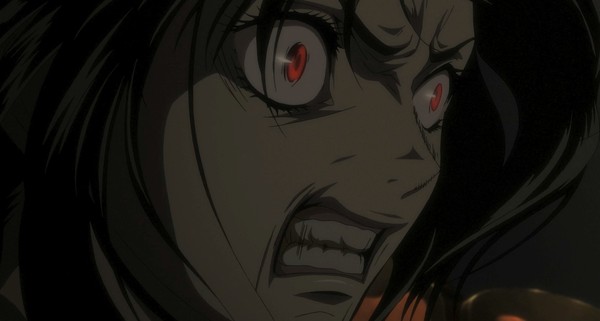
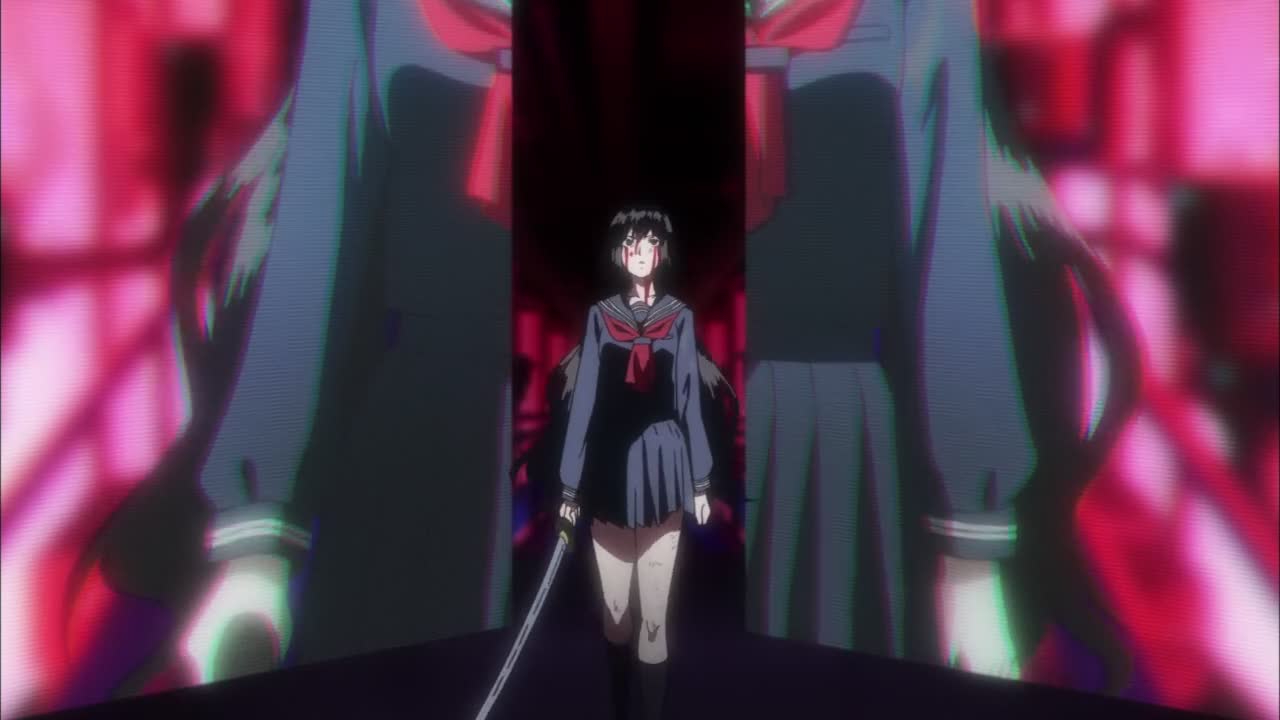
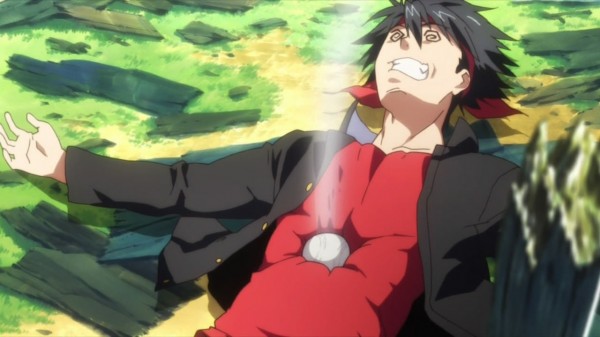
Being the story that it is, the creatures that appear within the film are understandably horrid. The Lovercraftian creatures come a variety of horrible shapes and monstrous sizes, forcing Saya to react differently in combat. This serves to create unique fight scenes that are very visually interesting and impactful. Due to her lineage, Saya herself draws on the monster elements when she engages in combat. When rage consumes her, Saya’s eyes glow a vibrant red and her face draws into a more violent, almost bestial form. When this side of her awakens and an Elder Bairn stands before her, expect to see gratuitous quantities of blood. Entire environments transform into crimson artworks, splattered with the remains of enemies. It’s quite violent.
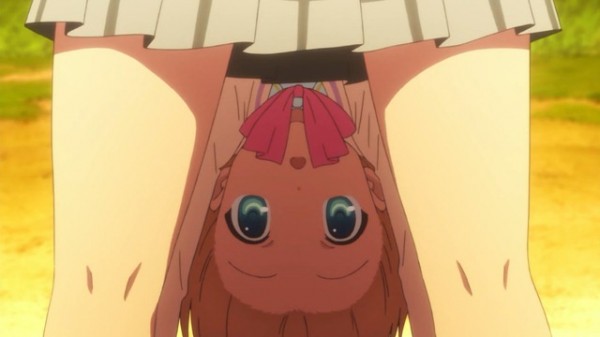
The face of pure, unbridled fury
Audio In addition to the twisted visuals, each Elder Bairn possesses an inherently terrifying voice. Lacking any dialogue, the creatures simply growl, roar and otherwise vocalise their horrible nature. Though the visuals alone are intimidating, the almost pained screams of the Elder Bairns add a depth to the terror of each situation. When one partakes in a lively meal, intense crunching and sloshing sounds can be heard, adding and entirely new level of horror to an already vicious act.
The soundtrack itself matches the overall intensity that the film exudes. The use of instruments such as violins and trumpets, creates an orchestral element that possesses an inherently powerful emphasis behind it. The main musical piece of the film comprises of a very strong beat that hits just as hard as the visuals. Drums are also used to add a consistent tempo to the more prolonged, drawn out scenes, creating a link between differing visuals. In contrast, a complete lack of backtrack is also used to add to the dialogue. The environmental silence that arises, adds a haunting aspect to the more intense moments of the film, standing apart from the louder action sequences.
Like the masks weren’t scary enough
Extras The extras included for the film are fairly consistent in their theme. A majority of them being trailers for the film itself. Included is the Japanese promotional videos and trailers for the film’s original release, along with the English trailer for the dub. Similar in form is the NoNeNoNe Theatre, a cuter look at the Blood C series. Hosted by the characters of Nono and Nene Motoe from the series, the segment explains important elements from the series, such as characters, locations and events. Also included for the sake of exposition and discussion is an Enlgish commentary track for the film. Led by the ADR Director Mike McFarland, cast and crew from the film express their own views on their characters, the story and the behind the scenes processes.
The answers are found within
Overall Blood-C: The Last Dark is what it set out to be: a sequel to the series. A knowledge of Blood-C is required to grasp the plot, which is fairly contained and does not go out of its way to explain prior events, merely providing timely references that fans will understand. But, as the entire plot revolves around vengeance for the series, it’s to be expected The film itself is also a lot darker than the series was. Removed of her cheerful side, Saya is a much darker character, consumed by her desire for revenge. In turn, the film does not cut between light and dark elements as the series did, focusing solely on the evil of the Elder Bairn and Fumito. That being said, the overall tone of the film serves as an honest continuation of the Saya story and the evolution of her character. All in all, the film builds on the foundation of Blood-C, and much of its impact is drawn from previous material. Although the visuals stand alone in their own unique and twisted way.
Capsule Computers review guidelines can be found here.
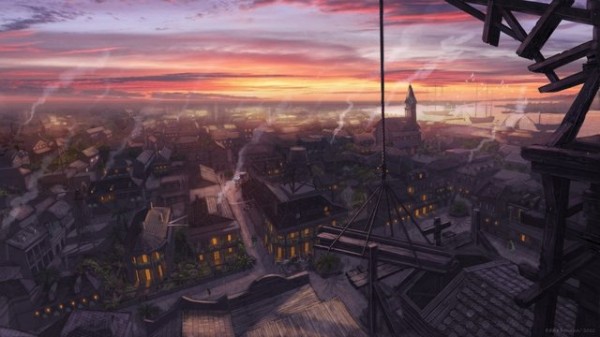
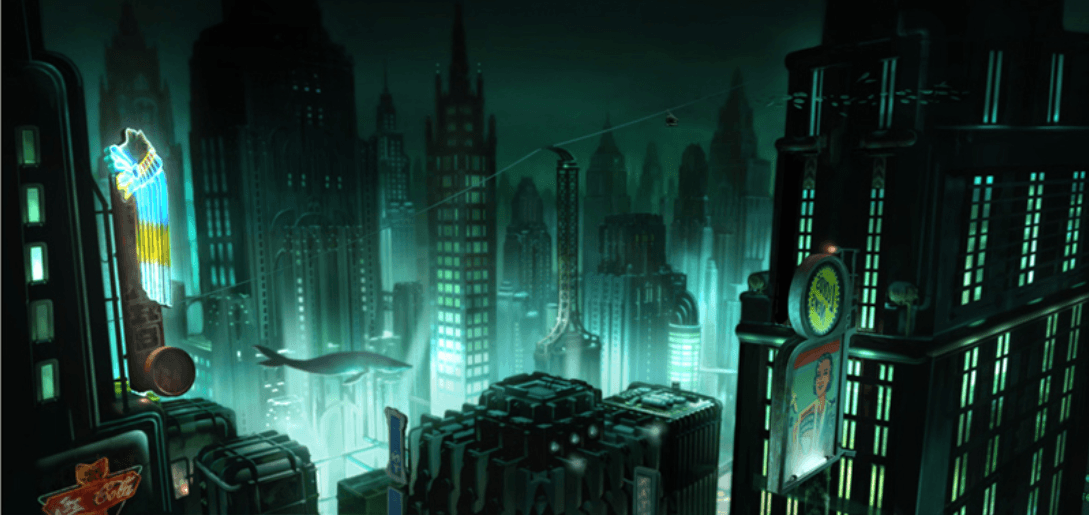
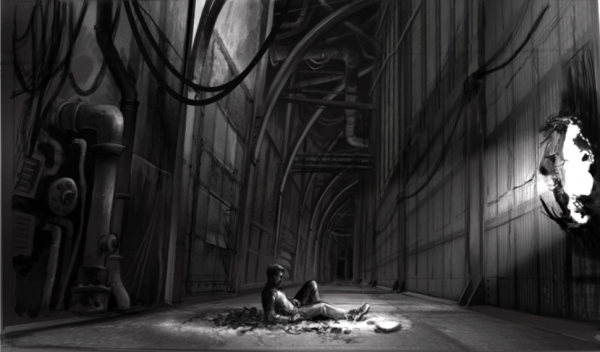
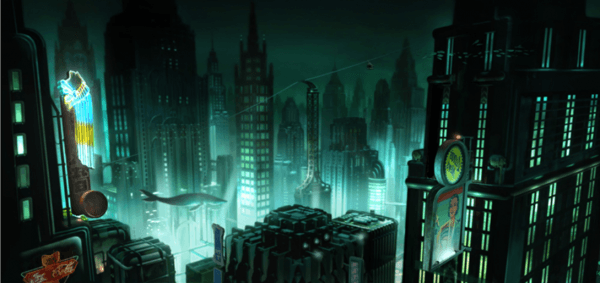
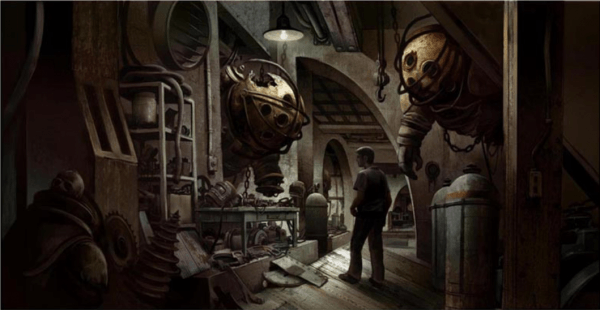
Many years after the ill-fated attempt to get the popular game series BioShock on to the big screen, concept art for the BioShock movie have been released. Created by concept artist Jim Martin, the drawings focus on the underwater city of Rapture featured in the first two games. The drawings give a dark and very detailed look in to the magnificent art deco and grand scale of the settings planned for the movie. Check out Jim Martin’s gallery on his official page, where all his artworks can be viewed.
Scheduled to be released in 2011 as a build-up for BioShock: Infinite, the movie’s cause of death was basically money. When the movie started production in 2008, there was so much promise. It had Pirates of the Caribbean’s director at the helm with Universal Studios backing it up with a $200m budget; however, it was just a messy downward spiral for there. The budget was slashed by more than half when Universal Studios got cold feet after Watchmen wasn’t as successful as expected. Then a chaos of director switching, set changing and budget pinching ensued till Ken Levine (BioShock’s Game Director) finally pulled the plug.
Martin’s drawings are amazing and shows a great recreation of the grand and damned city of Rapture. However, as disappointing as it is that the film adaption failed, one can imagine how terrible the movie would have been; film adaptions have always fallen short of expectations and the game’s grandeur.
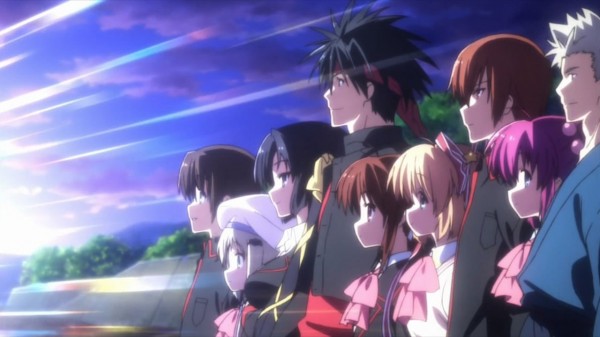
Overview Slice-of-life, its a genre of anime, but it’s also something more than just that, its a moment of life captured forever. What most slice-of-life series do is by and large a rinse and repeat formula that dozens of series have used. Little Busters is one slice-of-life that is far less ordinary. There is something deeper in Little Busters, beneath the daily lives of these crazy kids is an idea that transcends the genre and innovates in ways that both shock and surprise, for better or for worse.
Story
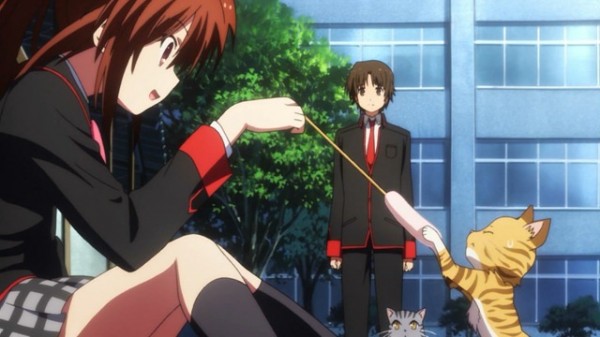
Riki Naoe is a pretty normal kid except for the fact he has chronic narcolepsy and can fall asleep at any given moment. This looks to be the main hook for Little Busters but once again things go far deeper than that. The main plot revolves predominantly around a group of friends who call themselves (yep, you guessed it) the Little Busters. The groups leader is in his final year of high school are ready to ship off to live his adult life once the school year winds to a close, he has one last wish for the Little Busters, to make a baseball team.
Its a standard set-up for a slice-of-life and gives way to a whole gaggle of characters to role on in and join the Little Busters. Unsurprisingly the series doesn’t exactly feature all too much baseball, it has bigger things on its mind. That’s where the genius of Little Busters lies, but it is also the thing that could make or break it, depending on your tastes.
While on the surface the usually slice-of-life tropes are playing out, they are underscored by an ever growing presence waiting to turn all of those tropes right on their head. What exactly that is however is a matter of great mystery, on that slowly unravels all the while weaving further mysteries into the silk of the tale.
A question is asked very early on in the series about the secret of the world. What exactly that secret is proves to be a matter of great importance to the Little Busters series and its mythos. What really stands out here is the particularly deep mythology that belies this series. Rarely does a slice-of-life anime come with such a mythos and it is one that builds with each passing episode. The more characters we are introduced, the more we come to understand the slightly off world these characters live in and their hopes, dreams, pasts and future, the bigger the series’ universe becomes.
While certain aspects of all this may serve as an annoyance for those looking for a more straightforward, no extra attachments kind of slice-of-life series. However if you are the type of viewer that is in the market for something complex and thoughtful, Little Busters may just have the flavour your taste buds are hankering for.
This particular collection of the first season of Little Busters ends on a pretty significant cliffhanger, leaving some major plot threads hanging loose. It is one hell of a way to leave viewers eager for some more helpings of Little Busters and it concludes what amounts to a great release from Hanabee.
Visuals and Audio
The aesthetics of Little Busters hearkens back the feel of series like Kanon and Clannad, both series from the same original author as Little Busters so that is no real wonder why they come across to similarly in art design. The animation here is a fluid slipstream of colour and motion that brings these characters and the world to life in spectacular fashion.
Furthermore Little Busters features a great score composed of an array of varied and distinct musical compositions that complement the action on screen with ease and finesse. The series opening and ending themes are also quite good, but unlike the incidental music, both tracks don’t leave too much of an impression or impact.
This release of of Little Busters features both an English and Japanese dub of the series. The English dub was produced by Sentai Filmworks and is a bit of a mixed bag. Some of the casting is brilliant, some of it is flat-out awful. This is sadly far from Sentai Filmworks best dubs and Shannon Emmerick is painfully miscast as Riki Naoe.
Extras
Rounding out this solid release are some bonus goodies that Hanabee have bundled into the package. While there isn’t really any on disc bonus content, Hanabee have packed in some lovely stickers adorned with artwork of several of the series female characters such as Rin and Kamori. This is a nice little extra to add in for anime fans. It is something a little bit different from the norm and it is all the more appreciated for it. It is a quite a good way to round out the release which would otherwise be rather bare-bones.
Overall
Little Busters is far from your average slice-of-life series. In fact Little Busters is dead set extraordinary. Unfortunately it is the things that make Little Busters so unique that may serve as a deterrent for some looking for a more traditional slice-of-life fluff-fest. However if you want a little bit more to think about in your slice-of-life anime, Little Busters is more than capable of providing viewers with a heaping helping of food for thought.
The cast, the world, the story, the moments captured in time, all of it makes Little Busters something truly special. It is quirky, intriguing and built around a heart of gold, Little Busters may very well be the most important slice-of-life anime of this generation, only time will tell if it reaches the heights that its excellent first cour promises. Little Busters is a truck load of fun and definitely an anime series that should be on any anime fans radar. This one tasty morsel of anime you just have to try. Now that is some tasty anime.
Capsule Computers review guidelines can be found here.
Gnomoria is a sandbox strategy game which evoked within me a vast richness of emotions. On the one hand I was infuriated by the lack of tutorial/any form of in-game guide through the interface but on the other I experienced pride for whenever I overcame the ignorance I had of the interface through trial and error. I experienced despair at the lack of ability I had in indirectly ordering the gnomes of my kingdom to build a well and then watching impotently as they slowly die of thirst because they instead choose to clean out the dirt from their tunnels. Evidently the gnomes I had were suffering from severe cases of Obsessive Compulsive Disorder as cleanliness took precedence over life itself. All the while however, I could not stop playing.
The nostalgia for old school Dwarf Fortress was most definitely a factor in why I persevered past my initial dismay at the lack of direction. Instead I simply followed my natural instincts (honed after years of ‘fun’ in Dwarf Fortress) and found the game to be quite intuitive. For those unfamiliar with Dwarf Fortress; the game puts you in charge of a dwarven expedition as it seeks to build up a new hold. You start off with a handful of miners, farmers, and craftsmen which can then become a mighty dwarven kingdom filled with riches and height-impaired subjects. However, if The Hobbit has taught us anything, it is that even the mightiest dwarf hold ends up falling due to the attentions of a dragon, an invading goblin horde, or (my personal favourite) total anarchy brought about by a drunken brawl gone completely out of hand. The game is less about winning as it is about losing slowly… or as those who are more familiar to the game would know it: ‘Fun’.
Gnomoria does not mess around with this formula too much. In fact, replace every reference to ‘dwarf’ with ‘gnome’ and you’d pretty much have it. Granted, Gnomoria makes the interface much prettier than it’s predecessor, which doesn’t say much but it is most definitely a welcome improvement. I have yet to notice too many changes to gameplay, although I was somewhat disappointed by the lack of a ‘world generator’ which not just generated map for you to play on but also an entire fictional history to the world you will be playing in. This however is a small quibble and to showcase just how similar the gameplay is, I’ve written up a recount for two of my gnomish kingdoms/workers republics.
Kingdom of the LOLs:
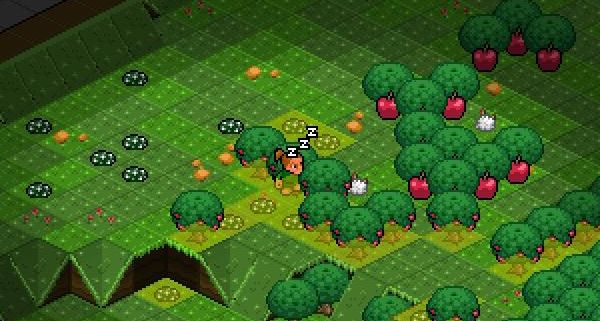
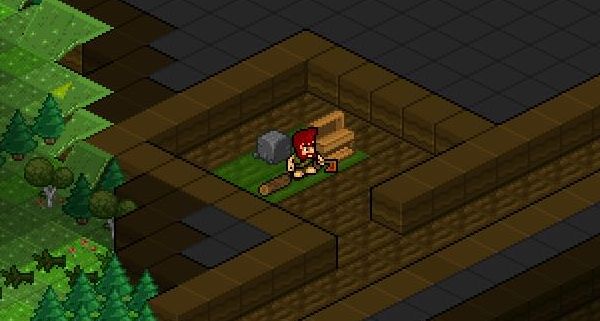
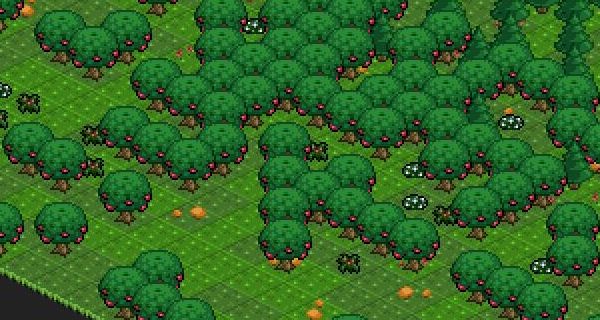
Lets face it, it’s my first time with this game and without a tutorial to guide me through it I knew I would be failing in a range of hilarious ways so I might as well embrace it. I started off by following my instincts digging into the side of the mountain. I had carved out a nice little little hole in the wall for my expedition. Save for the occasional incursion by a monitor lizard who scared the bejeezus out of both me and my gnomes, things went along peaceably. I had no idea what I was doing or how to do… anything so often when I sent my forager gnomes out to supplement our food supplies with wild berries and apples, they would fall asleep in the mud.
I then determined that I should pre-empt my drinks shortage by building a distillery and turning some of that sweet, sweet fruit I had just collected into wine (because nothing cures dehydration quite like alcohol!). By following the prompts from the list of ingredients needed to build this hallmark of gnomish civilization, I determined I would have to start with a ‘crude workbench’. One of the requirements for this bench of +1 to crudeness was a stone resource. I spent two days of game time hollowing out a mountain, hunting for rock walls of any kind. By the end of it, I had begun to despair of ever being able to build my simple workbench, let alone a complex distillery. But then after excavating 8 floors down into the ground, I finally found it. Granite! Igneous gold! I was so happy to finally be able to build that motherf#$%ing workbench that I gave it its own room in the hold.
I had expended so much effort in building that gorram workbench that I felt like it was an equal member of my gnomish society. While I was busy giving full citizenship to inanimate objects and building my distillery, a full blown drinks crisis had developed. We were completely out of booze. The yaks provided me with a steady trickle (da dum tsch) of milk which my gnomes were so desperate to drink that they just sculled it as soon they milked the yak, possibly going so far as to suck on the teat directly (hooray for imagery!). In terms of my distillery, I had put myself in between a rock and a hard place wherein I could not ferment any of my fruit because my food stocks were too low already, so I would simply be swapping a drinks shortage for a food shortage. I needed to find another grove to forage from and quickly. To the far west I found my saviour (Cue ‘hallelujah’ music).
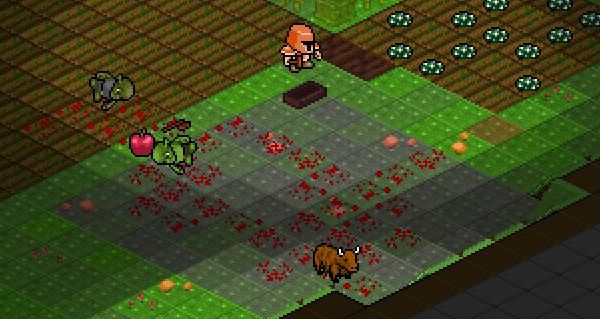
I sent my foragers off to quickly collect the fruit so we could start fermenting gnomish moonshine ASAP but, as they went about their business, tragedy struck. Goblin raiders ambushed and murdered my foraging gnomes and made quick work of my defence force (which consisted of one brave gnome wielding an axe and armoured with a helmet and breastplate). The goblins overran my hold, slaughtered the inhabitants, and (I assume) stole the two yaks I had. Just like that, the gnomish Kingdom of the LOLs fell into ruin.
Democratic Republic of Gnomehstan:
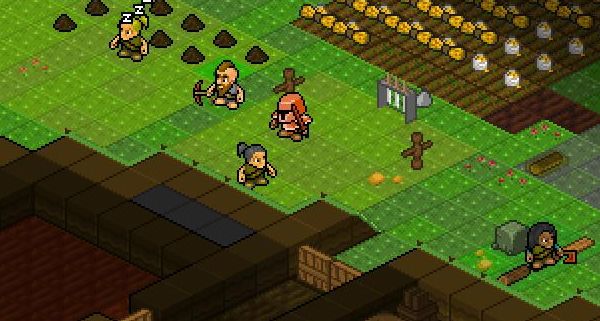
For my next hold, I decided I would roleplay a bit now that I had gotten some handle (albeit shaky) on the gameplay mechanics. I find it very amusing that my gnomes would dig out tunnels until they collapsed from exhaustion and when they woke up once more they would continue on with their tunneling like the dutiful worker drones they were. It had the feel of some sort of Dickensian nightmare or dystopian Stalinist dictatorship… So velcome comrades, to glorious Republic of Gnomehstan! Vith love of party in hearts and song on our lips ve vill tame vilderness to create land vhere gnomes can prove superiority to stinking dwarven empire.
First off, I had the fortune of having one of my original gnome character models wearing a monocle. I renamed this particular gnome ‘Chairman Napoleon’ and although all gnomes were equal in the Democratic Republic of Gnomehstan, Napoleon was more equal than the rest of them. I was able speed through development much faster as I struck bedrock much sooner. I was able to avoid the crippling food and drink shortages which plagued me last time by quickly setting up my farms, groves, and distillery. The comrades of the Republic of Gnomehstan wanted for nothing… except beds which I could not make as I didn’t have animal bones with which to make needles for a tailor and straw beds were out of the question as all straw on hand went towards feed for the yaks. Beds were a luxury that the we could not afford… however Comrade Chairman Napoleon received one due to his excellent leadership to serve as an example to the rest of the gnomes of what the republic could achieve for them. Unfortunately, we still didn’t actually have any chairs to spare at this point…
I had learnt from my last game that constant vigilance was the price that gnomes had to pay survive. So when gnomads (sic) arrived, I immediately conscripted one of them to a squad named ‘Gnomingrad’s Defence Brigade’ (GDB). I put the GDB on constant training just outside the entrance to the hold. The soldier dutifully stood at attention outside in the rain and heat. Collapsing from exhaustion and getting back up intermittently. Sure, the poor sod became dreadfully unhappy, but happiness was a luxury that we could not afford.
The stratagem ultimately paid off when goblin raiders were detected quickly and engaged. The battle was not going well for the Gnomish force to start with until I realised I wasn’t playing as accurately to my character as I could be… I then immediately set about conscripting the rest of the gnomes in the hold to held defend the motherhold. They all ran to the frontline armed with whatever tools they could arm themselves with. The miners had their pickaxes, the woodcutters their felling axes, and the rest of conscripts ran in with their bare hands and a zealous devotion to the Republic. In no time at all, the goblin invaders were overwhelmed. Their bodies were turned into sausages to feed the hungry gnomes who had killed them. Napoleon was drunk on victory (and strawberry wine) which led to the hold’s downfall as he then sought further glory by sending the gnomish conscript army to hunt down a bear which was spotted nearby. Needless to say, none of them returned as victory turned out to be a luxury we could not afford…
So there you have it. My disastrous (but fun) first run at Gnomoria. The interface is fairly intuitive (once you know what to look for) and the visuals are nothing to really write home about but are do the job well enough. This is not a game for those seeking out a visual smorgasbord. This is a game for those who want to take the time to plan and build their glorious gnomish hold before watching it all collapse. This is the kind of game which creates stories. This is the kind of game I love.
But enough about me, tell us about your own mighty holds in Dwarf Fortress and Gnomoria, alongside with how they met their downfall.