
Home Blog Page 3601

Borderlands: The Pre-Sequel Review

borderlands-the-pre-sequel-box-art-01

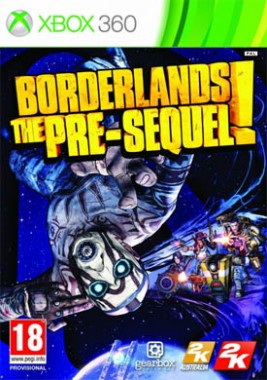
Borderlands: The Pre-Sequel
Developer: 2K Australia
Publisher: 2K Games
Platforms: Xbox 360 (Reviewed), PS3, PC
Release Date: Out Now
Price: AU$79.95 – Available Here 

Overview

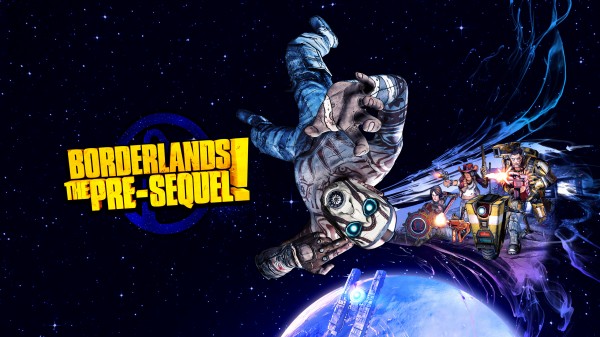
Like many of you, I am always hesitant when a new developer takes over an existing franchise, it usually ends up in a game that doesn’t quite reach the same heights of its predecessors. Well 2k Australia have picked up the ball from Gearbox and brought up Borderlands: The Pre-Sequel, a game set in-between Borderlands 1 and 2 and shows us the rise of Handsome Jack from a Hyperion worker to the comical villain we meet in Borderlands 2. While the game is still all about the guns, the loot and the wacky characters, it suffers from more than a couple of issues..
Borderlands-The-Pre-Sequel-Screenshot-01

Story

Borderlands: The Pre-Sequel takes place in between the events of the first and second games and at its core is about one man’s rise to power and fall from grace. Handsome Jack with his over-the-top cartoonish villainy and massive hero complex was without a doubt one of the stand-out characters of Borderlands 2 so it is nice to see a little depth to the character here in the Pre-Sequel.

Even though we play as a Vault Hunter, this really is Handsome Jack’s story. Starting off as a Hyperion worker, we are there alongside Jack as he goes from heroic savior to homicidal madman and it really does offer a lot more to Jack than we see in Borderlands 2.

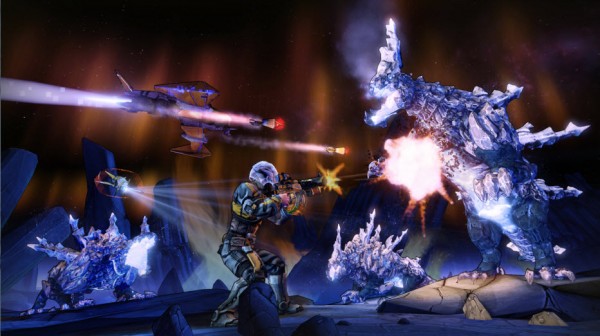
The narrative of Borderlands 1.5 is the same fun, wacky humor as it predecessors, it does suffer a little bit in some areas. A lot of the jokes this time around feel incredibly forced, and while there are some genuine laughs to be had (the Bogan Gun may be the funniest thing I’ve ever seen in a video game) a lot of the content is either cringe-worthy, or makes me wonder “why?”
Borderlands-The-Pre-Sequel-Screenshot-02

A lot of the “Why” moments revolve around the series’ returning characters. More specifically, that they felt out of place and forced. Characters like Mad Moxxie, Tiny Tina and Mr. Torgue all felt like their inclusion in the game was nothing more than fanservice. Now, I am not inherently against fanservice, but here the characters are included just so they can say “hey, remember this character you loved in the last game?” as opposed to offering anything of substance.

The second problem I had with a good number of the game’s characters is that their sexuality was a big part of whoever they were, no matter how minor a character. Now don’t get me wrong, I don’t have a problem with homosexuality or homosexual characters in games, but the arbitrary use of sexuality made a lot of these characters feel forced and shallow. One particular character, whom we never actually meet (only speak to via ECHO) has us putting up pamphlets when she suddenly mentions her ex-girlfriend’s tendency to look down on her. It is out of the blue and isn’t funny, isn’t charming and it doesn’t add any depth to the story. It almost feels like the writers were trying to be hip and cool by including as many homosexual characters as they could, but the end result is that it dilutes a romantic subplot (Athena and Janey’s) that could otherwise be quite poignant.
Borderlands-The-Pre-Sequel-Screenshot-03

Gameplay

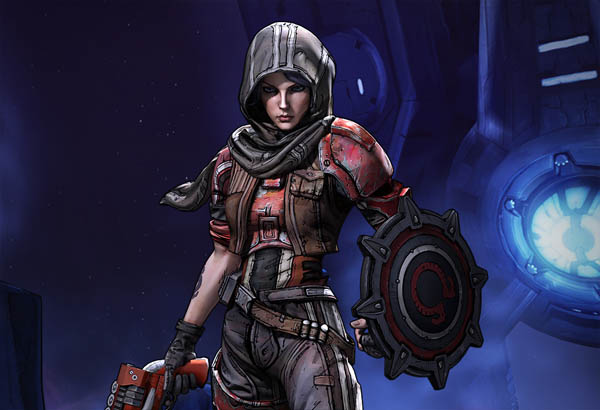
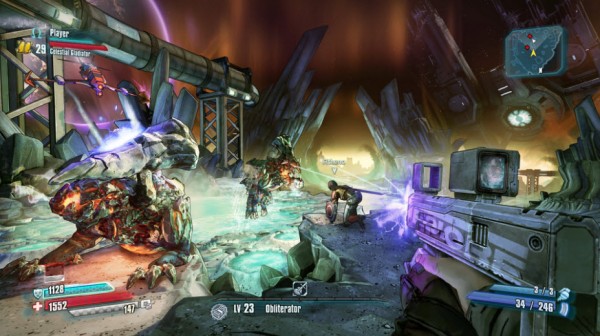
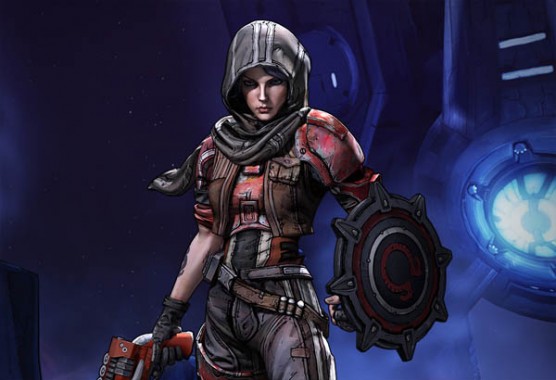
Since the first game, Borderlands has become a unique mixture of FPS, and loot-based RPG (with a heavy emphasis on the loot) and this is still as true today as it was back then. You play as one of four Vault Hunters, each tying into the story of Pandora and Handsome Jack in some way (including Claptrap, who alone could fill the game’s fanservice quota). The best part about the four new vault hunters is how differently they play to any from the previous games. Athena’s Aspis shield blocks and absorbs damage before she flings it around the room like Xena meets Captain America, Wilhelm is all about robotics and uses his two airborne drones to provide support, Nisha goes absolutely bezerk with her guns, getting increased ammo, auto-aiming and firepower, and lastly Claptrap will randomly take on the abilities of past vault hunters (as well as a few of his own). The huge differences in play styles from the previous games made it really difficult for me to pick who I would do my play through as, and after picking Athena I realised I had made the right decision and probably had some of the most fun I have ever had with a Borderlands character.

At its core, Borderlands: The Pre-Sequel is still all about its loot, and there is nothing more satisfying than surveying an area that you have cleared of enemies and seeing the different glowing bars that indicate the power and rarity of the loot you have found. The game’s ability to randomly create weapons is still by far one of its most impressive features and one that keeps me coming back over and over again. Now additional chests have been included that use Moonstone (one of the game’s new resources) to open and typically have rarer loot than your ordinary chest.

As if loot wasn’t enough, this game introduces a brand new machine in the form of the Loot Grinder. If you put in three pieces of loot that you have discovered, the machine will grind them up and pop out something a little better for your troubles. While the machine requires very specific “Recipes” to create loot, and the fact that we aren’t told these recipes in-game, it still alleviates some of the frustrations that can come with the randomness of a game like this.

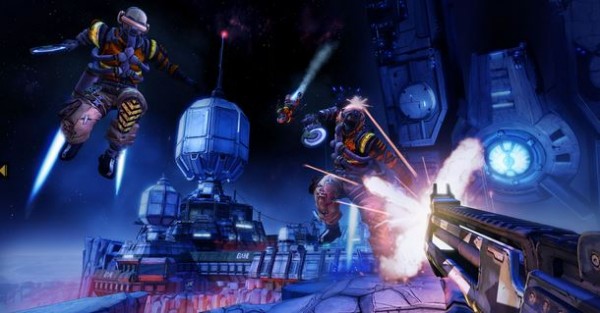
Moving Borderlands off of Pandora and onto its orbiting moon Elpis has allowed for some clever new gameplay changes that help the Pre-Sequel to stand out from the other two games in the series. Firstly, due to the difference in gravity, players can now jump much higher than they usually did, which leads to some impressive mid-air combat that just couldn’t be done in previous games. The game is definitely a lot more “floaty” and slow moving while on the surface of the moon as opposed to being inside one of the many atmosphere-controlled locations, creating two very distinct game environments.

borderlands-the-pre-sequel-screenshot-07

Another new feature that arises as part of being set on a moon is the need to regulate your oxygen supply as an additional resource. Early on, players will get an Oz Kit which allows them to temporarily breathe in the vaccum of space. You will need to either pick up oxygen tanks from fallen enemies, enter an atmosphere controlled area or just find one of the air pockets along your journeys in order to keep yourself breathing. Oz is also used to perform the game’s impressive new double jump moves, so it is a resource that needs to be carefully manages… sort of. Oz should have been a lot more important than it really is, in the final product just about every humanoid enemy will drop an oxygen canister upon death so there is never any real fear of running out. Not only that but running out only causes your health to decline slightly, so there is no urgency to it. I would like to see the resource brought back but next time with a little less oxygen available to players so that it does become a careful resource instead of just another little bar on your HUD.

Borderlands: The Pre-Sequel’s biggest flaw is definitely its map and level design. Elpis and the Hyperion station both look amazing, but when you run through them, you will discover that there is little to nothing littering the environment (which is actually smaller than the previous games) and it is often difficult to figure out whether or not the developers intended for players to use the environment to climb higher or to simply time their jumps correctly. Often I would navigate my way up to the top of a structure by jumping up ledges and supports only to reach the top and realise that it wasn’t how the game intended me to get up there. While it sounds liberating and like the player has a choice in how they approach certain situations, it really isn’t and just feels like confusing and disorienting level design.

One section of the Hyperion base requires players to use Jump Pads to get from one area to the other. It is a nightmare that is confusing to navigate and takes way longer than it needs to (not to mention that making one wrong movement could have you plummeting to your death). Not only that, but a fair few of the game’s side-quests have you traversing this area back and forth, making it feel like an absolute drag.
Borderlands-The-Pre-Sequel-Screenshot-04

Visuals & Audio

Borderlands has a very distinct visual style that has become synonymous with the franchise, and it is great to see it used in a brand new way here in the Pre-Sequel. Elpis looks nothing like Pandora, and the differences change how the game feels both thematically and mechanically.

As you would expect from a moon, Elpis is grey and rocky and well… moon-like, but that allows for some really beautiful imagery to pop up, especially in the areas that are filled with Lava or Ice. The orange glow of a lava pool really looks spectacular against the backdrop of Elpis and on more than one occasion I wished I could nab a screenshot for a computer wallpaper.

Visuals aren’t all impressive however as there is a notable amount of texture pop-in while playing. Sometimes you will be in the middle of a mission before the textures fully load, which can lead to some seriously ugly looking encounters. This has always been a bit of a problem with the Borderlands games but it just feels so much more pronounced here

The audio in Borderlands has always been great and adds a lot to the experience. Character voices are always stellar and the unique sounds that the guns make really bring this comical wasteland to life. This time around, the Vault Hunters interact with other characters and help flesh out the story a little more. The Pre-Sequel is also told as a recount by Athena to Lilith, Modecai and Brick, so their inclusion in the cast helps tie it all together. I played through the game as Athena, so it just seemed right that she would be telling the story but unfortunately it is a little more jarring to players who are going through the campaign as one of the other three characters.
borderlands-the-pre-sequel-screenshot-01

Overall

Borderlands: The Pre-Sequel has its problems, but despite them it is still a fun game. As with previous titles in the series, it is about three things: guns, loot and wacky characters, and it has these in spades. As you might expect, the action gets more exciting when playing online with friends and the bullets really start flying. It may lack a bit of the charm and soul of Borderlands, but it is still a solid entry in the series and one that will tie us all over until the inevitable next-gen Borderlands 3.

7-0-capsules-out-of-10

Capsule Computers review guidelines can be found here.
Assassin’s Creed Unity Phantom Blade Replica Now Available

assassins-creed-unity-promo-shot-001

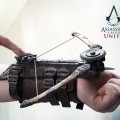
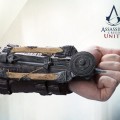
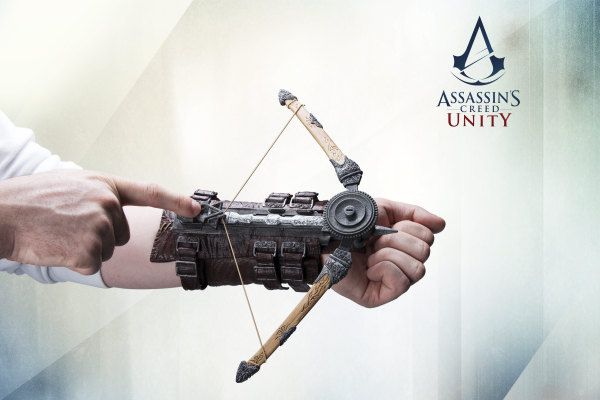
Whether you are collecting hidden blades from Assassin’s Creed or looking for the finishing touch for your awesome handmade Arno costume, McFarlane Toys has you covered. The new Assassin’s Creed Unity Phantom Blade replica is a life size wearable collectible that features a functional hidden blade, a retractable crossbow, and a firing dart. Although the blade and dart is made from thermoplastic, the replica is designed for those 17 years and older.

As a bonus, those who purchase the Phantom Blade replica will get a code that can be redeemed for a French Calvary Pistol for free in Assassin’s Creed Unity. The Phantom Blade replica is available now in stores for $59.99 USD. Assassin’s Creed Unity will be release for PlayStation 4, Xbox One, and Windows.

Roccat and Alienware Announce Exclusive Partnership

roccat-tyon-press-shot-003

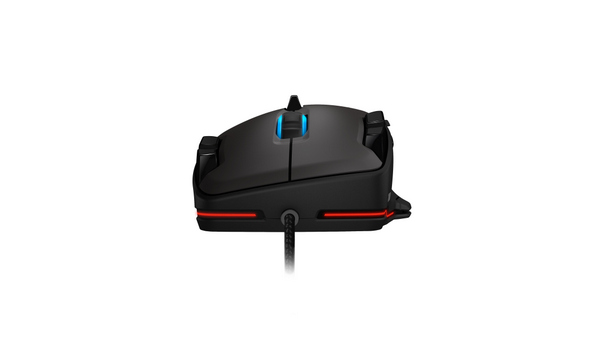
Roccat and Alienware announced their exclusive partnership that will bring Alienware’s AlienFX lighting system together with the Kone XTD gaming mouse, Isku FX gaming keyboard, and Tyon gaming mouse. A new set of drivers for these three devices will be released at the end of November that will enable them to receive lighting commands through AlienFX. AlienFX supports over 80 games like Middle-earth: Shadow of Mordor and Gauntlet. 

“Alienware and ROCCAT are a natural fit,” says Frank Azor, Alienware’s CEO. “You look at what ROCCAT brings to the table in terms of quality, fantastic in-house design strategy, and their forward-thinking team from top to bottom, and you see a studio that fits our PC Gaming philosophy on every level. AlienFX combined with ROCCAT’s new Tyon gaming mouse, the Isku FX, the Kone XTD? It was a no-brainer, and we believe fans of our brands will agree.”

Indie Gala Giving Away Copies of Realms Of The Haunting For Free!

realms-of-the-haunting-screenshot-002

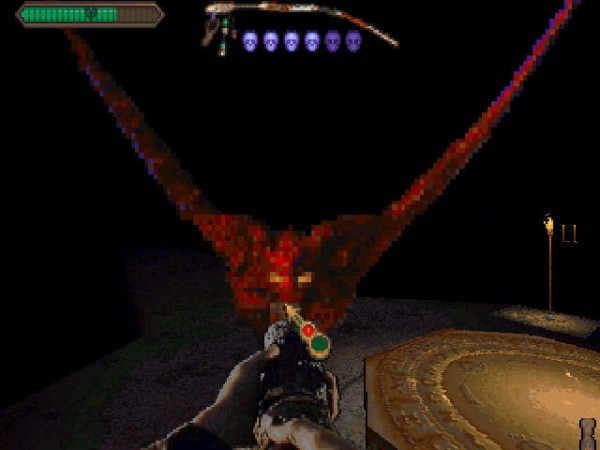
Celebrate Halloween with Indie Gala by getting a free copy of the retro adventure game Realms of the Haunting. Crammed with old school FMVs with actual actors, Realms of the Haunting is a mix of first person shooters and point and click adventuring. The game was originally launched in 1996, but has been updated to run on modern computers via Steam.

To get your free copy, be sure to head on over Indie Gala. All you need to do to get your game is to set your Steam profile to public, join the Indie Gala Steam group, and provide your email. A link to activate the game will be sent to your email. You can set your profile back to private after you receive your activation link.

Metrocide Hands-on Preview

Metrocide-Title-01

Metrocide
Developer: Flat Earth Games
Publisher: Flat Earth Games  
Format:
 PC (Previewed), Mac
Release Date: October 20, 2014 (Early Access)
Price: US$6.99 – Available Here

I haven’t been so quickly frustrated playing a video game in quite a while. Directly tying into that statement, I’ve also never wanted to kill so many do-gooder civilians in my life (in-game people, you’re safe). Metrocide brings out the worst in me, but I’m happy I stuck with it, until I no longer could (more on that shortly), to see the larger potential of the title. The latest title from local Australian developers Flat Earth Games – brothers Leigh and Rohan Harris – is in Early Access right now, so please don’t let any qualms/issues I express here inform your decision-making in whether or not to purchase Metrocide. It’s got a way to go, which means it can only get better.

Metrocide-Screenshot-03

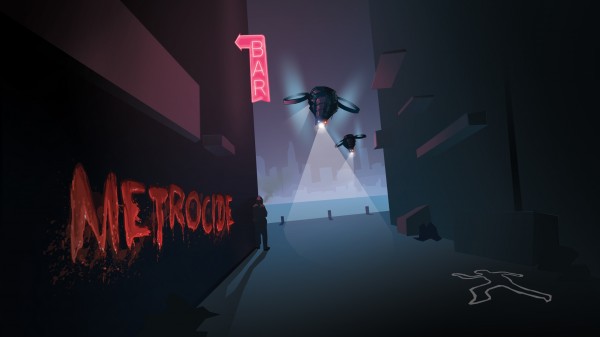
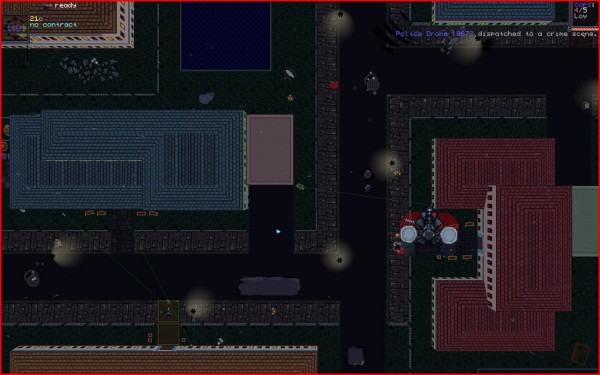
Metrocide is an arcade stealth-shooter set in Metro City, a cyberpunk dystopia that is uncharacteristically inhabited by altruistic vigilantes, street-cleaner bots and police who actually try to do a good job! I’m not so sure this is a dystopia…otherwise, it is dark, drab and pleasantly nostalgic due to its familiar aesthetic tropes in the genre, defined by classic films such as Blade Runner (1982) and even Dark City (1998). Playing as notorious contract killer T.J. Trench, I ventured Downtown, the first district made available to the player. Beforehand, a comic-strip style cutscene plays to introduce the player to the world of Metrocide. As you progress and unlock these “comics”, they will appear in the main menu for your re-viewing pleasure. Metrocide gives the player a top-down perspective, with navigation dictated by the direction of your mouse cursor with the ‘wsad’ keys or arrow keys (your choice) allowing you to move relative to it. So, what’s your goal in Metrocide? To assassinate people; enough of them to be able to buy your travel papers and proceed to the next area. There are a multiple contacts of Trench’s within Metro City who will provide a slate of targets.

Metrocide-Screenshot-08

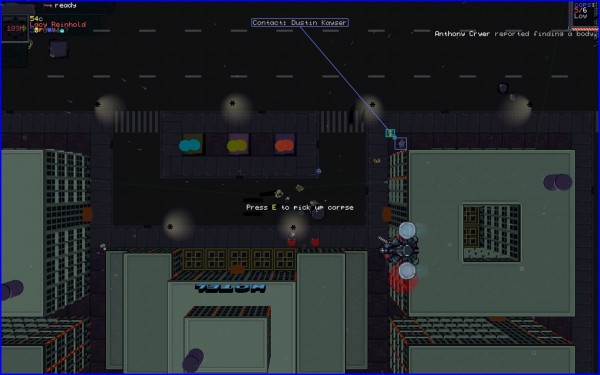
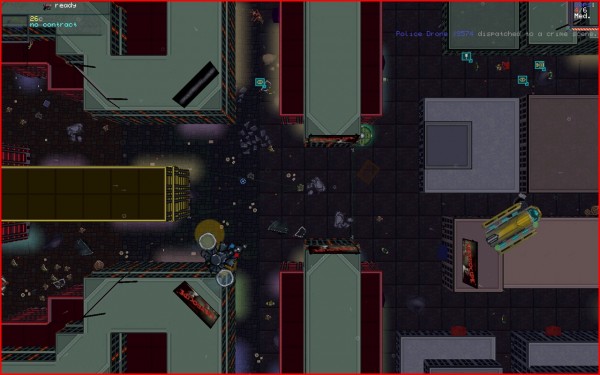
Each mark has differing attributes or conditions; some are required to be hit quickly, and some may carry their own protection or have trackers on their person. At first, most will be unarmed. All have varying credit payouts attached to the job. In this initial stage of the game, 2000c is the required amount for moving on up in the world…and it’s not easy to acquire. Once you select your target, the navigator at the top left of the screen will direct you to their approximate location. Starting off with a basic pistol that needs to charge to fire, I quickly learned, and it was explicitly reinforced by the game, that it is a crappy gun. The target has time to attempt an escape, and the pistol only has a certain range. If they escape your proverbial reach, it becomes that much more difficult to execute them for a few reasons: they could lead you into a busy area, civilians could see you with a gun and report you, or they might reach the police station before you can catch them. With every report made, police presence is upped in the vicinity. If you can avoid their overhead drones for long enough, they will close the case or crime scene. Metrocide is all about executing these jobs as stealthily as possible, and that means a lot of patience, which I sometimes don’t have.

Metrocide-Screenshot-07

Waiting until the target unwillingly walks into a zone devoid of peering eyes, security cameras, pesky vigilantes who want to take it upon themselves to avenge them and nosy, taddle-tale citizens will test that patience. Players must be mindful to unholster their weapons and do the deed as quietly and quickly as possible. Then, comes disposing of the body; the river that runs through the city, along with open manholes, are your options. Eventually, you will unlock tools and other weapons, such as lures and shotguns, respectively. Both are worthwhile investments, especially the latter, which shoots without delay or build up. It is loud, but extremely effective. Unfortunately, my playtime was cut short because of a bug that pretty much hindered my progress past a point. With the shotgun equipped (ammo clip not depleted) I would click the left mouse button, but Trench wouldn’t shoot…he instead just stood there, having alerted the mark who is armed and, well, murders ol’ unresponsive Trench in self-defence. Strangely enough, the game registers my “successful hit”, whilst also acknowledging my death, failing to bring me back to the main menu or city to continue due to this confusion. Oh, and there’s no saves in this game. So I had to replay everything…only for it to happen again. And I am not going back to using that damned pistol!

Again, the game is in Early Access, so hopefully the familial duo can crush some bugs, perfect the visual language so that the elements on screen are easier to read, and also give some better player guidance in terms of implementing tutorials for tools, which I did not encounter (I tried the whole keyboard before finding out that ‘z’ dropped the lure). Metrocide is challenging to say the least, and it only gets harder with more cops populating the space with every not-so-clean kill and, trust me, you will not be a flawless assassin.

Perks and Specs Detailed in New The Crew Customization Trailer

the-crew-closed-beta-screenshot-01

Racers got another in-depth look at the customization options for Ubisoft and Ivory Tower’s upcoming racer The Crew. The trailer features a look at the vehicle specs available for drivers. By changing specs, players can take their car from the smooth race tracks to the rough and tumble off-road races in the country side. The trailer also touches on the perks that provide bonuses to all cars.

The Crew is an open world racer that miniaturizes the varied driving landscape of America. Ubisoft is accepting closed beta registration for PlayStation 4 and Xbox One players at their official site. The closed beta kicks off in November. The Crew will launch for PlayStation 4, Xbox 360, Xbox One, and Windows on December 2nd, 2014

Indie Gala Every Monday Bundle #31 Now Available

indie-gala-every-monday-bundle-october-27

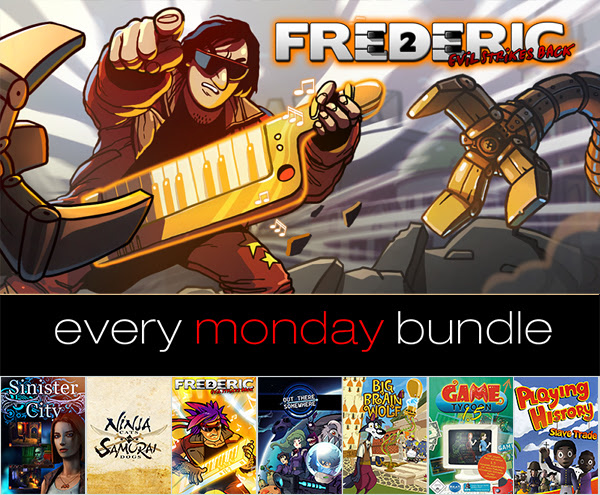
Couldn’t get enough of Frederic Chopin? Indie Gala and Capsule Computers is here to rescue gamers from their dreary world of manufactured pop stars with the Every Monday Bundle #31. This week brings seven indie games for one price.

Game Tycoon 1.5 – Go back to 1982 and participate in the video game boom in the glory days of DOS! Players will start their company in the 8-bit glory days and take the company all the way to modern day.

Big Brain Wolf – A wacky spin on the classic tale of Little Red Riding Hood involving an asthmatic vegetarian wolf. The game is packed with brain training puzzles that will keep your mind sharp.

Out There Somewhere – A puzzle platformer inspired by 16-bit video games, players will use their teleportation device to solve puzzles and avenge their planet.

frederic-evil-strikes-back-screenshot-001

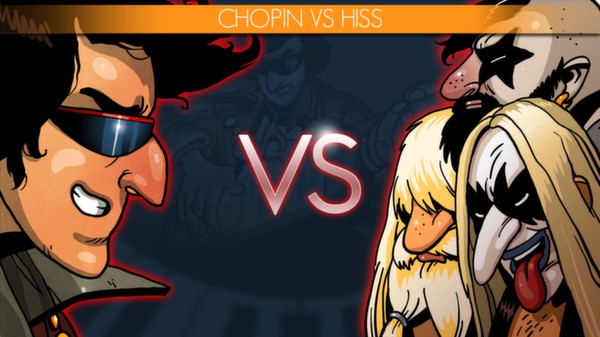
Frederic: Evil Strikes Back – Frederic Chopin must once again rise from the grave to compete in Guitar Hero inspired music battles set to remixed Frederic Chopin hits.

Sinister City – Players will need to travel to Sinister City and rescue their girlfriend from the vampires that haunt the town.

Ninja Cats vs Samurai Dogs – Players will join either the Ninja Cats or the Samurai Dogs as they fight for supremecy in a game that fuses the tower defense and real time strategy genres.

Playing History: Slave Trade – An education title used in over 300 Danish schools, Playing History: Slave Trade looks to teach gamers about a dark period in history. Be sure to vote for the game on Steam Greenlight.

For the first 24 hours of the sale, all seven games can be purchased for $1.89. Be sure to grab your copy at Indie Gala before the price goes up.


Deepest Dungeons of Doom Review

Deepest-dungeons-of-doom-boxart

Deepest Dungeons of Doom
Developer: Bossa Studios
Platforms: PC (Reviewed), Ouya, iOS, Android 
Price: $4.99 USD – Available Here

Overview

‘Dungeon crawling’ is generally one of my least favourite aspects of role-playing games, both digital and otherwise. For me, the best parts of an RPG experience are the narrative and role-playing elements with combat generally not being as satisfying by comparison. There are some games for which an increased focus on ‘dungeon crawl’ combat such as the The Legend of Grimrock and Paper Sorcerer does make elegantly streamlined and fun experience. Deepest Dungeons of Doom (DDD) follows this streamlining ideal to an extreme in its own variation of the ‘dungeon crawl’. It was recently ported from iOS to PC and I took it upon myself to venture into its depths and discover what horrors lay beneath its retro pixel art style.

Story

Deepest-dungeons-of-doom-screenshot-01

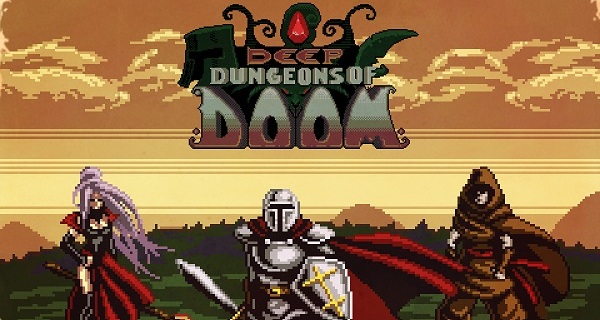
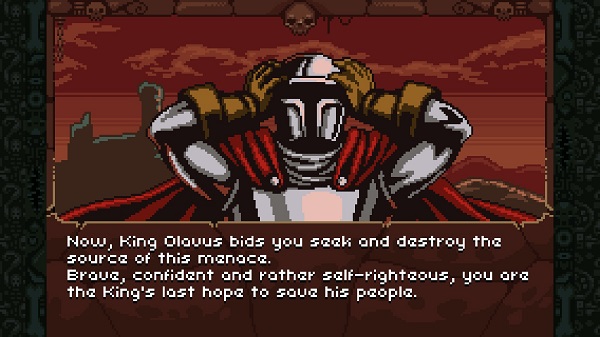
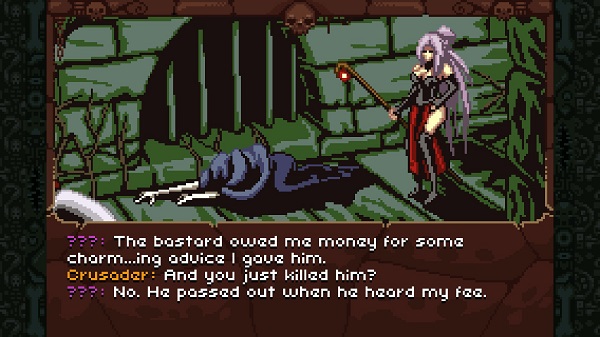
The story of DDD is simple enough with the player taking on the role of an adventuring hero and ridding the world of evil… one dungeon (or dungeon-like environment) at a time. Although the story is rudimentary, it does leave plenty of space for the writing to shine through, which is humourous and reflexive in nature. The main characters that the game focuses on are the witch, the crusader, and the mercenary. These three characters all have their own persona, which comes out in the writing between areas, with the crusader largely being completely blind to the moral duplicity of his two companions (largely due to his own self-righteous assurance). My one qualm is that the narrative can be seen as overly simplistic, but I don’t believe the developers were aiming to create a fantasy epic to begin with, so this is just a minor quibble.

Deepest-dungeons-of-doom-screenshot-02

Gameplay

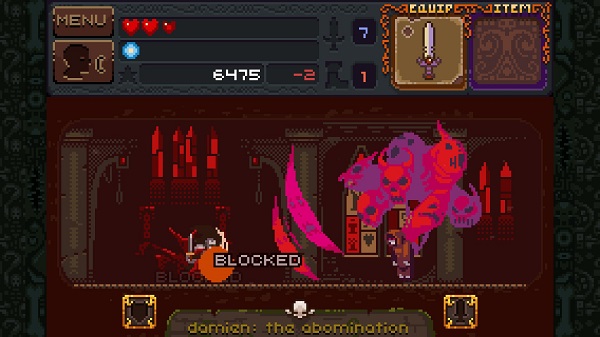
When I first read that this game was a PC port from mobile platforms, I assumed that it would be a shallow and simplistic experience with grind mechanics. I felt my suspicions were initially confirmed when the game taught me the controls which included an ‘attack’ and ‘block’. There is also an option to use any consumable items such as potions, but basically there are two controls. That’s right, two buttons are all you need to play this game (pretty much).

Deepest-dungeons-of-doom-screenshot-03

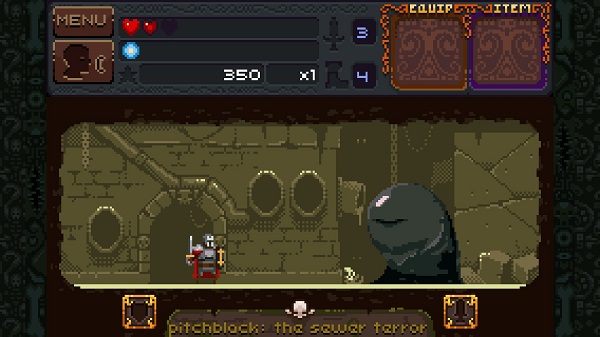
The gameplay can basically be broken down into timed button presses as you traverse down floors in a dungeon and fight the monsters you encounter. You have to time your attacks so they cool down and block accordingly when you see your foes telegraph their attacks. If you’re particularly crafty, you can time your attacks to do critical damage by attacking just as your foe is preparing to strike you. This goes both ways as your opponent can achieve critical hits on you if you time your own attacks poorly.

With these elements, I was pleasantly surprised with just how complex gameplay could actually become. Each opponent has a varied attack pattern which the player can learn to read, and each of the characters the player can choose has their own style of play. The crusader is a tough tank who can heal himself and get through fights in (more-or-less) one piece. The witch has powerful magic attacks but has to manage her mana reserves. The mercenary has a low cooldown for his basic, puny attack but can charge up his attack to do significantly more damage.

Deepest-dungeons-of-doom-screenshot-04

My original assumptions of the game being an extended quick time event were quickly proven wrong. I would liken this game more to the experience of playing Mario where you learn the route through the map slowly and get further and further to victory during every play through. This game has similar topography which must be learnt and adapted to.

The game also provides a sense progression wherein you unlock new abilities and power-ups with the gold that you acquire from your adventuring. You’re also able to buy consumable items and equipment before you venture down. The real progression will come from you honing skills and over time you’ll swap out various upgrades you’d bought previously to match your improved playing style. This is immensely satisfying.

Visuals & Audio

Deepest-dungeons-of-doom-screenshot-05

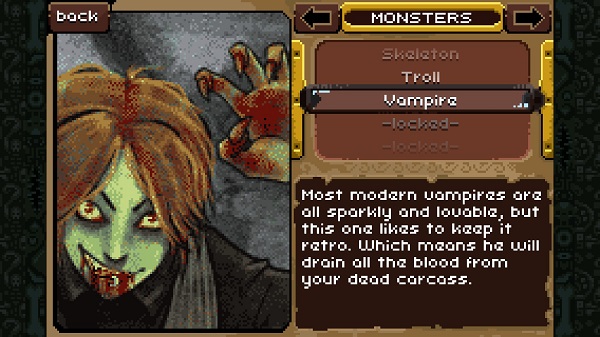
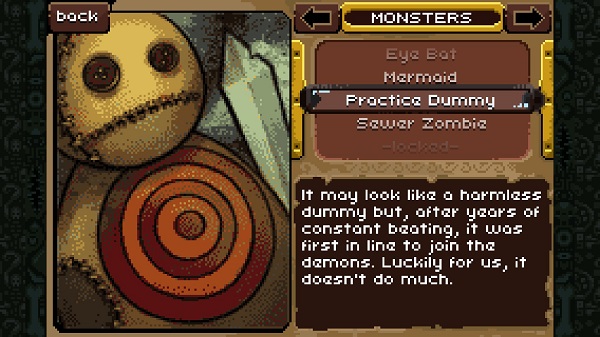
This game basks in the light of our retro game heritage when it comes to the visuals with everything being given a cute pixelated art style (even the gory deaths of various dungeon fiends). This visual style is pleasant enough, although it can get annoying at first when you’re trying to determine the attack patterns of an opponent. The in-game encyclopedia also has some nice artwork to go along with the entries on the various subjects within the game. Overall, I consider this to be one of the nicer looking games even with its knowingly dated graphics.

The audio is similarly reminiscent of retro games with 8-bit tunes playing throughout the game. This sound design is similarly charming with the music fittingly adding to the high tension which battles already create. I would not be surprised if the soundtrack becomes remixed into a chiptune at some point in the future as it is pretty catchy.

Overall

Deepest-dungeons-of-doom-screenshot-06

This game proves the age old adage that you shouldn’t judge a book by its cover… or in this case, you shouldn’t judge a PC port of a mobile game prematurely. I honestly had fun playing this game and it’s short, compartmentalised design means I can sneak in quick dungeon crawls during lunch at work. This is a fun game to play on PC and it’s very easy to get past it’s mobile game pedigree with the stringent demands the game asks of you. Deepest Dungeons of Doom is one of those games which actively forces the player to improve themselves in order to progress in the game and I gladly recommend it to those who are interested.

8-5-capsules-out-of-10

Capsule Computers review guidelines can be found here.

Mythical Pokémon Diancie Being Distributed for Pokémon X and Y

Pokemon-X-Y-Diancie-01Pokemon-X-Y-Mega-Diancie-01

From November 10-28, Pokémon X and Y players can acquire a special distribution code at select retailers for the mythical Pokémon Diancie. Once they have received the Pokémon in-game, and own a copy of either Pokémon Omega Ruby or Alpha Sapphire, they can then transfer Diancie into the newest instalment in Nintendo‘s DS family juggernaut.

Pokemon-X-Y-Shiny-Gengar-01The Diancite Mega Stone can be obtained in the new titles, releasing in Australia and New Zealand on November 21, allowing players to then mega evolve Diancie. And, to commemorate the release of Pokémon the Movie: Diancie and the Cocoon of Destruction, Hoyts Cinemas across the two countries mentioned will be giving out said distribution codes at screenings on the 8th and 9th of November. At the same select retailers, however – EB Games, JB Hi-Fi, Big W and Target in Australia and only the former two in New Zealand – gamers are reminded to walk on in for a special Shiny Gengar holding a Gengarite Mega Stone; this promotion lasts until November 5.
For all the latest on all things Pokémon, keep an eye on Capsule Computers.

Roccat Tyon Gaming Mouse Review

roccat-tyon-press-shot-012

Roccat Tyon
Manufacturer
: Roccat
Platform: Windows
Price: $99.99 USD – Available Here / $169.95 AUD – Available Here

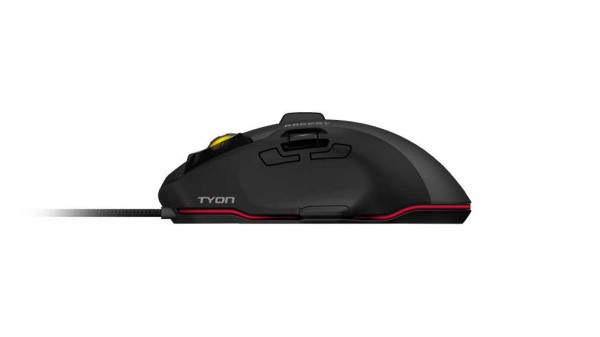
Roccat’s latest mouse is a multi-button behemoth. The Roccat Tyon is armed with 16 buttons that can be programmed with the Roccat drivers. The German gaming peripheral company is looking to differentiate the Tyon with the addition of two fin type buttons. The mouse is rounded off with an 8200 DPI laser sensor, two illumination zones, and Easy-Shift[+] support to double the number of available macros on one mouse.

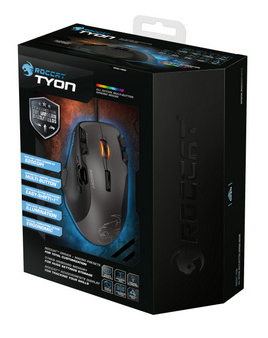
The Roccat Tyon is packed in a standard Roccat-style box with a matte black and blue theme. Inside, the mouse is snugly packed with a small quick start guide. The mouse is on the light side at only 126g, with the cord itself probably adding a few extra grams. The cord is a braided USB cable with a sturdily built USB 2.0 connector. The plug is not gold plated.

roccat-tyon-promo-shot-001

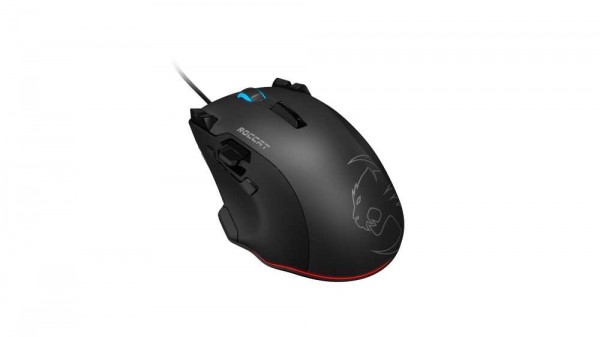
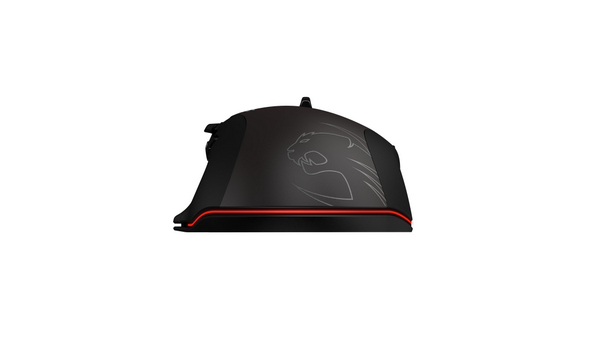
The mouse’s shell comes in black or white. Unfortunately for left handed population, the Roccat Tyon is only for right handed gamers. The top of the mouse is smooth with a slight rubbery texture. The rubbery texture has just enough stickiness to get a sure grip, without being so sticky that it is impossible to comfortably slide a finger over to one of the many buttons on the Tyon. The sides of the mouse uses a pebbled plastic texture for both the thumb rest and the buttons.

On the top of the Tyon are four side buttons, the two standard mouse buttons, the middle mouse wheel, and what Roccat calls the Dorsal Fin-Switch. The Fin-Switch does not depress like most buttons, but rather is pushed either left or right. In practice, I found it easier to hit compared to the traditional two buttons that are usually found in the same position on most gaming mice. However, the Dorsal Fin-Switch is still pretty awkward to use. The four side buttons are much better placed for most people. Though Roccat brags they spent months of “design, research, and testing” on the positioning, it is pretty clear people with smaller hands, like females and Asians, were completely forgotten about. As a person who wears men’s size small to extra small gloves, only the bottom of the four top buttons were actually within reach for me. The top two buttons were completely unusable without shifting my mouse grip completely to use. I suspect those with larger hands will have less issues with the mouse button positioning.

roccat-tyon-promo-shot-002

The thumb side of the Roccat Tyon is probably the best design I have come across. There are three buttons and the X-celerator analog paddle on the right hand side. On the top is the X-celerator analog paddle that is by default bound to a joystick axis input. The idea is that the paddle can be used to control the rotation of tank turrets or the thrust of a plane. Outside of games, I use the paddle to scroll through long documents for the ultimate act of laziness. It is less movement and quicker to use the paddle than the middle mouse button. The paddle is solidly built and has just enough tension to be controllable while easy to use. Located below the X-celerator analog paddle are two standard thumb buttons. I found the top button to be a little hard to push in the smaller area. The bottom button does not seem to have the same issue. The top button will probably only be an issue with smaller handed people like me, as the top thumb button was only just slightly out of reach.

roccat-tyon-press-shot-010

Although the X-celerator analog paddle is the feature most hailed by Roccat’s marketing team, the real winner is actually the bottom most thumb button. Instead of pushing inwards towards the pinkie like most thumb buttons, it is designed to be pressed downwards towards the mouse pad. The exact thought that crossed my mind the first time I used the button was “geez, why hasn’t anyone thought of this until now?!” The button is extremely comfortable to use. Although by default, it triggers the Easy-Shift[+] button, it is a perfect easy aim/sniper mode button. Most sniper mode buttons require some sort of rightward force to trigger, which makes fine aim adjustments especially in the left and right directions a bit more difficult. By pressing downwards on the mouse, I found my forearm stayed looser and the force needed to move the mouse in any direction was about the same.

roccat-tyon-press-shot-003

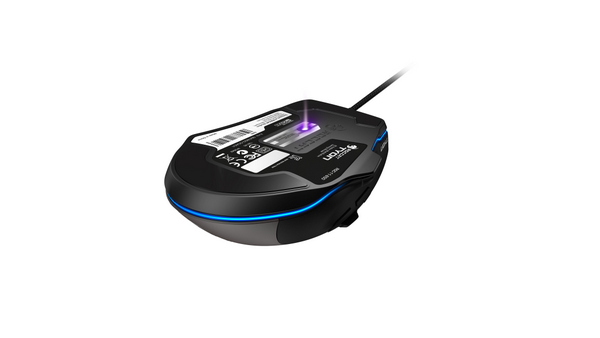
The Roccat Tyon comes armed with two separately lighting zones. The mouse wheel has two bands of light sandwiching it. The bottom rim of the mouse has a band of light wrapping the entire mouse. The LEDs are capable of 16.8 million different colours. In the firmware, users can change the two zones independently with several different lighting effects. The light can be set to a single colour using RGB colour values or the mouse can scroll through all the colours. I would recommend against using the fully lighted mode when using the scrolling colour effect. The LEDs cannot transition between colours smoothly, resulting in a very annoying “popping” effect. Using one of the lighting effects that temporarily turn off the lights at given intervals is a good way to hide the popping effect.

My relationship with Roccat’s drivers is a troubled one. On one hand, I love how much control Roccat provides its users. The macro editor is powerful and users can really tune the mouse to respond exactly as they wish. On the other hand, getting it installed can be a bit confusing. Each Roccat device has its own firmware suite that seems to communicate to each other through the Roccat Talk drivers. Initially, I installed the Roccat Tyon drivers and could not get into the Tyon mouse settings. It wasn’t until I installed the Talk driver could I actually get into the Roccat Tyon’s settings. I would really like to see Roccat switch to a single driver install that covers all their devices.

roccat-tyon-press-shot-004

I love the Roccat Tyon, but it isn’t a mouse I can use well. The button layout is possibly my favourite of all the gaming mice I have reviewed. However, a few of the buttons are just out of comfortable reach for me. If you do have smaller hands, I highly recommend going to your local computer store to give the Roccat Tyon a test drive. Though the drivers can be a little bit of a pain to install, Roccat provides the user a lot of options to tweak their mouse. At $99.99 USD list price, it is definitely one of the more expensive wired options out there, but heavy macro users will love the Tyon.

8-0-capsules-out-of-10

Capsule Computers review guidelines can be found here.