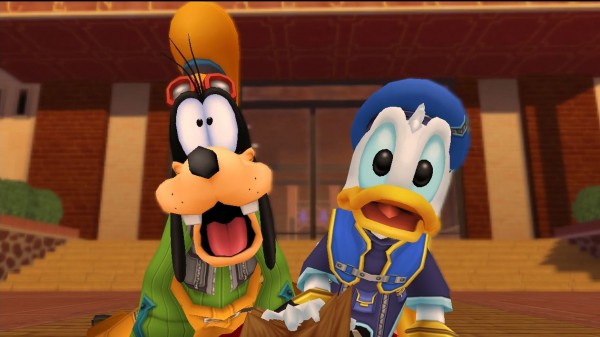
Kingdom Hearts is well known for bringing together the hugely popular worlds of Final Fantasy and Disney so Square Enix have released a couple of trailers to show off the best that both franchises bring to the series. The first trailer titled “Disney Worlds Connect” highlights the vibrant Disney cast as they encounter countless dangers and villains in worlds both familiar and new. Kingdom Hearts HD 2.5 Remix includes the following Disney worlds for you to explore (look away now if you don’t want spoilers!), Never Land (Peter Pan), Olympus Coliseum (Hercules), 100 Acre Wood (Winnie the Pooh), Pride Lands (The Lion King), Space Paranoids (Tron), Timeless River (Steamboat Willie), Deep Space (Lilo & Stitch), Port Royal (Pirates of the Caribbean: The Curse of the Black Pearl) and more.
In the second brand-new trailer titled “Original Characters and Cameos Worlds Connect,” fans can catch a glimpse of the cameos of some of their most beloved Square Enix characters, including Setzer (FINAL FANTASY VI), Aerith, Cloud and Tifa (FINAL FANTASY VII), Squall (FINAL FANTASY VIII), Vivi (FINAL FANTASY IX), Auron (FINAL FANTASY X) and many more. Both trailers are available below for your viewing pleasure and you can pick up Kingdom Hearts HD 2.5 Remix now exclusively on the PlayStation 3. You can check out our hands on preview of the product here.
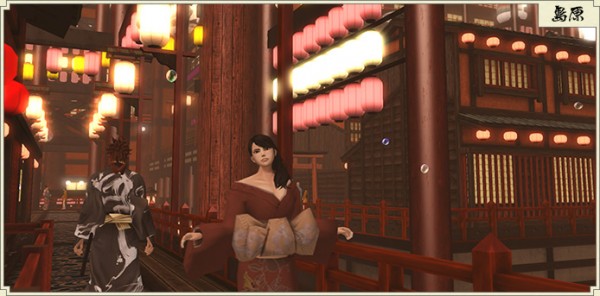
On February 11th 2015, samurai style fighting game ‘Ukiyo No Ryoshi’ will be released for the PlayStation Vita in Japan at a price of 5,800 yen. As it’s a fighting game first and foremost, it is understandable that the story will take a backseat in the game, as players get stuck into the fighting mechanics slicing apart foes accompanied by the Edo period backdrop. However, lets take a look at the main storyline for the benefit of those who wish to know the reason as to why they are maiming enemies at every turn.
You will be playing as a character called Yoshijiro Okita, who is part of the Shinsengumi – a police force who were dedicated to protecting Shogunate representatives during their time in Kyoto. Yoshijiro managed to enlist in the Shinsengumi successfully thanks to his swordsmanship and his ukiyoe skill (a distinctive Edo period drawing style). It was through his art interests that he met his love interest, a fellow artist named Oryu. Predictably, and acting as the catalyst for the story, she is murdered in mysterious circumstances. Yoshijiro then begins his quest to avenge Oryu’s death.
The developers Spike Chunsoft (who are behind the popular series Way of the Samurai) are also releasing a closely related game on the PlayStation 3. Titled ‘Ukiyo No Shishi’, the game will be exactly the same in regards to the setting and gameplay mechanics, but there will be major changes to the storyline and fighting sequences. The release date for the console version will be on January 29th.
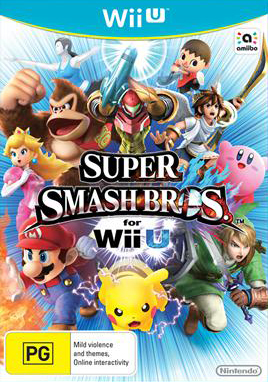
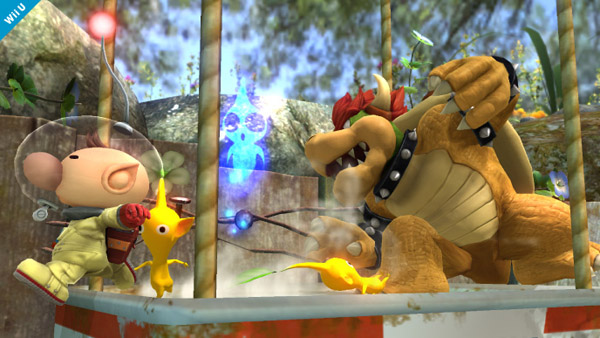
Since 1999, Super Smash Bros. has been one of Nintendo’s hottest properties. The love letter to fans in the form of a fighting game has had some of the best gameplay and atmosphere of any game out there and after its triumphant introduction to hand-helds with Super Smash Bros. for 3DS, the game is franchise on consoles with Super Smash Bros. for Wii U. Developed alongside the 3DS version, the first ever high definition Smash Bros. game shares a lot with its handheld component, but has more content than you can shake a stick at, and is without a doubt some of the best gaming that the Wii U has to offer.
Gameplay
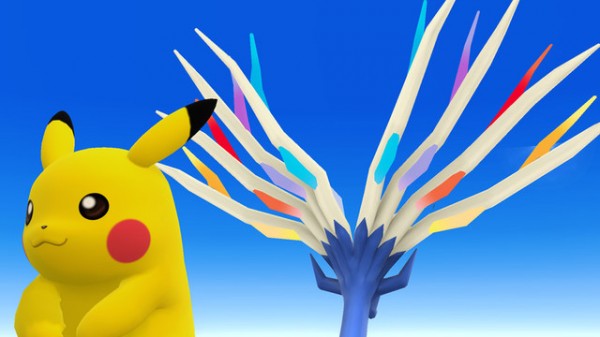
This is a Smash Bros. game so the basics remain largely unchanged from the original 1999 game. You play as one of Nintendo’s brightly-coloured, hugely popular franchise mascots and pit them against one another in epic combat. Smash Bros. has always managed to differentiate itself from other fighting games in some very real, very notable ways. Firstly, instead of relying on impressive combos or sweeping controller inputs to deal damage to your opponents, Smash Bros. has a simplistic “specials” system. There are two attack buttons, and which directional input you press while tapping them will change what moves you make. There are normal attacks, and specials that draw on the power of the character. So for example, Pikachu has a lot of light attacks where he headbutts his opponent or hits them with his tail, but can sling electric attacks like its nobody’s business. The second major difference between Smash and other fighting games is that outside of a few special modes, it doesn’t use a traditional HP system. Instead, the aim of the game is to knock them off the edge of the map so that they plummet to their death and the more damage you rack up on them, the futher away they will fly, making it harder for them to get back to the safety of the map.
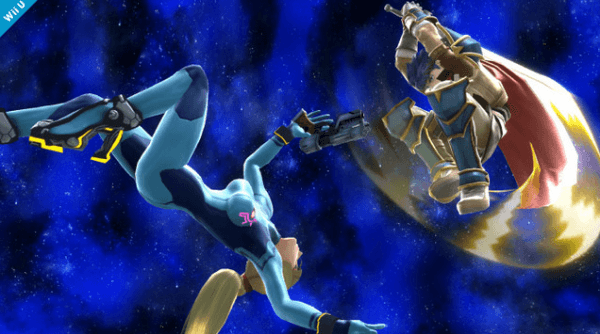
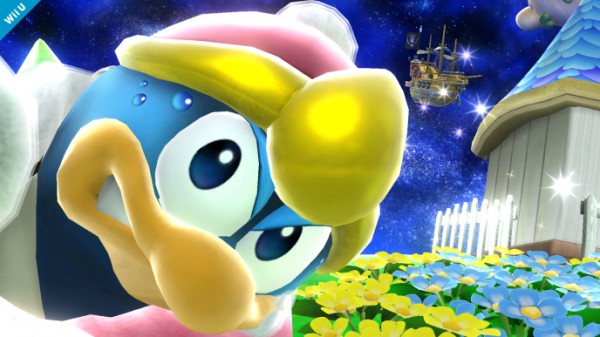
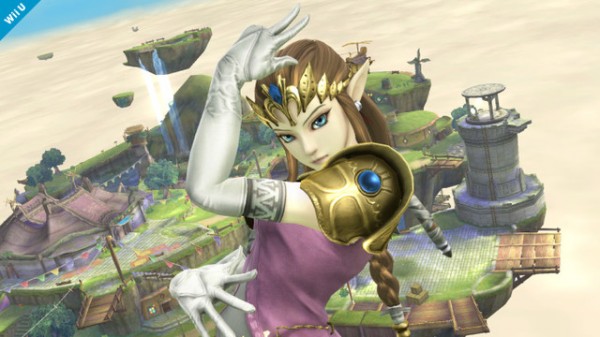
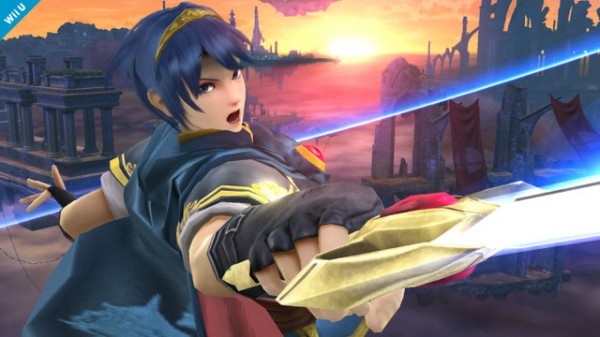
So now we have gotten the basics down, lets talk about Smash Bros. for Wii U specifically. With a staggering roster of 49 characters, this is the biggest Smash Bros game to date. The characters span from the usual mascots like Mario, Link, Samus and Pikachu all the way to some obscure inclusions like Little Mac (from the Punch Out franchise), Shulk (from Xenoblade) and the Wii Fit Trainer. Each character has their own strengths, weaknesses and play styles, and the diversity of the roster leads itself to a near-endless amount of playability, as you can pick a different character every time you play and have a completely different experience.
Smash Bros for 3DS had a couple of game modes to keep players interested, but the level of content is absolutely dwarfed by its bigger brother. While the game’s main focus is the traditional “Smash” battles, Super Smash Bros. for Wii U has an absolute smorgasboard of single and multiplayer game modes to ensure that you will never have a reason to put down that controller.
The biggest addition that the 3DS version of Smash brought to the franchise was the Smash Run. Unfortunately that is not present here on the Wii U, but in its place we have a new game mode known as Smash Tour. Smash Tour operates a lot like Mario Party and has players traversing around a game board and collecting as many fighters as they can. At the end of the game, each of the participating players faces off against one another in a winner-takes-all match, and each of your collected fighters represents one life. I really liked the new Smash Tour mode and the fact that every time I played it was a completely different experience. It is a game mode that lets players of varying skill level to be able to stand on the same stage together.
When you need a break from the fighting, the game features the return of Trophy Rush, Home-Run Contest, and Target Smash as ways to take a breather while still getting your smash on. These are nothing more than mini-games but they do enough to break up the pace of the action while still keeping you iengaged in what’s going on. Many of these help you unlock other characters, trophies, special abilities and other unlockables so there is a purpose to them rather than “just because.”
This particular version of Smash brings a lot to the table, including one thing that no other entry in the franchise has done before: eight player simultaneous brawling. Typically limited to a maximum of four players, the new eight-player smash mode is a huge jump and can lead to some absolutely insane battles. having eight players on screen at one time is chaotic, frantic and almost impossible to keep track of but an absolute blast none the less. This mode is exclusive to couch-multiplayer, showing that Nintendo still cares about the people all sitting around together at home, as opposed to just those playing online.
Speaking of online however, in this day and age online multiplayer is an absolute necessity (the merits of which are a discussion for another time) and unlike Super Smash Bros. Brawl for Wii and Super Smash Bros. for 3DS, the online component of this game is near perfect. While the last two Smash games struggled with lagging and disconnection issue, my online experience with Smash Bros. for Wii U has been nothing short of glamorous. I have suffered close to no lag or dropping out and my matches have felt buttery smooth, especially if I was against someone from the same country.
Visuals & Audio
I am consistently impressed with what Nintendo is able to accomplish with their Wii U hardware and Smash Bros. is no different. This is the series’ first foray into the high definition scene, and it has been pulled off perfectly. Character models are all highly detailed and look as distinct as they play, but that is just the tip of the iceberg. It is no short feat to have 49 different playable characters, each having their own unique look, feel, and movement animations but the developers have done almost magical work in bringing all of these beloved characters to life.
The characters aren’t the only beautiful things in the game. Each serving as homages to Nintendo’s past, present and future, each of the game’s stages look fantastic. Whereas Super Smash Bros. for 3DS’ stages focused on popular Nintendo handheld games like Zelda: Spirit Tracks or Super Mario 3D Land, the Wii U version’s stages take heavy inspiration from the console-specific games that Nintendo has offered. Stages based on Donkey Kong Country, Super Mario Galaxy and even the upcoming Yoshi’s Wooly World are just some of the many stages you will be playing on. Not only are the stages visually distinct from one another and manage to keep the art style and thematic feel of their respective franchise, but they play uniquely to one another and require players to adapt to the nuances of each.
Super Smash Bros. for Wii U is a fighting game, so as expected it runs at a buttery smooth 60fps, and an impressive 1080p resolution. The frame rate ensures that you are never throwing the controller away in frustration or screaming that “I pressed that button seconds ago!” while the resolution makes the game absolutely sparky with beauty. I will admit that there were a few times where the frame-rate dropped down for me, but there were REALLY infrequent, probably only happening two or three times during my entire play time and only for less than a second each.
For as great as Smash Bros. looks, it sounds just as good. The characters all sound great and many of them keep their VOs from their respective games. Character voices are one thing, but the real “wow” factor comes from the game’s soundtrack. Just… Wow, I’ve never seen such an amazing compilation of hit game tracks in one place. Be it Cynthia’s theme from Pokemon Diamond/Pearl/Platinum/Black/White/Black 2/White 2 (wow she is in a lot of games), or Saria’s Song from The Legend of Zelda: Ocarina of Time, each piece has been brought into the modern age in and in many cases remastered or remixed to perfection. Each stage has a selection of tracks that players can pick between so that you have control over what music appears when you play.
Overall
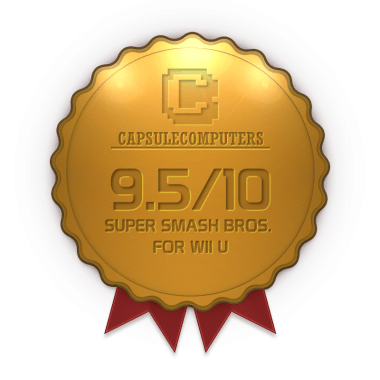
This has been a stellar year for Nintendo, and Super Smash Bros. capped it off perfectly. Just about everything in this game is amazing: It has a massive, unrivaled roster, jam packed with game modes to play, looks and sounds beautiful and has a great online component. You will find yourself playing Smash for hours and hours on end, and still not be bored. The game is approachable to anybody yet the nuances of the game lead itself well to competitive playing. While it isn’t as competitive as Melee, it fits neatly in between it and the hyper-casual Brawl, allowing for tonnes of fun without ever getting over the top.
Capsule Computers review guidelines can be found here.
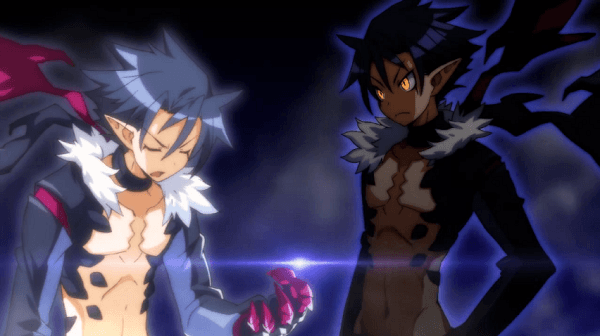
Today Nippon Ichi Software released the first in what will be a series of videos introducing us to the main characters in Disgaea 5 and they have kicked things off with the main protagonist, Killia. Killia is a Dragonewt demon who is seeking revenge against Void Dark, the strongest and evilest demon emperor.
The company has yet to say what happened to him, but the source of his revenge is due to certain events that happened in Killia’s past. You can check out the character introduction below while Disgaea 5 is currently still set to be released in Japan on March 25th for the PlayStation 4.
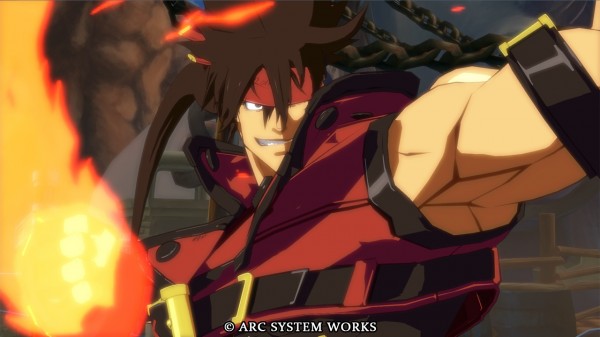
Last week it was announced that due to strikes, Aksys Games was not going to be able to obtain some of the components needed for Guilty Gear Xrd: Sign‘s limited editions. At the time they stated that the delay would hopefully be a short one and it turns out that that is indeed the case.
Today Aksys Games has confirmed that the Limited Edition versions of Guilty Gear Xrd: Sign will now be released on December 23rd, only a one week delay from the original release of December 16th. Now it is worth noting once again that this delay is only affecting the Limited Edition release of the title and all standard versions will still be available starting on December 16th.
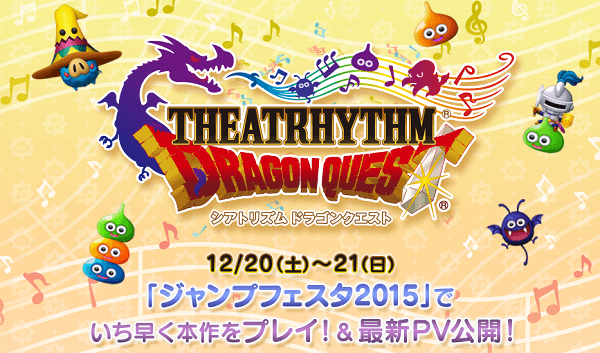
Rhythm games have started to come back into style and Square Enix is jumping on the chance to release another title utilizing music from some of their other iconic franchises. Today it was revealed that Square Enix is going to be releasing Theatrhythm Dragon Quest for the Nintendo 3DS. The title will be released on March 26th in Japan and they will be debuting the first trailer as well as showing Theatrhythm Dragon Quest off for the first time during the Jump Festa event that begins on December 20th.
Currently it is unknown exactly how many songs will be included in the release, though they will likely draw from not only the main Dragon Quest games but various spin-offs similar to how they handled the Theatrhythm Final Fantasy series. For now, you can check out Theatrhythm Dragon Quest’s official website here.
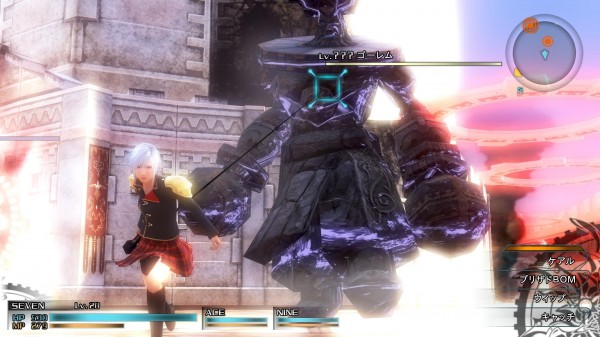
Square Enix has announced that they will be holding a special Final Fantasy Type-0 HD livestream for North America and Europe later today. This is part of their “Square Enix Presents” series of YouTube broadcasts and it will take place 8:00 pm PST on Thursday, December 11th.
The livestream can be seen here, as for what it will contain, Square Enix says they will be sharing “new details and some exclusive reveals” during the broadcast. Considering Final Fantasy Type-0 HD is set to be released in the West in March, this is probably a good time to tune in and see what the company has to reveal about this upcoming Xbox One and PlayStation 4 title.
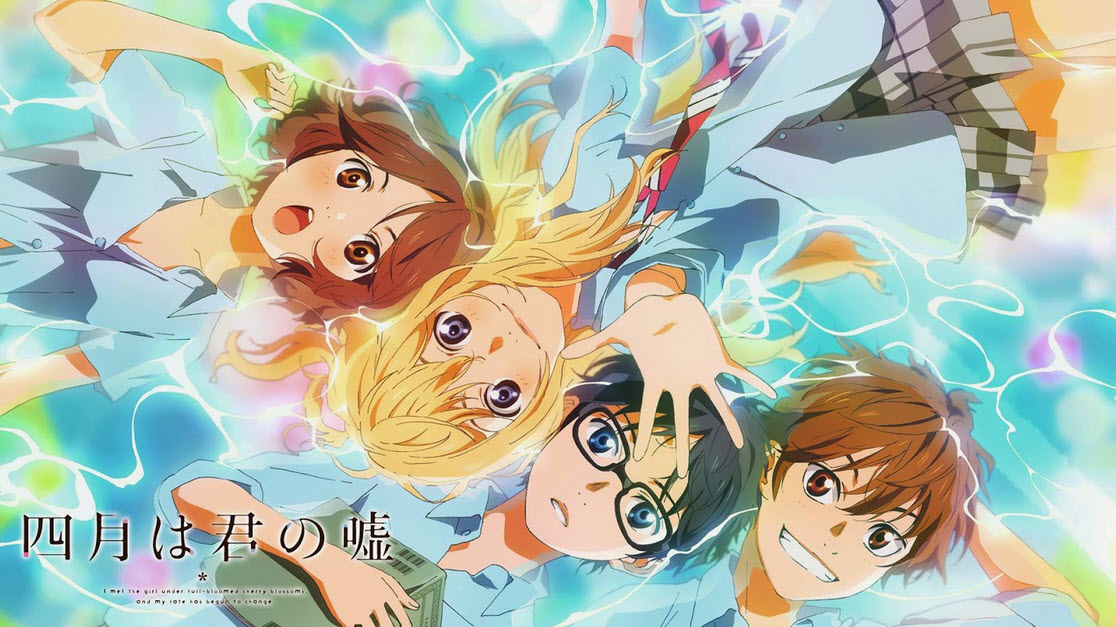
Kodansha Comics has just announced that they will be releasing the first volume of the Your Lie in April (Shigatsu wa Kimi no Uso / April Is Your Lie) manga in English in Spring 2015. Naoshi Arakawa’s manga is currently being adapated into a 22-episode anime series. The anime has been licensed by Aniplex USA and Madman, and Crunchyroll is streaming the series in North America, Central America, South America, Australia, New Zealand, United Kingdom and Ireland.
Kodansha describe the series as follows: “Kōsei Arima was a piano prodigy until his cruel taskmaster of a mother died suddenly, changing his life forever. Driven by his pain to abandon piano, Kōsei now lives in a monotonous, colorless world. Having resigned himself to a bland life, he is surprised when he meets Kaori Miyazono, a violinist with an unorthodox style. Can she teach Kōsei not just how to play, but how to start living again?”.
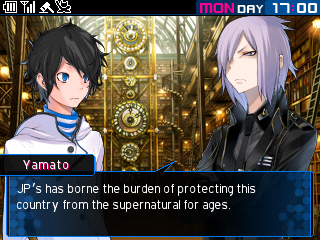
Atlus has announced that Devil Survivor 2: Record Breaker has been delayed yet again. The game, originally titled Devil Survivor 2: Break Record, has now been pushed back to 2015. The portable title was supposed to originally see a 2013 release, then a late 2014 release. Atlus has not stated exactly when they plan to release the game, but hopefully it will be out sooner rather than later.
Devil Survivor 2: Record Breaker offers nearly double the content of the original Devil Survivor 2. Atlus claims that there will be 100 total hours of gameplay in the expanded title. Not only is there to be further depth within the main game, but Atlus has also stated that the new version will continue past the ending of the original game.
Additionally, Record Breaker is to have English voice acting for it’s story dialogue; this of course, will likely be a negative to some fans of the series. A mysterious new character is also set to make her appearance in the new content, named Miyako Hotsuin. Players will have the option to skip to the new content, or to play through the original game first.
Today’s announcement trailer can be viewed below, with a sampling of the English voice cast.
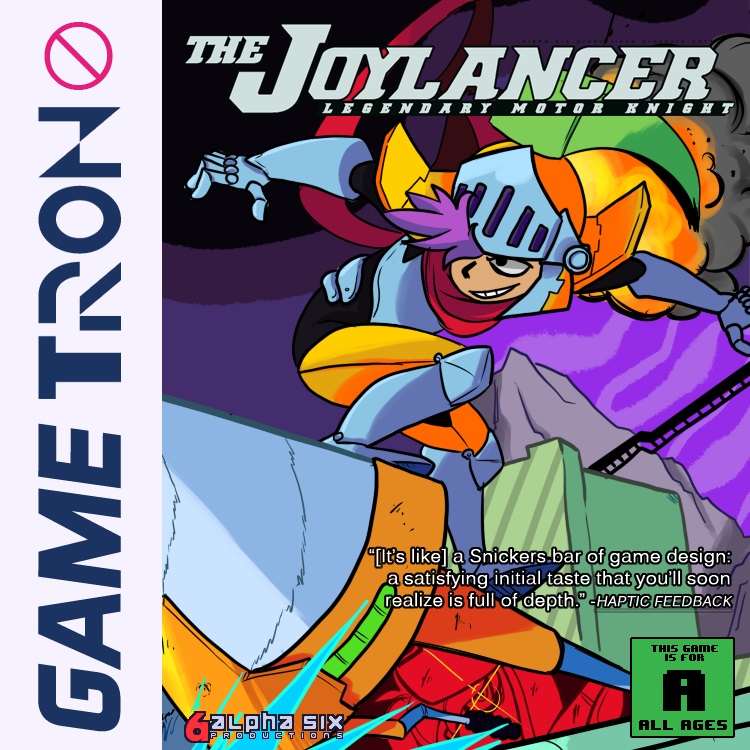
Joylancer is a retro-styled action-platformer game, taking after the Super Nintendo era of gaming. It is an indie game currently available on Steam Early Access, and it offers several gameplay modes. Only a few levels have currently been created so far, as it is an early alpha; new content will be added as it’s developed. There are multiple control options, though I found the controller option to be better suited for platforming and combat. The menus are typical, allowing you to edit display settings, game settings, etc, although there are a few nice alternate visual options under the display settings. The game supports rumble mode if you have a controller, though I did not keep that function turned on.
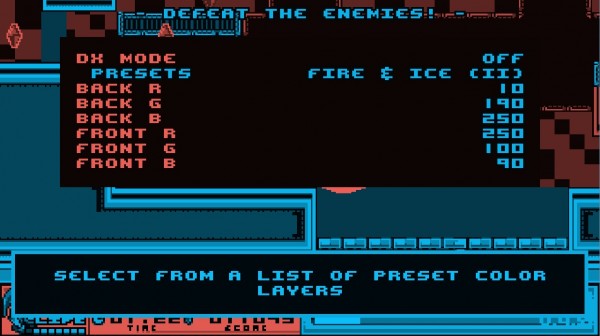
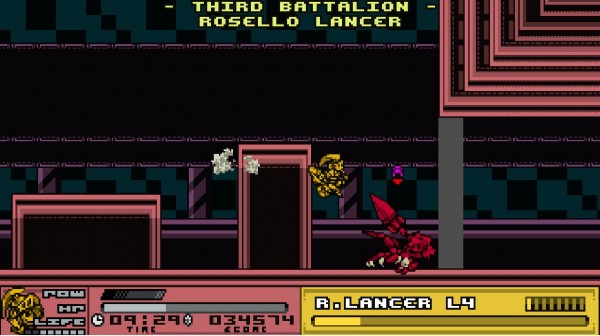
Joylancer offers several different visual styles, allowing the player to change at will how the game looks. There is the standard “DX” mode, which is a mode where everything is colored based on object, as well as various presets for non-DX modes. These allow the player to choose how they wish the visuals to appear, from grey scale, to various colored themes. I found the 16-bit style aesthetic pleasing, with the sprites standing out well against the tiled backgrounds. Some customized color schemes led to a bit of difficulty in discerning on-screen objects, but overall, the graphics are crisp and well animated. Additionally, the player can zoom in and out slightly from the center of the screen; I didn’t find much difference in playability from zoom levels, however.
The audio effects in Joylancer are alright and somewhat typical, however, I found the one set of the music tracks to be overly harsh, and hard to listen to. After a short time, I found myself forced to turn the music way down. Even though it’s chip-tune based, the beats and loudness of it were distracting, and I didn’t particularly enjoy the compositions. The second set of tracks is much more subdued, and I kept that set going for the majority of my play.
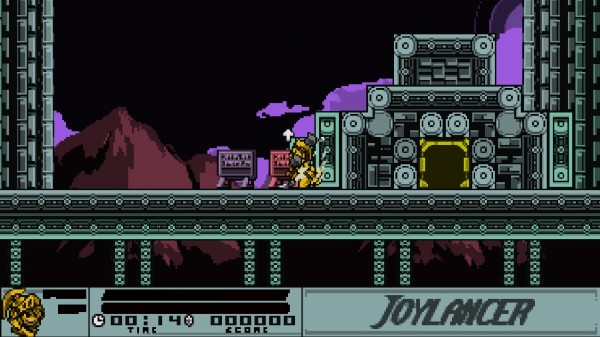
At this point in development, there isn’t much of a story to go on. The protagonist is a knight of sorts, equipped with a weapon called a drill-lance, and she goes off to fight various other knights and monsters in the world. There are hints of back-story present, however, at this point it is rather limited. Storyboards and NPC’s respond with text boxes when the player interacts with them (which is how the tutorial is handled), and this will likely be the primary storytelling for the game, as opposed to active cut-scenes and conversations. Hopefully with Joylancer’s full release, the story and lore will be much more substantial.
Current modes for the title include a tutorial mode, the beginning portion of story mode, a survival challenge mode, and multiplayer combat. The tutorial is short, but helpful, giving you one new thing to do at a time in order to help facilitate learning the movement and combat system, which is fairly standard. I liked that it didn’t allow you to try out different moves until you progressed to the point where they were introduced, which helps the player to focus on what they need to know per section.
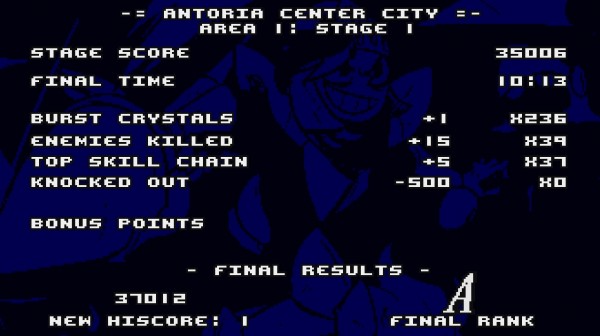
It’s clear that the story mode is intended to be the main focus of Joylancer, with multiple levels and stages available through exploration of an overworld map. There are random enemy spawns you can run into on the map, which take you into a battle screen, much like an RPG. This battle screen is set up as a mini-level, with multiple enemies to fight. There is only one real section to play available now, with a few level’s and a boss battle in that section. You are ranked for your play on each level based on a few factors, time, points, difficulty, and deaths, with S+ being the highest rank. I could see this factoring into competitive leaderboards, with speed being balanced by item collecting and kills.
Each level consists of a few areas, which you must fight through in order to find the entryway to the next, and I found it a bit tough to navigate parts of the worlds. Little direction is given regarding some of the in-game objects, but much like retro-games of years past, they’re easily figured out and interacted with. Currently Joylancer requires exploration from the player in order to find where to go, and I enjoyed the challenge of trying to figure out the levels, and where I could get to in each. There are secret areas riddled throughout the levels to discover as well, which adds to player discovery.
The “Dark Palace” challenge mode is still rough as well, but it’s clear to see where it’s going. There will be 50 levels of enemies to fight through, in order to make it to the bottom of the castle. The player is given a limited number of lifebars, and expected to fight through these multitudes of enemies without dying. At the moment, it doesn’t seem to be quite complete, but it’s fun to try to get as far as you can. The final mode is titled Motor Combat, and it is a 1-4 player fighting mode. There are to be multiple knight-type characters to choose from, as well as multiple stages. At the moment, it works, though I experienced some crashes while trying to fight the AI knights.
Where Joylancer shines is it’s combat, which is fast-paced and engaging. There are a number of special moves already available, which require charge from the character’s drill-lance. It gets used up rapidly, but collecting gems or doing the charge move quickly bring it back up to full. Combat becomes a balancing act of managing the multiple enemies on screen while continuing to charge up and attack with the special moves. Personally I enjoyed hitting enemies into the air, and smashing down on them with a pair of moves. Combos also seem to be present, though I had trouble really chaining many moves together, due to the need to constantly charge up the drill-lance during battles. The more I played the easier this started to become, however.
The only thing I didn’t enjoy about the combat was how Joylancer locks the player in certain areas during levels with multiple enemies, instead of letting players speed past if they chose. There are ways to juggle enemies in the air, as well as counter enemies, and throw back any weapons which are tossed at the player. The system has depth, and requires practice to master, although it is perfectly playable (on the easier difficulties at least) with less practice. There is only one boss fight at the moment, but I found it to be challenging until I learned the boss’ patterns. The AI of average enemies is fairly good, some are dumber and less able to hurt the player, some are much more intelligent. Axe Knights in particular are quite vicious and powerful foes.
What I feel about Joylancer at this point, is that it’s hard, but about player discovery and skill. While certain aspects are difficult, Joylancer is fair in how it throws enemies and challenges at the player, and it’s more than forgiving, with multiple life bars and numerous (at this point, seemingly unlimited) lives, which respawn the player where they died without reloading the level. The combat is fluid and fun, as engaging as the player wishes it be. While the platforming can be tough to get past, I never felt like I was stuck and unable to advance; a simple charge of the drill, and then doing the special drill jump got me to pass most obstacles without difficulty. There isn’t much content in the game yet, which is unfortunate. The game will shine once there further enemies to battle and combos to learn. Joylancer is playable, however, there just isn’t much to play yet. As more levels get designed, and as the overworld map increases, there is no doubt the game will get more and more enjoyable to run, jump, and drill your way through. You can watch the alpha release trailer below, and grab the demo or buy the early access version on Steam. Joylancer is currently scheduled for it’s full release in January.