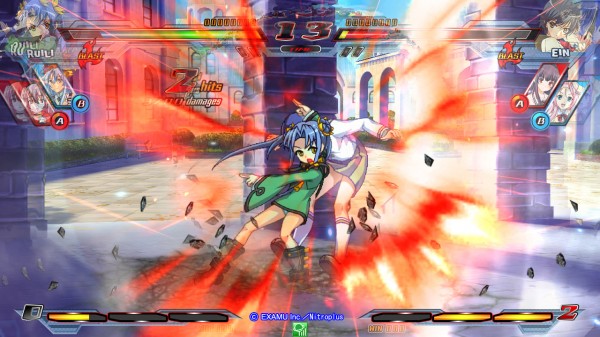
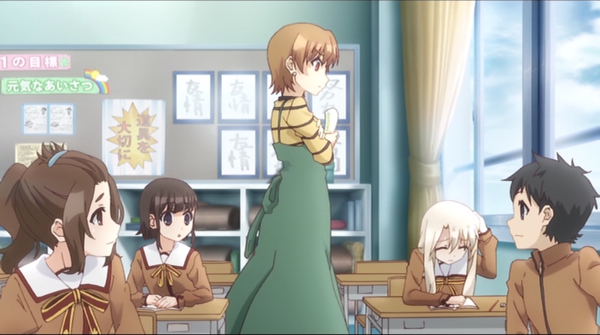
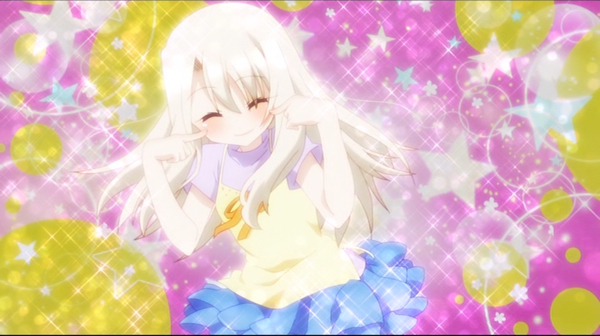
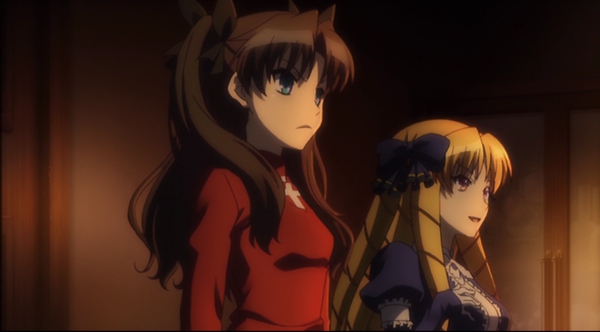
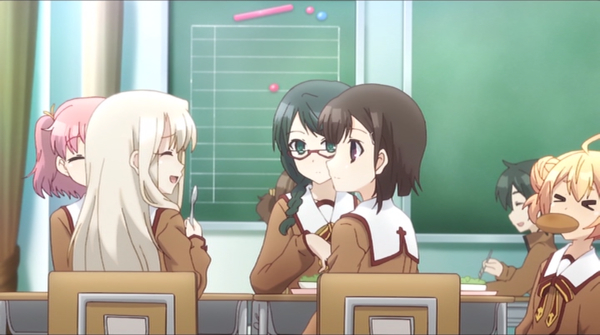
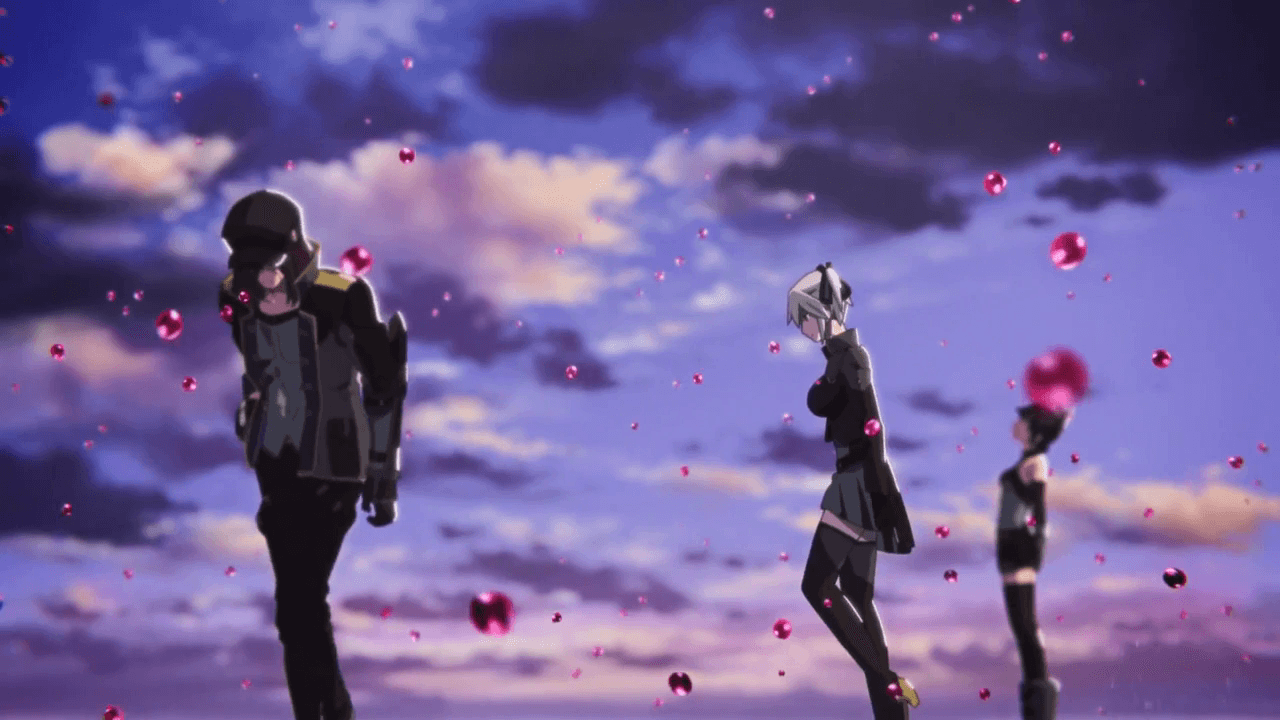
You can check out the videos below where you will not only see Ein, Mora, Al Azif, Ruili, and Saya in action but also a number of the partner characters. Currently this fighting game is only scheduled to be released in Japanese arcades sometime next year, though the chances of an eventual Japanese console release are quite high.
Overview In the past year Sekai Project has earned themselves quite a reputation as being a company willing to not only bring English speaking fans some of the highest demanded visual novels through Kickstarter but also help release a number of smaller visual novels that may have otherwise been overlooked. One of these visual novels happens to be fault by ‘ALICE IN DISSONANCE.’ So now that milestone one (episode one) of fault has been released, is this visual novel worth beginning?
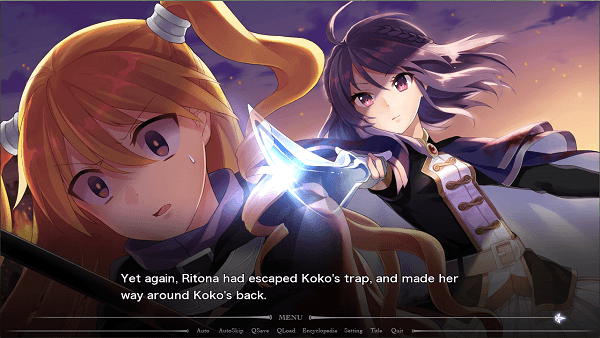
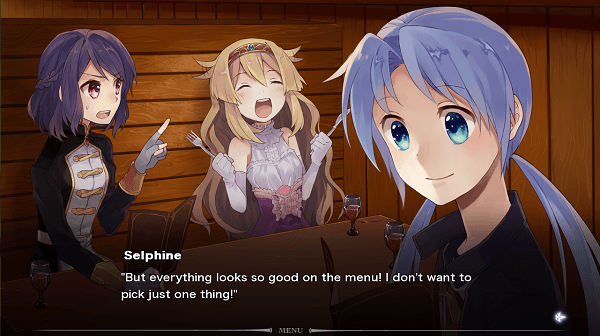
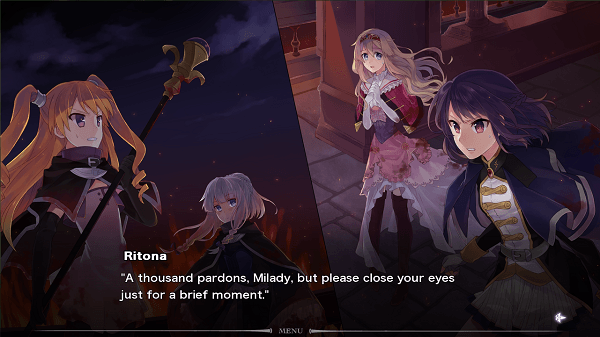
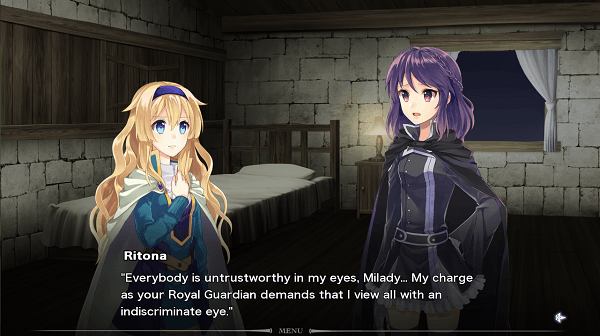
Story The Kingdom of Rughzenhaide has come under attack by an unknown force. As the people are slaughtered by unknown Shadow Warriors, a couple members of the commanding force reach the location where Rughzenhaide’s princess, Selphine, is supposed to be hidden away. Unfortunately for them, the Princess’ royal guard Ritona is an incredibly skilled fighter capable of wielding powerful manakravte (magic) and when it becomes apparent that they are at a disadvantage, Ritona uses a risky technique to teleport both Princess Selphine and herself away.
With no knowledge of who laid waste to the kingdom, Ritona and Selphine find themselves in an unknown land as something went wrong with Ritona’s teleportation. The only thing they do know is that this strange land’s manastreams are not only small, they are also extremely difficult to access. With difficult access to their battlekravte (combat magic) and in an unknown place, the two will need to find their way home, but first they must find out where they are and how they can manage to survive in a land where the people have turned to science to make up for the lack of their mana.
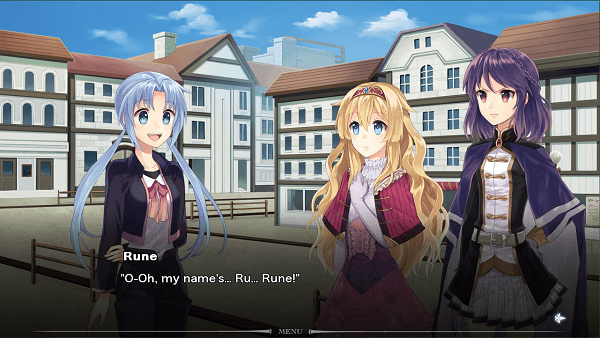
Now although the basis of the story is obviously set around Ritona and Selphine, the focus quickly begins to shift away from their plight. You see, while the visual novel follows the pair as they explore a close city, quickly learn the language, find out where they are, as well as obtain some local currency, the core plot focuses on a strange new girl calling herself Rune. Rune offers the pair help navigating the city and although she may not have any underhanded motives, there is much more to Rune than she lets on and players will quickly recognize this as the story unfolds over what becomes an interesting and enjoyable read that is hurt by a drawn out narrative that takes forever to explain simplistic terms and events and a lack of focus.
Considering this is the first “milestone” in the series, it is good that the writers chose to spend a decent amount of time building the world and explaining certain aspects of how manakravting works and the various illnesses and threats that Ritona and Selphine will need to watch out for. That being said the title already offers an encyclopedia of basic terms and almost everything that is introduced is explained to an unnecessary level. This problem is worsened by the fact that the writers have an issue keeping a set perspective.
The story isn’t told through the eyes of any specific character and shifts from third person to first person rather often as we read what a character is thinking. Unfortunately more often than not, the narrative jumps so quickly between these forms and doesn’t properly label who is even supposed to be talking. While this is easy to figure out, the writing lacks focus. In fact this lack of focus is all the more apparent when it comes to the main storyline of Ritona and Selphine.
Although the beginning of fault -milestone one- is handled well enough, the main focus of the story is instead on Rune, the mysterious girl who first assists the pair. In fact, outside of the very beginning and the very end of milestone one, Ritona and Selphine’s story and what is happening to their kingdom takes a complete backseat to Rune’s backstory and who she is.
To make matters worse, although the world is developed and explained nicely, the characters themselves are as standard as they come and very stereotypical. Neither of the two main characters are given any meaningful development nor are we given a reason to care about them other than the fact that their kingdom is destroyed and they are stranded somewhere. Rune’s story makes us care about her and I will say that the writers have done a great job handling her past, even if it feels like the whole issue is resolved in a rather simple manner in order to wrap up the milestone with a cliffhanger that tries to swing the main story back into focus.
Gameplay Now although fault -milestone one- is a visual novel, it is a kinetic visual novel which means that there are no real player choices or different routes to be taken. There is a very specific story to be told here so far and although there is one choice, the only thing that changes is a little bit of dialogue and nothing else. Instead players will simply click through the story as one would any other visual novel, though you can make use of simple features such as auto advance or skip if you’ve already read the dialogue before.
One thing that is lacking however is a way to hide the text box, which isn’t too much of an issue as all of the CG in the game can later be viewed in a gallery but it is something that is strangely omitted. It is worth noting that if you so wish; you can change the text from English to Japanese.
Visuals & Audio For the most part, fault -milestone one- features some nice looking character portraits with most of the main characters featuring multiple portraits for different emotions. That being said, there are a number of character portraits for side characters, albeit ones that show up often, that have oddly proportioned heads and other strange looking features. The CGs are nicely designed and so are the backgrounds, though it must also be said that since the players only visit a few areas in milestone one, you will be spending a lot of time looking at the same backgrounds.
It is worth noting that fault -milestone one- does not feature any sort of voice work, which generally isn’t an issue but in the case of this visual novel it does make most of the drawn out dialogue boring to read through. As far as the background music is concerned, there are a number of different tracks that are nicely varied and fitting when they appear. The title also features a nice and fitting opening theme called “Modus Operandi” by Midorizaka Aaya.
Overall fault -milestone one- is off to a fairly decent start here as the writers have managed to build up a rather fascinating world, now they just need to try and make readers care about what will happen next to Ritona and Selphine because at this point, the only reason we would have to care about them is because they are interacting with Rune. With character designs ranging from decent looking to odd and a nice soundtrack, there is some potential in fault but whether or not they will be able to take advantage of everything they spent so much time building up and focusing on is yet to be seen.
Capsule Computers review guidelines can be found here.
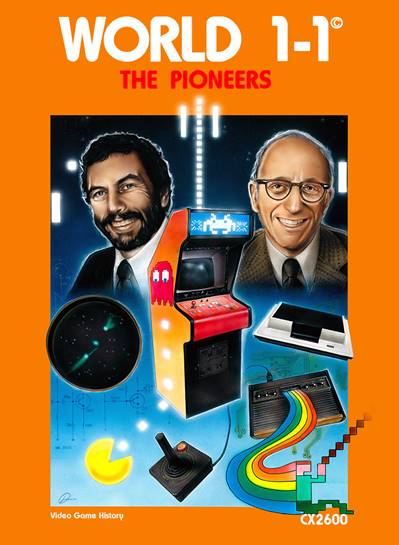
After their successful Kickstartercampaign, Lighthouse Pictures will be releasing their video game documentary on January 1th, 2015.
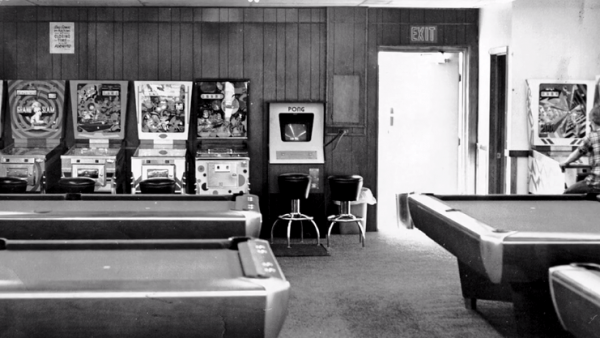
World 1-1: The Pioneers covers the early days of video gaming, when arcades happily munched on the week’s allowances. Film makers Jeanette Garcia and Daryl Rodriguez interview some of the biggest names of the era, such as Nolan Bushnell, Al Alcorn, Dona Bailey, Warren Robinett, David Crane, Howard Scott Warshaw, Owen Rubin, Joe Decuir, Franz Lanzinger, and Steve Mayer.
World 1-1: The Pioneers will be released digitally on January 15th, 2015. No word what distribution services will be carrying the film and how much copies will cost. Learn more about the film at the official World 1-1 website.
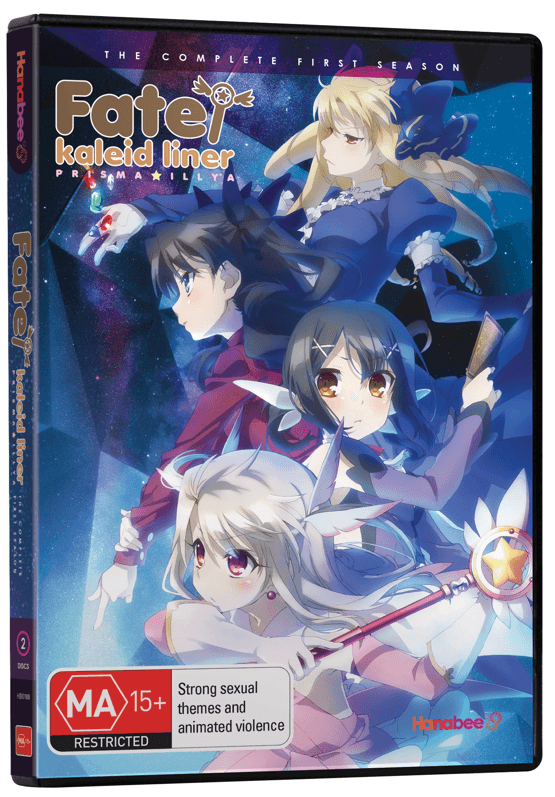
The magical girl genre is something that many anime fans are familiar with. Anime fans who grew up in the 1990s in particular will almost definitely have seen at least one certain influential magical girl series. Even so, recent series in the genre do not garner the same amount of attention as they used to. Some manage to become mainstream viewing within the western anime community, but others remain obscure and known only to a small group of anime fans. Fate/Kaleid Liner Prisma Illya is one such series and therefore less likely to become as popular as a shounen series, but at the same time, it is a spin-off of the increasingly popular Fate/Stay Night series. Does this magical girl series have enough going for it to warrant a purchase, or is this series best left as a title for only dedicated fans of the Fate series to collect?
Story
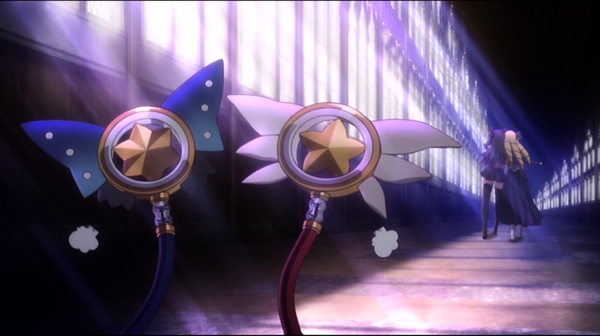
Illyasviel von Einzbern is a fifth-grader who wonders what it would be like to be a magical girl. Somehow hearing her talk about this, the magical Kaleidostick Ruby becomes interested in her and eventually convinces Illya to become her master after leaving the mage Rin Tousaka. Illya agrees to help Rin find the five Class Cards that still need to be found, after some inappropriate name calling, and the Kaleidostick Sapphire shows up with Miyu as her master soon after leaving the mage Luviagelita Edelfelt. Miyu then transfers into Illya’s class at school and just happens to move into a mansion that suddenly appears across from Illya’s house. This is only the beginning of this series’ bizarreness.
This series is extremely problematic at times. It depicts a group of fifth-grade students who for some reason have knowledge of sexual themes, and Illya is depicted as having an inappropriate sexual lust for her brother. Throughout the majority of these episodes, they are mostly presented as innocent characters who embody the sweet, adorable nature that children in real life have. There is also a lot of clean humour present in scenes set in the classroom; any scene involving Illya’s friend Tatsuko being nonsensical yet absolutely hilarious. However, class 5-1 teacher Taiga has some very clear anger management issues, another problematic element of this supposedly cute series and one that is played up in the dub.
Illya’s cuteness not only serves as a way of showing her innocent nature but as a foil to Miyu’s shy and seemingly cold nature. Miyu’s past is not discussed much in this season, and only towards the end of it are even the smallest of details about her actually mentioned. What is revealed about her is that she had no place to stay, suggesting that something happened to her parents in the past. Losing one’s parents would cause any child to feel lonely and find it difficult to open up to anyone, but Illya’s kind-hearted nature helps Miyu become close to her. This is one of the few things this series does well; it shows the power of friendship without coming across as overly contrived for dramatic purposes.
Visuals
Silver Link has clearly put a great deal of effort into the animation of this series. The character designs are easy to distinguish, and many scenes are beautifully animated and great at showing off the cuteness of the characters. The backgrounds are relatively average, but the design of the mirror world is effective at evoking a sense of darkness and danger, a sense that Illya so clearly feels as the series progresses.
What is disappointing with the visuals are the scenes in which the cuteness is replaced by extremely inappropriate content. Illya is shown naked, albeit with hair and a bath toy acting as censorship. Some such scenes occur in the bath, although at one point she takes her top off and jumps on Miyu in her bedroom for no good reason. This scene could be interpreted in two different ways. It may simply be a representation of a child’s innocence causing them to be unaware of the issue with what they are doing, or it may be a deliberately perverted act. Either way, its presence in an anime is disturbing and calls into question just how cute and innocent these characters really are.
Audio
The audio is the best element of this series overall. Every last piece of background music composed by Tatsuya Katou is fantastic and perfectly suited to the series. The opening song, “Starlog” by ChouCho, is one of the best anime songs in recent years, as is the insert song from episode nine, “Kagami” (“Mirror”), also by ChouCho. Both “Prism Sympathy” and “Tsunagu Kizuna – Tsutsumu Kodoku” by StylipS are average pop songs, however.
The English dubbed version is almost perfect, a pleasant surprise given the amount of terrible or average English dubs out there. Cynthia Martinez gives a standout performance as Illya, managing to capture her supposed innocence, cuteness, sweetness and fear perfectly. Brittney Karbowski also puts a lot of energy and effort into her performance as Illya’s classmate Tatsuko, a hyperactive girl who spouts random nonsense whenever she appears. As is typical with English dubs, Japanese names are consistently mispronounced. However, all other names, including the long names that some characters have, are pronounced without any apparent issues.
Extras
This release comes with a few on-disc extras that are worth checking out. As well as the textless opening animation sequence and the three textless ending animation sequences, the OVA episode “Sports Day” is included. As is expected with OVAs, this episode does not exist for plot purposes. It simply allows viewers to see the characters they like having a good time doing something mostly harmless, with emphasis on ‘mostly’.
The episode follows Illya and her friends as they prepare for their upcoming sports day, and in particular as they train for the dancing component of it. Unfortunately, more of the series’ disturbing ‘humour’ returns here as Illya’s friends discuss the sexual connotations of the word ‘meat’. The supposed innocence of the fifth-graders is one of the better elements of this series, making their knowledge of such a thing seem unrealistic and clearly contrived by a person with a perverted sense of humour. If nothing else, fans of the hyperactive Tatsuko will enjoy the slightly increased screen-time she receives in this OVA.
Overall
Fate/Kaleid Liner Prisma Illya is about a sweet child who wants to be a magical girl, only to discover that being one actually requires an immense amount of energy, concentration, bravery and resolve. It delivers important messages about what friendship means and how one should treat their friends. The one major strike against it is the sexual themes, and the inappropriate sexual behaviour of Illya, which is most prominently featured in episodes one, seven and ten. All of this unfortunately makes it impossible to be able to genuinely recommend that it be watched by anyone. The sexualisation of the young characters is simply too disturbing. Furthermore, it is jarring compared to the otherwise cute nature of the show, and it will likely only get worse from here.
Capsule Computers review guidelines can be found here.
Author’s Note: The original score provided for this review was incorrect, and has been updated by the author to reflect Capsule Computers’ ongoing commitment to providing reliable reviews for its readers.
An opening animation video has been released for the upcoming action role playing game God Eater 2 Rage Burst. The video was uploaded to the official Bandai Namco Games YouTube channel and can be seen below.
The video is accompanied by a rock music track and displays a host of characters that we can expect to play as when the game is released.
God Eater 2 Rage Burst is not strictly a new game, but rather an enhanced edition of the original game God Eater 2. The enhanced edition will introduce a new chapter to the story, titled Rage Burst, as well as a new game mechanic which will expose a new set of buffs to be used in combat. Another interesting addition to note is that the game will utilise the DualShock 4 controller speakers for NPC audio.
God Eater 2 Rage Burst will be released in Japan next month on February 19th, available for the PlayStation 4 and Vita platforms.
Anyone that tried to play any of their PlayStation consoles online over Christmas Day and Boxing Day might have experienced that they couldn’t log in, rendering all online games and online required services (such as Foxtel Play) completely useless. Sony is feeling a bit generous after the holiday break and has decided to offer some compensation for those affected.
First up, anyone that held an active PS Plus subscription or trial on December 25th will get an extra 5 days added to their subscription. It will be applied automatically and you will still get it if your subscription expires before the extension is released by Sony.
Secondly, everyone that has a PSN account will receive a one use 10% off discount code to use on anything in the PlayStation store. This voucher will take 10% off your total cart purchase as opposed to just one item so it’s a pretty neat offer. Further details on both the one use discount code and when the PS Plus extension will be applied are expected later this month.
The PlayStation Network and Xbox Live were both down during the Christmas break, reportedly in a deliberate DDoS (Distributed Denial of Service) attack by a group named Lizard Squad who admitted the attack was mostly for fun but also to show the weakness of the online infrastructures that these major corporations run despite receiving huge profits from their customers. A man linked to the hacking group was recently arrested on related Cyber fraud charges. What do you think about their actions or Sony’s compensation for the outages? Let us know in the comments below.
Subscribers of the Elder Scrolls Online will now notice that they can no longer purchase 6 month subscriptions. Bethesda decided to alter the subscription options on its site without any forewarning to existing players. Subscription periods are now limited to 30 day and 90 day subscriptions as a result of this change.
Although there is no comment from official channels, a moderator on the French forums for the game has explained the change was due to players preferring the shorter subscription options.
As a result of this change there are now, understandably, rumours that the game will soon adapt to the free to play model. There has been a history of popular MMO titles in the past that have changed to a free to play model, only after removing the longest subscription periods. Developers choose this method because it limits the number of agitated players who have paid a significant sum of money for a longer subscription. Players will not be too happy if they have several months of subscription left when the game they are paying for chooses the free to play route.
For those who have yet to try the Elder Scrolls in an MMO environment, the game is available through Steam.
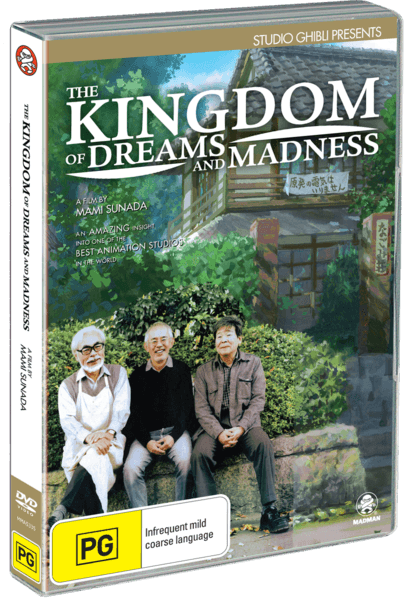
Studio Ghibli is one of the most famous animation studios in the world, producing many films that continue to amaze and inspire people today. Although Hayao Miyazaki himself states that he prefers creating films for children, many adults can list at least one film by Studio Ghibli that they enjoy. Is this documentary therefore something that everyone can enjoy, or is it best watched by only those who consider themselves dedicated fans of Studio Ghibli’s works?
Content
Mami Sunada was allowed access to Studio Ghibli in order to observe Hayao Miyazaki as he worked on his final film, Kaze Tachinu (The Wind Rises), and producer Toshio Suzuki as he handled many different tasks. The Kingdom of Dreams and Madness is not solely a behind-the-scenes documentary of the film, however, nor does it focus entirely on the history of Studio Ghibli. It provides an insight into the mind of one of the world’s greatest creative geniuses and into the workplace of Studio Ghibli. For example, we see Hayao Miyazaki and many Ghibli employees doing the popular Japanese radio calisthenics known as Rajio Taisou. We see the interactions between Hayao Miyazaki and both those he works with and his friends. We get an insight into how the production was coming along with Isao Takahata’s film Kaguya-Hime no Monogatari (The Tale of Princess Kaguya) while this was being filmed. We witness an interview between Hayao Miyazaki’s son Goro Miyazaki and a producer in which we find out just how Goro feels about being a director and why he directed two films for Studio Ghibli. Mami Sunada here has managed to pack an immense amount of content into her documentary without causing it to drag on or feel too short.
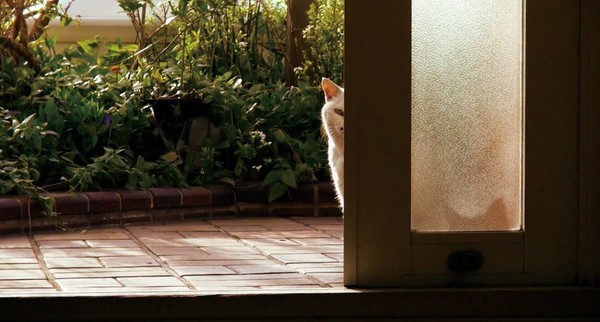
Throughout the documentary, we witness the lives that the people at Ghibli lead, the interactions they have with each other and Hayao Miyazaki’s philosophies about various things. We also get to see old footage and photographs of Hayao Miyazaki, Isao Takahata and Toshio Suzuki as they met and worked together on films in the past. This documentary does not simply provide an insight into how Hayao Miyazaki works and what goes on at Studio Ghibli; it manages to get across many important messages about work and life and even shows us the relaxed life of Ushiko, the cat considered to be an ‘unofficial’ resident of Studio Ghibli.
Where this documentary truly succeeds is in its presentation of the various aspects of Hayao Miyazaki’s life. We watch him creating storyboards and we listen to him talking about Isao Takahata, his father, his friends and Hideaki Anno, among others. We also hear some of his political opinions and his opinion on otaku, and we see his daily routine as well. He shows up to work at the same time each morning and leaves at the same time each night as well. During the day, he finds time to wave to the children at the on-site kindergarten and he never fails to keep up his daily schedule. We are given the privilege of seeing his home when he heads home at night and what he does with his spare time, such as making a photo album with pictures of ordinary things he took when actually setting out to document the impact of the Great Depression of 2008. This documentary gives us a rare and fascinating look at nearly every aspect of Hayao Miyazaki’s life.
Visuals
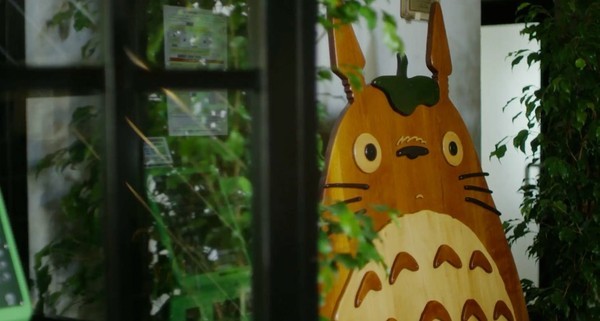
The visuals here are flawless. Not all posters seen throughout the documentary are subtitled, however notices in the building are, as well as the ending song of Kaze Tachinu, which can be heard on multiple occasions. There are no issues with the subtitles themselves, as expected from Studio Ghibli. End credits are left in their original Japanese with only a few credits translated into English in the subtitles. This is unfortunate, but not unusual. The shots of Hayao Miyazaki working, the rooftop of Studio Ghibli and the cat Ushiko for example are all fantastic with no issues whatsoever existing with the camerawork. The only downside to Madman’s release is that it is DVD only, so anyone wishing to own a Blu-ray of the documentary may wish to purchase the region-free and English-subtitled Japanese release, available for 5,800 yen outside Japan.
Audio
The audio with this release, as with the visuals, leaves nothing to be desired. Hideaki Anno is shown providing a sample of his voice after Hayao Miyazaki opens up to the idea of hiring him to be the voice of Kaze Tachinu’s protagonist Jiro Horikoshi. It is a ‘weird’ voice that Hayao Miyazaki himself stated would take some getting used to, but it seems to work. The music throughout the documentary, composed by Masakatsu Takagi, is excellent and perfectly suited to the shots it accompanies, even if it is not at the same level as Joe Hisaishi’s music is.
Extras
This release comes with some fascinating on-disc extras. In addition to the theatrical trailer and a two-minute digest video, a 32-minute mini-documentary called ‘Ushiko Investigates!’ is included. While technically an extra, this can easily be seen as an extension of the documentary itself as it shows more of the production process. The main difference from the main feature is that it is told from the point-of-view of Ushiko via subtitles. This extra will undoubtedly be enjoyed by any fan wishing to see more of the behind-the-scenes work on Kaze Tachinu, which includes a discussion between Hayao Miyazaki and legendary composer Joe Hisaishi, as well as a live recording of one of the pieces of music he composed for the film.
Overall
The Kingdom of Dreams and Madness is an engaging documentary about not only the production of Kaze Tachinu, but also about many different aspects of Hayao Miyazaki’s life and how he and Isao Takahata met. It provides an in-depth insight into the mind of the person who has created so many masterpieces that stand the test of time and discussions about Isao Takahata, a person who does not actually appear at the main building of Studio Ghibli very often. Anyone wanting to find out how a film is produced at Studio Ghibli or wanting to learn more about Hayao Miyazaki will not be disappointed with this documentary.
Capsule Computers review guidelines can be found here.
If you are one of the millions of people worldwide who are dying to get stuck into Master Chief’s next outing (then lets be honest you are probably playing the Halo 5 Beta right now instead of reading this) then you will be excited to hear that Microsoft and EB Games have announced a special, very limited collector’s edition for the upcoming Halo 5 – Guardians.
For the rrp of $329.95, players can get a copy of the game and a limited, collector’s numbered statue of a certain character from the game. Although we don’t know much else at this point, I am already excited (and I don’t even play Halo). These are sure to go fast, so make sure you put in your pre-order ASAP.
Will you be gunning down aliens in the next Halo installment next year, and if so will you be picking up this sweet collector’s edition? Let us know in the comments below and make sue you stay tuned to Capsule Computers for all the Halo news as it becomes available.
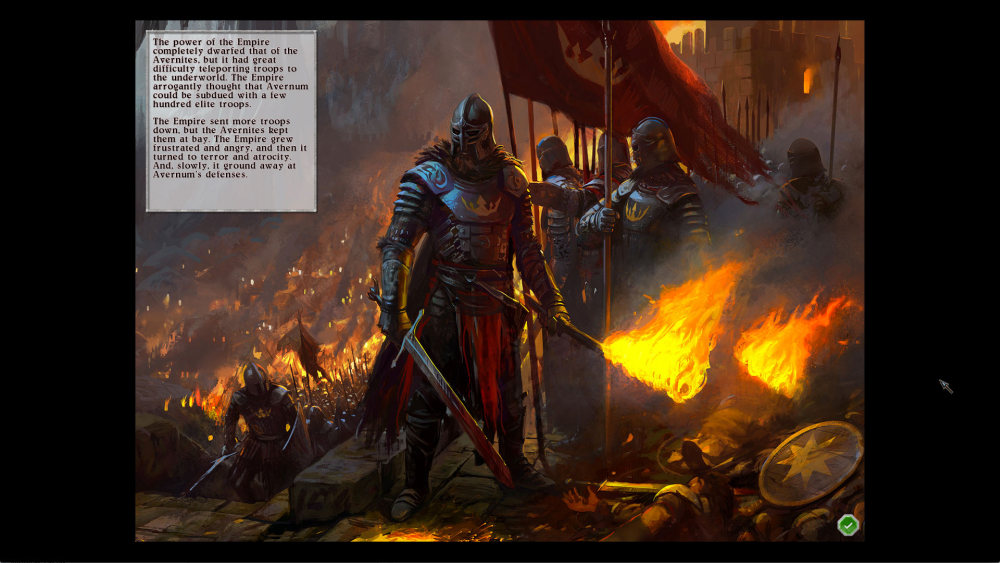
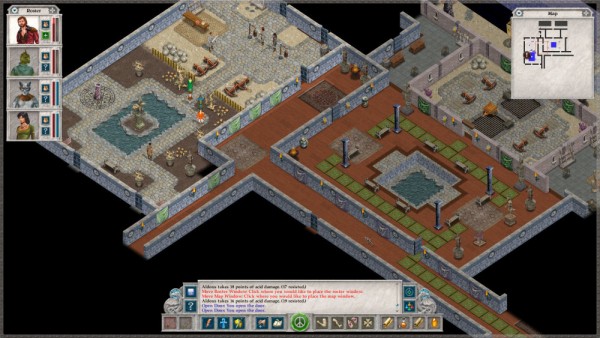
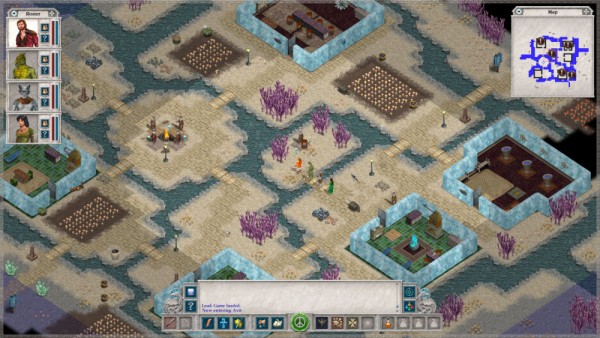
Indie developer Spiderweb Software is set to release a new RPG, Avernum 2: Crystal Souls. Spiderweb has stated that the game will feature over 40 hours of new content, furthering the story from Avernum: Escape from the Pit. However, the story is self-contained, and players new to the series will not be missing out if they haven’t played prior games.
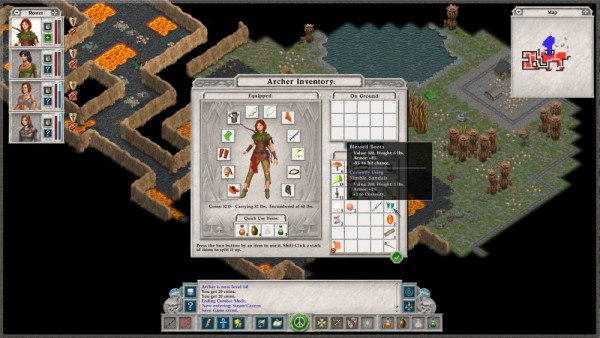
Avernum 2 will bring over 100 new towns and dungeons, as well as a large underworld brimming with nations and cultures. There will be 3 main story quests, and players will be able to choose to do just one, or all three. Loot and magic are also a huge part of the game, with a generous number of spells and combat styles, as well as character perks and progression. Combat is turn-based, rather than active, and characters move on a grid-system. The sprite graphical design and isometric viewpoint bring to mind games like the older Fallout Series, Baldur’s Gate, and Neverwinter Nights.
The Avernum games are notable for being independently made, yet offering just as much depth as any of the Baldur’s Gate type of games. The series is notable for having unique races and settings compared to many other adventure & RPG fantasy series.
Avernum 2: Crystal Souls will be available on PC and Mac January 2015. It will also see an iPad release sometime in early 2015. Bookmark their store page, and keep an eye out on Steam and the iOS store.