Okay everyone! We here at Capsule Computers have some excellent videos to share with you!
These videos are from the Nintendo Conference at E3 this year (2011). We have videos of the 25th Anniversary of Zelda speech by Miyamoto, the 3DS presentation segment of the show and the presentation of the eagerly awaited Wii U. So make sure that you check out the videos that interest you below, or all of them as they’re all really interesting.
1st : Zelda 25th Anniversary Nintendo Conference E3 2011
Nintendo’s E3 Conference starts with Shigeru Miyamoto as he welcomes everyone to the keynote then speaks about the Zelda 25th Anniversary and everything we can expect to see in the coming months. A Great presentation if you’re a Zelda fan!! 😀
2nd : 3DS Presentation Nintendo Conference E3 2011
Nintendo Conference at E3. The President of Nintendo of America, Reggie Fils-Aime, presents what we can expect to see on the Nintendo 3DS in the coming months. Luigi’s Mansion 2, Kid Icarus, Super Mario 3DS, Mario Kart and Star Fox – to name a few. Enjoy the presentation.
3rd : Wii U Presentation Nintendo Conference E3 2011
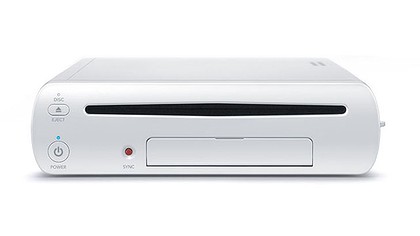
The one moment that everyone knew was coming, but was also so very eagerly awaiting – Nintendo finally announced the Nintendo Wii U! The President of Nintendo, Satoru Iwata, explained everything in fine detail about how the Wii U will work, how it functions and what features it will have. The Wii U is likely to have a very creative series of games.
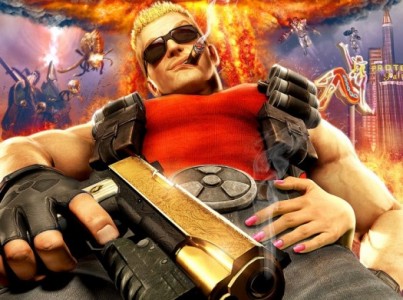
I wasn’t fast enough to claim the review for Duke Nukem Forever for our site, but on playing it, I realised I still had a few things I wanted to say about it. So I figured I’d jot out a few thoughts that crossed my mind as I kicked some alien ass. Check out our full review here.
The game has a pretty lengthy legacy behind it, and with such a long development time people have built up an unreasonable set of expectations, one which no game – or almost any product, really – can meet. It seems unfair, then, for the general response to be “it’s been 14 years in the making, how can there be flaws?” The game has undergone a frankly ridiculous number of engine and staff changes, and obviously, computer technology has advanced exponentially since the initial announcement in 1997. The fact that it’s out at all is an achievement, and with the constant problems it’s unclear how much Gearbox had to work with when they took over development last year. My guess is that much of what we see today is the result of Gearbox’s team, which should all but put the “14 years for this?!” complaint to bed.
Props to fellow Capsule writer Michael Marr, who handled the review for the game and didn’t judge it solely on the time it took.
That said, the game has some flaws, but nothing game-breaking. I found movement to be a little stiff and unresponsive, the graphics are a few years behind what we’re used to, and some lines of dialogue are clunky.
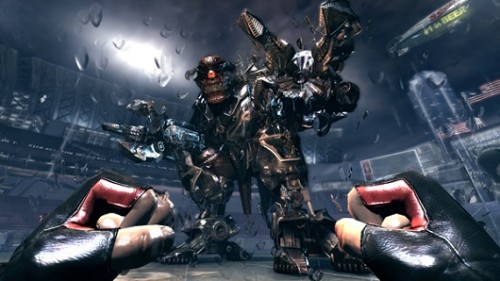
No doubt the worst mistake the game makes is in hinting at clever ideas, then undermining them. The health system is the perfect example. Duke doesn’t lose physical health when he’s attacked; instead, getting hurt lowers Duke’s Ego. He can rebuild his Ego by checking himself out in the mirror, lifting weights, winning at air hockey, hitting on chicks, or by defeating enemies and bosses with special execution moves. This makes for some interesting health mechanics, where you need to stay in the fight to replenish your Ego – very Duke Nukem. If there isn’t a fight going on, reflective surfaces and heavy items can help him get his mojo back. It sure is more fun than health packs.
Unfortunately, this unique system is rendered completely unnecessary by the video game cliché of regenerating health. Simply stay out of danger for a few seconds, and your Ego is fully charged again. Crouching behind a bench, avoiding enemies, is not what the Duke would do. This is just one of the missed opportunities for the game to stand out.
It has been argued that the current video game climate has outgrown Duke Nukem’s immaturity in his 14 year absence. I’d argue that the industry needs the Duke right now, to serve up some satirical self-evaluation. Games are too preoccupied with epic stories, action and graphics at the moment, and the Duke himself parodies the countless hardened, space marine heroes we’re so used to. Master Chief, Marcus Fenix, and everyone in Call of Duty are one-dimensional, hardened douchebags anyway, and fairly immature as far as “developed” characters go. The Duke pushes much further in the same direction, but does so with a self-awareness that makes him a far more compelling character than he (or his creators) would ever let on.
But you know what? Just play it, and have fun. Don’t get offended, don’t do as Duke does, and don’t expect the world from the game. Just have fun. Is that too much to ask?
It’s unlikely that the industry jokes on the 14-year development cycle will ever completely fade away. But the Duke’s a big boy – he’ll shrug it off, grab a beer and a babe and kick a pig’s face in. And that’s why we hail to the self-appointed king.
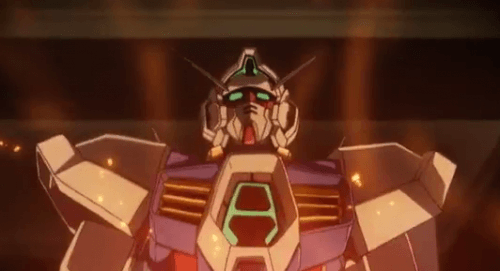
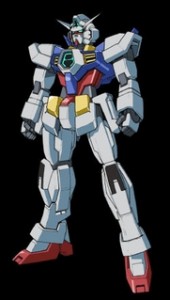
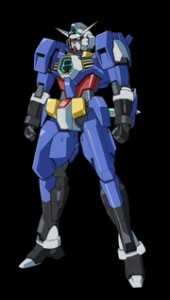
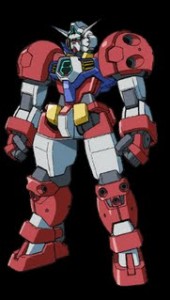
The first official footage of the highly anticipated Gundam AGE anime series has hit the web. It gives us an in depth look at the new series and gives us an idea of what to expect. We get to see the new Mobile Suits in action and a glimpse at the back story of Furitto (the father protagonist, of the 3).
This all looks amazing and very promising and for Gundam fans, this is sure to get you pumped for the series release in October 2011. Could this be the best Gundam series yet? It’s too early to say, only time will tell whether it will be able to surpass the stellar Gundam 00 series and even past series such as Seed and Wing.
Atlus may have spent a lot of money on placing Catherine badge holders on every E3 badge this year but they had more to show off than Catherine at their meeting room this year. Namely they had a new hack and slash title called The Cursed Crusade available to play, and despite my excitement for Catherine I couldn’t turn down a chance to try it out.
The Cursed Crusade has players playing as Denz, a cursed templar who is seeking a way to break his curse. There is the chance for two player co-op in the game with Denz’s partner Esteban but unfortunately I only was playing the single player mode, though it let me determine how good or bad the AI is at the current time.
The game is a typical third person action adventure title and the level we played took place in the dark streets of a castle like town. The enemies we were facing were your standard looking medieval soldiers that came in a few different varieties depending on what weapons they were using. The first thing you will notice is that you can have complete freedom over whatever weapons you want to use.
You can pick up weapons dropped by enemies as well as dual wield weapons, including a sword and a mace, two swords, a great sword or your standard sword and shield. You will also notice that your weapon’s quality degrades over time and can break after enough uses. This means that you will often be switching your weapon with one off of the ground to avoid fighting with broken weaponry.
Most, if not all, of the kills that I performed ended with an execution of one way or another. Right now the game is very much still in development so graphically these kills were simply body parts comically flying off, but once they will be finished they will be truly gruesome as they usually resolve in a very brutal finish. My favorite involved the use of two swords which cut the leg off of an enemy and then finished him off by plunging the sword into his downed body.
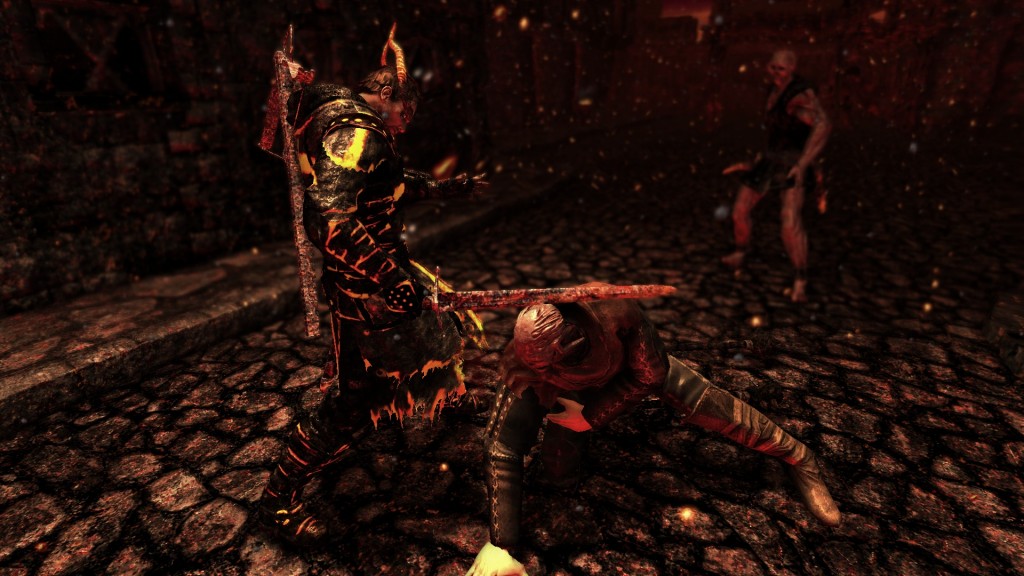
After I killed enough opponents I was told that I could activate Denz’s curse mode which transformed everything in the game. Denz himself became a fiery demon and the ground looked like it was from hell itself with lava and fire everywhere. Even the enemies took on a zombie like appearance. Denz is much more powerful in this mode but also can use it to look for secret areas and weaknesses in walls, one of which we had to use to advance further in the game.
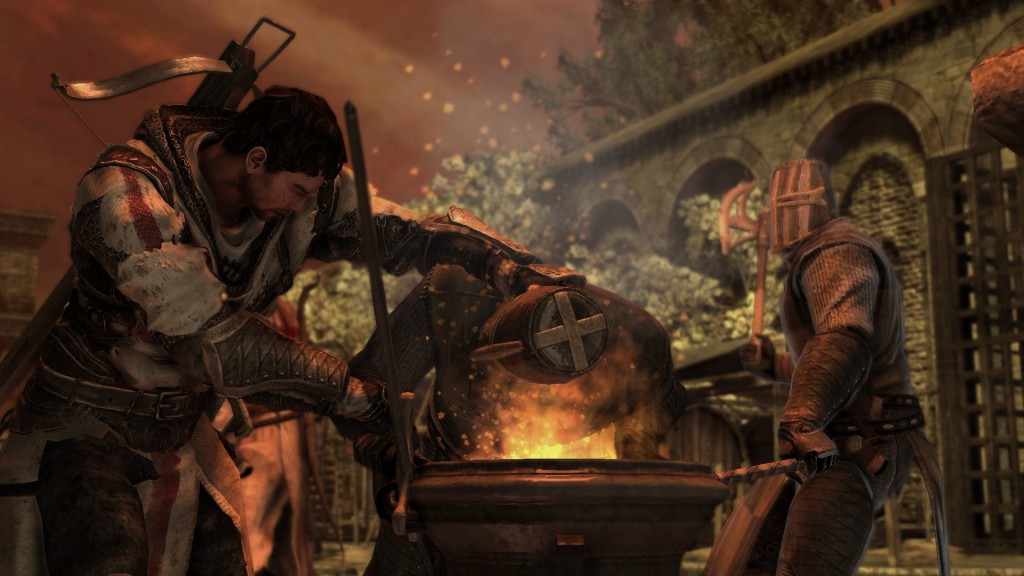
Our AI partner seemed to hold his own well enough and occasionally would grab an enemy and allow us to finish him off for us. There are a few times where I was required to work with my AI partner to push an object out of the way and he jumped to assist admirably. The game also contains a crossbow that can be used at any time to kill enemies at a distance. The environment is also very useful to your battles because most of them are interactive. For example if you fight an enemy near a lit brazier we could shove his face down into the fire, or we could kick an enemy into a well. You can kick an enemy into a well three times before being unable to do it anymore.
My hands on time with The Cursed Crusade ended by lowering a drawbridge to escape from the city. I found a hidden chest which I was told would unlock souls that could be used inbetween levels to upgrade my combat skills. These skills were maxed out for the demo so unfortunately I couldn’t have any access to the upgrade screen when the level ended. The Cursed Crusade played well, and I was assured that the graphics would take a large jump by the time the game is released later this year on the Xbox 360 and PlayStation 3.
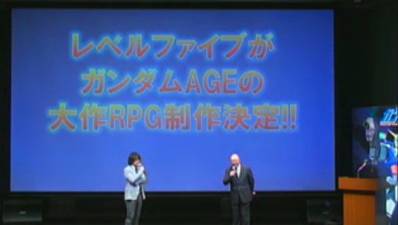
The highly anticipated Gundam AGE series was announced to have a video game based upon it over a week ago now, but today after a Bandai Namco announcement we now have official confirmation of the game, it’s genre and who is making it.
The game will be produced as many deduced by Level 5 game studios whom will be also working on the anime series. The game will be an RPG based upon the series and as of now simply is known as Gundam AGE RPG.
For fans of the franchise this is great news, as Gundam AGE appears to be slowly revealing its hand which will be including an animation, manga, video games and hobby-kits. As more details come to light on the series, we will keep you up to date with all the latest news.
Susumu Yamaguchi, most famous for his work as the director of most of the Sgt. Frog movies and his work as an animator for previous Gundam series, in particular Gundam Seed, has been attached to Gundam AGE as the projects director.
It was also recently confirmed that president of Level 5 gaming studio, Akihiro Hino will be supervising the story and Michinori Chiba is adapting the character designs for animation.
The Gundam AGE anime is set to begin airing this October in Japan on Japanese TV stations MBS and TBS. It can be presumed that the manga, hobby-kits and video games should be released around the same time, but there is no official confirmation on that as of yet.
Square Enix’s booth was very elaborate and had plenty of things to see, but the best of these was Final Fantasy XIII-2 of course. The Square Enix rep. gave me a brief rundown of the title and told me that they have made a few changes in this sequel so that all of the fans that cried foul about the linearity of the first XIII would find some sort of middle ground in XIII-2.
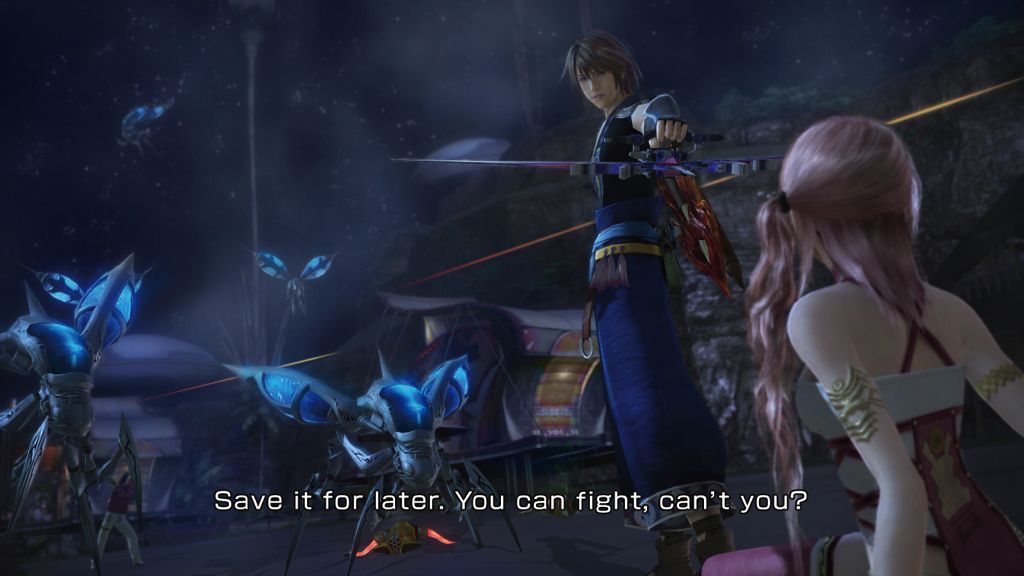
Our experience first began with the new character Noel and returning but newly playable character Serah, Lightning’s younger sister. The two of them are thrown from a portal device which the representative could not elaborate at the time as to what these devices would be. The two were joined by a flying moogle who is a bit different from your average moogle as this one can actually speak full sentences instead of just saying “Kupo” which is your standard moogle language.
The three of them are very quickly attacked by a gigantic hand that rose from the ground and began smashing the area all around them, this hand was attached to a partially invisible creature known as Atlas and before we could run away, battle was entered. The moogle that accompanies the two shows another unique feature as it transforms into Serah’s weapon a bow and arrow set.
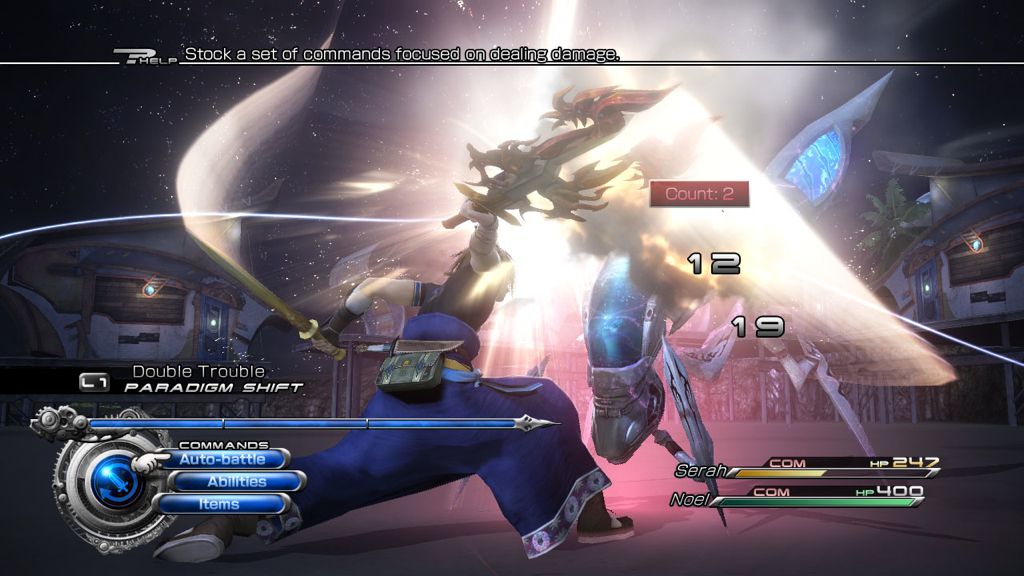
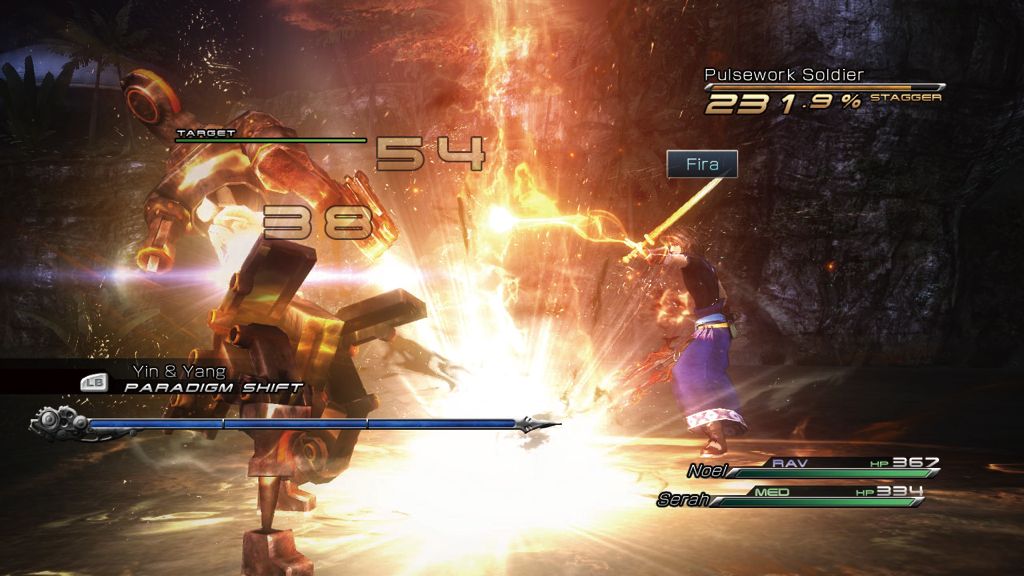
The sheer size of Atlas was well shown on the battle screen as the only piece of him that we could see at any given time was the hand that we were attacking and his partially invisible lower body. The battle system for XIII-2 is quite similar to what it was in XIII with the paradigm system that allows the player to shift paradigms between a commando, ravager, sentinel and medic. Players can shift at will and can still select the abilities they want to use, but in the demo there were only two attacks so auto-battle was primarily used.
First and foremost Square Enix has removed the quick attack feature which allowed players who discovered this little work around to attack faster than normal. The battles in XIII could end quite fast as players could use this feature to quickly send their fighters out again and again, but this feature has been removed in XIII-2.
As before, each enemy can be staggered after a period of time, with the staggered enemy receiving heavy damage. Ravager magic still raises the stagger bar faster; while Commando attacks help sustain the bar from decreasing too quickly. After shifting back and forth we managed to defeat Atlas’ hand, but this only was his hand of course.
Before we were able to continue the battle however, four flying helicopters appeared above Atlas and began firing upon it with missiles. The missiles showed off a new feature to XIII-2; the Live Trigger. These Live Triggers are more or less quick time events that occur in cutscenes and this one had us pressing the A button quickly to send a barrage of missiles into Atlas. We were told by the representative if we hadn’t successfully completed the QTE the cutscene would have played a bit differently.
Thus we were able to explore the field of XIII-2 and we were able to see that the majority of the explanation has been unchanged. One thing that has seen an upgrade though are the weather effects as drops of rain would appear on the screen as we were walking around and the environment gave off a very wet sheen whenever we were in an outside environment being rained upon.
Random battles have returned in FFXIII-2 but they are handled a little bit differently. Upon triggering a battle a clock will appear on the bottom of the screen. If you manage to trigger combat with an enemy in the green section of the clock you will be able to pre-emptively strike enemies and cause them to instantly be staggered, if you stop it in the yellow section there will be no battle advantage, and stopping it in the red area would result in a penalty of some sort. It is possible to avoid battles entirely as some enemies will not be aggressive to your characters which will allow you to simply keep running past them until the clock expires; thus avoiding combat.
After moving further into the dungeon we came across another battle which had us face down a few flan type opponents which gave us a special crystal. This crystal allowed us to fill out our party with a third team member… a monster. The monster would help our characters in battle and would remain loyal for a period of time which was shown under its health bar. The monster at first would appear as a Flan but could be changed whenever the paradigm shift occurred, meaning that if it was a Commando type it would become a behemoth, or a sentinel type would turn it into an armored lizard. The player can then perform a special attack with the monster once a battle which will have the monster and player team up in a combined attack that deals large damage to the targeted enemy.
Besides being able to turn into a weapon, our moogle companion could also point out hidden treasure chests and unveil secret areas when told to do so. The treasure chests still appear as the floating round orbs that we saw in XIII, and hidden ones are still noticeable as long as the player pays attention.
Now earlier I mentioned that the representative told me that XIII-2 was more about the player’s choices and less about story driven ones. One such experience was when we reached our objective and were faced with a choice. Atlas had reappeared and we could either choose to charge head-on, or check out a controller recently discovered in the ruins. We chose to head for the ruins and find the recently discovered controller.
After reaching the controller we attempted to activate it but Atlas’ hand appeared out of nowhere, dragging both characters into a vortex. The vortex transported the characters into an area called The Void Beyond which was filled with crystals sitting upon red platforms. These are little mini-game segments which require the player to walk across the platforms and collect every crystal. The problem is that everytime you step off a platform, it disappears, meaning you cannot backtrack. The puzzle was quite easy to solve and we were told that they would become increasingly difficult throughout the game and are a way to help slow down the action a bit.
Once we collected all of the crystals and made it through a number of the puzzle areas we were thrown back out of the void next to an activated controller. After navigating our way back out of the dungeon we faced Atlas again, but this time around he was much weaker looking than he initially did. We managed to defeat Atlas after a few minutes of tense combat that had us shifting between all of our available paradigms and having our monster companion take one for the team.
Thus ended our hands-on experience for FFXIII-2, we were told that if we had charged head-on into the battle with Atlas we would have been defeated with one attack, and the proper choice is to activate the controller. The rep. went on to say that it would be possible to defeat Atlas’ powered up form but due to the level limit on the demo it was impossible. I’d have to say that much of FFXIII’s gameplay elements have returned in FFXIII-2 and have been polished to a shine. The ability to make choices in the game should help appease those who thought the first game was linear, but thankfully I was one who was satisfied with the initial narrative and found FFXIII-2 a worthy successor to the previous title.
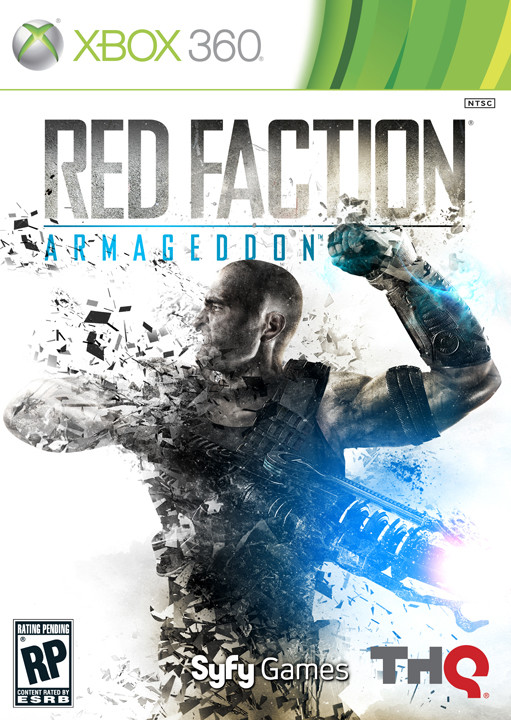
Red Faction: Armageddon
Developer: Volition Inc.
Publisher: THQ
Genre: Shooter
Platform: Xbox 360 (PS3, PC)
Released: 10th June, 7th June (US)
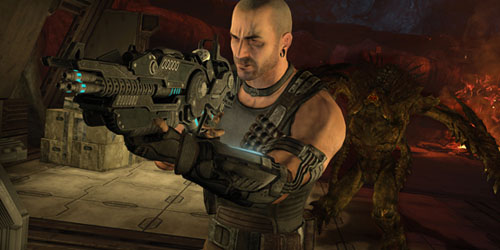
Since Red Faction: Guerrilla, the previous instalment of the Red Faction series, Volition Inc. have placed a firm focus on destructible environments, but where that game took a open-world sandbox approach, the problems that arose as a result of giving the player too much freedom last time round have lead to the boundaries that have been erected in Red Faction: Armageddon. The previous lack of structure meant players spent most of their time mucking around with the physics and not seeing what the story had to offer, so the developers have ensured to create a much more linear game world for Red Faction: Armageddon.
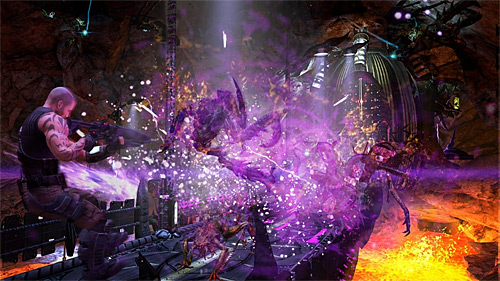
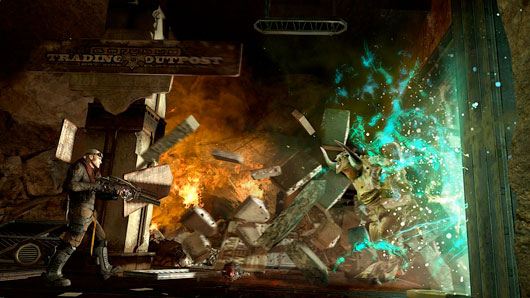
The destructive physics remain as pleasing as ever, with nearly everything destructible in some way, shape or form. And we’re not just talking about taking chunks out of the cover when you unload your clip on it – huge structures can be collapsed using the imaginatively fresh range of weaponry. Even with the decidedly linear story controlling where you can and can’t go, you’ll still invest plenty of time simply playing around with the physics engine by putting the inventive guns to use.
Over the course of the story you’ll be introduced to an armoury of brilliant guns including my personal favourite, the magnet gun, which uses powerful magnets to tear the environment apart, firing the first shot anchor, and then unleashing the second shot attractor and watching on as the first target hurtles towards the second. This can make for hugely effective attacks, producing devastating damage to buildings, but also hilarious degradation of enemy units, attaching the anchor to one of them and then either pinning him to the wall or to one of his buddies.
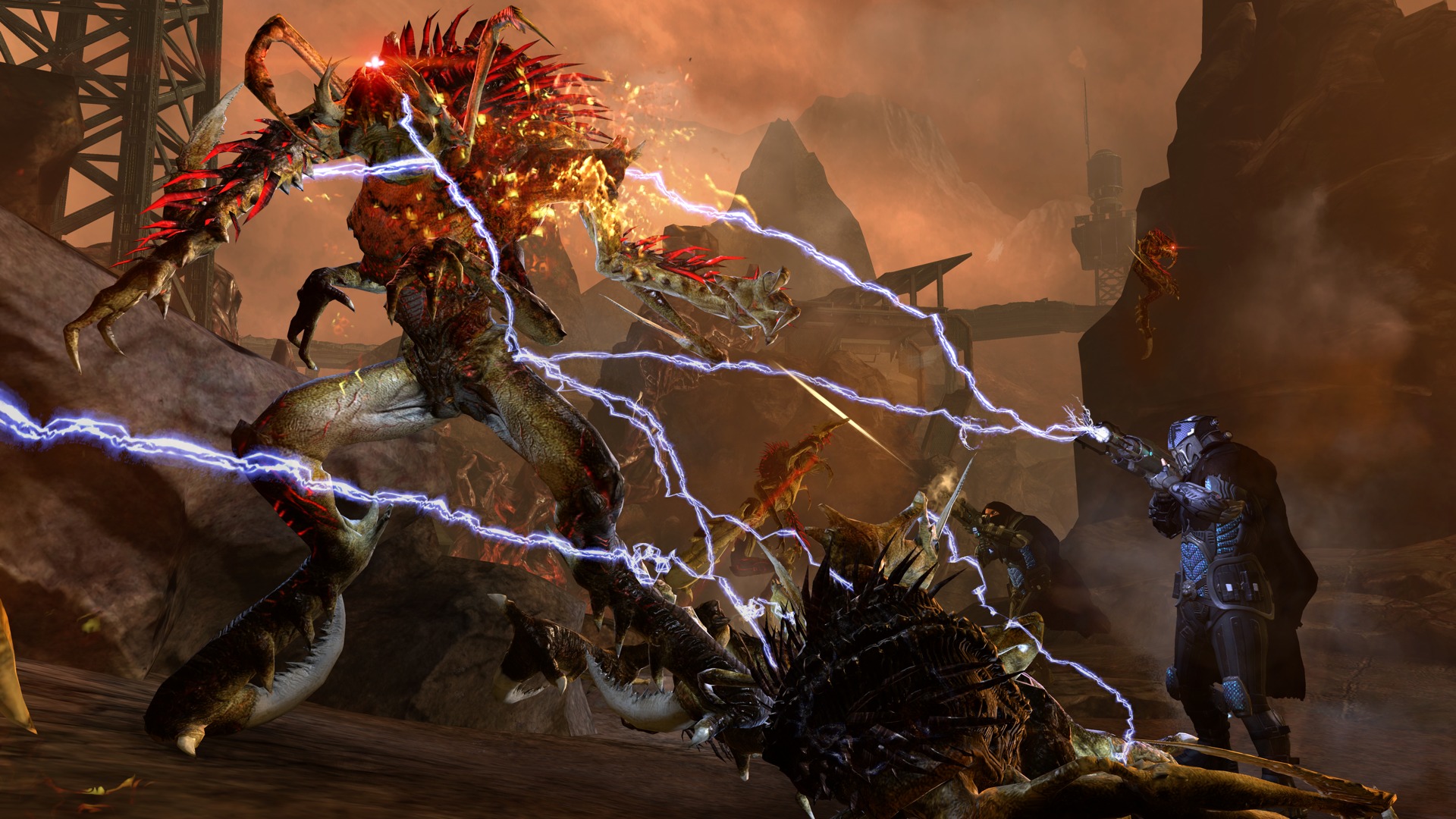
Other special weapons include the plasma gun, a charged beam which really packs a punch, the nano rifle which disintegrates objects into particles at the touch or the charge launcher which allows you to fire the first shot to stick to something and then detonate it when you choose. The weapons aren’t limited to these Red Faction: Armageddon brand of physics toys; standard weapons like the assault rifle, pistols and a pump-action shotgun exist, although all seem ineffective, dwarfed by the sheer power of the other weapons. Melee attacks come from the Maul, a powered sledgehammer, as well as melee attacks using the flat of your gun mapped onto the right stick click for convenient instantaneous punching.
Returning from the last game is the Nano Forge, a device on your wrist with futuristic abilities, useful if only for it’s repair tool which, complete with neat visual effects, restores structures to their non-broken state in seconds – handy if only to reconstruct that set of stairs you need to progress which just a minute before was flung across the room to squish an enemy. The Nano Forge is home to other abilities like melee attacks or waves to stun your enemies, which can be upgraded along with attributes like maximum health and ammo stores at the nearest upgrade station in exchange for your salvage, the currency of the game, that you have collected. The Nano Forge is also home to your CPU system, female-voiced S.A.M. who helps guide you through missions in the story mode by providing tips and intel.
The plot sees you fill the boots of Darius Mason, a space marine and grandson of Red Faction: Guerilla’s protagonist as he tries to stop the Cultists, a race who despise the human mining presence on Mars, from destroying the only thing that’s keeping the atmosphere stable: the Terraformer. But, with the prologue level witnessing the destruction of this, matters take a bleak turn and fast-forwarding several years shows Darius in one of the scavenger-like settlements that have come as a result of the unstable new conditions. But taking on a mining job reveals a whole new enemy dwelling underground, and the enemies of human shape are soon replaced by hordes of scuttling creepy crawlies.
The story mode itself starts out strongly and the cut scenes are top drawer, and although it is a relatively decent length with different difficulty settings to facilitate a variety of players. Unfortunately it doesn’t allow for much exploration thanks to its linearity. There’s always only one way to go, as emphasised by the fact that pressing the right button brings up your GPS, a set of holographic visual cues pointing the way to go, useful if you lose track of where you are but going to show the single path available. The campaign also starts flagging towards the end where it doesn’t feel as well though-out as the rest of the story, with a mish-mash of all enemy types coming together for an anti-climatic finish.
Interestingly, there is no competitive multiplayer element to Red Faction: Armageddon. Instead of competing and probably failing against Call of Duty’s domination of the head to head multiplayer scene, to avoid empty online lobbies Volition Inc. have opted to stick to purely co-op multiplayer through its ‘Infestation’ mode. Infestation mode provides a survival mode for up to 4 players, mimicking Gear of War 2’s horde mode in the way it pits you against progressively stronger waves of enemies in a number of campaign-inspired arenas. Infestation mode serves only as a Red Faction mimic of horde mode, and is nothing special really. The other alternative mode is ‘Ruin’ mode, essentially a destructible playground which sees how much damage you can rack up on your surroundings generally, or in the case of the challenge variant, with a 1 minute time constraint. It’s a bit of throwaway fun which quite rightly focuses on what sets Red Faction: Armageddon aside from other games on the market: the destructible environments which satisfy your undying urge to smash things.
Red Faction: Armageddon may have replaced the sandbox world of its father-game with a more story-driven adventure, but the linearity can be suffocating at times, and an unstructured end finishes the game off in foul stead. Still, you can almost disregard the story due to the entertainment value of the physics engine and the inventive arsenal of high-tech weaponry readily available to play around with, to an extent where the majority of your time is spent experimenting rather than progressing through the level. There’s essentially no multiplayer but destruction-based Ruin mode provides some more simple-minded demolition fun, so as a physics-based annihilation of the surrounding world, it’s at least worth a look.
Hulk Hogan is world known for his charisma, catchphrases, and for helping turn wrestling into the phenomenon it is today. The upcoming Kinect title Hulk Hogan’s Main Event looks to take that familiar character and make him your guide as you set out on a quest for main event glory.
MasterAbbott recently caught up with Tony Chien (Senior Product Manager) & producer Jon Black of Majesco Entertainment to get a first look at Hulk Hogan’s Main Event. In the interview below, some gameplay is shown off which shows the Hulkster himself training the player’s created wrestler as they progress throughout a story mode in the game (Which happens to be an impressive 5-6 hours). Unlike the Smackdown series, this title is more based on capturing the personality of the player as various taunts and and moves can be executed in the ring by simply performing the action displayed on the screen, enabling the player to get a workout while they are tearing it up in the squared circle and garnering the attention from the thousands of Hulkamaniacs in the crowd. You can watch the interview in full below and get ready, BROTHER, as Hulk Hogan’s Main Event is due out this October.
Sad news has come this past week with the death of japanese anime seiyuu (voice actress), Tomoko Kawakami. This news is quite heart-breaking to both the anime world and her fans.
Many know the veteran voice actress as many different characters she has played over the years, such as Soi Fon from Bleach, Fuuyuki from Sgt. Frog, Sayuri from Kanon, Hikaru from Hikaru no Go and Utena from Revolutionary Girl Utena.
She was hospitalised in 2008 with an unidentified illness. She hadn’t returned to voice acting since the hospitalisation and it has now been confirmed that she tragically passed away on the 9th of June after a long battle with ovarian cancer.
R.I.P. Tomoko Kawakami, you may have left this world, but your voice will still be heard.