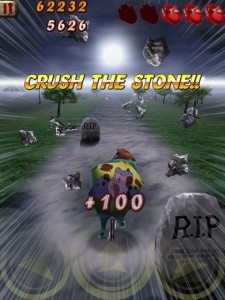
Zombies are usually running towards the living to feast on their brains and flesh, but what would a zombie do if a zombie apocalypse failed and there was only one zombie left on earth, and angry humans were trying to kill it? Well Com2Us has an idea-LEG IT!!! The popular iPhone game Zombie Runaway, where players try to outrun humans through a gigantic cemetery in order to survive is coming to Google Apps on July 26th FOR FREE!
Yep, that’s right! As of July 26th you can enjoy the addictive game play of both normal and blitz mode, grab boosters, dodge obstacles and upgrade with special gear for free with leader-boards so you can take on your friend’s scores. We absolutely loved Zombie Runaway on the iPhone, check out our review for it here!
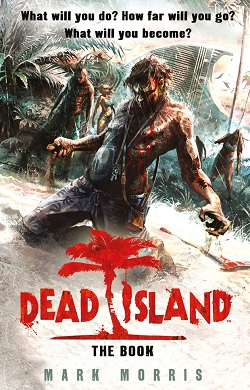
Feel like you don’t have enough Dead Island in your life? Well the game may be coming out on September 6th in North America but you will only have to wait two more days than that to pick up the Dead Island prequel novel which is releasing on September 8th.
The book will take place before the events of the game and is being written by British author Mark Morris who has written novels from Torchwood and Doctor Who in the past. Below is the summary for the novel which describes just exacly what readers should expect from the video game based book:
“For guests of the five-star Royal Palms Resort it was supposed to be a once-in-a-lifetime dream holiday; an escape to the stunning beaches of a tropical paradise unlike any other. But a mysterious zombie outbreak suddenly — and without warning — rips apart the pacific paradise island of Banoi, and four individuals with distinctive backgrounds and abilities seem to be unaffected by the zombie apocalypse.”
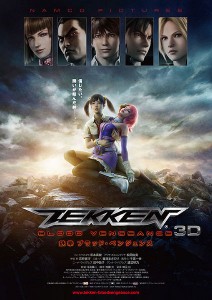
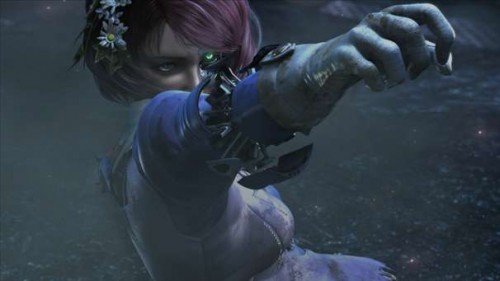
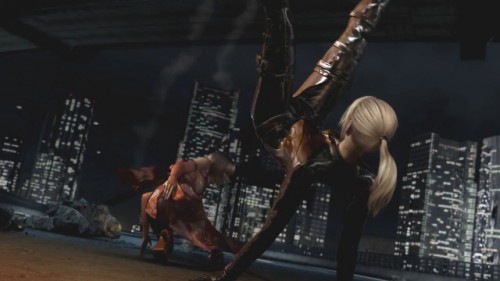
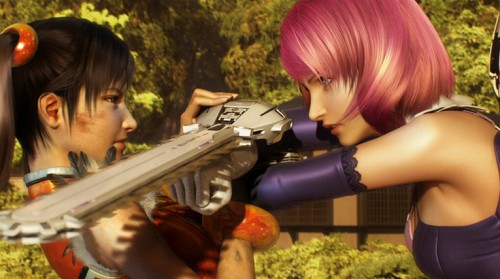
The Tekken franchise has been going strong since 1994 and has seen it’s ups and downs, but things couldn’t be better for franchise as of now. Tekken Hybrid is due to come out later this year, featuring a HD remake of the popular Tekken Tag, a demo for Tekken Tag 2, and also the CGI film Tekken: Blood Vengeance 3D. Blood Vengeance 3D is a remarkable film, featuring many of the people behind the games involved to achieve sucess. Fans will be pleased to hear that Namco and Digital Frontier have done their best to bring justice to the franchise and have avoiding creating yet another crappy cash-in video game movie. It’s been about 20 years since we first met the franchise, and Blood Vengeance 3D works as a good reminder as to why it is so successful.
Characters and Plot
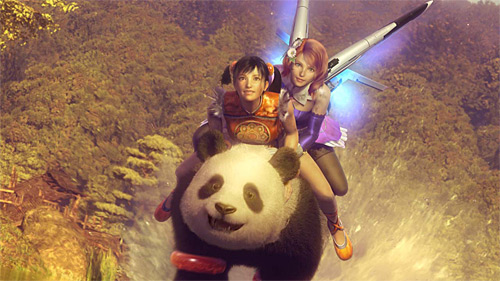
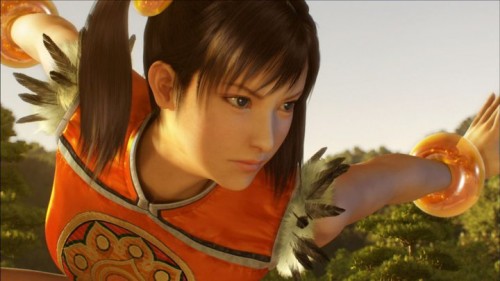
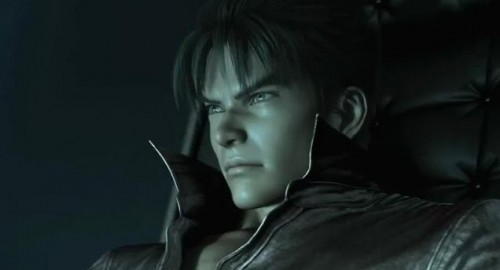
The plot follows Ling Xiaoyu, as she is forced by Anna Williams and the G Corporation to transfer schools and spy on a mysterious student named Shin Kamiya in Kyoto. When Shin is kidnapped, Ling teams up with Alisa Bosconovitch as they attempt to rescue Shin, and uncover the dark secrets behind the the Mishima Zaibatsu along the way. Unlike many fighting-based video game films these days, Tekken: Blood Vengeance 3D doesn’t try to squeeze too many characters into the film (Im looking at you Mortal Kombat: Annihilation!) which gives each character more screen time and character development. In fact, many characters just make particular cameos or just act as characters in the film who don’t even fight, so it never feels that they were just thrown in for the sake of it. Characters like Panda, Ganryu, Mokujin and Lee Chaolan play important roles in the film and don’t even engage in combat. The new character Shin Kamiya may annoy some fans because he steals the spotlight from other popular fighters such as Eddy Gordo, Paul Phoenix, Yoshimitsu or King who don’t appear in the movie at all, but he is entertaining enough that Im sure even the most hardcore Tekken-lover will show forgiveness, and eventually ask when Shin will be available to play as in a Tekken title. Fan favourites Heihachi Mishima, Jin Kazama and Kazuya Mishima don’t really make a strong appearance until the climax of the film, where the action mainly shifts to them from Ling and Alisa, but the entire movie is building up to the battle so it doesn’t feel too forced (Im looking at you Venom in Spider-Man 3!) and is still entertaining to watch.
Besides a very cheesy ending (no spoilers, but think Pokemon: The First Movie!) the plot of Tekken Bloodline is actually pretty good judging by the standards of a video game adaptation. It has a few flaws, such as ignoring characters after they die and are never mentioned again and some very cliché anime-styled dialogue, but the film still manages to entertain. I was actually surprised at the amount of fighting that wasn’t in the film. All up I think theres only about 5 fight scenes in the hour-and-a-half feature, and the rest is driven by some surprisingly engaging mystery-solving adventures and best of all, humour. Just like the video games, Tekken: Blood Vengeance maintains a photo-realistic look while still keeping that surreal, anime-styled appearance through, and is directed as such as well in both dialogue, directing and humour. Anime fans are sure to get a kick out of this one! The only problem is sometimes it’s kind of funny when it is not supposed to be, especially to the dirty minded. Some examples includes a particular scene where Alisa tells Ling “I have a crush on Shin Kamiya, that’s why I sneak into his room every night!”, as well as a scene where the shirtless Shin says “I know you’ve been searching for this body Jin. You want to stick me under a microscope, you can’t resist me.” Of coarse, situations like this are only unintentionally funny when taken out of context, and it could easily be argued this is just the plot being lost in translation, but it’s still an issue where a shower has a TV screen that for some reason is showing footage of a security camera outside the room, and the use of ‘Riddler logic’ from 1960’s Batman where no joke, while searching a room for clues Ling Xiaoyu takes the code 78M and decides straight away to check the 7th bookshelf, take 8 steps away from it and grab the Medical Records and find a photo and deduct a clue from that. There’s also a few consistency issues as the film takes place between Tekken 5 and 6, yet I don’t recall Lee and Ganryu being school teachers in the game, or Heihachi Mishima being a school Principal. However, if your a Tekken fan, which is the target market of the film, you’d already know never to take Tekken seriously. The game has you fighting Kangaroos for crying out loud, no, if your a Tekken fan you appreciate the story but really only come for the fighting and graphics, which are delivered wonderfully.
Graphics and 3D Effects
Tekken: Blood Vengeance is easily one of the best films I have ever seen in terms of taking advantage of 3D technology. You can quote me on that! It does this in two opposite, yet equally effective ways. Firstly, it makes subtle textures in backgrounds and character models stand out, so instead of looking like a pop-up book, it enhances it’s graphics, forcing you to appreciate the attention to detail. Secondly, unlike most hollywood 3D films these days who use 3D as a cheap gimmick (Im looking at you Clash of the Titans and you too My Bloody Valentine 3D!), the fourth-wall is never broken with characters randomly popping out of the screen, but rather only vaguely popping out when the director wants a particular feature highlighted. For example, during combat fists and feet that are dodged may slightly pop out of the screen, and the action will slow down so you can take a few seconds to let it sink in. Every frame seems engineered and specifically shot with 3D in mind, not just lazily coded in. So therefore the 3D goes hand-in-hand with the graphics and direction, which look fantastic. One of the Tekken franchise’s most popular features has always been its action-packed FMV videos, and if anything seems familiar, it’s probably because it’s directed by Youichi Mouri, who also directed the opening movies to Tekken 5 and 6. The graphics look great, and because it’s all CGI everybody looks like they do in the original source material, so it’s impossible to disappoint the fans there! It should be noted the character models look at their best in extreme close-up shots. The fight scenes are amazingly choreographed and the impossible camera angles achieved only through CGI spit in the face of Kung Fu Panda and may even overtake Final Fantasy: Advent Children, if not its a close tie! There are some really awesome scenes in this flick and it’s filled with eye candy, really the only way to describe what you see is one word: cool!
Score and Voice Acting
With the Score behind Tekken: Blood Vengeance being composed by Hitoshi Sakimoto, the guy behind the music of Tekken 6, the sounds are very authentic to the source material. This is further supported by the fact that Namco has “tried as much as possible” to use the same voice actors from the games, and it shows. While some voices I feel still don’t suit all the characters, although they do most, it does create a level of satisfaction that the characters are represented accurately. There are some lip syncing issues however which I did find annoying, but considering it’s a dub you can’t really blame anyone. The dialogue is also pretty stiff in some parts, and is often very cheesy, but if you watch a lot of anime, your probably used to that kind of thing. The score is very fast-paced and action packed and works wonderfully and compliments the style of directing which is a major bonus though.
Conclusion
Tekken: Blood Vengeance 3D is by far the greatest motion picture adaptation of Tekken to date. It K.Os the anime film and the live-action film doesn’t even compete for the first round. The 3D effects are some of the best implemented in motion pictures to date, and I’d personally put it up there with James Cameron’s Avatar. The graphics, art style, music and voice acting are as true as possible as they can to the games and should satisfy fans. For those who aren’t fans of the franchise, you’ve got epic 3D effects and superbly choreographed fight scenes to entertain. The plot is decent, but it’s executed with stiff, cheesy but tolerable dialogue and an ending that does wrap things up nicely, but still isn’t as full-filling as it could’ve been. Regardless, Tekken: Blood Vengeance isn’t perfect, but it’s still very good and definitely worth checking out. Tekken: Blood Vengeance will satisfy fans and engage anime and CGI lovers, and film makers can take two valuable lessons away with them from this film: 1-this is how 3D effects should be used in a motion picture, and 2-this is how to make a video game adaptation that doesn’t suck.
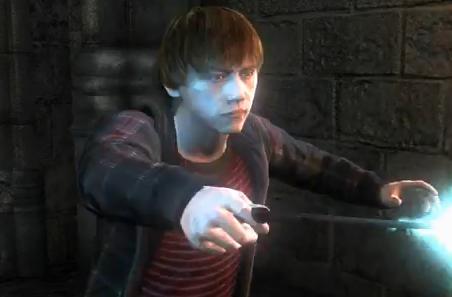
If you were not yet aware, two weeks ago Harry Potter & The Deathly Hallows Part 2 made it’s debut onto the Xbox 360, Playstation 3, PC, Wii, and Nintendo DS. EA have now released a new video for the game, taking viewers behind the scenes with Rupert Grint (who plays Ron Weasley), Matthew Lewis (Neville Longbottom), and several other actors from the movies who go into short detail on the experience of re-creating their characters in video game form.
You can check out the video below, and also give our own review for Harry Potter & The Deathly Hallows Part 2 by following this link.
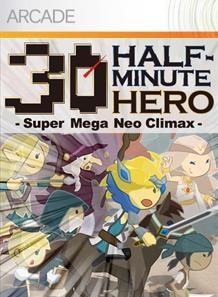
After releasing on the PSP in 2009, Half-Minute Hero made quite a name for itself for it’s unique style of gameplay that took the traditional grind and battle JRPG formula and shrunk it down in a 30 second, bite sized format. Thankfully, Half-Minute Hero is back and better than ever with Half-Minute Hero: Super Mega Neo Climax on the Xbox Live Arcade. Along with an online leaderboard and multi-player, this version also includes a shiny new coat of paint on the once 8-bit graphics so fans can enjoy the game in beautiful HD. Does this fast-paced RPG still still keep everything solid or does it fall apart quicker than an Evil Lord’s scheme? Here is my review for Half-Minute Hero: Super Mega Neo Climax for the Xbox Live Arcade.
Story
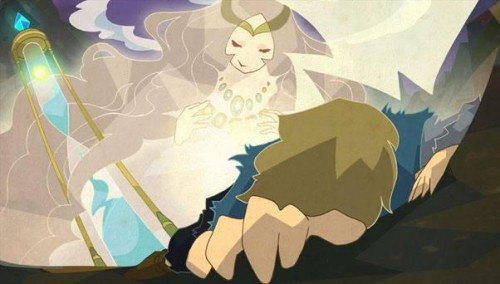
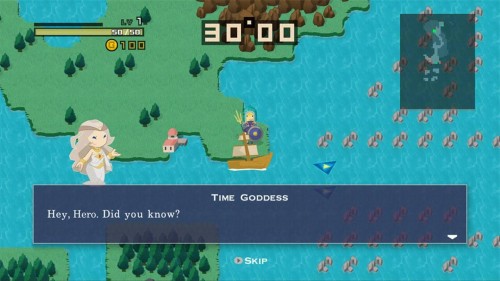
Whether it be Dragon Warrior, Final Fantasy, or any 8-bit JRPG, the story usually consists of the player leveling up a character throughout a 20-40 hour experience in order to take down an “ultimate evil” at the end. Half-Minute Hero utilizes this same formula, but shrinks it down into a quick, 30-second quest. With the help of a money-hungry Time Goddess, the main plot in this title consists of helping villagers with side-quests, leveling up, and then quickly taking out a Evil Lord at the end of a mission before the timer hits zero.
With a simplistic story, you would think that Half-Minute Hero: Super Mega Neo Climax would come off as a bland parody of the RPGs we all know and love. Thankfully, this is not the case as each world is full of humorous NPCs that truly make each short adventure memorable and fulfilling. The Time Goddess enjoys mocking the genre and the player with her quick and witty humor, and each village is inhabited by your typical RPG NPCs, usually in a panic about the “big bad” that is about to doom their little world.
Bosses also add in humor, with the likes of an enemy crab, a giant bat, and several other larger than life antagonists that all share the same goal of delivering a spell of destruction onto the world. The RPG genre has made itself a target of jokes for years now due to the many similar plotlines and generic characters, and Half-Minute Hero somehow pays tribute and roasts all of your beloved favorites in record time.
Gameplay
Half-Minute Hero starts the player out in a standard overworld, with the Time Goddess giving instruction of what evil entity to defeat beforehand. Now this game is exactly what you would expect from an RPG, as the player must battle enemies, level-grind, and upgrade their weaponry, but due to the thirty second time-frame, you must plan out a strategy to succeed.
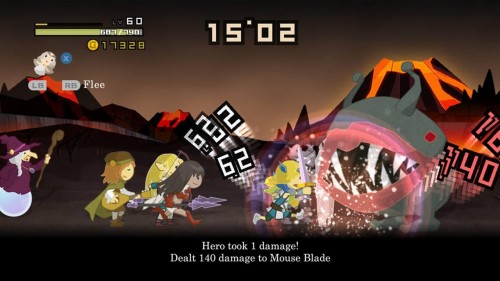
Random battles are a frequent occurrence, but they are also the most important element into our Hero’s success. Each battle goes by so quickly it is almost as if the game plays itself, as the hero runs through with his weapon in hand, quickly dishing out damage and taking out foes along the way. A dash command can allow these battles to go even faster, but at the cost of HP. Each enemy that is defeated drops money, and with that cash the player can feed the very greedy Time Goddess to reset time, which can be done by praying upon a statue that can be found in certain villages across each overworld. After doing so, the 30 seconds restarts and allows for more preparation to be done in order to take out the final boss.
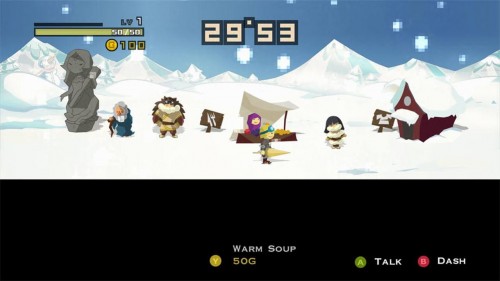
While battles involve very little work from the player, preparation is needed to actually win against a foe, and this is where the core strategy is found in the game. With money collected from battle, the player can visit different villages and buy new armor and weaponry. Things like shoes, swords, staffs, hammers, and other tools are used to gain an upper edge in battle, and due to the time pinch, the quicker you defeat a group of enemies, the less time you will have spent at the Time Goddess’ statue, trying to reset the clock as she raises her rates over time.
To add a new flavor to the gameplay, side-quests are also available. For example, there is one quest where the player must collect a flower to “woo” a female warrior. Other quests consist of picking up a special item or saving a trapped villager from a monster. The great thing about side quests is that they are easily performed and usually pay off with an item that can come in handy for the final boss at the end of a stage. At times, a villager will be so pleased with your performance that they will actually join your party and assist you on your travels. Party battles work the same as the solo experiences, but with the said party member battling right beside the hero, nearly doubling your chances of survival. Some villagers however can simply be “hired” for their assistance, whether it be for battle or to clear an obstacle that blocks a path in the overworld.
I am really big on exploration in any RPG, and I was a bit worried I wouldn’t be able to actually get to know the world and people I was saving in such a short time due to Half-Minute Hero’s speedy delivery. Thankfully, this is not an issue as the game seems like it wants you to talk to everyone and check every nook and cranny found within the relatively small worlds. Doing so even pays off in this title with rewards that ease the difficulty of each level’s Evil Lord, which lets the player decide how they want to strategize overall.
I think the reason I fell in love with Half-Minute Hero is due to how well it blends of all the aforementioned techniques together for one quick burst of RPG pleasure. Side-quests are not distracting and compliment the the main quest perfectly and collecting loot and defeating random enemies never becomes a bore as money is mandatory to keep the timer in check. After each “game” is complete, the credits roll and a new item is given to better your equipment for the next mission. I can say things can feel a bit repetitive at times due to the rinse and repeat formula, but thankfully the enemies and witty NPCs do a fantastic job at keeping the game fresh and humorous throughout.
After you complete the Hero 30 mode, new modes become playable with different characters, offering a slightly different experience with shiny new sprites and a few changes to the main game. Online leaderboards are also available for those who want a bit of a competitive edge with their game, leading to a further incentive for multiple playthroughs. Half-Minute Hero: Super Mega Neo Climax also includes a multi-player mode, in which allows for multiple players to work against eachother to finish a quest first. This game may come with the gimmick of being half a minute, but hours addictive gameplay and a mass amount of content can certainly lead to a title that feels worthy of a disc release.
Graphics/Audio
If you played the PSP version of Half-Minute Hero, you might remember the 8-bit graphics that the first one boasted. While there is an option to revert back to this classic look, Super Mega Neo Climax features new and cartoony visuals that are full of life and actually enhance the characters’ personalities. The overworld isn’t very detailed, but that sort of plays into the very games that Half-Minute Hero parodies and the end result is a very fitting one.
As far as the music in the game goes, we are treated to a rock soundtrack full of epic battle melodies. With the time pinch in play, this enhances the urge to move faster and adds a bit more pressure to the already hectic adventures. Sound effects are a bit more subtle, but do their job well as the constant “clack” of a club always comes across as satisfying when tackling a group on enemies.
Overall
Half-Minute Hero: Super Mega Neo Climax takes a bit from the greatest games of all time, adds in caffeine, and provides a brand new experience in the process. I was most impressed how the game threw together all the core elements of an RPG and somehow tied them into one neat package, where each worked to compliment the main objective of the game. Those who are looking for a charming cast of characters can also look no further, as the NPCs are full of quick one liners and add a lot of humor to the game without ever becoming annoying or overly corny. With a ton of content, extras, and addictive yet familiar gameplay mechanics added in, this is one RPG that demands attention and is sure go down in the books for breaking new mold in the genre as a whole.
One of the most important thing about any title is to listen to what the community has to say. Football, with its large fan base, is notorious for its dedicated fanbase, and EA Sports is collaborating with fans in developing FIFA Manager 12.
FIFA Manager 12 has more than 700 improvements, and includes a full feature set, including features inspired and determined by the community. Through an online campaign called “Your Feature!”, thousands of fans contributed their ideas on what they’d like to see in the latest release of the franchise. Fans would suggest which features they wanted to see in the game, and community voting took over after that. Some of the new features include “Speeches Before The Match”, the tutorial “Manager Challenges”, and “Trial Training Day for Hobby Players”.
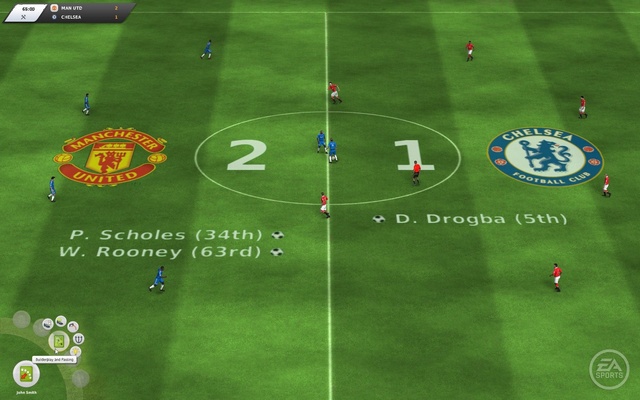
Other improvements in FIFA Manager 12 include enhancements in 3D mode, finances, transfers, the calendar, and online play. 3D Mode will see new logic and player AI, as well as improvements to tactics, substitutions, and the conduct of opposing managers. Financial mode will now have on-the-pitch success impacting revenue, and realistic differences between revenue generated in regards to different clubs. In transfer mode, managers can field players in training and in real matches.
The Melbourne Anime Festival – “Manifest” for short – is just around the corner and cosplayers are working hard making things slowly getting into panic mode as the convention draws closer (myself included) it isn’t Melbourne’s biggest anime and manga convention for no reason.
Big events running such as the cosplay contest that draws a huge crowd (get in-line early) along with the video game tournaments, games being played are still yet to be announced. Expect things along the lines of Super Street Fighter 4 Arcade Edition and Super Smash Brothers Brawl to be playable throughout the day in the games section.
The convention is being held Friday 26th – Sunday 28th of August at the Melbourne Showgrounds, pre-registration has sadly closed as of now, but tickets can still be brought on the day a 3 day pass coming in at $55, a single day being $35 and Friday being $30.
Little Kuriboh is back for his second year in a row to manifest so if you missed him last year or at SMASH here is another chance to see him, he should be around for all 3 days.
Baka and Test: Season One Studio: Silver Link Localization: FUNimation Languages: English and Japanese Dub Release Date: August 2, 2011 Price: $59.98 DVD / $59.95 BLU-RAY
Overview:
Do you think that your school life is boring? Well it most likely is because it can’t be anything compared to what school life is in Baka and Test: Summon the Beasts Season 1. In the world of Baka and Test you are given grades, but these grades mean more than one thing. Does a normal school consist of battles between different classes? How about a school where you’re fighting power equals that of your intellectual power? If that sounds up your alley then prepare for Baka and Test.
Story:
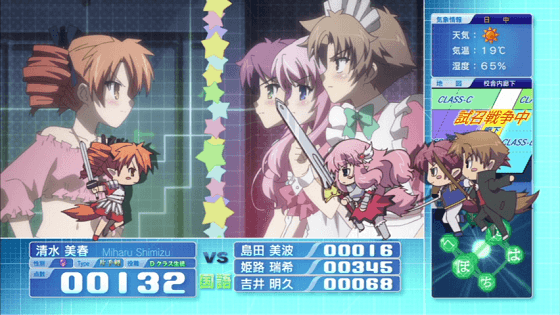
On the outside, Fumizuki Academy may appear to be your average school, but it is anything but average. Fumizuki is a special battle academic school which means that students will be able to battle it out with other students using mini avatars in what is called a Summoner Test War. When the students enter the school they are given a test that will determine what class they will be placed in, anywhere from Rank A being the best students and Rank F being the absolute idiots.
The main protagonist of the story is probationary student and Grade A idiot (baka) Akihisa Yoshii. During this placement test he did so poorly he was placed in Class F. However something else occurred during the placement test, a girl who can be called one of the smartest in the entire school named Mizuki Himeji fell ill and could not complete her test, also placing her in Class F. Akihisa meets up with his fellow friends in Class F, including Class F rep. Yuji Sakamoto, Kōta Tsuchiya who has an extremely perverted nature, the ever feminine looking Hideyoshi Kinoshita, and the violent Minami Shimada.
Each class’ classroom is given equipment and learning utensils equal to their rank, meaning Class A has a luxurious mansion type learning area while Class F is forced to sit on empty cushions and wooden tables so old they break at the slightest touch. Because of these horrible learning conditions Akihisa is determined to provide a better quality of learning for Himeji. Because of this he goes along with Yuji’s plan to take on every class in school so that they can swap their equipment out with that of the best class, Class A.
As far as the battling goes, this means that usually the class with the higher rank is going to have a higher attacking power and therefore be nearly impossible for lower classes to defeat. This means that for nearly every single battle Yuji and Akihisa have to come up with some underhanded and brilliant strategies to try and outsmart their more intelligent counterparts.
Now the primary focus of the story is on these inter-classroom battles but that doesn’t mean that the whole focus of the anime is on that. There is also a heavy influence of a romantic comedy at work in Baka and Test Season 1. It is clear early on that Akihisa has some feelings for Himeji, though he never clearly states them besides looking to provide her with a better learning environment. On the other hand Himeji quite obviously shows that she has feelings for Akihisa. Put this together with the fact that her rival in love Minami is much more forceful in her approach the two often end up pulling Akihisa in two separate directions, both wanting him to spend time with them.
One part that I disliked about this element of the show however is that, despite their extremely obvious feelings for Akihisa, he is completely oblivious to the fact that these two girls are in love with him. This makes Akihisa not only the biggest idiot in the history of anime but also one of the densest.
Besides my dislike for the stupendous stupidity that Akihisa possesses towards both Minami and Himeji the series certainly has a lot going for it in storyline. Beyond that there is plenty of laughter to be had as the classes battle it out with one another and the students of Class F are put into compromising positions, namely involving either Akihisa or Hideyoshi.
Artwork:
The animation quality for Baka and Test is very well done. The backgrounds are very well drawn, especially when you compare the luxuriousness of Class A’s room compared to the condemned feeling of Class F. The color palette that they used for everything in the show is nice to look at, though some characters have very unique hair such as Himeji’s bright pink hair.
The character designs themselves can be warranted as a bit generic as they pretty much fall into your average anime designs. The school uniforms that the characters usually wear is nothing impressive, though their occasional appearances in casual clothing help alleviate this problem slightly.
The battles using the character’s avatars are rather simple in appearance. This is because for 90% of the battles that are shown the avatars are smaller, chibi like versions of their summoner though occasionally the action does flex its muscles by showing a heightened combat scene. I must make a note as well that the animation occasionally switches itself up completely, appearing as a very serious looking anime at times; although in the end it is for a comedic purpose and the extra seriousness only adds to the hilarity of the event about to occur.
Audio:
The background music that is presented during the show itself can be rather easy to forget at times and is your average slice of life school music except for when an avatar battle is happening. On the other hand the Opening song “Perfect-Area Complete!” is very enjoyable and cheerful sounding. The animation for the opening is also matched perfectly to the music which made me perfectly happy to watch the opening each time it was shown.
Baka and Test Season 1 has two separate ending songs which change up in the middle of the series. The first song is called “Baka Go Home” which is a more rock based song that is matched up to the male characters of the song while the second half of the series is given the ending “Hare Tokidoki Egao” which is a more pop like song that focuses on the female members of the cast, plus Hideyoshi. These ending animations are rather plain but still mesh together well with the music.
This release from FUNimation comes with both the English and the Japanese voice track which means you can choose which version you prefer to listen to. I would have to say that the English voice cast for the series did a well enough job representing each of the characters in the series. Akihisa and Himeji are voiced very well and Akihisa’s pain is very well sold by his voice actor, which is a necessity considering how often he is the recipient of a beating or two.
Characters:
Akihisa Yoshii is the main idiot of Class F and is the central focus of the anime. He is a probationary student which means that his avatar is special. This is joked about often as the only thing special about his avatar is the fact that it can interact with objects in the real world and any damage done to it makes Akihisa get hurt as well. He is very dense and, as I said earlier, I found myself growing a bit tired of his complete disregard to Himeji and Minami’s feelings.
Mizuki Himeji can be seen as either the main heroine of the series or rather the co-heroine. She is extremely intelligent but can be very shy at times. Her placement in Class F was due originally to her poor health though she found herself happy in the low ranked class thanks to Yoshii being in the same class with her. She has strong feelings for Yoshii and often displays this by going out of her way to be with him or becoming extremely angry whenever he is involved with another girl, so angry she borders on yandere.
Speaking of another girl we have the other co-heroine of the series, Minami Shimada. Minami was raised overseas for most of her life and because of this she placed low enough on her tests to be ranked in Class F. Minami harbors feelings for Yoshii as well, though she is very sensitive about her small chest and is also the tsundere character of the cast. This means that even if Yoshii compliments her appearance, she will still react violently towards him thinking he is mocking her.
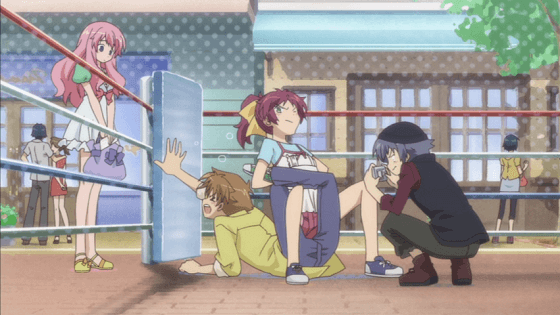
Those being the only two female characters of Class F we also have Yuji Sakamoto, Kōta Tsuchiya and Hideyoshi Kinoshita. Yuji is the class leader who used to be a child genius and comes up with most of the strategies used by Class F. He is also constantly in fear of his life from Class A representative Shōko who persists to marry him and is extremely violent. Kōta is the resident pervert of the group. He carries a camera around with him constantly and consistently tries to see up girls’ skirts and take pictures. This is counterproductive to his nature however as he quickly suffers from nosebleeds that jokingly kill him from time to time.
Finally we have Hideyoshi Kinoshita. Hideyoshi is best seen as the trap character of the series, though this isn’t of his own choosing. Hideyoshi clearly represents himself as a male however he is constantly forced into crossdressing situations and treated like a beautiful girl, much to the delight of Kōta and Yoshii who both suffer nosebleeds whenever something fan service related happens with him.
Extras:
Those who pick up Baka and Test Season 1 will be happy to hear that the series comes with a multitude of special extra content. This includes your standard clean opening and the two endings cleaned of credits, but it also includes a number of extra skits. This includes a hilarious cooking special with Himeji which shows us exactly how she makes her food so deadly.
While the extras are enjoyable and will help extend fans enjoyment of the series, these extras are not English dubbed so anyone eager to watch these should prepare to read the subtitles provided to understand what is going on in each extra.
Overall:
Baka and Test may appear to be your simple high school slice of life anime from its description, but it is clearly far from that. With the constant avatar battles there is usually some form of action, though there is a heavy focus on comedy and romance at the same time. Despite the many themes that the series focuses on, nothing feels thinned out to make room for the rest. This means that fans of any of those genres should appreciate the series. With a storyline that is unique and characters that are both stupid and hilarious at the same time, Baka and Test should pass with flying colors in most viewers’ report cards. Which of course means a stronger avatar next battle!
Electronic Arts have recently publoished a trailer for their upcoming Basketball game for the Xbox 360 Arcade and Playstation 3 Playstation Network. This basketball game is titled NBA JAM: On Fire Edition, and it looks like a must have game any and all basketball fans.
The game has a pretty distinctive art style to it, being neither realistic nor cartoony, but somewhere close to the middle. This gives the game a dynamic and fluid feel to the game, while also making it look slightly deformed. Basketball looks amazingly fun in this title because of the artistic direction of the game.
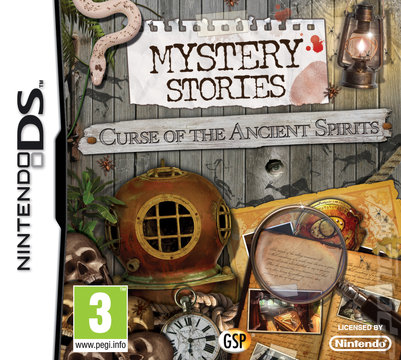
Mystery Stories: Curse of the Ancient Spirits Developer: Cerasus Media Publisher: Avanquest Software Genre: Hidden Object/Puzzle Platform: Nintendo DS Released: Out Now
A string of disappearances linking all explorers and archaeologists who searched for Christopher Colombus’ lost ship sparks a sense of adventure in Virginia Carter, who along with her father, a famous archaeologist himself, embarks on to do what no one else has managed before them and discover the lost ship and return safely – setting the scene for this hidden object puzzle adventure.
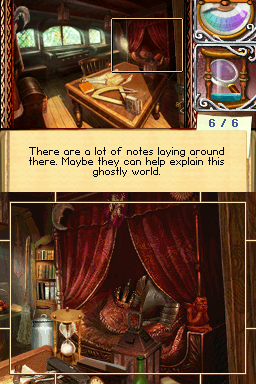
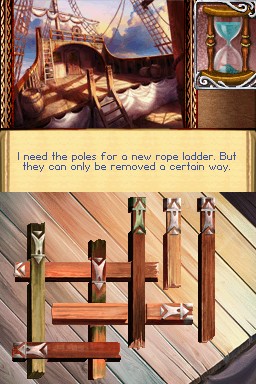
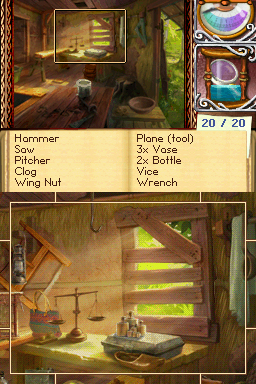
In Mystery Stories: Curse of the Ancient Spirits, gameplay takes place in typical hidden object fashion, with you transitioning from hidden object scene to hidden object scene with a small amount of exploring and the occasional different style of puzzle thrown in for the sake of variety. The hidden object puzzles are laid out on the screen such that the top screen displays the information needed for the puzzle, like the list of items you need to be finding and an overview of the scene, keeping the bottom screen clear as a zoomed in view of the level which you use to gather items by identifying them from the background and tapping them.
The bright colour scheme, simplicity of the puzzles and blatant tips prompting you on what to do next go to show that it’s a game aimed at kids, with a young-ish lead character setting out with her father giving someone they can relate to. That said, although the actual text-based hints and suggestions courtesy of Virginia’s monologues tell you exactly what to do, the hint system operated by the X button is awarded far too sparingly.
Sometimes you really can’t spot an object from the scene due to the way that objects are all blended in with the environments; not only are all related to boats in some way or are things you would expect to find on a ship, but smaller objects and larger objects which are concealed by hiding all but a little section of the item can present a challenge. In this case, you have to wait for the hint meter to fully charge before you can use it to direct you to a missing item, and the recharge time takes a bit too long to recharge given the frequency at which you will be wanting to use it.
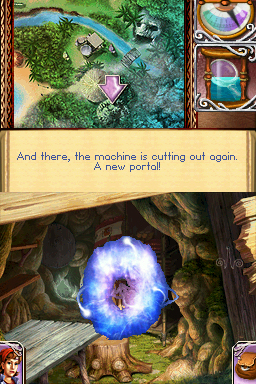
Found objects are greyed out (rather than collected as in most hidden object games) which makes more sense as you only make use of the useful items anyway – many are completely pointless. The few useful items are stored in your inventory, along with some or your devices which come into play during certain sections of the gameplay; for instance, a flashlight for dark areas and a pair of goggles to counter the fuzzy visuals effects brought on by entering mystical portals. The grey colouration even carries over into repeated visits of the same scene, meaning you won’t be forced to search for the same items twice. It is a shame that the game has to reuse hidden object levels in this way, but is forgivable as your adventure takes place on the rather confined space of a moderately-sized explorers boat, so some repetition was inevitable.
The sound does well to set the scene and create an inviting ocean atmosphere, avoiding any hint of anything sinister to suit the younger audience, despite the adventure taking place around a ghost ship with magical powers preventing the passage of time. Water lapping against the side of the ship, the wash of the waves and the squawking of seagulls all contribute to prevent you feeling like you’re in a bland object hoarding session, instead evoking a subtle feeling that you are actually part of the adventure.
On top of the main adventure mode, for some reason a ‘Freeplay’ mode rests on the menu screen for those who wish to revisit hidden object puzzles encountered in the main game. It seems a bit unnecessary as very few will feel the need to revisit particular puzzles as none are memorable and each ‘Freeplay’ version of a puzzle is exactly the same. There’s no backtracking in the story in a way that allows you to play the same puzzle, so I suppose the additional mode offers something that can’t be gained from the story mode, but its primary purpose is still not a relevant one.
Overall, Mystery Stories: Curse of the Ancient Spirits isn’t the strongest example of the hidden object genre as critically and to the player’s discontent, objects can often be difficult to distinguish from the scene at hand. It has a kid-friendly plot about a lost ghost ship but story events such as those involving portals are fairly naff. These may not be lost on youngsters, but even then they will probably fail to work wonders for the majority of them. It’s been well suited to kids with the accommodating level of challenge, but it can’t mask the fact that it is still a relatively short-lived game assuming you don’t get stuck.