It’s that time of the year. Time for joy. Time for family. And time for Cooking…Mama. Majesco want you and your own family to enjoy Christmas (or whatever holiday you celebrate), and have shared with us a printable activity book that you can print out and enjoy while waiting for Santa.
There is a word find, connect the dots, a coloring page, and a full maze, all donning a holiday theme that the younger gamers in the family are sure to love. As you know, Cooking Mama 4 and Camping Mama: Outdoor Adventures are also out everywhere, so if you are looking for the perfect stocking stuffer, bundle these activity pages along with a delightful Mama game and let Majesco do Santa’s lifting this year.
Download the full Activity Book HERE. (to save, RIGHT CLICK, then SAVE TARGET AS)
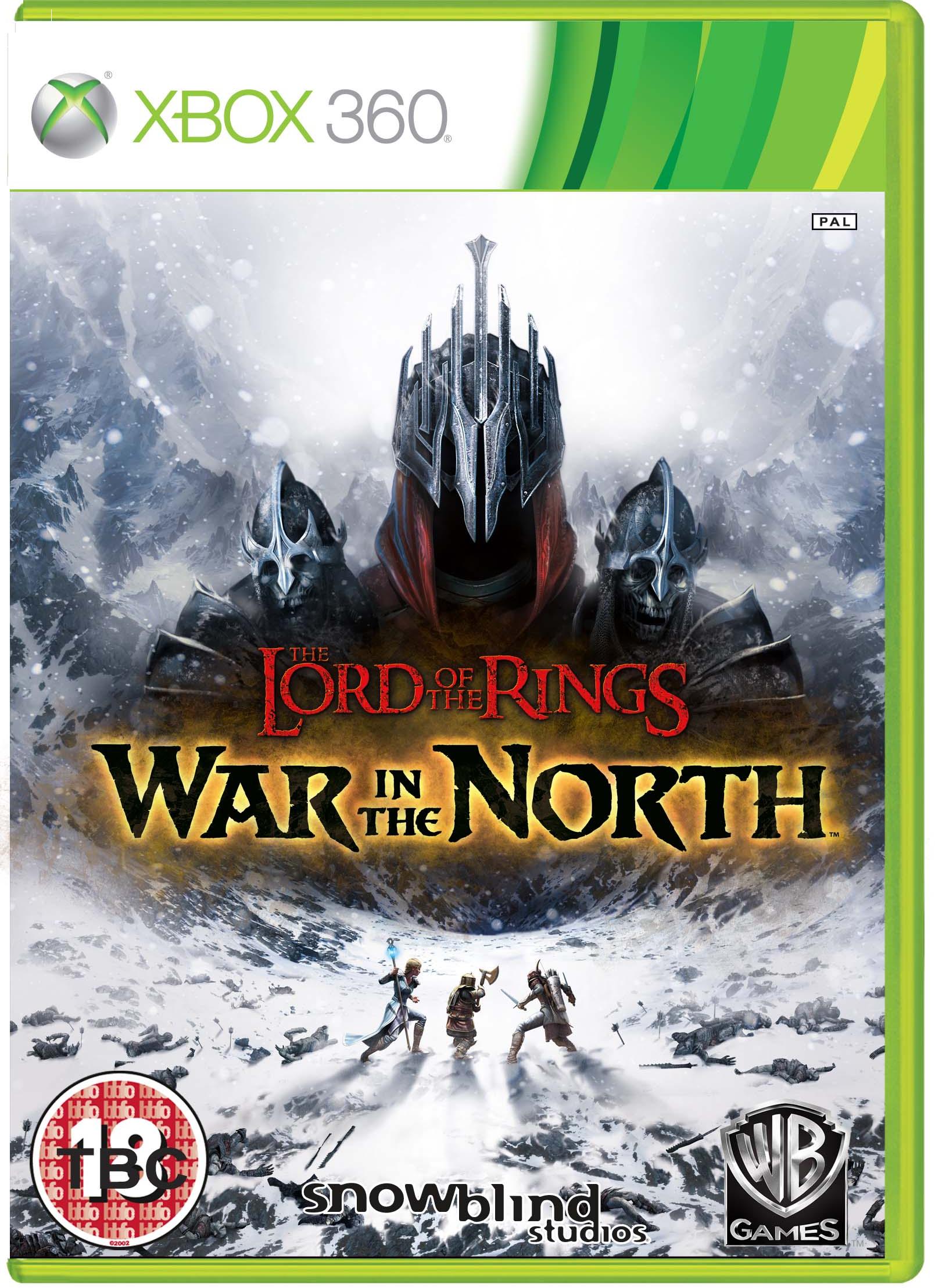
Lord of the Rings: War in the North Developer: Snowblind Studios Publisher: Warner Bros. Interactive Entertainment Platform: Xbox 360(reviewed),PS3, PC Release Date: 25th November Available Here
Overview:
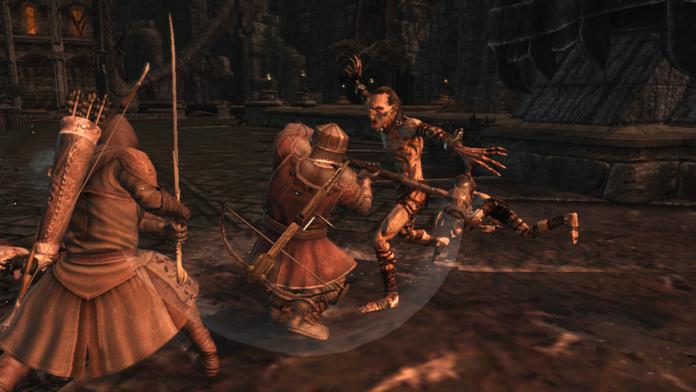
As the first M rated Lord of the Rings game, LOTR: War in the North marks a new era for the franchise. A new, bloody era. The Dark Alliance Game Engine sees lopped off Uruk-hai limbs, decapitated orc heads and goblins segmented into two right through the middle. Looking back at the films there’s actually less orc blood spraying around in them than there is here, as Peter Jackson’s depiction of battle avoided being gruesome enough to exceed a 12 rating. But the question on everybody’s lips is, does Lord of the Rings: War in the North have any substance behind the gore, or is it simply trying to cover up its imperfections with a generous coating of orc blood?
Story:
The story behind War in the North is non-canon: although Tolkein’s works did speak of people in the Northern regions of Middle Earth and their battle against Sauron’s dark forces, it was only touched upon when compared to the focus put on the Fellowship and the fate of the ring. In this sense Snowblind Studios had some freedom with it, while still having enough sceptical fans to prevent them doing anything too crazy. Their adaptation of Middle Earth takes after the style of the films. There are some locations recognisable from the works of Peter Jackson like Bree and the Prancing Pony, and areas which were never realised visually but only through description do well to stick to a style of presentation that lends itself to the Lord of the Rings universe.
Some familiar characters crop up; as far as I’m aware, it is Ian McKellen’s (Gandalf) voice doing the narrating (or at least a convincing sound-alike), which adds a fair bit of drama to proceedings. Sadly, others are rather less convincing, such as Aragorn, who sounds nothing like his silver screen counterpart. You feel the creators are on smoother terrain when making new characters that don’t have an onscreen likeness to live up to. Like, for example, Radagast the Brown, a wizard who’s in Tolkein’s literature but is never seen in Peter Jackson’s telling of events.
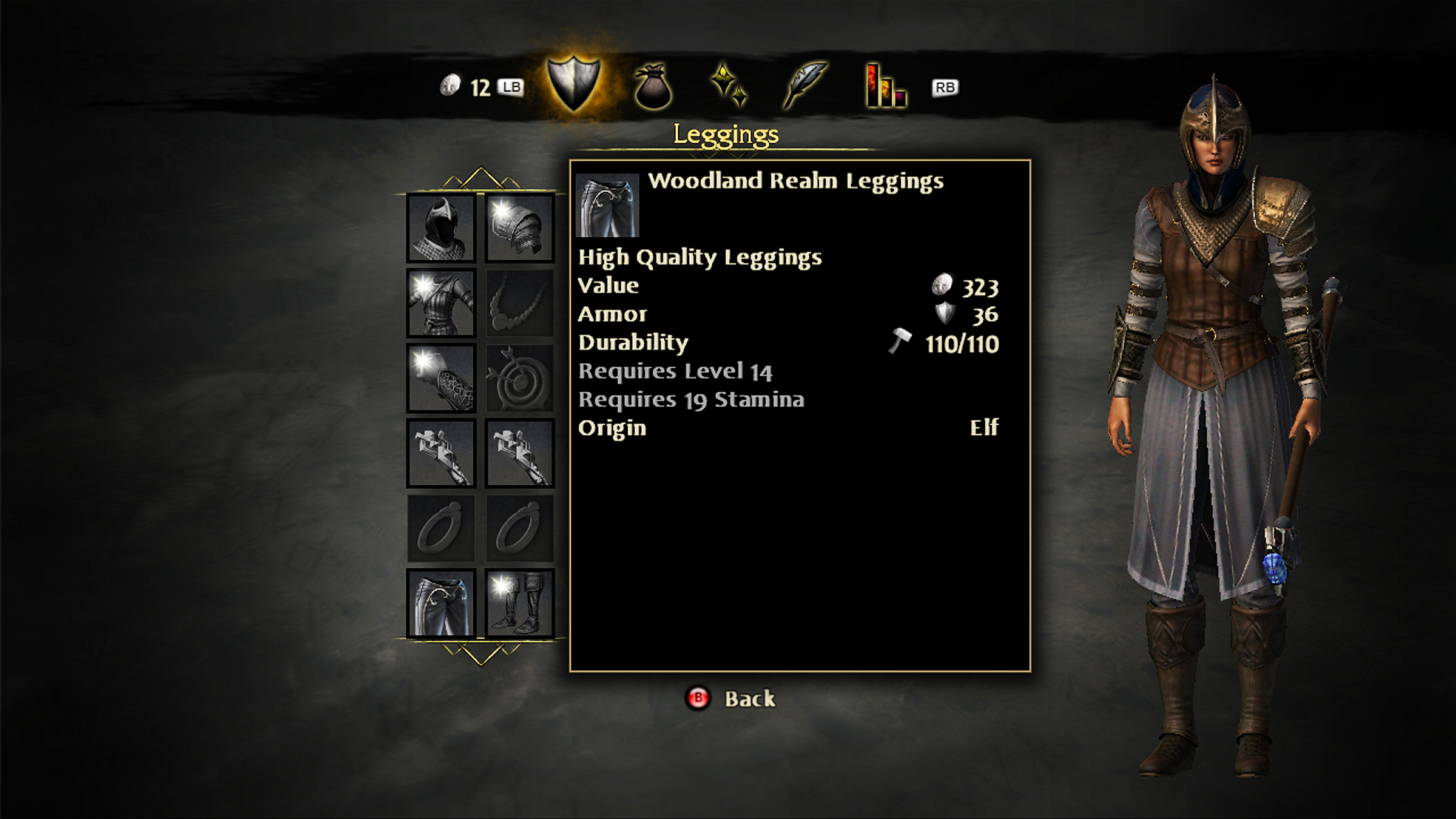
The alliance between the three protagonists appears to be something of Snowblind Studios’ invention; it comes together too nicely to have been written about in the books, acting only as the catalyst for the class system. The trio comprises Farin, a dwarf, Andriel, an elf, and Eradan, a ranger. Certain details could displease hardcore fans, like the ease at which Farin gets along with Andriel despite supposed hostility between the two races, or the fact that a dwarf uses a ranged weapon other than throwing axes (could you believe it – a dwarf with a bloody crossbow). Behind physical attributes, the characters personalities are bland and the performances are flat, meaning that although it’s Lord of the Rings so you are guaranteed an undercurrent of interest, the plot never truly grips you.
Gameplay:
It may be billed as an action RPG but it doesn’t always differ that much from the old hack and slashers made to release alongside the movies. The numbers indicating damage done are just an attempt to disguise the tedious activity of using a mixture of X and Y to take down the waves of enemies. Plus, due to some larger foes not having health bars, it can be difficult to gauge progress in order to know if you’re getting anywhere and doing any damage. This isn’t being completely fair to it, though; there are ranged attacks too, with the elf shooting magic at a machine-gun-like rate, and the man and dwarf firing off arrows. It does vary combat, reverting to a first-person view when using your ranged weapon, but unfortunately the auto-aim is overpowered, which makes it difficult to pick out a desired enemy from a crowd as you’ll find it will automatically guide your shot into someone else.
While there’s no denying that slicing up orcs is fun – particularly on smaller enemies as it makes you feel more like a hero from the films when you do it with ease – the repetitive structure to gameplay quickly becomes apparent. It likes to give the impression that a vast world of Middle Earth is out there, but your path through it is fairly straight and narrow. The cycle is basic and repeats itself: get trapped in a closed off area, fight your way through the swarms of enemies, move on to the next areas and then the cycle begins anew.
The three player co-op, on the other hand, is Lord of the Rings: War in the North’s saving grace. Even if the combat is a bit dull, playing alongside another human player makes the game infinitely more enjoyable. Plus the three player niche isn’t something that’s always catered for, something to bear in mind for those of you with too many friends for two player co-op but not enough for four. Locally it supports two players and over Xbox Live it supports all three.
When playing single-player these cooperative aspects don’t vanish, though. Your AI companions are hardy fellows who can soak up a lot of damage. Although occasionally you will have to come to their rescue with the revive system, the more likely outcome is they’ll be reviving you. This essentially gives you infinite continues, at least until the harder boss battles. Your teammates are perhaps a little overpowered, but given how rapidly your health bar declines, ultimately it works out for the better and you come to accept it.
Visuals & Audio:
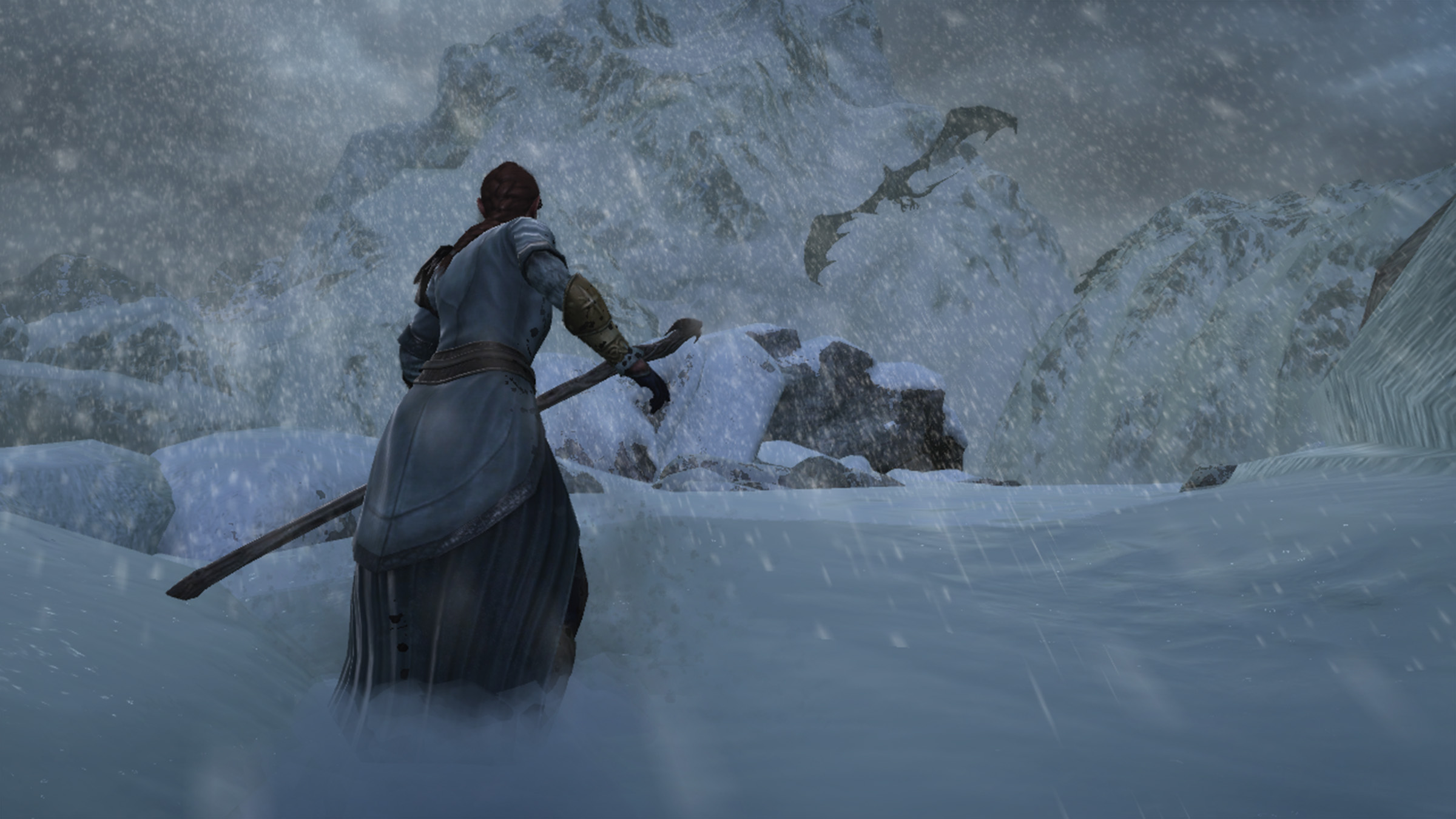
Graphically, it’s a fine virtual embodiment of Middle Earth, probably the most beautiful representation of it in a videogame. During your journey you see different weather conditions, times of day, and areas old and new. Aspects that didn’t appear in the films are in keeping with Peter Jackson’s vision for Middle Earth. There are some tiny visual bugs where a stray collectible gets lost on a lump of unreachable decorative rubble, or a non-playable character model doesn’t behave how it should when it gets snagged on a piece of scenery. But, these minor offences aside, it’s a convincing setting for the War in the North. As for the sound, as I said before, the voicing doesn’t do wonders for the story. Other than that, though, there’s subtle music and the typical sounds of someone smashing a melon with a mallet to accompany combat.
Overall:
Lord of the Rings: War in the North isn’t all that bad; sure, the story isn’t well-executed and the nature of gameplay means it gets repetitive, but is does a cracking co-op and visually it’s very pretty. It’s just a shame it released so soon after the rather Lord of the Rings-esque Skyrim, hence it’s likely to be overlooked. Still, if you prefer your adventures to be a bit more straight-forward then this is worth playing with a couple of mates. This extension of the franchise, however, could evoke a mixed reaction from Lord of the Rings fans, as the various pros and cons mean they’ll either be delighted or disgusted.
As you may of heardearlier this week, Starbreeze Studios’ upcoming game Syndicate has been refused classification in Australia, effectively banning the retail sale of the game in the country as Australia does not currently have an R18+ classification for video games. The developers have since responded to the decision by Australian Classification Board in an official statement.
“It’s regrettable that government policy in Australia is denying adults the right to play Syndicate. The game will be not be available in Australia despite its enthusiastic response from fans. We were encouraged by the government’s recent agreement to adopt an 18+ age rating for games. However, delays continue to force an arcane censorship on games – cuts that would never be imposed on books or movies. We urge policy makers to take swift action to implement an updated policy that reflects today’s market and gives its millions ofadult consumers the right to make their own content choices.”
So in short, Syndicate will not be released in Australia and the developers will not be appealing the Refused Classification decision as they do not want to censor any of Syndicate overall quality or appeal for the game’s intended mature audience. This is disappointing news for Australian gamers who are now missing out on play the game entirely.
New Zealanders however will be able to pick up the game in its full R18+ glory next year on February 24th, thanks to their country’s R18+ rating.
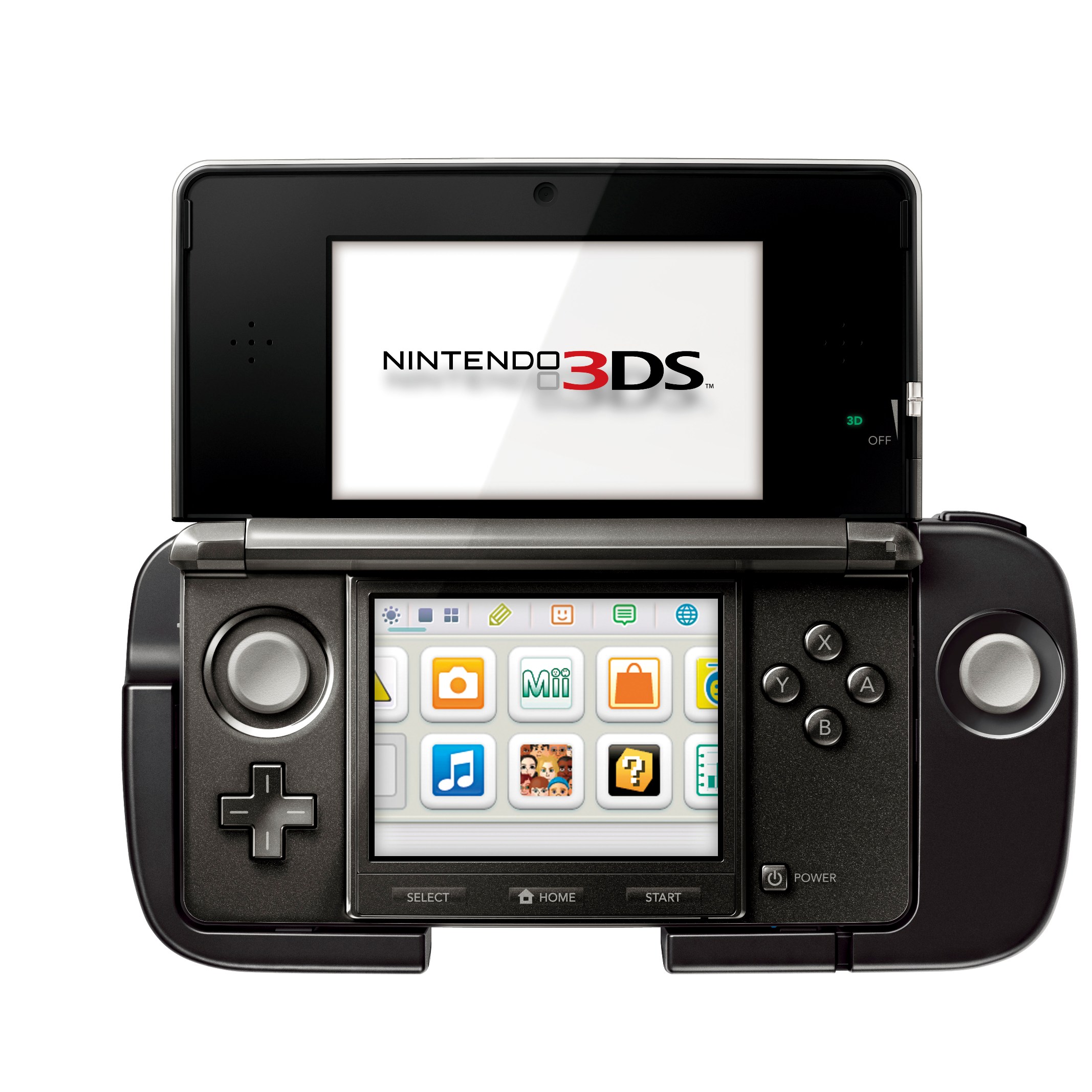
It matters not that I even own the system that Capcom’s new Resident Evil: Revelations is coming out on this February 2nd, I have just loved everything to do with the franchise since I first laid eyes on it on the original PlayStation. Well, its come a long way since those days, and despite not owning a 3DS, which has exclusive rights to the title, the storyline takes place between Resident Evil 4 and Resident Evil 5, familiar to all console owners. Revelations has been specifically designed by Capcom to take full advantage of the 3DS features also allowing full compatibility with the Circle Pad Pro, and looks enticing enough to get me to go out and get one just for it.
Resident Evil has always been notorious for its intertwining character relationships and Revelations will not fail to disappoint, featuring new locations and characters as well as franchise favorites such as Chris Redfield and Jill Valentine. With Chris apparently lost on an abandoned cruise ship, Jill ventures out to find him based purely on a vague GPS location, knowing not of the T-abyss virus or the evil that is ahead of her.
This installment to the Resident Evil franchise goes back to the roots of the game, creating a truly immersive and nerve racking experience, akin to the original installments that scared to daylights out of many late night gamers. Also just to make things a bit more frustrating, finding ammunition and firepower to obliterate those zombies and meanies is just as hard as ever. Campaign mode is set over snow covered mountains and the abandoned cruise ship amongst many other environments. In the all new raid mode, you can either play in single or 2 player co-op to complete various missions and earn points with which to upgrade your character and inventory.
Incorporating the new Circle Pad Pro, Resident Evil Revelations can be explored in ways never seen before, using the extra shoulder buttons for more detailed exploration, or as a twin stick shooter. The touch screen allows players to solve puzzles, easily switch between weapons and view the labyrinthine map.
Coming soon, Resident Evil: Revelations will retail for $64.95 and the Circle Pad Pro for $24.95 in Australian markets, and especially if you played the amazing Gamecube or Wii versions of Resident Evil 4 you have to give this one a look in.
Overview:
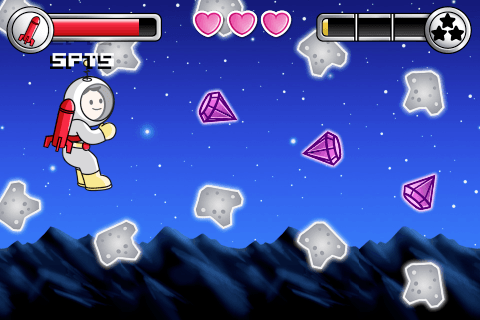
Jetpack Joyride has enjoyed runaway success this year, using the classic one-button float game mechanic to make a simple yet addictive game. One Giant Leap uses the same mechanic, but applies a new premise.
Story:
You’re an astronaut of some sort bouncing around on the moon, collecting gems and dodging asteroids, to get back to your rocket ship and escape… on every level. Okay, so there’s not much in the way of plot to this title, but if the game’s well done, who cares, right?
The first couple of levels are simple and do a good job of easing you into the general idea of the game. But once the third level hits, you’re straight into the deep end. This isn’t really down to the complexity of the level itself, but rather the flaws in the construction of the game become more apparent.
Gameplay:
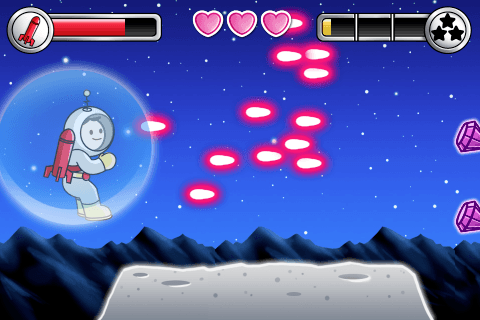
The first couple of levels are simple and do a good job of easing you into the general idea of the game. But once the third level hits, you’re straight into the deep end. This isn’t really down to the complexity of the level itself, but rather the flaws in the construction of the game become more apparent. First off, everything’s huge. Your astronaut dude takes up almost half the screen, which leaves very little wiggle room for maneuvering around the asteroids. For this reason, the levels with even a hint of difficulty about them become almost impossible to complete. I think that’s pretty much the main issue, though it presents itself in a variety of ways… collision detection feels too sensitive, floatiness feels too floaty, that kind of thing. There is only one “area”, the moon, with a total of 30 levels.
Unfortunately due to the steep difficulty curve, I have been unable to make it past level 4. There is also a “Challenge Mode”, consisting of floating through one giant level, encountering aliens and picking up special power-ups along the way. But, again, the flaws of the gameplay make it very difficult to play through very far and not rage-quit your way out of the game altogether. The game also has an Achievements system, with goals ranging from the almost impossible “Get a 3-star rank on 5 missions” at the bottom end, to the harder-than-it-sounds “Spend 2 hours playing One Giant Leap” at the top end. All I could muster was a thousand gems from dying in Missions mode, and destroyed a UFO with it’s own laser from dying in the Challenge mode. There’s a “how to play” button explaining the basics of gameplay, and a static “more games” screen advertising other Asobu Games games, in case you’re interested.
Audio & Visual:
On a positive note, the graphics, while simple, were pleasant enough, and fitted the premise well. Some of the subtler graphic elements, like the mountains in the background and laser beams were actually quite cool. It’s just a shame that things weren’t tightened up a bit more…
There are a few minor issues with the interface and menus, all of which can be overlooked if you like actually playing the game. Unfortunately, as the one flaw with the game kinda cripples it, you begin to notice the “almost finished” feel of some of the interface design. The audio was passable with the menu music featured some nicely-put-together 8-bit style beats, while the in-game music was decidedly subdued and quiet.
Overall:
I feel I have to put my hand up here and tell you I did not finish the game. I’ve tried (oh, how I’ve tried), but alas, I could not make it through all the 30 levels. In fact I almost couldn’t be bothered to finish the title simply due to the poor gameplay mechanics and the repetitive and boring gameplay that shouldn’t even be justified for an iPhone app, albeit a cheap one.
The Adventures of Tintin: The Secret of the Unicorn – The Game Developer: Gameloft Publisher: Gameloft Platform: iPhone/iPad(reviewed) Release: 15/12/11 Price: $5.49 – Available Here
Overview
With the release of the new full length Tintin film, Tintin fans all over the world hold their breath in anticipation to see how their beloved comic book character has been transformed by Hollywood. Set to be a huge release, and why not, it’s Tintin after all, the film has been turned into a multiplatform videogame – bringing fans along for one of Tintin’s greatest adventures. While Ubisoft has taken control of the console games, Gameloft have taken the reigns of the mobile side with their title: The Adventures of Tintin: The Secret of The Unicorn – The Game.
Story
The story of The Adventures of Tintin is it a little bizarre. Not the story itself so much as the process of maintaining the story through multiple media – first comic book, then film, then game. Each medium obvious has it’s own means of telling a story and will need to alter the plot accordingly. The story roughly follows the plot of the Secret of The Unicorn, with a bit of the Crab with the Golden Claws thrown in. Much the same as the movie really. Gameloft have tweaked the story ever so slightly to make it more playable, giving player’s greater options to engage with the environment then they would if the story was merely transferred over.
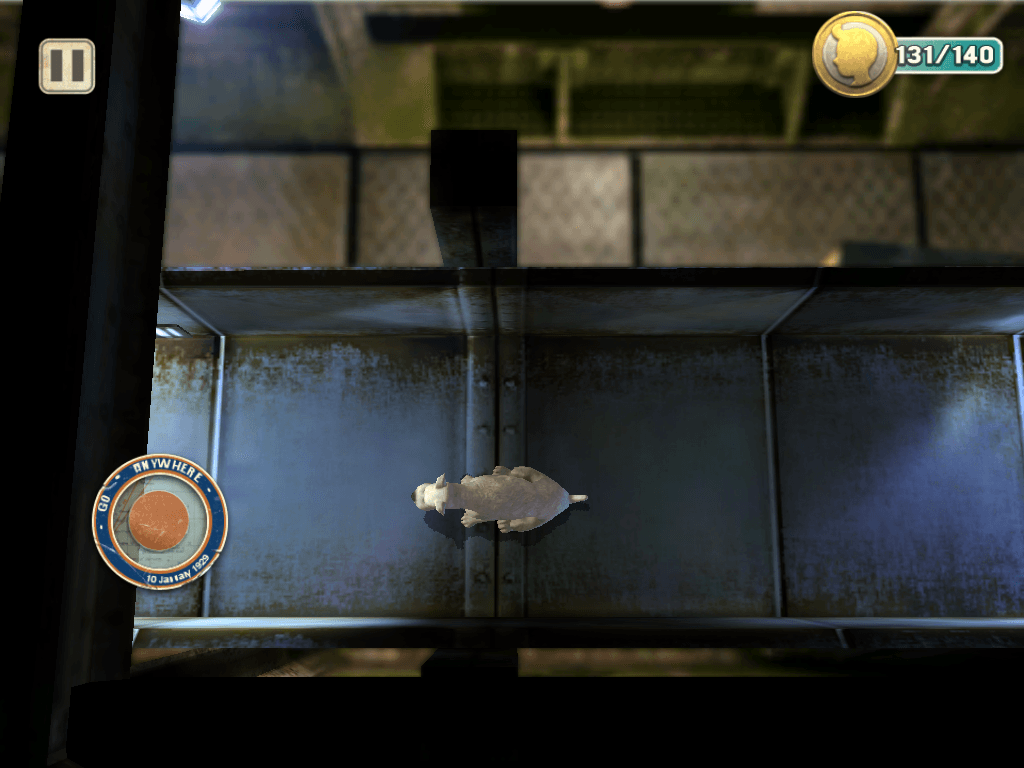
For those not familiar with Tintin, the above paragraph may make little sense. This after all isn’t a game just for Tintin fans, but for anyone with an iOS device. Tintin is a reporter, who stumbles across a model ship. He lands himself in trouble when the wrong kind of people decide they want the ship. With his faithful dog Snowy by his side, Tintin makes a new friend in Captain Haddock who’s ancestor Sir Francis Haddock was the captain of the real life Unicorn. Each of these characters becomes playable characters through out the game and work together to carry the story with unique gameplay.
Gameplay
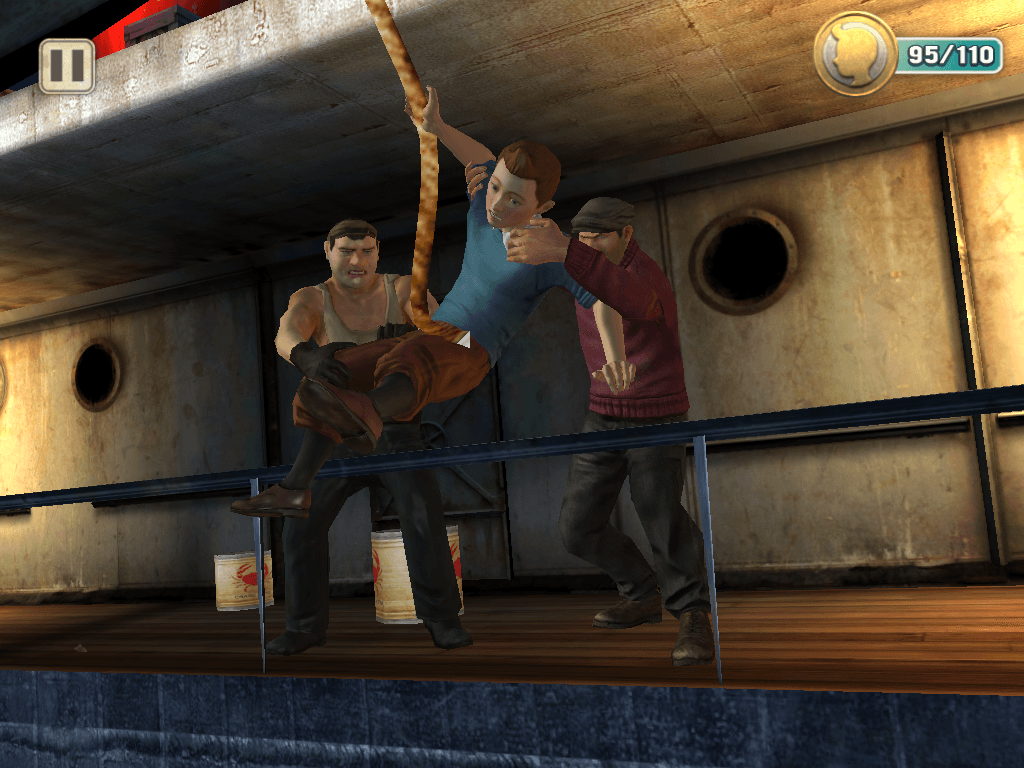
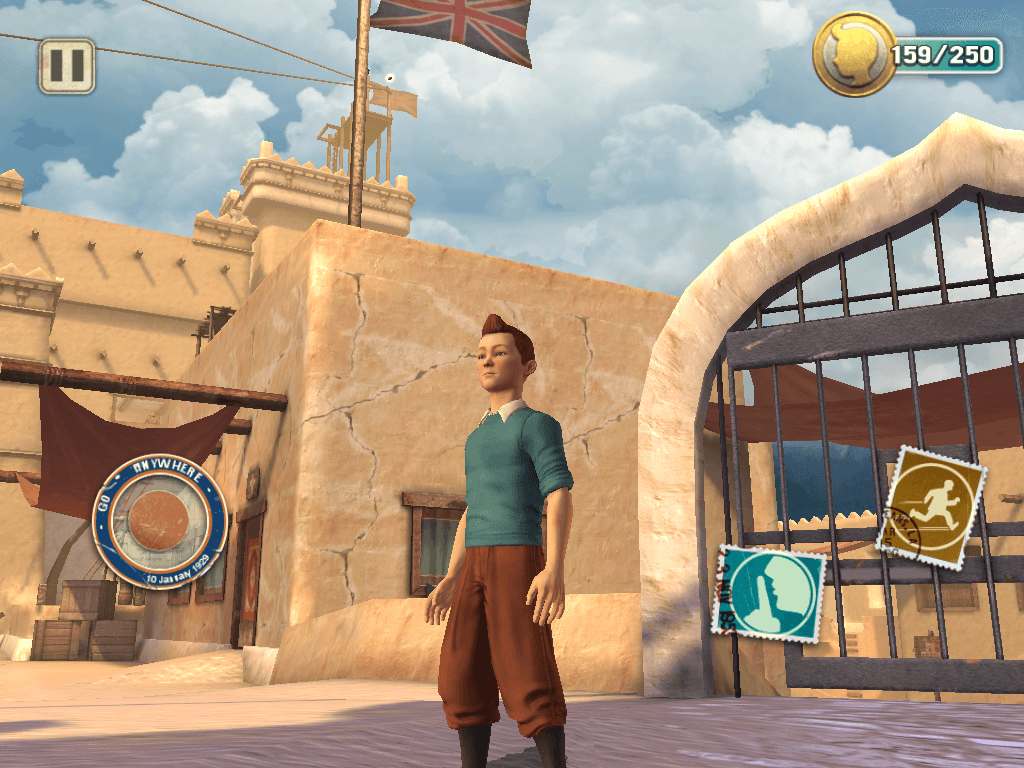
Being a tie-in with a film, The Adventures of Tintin has a huge number of quick time events and cut scenes. Normally, I would be rolling around groaning form boredom by the time the third cut scene came around, or a few quick time events into the game. Yet I found myself strangely engrossed by these gameplay elements. The cut scenes, while they may not intrinsically seem like gameplay elements, keep your attention by hiding hidden elements through out them, such as coins and puzzle pieces. The coins can be used to buy more puzzles that can be solved in the gallery to give you virtual little figurines to admire. While it isn’t the most amazing thing, at least they have a use and I find myself swiping like crazy to collect all the coins before the camera pans away.
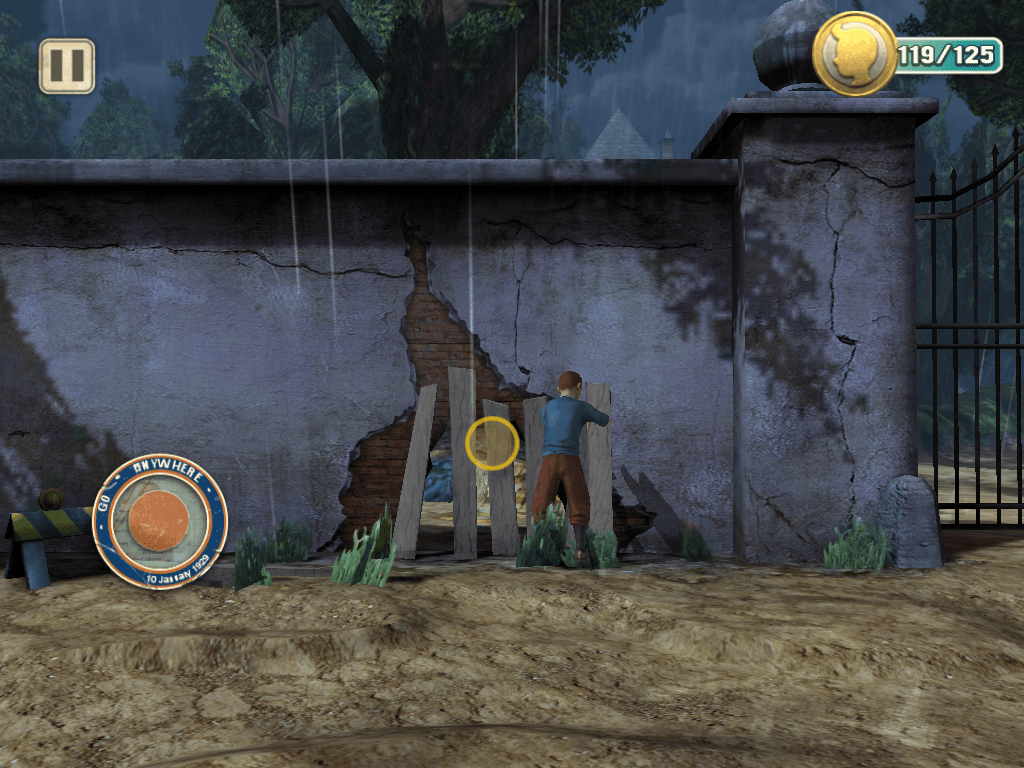
For the most part, Tintin is an adventure game, utilising the touch screen as the main means of moving through the game. While you may find you’re swiping to collect coins, you’ll also swipe to sword fight as Sir Francis Haddock, to open doors, to push boxes down, or engage with any objects in the game that can be played with. The Adventures of Tintin also features a run and sneak button, as well as a directional pad – all of which are designed with a neat little travel theme. Although the camera is automatic for most scenes, there is still a touch that exploratory adventure that should be present in a Tintin game.
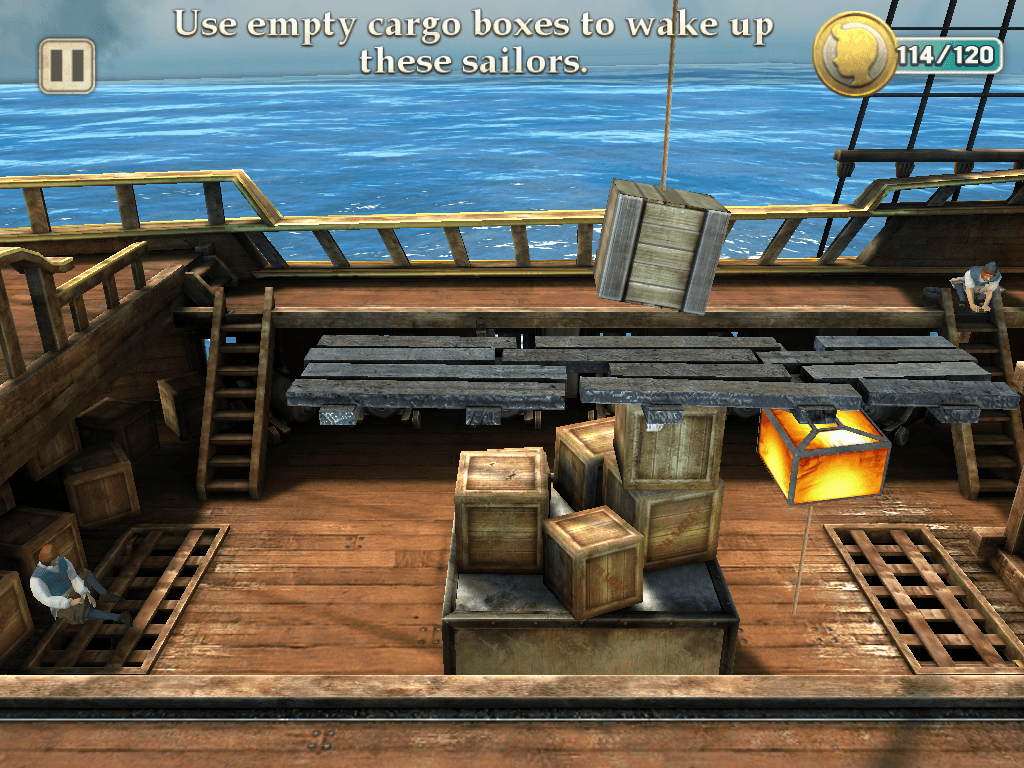
Alongside these gameplay elements, there are also a few puzzles to be solved through out the game. For example, waking up the crew of the Unicorn back in the 16th century is achieved by moving boxes by cutting the appropriate rope. The puzzles may sit oddly within the framework of the story for some, but I feel they are a nice little element just to keep player’s engaged with the game and thinking a little more about the game environment beyond the visual.
Visuals
Gameloft are known for producing high quality visuals on mobile platforms, each time pushing the graphical boundary of iOS games. Even with that knowledge, I was still not ready for the amazing detail and beautifully rendered characters and scenery that The Adventures of Tintin had to offer. The characters are all modeled from the soon to be released feature film, yet lack the freaky human-like qualities that the films motion capture technology created. Personally for me this is a great thing, as close ups don’t have that uncanny feeling about them where a half-human is staring at you. The characters all look like the classic Herge characters, only updated to look as if they fit into a videogame world. Gameloft have also paid a small homage to the comic book origins of Tintin, incorporating some comic book panels to push the story forward where perhaps fully rendered 3D animations may take up too much room on your iOS device. Whether you’ve just gotten into Tintin because of the new film, or have been a fan as long as you can remember, the effort Gameloft have put into maintaining the visual style of Herge, while at the same time bringing Tintin to life in a videogame is nothing short of admirable.
Audio
The Adventures of Tintin features cinematic sound tracks aptly played at the appropriate times. Each level has it’s own soundtracks that flow through out the game providing little interference for voice-overs. While it isn’t the exact same actors playing the voices, Gameloft have done a terrific job casting sound-alikes that really capture each character perfectly. Just another element that makes Tintin a well crafted film tie-in.
Overall
There are two possible ways to look at The Adventures of Tintin by Gameloft. The first way is to view Tintin as a film tie-in, and assess it through the framework that the film provided. If one is doing that, then Tintin is a fantastic game, which captures the story of The Adventures of Tintin perfectly with a completely playable world. However, purely comparing the game to the film doesn’t really do it much justice. Sure the story is excellent in comparison, but it is also an interesting tale of adventure in it’s own right, well written to allow player’s a highly enjoyable gaming experience. The graphics are some of the best I have seen on any iOS game to date, and the audio adds that extra element to complete the world. The gameplay utilises the touch screen device perfectly, and is very easy to get the hang of – making Tintin an excellent game for any gamer of any age. Highly accessible and visually stunning, The Adventures of Tintin by Gameloft is a must own for any iOS gamer.
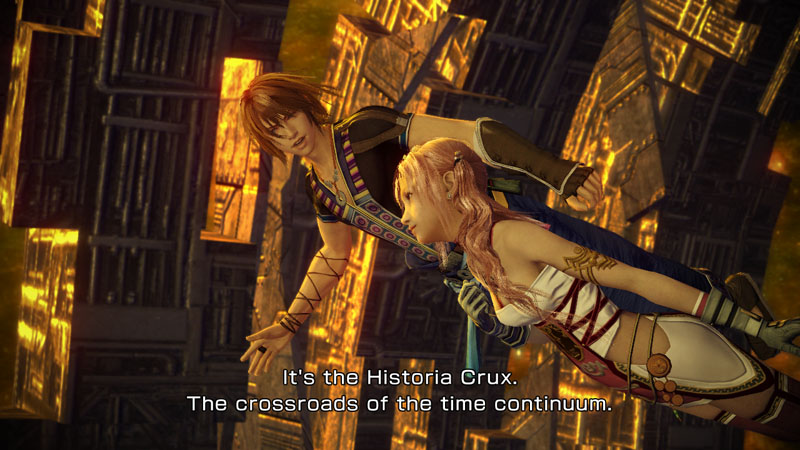
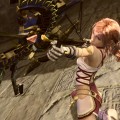
One of the most important parts to creating a great RPG is to have likable and well developed main characters for the players to become attached to. As such, there is no better time than right now to become acquainted and reacquainted with a number of characters that will be seen when Final fantasy XIII-2 is released next month on January 31st.
In the video below we are shown footage of Lightning and Caius as they fight against one another as well as newcomer Noel and familiar face turned main heroine Serah. Those who are eager to see some returning main characters will also be interested in the last part of the video where two old friends return to say hello, albeit they are just a bit older than how we remember them.
DaGeDar Platform: Nintendo DS (reviewed) Publisher:GameMill Developer:Black Lantern Studios Release Date: November 15, 2011 Price: $19.99 – Available Here
Overview
DaGeDar is a name that rolls right off the tongue, but before a short time ago, I had no clue what the a DaGeDar truly was. That name happens to be from one of this year’s big imports from Japan and lets players race little balls in a Hot Wheels fashion where the tracks feature loops and obstacles. It may sound a bit generic to a newcomer, but so far this little franchise has it’s own comic, a video series, and a ton of toys that players can collect and trade. To satisfy the growing fanbase, GameMill and Black Lantern Studios have now brought DaGeDar to the Nintendo DS. With all of the goods already in place, does DaGeDar roll into the video game universe without any bumps in the road?
Gameplay
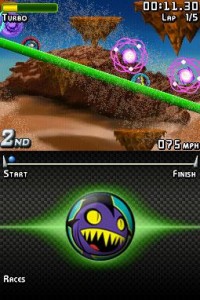
Think Sonic, add a touch of pinball and you have the formula for DaGeDar. While this title has a few tricks up it’s sleeves in other areas, it is first and foremost all about racing a computer opponent through a good number of different tracks. Once you choose your spirited ball of choice, the player will then be taken to a set track to speed through before the challenger finishes. Controlling the ball is easy as well, as the tracks resemble railing and are in 2D, so all that is needed of the player is simply to jump, boost, and move their bearing with the D-Pad. It only took me a few minutes to actually master the basics as this scheme is simplistic enough that a player of any age could easily pick up the game and jump right in without much room for error.
While the core mechanics are pretty basic, the clever track design is where the true challenge comes in. Tracks vary completely in appearance and layout, giving each a distinct feel and making nearly every race feel different from the next. Players must guide their ball along a set line and avoid hazards built into the road that can either cause slowdown or that can make your DaGeDar reset from a previous position. To win, the player must utilize the special offerings built onto the pipeline. This includes the likes of speed boosts that lunge you forward, cannons that can fire your ball into a new section, and orbs that can charge up the DaGeDar’s abilities. Thankfully, everything plays our solidly and speed is always at the forefront for all your treks around the track.
I went into this game thinking it would be easy to win every race because the main line of products are mainly targeted to the younger crowd. Interestingly enough, I was dead wrong on that train of thought though. Even on the Novice difficulty, the computer opponent can be insanely difficult. I rarely ever seen an opposing foe miss a beat in a race and there isn’t much the player can do to prevent an opponent from having a perfect run. You might think this kind of challenge would suck the fun out of the game, but I felt it had an opposite effect as the entire experience went from being rather bland to addictive and rewarding. Due to the challenge, it’s a good idea to run through tracks in practice mode and memorize where every boost and shortcut is, as knowledge and memory is key to being victorious against a devastatingly hard ball bearing. Just one wrong turn or slowdown can make it nearly impossible to keep up in a race, so again, this game requires both careful movement and strategy to succeed.
As you start to progress, more DaGeDar become available and each one of these feature their own perks that can boost your odds slightly as new worlds open up. There are over 100 types in all that can all be unlocked over time as well, adding a ton of replay value after you finish the main championship mode. If difficulty isn’t your thing, a time attack mode has also been included, where you must complete a set number of laps in previously unlocked tracks as quickly as possible. Also on board the cart is a local multiplayer mode, allowing those who are afraid of the strong witted opponents to race their friends.
Visuals/Audio
Visually, DaGeDar is a very pretty game. Tracks are all vividly colored and each ball has their own looks and minor quirks due to the gimmickry of the franchise. Backdrops add to the level design as well, displaying the likes of space, jungle, and icy scenery in the background, which in turn makes the races feel different from the next. I almost want to compare the actual ball bearings to that of a charged Sonic though, as taking them through loops and hopping over broken paths can make it feel like your playing through a non-stop race as the blue wonder and the animations are fast and fluent throughout the entire game.
The soundtrack in this title was also well done. As I mentioned, I’m not too familiar with the franchise of DaGeDar, but if a sci-fi/electronic theme is what the developers went for (considering the whole “33rd Dimension setting), they did a fantastic job as these tunes are catchy and bode well in providing a nice, upbeat atmosphere for races. I did feel that some kind of individual sound effects could have been added in to individualize the balls, but that is mainly just a nitpick and the visual look proved to be enough to make each spirit worth unlocking.
Overall
As a single-player, handheld racing game, DaGeDar is one of the most difficult, yet rewarding titles I’ve played in the genre. That’s great news for the hardcore market out there, as the DS is obviously targeted towards much younger audiences and challenging titles are hard to find on the platform. Sadly, this is a franchise that younger gamers are going to be more interested in and unless the player has patience and an open mind to learn some strategy, frustration will become a common emotion for many who take these supercharged ball bearings for a spin. Even with that said though, considering the lower price-tag and the extra single-card multiplayer packed in, it’s still easy to recommend and is sure to be a must-have for any fan of the growing DaGeDar universe.
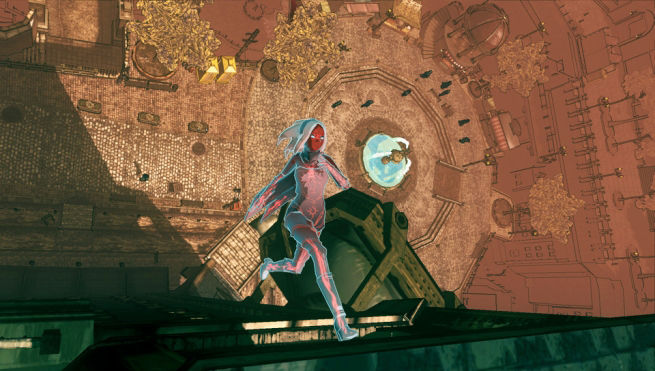
Last week we caught wind that there could potentially be a demo appearing for Gravity Rush sometime in the near future. This news came from a retail display saying fans could expect the demo sometime on December 27th, and today Sony has officially confirmed that the demo will indeed be coming out.
Unfortunately at this time, Sony did not go into further detail about the demo nor with what fans could expect. The full title of Gravity Rush will be available in Japan on February 9th, but unfortunately Sony has yet to confirm Gravity Rush for Western release. Being that the title is set for release in February in Japan, its potential to become a North American launch title is quite high.
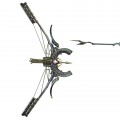
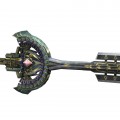
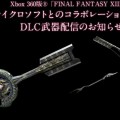
Square Enix announced today that, among the slew of DLC already announced, the Xbox 360 version will be getting at least one exclusive, the Azrael Bow. The bow is a collaboration between Microsoft and Square Enix, meaning it’s only going to be available for 360 users (at a price). The price is a scant 80 MS points ($1), though due to Microsoft’s “monopoly money” currency, you will need to drop at least $5 to accrue the points necessary unless you happen to have left over points from some other purchase.
The weapon boosts the chain gauge bonus in battle and can be purchased in-game at the Chocolina shop starting January 10th. It’s unknown if the chain gauge bonus ability is accessible on any other of Serah’s weapons or if purchasing this will be the only way to get it. This DLC will be released in the West at launch, though there isn’t any mention of the other DLC that has already been detailed. It’s looking like those who are hardcore Final Fantasy fans are going to need to pony up a decent amount of cash on the side in order to obtain all of the content this game has to offer. Remember the good, old days when all of the content made during development was put into the final product and if the game was successful enough they made an expansion with a respetcable amount of content to include the extra stuff?