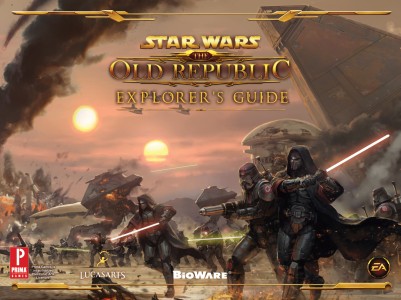
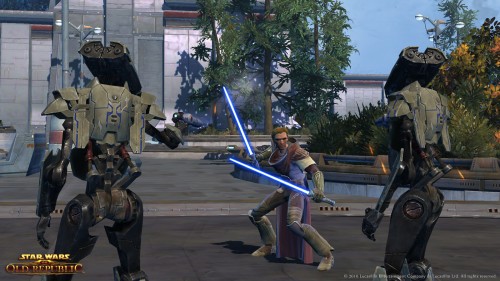
As the title states, there will be a strategy guide to accommodate the launch of the oceanic servers for The Old Republic from makers Bluemouth Interactive/ Prima Games. Titled the Explorer Guide, this book will be the ultimate compendium to the Star Wars The Old Republic player.
The book is set to include the following and possibly more –
Within the 256 pages, readers will be able to find the location of every hidden Datacron to augment stats, reference hundreds of maps packed with critical information to guide them through their adventure and see tactical readouts on enemy locations, from Korriban’s deserts to Ilum’s icy plains.
Each custom-made, world map includes every taxi, bind point, vendor and more – plus readers will be able to see a planetary survival guide for classes, from Jedi Consular to Sith Warrior.
That’s right, custom made maps as well as hidden secrets and more! If you’re a massive Star Wars fan and already have the game, you should pick this book up when the game officially launches over here on March 1st. If you’re a new player, you should definitely pick up this guide alongside your purchase of the game.
Be sure to check out the guides official site for more info.
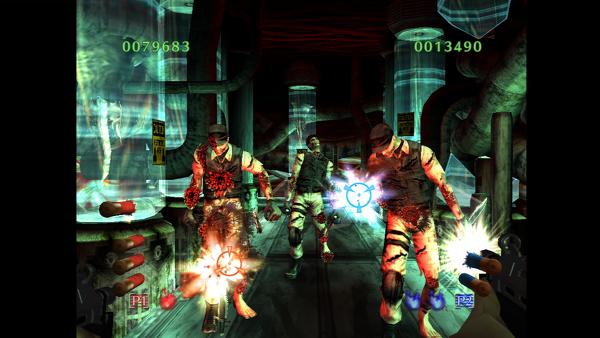
The HD re-release of the arcade classic The House of the Dead 3 is now available for download on Playstation Network. Originally released into the arcades in 2002, the game has been reworked in HD, fully supports Playstation Move and trophies.
The third game in the series, The House of the Dead 3 introduced a few new features to the series such as interactive rescue events, creature-shooting roots and a ranking and grading system.
The House of the Dead 3 can be played with both Playstation Move and regular Playstation controller and is available exclusively on the PlayStation Store for $6.99.
The Australian Federal Government has finally introduced legislation to establish an R18+ category for video games in Australia, and about time too. For those of you who don’t know, Australia does not currently have a R18+ category for video games.
This means that any video game that doesn’t fit the current maximum MA15+ rating will be refused classicisation by the Australian Classification Board, thereby effectively banning the sale of the game in the country.
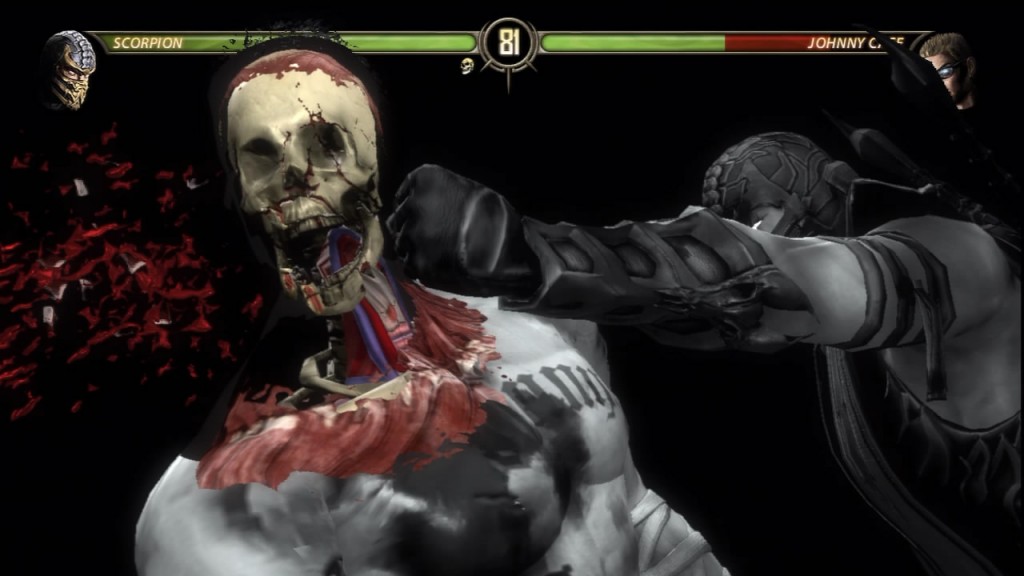
Banned: 2011’s Mortal Kombat
Video games such as Mortal Kombat, Manhunt and Syndicate have been banned in Australia as their content exceeds the guidelines set by Australian Classification Board.
Similarly, video games such as Left 4 Dead 2, Fallout 3 and Grand Theft Auto IV were edited down to fit the MA15+ criteria.
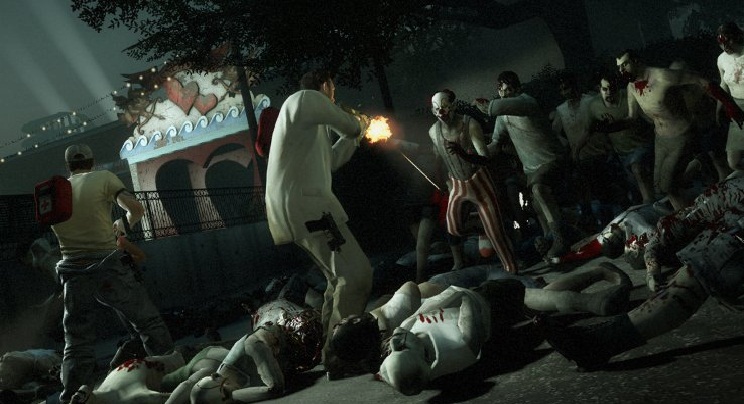
The heavily edited Australian version of Left 4 Dead 2 featured little to no gore
However after years of debate, negotiations and public outcry, amendments to the Classification Act 1995 and Broadcasting Services Act 1992 have today been made by Parliament, which finally brings brings gaming in line with the already existing categories for film and television.
The new R18+ Adults-Only category is expected to come into effect by January 2013.
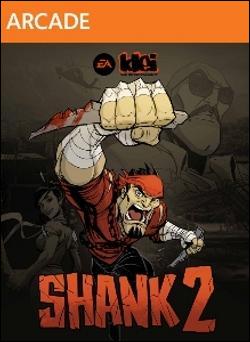
Shank 2 Publisher:EA Games Developer:Klei Entertainment Platform:Xbox Live Arcade (Reviewed), Playstation Network, Steam Release Date: February 7, 2012 Price:800 MS Points, $9.99 Steam, $9.99 PSN
Overview
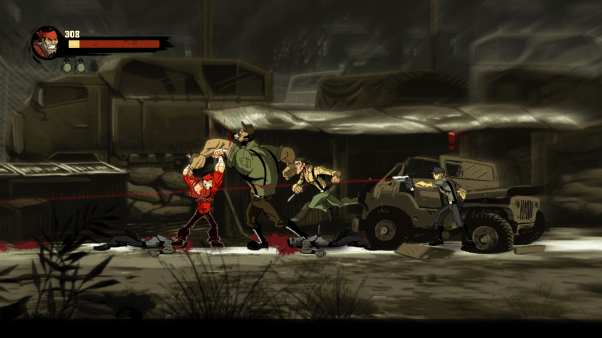
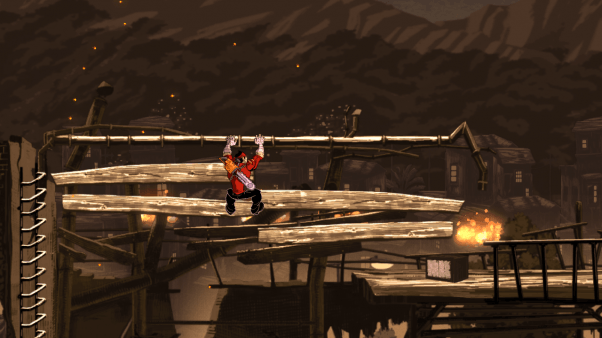
Shank 2 is a side-scrolling beat-em-up game from developers Klei Entertainment. It is an incredibly fun game that has an art-style that reminded me of classic cartoons, like Samurai Jack. The best way to describe this game would be that it’s Ninja Gaiden (The 3D ones) meets Metal Slug. The entertainment gained from this game is on those levels.
Story
Shank 2 is a tale of a mercenary like character who is traveling via bus through a war-torn country. His travels are quickly interrupted by bad-guys who seem to run half the country.
As a side-scrolling game, there isn’t too much of a story, and what there is of one is enough to drive you between segments of the game. Usually, the story has you reacting to events that have just taken place within the story, for instance at the end of one level an old friend of the main characters is kidnapped and this drives the story forward, giving the player motivation to continue on to the next level.
What I really liked about the story was the use of FMVs, each one being animated in a cartoon-like manner, giving the games story a very unique feeling to it. Further these videos blended in so well to the games visual style that you essentially felt like what you were doing was continuing the cartoon while you were playing.
Gameplay
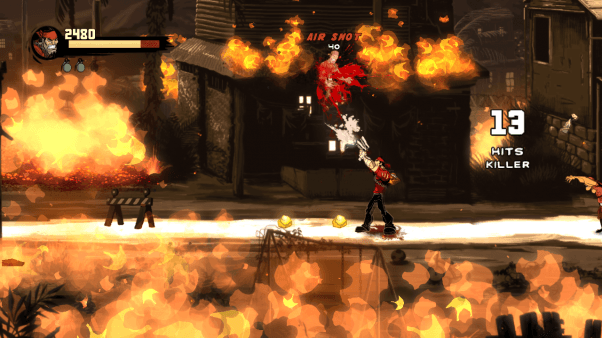
Shank 2 is, at its core, a two-dimensional side-scrolling game that is very reminiscent of both Ninja Gaiden and Metal Slug. The action in the game is very Ninja Gaiden it’s level of gore and combat, while having that metal Slug sense of humour to carry it along.
During the course of the level, you will have three weapons available to you use for different purposes. The first is a fast close-range weapon designed to build up multiple hits over a short period, the second is a larger close-range weapon designed to deal in heavy damage and the third weapon is a ranged weapon designed to attack enemies from a distance or to build up combo modifiers between attacks. This is where the game begins to feel very Ninja Gaiden. I actually found myself utilising similar tactics that I would have used while playing Ninja Gaiden in this game. That is, quick attacks and ranged attacks to buyild up the damage and keeping the combo up while moving around to get a better hit with my heavier weapon.
What’s a little action without a little variety? Shank 2 is definitely a game that delivers on this concept. Over the course of the campaign mode of the game, you will unlock access to various new pieces of equipment to better aid you in your carnage. Mixing and matching your loadout, I found, was the key to achieving the best possible score on a level while also ensuring your own survivability.
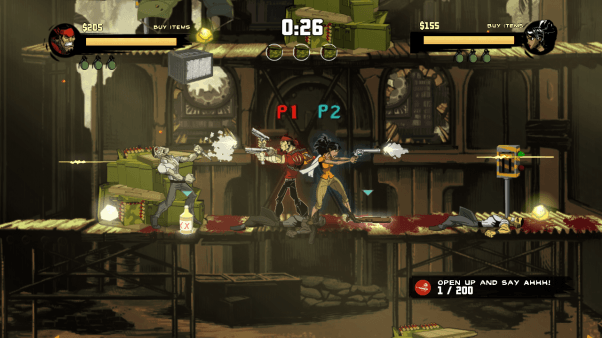
Other than the campaign, there are a plethora of other gametypes available that are survival or score based in nature. These are quite fun to play through and certainly add a great level of replay and competitive value to the game. What makes these even better is adding friends to the mix, competing for scores and the like makes this a lot more fun to play than it already is.
Visuals
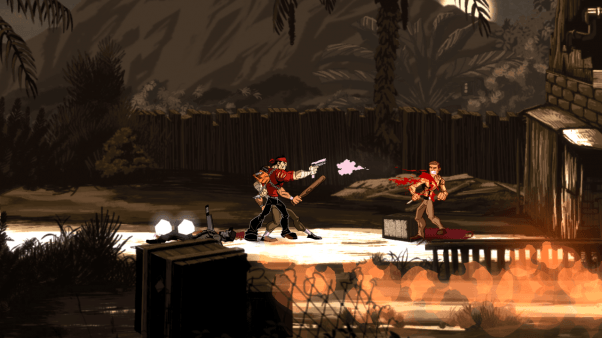
Shank 2 has a very cartoon-like appearance, that almost immediately reminded me of Gennedy Tartakovskys cartoons, like Samurai Jack. The animation wasn’t lifted from sorts of cartoons, but I felt the same kind of resonance between this game and those works. So if you’re a fan of that particular animation style, you will probably fall in love with this game visually.
Throughout the game, I noticed that (what looked like) 100% of the games gameplay assets were drawn, either by hand or by hand through a computer drawing pad of some kind. This means that the levels and the assets scattered around them all blended together really nicely and that there wasn’t the same kind of graphical bugs that one might find in a 3D game, such as clipping errors or the like. All of this means that the game not only looked better, but also carried a much better presentational value across the entirety of the game.
What people will find most entertaining though, is the Ninja Gaiden-esque levels of blood spatter whenever you hit some poor goon. Unlike Ninja Gaiden though, the blood doesn’t sticky to the level (or at least I didn’t notice it doing this), but that does not get in the way of the hilarity of some of the stuff that happens. Very early on in the game there is this part where you have to fight these larger enemies near a meat grinder and, as you can probably guess, the visuals can become quite hilarious depending on how you tackle the situation.
Now I’ve talked about Full Motion Videos briefly earlier on in this wall of text, but I’d like to go into them further here. Visually speaking, these Full Motion Videos are incredibly well drawn and animated. I could seriously see a Shank cartoon being animated at some point, and if it carried this level of visual fidelity through it, it could be wildly successful. Not only were the videos fluid and well drawn, but they were also very dynamic and impactful. They also gave you a sense of accomplishment and a sense of a role in the games storyline that some games seem to miss.
Audio
Audibly, this game has a very decent soundtrack with some sound effects that easily represent whatever it is that they’re supposed to be representing. The guns sound gun-like, the knives sound knife-like and the chainsaw sounds chainsaw-like.
What works even better is when these are all blended together while you’re playing, it makes this game even more fun than it would be just watching the visuals alone. This is definitely a game where the experience is heightened by keeping the volume levels up and your own music off. At the very least, for your first playthrough or so.
Overall
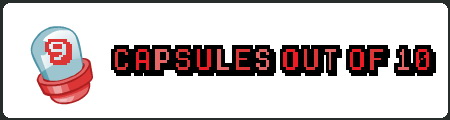
Shank 2 is easily one of the most funnest experiences I’ve had with a side-scrolling beat-em-up style game in a while. It’s blend of cartoonish visual styles with dynamic and fun gameplay styles, as well as it’s insane sense of humour, gives it this incredibly fun presentation that should you keep you coming back for more and more action. I’d most definitely advise gamers everywhere to pick this up on their system of choice should they be looking for something play at any point in their lives.
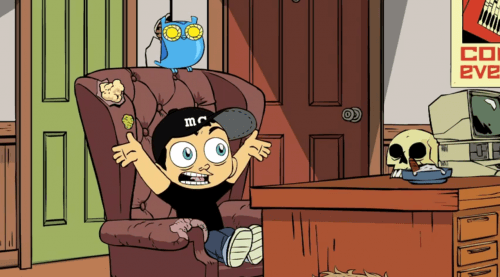
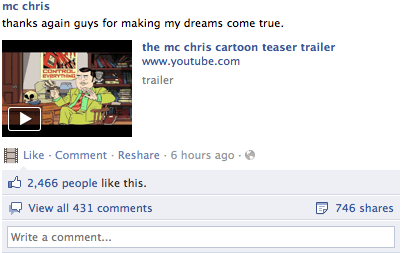
Today mc chris fans rejoiced as he posted a trailer on Youtube, with a Facebook status stating the following:
If your a hardcore fan of Adult Swim or nerdcore hiphop, chances are you’ve been waiting for this for a VERY long time!. For those unaware, mc chris is an iconic nerdcore rapper, known for his track ‘Fett’s Vette‘ featured in the hit comedy movie Zack and Miri Make a Porno, as well as his writing and voice talent at Cartoon Network’s Adult Swim.
After raising $71,856 to fund the show via his kickstarter page, mc chris has teamed up with Titmouse– the studio behind shows such as Venture Brothers, Super Jail, and Metalocalypse to make mc chris’ cartoon a reality.
The show appears to follow mc chris struggling to sell CDs in a zombie-infested world, and resorting too….multi-dimensional treasure hunting? The show’s release date is currently unknown, and currently has no Network, but you can change that here! The theme song has already been revealed as well, you can check that out here. In the meantime however, check out the trailer below.
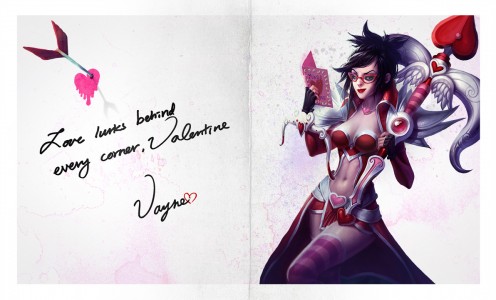
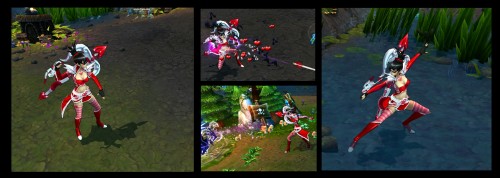
League of Legends has become well known for having creative art assets for all of their champions. Valentine’s Day sparks a new skin for the deadly assassin Vayne. Sticking to the red and white color theme of the holiday, Vayne sports a devious and seductive Cupid outfit. Check out the following screenshots of Heartseeker Vayne in action.
Heartseeker Vayne is available now in the League of Legend marketplace for only 975 Riot Points. Keep in mind you must have the champion in order to utilize the skin. This is definitely one Cupid that I do not want to cross paths with. Getting love struck by this champion might result in death – only a gift that Riot Games would offer!
Over at the Official Star Wars The Old Republic website, Bioware have posted latest news on the topic of Oceanic Servers. This news? They have announced the launch of the Oceanic region servers, which will have lower latencies (which means that they’re probably going to be localised somewhere here or in Southeast Asia), and that current players from these Oceanic regions will be eligible for transfer on March 1st.
To make things even better, the game will be available for pre-order at most leading game retailers, such as GAME, EBGames and JB Hi-Fi. We will also be seeing local game time cards, for those of us who lack a credit card. Even better, new players who pre-order the game will be able to receive in-game pre-order bonus items and anybody who completes a game-time transaction within the first month will also receive a Founders Title.
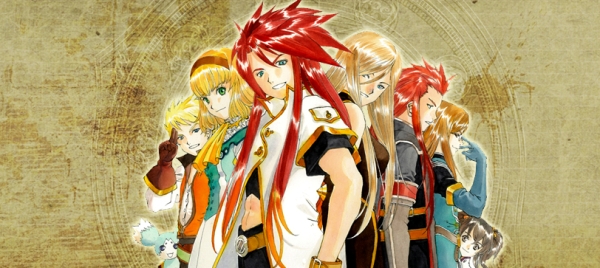
Namco Bandai has released Tales of the Abyss for Nintendo 3DS to North American Markets today. Tales of the Abyss is the latest iteration of the Tales franchise and continues the tradition with their real time battle and crafting systems. New to the series is the touch screen controls for battles and stereoscopic 3D graphics.
Tales of the Abyss follows the story of Luke fon Fabre as he suddenly finds himself in the role of hero. Sheltered and naive, Luke struggles to learn about the greater world and himself while trying to save the world from destruction. Tales of the Abyss is available for the Nintendo 3DS at retailers in North America.
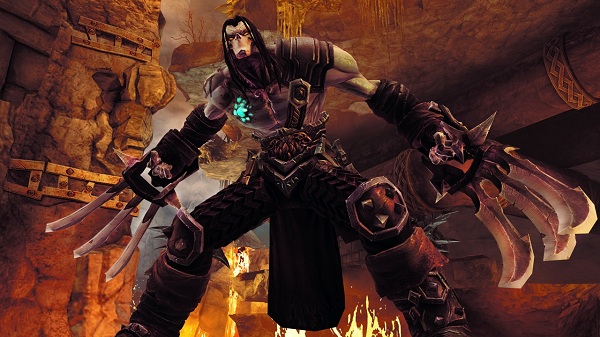
While there has recently been tons of doom and gloom coming from THQ, they still have a number of great looking games on the way. The main game that fans are keeping an eye out for is none other than Darksiders 2. However we have yet to see a release date announced from the company, despite the gaming being announced for quite some time.
That is until today when the official Darksiders Twitter account recently revealed Darksiders 2’s release date will be June 26th in North America and June 29th everywhere else. No other information was given at the time, though this is good news for those who want to play as Death and try and keep THQ afloat for a few more months.
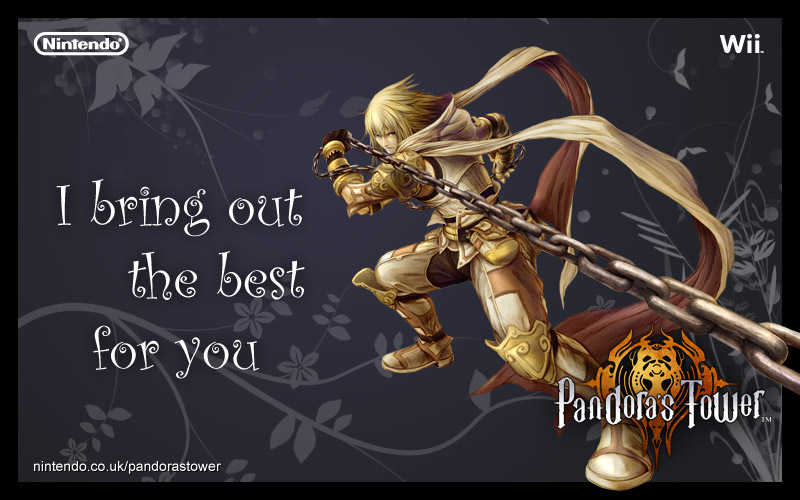
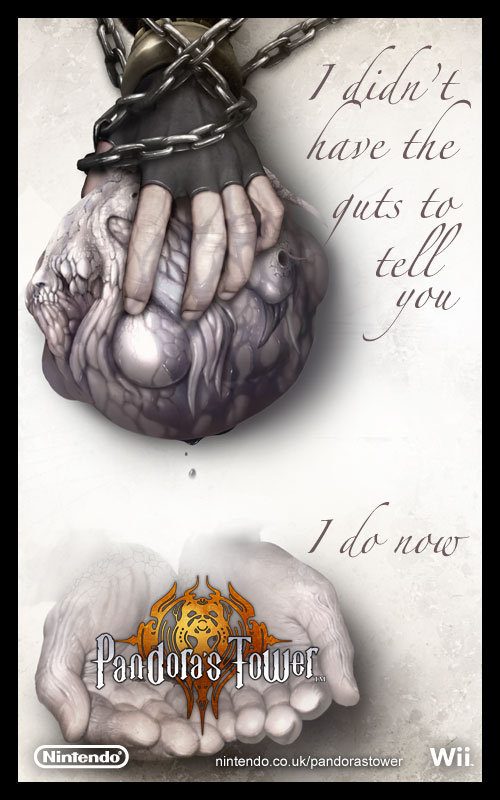
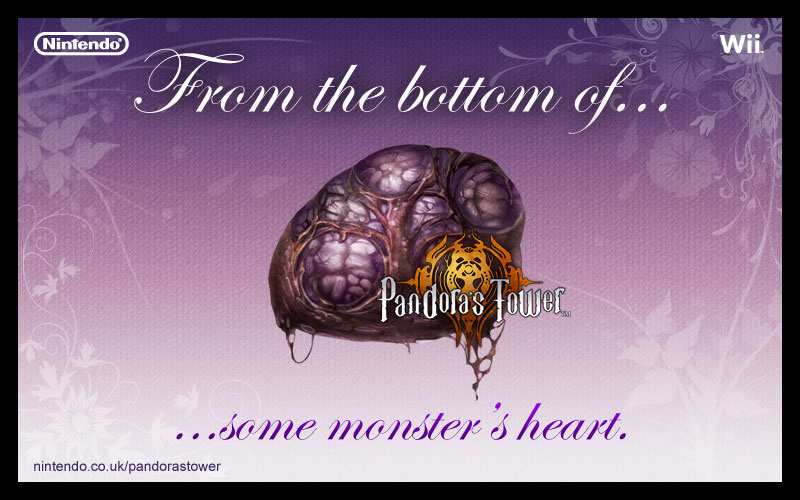
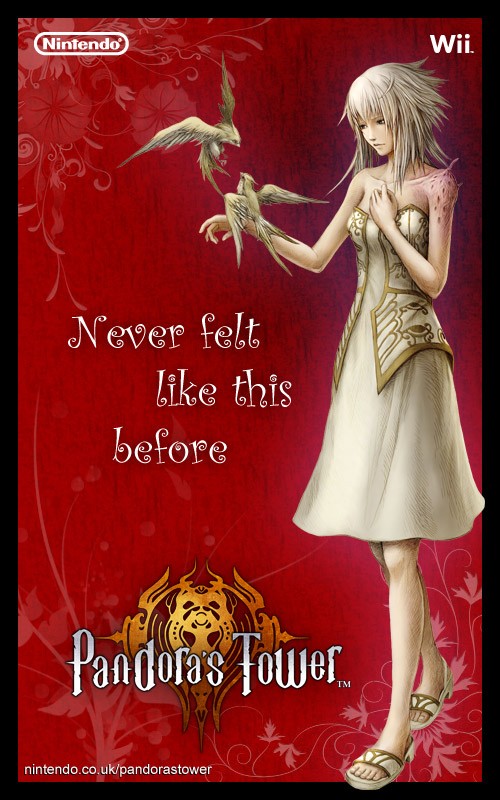
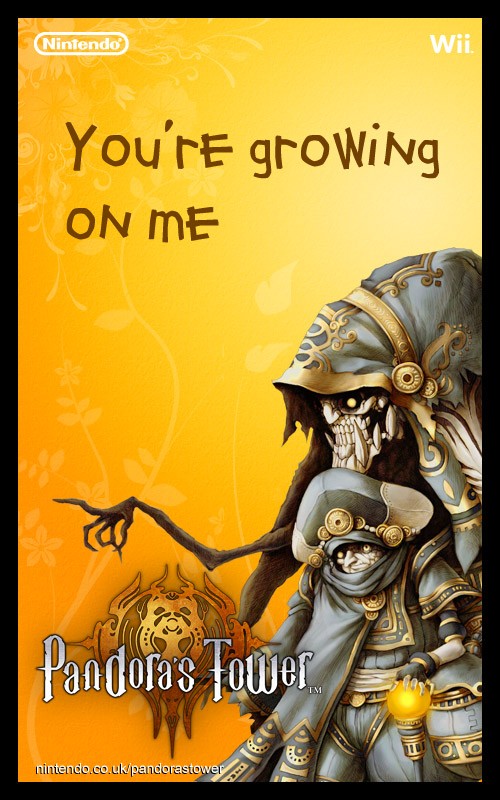
European RPG fans who happen to own a Wii will soon be very happy while also being able to rub North American gamers’ noses in the fact that they will soon be able to play Pandora’s Tower. Nintendo of Europe revealed today that Europe will be receiving the game on April 13th.
To commemorate this announcement, and also go with Valentine’s Day, Nintendo released a handful of gross Pandora’s Tower themed e-cards. The cards can be seen below and you can always download or print them out and send them to that special gamer in your life. Now all we need is Pandora’s Tower in North America and all will be right in the world…