Deadly Association Developer: Microids Publisher: Anuman Interactive Platforms: iPad Release Date: June 5th, 2012 Price: $2.99 Available Here
Overview
Seems like every crime show leans heavily on modern forensics work today, thanks to the hit CBS show CSI. Microids brings the forensic experience to the iPad with their latest hidden object game Deadly Association. Players will put their puzzling skills to the test to solve a series of murders.
Story
Deadly Association kicks off with a murdered woman. Nancy Boyle is found half naked at her home and police inspectors Chloe Cunningham and Paul Baxter are assigned to solve the case. Quickly, the bodies of Nancy Boyle’s associates begin piling up and the signs point to one of their colleagues. The plot line for Deadly Association is actually rather interesting with a good twist. It is great to see a well thought out story in a hidden object type game. Deadly Association’s story will keep players going til the very end.
Gameplay
When I read the description for Deadly Association, I honestly expected a forensic adventure game in the vein of the CSI games. I was actually quite surprised to instead find a hidden adventure game. Deadly Association would be a decent hidden adventure game as it utilizes the forensic theme to great success. The only catch is the fact the game is rather poorly translated. Often times, objects were not hidden to the point of being impossible to find, but rather the wrong English word was used for the item. For example the word “folder” was used for a binder and a “hoe” was used for a hand rake or fork. This leads me to believe that this game was not translated by a native English speaker. Usually this would not be a problem for games, but considering the nature of hidden object games, this makes Deadly Association unnecessarily difficult.
The controls were well executed in Deadly Association. Considering often times objects in these types of games are extremely small, I especially appreciated the little dot that appeared on the screen to signal where my tap landed. I did not like the levels that required players to tilt the device to see certain corners of the scenery. On a bus or those who suffer from essential tremors like I do will find this to be extremely annoying. These scenes often ended up constantly swaying and making picking out small items more difficult.
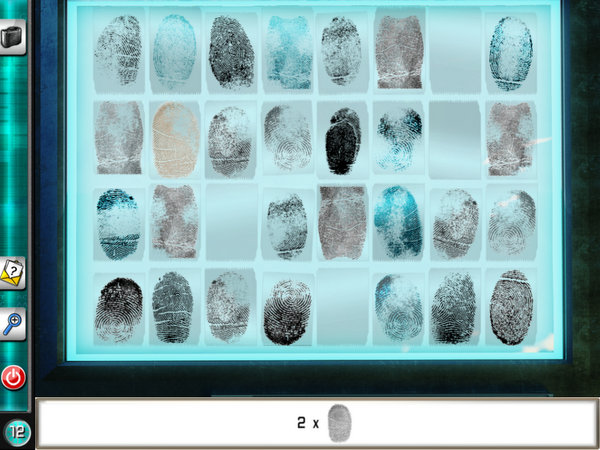
Some points of the game seemed a little pointless. There were plenty of times I found myself clearing out smoke, steam, even sun rays so I could get a clear view of my searching area. This seemed completely unnecessary and was only put in to artificially lengthen the game. On the flip side, the forensic puzzles were an enjoyable break from the hidden object game play. It was pretty obvious that the game developers took many cues from popular forensic crime shows when developing the puzzles.
Visuals
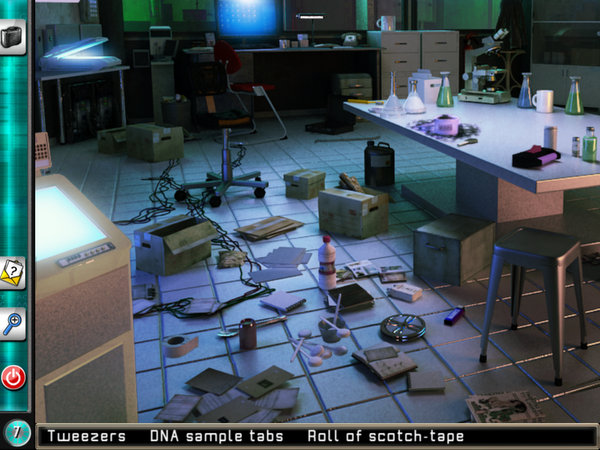
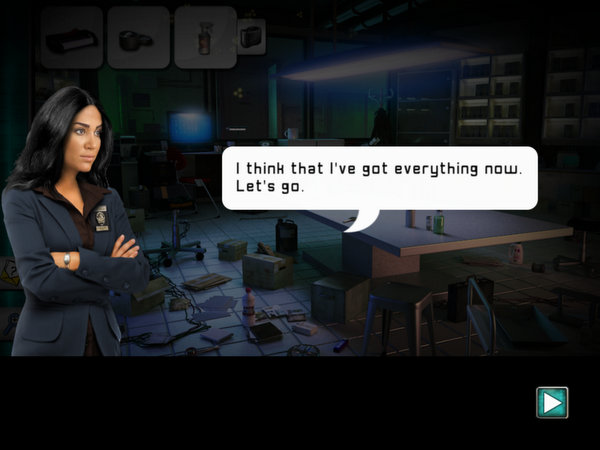
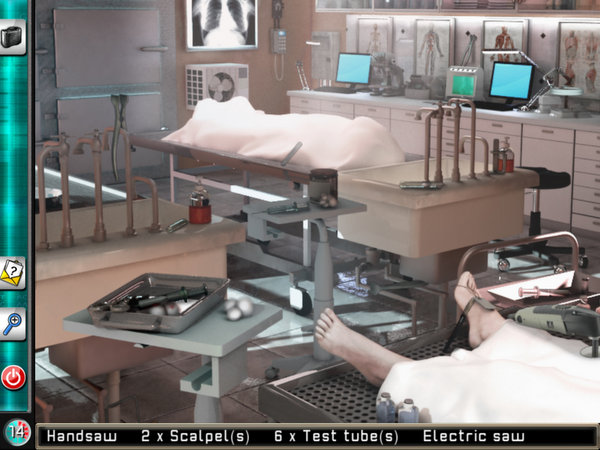
Deadly Association is a visually appealing game. Microids skilfully mixed real life photos of models and art for a seamless look. I personally am not 100 percent sure if the character games were photographs of actors or a really impressive piece of art. However, I really do wish there were more of them. It seems that the same images of the characters are rehashed over and over. Even the main character Chloe Cunningham’s image is the same throughout the whole game for the exception of a few scenes where her usual serious expression is replaced with a broad grin.
The hidden objects are well hidden in the game. They do not look obviously different, although the scenery is often extremely messy. There are many a scientists who will look at the state of disorganization in the lab and feel a small part of their soul die.
Audio
The audio for Deadly Association is decent. The music is tense and fits the theme of the game perfectly. There is enough variety in the music to not get sick of the soundtrack; however the sound effects are a tad slim. Although there is nothing in the game’s audio that will make players feel the need to mute the sound, there is really nothing to encourage players to listen to the game’s audio either.
Overall
For $2.99, I struggle to recommend Deadly Association. I was able to beat the game in two hours flat. Although the game play is better than the average run of the mill hidden object game, there is enough problems with the translations of items to severely hinder the game play. The replay value of Deadly Association is nearly non-existent unless players feel the absolute urge to beat their previous time. Although the story is the strongest part of Deadly Association, the game struggles with painfully average audio. Visually, the game is impressive, but at the same time, needs a lot more visual variety for the characters. I feel that the game would be more fairly priced at $0.99, yet there are plenty of games on the App Store that will provide more hours of game time for the price. Those who are hidden object junkies or crime game fanatics will enjoy Deadly Association. For the rest, there are better places to spend $2.99.
Match Day Collection: ZX Spectrum Developer: Elite Systems Publisher: Elite Systems Platform: iPhone(Reviewed)/iPad Release: 8/6/12 Price: $1.99 – Available Here/HD Version Available Here
Overview
Remember 1984? No, me either. That may have to do with the fact that I wasn’t born then. But if unlike me, you were in fact alive, then perhaps this game will be a blast from your past. Developed by UK developers Elite Systems, Match Day Collection: ZX Spectrum is a port of the classic Jon Ritman soccer/football games that started the whole genre off in the 1980’s. The three classic games; Match Day, Match Day International and Match Day II are all available for both iPhone and iPad as of today.
Gameplay
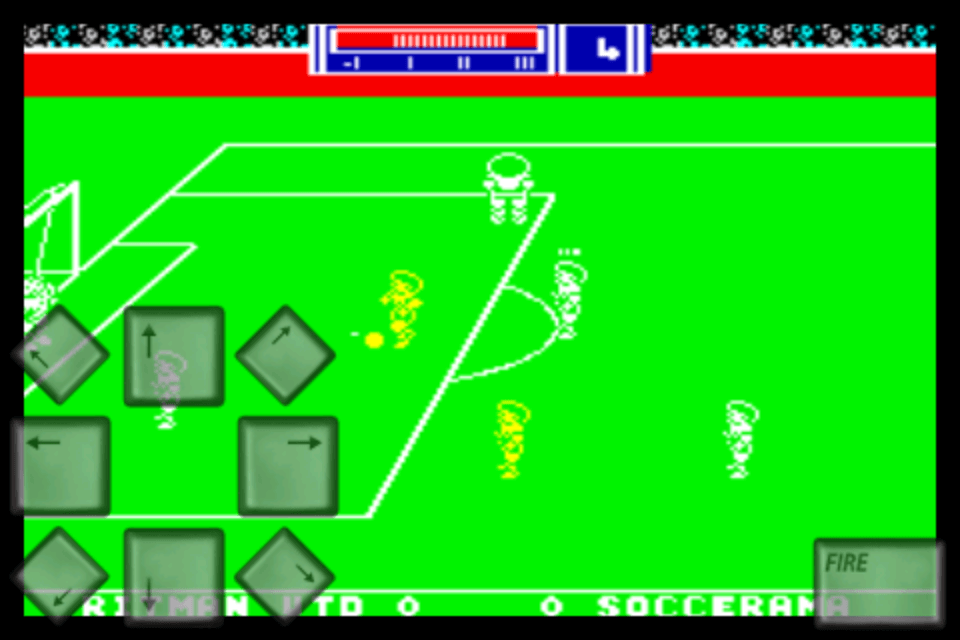
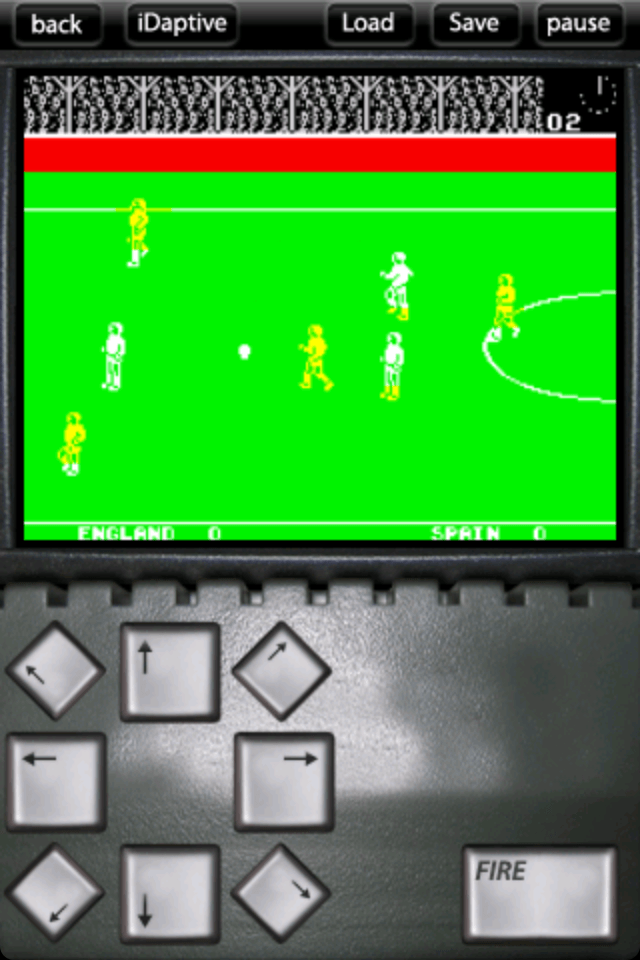
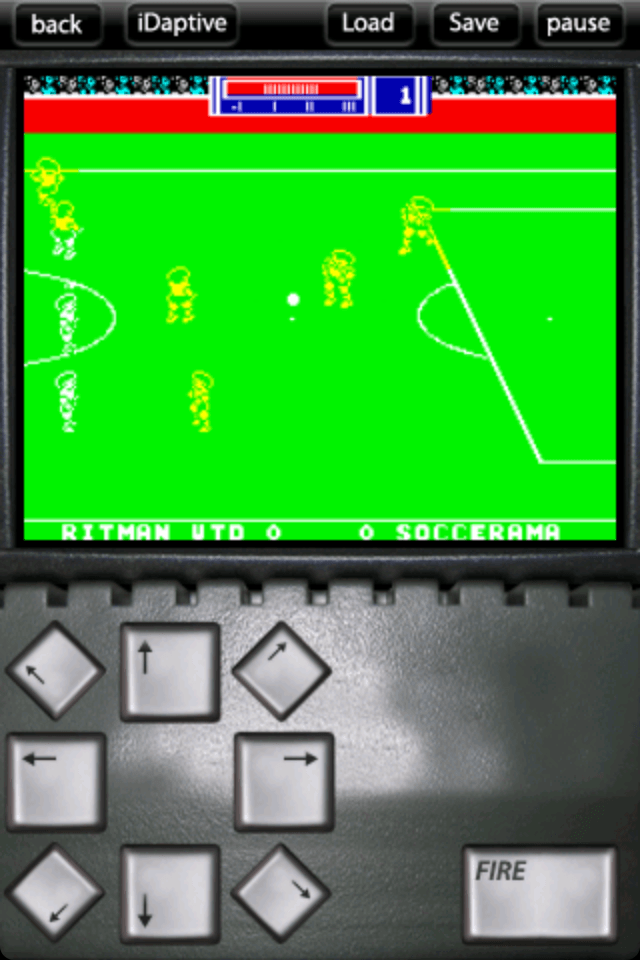
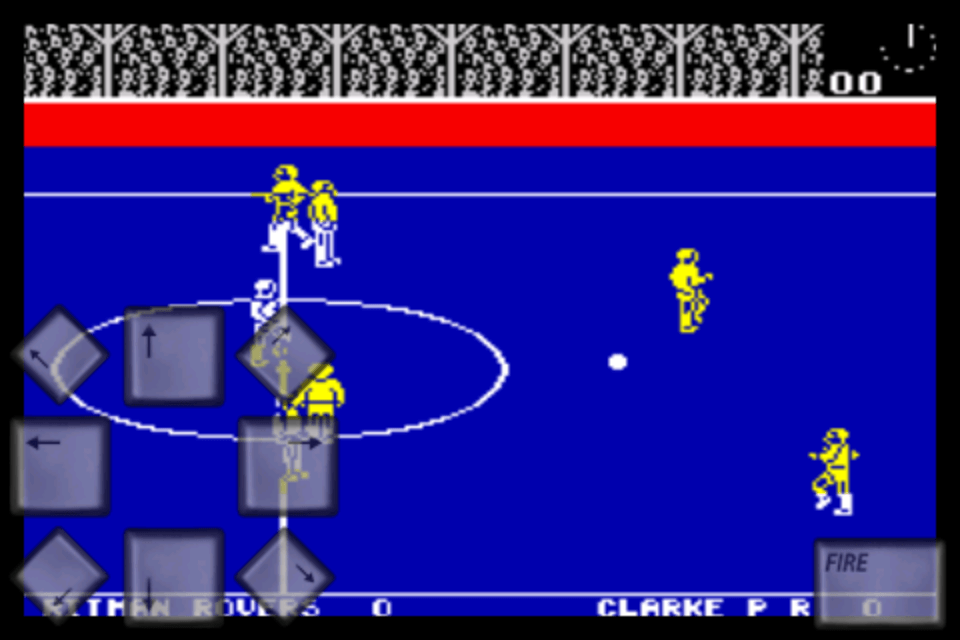
Match Day, and its subsequent incarnations that are also playable in this collection, are the forefathers of soccer games (or football, if you will). The takes place on the field, with two opposing teams – so far so good, right? The rules are the same as the actual game of soccer, as far as I can tell. But how does this virtual representation of a sporting game hold up when ported to a touch screen device? Not too well I’m afraid. Arcade ports to iOS never tend to work so well. The main reason is the lack of tactile controls. Movement within the game, at least for me, has always gone hand and hand with the hard-pressing of a key, or the trust/pull back of a joystick. I find it hard to determine where I am moving or at what speed when my fingers can continuously slip from the D-Pad or virtual-joystick. On the plus side, Match Day Collection: ZX Spectrum allows you to customise your controls and screen mode, so you can play in an arcade style frame or full screen with opaque interface, of which you can control the transparency of. I feel as if Elite Systems know it is a difficult task to emulate these games on iOS, hence their effort gone into giving the player such input customisation. The game is clearly not designed to be played by anyone, but acts rather as an homage to past games – tracing back the steps of a gaming genres to it’s roots and perhaps attempting to gain new fans. There are also a few problems with saving the game, as closing the game, or being interrupted by a notification or any other interference means losing your spot in the game. There is an autosave function, but at times this fails to work and you need to watch the opening sequence of the game again and again.
Visuals and Audio
The graphics and audio have been ported to, what I can assume are perfect. Retro-game enthusiasts will be pleased with the look and sound of the game, but it’s minimalistic 8-bit style may deter new-comers from picking this title up. The designers have done a great job paying tribute to the game and should be commended. Like the controls, colours of teams and the field can be altered to suit the player – which is good as some teams are hard to differentiate, and even hard to tell what player you are controling at any given moment.
Overall
Match Day Collection: ZX Spectrum has a very niche appeal. Contemporary gamers, especially those who have been deemed ‘casual’ may dislike the game, despite it’s retro ‘feel’. Hell, forget feel, it is retro; it’s a direct port after all. Hardcore gamers may be swayed by its primitive nature, lack of stylised graphics or, whatever it is these people stereotypically cherish. The only people I can recommend this game to are the die-hard retro fans. Essentially, Match Day Collection: ZX Spectrum is a portable, playable history of videogaming. It allows owners to get a glimpse at where soccer games started, and gives them a chance to go back and play through some classic games.
We conducted a great three product interview at this year’s E3 with Hilmar Hahn, Associate Manager, Product Marketing from Razer. We fist run through the Razer Taipan, an ambidextrous gaming mouse that sets a new standard for versatility, form and function.
We next run through the Razer Artemis Concept Controller. The Razer Artemis is a concept controller crafted to give gamers a competitive edge as they stomp and destroy their way to victory in the dog-eat-dog BattleTech universe for MechWarrior Online.
And Finally we discuss the Battlefield 3 Razer BlackShark gaming headset inspired by tactical aviator headsets and armed with total audio immersion.
Full details and specifications are in the video interview below. Let us know what which of the three Razer products you’d enjoy using the most.
Game of Thrones Developer: Cyanide Studio Publisher: Focus Home Interactive, Atlus Platforms: PC (reviewed), PlayStation 3, Xbox 360 Release Date: 7 June, 2012 Price: $49.99 (available here)
Overview
There is currently nothing hotter in the world of entertainment than Game of Thrones. It is the latest sensation for HBO, dominating ratings and scooping up awards. The TV adaptation of George R R Martins novels has brought the long running series to the forefront of the public consciousness, and now that Season 2 has bowed out and the latest novel A Dance with Dragons has hit paperback, there’s a long wait in store for fans of the series before fresh tales from Westeros appear.
Enter the second video game entry in the Song of Ice and Fire world, an RPG simply entitled: Game of Thrones. In development long before the show brought the property to such mass attention, developers Cyanide have nonetheless managed to team up with both Martin and HBO to bring some authenticity to the game: the game was crafted under the supervision of the author and a couple of character models reflect their HBO counterparts, even having the actors along for a bit of voice over.
The first Game of Thrones game, an RTS subtitled Genesis, was a horrible mess best forgotten. The RPG has been handled by the same developer: time to place your bets…
Story
The story rotates between two characters completely new to the Thrones universe – Mors Westford and Alester Sarwyck. Mors is a brother of the Night’s Watch, Alester the eldest son of Lord Sarwyck, a bannerman to House Lannister. Whilst Mors has been bound to the Wall by his vows, Alester has been out of Westeros entirely, spending 15 years away from Westeros and becoming a Red Priest in the mean time.
(If that’s already utterly incomprehensible best not continue: this game is here to hook in those already well versed in the Game of Thrones world…)
Alester returns to Westeros upon the death if his father, only to discover that his bastard half brother plans to take over the family lands by marrying his sister (if there are two things Thrones loves, it’s bastards and incest!). Alester makes haste to King’s Landing to convince the Queen to call off the arrangement and reclaim his status as true heir to the Sarwyck lands. Once there a tiny side plot of the Game of Thrones novel is expanded into the game’s main plot: Cersei Lannister’s purge of her husbands’ bastard children. Mors is drawn into the action by a letter from John Arryn, requesting that he help protect a young girl and find somewhere safe for her to stay. After some action at the Wall, Mors is made a Recruiter of the Night’s Watch, and is thus free to leave the North and try and bring the girl, Jeyne, to safety.
The game is split into chapters, alternating between Alester and Mors. The plotting is much like the novels in that although the two tales are intricately linked, the two characters never share the same space – at least not until the end game. There are lots of little details that fans of the novels will lap up, nods to lore, small ties to major events. Things unfold at a good pace, covering the usual Thrones territory of duplicity, manipulation and politics. Lengthy dialogue scenes follow a branch system similar to Bioware games, and character responses follow a train of thought rather than having a series of replies shoehorned in to particular emotions or archetypes. And as promised, choices you make throughout the game have an impact on the outcome…
The story and the manner of its telling are certainly the strongest thing about the game. Some of the twists and turns ape classic Thrones material and a couple of the relationships are genuinely engaging. The fact that the books are several thousand pages ahead of the characters featured here and have yet made no mention of them at all does limit the scale and consequence of the events, but luckily Martin’s universe is one that thrives on character driven stories, and this part of it is no different. The publisher could perhaps have avoided releasing publicity screenshots that reveal a certain twist in the game, and there’s a certain immersion shattering cameo that should never ever have made it in to the game. Other than that things tick boxes fairly readily, but sadly there is more to a game than a story…
Gameplay
Before any of the action kicks off there is some character building to do, and although Mors and Alester are preset in their looks there is plenty of character customisation to be had in Game of Thrones. Each character can be played in three different ways, with classes drawn from Game of Thrones lore. Mors is largely a warrior whilst Alester leans more towards rogue archetypes. There is the usual levelling system that grows skills (strength, luck etc) and unlocks abilities, but also a rather neat strengths and weaknesses system. For every strength allocated to Mors or Alester there must be a weakness to balance it, so if Mors is a Bruiser (added damage from two handed weapons), he’ll have to be a half pint, psychopath or inflicted with Greyscale to balance out his advantage. It’s different, intriguing, and allows for a little more customisation of preset characters: easily a feature to see more of.
The combat itself is somewhat reminiscent of Dragon Age and many other RPG’s. Each character has an energy gauge as well as health, and each combat ability uses up a set number of energy points. Energy gradually refills with every blow landed, and another limited ability can refill the bar every so often. It’s more unusual in that hitting the space bar doesn’t stop time but only slows it, so the strategy involved remains pressurised. Attacks have to be planned, not only with regards to their energy consumption, but the weapon type being used, the armor being attacked and the status effects in play. An enemy wearing heavy armor will fall fastest to a blunt weapon, and Mor’s dog can rip away an enemies shield only when they are in counter attack. Combatants can be stunned, terrified, set on fire, knocked down, immobilised and more. There is plenty to go on in this system, even if strategy is more about how quickly you can kill the bad guys rather than if you can kill them, at least until later levels.
Each character also has a unique ability that can be used out of combat. Mors can shapeshift into his dog to follow scents and reveal secrets and treasure, whilst Alester can use his Red Priest abilities to discover hidden doors and mechanisms. Mors certainly has the better deal here, as the dog can be used to sneak up on enemies and rip their throats out, which if not that satisfying thanks to a dodgy animation and limited stealth mechanics, is at least useful. The odd basic puzzle rears its head, but gameplay is all about bashing people’s skulls in, lengthy discussions, negotiating the nigh on useless map and doing it all over again. Quests do avoid the nonsensical nature of some games and slot nicely into the plot, so kudos to the developers for integrating even the side quests so well with the story.
And it is the story that drives nigh on all of Game of Thrones’ success as a game. The combat system may have a good depth to it, but ultimately its promising framework is let down by shoddy execution. There is a complete lack of polish to the game despite the claimed seven year development period. It’s obvious in both technical and logical things – combat animations are clunky and doors swing straight through characters. Mors’s dog can chew through plate armor, people recognise Alester despite the fact he’s wearing a helmet as part of a disguise…it goes on. The soldiers in a particular house must all be stone deaf because several were slaughtered without alerting the guy looking out the window just metres away. Enemy soldiers supposed to be actively searching for the protagonists completely ignore them because they are coded to talk to a merchant. The story and characters are forced to fight against a backlog of facepalm moments, and towards the end they struggle to win.
Audio and Visual
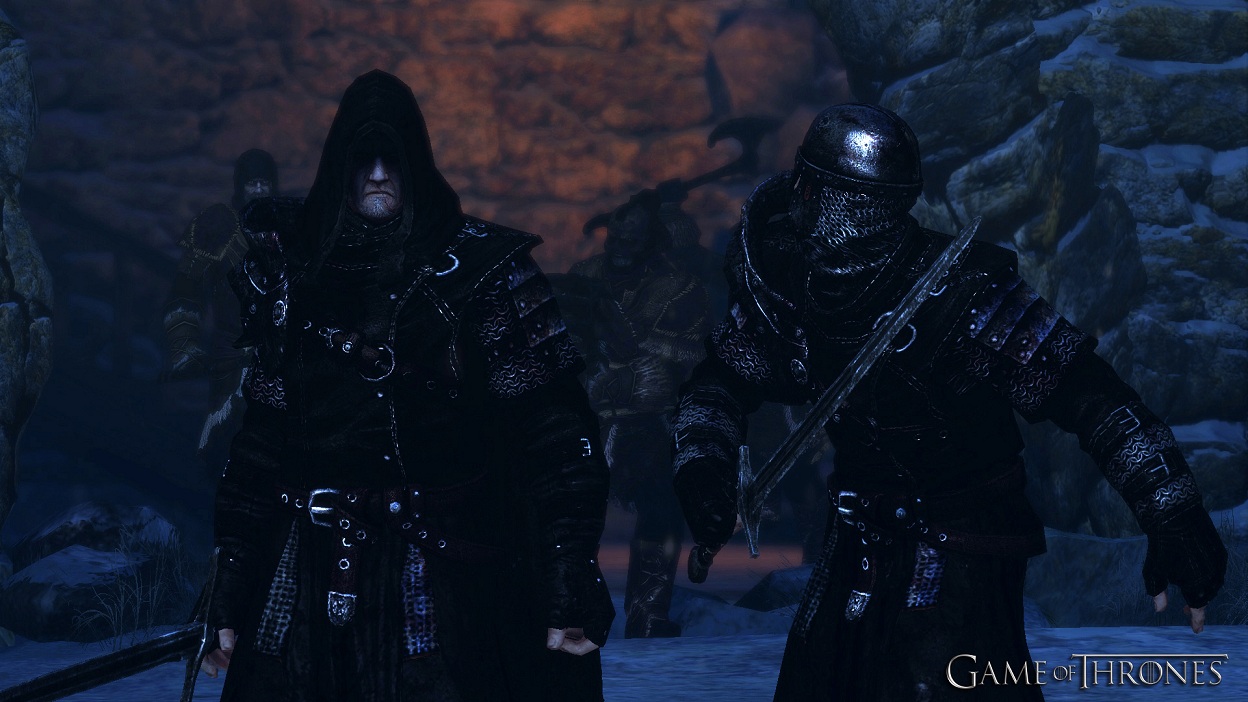
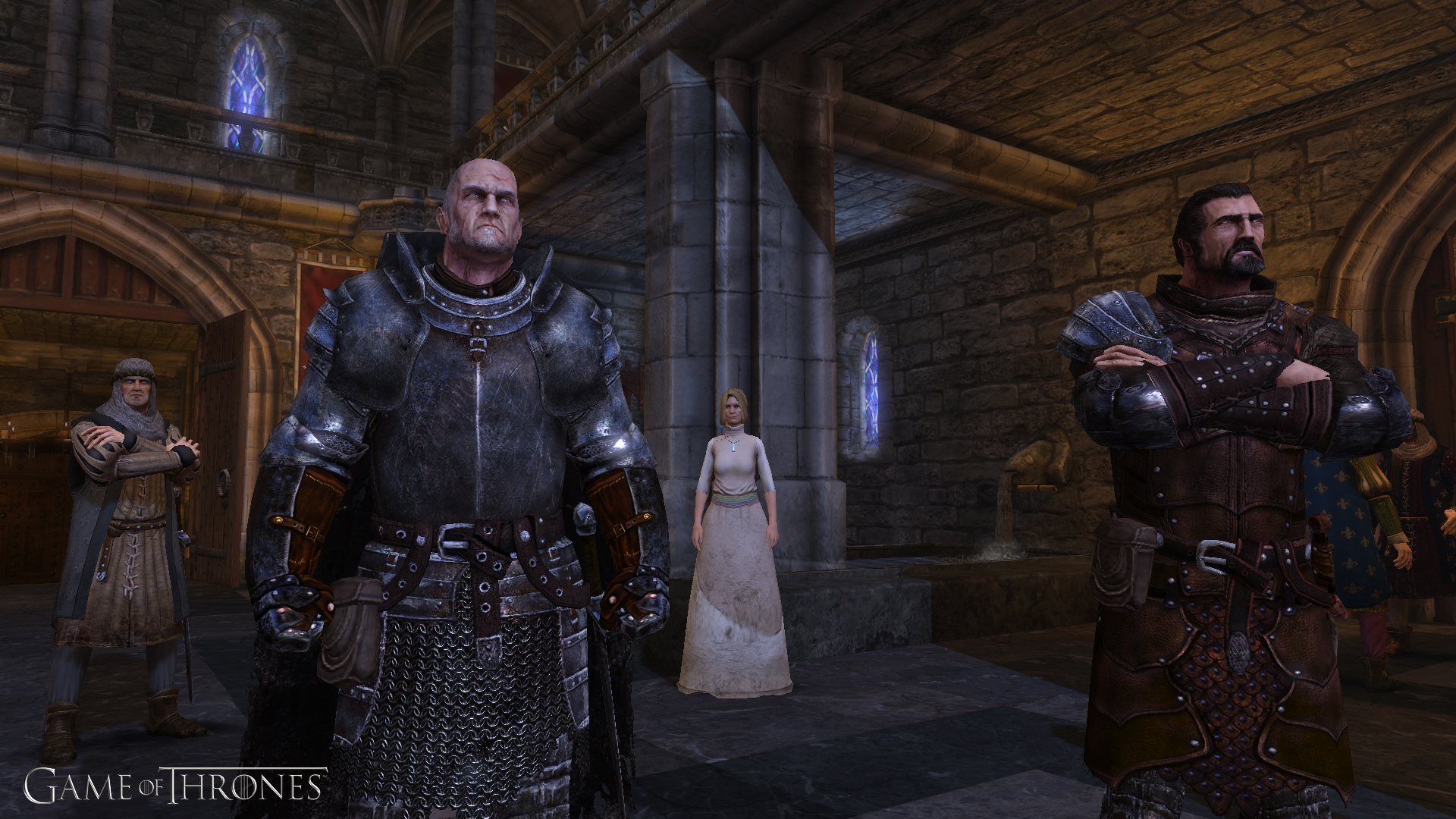
Whilst the ‘last gen’ label being plastered on Game of Thrones may be a tad unfair, it certainly isn’t entirely wrong: the game needs a warning label of some sort. There are some impressive suits of armor to be found in Westeros and the overall design certainly channels the Game of Thrones universe, but it’s low res and it just feels dead and flat. Mors, Alester and a few other key players have detailed character models that are very distinctive, but equally every soldier and merchant is the same, and the less said about Mors’ unimaginably hideous dog the better. On the surface things don’t look that bad at all, but inch a little closer and parts of Westeros could have been forged a decade ago. Wandering around one marketplace (in what should have been the hive of activity that is King’s Landing), out of four merchants, three have the exact same character model. Look into the boxes at the stalls and their wares are flat, lacking in detail, or just rendered like something from the 90’s.
Combat suffers under the thumb of clunky animations, and there is no sense of impact to a blow visually or audibly. Sound effects are cookie cutter and the music (despite a few appearances from themes from the HBO show) struggles to lift itself out of generic. Alester’s voice acting fares little better, and although he channels noble lord fairly well it as at the cost of any emotion. “Silence you soulless whore!” has never sounded so dull. Mors is a bit difficult to take seriously at first with his vocal cords made of rubble, but he hits more of the emotional notes and is certainly the more interesting character.
As a package Game of Thrones just stumbles with its presentation. The devil is in the detail with RPG’s and fantasy worlds alike, and this game just can’t bring Westeros to life.
Overall
Fans of the Game of Thrones universe are the only people that need even think of playing this title. The story is the only thing that keeps the game afloat and those who aren’t versed in the intricacies of Martin’s universe will be left utterly bored. The combat system has a lot of potential, but is crippled by a low level presentation that destroys what could have been a decent game. It has obviously been made with love for the source material and the story will hook in fans desperate for some fresh Ice and Fire action, but wait for a Steam sale before hitting that buy button.
We sat down with Lucian Contreanti, Product Marketing Manager at Electronic Arts Romania at this year’s E3 2012 to discuss the up coming release of FIFA 13 for the Apple iOS. Lucian runs us through gameplay and also explains some of the great new features within the game. FIFA 13 is certainly a very polished game, from the stadium, weather effects, to the player model designs. The game also is very easy to play with simple to understand controls, with the swipe of you fingers you can quickly change the entire formation of your team from defensive to all out attacking formation. The game is also compatible with the console version so by logging in with your Origin account you can earn experience points that you can be used on the console version.
We’ll let the video interview/game play below explain the rest in much further detail. Leave any comments below on what you think of the game.
Will it ever come to pass that PC gamers can look at a titles console release date and say; ‘Hey, I’ll definitely get the PC version then too’?
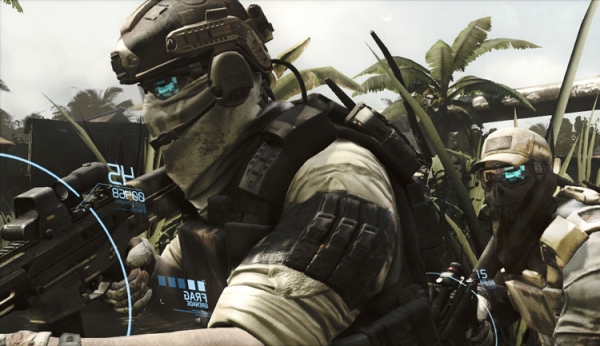
The curse of the PC platform continues, with the latest game to suffer a delayed release being Ubisoft’s Tom Clancy’s Future Soldier. By the time the game releases on the PC, it will have been out on the PlayStation 3 and Xbox 360 for over a month. At least it’s not as bad as some delays! The title will eventually hit shelves of both physical and digital nature on June 28.
The game has scored strongly in it’s console release, picking up an 8.5 here at Capsule (click here for the review). The PC version will bring the same single and multiplayer experience to the table but with several graphical improvements and obviously, different control options. The chunkier hardware available to this version of the game will allow for enhanced lighting effects, improved post processing and more complex textures. Control wise gamers will be able to opt for the keyboard and mouse combo or plug in a wired or wireless Xbox 360 controller. Th game will support DX11, and if the lack of Windows XP in the minimum specs freaks you out, don’t fret, there will be a patch released for that particular OS shortly after the game is released – no date as yet.
Minimum system requirements:
Supported Operating Systems: Windows Vista® (with Service Pack 2)/ Windows 7® (with Service pack 1), both 32 bit & 64 bit versions. PROCESSOR: Intel Pentium D 3.0 Ghz or AMD Athlon64 X2 4400+ 2.2Ghz RAM: 2GB Windows Vista or Windows 7 VIDEO CARD: 512 MB DirectX–compliant, Shader 4.0–enabled video card based on nVidia GeForce 8600 GTS/AMD Radeon HD 4650 DIRECT X®: DirectX 11 DVD-ROM DRIVE: DVD-ROM speed 4x, dual-layer drive SOUND CARD: DirectX 11 – compliant sound card HDD space: 25 GB
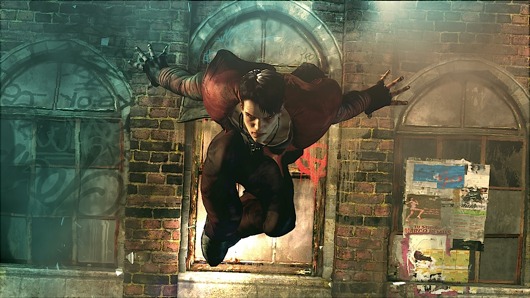
During E3 2012, the director of DmC Devil May Cry sat down for a live commentary of the game. Capcom has since released the director’s gameplay commentary online and it can be seen below.
The commentary video for DmC Devil May Cry weighs in at roughly 45 minutes and shows off a lot of the games features with some insightful commentary from the games director. It seems that there are still some work to be done on the game and the director provides some interesting details on Dante’s new character design.
Check out the commentary video below and let us know what you think of it and DmC Devil May Cry in the comments section.
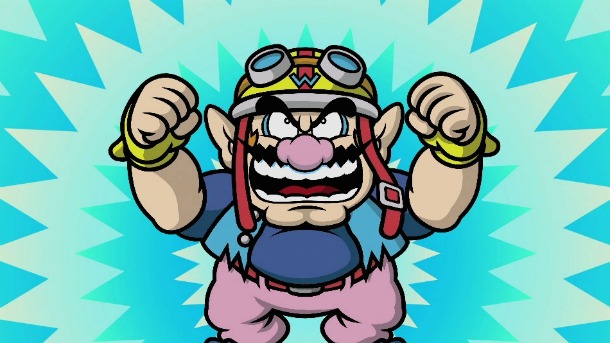
Warioware games are usually among the first titles on each new Nintendo console or handheld to really demonstrate the possibilities afforded by the new tech. The Wii U continues the trend with the tentatively-titled Game and Wario, a collection of mini-games that has you using the GamePad in various ways.
Nintendo pretty much glossed over Wario’s latest outing at their E3 conference, but several of its mini-games were playable on the show floor.
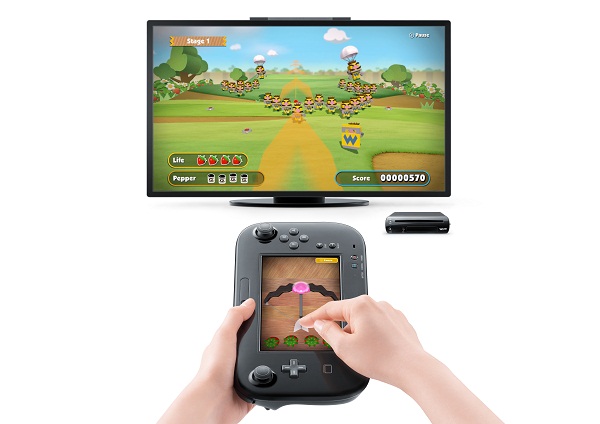
In Arrow (not sure if that’s the mini-game’s name or just a vague description), the GamePad’s touch screen becomes a crossbow, and players must aim it at the TV screen and fire arrows at approaching enemies. It’s a basic variation on the old arcade-styled lightgun gameplay. If enemies get right up close to the camera, they’ll jump off-screen and into the touch screen. As they begin to march across the GamePad from top to bottom, players must tap them to stop them reaching strawberries at the end.
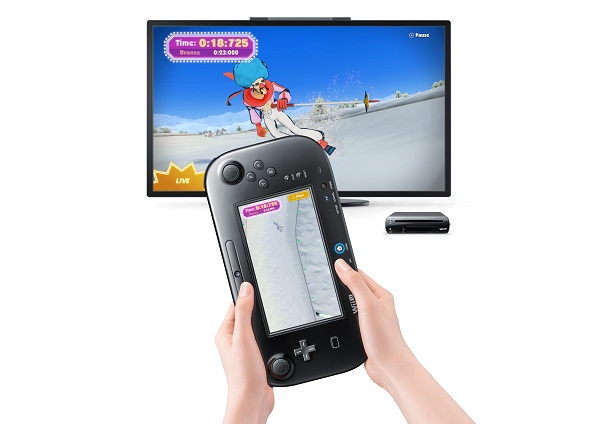
The skiing game takes place entirely on the touch screen. Players use the controller’s gyroscope to steer a skier downhill in a 2D top-down view, while the TV displays a 3D live feed of the action.
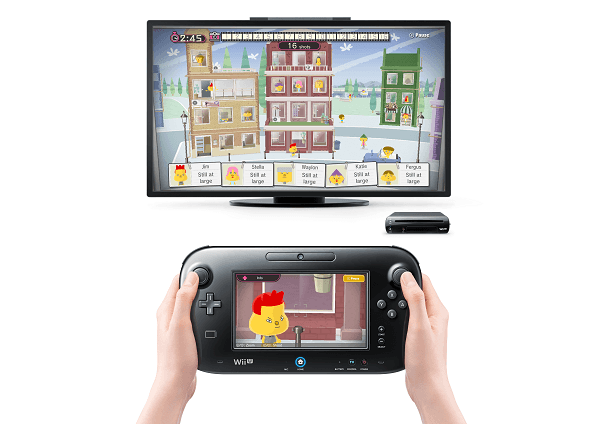
The third one on show presents players with a street scene populated with cute little characters, some of which are secretly criminals. As a photojournalist, there’s a few mugshots along the bottom that you need to search the scene for and snap photos of them. When you find them, point the GamePad towards the TV screen and it will zoom in on them. Snap a photo, and flick the GamePad downwards to send it to the TV screen, where your editor rates the image.
Obviously this is just a fraction of the mini-games on offer in Game and Wario. These ones do a good job of demonstrating the different ways the GamePad and the TV can interact, and the game possibilities this relationship can create. I only hope that third-party developers will bring as much creativity to it as Nintendo undoubtedly will for their first-party games.
The lack of attention Nintendo have given the game indicate it probably won’t be a launch title, but a guess would put its release in the early months of 2013.
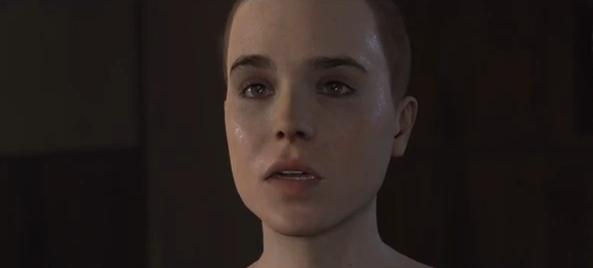
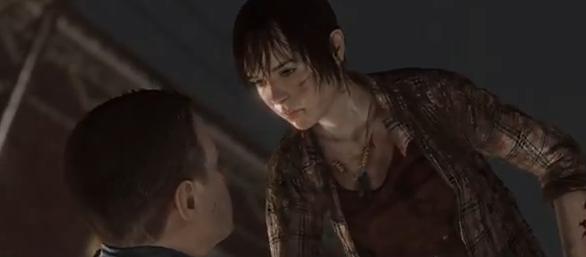
Beyond was revealed at E3, and I don’t really know how I feel about it after it’s own creator yet again used the “M” word during it’s showing. That word of course is “Mature”. We’ll get to that in a minute, but let’s talk about the game. Ellen Page is set to play the title character, and she does a damn fine job of bringing her character to life. We also seen some explosions and a somewhat mysterious plot featuring a special ability this main protagonist has, but other than that, I still don’t feel I have a reason to call Beyond anything other than an interactive movie. Why is this? Because it’s own creator is too fond of his own toys to let us join in with the fun.
David Cage knows how to create, but it seems he still hasn’t learned how to blend his “art” into the video game world. Now, now. Heavy Rain was decent for what it was, but it takes a lot more than interactive cutscenes to wow a good number of gamers, and calling all who follow you’re own titles “mature” is a bit of a slap in the face to those who disagree with your own direction, as you then are labeling them as the opposite. When you create something special, be proud of what you make and let gamers find it, and never try to place your own fan base above others.
With that rant out of the way, Beyond: Two Souls got many talking at E3, and yes, it’s an interesting clip, but it looks to be the same kind of gameplay that Heavy Rain featured, which is it’s biggest flaw. Cage really needs to invite us into his world, rather than just have us spectate and occasionally poke at the characters. More than any other title this year, I want to see what Beyond truly can bring to the table besides cutscenes and “emotion”. I don’t want to feel for a character in a video game. I want to feel as that character, and Beyond’s experience seems like it will only serve as a front row seat for those who pick it up, rather than placing gamers into the starring roles they deserve to be in. Why save a world or a character when it’s not your own world to save?
I know, this is one man’s vision and not my own, but David Cage’s own ego seems to be standing in the way of making something truly special, and if he is able to get over that hurdle, he could craft brilliance. My main point through all of this is that if you are going to make a movie, make a movie. A game involves that invitation though, and it seems our pass is still unable to be found with Beyond at this point as it’s hard to say the whole game is anything other than a cinematic experience..
Mario is just as mature as Journey, Zelda is just as relevant as Call of Duty, and Kirby is just as hardcore as Mass Effect. Remember that time that YOU saved the princess? Remember that time that YOU took on a ton of terrorists and barely lived? How about that time we took Earth back? You see, video games are about bringing one person, no matter what age into a world that they can escape to, and all of the above do exactly that. If Beyond wants to do the same, it will keep it’s riveting plot, stop trying to be a flick, and throw out a welcome rug for us all to be a part of it. Beyond wasn’t made for you, it was made for David Cage. Yes, you may like what you see, but are you really going to play it, or just be a guest passing through? That is the question I would like to see answered.
Watch the clip down below and tell us what you think. Is this a video game? Do you feel as if Beyond needs to shatter it’s viewing glass?
Following the biggest annual event in gaming, E3 2012, the events organisers have released statistics of the events attendance, revenue and more.
As it turns out 45,700 people where in attendance, from over 103 countries, including industry professionals, journalists, analysts, retailers, investors, etc. The event brought in roughly $40 million U.S. Dollars for the City of Los Angeles, which is a colossal amount of revenue for one single event. There was also approximately 200 exhibitors at the event, showcasing the latest in the world of technology and gaming.
Michael D. Gallagher of the ESA had the following to say on these amazing statistics for the event:
“E3 2012 focused and harnessed the passion, energy, and excitement for video games and propelled our industry into the global spotlight. Thanks to our members and exhibitors’ remarkable vision, billions of consumers watched and learned about our industry and this incredible intersection of creativity, technology, and content. The world’s top publishers, developers, and stakeholders converged at E3 to unveil the latest global trends and most exciting new products for the year ahead. We look forward to building on this great momentum for 2013.”
These are some truly great stats for E3 2012. Let us know what you think in the comments section below.