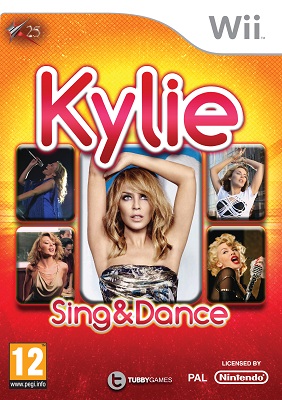
To all you Kylie fans in the UK. Itching to dance The Loco-motion? Wanna sing Especially For You with your special someone? Dance on a bar top to Spinning Around? Fans young and old will be treated to 25 years’ worth of Kylie Minogue in Kylie Sing & Dance, with official videos and music from 26 of her hits such as I Should Be So Lucky, Spinning Around, Can’t Get You Out of My Head, The Loco-motion and her latest single, Flower, featured in this party game. Published by Tubby Games and distributed by Koch Media, the game includes a career mode, a 2 player singing mode and a 4 player dance mode. Kylie Sing & Dance is available now in the UK exclusively for the Nintendo Wii.
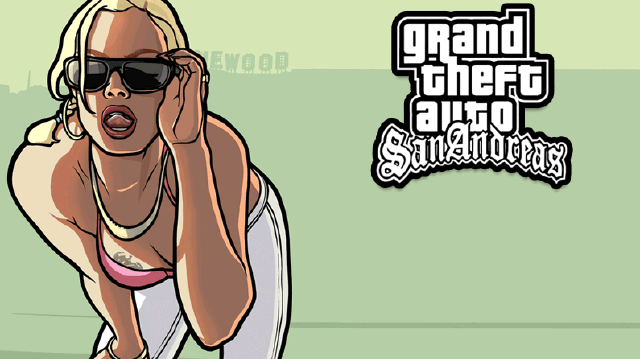
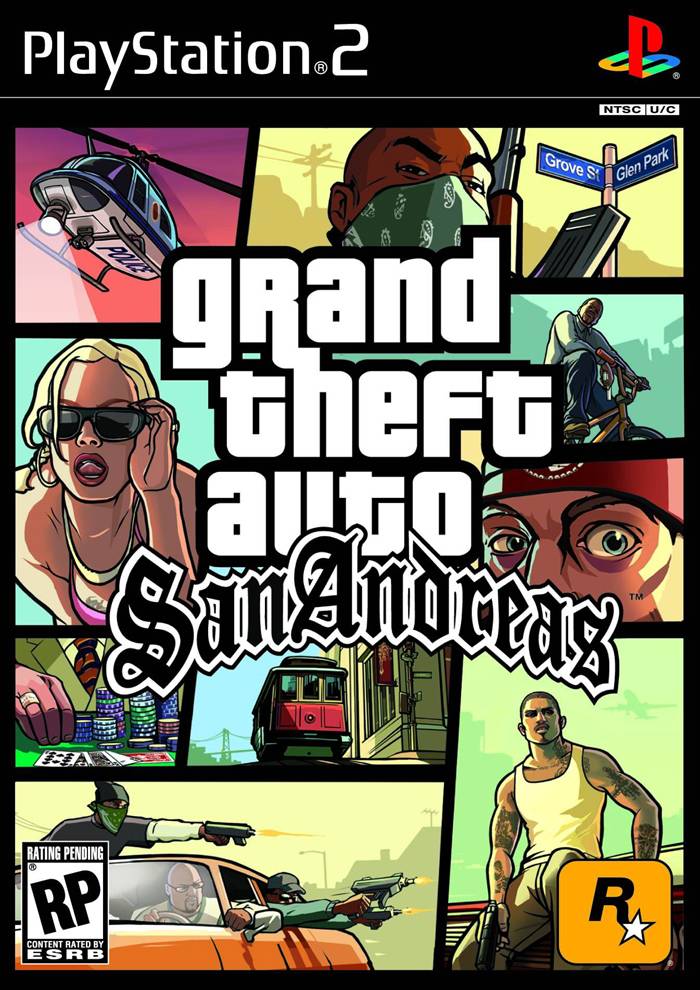
Rockstar Games’ Playstation 2 classic Grand Theft Auto: San Andreas is coming to the Playstation Network, if a listing on PlayStation Hong Kong official site is to be believed.
Though Playstation Blog’s The Drop also confirms this with a mention of the game, they too also say the game will be released this week on December 12.
It seems that one of the biggest games of 2004, is getting a rather quite re-release.
Set in the early 90’s Grand Theft Auto: San Andreas followed former Groove Street gang member Carl ‘CJ’ Johnson on his return to his home state of San Andreas.
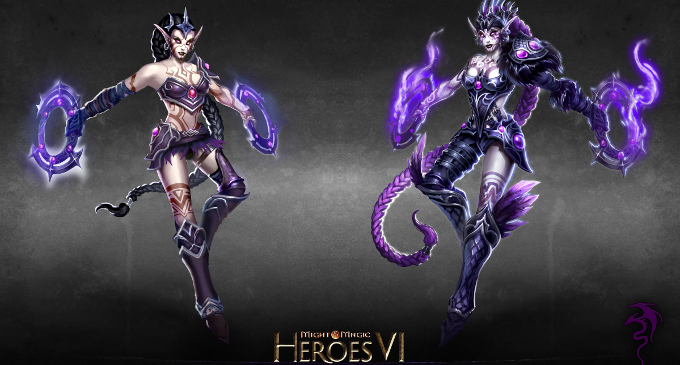
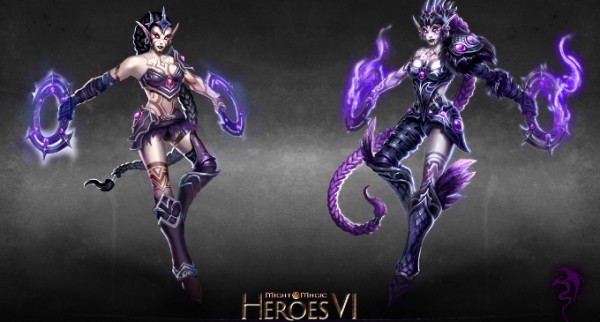
In an interesting piece of news, Ubisoft have announced the release date to the first Standalone expansion pack for their Might And Magic Heroes VI game in the long line of Might And Magic titles first released by 3DO. The standalone expansion pack is titled Might And Magic Vi: Shades Of Darkness and this could possibly mean that the original Might And Magic VI game is not required to play this story expansion.
The release date for this title is the 28th of February, 2013 and will be releasing alongside the Might And Magic Heroes VI Complete Edition that contains additional quests, maps and the like. Be sure to check out the revamped Might And Magic website for more details.
This is easily the most difficult thing to review that I have ever done in my entire career as a gaming media type. Computer RAM, every PC needs it and the more you have, generally speaking, the more you can do. So logically, you’d need as much RAM as possible to make sure your PC is always running the best that it can.
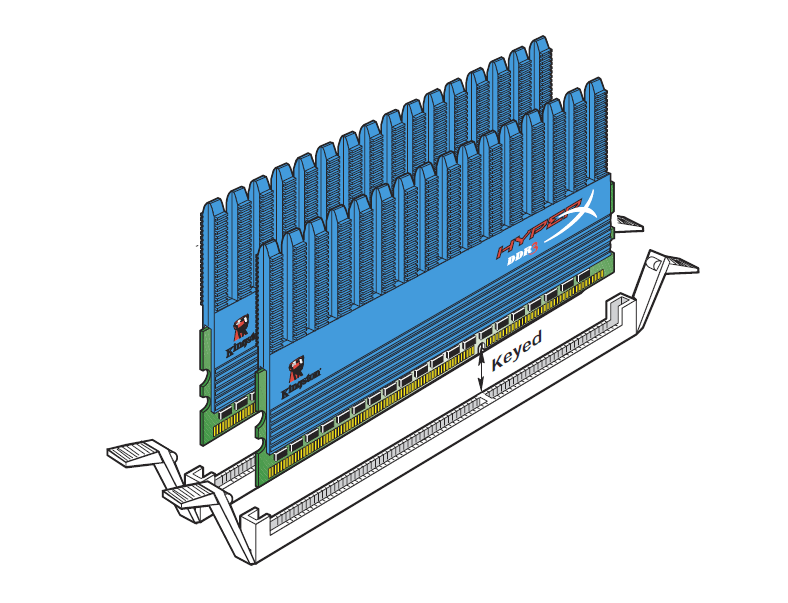
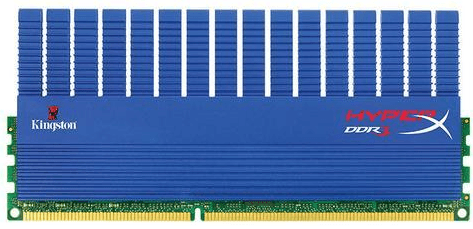
The RAM itself is a very nice looking piece of electronic componentry. Remember the old days where RAM was just a green stick of Silicone and all of the circuitry was exposed? Well gone are those days. Now we have this rather fetching looking shell not only protecting the RAM, but making it easier to insert and remove from your computers motherboard. When looking at the shell surrounding the RAM unit, you’ll netice it has a striking blue hue to it while being brandished by the familiar looking HyperX logos and other assorted Kingston branding.
Of course, installing RAM used to be pretty tedious. You’d have to make sure you’re not holding the RAM stick in a complicated position or you’d feel like you’re about to snap it. Thanks to the oversized protective casing surrounding the actual RAM unit, you never actually feel like you’re going to damage the components thus giving you an increase in confidence whilst upgrading your PC. The RAM also looks quite impressive in place on the motherboard and if you have an exposed machine, will probably look cool to anyone looking inside.
I’m assuming the packaging I received the RAM in is the retail packaging. This packaging is also covered in Kingston branding and through the clear plastic cover, you are able to see the magnificence of the RAM. My one issue with this case is that you either have to pop the RAM out by pressing in on the back, or you have to dislodge it by pushing against a piece of green silicone on one side of the packaging. I don’t like either of these methods because it feels like I might accidentally break a piece of the component, or drop it on the floor and damage it internally.
Now, to be completely honest, I feel that 16GB of RAM is completely overkill for most users at this point in time. The average gamer is probably not going to be running a Blu Ray film, rendering large images, running a VM Server farm and playing 2-3 copies of Battlefield 3 at the same time on the one computer. However, for the user that is, this package from Kingston is the one for you. Heck man, I have an 8GB machine and have never used all of that. And yes, I do run a VM farm and play games together. However, just because the package contains two 8GB sticks, it does not mean you need to have both installed to your computer. You could just run 8GB and keep the other as a spare. But hey, if you’ve got them both there, why not use them both?
As an average user myself, any speed increases by running these sticks of RAM was lost on me. Although, I’m pretty sure that my PC is bottlenecking somewhere along the line where RAM speed is irrelevant anyway. The only people that are going to be interested in this are the guys that care about every millisecond in processing time. Are you running a scaled model of the universes growth on your home machine? Then you probably have a specialised PC built for that. This RAM will give you those few extra milliseconds time, but for someone like me who just cares about how pretty his games look without it running like ass, I couldn’t tell you how significant a change in speed I had was.
After removing the RAM from the packaging I found that it included a quick installation guide and warranty information booklet. Now, this booklet was quite easy to unfold, but when I tried to return it to it’s original state, it ended up folding into a triangular prism. This was a nightmare trying to work out. However, I think I got it in the end, even if it now feels thicker.
What was most curious about this quick installation guide was that it didn’t appear to be talking about the RAM that was included in the packaging. It looked nothing like the included product and some of the instructions were a little odd. Don’t point at the RAM stick? Why not? Am I like Zeus and I can static it to death from a distance? I wouldn’t know, there was no symbols telling me why there. Here’s something else, did you know that this RAM can be fitted into laptops (it can’t)? Apparently it can according to the quick installation guide. Ignore the brown booklet, it is useless.
One thing that you’ll have to remember about having RAM is that it needs to be compatible with your motherboard. If you have an older PC, you might find that this RAM is incompatible. You may also need to fiddle with your BIOS settings if your previous RAM was of a different speed.
Overall, if you find yourself in need of additional volatile storage in your PC, the Kingston HyperX 16GB kit is a fairly good package that you’d probably want to have in your PC. It looks good, doesn’t really give you a reason to complain; and in two sticks as opposed to four, is sure to fit within your PC. While I personally don’t see a reason for having 16GB of RAM at the moment outside of a few specialised instances, future-proofing your machine is always a good idea.
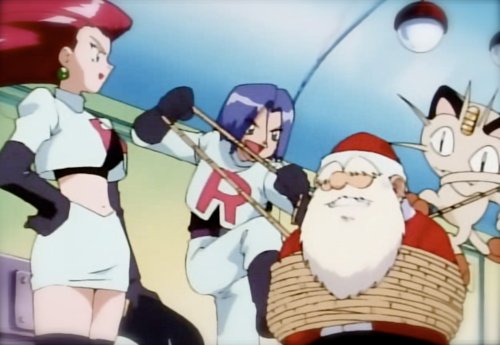
Meowth’s Voice: So here’s the deal. Jesse and James were able to bag Santa ALL because of me! After looking through his bag of goodies, I found an entire collection of TM’s that can be taught to Pokemon.
What I am willing to do – being just like Santy Claus – is to give one of these TM’s to you for FREE. MEOWTH! THAT’S RIGHT! You might be wondering why I am doing this? Well, stop asking questions! The only catch is that you have to do something bad with the new move. Tell me what TM you want and what you gonna do with it!
You can pick a TM from any generation of Pokemon. Find the complete list (here). Write your TM and evil deed in the comments below!
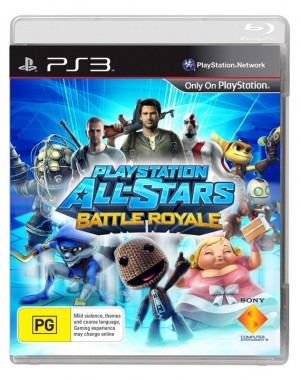
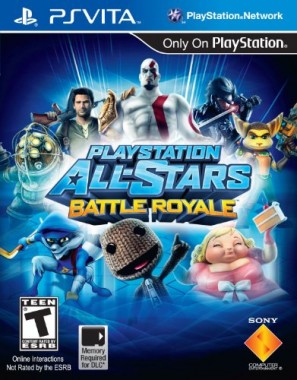
PlayStation All-Stars Battle Royale Developer: Superbot Entertainment, SCE Santa Monica Studio Publisher: Sony Computer Entertainment Platform: PlayStation 3 (reviewed), PlayStation Vita (review) Release Date: 22/11/2012 Price: $59.96 (Available Here)
Overview
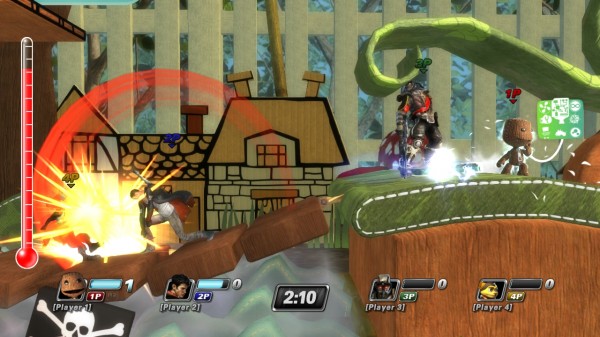
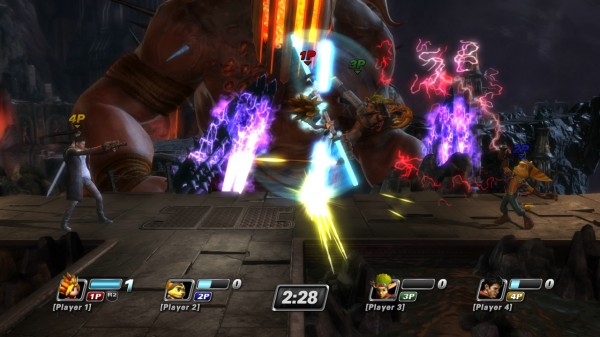
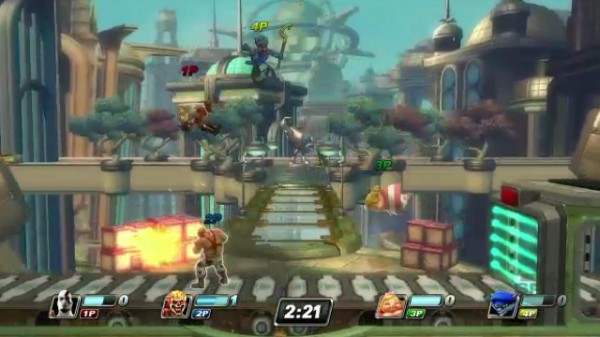
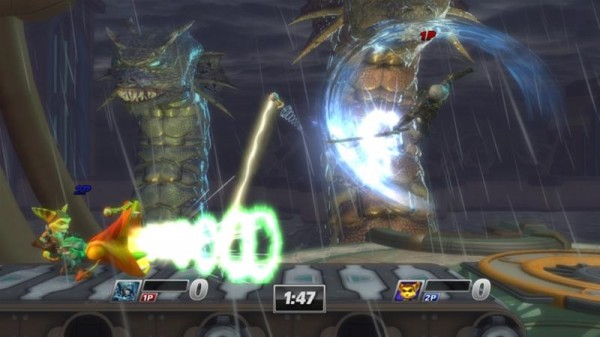
Playstation All-Stars Battle Royale pits twenty characters from the Playstation universe in four player battles to see which character is supreme. A concept as old as video games themselves (well, not really), the crossover genre brings in a new challenger, one worth inserting into your Playstation 3. Solid fighting gameplay that offers hours of content for both the single and multiplayer in all of us is just one ingredient in this excellent game. Fantastic visuals, a soundtrack that is heavenly to the human ears and an excellent roster elevates PS All-Stars to the rank of a must have game.
Gameplay
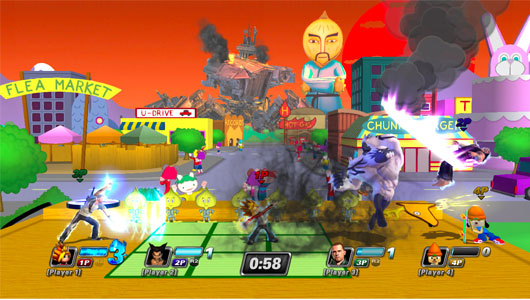
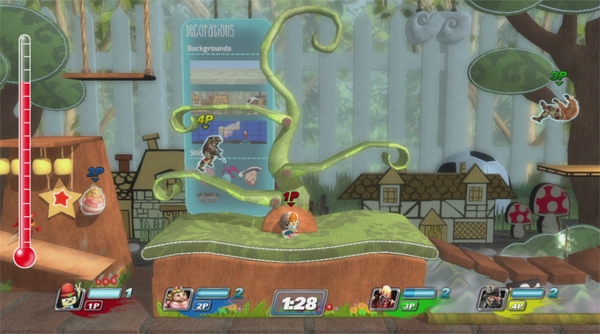
On the surface, one would mistake PS All-Stars as a clone of another successful 2D fighting crossover series. When one gets into the nitty gritty of the battle system, one would realise that it is a completely different story. Up to four characters duke it out on 2D stages with the aim to defeat their opponents, whether it is a chaotic free for all or a team battle. There is only one way to defeat the opponents: the use of Super Attacks. Building up a character’s power meter, displayed at the bottom of the screen, gains them access to their Super Attacks. There are three levels of Super Attacks and the player can choose wether to use a Level 1 Super or go for the Level 3 Super. Maybe they fancy a Level 2 Super. It brings a competitive strategy to the forefront.
That is what the battle system should and must encourage: proper strategy and a desire to win. The battle system hits those two notes quite sweetly, all in the Super Attack mechanism. It is all about timing and risk and reward. Despite the level, there will be moments where a Level 1 Super can bag the player three kills, equalling to six points in timed matches. Some Level 2 Supers cam bag more than three kills if implemented properly. Sure, there will be times where frustration will sink in, but that’s the name of the game. Get a hit, victory is near. Miss and songs of defeat may be sung. As for the battle itself, expect fast action at its finest. To aid these noble fighters, items are present. Just like the roster and the stages, they represent the various franchises under Sony’s belt. These items all have various effects. Some add a hefty amount of power to the character’s power bar while others can slow or hinder their unfortunate opponents, bagging more power for those gamebreaking (in a good sense) moments.
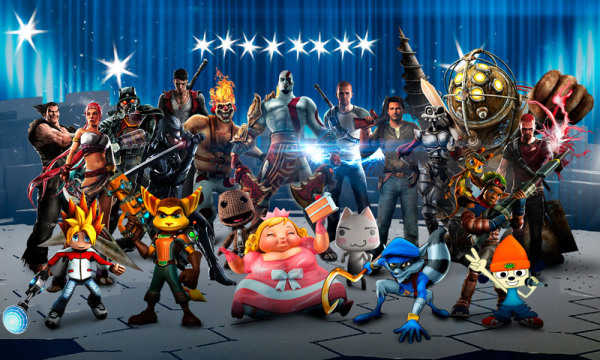
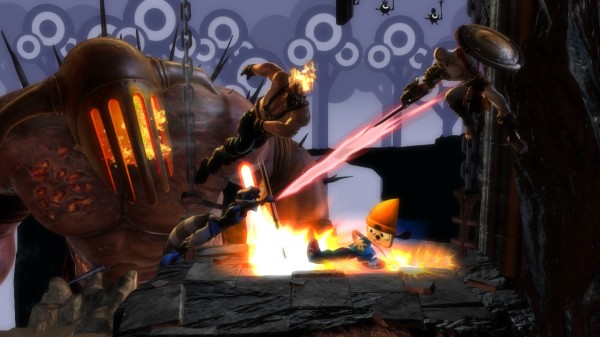
One of a fighting game’s greatest strengths is the roster, especially when it involves various universes coming together. Sixteen of the twenty characters are from games published by Sony Computer Entertainment. Characters such as Nathan Drake (Uncharted), Cole (inFamous) and Kratos (God of War) did make the cut alongside some of the more cult classics such as Sir Daniel Fortesque (MediEvil) and Parappa (PaRappa The Rapper). The selection is a mix of realistic and the cartoon worlds of Sony, an excellent mix I might add. But, like any crossover roster, it is all subjective. I enjoy this roster and do not mourn for those other characters that made their mark in the Playstation 1 era. It would be nice, but I do not miss them (and I do have the PS1 games for one of these characters).
What makes this roster excellent is that every single character has their own fighting style. That does include the two Coles included. The major complaint about the other franchise was the cloning of their characters just to make up numbers. This does not happen here. In fact, outside of the two Coles (which are one person in inFamous anyway), no franchise has no more than one playable character representing it, even with the DLC characters coming next year. It is refreshing to see that all characters do play differently to each other, meaning not everyone would be good with all characters. This brings varied matches both offline and online, which is more entertaining in the long run.
Just like the readers of this review, I do have my thoughts on what characters should be on this roster. With that said, I am quite satisfied with nineteen of the characters selected. I only say nineteen for I do question the inclusion of one character: Bioshock’s Big Daddy. It is not as much of the character’s style of play, but the background behind his inclusion. There are four third party characters, three of which did come from games that originated on the Playstation line of consoles (despite their appearances). However, Bioshock did not originate on Playstation, but on Xbox 360 and PC. Yes, the relationship between SCE America and Irrational Games has only strengthened over the years, which led to Big Daddy’s inclusion among other things, but wouldn’t another third party character that had a game originated on the Playstation be more deserving? Nonetheless, I still welcome its inclusion as it is a great character to play with.
No fighting game is complete without an Arcade Mode to satisfy the single player hunger. Arcade Mode is basically the traditional arcade experience found in every fighting game. Players select one character and battle through a gauntlet of battles with the other characters, culminating to two important battles: the rival battle and the battle with Polygon Man. Each character has a collection of still images as both the introduction and ending of their arcade mode, with an in-game cutscene explaining how their battle with their chosen rival came about. Both time and kill limit matches are featured in each story. Arcade Mode is great for single players, but the storytelling is a bit shallow. With that said, story in fighting games are not that important, unless it’s Dissidia Final Fantasy.
Single players should note that Arcade Mode is not the only single player offering out there. Superbot has included a challenge mode for all difficulties to conquer. There are two sets of challenges: generic ones and character specific ones, adding more hours of gameplay. It is quite sequential, one can not just dive into any challenge on the list. Then there is a tutorial mode to learn about each character and how they play, as well as the game. Great starting point for those who find the game a little daunting or want a refresher with the battle system. Practice mode is also present, where the player can basically practice with each character. As always, there is offline battling with the AI, which is excellent and satisfying if done with the right Al difficulty.
The multiplayer in Playstation All Stars Battle Royale has to be the Achilles Heel of the game. Well, not the offline, local multiplayer. Playing with friends brings a satisfaction for the victor as the competitive nature of the various modes comes to light. Beating down your friends in a timed or stock match will bring the crowd to the edge of their seats or whatever they are standing on. The problems lie within the online multiplayer. Through my experience, out of the various attempts to get into a match, I was only able to contest in two matches. The poor experience continued as in my first match I was assigned to Kratos, only, on the character selection screen, I had selected Raiden. To my shock, once the match began, I only saw three Kratos players, despite listing four. This is very unacceptable as I should be offered a battle I can play. No character should just disappear. It was not a one off, as my second online game had an invisible Nathan Drake. I could not touch either player but they could touch me. This seems to be a common problem which I hope was fixed in the latest patch. Ironically enough, lag was no issue. Each of these matches did run smoothly. If these problems are fixed, then the online experience will be more than excellent, as multiplayer is where the genre shines. Despite the problems, multiplayer can be fun if one finds the perfect game.
In terms of online offerings however, they present an excellent selection. There is the quick mode where players can just jump in and play a match, if they do connect to one. For those who have a desire to compete off the battlefields, then the ranked matches are for you. There is a leaderboard for each player to conquer if they feel like they are up for the challenge. There are seasons, which usually last for a month or so, it seems. Each time a season is over, the leaderboard resets, perfect for a mew champion to rise from the heap of players present.
Despite the problems that the online multiplayer presents, there was a new way to play against opponents: through Sony’s latest handheld, the Playstation Vita. Cross-play has been heavily promoted by Sony, alongside the Cross-buy promotion. It is here where Superbot hits the sweet spot. No longer do players have to confine to the small space crowded around the console. Crossplay is an excellent alternative to the controller. The performance of gameplay during crossplay is astonishing. Trying it out between my PS3 and Vita, the match did not lag at all. Framerates were steady and gameplay was smooth. The only complaint I do have with crossplay is that it is only done via PSN. In order to crossplay, your Vita player needs to join the PS3 party with a separate PSN account. Not a major issue, but it might have been the only way to pull it off.
Fighting games and customisation go hand in hand like Kevin Butler and Playstation (sorry, sorry). Each character has their own options of customisation, including changing their intro, their victory outro and even victory music. The first tier is achievable after one playthrough of the arcade mode of each character, since they will pass the required rank to unlock them. Each character has a rank that is increased with every fight the player uses them. In a way, this is a great system as it allows the player to test fight each of these characters and find their own rhythm. The ranks also contribute to the player’s online badge. The badge includes a background, titles, icons and even minions from each of the twenty games represented. Who doesn’t want to see Captain Quark dancing after bagging three kills at once?
Visuals & Audio
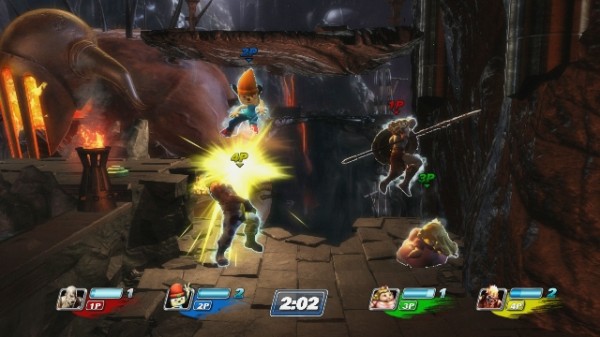
The visuals of Playstation All Stars Battle Royale are excellent and this is evident as soon as the opening cinematics begin. Being greeted with Ratchet and Jak fighting, the opening does its job by pumping up the fighting ahead. In game, do expect the view to look similar to that other game that will not be mentioned by name. But that is where any similarity ends. The characters models are highly detailed and animations are smooth.
What shines in the visual department has to be the stages. In an interesting idea, each stage is in fact a mash up of two franchises/games, ones that are represented with playable characters and some other titles, such as Locoroco, where the stage is the only representation. Each stage has a gigantic hazard in the background. One of my favourite stages is Hades, the God of War stage. Eventually, the Patapons will invade the underworld and battle the God of the Underworld. It brings a sense of life into these stages, unlike that other game.
With impressive visuals, the perfect companion is an impressive soundtrack. Like the opening cinematic, the excellent track Finale by Frenchman Madeon blasts out of the speakers and provides the mood for a fight. I tip my hat to this talented man, well done. It fits perfectly with the action on screen. One of the reasons I do not skip the opening. The game also features tracks from the games that has a stage. Stowaways provides the classic Uncharted theme as well as some Bioshock inspired music. Franzea, a Locoroco inspired stage, reinvigorates its world with some catchy music. Even Toro’s theme has formed an attachment towards my inner musician.
Overall
Playstation All-Stars Battle Royale is a game where one must look upon it and play it with an open mind. Don’t worry about that other game, critique it on its own merit and one would see how solid and fun PS All-Stars really is. The battle system brings in a risk for reward system which demands strategies that require change in the moment. The fighting is not overly unbalance, it is clinical and satisfying. Add in a great offering for the single player and the multiplayer, a roster that actually has variety and no clones, excellent visuals and a collection of music that will impressed the musician within oneself and Playstation All-Stars brings out the best in crossover fighting, despite the online multiplayer problems. It is possible to love PS All-Stars without betraying that other game for it requires a different you. Give it a chance, it is as satisfying, if not more, than any other fighting game on the market. Plus, you get a free Vita version, a sweet deal in any language.
PlayStation All-Stars Battle Royale Developer:Superbot Entertainment, SCE Santa Monica Studio, Bluepoint Games (PS Vita) Publisher: Sony Computer Entertainment Platform : PlayStation Vita (reviewed) PlayStation 3 Release Date:22 November, 2012 Price:$39.96 (available here)
Overview
“It’s a Smash Bros clone!” Yes internet, PlayStation All-Stars Battle Royale, henceforth known as PABR to save my sanity, is a mite like Nintendo’s brand icon brawler. Back in the day I spent a few hundred hours with Melee, and upon booting up PABR the menus and the modes and the collectibles and the flashy opening video are all extremely familiar.
Crucially the fighting is different, the online exists, and there’s been a refreshing lack of cloning going on in Sony’s All-Star recruitment agency. Everyone has their own preference when it comes to fighting games, and besides a few minor tics and issues with the online system, All-Stars can easily stand as a viable option along with the rest. Put aside the copycat gripes and give it a chance, for behind that excruciating title there is something well worth a Vita owner’s time.
Gameplay
First up, the fighting mechanism. Victory hangs on the use of special attacks, which are earned by beating the living daylights out of your foe. There are three special attacks for each character, with each gradually becoming more powerful and therefore taking a bit more ass kicking to earn. Special attacks are the only way to do fatal damage and rack up game winning points, therefore aggression is the name of the game. Each character has a selection of throws and standard attacks to rack up hits, and a bit of practice with a favourite character will gradually unveil the smoothest and best ways to link them all together.
The reliance on special attacks means that balance between characters is key, and SuperBot have already shown themselves to be keeping a close eye on things, nerfing Sackboy and his level three special in the first update. Fans on forums will always argue about the necessity of these tweaks vs. the inadequacy of fellow players, but the fact that these changes are happening is reassuring – All Stars hasn’t been abandoned out of the gate.
The super attack system will not be to everyone’s taste – miss and everything before it goes down the drain. On the other side of the coin it adds a huge element of time pressure to matches and forces players to be confrontational, keeping the pace of battles at a high. Strategy also comes into play: do you hold out for a level 3 attack that guarantees doom or keep the level 1’s flowing, hoping for a good hit rate?
The levels also contribute a lot more to the action than in ‘that other game’, with more dynamic levels that feature a lot more explosions, projectiles and Buzz quiz questions. Taking two games instead of one and smashing them together, that small point of difference allows for some weird and wonderful combinations. It’s not so much quality level design that sells it more than nostalgia and novelty, but in a game like this that is essentially what you’re here for.
Items are also present in the same way as the stages, taking a cue from popular games to bring some random powers into play. Sadly the control mechanism for using them on the Vita renders them largely useless. All Stars, when you’re playing online or at higher difficulty, is a fast paced brawler where stopping to poke the screen is a silly idea. Poking a highly specific area of the screen is also silly, as is poking it again to drop what you just picked up. Items can be useful – they drain AP points when you land a hit – but they prove more of an irritation than anything else.
Some of the points above are most significant to the online modes of the game, but the single player offers up a good selection of modes that allow some time for practise – and for collecting thousands of things you never knew you wanted. The first stop for many will be Arcade mode, a fighting game standard that tries to pin a story on a collection of fights. Here each character is paired into a rivalry, with a bit of shallow storytelling that feels pointless for the majority – although Sackboy and Big Daddy’s beef with each other is surprisingly fitting and sweet. Pick a character and take on the rest of the roster, easy as. The fights could have used more variation and the end boss is pointless given that as a character he doesn’t actually fight, but it’s a good place to start, and with three difficulty levels Arcade will have something for everyone; at least to begin with.
So what about the roster itself? One of the joys in this kind of game is finding your character, trying out each and every member of the roster to see what will jump out and surprise you. With All Stars I didn’t have the same drive to do this as with Nintendo’s title, and the names on offer here are -for your regular non Sony exclusive gamer- far less famous. Nonetheless there is a good enough sense of variety on offer here, even if some of the characters are clearly there for marketing purposes (emo Dante) or are rather strange choices for representing their franchise (Heihachi). And where the hell are Crash and Spyro? Do Radec and Fat Princess seriously belong in this game compared to those guys? The newly announced DLC brings Cat (Gravity Rush) and Emmet Graves (Starhawk) to the party, hinting at a more forward facing attitude to characters being introduced in the future.
The lack of unlockable characters is a bit of a gut punch that saps the urge to play everything as every single character, but the general lack of clones (apart from the weird inclusion of both Cole and Evil Cole from Infamous) is refreshing. Interestingly there is a certain bias toward the ‘normal’ humanoid characters. Kratos and Raiden run riot online, with a steady supply of Radec and Sweet Tooth. Toro and Spike are pretty much entirely absent, as is Fat Princess. Sackboy is perhaps the only exception, possibly because he comes complete with an easily spammable move set.
Every time you play as a character you earn points to rank up, with certain ranks unlocking a treasure trove of goodies that can be used to customise your character and player set up for online matches. Yes, different victory poses aren’t that thrilling, but the selection of backgrounds and icons are a nice way to show off as well as customise. The ranking system is also a loud and clear indication of who is going to ground you into dust when the online rank matching doesn’t work out too well – level 500 Raiden or level 3 Drake anyone?
Playing online matches in tournament mode nets you another kind of bragging tool – a belt! Gain a ranking after playing enough matches and you will eventually gain a belt, and completing a season (a month essentially) with said belt can net you yet more unlockables. Now there is a specific order that you rank up in and a number of points etc. to gain, but nowhere in the game is this information visible. Black belt is obviously awesome, but not every martial art has the same belt progression – it would be nice to know exactly what you have to do to grade up without consulting the internet, and to know if my green belt is ok or little more than a noob indicator.
Now those are fairly small gripes when it comes to the online mode, which has other issues that mar the experience more severely. The inevitable comparison between this game and Nintendo’s Smash Bros demands an excellent online mode, and whilst it is good, it is certainly not great. It happens far too frequently that players will appear to drop out of a game yet still be participating. What appears initially to be a four man free for all will have two characters on screen, but at game’s end the other two pop up in the results and take home the glory, leading to moments of utter frustration as a Big Daddy that was never actually visible takes the win. And it happens often. Throw in a tendency for players to port around the screen and a few spammable combinations and life can be a bit frustrating in PABR’s online world. That said it is still intensley enjoyable to head into a four man free for all with a good group of players, and once you’ve figured out the ranking system the need to have that one more game is only broken when you can’t find a match.
And the matchmaking is a little less than elaborate, leaving you to constantly step into a new match with new competitors – could we have a lobby or two please? Perhaps more tournament like match ups so I don’t spend equal amounts of time fighting and not connecting to the servers? Fortunately the cross play feature of the game is pulled off, redeeming the online offering somewhat.
There are flaws with the game but this cannot take away from the fact that the fighting is highly enjoyable. There is more to be found under the surface than you would first expect, victory is satisfying and defeat prompts more practice rather than frustration or rage quits. Unlike with more combo heavy brawlers a novice can still have fun and get into the action, and if you’re clever about it even an average player can make clever use of special attacks to score some points online. Sony fans will have a ball getting to grips with the characters, and perhaps Sony’s marketing ploy might work like a charm too – I can’t deny that playing Nariko has given me a taste for Heavenly Sword – looks like I’ll have to spill some cash on a five year old game, congratulations marketing!
Audio & Visual
Apart from the aforementioned online problems PABR plays very smoothly, keeping up with the fast paced action and presenting an impressively pretty picture on the Vita’s small screen. Menus are clear and colourful, even if some of the finer points take a little bit of poking around to discover. The stages looks fantastic and both they and the characters are dead on matches for their original counterparts, helped along by the appropriate voice acting and effects. Some of the super attacks sport a great bit of design in their own right, and half of the joy is discovering those bits of gaming mashup magic for yourself.
The main theme is energetic, catchy and almost infinitely listenable, which is a good thing given how much time you’ll spend listening to it when looking for online matches. Music pops up from the original games during the appropriate stage, and there’s no denying the rush you get when that fantastic Uncharted music hits in a fight. Aesthetically brand name brawlers are all about providing old and much loved experiences with different mechanics, and Superbot have certainly accomplished that here.
Overall
It has plenty of flaws and quirks and niggly bits, but I couldn’t help but enjoy PlayStation All-Stars Battle Royale. The roster could be better, the online could be better, the arcade could be better, but ultimately the actual punching and kicking is a bucket of fun. The unlockables are cleverly linked in to the action to ensure an appropriate level of addiction, and when everything runs smoothly an online match up provides three minutes of adrenaline fuelled craziness.
Pick up and play for kicks or sit down and play for points, it happily works both ways. There are Street Fighter fans and there are Tekken fans, so why can’t there be Smash Bros fans and Battle Royale fans?
Capcom has revealed at their 25th Anniversary Grand Finals Event that they will be releasing the fan-made Street Fighter X mega Man for free on PC on their own Capcom-Unity website. The game itself is a collaboration between fans and Capcom, spearheaded by a Singaporean player named “Sonic”.
On the Game, Capcom had this to say –
“Our fans have been so supportive of the 25th Anniversary efforts on Street Fighter, that we wanted to provide one last surprise and token of our appreciation,” said Christian Svensson, SVP of Consumer Software at Capcom USA. “This game symbolizes the passion and dedication of our fans and with the 25th Anniversary of Mega Man coming up, we felt it was our duty to bring this wonderful experience to everyone who has shared the last 25 years with us and both of these celebrated franchises.”
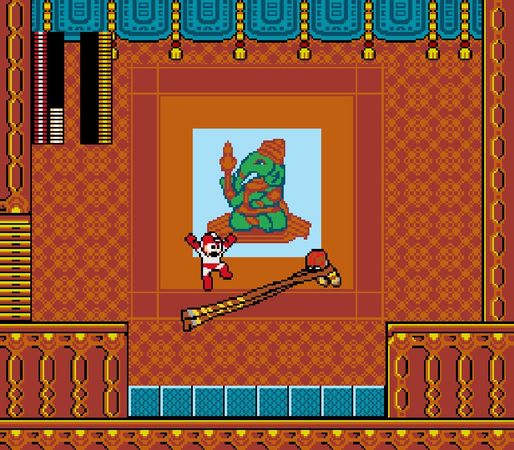
In Street Fighter X Mega Man, players play as the Blue Bomber as they fight against enemies representing characters from the Street Fighter universe. Each level will be themed after a Street Fighter level and will have Mega Man fighting against a particular fighter as a boss fight at the end of a level.
For more information, check out the Capcom-Unity website.
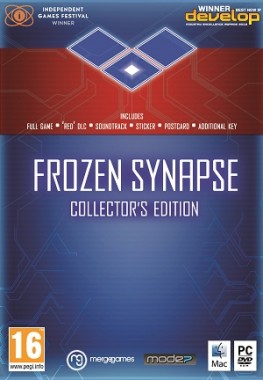
Frozen Synapse Developer: Mode 7 Games Publisher: Mode 7 Games Platforms:PC (reviewed) Release Date: May 26, 2011 Price: $24.99 (available here)
Overview
Frozen Synapse was developed and published by Mode 7 Games and is a recent attempt at breaking into the market of simultaneous turn-based strategy games (of which there actually is one) and coming out hopefully on top. But is this just another popular misstep for the turn-based strategy genre or does it actually contain some deep and compelling play that is sure to keep you entertained? Read on to find out.
Story
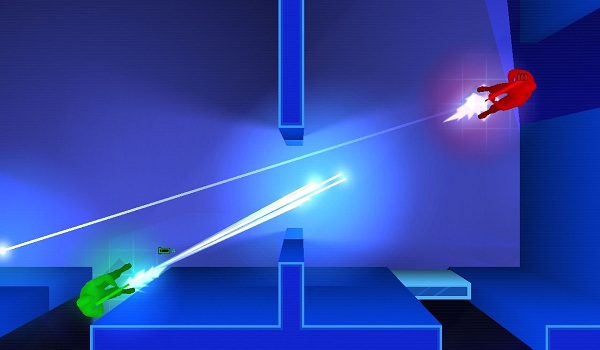
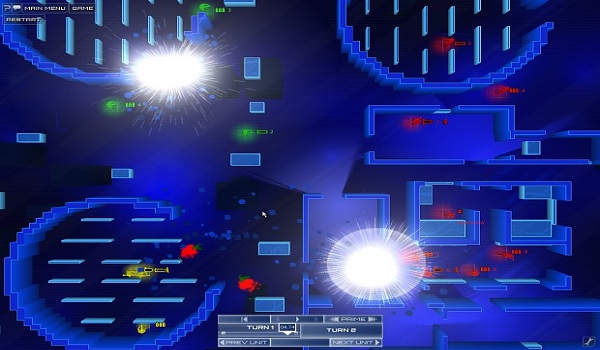
In Frozen Synapse you play as a faceless commander known only as Tactics, assisting a rebel group in their efforts to topple a controlling government for the greater good. You control your units within a program known as the “Shape Network”, which is a kind of crossover between the Matrix and Tron. This Network shows map layouts in blue and enemy positions in red, providing an effective contrast between the two. The system you are in control of actually takes control of real people who are linked to the Shape Network, meaning that at times you may encounter smarter or dumber soldiers depending on how well their connection is to it. A very interesting concept that blends itself in well with the cyber-punk dystopian world.
Visuals and Audio
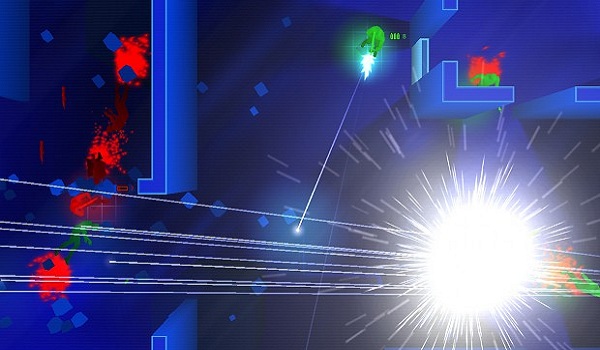
Frozen Synapse really does a great job with its audio and visual design. The game features smooth, flowing colours that really highlight the entire feel and the belief that you are operating within the “Shape Network”. Enemies, allies and your very own squad are easily distinguishable from one another, as well as from the terrain itself, meaning you’ll never get a shotgun in the back that you weren’t expecting. The music itself contains great techno tracks by weary_testsubject, with lots of highs and lows blended with a steady beat that continues throughout. The music seems to play by itself however, with seemingly little guidance or noticeable difference between levels. This ultimately means that you could be in a fairly intense mission with a low and peaceful track playing in the background, the downside of using such a randomising system.
Gameplay
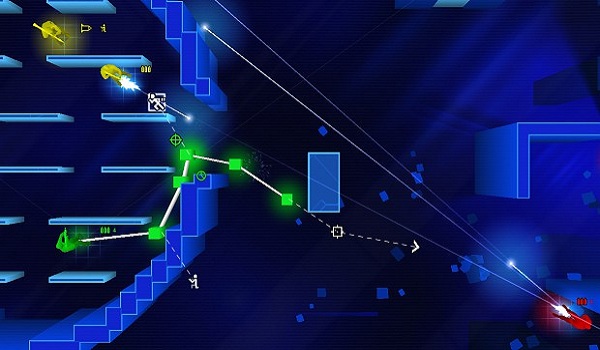
You control your units in a top-down view of the battlefield, with all units of both sides revealed to each player. Taking control of one unit or soldier at a time, players can task their men with general movement, aiming, crouching and of course fighting. The game is paused whilst this is occurring and once you are sufficiently happy with your orders then you may submit them to the “Shape Network”. Once this is done, you will be able to see them play out in real-time, as well as the enemies commands as well. You see, Frozen Synapse is a simultaneous turn-based strategy game, which means that both sides plan their moves at the same time, meaning you kind of have to prepare for what you think the opposition will do, rather than react to what they just did. This concept took me a bit of time to get used to as I would prepare all my men to enter and clear a room, submit my turn, only to realise that the AI had ordered his men to leave through a back door and come around the side to flank me.
Everything in the game costs time to do, of which you have a total of 5 seconds. Movement and aiming are the biggest tie-sinks in the entire experience, as actual shooting and combat encounters are resolved in seconds.
This is where we see the game’s fairly high difficulty curve come into play. While there is a tutorial present (which the game definitely needs), Frozen Synapse contains a lot of concepts and tactics that the player has to get their head around to effectively deal with the combat situations they face. For example, when ordering a single unit to say move across a room, you have to double click where you want him to go (stacking these orders if you want him to walk around something a certain way), make sure he is aiming in the direction you want him to move and be sure that no enemy line of sights are possible or risk death. The aiming is particularly frustrating when you want to move more than one unit.
When sending a solider anywhere certain points appear on his path if he has to alter direction in any way, these points have no effect on gameplay other than to show his view will change. You see, when issuing orders you must always take view in to consideration. If he is looking one direction and you want him to move a different one then he will sidestep the entire way, drastically decreasing his movement speed, thus you always want him to look the correct way which speeds him up (unless enemies are nearby that he needs to look at). However, at each of these points where he changes direction, you have to physically change his view back, meaning a lot more work and time-consumption just to get the soldier from point A to B efficiently. The entire concept is just busywork for the player and I can’t see why the developers couldn’t have put some sort of automatic process in place where unless you physically tell them not to, the unit follows the path you set out exactly, changing his view to suit at each point. This would save heaps of time and create a much smoother player experience.
There is also a wait function which is meant to be used just before you exit cover. Your unit will wait two seconds (you can set this time but that is the lowest that it works) for the enemy to glance away and then you will be able to move to the next one. Works well in the tutorial but in the full game? Not so much. I attempted this numerous times when up against a sniper (who you practice on) and found that even after he looked away, he would still glance back before I could get to cover and well… yeah, there goes my rifleman’s brains.
A nice variety of missions fills Frozen Synapse, including things like squad elimination, hostage rescue and of course escort missions! Sigh, the escort missions. While games have been using them for a long, long time here they are especially painful. The reason being that even if you get right to the end of the level with your VIP intact, one lone shot-gunner can end all that in seconds and cast you back to the very beginning of the stage. This issue is not an altogether new one in games, but is still a frustrating nitpick of an otherwise mostly fun game.
There are times in which the game will glitch as well, though that could be expected with such a small studio. For instance when ordering one of my men to run down a corridor he got stuck on a wall and shot by the enemy, meaning you need to stay well clear of walls as your team AI is completely dependent on your input, that is to say non-existent. This makes perfect sense in a turn-based strategy game but I just wish that my rifleman would actually become aware of the fact that he was constantly walking into a wall and perhaps go around it. Also, the enemy team seems capable of some crazy feats that I could only hope for. At one time I had two men guarding a room only to allow an enemy rifleman straight past their line of sight and into the room. He then shot one of my units and ran back out to safety all in the span of 5 seconds with my own rifleman simply watching the events unfold.
It’s not all darkness and disappointment for Frozen Synapse however, the game is genuinely enjoyable and can get incredibly tense in some places. When your down to your last man and you manage to take out a squad of enemy soldiers through effective use of tactics and bravery, many hurrahs are heard around the computer. Or when your carefully laid out plans to first take out a covering sniper and then wreak havoc among the remaining enemy soldiers is actually pulled off you feel a huge sense of achievement and victory.
Multiplayer shows great potential as well, with some games lasting minutes while others continue for days or even weeks. Players can take their turns whenever they wish and check back on the results next time they come online. While the current popular tactic for the game is to gather a group of rocket-wielding troops and simply fire where you think the enemy will move to, I see some great possibilities for really full-on tactical gameplay, with some real potential for very hairy hostage situations.
On top of this, each day a featured multiplayer game is available to watch, meaning you can see how the rest of the community is playing out their own strategies, while taking tips to improve from some of the games’ best.
The fact that all maps in the game are randomly generated ever single time you restart a level or play a next one, means the tactis are always changing up and that can be nothing but a good thing. If you like a map and want to play it again, the game remembers many of the last seeds that you played on, allowing you to rectify previous mistakes or try to win yet again for more glory.
Overall
I’ll admit it. It took me quite a while to get over the high entry point needed for Frozen Synapse and actually get deep within the game itself. But when I got to that point I started to figure out what made the game so enjoyable to so many. The heavy emphasis on tactics, the engaging music and the joy of seeing your plan pull off without a hitch are what really set the game apart. No other game handles simultaneous turn-based play so well and Frozen Synapse is definitely worth a look at if you can get through the fog of difficulty that permeates its first few levels. While suffering from some issues with a lacklustre story, general gameplay issues and really needing some patched in auto view, the game is at its core just fun to play. Frozen Synapse is a success at what it sets out to achieve and I think that’s what people will ultimately take away from it.
Primordia Developer:Wadjet Eye Games, Wormwood Studios Publisher: Wadjet Eye Games Platform : PC Release Date: 5 December 2012 Price:$9.99 (available here)
Overview
Games like Telltale’s The Walking Dead have proved that point and click adventure games can still hold their own in today’s market. Whilst TellTale are one of the more well known developers repopularising the genre, there are still plenty of independent devs out there making games where story and character take precedence over gameplay mechanics and graphical posturing.
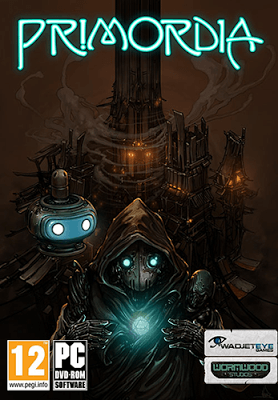
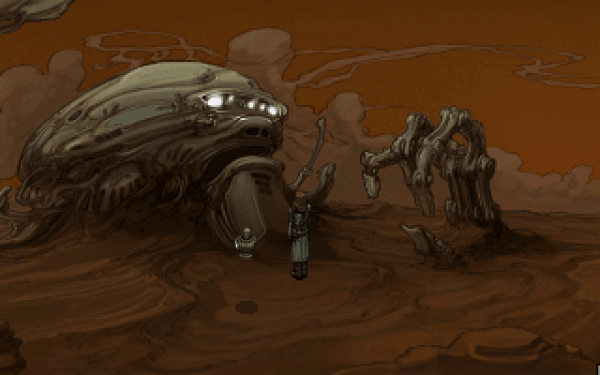
Wadjet Eye Games is one such developer. They have released a steady stream of point and clicks including neo noir Gemini Rue, The Blackwell Deception and Resonance – all of which have been well received. Their latest project, a joint venture with Wormwood Studios, is Primordia. This science fiction tale follows the adventure of Horatio Nullbuilt, a robot living in a post apocalyptic wasteland with his floating droid companion Crispin.
Gameplay
The mechanics found in Primorida echo those of other Wadjet Eye games and point and clicks in general. Players click on screen to move the character, use one mouse button to look at an object, the other to act on it. There’s a drop down menu that appears from the top of the screen for access to the inventory, map and data, and also keyboard shortcuts to hop into these functions as well. Selecting items could be a lot smoother, but the main gripe with these additional feature is the small size of them – why does Horatio’s data pad have a screen that can only accommodate a few characters per line?
Although the map and data pad features aren’t perfect they are extremely valuable during the course of the game. The map provides a time saving fast travel system, and Horatio’s data pad automatically records snippets of data that are essential to progressing through the plot. Along with Horatio’s companion Crispin the data pad is essentially part of a hint system that you can take advantage of as you choose.
Crispin’s contribution is handled rather well. As well as his scripted dialogue players can click on him for assistance when stumped. Sometimes he’s helpful, sometimes he’s just winds you up. The amount of dialogue lines that the little guy can churn out over the course of the game is impressive, and the banter between him and Horatio is funny and charming. Autosaves are fairly generous, and there’s room for multiple save files which you can rename yourself.
The puzzles throughout the game are neither particularly memorable nor particularly difficult. Some may provoke a bit of head scratching but genre fans are unlikely to find anything novel or memorable. The first half of the game has a lot of object hunting, which opens up upon entering Metropol and encountering other robots to hang puzzles from. There are a few words puzzles thrown in for variety, and the game is pleasingly self aware that it relies on a particular object to solve one too many problems – “Can’t we just use the plasma torch?”
Story
Horatio and Crispin live in the wreck of a spaceship in the middle of a barren desert, spending their days building things from spare parts and junk whilst surviving off of the ships power core. The drama kicks off quickly when a sinister robot appears and attacks Horatio, making off with the power core.
After establishing an emergency power source Horatio and Crispin must chase down the core, an adventure which takes them to a handful of strange locations before settling in the city of Metropol. As always with adventure games it is largely up to the charm of the characters and the strength of the world they inhabit to make the slower pace of the action less obvious. In Primordia’s case both boxes are ticked, with the setting and mythology being particularly strong.
In Primordia humans are long gone from the world, relegated to a creator myth that forms the basis of Humanism, a belief system of which Horatio is a follower. The world is clearly in a post-apocalyptic state after some unknown disaster, and Horatio himself has a mysterious past which is gradually uncovered throughout the story. Whilst current events initially seem disconnected from the past , everything begins to mesh together as more about the world is discovered, and if you pay it enough attention Primordia will surprise you with the depth of its world.
There is a lot to be read into but only if you desire to do so. No agenda is pushed, with potential messages sitting quietly in the background waiting to be uncovered by a curious player. The story touches on individual freedoms in the face of progress, the survival of the many over the lives of a few – even religion gets a look in here, with Horatio facing a world where his beliefs are looked on as foolish, and even something to be persecuted. Primordia excels in creating it’s own history and mythology, and gamers with a love for story and sinking into fictional worlds will lap up all the little details on offer.
A sense of humour runs alongside the more serious and grim elements of the game, with pop culture references and self aware humor lighting up some of the dialogue. The banter between Horatio and Crispin manages to remain entertaining throughout the entire game –indeed Crispin has an excellent supply of put downs to manage players who get too hint happy. That said the little guy can often offer hints to puzzles already solved, which does break the immersion when it happens.
There’s a strong collection of supporting characters at play too, with the artwork, sound design and voice work coming together to create some memorable creatures and moments. Many of them are more than a little sinister or insane, adding to the notion that the world Horatio occupies is falling apart at the seams. Things trip along at a good pace; new questions arise as old ones are answered, and a trickle of new characters also helps keep interest high.
Unfortunately the conclusion of Horatio’s tale doesn’t live up to the rest of the story. Despite some technical issues that cropped up during the final moments of the game (which I am now assured have been remedied) it just felt that every action I had taken had made no difference at all and that things hadn’t been resolved in the slightest. The drive that Horatio has at the beginning simply disappears in the latter half of the game, and the villain of the piece really didn’t inspire enough emotion to care about. Looking at it from a more objective perspective the final outcome perhaps feels right in tone, and if Primorida were a straight up science fiction short story rather than a game it might have proven quite satisfying. Opinions will no doubt differ from player to player, but I have to admit that I felt disappointed by the finale.
Running alongside that was a nagging feeling that I had missed something. Why was that object in my inventory never used? Did I miss something along the way that would have made that small area have a purpose? Whilst these small elements added to the feeling that things were left unresolved, the fact that they still play on my mind is a credit to the strength of the world.
Audio & Visual
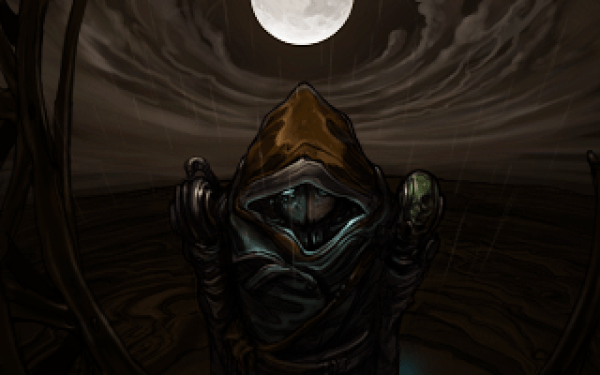
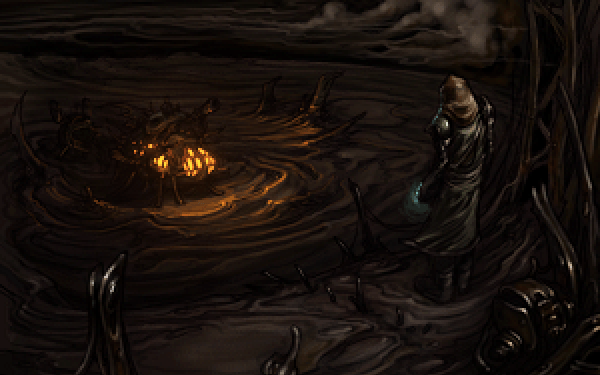
Primordia carries Wadjet Eye’s signature adventure game style – a low res, pixel art . It has it’s own brand of unique charm, and the landscapes and characters in this particular adventure boast some excellent design work, some of my favourite from any of their games. The colour palette can feel more than a little drab at times (read: BROWN), and accentuates the fact that the game could be a lot prettier in a higher resolution. I couldn’t help but wish to see some of the character designs and artwork in a better light, given room to breathe with smoother animations and a clearer style. Hunting down some concept art only exacerbates the fact that some of the quality of the art is lost in so rigidly sticking to a low res pixel art set up.
Nonetheless there is still something admirable about the style of Primordia, and it’s certainly one to stand out from the crowd. The voice acting is largely quality throughout, even if long term fans of Wadjet Eye might stumble a little upon Crispin’s voice actor being the same as Joey from the Blackwell series, especially given that they are both comic relief characters.
Overall
Not the strongest of Wadjet Eye’s releases, Primordia is nonetheless a pleasant enough adventure to spend an afternoon on. The atmosphere is strong , the mythology intriguing and the characters entertaining – fans of Wadjet Eye’s previous works will certainly enjoy the characters and storytelling. Sadly there are no stand out moments from the puzzles and the finale leaves a lot to be desired, placing Primordia below some of the more well formed stories out there in adventure land.