Today, Iceberg Interactive released the first trailer for their upcoming PC strategy game, Star Lords. Coming to Steam early-access in late 2013, this 4X space-strategy boasts,”human-like,” AI as well as an intricate political system dealing with economic issues as well as the obvious problems that come with interplanetary warfare. The game takes a turn-based combat approach, giving players the opportunity to think about their actions and come up with a killer strategy that will crush their enemies under foot. Not only that, but you can conquest in style by customising your ship to your heart’s content, and if that isn’t enough then players are being allowed to mod the game until they truly are content.
Star Lords is still in development, but players will hopefully get their first chance to play the game by the publishers of Stardrive when it goes early access later this year. Make sure to check out the trailer below!
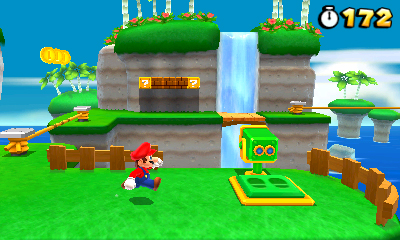
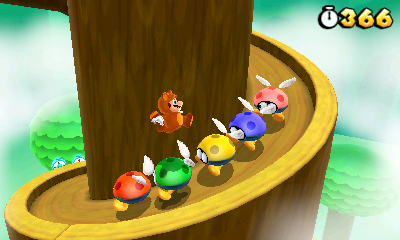
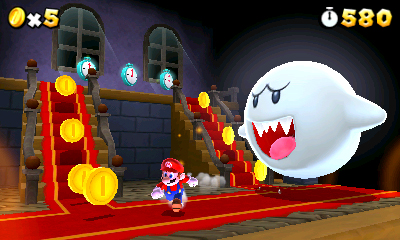
Nintendo is practically giving out copies of the new Super Mario 3D Land with its Welcome Promotion for the 3DS and 3DS XL if you’ve bought one of fifteen chosen 3DS titles.
Owners of the Nintendo 3DS and 3DS XL consoles can register their handheld and just one of 15 selected games with Club Nintendo between November 28 and January 14 to be eligible for a free download code. You can then redeem the code and grab Super Mario 3D Land from Nintendo eShop to an 3DS, 3DS XL or 2DS console before March 14, 2014.
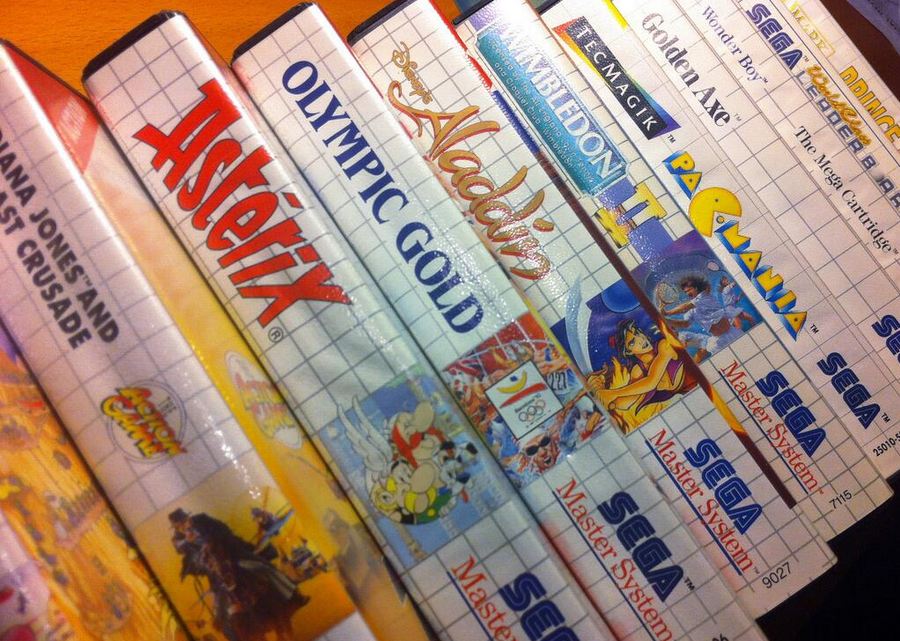
Undercoders has announced that the Video Games Quiz Series has been expanded with 3 new editions: Video Games Quiz MegaDrive/Genesis Edition, Video Games Quiz MasterSystem Edition and Video Games Quiz GameGear Edition.
Are you a true 90’s gamer? How many classics of Sega’s golden age can you name? Find it out in the new Video Games Quiz series MegaDrive/Genesis, MasterSystem and GameGear editions! Featuring a whooping total of more than 750 8-bit and 16-bit classics to guess, divided in 10 levels of ascending difficulty: from the fastest platformer of a generation to the most obscure japanese-exclusive only a true retro gamer will be able to identify!
The Video Games Quiz series challenges players to show their knowledge of Video Games, through a collection of screenshots which they are requested to identify. The fastest each level is cleared, the higher the rewarded score is. Levels are unlocked progressively and if players get stuck in a game they can’t recognize, Video Games Quiz Coins can be used to receive valuable hints or help can be asked through the most popular social networks.
Hint: These are games
Video Games Quiz series continues to grow with new Editions and features. Test your knowledge in:
The fiercest Console Wars of the 90’s are back with Video Games Quiz’s latest feature. Demonstrate your knowledge and prove just who knows their favourite console best. MasterSystem vs NES, GameGear vs GameBoy and MegaDrive/Genesis vs SNES. Every point scored will be summed up in a global ranking. So rack up the points and help your console win the war.
The MegaDrive/Genesis, MasterSystem and GameGear Quizzes are available now for free for iOS (iPhone/iPad) and are coming soon to Android. For more information, and the links to purchase other quizzes, visit the official site and Facebook page. Check out the pictures below and learn a little more about what you’re up against. Just how much do you really know?
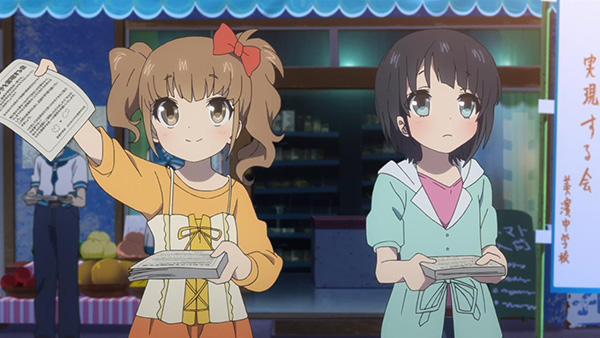
Well, that escalated fairly quickly. I had a gut feeling something was going to throw a spanner in the works and complicate the tenuous relationships between the village and the surface following the previous episode.
The Wooden Maiden or the Ofunehiki, an offering to the Sea God, is finished and is looking stunning thanks to the hard work of the school kids from the village and surface alike. The clincher here is when Manaka and Tsumugu say out loud that they want to do the boatdrift ceremony inn unison, much to their embarrassment. Hikari takes note of this thoughtfully rather than jealously. In an awesome show of maturity, he decides to change himself by making the ceremony a reality for the sake of Manaka and Tsumugu.
Tsumugu suggests that they should all do it together with both the Sea Village and the surface working together, the only problem is that the Village and the surface Fishery Cooperative are in disagreement this year. Hikari pushes ahead for the ceremony to continue, vowing to get the Sea People to agree via a petition while Tsumugu tries to convince the surface.
Manaka notices that Hikari isn’t acting like himself, instead he’s more determined but for a reason she doesn’t know. Chisaki suggests he’s trying to change himself and Manaka awkwardly tries to put a negative spin on this fact. Chisaki laughs it off and ponders that some things change whether we want them to or not.
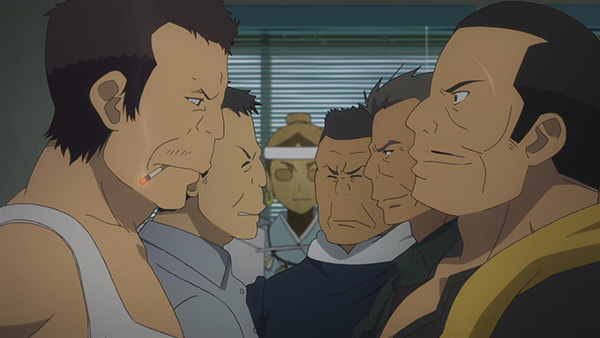
Hikari’s dad, the Sea Village, wants no part in this cooperative effort but still shows up to the eventual deliberation between the two sides. It starts off promising, with everyone but Hikari’s dad impressed by the effort put into the Wooden Maiden. But the dad points out that the kimono isn’t wrapped properly, talk about being a pessimist! It doesn’t take long for the whole meeting to go haywire as the Sea Village demands a broad apology from the surface. The smug demand turns into a full-blown argument and it gets even more heated when Akari untimely shows up with her boyfriend Itaru, adding fuel to the fire. The whole gets a little out of hand and, predictably, like a train wreck in slow motion the Wooden Maiden falls and breaks.
Later on, Akari’s father once again bluntly tells her to break up with her boyfriend, to which she replies in an interesting way. Recalling how she once asked her mother why she married, because she was in love of course, and if her father was from the surface would she still marry him? Her mother said yes, and so Akari stands firm by her decision to become Miuna’s new mum. What can her dad say to that, really?
As Akari is packing her bags and getting ready to leave, Hikari surprisingly decides to join her exodus. He explains by saying he can’t resolve the differences between him and his dad. While that’s a fair point, he’s still just a kid and one who has plenty of friends that will be left behind if he leaves. At this point, I really don’t know what to make of his decision.
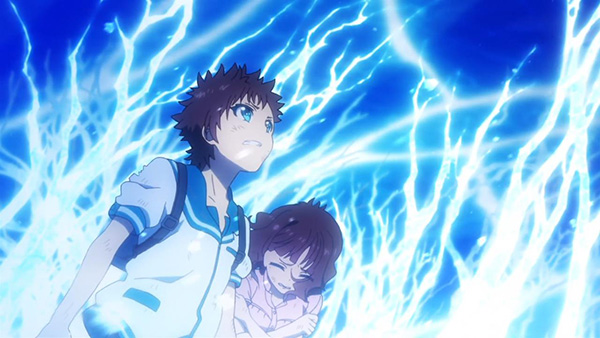
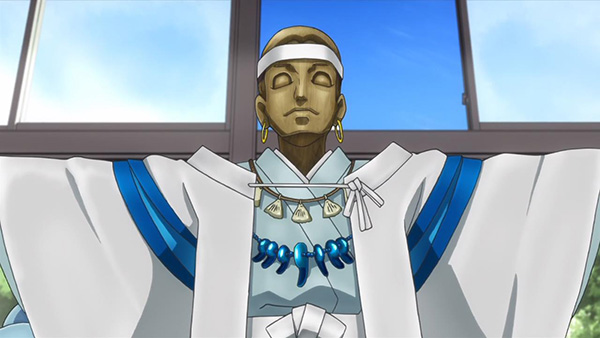
The two make a final visit to Uroko-sama’s shrine and their father ans bid the two farewell. Desertion doesn’t come without consequences it seems, as Uroko-sama attempts to stop them by encasing them in the magic of the Sea God before trying to freeze them as they defy his demands. Their father begs Uroko-sama to spare them, and he does. The two siblings run towards freedom.
So ends another uncertain episode, where we finally see first-hand how it’s like to escape the Sea Village of Shioshishio. Where will this lead Hikari and Akari and the greater Sea Village in general? I’m apprehensively awaiting the next episode of Nagi no Asukara.
Joymax is sending out a thank you to all the Tamers in their worldwide MMORPG, Digimon Masters. With a plethora of Thanksgiving-themed events including delicious meals with all the trimmings, it’s the perfect time to dive into the Digital World for goodies: including new tamer bonuses, log in rewards, and even virtual pumpkin pie!
If you haven’t tried Digimon Masters yet, new Tamers will receive eight cash shop items to get them started on their adventure. This package of items includes the most popular cash shop boosters, and includes a 100% EXP Booster, 7 Inventory Expansions, a Digimon Archive expansion, 7 Storage Expansions, and more. This is a limited time offer so be sure to sign up before this new Tamer deal disappears in December.
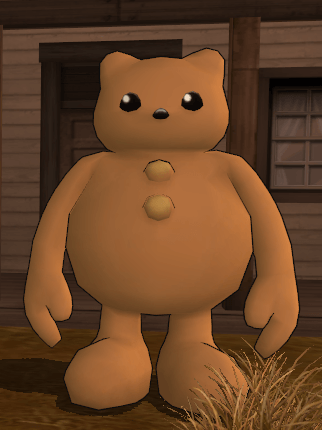
MudFrigimon has arrived just in time to cook up a fantastic feast! Purchase Thanksgiving Dinner themed items from this NPC and receive a variety of boosts: Potatoes, Corn and Turkey increase a Tamer’s defense, while Cranberry Sauce, Eggnog, and delicious Pumpkin Pie will increase the player’s skill damage. These delicious treats will only be available for the next three weeks, so grab them before MudFrigimon departs for another year!
Compliments to the chef
The longer you’re logged in to Digimon Masters, the more prizes you get during the holidays. Staying logged in for a consecutive period will net you prizes: a Thanksgiving coin for 15 minutes, a Hot Pepper for 30 minutes, and a Capsule coin for 60 minutes. Hot Peppers give players a 200% bonus to their Tamer EXP for 30 minutes, while Capsule coins can be used in the exciting Capsule Machine for a wide variety of cash shop prizes. More rewards will come for longer period you stay, such as more Capsule Coins, Evoluter pieces (5 pieces =1 Evoluter), Random data boxes and Digi Aura. So hang around for a while.
Save up your Thanksgiving coins and trade them in for even more prizes. Rare ones. 10 coins will net you a 60% EXP booster for a whole week, whilst 25 coins grants you a choice of a single Reinforced Mercenary DigiEgg: Agumon, Patamon, Biyomon, Tentomon, Gomamon, or Palmon: the original six. Players will be able to gather a maximum of 28 coins, so be sure to log in daily to save up enough for this rare deal.
For more information on this Thanksgiving extravaganza, visit the official site and Facebook page. Give thanks and be merry, it’s a Digimon holiday!
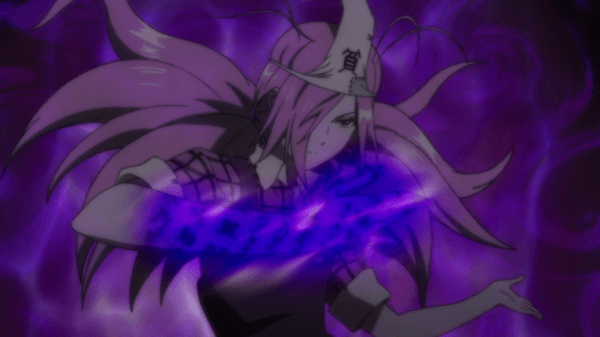
Good Luck Girl! Studio:Sunrise Publisher:FUNimation Format:Blu-ray/DVD Combo Pack Release Date:November 19, 2013 Price: $64.98 – Available Here
Overview When something released in Japan is brought over to the West, often the name of the product is kept the same in both regions. If this is too much of an issue, usually the English equivalent of the title is used. Of course there are other times where the title is changed completely and in the case of Binbogami ga!, it isn’t for the better. Disregarding the disappointing name, now that Binbogami ga! has been brought to North America under its new name Good Luck Girl!, is it worth picking up?
Story Ichiko Sakura appears to have everything going her way. She is beautiful, popular with all of the boys in school, intelligent, and boasts one hell of a body. However they say beauty only runs skin deep and in the case of Ichiko, under that skin is one venomous personality. She is often pleased that all of the girls in school happen to hate her and that the only person she cares about happens to be her butler Suwano.
There comes a limit to everyone’s luck, but with a person like Ichiko always having things go her way, even the gods begin to take notice. You see, not only does Ichiko have such an abundance of ‘Happiness Energy’ she actually unwittingly saps the happiness energy away from everyone around her, bringing disaster to those close to her.
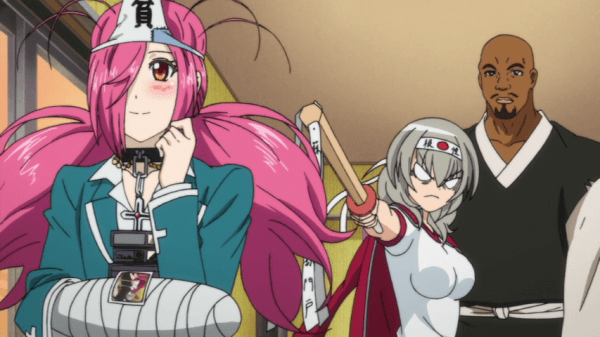
As such, in the realm of the gods, a god of poverty named Momiji is tasked with finding Ichiko, removing her abundance of energy, put a stop to her energy sapping ways, and restore balance to the area around her. Therein lies the overarching premise of the story but this is not an anime where the plot plays a pivotal role in progression, instead Good Luck Girl! is character driven anime and one that is as hilarious as it is random.
After watching enough anime, there comes a point in time where viewers have seen so many different stories that it is easy to predict what will happen or what character will be doing what in each episode. However Good Luck Girl! manages to throw one curveball after another at the viewer thanks to the fact that Momiji has a never ending array of tools at her disposal while Ichiko can take advantage of her own good luck and incredible energy to thwart Momiji’s efforts.
It also helps that the two characters work so well together it makes every exchange between the two very enjoyable to watch. Their stark contrast in personality and the randomness of the anime make it so that the viewer never truly knows what to expect. Compound this with the fact that there are so many references to various anime, both in through costumes, art style changes, and dialogue and Good Luck Girl! is a series that veteran anime fans will be testing themselves with to see if they can catch every reference.
Outside of the comedy factor, there is some heart to Good Luck Girl! as well as character development for Ichiko. While Momiji stays the same and her mission to take down Ichiko is the key part of the series, Ichiko is clearly the star of this show. While she may begin the series as a snob who looks down on everyone around her, viewers learn about her damaged past, and she slowly begins to change as she starts to care for others and learns that it is alright to care about others.
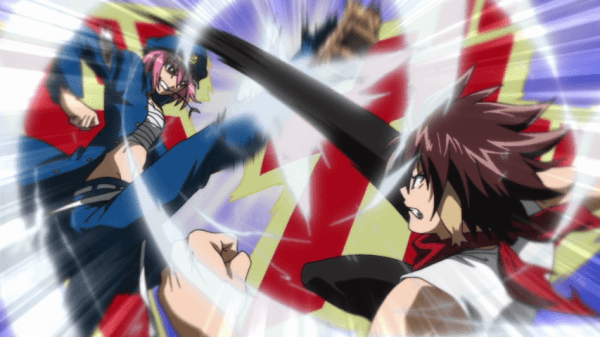
That being said, while Ichiko and Momiji are the key characters in the series, the supporting cast is absolutely hilarious and helps add a lot of humor to the series, especially when you consider that the cast includes the likes of a masochistic dog god, a girl raised as a boy who loves to fight, a perverted monk, a hardworking and always sleeping classmate, a cat god, and even a photobombing character that only shows up during the last few seconds of each episode.
While it has its fair share of drama, especially whenever Ichiko realizes that the new people she is growing closer to are in danger because of her, the series is often light-hearted and everything from violence to clichés are used to get laughs out of the viewer. Still, thanks to a number of small story arcs throughout the series and a great closing arc that sees Ichiko acknowledge and accept her life, Good Luck Girl! ends on a great note.
Visuals There is something that can be said for having proper colorization to fit an anime theme. For dramatic series softer, darker tones are best suited and in the case of Good Luck Girl! the bright and vivid colors used throughout the anime are a perfect fit. Thanks to the randomness of the anime and the series’ habit of altering the art style to mimic series that are being referenced, or morphing the characters into chibi-style for the sake of comedy, Sunrise has done an excellent job making sure the series looks great.
It also helps that the character designs are fairly impressive and varied from character to character with a number of different outfits for each of the characters in the series, especially Momiji who undergoes a number of costume changes throughout the series. It is also worth noting that whenever there is action in the series, it is nicely animated though it feels like some instances were sadly cut short for comedies sake, whereas extending them a bit may have added more to the show.
Audio With the release of Good Luck Girl! in North America, FUNimation has included both their new English dub as well as the original Japanese voice track. The English voice actors do a great job bringing the characters to life and the interchange between Ichiko, voiced by Brina Palencia, and Momiji, voiced by Colleen Clinkenbeard, still sound great in the English version of the show as the two show great chemistry when working together.
As far as background music is concerned, the soundtrack is a bit forgetful but does have a share of nice dramatic pieces that work well whenever Ichiko is forced to make a decision. While the opening and ending themes for some anime can be easy to skip past, I highly recommend listening to both themes in Good Luck Girl! as the opening “Make My Day!” by Piko and “Love Riot” by Happy Birthday are both excellent songs that are accompanied by some great animation.
Extras Good Luck Girl! comes with a number of bonus features, though many of them are run of the mill for a release such as this. There is the textless opening and ending themes, with the second ending theme featuring the second half of the opening song, US trailer, trailers for other FUNimation releases as well as two commentary tracks. The special addition in this release however is a video commentary for episode 8.
The video commentary features Joel McDonald, the director of the English dub, Brina Palencia, Colleen Clinkenbeard, and Marth Harms who handles the voice of Ranmaru. This is a nice touch to include in the release and it mostly features the cast discussing their characters and how they liked handling each one.
The standard commentary tracks are for episode 4 and 12 and this time around they have been spiced up with a new theme. Both commentary tracks feature questions from fans of the series, which are either read off by the fans or by characters from past FUNimation series, meaning there is a question asked by Vegeta from Dragon Ball Z in here, fitting considering the amount of references in the series. The commentary for episode 4 features Todd Haberkorn who handles the voice of Momo’o and Brina Palencia again while episode 12’s commentary features Colleen Clinkenbeard and Martha Harms.
Overall Good Luck Girl! may have been given a ridiculous name in the West, but its name change doesn’t damage the actual content of the show in the slightest. While it is almost always light-hearted and rather simple at times, the random and off-the-wall nature of the show that keeps viewers on their toes while they are also laughing continuously makes Good Luck Girl! a series that shouldn’t be passed up.
Capsule Computers review guidelines can be found here.
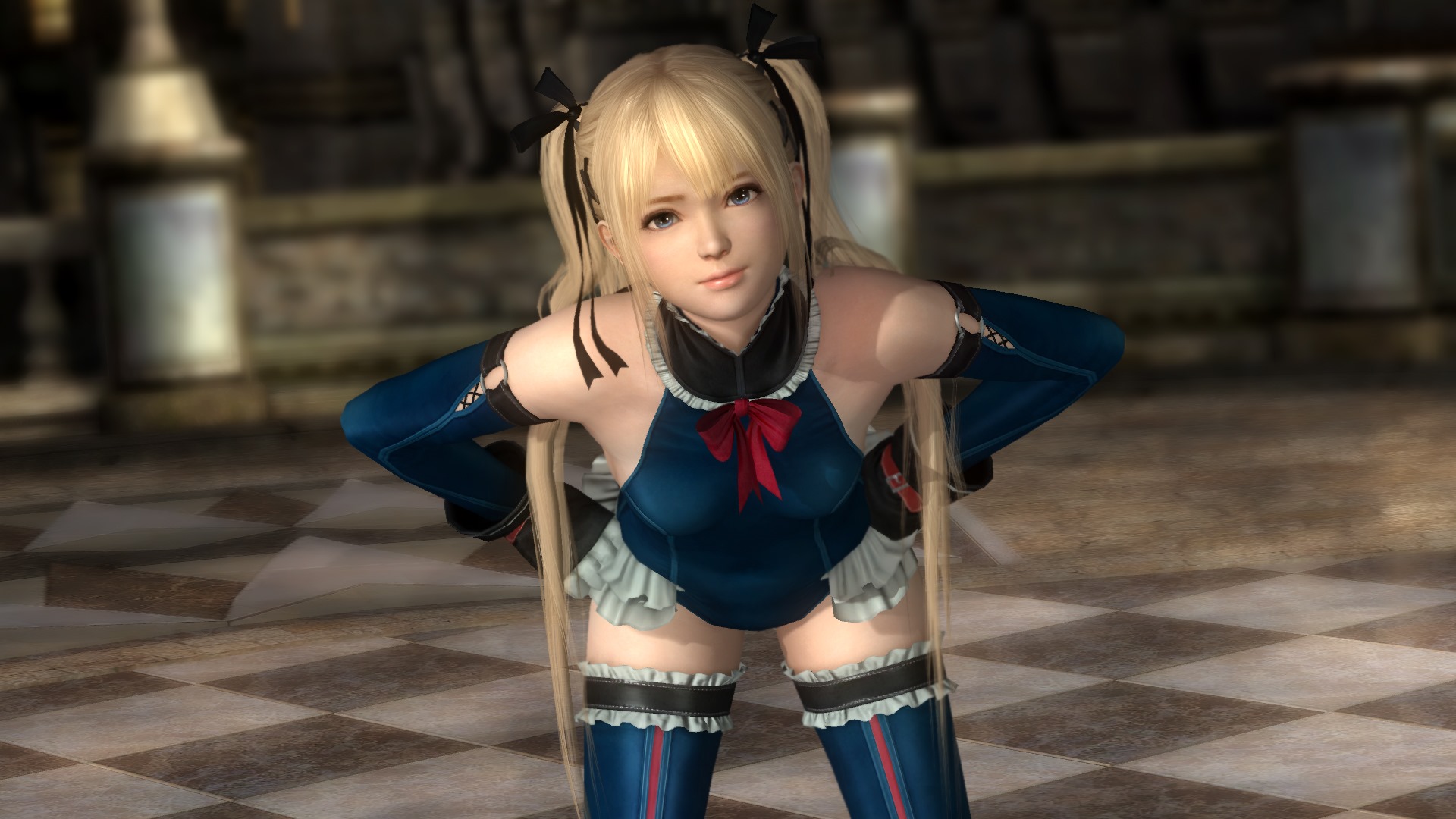
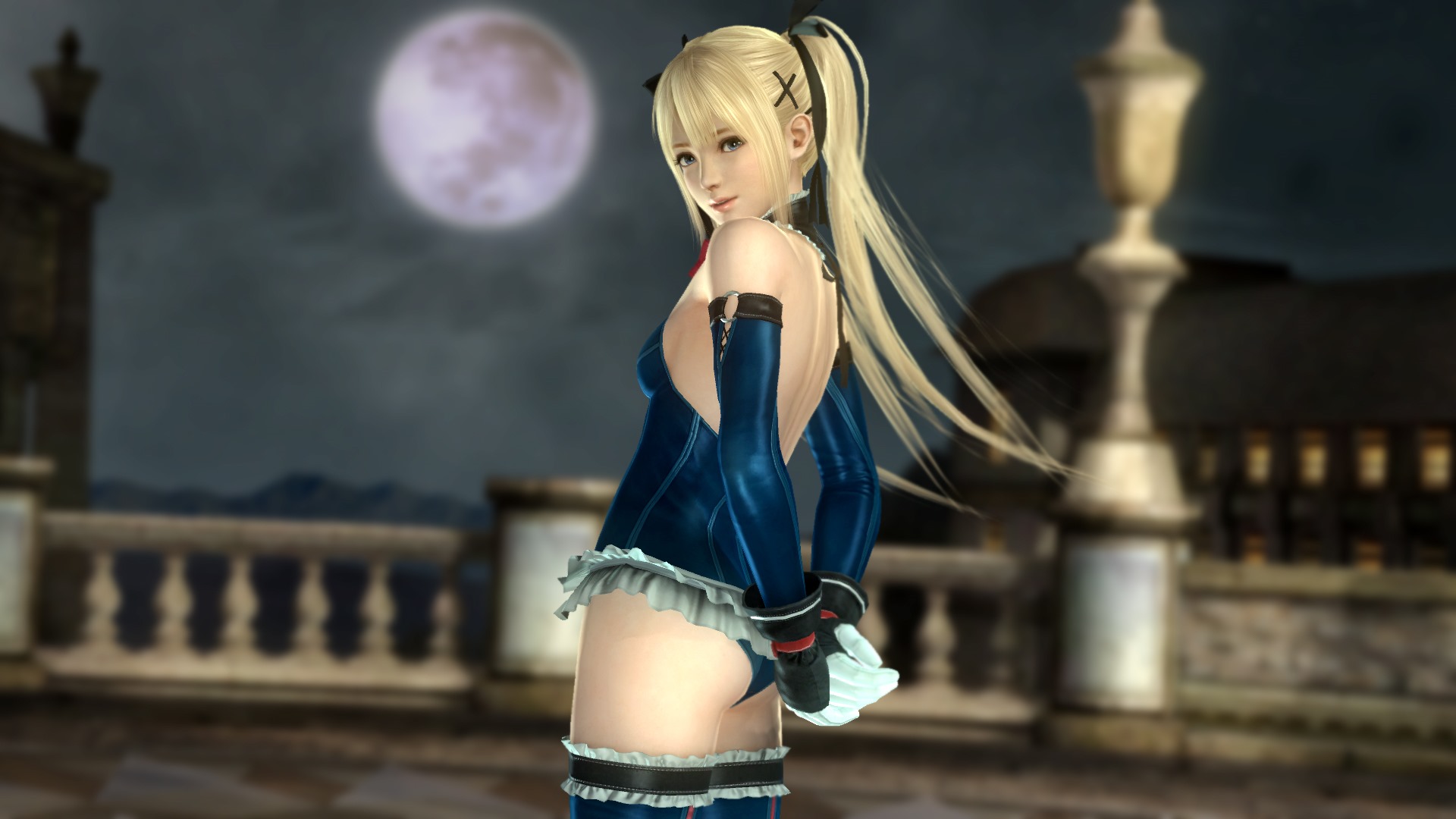
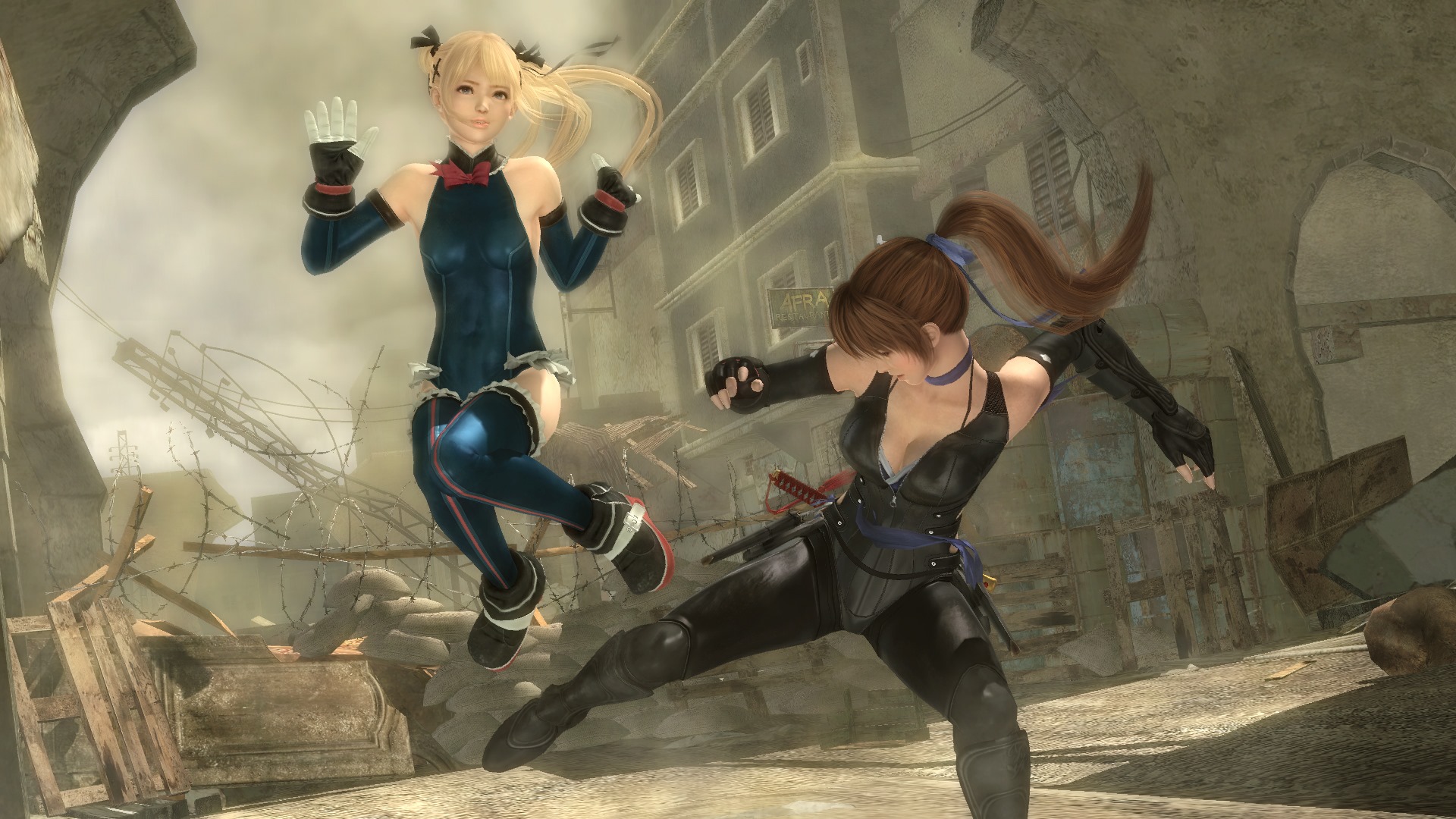
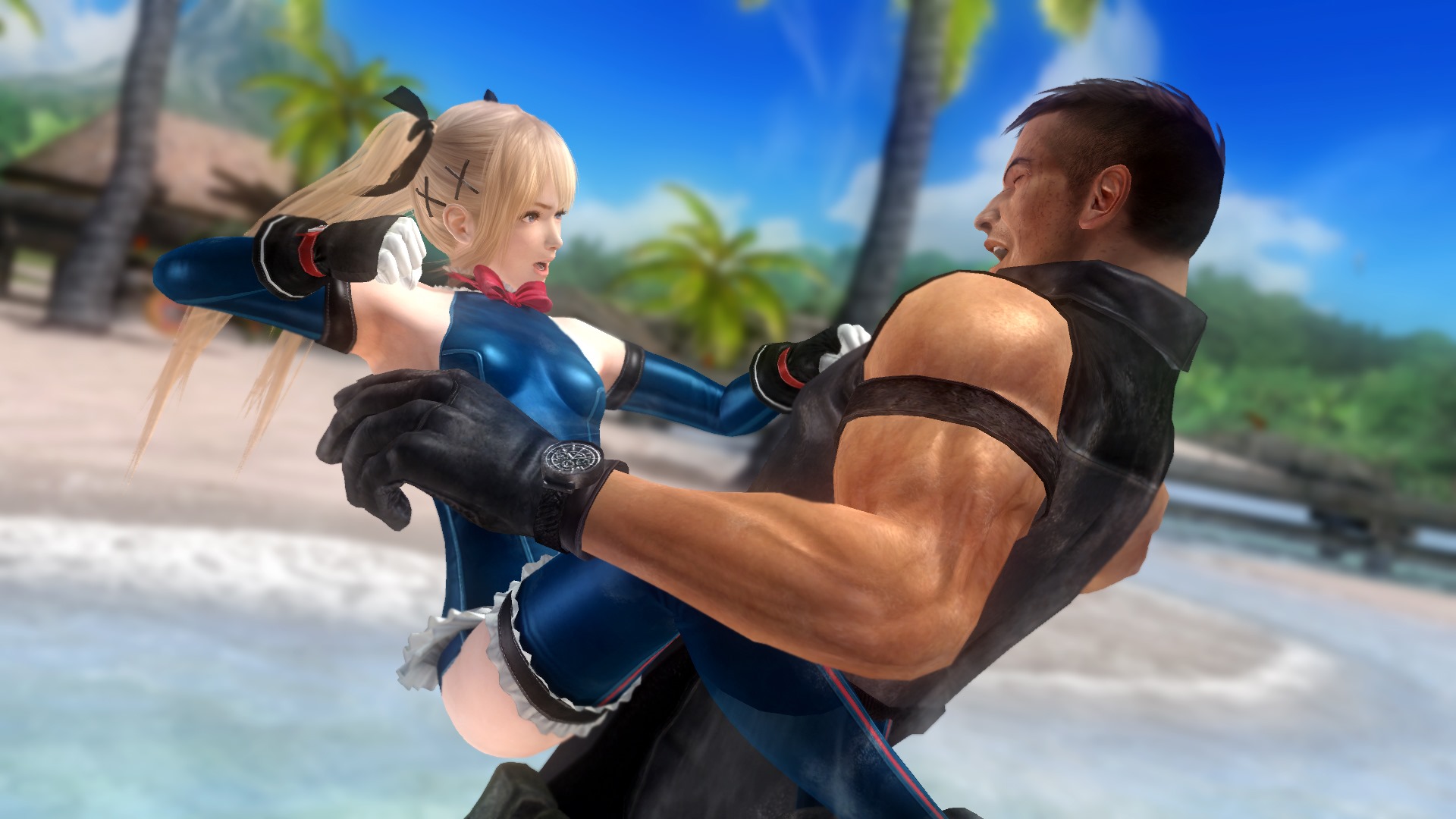
While we know that Tecmo Koei is currently planning on adding a new character called Marie Rose to the arcade version of Dead or Alive 5 Ultimate, fans have been in the dark about whether or not she would be released on the console versions of the game. Thankfully, Japanese website 4gamer was able to interview director Yohei Shimbori who stated that she would be released as an update to the game, allowing anyone with Dead or Alive 5 Ultimate or even Core Fighters to use her.
To go along with this announcement a new skintight alternate costume for Marie Rose was revealed which can be checked out below.
The battle for the medieval world continues: InnoGames announces Tribal Wars 2
Sequel of strategy-classic “Tribal Wars” planned for closed beta within the next months
Hamburg, November 20, 2013. Today InnoGames announced the successor to its legendary strategy-MMOG Tribal Wars. The game will be called Tribal Wars 2 internationally (as opposed to its predecessor, which is known as Guerre Tribale in France, Guerres Tribales in Spain, etc.), and is planned to start its browser beta within the next few months. From now on, players can apply for one of the highly demanded spots on www.tribalwars2.com. The game sports state-of-the-art graphics and will later be released as cross-platform game for Android, iOS and all browsers. Therefore, players can set up one account for all platforms and play from whichever combination of devices they choose.
“Tribal Wars was the starting point for the success story of InnoGames. The game contains so much passion and personal commitment. This is why we’re very happy that Tribal Wars 2 will be the first native cross-platform game published by InnoGames.” explains Hendrik Klindworth, founder of InnoGames. An early closed beta aims at quickly receiving player feedback for future optimization.
In Tribal Wars 2, players find themselves as leader of a small village in the midst of a medieval world. Tasked with growing and expanding their empire within a war-torn landscape, they have to fight in order to survive. The MMO’s focus is real-time strategic battles with and against other players. Army size is not all that matters – political alliances and military pacts are crucial for success. Team play is a key aspect of the game. Compared to its predecessor, Tribal Wars 2 offers a significantly enhanced set of features, with a total of 17 buildings, 26 technologies and 13 units.
Tribal Wars was developed as a hobby project in 2003 by the three founders of InnoGames, Hendrik Klindworth, Eike Klindworth and Michael Zillmer. Even though financial success was not the goal, the game grew to a size where it was impossible to maintain privately. Today, Tribal Wars has more than 50 million registered players and recently celebrated its tenth birthday with a big in-game event and a video saying thank you.
With more than 110 million registered players, InnoGames is one of the world’s leading developers and providers of online games. Next to Tribal Wars, the Hamburg-based company has scored major successes with games such as Forge of Empires and Grepolis.
Overview
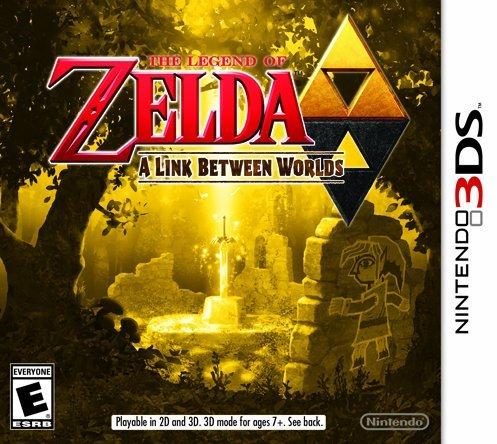
Not many franchises survive over 25 years and deliver time and time again. Not every franchise however is The Legend of Zelda, a series that not only entertained, but inspired gamers for over two decades. One of the most treasured of Link’s adventures is none other than A Link to the Past, which debuted on the Super Nintendo over 20 years ago. Sure, it was top down and different what we have seen in the more recent entries of today, but the exploration was limitless and Nintendo’s legendary charm oozed through every pixel, cementing it forever as a classic.
In the age of remakes and reboots, Nintendo have done one better and produced a successor to the game, strapping Link in for a brand new adventure in a familiar world. The Legend of Zelda: A Link Between Worlds is a game where quality and nostalgia shine, but is that enough for fans to cash in yet again? Let’s find out.
Story
Those who expect to see a brand new Hyrule and stunning narrative are going to be slightly disappointed with A Link Between Worlds, as this game was marketed as a successor and serves as just that to a great degree. The Hyrule we knew in the SNES classic is a thing of generation’s past, with a new, young Link serving as antogonist to a journey full of charm and gentle dialogue.
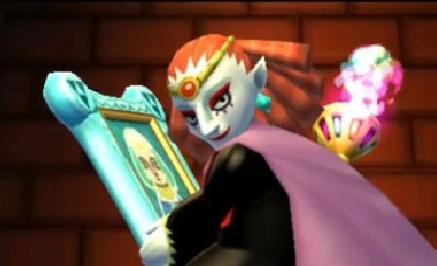
Link begins his journey here by getting caught up in another evil plot by a sinister foe. This time, the bizarre, effeminate Yuga is causing the chaos, with a mission to turn seven sages (and anyone else of beauty) into pieces of his twisted art collection. While this plot sounds a bit basic, everything flows well and as the player progresses, our new protagonist’s motives become clear – delivering yet another satisfying dish to add to those already lengthy history books. Yuga is not the most deep Zelda boss we have seen to date, but the gimmickry works and despite the lack of layers he has as a character, I must say I grew rather fond of him towards the end.
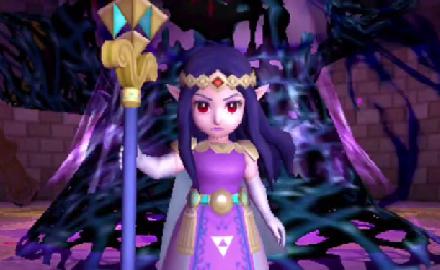
As far as the rest of the cast go, there are more than two developed faces that we run into in this revamped locale. Ravio is the first of which, who is not shy about being a houseguest and comes loaded with humor as he serves items to our hero. Hilda, Zelda’s counterpart, is also a welcome addition, offering a more grounded change in terms of a guide. Sure, she isn’t the most intriguing guide we have seen in the franchise, but much like the rest of the cast, she serves her role well and has just enough mystery cloaked around her to entice the player to not skip those dialogue sequences. There are other characters that fit in place snugly, but to myself it was the little interactions that meant the most. Paying a couple a small amount of Rupees to hear a song, hearing an old woman snarl about chicken abuse, and several other encounters found within provide a ton of heart for an otherwise standard atmosphere in the Zelda universe, and entice the player to keep exploring as you never know what lies around the next corner.
It is that element that makes a Zelda game great, and A Link Between Worlds slightly sacrifices an interesting plot to Hyrule, allowing the player to discover the secrets of the path before them.
Gameplay
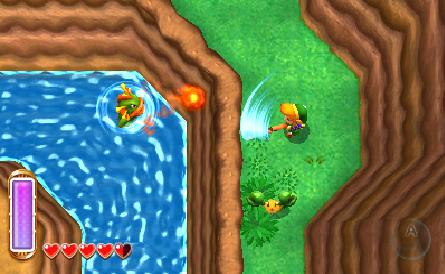
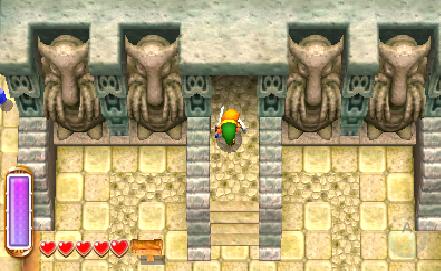
There are two different elements of core gameplay intertwining within this portable Zelda. The first is nearly the same engine we seen running within A Link to the Past, Minish Cap, or any other entry that featured the same perspective. You know, the top-down, up-down-left-right controls where the player simply walks from location to location, swiping enemies as they head off to the next dungeon. That familiar formula works well here, and comes off as polished as ever – with fluid “thought free” controls. The two screens do wonders to streamline the experience also, which we were teased a bit with the Ocarina remake back in 2011. Instead of floundering through menus to use an item, the player can access any blade or bow in their inventory with a quick swipe and drag. I can’t tell you how refreshing it was to navigate Hyrule with so little stress and hesitation, as that lack of pausing allows you to focus all of your attention to what truly matters.
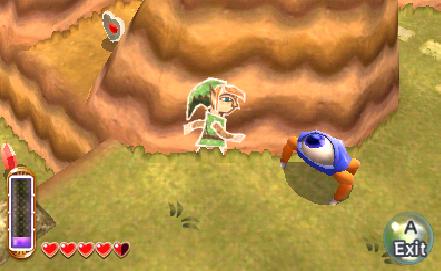
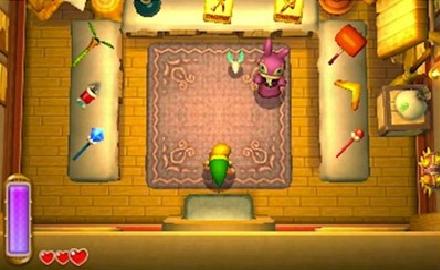
The other aspect is something brand new – the “merge” mechanic. Link can now walk right up to nearly any wall and merge with it, becoming a piece of living art. While movement is limited as “flat Link” to side to side motions, this opens up the already decently sized environment greatly and allows the player to hunt for secrets in an instant. There is rarely any battle mechanics incorporated with merging aside from evasion tactics, but that is not the intention Nintendo made with its inclusion. The purpose of going into that wall is to explore from another angle, and to solve puzzles utilizing a much more intuitive design mechanism. For example, if there is a crack in the wall but you can’t quite reach it, you first can find a comfy spot to merge that is at the same level, and then waddle on over – collecting any painted rupees along the way.
This makes for some brilliantly crafted puzzles that are sure to satisfy every single time you find the path you’re looking for. I am a bit odd with the whole Zelda franchise though. Instead of hunting dungeons to traverse through, I have always been the type that preferred to explore the world around me. Don’t get me wrong, the puzzles here are aplenty and they are all fantastic. I don’t want to sound like I am lessening my opinion of those for a minute. What I do want to say however is that this merge mechanic has changed everything in terms of exploration. The player can now go into so many different walls, even if it does not lead to anything in a very non-linear way this time around. Why? Because that freedom exists. Sure, there are rocks that can block you and you might have to pop out or find a smoother wall down the road, but a flat surface is around every corner – meaning you can play the game at your pace and discover all sorts of hidden secrets buried within.
The rupee is even more important as well, as the currency plays a large role in success as it has a greater purpose. No longer is the player collecting unnecessary funds, thanks to Ravio, the majestic dweller who is also a shopkeeper. For the first time, players have nearly every main weapon from the beginning due to a rental system in place. You need bombs to blow up a wall? How about an arrow to strike a distant target? A trek back to your house will give you all of those goods at a lower price than normal as you can now rent them. This isn’t as much of a free ride as it sounds, however. A death will drop your items instantly, and you will have to go all the way back to re-rent those coveted supplies. I would say it is an even trade off, and as you progress onward, these items can be bought and upgraded to perform much more satisfying results in combat.
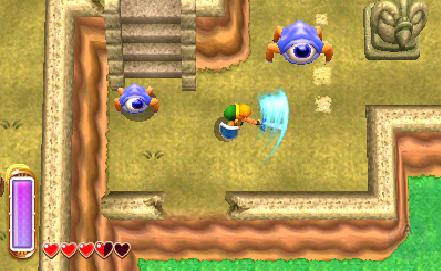
Combat mechanics are much like the rest of the game and familiar enough, but there is a bit of a learning curve with specific items. Some weapons such as the ice wand have a timed delay but are useful due to their power on contact, while other weapons are all about speed with a trade-off of power. It is a balance we have seen for years now, and for nearly all Zelda fans out there, the variety and crispness to these tools will come as no surprise from a franchise that has paved the way in terms of delivery.
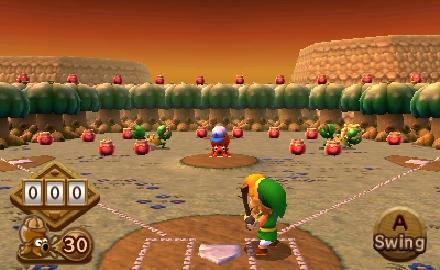
If I had to be picky at all and mention any negatives, it would be that the difficulty of this follow-up is a bit lighter. Now, it isn’t a cake walk, but I suffered very few deaths by just using common sense and alternating my inventory regularly. Merging, as I mentioned also can be a savior as well, allowing Link to scutter to safety around a large swarm. The boss battles act as a bit of a balance however, as each feature some decent puzzle mechanics to provide the challenge you may be looking for. Those who have spent 20 years speed-running older Zelda titles and trying to gain all of those hard to find heart containers will be happy to hear that this game is packed full of replay value, as the end of your story is just a beginning to a new journey that can be played at any approach due to the non-ordered dungeons and enjoyable little mini-games offered up by the friendly townsfolk.
Visuals
This was big for me. When we first seen screenshots from A Link Between Worlds, I thought it looked like some 3D puzzle game from the SNES era. It is odd how not playing the game and seeing it actually in motion can deter an opinion, but to say that I was personally on the fence with the graphics is putting it lightly. My worries were over in seconds however, as the little round models look gorgeous and this may be the best looking Zelda to hit a portable period. All of the color comes of as crisp and the animations never miss a step, allowing the polish to shine through and the player to experience a living art piece at their fingertips. Merging may change the art style a bit, but it all fits in wonderfully with the narrative in place, and adds a bit more depth to the Hyrule we already know. I never play 3DS games in 3D by choice, but for this instance, it is wise to get the full impact and crank that slider to the max, as Nintendo’s subtle use for the gimmick does nothing but make this world feel larger and more spacious, with the character’s charms bursting off the screen.
Audio
As far as soundtrack goes, I really feel like this is a given. You know its good. We have a symphony that has been on tour for years thanks to demand, and tunes like the ones found within this entry are the reason why. Without its music, A Link Between Worlds would still break through as a gem, but the sweet melodies come together to punch the player with waves of warm feelings of nostalgia and comfort time and time again. This is the kind of music that you have to wear earphones to appreciate every beat, and the lack of looping or repetition through travel gives the player a smorgasbord of delight as they enter new locations on the map. The sound effects are equally as pleasing, with Link’s little groans and the sound of enemies bursting about down nearly every path you come across. Sure, it is a portable title, but no one seemed to inform the sound team as they delivered a product of console quality.
Overall
The Legend of Zelda: A Link Between Worlds may be the best portable entry in the franchise to date, and yes, I am including remakes with that. The world is vast and lively, and the new aesthetics do wonders to give a once explored world that has been picked dry a humble beginning. Some could say that a title like this is just for the old fans, the ones who spent hours with their giant console’s adapter heating their room as they bashed away at Octoroks into the AM. I would have to disagree however, as the new-found streamlining allows this to be a great starting point for a new generation – while still feeding the retro diehards all of the same content and gameplay they have devoured graciously for years. A Link Between Worlds comes off as a Link between generations, bringing everything full circle to create yet another unforgettable experience.
Capsule Computers review guidelines can be found here.
If you happen to be a fan of Aksys Games‘ Muramasa Rebirth or Blazblue series then you now have a chance to not only help out a good cause and also get a nice bonus for your gift. Aksys Games has announced that they are holding a charity sale through their website where four items are being sold, with a part of the proceeds going to help those affected in the Philippines by Typhoon Haiyan.
The shop to purchase these items can be found here and the sale will continue until November 25th. The items on sale cost $5.00 each and include the following items:
Muramasa Rebirth Japanese Style Foldable Fan and Abridged Soundtrack CD set
Muramasa Rebirth Lithograph and Abridged Soundtrack CD set