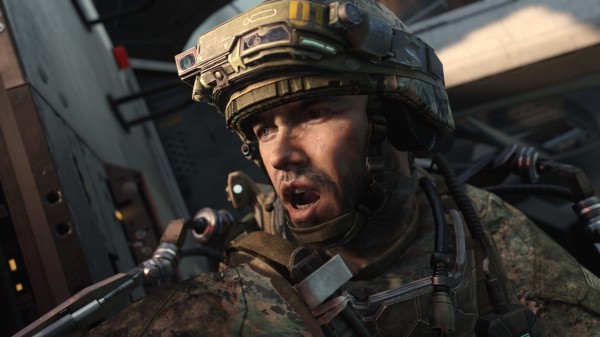
Those of you who have had itchy trigger fingers ever since the last iteration of Activision‘s Call of Duty failed to impress have probably already run out to the store to pick up the newest game in the series, Call of Duty: Advanced Warfare. For those who haven’t, well now you know that the game is available worldwide.
Call of Duty: Advanced Warfare has been in development for three years and now features an exoskeleton in an attempt to revolutionize the series by providing players the ability to boost, double jump, dodge, and make use of various special abilities provided to them by their exo suits. Using the power of futuristic weaponry, players will take part in a story where PMCs wield more power than most countries and soldiers fight not for patriotism, but for money.
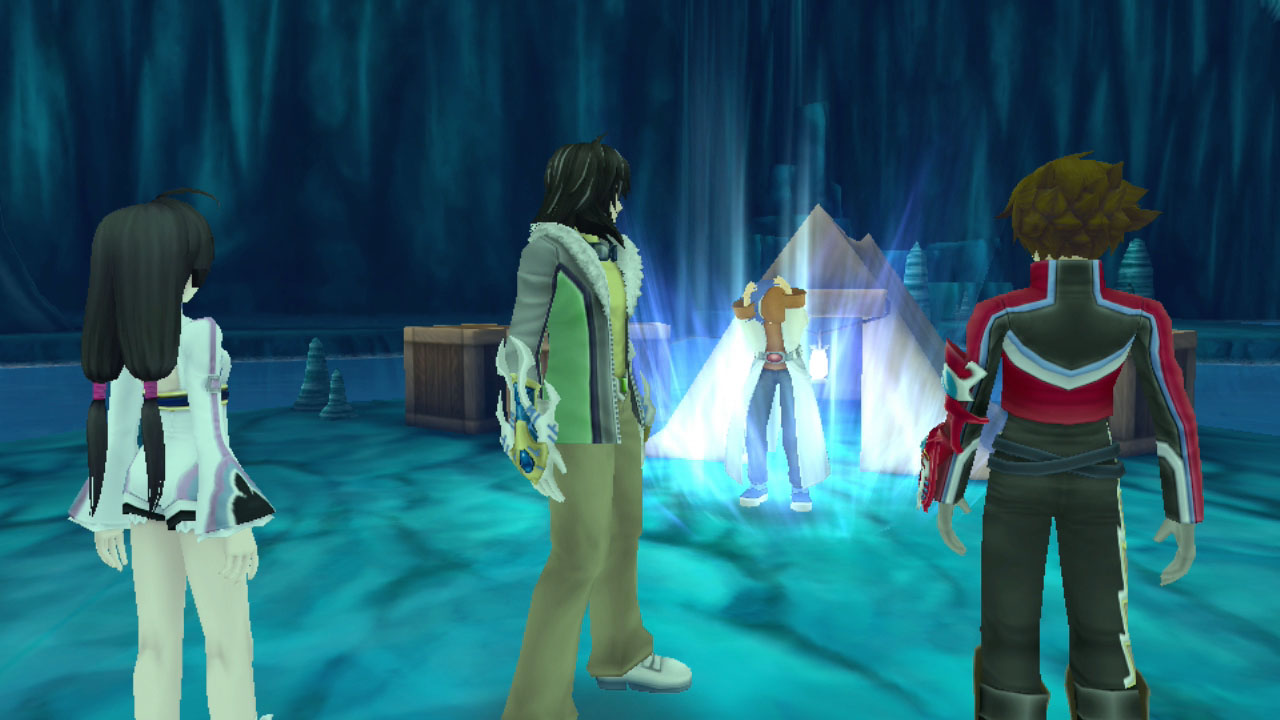
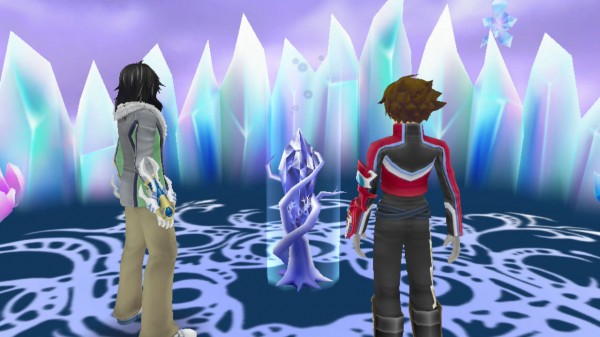
With Tales of Hearts R set to be released next week on November 11th in North America and November 14th in Europe, Bandai Nacmo has released a handful of new screenshots for the game that focus on showing off the “Spiria Nexus.”
In Tales of Hearts R, Spiria is an essence that governs a person’s soul and when the epidemic called “Despir” spreads across the land, the only way to get rid of it is for a “Somatic” to purify the core. This is accomplished by performing a “Spiria Link” and entering the nexus which is made up of a person’s Spiria where they must battle difficult enemies in order to reach the core.
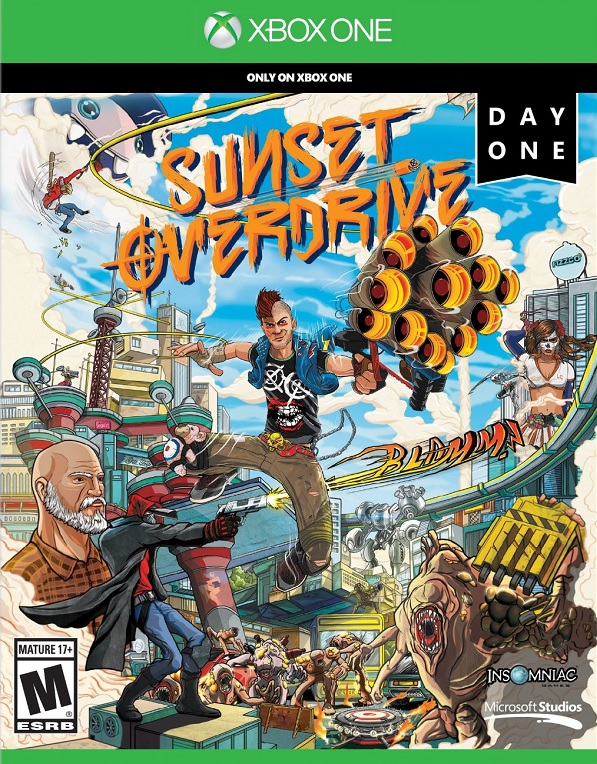
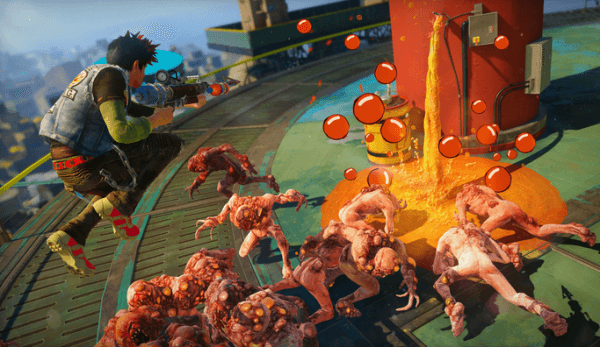
Overview In a world where most video games come in different shades of gray and brown, only certain titles try and stand out from the rest by taking advantage of a varied color palette. While most of these titles happen to be developed by Japanese studios, occasionally a Western developer will try something different. In the case of Insomniac Games, they have a bit of history when it comes to making unique games and now that Sunset Overdrive has been released, is it worth picking up?
Story When a game begins with saying that the player is “Totally Screwed” you know you are in for a different experience. In the world of Sunset Overdrive a megacorporation with enough power to silence an entire city has created a brand new energy drink called OverCharge Delirium XT and the player happens to be working as a member of the clean-up crew during the early launch of the drink in Sunset City.
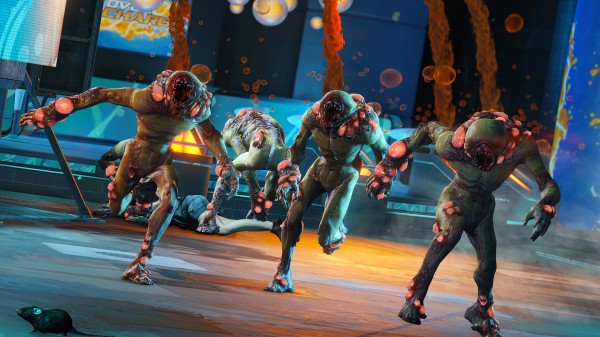
The rave party seems to be a big hit but quickly turns into a riot as those who started to drink the new OverCharge have mutated into strange creatures that are dubbed the OD. These mutants are out for blood and will kill anyone they come across, including the player who must run, grind, and bounce all the way back to their apartment to hide before joining a group of survivors who are trying to escape the city.
While the base storyline may have a few serious sounding tones to it, Sunset Overdrive is about as far from serious as you can get. Instead what players will find is a game that offers a crazy over the top experience with numerous jokes, references, self-aware ribbing, and fourth wall shattering moments. The humor may be a bit hit and miss for those who don’t like zany games but for those who do you will be in for quite a treat as this game is about as rapid fire as it comes with its comedy.
Everything in Sunset Overdrive is a joke of some kind, including the design and names of weaponry, the collectibles you gather throughout the city, almost every sidequest you go on and, and even the respawn animations make for a great time at almost every moment. However there is just so much going on at times that it can be a bit off-putting, as too much of a good thing is also a bad thing and there are moments that the writers feel like they are trying too hard to make something funny only to fail.
Gameplay The “awesomepocalypse” that occurs in Sunset Overdrive is all about making sure that the player has the time of their life, as emphasized by the fact that almost every survivor you come across is enjoying the new freedom the OD outbreak has caused. This means that Insomniac Games has created a number of fun systems to take advantage of and numerous ways to dispatch not only the OD enemies that appear, but humans and robots as well.
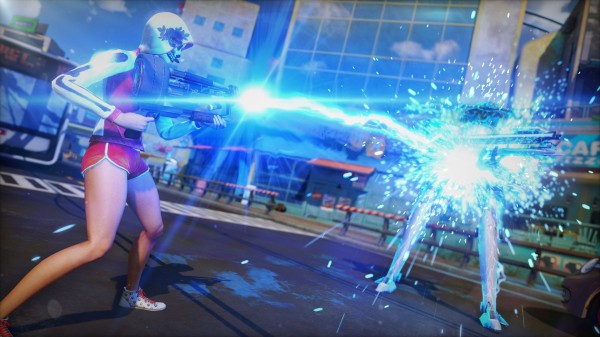
While players can obtain simpler weapons such as a revolver and assault rifle, most of what Sunset Overdrive has to offer comes in the form of weapons that shoot exploding teddy bears (or kitties at one point), guns that fire ricocheting records, flaming bowling balls and more, all giving players a chance to take out opponents however they wish. To top that off these weapons all have various effectiveness levels against types of enemies and players can continue to add abilities to their weaponry by leveling it up (by killing enemies) and equipping “Amps.”
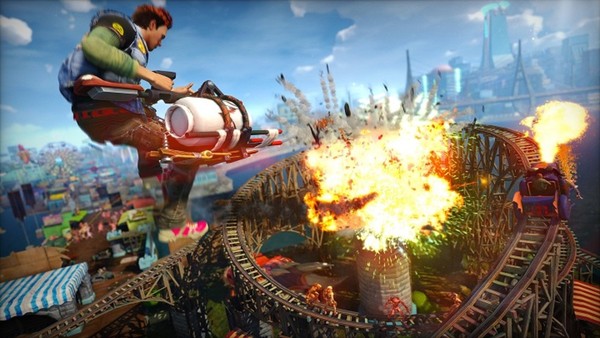
These Amps are various combat abilities that can be equipped to weapons to add various status effects to weapons and much zanier options and even enhance their other abilities. These Amps are activated whenever the player plays with “style.” By performing various acts such as grinding rails, bouncing on cars, or generally making use of the game’s impressive free roam parkour you will raise your Style gauge which unlocks the power of your Amps.
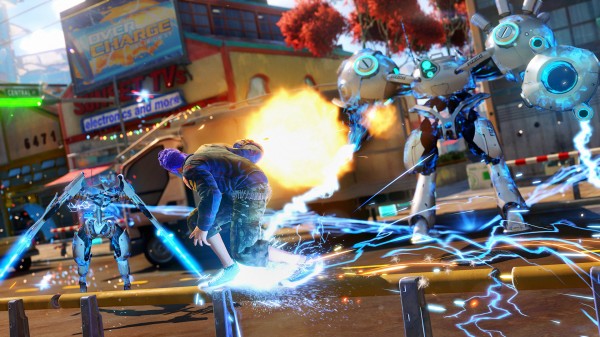
This system is designed to make sure that players are always on the move, which is essential and quite easy to pull off in Sunset Overdrive as the city is lousy with rails and cables to grind and hang on and various objects that can be bounced on. Killing enemies while performing these acts also increases your Style gauge and considering a number of enemies can easily pick off slow moving players. This creates a chaotic atmosphere that is as intense as you can imagine, with the player running on the side of a wall to leap off and grind on a rail before jumping to a lamp post to swing onto a cable to hang from using a crowbar, all while shooting enemies.
The chaotic atmosphere does do a number on how easy it is for players to grasp the navigation system though. Since there are so many objects in any given area and numerous actions are performed with the same button, there will be many times where your character will perform the wrong action which can be frustrating during challenges and whenever you are trying to collect an item. That being said, the game does reward the player with little tokens whenever they perform certain actions such as wall running, bouncing, killing certain types of enemies, etc. which can then be used to unlock “Overdrive” upgrades that help boost the effectiveness of the player’s equipment and parkour moves.
Although this makes it sound like aiming would be a major problem, thankfully Insomniac has included a very simple lock on system that allows the player to hit enemies by simply pointing the camera at them and allowing the targeting reticle to pull up. This may be a bit simple for some but it is honestly the best way this system could have been handled considering how fast things unfold.
Being an open world game, Sunset Overdrive offers collectibles to gather as well as side-quests and challenges to complete. The fun thing is that these missions all have their own style added in and actually have a purpose. Gathering toilet paper from a lamp post or stinky sneakers from cables may seem useless, but they can then be used to turn into Amps for ridiculous reasons and make gathering these items something worthwhile rather than simply gathering trash.
When you want to try out the online mode, players can access the “Chaos Squad” mode at various locations in the city. This mode puts the player with a number of other players as they take part in various co-op missions throughout the city, voting on which missions they wish to do next and building up a Chaos meter which determines how many enemies they will have to face off against in the Night Defense mission that are as fun as they are chaotic as the OD enemies put up quite a fight, requiring intelligent use of traps and player communication. As an added touch, everything unlocked online can be taken into the single player mode and vice versa.
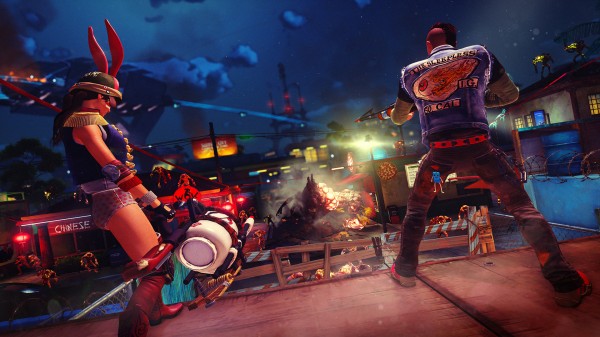
Visuals & Audio Rarely do larger titles take advantage of colors that aren’t shades of gray and brown and Sunset Overdrive benefits greatly thanks to its vivid color scheme. Sunset City is designed using vibrant colors and polished to such an extent that everything looks cartoonish but believable. As for the player, customization is everything in Sunset Overdrive and at any time players can change the gender, body type, face, and clothing of their character with a wide range of outlandish looking clothing available in the game letting players be whoever they want to be.
As for the voice acting, thanks to the comedic over the top nature of the game most of the voice acting comes in the form of yelling but it never really becomes too much. When the characters aren’t yelling at the screen, they are voiced suitably well with the player character making numerous comedic quips throughout the game.
Overall Sunset Overdrive is the type of action game we rarely see nowadays. With its vibrant color palette, an in your face sense of humor, and mostly fantastic gameplay there is much to love in this game that allows players to run rampant throughout a city infested with energy drink filled mutants. There are still a few flaws here and there and the attempts to stretch the comedic aspect do fall flat at times, but they do little to hamper the fun you will have in Sunset City.
Capsule Computers review guidelines can be found here.
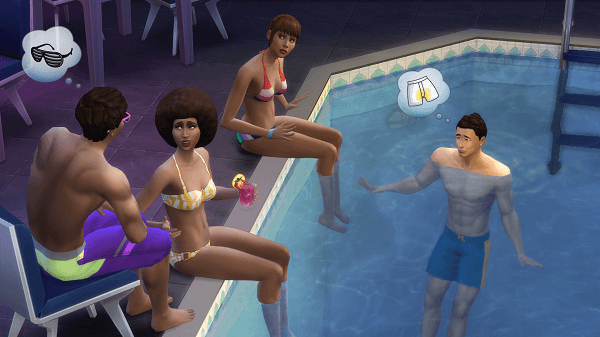
Time to rejoice my fellow Sims players, as finally EA and Maxis have released a patch that brings back one of the most popular Sims features that was missing from The Sims 4 – pools. You read correctly, the next time you load up your game you will be able to deck your Sim out in swimwear and then build an impressive array of pools and water features for them to exercise, relax or just host a party in!
The new pools addition is a free patch that will be added to your game the next time you load it up, but if you need a bit of an advanced look at them in action, then check out the new trailer below. The reintroduction of pools adds a lot to an already jam packed game, so make sure you check it out and remember to stay tuned to Capsule Computers for all the latest Sims news as it becomes available.
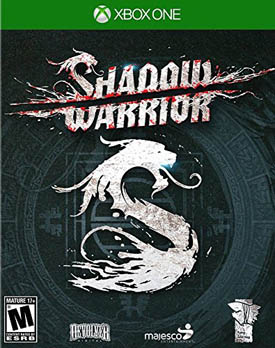
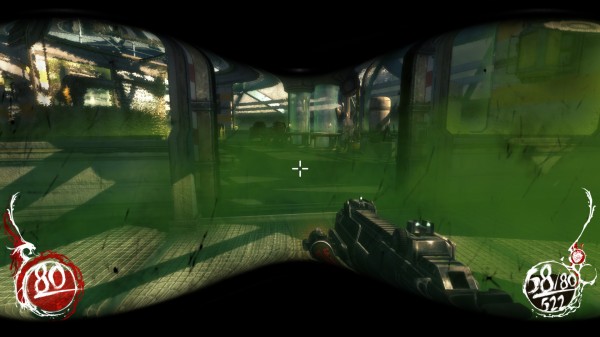
Flying Wild Hog are no strangers to the FPS genre and last year they brought one of 3D Realm’s old classics; Shadow Warrior back to life with a new coat of paint, and we really enjoyed our time with it. Well now all of the politically incorrect humor, demons and first person swordplay has made its way to consoles. While it isn’t a perfect game, it is a great throwback to a bygone era of gaming that we seldom see these days.
Story
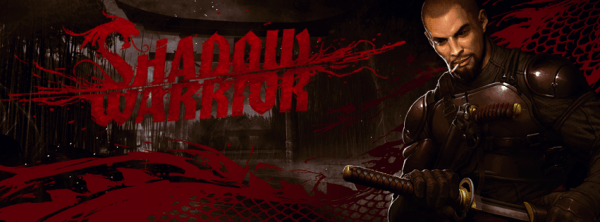
Players take on the role of Lo Wang, a modern-day “shogun” working for Zilla Enterprises. Wang is an over the top, comic book collecting, utter jerk of a character who doesn’t even try to endear himself to those around him (or the player for that matter).
The plot of Shadow Warrior feels very much like it was lifted straight from a 1980s B-movie and features rival corporations, demons and a magical sword; The Nobisura Kage. Wang is joined by a wise-cracking demon Hoji, who is seeking the sword and grants him with a series of mystical powers to help him on his journey.
While the plot is pretty lackluster, the writing was surprisingly refreshing and fun. Wang’s “I don’t give a shit,” attitude to everything leads to some genuinely funny moments, and the fact that the game isn’t at all apologetic about its almost racist humor helps it stand apart from many other games who may not be brave (or stupid, depending on how you look at it) enough to toe the line with this style of humor. Although the humor and racial stereotypes are definitely toned down from the original 90s game.
Gameplay
Shadow Warrior is, putting it simply an old-school style FPS. Faster paced and a little harder than many gamers would have seen in some time. For those of you expecting to just pick up the game and play “Call of Duty with a sword,” will be in for a real shock. The first thing that I really noticed (and loved) was that your health doesn’t regenerate, relying the player on the old fashioned health packs to replenish their HP. This turns your health into a valuable, and limited resource so you can’t just go in guns blazing and then hide until your health bar replenishes. Careful shots and strategy is definitely important here. The controls feel really good on console and the only issue I had with my playthrough was getting used to the over-sensitive look/aim controls. These can be toned down in the settings but even at their lowest it felt like I was moving way too fast.
Another major departure from newer games is the fact that there is no effective way to zoom. Holding down the fire button half way allows you to look down the sights of your gun and while it is definitely a useful tool, it doesn’t provide any cross-hairs or much of a zoom at all. There are a tonne of different weapons available to the player, and each offers its own strengths and weaknesses.
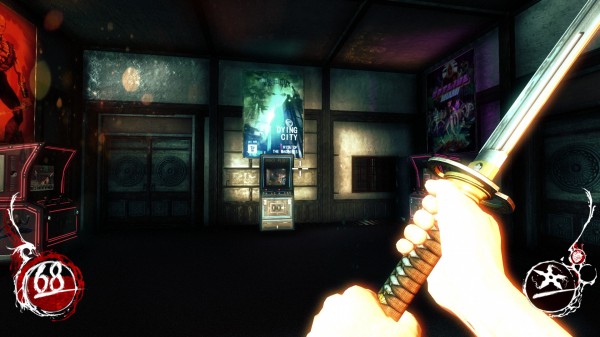
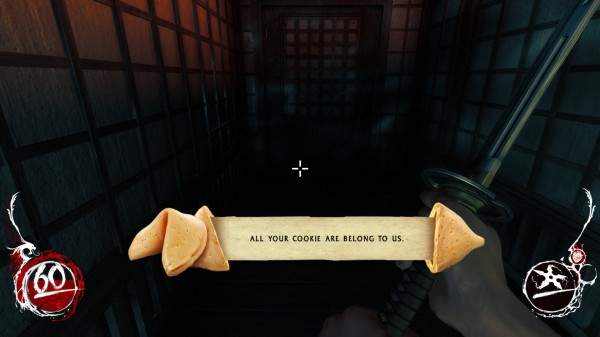
While gunplay is a valuable part of the Shadow Warrior experience, the game is centered strongly around the katana. slashing, comboing and slicing enemy limbs clean off their body make up the core gameplay. Despite the katana’s versatility it is important for players to balance using it with the guns in the game and to know when each weapon is most viable. The katana really helps Shadow Warrior feel different from other FPS titles.
The last, vital part of the Shadow Warrior gameplay is the ability to cast spells. Once you have progressed far enough into the story that you join up with Hoji, you are given the chance to unlock a few spells (with more becoming unlocked as you go through the game). These spells do a variety of things but are almost always combat centred. That it is why it is a little annoying that you have to stop what you’re doing and perform a Street Fighter-esq combo just to charge up your attack strength. The fact that Shadow Warrior wants you to be always moving and avoiding damage makes it cointer-intuitive to stop in your tracks for a temporary buff or one-off attack.
I should also mention that the console release of Shadow Warrior includes all the previous Limited Edition content as well as all the DLC and expansion packs from the PC release. That means you can just charge your way through the game’s arena mode (basically, horde mode) and special guest weapons like the sledgehammer from Serious Sam 3.
Audio & Visuals
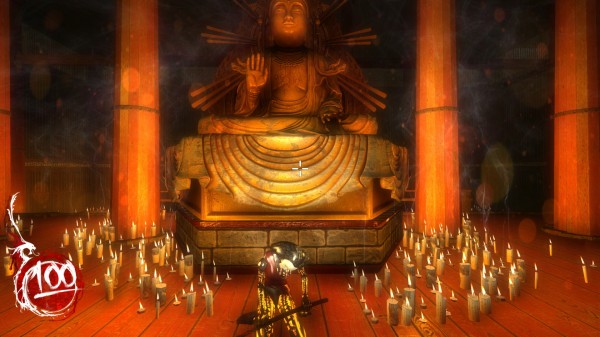
I was pleasantly surprised with how Shadow Warrior looks. I was expecting a game that barely deserved to be on the next-gen consoles, but instead I got a really nice looking title. FPS games are usually filled with drab greys and browns, so the brightly coloured backdrops in Shadow Warrior are a nice change of pace. You can really feel the inspiration of Kill Bill and older popcorn samurai flicks on the landscape and the enemy selection throughout the game.
Wang’s katana, can do some seriously gnarly things to enemies – including a LOT of decapitating. Arms, Legs and heads are removed from their bodies as you swing around your blade, and the act also causes the walls and floor to be coated in blood. The game almost borders on Tarantino-style over the top violence and it really works for the tone and setting.
The Audio work is just as pronounced and the voice actors do a terrific job, even if their Asian accents are enough to make you stop and wonder if they are parodying Asian film dubs. While most games will reuse dialogue over and over again, Wang seemed to have a different, snappy comeback for each situation in the game.
Overall
I don’t normally play FPS games, and I didn’t really grow up with Shadow Warrior (Duke Nukem was more my style) but I actually had a lot of fun with this new version of an old classic. The throwback to old kung-fu flicks, mixed with a dash of Tarantino really made for an enjoyable albeit short experience. The gameplay itself feels like a love letter to a bygone era of gaming and Flying Wild Hog have done a great job resurrecting a franchise that was long since thought dead.
In celebration of the upcoming enhanced versions of Grand Theft Auto V, coming to the Xbox One, PlayStation 4 in two weeks, and PC on January 27, Rockstar have collaborated with Mass Appeal Records to release limited edition CD and Vinyl soundtrack collections.
The Music of Grand Theft Auto V limited edition collections include 59 songs featured in the game, including original tracks from A$AP Rocky, ‘Tyler, The Creator’, Twin Shadow, Wavves, Flying Lotus, Yeasayer and more. Additionally, the original score composed by Tangerine Dream, Woody Jackson, The Alchemist + Oh No, and mixed by DJ Shadow, will also be included, along with other great music found on the GTA V radio stations. The vinyl collection will hold a total of six vinyl records, a full color booklet and an exclusive lithograph poster in a classic box-set. The CD collection includes three discs along with a branded Grand Theft Auto V gold brick-shaped USB Drive, artwork and poster all sealed in a special die-cut package.
Each edition will be limited to a production run of under 5,000 units worldwide, so come December 9 at top online and physical record stores, you better secure your copy fast. On a related note, for those who are unaware, adding to the enhanced content of the re-release of GTA V, multiple DJs from the game are recording new radio content for their respective stations, including Big Boy, DJ Pooh, Nathan and Stephen from WAVVES, Kenny Loggins, Twin Shadow and Cara Delevingne as well as a few of the dial’s biggest chatterboxes – Dr. Ray De Angelo Harris and Duane Earl.
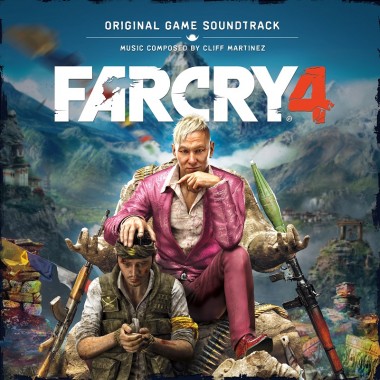
Ubisoft have netted a massive name in the music world to compose the soundtrack for Far Cry 4; that man is Cliff Martinez, Rock and Roll Hall of Famer as a former member of the Red Hot Chili Peppers, and film composer on Traffic, Contagion, Drive, Only God Forgives, Spring Breakers and more.
Cliff worked closely with Ubisoft Montreal’s own Music Designer Jerome Angelot, as well as their Music Supervisor Simon Landry and Audio Director Tony Gronick, to bring the world of Kyrat to life, along with its crazy, insane, eclectic inhabitants. The dichotomy and contrast of ruthlessness and beauty in the land is something the team needed to highlight and get just right, as a glue for the entire experience. Gronick and Martinez made the following comments about the process;
Bringing Cliff on board was a no-brainer. Collaborating with him was a dream. He has the remarkable ability to portray compelling emotions and elevate the mundane into extraordinary with his musical talent. Cliff delivered everything I hoped for. I’m so proud of the music in Far Cry 4 and am thankful for the opportunity to work with him. – Gronick
It was an honor to be asked to write the music for the Far Cry 4 game as my first full-length video game soundtrack. It was exciting for me to be asked to take my usual minimalistic cinematic approach to the immersive game world. Any game where you can ride on a rampaging elephant is a project you can’t turn down!– Martinez
The Far Cry 4 Original Game Soundtrack digital edition will be available worldwide on November 4; the limited 2 CD edition will release on December 2 in North America and on December 9 in Europe; finally, the limited 3 LP edition will release in January 2015. The game itself will launch November 18 in the U.S. and on November 20 in PAL regions for the PlayStation 4, PlayStation 3, Xbox One, Xbox 360 and PC.
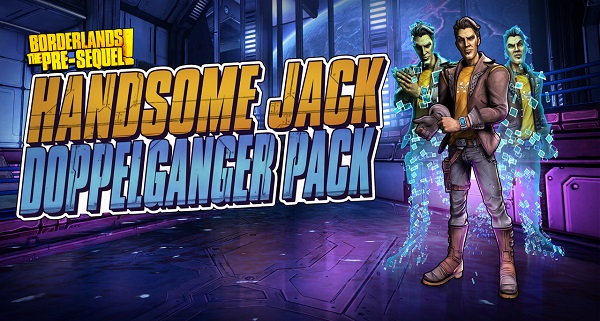
Have you beaten Borderlands: The Pre-Sequel and am looking at something different to do in your next play-through? Well 2K Games have you covered with the newest update, that lets you play as the main man himself; Handsome Jack… Sort of. The new Handsome Jack Doppelganger character is ready to jump into the action and can summon additional Digi Jacks that grant bonuses while in Fight for your life and gains bonuses for every dollar he collects.
The Handsome Jack Doppelganger pack will be available from November 11th, and those of you who own the Borderlands: The Pre-Sequel season pass will be able to download the Handsome Jack Doppelganger pack for free, while the rest of us can shell out $9.99 for the extra character. Are you bad-ass enough to play as the main man himself? Let us know in the comments below and make sure you stay tuned to Capsule Computers for all the awesome Borderlands news as it becomes available.
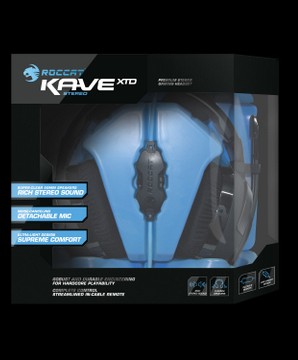
Roccat Kave XTD Stereo Manufacturer: Roccat Release Date: 24 September 2014 Price: $79.99 USD – AvailableHere Visual learner? No problem! Check out the video review at the end of this video!
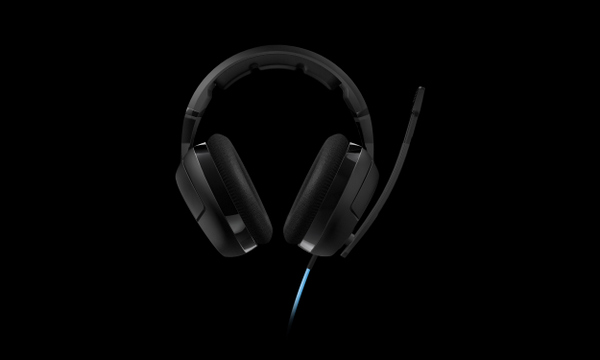
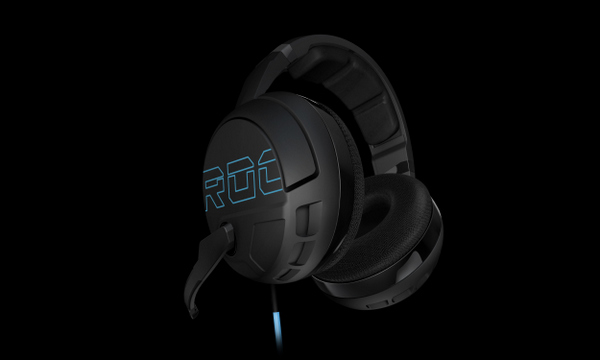
Roccat’s Kave XTD Stereo is a gaming headset designed to be a more affordable version of the original Kave XTD. While the original had a true 5.1 surround sound headset, the Roccat Kave XTD Stereo features just two 50mm drivers. The new headset uses the same light weight design of the original Kave XTD.
The Roccat Kave XTD Stereo comes in similar packaging as all Roccat products. The black and sky blue box contains just the headset and a small quick start guide. The headset is neatly bundled up with two Velcro cable management systems. The smaller one is a cheaply made one probably meant for packaging purposes only, but the Roccat branded strap is much higher quality. It uses the newer styled small sized hooks. This type of Velcro hook doesn’t catch on random things as much, is much sturdier, and is less sharp, which results in less cuts from rubbing up against it too hard. I love the fact the cable management tie was bundled in with the headset; it is a nice touch and a way better method than using twist ties or worse, just running over the cable with the office chair.
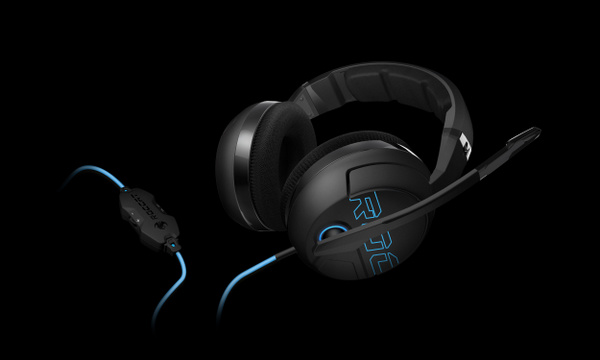
The headset is an analog headset. It terminates in two 3.5mm jacks, one for sound and the other for the microphone. The cable is very beefy and looks like it will survive being run over by a wheeled chair once or twice. The cable measures in at 2.5m according to Roccat, which means the previously mentioned cable management straps will be very handy for those sitting close to their towers.
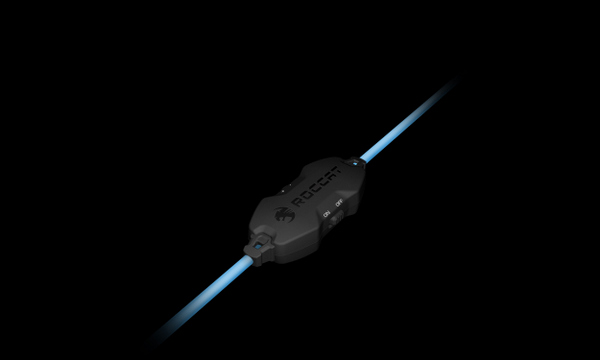
The in-line remote is a small angular black plastic box located about 34 cm down the cable away from the headset. It dangles at a very nice length. I am roughly 1.67m tall and the remote hangs just over my lap. The volume wheel and the mute switch are both recessed. The recess is deep enough that it should be very difficult to accidentally make any changes. The mute switch has a nice stiffness to it, engaging with a very solid click. The feel of the volume wheel is decent, needing a little bit of force to adjust. Personally, I prefer my volume wheels to be a little stiffer than the one found on the Kave, as I am admittedly a little paranoid about accidentally maxing out the volume from moving around during sweater weather.
Upon picking up the headset, the first thing that struck me was how light it was compared to its physical size. The headset is big enough to look right at home on a girl’s head in an anime, yet it only weighs a touch over 300g. Roccat officially lists the headphones at 305g without the cable. I suspect the cable only adds a few extra grams to the weight. Mixed with the large soft plushy padding, the Roccat Kave XTD Stereo is extremely comfortable for long term wear. The extremely soft foam is wrapped in a soft mesh fabric that feels like polyester. There is a very generous layer of foam on the top of the headset which goes a long way in making the headset feel very light.
On the side of the headset is the removable microphone. Once the microphone is removed, there is a rather unsightly silver ring which clashes with the headphone’s black and baby blue colour palette. It would have been nice to see a plastic cover to both hide the silver ring and protect the jack from dirt and debris when being used outside the house. The microphone is capable of swinging around 360 degrees in its jack. It has a bendable piece about 6.5 cm long, but it is not particularly easy to flex. It takes a good bit of effort to bend it. I found trying to bend it into place by grabbing the end of the microphone did little good; the trick was to bend the microphone around a finger. Once it was in place, the microphone did not move at all.
The omni-directional microphone is clear sounding. I did need to use Window’s microphone boost to bump my voice up to an audible level. The boom is possibly armed with an internal pop filter and is definitely short enough to be out of the way so that the usual suspects like the “p” sounds don’t blow the listener’s eardrum out. You can check out the short microphone sample below or watch the video review to hear how the microphone sounds for yourself.
As a gaming headset, the Roccat Kave XTD Stereo performed admirably. I was impressed with Roccat’s bass response. Normally gaming headphones are plagued with messy uncontrolled bass that just seems to sprawl everywhere. The Kave’s bass is tight and controlled while still packing a respectable punch. The mids are decent, but I found the highs to feel artificially distant. This works well for gaming, as it makes distinguishing the direction of footsteps a little easier, when used with virtual surround sound. This makes the Roccat Kave XTD Stereo is a great choice of headset for first person shooters.
Unfortunately, I was less impressed with the Kave’s performance with music. The bass performance continues to shine, while the mids are passable. The highs are extremely unpleasant and makes certain genres of music like jazz and classical difficult to listen to. The higher end of the spectrum, which is not normally found in gaming, has a particularly scratchy quality that I found annoying. Mixed with the artificially distant sound of highs, I would not suggest the Roccat Kave XTD Stereo for music listening, unless your musical preferences are strictly bass-focused genres.
Roccat’s Kave XTD Stereo headset is a gaming headset through and through. It is perfect for long gaming sessions due to its comfortable lightweight design. The microphone quality is very good. Once set it place, it will not budge. The headset is tuned to be an excellent gaming headset, especially for FPS titles. It features tightly controlled, yet punchy bass, and its distant sounding highs accentuates the directions of important sound cues like gunfire and footsteps. Unfortunately, what makes the Kave XTD an excellent gaming headset does not translate to an excellent music headset.
Capsule Computers review guidelines can be found here.
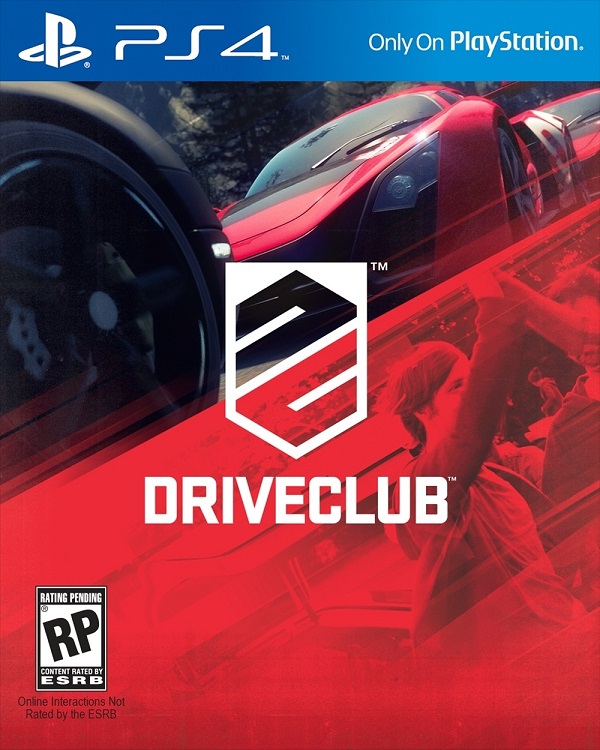
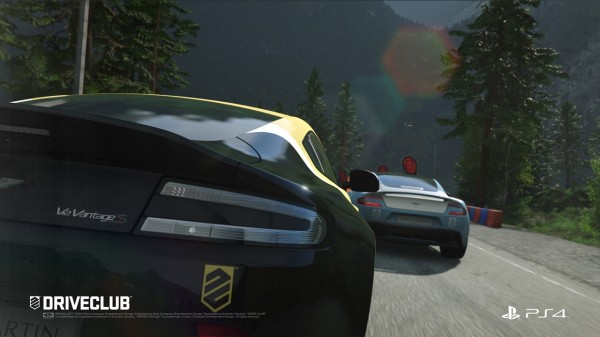
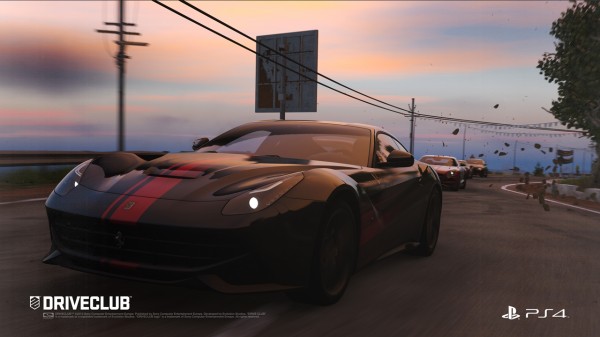
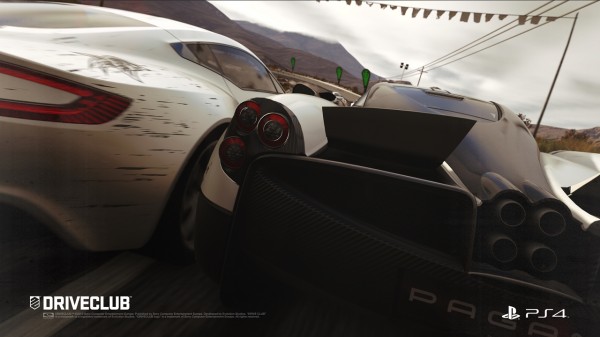
Evolution Studios are now a subsidiary of Sony Computer Entertainment, but the two parties had maintained a great working relationship even before the acquisition back in 2007. Up until that point, the team had developed World Rally Championship (WRC) titles exclusively for the PlayStation 2, and then introduced a newly exclusive IP for the PlayStation 3 in MotorStorm. After multiple, well-received sequels, the developers’ next-gen offering was highly anticipated. Driveclub was announced back in February 2013 as a launch title for the PlayStation 4. In October that year, however, it was delayed, and then again five months later due to problems with its “dynamic menu”. The good news is, they fixed the dynamic menu. The bad news…well, you all know it by now. We tried to hold off reviewing Driveclubso as to allow Evolution Studios the chance to fix the online issues, but time is up.
Gameplay
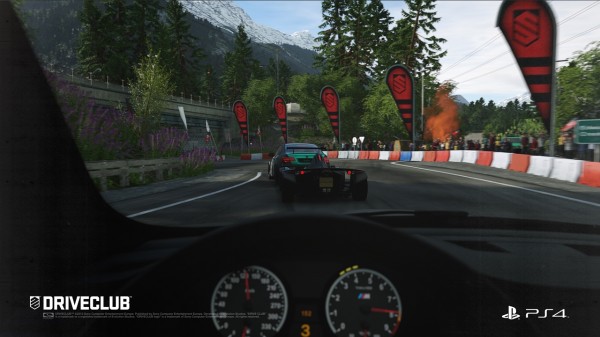
Driveclub is not a simulation racing game. It errs more on the arcade side, which is perfectly fine, though very forgiving. Going back and forth between Forza Horizon 2, for instance, and Driveclub, really accentuates the differences between the two in that respect. The cars don’t feel as unique in their handling, although the discrepancies in their top speed and more obvious aspects are clear. All that being said, your car will still skid after catching air and landing on the asphalt again; little details like this prevent it from being a full-on arcade experience. The tires screech way too often, however. I don’t know about you, but consistently loud screeching whilst smoothly changing lanes seems a bit excessive, not to mention grating on the ears. The game includes all the camera angles we are accustomed to, also adding a more dash-aligned perspective that I actually preferred from time to time. Collisions will negatively affect your XP gain during a race, as will veering off-road.
Driveclub‘s weather system doesn’t seem to impact handling too heavily, but its day-and-night cycle is extremely fast, with transitions between day and night occurring over mere seconds right in the middle of a race, which can be jarring and visually distracting. Equally off-putting is the move between terrain types mid-race, which can cause you to lose sight of the track lines without those previously apparent boundaries. There are 50 cars included on disc, spread across five categories: Hot Hatch, Sport, Performance, Super and Hype. These are unlocked as you play and level up; speaking of which (and not to sound like a broken record, because it is true), the progression system is closely reminiscent of Forza‘s, from the way your efforts are tracked and presented, to the rewards integration. In Tour – the single-player “campaign” (with no story to speak of) – there are dozens of races, from drift races to point-to-points and circuit races – all of which can be played singularly in the separate ‘Single Event’ mode across all available tracks.
Throughout your time on-track, you will come across and seamlessly participate in Face-Offs, which are competitive stretches tasking you with beating a competitor on the local or global leaderboards in things like top speed, cornering, drifting total, etc. You unlock new races in Tour by gaining stars from each completed event. At the end of each tier, there is a multi-race championship. Only a select number of cars can be chosen for each, with restrictions such as the country of origins being placed on the race. Some cars can also only be unlocked through club levelling, which is near impossible for the majority of players at the moment. Personally creating a club, accessing Challenge Mode, and multiplayer (which is handled in a lobby full of scheduled races) has been nigh impossible. The “server issues” (you’ll understand the use of quotation marks by the conclusion) have been on-going, and are hindering the perception and playability of the final package. This is a shame, as I can not give an opinion on these features/modes.
Visuals & Audio
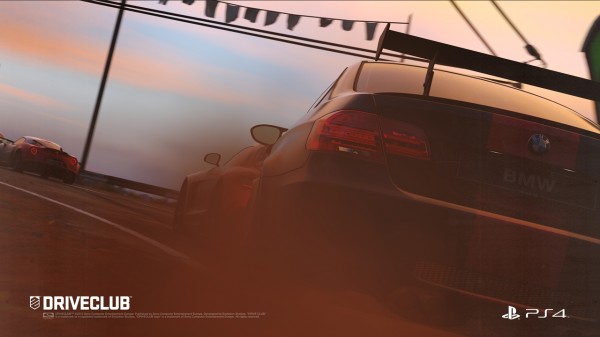
Driveclub may just be the best-looking racing game ever made. If it weren’t for Forza Horizon 2‘s unbelievably breath-taking, dynamic lighting/weather system, it would be a blow-out. Instead, it’s a photo finish. The tipping point in favour of the former is the clear attention to detail and focus on ensuring the environments – not just the vehicles themselves – look as realistic as possible. This is something Forza and most other examples in the genre are guilty of neglecting although, until recently, it was a matter of memory and, therefore, prioritisation. The representations based on Canada, India, Chile, the United Kingdom and Norway are gorgeously realised, and give a decidedly fresh feel to proceedings as opposed to the more commonly chosen locations and real-world tracks that we’ve played hundreds of times before in Gran Turismo, Forza and other entries. Driveclub‘s own weather system holds up, with the water effects in particular looking impressive as they run down the glistening bodies (I swear I’m talking about the cars!). In regards to audio, we get what we expect from a modern racer, with the team capturing samples at various points on the car, building a complete sonic landscape on the road.
Overall
Driveclubis a solid driving experience on the PlayStation 4 that, unfortunately, has been marred right from the starting position by what is reportedly a programming error. And no, apparently it wasn’t a lack of servers after all, but a programming mistake that disallows ‘x’ amount of new players into the online portion at once, effectively shutting them out and mimicking the effect of high server load/full capacity. Although the game has a single-player campaign, as mentioned, called the Tour, the launch issues are especially damaging because the core tenet of the game is going online, creating and playing as a club…it’s in the title for peet’s sake! I could enter a match, but the lag was too intense to actually complete a race; competitors would teleport and jitter all over the screen. Again, it’s very disappointing as Driveclubis gorgeous and plays well as an arcade racer. You can still certainly get some enjoyment out of the solo experience, but a new tagline may be needed, especially with no split-screen (absolutely stupid for a racer) nonetheless. How about, “less club, more loneliness”? That fits.
Capsule Computers review guidelines can be found here.