Home Blog Page 3424

New Dengeki Bunko: Fighting Climax Announced With New Characters

Dengeki-bunko-fighting-climax-screenshot-001

Sega has announced that a new version of the fighting game Dengeki Bunko: Fighting Climax will be released in Japanese arcades sometime this summer. The name for the sequel is currently unknown but will feature a number of new systems, balance updates to pre-existing characters, and a number of new roster additions. At the time of the announcement the only character revealed for the game so far is The Devil is a Part Timer‘s Emi Yusa as a playable fighter.

Dengeki-bunko-fighting-climax-screenshot-002

Currently more details are set to be revealed in next issue of Dengeki PlayStation but for now, gamers in the West can keep an eye out for the original Dengeki Bunko: Fighting Climax‘s release in the West sometime this summer as well.

Dengeki-bunko-fighting-climax-screenshot-003

Samurai Warriors Chronicles 3 Announced for Western Release

samurai-warriors-chronicles-3-ps-vita-screenshot- (17)

Koei Tecmo has announced that they will be releasing Samurai Warriors Chronicles 3 in North America and Europe for the Nintendo 3DS and PlayStation Vita. While the second title was never released in the West, the original was released back at the 3DS’ launch. The 3DS version of the game will support StreetPass as well as SpotPass while the Vita version will make use of the handheld’s touch screen.

To go along with this announcement the company has released a number of screenshots for the PS Vita and 3DS versions of Samurai Warriors Chronicles 3 as well as a trailer that you can check out below. As for the game itself, Samurai Warriors Chronicles 3 will be released digitally in North America on June 30th and digitally in Europe on June 24th.

Humble Nindie Bundle Brings Charity to Nintendo Consoles; Big Discounts Offered

humble-nindie-bundle-logo-01

History has kind of been made with this bit of news. Nintendo have partnered up with Humble Bundle to bring us the “Humble Nindie Bundle” featuring some find indie titles for both the Wii U and the 3DS. Like most bundles, you pay more to unlock more, and you are buying codes here so consider some of these titles as cheap as they ever will come with a good cause attached.

Featured in the bundle is Woah Dave!, Mighty Switch Force, and Guacamelee: Super Turbo Championship Edition, with even more titles such as Steamworld Dig, The Fall, and more unlocked by simply paying around ten bucks altogether. This deal is awesome and still has twelve days to go, so get in there and donate! Click here to be taken directly to the page.

New Yoshi’s Woolly World Trailer Shows off Amiibo Support

yoshis-woolly-world-screenshot-17

Not long ago, there was a bit of news about the Amiibo support for Yoshi‘s Woolly World, which is set to make a splash on the Wii U next month. Well today, big things are happening as we now know that you can utilize nearly all of your Amiibo (sans the Pokemon and Toad, oddly enough) to create brand new skins for the beloved mascot.

yoshis-woolly-world-screenshot-14

Featured below is a new trailer, showing off the many mini breeds of Yoshi and their new cloth patterns, and I must say the designs are dapper indeed. Woolly World is a big step for Yoshi, and Good Feel look to be pulling off yet another classic. There are also some screenshots to gander at as well, for those who prefer the raw, cutesy images.


Call of Duty: Advanced Warfare Supremacy DLC due out in June

call-of-duty-advanced-warfare-supremacy-01

If you have been waiting for the latest batch of DLC to drop for Call of Duty: Advanced Warfare, you are about to get a bit of good news as today, Activision announced that the third DLC pack dubbed Supremacy will be out on June 2nd for the Xbox One and Xbox 360, with other platforms following suit on a latter date.

So what is in the pack? Bruce Campbell and much more! Check out the deets below:

Call of Duty: Advanced Warfare Supremacy includes four new, action-packed multiplayer maps, all featuring the new Exo Grapple mechanic, which adds a layer of fun and strategy to the experience.

  • Parliament: Docked on the River Thames, this military cargo ship delivers a view of the London cityscape along with a fast-paced combat experience. Mixed site-lines provide opportunities for all styles of play to dominate this medium-sized map. Players can take control of the map-based scorestreak to unleash a barrage of missiles that annihilate enemies.
  • Kremlin: Gamers must prepare for intense combat outside Russia’s presidential palace in the new map Kremlin, as they navigate the worn-torn buildings of Red Square in this medium-sized, three-lane map. Secure elevated positions to give the team a strategic advantage, or use exoskeleton capabilities to avoid being caught in the minefield that activates mid-match.
  • Compound: Players take combat preparation to the limit in an Atlas training facility hidden away in the Colorado wilderness, as they’ll have to be quick on the trigger in this small, symmetrical map, which funnels high-speed combat through tight corners to the main tower structures.
  • Skyrise: Players deploy to an Atlas Skyscraper overlooking the Acropolis in Athens, Greece. Based on the fan-favorite, Highrise, from Call of Duty: Modern Warfare 2 by Infinity Ward, this map brings new exoskeleton mechanics to the classic multiplayer layout. Gamers must dominate the power positions in the center of this small-to-medium sized map to control the key navigation points.

The popular Exo Zombies saga continues in the all-new episode, Carrier.  Following the end of the last episode, Infected, Bruce Campbell (Army of Darkness, Burn Notice) steps in and joins the battle-hardened cast of John Malkovich (In the Line of Fire, RED, Burn After Reading), Bill Paxton (Aliens, Titanic, Edge of Tomorrow), Rose McGowan (Planet Terror, Scream), and Jon Bernthal (Fury, The Wolf of Wall Street). In Carrier, the four are trapped on an Atlas aircraft carrier.  Carrier features advanced new weaponry, enemy Atlas Strike teams, Sentinel support squads, and a host of new zombie enemies.

call-of-duty-advanced-warfare-supremacy-02

New map packs are always a plus for a title like Call of Duty, and if you have the season pass you can feel comfortable knowing that the $19.95 price tag will be lifted for your purchase, or simply pay the funds if you have not opted in already. Sony and PC users will have a little more of a wait, but stay tuned as the date is sure to drop for that in the near future. Oh yeah! Watch the trailer below.

Killing Floor 2 Interview with Alan Wilson

killing-floor-2-screenshot-009

We got the opportunity to chat with Alan Wilson, Vice President at indie FPS developers Tripwire Interactive. The team at Tripwire have been developing FPS games for the last decade, taking their Unreal Tournament 2004 mod Red Orchestra: Combined Arms all the way to a retail release. Currently, they are busy developing the follow up to their hit co-operative horror FPS, Killing Floor 2.


killing-floor-2-screenshot-014

Making a sequel to a popular game with a devoted fan base is a lot more than just polishing up the graphics and pushing it out the door. What’s the process that goes into deciding what Killing Floor mechanics should be changed for Killing Floor 2? How do you balance what the fans of the original game want and wanting to try new things?

The key for us was first deciding what SHOULDN’T be changed. Both in terms of actual game mechanics and in terms of the overall feel of the beast. Once we’d figured out what need to remain the same, then we could start looking at all the things to add, things to change and so on – informed by the base decision of what NOT to mess with. Like perks – we wanted the same basics, with leveling and benefits – but we split the Sharpshooter perk out to make more sense (and respond to suggestions from the fans), increased the level cap significantly, made more sense of the actual leveling mechanics and added in the new “skills”.

killing-floor-2-screenshot-010

Tripwire is collecting a ton of gameplay data with the Steam Early Access build. How on earth do you sift through all that data and make heads or tails out of any of it? How does nebulous data turn into to actual gameplay changes?

Well, it is a mix of really good data and very nebulous data. “Berserker damage when use the Pulverisor needs to be reduced a small amount on HoE” is good detail. “Berserker is way OP!” is rather nebulous. We asked for feedback and certainly got it – a lot of it. So, yes, now we’re trying to sift through it all. We have to look for the relevant feedback for a start, ideally on game balance. Then look for the commonalities in the feedback. One person complaining about one knife, most likely not going to get traction. A 10-page thread on shottie penetration will get notice. But we have to look at the whole of that thread, looking not just for the suggestions, but also looking for the root cause, as posters may not grasp all the inter-connected systems lurking. Then we can home in on what is causing people angst, maybe ask a couple of questions in the thread, home in on which variables we’ll mess with. Then we need to run those ideas through a bunch of calcs internally – have a designer look for all the knock-on effects of changing (for example) shottie penetration. Tweak internally, test etc. And then repeat for the many (MANY) other pieces of feedback.

killing-floor-2-screenshot-011

But this does also inform the design of incoming new weapons, learning from the tweaks made in the early rounds. And it does all take time to get the machine rolling, changed over from “get the game out the door” to “now tweak systems” for some of the team.

We’ve already started seeing custom maps pop up for Killing Floor 2. Will we be seeing Steam Workshop implementation or some way to manage custom maps before the Early Access is over?

That’s the aim, yes. We’ve got a whole bunch of things we want to try out around the workshop. Watch this space!

killing-floor-2-screenshot-017

I figured Tripwire had already covered all the standard archetypes with Killing Floor, yet you’ve managed to pull out three more for Killing Floor 2! People have been data mining and speculating like crazy on the new perks. Can you give us any hints, clues, confirmations, denials… anything?!

Ha. No. Well, people have seen the buttons we did at NYCC last year. So you’ve got Helmet Dude, Dragon Guy and so on. There’s actually been some pretty smart guesses out there. Some people have definitely figured it out. But I won’t tell who 🙂

You guys cited Soldier of Fortune’s GHOUL system as one of the main inspirations for Killing Floor 2’s MEAT system. Were there any other inspirations when it came to designing MEAT?

Product of a fetid and warped imagination really. Blame Dave Hensley and a couple of other members of his art team for the levels of gross! A wide reach of horror movies!

killing-floor-2-screenshot-012

Where on earth did Hans Volter come from? Any clues on his back story or will we have to find out when the game leaves early access?

For the life of me I can’t remember where he started from. We wanted at least one more archetype of “mad scientist” and this is what came out. I’m sure bits of his back story are lurking out there, but think Swiss-born early in the 20th century, completely lacking in any moral compass. Research into pain and degradation of the human body, leading into dabbling with the madder Nazis in the 1930s and 40s. Then realizing that the Nazis weren’t the supermen they professed to be – after all, they lost. Finding interestingly disgusting uses for the bio-mass being produced by Kevin Clamely’s Horzine, particularly in prolonging his own life. Well, just go hunt around Manor for more of what he has been up to!

Tripwire has always been very focused on making firearms as realistic as possible, whether it is in a realism-oriented shooter like Red Orchestra or the more arcade-like experience in Killing Floor. How much extra work goes into recreating the experience of firing a weapon so closely?

I don’t know if it is “extra” work – it is just the way we do weapons. We don’t want people to just be bashing mouse/controller – click-click-bang-bang. We want each weapon to feel unique, memorable to play with. Satisfying to use, feeling like you’d really be doing some damage with the thing. And yes, it does give us an excuse to own the relevant weapons and go shoot them – research!

killing-floor-2-screenshot-013

You’ve cited in the past that the paid DLC will mostly be cosmetic changes and side-grade weapons, but are there any plans to have any similar content unlockable through gameplay?

We don’t actually have all the answers to that as yet. We’re juggling a number of ideas. We want the best of the user-generated content to find its way “officially” into the game, so looking at Workshop and so on. We’d like the best of the community content to actually give the people producing it a financial return as well. But we like giving players rewards in game too. We don’t want to build some immensely complex system, but we want to find a good balance.

Although Killing Floor 2 is a pretty big departure gameplay wise from Red Orchestra 2, is there anything the team brought from the Red Orchestra 2 experience to Killing Floor 2’s development?

We always bring things from one project to the next – some of them consciously and deliberately, others accidentally. hence a lot of the engine work on RO2/Rising Storm rolled forward onto KF2. But so does our weapon handling – just because we want the weapons to feel really satisfying to use, believable, whether it is in a “authentic” setting (RO2/RS) or in a “fantasy” setting (KF2).

killing-floor-2-screenshot-015

Valve was hoping to help turn mods into full blown retail games with their now cancelled paid mod system. They cited Killing Floor as the type of project they were hoping to foster with their failed adventure. On the other hand, Killing Floor made the leap without the need for a paid mod set up and Tripwire Interactive has a strict no paid mods policy in the EULA. What sort of things that helped Killing Floor go from a mod to a retail game? Any lessons learned that might help other mod projects make a successful leap to retail?

First off, I don’t think Valve “failed”. I think they could have picked better examples than taking some Skyrim pieces that had been free and shifting them over to money-spinning. For a mod to make the leap to commercial release, without some outside help (mostly funding, but also direction, marketing and more) is really, REALLY difficult. We’ve nearly gone broke a couple of times on that route. We state “no paid mods” in the EULA just to make clear that people can’t just go using all our hard work, slap something on top and expect to go make money off it, without us getting upset about it. But there are most definitely scenarios where it would work – Rising Storm being an example of that. That was a mod, prompted by us, that made it all the way through to a full commercial release and winning PC Gamer’s “Game of the Year” award. But it had our full backing all the way. So we can certainly see scenarios where everyone wins. Its just going to take a bit more thought on full-scale mods. For us, its just another evolution, another step in user-generated content getting monetized. As I said – needs thinking through further, but it WILL get there, if enough people are interested. To date its pretty much been Valve and ourselves taking mods commercial – TF2, CS, Portal, RO, RS and KF to list just a few. And its pretty much just been the two of us taking mods up onto Steam for free in the past – Darkest Hour and Mare Nostrum for RO1 from us.

killing-floor-2-screenshot-016

As for lessons learned on how to take a mod to retail – that’s hard. Well, it IS easier now with the free availability of UDK, Unity and so on, although that sort-of blurs the lines. Are those mods to Unreal or new games? Ultimately, any full commercial project is going to be a seriously challenging undertaking – that’s one of the reasons Valve was looking to try out ways of making that transition somewhat less painful. There’s a lot of great mods out there, that simply won’t ever make that transition to a full game, in the current eco-system, unless someone like Valve or ourselves pick them up.


Our thanks goes out to Alan Wilson and the team at Tripwire Interactive for taking the time out of their development schedule to sit down and talk to us!

Be sure to read more about Killing Floor 2 in our preview and pick up the game on Steam Early Access.


New The Technomancer Screenshots Show Off the City of Noctis

the-technomancer-screenshot-003

Spiders released three new screenshots to tease their major The Technomancer presentation schedule for E3 in June. The new screenshots are set in the free city of Noctis. The city managed to stay out of the War for Water, but is a haven for bandits, pillagers, and other less than savoury characters.

The Technomancer is the follow up to Spider’s action-RPG Mars: War LogsThe Technomancer stars one of the cybernetically enhanced warrior mages on the run from the Secret Police. Players will be confronted with tough choices as our hero attempts to solve the mysteries of his past and develop deep relationships with his companions.

the-technomancer-screenshot-004

The Technomancer is scheduled for launch on PlayStation 4, Xbox One, and Windows in 2016.

the-technomancer-screenshot-005

Battlefield Hardline ‘Criminal Activity’ to Add 4 New Maps and Bounty Hunter Mode

battlefield-hardline-promo-art-007

The first of four DLC packs for the FPS Battlefield Hardline is set to launch in the coming weeks. Those with Battlefield Hardline Premium will get first hack at “Criminal Activity” sometime in June 2015. Those choosing to purchase the DLC separately will have to wait two extra weeks to buy it.

Battlefield Hardline “Criminal Activity” introduces the Bounty Hunter game mode, four new maps, four weapons, two weapon attachment, one gadget, two vehicles, and six masks. Bounty Hunter mode will require players to collect bounty coins off the corpse of their dead enemies to earn points.

battlefield-hardline-screenshot-007

The four new maps are set in four very different locations. Code Blue is a glamorous night club bathed in blue mood lightning. The Beat takes the fight to a rundown neighbourhood featured in early in the single player campaign.  Black Friday will pit the cops and robbers in the Palm Court Mall, keep your eyes open for a subtle Dead Space reference! Finally, the last map is Backwood, set in an abandoned logging camp deep in the woods of the Pacific Northwest.

The Witcher 3: Wild Hunt Review

witcher-3-boxart-03

The Witcher 3: Wild Hunt
Developer: CD Projekt RED
Publisher: Namco Bandai
Platforms: Xbox One (Reviewed), PS4, PC
Release Date: May 19th, 2015
Price: AU$109.95 – Available Here | US$59.99 – Available Here

Overview

Oftentimes when I sit down to write a review, I wonder if I have spent enough time with the game to fully give it the credit it deserves. “Should I beat the campaign again?” or “Is 30 hours enough?” are the types of questions that fill my head. However, as I sit down to write this review, I KNOW that I haven’t done enough. The Witcher III by CD Projekt RED is such a hugegame that there just isn’t enough time in the world to dedicate to it in order to do it justice. I’m 50 hours in and I’m barely halfway through the story, and have a lot to go in terms of side-quests and character progression. That in of itself speaks volumes for just how immense and downright impressive this game truly is.
witcher-3-wild-hunt-screenshot-02

Story

There are a lot of fantasy RPG games out there, and many of them focus themselves on massive, world-ending events like the descent of dragons, or portals to hell opening up to swallow the world whole. The Witcher II manages to separate itself from this fantasy cliche by presenting a story that is far more grounded and personal to the protagonist than just about anything I ever remember playing.

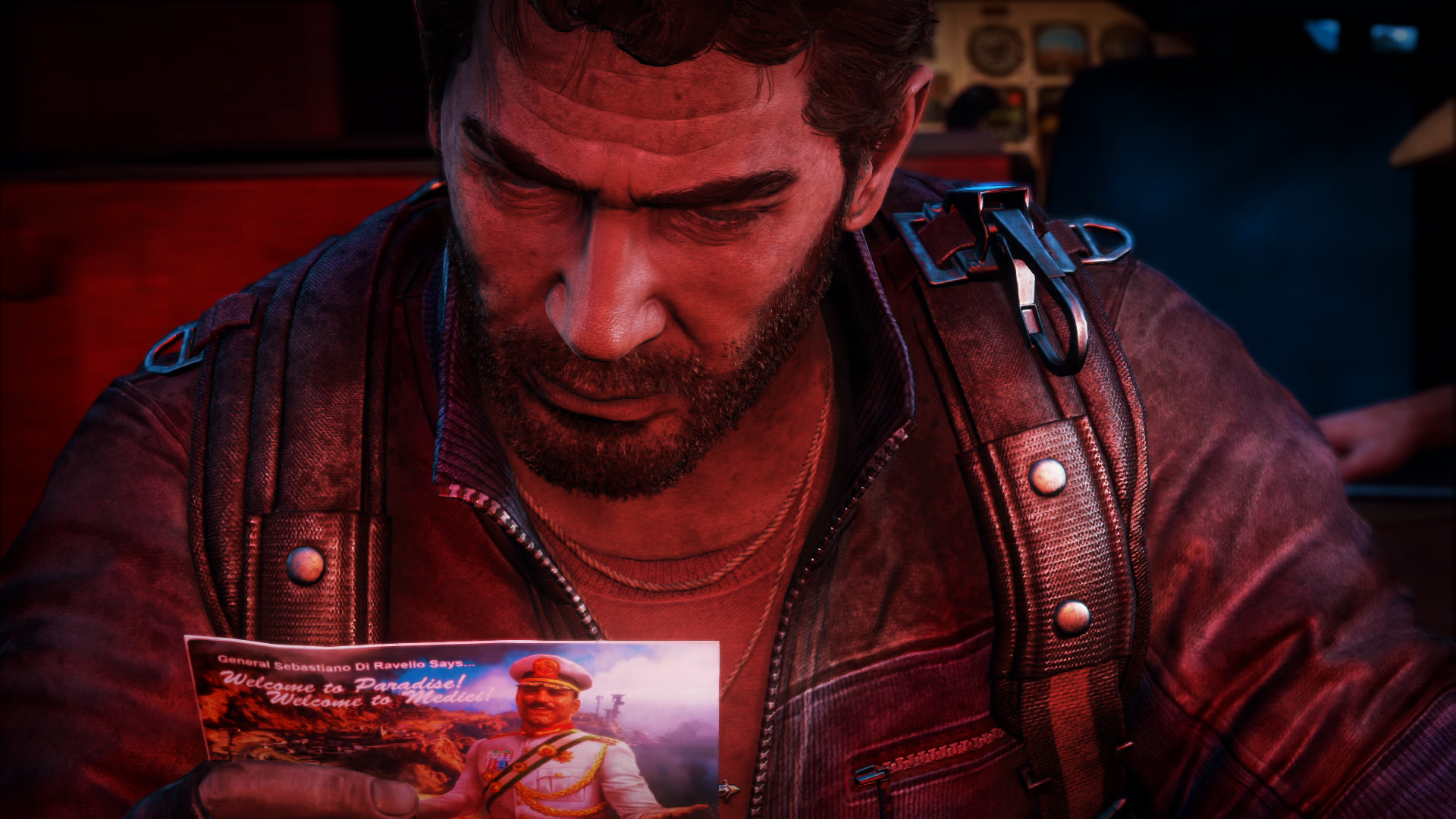
After living through wars, the extinction of the Witchers, a bout amnesia and even a little bit of death, Geralt of Rivia has turned his attention back to finding Yennifer of Vengerberg, his long-lost love. On his quest to find her, he learns that Ciri, his ward and adopted daughter is being hunted by the wraith-like Wild Hunt. This is confirmed when Geralt runs into Yennifer, who is also searching for the endangered young woman. This is the crux of The Witcher III’s story, with our white-haired, cat-eyed monster hunter trying to find someone he deeply cares about, but always feeling like he is a few steps behind.

In a lot of ways, the story of The Witcher III reminds me a lot of the Super Mario games, where our protagonist always feels like he is about to finally save the one he loves, only to discover that she is further away than he thought. The personal nature of the story allows us to feel more connected to the characters and the events of the world as they unfold.

witcher-3-wild-hunt-screenshot-01

Like most modern RPGs, choice plays a vital role in The Witcher III, with the player being able to answer questions and encounters in a variety of different ways. Unlike games like Skyrim or Fallout, there are no “good” or “bad” choices to make, and nothing flashes up on screen to tell you which you should do. Player choice is paramount in this game, and it shines through brilliantly. Decisions you make can affect characters and even whole cities down the track. Oftentimes you wont notice the effects of your choices until far later into the game, when certain plot points come to fruition.
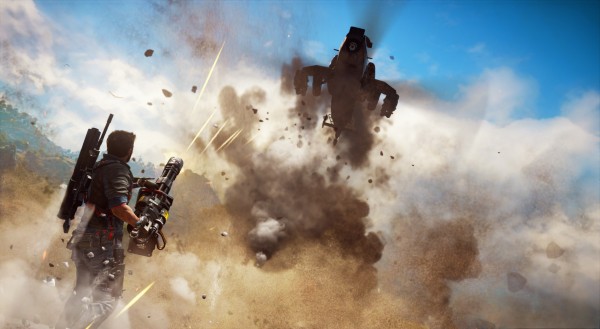
There is a lot of maturity to the story of The Witcher franchise, and The Witcher III is no exception. By that I don’t mean that it is just violence and swearing (although there is plenty of that) but that the game just feels more adult oriented in its presentation and narrative choices. A prime example is Geralt’s meeting with a lord who beats his wife – it is the taboo kind of subject matter that you wouldn’t really expect to see in a video game, and every conversation with said lord becomes awkward and downright challenging after you learn it. The game adds a layer after layer of complexity to the world until the subtle shades of grey in morality are as close to real-life as I have ever seen.


The-Witcher-3-Screenshot-07

For those of you out there wondering if the plot is accessible to anybody who hasn’t played the previous two games, then you are in luck because it absolutely is! (admittedly, this is a necessity because the first game is only available on PC/OSX). Early on, you are given the option to make some choices that retell the events of The Witcher II, and also serve as a little bit of a recap of the previous games. This game has a lot of extra little tid bits and nuances that fans of the series will recognise and enjoy more than newcomers, but they are in no way vital to the enjoyment of the game.
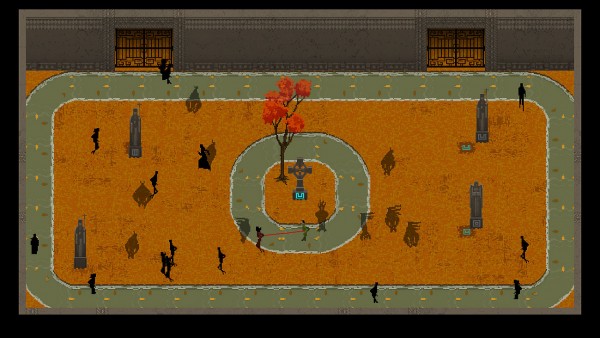
I know that I blabbered on about the story of the Witcher III for a long time, but it is a really well-crafted narrative, but enough about that! Let’s talk about some gameplay!

The-Witcher-3-Screenshot-04

Gameplay

RPGs all kind of circle around a few key principles don’t they? Exploration, leveling up, skills, gear and side-quests. Well, The Witcher III has all of those in absolute spades! We will come to all that in a second, first lets talk about the most important gameplay mechanic; combat.

The Witcher III is a very hack and slash kind of game. You play as a trained monster hunter (who has also undergone several mutations and transformations to hone his skills and natural abilities), and as such the game is all about fighting. Enemies are broken down into two main categories (and a bunch of smaller categories after this); ordinary and supernatural. Ordinary enemies are fought using your Steel sword and contain things like humans, wolves, bears etc. While the supernatural side of things include werewolves, wraiths and a whole bunch of grotesque looking enemies that are just difficult to look at. These are fought using your silver sword (cause you know; mythology) and are where Geralt makes most of his money. You can use either strong or weak attacks, however there is very little comboing to be had here. You can also dodge, block and parry enemy attacks to crate an opening for which you will slash at them.

Swordplay is one thing, but Geralt also has access to a couple magic “signs” at his disposal. These range from a magical trap that strips wraiths of a portion of their strength, to the ability to cast a swash of fire from your hand. The game offers a bestiary which shows off which signs enemies are weak to, allowing you to plan accordingly.

The-Witcher-3-Wild-Hunt-Screen-26

At its core, while it is a hack and slash kind of game, The Witcher III is all about preparation. Think of Geralt as erring close to Batman than Wolverine with regards to his fighting style. You can brew any number of potions to aid in combat, oils that make your attacks stronger against certain enemy types, and even a slew of bombs that can help you in certain situations. Geralt’s utility belt is always changing depending on the encounter he is going in and if you enter a fight unequipped you will soon find yourself suffering for it.

When I first loaded up The Witcher III and really got into it, I examined the map and was stunned at its size. Sure it wasn’t the biggest I had ever seen, but there was so much to do scattered about the long countryside… Then I zoomed out further and learned that White Orchad was the small countryside I was looking at, and that adjoining it was Novigrad – the largest city in the world, in the state of Velen – an absolutely massive landscape filled with swamps, forests, villages, castles and all manner of rivers and landscapes… Oh, then there were the huge and far apart Skellige Islands. My mouth practically hit the floor when I saw the world map absolutely littered with little “?” icons for me to explore.

I actually did a bit of research before writing this review, and learned that not only is The Witcher III’s world 35x that of The Witcher II, but the only game that even comes close in map size is Grand Theft Auto V, and even then the Witcher III is about 1.5x as big. So if you are a perfectionist who needs to make sure all the undiscovered locations on the map are identified, then you had best get ready for a long game.

The-Witcher-3-Wild-Hunt-Screen-16

Leveling in The Witcher series is a little different to a lot of other RPGs. Instead of just getting new skills and strength when you level up, you are instead allotted skill points. The skill points can be put into any number of skills across the game’s skill branches (like alchemy, combat, spellcasting, etc). Now I know you’re all thinking “Come on, that’s the same for practically any RPG,” and if that were the end of it, you’d be right. However, The Witcher III only lets you have certain skills active at once. Meaning that you may spread your skill points across 5 different skills, only to find out that you only have room for 2 active skills at your current level. In this way, your skill points are a resource like any other and really change the dynamic of the game greatly. I myself stumbled into the trap of leveling up a bunch of skills that I am yet to even equip because I simply don’t have the room.

Are you a gamer who loves to collect gear and loot every box they see? Well prepare to have an aneurism with The Witcher III because loot is EVERYWHERE! Picking flowers, ransacking barrels, boxes and bag, carving meat off dead prey, and looting the corpses of your enemies are all par for the course here. Most of it can be broken down into other components for weapon crafting, potion brewing and just selling to merchants. This however does bring me to my gripes with the game;

For all the praise I have given it, I admittedly do have two major complaints about how The Witcher III plays. The first, and most frustrating is without a doubt the game’s way of managing inventory. I have attached a screenshot below to show you what the inventory page looks like:

witcher-3-wild-hunt-screenshot-05

If you are on a computer, with a keyboard/mouse this would no doubt be an incredibly fluid and easy to manage UI, but for my, playing on the Xbox One with my stock standard controller it was downright frustrating and tedious. Just to show you how annoying – you use both thumbsticks, as well as the A/B/LB/RB buttons to navigate it properly. want to swap to see what the merchant is selling? use the right thumbstick to switch to their inventory panel and then use the left to navigate through (or, use the left thumbstick the entire time and take even longer). Basically all I’m getting at is that it is a pain that really slows down the game.

The other little gripe I have with the game is Geralt’s horse; Roach. Roach is supposed to come to you with a double press of the Left stick, but so many times he just didn’t want to show up, and I was left whistling for him three or four times before he reared his long nose onto my screen. Secondly, while riding your horse you are able to just hold the A button and have him gallop along the predetermined paths towards your goal, but sometimes often unexpectedly he will just veer off into the forest for no reason what so ever. I’m not sure why this issue kept happening to me, but it was downright frustrating to have to reposition myself back onto the road.

It was during my time with The Witcher III that I realised the absolute absurdity of side-quests in games. In the middle of his search for Ciri, Geralt has the option to take on Witcher Contracts – basically monster slaying jobs, to earn a little bit more gold or some extra gear, and while this makes sense to the character – it is a lot less understandable for him to just drop everything to become the world boxing champion… I kid you not, there is a whole series of side-quests that revolve around Geralt challenging others to fist fights in the street so that he can become crowned the Champion of Champions. It is almost like the guys at CD Projekt RED wanted to show off the ridiculousness of side-quests in video games, and how in some ways you have to ignore the storyline implications of exactly what is happening.

The-Witcher-3-Wild-Hunt-Screen-12

Visuals & Audio

Ok I will just say it – The Witcher III is beautiful. The world, its chararacters and its monsters are all amazing to look at. During the game’s prologue/tutorial mission, Geralt steps out onto a balcony and comments on how beautiful the mountain range surrounding his home is, and frankly he is 110% accurate. In fact, here take a look:

witcher-3-wild-hunt-screenshot-04

And that’s just the first five minutes of the game! While I know there have been some complaints circulating lately about lack of higher visual options for PC players, just looking at the beautiful landscapes presented to me over the course of the game made me stop and think about how far game visuals have come in just a few short years.

Not only does the landscape look amazing, but it is so wild and varied that it feels as great to play in as it looks. One minute you are riding across an empty countryside, then the next you are in a thick swampland, trying to wade through the sludge-like water and move between the tree branches.

While the characters are well animated and highly textured, it is very easy to see that CD Projket RED have used the same faces and body types in certain places across the map. I had to stop and wonder if the slightly dimwitted card player is also meant to be the same kid hiding behind his father’s leg in a different quest. It would he been nice to see some more variety in the faces so that this doesn’t occur, but again I am nitpicking and considering the size of the game it would have been impractical to make unique faces for every character.

The-Witcher-3-screenshot-001

Speaking of characters – The Witcher III boasts a collection of the most grotesque and disgusting enemies I have ever seen in my entire life, and I love it! The wraith’s with their long, snakelike tongue poking out of their jawless faces, or the botchling crawling around with its umbilical cord still in tact are the stuff of nightmares. Not only that but they are so well defined and unique that you will never mistake a Witcher wraith for one from any other game.

The voicework of The Witcher series has always been a strong suit, and this is probably because of the high emphasis placed on the game’s narrative. The same is true in the third installment, where everyone has a unique sounding voice and personality that really shines through. At the same time, the game boasts an amazing soundtrack that I can’t want to listen to all over again, featuring some really amazing and epic scores that help suck you in to the moment of battle. Then of course there is Priscilla’s Song, which is just a beautiful little piece and whoever came up with that needs a huge pat on the back.

The-Witcher-3-Screenshot-05

Overall

After 50 hours with The Witcher III, I am absolutely floored by its brilliance. From the epic, mature story that simultaneously separates itself from the rest of the pack, and sucks you in with its personal touch, to the easy to learn/difficult to master combat style… all the way through to Gwent, The Witcher III: WIld Hunt is the most fun, engaging video game experience that I have had in a long, long time. Sure there are a few minor gripes here and there, like the unresponsive horse or the frustrating inventory system, but you know what? None of these little gripes took away from the enjoyment I had, and am still having with the game. Now if you’ll excuse me, I need to go log another 50 hours.

The-Witcher-3-Wild-Hunt-Badge

10-capsules-out-of-10

Capsule Computers review guidelines can be found here.

JoJo’s Bizarre Adventure: Phantom Blood Volume 1 Review

JoJos-Bizarre-Adventure-Phantom-Blood-Volume-1-Cover-Art-001

JoJo’s Bizarre Adventure: Phantom Blood Volume 1
Author: Hirohiko Araki
Artist: Hirohiko Araki
Publisher: Viz Media / Madman Entertainment
Release Date: April 10, 2015
Price: $19.99 USD – Available Here / $28.95 AUD – Available Here

Overview

JoJo’s Bizarre Adventure has been around since the 1980s. Over 100 tankoubon volumes have been released within the series, covering several story arcs. Unlike long-running series such as Pocket MonstersOne Piece and Naruto, this series has not taken off in the West like it has in Japan. The third part, Stardust Crusaders, only received an English release 10 years ago, 16 years after its initial release in Japan. It is only in this year that the first volume of the first story arc, Phantom Blood, has become available in print in English. Has this manga from the 1980s stood the test of time?

Story

A tribe of Aztecs possessed a cracked mask with supernatural properties. Should a drop of blood seep through its cracks, it would immediately send out curved spikes. From this description, it is easy to imagine how this mask may be used as a torture device, but there is more to it than that. Should a person be wearing the mask when it is activated, it will obviously kill them. However, death is not the end for the wearer. The dead person will become a vampire-zombie hybrid, gaining superhuman strength and the ability to drain the blood of a victim by touching them. The vampire-zombie’s brain has already ceased to function properly by this point, so they cannot comprehend the significant impact that their new-found strength is having on their own body. As is stereotypical of vampires, sunlight is lethal to them. Although the mask was lost for centuries, it was eventually discovered buried in Mexico and is now in the hands of the Joestar family.

The story now takes place in Britain. Dario Brando is a degenerate who steals from others, not to make ends meet or buy the medicine he needs later on, but because he is greedy and wants to get more alcohol for himself. He comes across a gentleman who ended up in pretty bad shape after his carriage crashed, and instead of helping him or tending to the baby that has lost its mother, Dario steals the man’s wallet and rings. This man, Lord Joestar, promises to repay his ‘kindness’ in ‘saving’ him. The story now skips ahead to 1880. Dario, on his deathbed, tells his son Dio to become a part of the Joestar family and obtain their fortune. Evidently having heard nothing of Dario’s character since their encounter, Lord Joestar welcomes Dio into the family without any suspicion of his character. Jonathan Joestar, nicknamed JoJo, almost immediately forms a negative opinion of Dio, and we soon find out that Dio will stop at nothing to ensure that he gets the Joestar fortune all for himself.

Inheritance is an important theme in Victorian Britain. One may wonder why Dio believes he must discredit Jonathan in order to gain an inheritance since he has been accepted into the family, instead of being able to simply receive an equal share of it. There are two parts to the answer of that question: he is an extremely selfish person, and inheritance is not necessarily given to those born outside of the upper-class. Unfortunately for Jonathan, Dio outwardly appears to represent the ideal of Victorian gentility. He discredits Jonathan right in front of his own father, but this is not enough for him; Dio is extremely violent towards Jonathan, and later has the intention of killing him in order to gain an inheritance.

Dio uses his power, socially and physically, to steal Jonathan’s friends away from him. Jonathan’s only companion now is his dog Danny, so he is pleasantly surprised when Erina, a girl he tried to save from a group of thugs, suddenly appears and leaves a basket of grapes for him. The two meet the next day, and immediately hit it off. They quickly become close friends, but when he carves a love heart on a tree and carves their names inside it, she becomes uncomfortable and walks off. This is when we learn that Dio will not only psychologically torture and physically beat Jonathan to try and destroy him. He forces a kiss from Erina, and to add insult to injury, proceeds to smack her to the ground with the full force of his strength. This molestation has the psychological effect Dio intended it to have on her. Exploration of how a victim of molestation feels is extremely rare in a Japanese story, but it was not explored here anywhere near as carefully as it could have been. She is seen just one more time, but how Dio’s molestation of her continues to affect her is unknown, demonstrating the narrative importance Hirohiko Araki places on male characters but not female characters.

Artwork

The character designs are very different to the style seen in modern manga. Jonathan and Dio’s designs are distinct and unique, and their outfits are quite detailed. In typical shounen fashion, they both end up with ridiculously muscular bodies after the next time-skip. There is a lot of blood and gore in this volume, and the violence against the dog, Danny, is likely going to be confronting for some readers. Likewise, the molestation of Erina is particularly confronting.

The detailed illustrations of houses, carriages and the horses pulling them go a long way in making the setting look realistic. As for the text, Viz’s translation of the sound effects is generally unobtrusive, but there are at least two errors in the text: a word is missing from a sentence on page 89 and a comma is missing from a sentence on page 197. It is easy to figure out what should be there, but issues of this type are always unfortunate. Fortunately, the rest of the translation is free of any obvious errors.

Extra Content

At the end of this volume, there are two pages of bonus content. The first of these two pages features a black-and-white version of the illustration of Jonathan from the front cover and a few details about him, and the second page features an interview with the author, Hirohiko Araki. Araki discusses the invention of characters and also answers a question about the art on the back cover of the book, which will confuse readers after reading the prologue. The first few pages of the prologue are presented in full colour, and the rest of the prologue features orange-tinted artwork.

Overall

The theme of inheritance, the depiction of London as a breeding ground for gangs and criminal activity and the representation of the difference between social classes in Victorian Britain create an unusually high level of realism for a shounen manga series. The horror elements may turn away some potential readers, but this volume provides an excellent starting point for what could be one of Japan’s best fictional works of the 1980s. The fact that Madman’s release is an import of Viz’s almost perfect hardcover release makes this worth picking up even more.

Capsule Computers review guidelines can be found here.