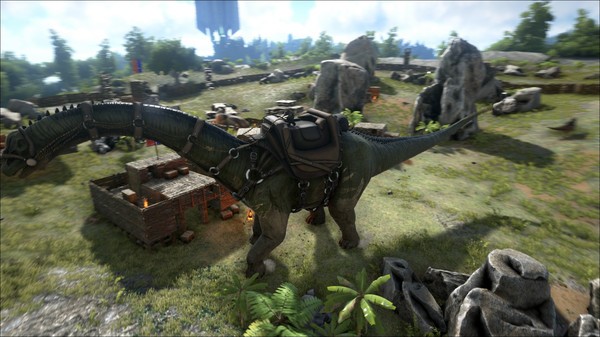
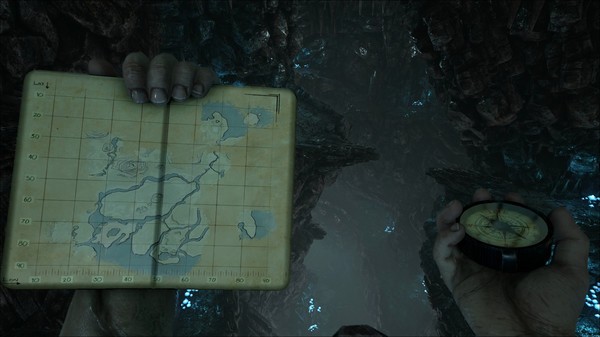
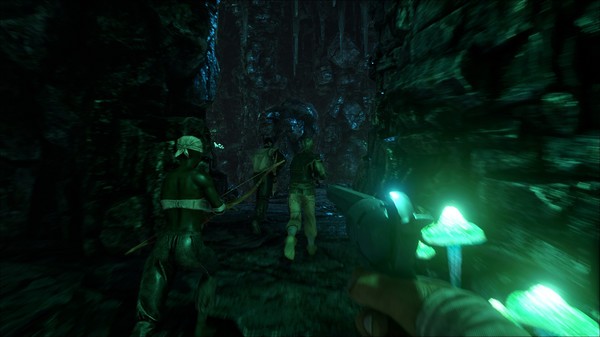
Ark: Survival Evolved is a survival FPS in active development. The game drops players naked and shivering on a mysterious island full of dinosaurs and other primordial creatures. Starting from the most basic tools from survival, players will learn to survive in their harsh new environment and eventually become its master.
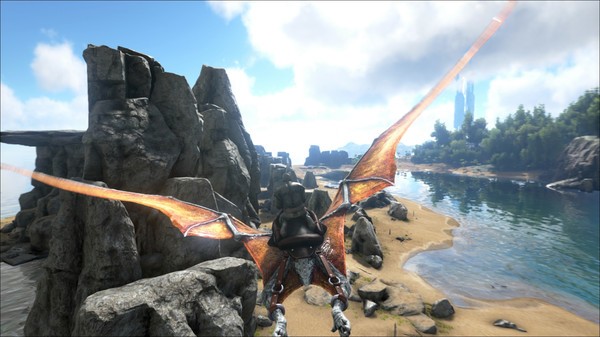
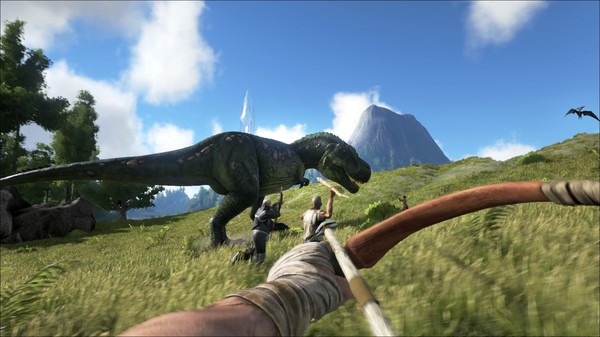
On the surface, Ark: Survival Evolved is a game in a very crowded genre that has become the video game industry’s flavour of the week. It is a bit hard to feel a sense of déjà vu as your character scrambled up onto their feet on one of Ark island’s many beaches. But instead of the ever popular zombies that roam the island, Ark: Survival Evolved opts for dinosaurs and other pre-historic creatures. The dinosaurs may seem like a gimmick, but it really gives the game a unique feel. They create some incredible moments of awe and sheer terror. Giant creatures that tower well into the skies are simply a breathtaking sight, especially when you realize a single wrong step could easily turn you into a pancake. On the other hand, reliving the game’s equivalent of the famous Jurassic Parkraptor scene will create plenty of nightmares of its own. Mixed in with the uncertainty of PVP interactions, Ark: Survival Evolved can be at times a tense affair.
Upon booting up the server browser, players will be greeted by a very healthy number of servers both official and community-run. Care bears and newbies will be pleased to know that PvE servers are available, which will let people focus more on learning the basics of the game without having to worry about being stabbed from behind by a stranger. Currently, character data does not appear to transfer between official servers, so be remember to favourite the server you choose.
The first few hours of the game are a bit of a desperate grind. Every level gives players enough points to buy a couple new crafting recipes. Levels come rather slow as players have to deal with trying to survive their first couple of hours on the island and grind out enough experience points to start their first base. Since players are free to choose their own crafting recipes, the first couple of levels can be really rough when you have no idea what to do or what to buy. I think having pre-set recipes for the first few levels of each character would help smooth the learning curve for new players.
Most surprisingly, the game reminds me more of Minecraft than the standard survival FPS. While there is plenty of combat and tense PVP moments in game, there is a lot of focus on growing the player’s tech tree, building bases, and taming creatures. The island is incredibly large, leaving plenty of room for players to spread out, inhabit, and explore. Late game structures end up becoming complex outposts that require utilities like electricity and water. Constructing these buildings feels very much like LEGO blocks, with pieces snapping into place. It leads to rather angular structures, but it is very easy to do.
Ark: Survival Evolved’s UI is a bit overwhelming at the moment. While the main game UI is decent, the menus are a bit on the messy side. It feels like the developers are currently trying to cram in all relevant information in one screen. The options menu is in the most dire need of some reorganization, as all the options are crammed into one screen. The inventory menu in game is a little better organized, with a few quality of life actions included. A small annoyance I’ve ran into is repairing items in my hotbar. At this point, it is only possible to repair broken items in the hotbar. To repair damaged items, I have to put them into the inventory first, repair them, and then return them to the hotbar.
The game is looking very good. The island is lush and very alive. Running the Unreal 4 engine, there are plenty of eye candy if you have enough power to run things well. Ark: Survival Evolved is currently very much an Early Access title on the PC. The game is not well optimized and there are still plenty of visual glitches. Optimization is a work in progress and there is still a good way to go on PC.
So far, the audio in Ark: Survival Evolved is excellent. There is plenty of variety to the sound effects and some pleasant and unobtrusive music to go with the game. The game is handling sound effect directionality particularly well. I could hear the sounds of flying dinosaurs and insects buzzing above my head with a good set of headphones quite clearly.
Ark: Survival Evolved is on a strong and steady path. The game has seen a very steady stream of content updates since the game launched on Steam Early Access and has made the hop to next-gen consoles. The game has strong foundation with its unique take on the popular survival FPS genre and some very interesting ideas. Hopefully, we will see Studio Wildcard continue to optimize the game and fine tune the gameplay in 2016 as we approach Ark: Survival Evolved’s full release.
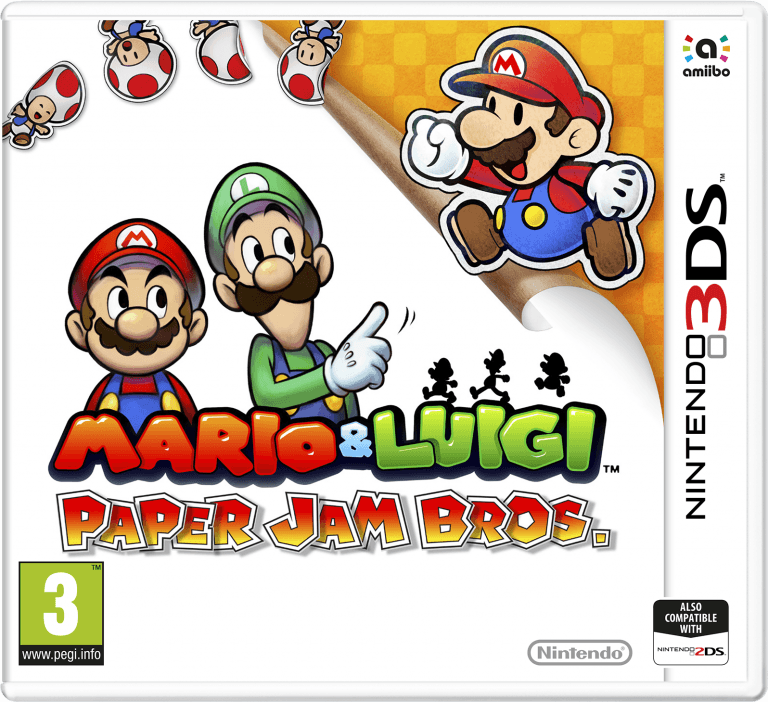
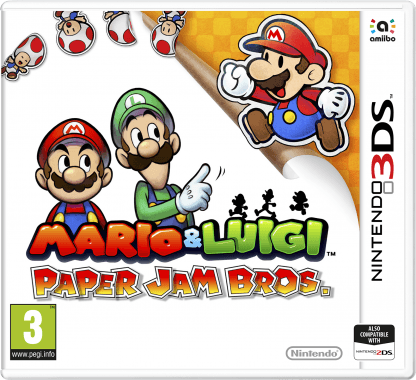
Mario & Luigi Paper Jam Bros. could be seen as a classic TV crossover, mixing together two of Nintendo’s most loved RPG franchises. This is the fifth entry in the well received Mario & Luigi RPG series which started back on the Game Boy Advance in 2003 and is definitely a sequel to that series as opposed to a true Paper Mario game, however the series have their obvious similarities. Does the addition of Paper Mario make a good series even better or should these two worlds have never met? Read on for our full review.
Story
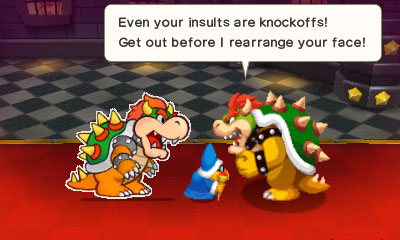
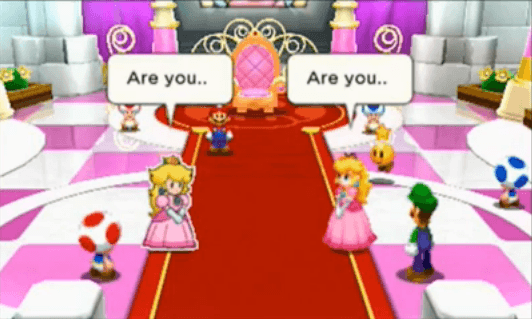
Luigi in all his intelligence manages to knock over a book filled with the contents of the Paper Mario series. The book opens up and all the living characters and even some of the world manage to spill into the ‘real world’ of Mario & Luigi, meaning we now have two of Mario, two of Peach and most important to the plot, two Bowsers! If I am remembering correctly this is the first time characters in the Mario universe have ever met themselves and it has some great results, particularly the two Bowsers. There’s a lot of self aware back and forth that borders on breaking the fourth wall and most of it is clever and pretty funny.
Unfortunately, having two of everything does little to change the simple Mario story line here. Both Bowser’s steal both Peach’s and two Mario’s (plus Luigi, and I won’t spoil what Paper Luigi is up to) head to Bowser’s Castle to defeat them. It’s still an enjoyable adventure however and the familiar characters and interactions between both friend and foe alike deliver that sense of nostalgia the Mario series now likes to ride on. If you aren’t a fan of the story or are just a quick reader, you can hold down the R button which speeds up both text and cutscene in what is a feature I’m sure some people would like to see implemented into other games as well.
The way tutorial’s are handled here is also excellent. Every tutorial raises the question if you would like to skip it. This means expert players or those who think the mechanic trying to be taught will be simple enough can simply skip it and refer to the ever present guide book should they get stuck. When you do opt to listen to a tutorial, there is normally a bit of humour involved such as stopping enemies in their tracks so that your star helper can explain something to you. Like the cutscene speed up function I mentioned above this is another thing I’d love to see implemented in more games.
Gameplay
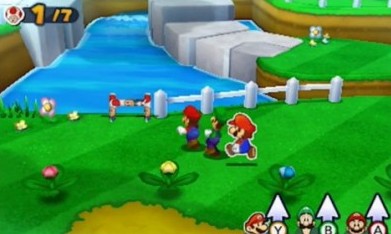
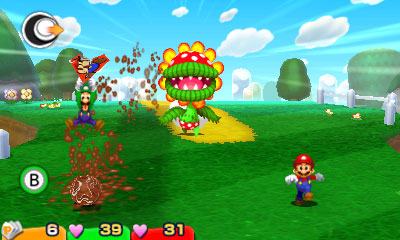
Mario & Luigi Paper Jam Bros. features two main types of gameplay, wandering around the over world and the battles. The over world is very typical RPG in nature. You run around, talk to NPC’s, visit shops and explore and re-explore all areas of the map while enemies walk around that can be hit with a pre-emptive strike for extra damage or ignored if you wish to avoid a fight. Like the battle system which I’ll go into more detail about below, it’s a familiar but fun experience.
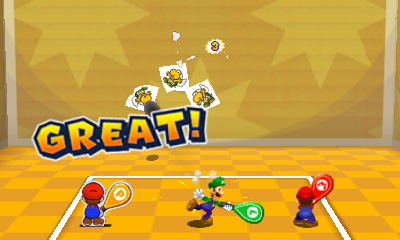
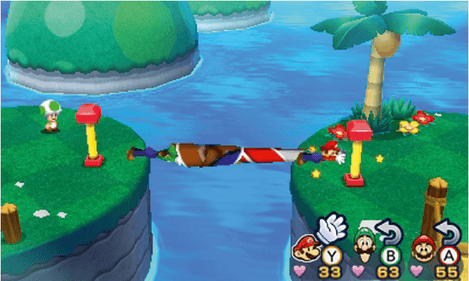
I will say it does take a little time to get used to controlling all three characters at once, particularly where jumping is concerned as you have to learn to press Y, B and A at the same time. This mechanic does work itself very well into some fun mini games which are scattered around the over world and the battle system as well, which makes the addition of Paper Mario a welcome one.
There are also a variety of side quests you can complete over your 25 hour or so journey through the Mushroom Kingdom. Not all the side quests are a hit though, it wasn’t long before I got tired of the Finding Toad quest, despite the different locations and smart hiding techniques of the Paper Toad’s. There are a few good Toad quests that mix it up with puzzles and other tricks, but a lot of them seem to be either finding Toad’s or chasing them down.
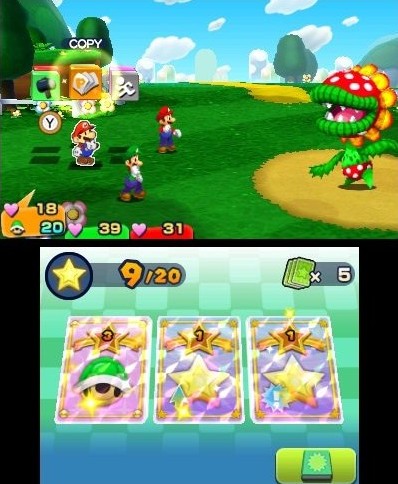
Now for the main reason I am really enjoying this game, the battles, which are simple yet brilliant. I had only played the Mario & Luigi series briefly before but I am a big fan of the first two Paper Mario games and what I played for the most part was very similar to the turn based battles from those titles. On your turn with each of the three main characters you select some form of attack, use an item or a support ability and on your opponents turn you attempt to dodge their attacks. Each enemy is different including the paper version of the same enemy, so knowing what attack is most effective is a big part of securing victory for your trio.
The variety in the attacks and the rewarding real time element are what makes the battles so much fun. Each character has a basic jump and hammer attack, while Mario & Luigi have unique Bros. attacks and Paper Mario has the ability to copy himself making his attacks more powerful while his copies are still around. There are also Trio Attacks which are kind of like Bros. attacks but more powerful. Timing a jump perfectly or dodging an opponents attack is rewarding each and every time both visually and because you deal extra damage.
As you progress in the story you unlock battle cards which are another nice compliment to the battle system. These battle cards all have different effects and you have to earn their use which stops them from being overpowered . Add to this each character’s stats that increase upon level up and the different gear they can equip which have even more variety in their effects and the game really opens up to let you play how you want to in what is an inviting and familiar, yet expansive RPG.
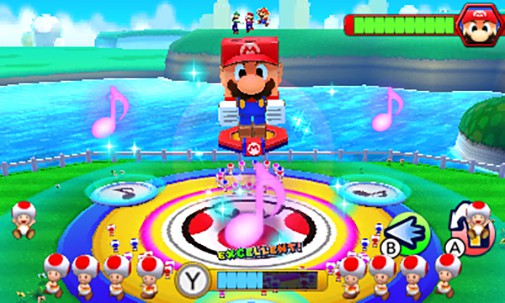
A small part of the game but one that comes up just enough to note is the real time paper craft Battles. Where you pilot a giant paper craft character against a paper craft enemy. These just didn’t hit the spot for me with their overly simplistic controls and mechanics. For some reason your abilities are tied to a meter as well, which means if you run out of energy you have to recharge at a certain spot which forces you to play a ridiculously easy rhythm mini game to refuel. Like the Toad quests there is some variety here with different paper craft characters to pilot and fight which vary mildly, but it wasn’t enough to stop me groaning as I approached a paper craft boss.
Visuals
I was very impressed by the visuals of the game with the limitations of the 3DS. The 3D sprite look from Mario & Luigi and the paper visuals from Paper Mario meld surprisingly well and are represented faithfully to their respective series. In typical Mario fashion, the game is bright and colourful and has a variety of different world types for you to explore.
The variety of animations that each character had, particularly the three main characters is fantastic. The game just oozes charm and polish. For instance, if Mario faints but Luigi is still alive Mario doesn’t simply fade off the battlefield but Luigi will run over to Mario, pick him and then help him avoid the incoming attack. Developers AlphaDream could have taken the easy way out here but they didn’t and that little scene and others like it put a smile on my face.
The way 3D is used here actually tempted me to play with the 3D on for a while which is something I never do on my original 3DS XL. The depth of field works really well in conjunction with the visuals and can aid in getting the timing for certain attacks down in the midst of battle. If I had a New 3DS with improved 3D effect I would definitely be playing with it turned on the entire time.
Audio
Like the visuals the audio will also feel familiar to fans of the series. For the most part the soundtrack is cheerful and happy but is appropriately epic when it needs to be, especially when Bowser becomes involved. Mario and Luigi both speaks some sort of strange gibberish in this game while Peach speaks in proper English for short sentences which is strange but most likely done for comedic effect. All your other classic sounds from throwing fire balls to Bowser’s roar are here and just as recognisable as the characters. Whoever was in charge here has done a great job with their sound design here which adds to the story and the battles to deliver a complete experience.
Overall
Mario & Luigi Paper Jam Bros. is a fantastic addition to the Mario & Luigi franchise. All the new elements courtesy of the Paper Mario Universe open plenty of new opportunities for story and gameplay which, for the most part, this game really capitalizes on. If you’re a fan of RPG’s then all the staples are here and implemented very well and as usual for a Nintendo title the visual and audio design is of the highest quality. Not all aspects of the gameplay are going to appeal to everyone and the story perhaps could have done more to deviate from a traditional Nintendo title, but the witty dialogue and fun battle system give these minor issues a pass. Mario & Luigi Paper Jam is an excellent time whether you’re a fan of the series or simpler RPG’s in general.
Capsule Computers review guidelines can be found here.
THE SWORD ART ONLINE SAGA CONTINUES AS BANDAI NAMCO ENTERTAINMENT AMERICA INC. ANNOUNCESSWORD ART ONLINE: HOLLOW REALIZATION FOR THE AMERICAS
A New Adventure Begins as Kirito is Thrust Back into the VRMMORPG World of Sword Art: Origin
SANTA CLARA, Calif., (DECEMBER 23, 2015)— BANDAI NAMCO Entertainment America Inc. the premier anime videogame publisher today announced that Sword Art Online: Hollow Realization, the fourth installment in Sword Art Online’s console game series, is coming to the Americas in 2016 for the PlayStation® 4 computer entertainment system and PlayStation® Vita hand-held system.
Working closely with Reki Kawahara, the creator of Sword Art Online: Sword Art Online: Hollow Realization presents a unique tale which will give fans the ability to experience a new “Sword Art Online” world. Taking the role of Kirito, players enter a new VRMMORPG world called “Sword Art: Origin”, which was created on the game’s original servers, setting the stage for new heart-pounding quests through a dangerous virtual world.
“The Sword Art Online franchise has experienced incredible growth in popularity on a global level with light-novel and anime fans. We are excited to bring Sword Art Online: Hollow Realization, the next Sword Art Online game, to fans in the Americas.” said Eric Hartness, Vice President of Marketing at BANDAI NAMCO Entertainment America, Inc. “With Sword Art Online: Hollow Realization, we’re striving to take fans even further into Sword Art Online’s VRMMORPG world. We hope players are ready for the challenge.”
Sword Art Online: Hollow Realization is currently rated “RP” for Rating Pending by the ESRB. The game will be coming to the Americas on the PlayStation 4 computer entertainment system and PlayStation Vita hand-held system. For more information about Sword Art Online: Hollow Realization or other games from BANDAI NAMCO Entertainment America Inc., please visit; http://www.bandainamcoent.com, or join the conversation on our Facebook page at http://www.facebook.com/bandainamcous or follow us on Twitter at http://www.twitter.com/bandainamcous.
### About BANDAI NAMCO Entertainment America Inc.
BANDAI NAMCO Entertainment America Inc., part of BANDAI NAMCO Holdings Inc., is a leading global publisher and developer of interactive content — including all major video game consoles, iOS, mobile and online. The company is known for creating and publishing many of the industry’s top video game franchises, including PAC-MAN®, TEKKEN®, SOULCALIBUR®, NARUTO™, NARUTO SHIPPUDEN™, Dragon Ball®, GALAGA®, RIDGE RACER® and ACE COMBAT®. More information about the company and its products can be found at www.bandainamcoent.com or www.facebook.com/BandaiNamcoUS.
All other trademarks are properties of their respective owners.
Overview
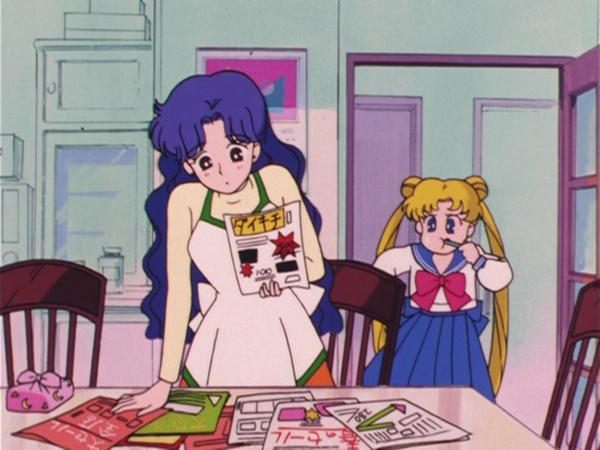
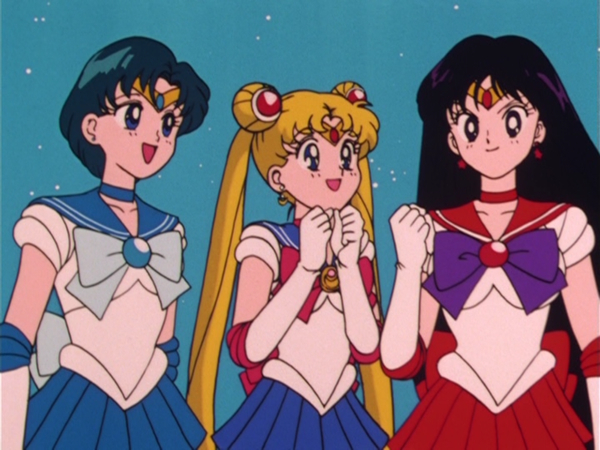
Usagi Tsukino is a 14-year-old middle school student. She is clumsy at times, is always late to school and is more sensitive than those around her. She mainly spends time with her friends Gurio Umino and Naru Osaka. On her way to school one day, she comes across a cat with an unusual appearance. This cat reveals its name to be Luna and informs Usagi that she is a Sailor Guardian. Usagi must now search for the other Sailor Guardians and the Moon Princess.
Story
By now, magical girl series are something most anime fans are familiar with or have at least heard of. Sailor Moon may in fact be the first anime series many people saw, or at least one of the first. Newer anime fans may be more familiar with modern and darker entries into the genre such as Puella Magi Madoka Magica, Fate/Kaleid Liner Prisma Illya or Yuki Yuna Is a Hero. Sailor Moon was not the first magical girl series produced in Japan, but the basic formula has remained the same for over two decades now, if not even longer. The three other series mentioned above may appeal only to specific anime fans, but this series has a more broad appeal. Some of that appeal may be due to nostalgia, but the series holds up as possibly the greatest magical girl series of all time. The Monster of the Day format has a negative stigma attached to it, but it works in this series. It is worth noting, however, that Naoko Takeuchi’s original manga series features significantly fewer monsters than this anime adaptation does. Seeing the Sailor Guardians transform and defeat each new monster that the Dark Kingdom sends their way never becomes dull. The obvious deviations from the source material may bother some fans, but they do not detract from the quality of the story. Those who prefer fast-paced action may dislike the slow pace of plot progression throughout much of the series, but each episode is engaging and entertaining whether or not anything significant occurs in them.
One of the many things Naoko Takeuchi does well is to make the protagonists relatable. No matter what your gender, many of you will see yourself or someone you know in one of the characters. Usagi Tsukino is the person who just cannot get to school on time and just wants to spend their youth having fun. Ami Mizuno is the person who wants to be successful and does not share the same interest in having fun. Rei Hino is the person who has a strong personality but is also a good friend. While these descriptions may make it sound like these characters are not three dimensional, that is not the case. They all go through significant character development and grow not only as individuals, but as teammates and friends as well.
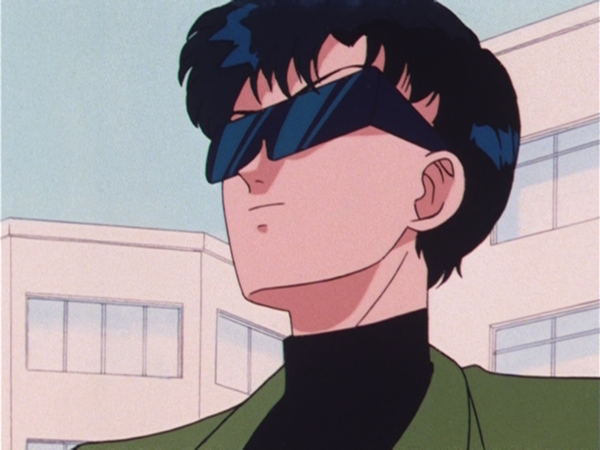
It is not easy to create antagonists who are not simply annoying. Despite this, Naoko Takeuchi knew what she was doing when she created the Dark Kingdom and its people. The Dark Kingdom is shrouded in mystery throughout the first half of the season, but the antagonists shown so far are intriguing characters. Nephrite in particular is surprisingly three dimensional for a villainous character, and he even goes through a significant amount of character development. This makes it possible to forge an emotional attachment to him towards the end of his relatively short arc. Furthermore, the episodes towards the end of his arc are some of the most powerful and moving episodes so far.
Visuals
This series features some of the most iconic animation in the history of anime. The transformation sequences and the poses, in particular Sailor Moon’s poses, are extremely memorable. Those sequences may be reused in most episodes, but watching them again never becomes dull. The character designs are beautiful and all stand out. These days, it almost seems as if unique character designs are a thing of the past, but Naoko Takeuchi created many unique and engaging characters. They feel like they could almost be real people, and the staff of this animated adaptation deserve a lot of credit for bringing these characters to life. One thing in particular that stands out in comparison to other anime series is the use of lighting. There are many thematically dark scenes throughout the series, and the animation team does an excellent job at enhancing the atmosphere of a scene through a seemingly simple but effective use of lighting.
Madman’s release uses Viz Media’s subtitles, but they did not replace the romaji in the subtitles for “Moonlight Densetsu” with English translations. This may only be due to contractual reasons, but many fans reasonably consider this a problem. The subtitles are otherwise almost perfect except for one or two insignificant mistakes. Many fans were more outraged at Viz Media for what they perceived to be a poor remaster of the first season. They complained of issues such as brightness levels supposedly being altered in some scenes, but as a representative of Viz Media stated, they did everything they could with the masters they were given. As such, there is not anything wrong with that release. Surprisingly, it actually appears to that Madman received different copies of the episodes. There are many artefacts present in these episodes, and the colours occasionally appear to have faded a little more than expected, but the remastering process Madman put these episodes through is clearly almost perfect. The only major problem now is that these episodes have so far only received a DVD release in Australia. The menus on these discs are completely different to the menus on Viz Media’s discs. “Moonlight Densetsu” plays while on the main menu, but the ‘Episodes’ and ‘Setup’ menus are silent. The images featured in the main menu on each of the discs are noticeably rough around the edges, and there are only options to view the episodes with the English dub or the original Japanese audio and English subtitles. Viz Media’s Blu-ray release contains more options in their set-up menu, but the main subtitles on these discs can at least be turned off if you would like to view the series without subtitles for the Japanese dialogue.
Audio
The music featured in Sailor Moon is some of the best music anime has to offer. The opening song, “Moonlight Densetsu,” is one of the most popular anime songs of all time. It is memorable, catchy and always thoroughly enjoyable to listen to. The ending song is also significantly better than the pop songs used in modern anime series, but it does have a somewhat ’90s sound. This is common with ending songs produced during that period, so it is not something that should be considered a problem. The background music is just as memorable and catchy as the theme songs are. Takanori Arisawa’s compositions are perfectly suited to every scene they accompany, no matter what the tone. The transformation sequences in particular are accompanied by some of the most memorable music in the series. Arisawa was incredibly talented at creating powerful, beautiful and memorable music, so it is a real shame that he is no longer around. It is worth mentioning that a cheaper reprint of the original soundtrack CD release of the first season is currently available in Japan and can be imported from online retailers.
It can be assumed that Viz Media’s English dub is better than DiC’s English adaptation from the mid-1990s without even hearing it. The casting decisions are better this time and have been very well received. However, the voices do not sound like the original Japanese voices, and while that is not always a bad thing in English dubs, the main characters sound more American than Japanese as a result. Whether you find the dub suitable or not will depend on your individual tastes, but the voices in the English dub just do not suit the characters like the original Japanese voice actors do.
Extras
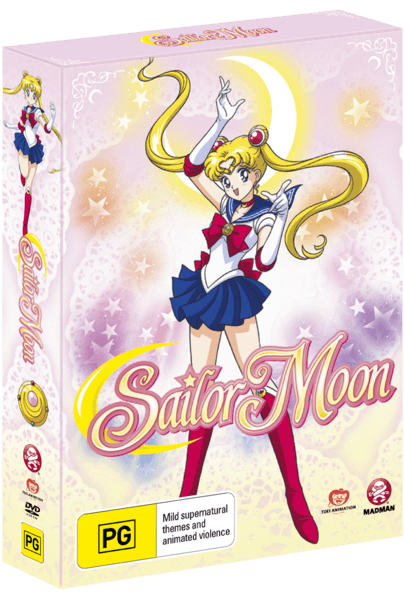
There are significant differences between Viz Media’s limited edition release and this release. The back cover art from the DVD set is reprinted as a one-sided sheet and attached, albeit only barely, on the back of the box. It can be removed, but the way it is stuck to the back gives the box a somewhat cheap appearance. The cover of the DVD case is reversible; the reverse side features artwork of Queen Beryl, Jadeite and Nephrite. The booklet included replicates 29 of the pages from Viz Media’s booklet, but it is unclear why the other 59 pages were not included. The missing pages include a full page introduction to the series, an episode guide for all 46 episodes of the first season and song lyrics in both the original Japanese and English. What is included in Madman’s booklet are the character profile pages and the artwork pages from Viz Media’s booklet. For anyone planning on watching the series for the first name, the content of both versions of the booklet will spoil certain plot points, including plot points from later episodes in this season. The behind-the-scenes footage from the production of the new English dub and the textless animation for “Moonlight Densetsu” and “Heart Moving” are included, but the art gallery and other videos produced for Viz Media’s release are not. The significant number of missing pages makes the extra $20 cost for this limited edition set somewhat questionable, but the important features of Viz Media’s art book are included. Ultimately, whether or not the differences are an issue or not will depend on individual opinion.
Overall Sailor Moon can be considered a perfect anime series. Like many anime series produced in the 1990s, some elements of the series date it in a specific real world time period, but this can easily be overlooked. The characters, the character designs, the writing, the artwork, the animation, the voice actors, the music, or in other words, everything, combine to make this one of the most memorable anime series ever. It has an important nostalgic value for many anime fans, but it is also accessible to anyone else who is interested in this series. It takes almost no time at all to forge an emotional attachment to the characters and become invested in the story, and there are moments in the series that are incredibly powerful, moving and beautiful.
Capsule Computers review guidelines can be found here.
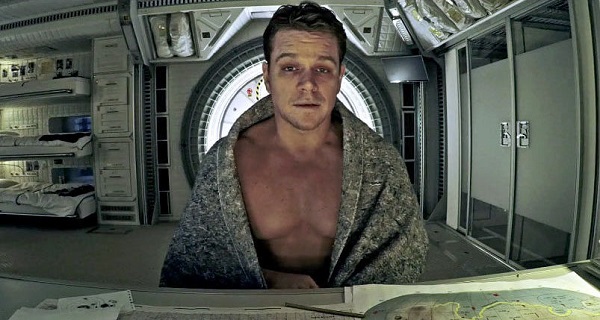
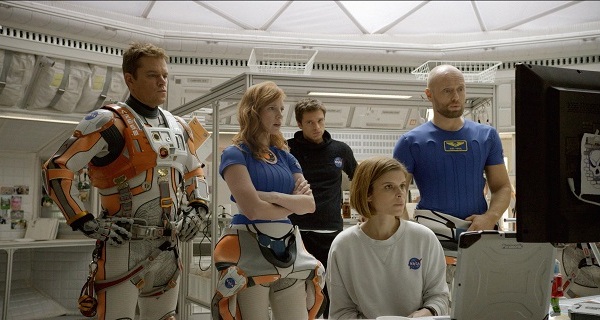
2015 proved to be a year of fiction masterpieces with The Martian being a very interesting ‘hard science fiction’ entry into the genre. Now, thanks to 20th Century Fox, the film be will getting a release on DVD and Blu-Ray. The film, directed by Ridley Scott (Alien, Blade Runner,Prometheus) stars Matt Damon (Ocean’s Eleven, Saving Private Ryan) as an astronaut who gets stranded out on the hostile surface of Mars. As far as films go, it’s pretty darn good and as far as sci-fi goes; it’s generally quite accurate in laying the scientific groundwork for the plausibility of these hypothetical events.
Along with the movie, the DVD will feature several pieces of in-universe content, made from the perspective of the characters, as well as a gag reel (which is always to laugh at). The Blu-Ray version will boast a lot of extra content alongside the DVD features including a lot of behind-the-scenes featurettes discussing how the film was made and costumed. I believe the film itself is worth getting a copy for, but I’m not one to turn my nose up at extra content either.
The Martian will be released on Blu-ray and DVD on the 20th January and the 10th of February respectively.
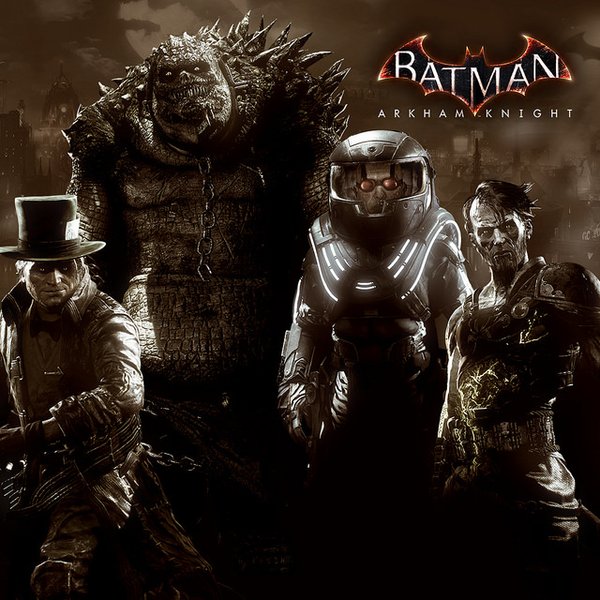
Batman: Arkham Knight saw the end of the incredible Arkham series of games from Rockseady and Warner Bros, but that doesn’t mean that the story is quite over. After the Batgirl DLC, we now have our next piece of story content titled “Season of Infamy,” which pits the World’s Greatest Detective against four of his most dangerous foes.
The following four missions each revolve around a particular member of Batman’s Rogues Gallery and each will push the Dark Knight to his absolute limits:
Wonderland: The Mad Hatter makes things personal as the Super-Villain lures Batman into a demented, hallucinatory battle of wits across Gotham City and within the pages of a twisted story book.
Beneath The Surface: The World’s Greatest Detective and Nightwing venture out to investigate Iron Heights, a flying airship prison that housed Killer Croc, after it crashed in the waters surrounding Gotham City.
Shadow War: Picking up after the events of Batman: Arkham City, Batman’s devout moral code is pushed to its limits as Ra’s Al Ghul’s health rebounds with the help of the League of Assassins.
In From The Cold: Mr. Freeze returns to Gotham City, where he is immediately entrapped in Arkham Knight’s Militia and Scarecrow’s plan to destroy Batman. Arkham Knight’s Militia has kidnapped Nora and will return her to Mr. Freeze in exchange for Batman’s capture.
In addition, players can also download new Batman skins, Batmobile skins and challenge maps, including;
Crime Fighter Challenge Pack #5: Combat and invisible predator maps featuring Batman, the Batmobile, Nightwing, Azrael, and Harley Quinn, allowing focused training in Freeflow Combat and Invisible Predator stealth incursion.
2008 Movie Batman Skin: Patrol the streets of Gotham City with this Batsuit inspired by the 2008 movie “The Dark Knight”.
Original Arkham Batmobile: Seize control from Gotham City’s most notorious villains with the original Arkham Asylum Batmobile.
Rocksteady Themed Batmobile Skin: Customize the legendary Batmobile with this unique Rocksteady themed skin.
Batman: Noel Skin: Face your foes with this reinforced leather suit from the Batman: Noel comic (previously a DC Comics exclusive).
Free Updates:
Batsuit v8.05 – Prestige Edition:Players can access this suit after reaching 240% game completion.
Classic Harley Quinn Skin: Players who own the Harley Quinn Story Pack or Crime Fighter Challenge Pack #5 can select this Harley Skin, which can be used in the Harley Story Pack or in AR Challenges, from the character showcase.
Arkham Knight Skin:Players who own the Red Hood Story Pack can select this skin from the character showcase for Red Hood, allowing them to look like the Arkham Knight in the Red Hood Story Pack and AR Challenges.
All of these are available now as part of the Season Pass, or for purchase individually for those without the pass. We have attached a brief trailer below that showcases all of this new content so make sure you check it out and make sure you stay tuned to Capsule Computers for all the awesome Batman news as it becomes available.
Discotek Media recently announced that it has acquired the North American home video distribution rights to Lupin the Third Series 2. Their plan is to release all 155 episodes over four DVD sets beginning in 2016. It has not yet been stated how long the release intervals will be. This series was originally broadcast in Japan from 1977 to 1980.
They will be including any existing English dubs as well as the original Japanese audio and English subtitles. Episodes 80-155 will have higher quality English subtitles and episodes 145 and 155 will be featured with the Streamline English dub. They currently do not have any plans to dub the rest of the episodes into English.
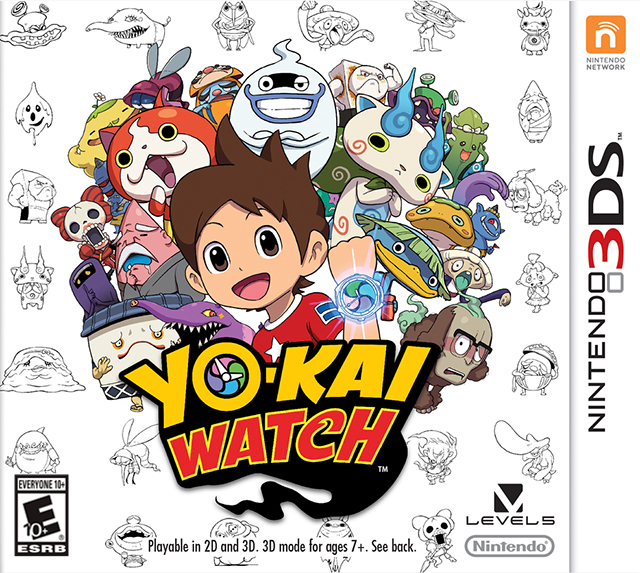
Yo-Kai Watch is a huge phenomenon in Japan. From its video games to its anime and even the films, everywhere you go the bright and colourful spirits are everywhere. Well now the sensation has made its way to the west, and down under with Yo-Kai Watch for 3DS. With its unique take on the “capture monsters and battle with them formula,” is Yo-Kai Watch, with its gorgeous visuals and abundance of personality destined for the same levels of success over here that it has been seeing in Japan, or does the game’s frustrating mechanics and passive combat mean that it is likely to remain relatively unheard of outside of Japan?
Story
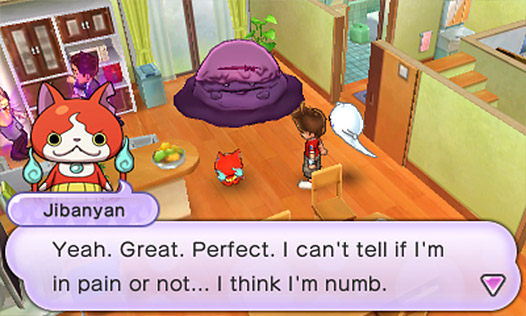
Yo-Kai Watch revolves around these little spirits called Yo-Kai, which in Japanese folklore are responsible for various emotions we randomly feel. Things like gluttony, rage, sadness, etc are all attributed to these little spirits and in the world of Yo-Kai Watch, the player character is tasked with finding, capturing and defeating a number of these spirits that have begun to really cause some havoc. While the whole “find and catch monsters” genre is nothing new, this is such a unique and interesting take on the formula that just oozes Japanese culture in a very real way.
Unfortunately there isn’t all that much to the game’s plot and what there is takes ages to really unfold. Most of the time you will just be going from place to place. Defeating nasty Yo-Kai as you go.
I have to commend Level 5 on not shying away from some seriously mature and downright dark themes in this game. One of the first major Yo-Kai you encounter is one that is making the player character’s parents yell and scream at one another, while another I encountered was causing a character to suffer from depressive, almost suicidal thoughts. These kind of real world issues are hardly touched in video games at all, let alone ones targeted at children. I cannot explain how much I love that these issues are tackled in this game, because the more that people know and understand about mental health and that negative feelings and emotions are part of life, the more educated they will become and the better choices they will make later in life.
Gameplay
Gameplay in Yo-Kai Watch is separated into two different else,nets; exploration and combat. The exploration side of things is one of the most in-depth and engaging I have seen in an RPG of this style before, while the combat is far more passive and simplistic.
At its core, Yo-Kai Watch is a game about finding, battling and capturing little monsters. To achieve that, the player needs to explore the massive world map in order to uncover the monsters themselves and do battle against them. The world map is absolutely huge and is filled with so many little secrets, hidden alleys and other nooks that it will take a HUGE chunk of your time to even make your way through it all.
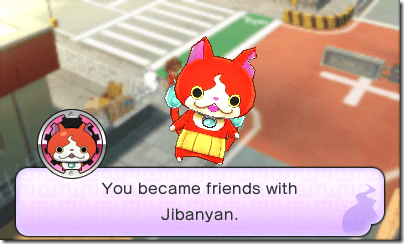
The titular Yo-Kai Watch is represented by a gauge on your screen that shows you how close you are to a Yo-Kai as well as its level. By investigating areas that you know to have the spirits in them, you will enter a battle with them and have the option to capture and add more to your collection. Areas that don’t have Yo-Kai in them are used to hunt for bugs, fish and various other items in order to enhance your ghostly team. These item finding sections act as a mini game of sorts, where you need to search for the bugs etc in question and then get the correct timing down in order to catch them. I personally felt that these sections dragged on for far too long, and although they are largely optional, considering how important items are to the overall game they are difficult to avoid entirely.
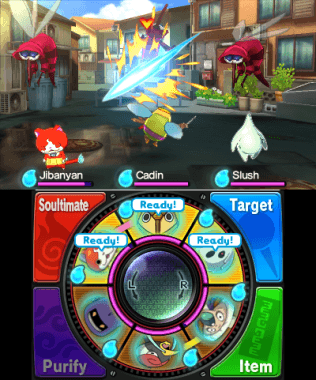
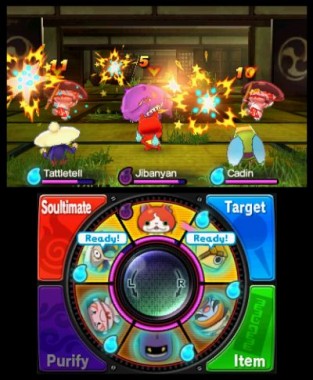
Combat on the other hand is almost the exact opposite. Your Yo-Kai will attack the enemies in battle completely independent of you. Unlike games like Pokemon, you have very little control over the actions of the Yo-Kai and are treated more as a passive observer for the majority of battles. There are two exceptions, firstly if you want to use a Yo-Kai’s special attack then you need to perform a small mini game in the bottom screen while the fight continues without you. In addition, you can use items on your own (and the opposing) Yo-Kai in order to heal their HP. Considering the majority of the action takes place without you, being forced to only perform actions like these makes the game feel incredibly passive and like you are micromanaging the whole thing.
The game is also incredibly vague and inconsistent with how you are supposed to befriend the spirits. Each spirit has its own favourite food and feeding the, it is supposed to increase the likeliness that it will want to join you at the end of the battle. However in my experience, this almost always boils down to dumb luck and random chance. There is no way to see an opposing spirit’s affection towards you so you don’t really know if you’re doing the right thing, and on more than one occasion I have had spirits that I have completely ignored want to join up with me whilst ones I focused specifically on wanted nothing to do with me. Considering this is such a vital part of the overall experience, having it come down to luck just results in frustration and irritation with the whole game.
Visuals & Audio
As they always seem to do, Level 5 have created an absolutely beautiful game world that is not only oozing with charisma and culture but is a joy to explore and filled with little details to take in. As you probably have expected due to the nature of the came (and the development team themselves) many of the subtle references and cultural inclusions are very Japanese-centric, almost to the point where you can learn about the country just by playing the game.
Yo-Kai Watch is perhaps one of the most visually striking games that I have played on the 3DS in quite some time, and a lot of that comes down to the incredible use of colour. Everything from the lush parks, to the bustling towns and of course the Yo-Kai themselves are all so richly colourful that it is just a joy to look at.
Overall
Yo-Kai Watch has become an absolute phenomenon in Japan and it is easy to see why. From the setting, to the fact that the game itself is based on Japanese folklore, all the pieces fit together to make a franchise that will no doubt dominate that country for years to come. However that being said, for all its rich lore and colourful characters, Yo-Kai Watch stumbles in some key areas that will likely stop it from becoming a household name or a global sensation. In the end, the passive nature of this title makes it feel more like you spend more time watching it than you do playing and even when you are, it is micromanaging at its finest. While I enjoyed my time with Yo-Kai, I can’t say that I loved it or that it is something I would go back to in the future.
Capsule Computers review guidelines can be found here.
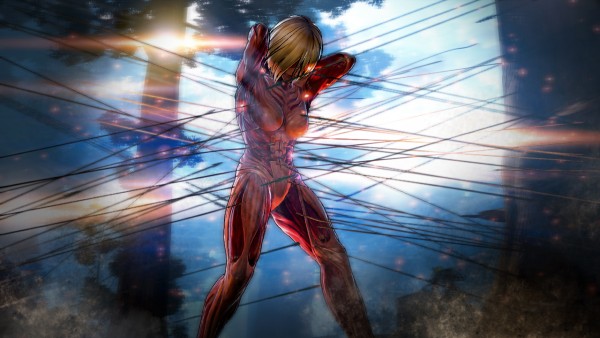
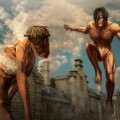
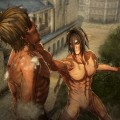
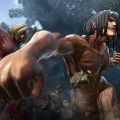
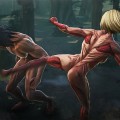
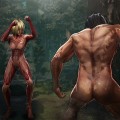
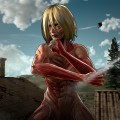
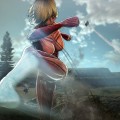
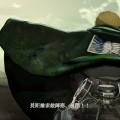
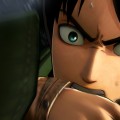
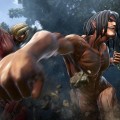
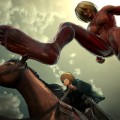
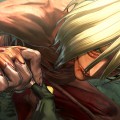
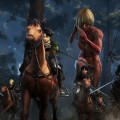
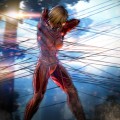
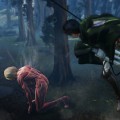
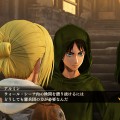
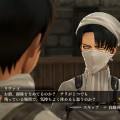
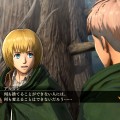
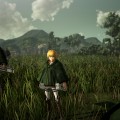
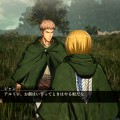
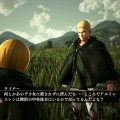
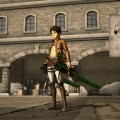
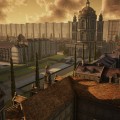
In case the title there didn’t tip you off, then be prepared for some Attack on Titan spoilers if you haven’t checked out the first season at this point because Koei Tecmo and Omega Force have released a large batch of screenshots for their upcoming Attack on Titan game and in it they feature the recently confirmed Female Titan, Titan Eren, and plenty of other elements of the game, including the ability for players to develop equipment, including a large number of game-original equipment, to take down the Titans.
Currently Attack on Titan‘s video game is set to be released on February 18th in Japan for the PlayStation 4, PlayStation 3, and PlayStation Vita while a Western release is planned for sometime in 2016.
Fans of the Tales of series will be happy to hear that Bandai Namco is being rather quick when it comes to the localization announcement for the latest game in the series, Tales of Berseria. Today the company announced that they are bringing the title to North America, South America, and Europe where it will be released on the PlayStation 4 and PC, with the PlayStation 3 version only being released in Japan.
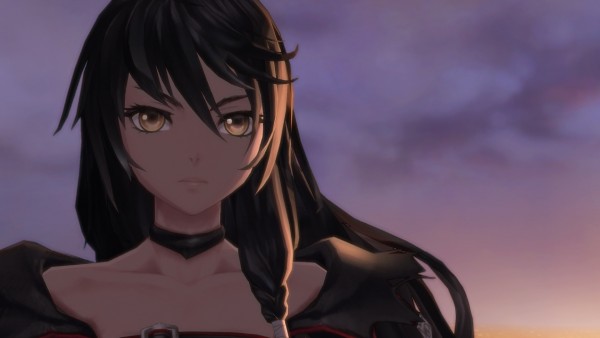
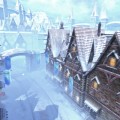
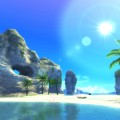
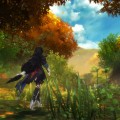
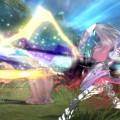
Tales of Berseria is set for Japanese release in 2016 and while no release window has been announced for the West the company did release an English version of the latest trailer for the game and a batch of screenshots that are more refined from what we have seen in the past.