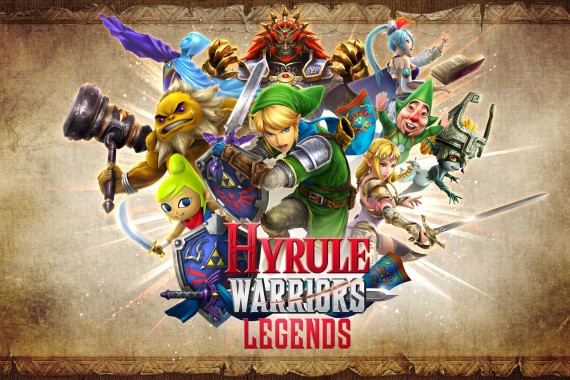
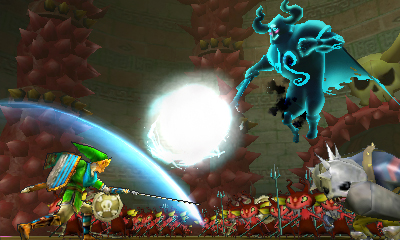
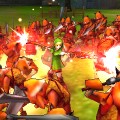
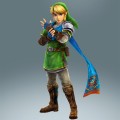
In a very rare occurrence in the video game industry it seems the handheld version of a game might be better than its main console counterpart. Hyrule Warriors Legends is landing on the 3DS on March 24th, bringing with it several new characters, features and modes.
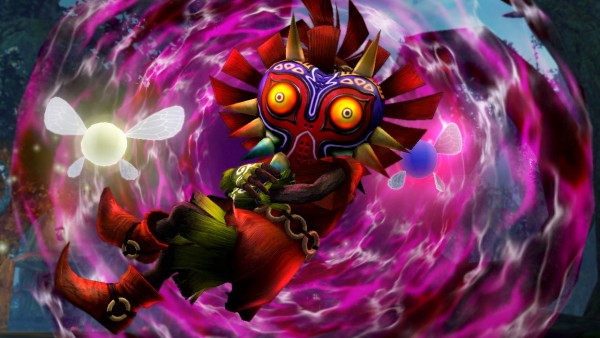
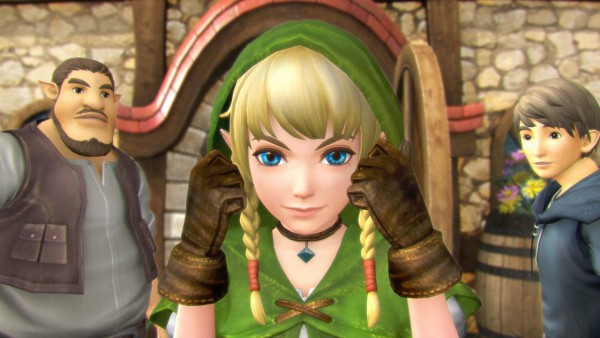
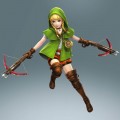
Five new characters in total are joining the action hack ‘n’ slash title with fan favourite characters Toon Link, Tetra, King Daphnes (from The Wind Waker), Skull Kid and brand new character Linkle who is essentially our very first female rendition of series hero Link. New copies of the game will contain a code allowing access to these 5 characters on the Wii U version, however only in Adventure mode and Free mode. Codes will also unlock a new Trident weapon set for Ganondorf. To enjoy all these characters, the new ability to switch between up to four characters on the battlefield at once has been introduced.
New chapters are also being added to integrate these new characters into the games story mode. A four chapter epilogue based on The Wind Waker and a five chapter story based on dual-crossbow-wielding-Linkle can be enjoyed exclusively in this new edition of the game.
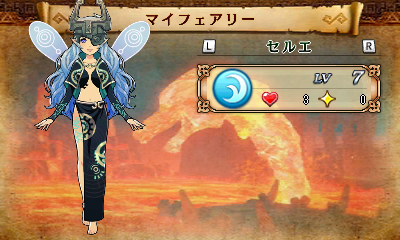
Another addition comes in the form of My Fairy Mode. This time around, when players explore Adventure Mode there are fairies to be found, each of whom can be levelled up to bestow additional benefits in battle across all modes. By feeding them and dressing them in new costumes, players can increase their trust, change their personality traits, or strengthen their Fairy Magic. They can even be rented to friends through Local Play, allowing them to take advantage of their skills for up to 24 hours.
As with most Nintendo games amiibo have also been incorporated. Tapping the respective character will generate more powerful versions of previously unlocked weapons. This includes the upcoming Wolf Link amiibo that is being packaged with Twilight Princess HD which of course can be used for Midna. On a New 3DS this support will be natural but players with an older 3DS model will need to use the NFC Reader/Writer accessory. New 3DS consoles will also see better performance as well as the ability to control the camera with the C stick.
ESCAPE FROM TARKOV: INVENTORY AND LOOT VIDEO HAS DROPPED
Battlestate Games, the creators of hardcore online shooter Escape from Tarkov, today shared their Inventory and Loot video, giving insight into the game’s classic inspired slot-based inventory and looting system. Featuring pre-alpha in-game footage, the video shows you what inventory looks like in the current build of the game, how loot drops work and what gear is available.
Escape from Tarkov delivers seamless pick up of loot with easy organization and modification within the inventory system. All aspects have been created to closely mimic the look and feel of a real professional mercenary embroiled in war-torn conflict to reinforce the hardcore realism of the game.
Did you miss Escape from Tarkov’s intense announcement trailer?! Watch it now:youtu.be/IPlnHe9l34E
Escape from Tarkov is a hardcore online game that combines FPS/TPS with RPG elements. The game events unfold in the sealed off Russian city of Tarkov, which has become a scene of a local conflict between two private military companies. As a hazardous environment combat simulator, the game uses multiple system modules for ultimately immersive gameplay and a complete feeling of reality. The closed beta-testing of Escape from Tarkov is planned for 2016.
Interested in testing your mettle? Sign up now for the Beta on the official game Website at:www.escapefromtarkov.com/.
To stay up to date on current development be sure to follow Battlestate Games onTwitter and “Like” the game onFacebook.
U.S. Video Game Industry Generates $23.5 Billion in Revenue for 2015 U.S. Sales Increase with Strong Software Offerings to Consumers
Washington, DC – February 16, 2016 – The U.S. computer and video game industry generated $23.5 billion in revenue in 2015, according to new data released today by the Entertainment Software Association (ESA) and the NPD Group. This is an increase in total consumer spend from reported 2014 sales, which were at $22.4 billion. Sales of software content alone, which include physical packaged goods, mobile games, downloadable content, subscriptions, and other revenue streams, exceeded $16.5 billion—a seven percent increase from 2014, which saw software sales at $15.4 billion.
“The video game industry excels because it anticipates demand – giving people what they want before they realize that they want it – and drives trends in entertainment and across countless other sectors. Our products are revolutionizing how we consume and interact with media,” said Michael D. Gallagher, president and CEO of the ESA, which represents the U.S. video game industry. “We know that hardware and software innovations have established this industry as a leader in high-tech development.”
“The ubiquitous nature of playing and purchasing video games makes it more important than ever to track these activities accurately,” said Joanne Hageman, president at the NPD Group. “The industry’s sales performance helped to make 2015 a banner year for video games; and we anticipate continued growth in multiple industry sectors for 2016.”
The U.S. video game industry is one of the nation’s fastest growing economic sectors, providing tens of thousands of high-paying jobs to Americans and generating millions of dollars in revenue for communities across the nation.
According to ESA, which provided the most recent data available on the industry’s economic impact, the video game industry added over $6.2 billion to the U.S. economy in 2012. In addition, as other industries contracted, game developers and publishers expanded. Employment in video games grew at an annual rate of 9 percent from 2009 to 2012 – more than 13 times the growth of the U.S. labor market.
Employees in the entertainment software industry earned an average compensation of nearly $95,000 in 2012, up from $90,000 in 2010. In fact, the average employee in the video game industry earned nearly double the average U.S. household income.
ESA offers a wide range of services to interactive entertainment software publishers, including conducting business and consumer research, providing legal and policy analysis and advocacy on First Amendment, intellectual property, and technology/e-commerce issues, managing a global content protection program, owning and operating E3 and representing video game industry interests in federal and state government relations. For more information, visit ESA’s website or follow us on Twitter at @RichatESA or @ESAGovAffairs.
KOEI TECMO REVEALS CHARACTER SUBSTITUTION FEATURE FOR SAMURAI WARRIORS 4 EMPIRES
Castle customisation and the importance of Resources detailed!
Hertfordshire, 16th February 2016- Koei Tecmo released today new assets and videos with emphasis on the character substitution and castle customisation features in upcoming strategy epic Samurai Warriors 4 Empires. Planned for release across Europe on 11th March 2016 the game will be available for PlayStation®4 computer entertainment system (physical and digital), and the PlayStation®3 computer entertainment system and PlayStation®Vita handheld system (digital only).
Character Substitution is one of the most exciting new features of Samurai Warriors 4 Empires. Players will be able to fully create and customise their playable character- including appearance, leadership, wisdom, or politics attributes, and move sets, as well as personalised family crests, Musou kanji, and portraits uploaded from a hard drive. In addition, these characters will be fully immersed in the drama of the era, meeting and becoming part of the lives of historical figures (either as friends or foes). Gamers will also be able to swap an historical character with a custom character in unlocked movies and cut scenes, creating a more complete player experience.
To further the level of customisation in Samurai Warriors 4 Empires, Omega Force has included advanced Castle Customisation in the game, meaning that apart from building a Castle to their specifications, players can also decorate it with unlockable decorative wallpapers, or with banners that can be collected by completing missions. These banners often offer extra bonuses, such as increased income, supplies, commerce, fame etc.
Lastly, the company released information on the strategic importance of exploiting in game Resources of conquered territories. When ruling over a territory that has one or more facilities, a number of related policies become available. This means that it is not just a matter of which clans are defeated, but also where they are based and what resources they can add to the player’s fief. A few examples of these Facilities are the economy boosting Mines (Gold and Silver) or Trading Post, the army upgrading Gunsmith (allows for riflemen) and Horse Farms (allows for the creation of mounted units), the espionage instigating Ninja Village (allows for Assassination missions), or the more invigorating Hot Springs (allow for relaxing before or after battle) and many others.
The clever use and acquisition of these Facilities gives a competitive edge to players in their quest to rule over, or unite Japan, and can be used to bestow great tactical and strategic advantages
Samurai Warriors 4 Empires marks the return of the ‘Empires’ brand in the Samurai Warriors universe after a nine year gap. Since the 2007 release of Samurai Warriors 2 Empires for the PlayStation®2, Samurai Warriors has grown to become one of the most successful and acclaimed titles in the Warriors universe. This revamped version of the fan-favourite installment features much improved battle gameplay and an expanded intuitive governing system, and explores the effects of building in-depth relationships and alliances.
ABOUT KOEI TECMO EUROPE LTD.
KOEI TECMO EUROPE LTD. is a publisher of interactive entertainment software for current generation consoles, handhelds and digital download content based in Letchworth, Hertfordshire, UK. The company is a wholly owned subsidiary of KOEI TECMO HOLDINGS CO., LTD., headquartered in Yokohama, Japan. TECMO is best known for the Dead or Alive® and Ninja Gaiden®series. KOEI is best known for its Dynasty Warriors® and Samurai Warriors® franchises. On April 1, 2009, KOEI TECMO HOLDINGS CO., LTD was established as a result of the TECMO, LTD. and KOEI Co., Ltd. merger. More information about KOEI TECMO EUROPE LTD and its products can be found at www.koeitecmoeurope.com
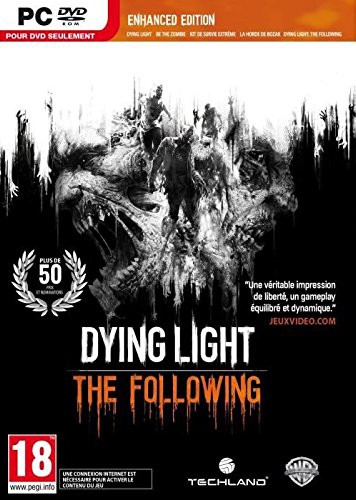
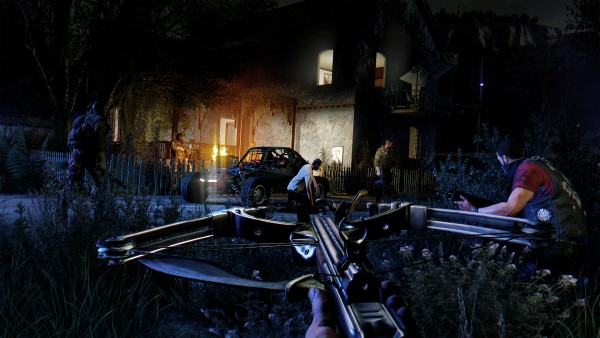
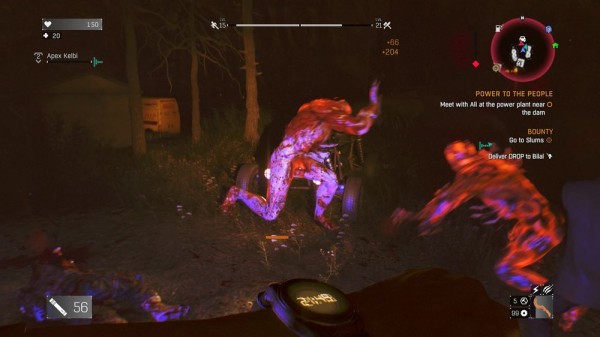
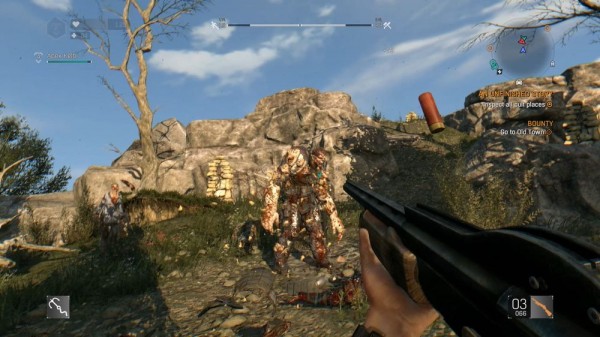
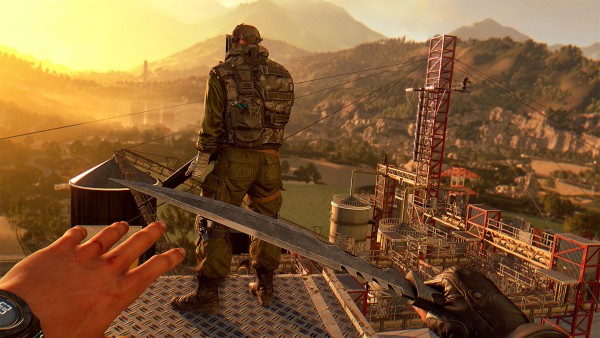
Originally slated to be a DLC, Dying Light“The Following” quickly grew to a full blown expansion pack. It adds new weapons, bounties, an off-road buggy, and a giant new map to Dying Light. Set in the outback outside of Harran, Kyle Crane leaves the city after learning about villagers who are immune to the virus as Antizin levels plunge dangerously low in the Tower.
Story
Set after the death of Rais, Kyle Crane is still in Harran attempting to aid survivors. Antizin levels are beginning to run low and Dr. Camden’s research is stalled. A survivor arrives in the Tower barely hanging onto life and rambling wildly about cultists outside the city who are immune to the virus. His story becomes more believable when a map detailing a way past the Harran quarantine zone is discovered in his belongings. In a last ditch attempt, Crane leaves Harran to discover a cult worshiping a leader they call The Mother. Crane will now need to earn the trust of the cultists as they are not particularly keen on sharing their secrets with Crane.
The story mission a little short in number. Techland bills the expansion pack’s storyline as a non-linear trust-based system, where the player needs to earn the trust of the cultists enough that they are willing to share their secret. In execution, it means Kyle will be running around doing enough side quests to trigger the next story mission, which feels like a cheap way to pad the story missions.
To be honest, I did not go into “The Following” with high hopes on the plot. Upon learning of the plot synopsis a while back, I had the initial impression that the whole cultist thing was not going to fit in with the overall plotline. Luckily, I’ve managed to put my foot so far into my mouth, I’m currently eating my shoe. The whole emphasis on a quaint old cultural tradition gone to the extremes after all hell broke loose grounds the plotline nicely. Mixed with a very believable tale, “The Following” delivers on a story that I think would have topped Dying Light’s plot if it wasn’t for one thing: the endings suck.
Spoiler warning, skip ahead if necessary!
“The Following” has three possible endings, two mains ones and a secret third Easter Egg that is essentially a riff on one of the two main endings. Two endings have Crane deciding to destroy Harran and the virus, while the other sees him turning into a Volatile himself. The endings are a strangely abrupt end to Crane’s story and “The Following” in general. The destruction ending is even more anti-climatic considering the effort Crane spends in the base game to save Harran. The weirdest thing about the ending is that players are able to get back into the game after it is finished, as if nothing happened. With Dying Light’s ending, everything makes sense as Crane decides to stay in Harran; in “The Following,” players feel trapped in the period just before the final scene.
Gameplay
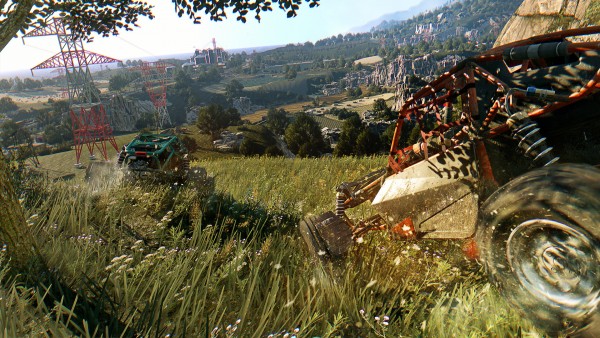
“The Following” features a brand new map set in the countryside outside Harran. It is a huge map with lots of open spaces and quaint little villages dotting the roads. The stark contrast to urbanized Harran gives “The Following” a very different feel that compliment’s the expansion pack’s vehicle well. There are still enough built up areas, such as industrial buildings and a small Mediterranean-style town, to provide some really tense claustrophobic moments.
A minor gripe I have with “The Following” is that it is a completely separate module from the base game. Unlike the two maps of Harran where you can simply run to a spot in the map and move over, players will need to back out to the main menu and then switch. While Crane’s stats and inventory transfers over both ways, having to return to the menu breaks the immersion in the game.
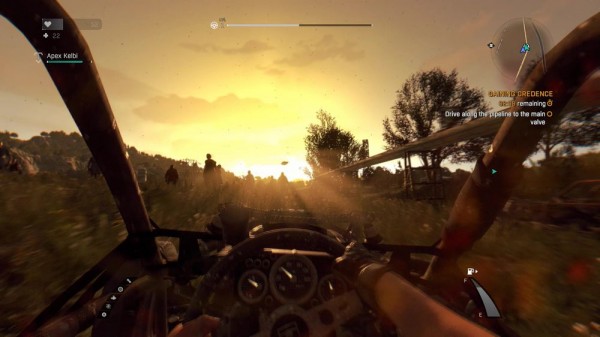
The buggy is probably one of the best examples of a vehicle in a survival game. The buggy has slots for the engine, turbines, brake system, and suspension. Each part is similar to weapons in Dying Light as they have their own stats and can be repaired a set number of times before needing to be replaced. The better quality the part, the better stats it will lend to the vehicle, but the cost to purchase, craft, or repair will be steep. Upgrading the buggy beyond the basic parts will require points in the Driving skill tree, which is earned from running over zombies and driving around at high speeds. This will allow players to equip their buggy with armour, weapons, and upgrades. The buggy will take slight, but constant damage in use, with even more damage to parts for treating the buggy roughly, like driving off road or crashing into things. Not only does the buggy need repairs from time to time, it also needs gas. Repair parts can be either purchased in small quantities from vendors dotting the world or scrounged up along with gasoline in abandoned vehicles. Techland has struck a very good balance for fuel consumption and repairs. There is plenty of fuel in the world that gamers won’t need to stop at every vehicle to scrounge for gas, but consumption is high enough that it is a good idea to check every vehicle around when on foot.
Dying Light “The Following” is a little glitchy. There are definitely parts of the map that don’t play well with the grappling hook and climbing up hunting towers can be a bit of a pain. I also encountered a few audio and visual glitches like some of the random events where models were not positioned correctly or some dialogue not playing.
Visuals
The art style in “The Following” is solid. Driving around the map gives player a great tour of a country side that has both rustic and modern points of interest. The cultists have a neat sun worship theme that is very believable. The buggy’s design is a great mix of a stock recreational vehicle with post-apocalyptic modification. As a bonus, Dying Light itself received some under the hood upgrades with the free Enhanced Edition patch.
Audio
Most of the sound effects and music are re-used from Dying Light, which isn’t a bad thing. The sound effects for the buggy is excellent, with a nice roar to the engine. The voice acting in “The Following” continues to be excellent.
Overall
In the age of Season Passes and DLC, seeing an expansion pack is a bit of a rarity. Seeing an expansion pack that comes bundled in the cost of the Season Pass is even rarer. Techland has created strong expansion in “The Following.” The plot is good, though it stumbles a bit on the ending. The new gameplay elements are excellent, though it could use a touch of polish. If you enjoyed Dying Light, then you will enjoy “The Following.”
Capsule Computers review guidelines can be found here.
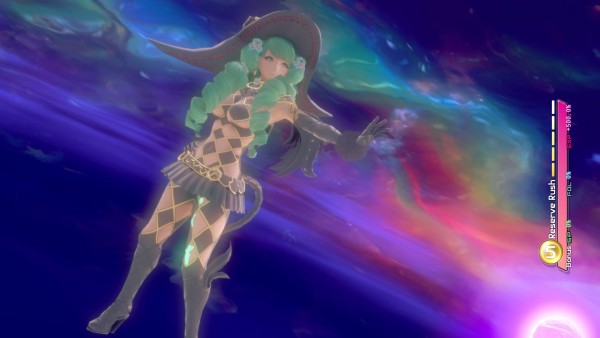
Continuing with their series of character introduction videos for the party members in Star Ocean: Integrity and FaithlessnessSquare Enix and tri-Ace have released another video and the focus this time around is on one of the characters that just so happens to stand out the most, Fiore Brunelli.
Fiore is one of the countries most skilled signeturges and her revealing outfit is to show off the advanced magic symbols that have been placed on her leg. You can check out the video showing both combat and story sequences below. Currently Star Ocean: Integrity and Faithlessness is set to be released in Japan on March 31st for the PlayStation 3 and PlayStation 4 with a Western release of the PlayStation 4 version already confirmed for sometime in 2016.
MASTER THE BATTLEFIELD IN HYRULE WARRIORS: LEGENDS, COMING TO NINTENDO 3DS ON MARCH 24
Experience massive battles on the go, complete with new chapters based on The Legend of Zelda: The Wind Waker and series newcomer Linkle
16th February 2016 – Packed with even more content than its predecessor, Hyrule Warriors: Legends will release exclusively for Nintendo 3DS family systems on March 24. After Hyrule Warriors took Wii U by storm, those large-scale battles can now be taken on the go, complete with the new ability to command and switch seamlessly between up to four characters on the battlefield, play as five new characters, and enjoy two new and exclusive storylines.
Experience a sprawling story across The Legend of Zelda timeline in Legend Mode, which sees players take on hordes of enemies as they relive classic Zelda games reimagined in the style of Koei Tecmo’s long-running “Warriors” series. When a sorceress by the name of Cia rips time and space apart, Link must team up with Impa, Sheik, and The White Sorceress Lana to save Hyrule in battles inspired by The Legend of Zelda: Ocarina of Time, The Legend of Zelda: Twilight Princess, and The Legend of Zelda: Skyward Sword. Players will have to strategically switch between up to four characters as the tides of battle command.
Hyrule Warriors: Legends also comes with two new exclusive stories: a four-chapter epilogue based on The Legend of Zelda: The Wind Waker, and a five-chapter story based on series newcomer Linkle, a dual-crossbow-wielding Cucco farmer who believes her heirloom compass means that she’s destined for greater things. Linkle isn’t the only new addition to the series, as Toon Link, Tetra and King Daphnes from The Wind Waker, and the mischievous Skull Kid from The Legend of Zelda: Majora’s Mask also make their debut. As a special bonus for fans of the original Wii U game, all new copies of Hyrule Warriors: Legends will come with a code that allows players to download these new characters to Hyrule Warriors on Wii U*.
Another addition comes in the form of My Fairy Mode. This time around, when players explore Adventure Mode there are fairies to be found, each of whom can be levelled up to bestow additional benefits in battle across all modes. By feeding them and dressing them in new costumes, players can increase their trust, change their personality traits, or strengthen their Fairy Magic. They can even be rented to friends through Local Play, allowing them to take advantage of their skills for up to 24 hours.
No matter which Nintendo 3DS family system Hyrule Warriors: Legends is played on, there is plenty of action for both new and returning players. Those who play the game on a New Nintendo 3DS or New Nintendo 3DS XL system can enjoy an enhanced experience made possible by the additional horsepower and features of those systems, such as the ability to control the camera via the C Stick.
New Nintendo 3DS owners – as well as those with access to the NFC Reader/Writer accessory for other Nintendo 3DS family systems – will also be able to use amiibo based on The Legend of Zelda characters to generate more powerful versions of previously-unlocked weapons for their respective characters. This includes the new Wolf Link amiibo that will be available in a special bundle with The Legend of Zelda: Twilight Princess HD, which will bestow these more powerful weapons onto Midna or Twili Midna.
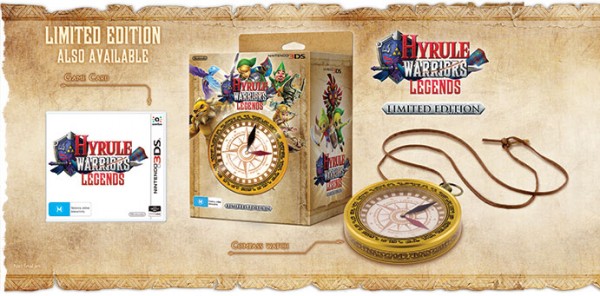
Hyrule Warriors: Legends will also release as a Limited Edition, featuring a copy of the game and a compass watch replica of Linkle’s family heirloom compass. Last but not least, March 24 will also see the release of the New Nintendo 3DS XL Hyrule Edition** in Australia and New Zealand. With ten The Legend of Zelda games available for Nintendo 3DS family systems via Nintendo eShop***, it’s the perfect time for Zelda fans to join the ranks of Nintendo 3DS owners and enjoy key titles in the series’ rich history on a single handheld system.
Charge into battle wherever you go with Hyrule’s mightiest legends in Hyrule Warriors: Legends for Nintendo 3DS family systems when it launches in Australia and New Zealand on March 24.
PROJECT X ZONE 2 now available for Australia and New Zealand
The ultimate cross-over game by legendary publishers!
BANDAI NAMCO Entertainment Europe announced today that PROJECT X ZONE 2 is now available on Nintendo 3DS™!
With more than 400 000 units sold, the first episode of the license surprised both fans and press with a massive line-up, combining highly tactical gameplay and unique humour! With this new opus, PROJECT X ZONE position itself as one of the biggest mashup strategy game ever!
Among the famous franchises depicted, PROJECT X ZONE 2 features series as TEKKEN, TALES OF VESPERIA, GOD EATER or SOUL CALIBUR (BANDAI NAMCO Entertainment); but also DEVIL MAY CRY, STREET FIGHTER or RESIDENT EVIL series (CAPCOM); or even Sakura Wars, YAKUZA: Dead Souls or Virtua Fighter (SEGA Interactive Co., Ltd./ SEGA Games Co., Ltd). In addition and exclusively, three guests from NINTENDO Series are also playable: CHROM and LUCINA from FIRE EMBLEM AWAKENING and FIORA from XENOBLADE CHRONICLES.
“Doing a collaboration with publishers such as Sega and Capcom is a delight. On Project X Zone 2, we cooperated with the desire of giving the fans an opportunity to play their favourite characters among dozens of renowned franchises. And everyone will enjoy it thanks to the addition of subtitles in French, Italian, German and Spanish!” said Hervé Hoerdt, Vice President of Marketing & Digital at BANDAI NAMCO Entertainment Europe.
PROJECT X ZONE 2 is now available in stores and via the NINTENDO eShop. Let’s enjoy the game!
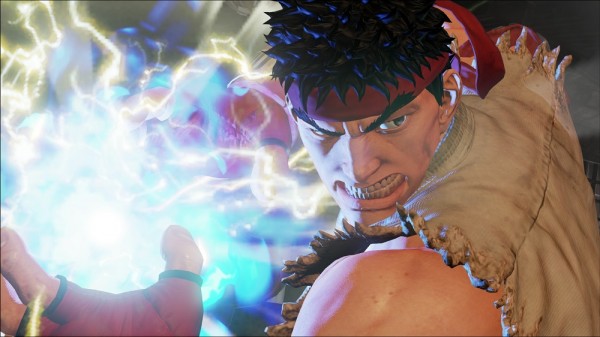
In an effort to close out the rest of the character introduction videos Capcom is doubling down on the Street Fighter V character introduction videos being released and while earlier today we saw focus on the female cast, the latest batch happens to feature none other than the face of the series, Ryu, as well as Birdie, and Dhalsim.
All three of the character introduction videos showing off their various special moves and appearances, can be found below. As for the game itself, Street Fighter V will be released tomorrow for the PlayStation 4 and PC and will feature sixteen characters at launch with six more planned for release throughout the rest of the year.
Overview The majority of video games depict war as something that players must help put an end to by eliminating the opposition, whether it is with firearms or with magic and swords. Rarely do we see a game that explores what happens when you aren’t sitting on the front lines of a conflict and instead are seeing what the war is actually doing to the people living in the middle of the war. That is the concept that This War of Mine explored when it was originally released and now with This War of Mine: The Little Ones arriving on consoles with children being added into the mix, has this concept managed to transfer into an enjoyable game?
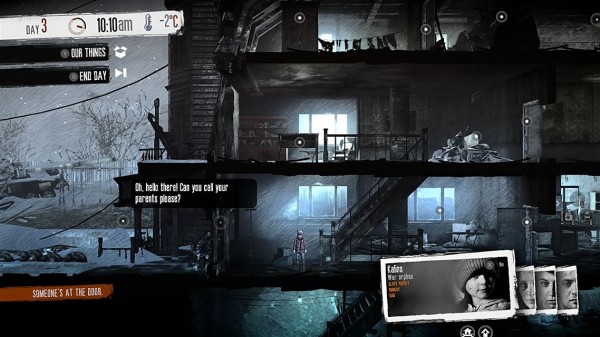
Story This War of Mine: The Little Ones plays rather loosely with the concept of a storyline since rather than force players down any specific road, things are left up to them. You see, the first option players are given is to Survive… and they are then placed in the middle of the battle torn city of Pogoren with three survivors of roughly Eastern-European origin that are caught up in a battle between the Graznavia army and the rebels.
This first playthrough sees Pavle, an ex-soccer star, Bruno, a chef, and Katia, a journalist, taking shelter inside of a fairly large but damaged house with very little in the way of materials. With the only option being to survive, it is up to the player to decide what to do from then on. Survive through scavenging and building makeshift facilities to try and become self-sufficient, steal from those less fortunate than yourselves, or even murder those who have things you need.
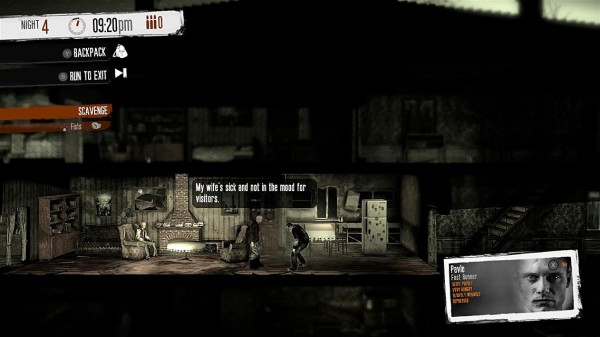
All of those are options the player can take but This War of Mine: The Little Ones does an excellent job making these types of choices hit home. Survivors asking for assistance for their shot brother or need help with their collapsed shelter will remove a survivor from the household but the group will feel better for helping those in need. Feel like that feeble old aren’t nearly as desperate as you are? Then be prepared for some heartbreak as the old man begs you not to steal his ailing wife’s medicine and flee into the basement at the slightest hint of violence all while the sickly old woman cries for her husband.
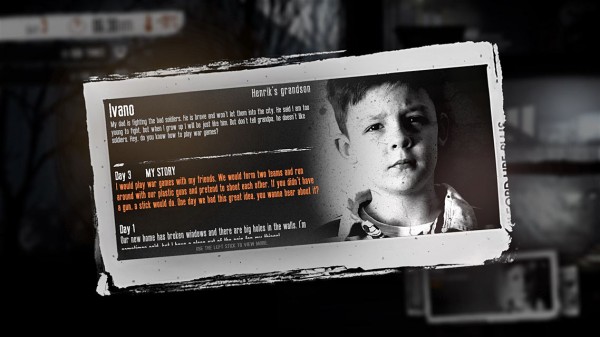
These types of decisions, which are presented as basic actions with no morality meter, really hit home and when you throw children into the mix it becomes something far different. Your survivors all have various bios that are updated as the days roll by, sometimes with pieces of their backstory explaining how they ended up alone and other times mourning the lack of necessities or decisions that have been made.
Children are also given a bio and their innocent outlook on the world is reflected here and this can make you feel like scum if you’ve done something terrible to scrounge up the food you’re preparing for your starving group. It may be survival of the fittest, but at what lengths will you go to in order to make it through?
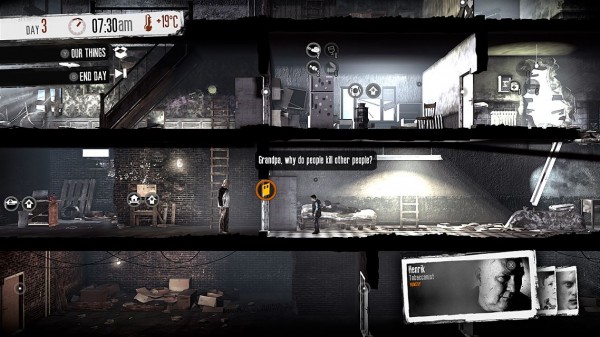
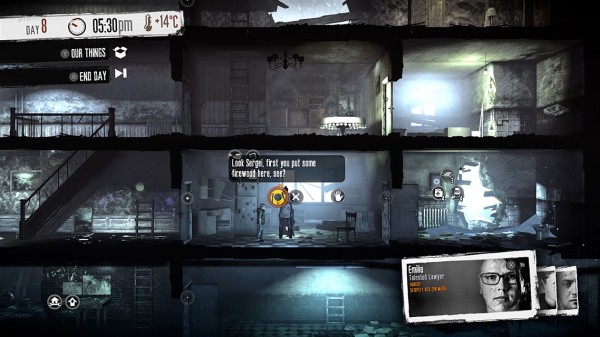
Gameplay This War of Mine: The Little Ones tasks players with simply surviving as long as possible in the hopes that the war will come to an end and that peace will return to the city before they all wind up dead. This sees the game divided into two separate sections, daytime and nighttime. During the day the player must control each survivor and have them either build up crafting stations and stations to recover vital resources while also feeding them and making sure that they aren’t falling ill or dying of injuries that they sustain during the other half of the game.
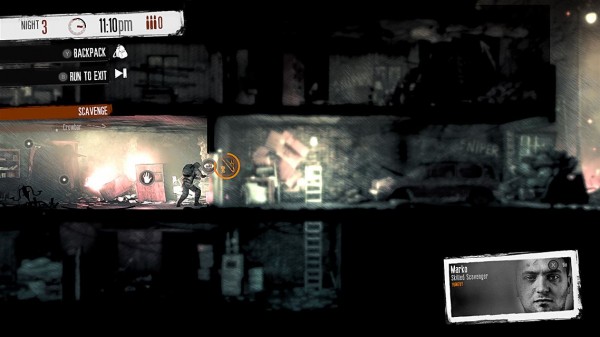
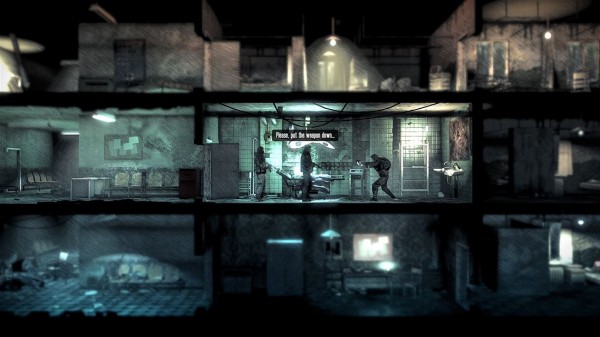
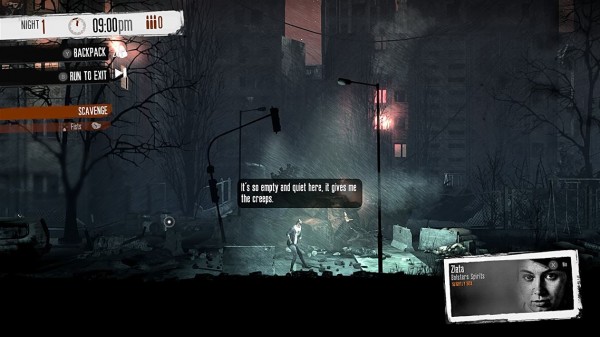
One of the biggest aspects of this title is the fact that, although players can scrounge around their shelter for some starter resources, that everything you need to survive can only be found in other locations throughout the city. With snipers targeting civilians during the day the only time scavengers can venture out is at night time and it is here that players will select from numerous locations in order to gather what they can. The hitch here is, each survivor can only hold so many items and while there are locations that are completely vacant, others can contain other NPCs that range from those looking for a trade, simple people living there, or hostiles that will readily shoot at an intruder.
This means that while foraging for supplies players will need to constantly determine what exactly they need to bring home, perhaps leaving behind a weapon to make space for much-needed medicine, all while stealthily avoiding those who mean them harm or will lash out if you are caught stealing from them. Of course once you do manage to make it home, hopefully your own base hasn’t been attacked by raiders, potentially stealing items and wounding anyone left behind.
Adding children into the mix doesn’t really create too many extra dangers. Sure they are an extra mouth to feed and, until they are taught how to use certain crafting tables, traps, or the water system, cannot help around the house but their smaller stature does mean they require less food and by playing with the adults they can cheer up from the sadness that may be plaguing them due to their actions taken during the latest scavenging run. Plus, although a child can be wounded or fall ill, they face far simpler consequences compared to their adult counterparts who will even commit suicide if they become too depressed, as they are simply removed from the game.
With players constantly having to worry about gathering food, medicine to heal the sick, bandages to fix up wounds, water to cook/grow food, managing the temperature of the area when the harsh bite of winter comes, and the many building materials needed to craft things, there is quite a struggle here and it is incredibly possible that your first run through in the game will result in more than a few deaths and potentially a simple game over.
Unfortunately that type of lasting challenge begins to wane a bit the more experienced you become with the title as learning the mechanics and the layout of certain locations quickly turn the title in your favor, especially when the resource management becomes mundane tasks for a well-equipped group of survivors that may only face trouble if the winter this time around is especially hard. Playing as rough as possible and refusing to aid those in need does have an effect on your survivors however and this is reflected in the post-story epilogue. So while the world may be full of danger, showing a sliver of humanity to help out your fellow man or those coming to your door asking for a few scraps of food not only makes the group a bit more content but also encourages some faith in humanity.
Those looking for less of a challenge can opt for the “Write Your Own Story” mode that allows players to select from a number of variables such as who exactly they start out with, what locations will be available, how nasty things have become in the city, when or if winter will come and how bad it will be, and even how long until the cease-fire is declared. This type of mechanic does give players a reprieve from the harshness of the randomized survival situation but also removes some of what makes the title enjoyable and that is surviving against the unexpected.
There is one more aspect that will occasionally challenge your survivors and that happens to be the game’s interface. Thanks to the title’s origins on the PC, most actions are handled with one simple button press while using the D-Pad to select from the extremely close options for any given object. This means that while you may simply want to rest in a bed, your survivor might start taking an axe to it instead because you selected the wrong action while in possession of an axe, which can turn furniture into lumber and fuel.
This same aspect becomes dangerous while exploring as well since rather than simply devoting a button to sneaking, the developers have opted to assign all movement speed to the analog stick. With fast movements creating sound ripples, players must be incredibly careful to only gently tilt the stick or risk drawing unwanted attention when your survivor decides to sprint for no reason. Either that or decides that they want to run up and down the same set of stairs multiple times in a row because the game keeps thinking you wish to do so rather than move to the left.
Visuals & Audio The depressing nature of being caught in the middle of a conflict with nothing to do but survive is reflected in the art style and the world of This War of Mine: The Little Ones. Overwhelming use of gray, tinges of blue, and orange flame from bombed ruins give the locations players explore life while bodies of former inhabitants and notes left behind as graffiti tell the stories of what happened here. With slight alterations between the pencil looking art style given in the options menu, between “Sketchy” and “Soft” there is a unique feeling to this title’s presentation.
While This War of Mine: The Little Ones may lack any real voice work, outside of the giggles or sobs of a child and grunts of survivors, there is a real sense of tension thanks to the aforementioned art style and the way that background noises ranging from gunfire, artillery shelling, and crackling flames play against what would normally be a silent night.
Overall Among the countless games that place players in the role of a soldier, This War of Mine: The Little Ones has succeeded in creating an emotionally draining and enjoyable survival simulation about those who are caught in the middle of conflict. With some rather dark options available to the player at times and leaving nearly everything on just how far the player will go in order to survive, this title is one that can generate some real empathy for your survivors and while it may lose some of its challenge after a while and has a few control issues, this is a title that you will likely remember. Capsule Computers review guidelines can be found here.