WARHAMMER® 40,000®:DAWN OF WAR® III ANNOUNCES OPEN BETA APRIL 21-24, 2017
London, April 5, 2017 – Relic Entertainment and SEGA Europe Ltd. today announced the official Open Beta weekend for Warhammer 40,000: Dawn of War III. The Open Beta will take place from 10AM PST Friday, April 21st until 10AM PST Monday, April 24th. Register now at www.dawnofwar.com/beta.
The Open Beta will pit players against each other in Dawn of War III’s tense, chaotic multiplayer. This game mode highlights the strengths and weaknesses of each faction as players put powerful heroes and devastating abilities to use, while countering those of their foes. Players will have access to all three of the game’s factions – Space Marines, Eldar, and Orks – and a selection of powerful elite heroes for each, allowing them to experiment with different playstyles and strategies.
The Open Beta weekend also gives players their first chance to see and experience the intimidating Masters of War skins in action. The Dark Queen skin for Lady Solaria (Imperial Knight), the Ghost Seer skin for Farseer Taldeer (Wraithknight) and the Big Kustom skin for Beauty (Morkanaut) will all be available for use. The Masters of War Skin Pack is included free with all pre-orders.
Dawn of War III immerses players in the escalating brutality of galactic warfare, where they will lead elite hero units and colossal armies to victory, or oblivion. Powerful super walkers will tower over the front lines as screen-shaking assaults blister the battlefield in an all-out, over-the-top spectacle worthy of the iconic Games Workshop® Warhammer 40,000 universe.
The long-awaited third instalment of the critically acclaimed real-time strategy franchise will be released on April 27th, 2017, and is available to pre-order now at www.dawnofwar.com.
###
About Warhammer 40,000: Dawn of War:
Warhammer 40,000: Dawn of War is Relic’s critically-acclaimed real-time strategy game that brings to life the iconic Games Workshop Warhammer 40,000 universe. Set in the forty-first millennium, players choose a race and take them into battle on the brutal frontlines of war and fight for supremacy of the galactic empire. Since its inception, the Dawn of War series has sold more than 8 million copies. Dawn of War III will be the eighth instalment of the franchise.
About Relic Entertainment
Relic Entertainment is the award-winning development studio behind critically-acclaimed franchises including Warhammer 40:000: Dawn of War, Company of Heroes, and more. Since its inception in 1997, Relic has produced a rich catalogue of genre-defining real-time strategy titles and continues to innovate today as a SEGA-owned studio. Relic is located in Vancouver, Canada. Learn more at www.relic.com.
About SEGA Europe Ltd.:
SEGA Europe Ltd. is the European Distribution arm of Tokyo, Japan-based SEGA Games Co., Ltd., and a worldwide leader in interactive entertainment both inside and outside the home. The company develops and distributes interactive entertainment software products for a variety of hardware platforms including PC, wireless devices, and those manufactured by Nintendo, Microsoft and Sony Computer Entertainment Europe. SEGA Europe’s website is located at www.sega.com
About Games Workshop
Games Workshop® Group PLC (LSE:GAW.L), based in Nottingham, UK, produces the best fantasy miniatures in the world. Games Workshop designs, manufactures, retails, and distributes its range of Warhammer®: Age of Sigmar® and Warhammer® 40,000® games, miniature soldiers, novels and model kits through more than 460 of its own stores (branded Games Workshop® or Warhammer®), the www.games-workshop.com web store and independent retail channels in more than 50 countries worldwide. More information about Games Workshop and its other, related, brands and product ranges (including our publishing division ‘Black Library’ and our special resin miniatures studio ‘Forge World’) can be found at www.games-workshop.com.
Madman Entertainment’s anime releases of April 5 2017 are now available. Adventure Time: Islands is also now available on DVD.
Assassination Classroom Season 2 Part 1 on DVD and Blu-ray. The DVD and Blu-ray product pages variously list this release as containing 11, 12 or 13 episodes.
Attack on Titan Season 1 Collection on DVD and Blu-ray. All 25 episodes are included with dual audio options and English subtitles. “Attack on Titan at Anime Expo”, “Chibi Theatre: Fly, Cadets, Fly! Days 1-25”, episode commentaries, an eyecatch gallery, “The Making of Attack on Titan”, the textless song animations and the U.S. trailer are included as on-disc extras. “Chibi Theatre” is only listed as an on-disc extra on the product page for the Blu-ray edition.
Death Note Collection on Blu-ray. All 37 episodes and the two anime movies are included with dual audio options and English subtitles.
Fate/Kaleid Liner Prisma Illya 2wei Herz! (Season 3) on DVD. All 10 episodes are presented with dual audio options and English subtitles. The ‘Herz!’ shorts and the Japanese commercials and promotional videos are included as on-disc extras.
Phantasy Star 2: The Animation on DVD. All 13 episodes are presented with Japanese audio and English subtitles. A feature titled “Episode 13 Series Mash Up”, Japanese commentary and the textless song animations are included as on-disc extras.
Sailor Moon Crystal Set 2. Episodes 15-26 are available on DVD and Blu-ray and in a limited edition DVD and Blu-ray combo pack. They are presented with dual audio options and English subtitles. The textless opening and ending animation sequences are included as on-disc extras. The limited edition release comes with art cards and an art booklet.
Samurai Flamenco Collection on DVD. All 22 episodes are featured with Japanese audio and English subtitles. The textless song animations are included as extras.
Shomin Sample on DVD. All 12 episodes are presented with dual audio options and English subtitles. Commentary for episode 5, “Shomin Shorts” 1-6 and the textless song animations are included as on-disc extras.
Space Dandy Collection on DVD and Blu-ray. All 26 episodes are presented with dual audio options and English subtitles. On-disc extras include the teaser trailer, the trailer collection, an art gallery, a feature titled “Dead Guy in Space” and commentary for episodes 19 and 26.
NIER: AUTOMATA SHIPMENTS AND DIGITAL SALES EXCEED ONE MILLION
Original Soundtrack Now Available to Pre-order from Square Enix Store
LONDON (5th April 2017) – Square Enix Ltd., today announced that the worldwide shipment and digital sales of the critically acclaimed post-apocalyptic action-RPG, NieR: Automata™, have exceeded one million.
Upon its release for the PlayStation®4 and PC last month, the game received critical acclaim across the world for its fantastic blend of action-packed and high-speed 60fps battles, and a deep, captivating storyline from Director, YOKO TARO.
Developed in collaboration with PlatinumGames Inc., NieR: Automata delivers the perfect mix of action and RPG gameplay in a beautifully desolate open world. In NieR: Automata, players will embark on a perilous mission with the android YoRHa squad to reclaim the world abandoned by mankind and uncover truths long forgotten
In addition, the original soundtrack for the game is now available to pre-order. The 3CD collection soundtrack brings together all of the beautiful in-game music composed by Keiichi Okabe. Those who purchase from the SQUARE ENIX store will also receive a bonus 16-track “Hacking Mode” CD, available with the first run only for a limited time.
NieR: Automata is available now for the PlayStation®4 and PC in Europe and PAL territories. For more information, visit: http://nierautomata.com. A free playable demo is also available to download now from: http://bit.ly/2k9txbV.
Invaders from another world attack without warning, unleashing their secret weapon: the machines. In the face of this insurmountable threat, the human race is driven from the earth and takes refuge on the moon.
The humans develop an army of android soldiers to fight back against the mechanical horde, but succeed only in slowing its advance. To break the deadlock, a new breed of android infantry is sent into the fray: the YoRHa squad.
In the forsaken wasteland below, the war between the machines and the androids rages on. A war that is soon to unveil the long-forgotten truth of this world…
About PlatinumGames Inc.
PlatinumGames Inc. is an independent entertainment developer based in Osaka, Japan, dedicated to making high quality, next generation games for a variety of hardware platforms. Loaded with some of the gaming industry’s most talented creators, PlatinumGames seeks to break the mold of a sequel driven industry by creating innovative, original IP that exceed users’ expectations. For more information, please visit: www.platinumgames.com.
About Square Enix Ltd.
Square Enix Ltd. develops, publishes, distributes and licenses SQUARE ENIX®, EIDOS® and TAITO® branded entertainment content in Europe and other PAL territories as part of the Square Enix group of companies. Square Enix Ltd. also has a global network of leading development studios such as IO Interactive™, Crystal Dynamics®, and Eidos Montréal. The Square Enix group of companies boasts a valuable portfolio of intellectual property including: FINAL FANTASY®, which has sold over 130 million units worldwide; DRAGON QUEST®, which has sold over 70 million units worldwide; TOMB RAIDER®, which has sold over 58 million units worldwide; and the legendary SPACE INVADERS®. Square Enix Ltd. is a London-based, wholly-owned subsidiary of Square Enix Holdings Co., Ltd.
NIER: Automata, the NieR: Automata logo, FINAL FANTASY, DRAGON QUEST, EIDOS, SPACE INVADERS, SQUARE ENIX, the SQUARE ENIX logo, TAITO and TOMB RAIDER are registered trademarks or trademarks of the Square Enix group of companies. All other trademarks are the property of their respective owners.
CALL OF DUTY: INFINITE WARFARECONTINUUM BOLSTERS THE MULTIPLAYER AND CO-OP EXPERIENCE, COMING FIRST TO PLAYSTATION®4 ON APRIL 18
Features Four New Multiplayer Maps Including Re-Imagining of the Modern Warfare® 2 Classic, Rust
Actress Pam Grier Joins Cast in Funky, New Zombies Co-Op Experience “Shaolin Shuffle” set in 1970s New York
April 5, 2017 – Activision and Infinity Ward have released the first details for Call of Duty: Infinite Warfare Continuum, the second DLC Map Pack for 2016’s No. 1 top-selling console video game in the U.S. (excluding hardware bundle sales), Call of Duty: Infinite Warfare. Featuring four diverse, new multiplayer maps, and a new zombies co-op experience called Shaolin Shuffle, set in a ‘70s era New York disco-zombie fright fest, Continuum is scheduled for release April 18, first on the PlayStation® Network for the PlayStation®4 computer entertainment system, with other platforms to follow.
“We couldn’t be more excited to deliver a new co-op zombies chapter with Shaolin Shuffle, with an all-new setting and story, that continues the wild and increasingly twisted narrative,” said Dave Stohl, Studio Head of Infinity Ward. “For multiplayer, we’re creating a diverse set of maps from Turista and Scrap, to Archive, that cater to various play styles in cool ways and allow fans to experiment with different rigs and loadouts. And then there’s Rust, one of our all-time favourite maps from Modern Warfare® 2, re-imagined and now called Excess to complete the multiplayer package.”
Shaolin Shuffle, the next thrilling chapter of the Call of Duty: Infinite Warfare zombies experience, features the return of Willard Wyler, the mysterious movie director villain portrayed with voice and likeness by Paul Reubens (Pee-wee’s Big Holiday, Gotham). This time, Wyler has trapped the four protagonists inside a new horror film, set in the unforgettable 1970s. Players will face all-new zombie enemies across a variety of disco-era New York locations, including subways, flashy nightclubs and a martial arts dojo headed up by the “Shaolin Sister,” played with voice and likeness by Pam Grier (Jackie Brown, Foxy Brown). In addition to hallmark Call of Duty action, Shaolin Shuffle introduces four unlockable kung fu fighting styles, each with its own set of unique combat moves. Seth Green (Robot Chicken, Austin Powers) as “the Punk Rocker;” Ike Barinholtz (Neighbours, Suicide Squad) as “the Sleazebag;” Jay Pharoah (Saturday Night Live, Ride Along) as “the Street Poet;” and Sasheer Zamata (Saturday Night Live, Inside Amy Schumer) as “the Disco Chick,” all return from the ongoing story in this all-new experience.
In addition to the Shaolin Shuffle zombies content, Continuum will also include four new multiplayer maps:
Turista – A plush spa and resort, Turista is nestled in the middle of a giant skeleton of an ancient creature. With sniper spots scattered across a majestic, central waterfall, Turista also boasts tight interiors for fans of close-quartered combat and a three-lane design that caters to a variety of play styles.
Scrap – Set in an abandoned junkyard on the Moon, Scrap features a combination of extended sightlines and tactical pathways that reward players who engage in both long and short range combat.
Archive – Fast, frenetic engagements set the pace in Archive, a post-futurist art gallery where tight engagements contrast with open exterior battlegrounds in this wide three-lane style map.
Excess – Perched atop a gilded penthouse in a sprawling future metropolis, Excess is a small, circular map re-imagined from the classic Modern Warfare 2 map, Rust, that retains the intense, fast-paced combat from the original.
Call of Duty: Infinite Warfare Continuum DLC Map Pack is available for a great value via the Call of Duty: Infinite Warfare Season Pass, which can be purchased on its own or obtained as part of the Legacy Pro or Digital Deluxe editions of the game. Season Pass gives discounted access to all four Call of Duty: Infinite Warfare DLC Map Packs released during 2017 (discount based on a Season Pass suggested retail price of AUD$64.95 / NZD$69.95, and four individual DLC Map Packs at a suggested retail price of AUD$19.95 / NZD$22.95 each). Upon purchase, Season Pass owners also receive the three new base weapons released to date, as well as 10 Rare Supply Drops and 1,000 bonus Salvage Credits to craft new prototype weapons.
Call of Duty: Infinite Warfare is published by Activision Publishing, Inc., a wholly owned subsidiary of Activision Blizzard, Inc. [NASDAQ: ATVI], and developed by Infinity Ward. Call of Duty: Infinite Warfare Continuum releases on April 18, 2017 first for the PlayStation 4, with other platforms to follow. The game is rated MA15+ for Mature Audiences (Blood and Gore, Drug Reference, Intense Violence, Strong Language, Suggestive Themes).
Headquartered in Santa Monica, California, Activision Publishing, Inc. is a leading global producer and publisher of interactive entertainment. Activision maintains operations throughout the world and is a division of Activision Blizzard (NASDAQ: ATVI), an S&P 500 company. More information about Activision and its products can be found on the company’s website, www.activision.com or by following @Activision.
Cautionary Note Regarding Forward-looking Statements: Information in this press release that involves Activision Publishing’s expectations, plans, intentions or strategies regarding the future, including statements about the expected release dates, gameplay, features and functionality of Call of Duty: Infinite WarfareContinuum and the pricing and features of the Call of Duty: Infinite Warfare Season Pass, are forward-looking statements that are not facts and involve a number of risks and uncertainties. Factors that could cause Activision Publishing’s actual future results to differ materially from those expressed in the forward-looking statements set forth in this release include unanticipated product delays and other factors identified in the risk factors sections of Activision Blizzard’s most recent annual report on Form 10-K and any subsequent quarterly reports on Form 10-Q. The forward-looking statements in this release are based upon information available to Activision Publishing and Activision Blizzard as of the date of this release, and neither Activision Publishing nor Activision Blizzard assumes any obligation to update any such forward-looking statements. Forward-looking statements believed to be true when made may ultimately prove to be incorrect. These statements are not guarantees of the future performance of Activision Publishing or Activision Blizzard and are subject to risks, uncertainties and other factors, some of which are beyond its control and may cause actual results to differ materially from current expectations.
‘ENTER THE GUNGEON’ NOW AVAILABLE ON XBOX ONE AND WINDOWS 10
– Dodging and Rolling All Over the Place –
The Gungeon – Independent developer Dodge Roll Games and co-dependent publisher Devolver Digital have released Enter the Gungeon on Xbox One and the Windows 10 Store! The gunfight dungeon crawler is part of the Xbox Play Anywhere initiative and supports both cross-buy and cross-save features between Xbox One and Windows 10.
Enter the Gungeon is a gunfighting dungeon crawler following a band of misfits seeking to shoot, loot, dodge roll and table-flip their way to personal absolution by reaching the legendary Gungeon’s ultimate treasure: the gun that can kill the past. Launching last year to critical acclaim and commercial success, Enter the Gungeon has gone on to sell more than 850,000 copies and
“With the unchecked proliferation of firearms in the world we wanted to do our part and release Enter the Gungeon on both Xbox One and the Windows 10 store,” said Devolver Digital CFO Fork Parker. “Kids love guns and who are we to deny them the simple pleasures in life.”
For more information on Enter the Gungeon and the Cult of the Gundead visit enterthegungeon.com and follow @DodgeRollGames on Twitter.
If you want more hot political opinions, follow @DevolverDigital or open a Twitter account and hit the Trends tab and hate yourself the rest of the day.
WARNER BROS. INTERACTIVE ENTERTAINMENT, TT GAMES AND THE LEGO GROUP INVITE PLAYERS TO JOIN THE CHASE WITH THE LAUNCH OF LEGO® CITY UNDERCOVER™
Available Now for PlayStation®4 & Xbox One®
Sydney, Australia –April 5, 2017 – Warner Bros. Interactive Entertainment, TT Games and The LEGO Group® today announced the launch of LEGO® CITY Undercover™, an action-packed adventure where players must assume the identity of undercover police officer, Chase McCain, and track down the fiendish Rex Fury to finally put an end to his city-wide crime wave. Developed by TT Games and published by Warner Bros. Interactive Entertainment, LEGO CITY Undercover is now available for the PlayStation®4 & Xbox One®
LEGO CITY Undercoverallows both longtime fans and newcomers alike to explore the sprawling, open-world metropolis that is LEGO® CITY with more than 20 unique districts to investigate, filled with car thieves to bust, vehicles to navigate, mischievous aliens to capture, lost pigs to rescue and of course, hundreds of collectibles. For the first time, LEGO CITY Undercover will feature a two-player cooperative mode for gamers to track down criminals as a team.
“Between solving crimes in the hilarious original storyline and exploring the vast open-world city, LEGO CITY Undercover is the perfect game for friends and families to play together,” said Tom Stone, Managing Director, TT Games.
As a man of many talents, Chase McCain has eight disguises to choose from, each with unique skills and abilities to infiltrate every corner of the city and access places only he can. Chase is joined by officer Frank Honey, Chief of Police Dunby and paramedic Natalia Kowalski, who are just a few of the more than 300 unlockable and playable characters that gamers will meet throughout their adventure. With 15 special assignments to complete, the game brings together witty, original storytelling with signature LEGO humor to create a fun-filled experience for players of all ages.
LEGO CITY Undercover is rated PG Mild Violence and is now available for PlayStation 4 system, Xbox One at a suggested retail price of $89.95.
###
About Warner Bros. Interactive Entertainment
Warner Bros. Interactive Entertainment, a division of Warner Bros. Home Entertainment, Inc., is a premier worldwide publisher, developer, licensor and distributor of entertainment content for the interactive space across all platforms, including console, handheld, mobile and PC-based gaming for both internal and third party game titles.
About TT Games
TT Games (www.ttgames.com) is the combined publishing and development group behind the hit LEGO videogame franchises such as LEGO® Star Wars™, LEGO® Indiana Jones™, LEGO® Batman™ and LEGO® Harry Potter™, as well as popular titles LEGO®Marvel™ Super Heroes, LEGO® Marvel’s Avengers and LEGO® Jurassic World™. Incorporating renowned UK developer Traveller’s Tales, TT Games has a distinctive focus on console, handheld, mobile and PC games of the highest quality, aimed at young gamers and their families.
About The LEGO Group
The LEGO Group is a privately held, family-owned company with headquarters in Billund, Denmark, and main offices in Enfield, USA, London, UK., Shanghai, China, and Singapore. Founded in 1932 by Ole Kirk Kristiansen, and based on the iconic LEGO® brick, it is one of the world’s leading manufacturers of play materials. Guided by the company spirit: “Only the best is good enough”, the company is committed to the development of children and aims to inspire and develop the builders of tomorrow through creative play and learning. LEGO products are sold worldwide and can be virtually explored at www.LEGO.com.
Transport Fever Now More Infectious Than Ever With Massive Free Update
The only fever you’ll be glad you caught, now with stacks of new features, fixes, and enhancements
AMSTERDAM – April 4, 2017 – Swiss transit polymaths Urban Games and logistics specialists Gambitious Digital Entertainment today took the wrapper off the biggest ever update for hit tycoon game Transport Fever. Following launch in November 2016, the team have been tweaking, tuning and listening to the sage words of their many ardent fans. The result is this massive free update stuffed with new features, fixes and gameplay improvements to give budding transport magnates an even clearer shot at total domination of road, rail, sea and air.
Among the 17 feverish new features is twin track switching, a new railway mechanic that makes building complicated networks easier. Meanwhile, Italian, Portuguese and Ukrainian players can now rule their empires in their mother tongue. More than 20 other major improvements have been brought to bear on everything from performance and memory optimization to aircraft movement and camera, and a list as long as your arm of fixes makes the gameplay experience more satisfying than ever.
Transport Fever is the sequel to the hit 2014 game Train Fever, and guides apprentice tycoons on a journey through 150 years of transit history as they build their logistical empires on land, sea, and in the air. The game’s vast assortment of 19th and 20th century buses, boats, trucks, trams, trains and planes let players fulfil their childhood reveries, building stations, airports, harbors, and complex nation-spanning transit networks to fulfil the evolving needs of the dynamically simulated world.
The game includes community-based modding support via Steam Workshop, advanced rail and road construction systems, an intuitive interface and much, much more. So mop your fevered brow and get stuck in to some serious transport empire building. The temperature’s rising…
Transport Fever is available now for Windows PC, Mac and Linux via Steam and GOG. The new update is available free to all owners and the game will be discounted by 20% all week on Steam to celebrate the update release. For more about the game, visit www.TransportFever.com.
Urban Games is a young, dynamic, highly motivated and talented team location in Schaffhausen, Switzerland. Team members feature deep knowledge of the genre and expertise in game design and computer graphics. Founded in spring 2013, the company developed Train Fever with four employees and shipped the title in September 2014. With more than 200,000 units sold, the debut title was a big success and enabled the company to double its workforce. After two years of development, Transport Fever, the sequel to Train Fever, was released in November 2016.
About Gambitious Digital Entertainment
Launched in 2012, Gambitious, Inc. is the first global crowd-financing platform exclusively for games. With a mission to create and foster a sustainable ecosystem for independent game creation and publishing, Gambitious utilizes its evolving set of creative crowd financing tools and techniques to get more great game titles funded, produced and successfully released. The company’s publishing label, Gambitious Digital Entertainment, was created in 2014 to offer professional, developer-friendly production, marketing and distribution services in order to ensure a timely return to investors and developers on projects. Gambitious has successfully established partnerships and released its titles on Steam, the PlayStation®Store, Xbox Games Store, GOG.com, Humble and the Mac Store as well as a number of emerging global digital distributors. For more information, visit www.Gambitious.com, like us on Facebook and follow us @GambitiousInc on Twitter.
I think everyone had that franchise that they grew up with – or a genre in this case that defined their childhood. I remember getting Donkey Kong 64 for my thirteenth birthday, and being blown away. For someone who loved to explore worlds in video games, this title had so much content, so much character, and stages that you could spend hours playing as there was always something to do. I would shortly after discover Banjo-Kazooie, Tooie, and Conker, and fall into the wondrous world of Rareware, a company that had personality dripping from each pixel they touched.
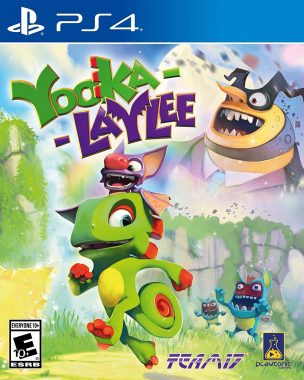
Despite the company selling to Microsoft, I held out hope that I would once again get another trip to a Frantic Factory or Bubblegoop Swamp, but aside from the wonderful Viva Pinata series (that had nothing in common with the aforementioned titles aside from color and personality), we really haven’t seen another 3D platformer to ever come out from the much loved development team. Enter Playtonic. With a good grouping of former employees of Rare and some assistance from fans through crowd funding, we now have a bat, a chameleon, and a brand new adventure that looks to scratch an imaginative itch for a new generation. How does Yooka-Laylee fare? Let’s find out!
Story
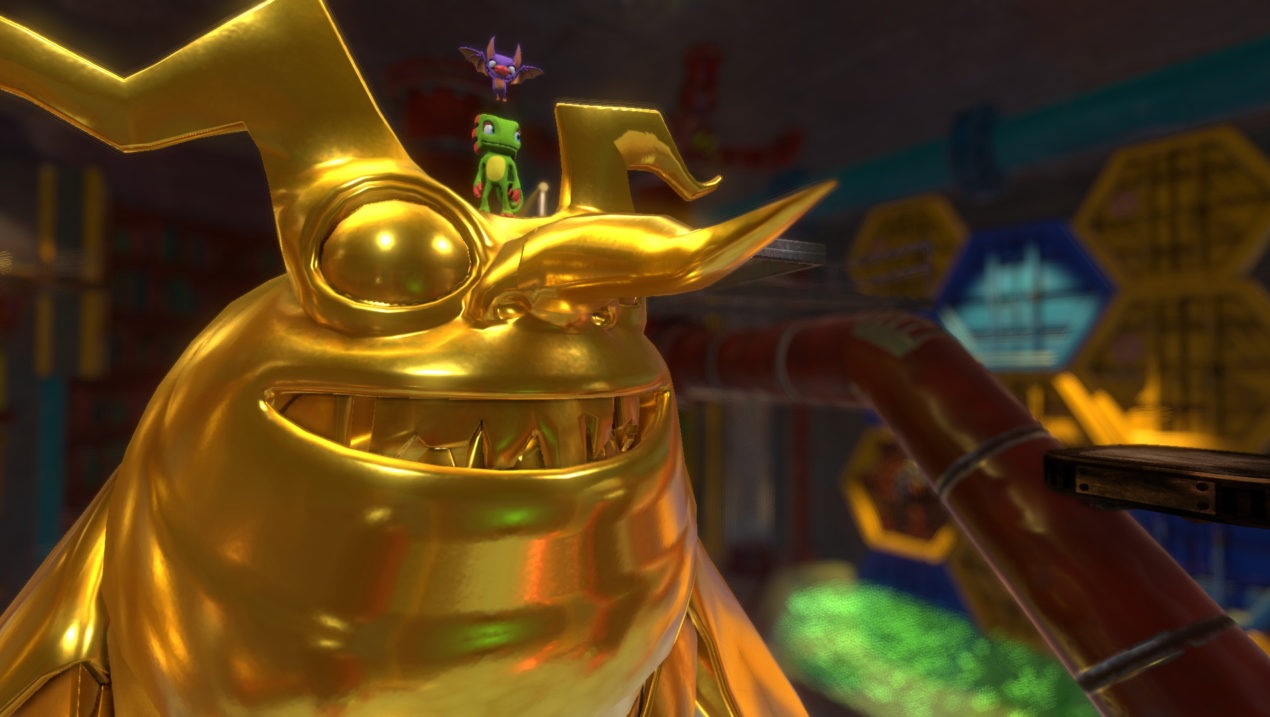
Yooka-Laylee are two quirky characters that (as mentioned) consist of a kooky female bat named Laylee and a grounded, clever male chameleon by the name of Yooka. One day while the two are sitting around their home of Shipwreck Creek, Laylee shows off The One Book, which unbeknownst to them actually has the power to rewrite the history of the Universe. Being a cartoony plot, the evil Capital Bee and his sidekick, Dr. Quack – who are in search of the book emerge, sucking the book into their domain of The Hivory Towers – while losing every page in the process.
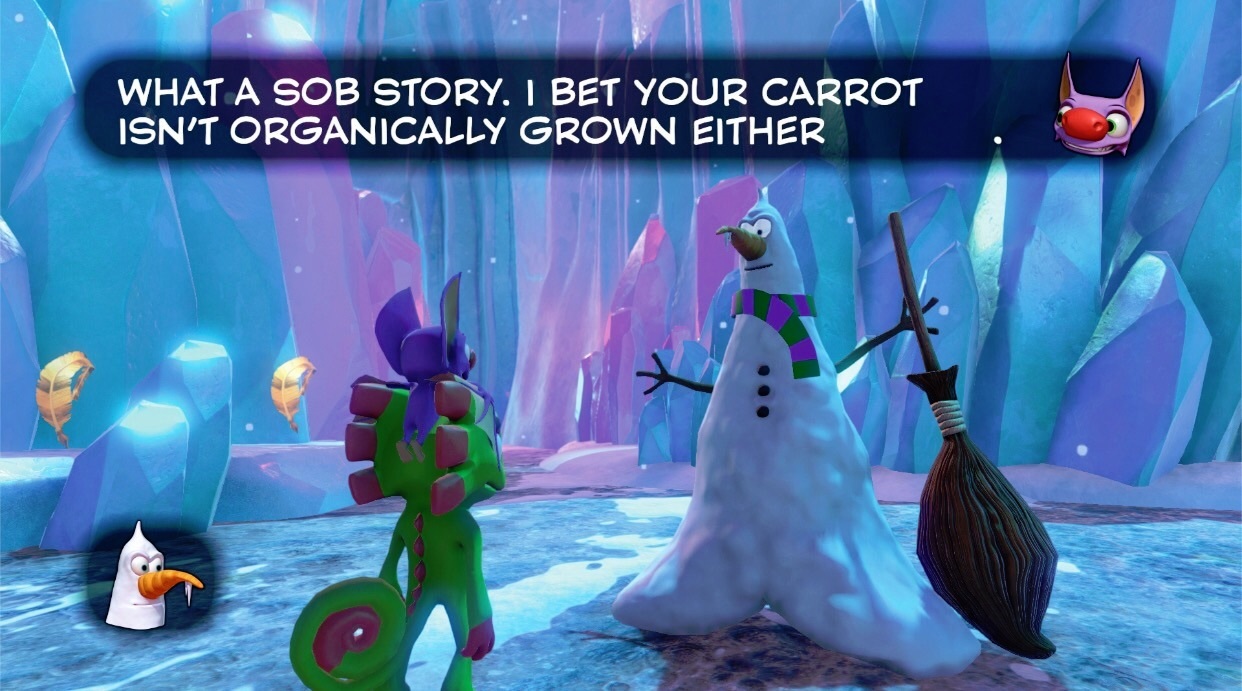
With all of this commotion taking place, Yooka and Laylee decide to team up and go after every page, so they can restore the book and bring peace to their little world. Every single page of this book are called “Pagies” and have little googly eyes, with jolly little spirits. In fact, just like Banjo, DK64, and so on – almost all of the inanimate objects in the game have little eyes and feisty demeanors, adding to the already charming narrative involved. Players will find snowmen with missing hats, thirsty clouds, and so many other memorable characters within the worlds of Yooka-Laylee that for spoiler purposes, it would be criminal to begin to detail too much and take those interactions away from a new player in this review. I will however say that I don’t think I have smiled so much while reading dialogue of NPCs since playing Conker’s Bad Fur Day years ago.
That is the atmosphere on display here, so if you are looking for something light, airy, and fun that still manages to keep a clever reserve of whit and charm, Yooka-Laylee has the world you need to visit. This is the kind of game where bosses stop attacking to tell you their regrets in life and the forth wall is pecked at, but not blasted through to keep players immersed while delivering an innocent stab at the modern gaming industry. The writing is brilliant and in my opinion some of the most comedic delivery we have had in a game this generation.
Gameplay
Yooka-Laylee sets out to not redefine, but recreate everything we know about the very genre of game that Rareware built in the late 90’s/early 2000’s. Instead of innovation, Playtonic have attacked this genre with polish and finesse, ensuring that some of those old hassles with prior titles would not be an issue in this game. For instance, camera angles in water during Banjo-Kazooie use to be a drag, and now our new buddies don’t have that problem. Stage transitions are seamless, and smack the player in the face with nostalgia with the silhouette of the heads of our two main protagonists during every entry to a new area. In fact, there are so many familiar elements at play here that anyone who even remotely played Banjo or any similar title will feel right at home. It’s a rare comfort to experience, as at the center of the gameplay comes discovery – and that element is what every maneuver, power, pickup, and puzzle is essentially built around.
As players start the first world, they will quickly learn that in order to progress, they must buy abilities from Trowser – a cunning business-snake that wears pants. Instead of music notes, players must search each area for quills that they can exchange for abilities or simply collect for the sake of collecting. Once enough quills are gathered, you can then trade them and obtain powers that will grant you access into new areas within each world. For instance, a high jump that launches our heroes in the air is needed for almost every mission after the first world. Laylee also has a great sonar that finds secrets and wakes sleeping allies that in turn start missions. There are a good number of abilities within the game, and thankfully the controls are so fluid that utilizing them is just as fun as doing all of the hunting in order to find each piece required to move forward.
Molecules are a very rare item within each stage and also open up new areas within the game as each one found can offer the ability to transform into a special creature. Remember the ant in Banjo-Kazooie? It’s the same logic at work here, but with a bit more attention to detail and interactivity this time around. Once the player obtains so many Pagies’ by doing odd jobs around the current Tome (which are the actual names for the stages), they can completely upgrade that world by doing a swap – or simply move to a new Tome that will offer a bit more variety and fresh sights. Upgrading Tomes changes a lot, as it essentially opens doors that were once locked and takes walls that were once disguised, turning them into a fresh route to traverse on.
While you explore the game at your own pace, there will be times where you realize you cannot proceed without going to the next Tome. Some powers obtained in latter levels are required to grant access in places located earlier on, so getting “stuck” is a thing that can happen if you don’t open your mind to the entire world, rather than keeping the impossible mindset to collect everything in one Tome before moving on. If anything, this does nothing but improve the pacing for the overall experience, as it allows for the player to take a break from one world and get sucked into another – only to go back and do it all again.
The platforming sections are generally easy, but make no mistake – there is a good amount of challenge in the game. Precision, timing, and patience – mixed with a tiny bit of non-punishing trial and error make up a hefty portion of the puzzles within Yooka-Laylee, so you running like you’re Sonic can make you fall all the way back down to the ground and have to make a long climb back up a treacherous mountain. This world also demands you interact with it. While there were several hints, I took two hours to understand that I needed to lick honey in order to climb up a slippery slope. I suppose I just am not used to interacting with everything – but again, for a game centered around the idea of discovery, this is yet another positive element of gameplay.
Speaking of licking things, one of the best mechanics players will experience are the berries they can swallow in order to gain projectiles. Blue gives water, clear allows for ice pellets, red for fire, black for explosions, and so on. Each one of these powers come into play several times during environmental puzzles and boss battles alike, so be prepared to swallow and shoot during quite a few segments. I know this review is getting wordy, but there is simply so much to do within the game, and so many gameplay aspects to cover. From revisiting old, familiar territory of other Rare titles to playing in the game’s own arcade (which has local multiplayer – mind you), the content here is overflowing, and the quality thankfully never misses a beat throughout all of those hours spent as this lovely little duo.
Visuals and Audio
Yooka-Laylee is gorgeous. Much like Viva Pinata (which has the same artist involved), the colors here are very vivid and strong, greeting the player with lovely eye candy for each Tome discovered. Every single character model has so much charm and goofiness to it as well that its hard not to take ten steps without cracking a smile as you see a letter with eyes dragging itself across the ground. There is just so much imagination in this game that we don’t get to see in the industry these days. Humor in a platformer now is usually made up of re-used jokes from memes or self-aware bits that go too far to get their point across. Yooka-Laylee, by visuals alone, has enough humor and originality in its world to keep one entertained for hours at a time.
The soundtrack is also amazing. Grant Kirkhope has knocked the tunes packed in here out of the park. Every Tome has multiple tracks that set the scene and deliver a specific mood based on your situation, so while you maybe having a quirky little adventure outside one moment, you may be finding something more soothing and sinister by entering that next doorway. The dialogue delivery will come as no surprise to those who love their Banjo, as it is done in the same offbeat, grunting style of both platformers on the Nintendo 64. There are a lot of little effects that tie this universe together, and the perfection achieved on the sound side of things for the game simply make The Hivory Towers a joy to explore.
Overall
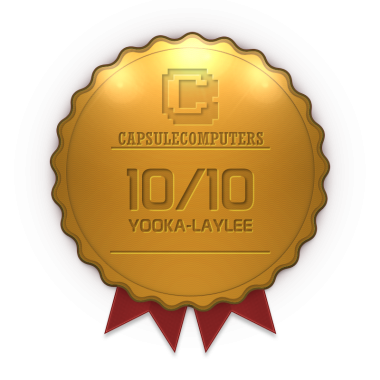
Yooka-Laylee is not just a fresh IP, but the rebirth of a genre. Playtonic may have done this as a passion project to offer a taste of nostalgia for fans, but in turn they also managed to create one of the most imaginative platformers for this entire generation. Yooka-Laylee is a title laced in humor that never sacrifices its intelligence or quality in order to keep the player invested. There is so much to do, and so much to discover that these two little protagonists will keep your heart full with wickedly fun gameplay that is found until the very last Pagie turns.
Capsule Computers review guidelines can be found here.
Blackwood Crossing Releases Today on PS4, Tomorrow for Xbox One and PC
Brighton, England – April 4, 2017 – PaperSeven, a UK-based independent game developer, has announced that its award-winning adventure game, Blackwood Crossing, launches today on PlayStation®4, and tomorrow on Xbox One and PC, priced at $15.99 in the US, with £12.99 / €15.99 pricing for the UK and Europe.
Blackwood Crossing explores the relationship between Scarlett and Finn, orphaned siblings growing apart as Scarlett enters adolescence. When they cross paths with a mysterious figure, a seemingly ordinary train ride evolves into a magical story of life, love and loss. The game will see players assuming the role of Scarlett, exploring ever-changing surroundings and solving a range of challenging puzzles as she tries to navigate her way through the unpredictabilities of the world around her.
“We’re thrilled to see Blackwood Crossing finally hit the stores, and hope players feel as connected to Finn and Scarlett’s story as we do”, said Alice Guy, co-founder of PaperSeven. “Our goal was to build a world with a unique character, a world grounded in surreal magic that confounds player expectations. We wanted to create a dreamlike logic, where fantastical events make perfect sense within the context of the game.”
Blackwood Crossing is the first major release from PaperSeven, an independent studio based in Brighton, England. The team is made up of former Disney Black Rock Studio developers, as well as Oliver Reid-Smith, writer of The Room.
Blackwood Crossing is developed by PaperSeven and published by Vision Games Publishing. The game, which is ESRB rated “E” (Everyone) with Mild Language, is available for an MSRP of $15.99 on PlayStation 4 via the PSN store, on Xbox One via the Xbox Store and on PC via Steam.
About PaperSeven PaperSeven is a small, independent studio based in Brighton, UK. Founded by former Disney Black Rock Studio developers, the team’s goal is to create games that explore emotional themes and take players on meaningful yet unpredictable journeys. PaperSeven released its inaugural PC and console title, Blackwood Crossing, a story-driven adventure game, on Xbox One, PlayStation 4 and PC in April 2017.
Blackwood Crossing is published by Vision Games Publishing.
Runes: The Forgotten Path new “Rise and Shine” Teaser Trailer – Kickstarter Campaign Launching on April 27
Runes: “Rise and shine” Teaser
(Trieste, Italy) April 4, 2017 – Italian game developer Stormborn Studio is very pleased to share the new “Rise and Shine” teaser trailer for their fantasy VR adventure game Runes: The Forgotten Path. The studio is also excited to announce that a Kickstarter campaign for the game will be launched on April 27, with further details to be revealed later this month.
“After opening up the studio last summer and giving all of our time and dedication to the game, we realized our dream was finally coming true,” said Alejandro Castedo of Stormborn Studio. “This game is the product of a long and hard adventure and now we want to finish it in the right way. The Kickstarter is the final push needed to make this game as we envisioned the first time we put a VR headset on and we want you to share this amazing adventure with us!”
Runes: The Forgotten Path is a fantasy game designed exclusively for VR (PC, Vive and Oculus Rift) in which the player can cast spells by drawing in the air with motion controllers. It features an innovative locomotion system called “4th Wall“ to provide a seamless experience devoid of motion sickness and an extra layer of narrative power.
Runes tells the story of Leth, a powerful wizard trying to escape from the Oblivion, a magical sleep prison of the mind. Astray from the path of righteousness and trapped inside himself by the tyrannical order of the Panopticon, he will have to face a blank beginning. With the use of his powerful spells and wits he will fight enemies, solve puzzles and pursue the recollection of all his lost memories.
About Stormborn Studio
Stormborn Studio was unofficially established in 2014 by a small group of hardcore gamers excited about the challenges and possibilities that Virtual Reality had brought to the scene. After some fruitful collaborations with local and national businesses, they decided to set up a game company in 2016 and go back to the project that brought them together in the first place: a fantasy action-adventure video game capable of exploiting all the new major VR technologies.




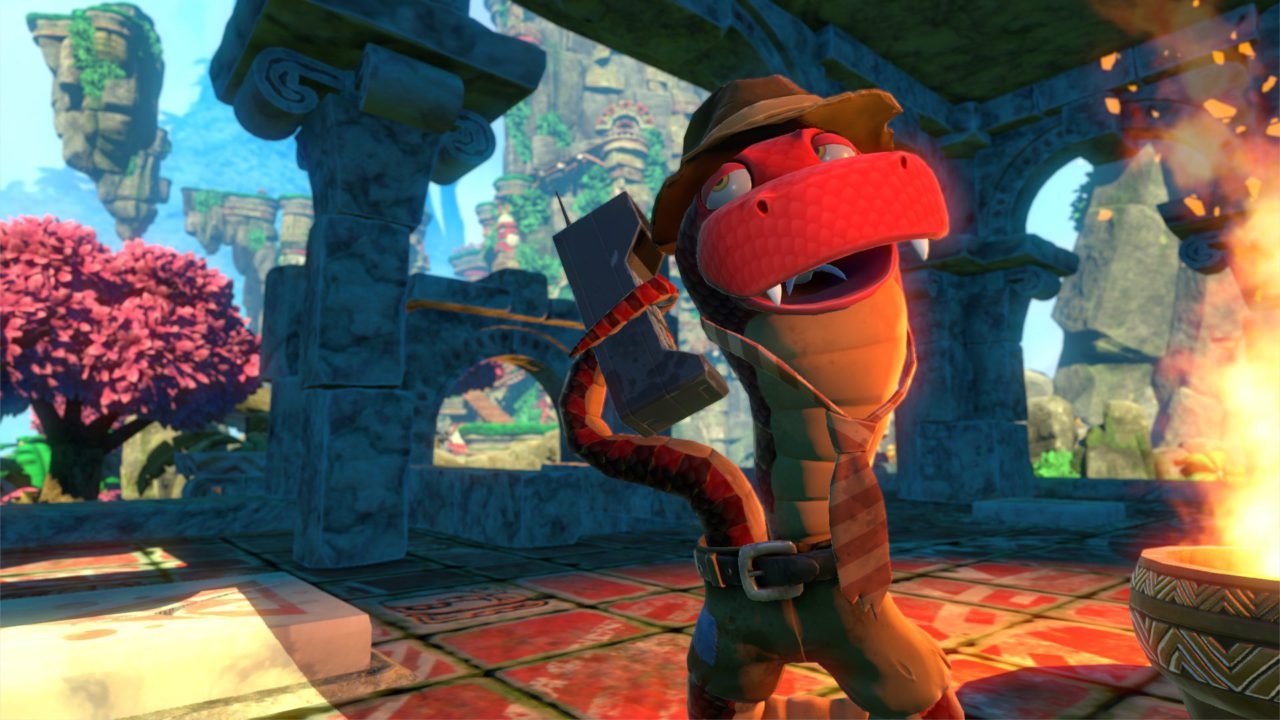
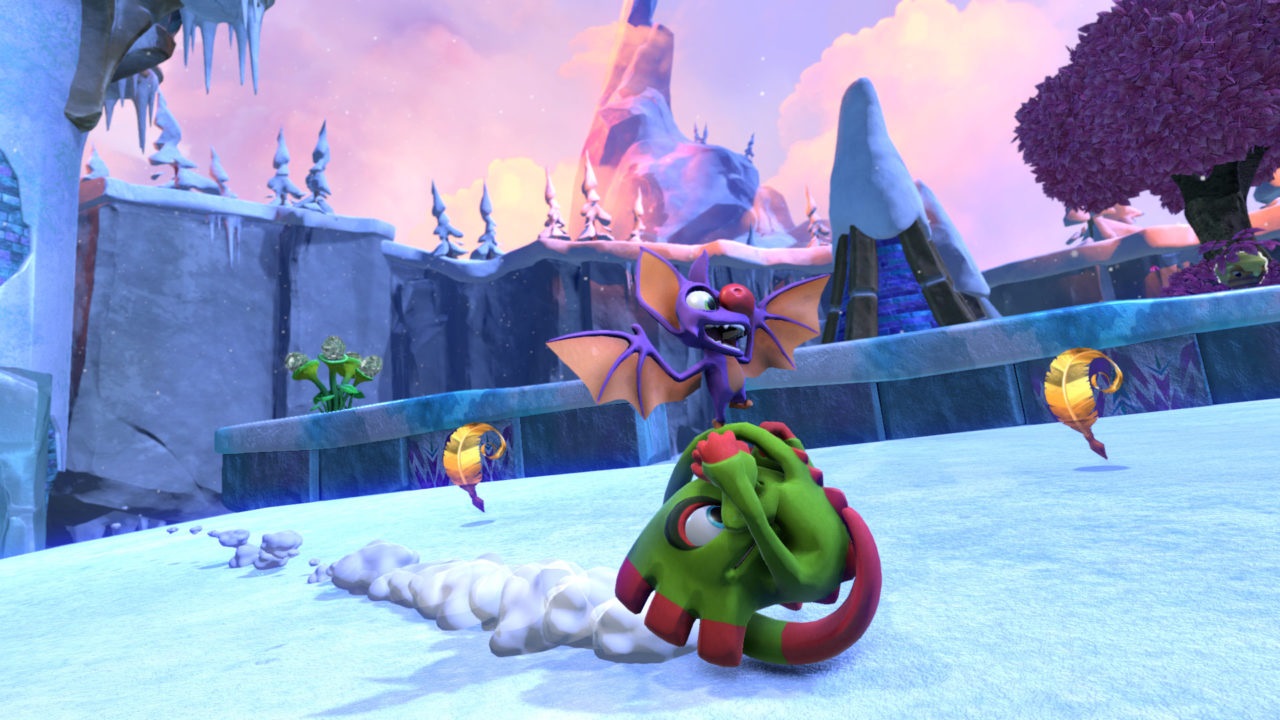 As players start the first world, they will quickly learn that in order to progress, they must buy abilities from Trowser – a cunning business-snake that wears pants. Instead of music notes, players must search each area for quills that they can exchange for abilities or simply collect for the sake of collecting. Once enough quills are gathered, you can then trade them and obtain powers that will grant you access into new areas within each world. For instance, a high jump that launches our heroes in the air is needed for almost every mission after the first world. Laylee also has a great sonar that finds secrets and wakes sleeping allies that in turn start missions. There are a good number of abilities within the game, and thankfully the controls are so fluid that utilizing them is just as fun as doing all of the hunting in order to find each piece required to move forward.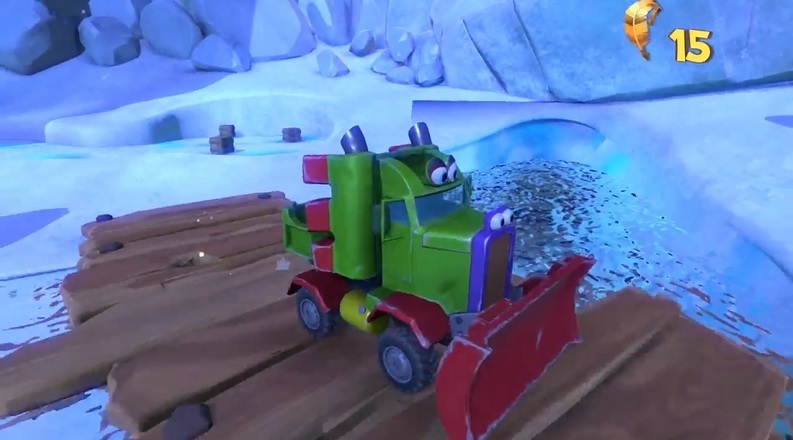
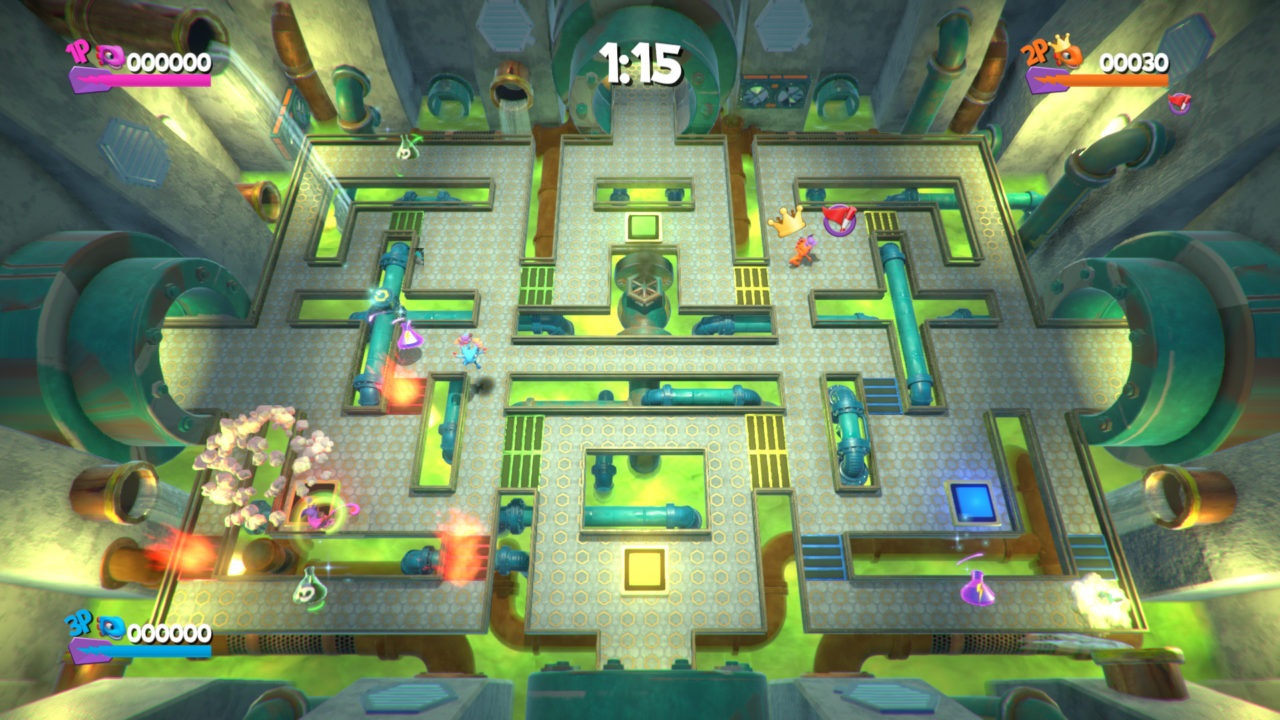 Speaking of licking things, one of the best mechanics players will experience are the berries they can swallow in order to gain projectiles. Blue gives water, clear allows for ice pellets, red for fire, black for explosions, and so on. Each one of these powers come into play several times during environmental puzzles and boss battles alike, so be prepared to swallow and shoot during quite a few segments. I know this review is getting wordy, but there is simply so much to do within the game, and so many gameplay aspects to cover. From revisiting old, familiar territory of other Rare titles to playing in the game’s own arcade (which has local multiplayer – mind you), the content here is overflowing, and the quality thankfully never misses a beat throughout all of those hours spent as this lovely little duo.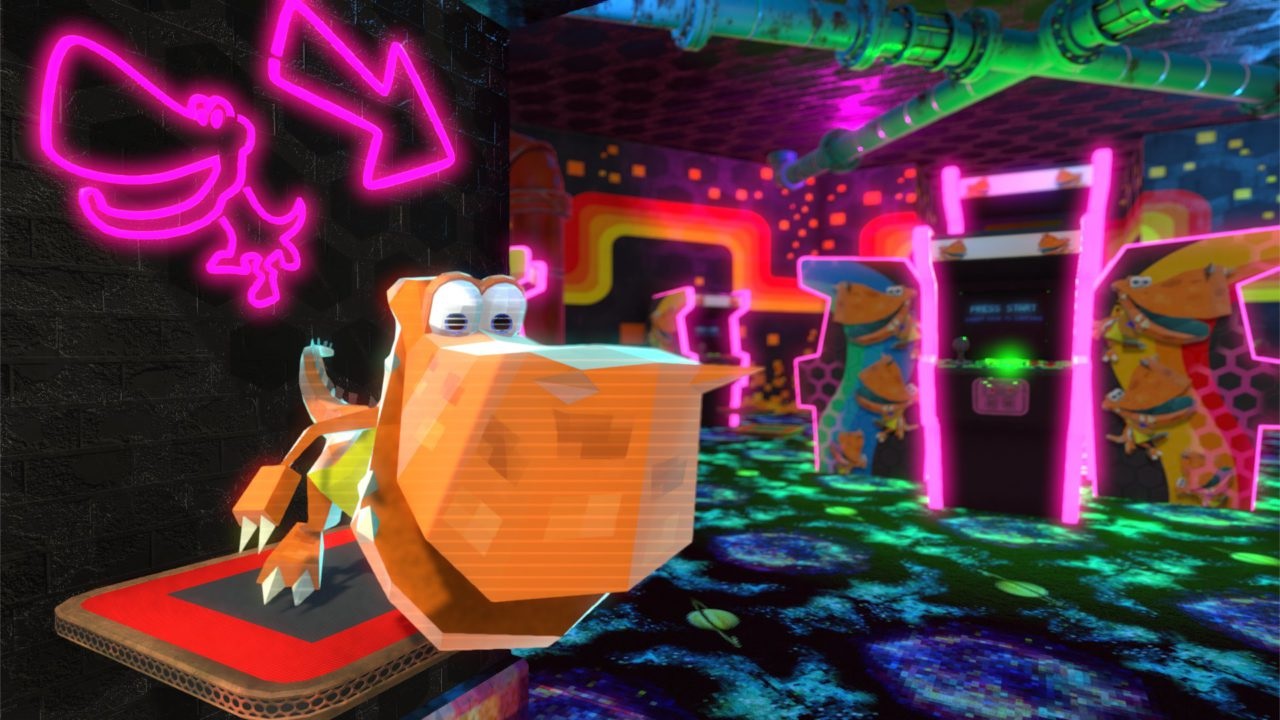
 The soundtrack is also amazing. Grant Kirkhope has knocked the tunes packed in here out of the park. Every Tome has multiple tracks that set the scene and deliver a specific mood based on your situation, so while you maybe having a quirky little adventure outside one moment, you may be finding something more soothing and sinister by entering that next doorway. The dialogue delivery will come as no surprise to those who love their Banjo, as it is done in the same offbeat, grunting style of both platformers on the Nintendo 64. There are a lot of little effects that tie this universe together, and the perfection achieved on the sound side of things for the game simply make The Hivory Towers a joy to explore.