
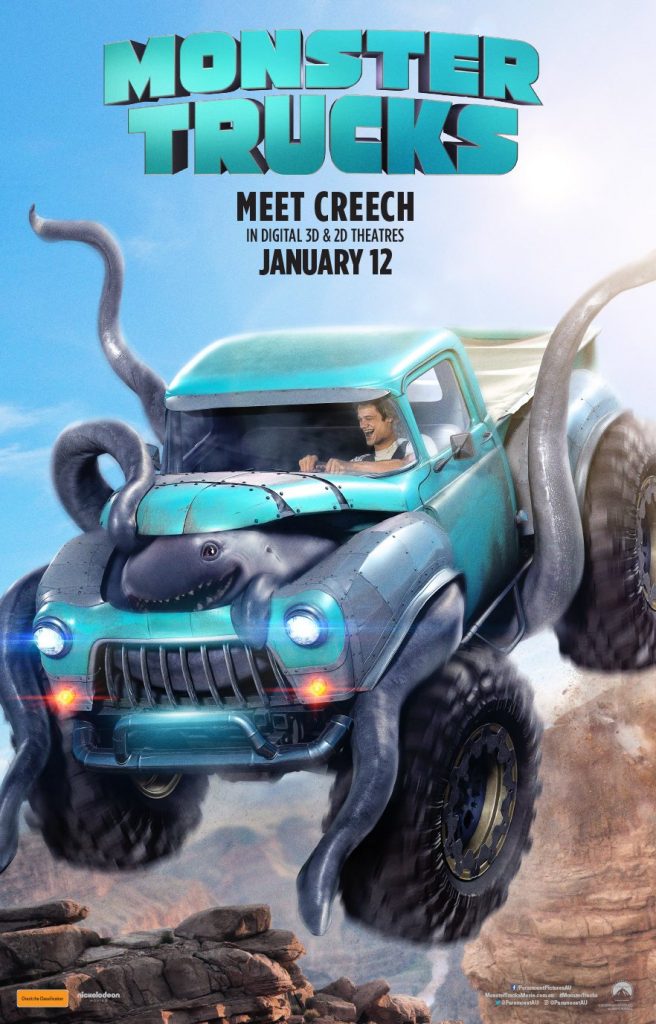
Monster Trucks
Studios: Nickelodeon Movies, Disruption Entertainment
Publisher: Paramount Pictures
Platforms: Cinema
Release Date: 12th of January, 2017 – Tickets Available Here
Overview
I’ll be honest with you, the trailer for Monster Trucks was not the epitome of cinematic sizzle which I have seen. There wasn’t too much in it that really got me excited or made me feel that this film would have something I would have considered worth seeing. That being said, I tried to put aside my first impressions when I went in to see this film with as open a mind as possible. Who knows? Perhaps this film with a pun title about Monsters(in)trucks would actually turn out to be the next E.T.? Read on, dear reader…
Story
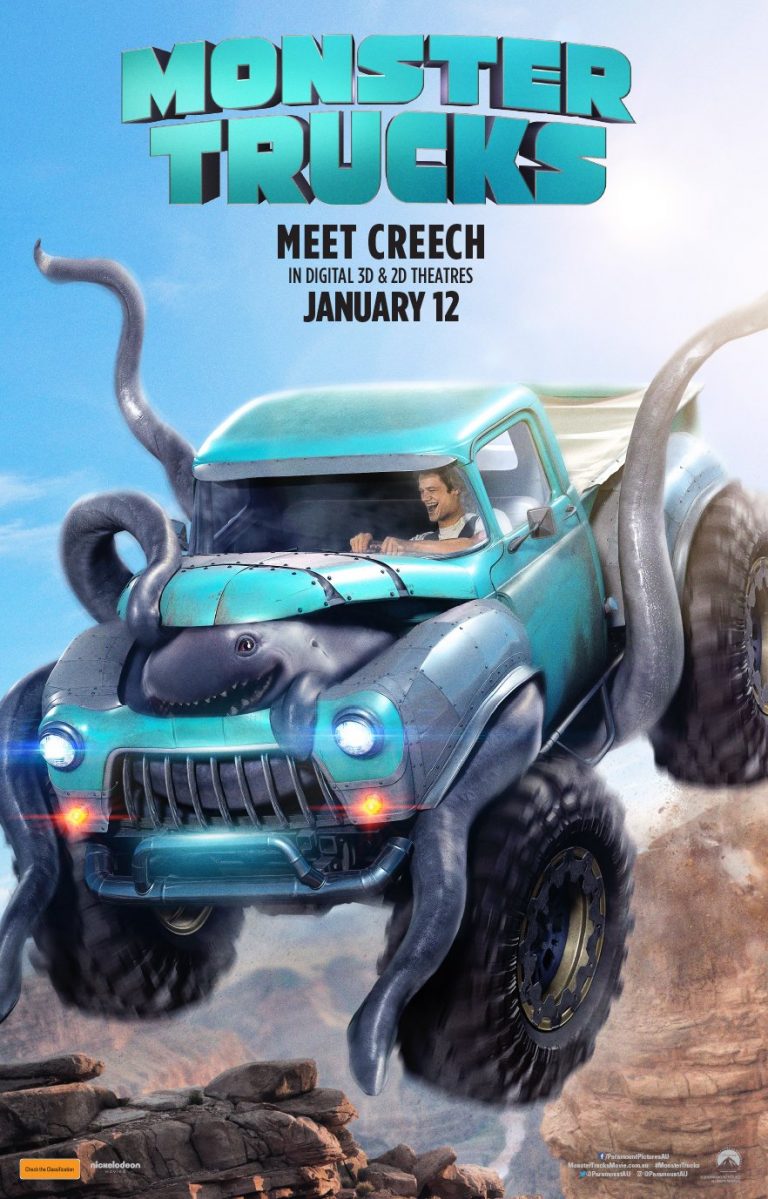
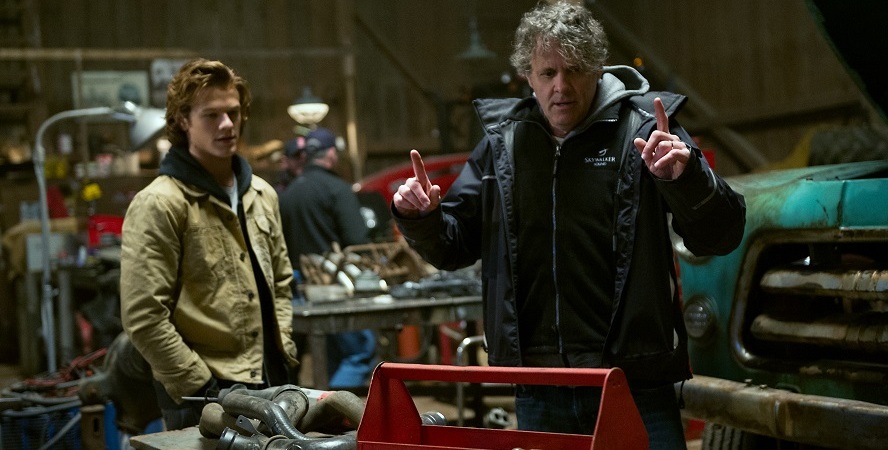
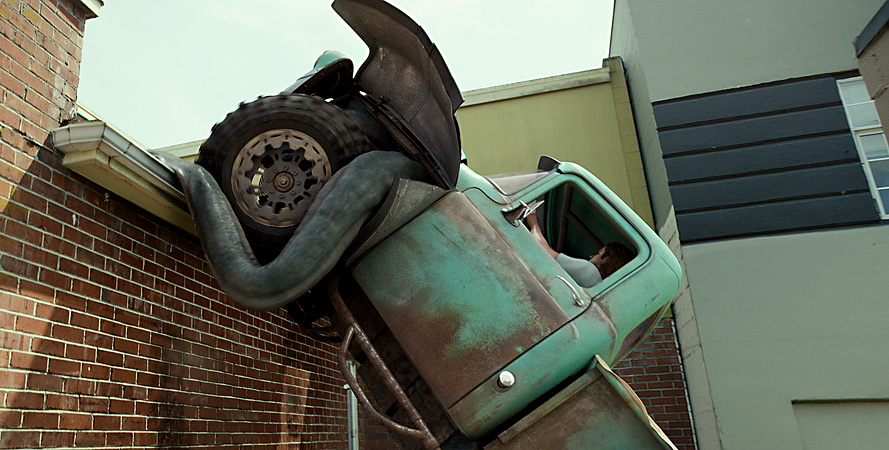
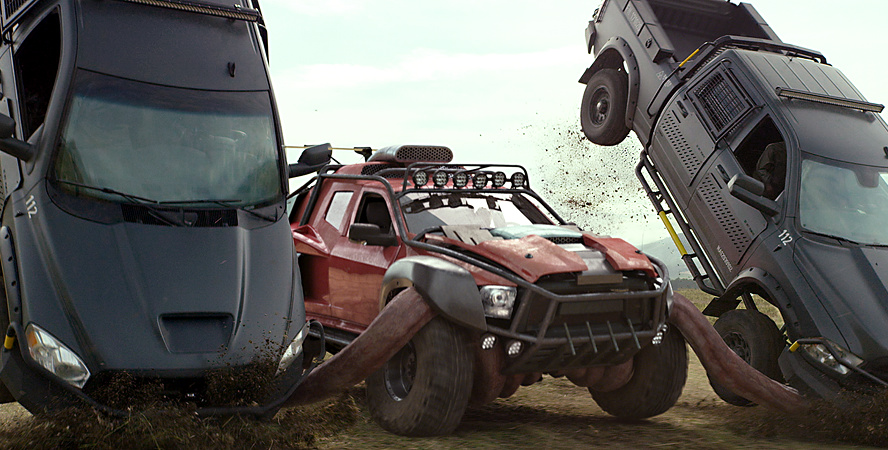
The film starts off with oil miners in North Dakota attempting to bore a new hole for an oil rig. Their efforts hit a snag when the shaft they’re digging pierces a body of subterranean water and the pressure damages the rig as well as forcing several creatures up the pipe and into the site where they wreak some havoc. Most of them are rounded up, save one, who escapes into the junkyard where the film’s protagonist, Tripp Coley (Lucas Till), finds them. After a brief interlude where Tripp attempts to get rid of them, the creature finds its way inside a truck where it turns out they can effectively function as a living motor for a vehicle. Both Tripp and the monster have to work together in order to rescue the captive monsters from the clutches of an evil oil corporation.
The biggest problem with a lot of children’s films in the modern film landscape is that writer’s too often dumb everything down, ostensibly to make things simpler for their audience. This, I would argue, is a big mistake. It’s one thing to have the characters, the action, and the narrative follow along a simple and clear path for a child to allow a developing mind to follow along and maintain their interest… BUT, it’s another thing entirely to completely remove all thematic concerns and ideas from a story. Unfortunately, this film falls into the latter with the writing being about as deep as a puddle. All semblance of any meaning which can be drawn beyond the film has been stripped away for mediocre action and comedy involving trucks and vehicles.
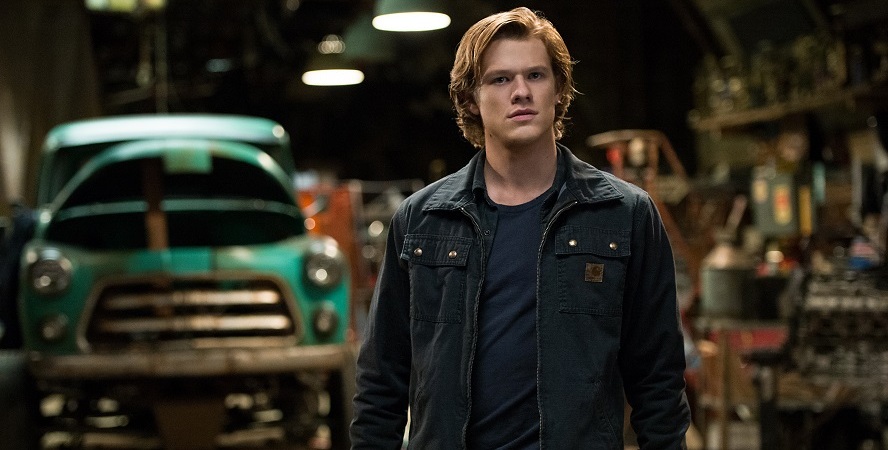
This effectively means that our protagonist character, Tripp Coley, is a complete cardboard cut-out of a character who makes decisions and pursues actions with little to no rhyme or reason. His rapport with the creature feels entirely forced and arbitrary with the relationship between protagonist human and monster largely being based on a really contrived set of circumstances. The monster itself is also very bland in terms of its personality and even now I could not tell you one distinctive thing about its relationship with Tripp or anyone else. They both end up being really boring, really unimpressive characters.
The story follows a similarly contrived plot points with the character of Tripp’s father (Frank Whaley). The character’s relation and presence makes no sense considering how little impact his story arc has to the plot or even the protagonist. He’s suddenly brought in as this possible narrative link between the film’s main antagonist and the protagonist but ultimately proves to be just as disappointing a character to the audience as he is a father to Tripp. Mostly absent with hope of something better but ultimately very disappointing.
There is a faint glimmer of a character depth between the oil company exec (Rob Lowe) and the geologist (Thomas Lennon) where the former makes reference to the latter’s loose adherence to ethical standards while working for the company. It’s delivered in a throwaway line which ultimately doesn’t get explored further throughout the film but, gosh, it gave me the hope of seeing something interesting happen on screen between the human personas. Alas, it was not to be as the film decides instead to double down on its boring protagonist and his boring relationship to an equally boring protagonist creature.
Visuals & Audio
Off the bat, I’m gonna say that the film’s animation isn’t absolutely terrible. The trailer features some less than stellar examples and they are certainly present in the film itself, but, by and large, I feel that the animators largely got things right more than wrong. The worst that happens when you see an actor attempt to interact with the creatures as you can clearly notice when they’re miming their actions.
The creature design wasn’t particularly inspired either with the monster largely remaining drab and muted in colour throughout the film. The only time, I felt, that the monster’s design became interesting was during moments when its body glowed with bioluminescence. Its body would light up with awesome glowing designs and you could see this awesome display of light which showcased a beauty which is both otherworldly enough to not set off an uncanny valley effect.
The film’s soundtrack was largely passable without leaving too much of an impression either way. The tracks perform their role of backing up the emotional swings of the film (as they try to be) but doesn’t leave much of an impression either way. The biggest thing I noticed is that the film attempts to score itself pretty much like every other children’s film and ends up sounding quite generic.

Overall
Overall, there’s really not that much good I can say about this film. It’s story is largely pointless and boring with little to no depth and even less character. The animation for the creature has some moments where it’s interesting, but occasionally finds its way into the uncanny valley where it sends us its holiday snaps. Its soundtrack is uninspired and largely forgettable but doesn’t stand out in a bad way either. The only audience which I feel would get something out of this film would be a sliver very young children who are passionate about trucks but not too young as to be frightened by the creature or too old to need anything more than footage of trucks driving over things to be entertained. I cannot recommend this film if you do not fall into this very specific demographic.
Capsule Computers review guidelines can be found here.






 Now it is worth noting that Hatsune Miku: Project DIVA Future Tone is available in separate packs, with Colorful Tone and Future Sound being available for $29.99 a piece or together for $53.99 at a discounted bundle and it is fairly clear that unless you happen to dislike all of the songs in one of these packs, that picking up both versions is the way to go as you will find that over 220 songs are available to play right off the bat when both packs are purchased.
 I say this because while over half of the songs are available all the way from the Easy difficulty level, the other songs are only available from Normal and a few are only available at the Hard level. This news may be disheartening to some since certain songs are not available on lower difficulties, which is an odd choice, but it is interesting to note though that every song can immediately be seen in music video mode if you choose to simply enjoy the performance or played using the aforementioned No Fail Mode.
 In fact, thanks to the controls of the game and the way that it has been adapted from an Arcade machine, this is one of the hardest games in the series so far. This is partially due to the fact that while there are fewer inputs to generally worry about, as the game generally uses only four of the face buttons at most, there are also a number of new note types to keep an eye out for. These include hold notes that can be held for bonus points, notes that must be input at the same time that generally are given a pop-up diagram of what to tap to avoid confusion, analog stick inputs, as well as swipes that make use of the touchpad. Touchpad notes tend to be fairly finicky to get the hang of as starting too soon can cause the whole note to be missed while ending a slide will give the player less points and possibly ruin a combo they would have otherwise been able to build up by timing their inputs correctly.
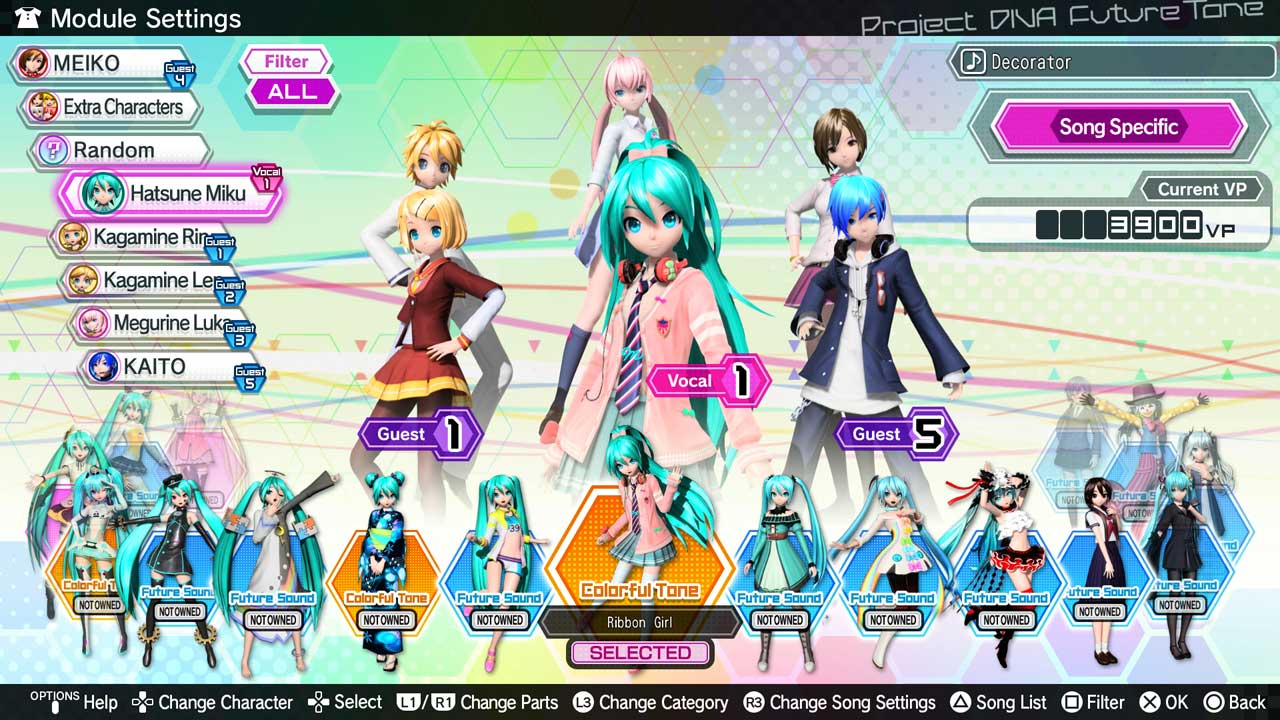 Unfortunately outside of the base gameplay mode and the outfits that can be unlocked and accessories that can be worn, players will find that Hatsune Miku: Project DIVA Future Tone doesn’t really expand much beyond that. This is in part due to it being an arcade port so the only other options available to the user are to compile a list of songs they want to play in a playlist manner and allow them to play like music videos, which I actually have running while writing this review. Those who enjoyed the little slice-of-life interactions with their favorite Vocaloids may be a bit disappointed by the bare bones nature of the game outside of the performances but the clear focus spent on the rhythm gameplay will delight fans of the genre.
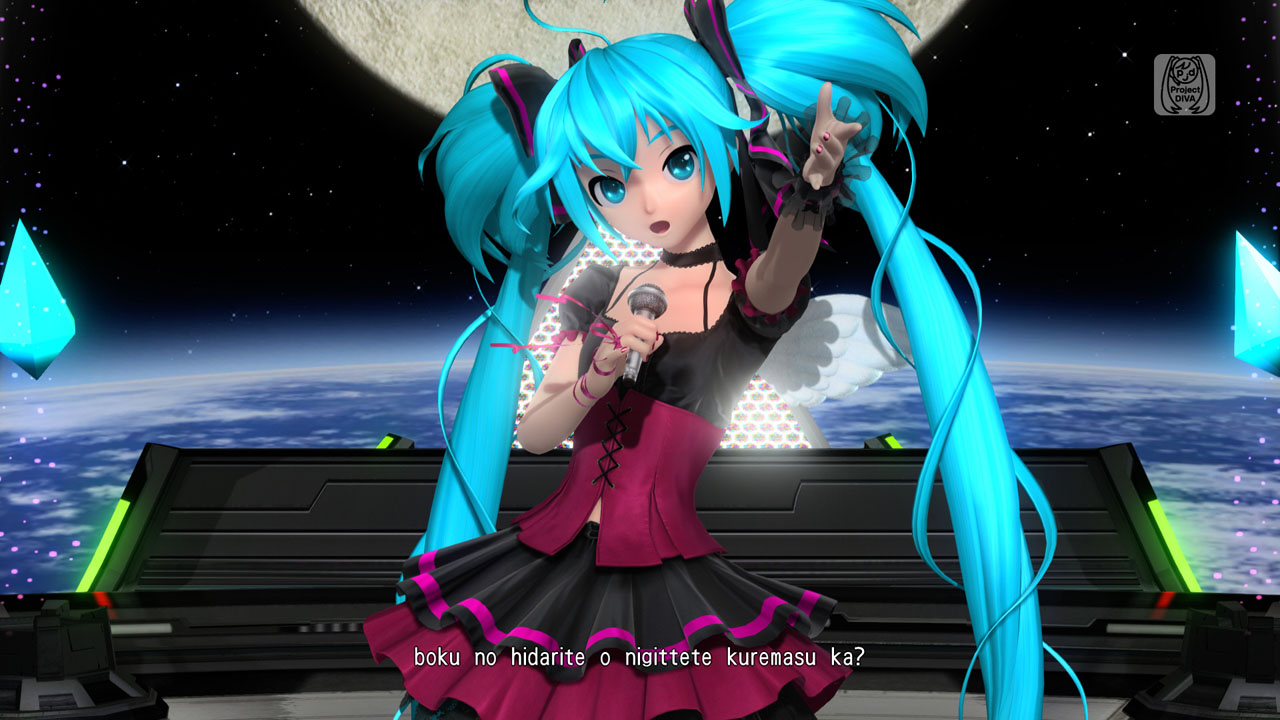 It is worth noting that while this game may not feature some of the most recent hit songs from creators; it does feature what many may call the greatest hits that the series has had to a certain point. Almost every popular Vocaloid song including some variants are included in this release and there are a wide number of genre to select from though players will need to listen to/perform some of these songs to find out how they sound for themselves as there is no sort option in this regard. With so many great songs to choose from, including some classic Sega tunes, and the outstanding looking videos they are set against that can be viewed at any time, players will be in for a real treat here.