
Home Blog Page 2586

Daedalic’s AER – Memories of Old Takes Flight today

Daedalic’s AER – Memories of Old Takes Flight today

Take to the Skies and Explore the Land of Gods in this Atmospheric Exploration Adventure and Debut Game from Indie Studio, Forgotten Key

Hamburg – October 25, 2017 – Daedalic and Forgotten Key are proud to announce that AER – Memories of Old is now available on Playstation, Xbox One, PC, Mac and Linux for 13.89 pounds. Developed for five years and nominated for Best Indie Game at Gamescom 2017, AER – Memories of Old is an exploration-focused adventure game set amongst the clouds featuring a grand, expansive world of floating islands and mysterious shrines. Players play as Auk, a girl who has the ability to transform at will between bird and human form, as she effortlessly soars amongst a sea of fully explorable islands to visit nomads, discover spirit animals, and uncover the ruins of a lost ancient civilization. Players can easily slip between the worlds of land and air to experience the true freedom of flight and the vast beauty of the awe-inspiring landscape.

Long ago, a great calamity shattered the world leaving only the drifting fragments of the floating islands behind. Auk must journey to learn more about the world that preceded her own as well as its downfall in order to prevent such a catastrophe to befall her world again.

With a distinct, low-poly art style, the world of AER is designed to be both beautiful and mysterious as explorers take in soaring vistas while encountering secretive temples and the puzzles within. The playstyle is unrestricted as players are free to explore the vast world at will, taking up objectives and quests as they go to uncover more of the enigma at the heart of the game. Transform seamlessly into bird-form with free flight mechanics as you dip below the waterfalls and mountains or return to human form to explore old ruins and venture down into the ancient temples of the Land of Gods.

Features:

  • Transform into a glorious bird to soar amongst the clouds
  • Explore a large open world of hidden secrets and new discoveries
  • Take on a series of quests filled with mysteries, puzzles and cryptic temples
  • Immerse yourself in the fantastical atmosphere and vibrant minimalistic aesthetic
  • Winner of Game Concept Challenge 2013 and IndieCade Select 2016

Links and downloads:

About Daedalic Entertainment

Daedalic Entertainment, based in Hamburg, publishes and develops computer and video games for all platforms. The studio focuses on interactive literature and character and narrative-driven games like adventures and RPGs. Daedalic Entertainment has a staff of more than 160 employees, including the Writer’s Room, a team of writers unique to the German media industry.

Since May 2014, Daedalic Entertainment is part of the Bastei Lübbe group of companies. In July 2014, the publisher opened a new studio, Daedalic Entertainment West, in Düsseldorf. The studio’s first project is the Space Exploration RPG The Long Journey Home.

Daedalic won the German Developer Award 21 times („Studio of the Year“ 2009 and 2013, among others). In 2013, the studio won the prestigious German Games Award for “Best German Game” with “Chaos on Deponia”. Daedalic Entertainment is also the six-time winner of the German Video Game Award and the European Games Award.

With titles like State of Mind, Silence and Ken Follett’s The Pillars of the Earth, Daedalic will raise the bar for the whole adventure genre. With Blackguards they also gained a reputation for creating high quality RPG games. As a publisher, the studio is also known for releasing unique and outstanding titles like Shadow Tactics, Crazy Machines 3, Valhalla Hills and Candle.

About Forgotten Key

Forgotten Key is an award-winning indie game studio based in Karlshamn, Sweden. With a focus on atmospheric adventures and experiences, Forgotten Key strives to innovate in game design while building rich worlds steeped in ambiance and feeling. Forgotten Key was founded in 2011 when a small student team from Blekinge Institute of Technology began working together, and has since grown into an indie studio of 15 with several projects in the pipeline.

AER Memories of Old is the first game release for the studio and a project of love and dedication through 5 years of constant development, which has given fruit in several awards and nominations including Game Concept Challenge 2013, IndieCade Select 2016, and a nomination for Best Indie Game at Gamescom 2017.
DREADNOUGHT ADDS ONSLAUGHT GAME MODE, REVAMPS PROGRESSION AND MUCH MORE WITH MASSIVE PLAYSTATION®4 OPEN BETA CONTENT UPDATE

DREADNOUGHT ADDS ONSLAUGHT GAME MODE, REVAMPS PROGRESSION AND MUCH MORE WITH MASSIVE PLAYSTATION®4 OPEN BETA CONTENT UPDATE

HOUSTON and BERLINOct. 24, 2017 – Grey Box, Six Foot and independent developer YAGER have released the Onslaught update for the open beta of Dreadnought, the class-based spaceship action game, on the PlayStation®4 computer entertainment system. The highlight of this latest major content update is Onslaught, a game mode new to consoles in which players battle both the enemy team’s capital ships and neutral AI-controlled vessels in massive, all-out warfare.

The Onslaught update also overhauls progression, including how players get acquainted with their new ships, starting with Proving Grounds, a new game mode that replaces the old training matches. Players join up with each other and AI-controlled ships to learn the game’s mechanics while earning credits and experience in battle against the AI. Captains can now complete challenges across different ship classes for rewards like XP and credits. And new battle bonuses increase the amount of credits and XP fleets earn after matches, replacing the old ship maintenance system to allow players to use their selected fleets as much as they’d like without cooldowns or other usage penalties.

“We’re constantly listening to our community to make Dreadnought better for longtime captains and newcomers alike on every platform,” said Six Foot producer Chris Owen. “From Onslaught to Proving Grounds and beyond, we’re incorporating that feedback and getting closer and closer to the game we want to launch on PlayStation®4.”

The new update adds a number of other improvements to the game, including enhancements to friends lists, new end-of-match stats, bug fixes and a variety of quality-of-life changes detailed in the full update notes: https://www.greybox.com/dreadnought/en/news/ps4-open-beta-patch-1-improved-captain-training-and-ominous-market-items/

Dreadnought puts players in the captain’s chair of massive capital ships on the front lines of competitive team-based battles across a variety of multiplayer game modes. Five distinct ship classes, specializing in tactical roles like frontline assault, long-range bombardment, strategic support and more, offer captains unique powers to exploit the enemy team’s weaknesses and claim victory. There are more than 50 playable vessels to master, each customizable with an array of weapons, modules, coatings and decals.

Dreadnought is currently in free open beta and available for download on the PlayStation®Store and on Windows PC. For the latest updates, visit www.dreadnought.com, and follow the game on FacebookTwitter and Twitch.

About Grey Box

Grey Box is a video game publishing brand that champions the idea that games are an influential art form and players should be treated as sophisticated consumers. Grey Box aims to set a unique standard for quality in interactive entertainment. www.greybox.com

About Six Foot

Six Foot was founded in 2000 as an interactive agency, building digital experiences designed to make connections between people, brands and technology more human and meaningful. Now, as a full-service games company with offices in Houston, Los Angeles and Berlin, we apply that same passion to building extraordinary video games and providing creative direction, marketing and brand management, front- and back-end development, customer service and community support for game publishers. www.6ft.com

About YAGER

Founded in 1999 in the heart of Berlin, YAGER is one of the gaming veterans of AAA development. The award-winning studio is dedicated to the creation of vivid and meaningful multi-platform gaming experiences. The YAGER team comprises gaming enthusiasts, technical experts and creative minds from across the world who all share a passion for great action games. YAGER was most recently recognized for its gripping military shooter Spec Ops: The Line. www.yager.de

About Iron Galaxy Studios

Iron Galaxy is one of the world’s largest independent video game developers, delivering both home-built, original experiences and their partners’ visions to all platforms. Founded in 2008, Iron Galaxy has touched an astonishing number of projects, large and small. www.irongalaxystudios.com

For Honor’s The Feast of the Otherworld Halloween Event Kicks Off

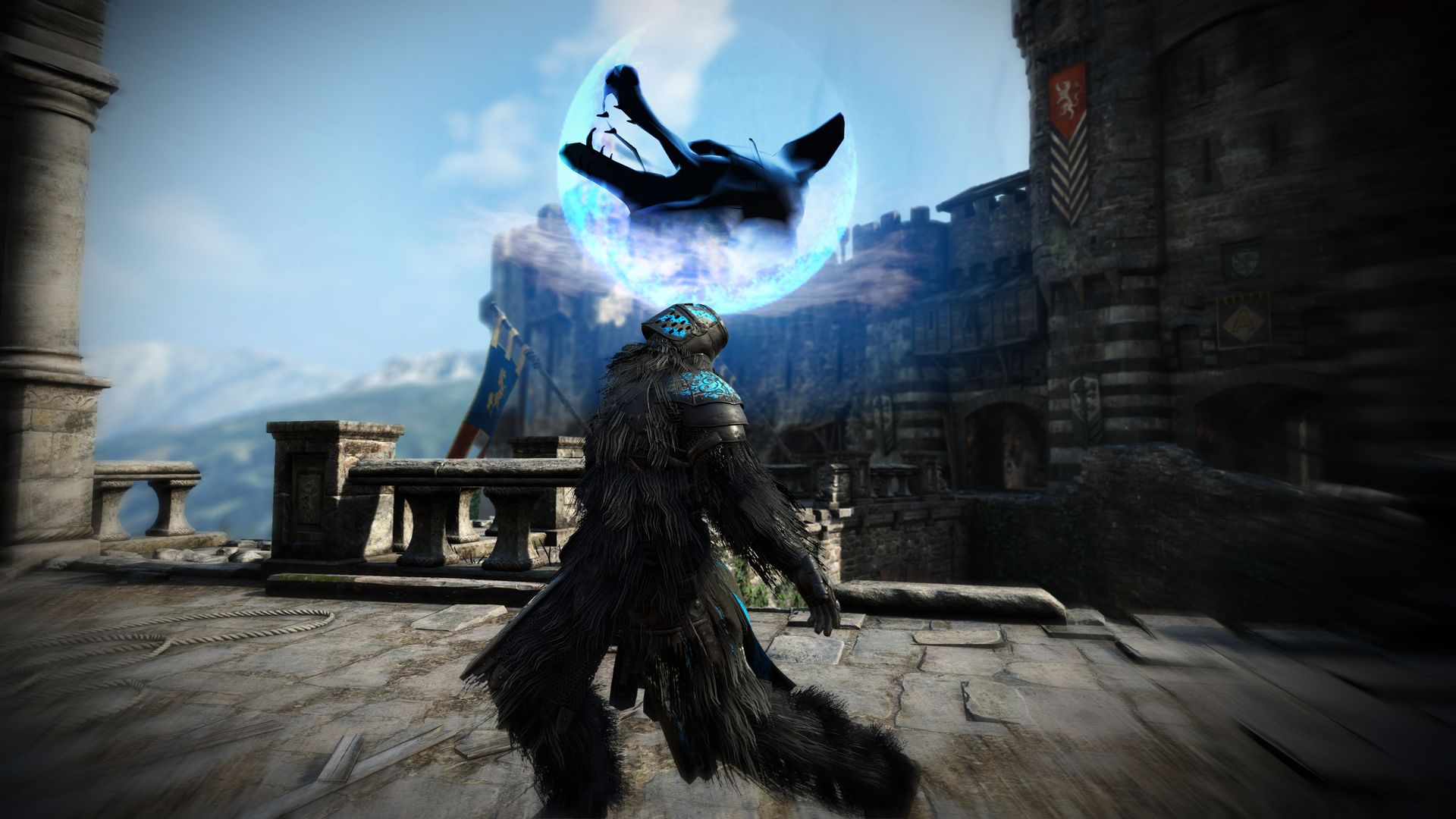
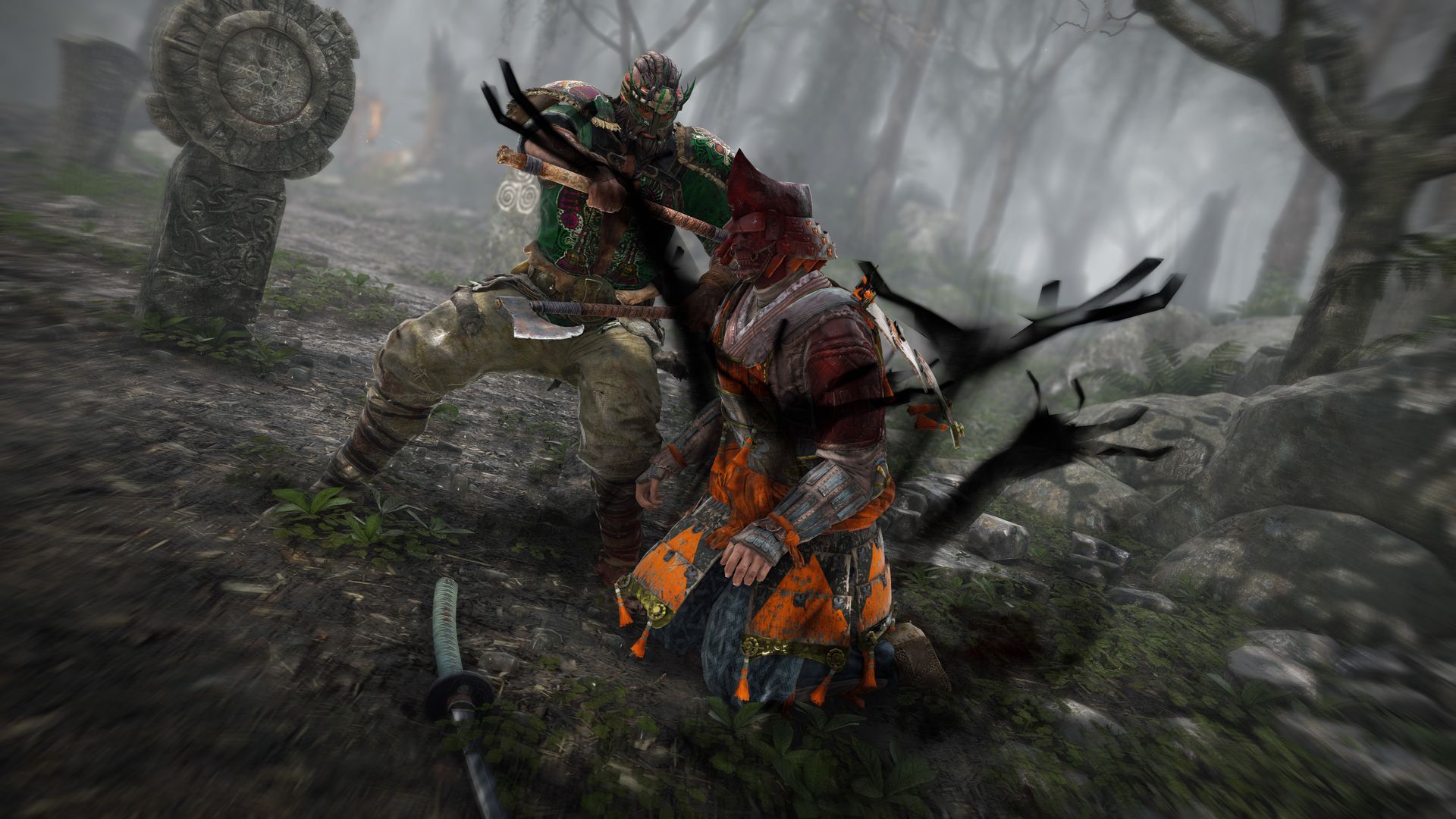
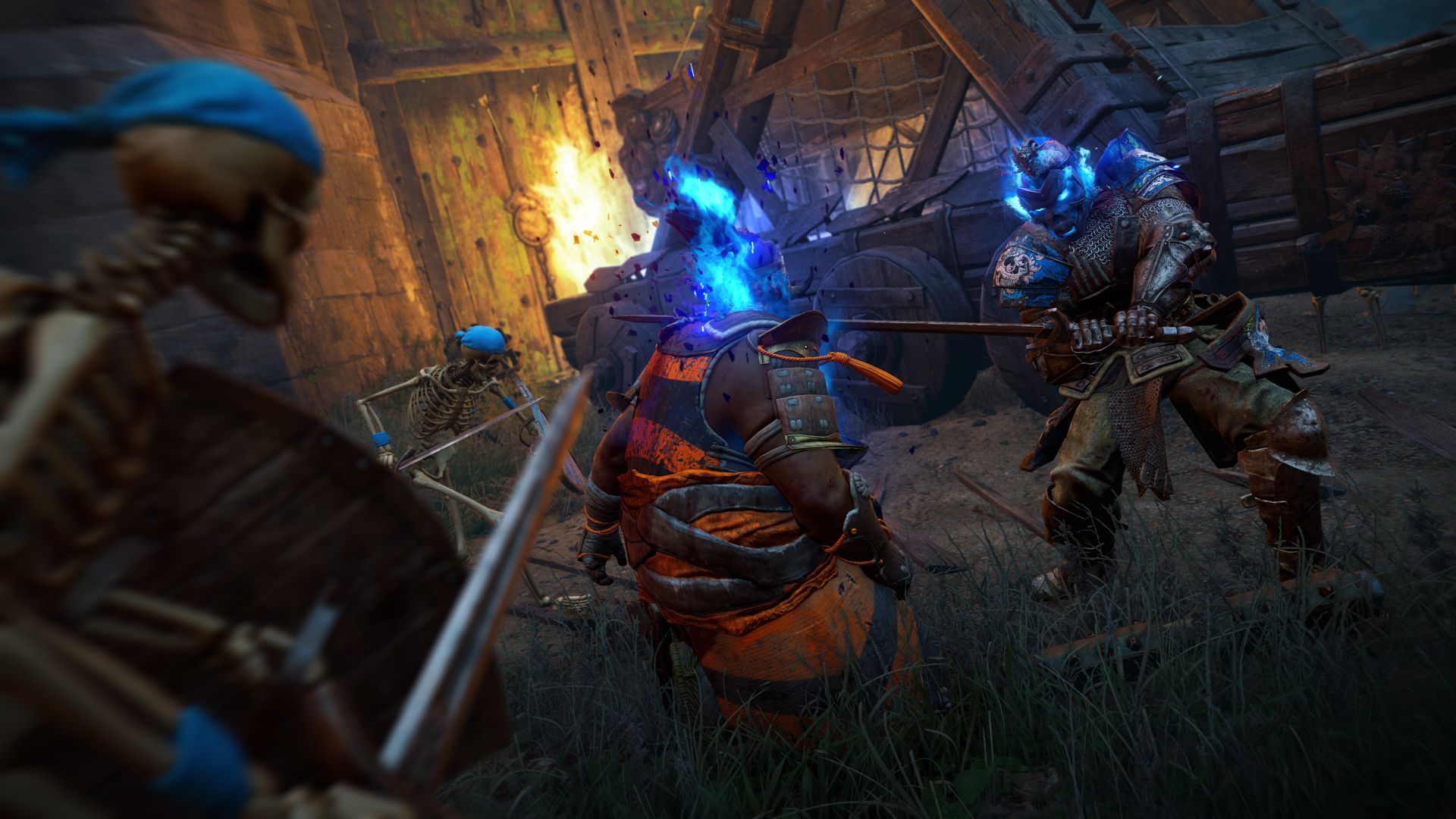
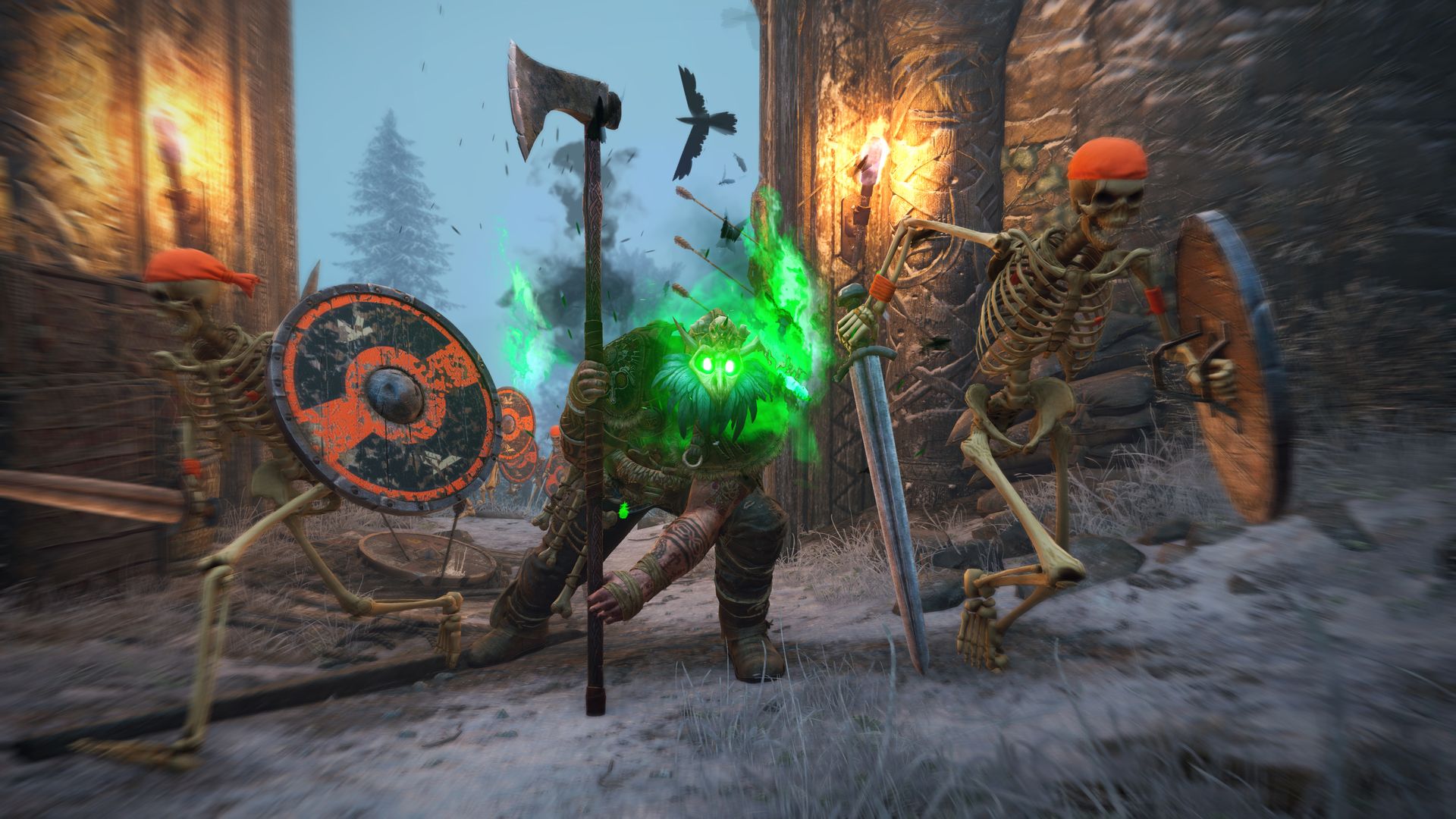
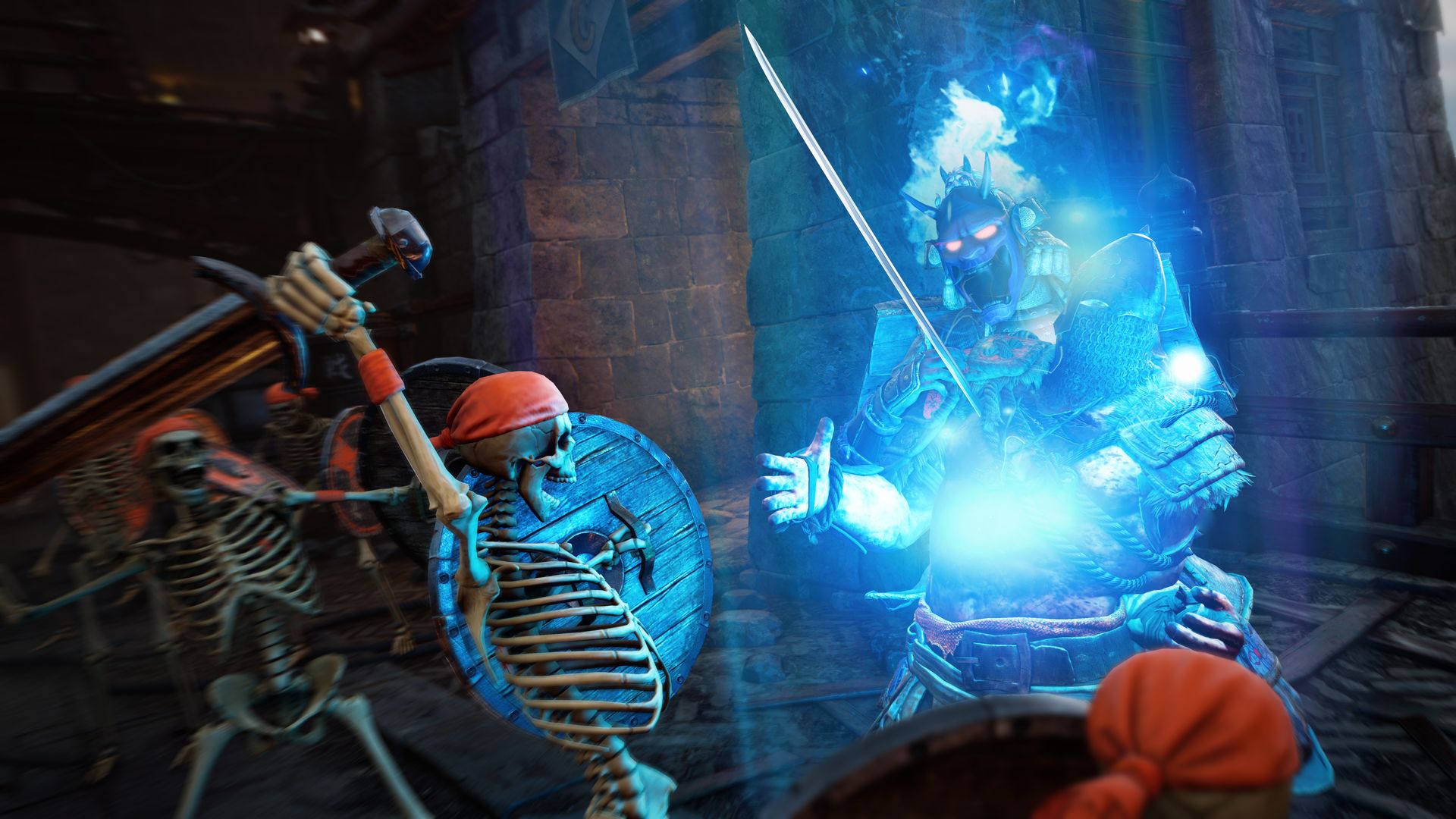
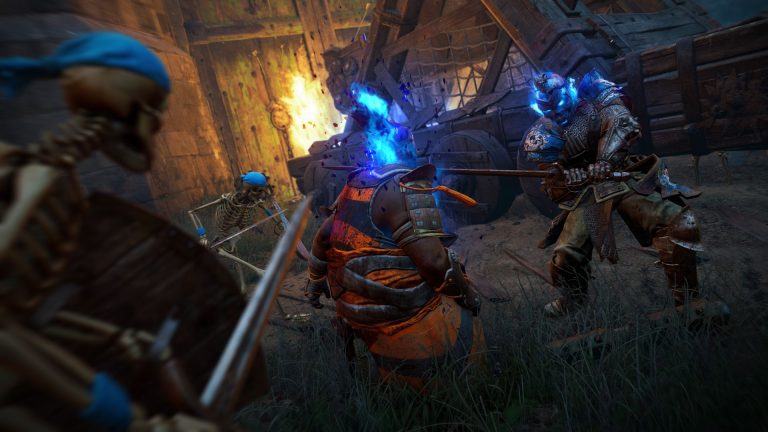
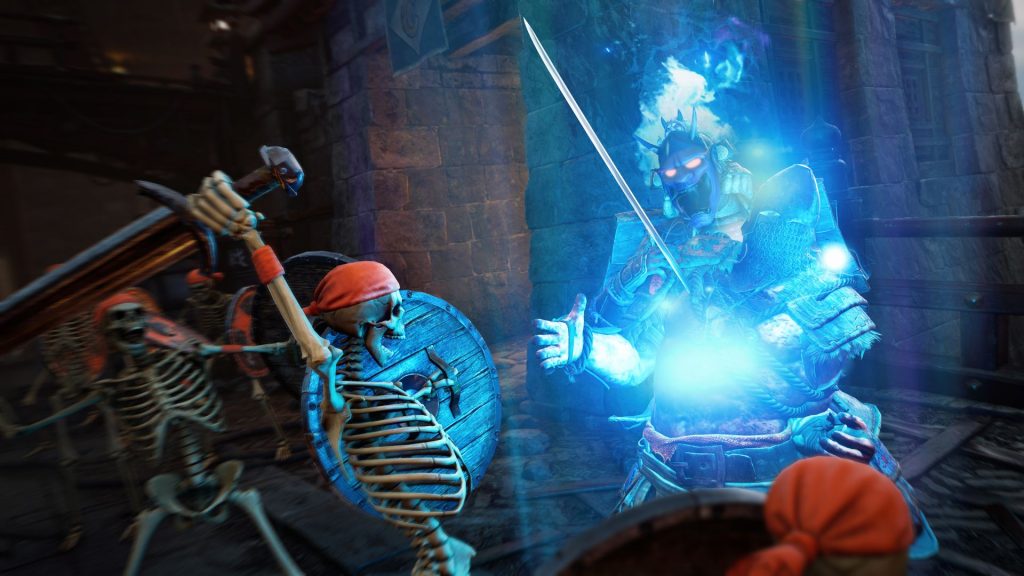
Ubisoft is getting into the spirit of Halloween a little early this year. For Honor is running a spook-tacular event from October 19th to November 2nd called The Feast of the Otherworld. For the next two weeks, 4v4 Dominion Mode will be running The Endless March rule set that adds skeletal soldiers to the game. To win, teams must kill either skeletons or enemy players to reach the 1000 point victory threshold and then wipe out the entire enemy team. However, the skeletons will not make things easy. Unlike their living AI counterparts, the skeletons will deal massive damage to players.

In addition to the changes to Dominion mode, The Feast of the Otherworld is adding Halloween themed rewards to the game. Some of the items include a voodoo mask that glows green and a fearsome werewolf emote. The weekly content releases will also be Halloween themed for the next two weeks.

For Honor is available for PlayStation 4, Xbox One, and Windows.

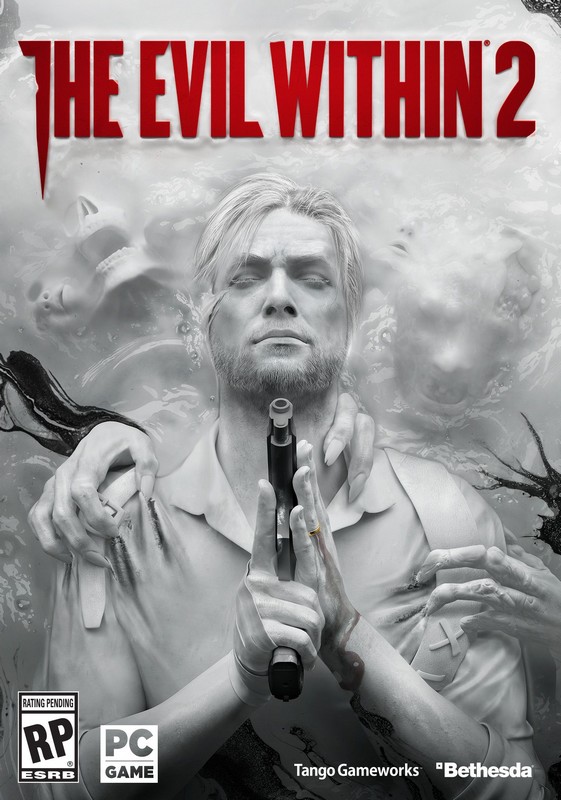
The Evil Within 2 Review

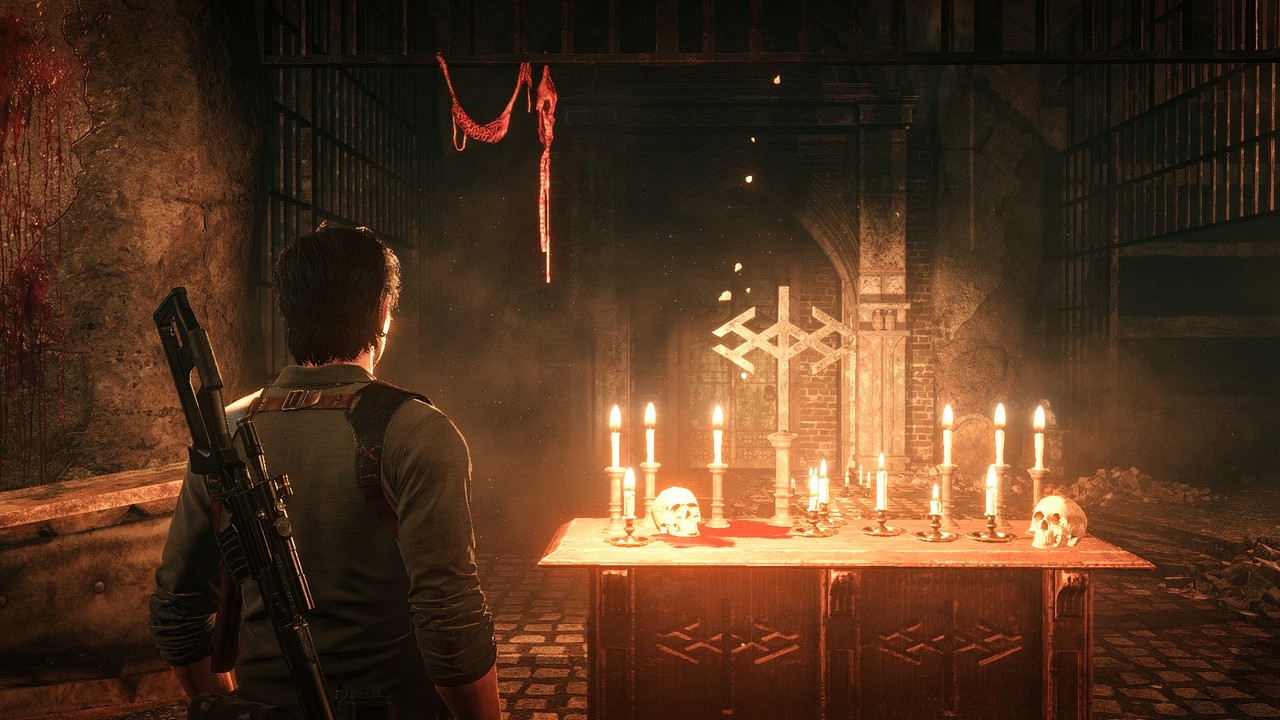
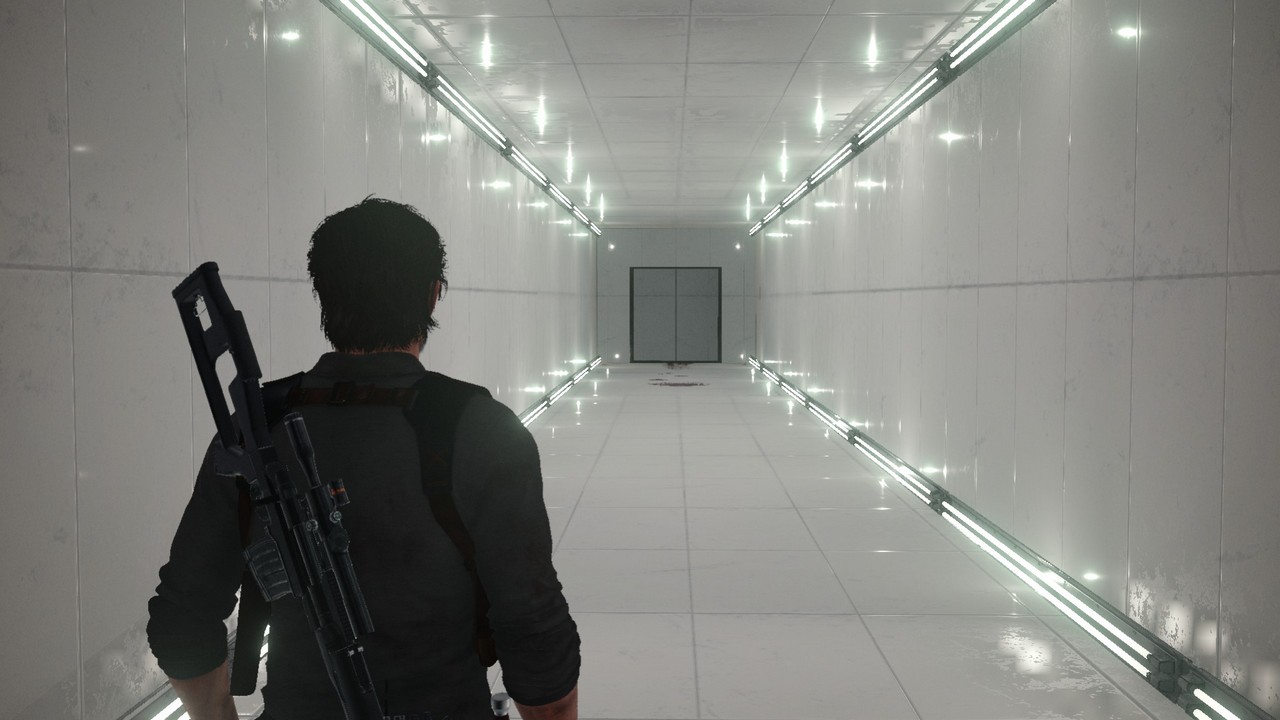
The Evil Within 2

Developer: Tango Gameworks
Publisher: Bethesda Softworks
FormatPC (Reviewed)
Release Date: 12 Oct 2017
Price: $59.99USD – Available Here

Overview

The first game came to me as a pleasant surprise. Strangely, it managed to somehow slip under my radar ever since release. It was on sale at one point last year, I saw it was developed by Shinji Mikami and that was more than enough to get me interested. What I got (after 25 hours of playtime) was a strong horror experience with a compelling and slightly convoluted story, interesting characters and creative level design. So here we are with a sequel, going back into the horror realm we barely escaped from once.

Story

As I said, the story of the first game was more complex that it should have been, yet not impossible to follow. Imagine watching some intense procedural drama, you take a 3-minute bathroom break, come back and suddenly everything shifted 3 years ahead with some new characters as a bonus. I’m happy to say the story of The Evil Within 2 is not as needlessly complicated and much easier to follow. The bad news is that you should have some past knowledge of the previous game since it throws you straight into the business. But don’t worry, I’m here to give you a quick rundown of the previous game and tell you what to expect in this one. The first one introduced us to Sebastian Castellanos, a detective of Krimson City who is suddenly pulled into a nightmarish realm while investigating a mass murder. The name of that scary place is STEM, a project made by shadowy organization Mobius, that’s capable of uniting minds as one. Sebastian finds himself in a race against time with his partners Juli Kidman & Joseph Oda to rescue whoever else is trapped there while trying to stay alive along the way. That’s it for a super simplified recap of the first game. Now, The Evil Within 2 shows Sebastian three years after those events haunted by experiences of his first plunge into STEM as well as the loss of his wife Myra and daughter Lily in a house fire. When it rains, it pours. While getting drunk in a bar, he is approached by his former partner Juli Kidman (who acted as a secret Mobius operative all along), telling him that his daughter is actually alive in STEM. She was being used as a “power core” for a new STEM creation of a town called Union. At some point, Mobius lost contact with Lily and it’s up to Sebastian to take another trip into it and save Lily. Upon entering, we see that Union is far doing fine now with Lily missing. All of the residents of Union turned into mindless monsters, aside from a few Mobius operatives still trapped there.

Gameplay

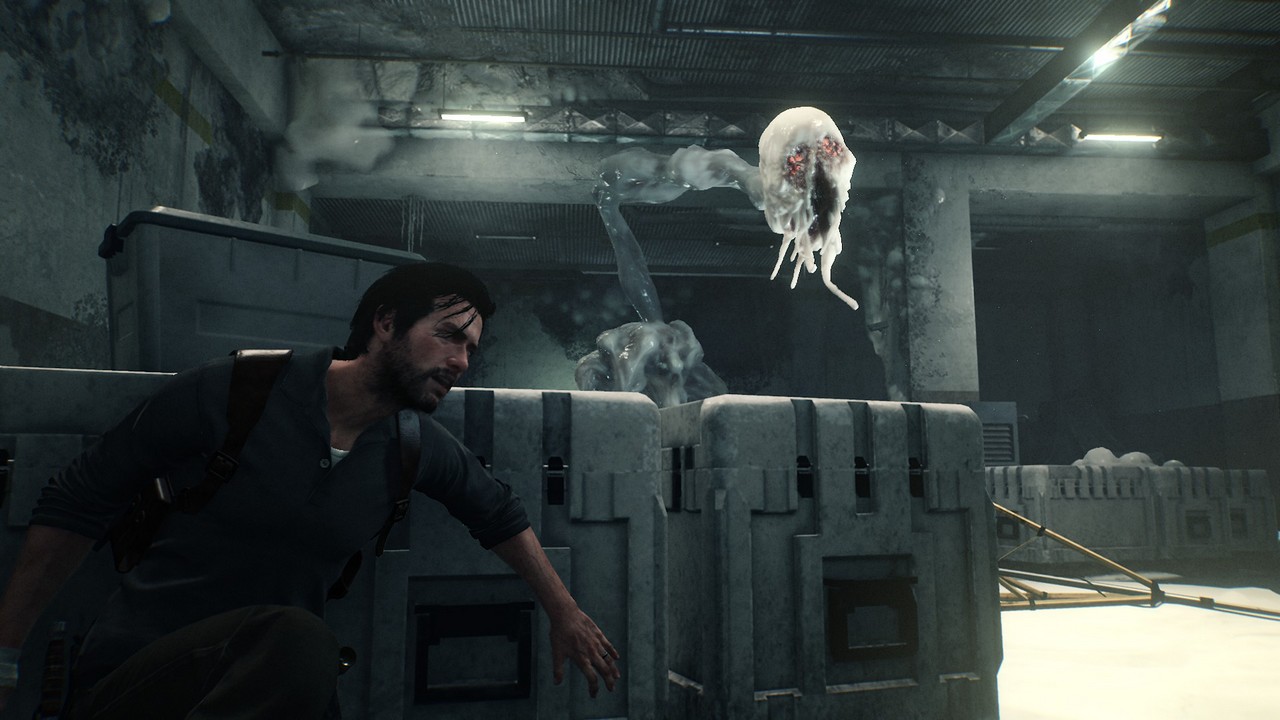
With new locations, new characters, The Evil Within 2 brings some exciting (and fun) gameplay features into the mix. It includes an improved cover system, new enemies, resource crafting and the best part – the addition of semi-open world in the game, with far more liberty to explore. You see, Union is a pretty big place. There are live Mobius operatives to find with their own safe houses (pretty useful thing). Then we also have dead ones but with ammo and crafting materials they left behind (also super useful). And from time to time, you might get an offer from someone to finish a side mission for them and get rewarded with a unique weapon or something equally valuable. There’s also a lot of monsters mindlessly wandering around, which is a good opportunity for sneak kills if you’re stealthy enough. You save ammo that way and end up with free green gell upgrades so everyone wins! (well, except the monsters). Not to mention a lot of documents and other collectibles to find that helps you learn more about the Union and expand the lore of the game. A useful little thing in all that exploring is the introduction of “communicator”, a radio gadget that can pick up “resonance points”. They’re sort of audio-visual imprints left by inhabitants of Union. It also helps you find random ammo stashes throughout the city and keep track of objectives on the map.

Visuals

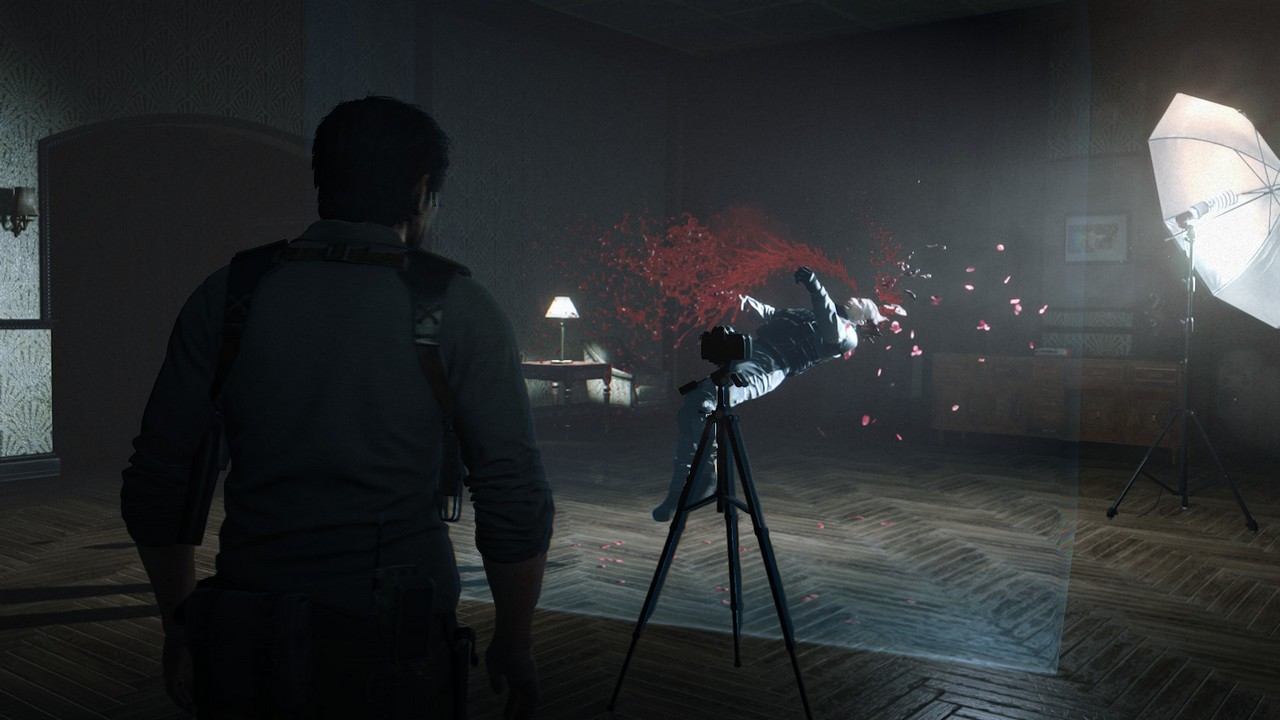
As much as the introduction of more exploration is great, some things suffered because of it. Have no fear, the visual aspect is still astounding with an amazing level design but there’s not as much tension compared to the first game. Most fear and horror is present in closed areas and during scripted sections but the open world of Union only looks scary now. Carefully sneaking around and thinning down enemies slowly turns the game at those section from a pure horror game to an action game with horror elements. There is one point later in the game where everything in Union is on fire so it looks like broad daylight. It’s not The Evil Within I got used to but at the same time that’s not a bad thing. It lost a bit on the visual horror front but managed to introduce a lot of fresh takes on every other aspect.

Audio

However, what lacks in Evil Within 2 in horror angle of the visuals, it sure makes up for it in the audio department. I’m going to be super serious now: this game was made to be played with some quality headphones or a surround system. There’s not much music in the game but the sound effects are guaranteed to send chills down your spine. They’re always there to make you feel paranoid and keep checking every tight space. Something as simple as a gust of wind while you’re going through the Union can make you run into the nearest bush and hide expecting for some monstrosity to appear. Instead of resorting to cheap jump scares, the audio in Evil Within 2 uses every second to leave you with a constant sense of dread and anxiety.

Overall

I respect The Evil Within 2 for not shying away to bring something new to the table. It did not play safe and the results more than satisfying. We now have more freedom and it would be a shame to not use that opportunity to explore every corner of Union. The characters are more fleshed out and the sequel also has something I didn’t expect. An improved and emotionally charged story.  Easier to follow and far more engaging than the original. But most importantly, by not holding onto the same formula, we ended with a sequel with more substance, content and last but not the least – fun. You know, that one thing that makes a game actually worth your time. So once again, everyone wins (except the monsters, of course).

Capsule Computers review guidelines can be found here.

South Park: The Fractured but Whole Review


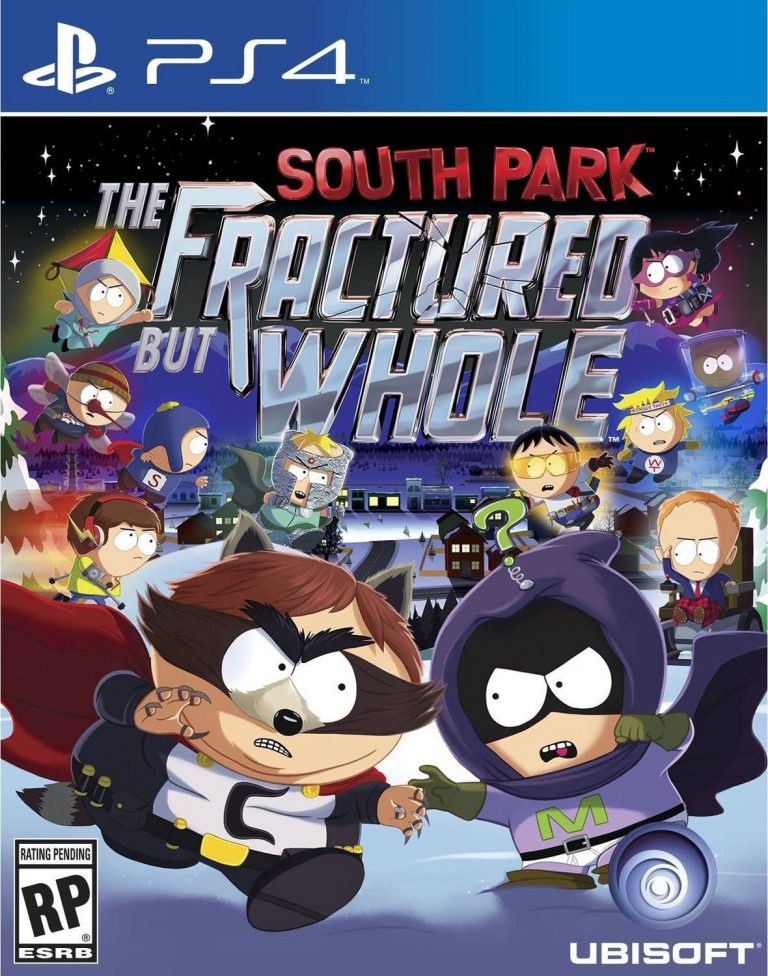
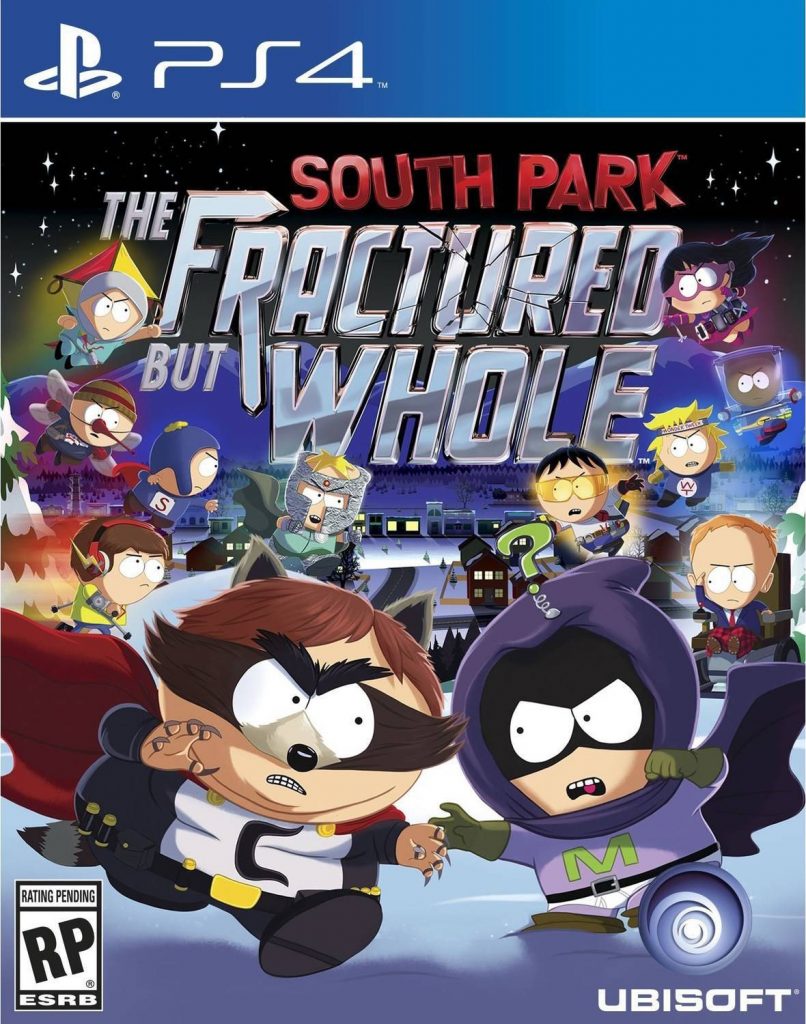
South Park: The Fractured but Whole

Developer: South Park Digital Studios, Ubisoft San Francisco
Publisher: Ubisoft
Platform: PlayStation 4, Xbox One, Windows (Reviewed)
Release Date: 17 October 2017
Price: $59.99 USD – Available Here / $89.95 AUD (PC), $99.95 AUD (Consoles) – Available Here

Video Review

Overview

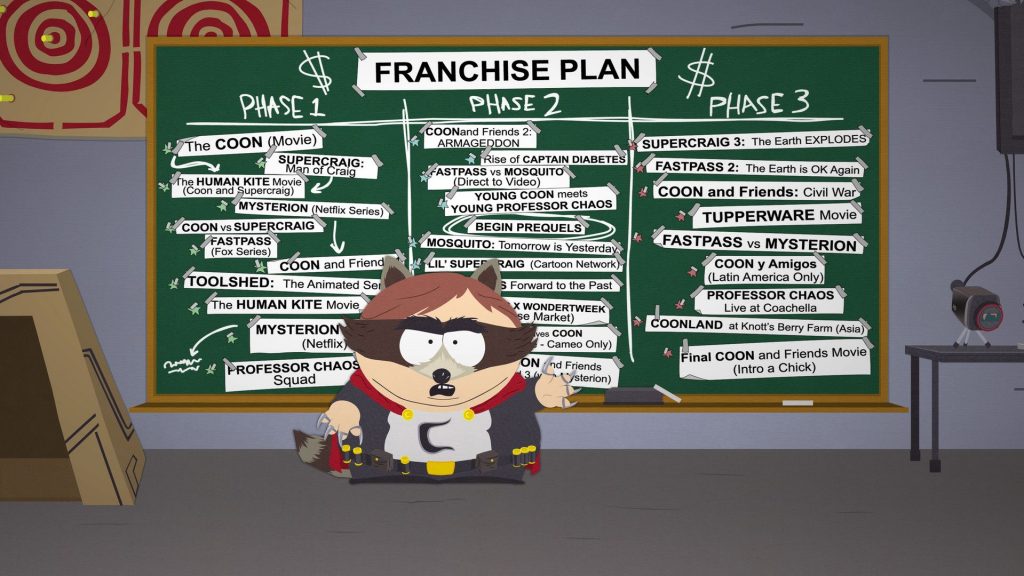
After multiple delays, the latest South Park RPG is finally here. Fantasy battles are out of fashion, and the boys of South Park have their eye on starting their very own superhero franchise to rake in the big bucks. It’s superhero civil between Coon & Friends and the Freedom Pals as the New Kid takes on the role of the farting vigilante that is destined to save South Park.

Story

South Park: The Fractured but Whole is essentially an interactive South Park movie. The script won’t win any new converts to the series, but it is brilliantly written. The dialogue is sharp and pays tributes to all the video game and superhero tropes. In true South Park fashion, the humour is crass with plenty of toilet humour. Yet at the same time, anyone willing to drill deeper into the story will be rewarded with incredibly smart writing. I am impressed with the thought that has gone into creating each superhero alter ego. While I may not know the characters very well from the show, the writers do an excellent job of channeling personal motivations that inspire each super hero alter ego while mixing it with a bit of South Park whimsy. A character like Captain Diabetes who turns his illness into his source of strength is serves as a great counter balance to the game’s crass humour. While many gamers may not experience it, South Park: The Fractured but Whole is likely the first narrative-based game from a major developer that actually offers the opportunity for The New Kid to identify as transgender. I am pleasantly surprised how well the writers handle the matter. They give it just enough screen time to make it relevant to The New Kid’s identity, without having transgender consume The New Kid’s entire identity. South Park: The Fractured but Whole’s social commentary extends well beyond gender, exploring themes like race, religion, addiction, parenting, and policing. There is a thoughtful and well written story tucked neatly under all the layers of pop culture references, cursing, and references to sex and bodily excretions.

Gameplay

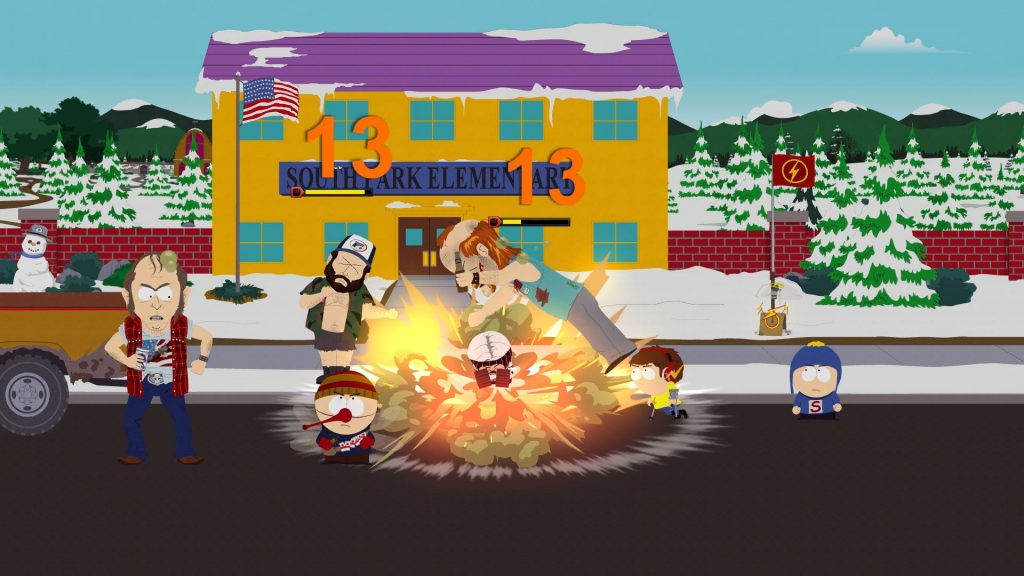
South Park: The Fractured but Whole is a turn based RPG with light tactical elements. The game mechanics are designed to be approachable enough that video game newbies who are picking up their first game because they like the show won’t be overwhelmed, but the game has just enough depth to enjoyable to most RPG veterans. Character creation is simple. Players start off by picking one of the three starting classes. Each class has three basic skills and an ultimate skill that can be used when the meter fills up in combat. Each skill is tied to the game’s basic offensive stats of brawn, brains, and spunk. Every level unlocks artifact slots. Each artifact awards a flat boost to the base character stats and one or two secondary stats. Later in the game, DNA mods lets players begin to do some general optimization for their character’s base stats. As the game progresses, players are able to multiclass, allowing them to mix and match their four skills from an ever-growing library of skills.

Combat is turn based in South Park: The Fractured but Whole. Players will need to instigate combat if they want the first strike and possibly inflict a status effect or two in at the beginning of combat. Each player character has three basic abilities that can be used at any time and an ultimate ability powered by the ultimate meter. The meter fills as players deal and take damage. Every ability has its own attack pattern and range. Like many tactical RPGs, success hinges on smart use of status effect and character positioning. South Park: The Fractured but Whole is on the more forgiving side of the spectrum since more advanced features like line of site and flanking are absent from the title. The game features a critical system that adds an extra layer of interaction. Hitting the action button when prompted will let players deal a little extra damage or heal some of the damage taken plus provide a very healthy boost to the ultimate meter. There are three levels of combat difficulty, which is completely separate from the skin colour “difficulty” setting at the beginning of the game. Personally, I find the normal difficulty to provide a decent challenge that requires some strategic thinking. While South Park: The Fractured but Whole is not the most challenging or complex RPG in existence, it is very easy to learn and still fulfilling enough to stay interesting.

Probably the most frustrating part about South Park’s combat system is the lack of variety in enemies in combat. There are different groups of enemies such as the sixth graders and the Chaos Minions. Often times, players will deal with long stretches of the game where they will see the same enemies over and over again. There are no random encounters, which helps limit some, but not all of the repetitiveness. The boss fights, however, are an absolute treat. These multi-phased battles often have some hilarious and challenging mechanics that shake up the game’s combat.

The town of South Park is your playground. As players progress through the story, more parts of the town are unlocked. How the developers have opted to progressively opens the map is one of the game’s great annoyances. There are significant chunks of the game where two adjoining neighbourhoods are available for exploration, but some sort of environmental hazard that can only be cleared later in the game blocks the direct path. Until that clearing skill is acquired, players are stuck taking a roundabout route of fast travel points and old fashioned long walks on the pavement. There is a lot of exploring to do in South Park: The Fractured but Whole. The game is packed with crafting items and collectibles like Tweak and Craig yaoi art and costume pieces to discover. There is a toilet mini-game where players need to input variety of combinations that can get downright devious at times. While the mini-game it completely optional, it is a bit too easy usually and gets repetitive very quickly. There are some solid environmental puzzles that make great use of the game’s buddy skills and fart abilities.

South Park: The Fractured but Whole relies on its crafting system to provide most of the consumables in the game. There are vendors almost everywhere in town, and every building seems to have a plethora of items to loot. It feels like there are hundreds of individual items, but they all fall under a few basic categories. For the exception of the more powerful items, most items simply need a few categories to craft versus specific items. The sheer volume of items to loot kills a bit of the excitement of looting, as it seems like emptying every drawer and cupboard in a house becomes more of a chore than a rewarding treasure hunt.

South Park: The Fractured but Whole was meant to be played on with a controller. The game is perfectly serviceable on a mouse and keyboard, but the mini-games were designed for controllers in mind. The keyboard variations to these mini-games are usually a dull afterthought in comparison.

Visuals

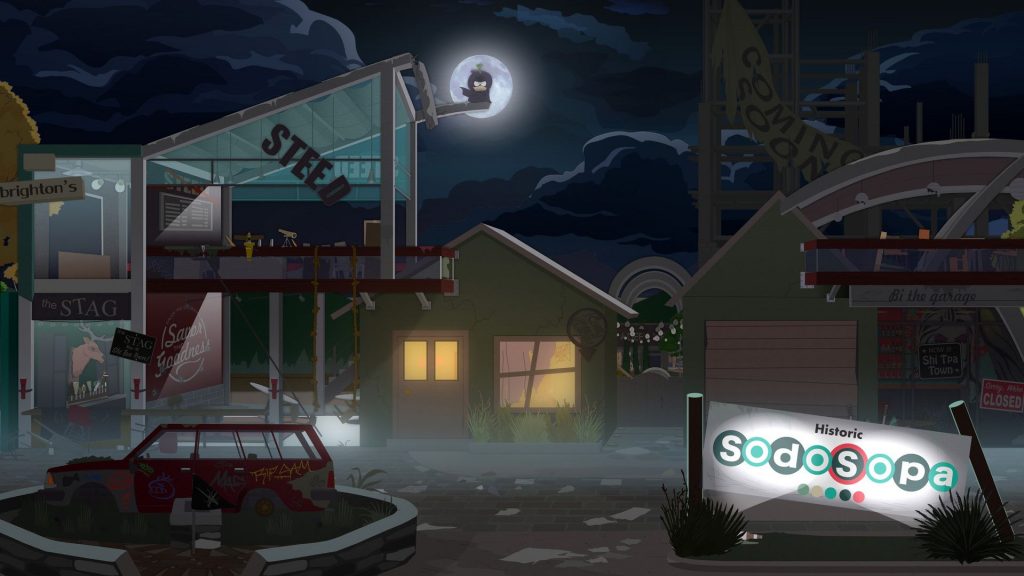
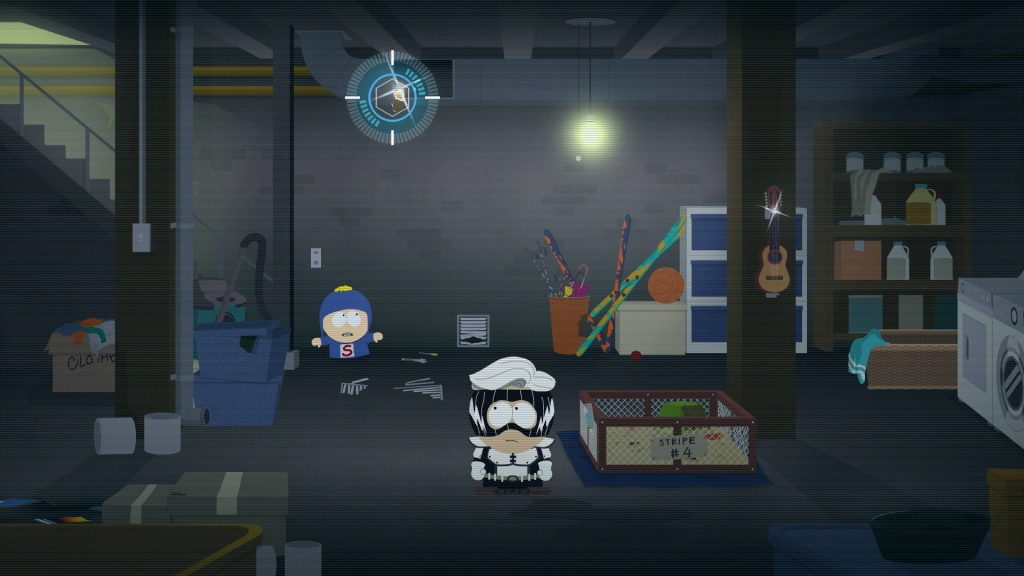
South Park: The Fractured but Whole shines visually. The game looks like it could be used to record a TV episode for the show. The animation and textures are all spot on. I really like the subtle use of the colour to signify interactive items in the environment. On the technical side, the game uses the Snowdrop engine previously used in Tom Clancy’s The Division. While South Park: The Fractured but Whole isn’t the most taxing game in the world, I didn’t encounter any issues with the game during testing.

Audio

The audio experience in South Park: The Fractured but Whole is excellent. The voice acting is perfect as expected. The sound effects are solid. While its easy to forget about the rest of the audio experience with the strong voice acting, the soundtrack is a fitting tribute to the superhero film scores.

Overall

South Park: The Fractured but Whole is a solid tactical RPG meant to cater to the widest audience possible. It is easy to learn with well executed, though slightly basic mechanics. There are a some rough patches where the gameplay feels a bit repetitive, but it is easy to forget about them with the game’s strong writing and solid audio/visual presentation.

Capsule Computers review guidelines can be found here.
New Star Wars: Battlefront II Single Player Trailer Released

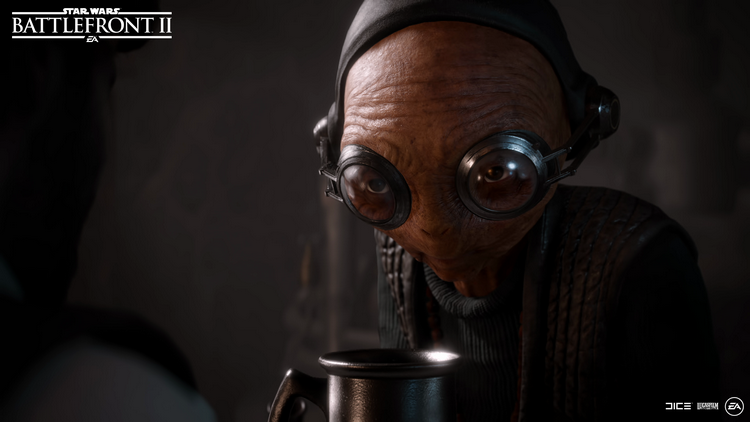
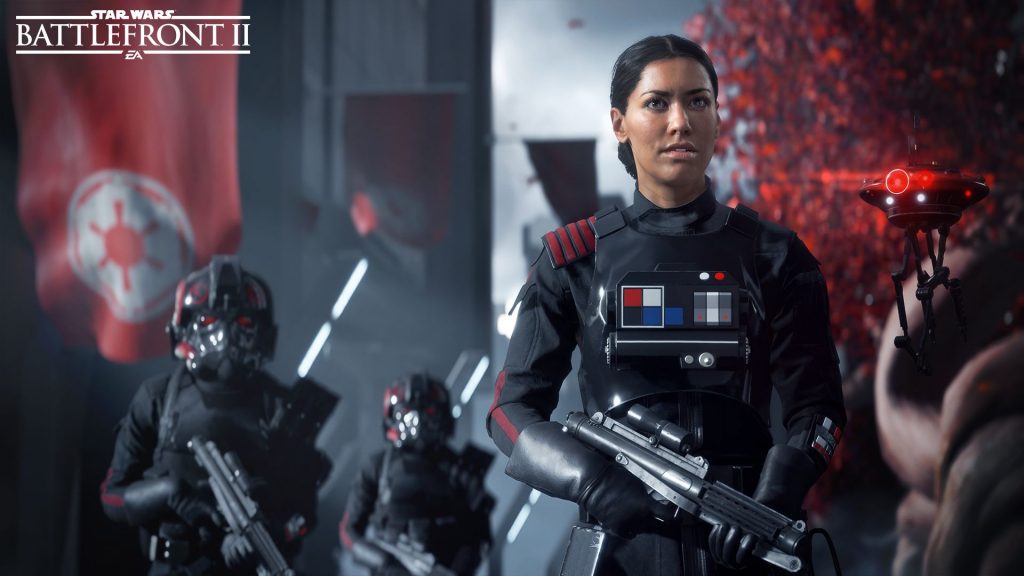
For those of us who have been feeling the itch since the recent Star Wars: The Last Jedi trailer, it’s time to get your Star Wars fix in! EA released a brand new trailer for Star Wars: Battlefront II that reveals new details about the game’s single player campaign. The trailer sets the stage for the First Order to rise from the ashes of the Empire, thirty years after the events of Star Wars: Return of the Jedi. As previously revealed, the single player campaign focuses on Iden Versio, the leader of Inferno Squad, a special forces unit of the Galactic Empire. While the trailer doesn’t give away too many plot points, it appears the remnants of the Empire are struggling for power as they engage in a bloody rampage to avenge the Emperor and the second Death Star.

Star Wars: Battlefront II is set to launch on PlayStation 4, Xbox One, and Windows on November 17, 2017.

Cuphead Review

Cuphead

Developer: Studio MDHR
Publisher: Studio MDHR
FormatPC (Reviewed)
Release Date:  29 Sep 2017
Price: $19.99USD – Available Here

Overview

So here we are. After many sleepless nights, worries about more delays, worries if I’ll be able to get past the tutorial – Cuphead is finally here! At this point, everyone has heard of the game. It grabbed the attention of many with its gorgeous art, colorful boss battles, and promising soundtrack. The only thing that’s left now is to actually play it. Which isn’t so hard at all, but progressing through the game is a different story. But let’s go one step at a time.

Story

Cuphead and his buddy Mugman were enjoying the careless life in Inkwell Isle. One day, they stumbled upon a casino, got carried away with a gambling fever while on a winning streak and that was the cue for the Devil to enter the stage. The Devil is none other than the owner of the said casino so he challenged them to one more game with stakes raised this time. “If you win, you get everything that’s in this casino, but if you lose I take your souls” – the Devil said. Our protagonists, carried away with their streak of luck, took him up on a challenge and what do you know – they lost! However, the Devil offered them a replacement deal. He won’t take their souls if they take the soul of his debtors for him (you guessed it, these will be our boss enemies). And so their new adventure started!

Gameplay

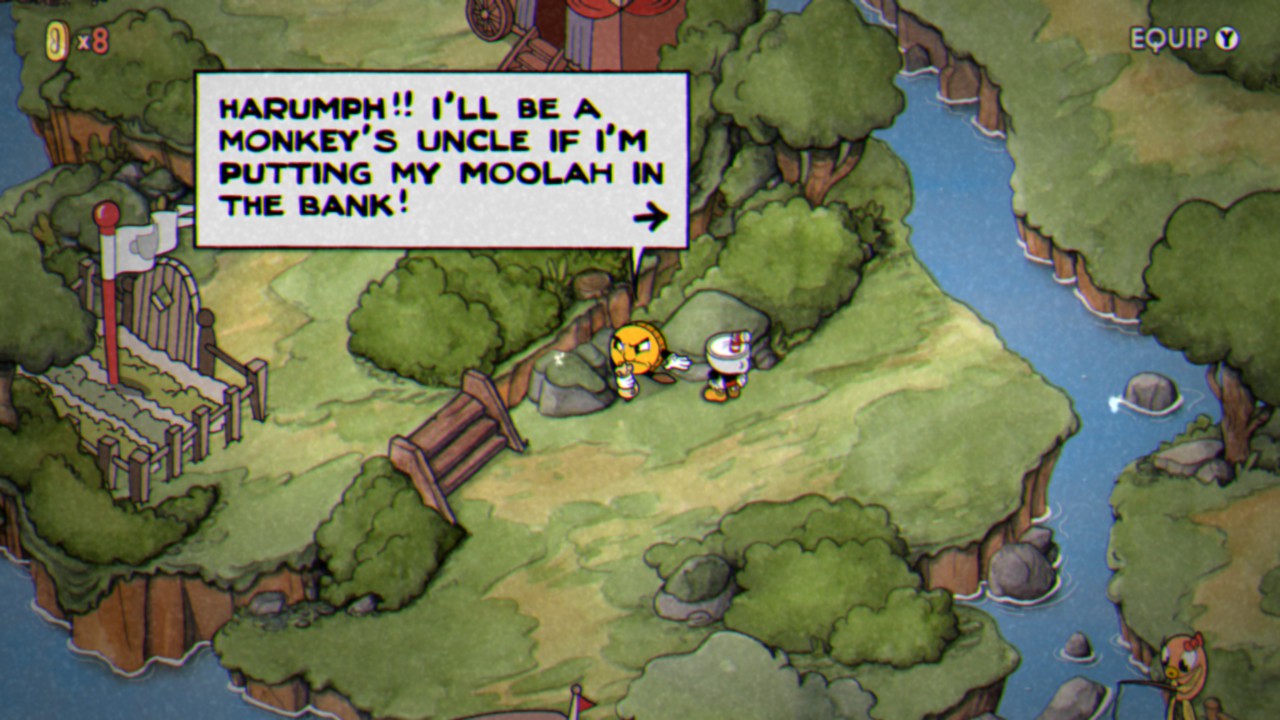
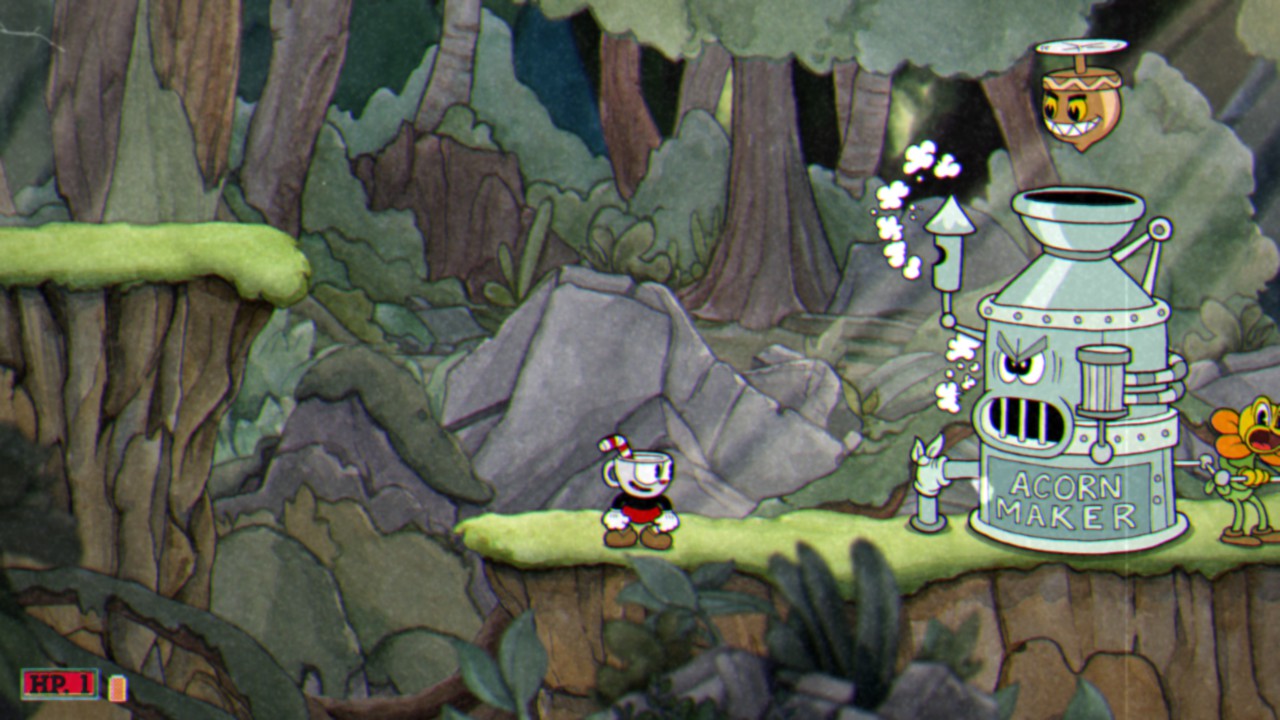
Oh boy, where to start. Well first off, everything that you’ve seen in the promo videos and gameplay demos lives up to the expectations. The levels could be split into two categories. You have the usual run ‘n’ gun parts where the goal is to get to the end of it (duh!) and grab as many coins on your way. There aren’t a whole lot of them, maximum five per level but you need as much as you can if you intend to buy new skills and powers in the shop. What’s interesting about those run ‘n’ gun sections is that they’re all completely optional. The real progress in the game is done through the boss fights. Before starting each, you can choose between simple and regular difficulty. Don’t let the name “simple” fool you, it’s still pretty easy to die there (regardless of the difficulty, you always have 3 hit points available and after that, it’s game over). The only difference is that in regular mode, bosses have one extra stage, usually the most difficult one. Taking down all the bosses in regular mode is kind of mandatory too, since only that way you can get soul contracts and each of them is necessary in order to face the final boss. So in some way, you can view the simple mode as a “practice” for the real thing.

Visuals

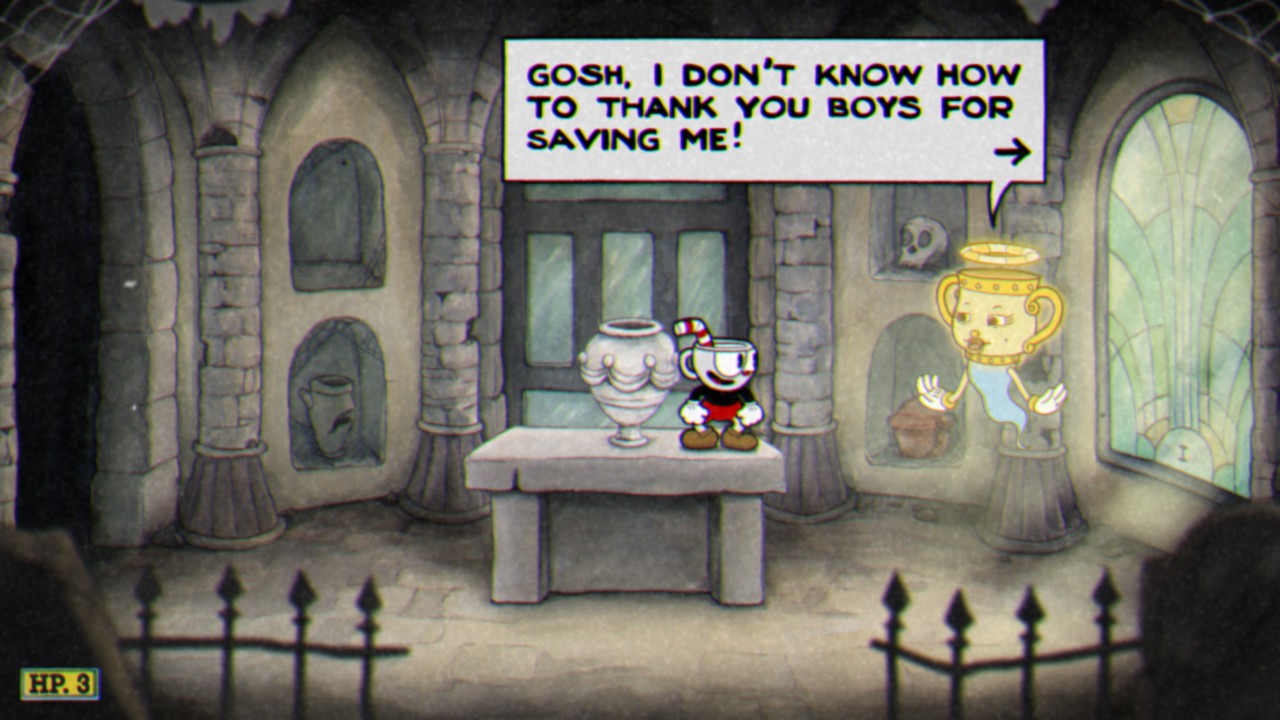
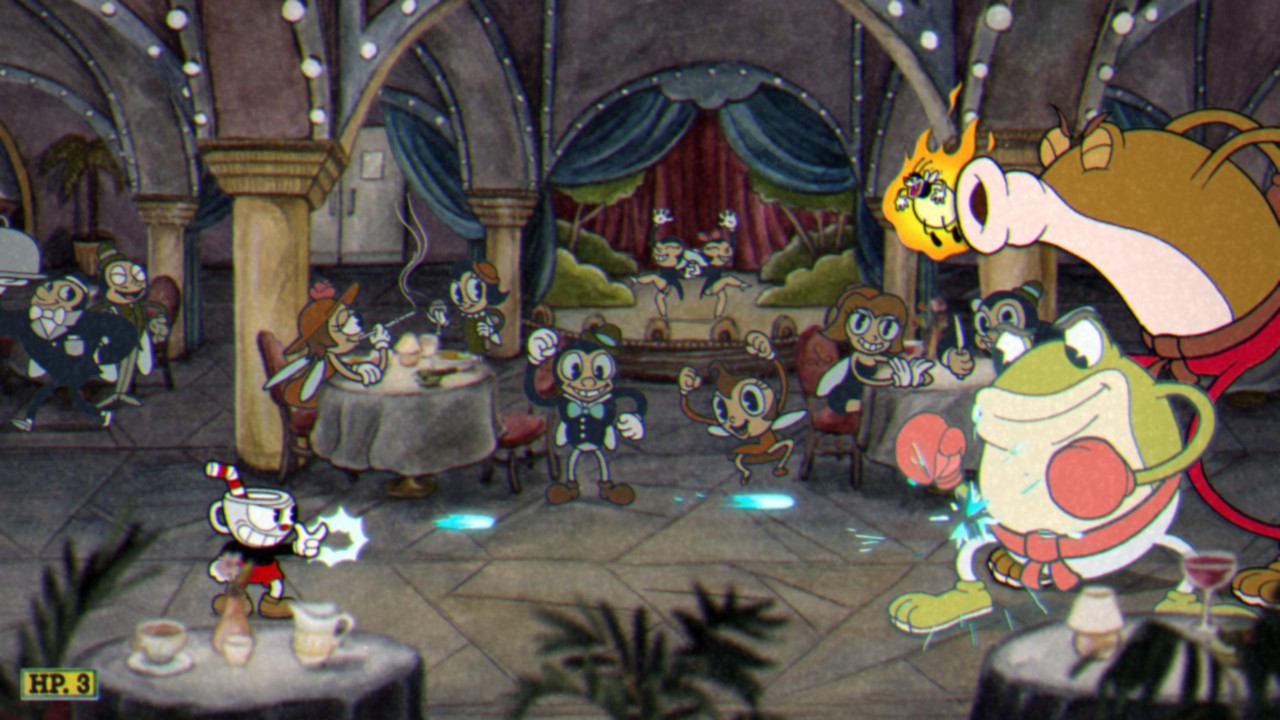
This is the point where instead of writing anything, I’d just post perhaps 50 screenshots here and let you see for yourself how amazing everything is. Every frame in Cuphead has been hand drawn and what that means exactly? Show it to someone who has never heard or seen the game and they would have serious time recognizing that it is a game, instead of a real cartoon. You can’t even get mad at dying often in Cuphead (and trust me, you will!) since there’s just so much detail in the background, on enemies, on bosses, world map…..nothing but admiration.

Audio

One thing that Studio MDHR pointed out during the development is that the music in Cuphead was “recorded live with the help of 42 musicians including a 13-piece big band orchestra, a 10-member ensemble, and various soloists and ragtime pianists. Major influences of “Cuphead’s” 1930’s jazz sound include music legends such as Duke Ellington, Cab Calloway, and Gene Krupa”. And oh my, the smoothness and class are oozing from every note, every second as you play. The whole soundtrack is something that worth of your attention outside of the game (with “Die House” aka King Dice theme being my favorite).

Overall

The truth is if you’ve been following Cuphead so far this review won’t push you away or entice you more to purchase it. Your mind has been made up a long time ago and now you’re just enjoying the written praises of some random guy on the internet (hint: that’s me). But just in case: do it. Get it. Now. The amount of love, work, and dedication poured into this game is astounding and the least you could do is to support this fine work by buying it, playing and die a whole lot in the process. Speaking of that last bit, there is something I need to address. Something that’s keeping it away from being the perfect 10. Gatekeeping. Look, the game is hard. We have all heard of that (or experienced it) by now. The question is how determined you are to push through the game. How much of the stress you’re willing to invest to prevail in the end. I know myself, but I don’t know you. Still, I can imagine a small army of people going at one point “you know, this is it for me. This is my stop”. With that said, I can’t imagine anyone being disappointed with the game whether you make it to the end or not. If there is one game you need to reward yourself in 2017, it might very well be this one. As I said above, you owe it to the devs, to support great game such as these, but most importantly – you owe it to yourself.

Capsule Computers review guidelines can be found here.

Wayne’s World Review

Wayne’s World

Studios: NBC Films
Publisher: Paramount Pictures
PlatformsCinema
Release DateOut Now 

Overview

I remember first seeing Wayne’s World back in my high school days when a friend of mine wanted to show me his favourite film. I didn’t think much of it then but I have changed a lot since then and so was willing to give it another shot when the folks at In the House put on their screening of it. So I grew out my mullet, put on some stairway and sauntered on down to George St cinemas to give the film another go.

The MCs for the evening for Jason ‘Jabba’ Davis and David ‘Quinny’ Quinn In traditional In the House style a very quick and informal with cosplay competition with the winners, a couple dressed as Wayne and Stacy, walking away with speedboating tickets. The two MCs then settled in for a chat before the screening proper started and shared various bits of trivia with the audience. The most interesting tidbit I heard came from Quinny who discussed the surprisingly true basis of Stacy’s gun rack present to Wayne and how it was actually inspired a by real life incident with Myers and his ex-partner. The kicker for me was when Myers brought that ex-partner to the film premier who then proceeded to get upset about the way she was depicted in the film as “A psycho hose beast”.

Story

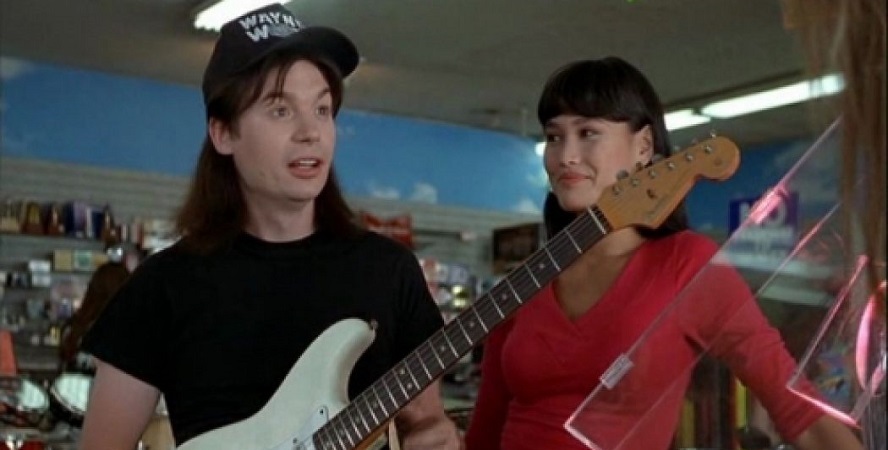
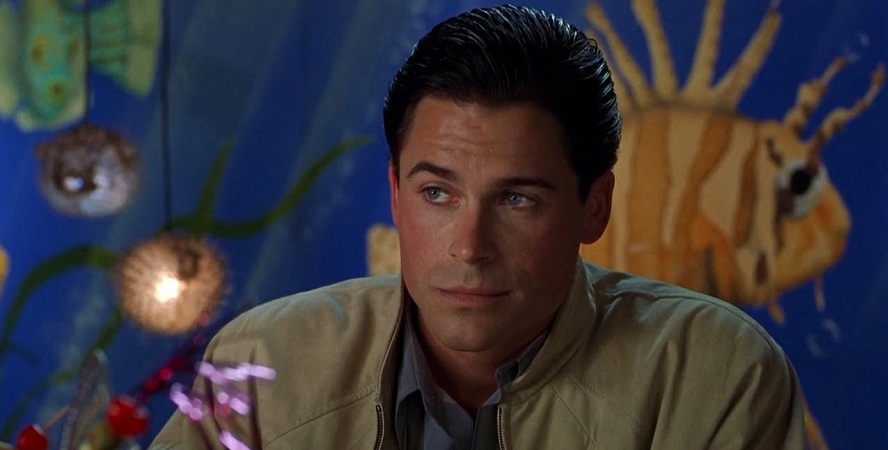
The film’s narrative follows the two hosts of a fictional public access cable tv show called Wayne’s World named Wayne (Mike Myers) and Garth (Dana Carvey). They live fairly unremarkable lives, hanging out with their friends, going to music gigs, and dreaming of the day that things finally turn their way. Through pure serendipity, they find themselves the objects of attention of a sleazy tv executive, Benjamin (Rob Lowe), who wishes to exploit their show for his own personal gain. The two hosts, star struck by the financial offer held out to them and agree to the terms of his contract without reading the fine print. Will the lure of financial success and all that comes with it get the two friends to sell out or will they be able to find a way to stop themselves from selling out completely?

To say that this movie is self-aware is an understatement; this film has gone on a journey of self-discovery and expanded it’s apprehension of what it’s place in the world is. Characters repeatedly speak to camera in asides and comment upon the action as they break the fourth wall. The film even goes so far as to use it’s self-awareness to create some of its humour with one gag involving sponsorship and product placement featuring incredibly ironic declarations of artistic integrity. This is might become tiresome in another film, but here the characters use it in such a way that it’s charming as well as absurd.

The performances by the two leads is what carries you through the narrative of this entire film which is honestly a bit threadbare. There are a lot of scenes which don’t really lead anywhere or add anything to the main plot which may grating for some people but I’d hazard that most are willing to forgive these tangential digressions because the characters are just so damn charming. Myers’s Wayne is the more assertive of the two but has a wonderful eccentric passion for life which he almost never ceases to share with the audience. Carvey’s Garth, on the other hand, walks a careful line with his character socially awkward almost always being more cute than cringeworthy; it’s no small feat, believe you me. Together, they form a beautiful onscreen chemistry that is warm and compelling to watch. It makes me envious that I don’t have more friendships like the one that Garth and Wayne share. It’s their unbridled enthusiasm for their passions which carry the movie and have earned them a place in the hearts of so many.

A problem I do have with the film’s writing is the romantic subplots with our characters expressing love (generally lust) to the camera. The adolescent way the film approaches this topic can be quite funny such as the pearl of wisdom between the characters that true love is when your partner is unfazed by your vomiting; an idiom which I find hilarious. Where the film falls short is where our protagonists make declarations of attraction to the camera and their intention for said object of attraction (namely Cassandra played by Tia Carrere) to “be mine”. The film plays this for laughs in the same vein as much of it’s metafictive humour but it does not change the fact that it’s there and it’s creepy. This is not the worst instance I’ve seen of this I’ve seen in a film by any stretch but I feel it may be pertinent for some of you to know ahead of time.

Visuals & Audio

The film’s direction follows in the story’s metafictive style and approach but is otherwise not particularly remarkable. The film uses it’s nature as a film to form a large parts of its jokes which it highlights without fail at almost every turn. If a special effect or scene transition is used, it’s generally commented upon and used for comedic effect. It all fits in with the film’s self-aware charm but doesn’t really do much to change the fact that it’s camera work and cinematography is largely quite pedestrian otherwise.

For a film which ostensibly has two metalheads as its’ protagonists, the film is surprisingly sparse when it comes to the actual presence of music itself. Except for one notorious scene of the characters headbanging to Queen’s Bohemian Rhapsody, there aren’t really any particularly noteworthy musical moments which had stuck with me. That being said, there’s no real shortcoming here either; it’s just unremarkable overall.

Overall

Overall, I enjoyed this film and was happy to see it up on the big screen. Our protagonists and their relationship is what makes this film such a cult classic but they still have their problems. The film extensive use of self-aware humour is joke it is able to use even with it’s visual direction without wearing the joke thin. Unfortunately, the film’s soundtrack does not maintain the unique success of it’s writing and is ultimately dull and uninteresting (with one notable headbanging exception). It’s a fun little film which was enjoyable while it lasted but I don’t see myself returning for repeat viewings any time soon.

For other films which In The House is screening, feel free to check out their schedule for the next season here.
Capsule Computers review guidelines can be found here.

EA to Shut Down Visceral Games

0

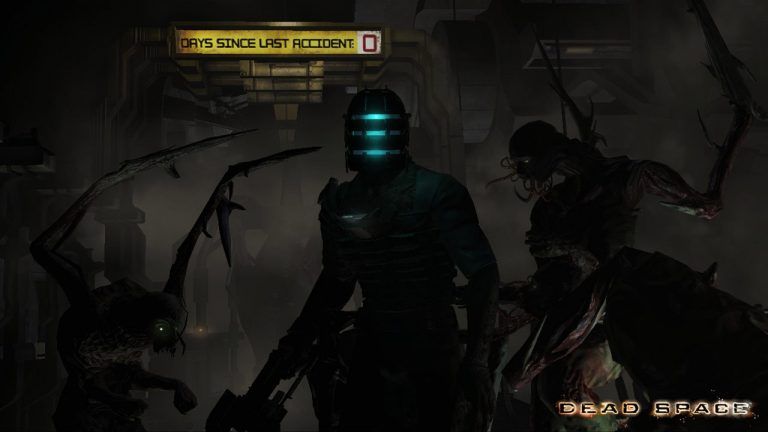
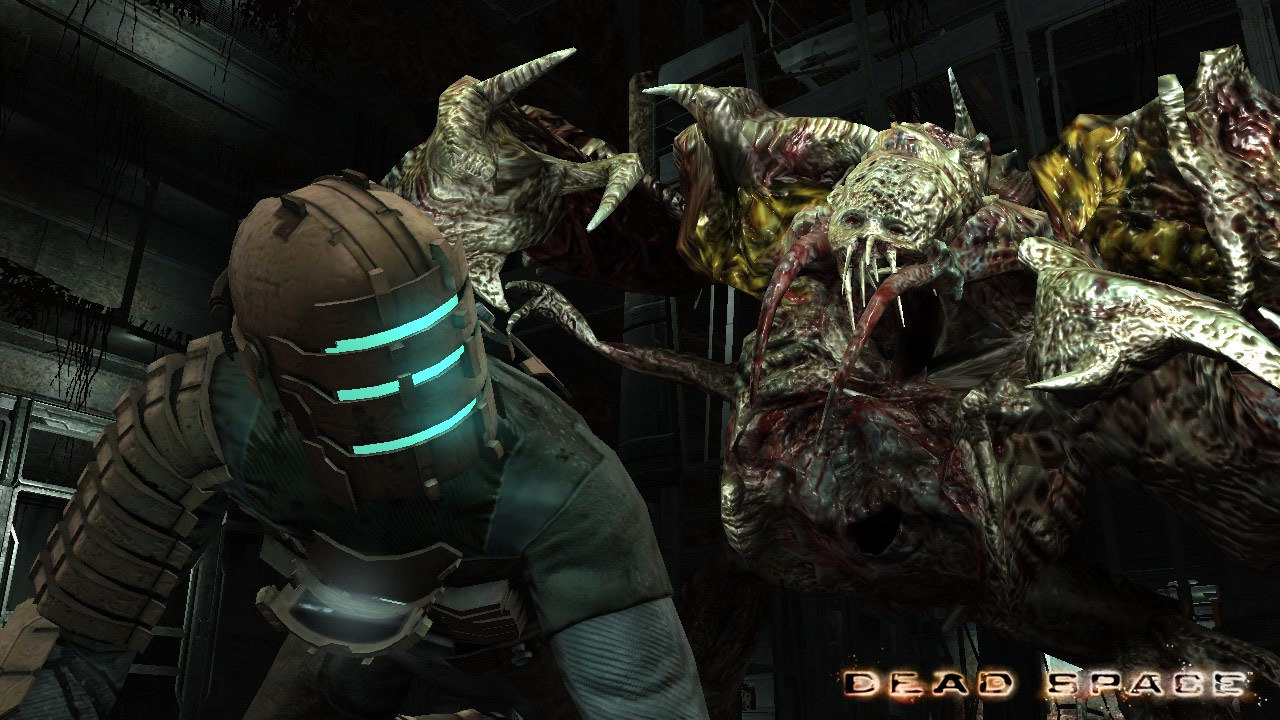
If you happened to be a fan of the Dead Space series, Dante’s Inferno, and the many other games that Visceral Games has worked on in the past, including the previously announced Star Wars title, then we have some bad news for you. Electronic Arts has announced that it will be closing the Visceral Games studio and will be sending “as many of the team as possible” to other projects being worked on by the company.

EA went on to say that they will be shifting the focus of the Star Wars game from being a “story-based, linear adventure” to one that will likely displease many as it will now be a “broader experience.” Thanks to this shift in developer the title, which was originally going to be released sometime in 2019, will now be released at an unannounced time that EA will detail in the future.

Blue Reflection Review

Blue Reflection

Developer: Gust
Publisher: Koei Tecmo
Platforms: PC, PlayStation 4 (Reviewed)
Release Date: Available Now
Price: $59.99 USD – Available Here

Overview

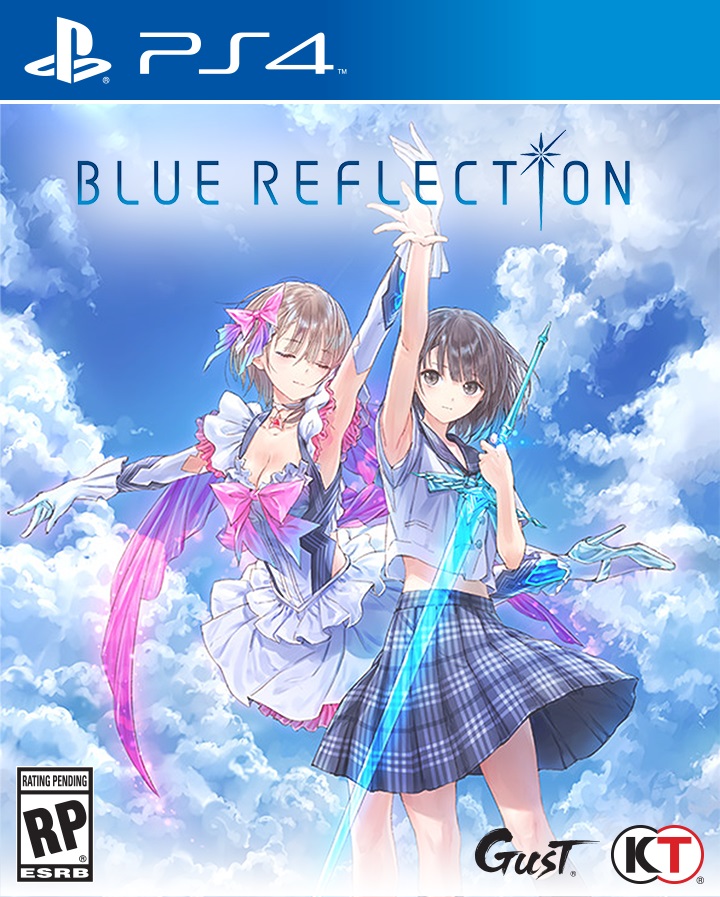
Entering high school is generally a difficult time for a teenager. Not only is the pressure to think about your future at an all-time high but certain people already expect you to act like an adult and leave childhood behind. Combine this with psychological changes that many go through as they mature and you can have numerous problems, which is why so high school is one of the most commonly used settings in Japanese media. Blue Reflection happens to be the latest game to try its hand at tackling a high school life but this time it does so a bit differently. Does that make this JRPG worth your time?

Story

Hinako Shirai has always dreamed of being a world class ballet dancer and thanks to her constant practice, she was well on her way to achieving her dream. At least she would have if not for an accident damaged her knee enough that she could no longer dance, though apparently navigating a school with multiple stories is still quite easy for her. Devastated that her life goal has crumbled away, Hinako was left with little hope for the future to the point that she ended up attending a brand new all-girls high school called Hoshinomiya.

It doesn’t take long though for Hinako to end up seeing someone who recognizes her from middle-school but that is when things get strange. As she speaks with this cheerful girl a strange aura appears around her, forcing Hinako into an alternate reality where not only the world around them is different but her leg injury is non-existant. All isn’t great though as a strange creature begins to attack her, but with the help of two mysterious voices Hinako transforms into a magical girl and slays the creature only to be transported back to the normal world as if nothing had happened.
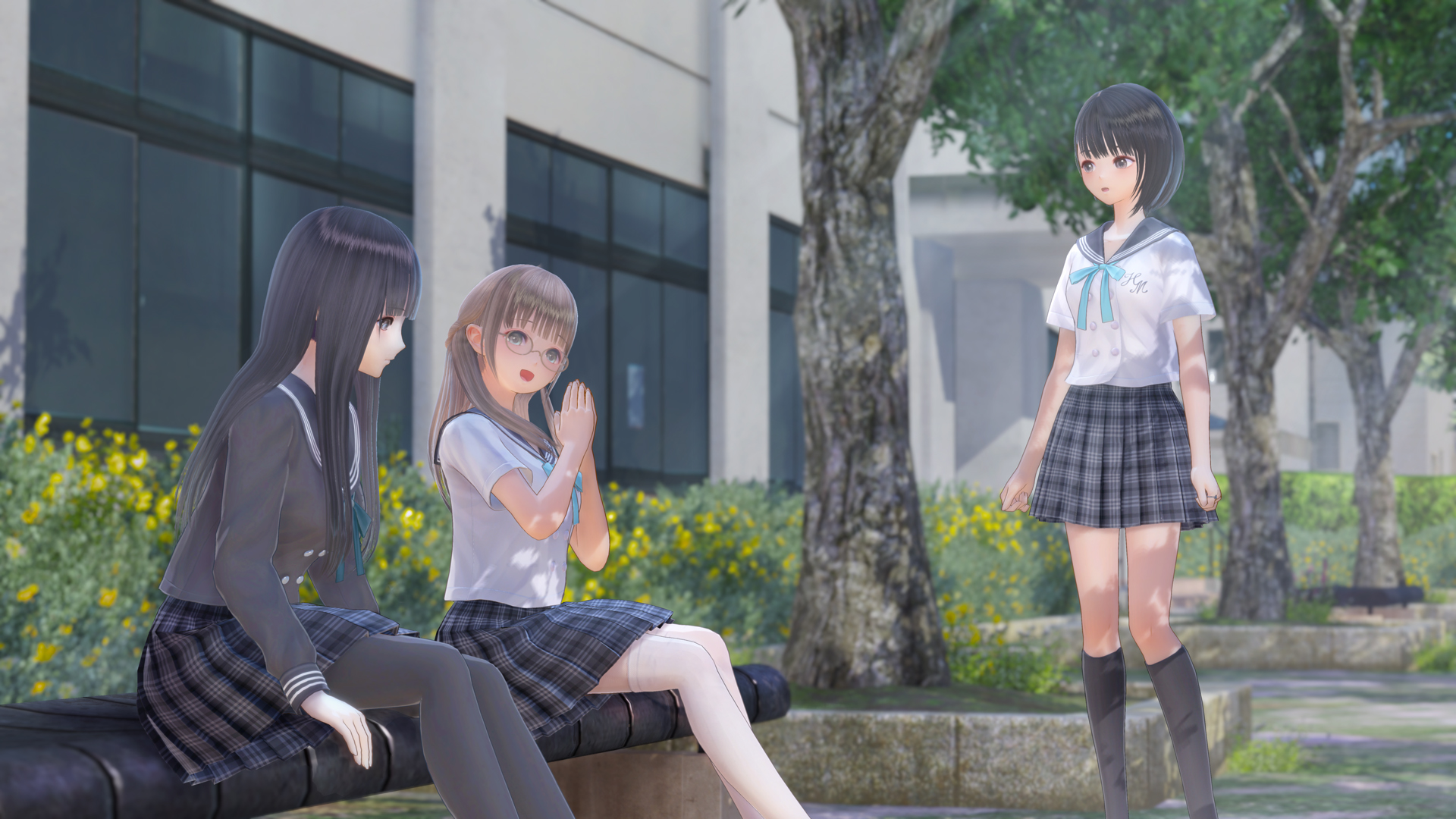
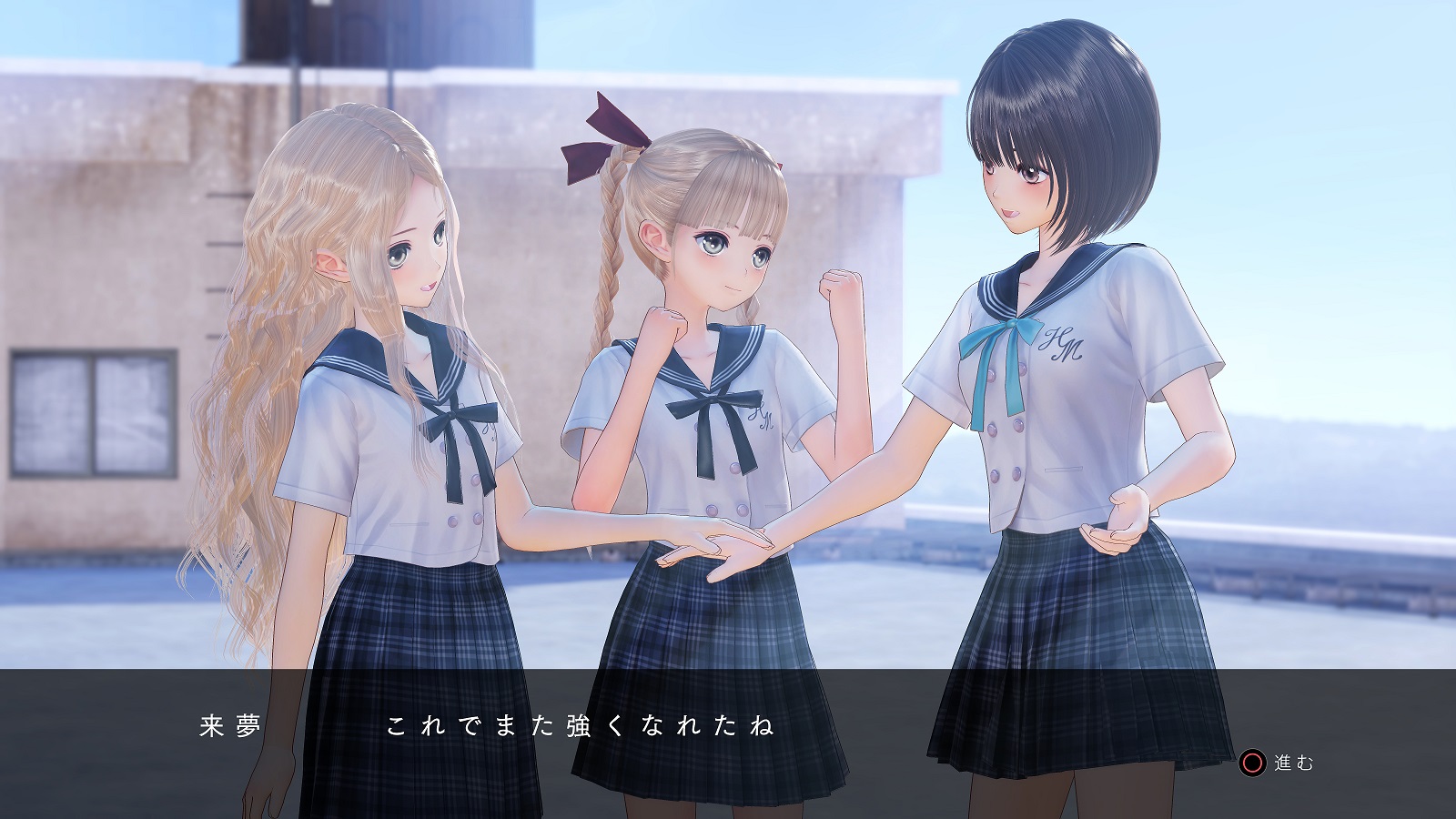
All becomes a bit clearer as she meets with fellow class mates Yuzu and Lime who nickname her Hina and explain to her that they, as well as Hina now, are known as Reflectors. These people are capable of entering into a different layer of reality called the Common which is formed by the collective minds of humanity. Here the Reflectors battle against various creatures and against powerful foes known as Sephirot that can bring destruction to the normal world if left unchecked. They can also help quell the emotions of those around them when they begin to run wild and lead them towards death by gathering fragments of their emotions and help understand the owner better, allowing them to grow closer together as friends and allies. As an added benefit for Hina, Yuzu and Lime state that if she manages to put a stop to the Sephirot completely then her greatest wish may just be granted.

The way that the story is designed happens to be one of the greatest strengths of Blue Reflection. Players will interact with their fellow classmates during their free time to help develop Hina’s relationships with the rest of the girls. Thanks to the wide array of girls you will meet and the issues that they are dealing with there are quite a few developments here that may strike a chord with players who struggled with certain issues as they grew up and thankfully these issues are, for the most part, handled well as Hina tries to help others and grows as a person.
That being said, don’t expect too many major twists to be thrown your way as you make your way through the game. Certain developments are a bit unexpected but for the most part there are plenty of standard magical girl clichés worked into the game and in a few ways this even works into the gameplay elements as well as certain abilities and powering up requires friendship, not fighting, to grow as a person.

Gameplay

In many ways Blue Reflection draws upon certain other titles that feature a clear split between worlds where the characters will battle in one and interact with characters in another. In the normal world Hina can travel around the school and talk with her fellow classmates and teachers, purchase items from the school store, go out with friends to see a movie or eat out, and of course just take it easy if she feels like. There are even little apps such as FreeSpace that allows for extra communication with the characters and a fun little pet-raising mini-game app to sink time into as well. This allows for the school side of things to be the main driving force for at least character development since new events are revealed as your friendship meter is raised with each girl.

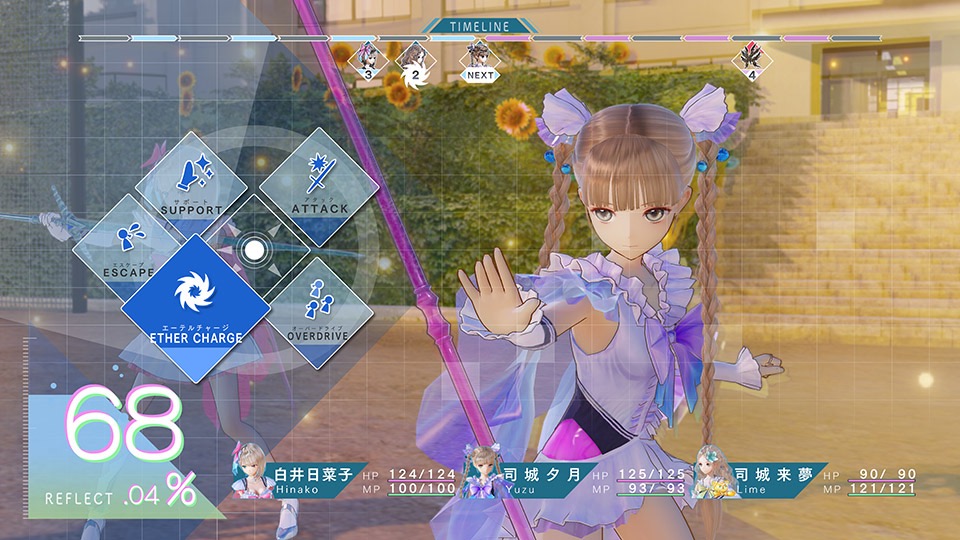
On the other side of things we have the Common, where Hina, Lime, and Yuzu will enter into their magical girl forms and do battle against the creatures that exist there. It is worth noting that players will only ever play with these three as the main fighters though other girls do become available as assists that will provide various boosts as you make your way through the game. In the Common enemies roam around the open field and can be attacked ahead of time for advantage and once combat is entered you will take part in a turn based combat system that relies on character stats and delaying skills to push back your opponents’ turn on the timeline.
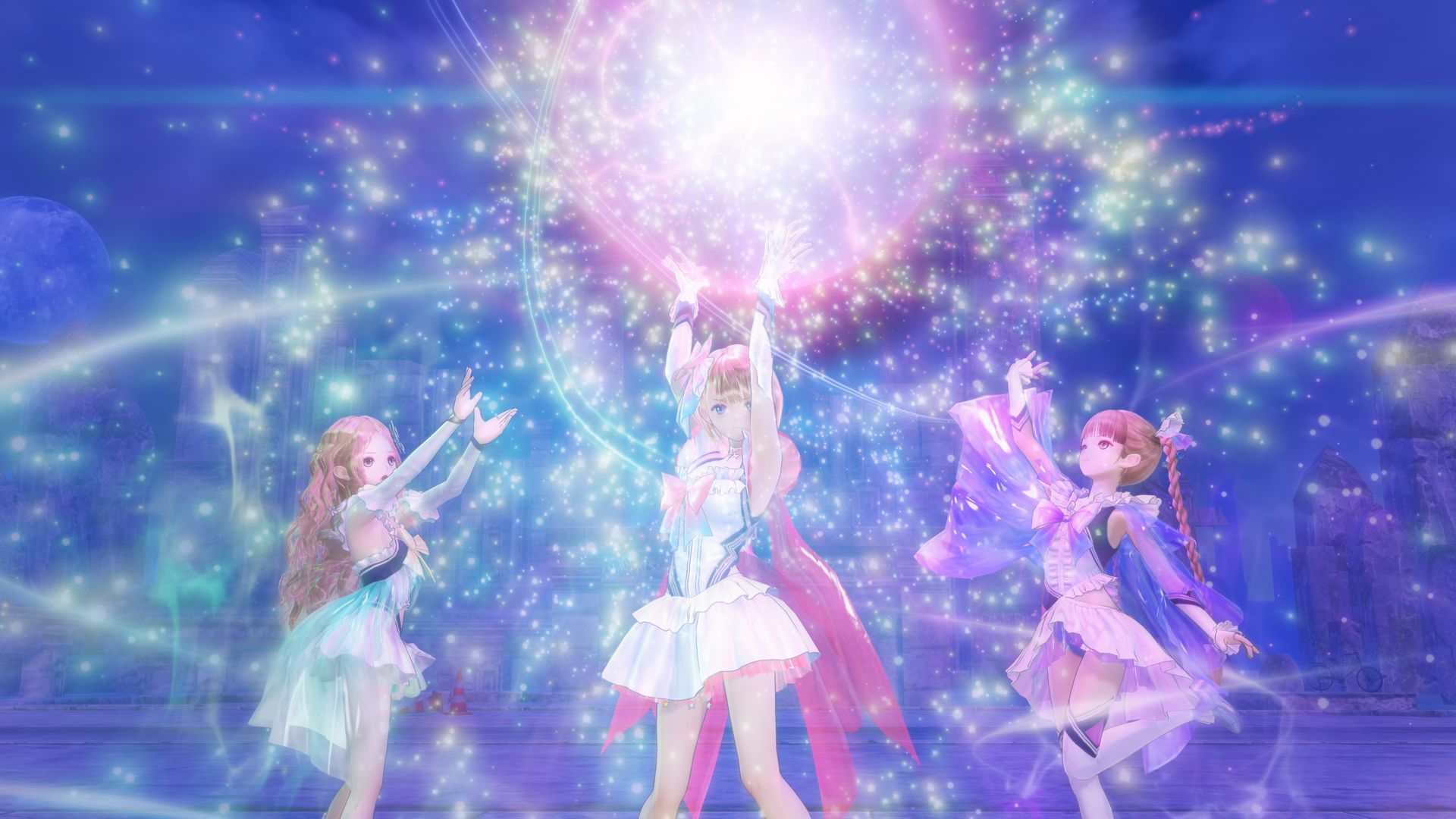
The combat is handled fairly typically with the girls all having unique support skills, special attacks, and if your “Reflect” gauge happens to be full then you can perform two actions in the same move. These are the basics of combat as it is fairly easy to learn and manage, to the point that playing on normal difficulty left almost every battle being a complete breeze. It is worth noting that even exploring the Common will leave you with very little to see as most of the areas tend to be rather small. That being said, the items you can find from fights and exploring the Common can be used to enhance one of the few ways to strengthen the girls.

What does allow for a unique experience comes in the form of how the Reflectors power up. One element comes from the “Fragments” of emotions that the girls obtain in the Common when clearing up the troubles of their classmates. These can be equipped to the girls to enhance skills and provide various passive effects in combat. The other happens to be the way the girls actually get stronger. Rather than earning experience points from fighting the girls will instead be given ability points when they complete certain tasks. This can be applied to attributes such as Attack, Defense, Support, and Technique and players are even shown ahead of time what skills girls will learn when their points are distributed in certain ways.

Visuals & Audio

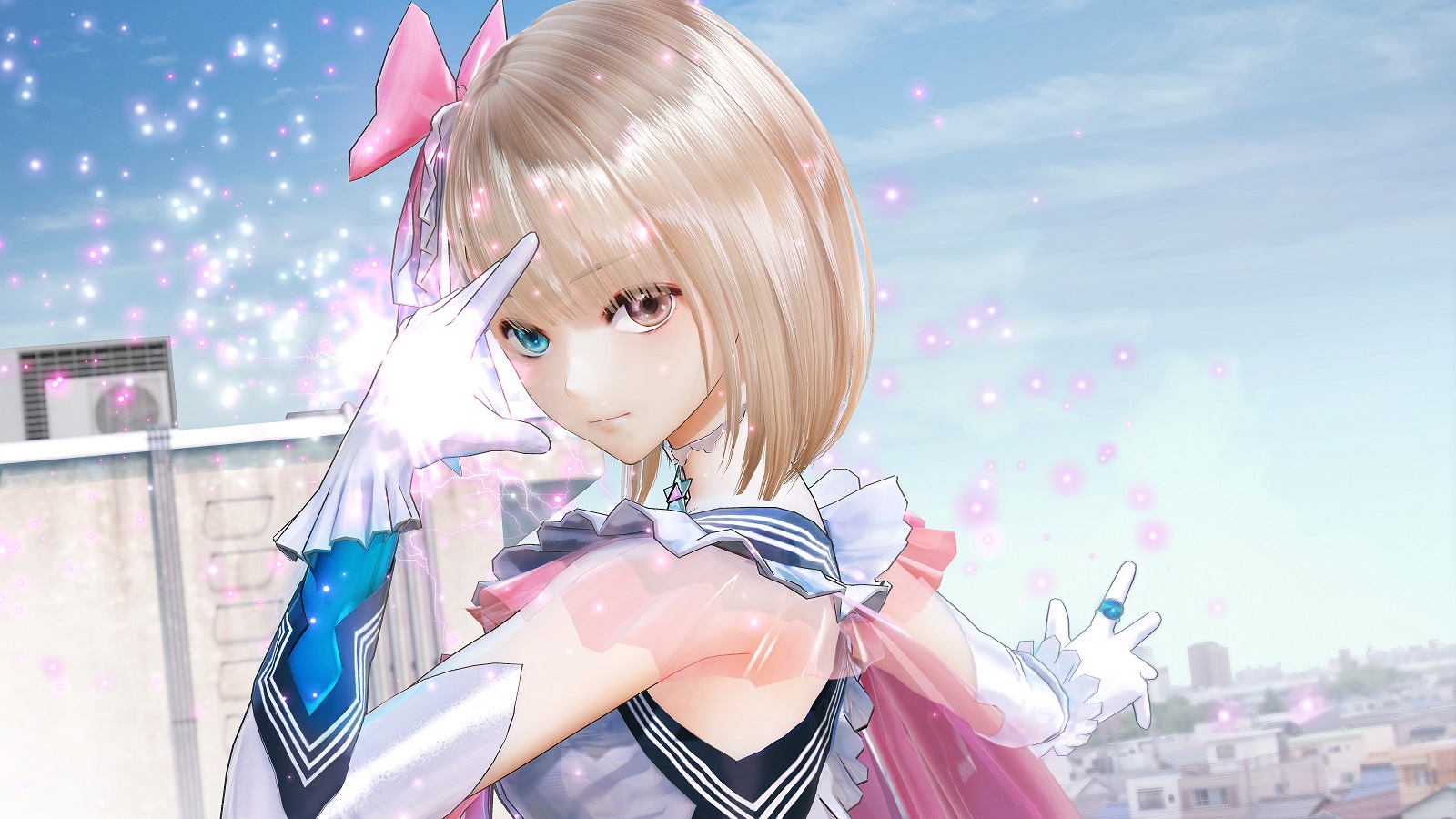
One of the best elements in Blue Reflection is just how gorgeous this game looks due in part to the art style the developers have implemented into the game. The art is unmistakably like some of Gust’s classic works with the characters being highly detailed when they enter combat in their magical girl uniforms and the simple character designs that straddle the anime line that is used for school segments. This works well considering the high amount of cutscenes that are worked into the game as they are all handled with a cinematic style that allows for players to feel like they are watching a character drama and this is handled perfectly. In fact, even the user interface for combat and enhancing your characters in the real world is wonderfully designed.

It is worth noting that thanks to Blue Reflection only featuring Japanese voice work that the game is subtitled only and unfortunately the translation work is a bit rough. The meaning of the work is conveyed just fine but it definitely needed to be combed over a bit more as numerous sentences just end up sounding completely wrong and even a few misspellings appear here and there. At one point Lime’s name is even translated as Raimu rather than the localization that the company had went for up to that point.

The voice acting is kept as Japanese only but this is for the best as the heavily Japanese aesthetic would seem a bit odd when paired with English voice actors and thankfully the Japanese cast handles their roles well. The soundtrack is another element that is exceptionally well done as there never seemed to be a song that was out of place whether it was taking part in a boss battle, exploring the school, or relaxing with Hina’s friends.

Overall

Blue Reflection can be said to be one of Gust’s best looking games in some time thanks to the soft color palette and chosen art style, pair that with an easy to understand combat system that is, unfortunately, a bit too easy to breeze past and you have a game with a fairly predictable storyline that happens to be filled with great character moments.  Though it still is a bit rough in certain areas, JRPG fans looking for something a bit different will find Blue Reflection to be a fairly simple and enjoyable experience