


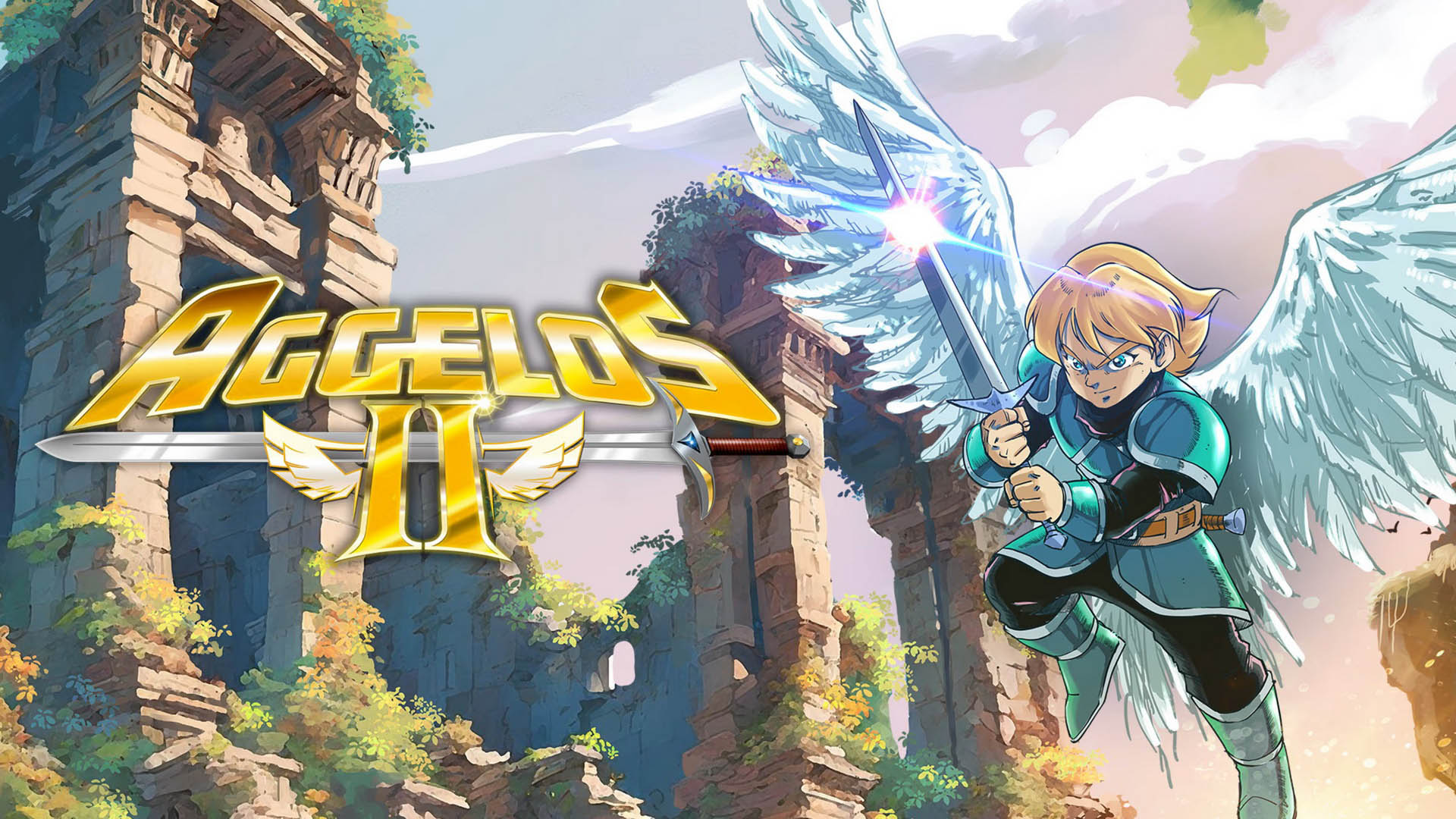
Aggelos 2
Developer: Wonderboy Bobi
Publishers: PQube, PixelHeart
Platforms: PlayStation 5, PlayStation 4, PC, Xbox Series X (Reviewed), Xbox One, Switch
Release Date: Available Now
Price: $19.99 USD – Available Here
Overview
There’s always a bit of charm when a modern developer works on crafting a retro focused project and after the solid success of Aggelos back in 2018, Wonderboy Bobi took their time to take the 16 bit style and jump forward a bit to some slightly smoother and refined 16 bit sprites and expand the scope of the original metroidvania immensely. Compared to the limited first version, Aggelos 2 introduces not only the powers of an angel but a devil as well, alongside both the normal realm and the dark realm, bringing players even more locations to traverse in their adventure. But are all these additions enough to bring the game to a modern age or does it drag with it issues that would have best been left in the past?
Story
Players take on the role of Aggelos, the returning angel from the first entry, to once again seek out the aid of others to try and find a way to defeat the rising forces of darkness. While Aggelos was previously able to defeat the demonic being known as “Deluge” with the help of others, the thousand years that have passed have driven a wedge in-between the celestial gods, including sending the Kingdom of Lumen and their deity into exile. In an attempt to seek aid for the coming battle, Aggelos travels to Lumen only to be shot out of the sky by dark magic, forcing him to the ground long before he is meant to reach his destination.
With only minor aid from the resident angels of Lumen, Aggelos is on his own to find a way forward and uncover the truth behind the rising demonic forces, only to find that the very being that shot him from the sky is the same one attempting to revive Deluge once more and is planning on making Aggelos an obedient demon to wage war against the gods. Thankfully for Aggelos, the attempted corruption backfires onto the warlock, imbuing the warlock temporarily with angelic care and revealing all of their plans to attack not only Lumen but other holy realms as well. At the same time, Aggelos now finds himself capable of wielding both angelic powers and demonic ones, swapping forms and able to travel between realms as need be. And it will take all of these abilities and then some to track down everything necessary to put a stop to Deluge’s revival and more.
Aggelos 2’s storyline is fairly straightforward, as one would expect from a game trying to mimic that of the retro platformers from the ‘90s. It is worth noting that while there are a number of references, including returning enemies, from the first game, it is not necessary to play it to understand what is happening here, mostly because the plot itself is self obtained and rather thin in and of itself. There are a few locations here and there where players can inspect items or talk with villagers who tend to reveal that they now fear angels rather than worship them. That being said, while there aren’t any real notable choices throughout the game, there are different endings depending on how many quest items players obtain throughout the game and track down, since many are tucked away and hidden quite thoroughly, including a few that never are pointed out directly, leaving players to wander and search the map for areas they may have missed.
Gameplay
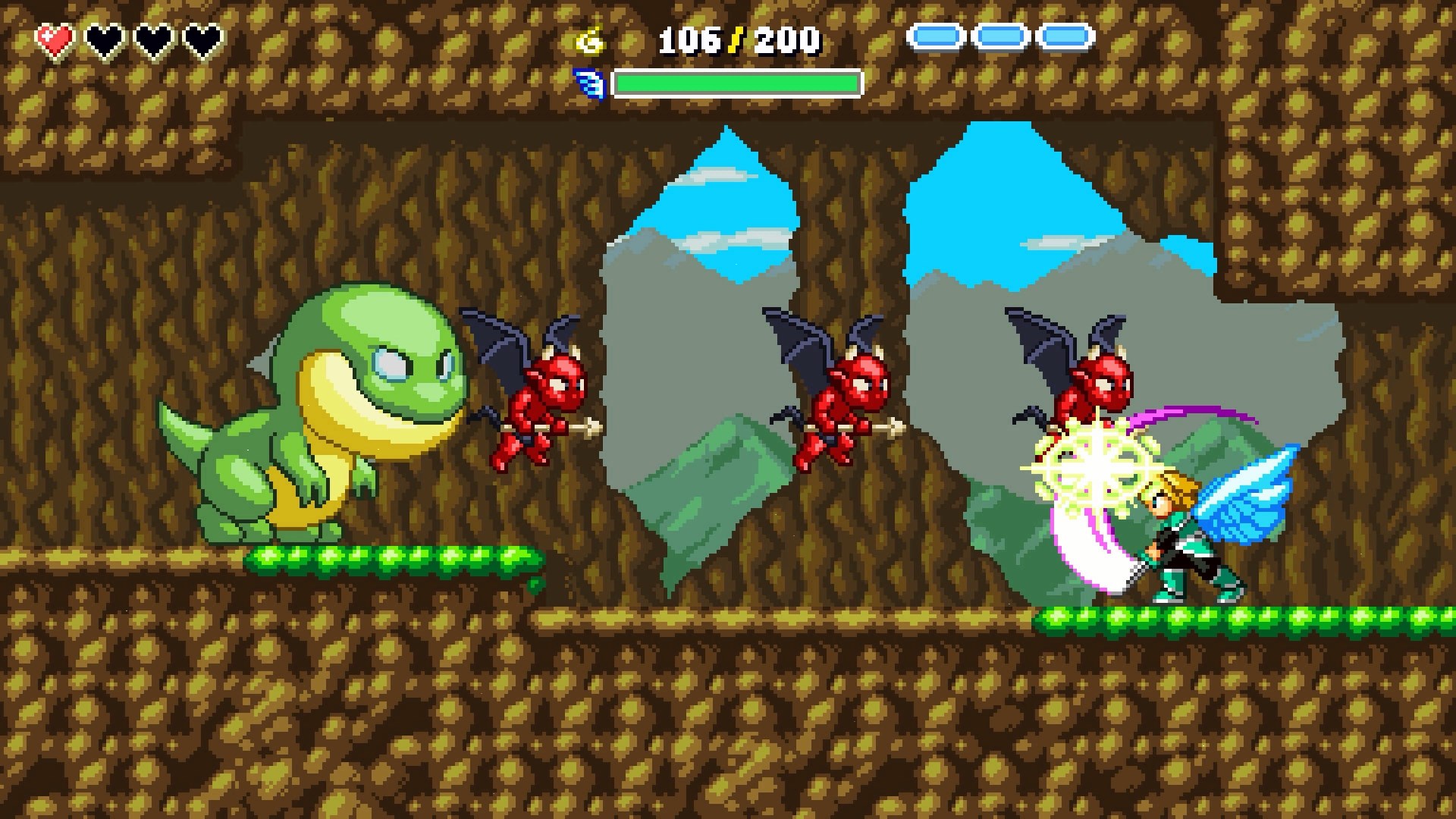
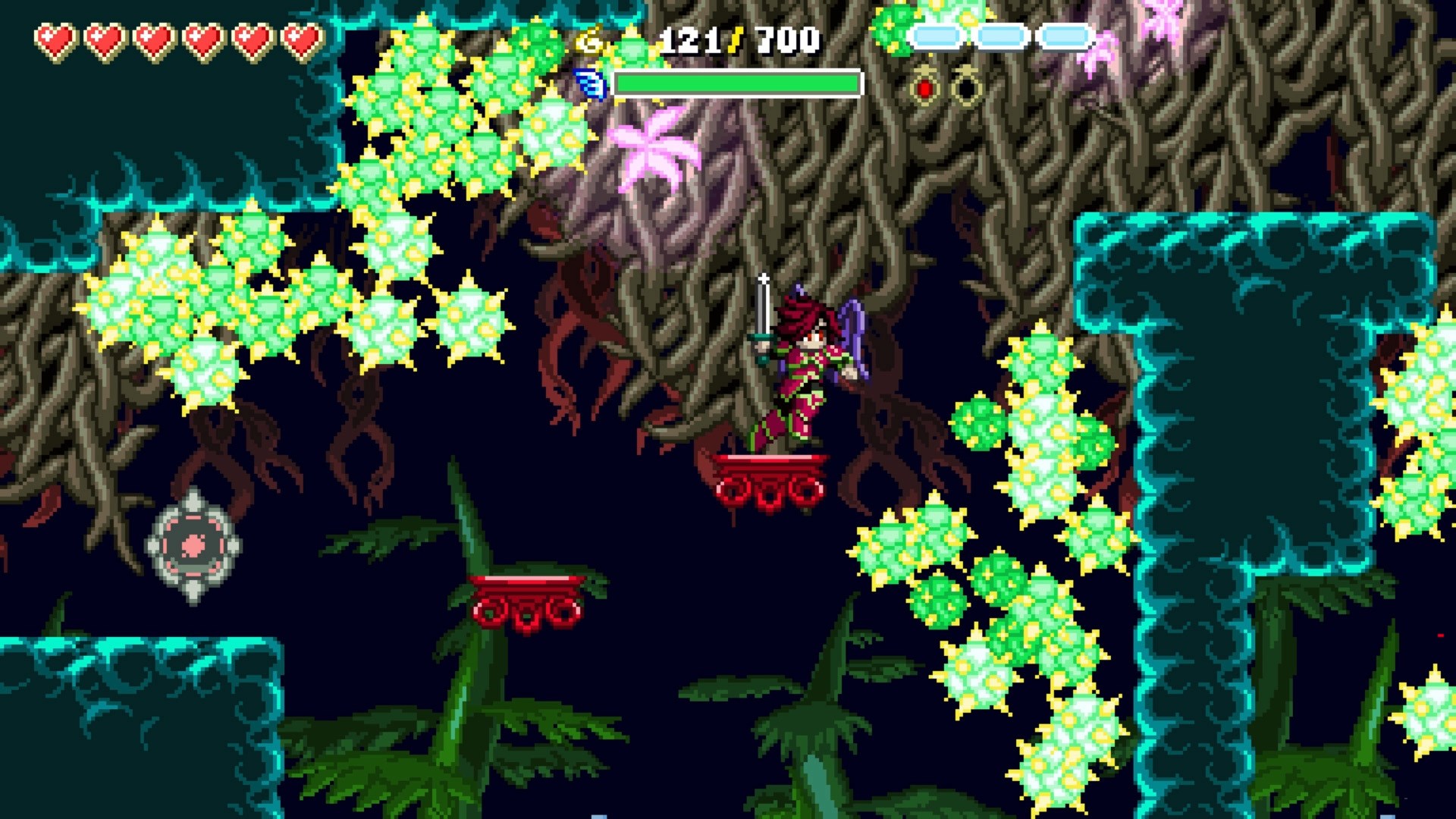
Aggelos 2 is a metroidvania that puts a bit of a spin on things by making many of the game’s elements that players would usually use to progress to new locations hidden behind collectables and other elements such as spending “orbs” to upgrade the player’s gear, buy or discover hearts and magical vials, and more to try and survive longer. It also focuses heavily on the fact that not too long into the game players will find themselves unlocking Aggelos’ demon form and being able to enter the realm of darkness, a location where the difficulty starts to spike quite a bit.
Combat in Aggelos 2 is fairly straightforward to start with as Aggelos will wield his sword to deal heavy close range damage and also absorb pink energy attacks in angel form and red energy attacks in demon form. Similarly he can fire out blasts for long range damage but this is where the forms feel a little less balanced unfortunately. In his angel form, Aggelos’ blasts fly all the way to the end of the screen while his demon blasts only travel a short distance, meaning players will need to be closer to threats or traps to deal damage to them and even then, the damage isn’t notably different. One thing that is far more noticeable though is that the larger spells that actually make use of the mana gauges, and vary heavily depending on what form Aggelos is in, are far stronger and more unique looking in his demon form compared to the angel form.
The same can be said in regards to the magical vials that players will acquire and the way they work differently depending on the form in which they are used. While in angel form, they heal three hearts worth of damage which is incredibly useful since save points/checkpoints are incredibly spaced out while in demon form they provide a speed boost that also transitions into the angel form if swapped. This speed boost is very useful at times especially when it comes to navigating difficult jumps or trying to bypass areas using faster flying speed but it often feels like the lesser option, especially since they pull from the same stock. Meaning that a spent speed potion will mean one less healing potion and while it is possible to refill vials at certain shrines, it does cost “orbs” to do so.
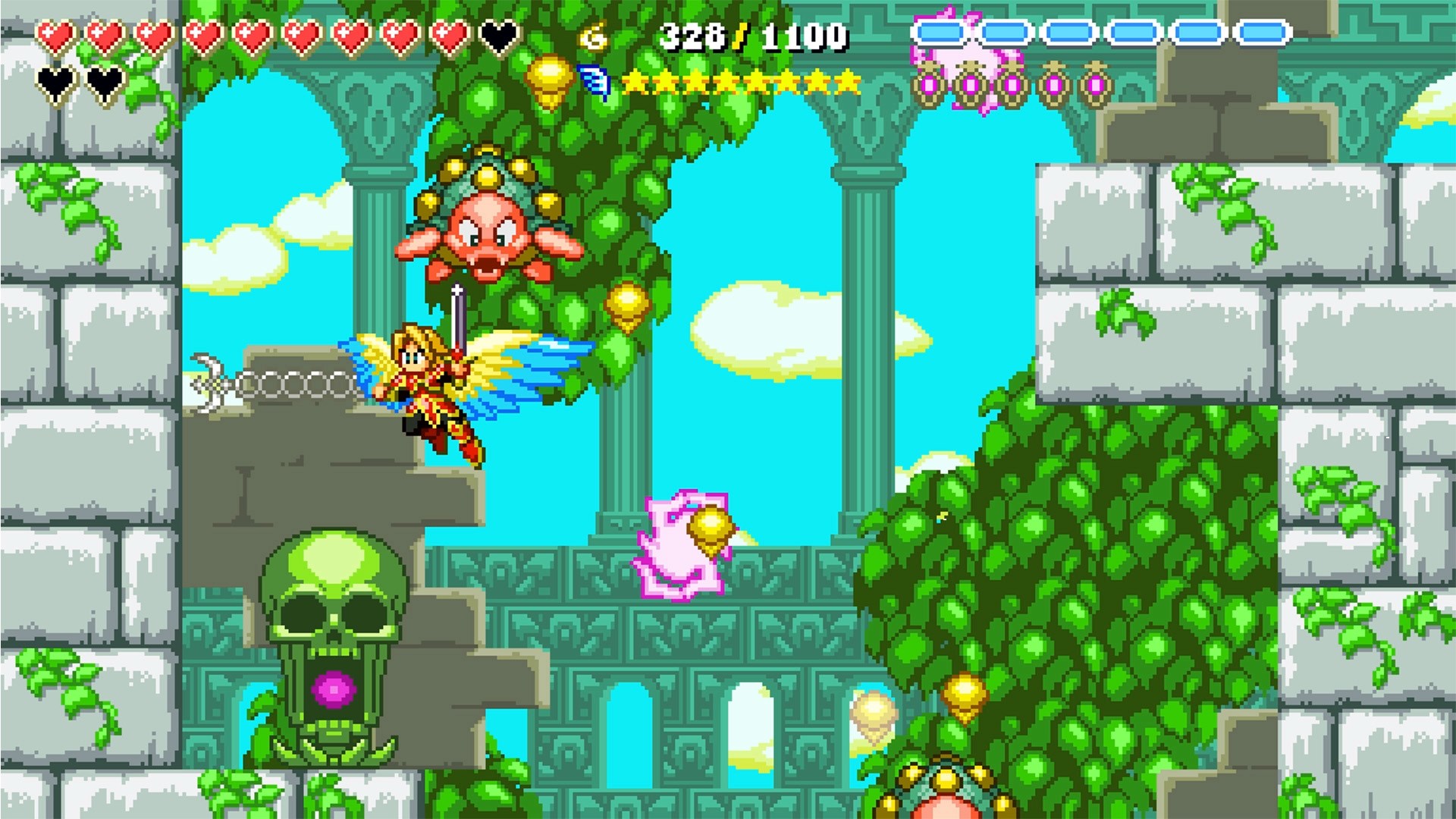
As mentioned, one of the key aspects to Aggelos 2 is finding various upgrades to make surviving the, kind of ridiculous honestly, level designs and amount of damage the player receives from some enemies, to the point that some standard generic enemies deal far more damage to the player than even a boss would, and almost all of this is done through finding collectables. These include “orb wallets” that expand the amount of orbs the player can carry at once, which is a requirement since purchasing armor upgrades or items from a shop often require a significant amount of orbs and if players’ wallet can only hold 800 orbs, they’ll never be able to buy the first armor upgrade until they expand their wallet more. Similarly it is possible to find hearts that expand the player’s total health pool while exploring a number are also tucked away behind hidden shrines or upgrade paths. The downside here is that not only may players find themselves stuck in a challenging location with simply no way other than to try and brute-force their way through due to lack of useful upgrades and lacking quality of life features, but also some rather tedious and outdated mechanics that Aggelos 2 brings with it from the past.
Despite being a high ranking angel, Aggelos is incapable of aiming or flying in any useful manner initially. While spells can be used to send blasts upwards at the cost of a spell gauge, the flying is downright disappointing. It is understandable that free flying would break the exploration a bit, the fact that he can only glide in a straight line is pathetic. Similarly, one of the first items that players will find that will help in exploring is a grappling hook that… for some reason, can literally only be fired in a horizontal line. This is done so players can use it to climb up walls because, as m mentioned, Aggelos’ flight ability is disappointing. Along these same lines, another disappointing aspect are the mystical eggs that players are encouraged to find. With a hundred scattered throughout the world, the rewards for finding certain amounts of them are always just extra orbs, meaning that if players are already full, then the rewards are useless until they’ve literally found every single one of them.
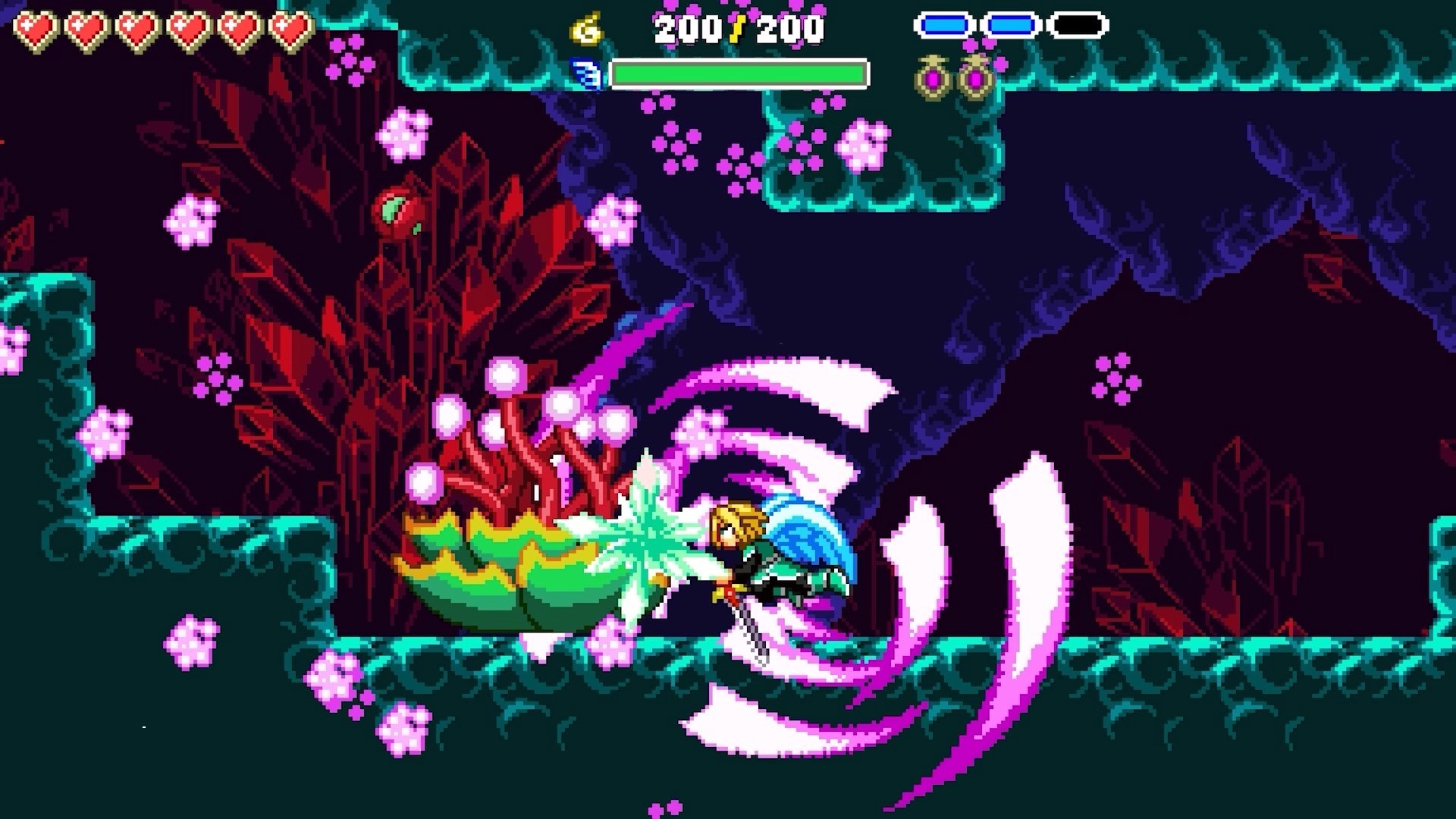
One point that is nice to mention is that the game makes smart use of its map and level design to help create a unique feeling of exploration regarding the world of light and world of darkness. Some locations can only be found by traveling through the land of darkness, and then venturing through a portal again into the light-side to bring the two-sides of the world together in exploration. It is also nice to note that players can leave up to thirty little pin-points on the map to mark down locations where an item might be that they can’t reach at the moment or where a vial refill station might be, which is quite useful considering how large the map is. Unfortunately though, with how large the map is, the game is incredibly stingy with save points and the fact that, until later in the game, only some work as actual teleportation shrines. Since there is no penalty for death, there were plenty of occasions where it was literally faster to just die and respawn at the last shrine than try and backtrack through the area.
While there are a lot of complaints here, that isn’t to say that Aggelos 2 is a bad game. It’s a challenging one to be sure but it is one that demands that players take it slow and analyze many of the puzzling locations they’ll need to travel through. Making use of Aggelos’ hovering flight to dodge sliding traps only to advance when it is safe, using the grappling hook to climb up and target enemies that can’t be fired upon usually since Aggelos can’t aim. These are areas that make it challenging and feel like it tries a bit too hard to emulate the issues of the older games in the genre, but those looking for a challenge will find it and then some here.
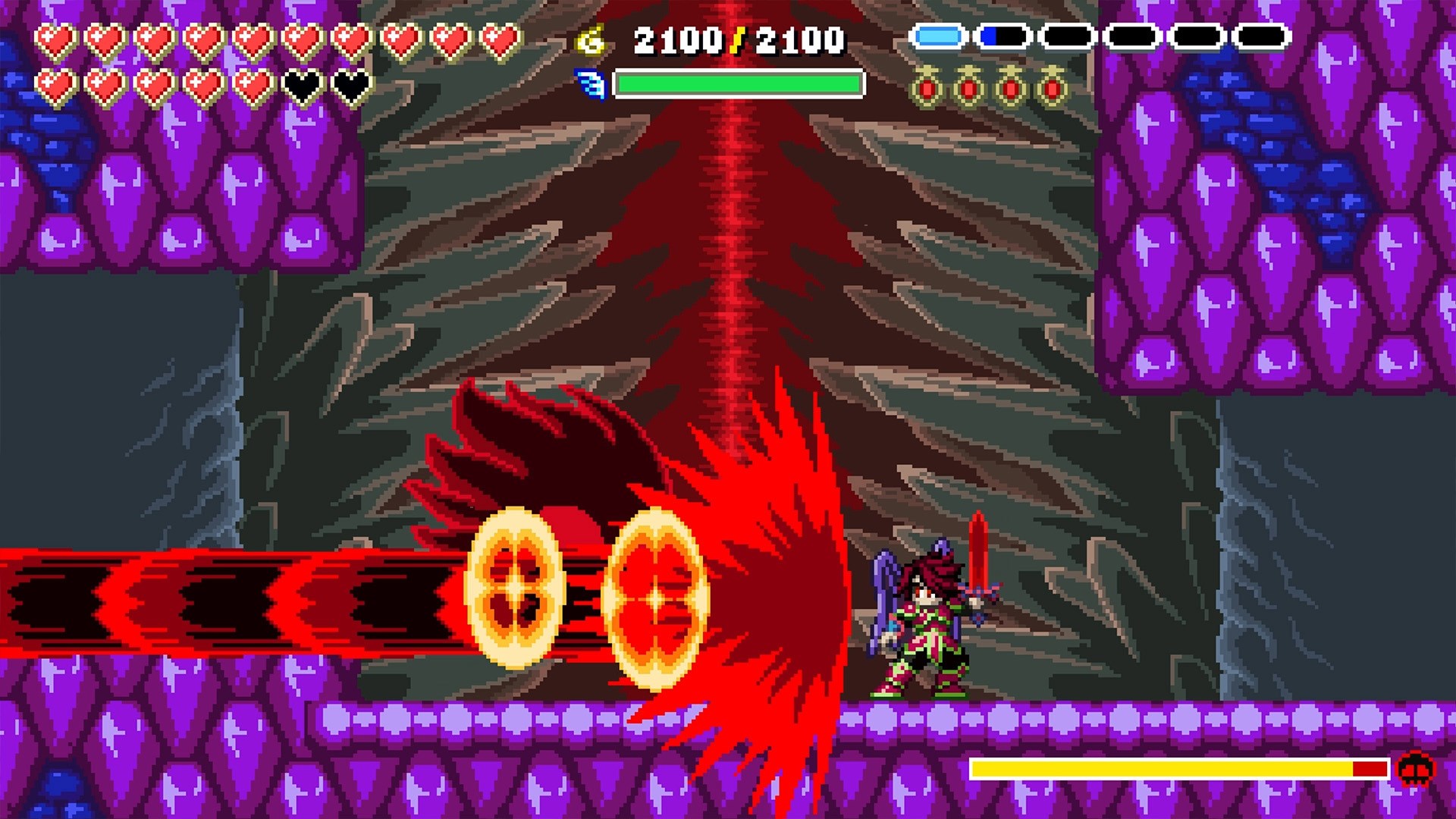
That being said, there were also a number of glitches we experienced throughout Aggelos 2. While some were minor such as Aggelos becoming stuck in an animation sequence as he slid across the screen, others were more problematic such as enemies becoming stuck in the walls and just freezing there. While this wasn’t too much of an issue, the same problem can happen to Aggelos rarely, and there is seemingly no fix or escape from becoming glitched into a wall other than to quit and restart from the most recent save.
Audio & Visuals
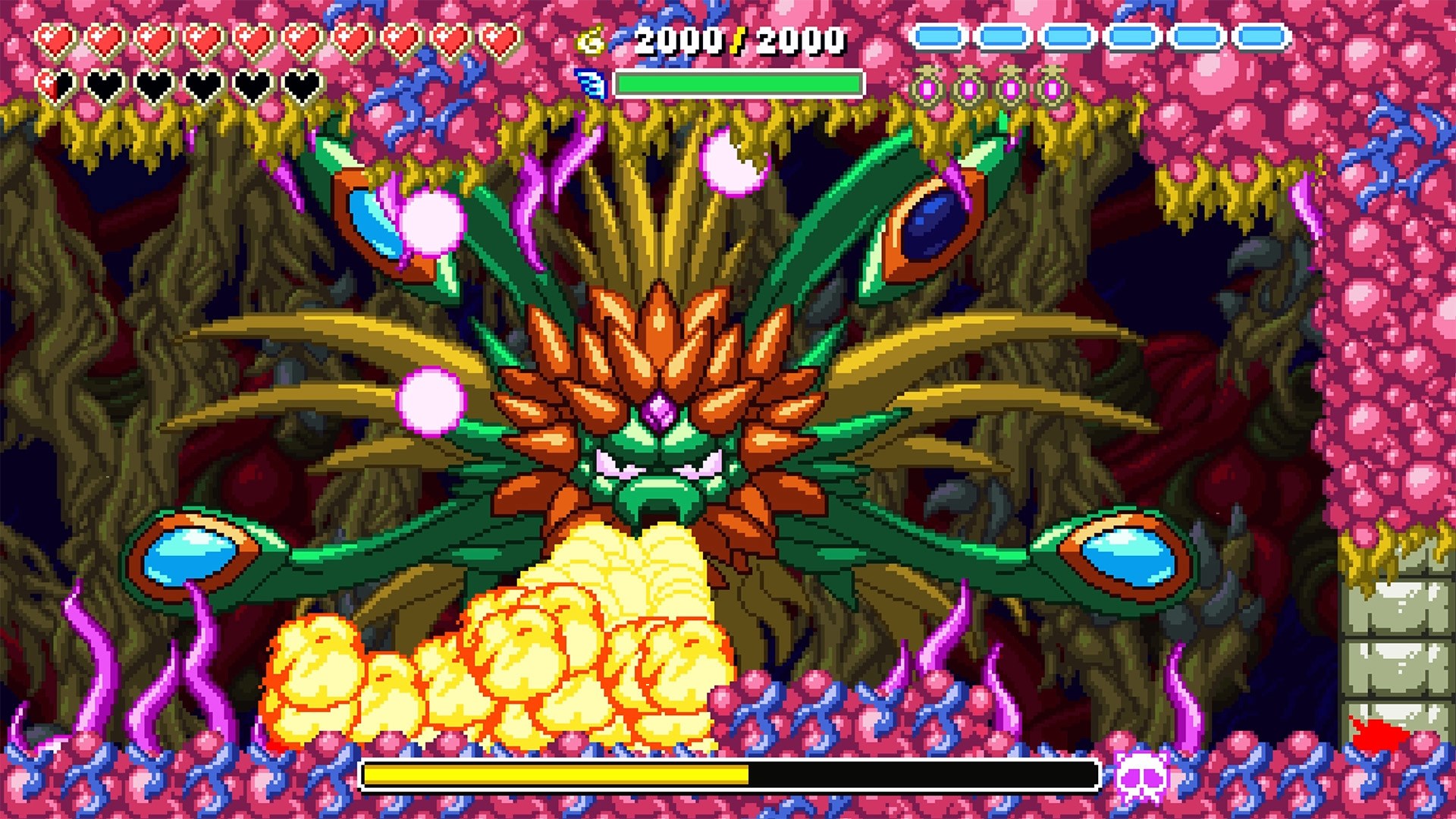
Aggelos 2 takes a solid graphical jump compared to the original game. While the first Aggelos was a bit chunky looking and rough with the sprite-work, the full implementation of the 16-bit art style has now been handled excellently here. It also helps that there is a solid amount of variety to locations for players to travel through with different biomes on both the light side and dark side of the maps, including a wide-range of enemy variations in each location. A shockingly high amount in fact. Boss designs are also quite spectacular and Aggelos’ unique spells that players will eventually acquire are quite satisfying looking as well, especially since a few are shown to be quite powerful.
There is no matter of voice work in any kind throughout Aggelos 2, not even gibberish during dialogue. The background music is decent enough and quite varied with the songs changing depending on the biome players are traveling through and some boss fights having their own simple themes.
Overall
Aggelos 2 is a solid metroidvania that tries its best to emulate the retro games of the past both visually and with a number of gameplay elements that make it feel far too dated and troublesome at times to feel actually enjoyable thanks to missing quality of life elements. Thankfully the quality of the spritework and variety of enemies alongside the dual abilities of Aggelos’ angel and demon forms make it an enjoyable title, albeit one that probably tries a bit too hard to cling to the past, making it more for diehard fans of the genre than anything else.
Capsule Computers review guidelines can be found here.

