



Clive Barker’s Hellraiser: Revival
Developer: Boss Team Games
Publisher: Saber Interactive
Platforms: PlayStation 5, PC, Xbox Series X (Reviewed), Switch 2
Release Date: Available Now
Price: $39.99 USD – Available Here
Overview
Every horror franchise has their own unique killer that can instantly be recognized, especially if it is a long running franchise. The question is, how does that franchise translate into a video game? In many recent cases it has been through asymmetrical multiplayer but what about an entire campaign? Few, if any, horror franchises have managed to deliver a satisfying campaign as visceral as their origins but if anyone has experience with it, it is Clive Barker. After releasing a brutal and memorable, if underperforming Clive Barker’s Jericho twenty years ago, many wondered if Clive Barker’s biggest franchise would ever become a game, and now here we are, with Clive Barker’s Hellraiser: Revival capturing the entire essence of the franchise all into one package.
Story
Clive Barker’s Hellraiser: Revival doesn’t pull any punches as the opening cinematic and subsequent prologue quickly test the player’s limits to the type of gore and nudity that will be on display throughout the campaign. Players take on the role of Aidan Lynch, an ex enforcer for the Hellraiser biker gang that he chose to leave upon meeting and pursuing a gallery curator that goes by the nickname Sunny. Somehow, through the art gallery, Sunny has found herself in possession of the Genesis Configuration puzzle box and, during a very… extreme session of lovemaking with Aidan, the pair manage to activate the box and solve it, summoning the Cenobites from their dimension and the Labyrinth along with it.

After managing to avoid the initial danger, Aidan finds himself back in his apartment only to witness Sunny be given the Cenobites and “Pinhead”‘s form of eternal ecstasy by ripping her apart with hooks and chains. In an effort to bring her back to life, after being drugged and taken prisoner by a Cenobite worshipping cult, Aidan makes a deal with the Hell Priest to resurrect his beloved, only it will bear a heavy cost to do so. What follows is a shockingly intense dive into a world practically untouched in gaming narratives and goes to extremes of pain, addiction, and the nature of desire itself and what that desire can actually mean, and what someone is willing to do to fulfill it.
Hellraiser: Revival goes above and beyond what any fan of the franchise most likely cold have expected in the form of a video game narrative. Not only do we see how Aidan must struggle not only with the strange liminal spaces and run for his life from the odd nature of the Cenobites and the powers that they wield, but also come to terms with his own internal demons and past along the way, confronting what he truly desires and what makes him who he is. All while battling against a twisted cult that has peaked behind the veil and seen things they wish to replicate to be embraced by the Cenobites, even as it transforms them into unholy monsters of twisted agonized flesh.
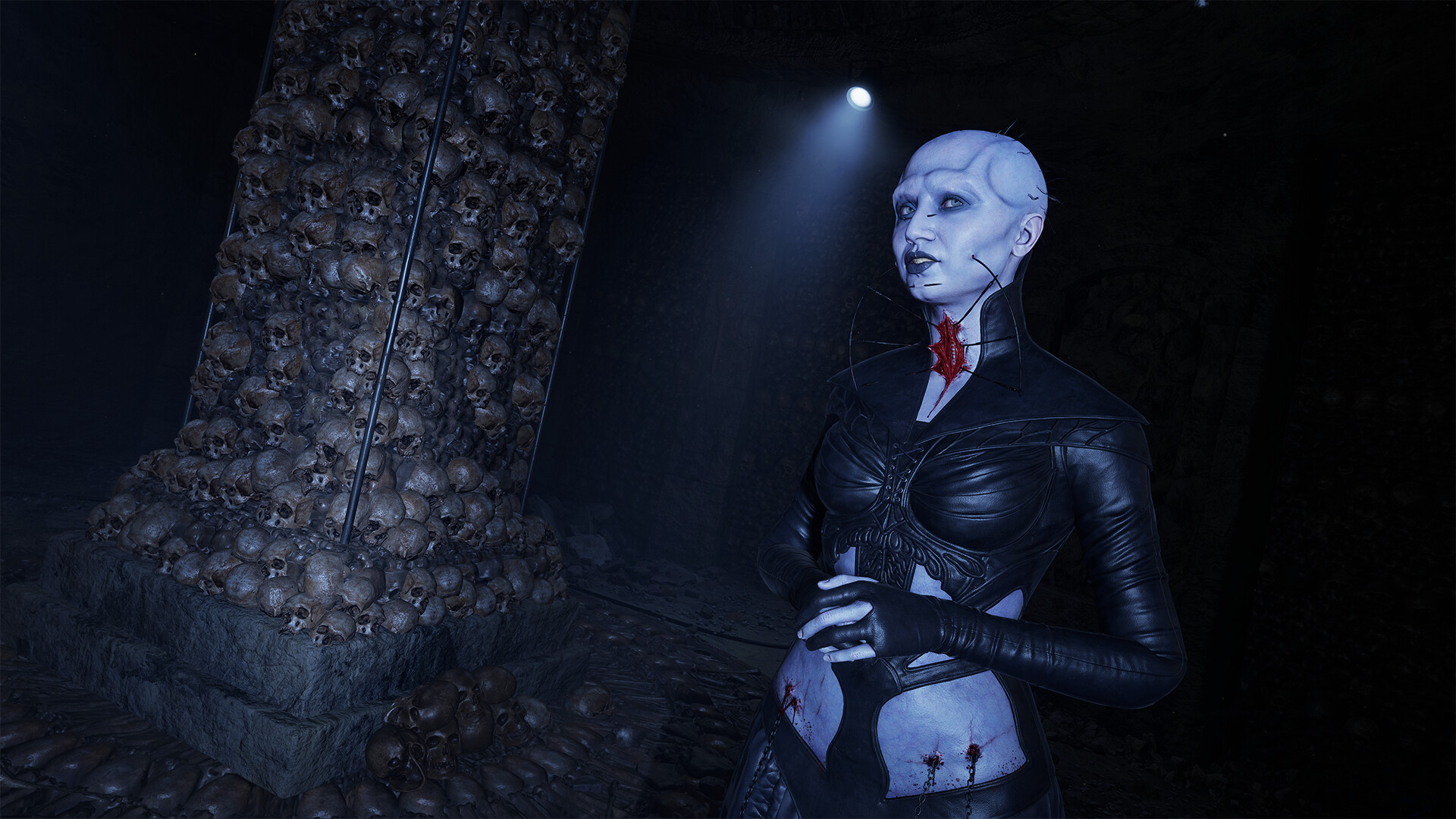
It is worth noting that while longtime fans of the franchise will catch various nods to the films and the original novel, including the mention of other puzzle boxes, the story told in Hellraiser: Revival is almost entirely self-contained, meaning players will be able to jump into the labyrinth without any knowledge of who or what each Cenobite can do or even the puzzle boxes themselves. The title features plenty of in-game lore through numerous notes and voice recordings left by the cult as they experimented and researched how to open up the path to Leviathan as well as numerous conversations with two female characters, who we won’t spoil here, who go into surprising detail about some elements of the franchise that even fans may not remember, especially in the latter half of the story.
This results in a narrative that is not only satisfying from a franchise perspective and fan one, but also in general even for newcomers as players will find the human struggle of Aidan against the Cenobites and the chaotic cult that worships them even if they care little for them, just as engaging thanks to its revelations about Aidan’s past, his experiences with Sunny, numerous horror sequences, and of course, the ultimate twists along the way.
Gameplay
In a move that makes sure players are getting as close of a view of the gore and strange BDSM filled world that is Hellraiser: Revival players will find themselves playing in first-person at all times, and also finding themselves split between navigating through the labyrinth, where puzzle solving, chase sequences, and trap dodging are all the rage, and the real world where they’ll do battle against the cult and various abominations that they’ve brought into the world, and sometimes a mix of the two. Players are given a limited inventory, with expansion slots able to be discovered in locked cabinets or out of the way locations, and a crafting menu that allows players to craft healing items, ammo, and other useful tools including lockpicks.
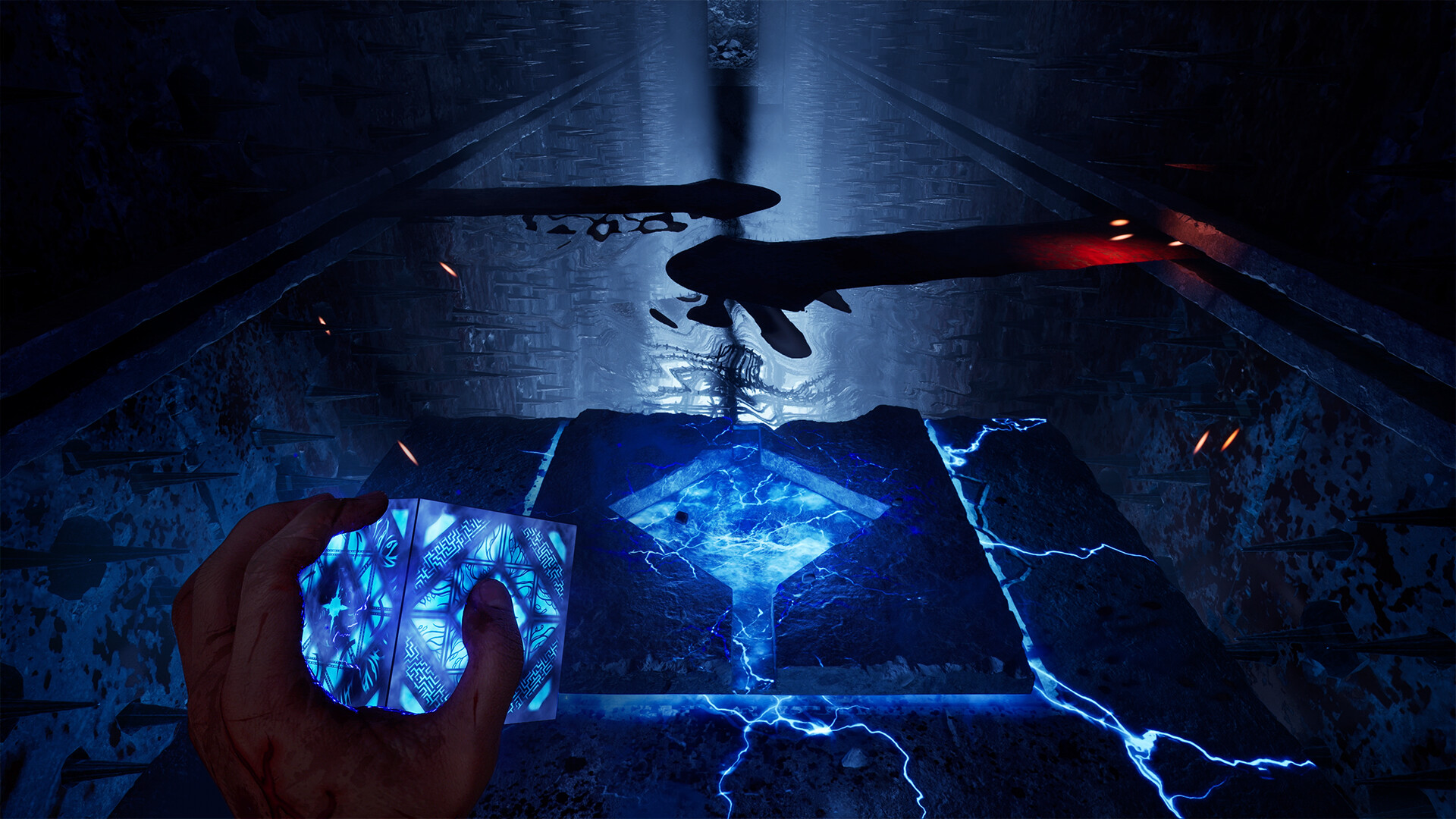
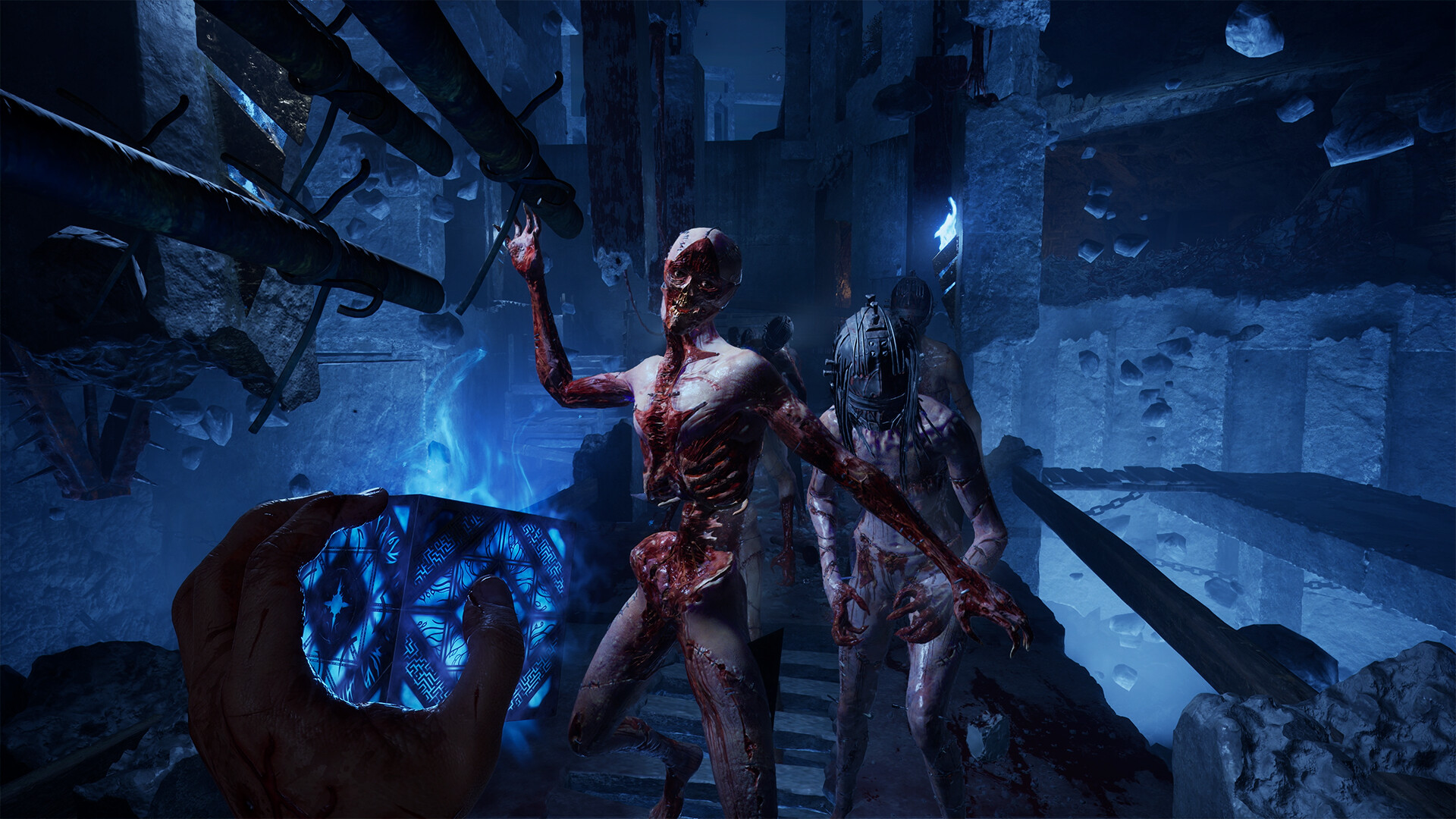
Navigating through the labyrinth is a real treat as players will often find themselves getting turned around or needing to flee for their lives against the Chatterer all while dodging or avoiding hooks, or making use of the limited powers the Genesis Configuration bestows Aidan in the labyrinth. This includes the ability to move certain objects like blocks or rotating entire sections of a location, transferring magical flame between sources to activate different routes, and more. Throughout the labyrinth players will also find various shrines, mostly tucked away or off to the side and requiring extra risk and effort to reach. These shrines come in the form of suffering shrines that help boost the player’s overall “suffering” gauge and health shrines that boost Aidan’s total health.
Outside of the labyrinth is where players will be spending most of their time though as they choose to either sneak around and take out enemies with stealth takedowns, as players always have access to a small shiv, but sometimes this weapon isn’t enough to perform a stealth elimination, especially on armored cultists or “unworthy” monstrosities. This is where players will find themselves swapping either between stronger edged weaponry or blunt weapons, but the trade-off here is that every melee weapon can only be used for a few hits before it breaks, even if it does massive damage to the enemy and while players can use repair kits to restore a weapon back to its full durability, as long as they do it before it busts, that also means players will need to keep an eye on how many melee weapons they are carrying and balancing it with their limited inventory space that also shares healing items, sellable items, guns, and ammo.
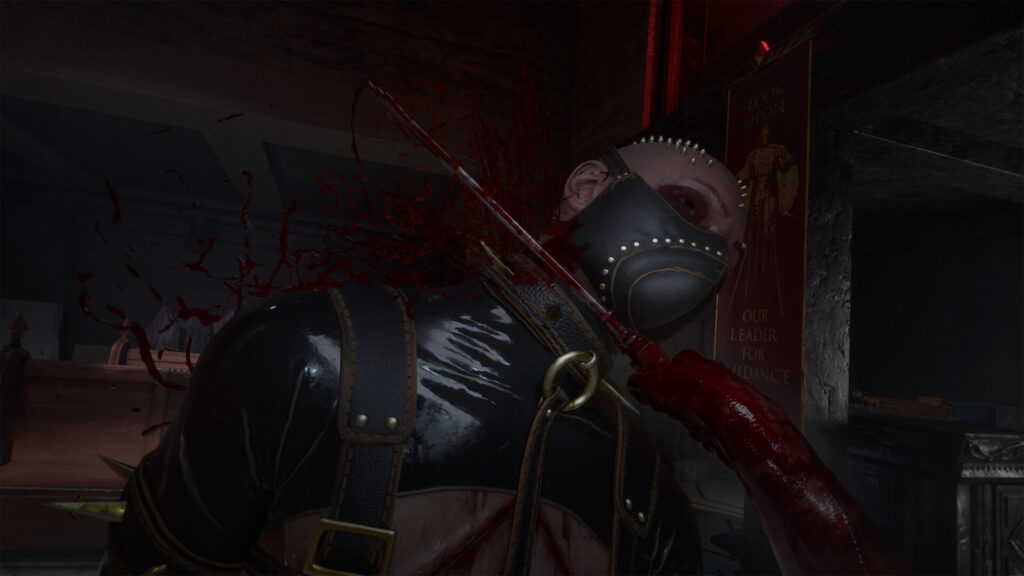
This means that players may need to make use of storage or simply leave a weapon behind if they find themselves running low on space, or tossing a single round of pistol ammo to pick up a healthpack instead, since one round takes up the same space as twenty. Shooting enemies in the game and the stealth mechanics feel like they need a bit of work, especially stealth, as enemies can often find players from too far away or even behind objects which is disheartening, especially when trying to avoid a certain mental-draining gaze late-game. Similarly, firearms often feel underwhelming as even fully upgraded pistols or shotguns, such as having rounds act as dragonbreath rounds, narrow the spread, and increase the damage, don’t really stun foes as much as they should unless they actually catch fire. At least the armor piercing of the assault rifle works rather well, especially since it can shoot through multiple unarmored foes as a result.
The melee combat is similarly a bit underwhelming as players often feel like they are smacking at unresponsive foes as even some of the strongest melee weapons will leave foes unstaggered until they drop dead rather than stagger them first. Thankfully the Genesis Configuration continues to gain powers that utilize the “suffering” gauge players fill up by killing cultists and abominations, especially when banishing stunned abominations. This includes telekinetic powers that can snatch up buzz saws, spikes, logs of wood, and propel them with deadly speed to a foe, sap fire from a fire source and throw a fireball into a hoard of enemies, and even trigger a devastating finishing move eventually, utilizing an entire gauge to summon the player’s own hooks of death to tear apart every enemy in the area with instant kills, or leave mini-bosses on death’s door and ready to be finished off with a few more blows or shots.
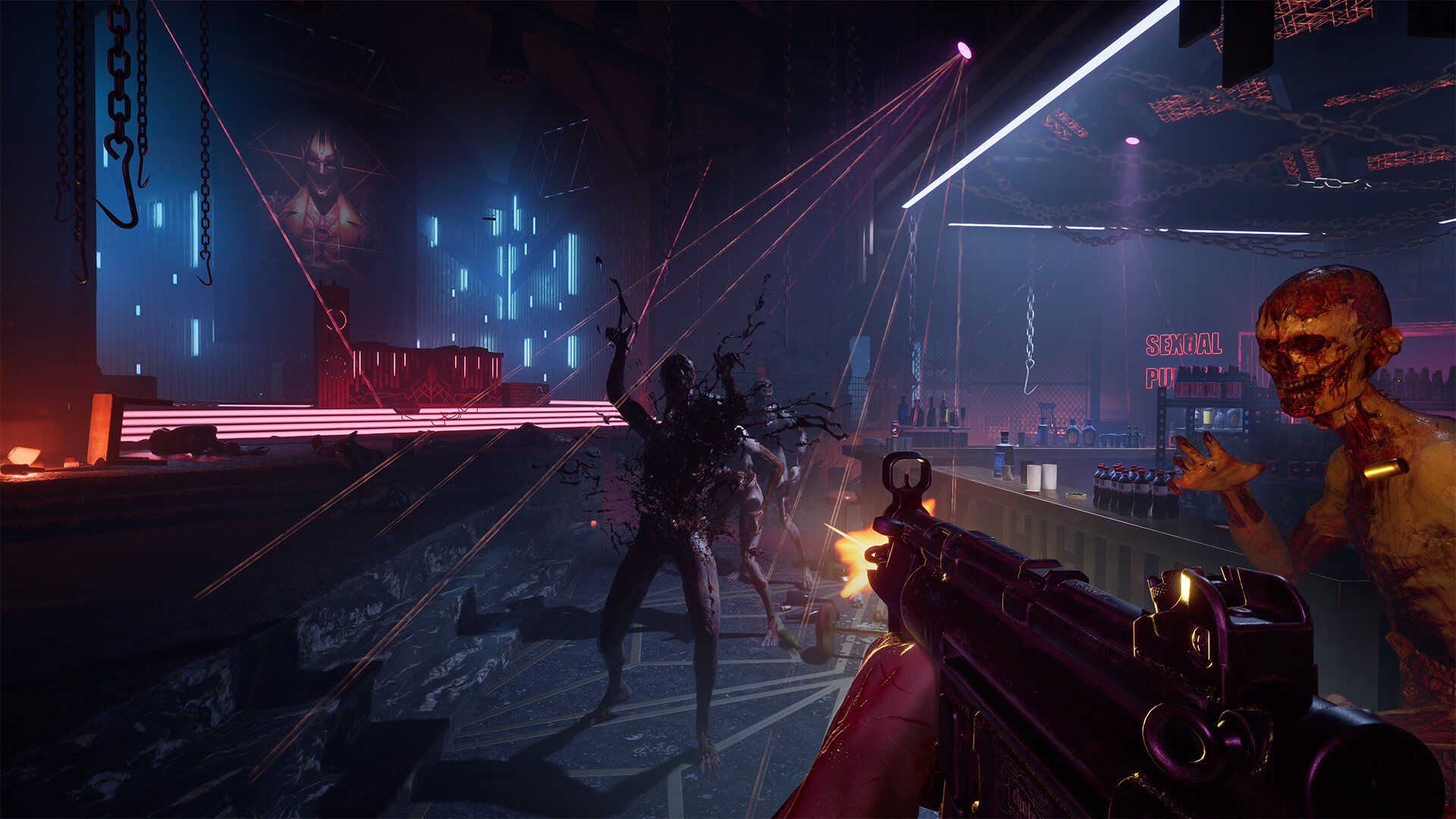
The different enemy types that players face off against throughout Hellraiser: Revival are fairly predictable with standard cult members either sporting no armor, partial armor, or covered head to toe in BDSM-like armor that protects them from damage while they either shoot or try to melee the player while abominations simply seek to overwhelm the player with numbers, including speedy female ones and bloated explosive ones that leave a lingering pool that damages the player. The real unique part involves the boss encounters as many of the bosses have unique mechanics or ways that they can receive more damage or take and utilize different attacks depending on how far players have hurt them. This can include anything from setting them alight with fire barrels or dragon’s breath rounds, dodging grab attacks and punishing the nigh invulnerable foe, to manipulating the environment itself, creating memorable boss fights that almost always have multiple stages.
Audio & Visuals
Clive Barker’s Hellraiser: Revival really pushes the bar on how far a video game can probably go without breaking into the Adults Only rating. Between nudity of both genders, a BDSM club with plenty of interaction, and a large amount of enemies barely covered in leather straps or pasties and you have a game that is front and center with nudity and tons of gore everywhere. Cutscenes are filled with it while players exploring the levels will find macabre sculptures nearly everywhere, twisted paintings, and brutal depictions of suffering and torture that goes far beyond what many would expect in a video game, and that is saying something, especially since players can decapitate and sever limbs from foes, and the ultimate literally shreds their bodies into flesh nuggets. This is the type of title that literally nudges its toe right up against the line and tests that boundary, probably avoiding the rating only due to limiting the direct view of drugs being taken, as they happen slightly off-screen.
The voice work throughout the game is handled exceptionally well, with enemy Aidan and Sunny’s English voice actors doing a perfect job and even the enemy grunts and various mainline foes featuring plenty of unique voice lines depending on what is happening and how far players are in the story. It also must be said that the game deserves a lot of credit for bringing the original voice actor back to reprise his role as Pinhead here, as he delivers the exact level of cold gravitas players, and fans, have come to expect from the creepy cenobite. The background music is also filled with a number of fitting tracks that tend to range from dread-based, especially during some hoard style moments, to more dramatic or dance-like depending on if players are searching through the labyrinth or navigating the BDSM club.
Overall
Clive Barker’s Hellraiser: Revival is probably the best thing to happen to the franchise since the original trilogy of films was released. Not only does it deliver the exact style of gruesome gore and borderline obsession with punishment and eroticism being blended together, but it also does it in a fairly solid video game as well. Sure, both the melee and firearm combat are janky and the inventory system is a bit annoying to deal with, but solving the puzzle box configurations to advance and navigating the deadly traps of the labyrinth capture the cruel magic of Hellraiser exactly how fans would want, jank and all.
Capsule Computers review guidelines can be found here.

