


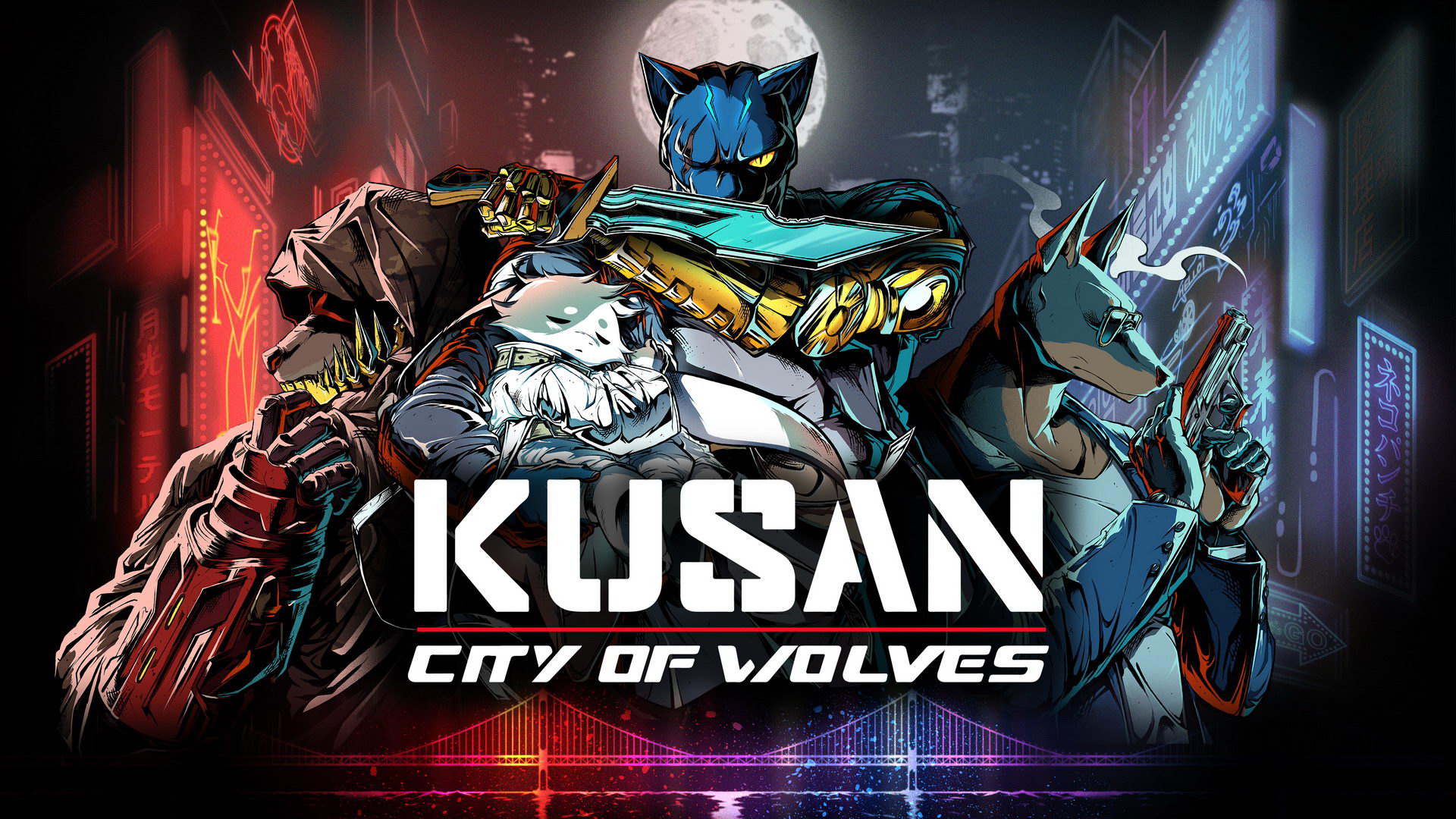
Kusan: City of Wolves
Developer: CIRCLEfromDOT
Publisher: PQube
Platforms: PC, Switch, PlayStation 5, Xbox Series X/S (Reviewed)
Release Date: July 30, 2026
Price: $14.99 USD – Available Here
Overview
There are a lot of ways that games can be challenging. Some might offer various difficulty levels so players can tailor it to their experience while others are just straight up hard, requiring skill and patience or even some grinding to conquer the challenges that await them. Kusan: City of Wolves happens to be one of the latter, offering no difficulty options but instead requiring players to master the layout of a level and do their best to survive every stage in an attempt to make it through without getting hit a single time or die the second an enemy lands a blow. Mimicking a style similar to a certain 2012 top down shooter, this title is one that demands perfection but isn’t afraid to let players struggle along the way even if it means getting a lower score and returning to master it later.
Story
Set in a futuristic neo-noir world players take on the role of a black panther named Jin, an ex-soldier turned mercenary who usually takes on gigs for cash but isn’t afraid to risk his life for a good cause. This is exemplified when he sets out to annihilate a local street gang for kidnapping the older sister of a young leopard boy begging for his help. Despite the bloody mess that Jin makes of the crew and the darker signs of the helpless people inside, the more sinister side of the world comes to light the second Jin saves the sister as she is immediately apprehended by the government for being a “psion,” someone with psychic abilities of some kind and the type of people, or anthros in this case, that are strictly imprisoned and monitored for the fear of the powers that they might be able to unleash.
Later, Jin receives a request from his contact, a doberman named Ayn, of a real job that requires his particular set of skills and he has been hand-picked for this assignment by the government to recover an “asset” that has been stolen from an experimental psionics lab. Little does Jin know that the past that he has tried to keep buried in the past is about to come back to haunt him in almost every way possible as he finds himself face to face with former allies turned enemies, countless gang members and criminals, and an innocent girl that knows nothing of the world but Jin knows all too well despite never actually meeting her before in what turns out to be a rather gripping and emotional narrative for a fast-paced one-hit-kill style game.
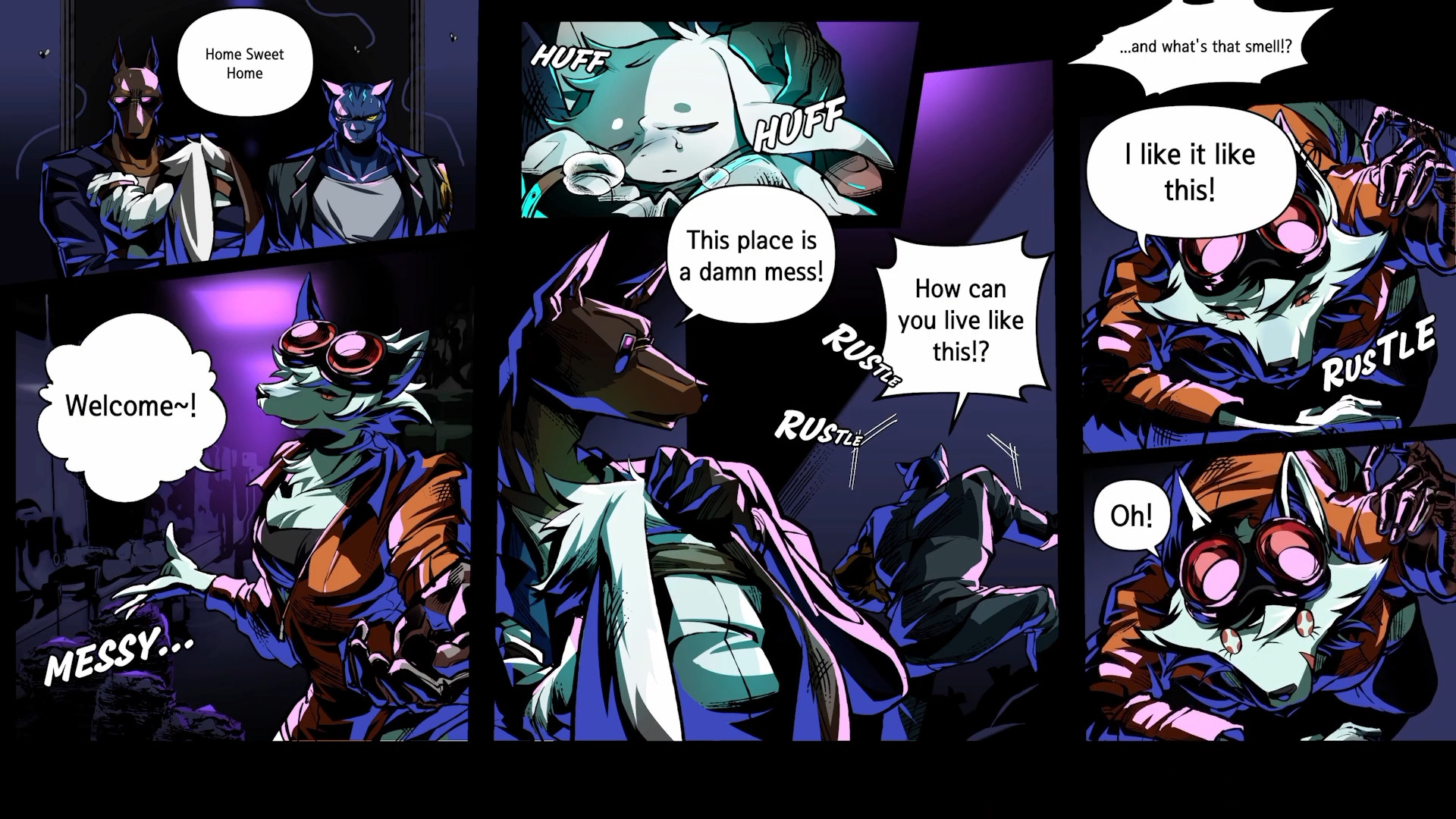
Kusan: City of Wolves tells its story mostly through comic-book style panels with the occasional conversations between stages and at the end of certain stages and this is a surprisingly effective way to portray how heavy and intense the narrative actually is. While placing the game in a world where every character is an anthro makes for a unique premise, especially considering it is mimicking the conflict between North and South Korea with its own take on things, it also is one that is incredibly dark and twisted. Cybernetic enhancements are the norm, especially for ex-soldiers like Jin who has a completely cybernetic arm while most other characters have various augments but these are far from the only elements of neo-noir mixed with a bit of cyberpunk.
As players progress through the story they will continue to learn more of Jin’s past as he rescues the young girl, finds out the mystery behind her origins, and the heartbreaking events that took place that led them there. Even the side characters, as small of a role as some play and some with far larger roles, are treated well enough to the point that their loss is given proper weight. This is a surprisingly heavy story, especially since the “collectables” that players can track down, the Limbus, are signs of how cruel the world is and what Jin does is a mercy they beg for. Delivering this kind of heavy storytelling with some nice emotional payoff, albeit feeling like it ends a bit abruptly and could have used a little extra time featuring the characters post final boss, is a pleasant surprise for a game like this.
Gameplay
Kusan: City of Wolves is a top-down style “shooter/brawler” that is all about skill, speed, and some bravery as a single mistake will lead to instant death. Players will always have control of Jin and occasionally be joined by an ally in a few levels that will provide back-up fire but for the most part players will be in charge of eliminating nearly every foe in a stage before advancing to the next. The problem is, while most enemies can be killed with a single blow depending on the weapon used, Jin will also die to a single strike, meaning an ill-timed punch, missing a parry, or simply not noticing an enemy with a gun can drop him in an instant and reset the stage for players to run through again.
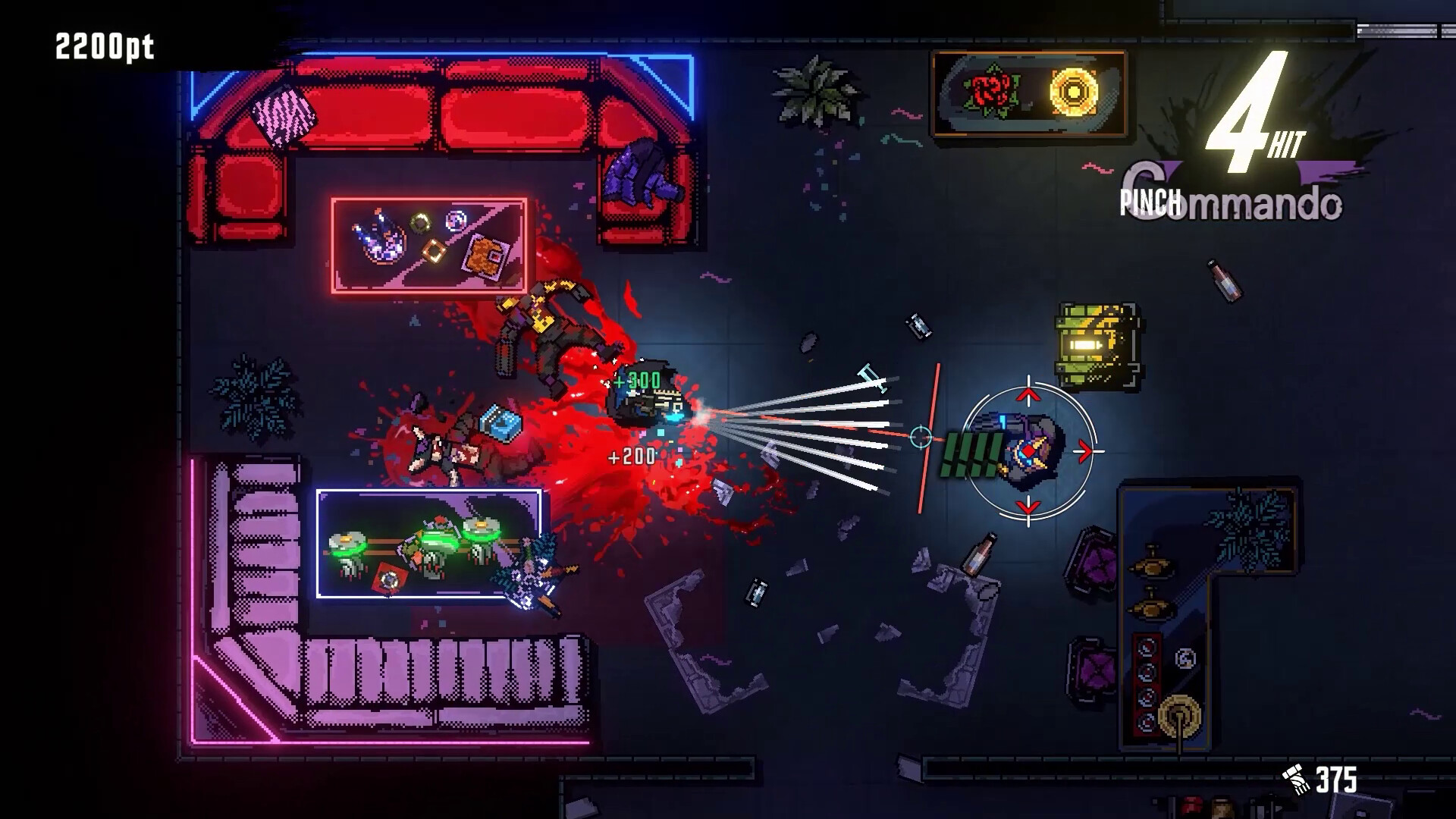
Once players complete a stage they are gauged on how quickly they did it, their kill count, how long they kept their combo-streak going, style which is determined by the variety of methods enemies were killed, bravery, parries, and a bonus for general item gathering and given a grade ranging from C all the way to SS. At the end of a set of stages players are then given a final level grade and bonus “bolts” depending on what grade they receive. While players will generally find themselves learning levels and getting Bs or maybe even As in their first few stages, the main goal is to learn and master the levels enough that players will be able to style on the enemies and maintain a killer combo all while finishing the stage as quickly as possible. Though as mentioned, this likely won’t happen the first time through for a number of reasons.
The first of which is that players will want to explore through stages to find short-cuts, break apart furniture for bolts, and also locate hidden Limbus that serve as the game’s collectables and other upgrade material besides the aforementioned bolts. Upon finding a Limbus players will need to take part in a little mini-game that generally requires them to hit lit-up computers in a certain order, use a specific attack on lit-up computers, or even dodge targets while hitting computers all within a time limit before it resets to “free” the Limbus and receive the reward that can be used to optimize Jin’s War-Hand upgrades or unlock additional upgrade space, something bolts are also used for as the upgrade system in Kusan: City of Wolves is rather unique but more on that later.
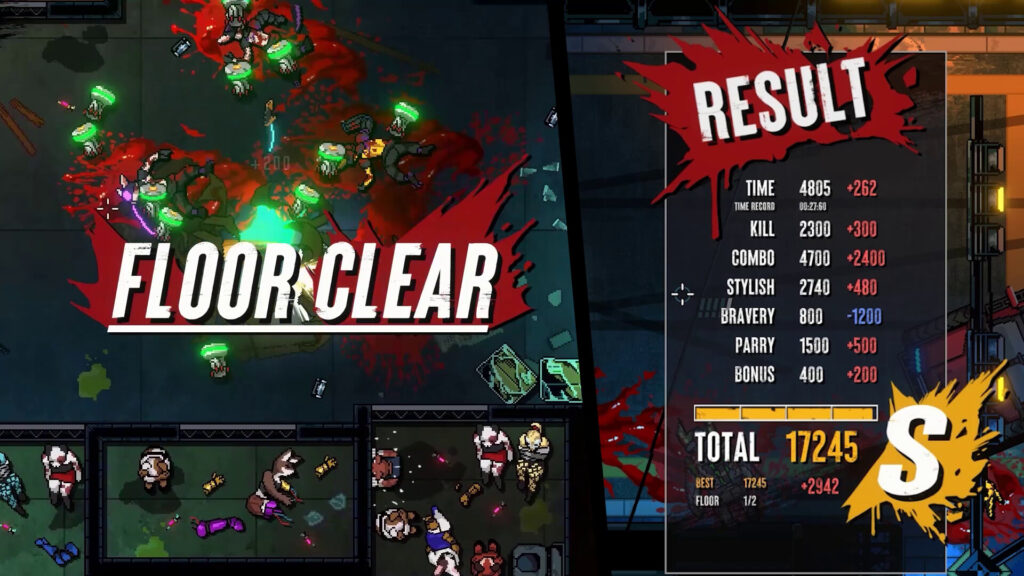
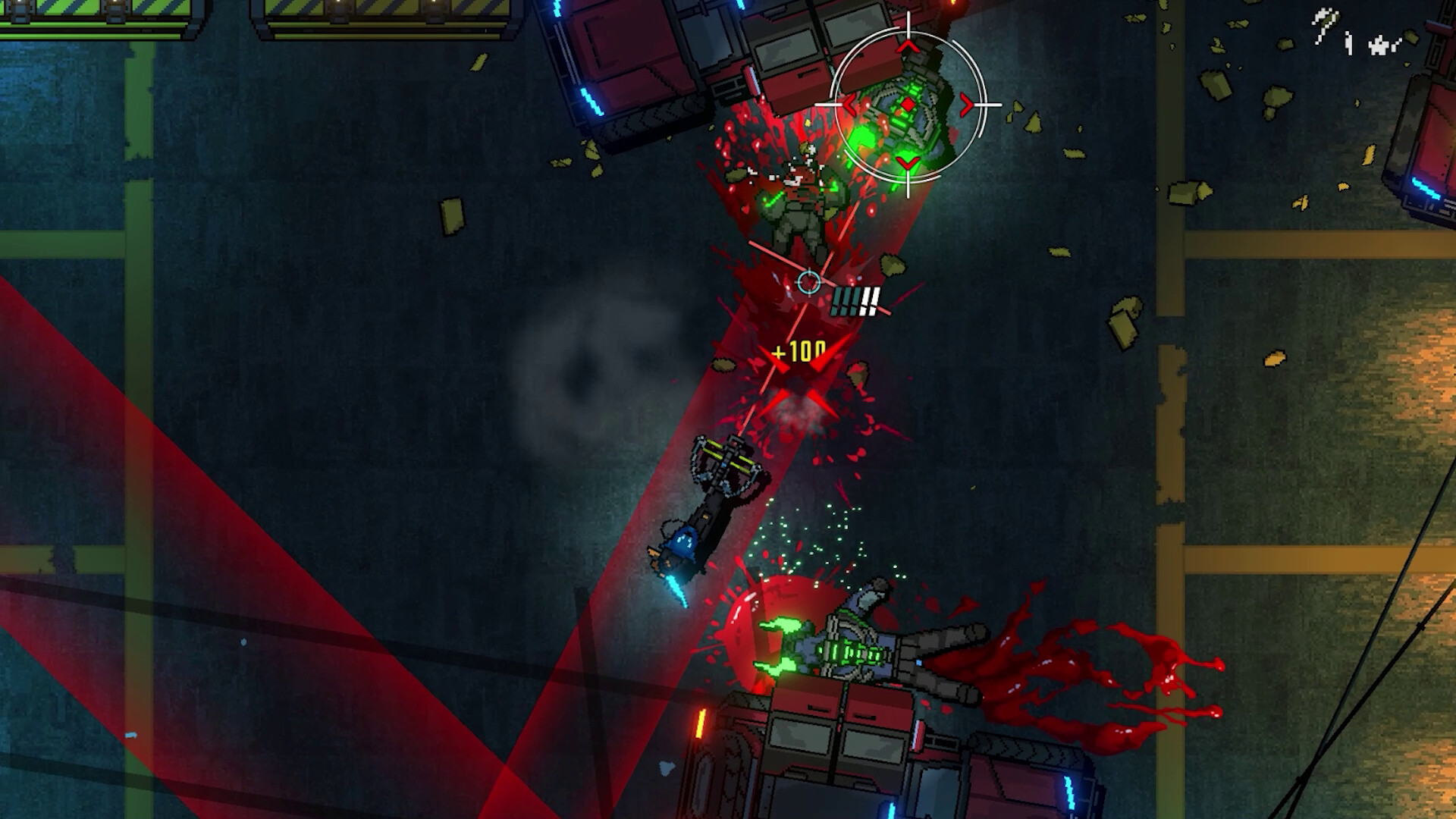
Jin starts with a small weapon arsenal in the form of his cybernetic War-Hand to punch and kill enemies and also it can be charged to send doors flying into enemies or even weakened walls and boxes to kill foes, a “quantum” knife that can be thrown a short distance to kill enemies with an auto-lock by default and be used to juggle by picking up quickly and throwing it at the next foe without hesitation, and eventually a handgun that has a limited amount of ammo that players will need to scavenge from slain enemies or boxes to refill. Unlike punches and the knife, the handgun takes two hits to kill an enemy with the first shot stunning them and leaving them open to be finished with a punch or knife or giving the player time to focus elsewhere for a moment. All of these tools are made available within the first few levels and while the handgun may feel underpowered at the start, it also feels like pretty much the best firearm in the game by comparison with one exception.
Now the upgrade system for Kusan: City of Wolves is a unique one that sees Jin start with a limited “inventory” space for upgrades and the ability to hold a firearm, which he must hold one of at least at all times once unlocked. To unlock additional slots players will need to use bolts or Limbus pieces to open them up and, in-turn, unlock new abilities and weapons as well. You see, Jin’s ability unlocks aren’t tied to progression but tied to his inventory unlock space, such as needing to unlock 15/25 spaces to unlock a shotgun or 10/25 to unlock the ability to purchase the quantum knife’s auto-return after a few seconds ability. This means that while players may want to purchase upgrades to Jin’s War-Hand, and definitely should at least purchase the auto-returning knife and faster default movement speed, the real priority should be unlocking extra slots. This is also thanks to the fact that every War-Hand upgrade takes up a certain amount of space and while many can be “optimized” with a Limbus piece to shrink down one block, the more space available the better. This also means players can obtain the “ignore shields” upgrade long before they are even introduced as an enemy defense mechanism.
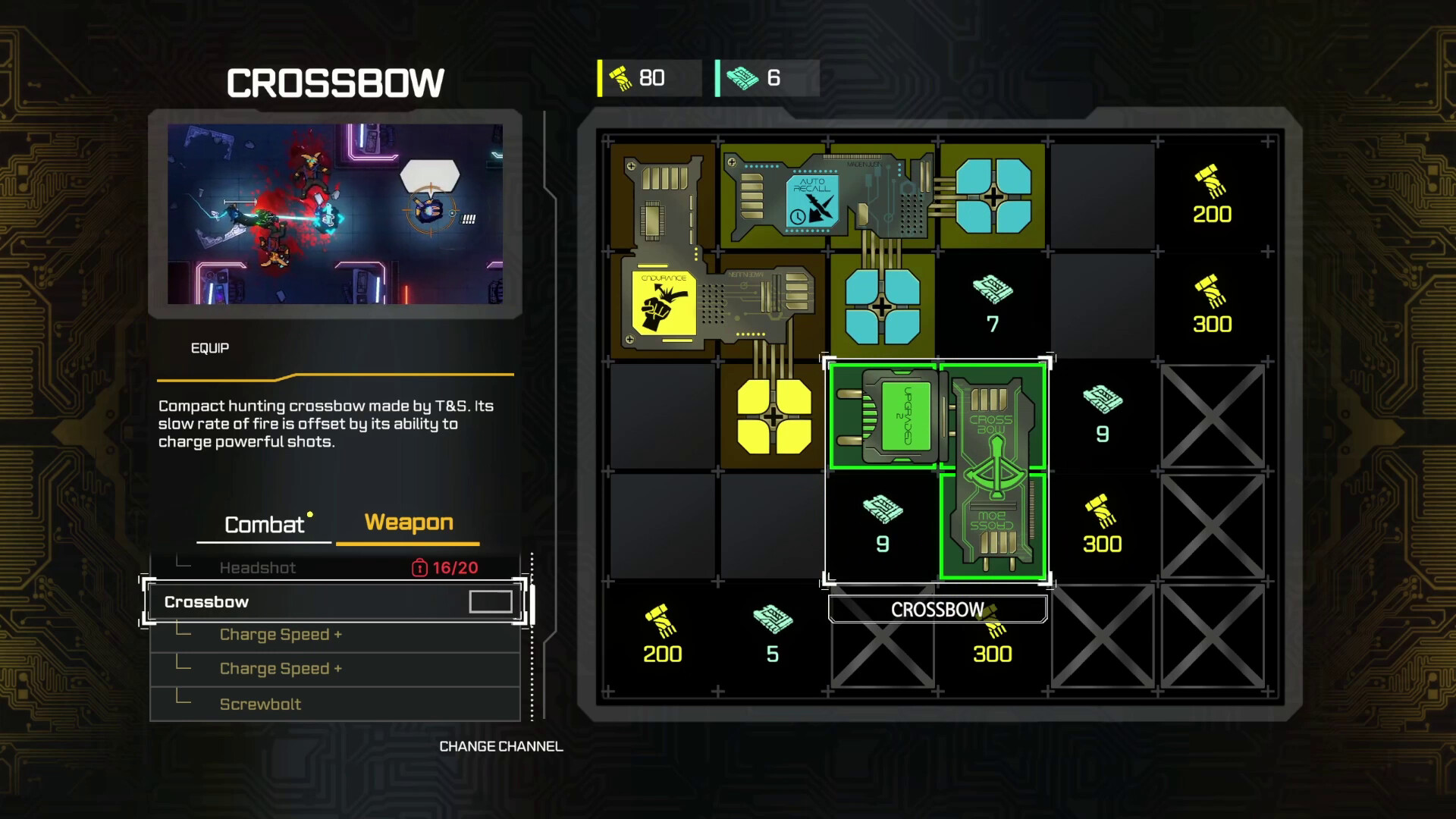
Now onto the firearms. As mentioned, players are given a handgun at default and it, as well as every gun, can be upgraded with special features that increase how useful it is and how much space it occupies in Jin’s upgrade box. The handgun eventually ends up being able to hold the most ammo and can even trigger slain enemies to drop ammo, keeping players supplied well enough despite requiring two shots to slay most enemies. The crossbow is able to be charged to instantly kill an enemy but is situational at best and feels ineffective most of the time, even with upgrades and the shotgun may offer a wider spread but consumes two rounds of ammo with every shot, limiting its viability outside of a few situations. The only truly special weapon, with its caveats, is the revolver. While the revolver may have a smaller ammo count, somehow not six shots despite literally being a revolver, it also can be upgraded to spawn “golden bullets” that will instantly kill enemies when reloaded or deal massive damage to bosses with the final upgrade, making it rather vital during the few boss encounters in the game.
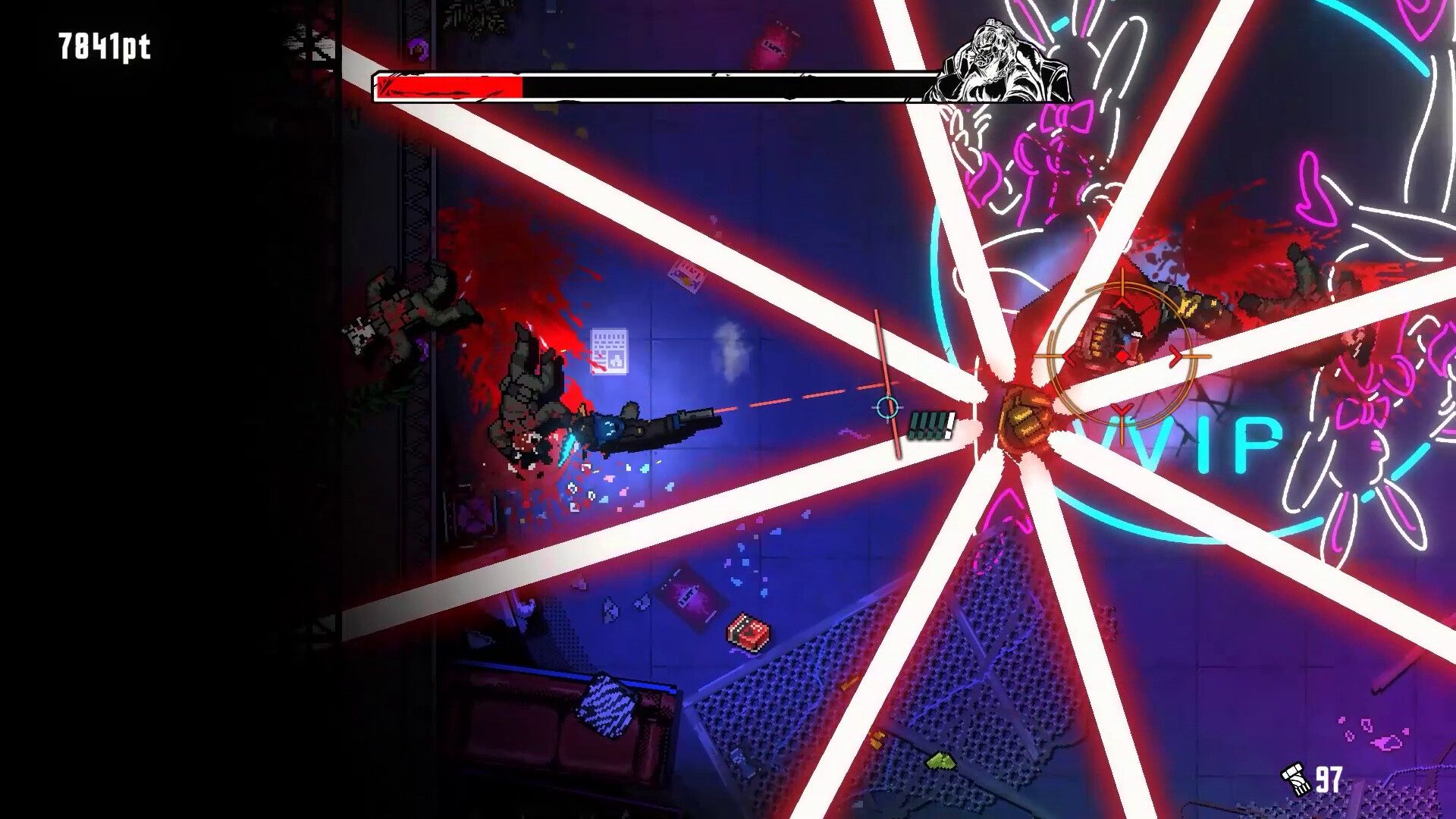
These bosses are rather unique but they are also few and far between as there are only three in the entire game. Similar to the rest of the game players still die in one hit to bosses and it is also essential to change-up the ways that players attack them as simply shooting away deals less damage over time. Instead, mixing up damage types by throwing in the occasional risky punch, knife toss, or even charge-punching a box at a boss will increase the damage dealt. These bosses are all unique feeling, especially the second one that sees players desperately needing the movement speed upgrade to feel possible, but the final boss is truly a master challenge that often felt like it required more luck than anything else. While we won’t spoil anything here, it is worth noting that it also featured an unexplained mechanic that factors heavily into how well Jin can damage the enemy, which works great when combined with the narrative but could have used a bit of extra explanation.
Once players complete the game there is technically no New Game+ but players can revisit any stage they have previously completed but now with every upgrade they have obtained. This means players can track down any Limbus they may have missed, farm bolts for upgrades, aim for higher ranks on stages, and potentially mop-up achievements for killing enough of certain enemy types or replaying a stage that never properly unlocked as a few level completing achievements are glitched before launch.
Audio & Visuals
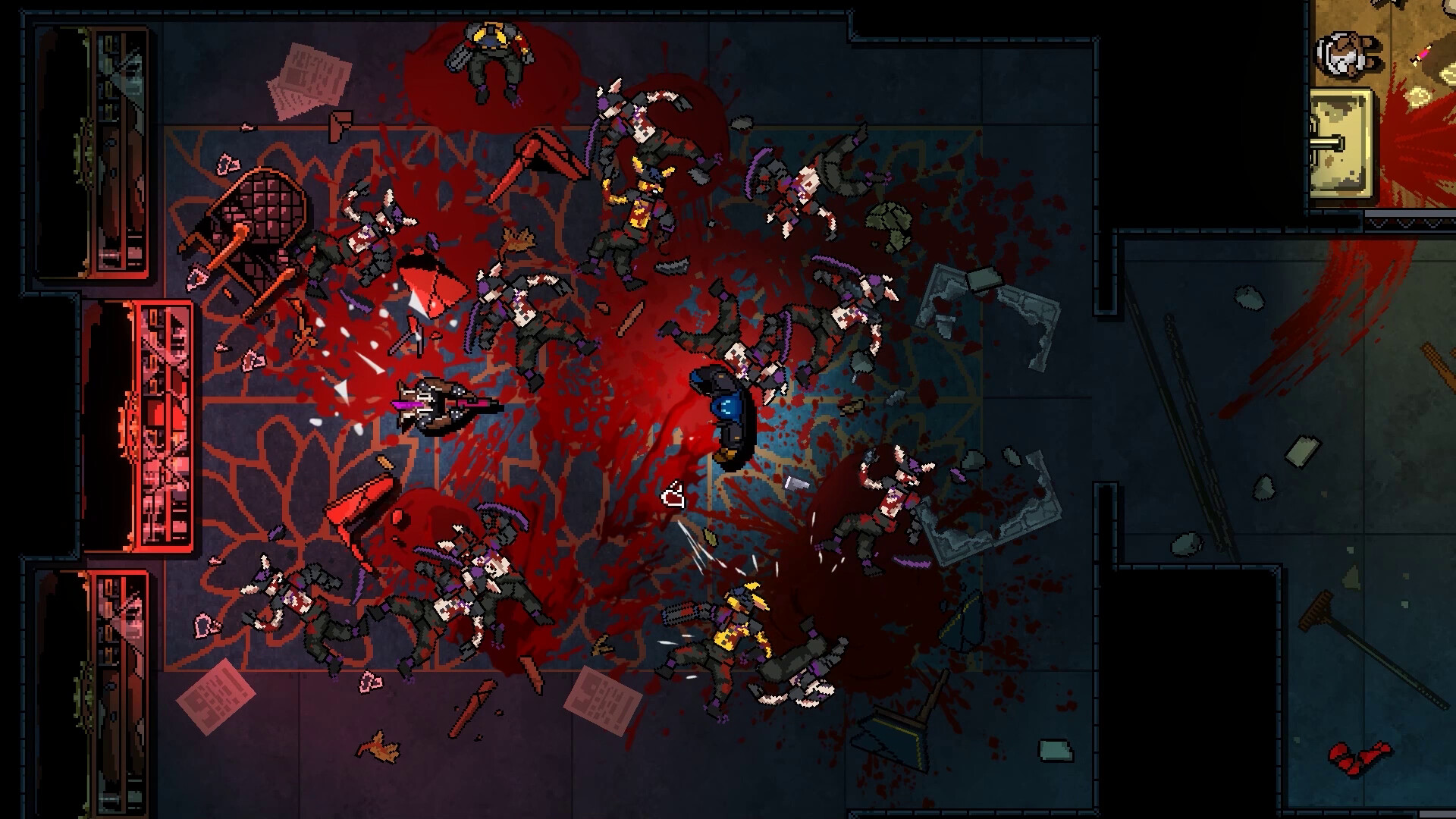
Kusan: City of Wolves is designed with a pixel aesthetic which is a nice retro touch and features quite brutal looking enemy deaths when they splatter onto the ground with a decent amount of variety between enemy appearances even when facing off against the same types. These types often change depending on the level and it is nice to note that every level also has a unique theme throughout every stage. As for the characters themselves, it is wonderful to note that the character portraits are nicely handled and the comic-book style presentation is similarly handled excellently with the anthro characters fitting in perfectly with the neo-noir setting.
There is unfortunately no voice work of any kind throughout the game but the title does feature a rather great collection of head-bopping background music with a unique song set to every level.
Overall
Kusan: City of Wolves is a stylish and punishing game that will have players sighing in frustration as often as they are with relief for getting through a difficult stage for the first time. Combine this level of challenge and ability to replay levels for mastery makes it a great fast-paced game that rarely feels cheap outside of the boss encounters but that is likely on purpose. With this, and the fact that the game’s story is actually one that genuinely feels emotional and well-written despite an abrupt ending and Kusan: City of Wolves takes a certain feeling from over a decade ago and makes it its own, offering style and challenge in equal measure with enough emotional backing to keep players driving towards the finish.
Capsule Computers review guidelines can be found here.

