


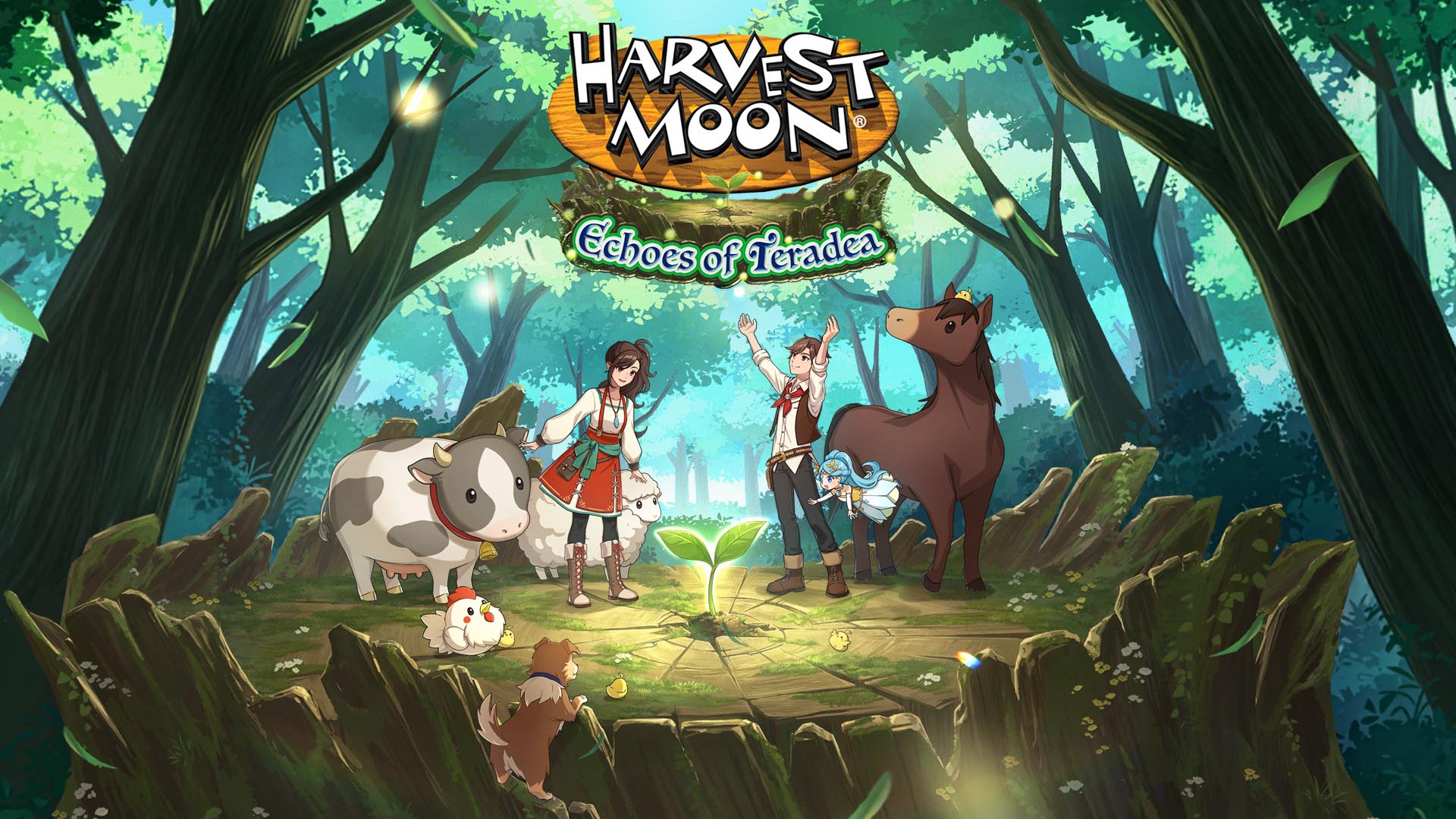
Harvest Moon: Echoes of Teradea
Developer: IMAGICA GEEQ
Publisher: Natsume
Platforms: PlayStation 5, PC, Xbox Series X (Reviewed), Switch, Switch 2
Release Date: Available Now
Price: $49.99 USD – Available Here
Overview
It has been some time now since Natsume started working with their own version of Harvest Moon, taking their long history of localizing the previous franchise and looking to put their own spin on things. That road has been quite a rocky one and admittedly many of them have been extremely rough, but as the years have passed so has Natsume’s skills with the game, seeming to improve with almost every iteration especially while the original franchise is focused on remakes at the moment. Now with Harvest Moon: Echoes of Teradea arriving on numerous platforms including the Xbox Series X, is this perhaps their best entry yet?
Story
In the middle of the player’s dream they have a strange vision of shadowy figures of various shapes and sizes looking upon them as if expecting something, with the largest of the figures approaching just as they are woken up by their childhood friend. In the village of Bloomfield the player has just come of age and has been given their own farm on the outskirts of town and, with the help of their childhood friend who happens to be the non-picked gender of the player’s character, they learn their way around the farm as well as the fact that the people of Bloomfield have long been trapped away from the other towns across the land by a mysterious fog that is spreading throughout the Forest of Echoes.
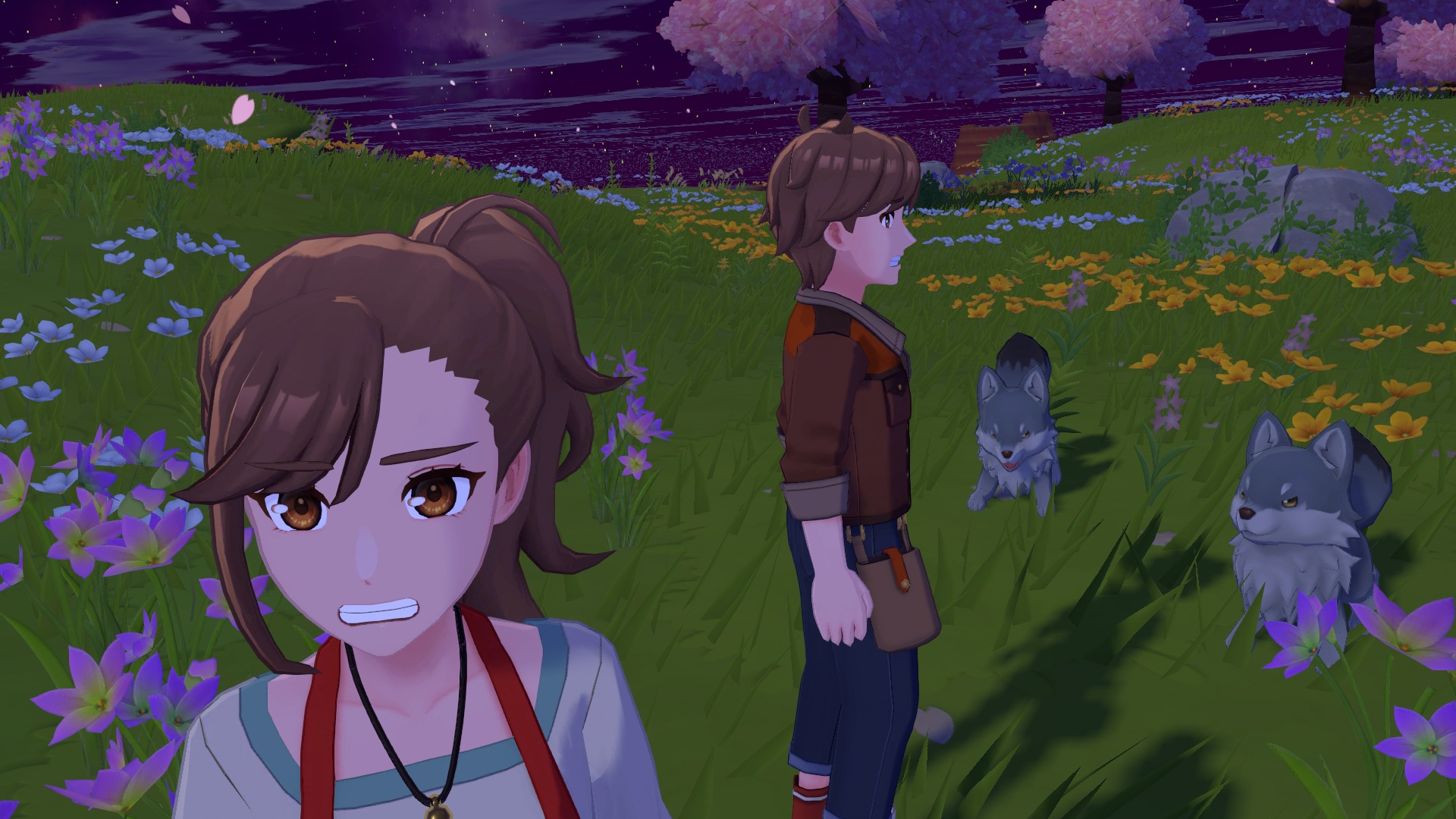
To make matters worse, the local wolves have grown incredibly aggressive, preventing anyone from foraging far into the wild. Despite this, the player and their friend wish to bake a cake for the only child in town for her birthday and her favorite ingredient just so happens to grow on the Wolf Cliffs, the deepest part of wolf territory. After being scared off and scolded, the player makes their own trip and along the way manage to awaken the slumbering Harvest Goddess of the land. The Harvest Goddess has slept for so long she has lost almost all of her memories and has shrunk considerably leaving her at a fraction of her power. It isn’t long before she figures out that the reason for her memory and power loss happens to be due to the death of all four spirit trees throughout the land and only through the player’s ability to return happiness and life to the different towns can she be restored in full.
Harvest Moon: Echoes of Teradea does a solid job worldbuilding both the Harvest Goddess’ plight and the four towns by tying their fates together. After learning that the power of “happiness” takes the form of Happilia sand and using it will revive a spirit tree, players not only have a reason to engage with the villagers of each town they reach but also take on requests, move their home around if they wish, and more, simply to try and expedite the revival process for each village. It helps that many of the locations are suffering from rather severe situations and have lives “hanging” in the balance.
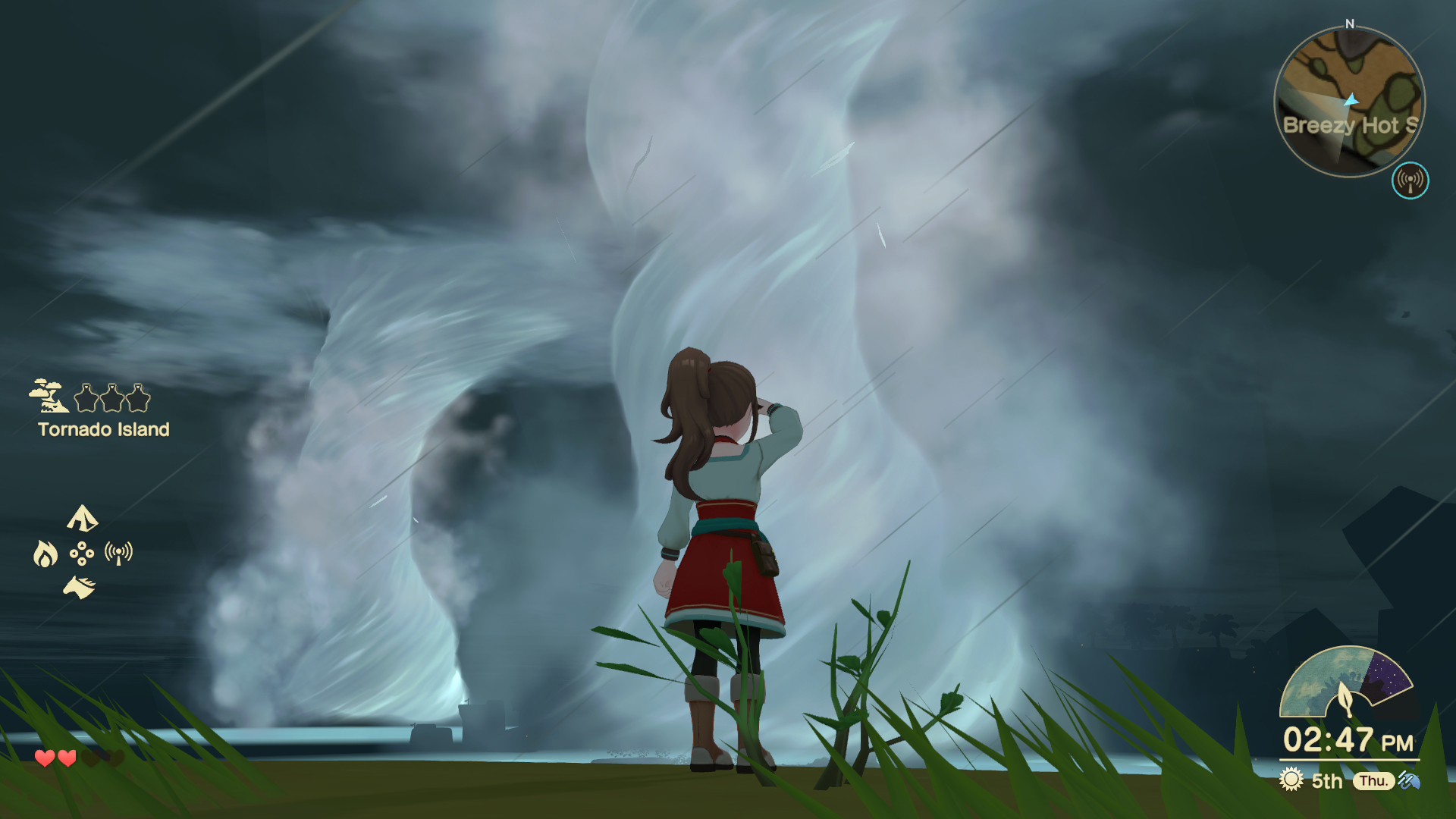
While Bloomfield is beset by packs of wolves, the port village of Tidewind is buffeted by non-stop rain and water-spouts making it impossible to traverse the seas. To not go into extra detail and spoil the other two towns, it must be said that at least one faces a similarly dire natural disaster fate while the other faces an entirely different threat, all of which can be traced back to the dead spirit trees and the weakened guardians meant to protect the land. It is also nice to note that while players can simply complete the first “chapter” for each village and even for the Goddess herself, the game features quite a bit extra beyond the base storyline for those wanting to see more of their favorite characters.
Each village has multiple chapters that players can complete with each one requiring a filled up Happilia bottle to activate, the only downside is that completing some of these second chapters requires items or crops that cannot be grown until far later in the game, even requests from some villagers can ask for items that players won’t see for hours or longer which is rather unfortunate. Thankfully though the villagers themselves are rather entertaining and have some decent personalities even if some are kept pretty surface level. One thing that is nice to note is that the game directly shows players what an NPC’s favorite and disliked items are, increasing the amount the closer they get with them, meaning there is no need to guess or use a guide.
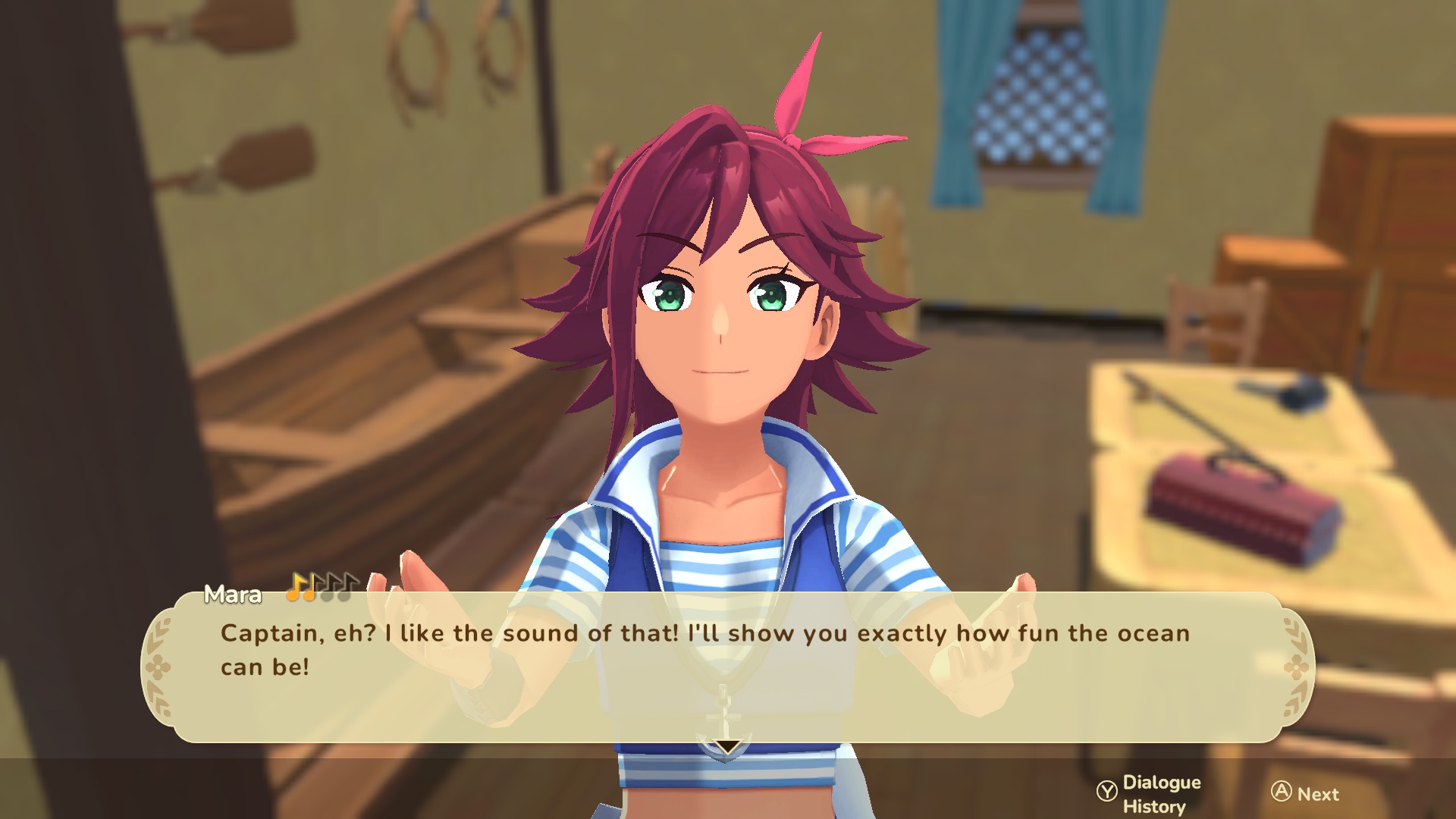
The game features five female and five male romance options, all of which have their own unique flavor and even feature more adult focused characters this time around, and even the player’s childhood friend, who happens to be the other gender of the selectable player character, is an option, which is a nice touch as not only does she fit a solid archetype right there, but is something rarely seen in a game like this. One thing that is a bit unfortunate though is that some of the most intriguing romance options appear in the last two towns, though that is just a personal preference. Each romance option has different “note” events signified by a letter in the mail that is sent whenever the player fills one of four notes that indicate how friendly a player is with a villager, with romantic options having four and normal villagers having three, and these events help give the characters some extra depth and personality, especially since selecting the “correct” dialogue choice not only rewards bonus affection but also a unique line of dialogue too.
Gameplay
Harvest Moon: Echoes of Teradea opens players up to an “open world” almost immediately after the tutorial finishes, giving players plenty of ways to begin their journey, whether it is choosing to focus on their farm first, gathering money and befriending animals or livestock for better products to ship, craft, or cook with, or decide to venture out and challenge the various missions and favors the player can accept. The core goal in every town is filling up the Happilia bottle through any means, be it simply talking to people, completing requests, shipping items, fishing, farming, and more. In fact, one partial negative to the game is the fact that the way to “progress” to the next town is often rather obtuse, especially due to a certain element that we’ll mention later regarding quality of life, and overfilling a bottle simply results in sand spilling out rather than filling the next one ahead of time, preparing it for when the player finally can complete the next chapter for that village.
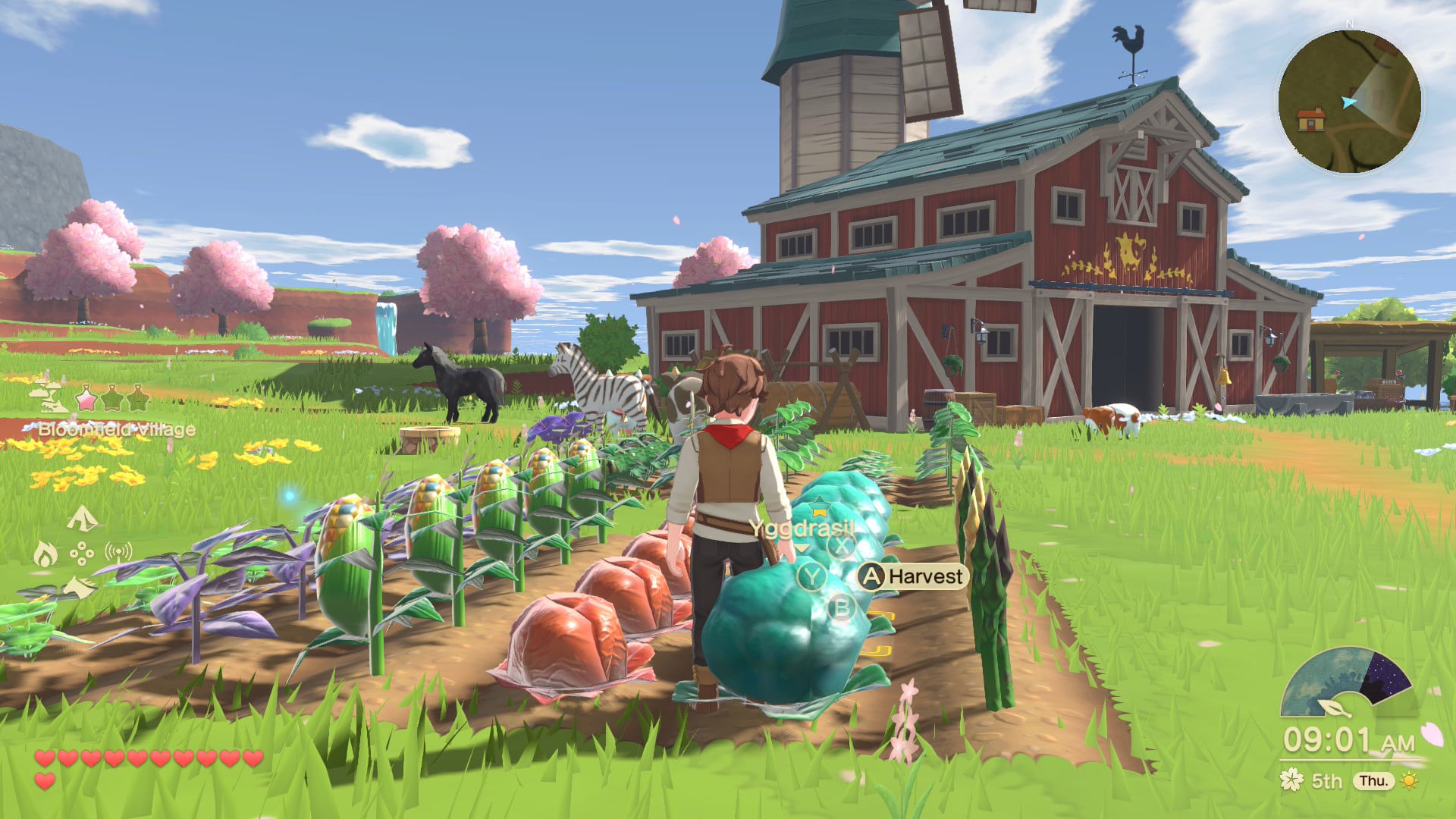
Farming in Harvest Moon: Echoes of Teradea is both simplified and a bit more complicated at the same time, since while most crops and flowers can grow out of season as long as they are planted in the right town, the only time they will properly grow in other locations is if it is the proper season, resulting in various hybrids. This means growing eggplants, a Tidewinds crop, in Bloomfield, successfully can result in getting special striped eggplants and other unique combinations. That being said, most of the farming is as simple as can be, especially since the game will automatically swap between tools as needed, even giving players the option to move in a grid-like pattern to properly till, sew, and water. As players upgrade their farming tools they’ll gain charge versions of watering and tilling, though the seed sowing must be obtained through a different method. Players can plant seedlings of trees in specific locations as well with trees able to grow and produce fruit without micromanagement.
When it does come to micromanagement players can take part in various other improvements to their farm, such as monitoring soil quality through the four initial plots players have access too, with the soil quality degrading the more it is used but recovering when left to rest or, later in the game, covered in fertilizer with an enhanced machine. Better soil quality can also be improved by allowing the player’s barn animals out to graze but this can risk the animals eating a crop or too as well unless players have a fence up, but this also prevents them from properly helping the field. Fertilizer can be manually added to specific crops to enhance their quality once a day and this is useful as a number of tasks can require higher level crops or cooked items than the base value or 1 star most standard crops will offer at the beginning.
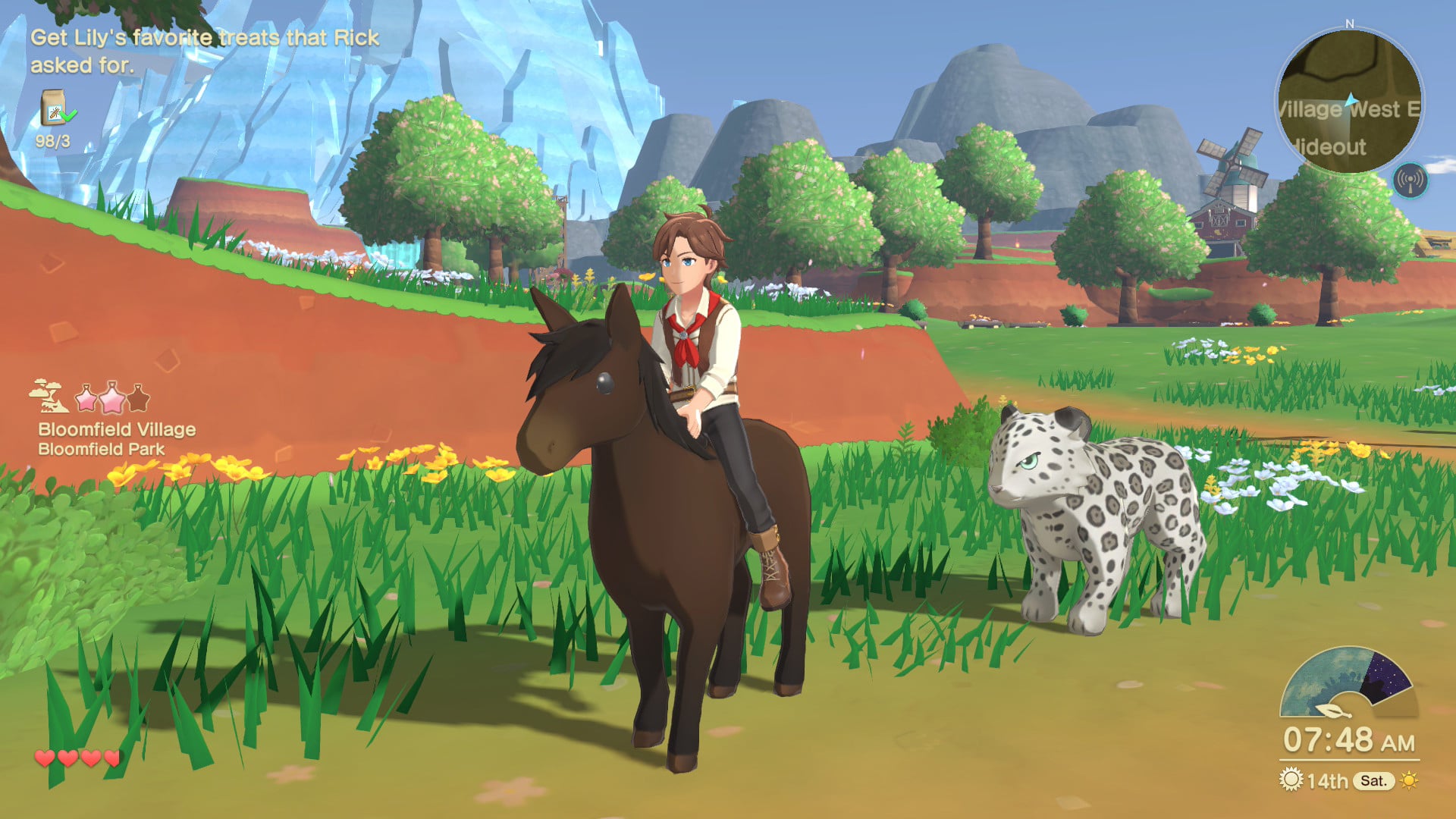
This is one issue that Harvest Moon: Echoes of Teradea does have and that is the fact that players will feel very limited by how far they’ve managed to actually progress the main storyline. This is because while the player starts with a number of farmable plots and a small barn that can hold up to four large animals, any upgrades to the farm buildings or even to the machines that the player can regularly make use of are locked behind certain progression markers or only available in later towns, meaning it is entirely possible to gather up tame a horse, have a sheep, cow, and then tame another larger animal and be maxed out in the barn quite quickly and while it is possible to “board” pets at the Bloomfield Animal facility, it cannot hold farm animals, meaning players may need to house their favorite horse if they need to tame something else that is suitable for navigating the shifting sands of a desert or the frozen wastes of a chilly land.
Similarly, while the player can have two smaller pets in their home and have one accompany them everywhere with various skills that can help out such as restoring stamina, driving off hostile animals, or even finding seeds, obtaining more pets requires either upgrades that are held off for far too long or boarding an animal. This is something that is rather unfortunate considering the wide-range of animals that players can tame throughout the game, most of which have unique skills as mentioned before. In fact, a black panther found atop a mountain top managed to have the “destroy” skill that granted my character access to destroying hard boulders and farming ore that was far too tough for my own tools’ at the time. This means players can be well-rewarded for taming as many animals as they can since players never know what unique skill a species might have.
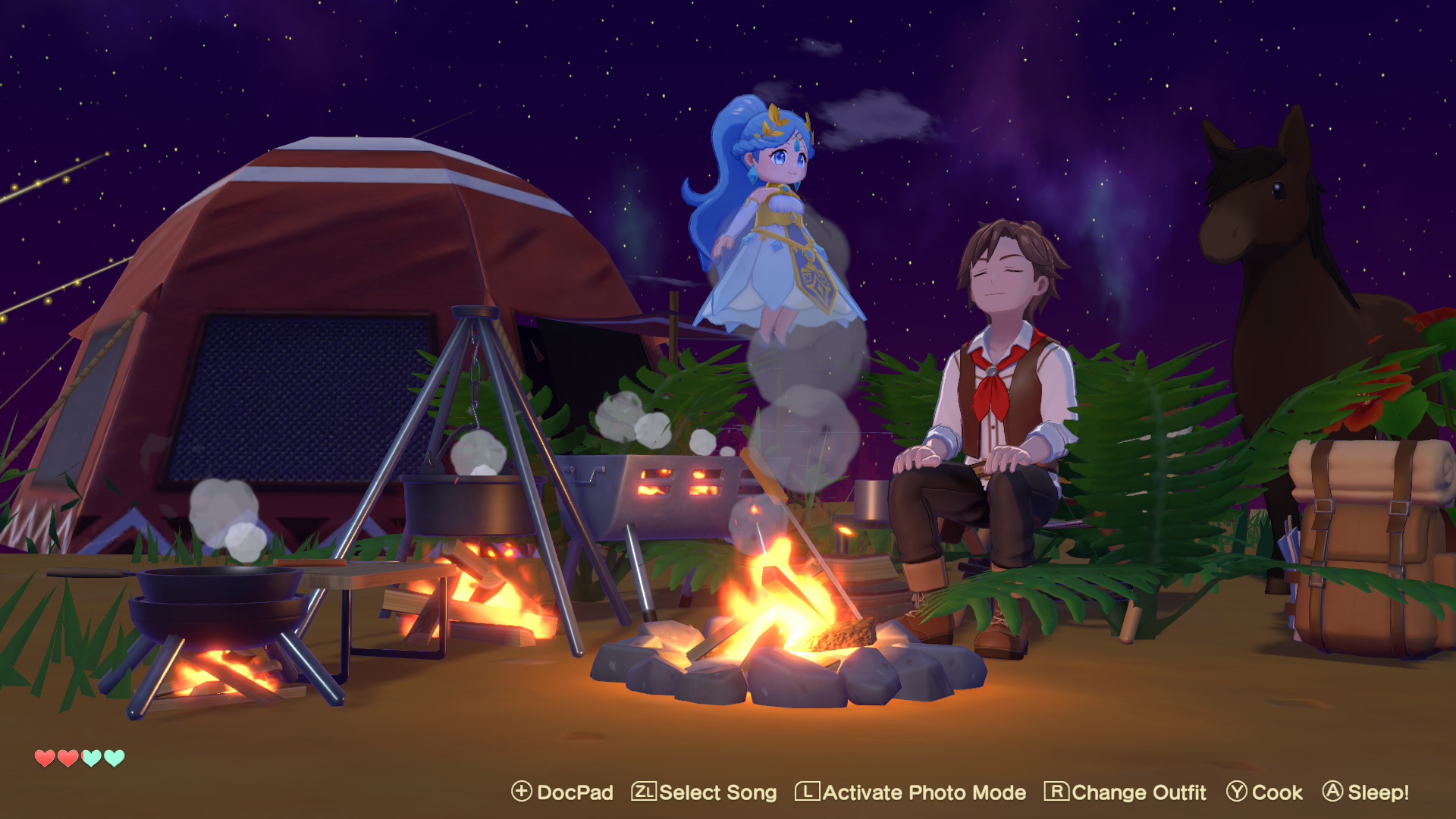
Traveling around the world of Harvest Moon: Echoes of Teradea is something of a mixed bag. Thankfully players will quickly unlock fast travel between goddess statues once they’ve gotten past the first chapter of the game, making quick movement between towns or objectives a breeze, especially with the help of the player’s trusted horse or whatever mount they prefer. That being said, the game does not feature any form of manual jump and climbing is only done through vines here and there with jumpable cliffs indicated by red streamers on a log. This makes navigating through hilly locations quite annoying as players will be riding along only to find themselves going sideways because a barely noticeable lip in the environment is preventing them from advancing. One plus however is that while players can save the game generally whenever they sleep, they can also save the game at any point while out adventuring, meaning there is no need to worry about taking a risk here and there. It also must be said that the game’s Midnight timer that instantly puts the player to sleep is rather rough, especially since the workaround to the mechanic, a tent that allows for camping at any location at the cost of only minor stamina recovery until it is upgraded, arriving well over ten hours into the game.
Another issue that can arise in the game is the mission tracking system. While it is possible to track a primary goal as well as two secondary missions at the same time the game often fails to properly show players where they need to go or even indicate what they might have to do to complete a specific task. This is especially true in regards to navigating to the new towns. As mentioned before, one of the first major quality of life elements that the game needs is the ability to interact with anything while riding on a mount because right now it is inconsistent. Players can pick up items they ride over and jump down ledges while on the back of a mount but cannot talk to NPCs nor interact with objects in the environment, such as inspecting a broken bridge to trigger the quest to fix it.
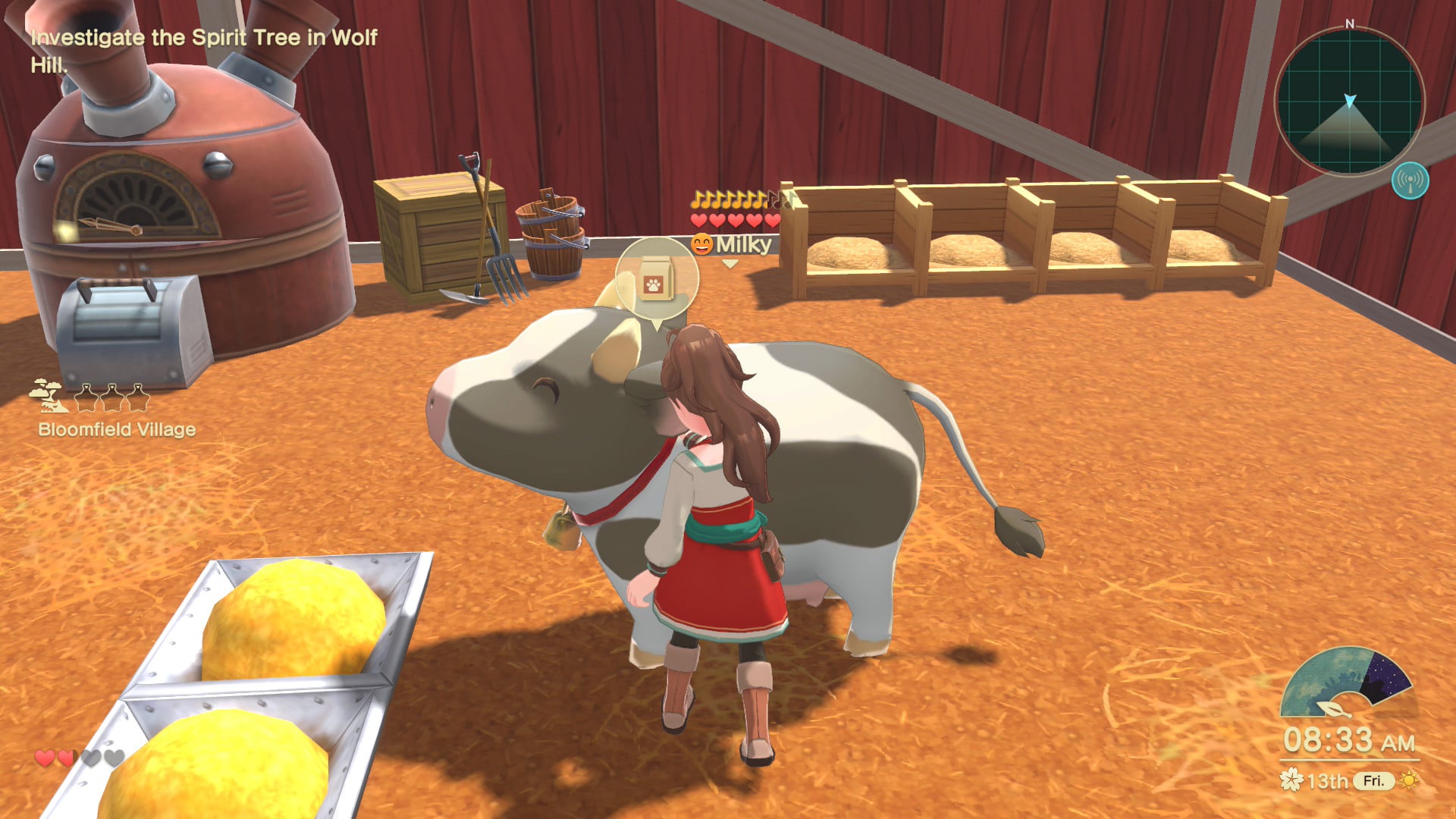
Other elements that have been added to the game come in the form of hostile animals and while players cannot fight them, they can turn them into pets with some food and petting. Anytime a hostile animal comes near the player they will start draining the player’s stamina meter or horse’s stamina meter until it is distracted by some type of food left on the ground where it can then be pet and calmed down. Another aspect are the aforementioned goddess statues which serve as both challenges of sorts and a secondary way to upgrade the player’s skills. While large goddess statues are used as warp points, smaller statues contain power wisps that are either hiding inside and need to be snuck up on, given tribute, taken a photo of in a specific pose, find the fragments of power scattered throughout a location, or even solve another puzzle to obtain a power wisp fruit. The goddess can then use these fruits to upgrade the player with more stamina hearts, faster animal affection gain, increased seed sowing ability, regenerating fishing line health, and more, encouraging players to explore all types of locations to uncover the fruits required for upgrades, especially since the player’s starting stamina is quite low.
Audio & Visuals
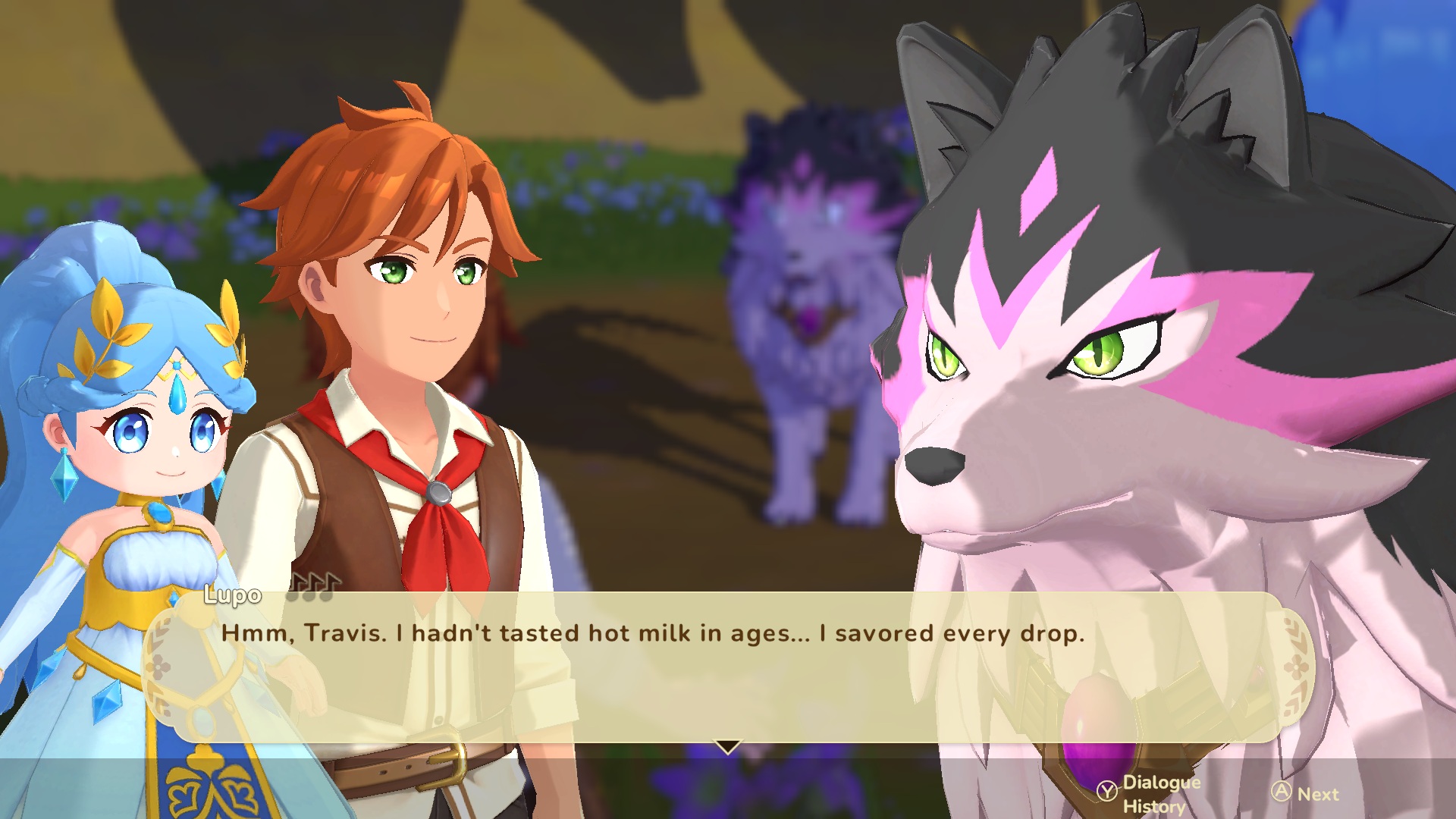
Harvest Moon: Echoes of Teradea feels like something of a mixed bag graphically as it tries to straddle the line between the series’ signature cuteness and style while also trying to go a bit beyond it at the same time, leading to something of a mismatch at times. The character designs are handled rather admirably with decent details and unique outfits for each town, including those the player can craft, though it is a bit unfortunate that the character’s emote too much during dialogue. If anything, it feels like a character portrait would have been the better route at least during conversations.
Fish look great when fished up but are portrayed as the simple black blobs beneath the water like usual and there is an extensive level of detail when it comes to crops and their growth stages as well as barn animals and wild animals that players can tame to become pets or even mounts. There also happen to be certain goddess statues that seem specifically placed to make sure players can, literally, take a photo of how great the backdrop looks when high up in a mountain area and it is rather impressive looking, especially at night, but sometimes the draw distance struggles in these higher elevations, fading in and out depending on the angle. That being said, we never experienced any form of slowdown or glitches while playing through the game, even during hard thunderstorms.
There is unfortunately no voice work of any kind, not even noises outside of animal sounds, during the game and even this is somewhat limited as there is no variation on whether the player is petting a black panther or a tiger, the roar sounds the same. Similar with the different types of cows and horses, though at least other mounts have some sound variation. The background music varies not only by season but also by location and is fitting for the game genre but doesn’t really stand out in any notable way.
Overall
Natsume has struggled in the past with capturing what made the classic games they worked with reach an audience that finds them beloved to this day but Harvest Moon: Echoes of Teradea is honestly their closest and best attempt at reaching those heights once again. By offering a world full of interesting places to explore, intuitive farming with plenty of crops, variations, and hybrids to grow, and numerous challenges along the way to bringing peace back to a land where nature is in turmoil, Harvest Moon: Echoes of Teradea really nails what players want in many regards. There are still a number of quality of life issues and pacing problems in regards to unlocking upgrades and navigating around the world, but those who have been overlooking Natsume’s efforts will find themselves remiss if they bypass Harvest Moon: Echoes of Teradea.
Capsule Computers review guidelines can be found here.

