Last night, copies of Halo: Combat Evolved Anniversary hit store shelves worldwide, celebrating the tenth anniversary of the original Xbox classic.
Dan Ayoub, executive producer of publishing had this to say about the game’s release:
As a studio, we’re incredibly thankful for the enthusiasm and support our fans have shown for this project. We know many of them have been waiting years for a remake of the original ‘Halo,’ so we’re elated to deliver a faithful remastering of the original classic that breathes new life into the legendary adventure.
Developed by 343 Industries, and partnered with Saber Interactive and Certain Affinity, the game remasters the graphical look of the original Halo campaign, as well as adding new multiplayer and cooperative features to the game, including Kinect and 3D support, and is labeled the “definitive” Halo: Combat Evolved experience.
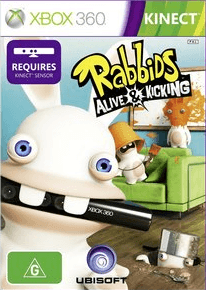
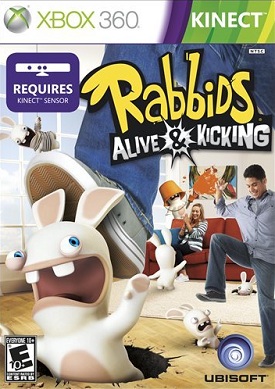
Rabbids Alive & Kicking Developer: Ubisoft Publisher: Ubisoft Platforms: Xbox 360 Kinect (reviewed) Release Date: November 4th, 2011 Price: $49.99 – Available Here
Overview: The Rabbids series is undoubtedly Ubisoft’s best known franchise for party games. And why wouldn’t it be? Previous titles have made very interesting and creative uses of motion control and touch pad technologies available on the Wii and handheld systems. A series quite successful in its own right that Rayman himself must regret letting these mischievous little buggers take his spotlight in the gaming world. The appeal of past games have often been attributed to the unique and downright wacky sense of humour, and relatively easy-to-grasp gameplay that have entertained hardcore and casual gamers alike in party situations or social gatherings.
Now the Rabbids have been given another opportunity to entertain players in an entirely different way. Replacing that old and increasingly dusty Wii remote with the motion sensor technology of the Xbox 360 Kinect. Now, it’s no secret that the Kinect has had more than its fair share of poor quality titles due to the inconsistent nature of control schemes and adaptation from game to game. Ultimately it lends itself better to the party game genre. So as a result of putting two and two together, Ubisoft’s latest outing of the Rabbids series: Alive & Kicking, makes its Xbox 360 debut on the Kinect. The question is, will the game deliver a new kind of interactive and humorous gaming experience, or will it sink into the Kinect’s exponentially growing pit of “meh”.
Story: So once again, the Rabbids have gotten up to some new form of no-good again. The story is loosely based around the usually structured random mishaps of messing with cloning technology after being trapped underground. The plot is an extremely loose mess of animated cut scenes that is centralised around the idea that the Rabbids have begun invading the human world through use of the Kinect. And that’s really all there is to it. No big villain, no climatic themes or situations. Though it is interesting to internally debate the role of the Rabbids as good or evil (given their origins as Rayman’s enemies), the story is negligible and hardly worth the attention of the player.
Party games have never been about delivering strong story. Take a look at Mario Party, Kinect Sports and the Mario and Sonic Olympics series. This point has proved in the past that story is not essential to success in a party game genre. Adding a story only serves to provide transitions from one aspect of gameplay to the next. Sometimes people just want to sit down and play simple little mini-games (or ah… stand up… as it were in this case…)
Gameplay: The ever so important facet of party games: the gameplay. The formula of success tells us that a game will sell and play well based on a few different features that are added to the gameplay mix. Inclusion of iconic characters; the level of innovation in the games; the relative ease of use; and functional multiplayer.
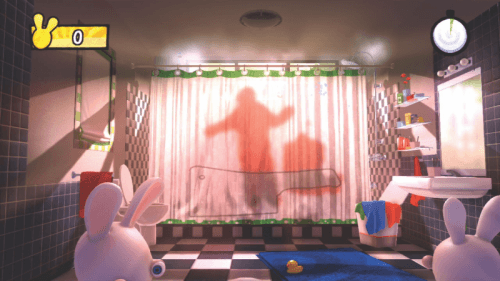
The first facet is already handled well. For a game series that has its roots deeply cemented in party game territory, the transition from one motion control scheme to the next is essentially a no brainer. And the Rabbids do lend themselves quite well to the idea of Kinect interaction. Being able to squish, push and wack these little pests in augmented reality does project a strong degree of appeal.
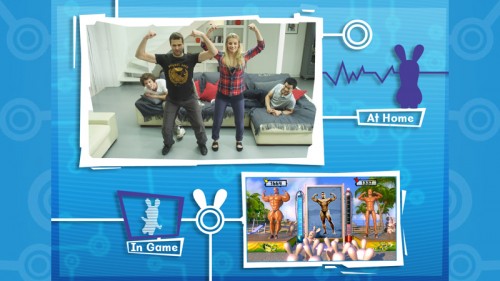
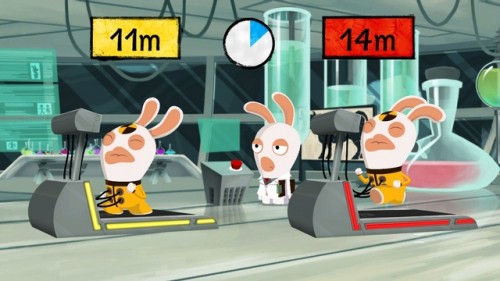
The level of innovation of some of the games is quite clever, while others lacking and downright repetitive. The mini games themselves are actually divided into 2 different sorts of mini-games. There are the short, cut-away lab test style mini games, which make the players perform ridiculous animated actions such as licking a cake off a Rabbids face, or imitating a cheerleading dance routine for others to copy. The second form of games is found in the player inclusive augmented reality mini games, where the player is actually interacting with the Rabbids in their own room. Whack A Rabbid is one example of these, a humorous take on the classic whack-a-mole game where players must step, kick and swipe at Rabbids as they clutter the players floor and screen. Overall, the design of most of the games is enjoyable, but not for sustained periods of time. There are games in the mix that have been tried before, and have failed in their respective games. The game Silou-Wet is a strong reminder of the failure of ‘Hole in the Wall’ where the player or players have to imitate a shape in loose and awkward positioning of limbs, akin to that of playing Twister. Only time there’s photo evidence. The notions behind games like these are just plain awkward at points. Plus I would like to think that most players would also find the idea of the licking mini-game more than a little creepy.
One of my favourite parts of the game’s innovation is similar to one that was included in Rabbids Go Home, a previous Wii title. The Wii game featured a small humorous interactive mode where the player sees a Rabbid trapped inside a Wii remote. Upon tilting the remote or pressing random buttons, the player soon discovers the Rabbid housed within is getting tossed around like a rag doll in a cement mixer. The idea of smacking around one of these little buggers appeals to everyone’s inner sadist. In that spirit, the game also includes a mode called My Raving Rabbid, which drops a Rabbid into your living room. Player can then interact with a variety of props bought from the in-game points store as well as, naturally, smack around the little critter to their hearts’ content. This mode provides for a fun distraction in both solo and multiplayer outings.
However, the game’s biggest downfall is easily the control scheme. Yes once again, and to nobody’s great surprise, the awkwardness and inconsistent quality of game control associated with the Kinect plagues what would be an otherwise relatively enjoyable title. This is not to say that the game is broken by any means. However, players will find many mini games an absolute pain to play at points. Two games that were the absolute bane of my play time were Hacked Off and Guitar Zero. Once again, a Kinect title falters in that the control system consistantly fails to recognise the actions or intentions of the player. In Hacked Off, which is a take on the old ‘sawed in half’ magic stage trick, the Kinect often outright refuses to acknowledge the movements of the players. It is not so much the lack of recognition that annoys me about the controls of the game, but rather the inconsistency. Some games, such as the afore mentioned Silou Wet, and Whack a Rabbid are highly responsive and relatively easy to complete, but it is the fall down of other mini games that makes the experience all the more frustrating. Gamers like their experiences in party games to be easy to pick up and easy to play. The game essentially sabotages its own longevity by providing mini games with such frustrating controls that even people in social gathering would not want to touch.
The final aspect that should be observed is the multiplayer. Unlike many past Kinect titles, Rabbids Alive and Kicking is the first to introduce complete 4 player party game play. In fact, the game even offers a team tournament style party mode which is able to register up to 16 players at once. Bear in mind that all 16 people won’t be playing at once. The game’s structure is turn based where players must perform certain actions co-operatively to complete the mini-games task for the most points.
As a party game, the multiplayer feels solid. In fact, it feels more solid than the single player. The ideal party game is one which promotes multiplayer play rather than single player outings. While obviously single player is possible, multiplayer is encouraged. Again however, the downfall is the self sabotaged longevity. As a game that is directed to be played in social gathering situations, Rabbids is far less likely to see as many gameplay hours as the newest FPS or RPG releases of 2011. It’s not a bad game, but it once again highlights the frustrating nature of an increasingly frustrating motion control system.
Audio & Visual: The visual aspect of the game is about what one would expect from a Rabbids game. The cartoonish charm of the little critters themselves still evokes both feelings of like and intense hatred of the Rabbids. Their cute and wacky stunts on screen make them all the more appealing, but the degree to which the mock and ridicule the player for their failures makes them an all too juicy target for a potential squishing. What the game does suffer from however is the same thing that many would find with the Kinect technology. The player screen is just far too busy much of the time. For players, attempting to co-ordinate their own movements to match those required of them on the screen with a real time playback visual also in effect, the rapid influx of this much visual information will make it hard for players to focus on . Simplifying the HUD down would take much of the visual stress away. One other notable digital downfall is the Kinect’s lack of ability to detect inanimate objects in the room, and often players will find the Rabbids onscreen breaking the notion of reality by moving in and out of furniture in the player’s living room. As small issue, and at this point, to be expected with the Kinect, but still something that deviates from the central entertainment value.
The sound affects and music add to the cartoonish charm, featuring the Rabbids trademarked crazy scream “BWAAAAHHHHHH!!!!”, as well as a cacophony of funny splat, wack and crashing sound effects to compliment the child-friendly nature of the game. Mind you, many of the sound effects are direct ports from previous games, but the sense of consistency is still there. Ultimately as a party game, players won’t expect the game to provide anything that is visually or audibly ground breaking, but for players of previous Rabbids titles, expect more of the same.
Overall: Rabbids Alive and Kicking is not a game to be played on one’s own. As a party game on the Kinect, I do have to say that it is one of the stronger entries in an otherwise bland and frustrating market for motion controlled 360 games. At its best, this newest Rabbids game will bring people together to laugh at the Rabbids’ wackiness and laugh at each other for pulling such stupid poses. The gameplay is appropriate for the genre and not too difficult to learn, just difficult to master at some points. At its worst Rabbids AaK will frustrate the players, but with other people around, it will naturally seem like a silly thing to get worked up over. Some refinement might be necessary with the controls before another outing, but as it stands, Alive and Kicking is still a good way to entertain groups of people who are looking for small, stupidly silly bursts of fun.
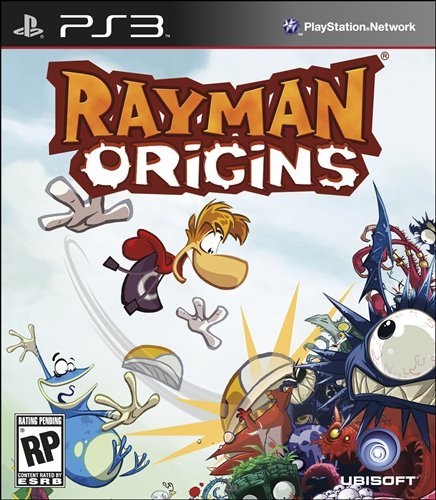
Rayman Origins Developer: Ubisoft Publisher: Ubisoft Platforms: PS3(reviewed), Xbox 360, PC Release Date:November 15th, 2011 Price: $59.99 Available Here
Overview: It’s fair to say that the triple A gaming world is obsessed with reality. In a month packed with some of the biggest franchises ever seen in the medium, players can find themselves in the grim, realistic and detailed worlds of Assassin’s Creed, Uncharted, Skyrim, and Modern Warfare 3. Where on earth has all the imagination and light heartedness in gaming gone? Why must quality releases from anyone other than Sega and Nintendo try so hard to imitate reality?
Ubisoft fly in the face of fashion with Rayman Origins, a technicolour gem of a game that seems to run on whimsy. The game sees the limbless wonder and his bizarre pals return to their roots – 2D platforming. It’s been a long time coming for Ubisoft’s often overlooked mascot, who since his 1995 debut on the PlayStation has first been lost amongst 3D sequels and then overtaken by the more party game friendly Rabbids.
Series creator Michael Ancel (who is also behind cult favourite Beyond Good and Evil) returns to the Rayman world with Ubisoft Montpelier and a brand new game engine behind him. Fans of the series will have a field day with Origins, which is packed to the rafters with characters and gameplay designs lifted from previous titles, with a huge emphasis on Rayman’s original adventure.
Story:
Whimsy and light are what fuel this game, and Rayman Origins thus has less depth to its plot than a Saturday morning cartoon. The game opens with Rayman and his friends snoring up a storm, sufficiently riling up an old zombie lady enough for her to behead her husband and set a flurry of evil minions loose on the world. The nasty critters imprison all the Electoons and nymphs in the Glade of Dreams, so Rayman and his friends set off to clear the world of Darktoons and reclaim their world – presumably so they can go back to sleep.
Freeing the five bizarrely well endowed nymphs blesses Rayman with new powers to fight against the unleashed monsters, and eventually leads him to rescue the four kings of the realm who have been taken over by dark influences. Together they use their magic to open a door to another realm where Rayman must face the source of all the darkness. Yes, it’s so much cartoon fluff, but that’s all the game needs. It suits the visual style perfectly, and the game design brings bucket loads of quirky charm to hook in players from the start. The characters themselves could probably use a bit more fleshing out in order to compete with genre icons like Marion and Sonic, but considering this is an origins tale, Rayman can afford to wait until later games to establish a more concrete cast of characters.
Visuals:
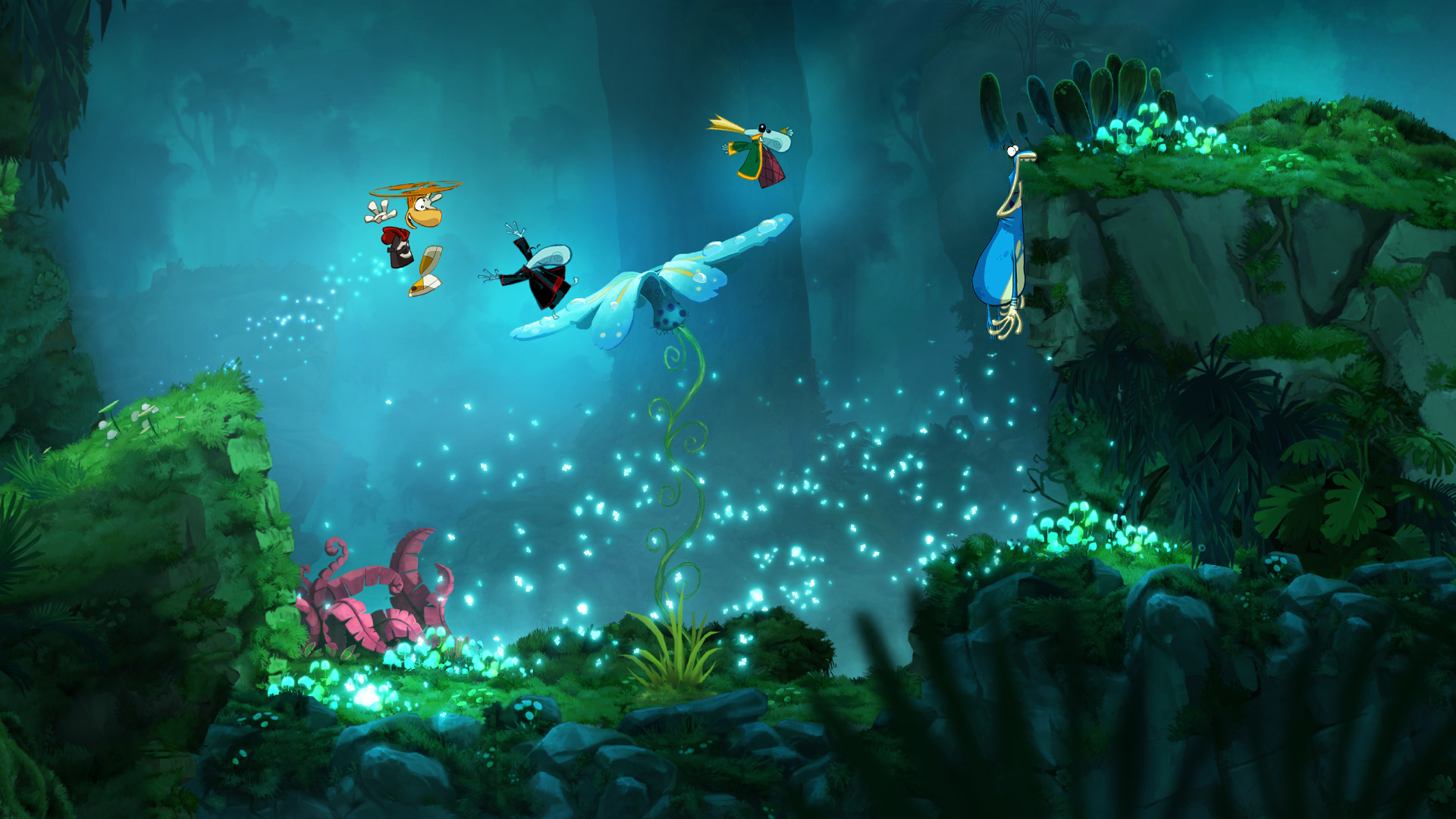
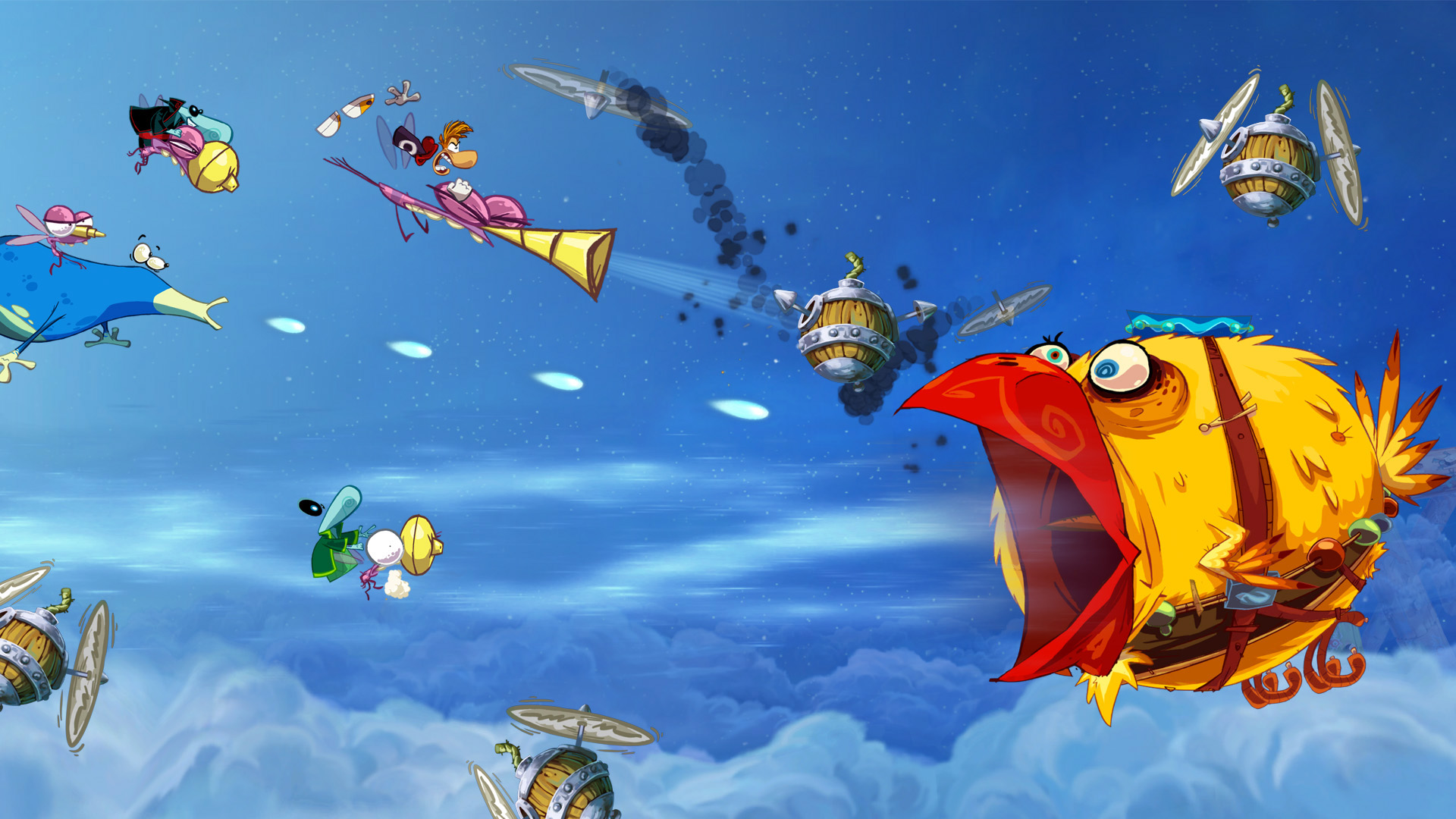
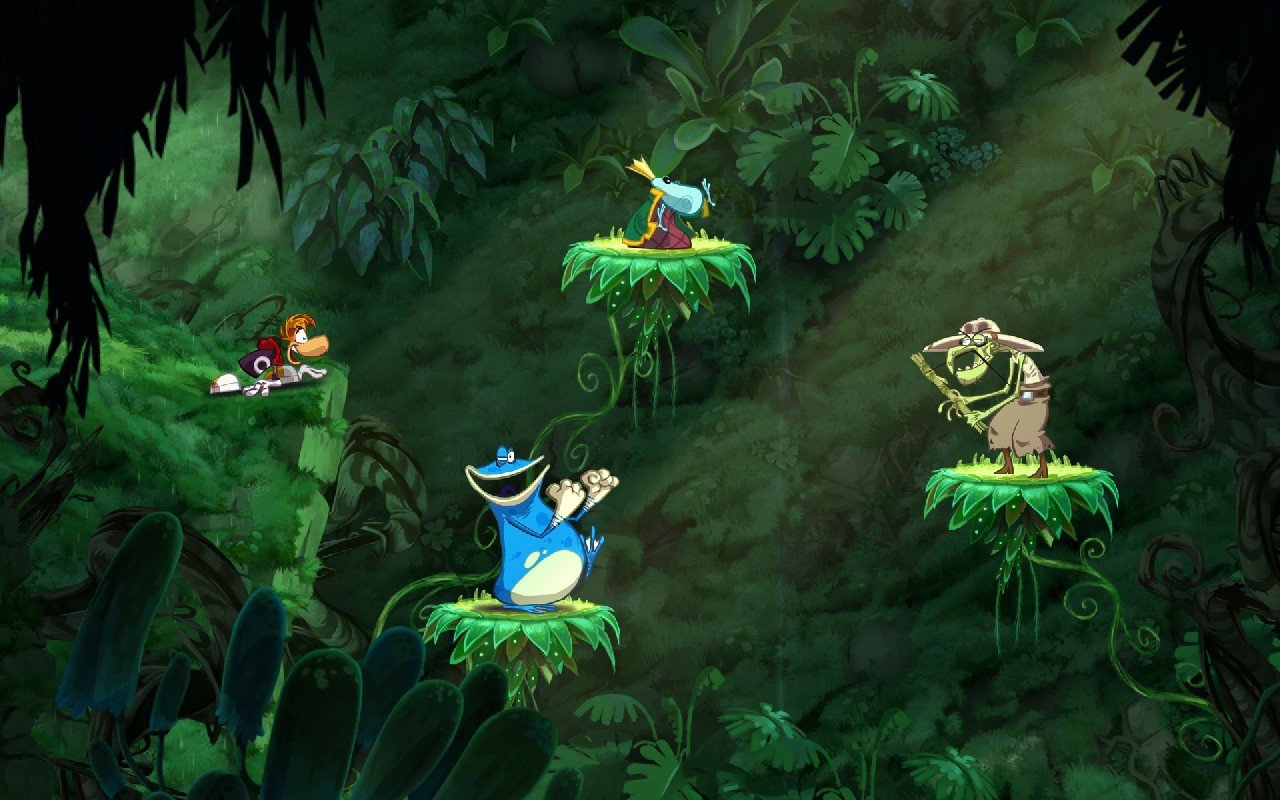
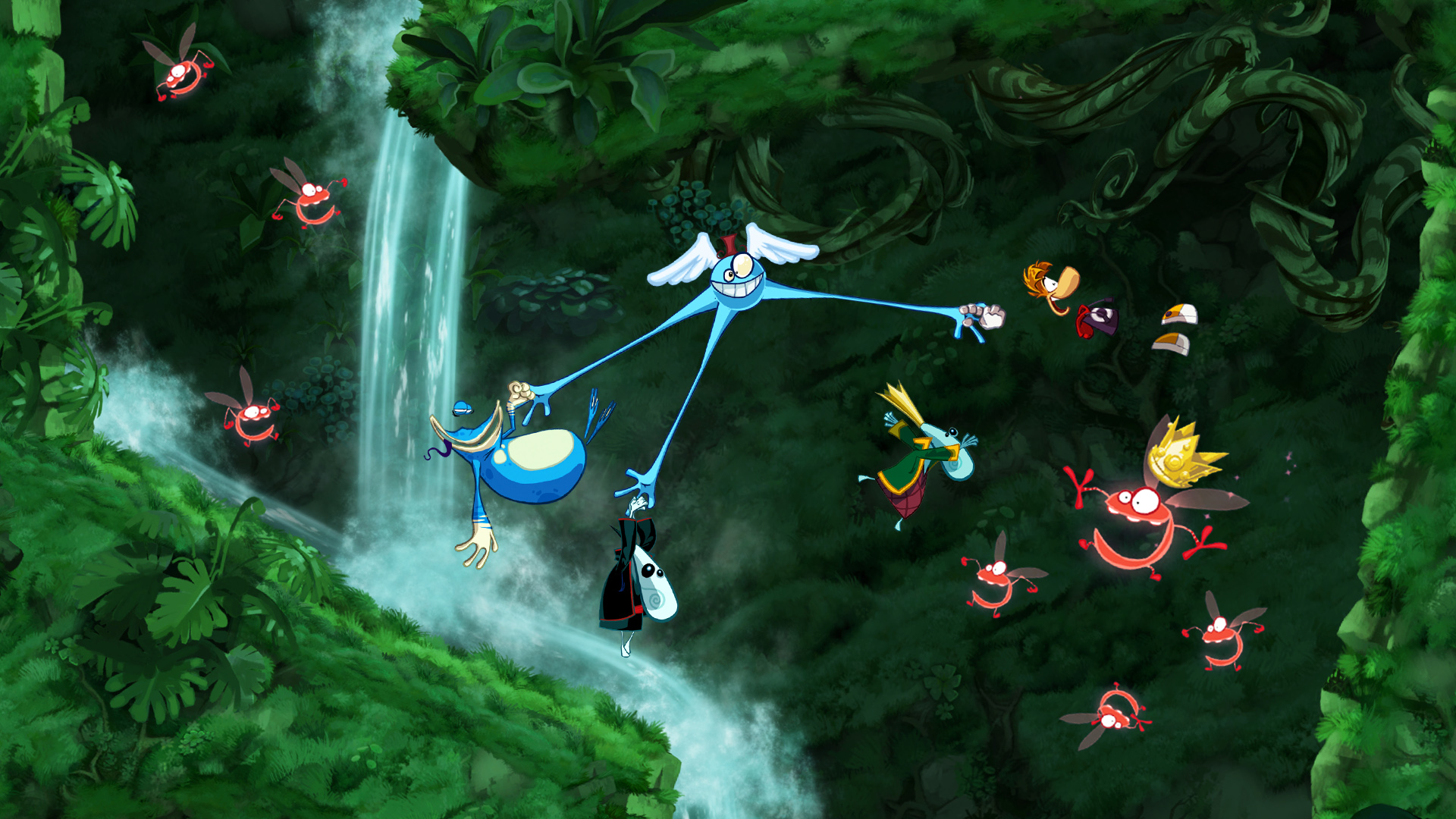
Rayman Origins is a visual delight- a technicolour dreamcoat in a world where brown trenchcoats are the norm. Everything is brimming with colour and imagination, every new stage unlocked bringing some hilarious new enemies and creative level design. Over five themed areas Rayman will encounter ice skating, fire breathing dragon waiters, alternately vicious and helpful slices of bouncy citrus fruit and giant mutant chickens. If it sounds mental, then you would be correct!
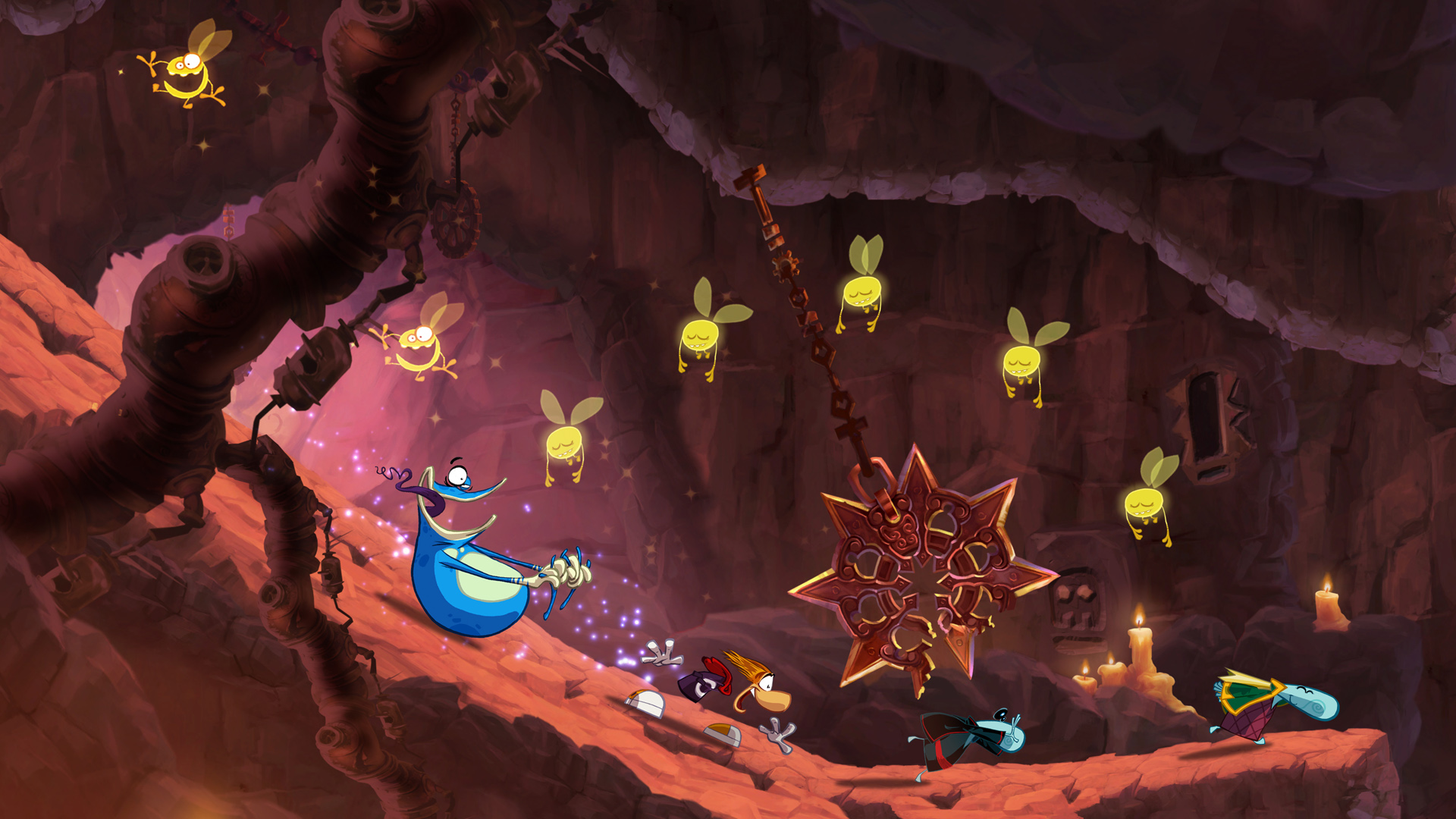
Didgeridoos act as moving platforms and corn kernels can be knocked into hot oil to create popcorn bridges . Everything has a pair of googly eyes slapped on it, and it’s amazing the personality that such a small detail can bring to a game. The quality of the artwork is fantastic, with some slapstick animations thrown in to give the characters some life – Globox in particular is funny to watch, hanging off platforms by the teeth and rolling his fists like the worlds pudgiest blue boxer. All of this in a lush, literally hand drawn style – it really is artwork brought to life. Origins is visually unique amongst retail titles, and I look forward to seeing what Ubisoft and other developers can do with the new engine behind the style.
Audio: The sound design continues the light hearted, wacky feel of the animation, rounding out the presentation package with some truly memorable music. Now I realise that the use of lots of squeaky gibberish probably doesn’t sound like a good thing, but trust me, it somehow works. The guys over at Ubisoft have managed to take high pitched gobbledegook and weave it through various themes to create music that is not only bearable, but catchy and enjoyable. Every bit of music matches the theme of the area it fills -for example the chili laden Gourmand Land is spiced up with some Mariachi style. Even collecting Lums can spark off some great sounds, collecting a King Lum sets off a joyous bit of harmony that never gets old despite it’s constant use.
The underwater theme is a particular highlight, and has players swimming along to a chilled out jazzy number complete with some squeaky solos. It all sounds ridiculous but is actually sublime, and Rayman Origins has one of the most enjoyable soundtracks you’ll ever come across. The sound effects are a perfect match, all slapstick punches and goofy vocalisations – the tutorial characters even speak in Pig Latin.
Gameplay:
Get from the left side of the screen to the right, collect everything you can along the way – simple. Fleshing out the basics of Origins’ platforming are a growing set of abilities (handed down by the rescued nymphs), some truly tricky sequences (“This place is DANGEROUS! Are you sure you want to stay? cries the game after your millionth failed attempt) and a seamlessly integrated multiplayer.
All of the sixty plus levels are accessed from the Glade of Dreams hub, where players can nip over to the Snoring Tree to change character or slip on an newly unlocked skin. The four characters – Globox and two Teensies in addition to the man himself – all have the same abilities, and only really exist for the multiplayer.
The levels on offer fill five differently themed worlds, which touch on styles and designs from the first Rayman game with music, food and forest based levels. Indeed the first area is a stylistic carbon copy of the first levels of Rayman, complete with grouchy green bad guys but sadly lacking in bouncy plums. Fans of the first Rayman should definitely prepare for a fantastic nostalgia trip!
Each level is filled with Electoons, little pink dudes with blue shoes and gravity defying ponytails. Freeing them from their cages opens up new areas, and there are over 200 of them to be found! Neatly distributed to encourage multiple playthroughs, getting all of them requires some thorough exploration to find hidden doors and some serious Lum collecting. Lums are the coins of the Rayman world, little yellow blobs that hang around levels and lure you into trickier jumps and dangerous corners. Grab enough and you’ll be rewarded with Electoons, grab even more (ie: them all) and you’ll get a very well deserved medal . Replayability is enhanced even more by the time attack mode, which only unlocks after completing a level for the first time.
The controls are perfect, and in the many times you’ll get squished, splatted or squashed, it’s always going to be your own fault. Rayman and enemies alike pop into floating bubbles when hit, and defeated goons can sometimes provide useful platforms to keep you out of trouble.
It’s all fantastic fun that flows very well thanks to some great level design, with simple static platform leaps quickly transforming into more challenging dynamic sequences with cunningly placed enemies . The checkpoint system (punching through an eyeball) divides each level into neat little platforming packages, and in the later levels the sight of one is often a relief!
As well as the standard levels, each area is rounded off by a mosquito flying session and an unlockable treasure chest chase. The chases are high speed, unforgiving affairs, that along with some of the later levels and boss fights provide a pretty hefty challenge. Unless you have the reaction times of a ninja and the platforming skills of a minor gaming god, there’s no way you’ll get through these often insane looking levels the first time round.
The abilities that unlock along the way -hovering, shrinking, diving- are for the most part put to good use – the diving in particular makes way for some fantastic underwater sequences. Things do follow a very set pattern though, and playing a lot of Rayman Origins at once can make it feel a little repetitive.
To freshen up the ride you can bring along up to three friends who can hop in at any time they like, grabbing a character from the Snoring Tree and up the ante of the platforming just that little bit more with the added chaos that comes from multiple players. Like in any great co-op you can quite happily slap the hell out of each other in order to grab the most Lums for yourself, or play nice and put those team work skills to good use. The gameplay is already a lot of fun in single player, and adding more people to the party just takes it to another level. As long as one character survives they can revive any defeated characters by popping their bubble, making sure that everyone is along for the ride no matter their ability. Discovering new levels with friends and falling into unexpected traps is a joy, and the chase levels and fast moving sequences degenerate into a flurry of jumping and shouting as everyone tries to keep up.
The game isn’t lacking in content without the co-op, but adding it transforms Rayman Origins into a game that will be picked up again and again whenever you find yourself with some friends around. If you’re sick of online multiplayer and its infestation of annoying kids, get yourself this game and restore a bit of happiness to your multiplayer life. Sure it isn’t online, but the fun comes from having the other people in the room there with you, with everyone bouncing around in this bizarre world-it would make a great starting point for non gamers as well.
Overall:
Rayman Origins is keeping the spirit of gaming alive. In a world dominated by titles obsessed with realism, guns and war, it dares to be a joyous and colourful adventure that can push your skills to the limits just as often as it puts a smile on your face.
With hundreds of Electoons to collect it offers as much content as any other triple A title out there, and the addition of multiplayer gives it a permanent place in any gamers library. With a little bit of work Ubisoft could have a real icon on their hands, so hopefully Rayman will soon get the attention he has always deserved. Give Rayman Origins a go and give all that grim reality a break – hand drawn animation is not done quite yet, and 2D gaming is certainly not dead.
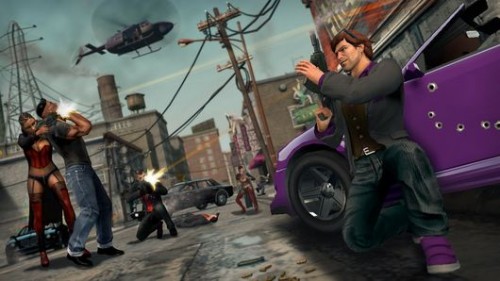
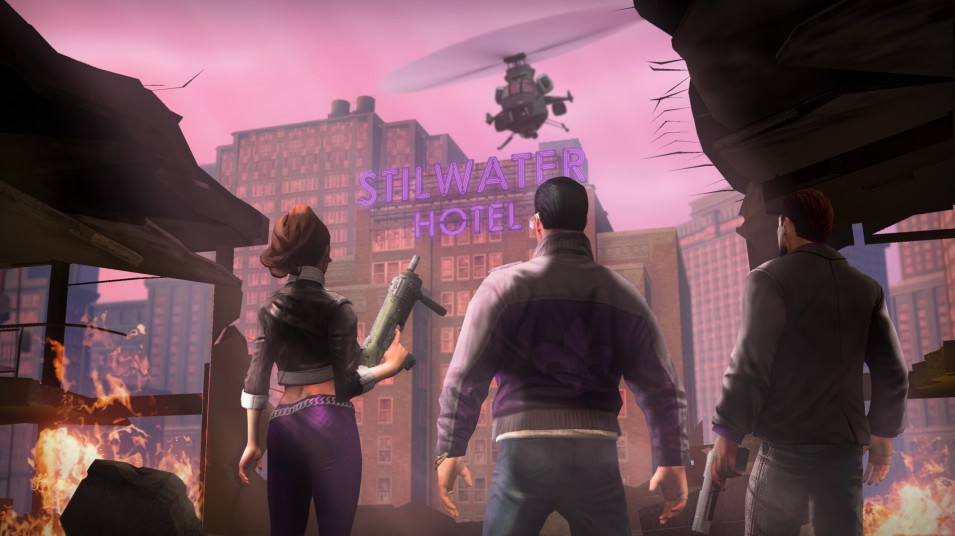
Prepare to get insane as Saints Row: The Third hits shelves today! Rejoin the Saints as they assert their dominance as a internationally iconic, criminal media empire. Lock horns with the new enemy gangs: The Deckers, The Morningstar, and The Luchadores.
The launch trailer, which you can watch down below, is possibly the most tame of all the trailers put out so far. Perhaps an attempt to lull you into a false sense of normality before you go out and get the game and lose all sense of reality.
Saints Row: The Third is out now for PS3, Xbox 360, and PC. Check out the trailer and let us know what you’re most excited about doing when you get the game!
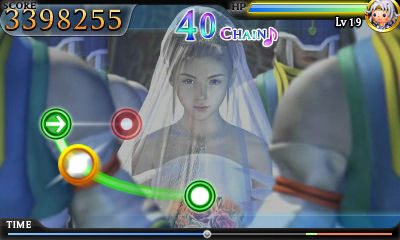
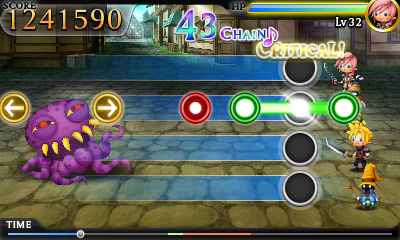
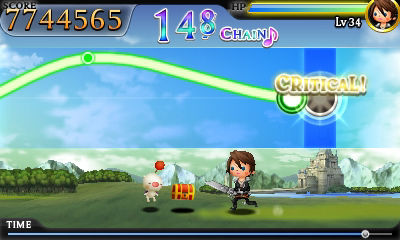
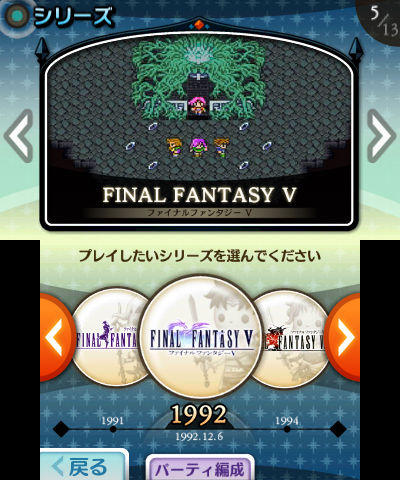
Square Enix of Japan has set a release date for their first music based Final Fantasy title ever. The title of course is Theatrhythm: Final Fantasy and the release date for this new title is February 16th. For those who don’t know Theatrhythm: Final Fantasy will contain songs from all Final Fantasy titles ranging from I to XIII and is being developed by IndiesZero.
Along with this release date, Theatrhythm: Final Fantasy was also given a few new screenshots which you can see below. They show off a number of the game’s phases as well as a few of the new characters that have been recently announced as unlockable sub-characters. At the moment, no release date has been given for the North American version of Theatrhythm: Final Fantasy but we can now have a sort of ballpark range for that release as well.
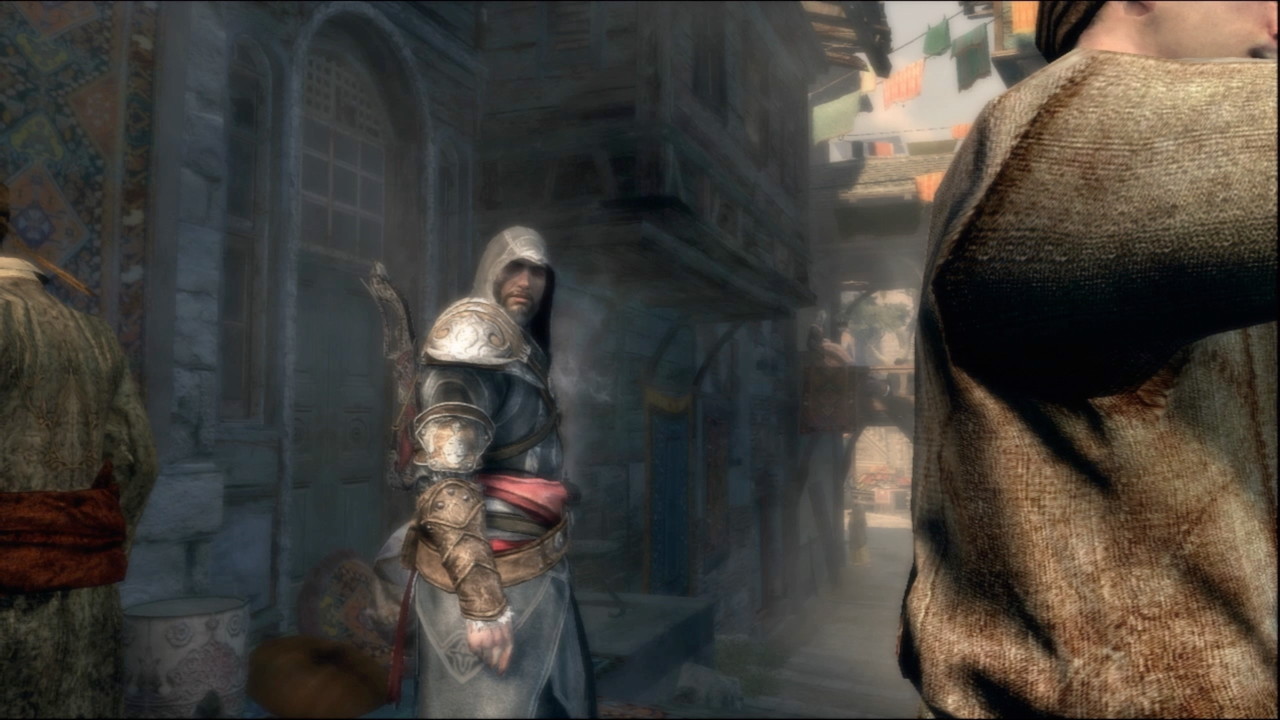
Despite Assassin’s Creed: Revelations being out for around 16 hours at the time of this post, Ubisoft has decided that now is the best time to announce their first piece of DLC for the title. Don’t get too excited however, as the DLC is only for the multiplayer section of the game and not any story advancing or expanding content.
The multiplayer pack is going to cost $3.99 or 320 MSP and be called the “Ancestors Character Pack” which will bring four new characters to your online roster. They are the Privateer, the Corsair, the Brigand, and the Gladiator, all they all will have “unique taunts, weapons, and stylized assassination moves.” This way if you are tired of the available characters a month from now you’ll be able to pick up four new ones at least.
It is hard to believe that roughly ten years ago the original Xbox was released to the gaming crowd everywhere. But indeed it is true and Microsoft has decided to honor this milestone with a free Avatar prop to try and bring everyone some nice festive spirit. The prop is called the “Xbox Anniversary Prop” and is available free to all Xbox Live users until Saturday.
You can find the prop here to add it to your download queue if you don’t feel like turning on your Xbox 360 at this time to pick it up. While a prop is nice, what else would you like to see Microsoft doing for their 10 year anniversary? A sale of some sort perhaps?
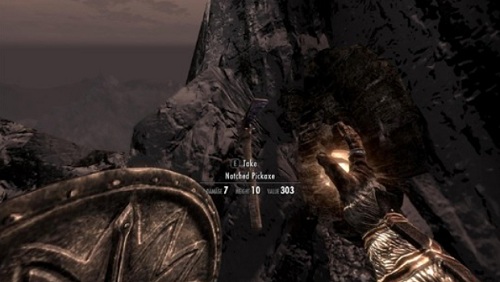
While the lawyers of both Bethesda and Zenimax prepare to go to battle once again to see who can squash the other, the developers at Bethesda obviously hold no problem with Mojang Games, especially their owner it would seem. The above picture was taken of an easter egg that was discovered in The Elder Scrolls V: Skyrim and reported to Ology.
In the picture above you see what is called a “Notched Pickaxe” which of course is a reference to Minecraft’s main tool to mine everything. Also, being that Notch is the name used by Minecraft’s creator this is a nice little easter egg and reference to the developer. For those eager to see this item themselves they can find it stuck in a rock at the Throat of the World, Skyrim’s largest mountain.
Lately it appears that the PlayStation 3 exclusive content that has been promised for major titles just never seems to come to fruition. Which not only makes for false advertising but also false console posturing. First we had Battlefield 3 on the PlayStation 3 which was meant to be bundled with Battlefield 1943 as a console bonus, but this turned out to be a lie.
Now we have THQ. At E3 THQ promised that the PlayStation 3 version of Saints Row: The Third would come with a special game mode only for that console. However it quickly appears that there is absolutely no difference between the two versions of the title. While this is good for 360 owners, anyone who bought the PS3 version should rightly be disappointed. THQ has refused to make any comment when questioned by Joystiq and a number of other complaints, which is not only odd but also cause for more frustration.
Warner Bros. Interactive Entertainment and DC Entertainment announce that Gotham City Impostors will be available beginning January 11, 2012, on Xbox LIVE Arcade and PlayStation Network, as well as for PC.
An open beta for the game is expected to go live in December. Fans can go to www.GothamCityImpostors.com to register for their chance to take part in the beta.
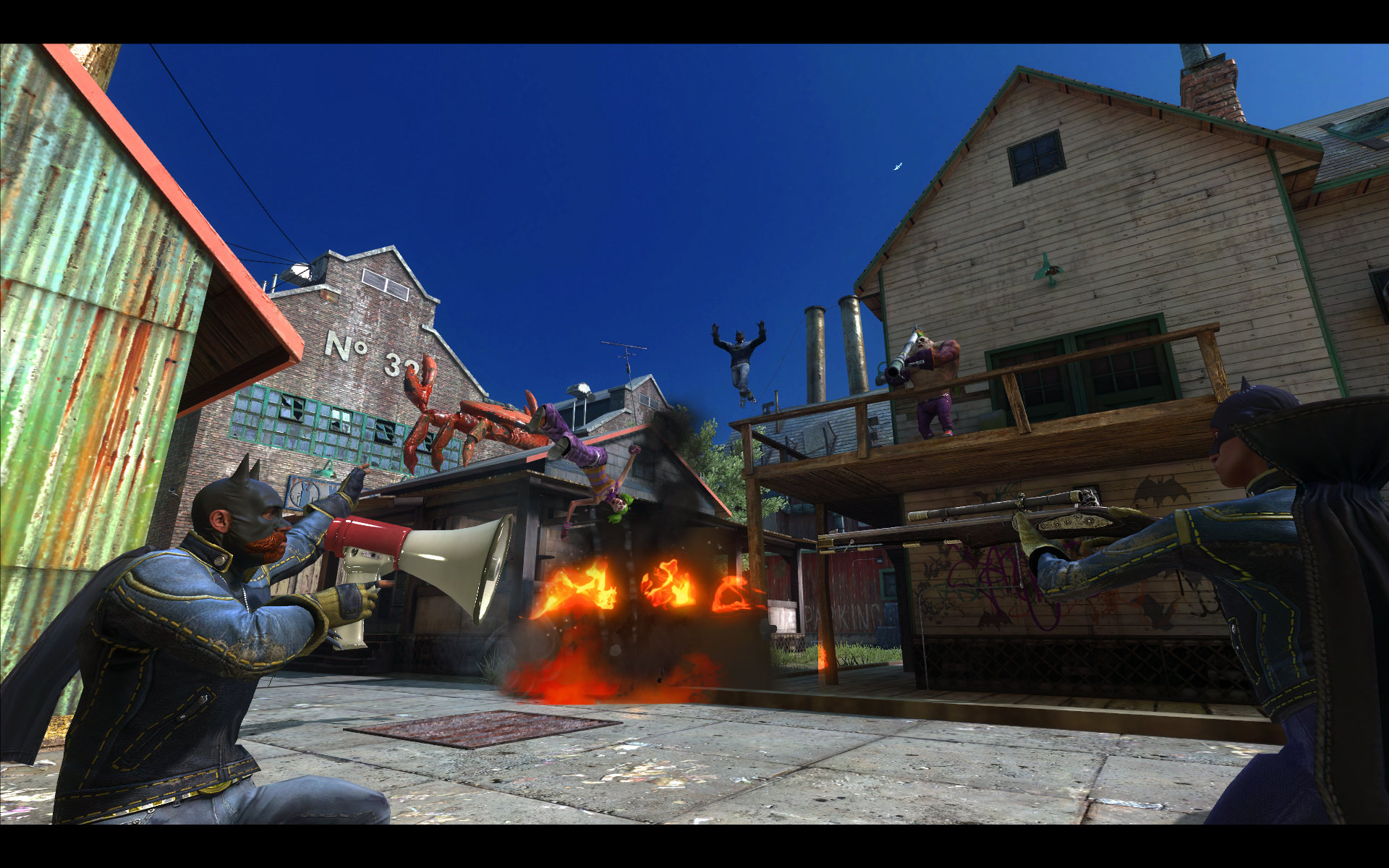
Gotham City Impostors is an original download-only first-person shooter where up to 12 players battle for control of an unhinged Gotham City overrun by Impostors inspired by the DC Comics characters Batman and The Joker. Gamers will create their very own version of the Bats or the Jokerz characters using unprecedented customisation options including insane costumes, homemade gadgets and a wide range of traditional and inventive weapons. The game will feature maps and modes inspired by DC Comics’ Batman license.