Finally making it’s debut is patch 1.6 of Rift. This major content patch is called “From the Embers” and introduces many features that we have previously discussed in detail since the patches announcement. So they will be breifly talked about below –
Rift™: From the Embers features:
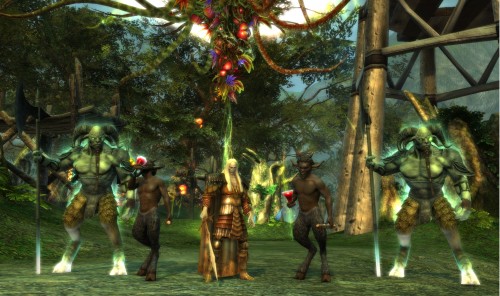
·Ember Isle – Designed for experienced level 50 players, Ember Isle is twice the size of the largest zone currently in the game and will feature stunning environments, new monsters, colossi, and zone events
·New Dungeon –Rift’s newest and largest dungeon, Caduceus Rise, debuts with 11 tough bosses, nonlinear progression, Normal mode, and two Expert mode wings
·New 10-Player Raid – Experience “Rise of the Phoenix,” the new 10-player sliver in Stonefield
·New Warfront Mode – Black Garden now features an alternate warfront mode called “Stockpile”
·Planar Attunement Evolved – 2nd tier of Planar Attunement now available
Be sure to check out the Official Website for more information. I have also embedded the amazing new trailer below, so be sure to check that out and be extra sure to update your Rift clients to the latest version.
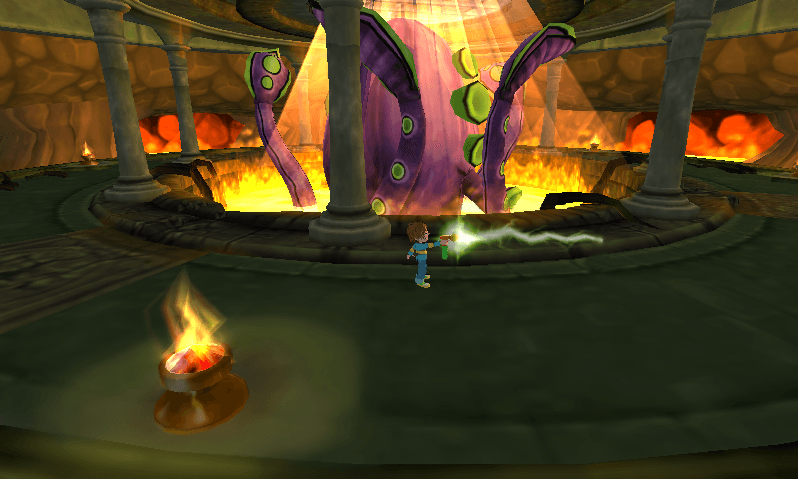
UK publisher Europress has today released the TV trailer for Horrid Henry: The Good, The Bad and The Bugly, a game that marks Horrid Henry’s debut on Nintendo 3DS. Developed by Asylum Entertainment, Horrid Henry: The Good, The Bad and The Bugly is a side scrolling adventure game, based on the CiTV series and featuring a blend of action, puzzle and platforming.
Horrid Henry: The Good, The Bad and The Bugly will feature three exciting worlds to explore as Henry attempts to rescue Bunny – Perfect Peter’s toy rabbit.
Horrid Henry: The Good, The Bad and The Bugly will be released on Nintendo 3DS on 25th November 2011.
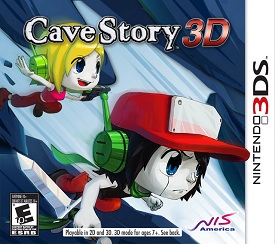
Cave Story 3D Developer: Nicalis/Pixel Publisher: NIS America Platform: Nintendo 3DS (Reviewed) Release Date: November 8, 2011 Price: $39.99 – Available Here
Overview:
Quite a few years ago Cave Story popped up on the internet for PCs as free game. The title itself was the creation of one man named Daisuke Amaya or as he liked to be called, Pixel. Pixel spent many years working on the title and the series saw widespread acclaim in the indie world. Then just one year ago the first ever version of the title outside of the PC realm was released and that was a minorly enhanced version for the DSiWare and the WiiWare.
Over a year has passed since that port of the title and now we have Cave Story 3D which has been brought to us by NIS America. With a new portable platform and a complete upgrade to the game’s graphics, plus the inclusion of 3D capabilities… how does Cave Story 3D fair? Let us find out.
Story:
Players will fall into the shoes of a robotic looking main character who happens to have absolutely no memory of who he is, where he is or why he is there. With no knowledge of where he even is, the player must make their way through a short series of areas before discovering a village of small bunny like people named Mimiga. However it seems that the main character isn’t the only person who isn’t a bunny, but he can’t meet this person so easily without the help of a female Mimiga who has become friends with this person.
In fact, as soon as the main character thinks he will be able to meet with this person, two lackeys of the “Doctor” who terrorizes and kidnaps Mimiga for his experiments appear and kidnap the female Mimiga right in-front of his eyes, taking away one of his few chances to find out more about what is actually going on. With the Doctor and his crew rearing their heads at nearly every turn and the Mimiga suffering under his reign, what can our main character do?
Now one of the strongest points for Cave Story is in fact, its storyline. There are few details given to the player at the start of the game and going into too much detail would take away from the clever twists and turns that exist within the story of Cave Story. With the players controlling a nameless main character, one of the biggest mysteries is of course who they actually are playing and why does he look like a robot?
Of course this is only one of the mysteries that are wrapped together in the very impressive story. While at first glance this title may appear like some simple platforming shooter, there is a reason that this is called Cave Story and not Cave Shooter you see. With memorable characters and a lot of unique twists that you won’t find elsewhere, Cave Story’s narrative will keep players wanting to keep adventuring through the various stages just to try and solve one of the stories many intertwining mysteries.
Graphics:
Perhaps the biggest reason to pick up Cave Story 3D if you have already played the other versions of the game is to see the title in its ultimate form. You can feel that this is what Pixel originally wanted for his Cave Story creation to look like if he only had the ability to do so back when it was first released. Now with Cave Story 3D, the titles true potential has been realized.
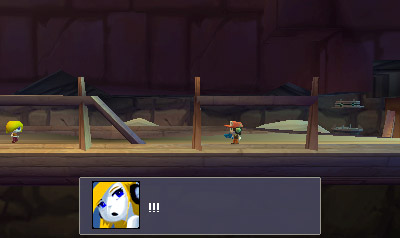
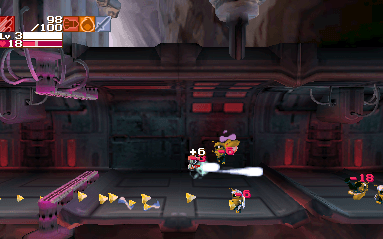
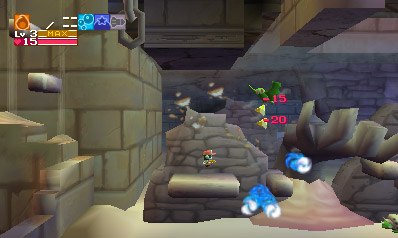
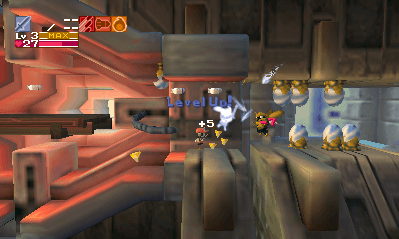
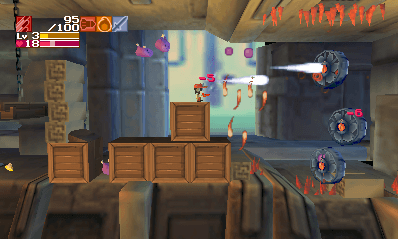
The environments will still be familiar but that familiarity is only a shadow of what they are now. This is because they have been revamped entirely, providing a full 3D world even though the game progresses along a 2D plane. The backgrounds and the environments themselves are absolutely gorgeous with tons of details and designs that help add to the atmosphere of the title, which is essential considering the variety of places you will be seeing. Though the details do sometimes make it difficult to judge the distance of a jump and can cause unnecessary falls due to the way they look.
As for the characters themselves, they have been redone as well and the characters themselves are decently detailed still, though the sprite designs have been changed to a more modern model. The sprite model still is in existence however but that isn’t really the main focus for the title.
Now as for the 3DS’ 3D capabilities. It is rare that you find a title that doesn’t make you want to turn off the 3D effects after a few minutes of playing. And a title that has pulled that off is Cave Story 3D. While most of the time in the past, I’ve had to turn off the 3D due to it either becoming obstructive or just did not increase the gameplay experience. However Nicalis has put an amazing effort into making sure that every little detail pops out at the player.
The 3D effects do a great job of creating depth for the stages with plenty of pieces of the environment sticking out of the screen. The foreground is obviously the best part of this, but with the depth of the background now it truly makes it hard to believe you are still running along a 2D plane. Still, there is one problem with the 3D and that is that the title is rather dark, and with the 3D turned on it can be even darker. So the only way to counter this is to turn up the brightness on the 3DS and therefore punish your battery life more, making players need to have to go charge up the 3DS before long and have to take an unwanted break from Cave Story 3D.
Audio:
Unfortunately there are is no voiced dialogue in the title and while there were no voices in the past iterations of the title, this is a bit of sad news as it would have been interesting to see what some of the characters would have sounded like. But considering there aren’t any voices, the title does a stellar job of making up for their absence with a rather impressive soundtrack which has been upgraded from the original.
Now in the past versions, players were listening to chiptune like music that sounded like something from around twenty years ago. Now while that sounds like a bad thing on paper, the audio was so well done that it felt nice and nostalgic. That is why when the developers upgraded the soundtrack for Cave Story 3D they knew what they were doing when they hired Danny Baranowsky to do the upgrade. For those unfamiliar with Baranowsky’s work they need look no further than Super Meat Boy to understand what his music sounds like.
Baranowsky’s skill with more retro sounding music creates an exceptional mix of an upgraded soundtrack that still retains most of its feel from the original while sounding a whole lot better. This was done by keeping the production rather simple and only allowing a few flourishes of sound while keeping very close to the original, creating a combination pleasurable to both old fans as well as new ones.
Gameplay:
For those concerned about the way the game plays, there is no worry whatsoever as the title has retained all of its old style side-scrolling platforming along with plenty of enemies to shoot. For those who don’t know, Cave Story 3D is a side-scrolling title with platforming sections and they will need to shoot and eliminate various enemies who can kill them if they happen to take too much damage.
You will be doing plenty of damage to enemies with quite a unique variety of weapons. Of course players can only carry around five weapons at a time, though there are ten to find overall. The player will stumble across a number of these weapons without much searching but there are also a few hidden ones to help provide a challenge. Now the interesting thing with the weapons in Cave Story 3D is that they upgrade in level separately from the character.
While the character finds HP upgrades littered throughout a level, weapons are upgraded through killing enemies and collecting the energy crystals that drop from them. The interesting thing here is that if the player happens to suffer damage of any kind the weapon they have equipped will drop in experience slightly. When a weapon upgrades a level they will grow stronger in some form, usually increasing in damage, range or even how the projectile itself looks.
One of the biggest challenges in Cave Story 3D is managing your weapons well enough that by the time you reach the boss battle near the end of an area, you still have enough to be able to take it down quickly and effectively. That is because the boss battles can be extremely difficult in Cave Story 3D and often rely on quick reflexes to avoid being damaged and potentially killed by the enemy. The game does a well enough job of walking you through most of the mechanics at the start, including a simple boss fight but grows to be much more difficult early on.
Now as a whole, Cave Story has five main areas with various hubs and mini zones linked to those areas. The stages you visit even end up changing over time as you progress through the story, so a visit to one area could be completely different from the first time around. This diversity is only helped by the fact that each section has some unique feature that forces the player to play differently due to either level design or the enemies placed on the stage. This keeps gamers from growing tired of the title quickly and always keeps them on edge.
On the other hand, as far as new content goes there really isn’t a whole lot added into the title from its original counterparts. There are four new areas that have been added into the title which can be explored and they are integrated seamlessly into the title without any noticeable problem. Plus if you decide to adventure into one of these new areas you will walk out with a nice little NIS surprise to go along with your main character from then on. Still, with Cave Story 3D being a completely upgraded title, the low amount of new content is questionable.
Overall:
Cave Story 3D can be seen as the ultimate form of Cave Story, with a massive increase in the visual department and a few bonuses added on, players of the older versions will find themselves enjoying every second of the title despite playing it before. Newcomers will be able to experience the 2D side-scrolling platformer in lovely 3D as well, though it is definitely concerning as to why there isn’t any more bonus content added onto the title in the end.
In the end however, Cave Story 3D may give you a reason to take that 3D slider and turn it all the way up and leave it on finally, as it harnesses the best of what the Nintendo 3DS’ 3D capabilities have to offer and provides not only a fun experience but one that can be played multiple times over as you explore the world multiple times simply to make sure you see everything that there is to see.
Com2us have released the sequel to their derby smash hit, Homerun Battle 2. If you guys already have the first one then you will know how kickass this game is, and with improved gameplay, new character models (like chicks, yay for female derby racers!), total customization, cross-platform capability, new stadiums, and online play, Homerun Battle 2 is sure to be even better than the first one.
There are six different modes including Duel, Survival, Mission, Burning, Arcade and Training. Mix it up between the one-on-one battle, item battle, up-to-4-player mission matching up, never-ending throws, and standard achievement and record challenge.
And for those social butterflies, there are community activities on Com2uS Hub, chats during gameplay, and easy functions that let you add in some rivals to take them down in a fiery blaze of glory.
With cross-platform capability, you can take on people on iOS devices or Android, Com2uS isn’t platform biased, so come on guys, let her rip!
Homerun Battle 2 is available now on iPhone and iPad for $4.99 – grab it HERE
I Won’t Fall Developer: Agni Studios Publisher: Agni Studios Platforms: iPhone (reviewed), iPad Release Date: November 16, 2011 Price: $0.99 – Available Here
Overview
A game based on a large yellow bird who has been separated from her young and is desperate to go to whatever means possible to retrieve them? That sounds a little familiar. But then most of the characters and stories behind apps blur into each other after seeing the tenth cute cartoon animal. Does I Won’t Fall separate itself from the herd despite its similar aspects? Or does it simply join the crowd?
Gameplay
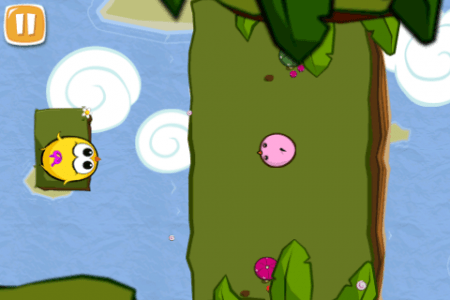
Your mother bird has lost all her children! They’re all stranded in little floating bits of land. No idea how, or why, or why they can’t come back to her, or why she can’t simply fly to them instead of just hopping small distances. This game requires a little suspension of disbelief.
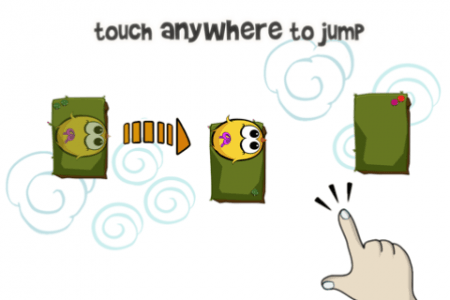
Moving on from the odd goal of the game, the gameplay is extremely simple, You have to make it from where you start off to where one of your many wayward children is by tapping the screen to make your bird jump forward and (hopefully) land on a platform. There’s no tilting, shaking, swiping, etc. Just tap at the right time to get your Momma bird over to the other side.
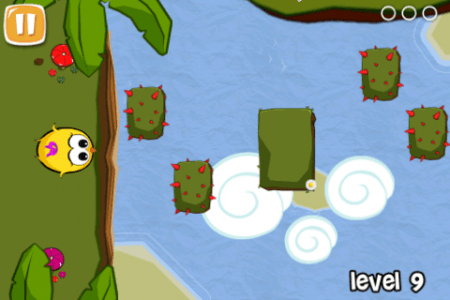
The obstacles get more complex as time goes on, however in some instances you could bypass them easily just by hopping immediately from one section to the next. At the end of the level you are marked out of three stars (ah yes, it operates under the three-star grading system, another iOS classic).
The point is to do it as quickly as possible while also collecting tiny bubbles so you can get the bonuses. That’s the only real grading system there is, the time you take and the amount of bonuses in the level (you’ll see how many there are and how many you’ve gotten so far in the top right of the screen).
The game has an achingly simply concept that some of you will love for those random bored times when you just want to play a really quick game of something, but others will hate because it gets repetitive after a while. There are 45 levels, and I gotta tell you, after about level 10 I got quite resentful towards these lost little birds.
I’m just saying, if they got there in the first place then they should figure out how to get back. Also, you have 45 kids and you lose them all? Please tell me you have fifteen sitting at home being babysitted by someone. Unless it’s the same kid, but the intro cut scene seemed to suggest they were all different. I’m just glad this isn’t an accurate representation of parenting. Otherwise parents wouldn’t be able to support themselves, they’d spend the whole time chasing around their kids who are stranded on floating pieces of land.
Visuals/Audio
The game I Won’t Fall is quite stylised and has a charming little quality. Each time you win a little graphic of mother and child reunited which is sweet. It’s simple, yet cute. However, the soundtrack for the game doesn’t suit it at all. It’s this weirdly sweeping orchestral music that has nothing to do with the game.
Overall
This game has the simple gameplay, the cute cartoon characters, the missing young, but unfortunately it just doesn’t have that special addictive quality that makes these types of games so popular in the casual market. While a little interesting it doesn’t have that certain something that drives you to beat it, it just falls sort of flat and hollow.
Armadillo Studio: Fridthjof Film Publisher: Madman Platform: DVD/Blu-Ray(reviewed) Release: 05/10/2011 Price: $34.95 – Available Here
Overview
Emerging from the smoke and haze of war glorified by media, comes a war film unlike any other. Director Janus Metz arrives at Armadillo, alongside cameraman Lars Skree and documents the time newly arrived Danish soldiers spend at war. The filmmakers repeatedly risk their lives to produce this uncompromised and beautifully composed documentary, so meticulously constructed it could easily pass as a work of cinematic fiction.
Story
Inherently, documentaries lack in a clear linear narrative. Documentaries have themes, subjects, concerns, motives, but never traditionally a story with a beginning, middle and end. Armadillo has these narrative qualities: presenting the story of Danish soldiers embarking on their first tour of duty. The story starts with the boys heading overseas, saying farewell to their parents and automatically sets the scene of the emotional and psychological journey both the soldiers, and us, as the viewers are about to experience. This is immediately juxtaposed with a farewell party featuring a stripper and a heavy metal soundtrack.
Through out the story, insight is gained into the lives and minds of the soldiers. Troops call home, express concern to their parents. Discuss what it is like to be at war. As conversations go on, we gain insight into the trauma these people experience. If there is anyone we could consider giving the title of leading role, it would be the young soldier Mads. Often silent and in constant contact with his parents, Mads seems to struggle the most with his presence in the war zone.
Conversations between the soldiers and locals appear constantly through out the film, emphasizing the futility of the troops presence. These conversations really bring forth the message that it is these people, the locals: farmers and families, who are most at risk through this war. It is not the Danish soldiers or the Taliban who die, but the innocent citizens. They refuse to help the occupying troops out of fear of retaliation, and who can blame them.
The film carries on much the same; with an emphasis on the psychological impact war is having on all parties involved until the final battle scene erupts. We do not see any actual deaths, but rather witness the aftermath, making for a much more chilling effect. What is worse is the discussion of the events that took place, as the soldiers recall and justify their actions while still on a high from their so-called victory. Any sympathy we gained through out the duration of the film seems to automatically drain away, except of course for Mads who remains silent. The film seems to finish with the end of duty, then moves on an open-ended conclusion where we realize that the filmmakers are leaving, but for the soldiers this is a continuing process. This is true not just for the men who were in the film, but for everyone involved, and who will be involved in present and future wars.
Visuals
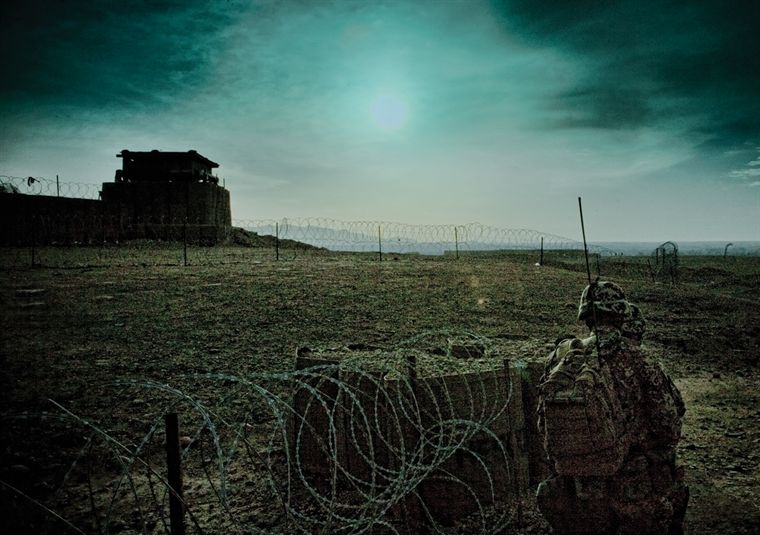
At first glance, ignoring prior knowledge that this is a documentary, one could assume that Armadillo is a feature film. The composition of shots, quick moving cuts, keeps a constant movement through what are seemingly mundane scenes. Soldiers sitting around in an out post, playing shooting videogames, watching pornography form the setting for film. The daily lives of these Danish troops are filmed in a way to emphasis the ordinary while at the same time presenting it in an interesting light: free from any hyperbolic glorification. In a more traditional documentary style, the perspective is all first person: shot with a handycam. This adds a level of voyeurism to the scenes of soldiers at the base, but a much-needed layer of action and tension to any battle scenes. The flying dirt as the cameraman dives to the ground and the shakes as he runs for cover place the viewer in the front line where danger is highly probable. The film has a bleak wash over it, emphasising the themes psychological trauma. While the film may look gloomy, it would be nothing without the tension created by the soundtrack.
Audio
A minimalistic soundtrack runs throughout the film, adding to the overall tension created through the theme and visual representations of life at war. What is unusual is that there is a soundtrack at all. Usually documentaries tell the stories of the subjects, narrated by the subjects themselves, which is often interjected by the ever-present observer or documentary filmmaker. Armadillo has that, with the exception of interjection from the film crew. The film is oddly absent from narration, which would only break the feeling that this is a feature film, or moreover that we are on the fighting line with these troops. The soundtrack remains minimal, including some infrequent heavy metal and some often used haunting orchestral scores in moments of heightened tension. It adds a cinematic quality not often found in documentary films, leaving the viewer with the impression of a polished and meticulously crafted film.
Extras
While the feature itself breaks conventions of documentary film, the bonus features are firmly rooted in a documentary style. The additional scenes include “prior to departure” which features a talking-heads style of documentary film making, giving some insight into why the troopers are leaving. If you are inclined to gain more insight into troops minds, then the additional footage will really be helpful. On the other side, there is also director’s commentary to gain insight into the mind of the director. Overall the film works well as a stand-alone feature, but the bonus material is a nice addition for those willing to delve deeper behind enemy lines.
Overall
If you’re looking for a tale of heroes at war, or an exciting action filled montage of battles, then Armadillo is not your best bet. However, if those things are up your alley then I can only suggest watching Armadillo. Armadillo brings often-untold stories of war, from the perspective of the troops and of locals in Afghanistan: presenting everyone as victims of war. Even though we do not see the Taliban, we are told through out the film that they fight because they are poor: creating the sense of another victim. There is no good verses evil in Armadillo, there is just those affected by war.
Want a more technical look at Max Payne 3? Rockstar have just begun a series of Design and Technology videos to give gamers the inside scoop on the latest and greatest developments being utilised for their next big adventure.
This first video delves into what it takes to create a cinematic, cutting edge action game, and covers shooting mechanics, Max Payne’s movement animations, bullet time and artificial intelligence.
It’s a great look into the gameplay more than anything, but the narration has some pretty interesting details in there to make it worth watching. The next instalment in the five part series will take a closer look at targeting and shooting, so should provide a lot more depth than this first introductory video.
The full game isn’t due until March next year, but you can of course preorder it now.
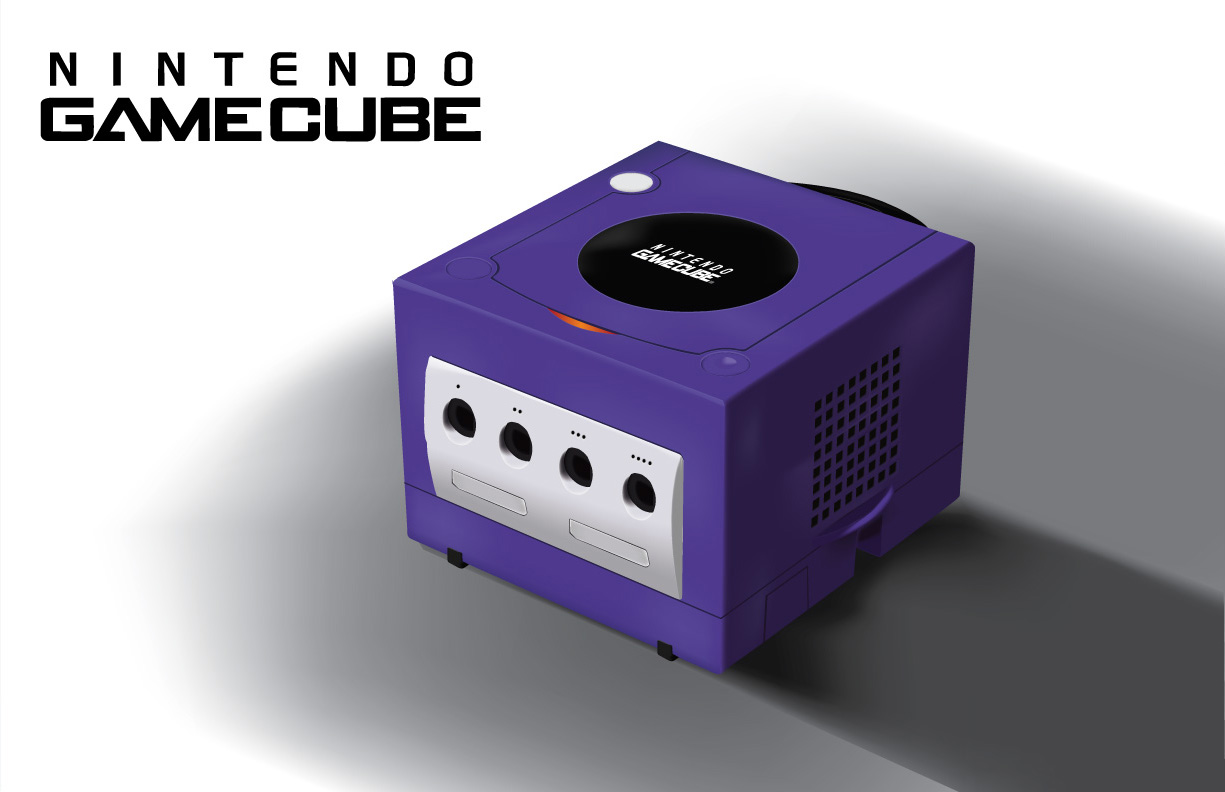
It was 10 years ago on this date that Nintendo’s most neglected child was released. The Nintendo Gamecube went on the become Nintendo’s most financially unsuccessful console to date. Many contribute this lack of success to the kiddy image of the console or lack-of-innovation with hardware. Both of which definitely contributed to it’s failure to gain financial success. While the little purple box may be a failure in the eyes of many, today I will be proposing a different take on history. A history of a video-game console that marked a unprecedented changing of tides in the entire video-game industry.
The Gamecube came fresh off the heels of a wildly popular Nintendo 64 and faced the challenge of competing with the hot newcomer in The Playstation 2. While the Playstation 2, marked innovation of hardware over it’s predecessor, the Gamecube on a hardware scale was essentially a beefed up Nintendo 64. If it ain’t broke don’t fix it, right?
The Gamecube lacked innovative hardware that it’s rivals boasted, but it was still Nintendo. Surely that name alone would be enough to sell some units, right? Unfortunately the name was not enough and the console floundered. With it’s lack of a built in DVD player that it’s rivals flaunted, the Gamecube didn’t feature the extra value that it’s competition boasted.
Not only that but a lot of the people who would be potentially purchasing the console for the name alone, had grown up with Nintendo and as they grew older, the grew out of Nintendo. Instead they were now looking for a more mature way to play games. The word ‘Nintendo’ held memories of their childhood and by extention placed a veil of immaturity over the eyes of gamers across the globe. It wasn’t that Nintendo had gotten immature, it’s that we as a whole had grown older. While we had all grown, Nintendo had grown as well. With their growth came innovation, not in their hardware, but in their software.
Nintendo used the Gamecube as a launching pad for a new way of thinking. They took a look at old franchises, deconstructed them and rebuilt them in a new light. A light that had never before shined upon these Nintendo classics. Just take one look at all of Nintendo’s huge franchises and the changes that were present in their Gamecube iterations.
Metroid become an atmospheric first person shooter that made strides in advancing the genre as well as the franchise. With a focus on exploration instead of running and gunning, Metroid Prime is not only a video-game classic but it is also a monumentally ground-breaking title. Looking at Nintendo’s other franchises will also prove that this new line of thinking, for better or worse, was across the board.
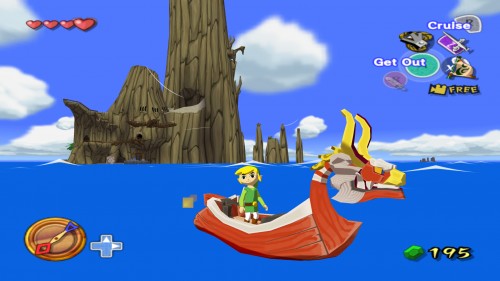
Mario Sunshine entered new territory and introduced unheard of gameplay mechanics that would pave the way for future titles such as Mario Galaxy. Zelda became cell-shaded and took Link to the high seas, in what is to this day the most well-aged Zelda game as well as the title that changed perceptions of what a Zelda game could truly be. Star Fox Adventures took Fox out of the Arwing and gave the Star Fox universe life and character that it had yet to see. Smash Bros. became a hyper fast brawler the likes of which were never before seen. Even Mario’s brother Luigi became a star in his own right, with his first ever game Luigi’s Mansion.
While they took so many of their franchises to unprecedented heights, Nintendo also launched some of the most critically acclaimed franchises of all time on the little purple box that everyone forgot. With such titles as Pikmin and Animal Crossing being born on this little console that could, it is evident that during the Gamecube era, Nintendo was at an all time creative high.
It’s no secret that the Gamecube was largely the console people pushed aside for the Playstation 2 or even the Xbox. But it is undoubtable that the Gamecube featured more variety and unabashed creative flare than any other console on the market at the time. It wasn’t just Nintendo who put out inventive titles on the console. Titles such as Baten Kaitos, Eternal Darkness and Doshin the Giant, were creative masterpieces and genre defining titles.
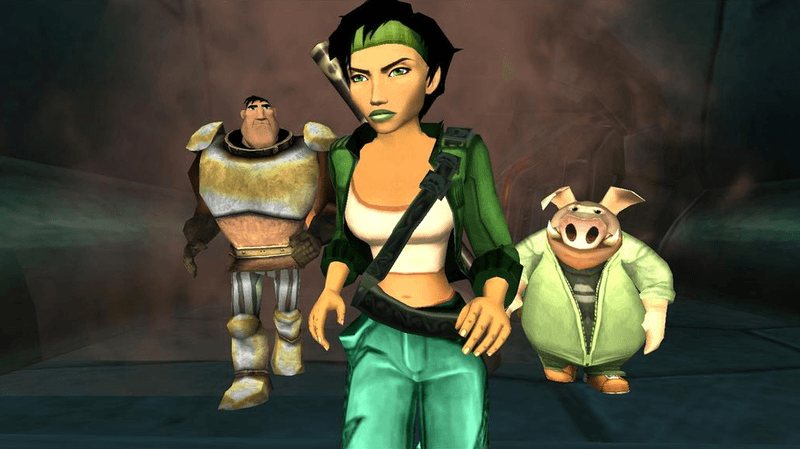
It’s even arguable to say that multiplatform titles were better on the Gamecube, with titles like Resident Evil 4, Beyond Good and Evil and Metal Gear Solid: Twin Snakes coming to mind. It was just simply a stunning platform for gaming. A console that was not distracted by frivolous things such as a DVD/CD player, instead focusing on how to make gaming itself better.
But above all it’s achievements, the Gamecube is owed the most debt by Nintendo’s follow-up console, the Nintendo Wii. By all rights the Wii owes everything it has achieved to the Gamecube. Had it not laid the foundations, the Wii would never have seen the light of day.
With it’s lack of hardware innovation and kiddy-image the Gamecube failed to capture a wide audience. It caused Nintendo to reevaluate themselves as both a company and a developer. Through their reevaluation they concluded that their image should not be tossed aside but instead embraced, with Nintendo creating the most casually accessible console of all time in the Nintendo Wii. How did they do this? By taking the Gamecube and giving it the innovative hardware that so many wished it had and Nintendo continued to produce quality games, one after the other. The Wii has since gone on to become the best selling console of all this generation and it is all thanks to the long forgotten little purple box that made it all possible.
The legacy of the Gamecube is one that is rarely spoken about, but 10 years on, I felt it necessary to set the record straight about one of the most influential and game-changing consoles of all time. The Gamecube is never going to be one of those consoles that people look back on and remember how it took the world by storm. But for those of us who played the console and were touched by the adventures that it took us on, we will look back and remember how it took us by storm. Rest easy, my old friend and thanks for the memories.
So, I hear you like discounted games. That’s cool, I do too. The only thing better than videogames on sale is awesome videogames on sale! And boy, does this pack contain a few. The Super Meat Boy Anniversary Pack on Steam is currently at 75% off. Meaning for $25 you can get the following titles:
Aquaria
Bit.Trip Beat
Bit. Trip Runner
Braid
Gish
Half-Life 2
Machinarium
Super Meat Boy
VVVVVV
World of Goo
These are all exceptional titles, each easily worth the discounted $5 they are on their own, but why not pick them all up and save around $30 in the process! Unfortunately not all these games are Mac compatible, but those that are, are worth the purchase on their own. Click here to check out the Super Meat Boy Anniversary Pack on Steam.
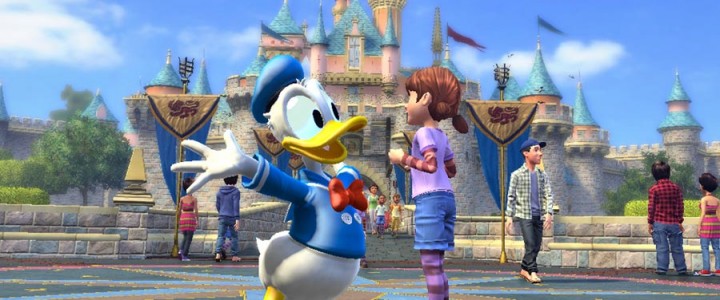
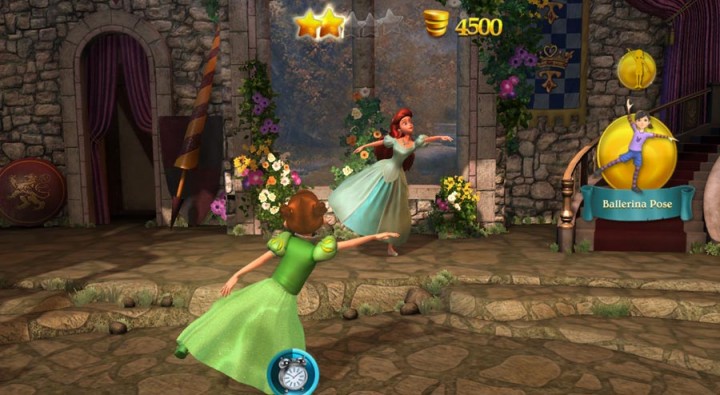
Ever wanted to go to Disneyland without the hassle of travelling and being bugged by all those annoying kids? Well Microsoft and Disney have the answer – Kinect: Disneyland Adventures.
After doing a bit of market research, the big guys over at Microsoft saw that Australians like to play video games, and that Christmas Day is by no means any reason to stop. According to their figures, 37% of Aussies will play a video game this December 25th, which is probably true enough. Whether a simulated trip through Disneyland is quite the thing their looking for is up for debate, but for the families out there with young, super excitable Disney crazed kids it’s sure to be a great idea.
Bizarrely this is one of the biggest games ever published by Microsoft Studios, and apparently has nearly 100 hours of gameplay that takes in 20 iconic park attractions, 40 Disney characters and 100 adventures. 100 hours? Is Disneyland Adventures the most obscure competition to Skyrim ever? Kids will be able to replicate some of the real life Disneyland experience, and can collect autographs from their favourite characters as well as giving them big fuzzy air hugs. Aaaw.
The title is on sale now, so if you’re looking for a Christmas gift that will mean the presence of an Xbox at your particular family celebrations (and keep the kids happy of course), make sure and check it out.