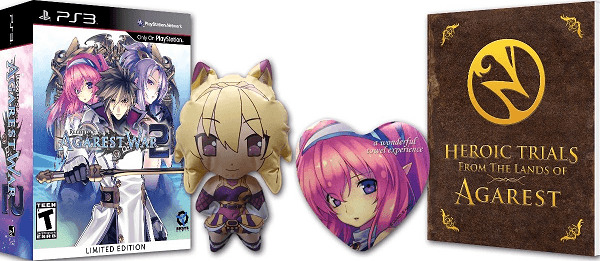
Most of us know that Aksys’ Record of Agarest War 2 will be released later this month on June 26th and out of those many, at least a few of them have likely heard information about the game’s limited edition which contained a compressed hand towel in the shape of a heart and a “Heroic Trials from the Lands of Agarest” art book. Until recently however the limited edition’s final content, a blow-up doll, was censored out.
At E3 this year, Aksys may not have had a booth but they did meet with us beforehand to reveal a few pieces of information, including the full form of their Felenne Doll which can be seen above. As one may expect the doll is in chibi-form and is a bit of a joke reward, as Aksys Games’ wanted to try and find a balance between simple limited edition and risque.
While I was trying my hand at NIS America’s upcoming, and very unique looking, JRPG Mugen Souls to write up our preview which can be seen here, the bald wonder and JRPG newbie Philip Federico was trying his hand at interviewing a number of NIS America’s team. We were able to meet with Ryan Phillips who handles most of their PR as well as Nick Doerr, editor for Mugen Souls and Alan Costa who is handling the translation for the game. Below you can see the interview as well as a bit of gameplay footage including some of the gameplay features mentioned in the preview, including the crazy combo attacks, cute point system as Chou-Chou tries to sway her enemies and plenty of off-the-wall dialogue, especially right there at the end of the video.
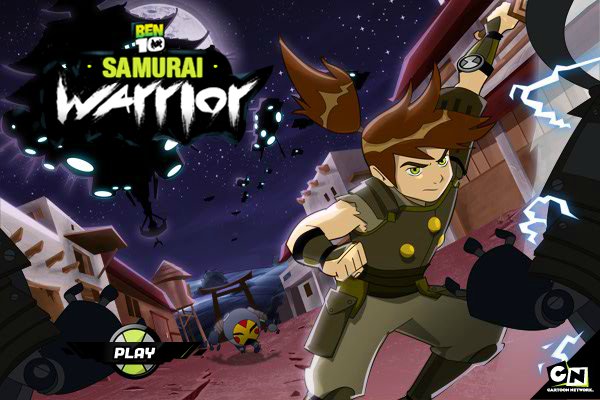
Ben 10: Samurai Warrior Publisher: Cartoon Network Price: FREE – Play Game Online Here
Overview:
Ben 10 is one of the mainstays of Cartoon Network for quite some time now. With plenty of sequel series and movies, it’s certainly come a long way from the series that started it all. Ben 10 is the first series, which introduced the world to Ben Tennyson, I see what they did there, a 10 year old, or did they do it there, who finds a device known as the Omnitrix, which allows him to transform into 10 different aliens, they really went all the way with this. Later in the series, Ben was able to unlock more aliens, while later series showed Ben at older ages.
The first series is still pretty popular and the series spawned plenty of flash games for the younger fans of the show to enjoy online. One such game is Ben 10: Samurai Warrior, but the real question of the matter though is if the game is worth the time to put into playing it.
Story:
Ben 10: Samurai Warrior is based off one of the episodes of the original series, called “Game Over”. The general premise is that Ben gets trapped within a video game and has to collect his alien forms to be able to get out. Unfortunately, the antagonist of the game is trying to get out into the real-world too, so he’s trying to stop Ben from collecting the alien forms.
Much of the story is glossed over in the flash game however, so it is really helpful to have seen the episode it is based on to fully understand just what’s going on. It would be extra confusing for anyone who only knows the very basics of the show as the character designs are based around the game they are in, so everyone looks very different than in the show.
Gameplay:
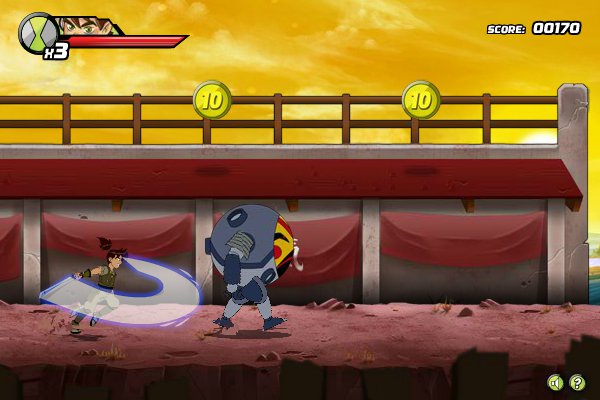
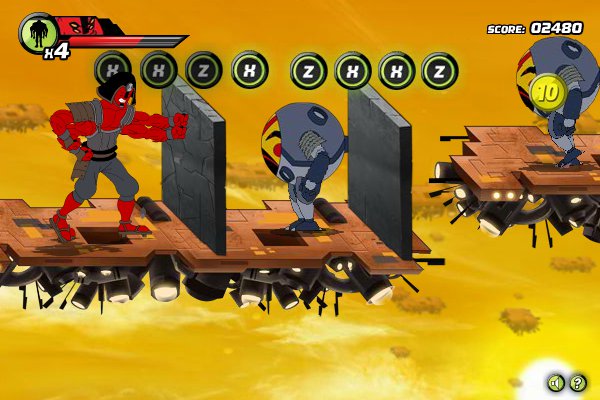
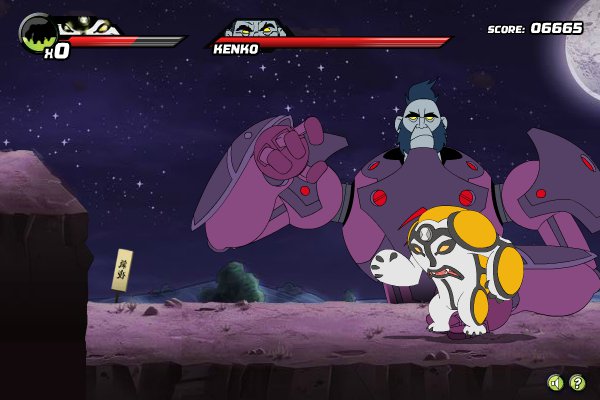
The game plays as a very standard retro platformer, where players can move Ben about with the arrow keys, slash with a sword, throw ninja stars, and transform, after Ben finds some alien forms as tokens. The game is broken down into 3 world with a few levels each, the last of each world being a boss battle to earn a token. Even though Ben does have a sword to slash with, it’s generally pretty easy to just spam the stars to kill everything since there doesn’t seem to be any limit to them. This makes the combat kind of trivial, but combat is mostly only to clear the path of enemies and to rack up a higher score for the board. The main focus of the game then is actually platforming, which is in some places pretty difficult requiring the player to actually make jumps precisely or fall to their death below. Luckily, there is a fair number of extra lives floating around for players to pick up to make it somewhat easier. But, even if the player does run out of lives, players don’t have to start completely over from world 1, so it does make it easier for the younger players albeit with a reset score.
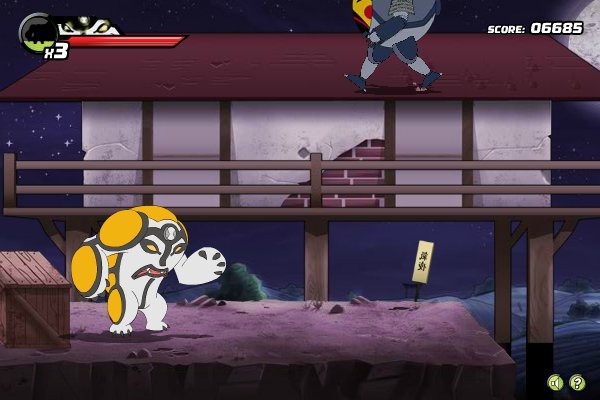
In addition to the platforming and combat, each alien form adds a little bit to getting through each level, in that Four Arms and Cannonbolt are used to get past specific obstacles. This however doesn’t add much to the gameplay, but instead slows it down as Ben has to switch into the alien form to get past the obstacles, but can’t use them for general gameplay as neither of the alien forms can jump. This is only really adds to gameplay on the final boss which requires the use of an alien form to actual defeat.
Audio and Visuals:
The audio is general is unfortunately very repetitive, there are at most 3 songs that play throughout the game and loop continuously, which will mean either tuning it out or turning it off completely. There was also no attempt at all to try and get any sort of dialogue for the game, not even sound bites of Ben saying anything to give the game more than just the face and cartoon feel of Ben 10. You could take the same audios and plop them into another game and never notice they were from a Ben 10 game.
As stated before the character designs are different than the vast majority of the show, as it is based on a video game in the show, but it does look pretty neat and even has different looks for the two alien forms as well. The character designs are pretty interesting to match the feudal setting, with each looking like samurai, and while they are different character designs the game maintains the same kind cartoon look and style of the show. The locations in the game are a bit different though as there are a lot of cyber-like elements, such as the varying platforms. Ultimately, all the visuals definitely fit the uniqueness of the settings of the game that Ben has entered and brings something new players may not often see.
Overall:
At the end of the day this only really feels like a retro platformer with Ben 10 slapped on the title. They do use one of the more interesting premises from one of the episodes, but it is a little lackluster. The combat can be done almost flawlessly if taking the time to defeat everyone and in terms of score there is an actual top score which players could get by collecting everything and killing everything, so the highest can only be a perfect score. The game does look pretty nice though, but that isn’t much to save it. I give Ben 10: Samurai Warrior
Film buffs be excited! The great people behind ‘TIFF’, the Tokyo Internation Film Festival, have confirmed details for this years event. This year is the 25th anniversary of the staple film festival of Japan and as such big things are planned.
The event will be held over 9 days from the 20th of October to the 28th of October, 2012, at a new venue in the Tokyo Bay area. The films on show will be shown under a variety of different categories, some competitive, some not.
You can see all the fine details of the Tokyo International Film Festival at the official website of the event here. What do you think of the 25th anniversary of ‘TIFF’? Let us know in the comments section below.
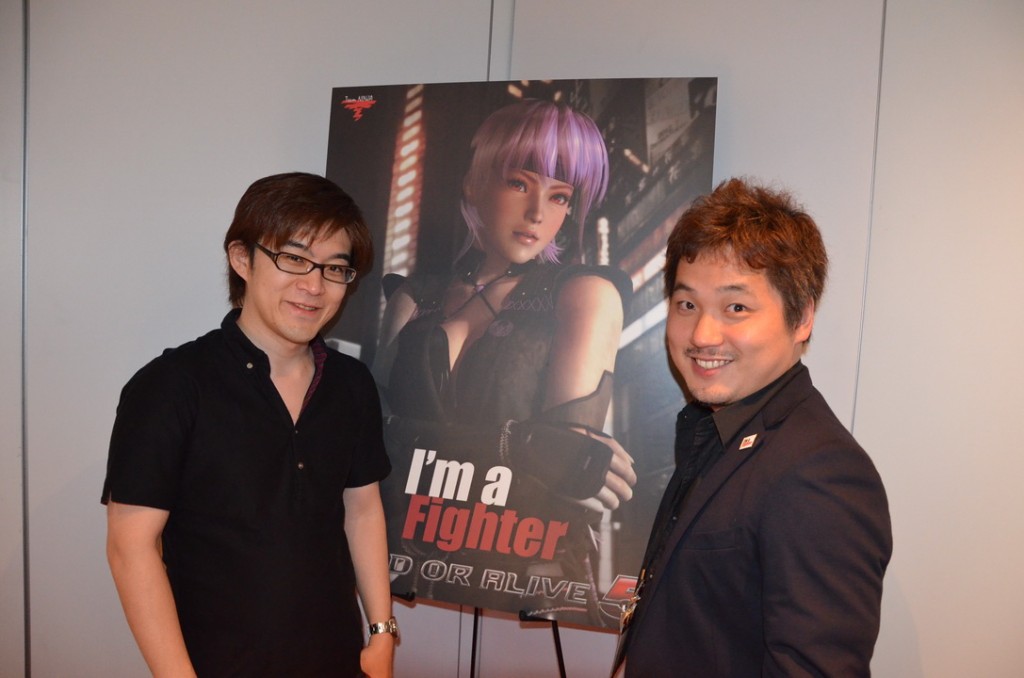
After sitting down and taking a good look at some of the new features that Dead or Alive 5 will contain, the details of which can be seen here, we had a chance to sit down and speak with Yosuke Hayashi and Yohei Shimbori from Team Ninja. While we may not have any actual gameplay footage of the game shown below, we do have the answers to some of your most pertinent questions, including why the team chose to switch to a four-point hold system as well as how Team Ninja thought of including such action packed stages for players to battle it out on.
Of course, we couldn’t help but asking if we may see some brand new characters entering the roster and the games overall “fan service” element as well. Don’t take my word for it however, see how these two have answered our questions in the full interview below.
My mum doesn’t really play video games, but we managed to get her into Words With Friends. A large part of the appeal for her was the ability to play a word, go do something else, and check back later to see if the opponent has had their turn. Gaming didn’t take up a big part of her day, and this system fit itself nicely into her schedule.
This is asynchronous play, as developers have termed it, and it allows games to be played in increments. Team 17 have now adapted Worms, their flagship turn-based game, to include the system.
In the latest free update to Worms 2: Armageddon on iOS, asynchronous play means you no longer need to wait for your slow opponents to have a turn. Simply make your move, put it away and check back when you have time. And why play only one game at once? The update allows you to be slaughtering enemy worms in up to sixteen games simultaneously. This is in addition to playing in the regular Worms fashion, via Bluetooth, Wi-Fi or passing around a single device.
It might not sound like much, but asynchronous play is a fundamental shift in the flow of the game, and is apparently one of the most requested features among fans.
Japanese Role-Playing Games are, despite the name, not solely the product of Japan. It’s a style, and one that New Zealand indie studio Ivatrix Games have tried their hand at.
The one-man team based in Hamilton, NZ, released Mortal Legacies onto Xbox Live Indie Games last week, and it’s looking like a nice little throwback to RPGs of old.
Its story reads like you’d expect: the semi-magical kingdom of Elisia is left vulnerable after a protective artifact is stolen, and a budding young adventurer sets out to retrieve it. Players will explore Elisia, recruit companions to the cause, and fight off the invading forces of the shadow world.
At 80 MS points, it’s almost offensively cheap, so check it out.
During E3 2012, I was able to get some hands-on time with the Nintendo Wii U along with fellow editors Travis Bruno and Philip Federico. We were able to try out about 3 games, including a Nintendoland minigame, Super Mario Bros U, and the multi-player portion of ZombiU. All three of these demos featured the heavily promoted asymmetric gameplay.
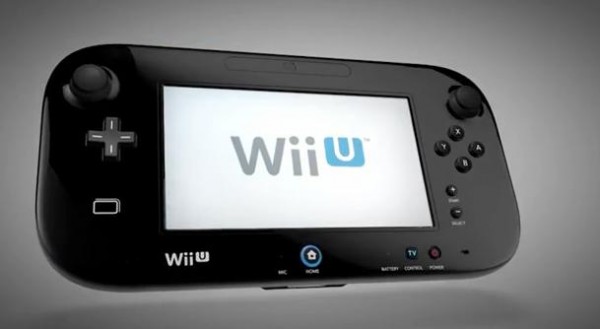
First up was a Nintendoland minigame: Animal Crossing – Sweet Tooth. The object of the minigame was for up to 3 players to collect as much candy as possible, while a fourth player tried to prevent this. The ‘candy collectors’ used Wiimotes, while the fourth player used a WiiPad. The player on the WiiPad uses both analog sticks independently to control two ‘guards’ simultaneously. Whether being a guard or a collector, the gameplay was frantic and fun.; it demonstrated the potential the Wii U has. Playing as the guard was quite tough, as you have move two guards with one screen, keep track of where everyone is and be able to move each analog stick independently of each other, in addition to using a tackle button. It was a little bit like rubbing your head and patting your belly at the same time, but in a competitive environment. In addition, playing as a collector was also an adrenaline rush, as I constantly felt like I was being hunted.
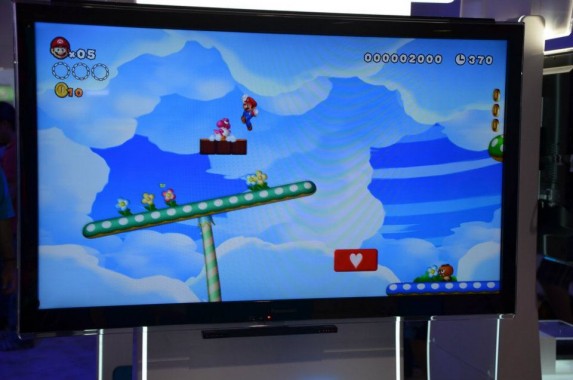
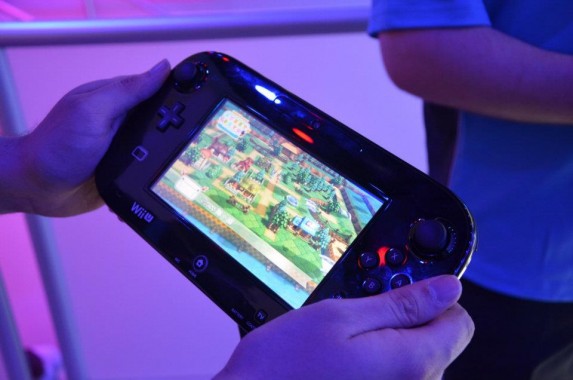
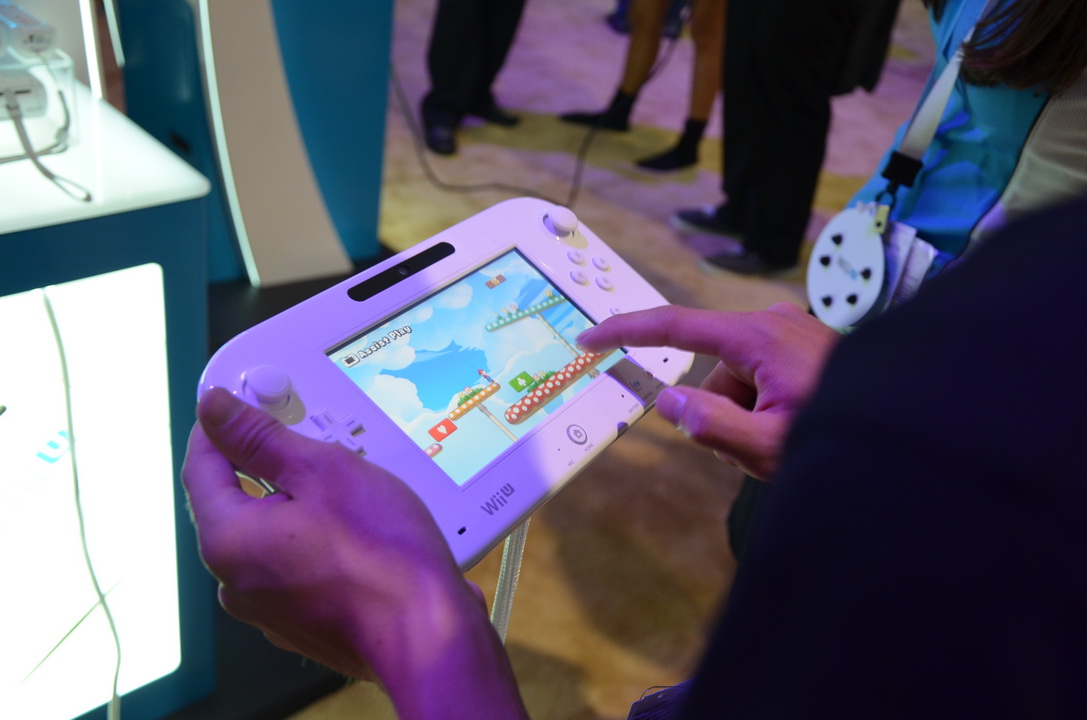
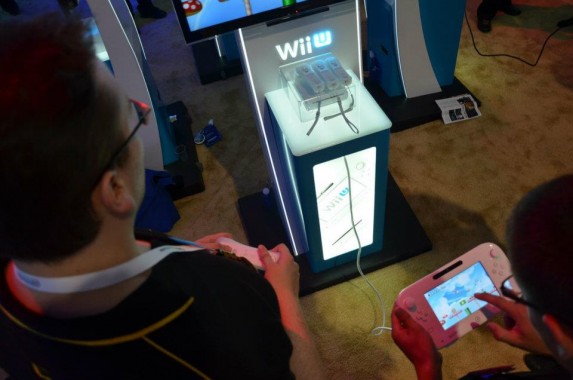
Next up is Super Mario Bros U. This game showcased the Wii U’s co-op opportunities. While Travis played as Mario using a WiiMote on the TV screen, I used the WiiPad’s touch screen to place blocks across gaps so that it would be easier to beat the level. Super Mario Bros U features support for up to 4 player co-op. However, if you want to play singleplayer, you can also do that, without even having the TV operational. Travis was able to use the WiiPad’s screen to play the entire first level, as if it were a mobile gaming system. There was no complicated wire switching or button presses to use this functionality. It just worked.
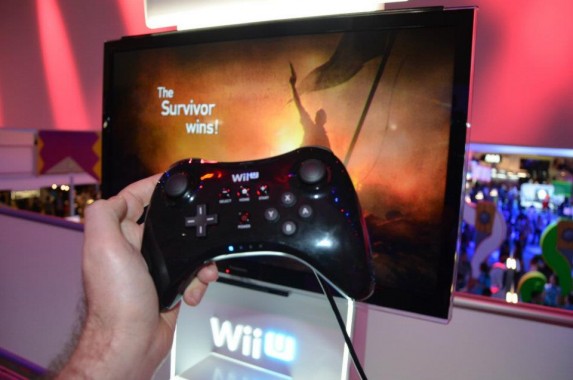
While the previous two games were great fun to play no matter which controller was used, ZombiU multiplayer demonstrated the weakness that asymmetric gameplay inevitably presents. Travis Bruno chose to play as a ‘survivor’ using the Pro Controller, while I chose to be the zombie horde, using the WiiPad. Travis was able to use the television, while I used the WiiPad’s screen. My objective was to capture as many flags as possible by placing zombies anywhere on the map using an overhead view. Travis’ goal was to stop me. After we finished the demo and Travis won the round, we compared notes. I found that I was quite bored because the graphics were quite dull and the gameplay simply revolved around me waiting on my attackers to recharge. However, Travis found his part to be exhilarating, as his gameplay revolved around shooting zombies in the face using an FPS camera view. While many Wii U games will undoubtedly support quality gameplay no matter which controller is chosen, there are some games that will invariably have more exciting gameplay modes for one player vs another during asymmetric gameplay. Thus, there will always be a fight over who gets to play as the “fun character” and who is stuck playing as the “tedious character.”
Hardware
Although the WiiPad controller does feel quite large, it is pretty light and I didn’t notice it being awkward once the game started. I imagine it might get a little tough after a few hours of gameplay, but that has yet to be tested. The hand grips on the side felt really comfortable and all the buttons were really accessible. Plus, the touch screen was extremely responsive. The WiiPad will really come in handy if you want to play videogames while someone else is watching TV. Hopefully, a ton of games support this feature, as this feature is extremely nice and was a joy to experience.
As far as graphics go, they are a huge, gigantic step up from Wii graphics, as they should be. While none of the games I played had Crysis-like visuals, they did look quite good on the Wii U gamepad, as well as on 40″ HDTVs. Undoubtedly, once developers get used to the Wii U, we can expect much better visuals than what was shown at E3.
Unfortunately, I was unable to try out any of the augmented reality, or the gyroscope.
What do you think of the Wii U so far? Let us know if you will be buying one by leaving a comment below.
Dead City Developer: DDDGame Publisher: Com2Us Platform: iOS Release Date: June 5, 2012 Price: Free; 99 cents (PLUS version) Available Here
Overview Perhaps we can blame George A. Romero. He started this whole trend for any media containing zombies to have the word “Dead” in its title. Com2Us’ iOS game Dead City continues this tradition, along with many other zombie-game tropes. In a genre as stale and numerous as its central enemy, how can Dead City differentiate itself from the rest of the horde of zombie games?
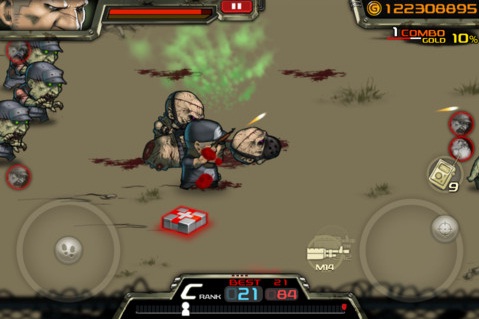
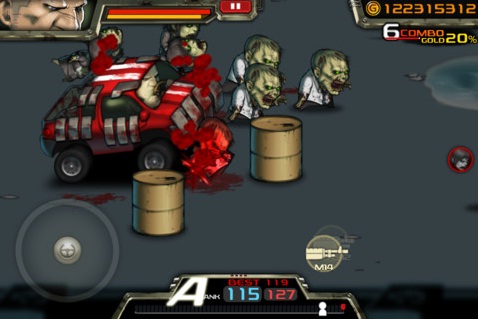
Gameplay Dead City is pretty self-explanatory: slaughter the dead as you make your way through an overrun city. You do so via the mechanics of a side-scrolling twin stick shooter: left stick controls movement, the right aims your weapon. It plays like Metal Slug, fitting neatly into the conventions of a run-and-gun shooter. The screen moves left to right automatically, with the player moving around within that, as zombies approach from the either side of the screen.
You won’t find anything particularly new in Dead City, but that doesn’t mean it isn’t enjoyable for what it is. The conventions it uses are implemented well, making it undeniably fun to play. Zombies are the go-to enemy for games that need a heap of targets on-screen at once, and thankfully Dead City throws a bit of variety into the enemy types, to stave off the fatigue of looking at 40 thousand of the exact same zombie.
There’s a pretty commendable number of zombie types with different attributes. Some move faster, some take more damage, some leave puddles of hazardous slime, some explode on death. Even among the stock-standard zombie – with average speed, attack and health – there’s plenty of variety in their design.
But you know what’s even more fun than shooting zombies? Running them over in a car. Collect enough fuel in a level, and you can jump behind the wheel, bouncing defenceless ex-humans off your front bumper. Offering a car as an entertaining reward is a clever method of encouraging players to strive for the pickups, rather than just for the sake of a better score.
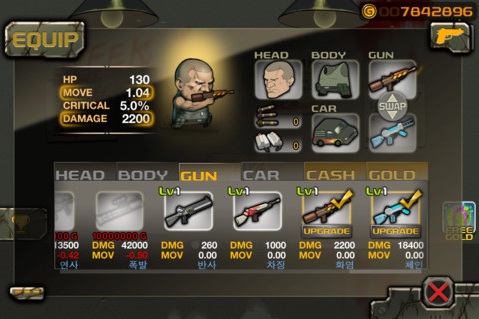
Advancing through the game is made more fun with the addition of a few RPG elements. Spending gold can improve your weapons and clothing, for perks, movement speed, higher damage and better critical percentages. You start with a bit of gold, and completing levels nets you more, dependent on your zombie kills. But the most effective source of income is the bonus for levelling up.
Each new rank is reached by meeting a few set goals: you might need to rack up a certain number of kills in total, or of a specific type of zombie. Maybe you have to destroy x amount of barrels, or run over enough zombies with a car. The tasks are varied enough to keep things interesting, and the system keeps progression feeling organic. There are no direct barriers to keep you from advancing, but you might struggle on later levels without upgrading your equipment. Replaying earlier levels to fulfil your zombie kill quota or other goals is the quickest way to advance, and it never feels like a grind. Success always feels like it’s only just out of reach – and that’s a good thing, keeping you engaged enough to continue playing.
Unfortunately, as with many iPhone games, the controls are a little awkward. The virtual thumb sticks work in theory, but without physical ones there’s no tactile feedback. The character is less responsive to your thumb sliding around the touch screen than is necessary for a game like this, leading to some frustrating deaths.
In-game micro-transactions let you use real money to buy continues, better weapons, or gold to spend on upgrades. I don’t have a problem with them as a business model, but they’re a little too blatant in Dead City. They’re still optional of course, but ads for better equipment pop up far too often, and the prices are rather ludicrous – a weapon like a flamethrower can set you back $9.99. It brings up all sorts of complicated questions about the iOS pricing structure – a game like this is worth paying for, but I don’t think an in-game weapon is.
Visuals & Audio As mentioned, Dead City plays like Metal Slug or similar side-scrolling shooters, and the visual style matches those classics. Its gritty urban setting meshes well with an almost-comic book style. It’s all together much cleaner than the retro-pixel look it could have borrowed from the games it draws inspiration from.
There’s a generic rockin’ soundtrack to the game, which accompanies the action well enough, but isn’t exactly memorable after you stop playing. The rest of the sound is fairly limited, with the player character only contributing a few basic comments during play, and most zombies essentially making the same sounds. It feels like a missed opportunity to use specific sound effects as indications of which zombies are about to appear, and as a whole, the audio seems to have been largely overlooked.
Overall Dead City is hardly groundbreaking, but it nails what it’s trying to be: a decent side-scrolling shoot-em-up, and an entertaining way to spend a train trip or two. The only major downfall is the invasive micro-transactions, which chip away at some of the enjoyment to be had. I’d rather pay a couple bucks for the game than for in-game items of little consequence. On the plus side of that, the core game is free, which makes it very easy to recommend.
Many of us remember Sega’s latest adventure into the world or kart racing with Sonic & Sega All-Stars Racing and most of us remember it as a fun attempt to create a new racing game with some of Sega’s best characters. Now Sega his taking another swing at the racing genre with Sonic & All-Stars Racing Transformed and after they announced that Danica Patrick would be sponsoring the game with her race car, I was able to get some hands-on time with the PlayStation 3 version of the title and see what all the fuss was about, and you know what? All that fuss is well deserved.
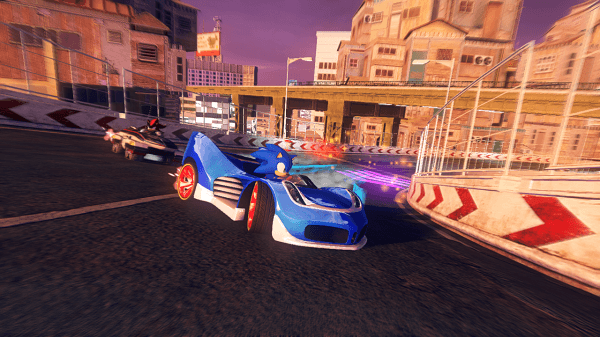
One of the key elements that makes Sonic & All-Stars Racing Transformed different than other racing games of its type is the fact that the game will feature brand new transformation mechanics with the player’s vehicle switching between a car, boat and airplane quite literally on the fly. Rather than having players try to press a button or choose whether or not they want to transform, they will fly through a transformation circle which will automatically switch their vehicle to the required type. This is done in a visually pleasing manner and there are a number of tricks which can be done to give the player an extra edge. For example a player can fly their plane up to the highest point the track will allow before entering a transformation circle, then as their car or boat falls back to earth they can perform a number of aerial tricks to give themselves a large boost when they touch down.
To make things even more interesting, each of these three vehicle types handles differently. While drifting is a major mechanic for the basic car racing, attempting to drift with a plane instead causes extremely tight turns. The change in handling is quite interesting to experience and provides some ever changing gameplay to go along with the fact that a few of the courses themselves will undergo changes as you race through them. One of the three stages available for play at Sega’s E3 booth was a Panzer Dragoon based level which actually tells a small story as you race through the area. Two dragons will be battling in the area and will actually start wrecking pieces of the track, forcing players to take different routes than last time due to the fact that the track is either destroyed or blocked as the creatures battle it out.
Of course Sega also had two new characters to show off during the show, including my favorite, Vyse from Skies of Arcaida, and as one would expect each character has different handling mechanics. A number of new weapons have been added into the game and the developer with us explained that they would not be game-breaking weapons, but ones which may help swing things in your favor. For example, players can use a baseball glove to catch and use projectiles shot at them, or shoot three snowballs out of their vehicle with the first snowball slowing down a targeted racer, a second damaging handling and a third one actually freezing them entirely. With the combination of some touched up visuals, transforming vehicles and revamped stages Sonic & All-Stars Racing Transformed may just overthrow Mario Kart in the kart racing genre.