
Home Blog Page 5359

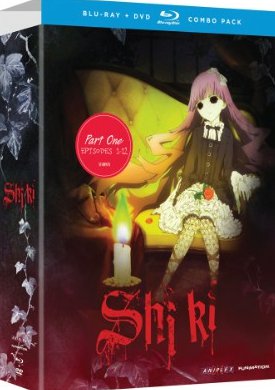
Shiki Part 1 Review

Shiki Part 1
Studio: Daume
Publisher: FUNimation
Format: Blu-Ray/DVD Combo Pack
Release Date: May 29th, 2012
Price: $69.98 – Available Here

Overview:
In Pop Culture, there are two current major trends in terms of monsters, zombies and vampires.  Where zombies are more over done but are generally better respected, while vampires are fewer in terms of products but some of those few have made them lose the street credibility.  Shiki is an anime that focuses on the later; however, it takes the vampire lore back to before it was the butt of numerous jokes.

Is that enough though to warrant a viewing?  Not really, just because its vampires don’t sparkle doesn’t mean that it makes a worthwhile watch.  So, that brings it down to the almighty story and characters.  How are those?  Well, keep reading to find out.

Story:
Shiki begins by establishing the key set piece, the “decent”-sized small town of Sotoba.  Sotoba is a very isolated town, described by one of the characters as being surrounded by death, in reference to the momi fir tree forest that surrounds it whose wood is used to make coffins and grave markers.  The town has a sizable population and the unique thing about the show is that, it makes a point to try and show a pretty good number of these residents.  Now, that can become pretty confusing, so it’s a good thing that regularly characters will be accompanied by their name and relationship to others.  This is a pretty awesome concept and really establishes the small-town vibe of the show and makes the story more personal.

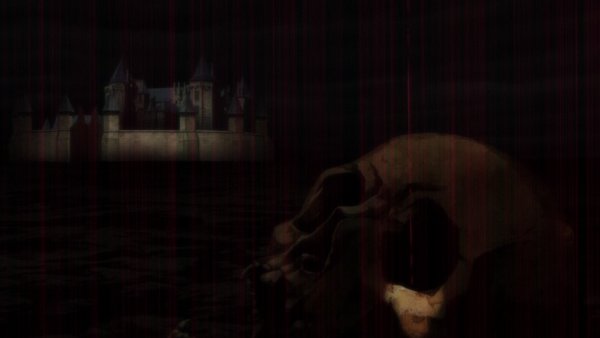
But, with any small town the series of events is ultimately kicked off by a new family moving into the town.  This time the family is actually moving into a big house on the hill, which they had especially built for them, so obviously the best choice is a European Style half-manor/half-castle overlooking a rural Japanese community.  After they move in though, people start dying in ways the local doctor can’t fully understand, so that he begins to worry it may be an epidemic.  While this may seem a little cliche, what’s great what direction the show takes once a solid number of residents have turned.

The direction?  The show becomes less about the humans simply trying to survive and more about both sides dealing with each other.  As such, there is several different storylines working at once, so the date is often being shown at the top, so that viewers can keep track of when everything is actually happening.  Both sides have those that simply care about the survival of their own, and both have those that question having to kill the other.  This is a complex look at the morality of different people and a good look into what people are willing to do to survive.  Leading up to the end of Part 1, where the main character is struggling with allowing his best friend to drain him or to stopping his fallen best friend once and for all.

Visuals:
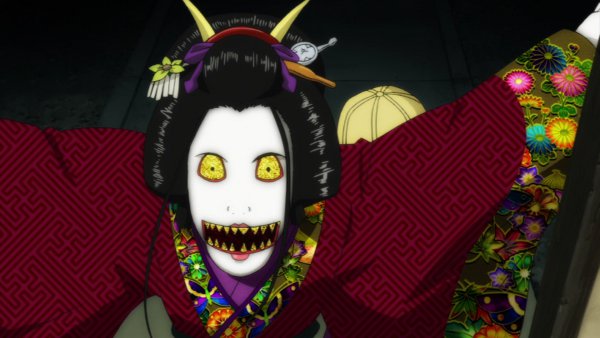
The art work is the show is incredibly top notch.  The backgrounds of the series all feature amazing detail to the point where the characters on top of in these places don’t really seem to match, much like the overarching theme in the show of characters not fitting into the small-town setting.  The characters themselves are also very well designed, even having some pretty unique looking hair amongst the cast, from Kaori’s star-tipped  pigtails to Papa Kirishiki’s mustache like hair.  Almost every character has hair unique enough to tell them apart from that alone.
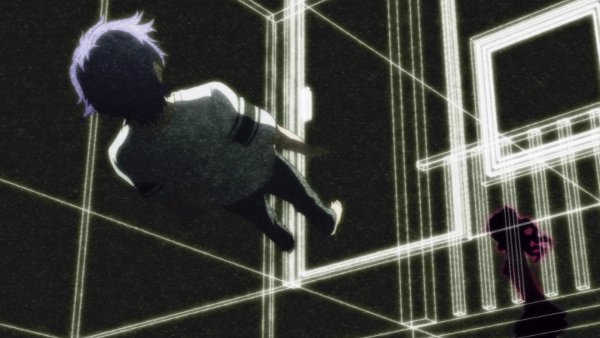
One awesome feature of the visuals is when characters are listening or imagining to what is going on on the other side of a wall or door.  Instead of simply cutting to show what the character thinks is there or what is actually there, the show has great x-ray style effects that add to the suspense of seeing exactly what the character is picturing.

Audio:
The music for Shiki is an interesting range that fits the suspense of every situation.  Early on there is a scene where the main character Natsuno is feeling watched, which is accompanied by a unique vocal chorus, which is almost entirely grunts that make the scene even more unsettling.  The opening theme, “Kuchizuke” by Buck-Tick, starts out as appropriate to the subject matter of vampires and pulling their victims to be with them to steal their life away, but as the show changes direction it also works as the new turned vampires wanting to reconnect with their family by changing them too.  The ending theme, “Walk no Yakusoku” by Nangi, is more of a reflection of how paths can lead away from loved ones on the road of life, which also echoes the vampires that try to change their families too.
The voice acting on both tracks actually works very well, the English voice acting on Natsuno seemed sketchy at first because it was a little dry, but as the show goes on becomes apparent that’s just his character and he gets better throughout.  So, viewers can really watch either one without worry, making it a good title to share with friends who abhor having to read a show.  Besides the initial Natsuno voice-acting, the only thing viewers might have a problem with is the super whiny Masao, but at least it is refreshing that the whiniest character in the show is a guy that’s predisposed to thinking people don’t like him.

Extras:
The extras on this set are somewhat limited, but that is somewhat expected with Part 2 releasing at the same time.  There are only 2 commentaries, for the first and last episodes of the set, but they are the standard actors talking about the different aspects of the show.  Also included, are the 4 Preview Featurettes that preceded the actual release, as well as trailers for other of FUNimation’s recent releases.  Lastly, there are the credit-free openings and closings, so that viewers can see detail put into the art of them.
Overall:
This is a fantastic start to a series that some might discount for being about vampires or horror in general, but they would be drastically mistaken as the series has some pretty thought provoking depth.  The character designs are some of the most unique I’ve seen in a while and the voice work does a great job with matching quality.  This is a series that I can’t wait to see the rest of because I give it

9-0-capsules-out-of-10


Sega Vintage Collection: Monster World Review

Sega Vintage Collection: Monster World
Publisher: Sega
Developer: M2
Platforms: Xbox 360 (Reviewed), PlayStation 3 
Release Date: 23/05/2012
Price: 800 Microsoft Points

Overview:

Monster World, Wonder Boy, Wonder Kid…Adventure Island? This is a franchise with a very confusing history as it never really could settle on a concrete name, the series also jumped between numerous genres, starting out as a pure platformer, then turning into this 2D Zelda-style adventure, a Metroid style adventure, and even a scrolling 2D shooter (STG) at one point! This franchise has quite the interesting history to say the least.

The series has developed quite the cult following over the years, and many consider it to be overlooked when compared to other franchises from the same era. On that note, these games have not seen too many ports or re-releases over the years, but this year is different.

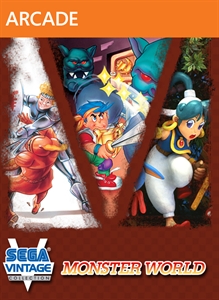
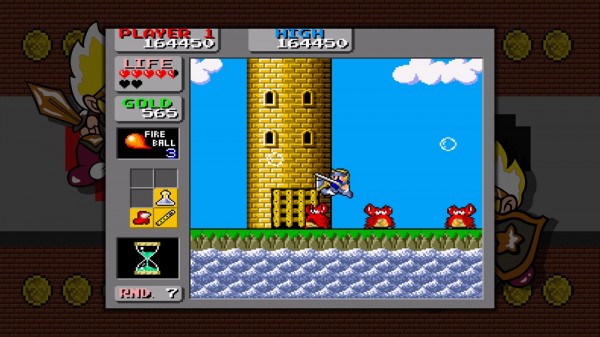
Monster World IV received its very first English localisation earlier this year on the Wii’s Virtual Console, and now that title, along with two others, have been packed together as a collection, available for purchase on Xbox Live Arcade and PlayStation Network as a digital download, titled Sega Vintage Collection: Monster World. This collection features Wonder Boy in Monster Land, Wonder Boy in Monster World, and Monster World IV.

Story:

The games featured in this collection are meant to be adventure titles in much similar vein to Zelda, but they are actually pretty light on the storytelling, with the exception of Monster World IV. Wonder Boy in Monster Land is essentially a very fast paced adventure paltformer, and while it has towns and shops, the actual premise is a very basic ‘hero takes on evil monsters’, which is fair considering that it was a coin-up arcade title. Wonder Boy in Monster World is actually fairly similar to Wonder Boy in Monster Land, as a young hero named Shion suddenly decides to leave home and battle the monsters invading the land, meeting new characters along the way. Monster World IV still has the ‘hero saves the world from evil’ premise like the other games in the collection, but it certainly does a better job in telling a better story with a rich inspiring world, likeable characters, cut-scenes, and a main character who actually has a proper background.

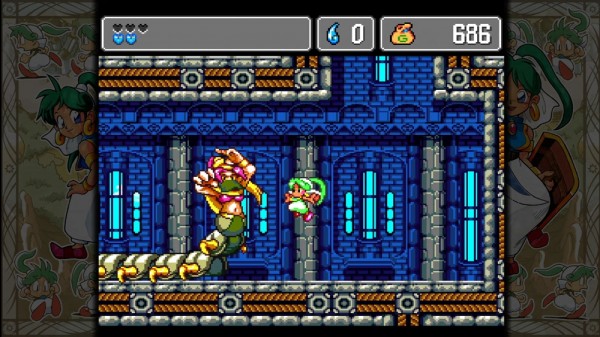
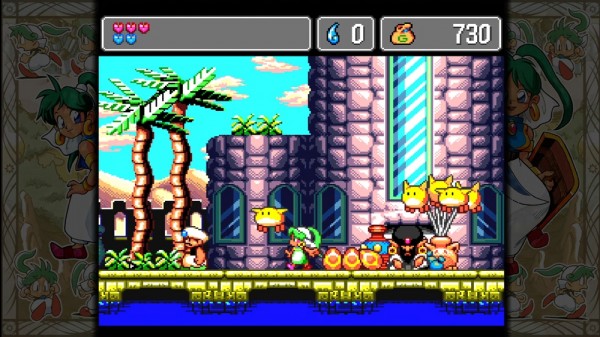
The world portrayed in each of these games is quite vibrant and colourful, Wonder Boy in Monster Land and Wonder Boy in Monster World have very similar looking in-game worlds, based on medieval Europe fantasy with dragons, knights, and the like. Monster World IV on the other hand is quite the departure, featuring a Middle Eastern inspired setting with temples, deserts, Arabian characters, and also draws upon Arabian fantasy themes. It’s pretty fun setting that offers a nice change from what the series is normally known for, and it also does a much better job at presenting the world and its characters. Not to mention Monster World IV features the series’ only female protagonist, Asha.

Overall, these games have a very basic story-line . The games are heavily gameplay driven, but the plot-elements still help add some substance to the adventure design of these titles, in a very simplistic yet effective manner.

Visuals and Audio:

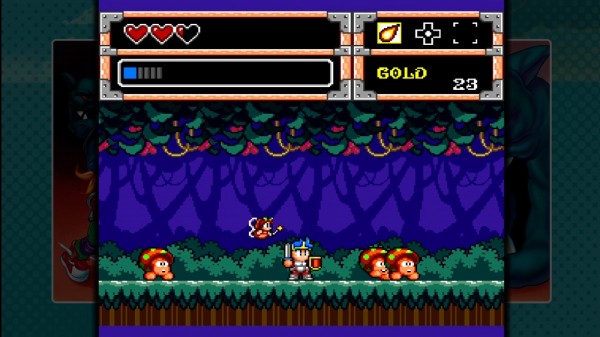
The games in this package have aged reasonably well, considering the eras that they belong to. Wonder Boy in Monster World is obviously the most retro looking game in the collection, but it’s still a vibrant looking game with really good use of colours, the game here is actually the superior arcade original instead of the famous Sega Master System port. Wonder Boy in Monster World is a vast improvement, as being a Mega Drive title it has some appealing 16-bit graphics. It’s a really vibrant game with some nice use of colours and has some solid character sprites, but the animations are quite simple and the graphical details are a bit bland. Monster World IV is obviously the best looking of the lot, a game that was released towards the end of the Mega Drive’s life, this game has aged well visually as it features some really fluid animation, highly detailed 16-bit graphics, great use of colours, and some cool character sprites and effects. Monster World IV is easily among the best looking Mega Drive video games ever made, and still looks quite appealing.

Musically these games are quite brilliant, featuring very upbeat and uplifting tunes with a very strong RPG vibe to the overall musical style. All the games have a memorable soundtrack, each offering something a little different. Monster World IV offers a much different style of music compared to the other games in the collection.

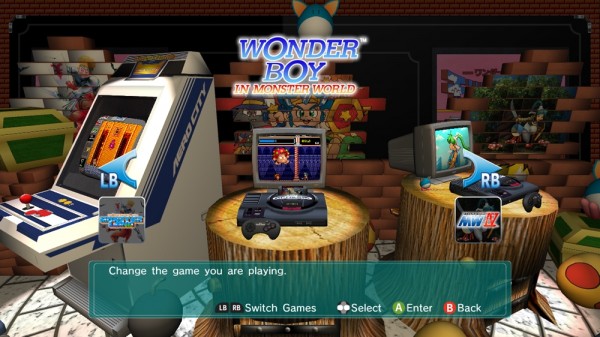
What’s great about this collection is the way it’s presented, offering a virtual arcade and Sega Mega Drive (Genesis) set ups for each of the games. The games have been ported really well and you can play around with a variety of graphical filters and resolutions, all producing some nice results. There is also a musical jukebox for each game that lets you enjoy each game’s OST.

Gameplay:

The games featured in this collection are all adventure platformers and are actually pretty similar in style. These are pretty action heavy games, where you battle a lot of monsters, engage in some classic and challenging platforming sections, solve puzzles, and face some mean bosses. At the same time you also get to explore towns and even interact with NPCs.

Wonder Boy in Monster Land is a challenging arcade title but at the same time quite addictive. You can learn spells and acquire new equipment and items from shops, however you’re meant to be constantly on the move as there’s a constant time limit. This is one fast paced adventure platformer that gets difficult right from the get go. You need to power through each of the areas as quickly as possible and fight each area’s boss. These bosses put up a pretty tough fight and can wipe you out in seconds. The core gameplay mechanics might feel a little stiff and archaic compared to modern 2D platformers, but it’s still a playbale and enjoyable title that will make you come back for more. It’s a rewarding experience as you find yourself improving with each play-through. Thankfully this port allows you to play around with the number of lives and continues that you can use.

Wonder Boy in Monster World is actually pretty similar to Monster Land, but is much slower paced with greater focus on the adventure aspect. There are towns with NPCs, and you can even save your game at the inn. It’s a lot more puzzle driven, and the game design may be a bit confusing for modern gamers as its one of those cases where you need to talk to NPCs multiple times at different instances in order to trigger events. It’s fun for what it is, but the gameplay does not feel as relevant or accessible today, not to mention the mechanics feel rather stiff and sluggish.

Monster World IV is the real cream of the crop, and the main reason why you want to get this collection. The gameplay is just amazing, and is easily the best playing game in this collection. The controls are tight and responsive, and the general feel of the game is smooth and fluid. Asha has a wide range of attacks and is a lot of fun to control as she moves really fast and is a pretty agile overall. Along the way she meets an interesting creature that serves as her companion, helping her out during the course of actual gameplay with its abilities, and this allows for some pretty intuitive platforming and puzzle solving moments. It’s a pretty challenging game with some cool levels, fun boss battles, and just really entertaining action and platforming.

The games featured here are really fun to play, and while Monster World IV is easily the crown jewel of the collection, it’s still worth having a go at the other games. Also worth mentioning is that the collection features all localisations/versions of each of the titles, for example, you can play the Japanese, European, and North American version of Wonder Boy in Monster World.

Overall:

Sega Vintage Collection: Monster World offers a rare opportunity to experience one of the most overlooked and obscure retro franchises on high definition consoles. These are really well produced ports with enough new graphical knobs and filters to make them look pristine on modern resolutions. If anything, this collection is definitely worth getting just for the fully translated Monster World IV, which was a Japanese exclusive for well over a decade. The collection is far from being a novelty experience that you will get bored of in 10 minutes, as these are serious adventure games that will provide you with plenty of action packed platforming thrills. While Wonder Boy in Monster Land and Wonder Boy in Monster World may not have aged too well in terms of game design and mechanics, Monster World IV however is still an enjoyable and refreshing 2D adventure game that feels relevant while still offering some old school challenge.

8-0-capsules-out-of-10

Alan Wake’s American Nightmare PC Review


Alan Wake’s Merican Nightmare
Publisher: Microsoft Studios
Developer: Remedy
Platforms: PC (Reviewed), Xbox 360
Release Date: May 23rd, 2012
Price: $14.99 (Steam)

Overview

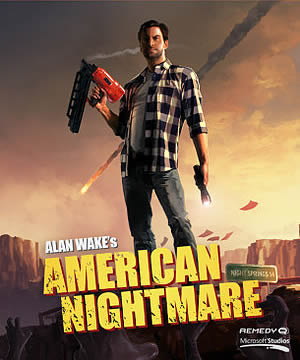
Alan Wake’s American Nightmare is a side-story to the main Alan Wake game which was released on the Xbox 360 and later, PC. The Alan Wake games fall under the survival horror and mystery categories, which make them quite an interesting series. They also sport amazing stories and feature some unique enemies.

Story

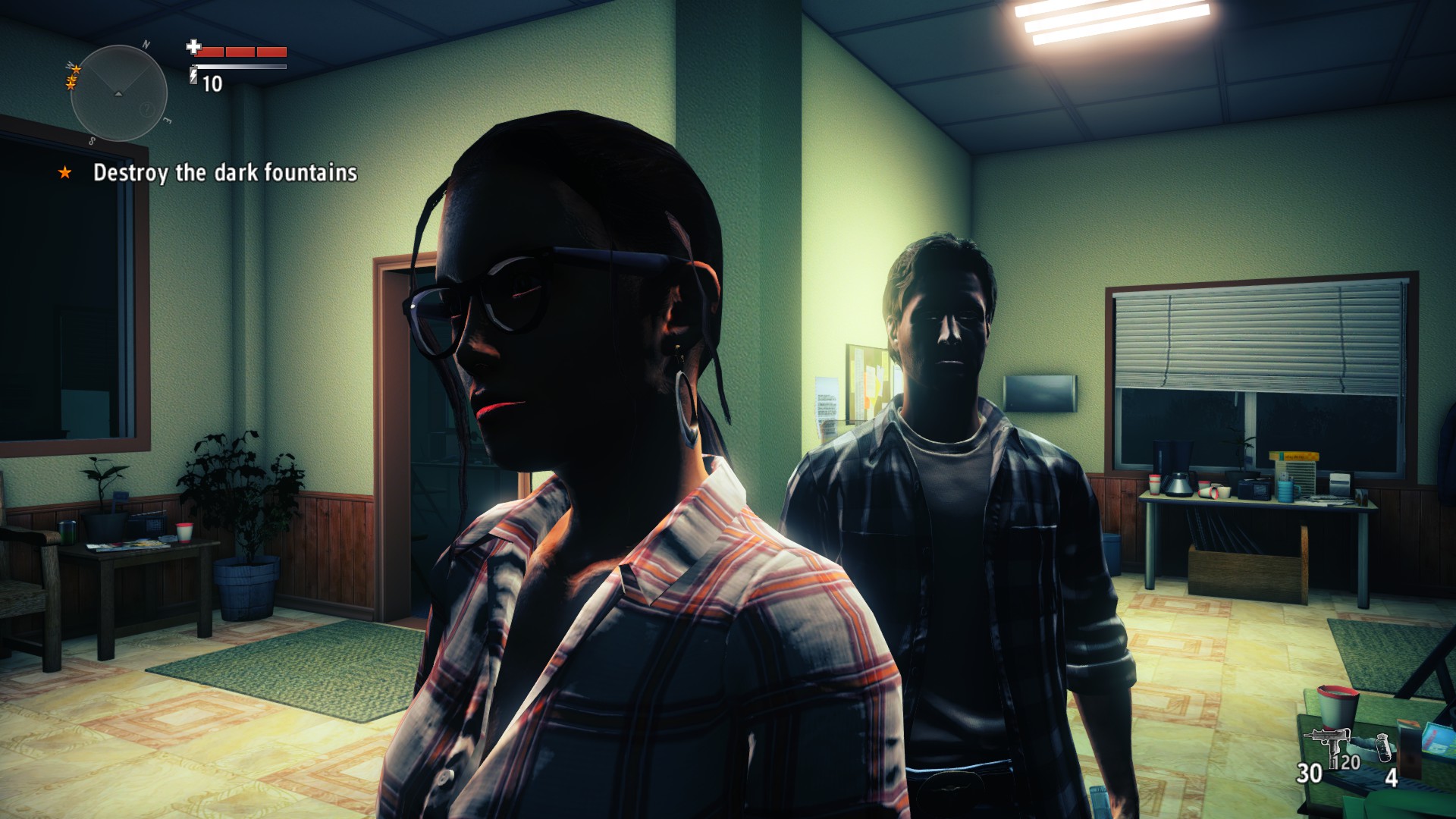
Alan Wake’s American Nightmare follows the adventures of the protagonist, Alan Wake, a writer who writes for (and is also a character in) a television program called ‘Night Springs’. Night Springs seems like it is a parody or tribute to the Twilight Zone television series covering strange and unusual events. The main storyline plays out much like a television program with recurring characters, a story short enough to be resolved in a single episode and a problem that isn’t too large or epic to be covered in over one episode.

What I particularly liked about the story was the way that it was set up. It is a traditional three-part arc with a beginning chapter that sets up the story and the events and what not, a middle arc that really gets the ball rolling and a lot of bad stuff happens and then a resolution where everything is all better and the good guys win and stuff. What’s even better is the way the story writers turned this concept on its head. For instance, when you reach the end of the third arc for the first time, you’re convinced that you’ve done it and you’ve won, but then the game throws your for a loop and you’re forced to do the game again from the start. You can also look at this in the same way, but with all three times you get looped. The first time you do the three chapters is like the first arc where everything is being set up and you think it’s resolved, but then there’s more. The second time is like ‘man this sucks, I have to it all over again’ and it feels like there is no end to all this nonsense. And then the third time rolls around and you’re all ” ‘Eff yeah, lets do this! We’re taking this home and there’s nothing you can do about it”.

I also really loved the characters in this game. Alan Wake is just your everyday guy who gets stuck in this completely weird time-loop and has to find a way out of it. I found this to be quite enjoyable because there are too many stories out there where some highly heroic looking dude is being set up to be the hero and then the hero heroes and does hero heroics with heroness. Alan Wake is just a writer who happens to be the hero of this story. The other characters are also really fleshed out and I really enjoyed the way they played out the villain in this game.

Normally in games, you’d have this villain that every just says is really menacing and a big douche-bag, but you never really see it. It’s like you’re fighting the guy everyone else wants you to fight. But in Alan Wake, you actually see this guy doing so very bad things and you see him enjoying doing it. He is the embodiment of bad, and sexy, but mostly just bad. The way that they’ve set up the villains story is through the way some characters talk about him, but mainly through pre-recorded television programmes that are actually very gripping for their short play time. After finding all of these recorded messages in the game, you really get a great sense of the kind of person the villain is and this gives you more aspiration to want to bring him down.

Another enjoyable aspect to do with the characters is that they all have a lot to say in regards to idle banter. You can skip all of this idle chit-chat if you like and just go on with the game, but I found it to be very enjoyable and it enriched my experience with the game. What I really liked about this aspect is on the third level of the game, there is this one girl who is taken over by the darkness stuff that affects people that you can pretty much skip completely in the second and third time loops, but if you don’t there is even more dialogue to cover with her. I quite liked that the developers took the time to really flesh out the characters in this manner.

Gameplay

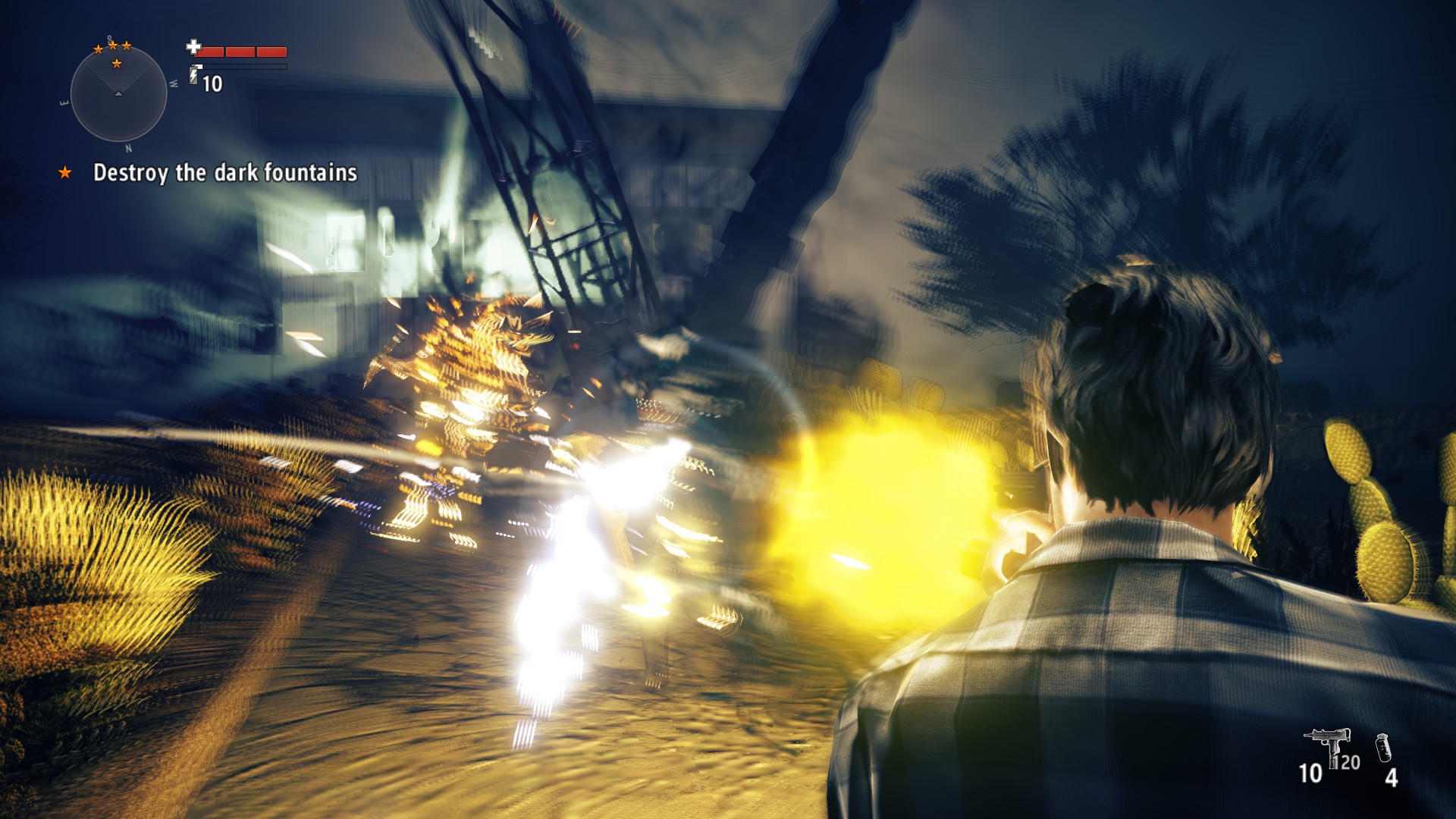
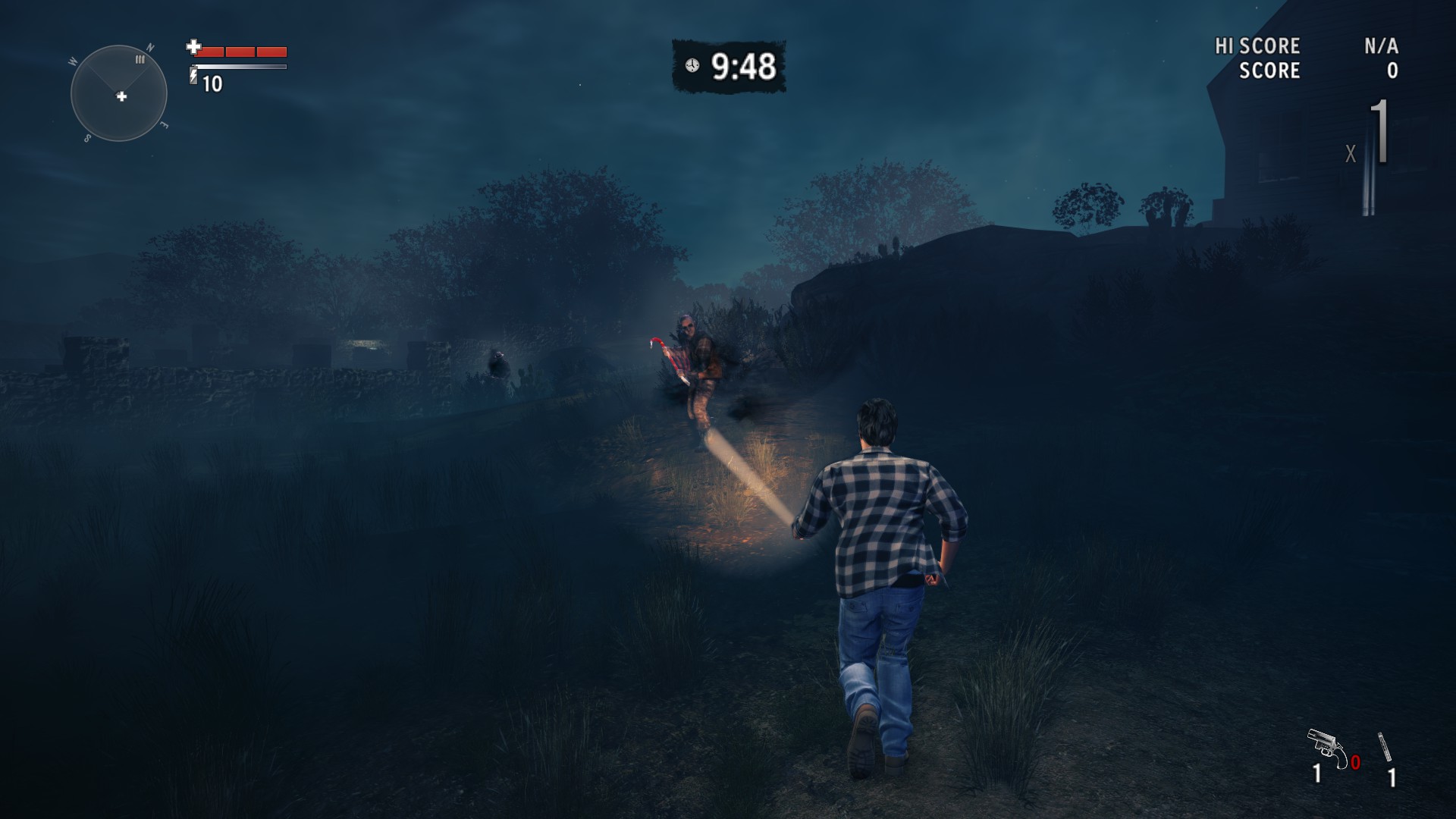
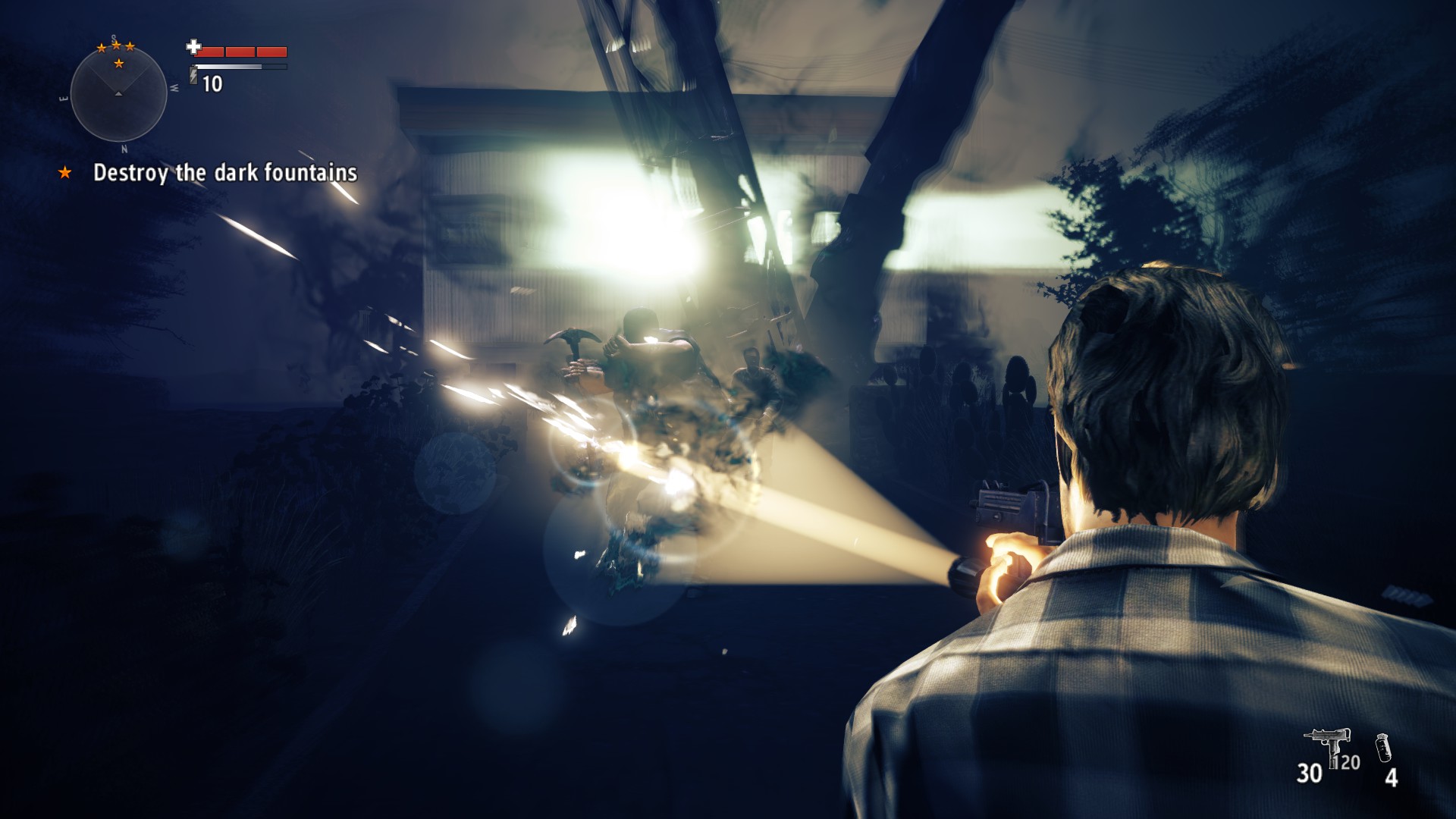
Alan Wake’s American Nightmare plays, I imagine, very similarly to the original Alan Wake game appearing on the Xbox 360 and later, PC. From my experience though, I’d say that Alan Wake’s American Nightmare plays very similar to survival horror games that play like Resident Evil 4. You’ve got the behind view perspective, you’ve got the aiming and shooting mode and you’ve got the zombies and things you need to kill. The main difference between Alan Wake and Resident Evil 4 would be that you need to hover a flashlight over enemies to make them vulnerable to being shot.

In Alan Wake’s American Nightmare, ammunition is plentiful and you never really find yourself running out of ammo during the shorter battles with The Taken, but you will really be aching for bullets in the much larger battles. Fortunately the game frequently throws ammunition at you and it is never a scarce commodity, which gives the game a much more action filled experience, even if it retains the survival horror intensity that makes the game an Alan Wake title.

What I really, really liked about the gameplay is the amount of detail that went into the game. I know I spoke about the characters in the Story section of the review, but there is much more than that. There are things litttered throughout the game for you to find, like hidden manuscript pages that really get you to really look around in each level. Some of these can be hard to find, but are quite often littered around the areas that you travel through on your way between points. I think when I finished the game, I ended with 48 out of 50-something manuscript pages, so I still missed some during my run. Manuscript pages aren’t useless, each page you can read through in the menu and can also be used to unlock bigger and stronger weapons by opening lockboxes throughout the game. However, you can finish the game with the pistol and other guns that you just pickup through the game.

Also there is an arcade styled mode where you are pitted against waves of The Taken and you must do battle with them. Doing well unlocks you more levels and gives you highscores. There are also a few achievements for you to earn in this mode.

Visuals

Unfortunately for Alan Wake’s American Nightmare, it has shoddy graphics even on the highest of settings. I believe that this is because it was built for Xbox 360 and then ported to the PC much later. Having a lesser graphics quality than the PC can theoretically produce at maximum really hurts the tension and horror of the game. But fortunately the game makes up for this with its writing, atmosphere and having a menacing villain.

What I really liked about the games graphics was it’s use of live action cinematography. These live-action cutscenes were amazing and really added to the overall feel of the game. However my one gripe with this is that the guy they had playing Alan Wake did not look too much like the in-game model. The model looked a lot like Edward Norton, but the actor did not. But still, if I was directing a movie and I needed someone to play Alan Wake, the actor they used would definitely be my choice. Here’s to hoping for an Alan Wake movie directed by the developers.

The last thing that I want to talk about int eh visuals are the characters themselves. I quite liked how each of the characters looked unique, even if one is an evil clone of the protagonist. The red-head scientist chick is amazingly attractive, as are the rest of the women in the story.

Audio

The audio in Alan Wake is amazing. I quite liked its classic rock soundtrack that was used in a few instances during the game and the games score also fit amazingly well. These two things combined not only increased the atmosphere of the game but also gave it a rather unique feel. And this is something that I thoroughly enjoyed.
The games weaponry sound quite weapon like and as a result, you get a pretty decent feel for when it is that you are shooting at an enemy. Having that high-impact noise really helps to reinforce the situation that you are presented with.

I also really liked the voice acting in the game as it was incredibly well done. My favourite would have to be the voice for the main villain as he portrays the kind of menace and evil that fully embodies the character. I will probably forever associate evil and menace with that particular character thanks to this game.

Overall

Alan Wake’s American Nightmare is an amazing package for everyone that picks it up. As a side-story it doesn’t really impact the story of the original game at all, but by playing it you really get a stronger sense of the Alan Wake saga. Aside from the sub-par graphics on the PC, the game is a brilliant play and something that I would recommend to everyone. Be sure to pick it up from the Steam store as soon as you can.

8-5-capsules-out-of-10

JAM Live Music Arcade Review

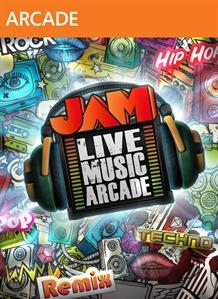
JAM Live Music Arcade
Developer: Zivix
Platform: Xbox Live Arcade
Release Date: May 16, 2012
Price: 800 MS Points

Overview
Remember how excited you were when you got your first plastic guitar controller? It doesn’t seem like too long ago when the music genre was at it’s peak, with Rock Band and Guitar Hero dominating sales across the board. Over the last two years, that market has dwindled, and a lot of those once loved peripherals sit collecting dust,  aching to be played with once again. JAM Live Music Arcade isn’t exactly a savior by any means for the rhythm guitar genre, as the heart and soul of the game actually steers into the direction of creation, but it’s certainly one under the radar release that must be tried by anyone itching to give those colored buttons one more for the road. Why, you ask? Here is my review for JAM Live Music Arcade.

Gameplay
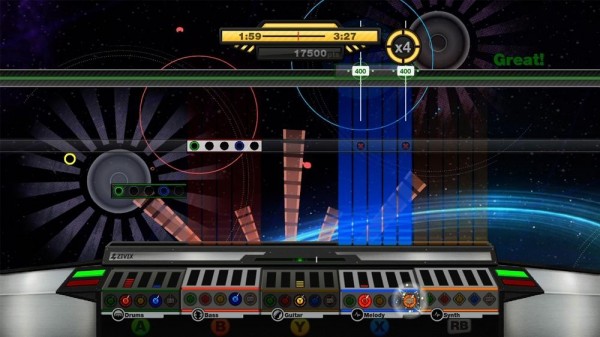
The first and main mode with JAM Live Music Arcade is of course the appropriately titled Jam mode. In this area, players get to construct their own versions of popular songs, bit by bit. Vocals, guitars, synthesizers, bass, and several other sounds are waiting to be remixed, and instead of getting to play these beats right off, you get to take the role of a producer and toy with each tune before eventually recording a mix made of all of the elements that are at your fingertips. We have seen several music generator programs released on consoles before, but Jam feels much more accessible due to the handy tutorials within (known as challenges), which provide a ton of insight on how the game actually works while allowing the player to feel productive through a standard progression format.

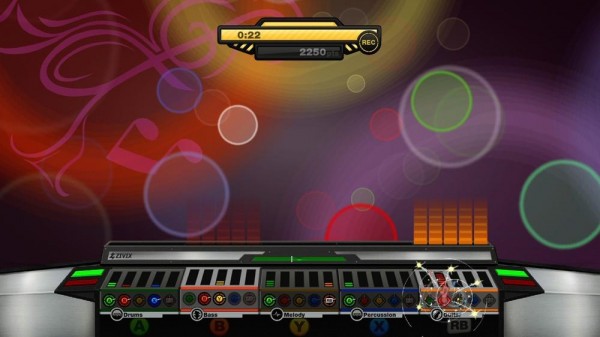
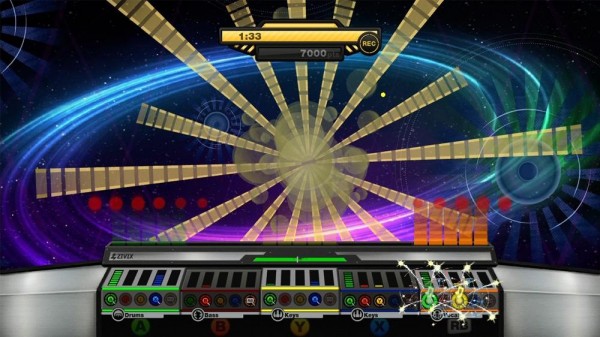
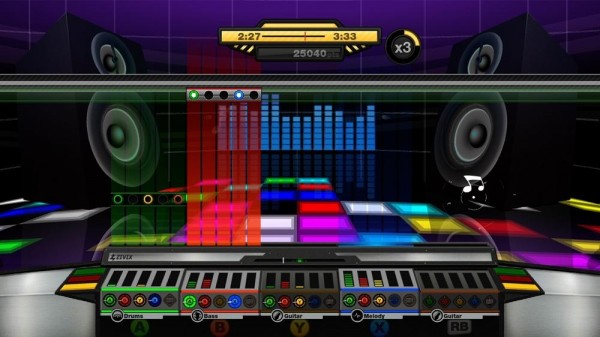
Down at the bottom of the screen, there are five different instruments with five tracks each. The player can turn on whatever instrument they choose by holding down the strum bar and pushing the correct color on the guitar, and then select the appropriate melody to play with that particular tune by simply repeating the same process. This lets the player change between beats on the fly, adding in vocals or drums at a moments notice – with even a handy timing meter that assures that this altering will be done to the beat and tempo of the current song. Timing is also important when selecting a track as well, as the player must keep a watchful eye on the tune’s loop in order to add the correct portion to their mix. As you progress as a master music maker, you will also see Jam start to open up more, too. You see, nearly everything is locked from the start, and the further you go within the main creation mode, the more options for customization you have at your disposal. Luckily, these additions are introduced at the perfect pace, meaning you should never feel too overwhelmed by all of the new goodies showing up on the soundboard.

As I mentioned, Jam Live was built with the guitar controller in mind from top to bottom. Those who lack the tool to play the game shouldn’t feel upset though, as a standard controller works just as well for the the most part and in my opinion, the customization portions actually feel more natural with a controller in hand due to how well this scheme was implemented. This layout simply has the face buttons (A,B,X,Y) act as the four main guitar frets while the right bumper acts as the fifth, with the strum bar being handled by up and down inputs on the D-Pad. Yeah, it may sound a bit confusing at first, but once you are bundling together a song, everything clicks rather quickly and this alternate method becomes second nature.

Jam mode really is a musical playground that should keep players busy for hours on end, but for those who lack the patience or that simply want to interact with their own creations, an Arcade mode has been added in to fill that void. This plays out a lot like your traditional Guitar Hero/Rock Band experience, where you can play a custom or default track by hitting the correct notes as they come across a bar at the top. It sounds like something that should be easy to execute, but the same method of control for Jam mode is also provided for Arcade, making things a bit overly complicated. As a beat rises to the top, the player must quickly switch to the correct instrument and then press the correct colored input to get a successful match. Doesn’t sound too bad, right? Well, when you have a song that includes a good number of switches in instruments, it feels almost impossible to keep up with the chaos going on in rapid succession. To be fair, this does get easier (and I use that term lightly) with practice, but I had many occasions where I would get so overwhelmed that I would exit and go back into Jam mode to get my musical fix, as Arcade is far less “arcadey” than it should be.

Visuals and Audio
As far as graphics go, don’t expect too much glitz and glare to come out of Jam Live. There are however some nice background effects that match the music that is playing, which are just eye-pleasing enough to hold your attention to the screen. Commands are mainly held in small boxes for Arcade mode, and they do their job well enough to pop up when needed so that the correct input can be made. Other than that though, not a lot was really done to make the presentation pop, but that’s not the point of the game and one small flaw that can be easily overlooked due to how involved the player will be with all of the main gameplay options on display.

When it comes to the soundtrack, there is a ton of variety offered up that is sure to please just about everyone that span nearly every genre. From the poppy-rock beats of Fall Out Boy, the calming melodies of Owl City, there are plenty of songs that work beautifully with the customization aspects of the game, and of course are just as fun to play in Arcade. With that said, only 32 tracks can be unlocked throughout the game, but later DLC has been promised that will add more to the equation and when you consider the unlimited amount of mixes you can make, there is plenty of high quality tunes to keep you busy for a good chunk of time.

Overall
Jam Live Music Arcade is a musical romp that may go overlooked due to the dying genre it will surely be grouped in. Placing this title in that category should be considered a crime though, as there are a ton of well executed ideas at work here that allow almost anyone to not only remix songs with an in-depth editor, but to get a new appreciation for the art as a whole. Yes, the Arcade mode could use a bit more streamlining and holding a guitar isn’t the most ideal way to edit your masterpiece, but the experience as a whole is quite fulfilling from a creation standpoint and Zivix are definitely one small studio that know what they’re doing when it comes to crafting a musical playground. Add in the relatively low price-tag and infinite replay value, and you have one of the best reasons in years to get in tune with the genre all over again.
8-0-capsules-out-of-10

Space Quest Creators Reunite for New Game

Have you heard? An old adventure game developer is using Kickstarter to fund a brand new point-and-click adventure game!

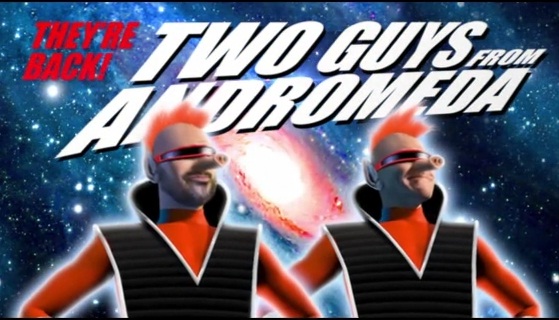
Tim who? Double what? No, I’m talking about the Two Guys From Andromeda, creators of the classic Space Quest series of the eighties and nineties.

In case you haven’t donated to enough Kickstarter projects lately, Scott Murphy and Mark Crowe, the aforementioned Two Guys, have reunited and are asking for $500,000 before Tuesday June 12 to develop a new Space Quest game.

The guys are clearly passionate about the opportunity, and they already have a stellar cast of video game voice actors ready to participate: there’s Gary Owens, narrator from some previous SQ games; Robert Clotworthy (Jim Raynor from StarCraft 1 & 2); Ellen McLaine (GlaDOS and the turrets from Portal 1 & 2, The Administrator from Team Fortress 2); John Patrick Lowrie (Sniper from TF2, Sword Control from Halo: Reach); and Rob Paulsen (Pinky & The Brain, Animaniacs, Teenage Mutant Ninja Turtles, Monkey Island).

At the time of writing, the project has already raised almost half of that amount, and with two more weeks to go, it’s likely the target will be reached. So go help them out on Kickstarter, where there’s a crazy amount of information on the project, as well as some rather generous pledge rewards.

And keep up to date with all things Space Quest at guysfromandromeda.com.

Natsume teases new release over Twitter; signs point to Rune Factory or Harvest Moon

Over the past few days this weekend Natsume has been teasing their Twitter followers with quite a few hints, saying that they would be revealing a brand new title for North America to their Twitter followers first. So far six hints have been released and can be seen below.

  • Hint 1: The announcement contains a “celebration”
  • Hint 2: The announcement will relate to a series…
  • Hint 3: The announcement will relate to a series…in which there are at least 3 previous entries…
  • Hint 4: The announcement will relate to a series…in which there are at least 3 previous entries…that Natsume published in North America
  • Hint 5: C____m_______ __ K___
  • Hint 6: C_s__m_z____n i_ Ki__

Ironically, another hint which hasn’t been revealed is the fact that, unless Natsume in North America is announcing a brand new game in one of their franchises before it is revealed in Japan, there are actually only two titles coming out that Natsume could be bringing over to English audiences. That is Harvest Moon: Land of Beginning and Rune Factory 4, both of which are part of series which have been published multiple times.
Some people are currently guessing that the last hint states, Customization is King. This also points fingers directly at these two games as the most recent Harvest Moon title has the most customization ever found in a Harvest Moon game and Rune Factory 4 allows players to customize their land as well. It appears we will have to wait for the moment for more clues however, and expect some announcement within the next few days.

Deltora Quest: Quest for the Seven Gems Review

Deltora Quest: Quest for the Seven Gems
Developer: Cartoon Network
Publisher: Cartoon Network
Price: FREE – Play Game Online Here

Overview:
Deltora Quest is an anime based off of a book series, that tells the story of Lief, Barda, and Jasmine, three individuals out to retrieve seven gems and return them to the Belt of Deltora to save it from evil.  A fairly exciting premise for a series, though apparently at the mere mention of gems it seems that the online flash game Quest for the Seven Gems could only go in the most obvious direction and make a match-three game.  Well, seeing as it was a show only shown on the Australian and New Zealand Cartoon Networks, it makes it a little easier to understand going in such a direction.

Story:
As mentioned before, Deltora Quest revolves around finding seven gems and returning them to the Belt of Deltora from whence they had previously been.  Ultimately, reassembling the belt will put an end to the terror that The Shadow Lord has wrought upon the land after having the belt destroyed.  Interestingly enough, the name Deltora is derived from the gems in the belt itself, i.e. Diamond, Emerald, Lapis Lazuli, Topaz, Opal, Ruby, and Amethyst.  Unfortunately, as cool as that sounds the game doesn’t actually talk about any of the story itself, being a simple match-three puzzle game, midst an internet filled with the things, so what Quest for the Seven Gems does different, isn’t story related.

Gameplay:
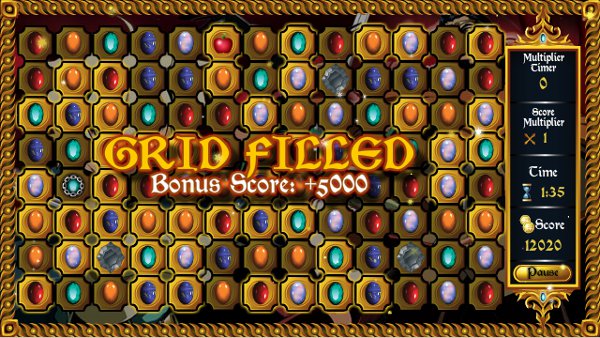
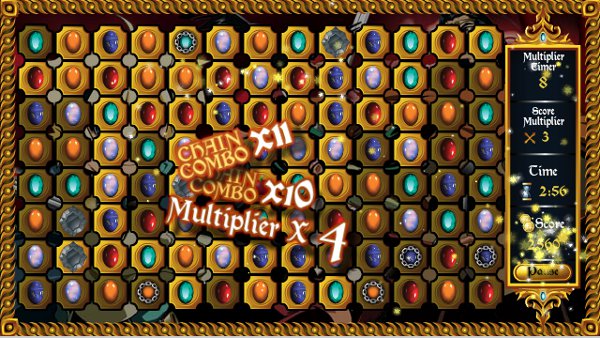
What this game does differently is that it provides a much wider field of play than a lot of the other match-three games, remain consistent in terms of colors, adding a wild token midst the gems, and have matching tiles slowly brighten the board.  What do these mean for gameplay itself?  Well first, it is really nice having a fairly wide play area, being able to look in a fairly removed location to look for more matches does ease the strain of re-looking over the sames areas over and over, so players can generally keep the matches going at a better rate.

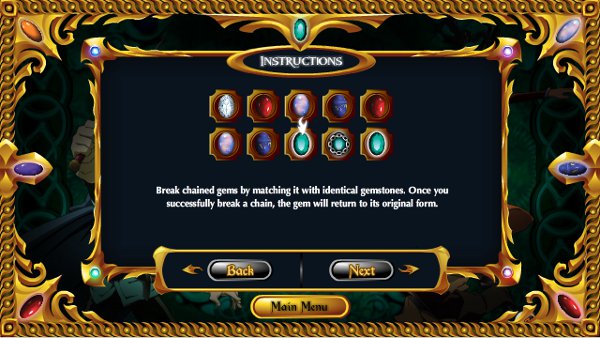
Throughout the entire game as well, there are only seven colors, plus the Shadowlord tiles that don’t move.  This will probably make it a little harder to get used to the game at first, as similar games start out at fewer colors to start with, but once a player has it down there isn’t any additional learning curve.  Also, when gems become “chained”, i.e. having a chain placed around them, it doesn’t mess up gameplay by requiring players to work around them, instead they must simply be matched twice.

The wild token is represented with an apple and it is one of the means to better combat the difficulty of starting out with seven different colors to match.  It is far different than the other gems, so it is much easier to distinguish quickly when trying to scan through the wide range of the play area.  This is a simple addition, but can generally help a lot in chaining matches together and keeping players from becoming completely stuck.

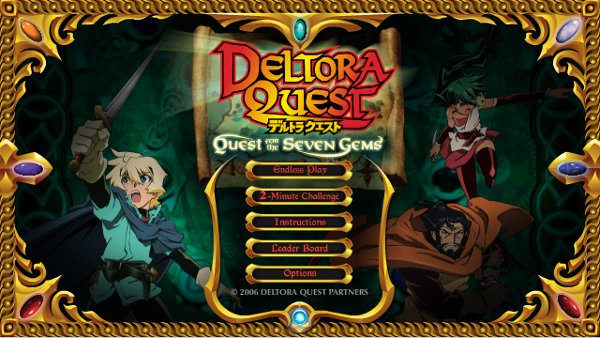
Lastly, when making matches it will slowly turn the board to gold at every point a match takes place.  This actually means different things for the two different game modes.  “Endless Play” continues as long as the player has time for the current round, and they pass each round by turning every tile gold.  So, it is required to get all the tiles golden in order to keep playing.  In “2-Minute Challenge”, players only have the single round with 2 minutes to play, but turning all the tiles gold will afford them bonus points.  This seems to be a better means of conveying an overall goal than just requiring an almost arbitrary number of points to progress and makes it easy for players to tell what they have left to do.

Audio and Visuals:
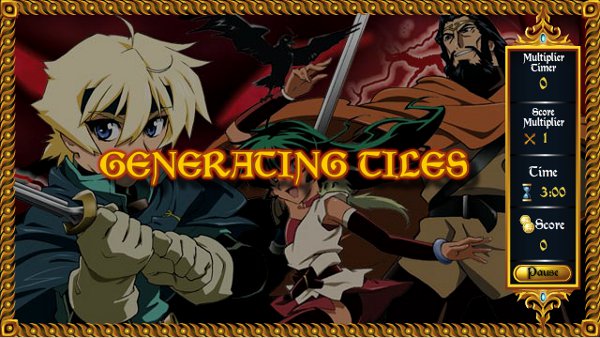
As this is a puzzle game, both of the audio and visuals are incredibly limited in scope.  Besides all the game pieces and borders, the only other art is the background.  But since the background actually features the main characters from the show, it is probably the closest thing to story in the entire game.  The gems themselves look good, well they don’t match exactly how one would expect to see them in real life, but they are designed to look different enough both in terms of color and pattern as to not be a problem for players.

Audio is limited entirely to music, matching sounds, and multipliers.  Matching and multipliers are pretty straight forward, simply acting as dings to indicate them happening, but admittedly if there is a longer line of them chained together it does sound pretty satisfying to hear.  The music actually has a decent range from the menu, to starting a game, to the different modes.  The menu and “Endless Play” are set up with strings that actually flow pretty peacefully, while starting either mode preps the player by having a heavy drum based sound to it, but the “2-Minute Challenge” features a organ or piano melody to fill it time.  It’s actually kind of nice to see that much variety in the music.

Overall:
Ultimately, Quest for the Seven Gems is a match-three game, but it is good to see that a decent effort was put into the actual game.  It features a fair amount of reasonable additions to the bare minimum format of that game and actually has some semblance of musical range.  Players looking for an old favorite, might be interested in checking out this take, but fans of the series probably wouldn’t be getting that much out of it.  I give Quest for the Seven Gems

6-5-capsules-out-of-10

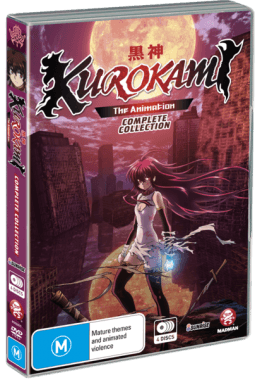
Kurokami Review


Kurokami Collection

Studio: Sunrise
Publisher: Madman Entertainment
Format: DVD
Release Date: April 18, 2012
Price: $59.95 – Available Here

Overview:
‘Do you like this?’ It’s a a question Kurokami poses it’s viewers with several times, never truly finding an answer. It flips and flops about like a fish desperately searching for water, never truly finding that safe place. Instead it haphazardly meanders from one extreme to another incapable of finding that middle ground that it so desperately needed. All that is left in the end is one question: ‘Did you like this?’

Story:
Kurokami is a very odd series for a number of reasons, the first of which is that it’s an adaptation in name only. The series ‘adapts’ the manga of the same name but as little as possible. The only similarities between both material is the title and characters, this is a completely different story that Sunrise seem to have concocted themselves and it feels really half-baked at the end of the day.

The plot revolves heavily around dopplegangers and a group known as the Tera Guardians who are tasked with keeping balance in the world. Each person has a doppleganger and there is energy known as Terra that is split between these identical individuals. It is all pretty straightforward, except it’s not. Things are explained quite poorly in the first half of the series and character development for some of the leads are almost non-existent (Kuro is a major offender).

The pacing is all over the place and the series never really establishes which route it wants to follow. It appears to head in one direction but just as quickly turns tail and tries another one. It’s disappointing the say the least.

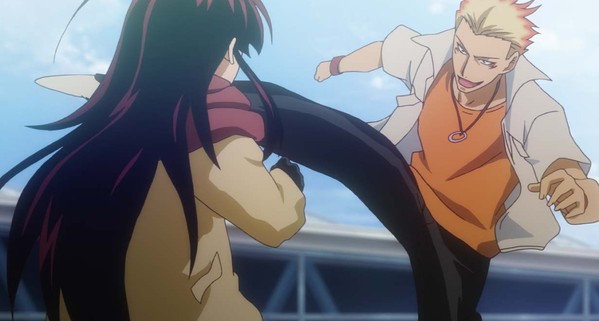
But hey, it’s not all bad. The second half of the series is generally solid, never great, but good. The action sequences are very creative and tell a story in and of themselves, but the problem that plagues the series from start to finish is that it just doesn’t know what it wants to be or what story it wants to tell. One is left to wonder whether it would have been a better idea to follow the source material more accurately, because Sunrise really did not know what they wanted to do with this show. One minute it’s ultra-violent, next minute it’s a generic shonen and then it’s a freaking romantic comedy series all of the sudden. The problem here is that it for one reason or another Kurokami can not tie all of these genres together, leaving behind some pretty radical mood shifts and inconsistencies galore.

It’s that lack of direction that really hampers down the entire experience of Kurokami, which isn’t too bad an action anime at it’s foundations. It just lacks substance and any real measure of depth. The characters are forgettable, the plot is slapdash at best, but the action is exciting enough that it makes for okay fluff to waste some time with. It’s really just all filler, no killer. That is Kurokami.

Visuals and Audio:
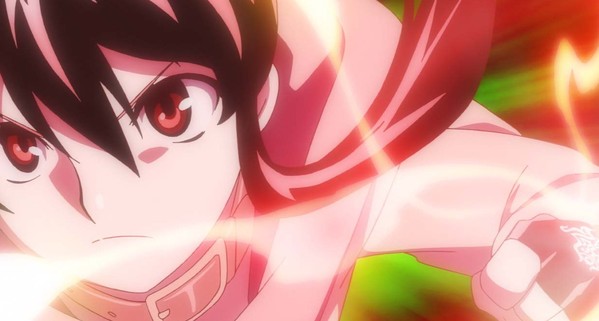
Probably the best thing Kurokami has going for it is it’s excellent aesthetics, both visually and aurally. The animation is absolutely jaw-dropping in some of the fight sequences and the music that backs it is just as captivating. It’s clear that a great deal of effort was placed into the series visuals and soundtrack, definitely more so than the show’s writing.

The series is rather dark aesthetically, with hues of red and black predominant throughout. The ambiance is likewise dark, but with a bit of excitement thrown in. I particularly enjoyed the opening theme song ‘Sympathizer’ which is just a total balls to the wall smash mouth rock song that does a great job in building excitement for the proceeding, even if they do not always live up to that hype.

The voice work was fairly decent, but ultimately forgettable. There was no real memorable performances and everyone seems to be just going through the motions here, which does throw yet another wet blanket onto everything. But what can you do when the writing is so poor?

Extras:
Madman’s release of Kurokami does pack a fairly interesting punch in terms of bonus content. It features previously unaired episodes as well as your standard textless opening and ending songs. The unaired episodes appear to be episode 23, 24 and one that Madman lists as 12.5, all of which are really non-essential viewing but still worth a look if you found the series enticing enough. Episode 23 is however a recap episode, which you may prefer to avoid watching. Episode 24 is a side story revolving around the characters Excel and Steiner and 12.5 taking place between 12 and 13. So it’s not all bad. This isn’t the best special features Madman have had on disc,with many releases having much more content for the same price. It’s good enough though for a series like Kurokami.

Overall:
When it comes down to it, Kurokami is like a lost child desperately searching for where it belongs, hoping that someone will find them and take them home. The only problem is, no one came to take Kurokami home, instead it was left to wander the streets of plotting, heading up one road only to get scared and try another.

Sadly the series never amounts to much more than a pretty looking punch fest, even though it had all the potential in the world. It is always a sad case when potential goes to waste, perhaps sadder when the potential was as great as Kurokami’s was. But there is no use crying over spilt milk, Kurokami is a disappointment and that’s all it will ever be. The question still echoes; ‘Did you like this?’ No, Kurokami. No, I did not.

5-5-capsules-out-of-10

Dragon Ball Z Kai Season Two Review


Dragon Ball Z Kai Season Two
Studio: Toei Animation
Publisher: FUNimation
Release Date: May 22, 2012
Price: $49.98 – Available Here

Overview:
Despite airing on American television over fifteen years ago Dragon Ball Z will likely always remain fresh in the minds of anime fans not only because it may have been the series which introduced them to the anime market but also because the series has often been re-released by FUNimation. With this release however FUNimation brings us Dragon Ball Z Kai Season Two which contains yet another twenty six episodes of the newly revamped series. For those curious about Season One you can find our review of it here. Does the newly revamped and filler free Dragon Ball Z Kai continue to impress with its second season?

Story:
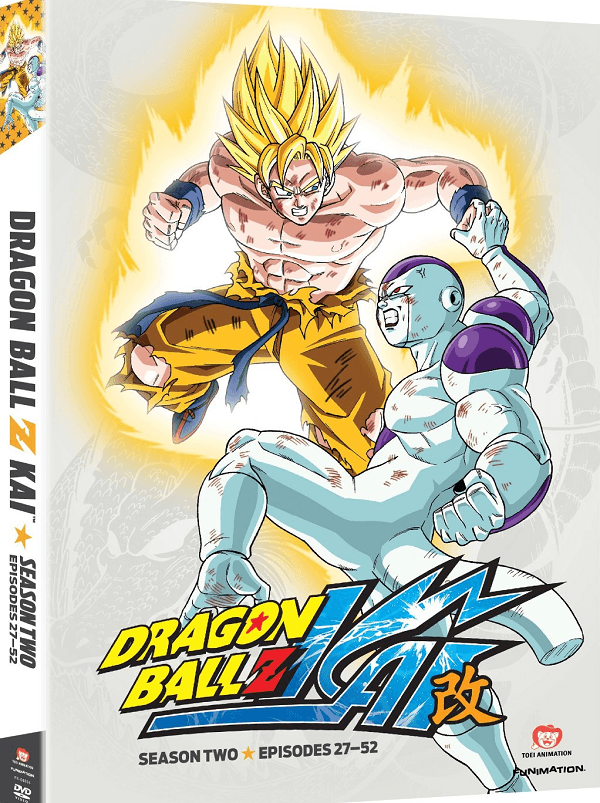
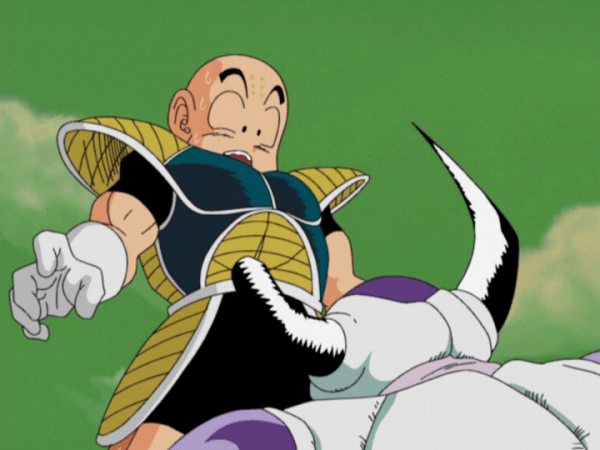
The second season of Dragon Ball Z Kai picks up exactly where the first season left off in the middle of the Namek saga. In an effort to revive all of the friends who were killed when the Saiyans came to Earth, Bulma, Krillin and Gohan have traveled to Picollo’s homework of Namek. However upon arriving the three find out that not only has Vegeta recovered and come to claim the dragon balls for himself, but a powerful force capable of destroying entire civilizations with just a wave of his hand has invaded the planet and begun systematically killing everyone who stands in his way.

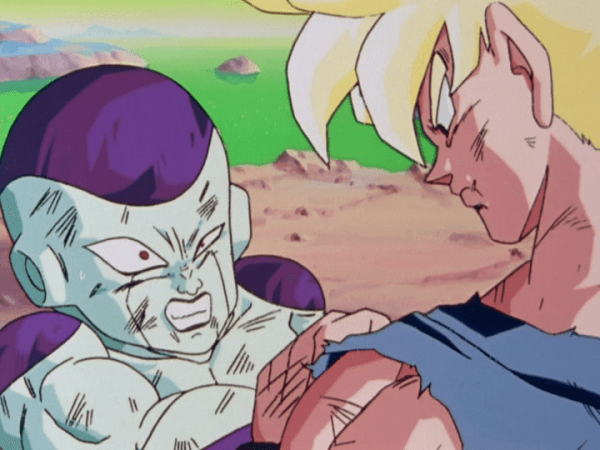
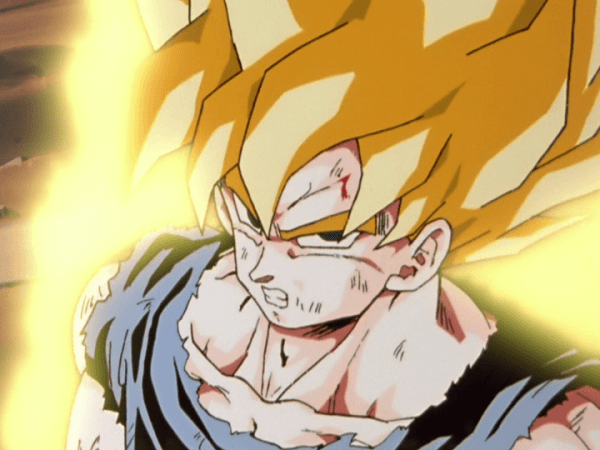
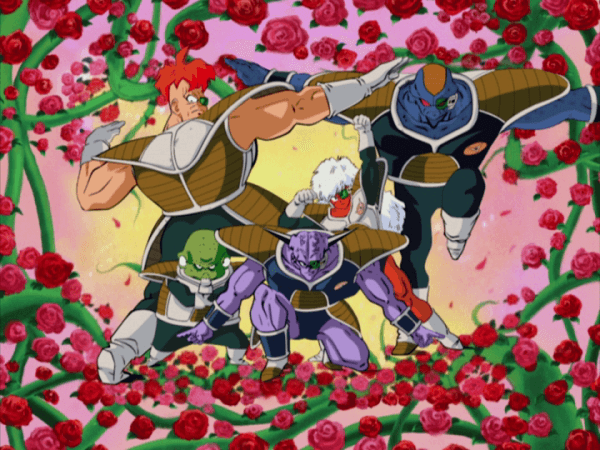
With such an insurmountable power laying waste to everything in sight and Goku yet to arrive, Gohan and Krillin have chosen to team up to try and survive against Frieza’s minions. However does their combined force have any chance against the sinister Ginyu Force? To top it off even after Goku arrives, the powerful Frieza makes his move on the surviving fighters. With his allies dying left and right, Goku’s anger swells and he becomes a being out of legend… a Super Saiyan! Can this huge boost in power give Goku the strength he needs to save what is left of his friends and destroy Frieza once and for all?

As with season one, this second season of Dragon Ball Z Kai covers another twenty six episodes of the series, effectively combining FUNimation’s previous Part 3 and Part 4 releases of the series. Ironically it is still visible on each disc’s main menu screen that these DVD’s have not been tailored for the Season Two collection as they display Part 3 disc 1 etc. As it stands however Kai still presents the most action packed and filler free presentation of Dragon Ball Z you could possibly ask for.

Season Two covers the entire Ginyu Force Saga and strangely enough ends right before the final episode of the battle against Frieza. Obviously this little cliffhanger choice may be a great way to convince buyers to purchase the next collection to see Frieza finally defeated, but it is disappointing nonetheless. Unlike the first season, not as many episodes of filler have been removed, but then again most of the Namek saga consisted of fast paced action.

As it stands there still are a number of sections removed and certain battle scenes which are cut down. This is a bit disappointing as some of the battle sections that were removed were quite memorable and their shortened length ends up impacting the enjoy ability of these fights. For what it is worth, Dragon Ball Z Kai still offers intense battle sections and dramatic moments, especially when beloved characters are killed in combat and the removal of plenty of irrelevant scenes puts fans exactly where they want to be, at the height of the action.

Visuals:
As before a large number of scenes in Dragon Ball Z Kai have been redrawn or created from scratch in an effort to fix past errors and clean up the visuals of the relatively old series. It is quite noticeable however whenever the old visuals are swapped with new touched up scenes as most of the newer scenes have fewer detail lines and appear smoother than older scenes.

It is worth noting that Dragon Ball Z still offers plenty of action and the animation quality of the fights has only improved with these touched up scenes. As before the release is entirely uncensored so blood is visible whenever one of the fighters is seriously hurt. Powerful abilities are still as impressive as ever and the struggle between two fighters as their special abilities clash is as memorable as ever, especially Goku’s first transformation into his Super Saiyan form.

Audio:
FUNimation’s release of Dragon Ball Z Kai Season Two contains both the Japanese voice track as well as the English dub. It is worth noting that, considering a lot of the cast has been readjusted and the scenes have switched around, the entire series has been given a brand new English dub. Most of the main cast, such as Vegeta, Goku and Krillin have retained their classic voice actors and most of the new cast has performed their job admirably, such as Colleen Clinkenbeard’s Gohan voice.

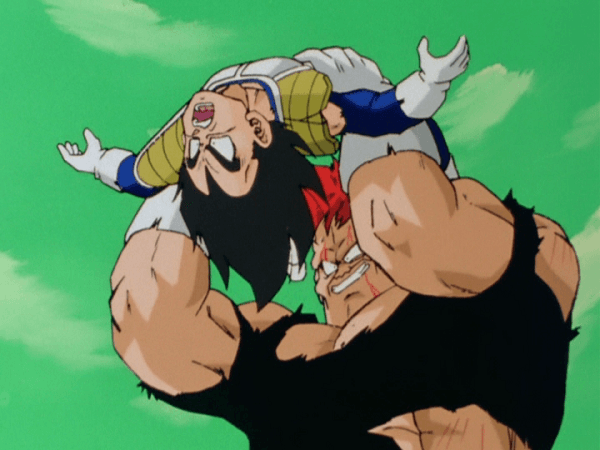
However nearly the entire cast of the Ginyu force has been replaced except for Recoome. Unfortunately the voice actors don’t seem to deliver the same feeling that the original voice actors did when they worked as a team, but at least the voice actor for Jeice still worked on providing an Australian-like accent for the character. As with season one, this second season features the fully English songs “Dragon Soul” and “Yeah! Break! Care! Break!” as the opening and ending songs, though the singer for these songs is consistent throughout season two.

Extras:
For the most part, Dragon Ball Z Kai Season Two contains relatively few bonus features. There are trailers for past and upcoming FUNimation releases as well as a clean version of the opening and ending songs which are shown twice, despite the fact that each song is the exact same. However there is one extra inclusion in this release and that is an interview with the English cast.

The interview with the cast is an actual visual interview and lasts for seven and a half minutes. A number of the English cast, both returning and new, gives their opinions on Dragon Ball Z Kai and a bit of the show’s background, as well as their opinions of the characters they play. This is a nice little inclusion and offers something actually worth watching in the extras.

Overall:
Dragon Ball Z Kai Season Two successfully continues the great re-emergence of Dragon Ball Z in the anime scene. Although nearly everyone has seen Dragon Ball Z in some form since it was created twenty years ago, Kai offers the most streamlined and action packed form of the series you could possibly ask for.

Season Two’s offering is as memorable as we may remember, however a number of the new English voice actors don’t deliver the same emotion as the old cast. Plus Season Two leaves viewers with only one episode left in the fight between Goku and Frieza, which is disappointing to say the least. As it stands however Season Two still presents Dragon Ball Z in its best light ever and old fans and newcomers alike will enjoy the high-risk battles between the Z Warriors and Frieza’s forces.

8-0-capsules-out-of-10

Dexter Returns For Season 7

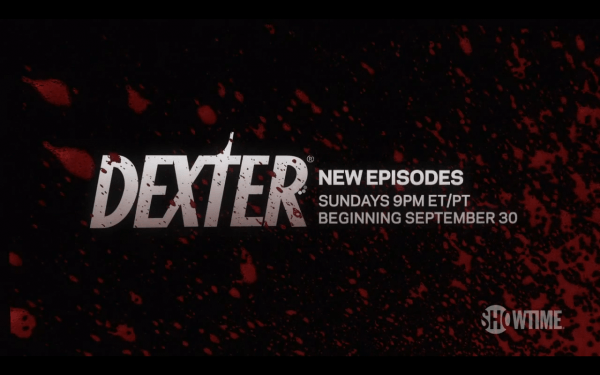
Get your blood slides ready, cause Dexter is back for Season 7! With this exciting new teaser, Showtime has told fans to brace themselves with an interesting quote from Dexter “Maybe everything is exactly how it should be”, followed by some dubstep (or “Dextep” as one Youtube commenter likes to call it) which seems to be the cool thing with trailers these days. Unfortunately the teaser only goes for 15 seconds, but it’s just enough to keep you on your toes.

Very little is known at the moment either than the fact Season 7 will premier on Showtime, September 30th, 9PM ET/PT. You can see it for yourself by checking out the interesting teaser below.